
You are using an out of date browser. It may not display this or other websites correctly.
You should upgrade or use an alternative browser.
You should upgrade or use an alternative browser.
A Proper Ass Whoopin
- Thread starter Mello Mello
- Start date



Damn! WTF did you do to deserve a three-peat whuppin?!?I've had one of these from mom, dad, and aunt in the same day. I was a model citizen from that day foward


That 2nd kid looked like he was on a ride at the amusement park.

Yep, he got the ride of his life!That 2nd kid looked like he was on a ride at the amusement park.


A good ass whoopin' like that NOW, prevents a lot of BAD shit LATER!
Dr. Stacey Patton said something that made me realize this was abuse... Physical abuse, especially in childhood, can cause lifelong scars for that person.
I'm paraphrasing what Dr. Stacey Patton said.
When parents spank their children "especially girls" and say to them, I’m doing this because I love you. When that child grows up and becomes a victim of physical abuse from their boyfriend or husband, they'll see physical abuse as love.


They were stealing
He did the right thing
every nigga I know who stole as a kid Is either in prison or has done extended prison time
He did the right thing
every nigga I know who stole as a kid Is either in prison or has done extended prison time

I doubt they will..it's a hard lesson to be learned...I don't agree with this. They better hope the kids don't start whooping their asses when they're older.
yeah but they did wrong..white man beat slaves to enforce their will..one is wicked and evil and the other is tough love...Beating them like the white man taught him...Sad. Never beat my kids. They get prolonged punishment. I take away their gadgets for extended periods of time. Then with that free time they read more and go outside more. I give them back their stuff 1 week at a time maybe. But it takes months to earn it.

Indeed it will beI doubt they will..it's a hard lesson to be learned...

I absolutely can't stand thieves and have stressed over and over to my kids that they never have to steal. They how disappointed I would be and that I would dance they lil asses in a circle just like this father did.
I'm just mad someone felt the need to record it and then share it online, which will possibly get this man in trouble.
I'm just mad someone felt the need to record it and then share it online, which will possibly get this man in trouble.
That is absolutely on the parents if these kids were stealing and even then, nothing warrants a whipping like that especially on some kids.I absolutely can't stand thieves and have stressed over and over to my kids that they never have to steal. They how disappointed I would be and that I would dance they lil asses in a circle just like this father did.
I'm just mad someone felt the need to record it and then share it online, which will possibly get this man in trouble.

^This, sums up my stance as well.I no longer condone that type of beating.

That was a minor whooping. Just don't film it.


Spanking Is Ineffective and Harmful to Children, Pediatricians’ Group Says (Published 2018)
The latest research shows spanking does not teach children right from wrong and can have long-lasting, damaging effects.
Spanking Is Ineffective and Harmful to Children, Pediatricians’ Group Says
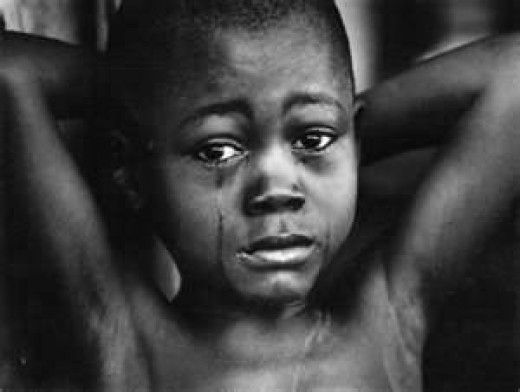
The American Academy of Pediatrics on Monday issued its most strongly worded policy statement against spanking children.
By Christina Caron
Parents should not spank their children, the American Academy of Pediatrics said on Monday in its most strongly worded policy statement warning against the harmful effects of corporal punishment in the home.
The group, which represents about 67,000 doctors, also recommended that pediatricians advise parents against the use of spanking, which it defined as “noninjurious, openhanded hitting with the intention of modifying child behavior,” and said to avoid using nonphysical punishment that is humiliating, scary or threatening.
“One of the most important relationships we all have is the relationship between ourselves and our parents, and it makes sense to eliminate or limit fear and violence in that loving relationship,” said Dr. Robert D. Sege, a pediatrician at Tufts Medical Center and the Floating Hospital for Children in Boston, and one of the authors of the statement.
The academy’s new policy, which will be published in the December issue of the journal Pediatrics, updates 20-year-old guidance on discipline that recommended parents be “encouraged” not to spank. The organization’s latest statement stems from a body of research that was unavailable two decades ago.
A 2016 analysis of multiple studies, for example, found that children do not benefit from spanking.
“Certainly you can get a child’s attention, but it’s not an effective strategy to teach right from wrong,” Dr. Sege said.
Recent studies have also shown that corporal punishment is associated with increased aggression and makes it more likely that children will be defiant in the future. Spanking alone is associated with outcomes similar to those of children who experience physical abuse, the new academy statement says.
- Thanks for reading The Times.
There are potential ramifications to the brain as well: A 2009 study of 23 young adults who had repeated exposure to harsh corporal punishment found reduced gray matter volume in an area of the prefrontal cortex that is believed to play a crucial role in social cognition. Those exposed to harsh punishment also had a lower performance I.Q. than that of a control group.
Although the study was small in scope, it can help provide a biological basis for other observations about corporal punishment, Dr. Sege said.
So what is the best way to discipline children? That largely depends on the age and temperament of the child, experts say.
https://www.nytimes.com/2020/10/04/...column&req_id=763085114&surface=home-featured
Effective discipline involves practicing empathy and “understanding how to treat your child in different stages in development to teach them how to cool down when things do get explosive,” said Dr. Vincent J. Palusci, a child abuse pediatrician at Hassenfeld Children’s Hospital at N.Y.U. Langone.
The academy’s parenting website, HealthyChildren.org, offers tips for disciplining younger and older children. Rewarding positive behavior, using timeouts and establishing a clear relationship between behavior and consequences can all be effective strategies.
“We can’t just take away spanking,” Dr. Palusci said. “We have to give parents something to replace it with.”
The number of parents who spank their children has been on the decline. A 2013 Harris Poll of 2,286 adults surveyed online found 67 percent of parents said they had spanked their children and 33 percent had not. In 1995, however, 80 percent of parents said they had spanked their children while 19 percent said they had not.
Attitudes about spanking are also changing. Although seven in 10 adults in the United States agreed a “good, hard spanking is sometimes necessary to discipline a child,” according to the 2014 General Social Survey, spanking has become less popular over time.
In 1970, Fitzhugh Dodson, a clinical psychologist and best-selling author of books on parenting, was quoted in The New York Times as saying that many discipline problems could be solved by using his “pow wow approach.”
“It’s my pow, followed by his wow,” he explained, demonstrating how he would swat a child’s bottom.
“I know some books say parents shouldn’t spank, but I think it’s a mistake,” he said. “A poor mother is left with nowhere to go. She’s mad at the kid, has had it up to the eyebrows with him, and longs to give him a big smack on the behind, but she’s been told she shouldn’t. She should, and it’s good for her, because it releases her tension. And the child definitely prefers it to long parental harangues.”
And in the 1945 edition of “Baby and Child Care,” Dr. Benjamin Spock said spanking “is less poisonous than lengthy disapproval, because it clears the air, for parents and child.” (In the ’80s, however, he changed his mind.)
Today, most doctors don’t support it.
A recent survey of 1,500 pediatricians in the United States found that 74 percent did not approve of spanking and 78 percent thought spanking never or seldom improved children’s behavior.
It’s a different situation among legislators and school administrators. Although corporal punishment in public schools is not permitted in 31 states and the District of Columbia, there are 19 states, mainly in the South, that either allow the practice or do not have specific rules prohibiting it.
In 2000, the academy recommended that corporal punishment in schools be abolished in all states. And in 2016, the Centers for Disease Control and Prevention published a tool kit for preventing child abuse and neglect that highlighted a need for legislation to end corporal punishment.
But attempts to do so at the federal level have failed.
“I think people see school discipline and parental discipline very differently,” said Elizabeth T. Gershoff, a professor at the University of Texas at Austin who has studied corporal punishment in public schools.
Even so, she added, it’s possible the new academy statement could lead to change down the road.
“It shows we are seeing the beginning of a shift away from believing it is O.K. to hit children in the name of discipline,” she said.
Children “need to know that you have their best interests at heart,” Dr. Gershoff said. “If the kid doesn’t trust the parent, then they’re never going to want to do what they say.”

I can see that point. But when it's Mom doing the spanking? Then what? Abusive lesbian in the future?When parents spank their children "especially girls" and say to them, I’m doing this because I love you. When that child grows up and becomes a victim of physical abuse from their boyfriend or husband, they'll see physical abuse as love.

Not saying it can't be true, but that's a bit gender specific for later on in life IMO.
I NEVER was told I got the beating cause they loved me. Mine was done solely with the understanding that I did something bad and this was the consequence. I knew I was loved and never had reason to question that love.
In my opinion, the environment you're raised in will ultimately shape how you process spankings later in adult life.
But I also understand that there's a case to be made for people not being able to process the difference later on in life.

barbaric
we need to do better than this
we need to do better than this

He sure did because them two won't be stealing no $1500.00 Moncler coats from the store no time soon.They were stealing
He did the right thing
He didn't record it,someone who just had to catch something and post it did,which it was none of their business.

It don't work when the parents leave their kids to their own devises to figure out the world. How about showing your kid some love and talking to them and giving them guidance and support. If whooping kids ass makes kids productive. Then why hasn't that translated into kids people top stundents in school and kids staying out of trouble? You think people are in gangs because they didn't get their ass whooped?kids these days need they ass whipped
that timeout shit don't work
Last edited:
Bs...A good ass whoopin' like that NOW, prevents a lot of BAD shit LATER!

...but it depends on the child.Bs...
It's not the ass whooping that prevents those kids from being in bad situations. If that were the case then we would not have so many troubled kids in the hood....but it depends on the child.

i've had worser....so that wasn't too bad. only problem you whoop your kids in private....not in front of people. don't need critics telling you how to raise your kids
Gershoff's analysis has been challenged many times since he's released his studies..Spanking Is Ineffective and Harmful to Children, Pediatricians’ Group Says (Published 2018)
The latest research shows spanking does not teach children right from wrong and can have long-lasting, damaging effects.www.nytimes.com
Spanking Is Ineffective and Harmful to Children, Pediatricians’ Group Says
The American Academy of Pediatrics on Monday issued its most strongly worded policy statement against spanking children.
By Christina Caron
Parents should not spank their children, the American Academy of Pediatrics said on Monday in its most strongly worded policy statement warning against the harmful effects of corporal punishment in the home.
The group, which represents about 67,000 doctors, also recommended that pediatricians advise parents against the use of spanking, which it defined as “noninjurious, openhanded hitting with the intention of modifying child behavior,” and said to avoid using nonphysical punishment that is humiliating, scary or threatening.
“One of the most important relationships we all have is the relationship between ourselves and our parents, and it makes sense to eliminate or limit fear and violence in that loving relationship,” said Dr. Robert D. Sege, a pediatrician at Tufts Medical Center and the Floating Hospital for Children in Boston, and one of the authors of the statement.
The academy’s new policy, which will be published in the December issue of the journal Pediatrics, updates 20-year-old guidance on discipline that recommended parents be “encouraged” not to spank. The organization’s latest statement stems from a body of research that was unavailable two decades ago.
A 2016 analysis of multiple studies, for example, found that children do not benefit from spanking.
“Certainly you can get a child’s attention, but it’s not an effective strategy to teach right from wrong,” Dr. Sege said.
Recent studies have also shown that corporal punishment is associated with increased aggression and makes it more likely that children will be defiant in the future. Spanking alone is associated with outcomes similar to those of children who experience physical abuse, the new academy statement says.
- Thanks for reading The Times.
There are potential ramifications to the brain as well: A 2009 study of 23 young adults who had repeated exposure to harsh corporal punishment found reduced gray matter volume in an area of the prefrontal cortex that is believed to play a crucial role in social cognition. Those exposed to harsh punishment also had a lower performance I.Q. than that of a control group.
Although the study was small in scope, it can help provide a biological basis for other observations about corporal punishment, Dr. Sege said.
So what is the best way to discipline children? That largely depends on the age and temperament of the child, experts say.
https://www.nytimes.com/2020/10/04/arts/music/lang-lang-bach-goldberg-variations.html?action=click&algo=top_conversion&block=editors_picks_recirc&fellback=true&imp_id=314862850&impression_id=4bdcdf32-080f-11eb-a181-9f8481ea014a&index=2&pgtype=Article®ion=ccolumn&req_id=763085114&surface=home-featured
Effective discipline involves practicing empathy and “understanding how to treat your child in different stages in development to teach them how to cool down when things do get explosive,” said Dr. Vincent J. Palusci, a child abuse pediatrician at Hassenfeld Children’s Hospital at N.Y.U. Langone.
The academy’s parenting website, HealthyChildren.org, offers tips for disciplining younger and older children. Rewarding positive behavior, using timeouts and establishing a clear relationship between behavior and consequences can all be effective strategies.
“We can’t just take away spanking,” Dr. Palusci said. “We have to give parents something to replace it with.”
The number of parents who spank their children has been on the decline. A 2013 Harris Poll of 2,286 adults surveyed online found 67 percent of parents said they had spanked their children and 33 percent had not. In 1995, however, 80 percent of parents said they had spanked their children while 19 percent said they had not.
Attitudes about spanking are also changing. Although seven in 10 adults in the United States agreed a “good, hard spanking is sometimes necessary to discipline a child,” according to the 2014 General Social Survey, spanking has become less popular over time.
In 1970, Fitzhugh Dodson, a clinical psychologist and best-selling author of books on parenting, was quoted in The New York Times as saying that many discipline problems could be solved by using his “pow wow approach.”
“It’s my pow, followed by his wow,” he explained, demonstrating how he would swat a child’s bottom.
“I know some books say parents shouldn’t spank, but I think it’s a mistake,” he said. “A poor mother is left with nowhere to go. She’s mad at the kid, has had it up to the eyebrows with him, and longs to give him a big smack on the behind, but she’s been told she shouldn’t. She should, and it’s good for her, because it releases her tension. And the child definitely prefers it to long parental harangues.”
And in the 1945 edition of “Baby and Child Care,” Dr. Benjamin Spock said spanking “is less poisonous than lengthy disapproval, because it clears the air, for parents and child.” (In the ’80s, however, he changed his mind.)
Today, most doctors don’t support it.
A recent survey of 1,500 pediatricians in the United States found that 74 percent did not approve of spanking and 78 percent thought spanking never or seldom improved children’s behavior.
It’s a different situation among legislators and school administrators. Although corporal punishment in public schools is not permitted in 31 states and the District of Columbia, there are 19 states, mainly in the South, that either allow the practice or do not have specific rules prohibiting it.
In 2000, the academy recommended that corporal punishment in schools be abolished in all states. And in 2016, the Centers for Disease Control and Prevention published a tool kit for preventing child abuse and neglect that highlighted a need for legislation to end corporal punishment.
But attempts to do so at the federal level have failed.
“I think people see school discipline and parental discipline very differently,” said Elizabeth T. Gershoff, a professor at the University of Texas at Austin who has studied corporal punishment in public schools.
Even so, she added, it’s possible the new academy statement could lead to change down the road.
“It shows we are seeing the beginning of a shift away from believing it is O.K. to hit children in the name of discipline,” she said.
Children “need to know that you have their best interests at heart,” Dr. Gershoff said. “If the kid doesn’t trust the parent, then they’re never going to want to do what they say.”
His methodology is tainted because he lumped slaps on the hand or butt in with full fledged beatdowns.
He concluded that a parent who spanks will escalate to more violent tactics as the child grows.
Both of these are bullshit.
It can cut both ways.I can see that point. But when it's Mom doing the spanking? Then what? Abusive lesbian in the future?
Not saying it can't be true, but that's a bit gender specific for later on in life IMO.
I NEVER was told I got the beating cause they loved me. Mine was done solely with the understanding that I did something bad and this was the consequence. I knew I was loved and never had reason to question that love.
In my opinion, the environment you're raised in will ultimately shape how you process spankings later in adult life.
But I also understand that there's a case to be made for people not being able to process the difference later on in life.
EBONY: Talk about the specific damage we do to our male and female children when we hit them.
Dr. Stacey Patton: I interviewed Black men to learn if there was any connection between mothers beating their sons as boys and how they grew up to treat women later in life. I found that many of their stories confirmed what the psychological literature had been saying for decades. These men grow up to have some really ugly attitudes towards women. I also found it striking that we don’t live in a society that believes that Black males experience pain. Far too many mothers look at their boys, particularly as their bodies grow—just as the larger, racist society does—and see their potential criminality. I’ve talked to mothers who say, “If I don’t beat my son, he’s going to knock me down some day.” And so anti-Blackness is filled into the ways that some Black mothers rear their sons.

Spare the Kids: Why Whupping Children Won't Save Black America
Dr. Stacey Patton, author of "Spare the Kids," is convinced that whupping does way more damage than good, especially when it comes to Black America.
 www.ebony.com
How can that be bs? If you spank your child when they are younger, then you are going to escalate the violence on your kids as they get older because they are older.Gershoff's analysis has been challenged many times since he's released his studies.
His methodology is tainted because he lumped slaps on the hand or butt in with full fledged beatdowns.
He concluded that a parent who spanks will escalate to more violent tactics as the child grows.
Both of these are bullshit.

Nothing wrong with this at all.
When you know better, you do better.
I meant when Mom is spanking the daughter like the 1st example showcased. (I was actually joking. Hence the smiley face)It can cut both ways.
EBONY: Talk about the specific damage we do to our male and female children when we hit them.
Dr. Stacey Patton: I interviewed Black men to learn if there was any connection between mothers beating their sons as boys and how they grew up to treat women later in life. I found that many of their stories confirmed what the psychological literature had been saying for decades. These men grow up to have some really ugly attitudes towards women. I also found it striking that we don’t live in a society that believes that Black males experience pain. Far too many mothers look at their boys, particularly as their bodies grow—just as the larger, racist society does—and see their potential criminality. I’ve talked to mothers who say, “If I don’t beat my son, he’s going to knock me down some day.” And so anti-Blackness is filled into the ways that some Black mothers rear their sons.
Spare the Kids: Why Whupping Children Won't Save Black America
Dr. Stacey Patton, author of "Spare the Kids," is convinced that whupping does way more damage than good, especially when it comes to Black America.
But even this example shows a seriously skewed view of processing gender in adult life based on spankings. (Pick the worst thing possible for that particular gender and assign it to the spankings.)
Again, I don't know one way or another if a well deserved spanking is indeed harmful or helpful.
I just welcome all points of view on it.
Similar threads

- Replies
- 16
- Views
- 280


- Replies
- 1
- Views
- 42

- Replies
- 4
- Views
- 95


- Replies
- 17
- Views
- 302
