THE CANNABIS THREAD 101!!

Here’s Why You Should Consider Dabbing With Quartz
everything-you-need-to-know-about-quartz-for-dabbing-1024x640.jpg

(rgbspace/iStock)
Perhaps no other material has made as big of an impact on dabbing culture as quartz has over the past several years. Initially created as an alternative to materials like titanium and ceramics, quartz is now regarded as the gold standard for dabbing rig pieces.


Quartz can withstand and retain heat with less risk of breaking and it can preserve concentrate flavors better than other materials.
What makes quartz so great for dabbing cannabis concentrates? It can withstand and retain heat with less risk of breaking and it can preserve concentrate flavors better than other materials.

Here we look at what makes quartz so popular, how quartz nails and accessories have evolved, and best practices for quartz cleaning and maintenance.

What Is Quartz?
Silicon Dioxide (SiO2), also known as clear-fused quartz or fused silica, is a solid, amorphous (non-crystalline) material comprised of silicon and oxygen. While very similar to traditional glass, the two are distinct in that quartz contains no other materials.


In order to create fused quartz, pure silica sand containing quartz crystals must be melted or fused. This purity gives quartz a high thermal conductivity, and it’s also often used in laboratory-grade materials.

Why Dab With Quartz?
Quartz is great for low-temperature dabbing, the practice of using reduced temperatures when heating a nail in order to preserve terpene flavors during the sublimation and inhalation processes.

When used in conjunction with a carb cap or any other device designed to create convection, quartz nails preserve terpenes because they can maintain a lower temperature for a longer period of time before cooling off. This creates a much more robust and enjoyable dabbing experience compared to other nail materials, which can burn off terpenes with higher temperatures.


Quartz is also a champ when it comes to thermal conductivity. It can withstand high temperatures over time with less risk of breaking, and can also retain steadier temperatures for longer periods, making for easier and less rushed dabbing without the fear of cooling.

The amount of heat a quartz nail can retain depends on its thickness, and this is usually advertised by the retailer.

A Brief History of the Quartz Nail
Before 2010, low-grade flathead nails were easy to produce and often accompanied early versions of dab rigs. These impure glass nails would break easily, so quartz began to show up as a stronger, more resilient alternative.

The introduction of the quartz domeless nail was the turning point when quartz became a major contender for nails.
But the flathead design of early quartz nails was still imperfect. Although it fit well with early dab rigs that had domes for creating convection, concentrates would often melt off the ridges and go to waste. Cupped designs proved to be a better option with domed rigs, but these nails couldn’t retain heat long enough.

The introduction of the quartz domeless nail was the turning point when quartz became a major contender for nails. Designed to be used without a dome, these nails could hold concentrates easier and retain heat longer. Quartz domeless nails were quickly recognized for providing a better flavor when dabbing, compared to titanium and ceramic nails.


As it grew in popularity, several influential American glassblowers started custom designing nails with quartz. Out of this explosion of creativity came several designs, including the Honey Bucket model from Mothership Glass, the Quartz Club Banger from Quave Glass, and the Trough from Joel Halen.

While each of these designs are still popular today, the simplified banger nail has easily become the most popular for quartz enthusiasts because of its functionality, simple and sleek design, and easy replicability. Quartz nails complement glass more than other materials like titanium, bringing a more attractive aesthetic to expensive dab rigs.

Copy-of-will_hyde_avid_dabber_3_239-edited-1024x640.jpg

A quartz banger nail. (Julia Sumpter for Leafly)
Proper Quartz Hygiene
A fresh quartz nail, translucent and free of cloudiness and debris, will give you better dabs, allowing you to taste the flavors and terpenes of concentrates better.

Because of the amorphous nature of fused quartz, its atomic structure is in a perpetual state of imbalance. When heated to extreme temperatures, a process called devitrification occurs, when the atoms of quartz attempt to reorganize into a crystalline structure.

This can happen when cooled quartz is exposed to various elements, including extreme temperatures, like a red-hot torch flame, the introduction of contaminants like oil reclaim, or continued and prolonged exposure to oxygen as a byproduct of oxygenated torching.


When devitrification occurs, quartz becomes cloudy. This process is irreversible without lab-grade chemicals and it can negatively affect the function of the nail. To avoid this altogether, be proactive in taking care of your nail:
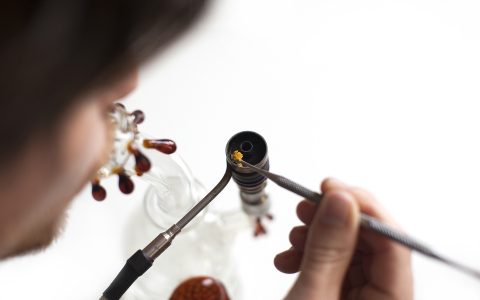
  • Never expose a nail to extremely hot temperatures. This is the easiest way to ruin a fresh nail.
  • Don’t dab on a hot quartz nail. Always wait for the nail to cool a bit before applying a concentrate.
  • After each dab, immediately clean the nail with a cotton swab or similar material to rid the skillet of carbon residue or reclaim.
  • Don’t leave a nail dirty for a prolonged period for risk of creating carbon build-up, which will devitrify the quartz on the next heating session.
  • Don’t clean your nail with water, as this will also cause devitrification.
An old standard for nail care was seasoning—heating a new nail until it clouds and turns red, seasoning it like you would a cast iron skillet. But seasoning is, in fact, not considered a best practice for nail hygiene these days because the extreme temperatures cause devitrification.


Exciting New Quartz Technology
The world of quartz dabbing accessories continues to grow with new technologies, fueled by a never-ending pursuit to create a quality low-temperature dabbing experience. Here are some exciting innovations in quartz to look out for:

Thermal Banger Nails
Quartz bangers can create build-up and residue of concentrates inside the nail stem. This occurs when oil either bubbles over or solidifies within the stem when taking a dab. Thermal bangers mitigate this with their design: With a large cylinder to redirect airflow, residue can’t reach the downstem of the nail.

Bubble Carb and Directional Caps
Carb caps are designed to create convection when dabbing, allowing concentrates to sublimate more evenly over longer periods of time when exposed to lower temperatures. Bubble carb and directional caps help facilitate this process by siphoning airflow toward every corner of the skillet.


Their unique design allows the dabber to manipulate the direction of incoming air when taking a dab by moving the cap around. The result is less reclaim at the end of the dab and a better flavor when low-temperature dabbing.

Quartz Inserts
One way to ensure that high-end quartz nails don’t suffer the fate of devitrification is to use a quartz insert or skillet. These skillets are designed to be pre-loaded with concentrates and placed in a heated flat-top nail. This lets the concentrate be sublimated inside of the skillet, leaving the nail basin free from the potential of residue buildup.

 
SCIENCE & TECH
The Most Impactful Cannabis Studies of All Time

The following compendium of landmark cannabis studies is exclusively focused on top-level research that either fundamentally advanced our understanding of the plant’s therapeutic properties, or thoroughly debunked some pernicious piece of official misinformation—such as “smoking weed gives you lung cancer.”


But that’s only half the story when it comes to the intersection of science and cannabis. So before we get to the good stuff, let’s start with an unfortunately typical example of the kind of spurious evidence that has been consistently used over the last hundred years to support the government’s all-out war on cannabis.

Our story begins in 1974, when Dr. Robert Galbraith Heath published research conducted at Tulane University, where he chaired the Department of Psychiatry and Neurology. Today, the late Dr. Heath is a controversial figure in the world of neuroscience, largely due to his pioneering efforts to study deep brain stimulation (a.k.a. electro-shock) as a “conversion therapy” for homosexuals, and his willing participation in illegal, CIA-led human experiments of a “brainwashing” drug called bulbocapnine. But at the time, his credentials remained impeccable.

And so, when Heath produced findings supposedly showing that “the active ingredient in marijuana [THC] impairs the brain’s circuitry,” the press dutifully ran headlines claiming “Pot Causes Brain Damage” without a trace of skepticism. While anti-cannabis politicians like then California Governor Ronald Reagan immediately seized on the study as evidence that cannabis was far too dangerous to even consider legalizing.


Like many federally funded studies of the era, Heath’s research was deeply flawed. In Smoke Signals: A Social History of Marijuana, author Martin Lee calls out his exceedingly small study of rhesus monkeys as “a textbook case of scientific fraud.”

“Shackled in air tight gas masks, Heath’s monkeys were [regularly] forced to inhale the equivalent of 63 high-potency marijuana cigarettes in five minutes. Lo and behold, the primates suffered brain damage from suffocation and carbon monoxide poisoning, but Heath attributed the results to marijuana toxicity”

Heath’s findings were never replicated, and several prominent follow up studies—including one at the National Center for Toxicology Research—directly repudiated his conclusions.

Then in 2003, the US Department of Health and Human Services was granted a patent on “cannabinoids as neuroprotectants,” based on evidence that compounds found in the cannabis plant not only don’t cause brain damage, they’re actually effective in “limiting neurological damage following…stroke and trauma, or in the treatment of neurodegenerative diseases, such as Alzheimer’s disease, Parkinson’s disease and HIV dementia.”


To this day, cannabis remains a Schedule 1 narcotic—a categorization that flies in the face of not just the latest cutting-edge research into the plant’s incredible medicinal potential, but also some of the oldest medical texts in existence. For example, The Divine Farmer’s Herb Root Classic (2727 BC)—widely considered the world’s oldest pharmacopeia—lists cannabis among the “supreme elixirs of immortality,” and recommends it as a superior treatment for “constipation, ‘female weakness,’ gout, malaria, and rheumatism.”

And as our list of landmark cannabis studies makes clear, that’s just for starters.

Indian Hemp Drugs Commission (1894)
In 1893, India was under British rule, and the colonial government became concerned about the amount of cannabis (i.e., “hemp drugs”) being consumed by the locals. So teams of British and Indian medical professionals were dispatched throughout the country to collect information on not just the health effects of cannabis, but also the social and moral impact.

The result was a massive research paper (over 3,000 pages), with recorded testimony from almost 1,200 “doctors, coolies, yogis, fakirs, heads of lunatic asylums, bhang peasants, tax gatherers, smugglers, army officers, hemp dealers, ganja palace operators, and the clergy.” Nearly all of the data in the seven volume report bolstered two key conclusions: moderate cannabis consumption is either relatively harmless or beneficial, and cannabis prohibition would be supremely unjust.

“To forbid or even seriously to restrict the use of so gracious an herb as hemp would cause widespread suffering and annoyance,” the report concluded. For the next 50 years, this research would stand as the most thorough and scientifically rigorous available.

The Laguardia Report (1944)
studies-1-1024x640.jpg

(Gillian Levine for Leafly)
In direct response to the Reefer Madness-era misinformation campaigns of Harry J. Anslinger (head of the Federal Bureau of Narcotics), New York City mayor Fiorello La Guardia commissioned a blue ribbon panel of leading doctors, psychiatrists, psychologists, pharmacologists, chemists and sociologists, and tasked them with making a thorough investigation of cannabis based on a comprehensive review of all available scientific literature, plus primary research.

Released as The La Guardia Report, the landmark study earned the endorsement of the prestigious New York Academy of Medicine, while unambiguously declaring that the prohibition of cannabis fails the smell test.

“Marijuana, like alcohol, does not alter the basic personality,” the report’s authors concluded. “Marijuana does not of itself give rise to antisocial behavior. There is no evidence to suggest that the continued use of marihuana is a steppingstone to the use of opiates. Prolonged use of the drug does not lead to physical, mental, or moral degeneration, nor have we observed any permanent deleterious effects from its continued use. Quite the contrary, marihuana and its derivatives and allied synthetics have potentially valuable therapeutic applications which merit future investigation.”


The Discovery of THC (1964)
When a team of Israeli researchers led by Dr. Raphael Mechoulam first discovered THC in 1964 and identified it as the primary psychoactive compound found in the cannabis plant, that was not just a breakthrough in our collective understanding of cannabis—it also led to a series of breakthroughs in our understanding of how the human body functions.

By the late 1980s, this would include the discovery of an entirely new system in the body—the endocannabinoid system—which can be thought of as your “root-level operating system,” a kind of central processing unit that regulates and alters the functioning of many other important systems and keeps them in balance.

Leafly’s comprehensive explainer on the endocannabinoid system breaks down exactly how it works, and why its discovery was groundbreaking not just for medicinal cannabis, but for medicine in general.

The Shafer Commission Report (1972)
After studying cannabis for more than two years, a team of experts hand-picked by President Richard M. Nixon returned with a set of recommendations that started with immediately removing all criminal penalties for cannabis, including “casual distributions of small amounts,” since “neither the marijuana user nor the drug itself can be said to constitute a danger to public safety.”

“Criminal law is too harsh a tool to apply to personal possession even in the effort to discourage use…It implies an overwhelming indictment of the behavior which we believe is not appropriate. The actual and potential harm of use of the drug is not great enough to justify intrusion by the criminal law into private behavior, a step which our society takes only with the greatest reluctance.”

Known collectively as the Shafer Commission, the eminent researchers that compiled the report knew all-too-well that their findings flew in the face of the government’s official position on legalization, but hoped nonetheless their comprehensive research would spark a fact-based debate of the evidence that would in turn lead to significant reform.

Instead, Nixon attacked the commission and ignored its recommendations, before pushing the whole thing down the memory hole. The very next year, he created the Drug Enforcement Administration (DEA) and charged them with waging “all out war” on cannabis.


The first study to show that cannabis exhibits anti-tumor properties was originally designed to demonstrate the plant’s dangers.


Cannabis Shrinks Tumors (1974)
The first ever study to show that cannabis exhibits anti-tumor propertieswas originally designed to demonstrate the plant’s dangers, specifically harm to the immune system. Funded by NIDA and a grant from the American Cancer Society, researchers at the Medical College of Virginia implanted tumors into mice, which were then “treated for 10 consecutive days with delta-9-THC, beginning the day after tumor implantation.” Presumably to show that THC makes cancer grow faster.

Instead, when the research was published in The Journal of the National Cancer Institute, it showed that ”mice treated for 20 consecutive days with THC and CBN had reduced primary tumor size.”

Great news, right?


The study’s authors were certainly ready to investigate this exciting development further, but instead, NIDA cut off all of their funding and made every effort possible to suppress their research. As a result, only a single newspaper article, published August 18, 1974 in the local section of the Washington Post, covered this breakthrough discovery.

It would take nearly three decades before Dr. Manuel Guzman, professor of biochemistry at the University of Madrid, managed to follow up on the original 1974 experiments, with similar results. In the March 2000 issue of the journal Nature Medicine, Guzman reported that cannabinoids (like THC) not only shrink cancerous tumors in mice, they do so without damaging surrounding tissues.

Cannabis Treats Nausea Caused by Chemotherapy (1975)
Harvard Medical School Associate Professor Dr. Lester Grinspoon first started researching cannabis back the 1960s, in an effort to convince his best friend, famed astronomer Carl Sagan, to stop smoking so darn much of the stuff. Quickly, however, Grinspoon realized the case against cannabis was all based on government propaganda—an insight he explored in depth in a bestselling book called Marihuana Reconsidered (1971).

Ever since, the good doctor has been a leading voice for medical cannabis. He also witnessed the plant’s therapeutic power firsthand when his son Danny was diagnosed with leukemia at age 15, as he explained in a personal essay on his life’s journey with the plant.

“On a normal day of chemotherapy, I hoped we could make it home from the hospital before Danny’s vomiting would start, and we always had to put a big bucket next to his bed. But the first time he tried taking a few puffs prior to a round of treatments, he got off the gurney and said, ‘Mom, there’s a sub shop in Brookline. Could we stop for a sub-sandwich on the way home?’ And all I thought was, ‘Wow.’”

Dr. Grinspoon eventually convinced the head of Boston Children’s Hospital’s oncology department to undertake a 1975 study (published in the New England Journal of Medicine) that for the first time demonstrated the efficacy of THC for nausea and vomiting associated with chemotherapy.

Cannabis Helps AIDS Patients Without Serious Side Effects (1997)
studies-3-1024x640.jpg

(Gillian Levine for Leafly)
Throughout the AIDS crisis, Mary Jane Rathburn volunteered as a nurse’s assistant. While making the rounds in local hospital wards, she would discreetly provide home-baked cannabis-infused “magically delicious” brownies for free to those in need.

Eventually, “Brownie Mary’s” tireless public service caught the eye of Dr. Donald Abrams, now the head of oncology at San Francisco General Hospital. Inspired by her example, Abrams set out to prove via science what he’d already seen with his own eyes. Namely, that cannabis is a uniquely effective medicine for those suffering with AIDS-related nausea.


In 1997, after a long and bitter battle with the federal government, Abrams at last secured almost one million dollars from NIDA to conduct clinical trials of the short-term safety of cannabinoids in HIV infection. In time, he would publish a string of studies showing that cannabis given to HIV patients “did not hurt the immune system, did not increase viral load, did not negatively interact with the protease inhibitors, and actually did facilitate increased caloric intake as well as weight gain.”

Cannabis Doesn’t Cause Lung Cancer (2006)
The largest case-control study ever done on the subject unexpectedly concluded that smoking cannabis—even frequently and in large amounts—does not lead to lung cancer.
Dr.Donald Tashkin, a prominent pulmonologist at the University of California at Los Angeles, has spent over forty years studying the effects of cannabis on the lungs. When some of his earliest research established that the plant’s tar contains cancer-causing chemicals as potentially harmful as tobacco, Tahskin perhaps understandably jumped to the conclusion that smoking cannabis regularly must significantly damage the lungs.

But in 2006, with funding from the National Institute on Drug Abuse, he led the largest case-control study ever done on the subject, and rather unexpectedly concluded that smoking cannabis—even frequently and in large amounts—does not lead to lung cancer.

Those findings were “against our expectations,” according to Tashkin:

“We hypothesized that there would be a positive association between marijuana use and lung cancer, and that the association would be more positive with heavier use. What we found instead was no association at all, and even a suggestion of some protective effect.”

The study not only debunked a powerful anti-cannabis talking point, it strongly indicated that the plant has powerful medicinal properties.


Cannabis Reduces Opioid Overdoses (2014)
When it comes to cannabis and the opioid epidemic currently wreaking havoc in America, there’s basically two schools of diametrically opposed thought: Either cannabis fuels the current crisis via the gateway drug effect, or cannabis has the potential to help immensely by providing a far safer alternative for pain relief as well as a potential pathway out of addiction.

For starters, the so-called “gateway theory” has been so roundly debunkedthat even the DEA gave up on it.

Between 1999 and 2010, states with legal medical cannabis averaged almost 25% fewer opioid overdose deaths.
And more importantly, studies have consistently shown that opioid abuse goes down significantly in places with access to legal cannabis. Much of this drop is attributable to those suffering with chronic pain or other conditions treatable with opioids who choose to use cannabis instead. A 2011 studyheaded by Dr. Donald Abrams also found that cannabis makes opioid drugs more effective, allowing smaller opioid doses to provide the same level of pain relief, with correspondingly lowered side effects and danger of dependence..

Marcus Bachhuber, assistant professor of medicine at the Montefiore Medical Center in New York City, first started hearing about this phenomenon from patients more than fifteen years ago. In 2014, hepublished research in the journal JAMA Internal Medicine that showed between 1999 and 2010, states with legal medical cannabis averaged almost 25% fewer opioid overdose deaths. Since that landmark study, many other papers have bolstered the argument that cannabis can play an important role in terms of harm reduction when it comes to prescription drug abuse—including two new studies (both published in the May 2018 issue of JAMA Internal Medicine) showing that when states legalize cannabis there’s a marked drop in opioid prescriptions.


According to W. David Bradford, an economist at the University of Georgia and an author of one of the studies.

“In this time when we are so concerned—rightly so—about opiate misuse and abuse and the mortality that’s occurring, we need to be clear-eyed and use evidence to drive our policies. If you’re interested in giving people options for pain management that don’t bring the particular risks that opiates do, states should contemplate turning on dispensary-based cannabis policies.”

Cannabis vs. PTSD (Ongoing)
Dr. Sue Sisley says she was abruptly fired in 2014 from a faculty position at the University of Arizona when her long planned study of cannabis as a treatment for PTSD became a political hot button among local politicians. Sisley ultimately prevailed, and now serves as one of two principal investigators in a multi-site study sponsored by the Multidisciplinary Association for Psychedelic Studies (MAPS) and funded by a $2.1 million grant from the Colorado Department of Public Health and Environment.

The world’s first controlled clinical trial evaluating smoked medical cannabis as a treatment for PTSD is a triple-blind, outpatient, randomized, placebo-controlled study of 76 combat veterans randomly assigned either a high-THC strain, a high-CBD strain, a 1:1 THC/CBD ratio strain, or a placebo. Currently in its third year, the study has proceeded well, but in the meantime, PTSD-related suicides remain at epidemic levels among US combat veterans.


CBD Stops Seizures (Ongoing)
In direct response to a flood of inquiries from parents of epileptic children, the US federal government in 2014 quietly fast-tracked a trial of cannabidiol (CBD) as a treatment for seizure disorders, proving that political pressure can indeed push them to approve studies into the potential benefits of cannabinoids. But while many advocates sought to test whole-plant or full-spectrum medicines, the study has been strictly limited to a single compound found in cannabis—not coincidentally one supplied in “purified” form by GW Pharmaceuticals, which also funded the study, and is currently seeking FDA approval to sell the a prescription CBD medicine called Epidiolex.


In May 2018, the New England Journal of Medicine published an update on this ongoing research showing that patients taking just 20mg of CBD per kilogram of body weight had 42% fewer seizures, on average, compared with a 17% reduction in the placebo group.

According to a comprehensive report on the study from Leafly’s Ryan Basen, these extremely promising results have GW Pharmaceutical’s CBD drug on track for imminent FDA approval.

“If approved, Epidiolex would become the first medication derived from the cannabis plant allowed in the US. The FDA has previously approved synthetic cannabis medications, which more closely resemble tetrahydrocannabinol (THC), but nothing plant-derived nor anything featuring CBD.

Sativex, a GW Pharma product that incorporates both THC and CBD, has been approved for medical use outside the U.S. Epidiolex features a solution of 100 mg/ml of CBD dissolved in sesame oil, ethanol, sweetener, and a flavoring agent, according to the FDA review. The medication is harvested from cannabis plants specifically bred for medical purposes, with high CBD concentration, according to a GW Pharmaceuticals report.”
 
Why Don’t More Doctors Prescribe Cannabis to Their Patients?
doctors-wont-prescribe-cannabis-1024x640.jpg

Even as support for medicinal cannabis gathers momentum among voters, physicians often remain hesitant or firmly opposed to recommending cannabis to their patients. Mostly, their hesitation stems from a lack of supportive data and strong clinical trials. But when it comes to cannabis, is the science really not sufficient to support its clinical use?


https://www.leafly.com/finder
To better understand why many doctors hesitate to embrace cannabis, let’s consider the factors that have plagued the pro-cannabis argument:

  • First, a lack of available scientific studies on many health outcomes leaves us with mostly anecdotal reports of its medicinal abilities. While these stories certainly have value in guiding scientific investigation, they’re ripe with bias and a spectrum of confounding factors, so they’re not sufficient on their own.
  • Next, when results suggest that cannabis is ineffective at treating a condition, or may have small benefits but substantial side effects, it’s hard to support using cannabis for that clinical condition.
  • Lastly, inconsistency in cannabis’ effects across published reports reduces confidence in the predictable and consistent therapeutic benefits of cannabis.
Let’s break these points down.

Why Are There Few Scientific Studies Into Cannabis’ Clinical Benefits?
The reason for the relative scarcity in clinical cannabis studies stems largely from its Schedule I classification by the Drug Enforcement Agency. This classification regulates how cannabis can be studied, the access scientists have to cannabis, and the financial and institutional resources that can be devoted to studying cannabis.


You won’t be surprised that it’s especially challenging to acquire funding to study a drug with “currently no accepted medicinal use,” according to the definition associated with its classification. It doesn’t matter that the same drug is one of the earliest known medicines. Most scientists’ careers live and die by grant funding, and the United States government is the single largest source of science funding in the world.

So if the government is resistant to funding medicinal cannabis research, it has a major impact. (And when they do commit to funding, not everyone is happy about it. For instance, Professor Michael Morgan of Washington State University in Vancouver received funding to study the interaction between THC and morphine on pain. This research was listed in Tom Coburn’s (R-OK) list of the top 100 Wasteful Stimulus Projects).

Is the Research Truly Not Available?
It turns out, there’s a trove of clinical research studies that the public doesn’t see. Because of the federal restrictions on research in academic institutions, private companies have taken it upon themselves to gather their own data, often with the support of nurses or physicians. The data gathered are being used to optimize the therapeutic effectiveness of their own products and are revealing, so we’re told, exciting and promising results.


Because these companies aren’t gaining approval through the same institutional review boards that are required for academic institutions, they’re often precluded from publishing in the peer-reviewed journals that are publicly available. Another downside is that they don’t receive the same scrutiny for the validity of their results.

Nonetheless, this privately collected trove of clinical data likely represents a significant source of clinical cannabis studies that could be used to transform the industry. But for now, few are showing their hands.

Why Is the Effectiveness of Cannabis Inconsistent Across Studies?
Beyond the challenge of acquiring research funding, it’s not easy—or in many cases possible—to get cannabis for clinical trials that’s consistent with what’s available to consumers.

The inability to systematically test different strains and products has traditionally led to an inability for the clinical research to support many claims by cannabis patients.
For decades, the University of Mississippi has been the only licensed facility to produce the plant for research purposes. But some researchers claim that the cannabis they receive doesn’t resemble the appearance or smell of traditional cannabis, it may be moldy, and has between 8-12% THC.

That may be fine if you’re trying to draw conclusions about the health benefit of that oneparticular strain, grown at that one particular site. But if that sub-optimal product also has sub-optimal medicinal benefits, is it valid to conclude that all cannabis strains and products similarly don’t have medicinal benefits? Of course not. The inability to systematically test different strains and products—many of which have been optimized for certain conditions—has traditionally led to an inability for the clinical research to support many claims by cannabis patients.


A less-than-ideal solution to this problem is to simply survey patients about how various medicines affect their symptoms. In this manner, cannabis consumers can be compared to a cohort using a different form of medication, or no medication at all. But often, this is the only distinguishing feature.

There’s a wide range in the frequency and history of use, not to mention the type of cannabis consumed (only recently have some studies compared THC-rich cannabis to CBD-rich cannabis) or route of administration. Would you expect someone using cannabis to treat their anxiety by smoking THC-rich cannabis 4x/day to have the same response as someone using a CBD-rich tincture 2x/day to have the same effect? Most would say no.

Why Do Some Reports Say Cannabis Has Serious Side Effects While Others Claim It’s Safe?
There’s well-established evidence in rodents and humans that too much THC can induce acute anxiety, paranoia, and even psychosis. But it’s important to note that often, these effects occur with high-THC products with little CBD. After all, most strains’ THC levels have drastically increased over the last 20 years while CBD levels have decreased. While this carries its own risk, most medical cannabis patients are not consuming massively high doses of THC. Instead, the evidence suggests that they should be using a more balanced THC:CBD or CBD-rich product for treating the majority of conditions.


So what about CBD on its own? Supposedly it has minimal side effects, right? Well, it depends on what research study you read. The prominent phase III clinical trial of CBD treatment in a childhood epileptic disorder reported several side effects including diarrhea, fatigue, and somnolence. To some, those adverse effects are concerning. But is it CBD that is causing them directly? It’s unclear.

With clinical trials (such as the phase III epilepsy trial), due to ethical concerns, patients remained on their prescribed anti-epileptic medications. CBD was used as an “add-on treatment.” We know that CBD inhibits liver enzymes that are needed to metabolize other drugs, so it’s possible that some of the adverse effects are due to drug-drug interactions, and not CBD on its own. But at this point, we don’t really know, and broad research restrictions keep us from being able to figure it out.

A Reader’s Responsibility
It’s our responsibility to ensure that the published reports are valid. Often, positive reports of a drug’s benefits are highly scrutinized to confirm that the treatment was truly effective. For instance, many of the tests used to assess pain require the animal to move in response to a painful stimulus. But if THC has sedating effects, it can make it seem like it reduced pain when in reality, the animal was just lethargic. This is not to say that cannabis doesn’t reduce pain (loads of evidence in rodents and humans suggest it does), but we must be careful.


But in cases where the drug was ineffective, we must also apply the same level of scrutiny. Is it possible that the drug could have had a positive treatment effect that was masked by poor methodology? The cannabis field is ripe with these examples.

The strongest cases have an established mechanism at the cellular level, a pre-clinical effect in rodent models of disease, and supporting data from clinical trials. These cases are emerging for numerous disorders and will continue so at an even faster rate thanks to the effort of scientists in countries with fewer cannabis research restrictions than the United States.
 
Here’s Why the DEA Will Never Reschedule Cannabis
heres-why-the-dea-will-never-reschedule-cannabis.jpg


“Marijuana in its natural form is one of the safest therapeutically active substances known to man.” — Hon. Francis Young (deceased), DEA Administrative Law Judge, 1988


After nearly a century of “reefer-madness”-inspired paternalistic federal obstructionism, the Drug Enforcement Agency’s announcement that it won’t reschedule cannabis should come as no surprise. Predictably, the agency announced plans on Thursday to make research easier by ending the federal government’s monopoly on research-grade marijuana production.

The DEA, Food & Drug Administration, and Department of Health & Human Services (HHS) — “The Triad” — acknowledge cannabis contains constituents that, when used independently, or synergistically, can provide significant therapeutic benefits. However, they contend that a plant-based medicine of variable chemical composition that can be smoked (but, doesn’t have to be), can’t be medicine. (Millions of patients and their physicians, of course, disagree.)

How can the DEA justify its decision?
The DEA can classify a drug Schedule I if it meets (any of) the following criteria:

  • No currently accepted medical use;
  • Lack of accepted safety for use under medical supervision;
  • High abuse potential
Common sense (and science) tell us none of these apply to cannabis. In fact, it wasn’t long ago — Sept. 6, 1988 — that one of the DEA’s own administrative judges concurred. In what should have been a landmark decision, the now deceased Hon. Francis Young, ruled (emphasis mine):

"[The evidence] clearly shows that marijuana has been accepted as capable of relieving the distress of great numbers of very ill people. … It would be unreasonable, arbitrary and capricious for DEA to continue to stand between those sufferers and the benefits of this substance.”


Young continued, “The record here establishes conclusively that at least 'a respectable minority' of physicians has 'accepted' marijuana as having a 'medical use in treatment in the United States.' That the others may not, makes no difference. … Nothing more can reasonably be required.”

The judge concluded that there’s “no lack of accepted safety for [the] use of [cannabis] under medical supervision and that it may lawfully be transferred from Schedule I to Schedule II."

After rejecting Young’s ruling, the DEA revised internal guidelines on what constitutes “accepted medical use,” implementing an eight-factor analysis.

What is “accepted medical use?”
The DEA narrowly defines “accepted medical use.” Among other requirements, the drug's chemistry must be known and reproducible, and have an “adequate” number of “gold standard,” human-controlled trials.

“Gold standard” research doesn’t exist because, ipso facto, government policy obstructs research. It took years for the first-ever whole-plant cannabis study — Dr. Sue Sisley and the MAPS Foundation’s PTSD study — to get approved.

(Notably, since 1999 the federal government has held a patent on cannabinoids as antioxidants and neuroprotectants, claiming, “cannabinoids [are] useful in the treatment…of a wide variety of oxidation associated diseases.”)


What is “accepted safety for use under medical supervision?”
The DEA points to the fact there aren't any FDA-approved botanical cannabis products and thus no accepted safety standards. Big surprise! The government has long impeded research — a point they’ve (indirectly) acknowledged with today’s announcement.

What constitutes “high potential for abuse?”
The litmus test: Are people using the substance for non-medicinal purposes? News flash: Numerous scheduled drugs are diverted to non-medicinal use (see below). Notably, only 9 percent of people who try marijuana develop a use disorder. Alcohol clocks in at 15 percent, while nicotine takes the cake at 33 percent.


Technically, the risk for psychological and physical dependence should decrease as you work your way down the schedules. But, the government applies this rule haphazardly, with more dangerous drugs appearing on lower schedules:

  • Opioids appear on four out of five schedules. From 1999 to 2014, more than 165,000 people died in the U.S. from overdoses related to prescription opioids. During the same period, there were no reported fatal overdoses from cannabis.
  • Schedule IV drugs, including Xanax, Soma, Klonopin, and Valium, were involved in 30 percent of fatal drug overdoses. To put that in perspective, at 3.07 deaths per 100,000 people, the rate of fatal benzodiazepine-related overdoses is 50 percent higher than the homicide rate of many large cities. (The eighth-largest city, San Diego, has a homicide rate of 2.4 / 100,000.)
And, I kid you not…

  • “Crack,” “Crank,” “Ice,” “Meth,” and “Speed” (they literally list those names) are technically Schedule II drugs. And LSD precursor and hallucinogenic — LSA — is Schedule III.
Further, federal officials don’t consider that by expanding access to cannabis, we can reduce abuse of more dangerous drugs like opioids and alcohol. States passing medical marijuana laws experienced a 25-percent drop in fatal opioid overdoses. Similarly, studies suggest that when states enact medical marijuana laws, they experience a significant decline in alcohol consumption and suicide rates. On average, suicide rates for 20 to 29-year-old males decrease 11 percent, while rates for 30 to 39 year olds drop 9 percent.

We Need to Rethink Scheduling
Restricting cannabis as a Schedule I drug is morally indefensible. It’s time to rethink the lack of wisdom of our scheduling system. As I argue in my forthcoming book, Schedule ZERO: The Case for Rethinking Cannabis and Scheduling, we need to create a system that addresses the (legitimate) concerns of critics while recognizing the very real needs of patients.

Research and common sense suggest cannabis is safer than alcohol and many other drugs — while also providing tremendous therapeutic value. But our politically — not scientifically — driven scheduling scheme has failed.

Colorado attorney and inaugural member of the Marijuana Policy Advisory Committee Robert Hoban explains why: “The term 'medicinal' is problematic because it carries with it the connotation that is often confused with FDA approval or pharmacological recognition. This term has consumer, patient, and legal significance beyond cannabis. And it will be difficult for mainstream health care to grasp or recognize this accordingly.”

Hoban believes we should replace the word “medicinal” with a term that more accurately describes whole-plant cannabis — e.g. “herbal” or “botanical.” This, in turn, could inspire more intelligent policy while eliminating confusion among “mainstream health care, science, policymakers, and patients.”

The decades-long issues we’ve had accurately recognizing (and appreciating) cannabis for its impressive therapeutic versatility are not serving the public interest. Until we rethink our antiquated scheduling system, we will continue to impede scientific progress. At the end of the day, it’s patients who needlessly suffer.
 
Cannabis Extracts: The Science Behind Cannabinoid and Terpene Extraction Methods
cannabis-extracts-the-science-behind-cannabinoid-and-terpene-extr.jpg

This article is sponsored by Tilray, one of the largest and most sophisticated producers of medical cannabis in the world. Tilray is dedicated to providing safe, consistent and reliable products to patients and furthering clinical research.


Extraction is a simple process that has been used for centuries to create natural byproducts from many different types of plants. In short, the goal is to collect desirable compounds while leaving behind the undesirable compounds and unusable plant material. Within the world of extracts, there are many product types we’ve been familiar with for centuries – teas and tinctures, for instance – while other product types are more recent innovations.

Today, numerous cannabis extracts have become commonplace on the market. The processes used to extract the cannabinoids and terpenes that make them up are as varied as the products themselves. With guidance from Joshua Eades, chief science officer at Canadian medical cannabis producer Tilray, we explored the chemistry behind a couple of the methods used to create them.

Basics of Cannabis Extraction
0U7jQqZQnqbAIQCEkzxv_Basics-of-Extraction-Subhead.jpg

Cannabis extraction is comparable to the processes used to decaffeinate coffee, produce vitamins and minerals, and create essential oils. In cannabis, the main compounds producers are looking to extract are cannabinoids and terpenes–these compounds provide the aroma, flavor and effect of the final product.

Before beginning to sell extract-based products, Tilray started out by trying different extraction methods and testing the results to determine the effectiveness and drawbacks of each. “There’s a fair bit already out there that is known about different extraction techniques,” Eades says, “but we still had to do a solid amount of research to determine the optimal process for our purposes.”

While extraction is primarily concerned with collection of desirable compounds, there are also undesirable compounds, like fats and chlorophyll, that extractors may wish to avoid. Extraction is a double-edged sword in that the longer and more aggressive the process, the more both desirable and undesirable compounds will make it into the extract.


“You can do a shorter extraction where you’re pulling out less of the desirable compounds but which results in a cleaner primary extract, or you can do a really aggressive extraction where you get more yield but you have to do more cleanup to get rid of the undesirable materials,” Eades explains. He says that Tilray’s extraction times can range from two to four hours, all the way up to 24 hours depending on the goal of the extraction.

Choosing the Right Extraction Method
uScsxyuCR8ee5YZfTgJe_Choosing-the-Right-Extraction-Method-Subhead.jpg

At Tilray, Eades selects from two primary extraction methods: supercritical CO2 extraction and ethanol extraction. The method he uses most often involves supercritical carbon dioxide, and is done in a high-end, heavy-duty machine Tilray purchased for this purpose.

“Basically, the process is dependent on turning CO2, which is a gas, into a supercritical liquid,” explains Eades. This is done by applying temperature and pressure until the supercritical liquid form is achieved, at which point the carbon dioxide is able to act as a solvent. This solvent is then forced through an extraction vessel packed with granularly ground cannabis material.


“The best way to think of it is like an espresso machine,” adds Eades. “You want to have a finely ground material that you can evenly push the solvent through. If it’s not evenly ground, it won’t extract effectively.”

A back pressure regulator controls the pressure, and various pumps cycle the supercritical carbon dioxide through the plant matter over and over, until all the desired cannabinoids and terpenes have been gathered. The carbon dioxide is then allowed to return to its gaseous form, leaving behind a dark, highly concentrated resin that can be modified to achieve different levels of potency for dosing.


The other solvent Tilray uses frequently is ethanol. “It’s generally a faster extraction process, but results in a different product,” says Eades. “[Ethanol is] more polar than CO2, so you pull out a lot more chlorophyll, colors and tannins.” The difficulty with an ethanol extract lies in removing all the solvent that remains after the extraction is complete. As with most extraction methods, an additional step is required to refine the extract prior to its incorporation in cannabis products.

The Cannabis Extract Refinement Process
lJrNzCa5SMu8ry9ZfHEq_Cannabis-Extraction-Refinement-Process-Subhead.jpg

The refinement process varies based on the extraction method utilized initially. For supercritical CO2 extractions, the second step is called winterizing, which leverages ethanol to separate the pure cannabinoids and terpenes from other byproducts stripped during extraction. For ethanol, which is more polar than carbon dioxide and thus doesn’t incorporate the plant waxes and fats present in a CO2 extract, an activated carbon filtration process is used to remove undesirable compounds like chlorophyll and other pigments.


Eades notes that the refinement process can be tough to execute effectively on a large scale. Not only are work flow and sanitation more difficult to control, the instruments used for large-scale extraction are high-tech, requiring that appropriate handling and facilities be maintained. “We’ve done a lot of work on the process to maximize purity, [and] developed refinement techniques to ensure the cleanest, best-tasting products,” Eades continues, adding that when done properly, the difference is noticeable. “Initial feedback has been that our resulting concentrates are superior in look, smell, feel and taste” – which allows for the creation of superior final products.
 
The Origin of the Word ‘Marijuana’
where-did-the-word-marijuana-come-from-anyway-01fb.jpg

The word “marijuana” plays a controversial role in cannabis culture. Many well-known organizations such as Oakland’s Harborside Heath Center have publicly denounced “the M word” in favor of our favorite plant’s Latinate name, cannabis. Even Salon Magazine, a major press outlet outside of the cannabis industry, published an article titled “Is the word ‘Marijuana’ racist?” last year.
As mainstream culture becomes a little more herb-friendly, the terminology used by the industry is coming to center stage. But, why exactly does the term “marijuana” cause so much debate? Even worse, why has the word gained publicity as a racist term?

To save you from reading those lengthy history books or some boring academic articles, we’ve created this brief timeline to give you the low-down on “marijuana”’s rise to popularity in the United States. Here’s what you need to know:

The Mexican Revolution
1840-1900:

Prior to 1910, “marijuana” didn’t exist as a word in American culture. Rather, “cannabis” was used, most often in reference to medicines and remedies for common household ailments. In the early 1900s, what have now become pharmaceutical giants—Bristol-Meyer’s Squib and Eli Lilly—used to include cannabis and cannabis extracts in their medicines.

During this time, Americans (particularly elite Americans) were going through a hashish trend. Glamorized by literary celebrities such as Alexander Dumas, experimenting with cannabis products became a fad among those wealthy enough to afford imported goods.

1910:

Between the years of 1910 and 1920, over 890,000 Mexicans legally immigrated into the United States seeking refuge from the wreckage of civil war. Though cannabis had been a part of U.S. history since the country’s beginnings, the idea of smoking the plant recreationally was not as common as other forms of consumption. The idea of smoking cannabis entered mainstream American consciousness after the arrival of immigrants who brought the smoking habit with them.

1913:

The first bill criminalizing the cultivation of “locoweed” was passed in California. The bill was a major push from the Board of Pharmacy as a way to regulate opiates and psychoactive pharmaceuticals, and seemingly did not stem from the “reefer madness” or racialized understanding of “marijuana” that paved the way to full-on prohibition in the 1930s.

The Aftermath
1930s:

The Great Depression had just hit the United States, and Americans were searching for someone to blame. Due to the influx of immigrants (particularly in the South) and the rise of suggestive jazz music, many white Americans began to treat cannabis (and, arguably, the Blacks and Mexican immigrants who consumed it) as a foreign substance used to corrupt the minds and bodies of low-class individuals.

In the time just before the federal criminalization of the plant, 29 states independently banned the herb that came to be known as “marijuana.”

Harry Anslinger:

It would not be an overstatement to say that Harry Anslinger was one of the primary individuals responsible for creating the stigma surrounding cannabis. Hired as the first director of the recently created Federal Bureau of Narcotics in 1930, Anslinger launched a vigilant campaign against cannabis that would hold steady for the three decades he remained in office.

A very outspoken man, Anslinger used the recent development of the movie theater to spread messages that racialized the plant for white audiences. In one documented incident, Anslinger testified before Congress, explaining:

“Marijuana is the most violence-causing drug in the history of mankind… Most marijuana smokers are Negroes, Hispanics, Filipinos and entertainers. Their satanic music, jazz and swing, result from marijuana usage.”

In another statement, Anslinger articulated: “Reefer makes darkies think they’re as good as white men…the primary reason to outlaw marijuana is its effect on the degenerate races.”

In retrospect, Anslinger’s efforts with the Bureau of Narcotics were the reason “marijuana” became a word known by Americans all over the country. When making public appearances and crafting propaganda films such as Reefer Madness, Anslinger specifically used the term “marijuana” when campaigning against the plant, adding to the development of the herb’s new “foreign” identity.

Cannabis was no longer the plant substance found in medicines and consumed unanimously by American’s all over the country.

1937:

The Marihuana Tax Act of 1937 was the culmination of Anslinger’s work and the first step to all-out prohibition. The bill federally criminalized the cannabis plant in every U.S. state. In order to discourage the production of cannabis use, the Tax Act of 1937 placed a one dollar tax on anyone who sold or cultivated the cannabis plant.

On top of the tax itself, the bill mandated that all individuals comply with certain enforcement provisions. Violation of the provisions would result in imprisonment and/or a fine of up to $2,000.

Though the word “marijuana” is the most common name for cannabis in the United States today, its history is deeply steeped in race, politics, and a complicated cultural revolution. Some argue that using the word ignores a history of oppression against Mexican immigrants and African Americans, while others insist that the term has now lost its prejudiced bite. Regardless of whether or not you decide to use the word yourself, it’s impossible to deny the magnitude and racial implications of its introduction to the American lexicon.
 
Glossary of Cannabis Terms
glossary-of-cannabis-terms.jpg


Confused about indicas vs. sativas? Scratching your head over what “kief” is? Wondering if “topical” has anything to do with blended drinks on the beach? Browse our glossary to find a variety of cannabis term definitions and become more educated on industry terminology. When you’re done reading through the glossary, you’ll know your kush from your tinctures and everything in between!

Access Point
A medical access point is an authorized location where patients can find and purchase medical marijuana. It can also be called a pick-up location, and while medication should be fairly easy to obtain, the facility must follow state guidelines so authorization, paperwork, and a store process should be expected. In the medical cannabis community, an access point is often synonymous with a dispensary depending on individual state legislation, guidelines, and lingo.

Aroma
“Aroma” is a term used to describe the general smell and/or taste of a certain plant or flower. Because consumers’ individual definition of aromas (such as “earthy,” skunky,” or “citrus“) can differ somewhat, aroma descriptions are meant as a basic guideline.

Backcross (BX)
A backcross is a hybrid plant that has been bred with one of its parents (or a plant that is genetically similar) in order to create offspring that is closer to that of the original parent. For example, a grower could breed a plant with its own father to make sure the baby has its dad’s height. This is often done to maintain rarer strains or strengthen those with desired recessive genes.

BHO
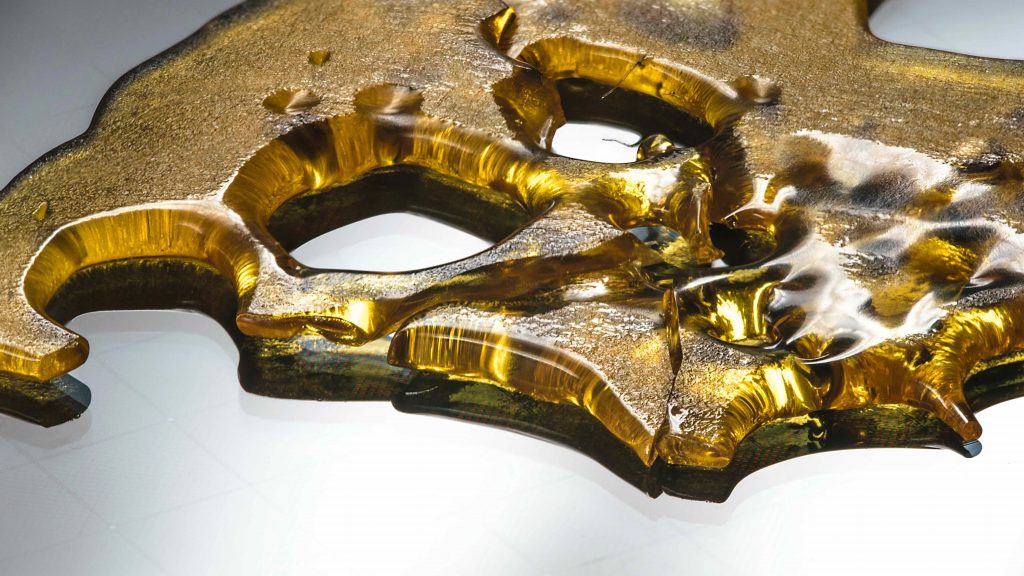
BHO stands for butane hash oil and is a potent concentrate of cannabinoidsmade by dissolving marijuana in its plant form in a solvent (usually butane). The resulting product has very high THC levels (generally more than flowers or hashish) and is a thick, sticky oil. BHO is also referred to as honey oil, “dabs” or “dabbing,” earwax, or shatter, depending on the manufacturing method.

Bong
A large pipe, usually made of glass, that uses water to diffuse and cool the smoke as you breathe it into your lungs.

Blunt
Cannabis wrapped in a tobacco leaf cigar or cigarillo paper. The cigar may be hollowed out and then re-rolled with cannabis, and the origin of the name was coined due to the popularity of the brand Phillies Blunt Cigars. Blunts often burn longer than joints and are usually found in larger social gatherings.

Bubbler
A handheld pipe, usually made of glass, with a water reservoir at the bottom to cool and diffuse the smoke before it is inhaled.

Bud
Bud refers to the actual flower of the marijuana plant. These are the fluffy parts that are harvested and used for recreational or medicinal purposes as they contain the highest concentrations of active cannabinoids.

Budtender
This is the attendant working behind the counter at your local dispensary or retail cannabis shop who may be able to answer your questions on strains, cannabis products, and make suggestions based on your needs.

Cannabinoids
Cannabinoids are the chemical compounds unique to cannabis that act upon the human body’s cannabinoid receptors, producing various effects including pain relief and other medically beneficial uses. Marijuana’s most well-known cannabanoid is tetrahydrocannabinol (THC) due to the fact that it is the most abundant, and also because it produces the psychoactive effects (or the “high”) that drives the plant’s recreational use. However, there are over 85 known cannabinoids all with varying effects, so THC isn’t the only one.

Cannabis
Cannabis is a plant genus that produces three species of flowering plants: Cannabis sativa, Cannabis indica, and Cannabis ruderalis. Cannabis sativaand Cannabis indica are used to produce both recreational and medical marijuana. Cannabis ruderalis is rarely farmed due to its natural lower THC content and small stature, but there is some cross-breeding thanks to ruderalis‘s unique ability to auto-flower rather than mature based on light, so there is potential for this variety to grow in popularity. Cannabis is native to Asia, but grows almost anywhere and has long been cultivated both for the production of hemp and to be used as a drug.

CBD
CBD is the abbreviation for cannabidiol, one of the at least 85 cannabinoidsfound in cannabis and the second only to THC when it comes to average volume. Recently, CBD has gained support for its use as a medical treatment as research has shown it effectively treats pain, inflammation, and anxietywithout the psychoactive effects (the “high” or “stoned” feeling) associated with THC. High CBD strains, such as Harlequin, are being bred more actively and appearing more frequently on the market.

CO2 Oil
CO2 oil is a cannabis concentrate, made from the Supercritical CO2 extraction process. Supercritical CO2 is a fluid state of carbon dioxide held at or above the critical point of temperature and pressure, which can be used as a solvent in the cannabis extraction process.

Concentrates
Concentrates are a potent consolidation of cannabinoids that are made by dissolving marijuana in its plant form into a solvent. The resulting product has very high THC levels (generally more than flowers or hashish), and can produce varying products that range from thick sticky oils (BHO) to moldable goo (budder/wax) to resinous bits (shatter). Referred to by a variety of slang terms, the classification of concentrates is often dependent on the manufacturing method and the consistency of the final product.

Co-op
Co-op is short for cooperative and refers to a community of patients or consumers in a given area who join together to share and receive marijuana. Co-ops usually have specific membership requirements and the product available is generally exclusive to members. In some states, co-ops exist alongside or in lieu of dispensaries.

Clone
This refers to a clipping from a cannabis plant, which can then be rooted and grown through a cloning process of the mother plant, from which the clone was cut.

Cross (genetics)
A cross (referring to crossbreeding) is the result when two different plant strains are bred together. For example, Blue Dream is a cross between Blueberry and Haze strains.

Dab/Dabbing
A dab is a slang term used to refer to a dose of cannabis concentrates “dabbed” onto a redhot surface and inhaled. The act of “dabbing” refers to partaking in dabs.

Dank
A word used to describe sticky, high-quality cannabis with a strong aroma.

Dispensary
Dispensary is a general term used to refer to any location where a patient or consumer can legitimately and safely access cannabis, whether the business is technically an access point, pick-up location. co-op, collective or any other version of a legal cannabis distributor.

Edibles
Edibles are medicated edible goods that have been infused with cannabis extracts. They are commonly baked goods such as cookies and brownies, but options as varied as flavored coffee drinks, breads, and candies exist as well. Dispensaries also often sell marijuana-infused butters or oils for patients or consumers to make their own edibles. Consuming edibles means the active components from the extracts require longer to take effect as they need to be absorbed through the digestive system.

Feminized
Feminized plants come from seeds that have been selectively bred to produce only female plants. Since female plants are the ones that produce flowers (which is where most of cannabis’ cannabinoids are found), they are the only ones that are used to create marijuana products. Feminized seeds are intended to make things easier for growers by eliminating the need to determine the sex of growing plants and remove males early on to prevent fertilization. Generally, feminized seeds produce the same quality of plants as naturally produced seeds.

Flowering Time
Flowering time refers to the time it takes for a plant to produce mature flowers. Cannabis flowering times are affected by the length of daily exposure the plant receives to sun (with the exception of the Cannabis ruderalis species, which flower automatically). When flowering times are reported for a strain, they are general estimates based on how the plants do on average in optimal conditions. Actual flowering times will vary and it is up to the grower to decide when to harvest for maximum benefit.

Flowers
You probably know what flowers are; they’re often the “pretty” part of a plant, and the same is true for cannabis. While cannabis flowers don’t have traditional petals or look like daisies, they are still the reproductive organ of the female plants. Cannabis flowers are the hairy, sticky, crystal-covered bits that are harvested and dried to be used as medication. When they are allowed to be fertilized by male plants, these flowers will produce cannabis seeds. If not, they will continue to produce the resin that contains their active cannabinoids until they are harvested or begin to die.

Hash/Hash Oil
Hash is short for hashish, which is derived from cannabis plants and can be used for consumption or medication. Production involves the removal of the plant’s trichomes by sieving or filtering. Once the cannabinoid-laden powder has been collected, it is typically pressed and ready to be used. Hash ranges in potency, but is generally stronger than straight flowers since everything but the active part of the plant has been removed. A similar concentrated product can also be produced chemically using a solvent; however, this product is commonly referred to as hash oil or “honey oil.”

Heirloom
An heirloom refers to a cannabis strain that was taken from its native homeland and propagated in another geographical location.

Hemp
Hemp is a fibrous product that can be produced from the male cannabis plant and can be used in the manufacture of rope, paper, beauty products, and a vast array of other products. Hemp plants have no value as a drug since they are males. However, they are still considered illegal in the United States.

Hybrid
Hybrid refers to a plant that is genetically a cross between one or more separate strains of cannabis. Hybrids can happen unintentionally, but they are usually bred specifically to combine desired traits of the original plants. Most marijuana on the market today is some form of hybrid.

Hydroponics
Hydroponics refers to a system of gardening that does not use soil. Plants are grown in water and receive their nutrients from the addition of solutions rather than soil. For growers, hydroponic advantages include more control over nutrient intake and stability. In terms of marijuana production, plants grown hydroponically are sometimes said to have cleaner, more distinct flavors.

Indica
Indica is the less scientific name for the Cannabis indica species of cannabis. Generally these plants originated in the Middle East and Asia and include both of the famous kush and Afghan lineages. Compared to their sativa counterparts, the plants are shorter, bushier and have more compact flower structure. This species tends to produce more relaxing physical effects and can have a sedative quality.

Kief
Kief is a collected amount of trichomes that have been separated from the rest of the marijuana flower. Since trichomes are the sticky crystals that contain the vast majority of the plant’s cannabinoids, kief is known to be extremely potent. Kief is sometimes mistakenly referred to as pollen and is the primary ingredient in hashish production.

Kush
Kush refers to a line of cannabis plants that hail from the Hindu Kush mountains in Afghanistan and Pakistan. Kush strains are indicas and have a unique aroma that have given them a large fan base. Specific breeds and plants are unique, but their aroma is generally described as “earthy” and often piney combined with citrus or sweet.

Landrace
A landrace refers to a local variety of cannabis that has adapted to the environment of its geographic location. This accounts for genetic variation between landrace strains, which have been crossbred to produce the cannabis variety we see today. Landrace strains are oftentimes named after their native region, like Afghani, Thai, and Hawaiian, and traces of landraces are sometimes detectable in the names of their crossbred descendants.

Marijuana
Marijuana is the general term for female cannabis plants or their dried flowers. Females are distinct from male plants in that they are the ones that produce flowers which contain the high percentage of cannabinoids that hold both their medicinal and psychoactive properties.

OG
OG is a term that’s now used to describe many strains, though the term originated to describe Southern California’s Ocean Grown Kush, which was quickly shortened to OG Kush. OG Kush grew quickly in fame and reputation. Most OGs are different variations of the original OG Kush genetics or are also ocean grown on the West Coast.

Phenotype
Phenotype is a term that is heard most often in growing. It refers to the general physical characteristics of the plant such as height, color, branching, leaf configuration down to cell structure—any markers that can be used to identify and judge the healthiness of a plant.

Pistil
Pistils are part of a female plant’s anatomy. On cannabis, it’s identified as the little hair-like extensions on the flowers that range in color from white to red to darker orange-brown. When plants are going to be fertilized, the pistil acts to collect the male pollen. When plants are left unfertilized, as in the case of marijuana, the pistils change and can be indicators of plant ripeness.

Pot
Pot is a slang term for marijuana.

Pre-roll
Pre-roll is a commonly used term that refers to a pre-rolled marijuana cigarette, slangily known as a joint. Many dispensaries have pre-rolls available for purchase.

Ruderalis
Ruderalis is a low-THC cannabis variety that is primarily selected by breeders for its CBD-rich genetics. Unlike Cannabis sativa and indica, which use light cycles to flower, ruderalis is an “autoflowering” variety, meaning it flowers with age. Originating in Russia, ruderalis is a hardy plant that can survive harsh climates.

Sativa
Sativa is the less scientific name for the cannabis sativa species of cannabis plant. In general, these plants originated outside of the Middle East and Asia and include strains that are from areas such as South America, the Caribbean, Africa, and Thailand. These strains tend to grow taller as plants (usually over 5 feet), are lighter in color and take longer to flower. When consumed, sativas tend to produce more cerebral effects as opposed to physical and sedative ones.

Shatter/Ice
Shatter or ice are terms used to refer to BHO.

Strain
A strain is a specific variety of a plant species. Strains are developed to produce distinct desired traits in the plant and are usually named by their breeders (or by creative consumers). Strain names often reflect the plant’s appearance, its promised buzz, or its place of origin. Although the medical marijuana industry strives for consistency, strains can easily be mistakenly or purposely misidentified.

THC
THC is an abbreviation for tetrahydrocannabinol. It is the most well-known and most abundantly available cannabinoid in marijuana plants. THC is also the component in marijuana that is responsible for the psychoactive effects, or the “high.” Also known as delta-9-tetracannabinol, it was first isolated in 1964 and is thought to serve as a natural defense for the plant against pests. Research has shown THC to be an effective medical treatment for a range of conditions. There is no lethal dose of the compound in its natural form.

Tincture
A tincture is a liquid cannabis extract usually made with alcohol or glycerol that is often dosed with a dropper. Tinctures can be flavored and are usually placed under the tongue, where they are absorbed quickly. Effects can be felt within minutes. Tinctures can also be mixed into a drink, but in these cases effects will take longer because the tinctures will be absorbed by the digestive system.

Topical
A topical is a type of cannabis product where the active properties of the flowers have been extracted and added to a product such as a lotion or a cream that’s applied to the skin. The medicinal properties are absorbed through the skin and can be used to treat muscle aches, long term soreness, or ailments like dry skin.

Trichome
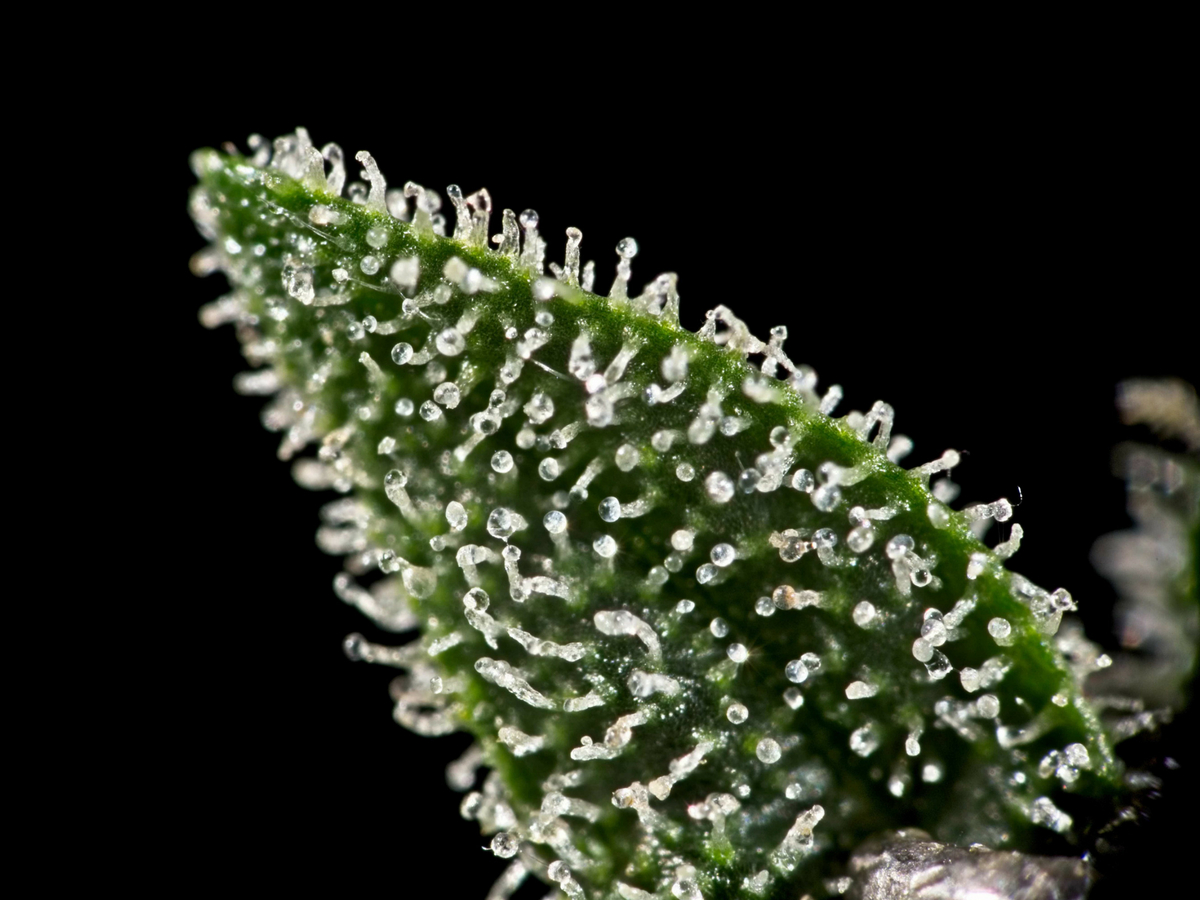
Trichomes are the resin production glands of the cannabis plant. In Greek the word means “growth of hair,” and while these sticky little protrusions can make plants appear a little hairy, they are not hairs, nor are they “crystals,” which is how they are often described. THC, CBD and other cannabinoids are all produced in these glands.

Vaporizer
A vaporizer is a device used to consume marijuana. It heats either flowers or marijuana-infused oils to a temperature that produces a cannabinoid-laced vapor to inhale. Vaporizing is healthier than smoking since there is no smoke to ingest, but this method still produces near instant effects. With new, more compact models on the market, vaporizing is growing in popularity.

Wax
Wax is another form of concentrate.

Weed
Weed is a slang term for marijuana.
 
The Different Ways to Smoke and Consume Cannabis
KAYLA WILLIAMS
the-complete-list-of-cannabis-delivery-methods.jpg


When it comes to cannabis consumption, the second-most important consideration, after the flower itself, is the delivery method. This point is often overlooked, as evidenced by the prevalence of consumers who have limited their experimentation to only one or two methods. If you find yourself within this category but aspire to become a comprehensive cannabis aficionado, let this be your checklist. Gaining the mental and physical benefits of cannabis is largely dependent upon how it’s consumed, with each method providing a unique experience and host of effects. Who knows — you could find a new favorite. Let the exploration begin!

There are three basic delivery methods: inhalation, oral, and topical. Under these umbrella methods are various techniques that serve unique functions, each appropriate for different occasions.

Inhalation Delivery Methods
When cannabis is inhaled, the gases enter the lungs before absorbing into the bloodstream. There are currently two prevalent types of inhalation methods: smoking and vaporization.

Different Ways of Smoking Cannabis
This ancient custom is the method most commonly associated with cannabis, and there are many different ways for consumers to smoke. Advances in vaporization technology, however, have offered smokers an alternative method with fewer health concerns. The effects associated with smoking are widely debated, but health professionals are in agreement that smoke-free methods pose less risk and are medically preferred.


Cannabis smokers have a wide array of devices at their disposal, including hand pipes, water pipes, rolling papers, hookahs, and homemade one-time use devices. Each of these provides different experiences and influence the grade of smoke inhaled.

Hand Pipes

lPFPCjVKQxaSiOwbCWwE_Hand-Pipes-Sara-Dilley.jpg

These are probably the most common smoking device in circulation today and generally favored for their convenience: they are small, portable, and simple to use. Hand pipes have grown into an artistic expression and are available in countless creative forms and styles, both for decoration and functionality (such as disguise pipes that imitate everyday objects). Hand pipes operate by trapping the smoke produced from burning cannabis, which is then inhaled by the user.

Water Pipes

66nPAhbbQRK7XnVV3z8V_Water-Pipes-Sara-Dilley.jpg

Water pipes come in slightly different variations, including but not limited to bongs and bubblers. Like hand pipes, these come in a variety of styles and designs but increase in sophistication by incorporating water. The health benefits associated with the addition of water are up for debate: water cools the smoke, but it’s uncertain whether it acts as an effective filter for harmful constituents.


Rolling Papers

p49stTUTqijD9md4wZgH_Rolling-Papers-Sara-Dilley.jpg

Generally, these are used to smoke joints or blunts. Joints are cannabis rolled in a paper, the composition of which varies across an assortment of plants including but not limited to hemp, bamboo, and rice. Blunts are cannabis rolled in cigar paper made from the tobacco plant and contain nicotine. Blunt consumers often prefer the flavor and combined effects of the nicotine and cannabis; however, the medical risks linked to nicotine deter most health-conscious cannabis consumers.


Hookahs

xxiTKUiTlCbMWaAAPuDl_Hookahs.jpg

This is one of the less common methods of smoking cannabis and is generally associated with smoking shisha, the American term for wet tobacco. Cannabis is rarely smoked alone in a hookah because its low water content causes the plant to burn faster than it can be inhaled, producing an acrid taste and wasting the herb. For economically-conscious smokers, this is likely the prominent concern as large quantities of cannabis are needed to yield the same results as other smoking methods.

To resolve this, cannabis is sandwiched between tobacco, introducing the same health concerns associated with blunts. However, the hookah does allow multiple people to smoke at the same time, significantly changing the smoking experience.

Homemade One-Time Use Devices

RdK8JXMdSim3YkOTeHAI_Homemade-One-Time-Use-Devices-Sara-Dilley.jpg

This method may allow for the greatest creativity and includes all disposable cannabis smoking devices. The most common homemade device is a pipe due to its simplicity, but skilled crafters have taken on water pipe designs as well. Health effects associated with this method are equally variable depending on the material and method used for assembly.

Vaporization
EFZ9JJDJQ3CjxPcDU5T7_Vaporizers-Sara-Dilley.jpg

Vaporizers are the logical choice for moderate to experienced and/or health-conscious cannabis consumers. A vaporizer steadily heats herbs to a temperature that is high enough to extract THC, CBD, and other cannabinoids, but the temperatures are too low for the potentially harmful toxins that are released during combustion. Essentially, vaporization minimizes the health risks associated with smoking. This improvement comes with an equally significant reduction in odor, which is generally the first acknowledgement of first-time vaporizer users. There is a diverse landscape of vaporizer models and the market is only expanding as the technology improves.


There are multiple elements that distinguish vaporizer designs, markedly portability and product. As the market grows, so does the efficiency and quality of portable models, which generally fall short to fixed models (requiring an outlet power source) in durability and robustness. The form of cannabis product is the other primary component: many vaporizers take cannabis concentrates which come in a variety of forms, including oil and wax. These can be added manually or using cartridges, depending on the design. The prevalence of concentrate vapes is due to mechanical simplicity; fewer vaporizers take flower, which require a heating element to accomplish vaporization, and thus a more sophisticated design.

A younger delivery method that is a point of contention amongst the cannabis community and attentive policy makers is dabbing. Dabbing is a form of vaporization in which potent cannabis concentrates are dropped on a heated nail, creating vapor that is trapped in a glass globe and inhaled. Although there are obvious health benefits associated with clean concentrates over combustible flower, concerns arise from dabbing’s image and the intense effects of high-THC extracts.

Oral Delivery Methods
Oral delivery includes all techniques that are administered through the mouth, including tinctures, ingestible oils, and infused food/drinks. We most often assume that oral delivery denotes ingestion through the digestive tract before entering the bloodstream, but this is not always the case. Tinctures are essentially a topical application that is administered through the mouth, and they are immediately absorbed into the bloodstream unlike edibles or drinks.

Tinctures
aIlDkHmETAqeaQqX4Zo1_Tinctures.jpg

Tinctures are a liquid cannabis extract used by consumers looking for dosage control and fast-acting effects without the health risks associated with smoking. Most commonly, alcohol is used as the solvent (any proof greater than 80 can be used effectively), but other fat-soluble liquids can be used as well, such as vinegar or glycerol. Generally, three or four drops of the tincture are placed under the tongue, where it’s absorbed into the body versus swallowed and digested. When ingested, tinctures are immediately absorbed in an empty stomach but require time to process through the liver, reducing dosage control.


Ingestible Oils
cgcMTwfsR3uamq00BiPh_Ingestible-Oils.jpg

Ingestible oils are a happy medium between edibles and concentrates: they are swallowed and digested like an infused product, but often have the consistency of oil. These oils can either be eaten or put in easily-ingested capsules. One popular oil is Rick Simpson Oil (RSO), which originated in 2003 when Simpson used concentrated cannabis to treat his skin cancer. RSO is made by extracting the therapeutic compounds of cannabis with alcohol and then evaporating the solvent, leaving behind a tar-like substance resembling oil.

Edibles
Kn7FRdnZTyygZcaPWqat_Edibles-Clare-Barboza.jpg

Eating or drinking cannabis provides significantly different effects from delivery methods that immediately enter the bloodstream, such as smoking or vaping. Edibles can be defined as any food that contains cannabis, whether or not the cannabinoids are bioavailable. These products have longer onsets and tend to cause powerful full-body, psychoactive effects.

Infused food and drinks can be made a variety of ways depending on the dish. Most often, edibles are infused with a staple infused ingredient high in fat — like butter or olive oil — that enable extraction of the plant’s therapeutic properties. Adding tinctures to dishes is another great option for dosage control and simplicity. Generally, cooking with cannabis flower can be difficult because of the complication associated with cannabinoid activation (including sensitive heating temperatures and times, and sufficient solvent fat). However, as the prevalence of cannabis grows, so does the presence of flower in the kitchen.


Topical Delivery Methods
Topical cannabis administration utilizes full cannabis extract — a thick oil that has been decarboxylated to activate cannabinoids. Once cannabinoids are activated, they can be absorbed through your skin.

NtTPnaXRZy88vxKidpxo_Topicals.jpg

Topical effects differ from other medicating methods in that they don’t provide the cerebral stimulation that users describe as “being high.” Because of this, topicals are appropriate for consumers needing a clear head and localized relief (for example, muscle aches or soreness).
 
‘How Will Marijuana Affect Me?’ 5 Basic Cannabis Questions Answered
5-basic-cannabis-questions-answered.png


Leafly receives a steady stream of questions from cannabis users like you who want to know anything and everything about the plant that we all love. Questions range from the basics of finding and consuming cannabis to advanced growing techniques and extraction methods. We’ll start by answering some of the basic questions that we see all the time. If you consider yourself a connoisseur you probably already know the answers to these queries, but if you are new to cannabis or rediscovering it for the first time in years, you’re bound to have some questions like the ones below:

RNYUs3yqScaJGE9d9xcb_q1.PNG

Cannabis affects everyone differently. Different strains and methods of consumption give users different effects. And new users generally feel different effects than more experienced users. There are some people who don’t feel anything at all the first time they try cannabis. Many people who use cannabis find the experience to be kind of relaxing and a little euphoric. For some, it makes them more outgoing and social. But others report that it makes them tired, anxious, or paranoid. If you’re not sure how cannabis will affect you, it’s best to start with a low dose. And be sure to ask your local budtender for recommendations on strains, products, and doses to start with.


6OdXyijiS3e4kNRAfgEq_q2.PNG

The main difference between medical and recreational cannabis really comes down to the way it is regulated and how you access it. Medical cannabis requires a doctor’s recommendation for a qualifying ailmentbefore you can access, purchase, or consume cannabis and cannabis products. Recreational cannabis, on the other hand, simply requires that you are over the legal age of 21.

But there are also people who differentiate medical and recreational based on how each of them use cannabis. Recreational marijuana users are looking to experience novel states of consciousness, and connoisseurs seek different effects for different circumstances and to create different moods. On the other hand, medical users seek out strains that help with a specific ailment or condition. Oftentimes patients are looking for strains that help treat their symptoms but deliver only a mild psychoactive experience that will allow them to remain productive and active.


kapX8ccFSiyVvPZ1E94b_q3.PNG


Gone are the days of dialing up a friend-of-a-friend you hardly know in order to procure some product on the sly. Nowadays, however, there’s a solution right at your fingertips. Using Leafly’s free mobile app (on both iOSand Android) or Leafly.com, you can use the “Find Nearby” feature to locate recreational stores and medical cannabis dispensaries in your area. You can also find a specific strain you’re looking for with the Leafly Strain Explorer. From there, you can click the “Nearby” tab to find locations in your neighborhood that have the strains and products you desire.


PA2TqXOqTaeFRFTOY3cQ_q4.PNG

The amount of time it takes for an edible to kick in greatly depends on your metabolism. Some people with faster metabolisms may start to feel the effects after about an hour, while those with slower metabolisms may not feel anything for two hours or more. The effects generally peak up to four hours after eating or drinking cannabis, so it’s best to wait at least that long before consuming more. In most places, 10mg is considered to be a dose – which may be just right for some, but others might need a lot more to feel the same effects. Take your time and learn what’s right for you, and always pay attention to the label for dosing and recommended serving size.


QQlke55SVqogGrxLxGKM_q5.PNG

It’s best to store cannabis in a cool, dark place that’s out of direct light. Keep it in a container, like a glass jar, in order to minimize over-exposure to air. Keeping your relative humidity below 65% will help avoid mold and mildew. And, while not required, it’s always a good idea to separate your strains to preserve their individual flavor profiles.
 
Threatening Truths or Misleading Myths? Uncovering 5 Cannabis Misconceptions
threatening-truths-or-misleading-myths-uncovering-5-cannabis-misc.jpg

We have to admit, it makes sense why many people misunderstand cannabis and the benefits it holds for both individuals and society. Cannabis, after all, has been fraught with decades of misguided stereotypes, scare tactics, and inaccurate information masquerading as facts. Our legal system and anti-drug policies make it even harder to debunk these outlandish myths, as they themselves encourage misuse, perpetuate stereotypes, and spread fear-based messaging and biased conclusions, leaving society uninformed and struggling to separate the truths from the lies.


Exposing these false messages through research and awareness is our best bet at eliminating the misconceptions surrounding cannabis. Here are five misleading anti-cannabis sentiments we’ve all probably heard at some point or another. For each of these points, we state the facts and logic to debunk the arguments so you can decide on your own what to believe.

1. “Cannabis is a gateway drug.”
5rFoBQTWRgaeOZRtUfnd_heroin-use.jpg

This myth has persisted despite being debunked on numerous occasions. It shouldn’t be surprising that people who consume harder, more illicit drugs have potentially consumed cannabis as well. We can say the same for alcohol and tobacco, yet, we don’t consider them a gateway to drug abuse because it’s foolish to associate a correlation as a cause.

The missing logic from the gateway argument unfolds even further when you look to its larger social implications. In a post on Psychology Today, Constance Scharff, Ph.D, points to alcohol and tobacco as the more sensible ‘gateway’ drugs:

“Many people mistakenly believe that marijuana use precedes rather than follows initiation of other illicit drug use. In fact, most drug use begins with alcohol and nicotine before marijuana, making nicotine and alcohol the two most common drugs of abuse.”

Aside from the confusing differentiation of cannabis, alcohol, and tobacco, Dr. Karen Van Gundy, Associate Professor of Sociology at the University of New Hampshire, recently completed a study on cannabis showing other factors of causation hidden in the gateway myth:

“But pot does serve as a ‘gateway’. Mainly for young people who are poor, unemployed and subjected to severe psychological stress.”

Larger social issues are at play here, so claiming that cannabis is a gateway drug is ignoring the numerous and complex factors, from environmental to psychological, that account for why heavy drug users turn to a variety of substances.

2. “Marijuana is worse for your lungs than tobacco.”
1y3IkZkyS3WFc0En9fv7_cigarettes.jpg

Hats off to the tobacco corporations who’ve successfully perpetuated the idea that smoking cannabis is more harmful to your lungs than cigarette smoke — a crux of capitalism rather than science. No matter the projected rationale behind these arguments, whether it’s harping on the lack of filters or claiming that you inhale longer with marijuana, no study proves marijuana to contain more harmful effects than tobacco.

The Journal of the American Medical Association (JAMA) published a study in 2012 indicating that smoking cannabis was not linked with lung damage:

“Marijuana may have beneficial effects on pain control, appetite, mood, and management of other chronic symptoms. Our findings suggest that occasional use of marijuana for these or other purposes may not be associated with adverse consequences on pulmonary function. It is more difficult to estimate the potential effects of regular heavy use, because this pattern of use is relatively rare in our study sample; however, our findings do suggest an accelerated decline in pulmonary function with heavy use and a resulting need for caution and moderation when marijuana use is considered.”

Another study found that cannabis and tobacco smoke are not equally carcinogenic, and research led by the University of California San Francisco in conjunction with the University of Alabama at Birmingham found that cannabis is less damaging to the lungs than tobacco.

We aren’t saying that smoking marijuana doesn’t have any negative effects on your lungs — any sort of inhalation can have repercussions on your pulmonary health. But research has indicated on multiple occasions that tobacco is more harmful to your lungs than cannabis. Keep in mind that for both tobacco and cannabis, the resulting effect on your lungs is dependent on the quantity you consume.

If you’re concerned about your lung health as a cannabis user, remember that there are many other ways to consume cannabis without smoking it. Legalization opponents miss the mark when they spout this one off. Put this one to rest, people.

3. “Cannabis use leads to crime.”
PDyFQsTymEVoag4EuiYw_cannabis-crime.jpg

Here’s an example of propaganda at its best: the 1936 film Reefer Madness. Prohibition and anti-cannabis supporters still ride the waves of fear induced by a film that’s almost 80 years old. It makes sense to link cannabis to crime if you don’t want it around but, similar to the gateway myth, the argument is blind to the bigger social issues.

This myth hangs on to a premise that largely relies on the status of cannabis in our legal system. Crime trends and statistics used to fuel the argument against legalization don’t make sense, as the whole point is to end those arrests and allocate police attention to the real issues.

To take a look at how crime and cannabis really interconnect, we refer to a study in London that decriminalized cannabis for a year in the borough of Lambeth. Results showed a large drop in crime rates across the board, even in non-drug related crimes:

“We use the key lessons from this localized policing experiment to shed light on what would be the impacts on crime if the same policy were to be applied citywide, by developing and calibrating a model of the market for cannabis and crime, we account for the behavior of police and cannabis users.”

This policy change decreased crime and allowed the borough to further understand how cannabis functions in their community. The authors also noted how police were able to prioritize higher-risk crimes, improving the overall safety of the borough rather than tackling low-risk cannabis offenses. Can you imagine if the entire US adopted this model?

Speaking of the United States, in March, The Washington Post reported the significant and positive impact Colorado’s retail cannabis legalization has been having on Denver crime:

“The total number of marijuana court cases fell from 39,027 in 2011 to 2,036 cases in 2014. Those 37,000 fewer cases represent a savings of untold millions of dollars in court costs and law enforcement fees. They represent 37,000 fewer people who have to deal with the stigma and financial burden of an arrest and possible conviction.”

Cannabis isn’t indicative nor a cause of criminal behavior. Rather, anti-drug policies use cannabis as a scapegoat for community issues, which only results in promoting illicit activity and the black market rather than eliminating it.

4. “Cannabis is addictive.”
XS8QmtkyST2k2l8yWOtf_cannabis-user-on-couch.jpg

A simple guideline when it comes to using cannabis is to consume responsibly and within moderation. Anything can be considered harmful if it’s done or used in excess. People can be addicted to food, exercise, and even sleep when that’s all they do, all of which are perfectly legal activities.

The National Institute on Drug Abuse tells us that 9% of users become dependent on cannabis, which is unfortunate, but less overwhelming than cannabis opponents would have you believe. The organization describes the symptoms of marijuana addiction as “linked to a mild withdrawal syndrome”:

“Frequent marijuana users often report irritability, mood and sleep difficulties, decreased appetite, cravings, restlessness, and/or various forms of physical discomfort that peak within the first week after quitting and last up to 2 weeks.”

Addiction is an issue with all substances, which is why both awareness and mindset are crucial when using cannabis. The potential harm, no matter how minimal, should be combated through education and proper protocol, not fear and misinformation.

5. “We all know what stoners look like.”
O0HXYM28RGA3V78eIPOl_steretypical-stoner.jpg

This one doesn’t need science to be debunked; instead, it requires a moral conscience and a willingness to dispel stereotypes as a way of seeing the world. The cannabis archetype is set in stone: Cheech and Chong, Snoop Dog, Scooby and Shaggy all come to mind, but they aren’t the only stoners out there (not to mention how truly successful these so-called “lazy” stoners actually are).

Morgan Freeman, Jennifer Aniston, Maya Angelou, George Clooney, and many other successful people have all used cannabis, and they all look, live, and consume differently. There’s no one way or one type of person who consumes.

Not convinced? Check out these cannabis-friendly people, many of whom you probably recognize. Do all of them fit neatly into the archetypical stoner image?

We’ve got some work to do before the stereotypes and myths disappear, but consuming responsibly and being sensible with how we introduce the truths to others will lead to great things.
 
20 Comments Cannabis Consumers Hate
20-comments-cannabis-consumers-hate.jpg

We’ve all been there — someone finds out we consume cannabis and peppers us with eye-rolling, stereotypical, or just plain dumb questions. Below is a list of 20 common questions or comments we hear all the time and our oh-so appropriate reactions. Enjoy.


1. “Don’t you get the munchies all the time?”
1PvZeXB8RhiHZqTT8u7M_robert-downey-jr-gif.gif


2. “So do you have a job?”
c2qwyW9CTIyid3xq0FhY_2.gif


3. “Aren’t your parents disappointed in you?”
Hscgq4LSce1MaI3m4kCa_how-dare-u.gif


4. “You work out? Aren’t stoners lazy?”
oc0rzv3UQQmSiidXFbyz_brad-pitt-dancing.gif


5. “But you’re not a deadbeat!”
4HvOqn1rQKWVLJ2mSmqG_5.gif


6. “So what other drugs do you do?”
duT8FRmQfmG8WrzvtMHA_10.gif


7. “How much money do you spend on that stuff?”
Iwn4HpXRHakFKLBbL7fA_mind-ya-business.gif


8. “But you don’t smell! I thought stoners smelled!”
KxwDUqnbRnwmFsuQiuXC_8.gif


9. “So do you sell drugs?”
BMCE1BNwRdyuPYfItU35_17a.gif


10. “Are you high right now?”
g8STlceQfuXps6mCUwr3_20.gif


11. “Fast food restaurants must love you.”
XpQILtfLT4StYmsSIbEn_23.gif


12. “Did you hear about the new Taco Bell burrito?”
TlHqWuihS42jh6ZczXup_14.gif


13. “So you’re like into Bob Marley and rasta stuff?”
RxSpLjSNT6aeVA49erIj_15.gif


14. “You should totally grow dreads.”
Pg4aecTScmZYASTdNb9w_16.gif


15. “Why?!”
XQjdJIsoSTGMOpRIM5hu_17.gif


16. “Isn’t marijuana a gateway drug?”
u79UISFQGqsgx2Adjcd2_21.gif


17. “But you seem so responsible!”
RpJoJnOXSbGcYNrlCZRj_21a.gif


18. “Oh, so you’re a ‘pothead.'”
dGoD3iyfR0mZK8sojm2T_1.gif


19. “I thought you were smarter than that.”
kWTuSvW8QtmZ7aRnRQdm_17b.gif


20. “Well I don’t do drugs, but I got SO drunk last weekend!”
A4XLfaKKQGeQl9CtWrP2_16a.gif
 
5 Frustrating Misconceptions About Cannabis

5-frustrating-misconceptions-about-cannabis.jpg

https://twitter.com/intent/like?tweet_id=463724933227356160
As the cannabis movement continues to pick up steam, this question is more timely than ever. Yes, there is a lot of amazing progress being made and people are becoming more educated on the positive qualities of cannabis. However, frustrations persist and some of our followers shared the most aggravating misconceptions they hear on a regular basis. Below are the highlights:

1. “It’s a Gateway Drug”
6kG28xP6QG2EJuBM0Cue_drug-addict.jpg

Credit to Twitter users madniggels, SLM420LOVE, pcava, KlausDaGardener, and QwikWittz for chiming in with this popular misconception. We’ve all heard this one from as early on as our elementary school D.A.R.E. days, and it’s a popular argument your parents have used to illustrate the slippery slope that starts with cannabis and ends with injecting heroin between your toes. Yes, there is a correlation between cannabis consumption and other drug use, but as TIME points out, correlation does not equal causation. While hard drug users may also be cannabis users, the vast majority of cannabis users aren’t going to graduate to stronger drugs.

In 1999, the Institute of Medicine of the National Academy of Sciences compiled a report commissioned by Congress examining the potential dangers of cannabis. Included in the report was this statement:

There is no conclusive evidence that the drug effects of marijuana are causally linked to the subsequent abuse of other illicit drugs.

Other studies have followed suit, and alcohol is actually being touted as more of a serious gateway drug than cannabis. Yet somehow the naysayers don’t get tired of whipping this misconception out of their debate book and using it as ammunition.


2. “It Makes You Lazy and Stupid”
G8ehuUVjSpGcqdIRxMvu_couch-potato.jpg

Twitter users thatjohnnygreen and kd716 offered up this obnoxious misconception that causes many consumers to roll their eyes. In kd716’s instance, he’s been a consumer for over 10 years and is gainfully employed with a Bachelor’s degree. Leafly’s talented and driven team could not have created GeekWire’s 2014 App of the Year if we were all too baked to come into work and get anything done. I know cannabis consumers who are Boston marathoners, Ironman triathletes, successful CEOs and entrepreneurs — much how alcohol doesn’t automatically give everyone who takes a sip a big beer belly and cirrhosis, cannabis doesn’t instantly glue you to a beanbag chair and prevent you from going outside as soon as you touch a bud.

Yes, some studies have been released that indicate regular cannabis consumption can lead to lower levels of dopamine and thus lower levels of motivation, but conversely, other studies have found little evidence that supports cannabis-induced amotivational syndrome. We need more studies surrounding this plant and its effects in order to truly understand its impact on the human body. Until then, keep in mind that there are different types of cannabis consumers other than the lazy hippie stereotype that immediately comes to mind for a lot of people. Some may be lazy by nature, yes, but others are successful, hard-working individuals who don’t let cannabis define their successes or failures.


3. “It’s Dangerous/Deadly”
eQOdpCzASOi2HMzqtjsC_is-cannabis-dangerous.jpg

Thanks to Twitter user chrisgee204 for contributing this frustrating talking point, the all-encompassing “Cannabis is deadly!” argument. There has never been a single confirmed death by cannabis overdose in the history of the world. True, cannabis has occasionally been a contributing factor in deaths, but those are instances of either lifestyle dangers (e.g., trafficking/dealing/cartel violence) or gross negligence leading to accidents. And those outliers are vastly usurped by alcohol-related deaths, prescription drug overdoses, or even accidents resulting from fatigue.

There are countless other everyday things that are more likely to kill you than cannabis, but cannabis opponents are often all-too eager to jump on any potential drawbacks of the plant and spread fear messages that cannabis will kill you. Like alcohol, cannabis is intended for responsible adults (with some medical exceptions, of course). And like alcohol, sometimes people abuse cannabis or are irresponsible with it. But unlike alcohol, cannabis tends to get the brunt of the blame when something negative happens. Does an angry mob lash out at Budweiser or Grey Goose and clamor to make alcohol illegal whenever someone gets a DUI or dies from an alcohol-related incident?

Let’s be clear: anything can be dangerous in excessive amounts. You could die from drinking too much water. But because cannabis has a global spotlight shining on it, it’s all the more important to be both responsible with and respectful to a plant that too often gets a heap of criticism piled atop it. As far as how dangerous cannabis is, well, so far the population of Colorado hasn’t died off drastically since January 1st (in fact, crime is down in comparison to the same time period in 2013) so that’s a pretty good sign thus far that the world won’t devolve into a Thunderdome situation if cannabis were legalized.


4. “It’s Such a Negative Substance”


ded5fxjySRK0TsDBZhXZ_negativity.jpg

According to Twitter user DPerigino, the general negativity surrounding the word “cannabis” or “marijuana” alone is frustrating enough. All of the above misconceptions bubble up as soon as someone who is opposed to cannabis hears the word uttered. Or maybe people just have a negative association with cannabis simply because they’ve been taught for so many years that cannabis is bad. Either way, “cannabis = evil” is something the industry has been trying to overcome for decades. We’ve made incredible progress in the past couple years alone, but we still have a ways to go before most people think of “cannabis” as just another word instead of a launchpad for heated and misinformed debate.

5. “It’s Illegal for a Reason”
Zvnx99QQUupecBiM25Cn_gavel-with-cannabis.jpg

Ah, yes, the illegality angle. Twitter user somanagpo brought up a misconception that’s inspired numerous states from coast to coast to make a change. Yes, cannabis is illegal federally, but not because it has negative connotations, it’s dangerous, it makes you lazy and stupid, or because it’s a gateway drug. In fact, cannabis was quite a cash crop before the 1800s. Unfortunately, hundreds of years of misguided drug labeling, xenophobia, and fear mongering has twisted a plant once celebrated for its therapeutic and textile benefits into a Big Bad Bogeyman that hides in your kids’ closets and turns them into junkies against their will. So actually, cannabis is illegal for no logical reason other than misguided tradition. As more states continue to shape history and change the way we think about this plant, our hope is that in the near future, this misguided tradition will quickly become a fading memory.
 
5 Differences Between Cannabis Concentrates and Flower
5-differences-between-cannabis-concentrates-and-flower.jpg

Cannabis concentrates are becoming an increasingly popular consumption method, but their potency and unfamiliar form can be intimidating at first. Many consumers will stick to what they know and never feel compelled to deviate from a jar of sweet-smelling flower. But cannabis concentrates and extracts have many benefits to offer you may not realize—for example, concentrates can offer cleaner, smoother, and less odiferous hits as well as discretion in the form of convenient, portable vaporizers.


Explore Cannabis Concentrates on Menus Nearby
These five facts may be enough to get the cannabis curious started, but be sure to leave any other questions or advice in the comments section below!

1. Concentrates go by many names.
Although the multiplicity of strains available can make one’s head spin, even beginners have a pretty good idea of what they’re getting with flower, regardless of its name. “Concentrates” is an umbrella term that refers to a variety of different cannabis extracts and their monikers – and that’s where things can get more confusing.


Imagine you’re standing at the glass counter of a dispensary. Inside you see the following items: shatter, rosin, BHO, CO2, wax, crumble, honey oil, dabs, hash, tinctures, and capsules. Don’t let the breadth of options drive you away–many of these are different names for the same thing. Here are some quick tips for narrowing your search down:

  • Shatter, wax, crumble, sugar, honeycomb, sap, and oil often refer to a concentrate’s texture. While some people have a preference of an extract’s consistency, what’s important to many people is the solvent used and how compatible that extract is with their preferred consumption method. Also be mindful of potency and understand that a high THC content does not always equate to the best experience.
  • Most concentrates are extracted using CO2, hydrocarbons, water, alcohol, and heat. Solventless extracts made using water (e.g., hash) or heat (e.g., rosin) are excellent choices for those wary of how consuming solvents might affect them.
  • Ask your budtender which oils work with your delivery method of choice. Looking to dab something? Maybe try their recommended shatter, live resin, or rosin. Do you prefer vape pens? Choose a cartridge that’s compatible with your battery. Interested in ingestible concentrates? Ask about dosing tinctures and oil capsules.


2. Concentrates are more potent.
The most important distinction to make between cannabis flowers and concentrates is potency. While bud potency tends to range between 10-25% THC, a concentrate typically falls between 50-80% though some exceptional extracts can even push past 90%. Those numbers may be enough to scare off any under-seasoned consumers, and for good reason: dosing gets trickier as potency increases.

A mildly or non-intoxicating CBD-rich concentrate would be a good choice for beginners (that’s right, not all concentrates get you high). Hash and tinctures also tend to have lower THC contents than other types of concentrates, so you might consider steering toward those before graduating to the more potent oils. Just remember to always start with a low dose and work your way up if you’re new to concentrates or have a low tolerance.


3. Concentrates can be consumed in many different ways.
With bud, you can smoke it, vaporize it, and roll it, but there’s not much else you can do with it. Concentrates offer more options.

Dabbing—the process by which you apply an extract to a hot nail and inhale through a glass piece–is swiftly on the rise among cannabis veterans. Dabbing is an easy way to get a potent dose of cannabinoids, although the learning curve and equipment demands make it a less accessible option for new users.


Ingestible oils act like edibles in that they take effect slowly and last much longer due to the way they’re metabolized. These oils (or any extract, really) can be high in THC, CBD, or both. So if you’re interested in smoke-free methods – especially for treating medical symptoms and conditions–these capsules may be worth looking into.

Tinctures are a sublingual concentrate, meaning they’re dropped under the tongue and enter the bloodstream. They act faster than edibles and ingestible oils, though they’re often less potent.

Hash and oils may be also consumed using some of the same consumption methods as flower. Some vaporizers are compatible with “loose” oils, though some portable pens are specially designed to be used with specific cartridges of oil. The motivated enthusiasts can even roll their bud-packed joints with hash and oils.


4. Plant matter is stripped from concentrates.
Here’s one benefit to concentrates perhaps you’ve never thought of: extraction processes strip out plant material and isolate the compounds you want like THC and CBD (…and potentially some things you don’t want, in the case of pesticides, contaminants, and residual solvents; make sure the products you consume are tested).

When you smoke flower, you’re also smoking the plant material that leaves your glass black with tar. That can take a toll on your lungs. However, you may have noticed that when you dab oils, the glass and water stay clean for much longer.

Vaporizers heat cannabis below the temperature of combustion, but hot enough to extract beneficial compounds. This delivery method is ideal for health-conscious consumers.


5. Flowers may have more flavor—but not always.
If flavor is something you care about, this point is for you: some concentrates will lose their aromas and flavors in the extraction process. Terpenes are the volatile, fragrant oils secreted by the cannabis plant, and they give the flowers their smells from the sweet, fruity, and floral to the earthy, piney, and musky. Being so sensitive to heat, it can be difficult to preserve terpenes in many extraction processes.

For this reason, many producers have begun reintroducing these aromatic compounds afterward–which can result in products even more flavorful than the flower they came from. Some extracts like live resin often retain impressive flavor profiles without a need to reintroduce terpenes, and many consumers will tell you that this refined form tastes better and cleaner than the flower it was derived from.
 
Targeted by Cops for His Skin Color, Fate Winslow is in Prison for Life for Weed

Prohibition isn’t over until people stop going to prison for weed.
targeted-cops-his-skin-color-fate-winslow-prison-life-weed-featured.jpg


Fate Winslow’s nightmare began on the streets of Louisiana. He was homeless and struggling to survive. Winslow, an African American male, was approached by a Caucasian stranger on a September evening in 2008. The stranger said he was seeking $20 worth of weed. Hungry and desperate for a meal, Fate agreed to middleman for a measly $5 finders-fee. He delivered two $10 bags of marijuana to the stranger—who Winslow then discovered was an undercover cop.
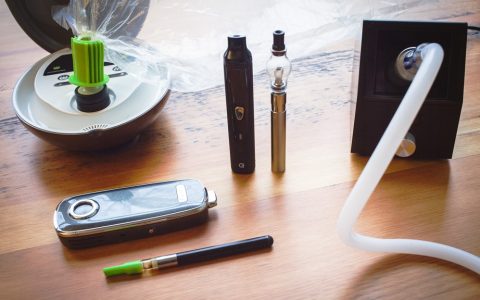
Winslow was arrested. Astoundingly, the man who sold Winslow the cannabis was never arrested. And as it turns out, he was also Caucasian. But for this insignificant, non-violent crime, Winslow is serving a life sentence in prison without the possibility of parole.

“Do I think that racism played a part in my situation,” wrote Winslow in a letter to Deedee Kirkwood (founder of The Pot Fairy) his friend and advocate. “[Yes]…major. Color has played a big part in life and being black has been hard.”

Winslow feels he was singled out by the undercover officer and cannot comprehend how the dealer was never charged. Furthermore, due to a Jim Crow-era law that existed in Louisiana at the time of Winslow’s conviction, juries didn’t have to return a unanimous verdict—and they didn’t. Winslow states his jury consisted of 10 Caucasians who voted guilty and two African Americans who voted not guilty. In most states jury nullification would have saved him. Alas, this is yet another detail that Winslow believes points to race as being a factor in his case.

In November of 2018, the citizens of Louisiana finally voted to abolish the archaic Jim Crow-era law, rendering Oregon the final state needing reform. Starting in 2019, convictions of serious felony crimes will require unanimous verdicts. Unfortunately, the amendment of Louisiana’s law is not retroactive, so Winslow still remains in prison.

With little family support and minimal income, Winslow needs a miracle to secure the necessary legal council to argue the unjustness of his case and sentencing. It’s important to remember: Winslow was homeless prior to his conviction. Needless to say, his resources are as slim now as they were then.

Presently, Winslow is housed in one of the most violent and infamous maximum security prisons in the country: Louisiana State Penitentiary—the “Alcatraz of the South” as it’s often referred. Angola, the town the institution is located in, is named after a plantation. And the plantation lifted the name from an African country from which many slaves were seized.

In 2010, 76 percent of the inmate population in Angola were Black. The town is notorious for its abhorrent conditions, including reports of alleged sexual slavery facilitated by prison officers. To this day, all death row inmates in Louisiana are housed in Angola, where they’ll also be executed. Louisiana is known as the world’s prison capital because it houses more prisoners per the population compared to anywhere else in the world.

The devastating reality is that the War on Drugs is disproportionately tougher for people of color—even in today’s society. Many Americans believe the 13 Amendment abolished slavery. However, the phrase “except as a punishment for crime whereof the party shall have been duly convicted” is a constitutional detail our government and corporations take autocratic advantage of.

“I have a job cleaning up the dorm that pays me four cents an hour,” says Winslow. “I make 80 cents a week, so in about three weeks I can buy me a jar of peanut butter to make it through hard meals.”

Winslow reports a diet consisting of chiefly rice and beans. For him, despite advances in criminal justice reform, slavery remains alive and well.

According to the NAACP, African Americans are locked-up more than five times the rate of white Americans. In 2015, African Americans and Hispanics made up less than a third of the American population, yet totaled 56 percent of the people in prison. These statistics merely expose the tip of a massive, factual iceberg that support Winslow’s notion: race did, in fact, play a role in his incarceration—and many other people’s, too.

The loophole of the 13th amendment is a backhanded tool utilized by the government allowing them to continue to make human-beings a commodity. The prison industrial complex is simply warehouses stocked with cheap labor generated by non-violent citizens—in order to benefit those who are already rich.

The future of inmates in Louisiana is looking up, however. In 2017 the state passed significant justice reform bills. According to reports, these bills have had success in reducing the population of prisoners. Unfortunately, at this point, it’s unclear if or how these changes will help Winslow. However uncertain, he remains hopeful and continues to do his best to prove he is no danger to society. “I desire to go home extremely bad,” he says. “Staying away from write-ups might help me down the road.”

As we are mindful of Black History Month, please remember Fate Winslow along with the countless others serving extraordinarily long sentences in appalling conditions. Prisons such as Angola are nasty stains on the fabric of America and should not be tolerated. Regardless of race, creed, or gender people should not be caged and forced to work for pennies an hour for the rest of their lives—especially because of a plant. The people left behind in prison while reformation marches on deserve freedom.

If you would like to learn more about Fate and others who suffer behind bars for Cannabis crimes, please visit the Voices Of the Cannabis War Facebook page. To make a non-profit donation to his or other plant prisoner’s commissary.

Write to Fate Winslow:

Fate Vincent Winslow #00112270
Doc 11 22 70
Camp D Fal1 Bed 38
Louisiana State Penitentiary
General Delivery
Angola, LA 70712

Kristin Flor and Mindi Hall are founders of VOW, a grassroots group comprised of dedicated cannabis activists who strive to be the voice of prisoners incarcerated for cannabis. VOW writes articles, hosts radio shows and speaking engagements, works on special projects, and makes images in honor of those locked up due to cannabis crimes. VOW has ‘vowed’ to help free these people through education, prisoner support, courtroom support, and helping end prohibition.
 
Hmm,, everyone is jumping on the cannabis train!!! Bout damn time!!


The Top 10 Democratic Contenders of 2020 Who Support Legal Weed

How 420-friendly are the 2020 Presidential contenders?

1024px-Polling_Place_-_Vote_Here_8162709569.jpg

Mrs. Gemstone/Flickr


In the lead up to the 2020 Presidential election, there are a lot of important issues that warrant debate. Everything from healthcare to net neutrality will be discussed during campaign season, but there’s one issue of particular importance: the legalization and decriminalization of cannabis.

Legal weed isn’t really a wedge issue that causes people to shift their party allegiance. But it’s still important to know what major politicians think about its status, as we buildup to the next election. This look into ten Democratic contenders (only some have announced their exploratory committees while the rest have coyly voiced their interest in running) will explore how their views have changed and how they interacted with the so-called War on Drugs in the past.

Elizabeth_Warren_speaks_May_19_2014.jpg

Elizabeth Warren (Katherine Taylor/Wikimedia Commons)

Sen. Elizabeth Warren

Elizabeth Warren is the first major Democrat to announce her intentions of running for president. A fierce advocate for consumer protections, the Harvard-professor-turned-Massachusetts-senator is now a supporter of federal legalization. Back in 2016, Warren refused to endorse the issue when it hit her home state’s ballot. But, as public opinion in the Democratic party shifted, Warren has followed the wind and earned an A-rating from the National Organization for the Reform of Marijuana Laws (NORML).


With Cory Gardner, a Republican Senator from Colorado, Warren introduced the Strengthening the Tenth Amendment Through Entrusting States (STATES) Act in June during the previous Congress. If passed, the bill would have amended the Controlled Substance Act to block federal interference in state-legal marijuana-related activities. She was also a co-sponsor of the Carers Act that would protect medical pot patients from federal punishment; and the Marijuana Justice Act, legislation that would have ended federal prohibition and directed the courts to expunge people’s records.

800px-Sen_Cory_Booker.jpg

Wikimedia Commons

Sen. Cory Booker

While he hasn’t formally announced whether he’s running for president, Senator Cory Booker’s name has been thrown around as a potential candidate since he served as the Mayor of Newark, New Jersey.

In the last Congress, Senator Booker introduced the Marijuana Justice Act, a bill that other senators on this list co-sponsored. While the bill wasn’t signed into law, it would have removed cannabis from the Controlled Substance Act, ended federal prohibition, and set up a structure that reduces law-enforcement funds for states that disproportionately target low-income residents or people of color for cannabis-related charges. In addition to having some good ideas, Booker also knows how to maximize his message around legalization. On the most recent 4/20, Booker released a video on Mic that laid out his views on the racial discrepancies related to legalization.

Booker, who is a member of the Senate Judiciary Committee, even joked that he was planning on “sending brownies to [Senator Lindsey Graham’s] office to celebrate his new chairmanship,” after Graham indicated he wasn’t planning on tackling marijuana reform.

Kirsten_Gillibrand_meets_rescue_wing.jpg

Senior Airman Christopher Muncy/ Wikimedia Commons

Sen. Kirsten Gillibrand

Instead of announcing her intentions to run for President in an intimate speech in her hometown of Albany, New York, Senator Kirsten Gillibrand made a grand announcement on the The Late Show with Stephen Colbert. A savvy move for someone who doesn’t have much name recognition outside of her crusades against sexual assault in the military, Gillibrand is a tough former attorney who supports progressive policies like Medicare for all and a federal jobs guarantee.

Gillibrand admits that before she became a senator, she was a bit more conservative leaning as a member of the House from northern New York. In the House she didn’t support any bills related to legalization, in fact, she went as far as to block an amendment that would have defended medical marijuana from increased federal scrutiny in 2007. Since then, however, she’s had a change of heart. A co-sponsor of Senator Booker’s Marijuana Justice Act, Gillibrand supports full legalization and is an advocate for additional research to see how its medical uses can assist veterans with specific mental health conditions.

1024px-Julian_Castro_43424055960.jpg

Gage Skidmore/ Wikimedia Commons

Secretary Julian Castro

Julian Castro, the former Mayor of San Antonio, Texas, was first elected into public office at 26-years-old. His name started appearing on people’s political radar after he gave the keynote speech at the Democratic National Convention in 2012, similar to President Obama’s claim to fame by giving the same speech at the 2004 convention.

A proclaimed progressive who’s called off of PAC donations for his campaign, Castro was the Secretary of Housing and Urban Development (HUD) when they published a rather restrictive memo in 2014 regarding public housing tenants who use cannabis. The memo, which was an update to a 2011 document, clarified that “owners must deny admission to assisted housing” if individuals are illegally using cannabis. Even if a tenant resided in a state where medical or recreational use was legal, the owner was still required to deny entry to the housing. Since then, Castro has criticized the Trump administration for voicing intentions to interfere with legal state markets but it’s still not clear where he stands in regards to federal legalization and regulation.

1024px-Kamala_Harris_Delivers_Remarks_on_50th_Anniversary_of_the_Signing_of_the_Civil_Rights_Act_12.jpg

Seth Taylor/ Wikimedia Commons

Sen. Kamala Harris

Since first joining the Senate in 2016, Kamala Harris has become a national player thanks to the viral nature of her pointed questions in Judicial Committee hearings. California’s junior Senator turned Presidential candidate has cultivated an image for herself as a “progressive prosecutor,” but some of her actions as California’s top law-enforcement officer don’t represent that label.

Back in 2014, when Harris’ campaign for Attorney General was heating up, she was asked about her Republican opponents’ support of legalizing cannabis on the federal level. Instead of voicing her support or opposition to the policy, she simply laughed and stated he was entitled to his opinions. In 2018 however, now that the national conversation around weed has shifted, Harris is on board with legalization at the federal level and tweeted her support of Cory Booker’s Marijuana Justice Act. In her new book, The Truths We Hold, Harris voiced her support for regulation and for removing “non-violent marijuana-related offenses from the records of millions of people who have been arrested and incarcerated so they can get on with their lives.”

800px-Beto_ORourke_in_Austin_2.jpg

Crockodile/Flicker

Rep. Beto O’Rourke

The Democratic superstar from Texas whose popularity led him to think posting an Instagram story during a dental examination was a good idea, is an exciting breath of fresh air for the party. Robert “Beto” O’Rourke may have lost in his bid to unseat Texas Senator Ted Cruz last November, but he awakened a national fanbase that catapulted him to financial dominance and the top of many prediction lists. While he has yet to set-up an exploratory committee or announce his candidacy, a group of activists and former staffers are waiting in the wings for him to make an announcement.

In a livechat recorded while driving around Texas, O’Rourke talks about his belief that ending the Drug War is one of the most important challenges for the country. While he’s quick to indicate he believes there’s no “perfect option” when it comes to keeping cannabis away from children, he believes a federal system of legalization and regulation is the best way to control the customer base and ensure fewer profits flow to illegal drug enterprises.

Amy_Klobuchar_by_Lorie_Shaull_03.jpg

Lorie Shaull/Wikimedia Commons

Sen. Amy Klobuchar

Amy Klobuchar, the senior Senator from Minnesota, blew onto the national stage in a big way over an exchange with Justice Brett Kavanaugh during his committee hearing. She doesn’t have the widespread name recognition of other superstars in the party, but Klobuchar was just elected to her third Senate term in November with 60.3 percent of the vote, a resounding victory in a state where Hillary Clinton only beat President Trump by 1.5 percent.

While Klobuchar has a D-rating from NORML, she was a co-sponsor on Sen. Warren’s STATES Act. If passed, the bill would have prevented federal interference in states where cannabis is legal, ended the prohibition of industrial hemp, and allowed banks to provide financial services to legal cannabis businesses. A Democrat from the midwest, Klobuchar hasn’t made any public statements about federal prohibition, but with legalization likely hitting her state this year, expect her to make her position known soon if she decides to run.

800px-Jay_Inslee_Answering_Questions_8724202051.jpg

Thomas Sørenes/Wikimedia Commons

Gov. Jay Inslee

The only Governor on this list, Jay Inslee currently serves the people of Washington. Before being elected to the state’s top Executive position in 2012, Inslee represented Washington in the House from 1993 up until his Gubernatorial election. While he has so-far positioned himself as a potential candidate whose primary focus will be fighting climate change, he also stands out as a leader from the first U.S. state where recreational cannabis-use was deemed legal.

At this year’s Washington Cannabis Summit, the Governor announced his Marijuana Justice Initiative. An attempt to give clemency to individuals who have been prosecuted for weed charges in Washington between 1998 and 2012, the Governor will pardon residents over the age of 21 who only have one cannabis misdemeanor on their record. In Inslee’s opinion, expunging these convictions removes obstacles for these individuals to obtain “housing, employment, and education.”

(If you or someone you know lives in Washington and is interested in requesting a pardon, start the process by filling out the form on this page.)

800px-Gabbard-luncheon-Jan-2013.jpg

Kaveh Sardari/Wikimedia Commons

Rep. Tulsi Gabbard

Potentially the candidate with the lowest national profile, Representative Tulsi Gabbard has represented Hawaii in Congress since 2013. While the Congresswoman has a shaky track record when it comes to LGBT rights and foreign policy, Gabbard has evolved into a more progressive candidate and distanced herself from many of her previous positions.

Gabbard, who has a B+ from NORML, supports a gauntlet of reforms related to legalization. A co-sponsor of the Marijuana Justice Act in 2018in the House, Gabbard is an advocate for reduced federal interference in legal states, industrial hemp production and increased research into the medicinal benefits of both THC and CBD. During an interview on the Joe Rogan podcast, Gabbard voiced her frustration with the pharmaceutical industry and the way it profits off the opioid crisis by selling both addictive substances and medications designed to wean people off the drugs. In her opinion, marijuana legalization on both the state and federal levels will play a big part in reducing the addiction and overdose rates in the U.S.

800px-Bernie_Sanders_20033841412_24d8796e44_c0.jpg

Nick Solari/ Wikimedia Commons

Sen. Bernie Sanders

Bernie Sanders is the most popular Senator in the United States and will be a strong contender if he decides to run for president once again. The politician is regarded for adhering to the same ideological beliefs over his decades in public service, and that also expands to his views on marijuana. An advocate for treatment instead of punishment for addicts, Sanders has long opposed the failed War on Drugs. Comparing it to tobacco and alcohol, the Senator, who co-sponsored the Marijuana Justice Act, told an audience of college students back in October 2015 that he believes the government should end the federal prohibition of cannabis.

As he does with every issue, Sanders likes to tie his support for legalization and criminal justice reform to his crusade against the one percent. During a Democratic Primary debate back in January 2016, he shamed the fact that millions of individuals have marijuana-related crimes on their record but “the CEO’s of Wall Street companies who destroyed our economyhave no police records.”

 
The Ins and Outs of Growing Cannabis at Home

How to easily (and secretly) grow weed at home.
ins-outs-growing-cannabis-home-featured1.jpg

Nico Escondido/ High Times


In a new era where giant industrial growrooms are becoming the norm, we thought it would be valuable to get back to our outlaw roots this month. Specifically, we’re going back to our growing roots—in a closet, tent, garage or unfinished basement. Despite more and more states legalizing and regulating cannabis, there are still many people that need—or want—to grow a few plants stealthily in their own home, for legal or economic reasons. Here are the steps you need to know to grow great cannabis at home.

Locate a Space
ins-outs-growing-cannabis-home-locate-space-1.jpg

Nico Escondido/ High Times

The first step is to find a space that has good airflow. This is usually a room with a window or exhaust to the outside. If you are growing in a warm climate, you will want to use a space with built-in air conditioning, as this will keep your plants cool during the warmer days. The logic behind airflow is to replace the warm air in the space with cooler air, as cannabis plants tend to like a temperature around 76°F with humidity at around 60%. It is important that you have fans both pulling warm air out of the space and drawing cooler air in.

ins-outs-growing-cannabis-home-locate-space-2.jpg

Nico Escondido/ High Times

Typically, you want to have negative pressure, which creates optimal airflow. A sign that you have negative pressure would be when you close a grow tent and the sides buckle slightly inward. (For our purposes here, we will often use the example of a grow tent to describe the garden space. Not only are grow tents relatively cheap these days, but they also come in every size imaginable to fit any space in a house. On top of that, grow tents can be sealed, making it easy to control light and atmospheric conditions, and they come with nooks, hooks, and ports for garden equipment such as fans, filters, and lighting.)

When calculating what kind of exhaust fans to use, make sure that the amount of cubic feet of air they move into the tent is about a third of the amount they move out of the tent. This way you will achieve the right negative pressure.

ins-outs-growing-cannabis-home-locate-space-3.jpg

Nico Escondido/ High Times

Most grows these days make use of fans, which are great for moving air in and out of the garden, but this will never make up for atmospheric pressure, which occurs in nature in the form of high- and low-pressure weather systems. This pressure is vital for the plants to breathe properly. Plants breathe through respiration, and this pressure makes it easier for the leaves to transpire. Even in a small tent or growroom, this principle is important as it will give your plants the optimum environment in which to grow.

Garden Lighting
ins-outs-growing-cannabis-home-lighting-1.jpg

Nico Escondido/ High Times

Next, consider lighting. If temperature and space are less of an issue, it is recommended that growers use standard high-pressure sodium (HPS) lighting. Traditionally, HPS lights come in the form of a hood and bulb connected to a ballast. Nowadays, lights like Gavita-brand DE fixtures have a ballast attached. Based on how the light is shaped, you will need at least 4-5 feet of height from the top of your canopy to the ceiling to have enough room for the ballast and light to fit. Otherwise, you could risk burning your plants. Also, be sure to use the appropriate wattage depending on the size of your space. Usually, a 5′ x 5′ tent can handle a 600-watt light.

Another option would be to use LED lights. Modern advances in LED technology have helped them catch up with their HPS counterparts. However, don’t expect your yields to increase with the use of an LED lamp as the PAR (photosynthetically active radiation) from an LED lamp is generally much less than that from an HPS light (PAR is the radiation given off by the lights that plants can absorb and use during photosynthesis). Nonetheless, we’ve seen buds produced under the newest LEDs, and they’ve finished with a firm, hard structure. Usually, the benefit to the home grower is that LEDs use less power and give off less heat, making it easier (and less expensive) to cool your tent or small room. However, the newer LED models that compete with HPS or metal-halide (MH) lamps often lose these advantages, adding more diodes that create more heat and pulling a lot more power to the lamps in order to achieve competitive light output.

LEDs can produce nice trichome coverage, and the cannabinoid and terpene levels produced have been tested at comparable values to HPS lighting. These lights can also be hung closer to the plants in case height requirements are an issue, and they also offer a longer life cycle in terms of bulb replacement. It should be noted, though, that the best LED lamps on the market today are much more expensive than their MH and HPS counterparts.

System & Medium Type
EA9BA20C-D227-480A-B0CB-B24914EED0A6-371x240.jpeg

Advanced Nutrients

You next need to decide what medium to use and how to grow your plants. Unless you are an experienced cultivator, using potting soil and a light organic nutrient solution would be the best and most forgiving choice.

Make sure that the soil is well aerated. This means finding a brand that has a decent amount of perlite in it. Perlite opens up the dirt, allowing more air to pass to the roots and preventing it from forming a muddy pool. Using cloth pots is also recommended—the logic being that if you are going to veg your plants for a while you should use bigger-size pots. Depending on veg time, you can use up to a 2- or a 5-gallon pot. If plant count is an issue, stick to a long veg time and grow a bigger plant. This way, when it comes time to flower, you will end up with a much bigger yield.

Nutrients like Mother Earth Tea or Iguana Juice Bloom from Advanced Nutrients are simple organic nutrients that work well and give your finished flower a great taste. The reason for choosing a simple medium and nutrient plan is that it’s hard to overfeed and the medium acts as a buffer, so it will be easier to maintain the pH of the water. Potting soil is one of the easiest mediums to use because it’s so forgiving. The biggest issue that you might have is over- or under-watering. Make sure to feel the weight of your plants both when they’re thirsty and when they’re full of water so you can get a sense for how much they are drinking. This will ensure that you don’t over-water.

When in flower, cannabis plants prefer a pH in the range of 5.8-6.5, and they don’t like to be overfed. The best advice is to keep it simple. This also goes for nutrients. It’s always best to start off with half the recommended dose and build your way up. Make sure to pay attention to your plants in the process. If the leaves begin turning yellow, then your plants are experiencing a burn and you will need to lower the amount of nutrients you are using. Always be on the safe side and remember the motto: Less is more.

Genetics, Seeds & Clones
ins-outs-growing-cannabis-home-gen-seeds-clones-1.jpg

Nico Escondido/ High Times

Now it’s time to choose what genetics or cultivars to use. More often than not, clones are more readily available, especially in legal states where dispensaries are allowed to sell them. However, this doesn’t mean that clones are the best choice. As was discovered recently through several news stories and secret-shopper lab tests in California, many pesticides are systemic and are passed from mother plants to clones. This means that unbeknownst to you, the final buds you end up with might be contaminated with unhealthy pesticides.

Seeds are always a better choice in that respect. Clones can also bring pathogens into a grow, as that’s often how powdery mildew (PM) or spider mites enter a clean garden. Even if your clones look clean, PM is systemic and can be carried from the mother plant. With the right environment, it could explode in your garden and leave your head stash ruined. In a pinch, choose feminized seeds as they will provide you with the most females. However, be warned that many feminized seeds will be hermaphrodites, meaning that there’s a good chance of finding trace amounts of male pollen and eventually a few seeds. Watch your plants closely and look for any balls forming right at the points where the stems merge with the central stock of the plant. Remove those plants before they release their pollen.

ins-outs-growing-cannabis-home-gen-seeds-clones-2.jpg

Nico Escondido/ High Times

We also recommended that you use a simplified integrated pest management (IPM) protocol. Traditionally, oils have worked very well at combating various garden pests. Specifically, use neem oil and fish oil, in the form a product called Organocide 3-in-1 Garden Spray. At low doses, as long as you spray in the dark, you will be fine. However, with an infestation and at higher doses you will want to rinse the oils off your plants after spraying. This might seem counterproductive, but the oils will still do their work and at the same time you won’t clog the stomata of the plant. Green Clean is another popular product that can work well against pathogens and doesn’t require a hazmat suit to spray. Small pump-action sprayers are available at most grow shops and Home Depot. For the more adventurous cultivators, use large paint sprayers in the garden as they really wash the plants better than the handheld units. However, this could be overkill for a small 5-plant tent garden.

Harvest: Drying, Curing & Beyond
ins-outs-growing-cannabis-home-harvest-1.jpg

Nico Escondido/ High Times

The final step, once you have grown out your plants, is the drying process. Using the same tent you grew in, cut down your plants and hang them upside down. Wait 5 to 7 days, checking the moisture daily. The ideal temperature should be around 75°F with humidity around 60%.

When the stems begin to snap, it’s time to trim up your head stash. It’s best to trim your buds over a screen, which will allow you to capture the trichome heads. This is known as dry sift hash or kief, and it is an excellent reward for the grower. There are many different types of screens available on the market, including a product called the Trim Bin by Harvest More, which has a screen built in on the bottom and is perfect for collecting hash.

Once your buds are trimmed, you should then store them in a cool, dark place in glass mason jars. It’s best to burp these jars daily, which means opening them up for a few minutes at a time. Once you’ve done this for a few days, your buds should be at an ideal moisture level and ready to smoke.

The Future of Home Growing
ins-outs-growing-cannabis-home-future-1.jpg

Nico Escondido/ High Times

It is always interesting to look ahead and see what the future holds for the home grower. Based on how technology has developed, specifically in the form of self-contained, app-controlled growrooms, the future is here. There are even small tabletop units being sold at stores like Ikea for small herb gardens. These boxes could be the future for home growers and hobbyists as they democratize the process of growing cannabis, putting it within the reach of the average person.

A new unit geared specifically to discreet, indoor home cultivation has come on the market. The Cloudponics GroBox is 24 inches deep, 31 inches wide and 6 feet tall. It fits seamlessly into a living room or kitchen and can hold 1-6 plants. The heart of the unit is an advanced aeroponics system that is controlled by a computer, which monitors the temperature, humidity and nutrients and keeps the light schedule. This computer, in turn, is connected via an app to your phone.

This connectivity gives even a new grower a leg up as the environment is controlled automatically. Normally, buds coming out of such boxes have been disappointing, but in our test case it appears improvements have aided in turning the corner. As a result of the dosing computer, the hydroponic setup, airflow and lighting, the buds actually had a solid structure to them. The flowers were produced by a grower with limited experience, which goes to show that with the right setup, a proper hydroponic system with exacting environmental controls can really produce a quality harvest. Newer grow boxes like these will take a lot of guesswork out of growing moving forward.
 
How To Grow Big Buds Indoors
All the tips and trick you need!
How-To-Grow-Big-Buds-Indoors.jpg


You’ve finally made the decision to grow your own cannabis under lighting inside. Now you need to know how to get a big yield in a small space. Here’s how to grow big buds indoors:

Nature’s Way
A plant’s natural habitat is outside in nature with full sunshine beaming down and roots planted firmly into the soil. The checks and balances of wind and rain, coupled with prime planting conditions, result in huge and strong weed trees laden with heavy buds.

Indoors, a whole different set of criteria apply.

Since there’s not nearly enough light, you must add it. Oscillating fans and watering wands duplicate wind and rain. Above all, understanding how to control the environment is the differentiating factor between the fruitful indoor pot producer and the ones who never seem to get it quite right.


Frigid cold or searing heat does serious damage to sensitive plant tissues. A bone-dry humidity level or overly moist atmosphere can cause serious problems quickly and, many times, plant death is the result. Even those that don’t perish are never the same again. If you plan to cultivate cannabis without considering how to maintain a proper growing environment inside, you can expect diminishing returns.

Maintain temperature at 70 to 80°F.

Keep humidity between 40 to 60 percent.


A good thermometer/hygrometer combo will let you know your temperature and humidity levels at all times so you can act accordingly to maintain them.

Light Control And Options
Indoors, you are recreating the summer and fall seasons by using a timer on your lighting. The “summer,” or vegetative stage, requires 18 to 20 hours of light per day, and the “fall,” or flowering stage, needs 12 hours of light and 12 full hours of darkness in order to trigger the plant to build buds on its branches.

A typical vegetative time is three to four weeks, and flowering generally takes around eight to nine weeks so plan accordingly. Always fit in a week to dry and a few weeks to cure as well into your schedule. The best indoor growers keep copious notes and use a calendar to ensure their timing is right.


HID (High Intensity Discharge) lights such as MH (Metal Halide) and HPS (High-Pressure Sodium) are most indoor growers lighting of choice—and for good reason. A variety of wattages, from 150, 250, 400, 600 to the mighty 1000-watt versions, make HID’s versatile and unmatched in their ability to deliver the essential lumens needed for plants to thrive inside.

A mixture of the two spectrums is ideal, but the prevailing wisdom is that MH bulbs are better for stacking nodes during the vegetative stage and HPS more closely mimic the golden-red glow of autumn sunshine. 400 to 600-watts can cover a 3’ x 3’ to 4’ x 4’ footprint, while 1000-watts will light a 5’ x 5’ space properly.

Circulate Air
Moving air around your grow space, as well as removing the warm, spent and smelly air, is essential to successful indoor farming.

Oscillating fans should ensure that all growing leaves wiggle in the wind, without getting completely blasted by a constant excessive breeze. An exhaust fan, located near the top of your grow space pulls air through an activated charcoal filter in order to clean it before setting it free.

Pulling more air out than you have flowing in creates negative pressure, ensuring a fresh supply of CO2 and also won’t let odors escape through any cracks. Be sure to turn off oscillating fans before any spraying or foliar feeding to avoid getting liquid on your light bulbs that can deteriorate or break from contact with droplets.

Low-Stress Training (LST) Increase Yields
Instead of topping, pruning or clipping growing shoots, which can slow growth and requires significant recovery time, try a technique called Low-Stress Training or LST for short. LST means using string, wire or weights to bend and pull down the top branches so that primary light reaches more surface area. This means that what would have been lower branches get more light and air circulation and, as a result, fill out better.

Not only does LST result in bigger yields, the technique also allows you to control the height and shape of your plants. This is a godsend for those with small spaces doing “micro-grows.” Manipulating your branches into the desired shape can help you maintain a level canopy which also results in a bigger harvest of nice-sized buds.

The key to LST is to minimize stress on the plants by bending branches gently to avoid breaking them. New growth is easier to bend than old growth so start the bending process when plants are young. You’ll also need to factor in a couple of extra weeks of vegetative time, but the resulting increased yields will be well worth it.

Indoor Yielding Grow Tips
Rotate your plants a quarter turn every day to ensure all leaves get sufficient light.

Secure your lights using strong adjustable hangers so you can easily keep the bulbs at optimal levels.

Leave tap water out overnight to dissipate the chlorine before adding your nutrients and applying to your plant’s roots.

Air-cooled HID lights remove much of the heat at bulb level and can be hung lower than non-cooled ones.

CO2 enrichment using a tank, generator or other carbon dioxide provider can increase growth rates and yield significantly.

Give roots room: Larger containers for your grow medium will result in bigger plants with higher yields. Use at least one gallon per week of vegetating times, and you’ll harvest more abundantly.

Support growing branches: Even well-grown sativa tops will sometimes overwhelm their own ability to hold themselves up. Use a trellising system or attach branches to plant stakes.

Get Growing!
Now that you’re well on your way to getting started growing pot indoors, remember that part of your job is to stay out of the plant’s way and let them do their thing. Over-watering and over-fertilizing are the two biggest mistakes that novice growers make, so try to create a balance instead.

Lift your containers when they’re fully watered and when they’re not, so you can get an idea of when they need another feeding. Raise nutrient dosages incrementally and keep experiments isolated to one or two plants. Above all, stay curious and enjoy the ride. Nothing’s better than consuming cannabis that you created yourself!


how-to-make-your-own-at-home-cannabis-vaping-oil.jpg

DIY Cannabis Concentrates: A Hobby With A Heck Of A High

Vape pens that contain oil cartridges are becoming increasingly popular, and it’s understandable as to why. One cartridge lasts a good amount of time, you don’t need to refill after each use, they’re compact, discreet and easy to use. There are a ton of different brands and varieties on the market, some being made with carbon dioxide cannabis extracts and others with distillates, and you can also find a variety of strains and potencies at any dispensary.

I’ve always been a do-it-yourself kind of gal, making my own homemade soaps, scrubs and lip balms. Plus, I love trying out new recipes, even if the end result isn’t always Top Chef worthy. With this DIY spirit in mind, I wanted to try my hand at homemade vaping oil. While I try to stick to vaping as it’s gentler on my lungs, I usually use the flower we grow at home, or I end up purchasing oil cartridges. Doing this regularly made me wonder just how tricky it is to make your own vape oil in your kitchen. Turns out, it’s not really that difficult at all!

I ended up going with a vape oil recipe that requires some form of slow cooker for two reasons. One, I already had a Magical Butter machine and was eager to test it out with vaping liquids, and two, it truly was a very “set it and forget it” adventure. The Magical Butter maker is basically a specialized slow cooker (with an internalized stirrer) that works particularly well for creating cannabis concoctions. While I highly recommend checking them out, you could also use any type of slow cooker or Instant Pot where you can set exact temperatures.

In addition, there are a variety of other methods one can use at home, from a process that utilizes high-proof alcohol, to one using resin, parchment paper and a hair straightener. Which method you use depends on what you have access to and your thoughts on various additives. Going the DIY route allows you to be selective in how your vape oil is created. Polyethylene glycol, a solvent found in many commercial vape oils, has been known to break down into carcinogenic compounds at extremely high temperatures, so folks may want to avoid it.

Being choosy about what goes into your mix is one of the benefits of the DIY process. I spoke more about this with Chris Whitener, executive director at MagicalButter.com. “Nowadays, consumers are more conscious of what they are inhaling and ingesting, but the only certainty is growing your own and using your own plant matter to make oils,” says Whitener. “There are several methods for infusing vegetable glycerin slow and low in the MB2e. You can also create a fully extracted cannabis oil [FECO] by creating an alcohol tincture and evaporating all of the alcohol. For the best results, press your own rosin, using squashed cannabis buds in the MB2e to make topical and edible oils, and use the rosin to make your own vape liquid.”

The fact that there are many different ways to make these oils is an exciting part of doing it yourself. It allows you to find the best mixture and potency that works for you and your endocannabinoid system. I’ll be honest, I started with this method because of the previously mentioned ease, but also because it’s an inexpensive way to run some trial and errors. Thankfully, now you can learn from my mistakes.

vegetable_glycerin_cannabis-1024x809.jpg

To make your own at-home vape oil, you’ll need vegetable glycerin and half an ounce of bud.

Homemade Vape Oil Recipe
Ingredients
  • 1/2 ounce of cannabis
  • 16 ounces of vegetable glycerin (about 2 cups)
  • 2–4 ounces of propylene glycol
Method
  1. Gather up your cannabis. I chose a recently harvested Sour Diesel. As someone who uses cannabis medically to combat anxiety, it’s one of my favorite strains that allows me to function normally without the physical and mental impact of anxiety or panic.
  2. Decarboxylation. This first step is probably one of the most important parts of the process. Decarbing your cannabis activates the non-psychoactive THCA (tetrahydrocannabinolic acid) in the raw buds, turning it into psychoactive THC. Basically, you’re warming up your cannabis low and slow to allow that awesome THC to power up its potency. Toast your buds at 250 degrees Fahrenheit for 20 to 30 minutes. You want them to be lightly browned, and nice and dry. You can grind the cannabis up before doing so, but you don’t really have to if you’re feeling lazy, as decarbed cannabis should essentially flake to the touch, breaking apart easily on its own. Allow it to cool before you continue.


    toasting_your_cannabis_bud-1024x768.jpg

    The length of time you toast your buds will impact the flavor of your oil.

  3. Mix together cannabis and vegetable glycerin. Take your decarbed cannabis and place it in your machine. Add 8 ounces of food-grade vegetable glycerin. You’re making something that will go into your body, after all, so you want to get the safest, cleanest version there is. Then slowly add the second 8 ounces of vegetable glycerin.
  4. Set it and forget it! One of the reasons I so happily used the Magical Butter machine is because you literally can set it and forget it as you would with a slow cooker. I allowed my mixture to cook at 160 degrees F for eight hours. The machine has a mechanism that self stirs every so often, helping the glycerin absorb the THC. If you’re using a crockpot, you will want to stir occasionally.
  5. Strain it out. Once your mixture has cooked and cooled, it’s time to strain. The glycerin is nice and potent, but it also has a ton of flower swimming around in it. My Magical Butter came with a cool mesh sieve that I used to strain out the liquid from the flower, but a good-quality cheesecloth will do in a pinch. Because of the toastiness of my cannabis and the length of my cooking time, my liquid ended up being a darker brown with a deeper flavor. You can play around with both those elements, depending on temperature and length of the decarb, and the processes of cooking with liquid.


    making_cannabis_concentrate-1024x885.jpg

    Once your mixture has cooked and cooled, it’s time to strain.

  6. Mix with thinning agent. Now you need to decide if it’s the right consistency. If your mixture is too viscous, it can clog up your cartridges, making vaping a difficult task. This is where this method can become tricky. My vegetable glycerin concoction was actually fairly thin, so I didn’t have to cut it all that much, but I did use about an ounce of food-grade propylene glycol, an ingredient that may give off carcinogenic compounds at large amounts under excessive heat. I decided to take a small risk for the sake of this attempt, but obviously, use ingredients that you feel comfortable with.
  7. Fill cartridge. Using an adorable little pipette, I filled an Ultraflo X-Pro refillable cartridge. Attach to almost any battery and you’re good to go. One day of very little work and you’ve got your own homemade vape oil!
  8. Enjoy!
filling_your_vape_cartridge-1024x768.jpg

Using a pipette to ensure less oil spillage, fill your Ultraflo X-Pro refillable cartridge.
 
veterans-day-is-medical-marijuana-the-right-treatment-for-military-veterans.jpg

The Truth About Veterans And Medical Marijuana

Every year on November 11, in celebrations both large and small, the nation comes together to thank veterans of all wars the United States has participated in. Veterans Day is one of the few instances where we can put our politics and ideology aside to acknowledge the sacrifices these men and women have made for their country.

When we talk about sacrifices, what tends to come to mind for most people are long deployments away from family and friends. We also think about these soldiers who put their lives on the line day in and day out, while the rest of us fight among ourselves about why the wars are taking place and whether they’re even justified. Although many of us can speak about what we assume to be the horror they experience, for those who don’t know it firsthand — either as a vet or the loved one of a vet — we really don’t have a clue.

Unfortunately for soldiers who’ve been in combat, among the ones who actually make it home, their sacrifices while they were on active duty were just beginning. For many, if not most of them, they will continue making sacrifices every day for the rest of their lives.

Veterans: Men And Women Forever Changed
The Department of Veterans Affairs estimates there were approximately 20.4 million veterans in the US in 2016. Repeated jumps from planes, falls, “wrong place, wrong time” situations, and many, many other scenarios leave our vets vision and hearing impaired, with blown-out knees, broken or missing digits and limbs, nerve damage, degenerative disc problems in their neck and back, and traumatic brain injuries.

Some memories are too difficult to shake, and for many vets, those images replay ceaselessly in their minds, like an old movie: Different terrain, different day, maybe the same war, maybe not. But the beginning, middle and horrific end are always the same. The machine guns, the grenades, the explosions, seeing their buddy suddenly fall, unable to move, all take their toll and are added to that movie playing over and over inside their head.

According to the Substance Abuse and Mental Health Services Administration(SAMHSA), 18.5 percent of returning vets from the Iraq and Afghanistan wars have post-traumatic stress disorder or depression. If this number seems low, the US Armyclaims that infantry personnel make up about 15 percent of the armed forces. SAMHSA estimates only 50 percent of returning vets will receive mental health treatment; those who don’t receive treatment risk turning to drugs and alcohol, going “off the grid,” or dying by suicide or overdose.

Veterans returning home as changed people is nothing new. However, it wasn’t until the Vietnam War that we started understanding what war truly does to soldiers. And yet, despite what vets have been through and will continue to go through, we expect them to reintegrate with society and their families, and act like everything is normal. But nothing will ever be normal again for many of them.

Stories abound about the trauma — both physical and psychological — vets experience during their time in the armed forces. We ask them to fight in our wars, and each year we honor them with a day that’s just for them, but then we unfairly expect too much of them. Unless you live with a veteran, you likely won’t understand where their pain comes from and what to do to help relieve their pain.

I was one of those people. But it wasn’t until I interviewed two veterans and their spouses that I really got it. I have changed their names to respect their privacy.

Anthony From Puerto Rico: Veteran Sergeant Of The US Army
Several years ago, Anthony and Marie knew something was wrong, but neither could put their finger on it. An otherwise friendly and sweet person, Anthony could no longer handle crowds of people — in particular, strangers. He was angry all the time, and he didn’t know why. Sometimes he couldn’t control his anger. Although he was never violent toward Marie and their kids, his anger was scaring him and Marie.

Situations that used to be normal now felt unfamiliar and caused him anxiety. Anthony wanted to believe that in time “it” would pass. However, he no longer felt like the person he had once been. While his anger scared him, not knowing where it was coming from and how to fix it scared him more. Like most men, he was reared to be strong for his family, so he certainly didn’t want to ask for help from the same family he was supposed to be strong for.

After several visits to the VA, Anthony was diagnosed with PTSD and given a 100 percent disability rating, which means the VA acknowledges “the service-connected conditions have no likelihood of improvement and the veteran will remain at 100 percent permanently with no future examinations.” The National Institute of Mental Health lists the following avoidance symptoms for people struggling with PTSD:

  • Staying away from places, events, or objects that are reminders of the traumatic experience
  • Avoiding thoughts or feelings related to the traumatic event
What if the traumatic event was spending eight years in the Army, with deployments to both Afghanistan and Iraq? As Anthony has said, “Sure, I can avoid going back to a war zone, but I can’t avoid reliving it.”

The VA prescribed a cocktail of drugs to Anthony to alleviate his pain, depression, anxiety and insomnia, along with two additional pharmaceuticals for ulcers due to the combination of drugs he was prescribed. All of them have unpleasant side effects and some are addictive, so instead, Anthony smokes pot, which he buys black market on the street. While medical marijuana is legal in Puerto Rico, it is prohibitively expensive for a family of four with a mortgage and private school education for their kids.

Marie summarizes what it’s like living with someone who has PTSD: “The military system doesn’t send us home what they received. They send us women and men transformed, who now have to deal with the civilian life. They have nightmares, they have panic in public, and they keep their memories like secrets. They keep silent so they aren’t seen as weak. I am a veteran’s wife. I have a great, young soldier who struggles. He is a super dad but he has a social phobia. He was diagnosed with a few things, but PTSD affects him the most. I have the privilege that my husband has had therapy for his PTSD, and it gave us tools — not meds, we don’t want their pills. And he is a warrior! We work together day by day for our happiness, for a better future for our kids. Families have to learn a lot about how to help our heroes, our soldiers.”

Olivia From California: Veteran Staff Sergeant Of The US Marine Corps
After serving 16 years working as a mechanic in the US Marines, where she did three tours in Iraq, Olivia was discharged in spring 2017. While in the Marines, Olivia jumped out of planes and, as a consequence, she’s had surgery on one knee and needs a full knee replacement to the other. As if that weren’t enough, Olivia was struggling with obvious signs of PTSD: anger, flashbacks, depression, insomnia and fatigue among them.

Already 100-percent disabled in the eyes of the VA, in February 2018, Olivia was diagnosed with cancer. It took three long and stressful months, but by May she and her wife Jexi got the results of the biopsy.

Olivia has a very rare form of cancer that is extremely aggressive and frequently diagnosed after the cancer has metastasized to other parts of the body. Traditional chemotherapy is generally ineffective at shrinking these tumors, but Olivia’s oncologist recommended it anyway. Said Jexi, “It felt like the oncologist said to Olivia, ‘You are dying anyways, so just do the chemo to see if it gives you a couple extra months.’”

Her oncologist is baffled about the cause of Olivia’s diagnosis. Could exposure to chemical weapons have caused her cancer? “We don’t know that she was exposed to chemical weapons,” Jexi replies. “However, I do feel strongly that [her cancer] was caused by chemical exposure. They use chemicals for daily tasks when in war zones that cannot be used in the US.”

At first, Olivia was taking CBD oil alone while she and Jexi researched cannabis strains with specific cannabinoids that target tumors. She added strains with THC a couple of months ago, and her last blood test showed improvement of her tumor size. I asked Jexi why they didn’t opt for medical marijuana as soon as they received the diagnosis.

“It is important to note that there are a lot of problems with the system,” Jexi tells me. “This includes the lack of access to natural treatment options, such as medical marijuana, but it also includes the lack of autonomy in making health care decisions. Forcing someone to go through months of chemo before they can qualify for potentially lifesaving clinical trials with less-destructive, allopathic drugs takes away our ability to make decisions about our own health.

“Therefore, we had to find a doctor outside the VA system who would approve her for a medical marijuana card,” Jexi continues. “This would allow us access to a regulated dispensary where a knowledgeable professional could guide us toward the product best suited for her particular health concerns. And, of course, the VA will only pay for Big Pharma’s treatment options, so the cost of this potentially life-changing treatment rests solely on us.”

Another concern is the current administration’s war on weed, with its secret committee to “take down cannabis”. If Olivia and Jexi had opted for medical marijuana alone, they had no way of knowing whether they’d end up going down a road that could end abruptly just as their chosen medication was working. They ultimately decided to use medical marijuana to complement Olivia’s treatment.

California is legal for both medicinal and recreational cannabis consumption, so obtaining legal weed isn’t a problem for Olivia and Jexi. As will PTSD, there are multiple symptoms associated with cancer: nausea, pain, anxiety, depression, insomnia, appetite loss and fatigue. What this can mean is that Olivia may end up using several strains to treat all her cancer-related symptoms. And because California allows its residents aged 21 and older to grow their own, once Olivia hits on strains that work for her, she and Jexi can legally cultivate their own medicine.

I asked Jexi what Olivia’s prognosis is and if she’s scared her wife will die. “Of course, I’m petrified. We’ve only been married a few years,” Jexi says. “She’s an incredible, strong person, and I’m so proud of her. But for soldiers, death is both the thing they can’t hide from and, at the same time, it’s also the elephant in the room. The armed forces prepare soldiers — especially infantry — for death. It’s a very real probability. Olivia’s been prepared for years. It just sucks she survived three tours in Iraq and, just as she’s starting a new life, new job and new marriage, she’s got to face it again. It’s not fair.”

Healing Whatever Hurts You: There’s A Cannabis Strain For That
Maybe you are on the fence about medical marijuana or you are completely opposed to the idea of weed as a therapeutic medicine. There are many reasons why people may feel that way about cannabis and reject it as a potential healer. These reasons include:

  • It’s addictive
  • It smells
  • I don’t want to get high
  • God doesn’t believe in using drugs
  • It’s illegal
Is Cannabis Addictive?
According to the National Institute of Drug Abuse, 30 percent of those who consume cannabis may have some degree of marijuana use disorder, which is described as problem use in the form of addiction in severe cases.

Conversely, the Department of Health and Human Services concedes the US is currently in the grips of an opioid epidemic. Between 2016 and 2017, more than 42,000 people died from opioid abuse; 2.1 million Americans have an opioid use disorder; and almost 15,500 deaths can be attributed to heroin overdose.

While the Drug Enforcement Administration reports that “no deaths from overdose of marijuana have been reported,” it would seem that despite the potential for marijuana use disorder, it is certainly a much lesser of two evils in comparison to opioids and heroin.

opioids-infographic-791x1024.jpg


The Smell Of Cannabis
Cannabis flower can be smoked in a joint, but if you don’t like the smell, you can consume weed in a vaporizer. You can also vape or dab wax. You can vape oil or use it sublingually. There are all sorts of edibles, medibles and drinkables in the form of gummies, cookies, honey, chocolates, muffins, brownies and sodas, as well as full-on meals like lasagna, burritos, soups — getting the idea?

Do You Have To Get High To Experience The Medicinal Benefits Of Cannabis?
Probably the biggest confusion people have about medical marijuana is understanding the difference between it and recreational cannabis. Many folks have figured out what medicinal properties exist in the estimated 840 strains of cannabis. New strains and blends are being developed all the time that take the best of one, two or more existing strains, thus creating a hybrid.

Hybrids can be sativa-dominant, indica-dominant or an even split. Often (but not always), sativa-dominant strains have higher amounts of CBD than psychoactive THC that is likely to give the consumer that high feeling.

If you suffer from insomnia, which is a common side effect of PTSD, getting a strain that will help you sleep and stay asleep will probably also get you high. However, unlike prescription sleep aid Ambien, there’s no risk of sleepwalking, increased risk of developing cancer, Alzheimer’s disease and, according to a study published by BMJ Open Journal, an increased risk of death.

Yep, pot sure ain’t what it used to be. Marrying strains together can produce a hybrid that can, as examples:

  • Shrink tumors
  • Eliminate pain
  • Improve cognition
  • Relieve migraine instantly
  • Relieve vertigo and nerve pain
  • Alleviate depression and anxiety
Of the 33 states, plus Washington, DC, and two US territories (Guam and Puerto Rico) that have legalized medical marijuana, 28 states have approved PTSD as a qualifying condition. All that’s required to qualify for veterans is a DD Form 214, also known a Report of Separation. Nearly every state and territory where medical marijuana is legal has approved cannabis consumption for cancer, anxiety and depression. And all states, as well as Puerto Rico and Guam, have approved it for pain.

Because cannabis is still federally illegal and classed as a Schedule I drug with no currently accepted medical use and a high potential for abuse, the VA, which is a federal agency, won’t promote or recommend medical marijuana to treat anything, whether that’s pain, PTSD, cancer or traumatic brain injury. However, veterans will not be denied VA benefits because of marijuana use.

God Doesn’t Approve Of Weed
Cannabis is nothing new. According to the National Institutes of Health, there is evidence to suggest marijuana has been used not only to get high, but to also treat myriad illnesses for around 5,000 years. It may seem from the controversy that pot is new. As to whether a higher spirit approves of its use, well, nobody knows for sure, but I can say that the benevolent God you believe in doesn’t want you to suffer.

Marijuana Is illegal
If cannabis is legal in an increasing number of US states and two territories, it’s illegal only in five states and territories (although, many state medical-use laws currently in place are narrow or not currently actionable). Despite not being legal federally, the National Institutes of Health continues research into the medicinal benefits of marijuana, particularly as it relates to cannabinoids and the endocannabinoid system. According to the NHS:

In fiscal year 2017, the NIH supported 330 projects totaling almost $140 million on cannabinoid research. Within this investment, 70 projects ($36 million) examined therapeutic properties of cannabinoids, and 26 projects ($15 million) focused on CBD. Cannabinoid research is supported broadly across NIH Institutes and Centers (ICs), with each IC supporting research specifically focused on the impact of cannabinoids on health effects within their scientific mission.

So, before deciding whether medical marijuana is right for you, you should look at both sides of the coin carefully to make an informed decision. Only you know your body and your mind. Your primary care physician may or may not advocate for cannabis, but this doesn’t mean it’s a bad choice. Your doctor may be one of the many who still believes cannabis to be harmful to your health. There is nothing wrong with getting a second medical opinion. Remember, cannabis is a plant. It is natural and naturally it contains therapeutic properties that can help you with many of the problems you’re struggling with.
 
How Israel Became So Influential to the Cannabis Industry


By opening it's clinical doors to cannabis studies, Israel has bypassed the world in evidenced-based research

While anecdotal accounts about the healing powers of cannabis abound, the shortage of solid evidence-based data to back them up is a serious obstacle to realizing the plant’s full potential. Unfortunately, in the United States, researchers wanting to investigate cannabis face a long and arduous approval process, which could end up with old, low-potency and poor quality plant material supplied to them courtesy of the National Institute for Drug Enforcement.

Filling this void is Israel – a tiny country in the Middle East which is known for its exceptional culture of innovation and entrepreneurship, and as an exporter of cutting edge and disruptive technologies. Due to Israel’s domestic market being relatively small and the country’s economy is heavily export-oriented, the Israeli government provides a variety of incentives for research with potential for commercial applications. In recognizing the economic opportunities presented by the nascent cannabis industry since 2007, the government has adopted particularly liberal policies regarding cannabis research.

Israel’s cannabis history goes back much earlier to the 1960s, when Prof. Raphael Mechoulam, then of the Weizmann Institute, isolated and synthesized THC, the psychoactive compound in cannabis. The “grandfather of cannabis research,” as he came to be known, went on to identify cannabidiol (CBD) and other cannabinoids and was also instrumental in the discovery of the endocannabinoid system – which opened up an entirely new line of research and refined our understanding of health and wellbeing.

Today all eight of Israel’s research universities and many of its hospitals are conducting basic and/or clinical research into cannabis.

Prof. Mechoulam and his colleagues will also be remembered for their landmark identification of “the entourage effect,” describing how various cannabinoids, terpenes and other compounds enhance each other to produce a specific effect. This phenomenon, they found, was present both in the combined activity of cannabinoids produced within the body and those present in the cannabis plant.

For decades, Prof. Mechoulam worked in relative isolation, but today all eight of Israel’s research universities and many of its hospitals are conducting basic and/or clinical research into cannabis. Dr. Dedi Meiri of the Technion-Israel Institute of Technology has one of the world’s most advanced labs in the cannabis sphere, and the results of his extensive research elucidating the effects of specific cannabinoids for treating different types of cancer, among other illnesses, are eagerly awaited. In the meantime, Israeli academic and private sector researchers are publishing a steady stream of studies on cannabis and cannabinoids used to treat conditions including epilepsy, autism, obesity, traumatic brain injury, and diabetic nephropathy, among many others, as well as new types of drug delivery systems.

Since Israeli hospitals frequently collaborate with Israeli biotech companies, they are well set up to conduct clinical studies for eventual publication in peer-reviewed journals. This makes conducting impactful cannabis research that much easier. In the northern city of Haifa, for example, Rambam Health Care Campus is the clinical partners for at least five different cannabis studies, including studies with Dr. Meiri, and the drug-delivery company Syqe. In all, there are hundreds of studies in various stages focused on cannabis currently underway in Israel.

Unique to Israel is the involvement of cannabis growers in the research field. Tikun Olam and BOL Pharma are two major growers and players in the Israeli cannabis industry, who supply medicine to patients, collaborate with hospitals and research institutes and develop their own medicinal products. Like virtually all Israeli companies, the business models of Tikun Olam and BOL rest heavily on foreign markets. Yet for now, cannabis companies have had to put their expansion plans on hold as Israel’s prime minister, under pressure from President Trump, has frozen planned legislation to permit cannabis exports. In parallel, dozens of academic and commercial researchers from the US and other countries are partnering with Israeli counterparts to advance their research agendas – conducting Phase I and Phase II clinical studies in Israel. They all hope to get a head start towards achieving research breakthroughs, publications and the Holy Grail, FDA and EU approval. In the meantime, Israeli research findings will continue to be the country’s most significant export in the cannabis field.

 
Why Is Cannabis Illegal? The Story of Cannabis Prohibition Will Shock You
Acids_In_Article_image_copy.jpg

Ever ask yourself why cannabis was made illegal in the first place?
The real reason why cannabis is illegal is shocking.

Humans around the globe have cultivated the plant for thousands of years, yet it is only in the last 100 that cannabis prohibition has rocketed around the globe.

But, why the sudden change?

Here’s why cannabis is illegal:

Humans and cannabis have a long history
If you really want to know why cannabis was made illegal, you have to familiarize yourself with the history of cannabis.

Not just when was cannabis made illegal, but its long history leading up to prohibition…

Cannabis is thought the be one of the oldest agricultural crops.

Humans have used cannabis for over 10,000 years, dating our relationship to the plant at the start of the Neolithic era.

The Neolithic era marked the very beginnings of modern agriculture. However, some experts speculate that the cannabis-human connection began earlier than that.

The herb is one of a handful of plants that has been used for millennia in a variety of different ways, including as food, fiber, medicine, and as a spiritual aid.

It’s also thought to be one of the oldest plants traded for economic value.

Cannabis seeds dated as old as 10,000 years have been found in fossilized Japanese pottery relics, along with scraps of woven cannabis fabrics.

Yet, Japan isn’t the only prehistoric location to show evidence of cannabis remains and cultivation.

The multitude of uses for the plant meant that it was likely an extremely valuable herb to have handy.

The archeological evidence thus far suggests that cultivated cannabis likely originated in Central Asia, spreading to many different regions and continents with human migration.

Access to cannabis not only gave people the means to make durable housing materials and clothing, but nutrient-rich hemp seed provided a brain-healthy dose of essential omega fatty acids. Oils from the herb were possibly even used as some of the first cooking oils.

illegal_In_Article_image_3.jpg

Our ancestors valued cannabis as a staple crop and medicine.
In medical applications, some of the earliest records of cannabis as a healing aid come from ancient China.

Emperor Shen-nung was one of the first to write about the uses of cannabis as medicine in the Pen Ts’ao Ching. It’s estimated that he lived sometime between 3494 and 2857 BCE. His manuscripts are dated as early as an estimated 4700 years before present time.

According to these writings, cannabis was used to treat ailments like menstruation, constipation, rheumatism, and absentmindedness.

Throughout ancient history, the herb was also frequently used as a women’s medicine in many different cultures.

Other ancient uses of the plant include pain relief, an anesthetic, an antibiotic, migraine relief, antiparasitic, sedative, and many more.

Doctors used to prescribe cannabis
Fast forward several thousand years.

Cannabis continued to be used in the form of hemp in countries all over the world. The first U.S. President, George Washington, even grew hemp on his plantation, Mount Vernon.

Washington used the hemp for industrial purposes, particularly for fishing nets and perhaps rope and cloth sails for boats.

Several countries around the world, such as India, had fully integrated the cannabis plant into medical practice.

In Western countries, cannabis tinctures and preparations were frequently used and prescribed by doctors.

Sir John Russell Reynolds, doctor to Queen Victoria in the 1890s, famously prescribed the queen cannabis tincture to ease symptoms of menstrual distress.

He even wrote about the importance of the herb, one time explaining,

“When pure and administered carefully, [cannabis] is one of the most valuable medicines we possess.”

Why is cannabis illegal
After all of this, it’s obvious that cannabis has played a rich role in human history.

So, why and when was cannabis made illegal? Unfortunately, the answer to this question is complex, racist, and shocking.

Here is a very brief breakdown of how opinions of cannabis, along with its legal status, began to change over time:

The mid-1800s to early 1900s
In the mid-1800s to early 1900s, hashish consumption was a growing trend among elite western consumers.

Hashish is an extract of the cannabis plant made by sieving psychoactive resin from plant materials and pressing the resin into a sticky brick or rolled ball.

While archeological evidence suggests that cannabis has been used for both its medicinal and psychoactive properties for millennia, the plant was more widely used for recreational purposes in Central and South East Asian countries.

Yet, by the mid-1800s, hashish had become a hit among subsets of science and literary circles.

One of the product’s most active campaigners was French writer Pierre Jules Theophile Gautier, who loved it so much he founded a club dedicated to introducing other hot intellectuals of the time to the mind-expanding powers of the herb.

The club was called Le Club des Hashischins and it met every month for a number of years.

Famous artists and writers like Victor Hugo and Alexandre Dumas were in attendance, as well as several other intellectuals of the time.

Dumas’ was inspired by his experiences with hashish, which is why cannabis is referenced in The Count Of Monte Cristo, one of the most famous pieces of literature from the 19th century. The story was greatly captivating to both elite and mainstream audiences in Western countries.

Throughout the 1800s, cannabis saw a small spike in popularity among elite Western consumers.

Yet, things began to change in the early 1900s.

The early to mid-1900s
illegal_In_Article_image_8.jpg

Correcting the wrongs of cannabis prohibition starts with education.
In 1913, the U.S. State of California passed the first law banning the cannabis plant.

The bill was tacked on as an amendment by the Board of Pharmacy, which was in the middle of launching one of the largest anti-narcotics campaigns in U.S. history.

While cannabis was not frequently used for recreational purposes in the region, cannabis was added onto a bill targeting opium by a man named Henry Finger.

According to a 1999 report published in Contemporary Drug Problems, Finger urged the Board of Pharmacy to take up the cannabis issue, writing in 1911:

"Within the last year we in California have been getting a large influx of Hindoos and they have in turn started quite a demand for cannabis indica; they are a very undesirable lot and the habit is growing in California very fast.”

Of course, after this law, cannabis began to gain popularity in the United States.

Around this time the Mexican Revolution had begun, leading to an influx of thousands of refugees.

While cannabis had been used in various parts of the world in a variety of different ways, smoking the herb was not common in the United States. However, this habit was a trend in Mexico.

The Mexican government was actually the first to ban the herb in 1920, almost two decades before the United States.

Into the 1920s, the term “marijuana” began to enter the American lexicon.

Though cannabis had been used as medicine throughout the 19th century, the psychoactive side effects of smoking the herb were new and frightening.

As noted by NPR, headlines such as the New York Times’ “KILLS SIX IN A HOSPITAL.; Mexican, Crazed by Marihuana, Runs Amuck With Butcher Knife”, began to pop up.

However, Mexicans and Hindus were not the only minorities targeted by slanderous, sensational, and racist propaganda. Legislators and media outlets also harped on African American Jazz musicians and Filipinos for cannabis consumption.

In a mind-boggling and flagrantly racist remark, Henry Anslinger, the first Commissioner of the Federal Bureau of Narcotics, reportedly stated:

Reefer makes darkies think they’re as good as white men[…]the primary reason to outlaw marijuana is its effect on the degenerate races.

The Federal Bureau of Narcotics was established in 1930.

Anslinger led the Bureau in lobbying for harsh penalties for those who violated recently passed laws restricting trade in opium and other narcotic drugs. The institution also enforced taxation on those who produced products like opiates and coca.

Anslinger’s Bureau of Narcotics is the earliest predecessor to what is now the U.S. Drug Enforcement Administration (DEA).

The 1937 Marijuana Tax Act
If you're looking for a precise year as to when was cannabis made illegal in the U.S. this is it.

Anslinger’s years of lobbying culminated in the first federal ban on cannabis production, and zero scientific evidence was involved.

In 1937, the Marijuana Tax Act was passed (lawmakers didn’t even know what ‘marihuana’ was). The legislation placed a steep $1 tax on anyone who sold the plant, effectively outlawing the herb.

One dollar may not seem like much, however the law was very strict, confusing, and later deemed unconstitutional by the U.S. Supreme Court.

Other special interest groups like bootleggers and those advocating for prohibition for religious reasons may also have contributed to creating the right public atmosphere for the Marijuana Tax Act to pass.

Reefer madness
Between the sensational headlines, Anslinger’s crusade against cannabis and minority groups, and the new tax, the U.S. masses were exposed to nearly two decades of harsh anti-cannabis propaganda throughout the 20s and 30s.

The country entered into what is often referred to as the Reefer Madness era. Reefer Madness is a propaganda film that came out in 1936, originally funded by a religious group.

The film showcases white youth who are supposedly corrupted by cannabis, triggering youngsters into hysteria, promiscuity, sexual assault, and insanity.

The film began circulating in 1938 and continued to shape the mainstream understanding of cannabis through the 1950s.

The War on Drugs
illegal_In_Article_image_2.jpg

These cops probably have no idea what they're looking at.
If cannabis prohibition was not strict enough before, things certainly became a lot tighter in the 60s, 70s, and 80s.

In fact, the history of cannabis takes an even darker turn during this era…

During this time, military interventions and weaponized police forces were given permission to enforce drug policies.

In 1961, the United Nations passed the Single Convention on Narcotic Drugs, in which countries around the world agreed to outlaw and prohibit the production and export of cannabis and other drugs of concern.

The term “War on Drugs” was coined in 1971 after a press conference given by President Richard Nixon.

Drugs were deemed “public enemy number one”, including cannabis.

In fact, Nixon outright ignored science-based suggestions that he decriminalize cannabis – instead placing it in the strictest category of his Controlled Substances Act – schedule 1.

So if you're still asking why was cannabis made illegal, the short answer is for political purposes.

How do we know it was for political purposes?

Firstly, because Nixon’s domestic policy chief John Ehrlichman told Harper’s:

"You understand what I'm saying? We knew we couldn't make it illegal to be either against the war or black, but by getting the public to associate the hippies with marijuana and blacks with heroin. And then criminalizing both heavily, we could disrupt those communities," Ehrlichman said. "We could arrest their leaders. raid their homes, break up their meetings, and vilify them night after night on the evening news. Did we know we were lying about the drugs? Of course we did."

In the years to come, heavy emphasis was placed on incarceration. U.S. states adopted mandatory minimum sentencing.

Stop and frisk policies as well as three strike policies have greatly increased both the ease of arrest and incarceration, as well as the amount of time nonviolent offenders must spend in prison.

Stop and frisk procedures allow officers to pull over a person for a simple traffic violation and check them for drugs.

If cannabis is found in a non-legal state, an individual can face jail time or a hefty fine.

Some U.S. states, like Missouri, those charged with possession or cultivation more than three times will face a felony and up to a life sentence in prison.

In some countries, cannabis trade can mean a death sentence.

At the dispensary level, federal officers can still raid dispensaries in adult-use cannabis states.

During these raids, federal officials can confiscate dispensary assets. Owners, employees, and patrons on site during the time of the raid may risk arrest and criminal charges.

The real reason cannabis is illegal
illegal_In_Article_image_7.jpg

Entire industries depend on cannabis prohibition today.
In 100 short years, cannabis went from “one of the most valuable medicines we can possess” to “public enemy number one.”

While some experts speculate that cannabis played a role in the birth of modern agriculture and medicine, of the past has been forgotten and ignorance is left in its place.

The biased and discriminatory history of cannabis prohibition is still present in the policies of today.

Arrests for cannabis-related charges disproportionately affect African American and minority groups, through researchsuggests that both African Americans and Whites consume the herb at similar rates.

According to a 2013 report by the ACLU, an African American person is 3.73 times more likely to be arrested for cannabis than a white person.

And that’s just the average. In some states, the likelihood is much higher.

The ultimate reason that cannabis is illegal is difficult to discuss. However, it is clear that cannabis prohibition has a history fueled by fear, prejudice, and decades of misinformed drug policy.

Big industries lobbying against cannabis legalization
illegal_In_Article_image_6.jpg

Big Pharma is one of many industries to lobby against cannabis reform on a regular basis.
Government bureaucracies and administrations have used cannabis prohibition for their own, respective political agendas, meanwhile entire industries have thrived around prohibition.

Specific industries would lose a lot of money and jobs if prohibition were to come to an end. These vested interests in cannabis prohibition include:

  • The pharmaceutical industry
  • The alcohol industry
  • The tobacco industry
  • Private prisons
  • Police unions
  • Drug testing companies
Why else would these industries lobby against cannabis legalization?

Drugs are a public health issue – not a criminal issue
Cannabis and any other drugs should never be treated as a criminal issue – but rather a public health issue.

If you agree, please reach out to your congressional representatives and let them know.

Many lawmakers and people in power recognize the war on drugs is harmful – but very few of them have the courage to act.

Note: This article is intended as a brief overview of why cannabis is illegal in the United States. Every country has their own cannabis story, though it’s arguable that some of the attitudes expressed in this piece are pervasive in international policy.
 
Here's How the End of Federal Cannabis Prohibition Could Play Out
legal-50-In-article_image_1.jpg

When and how will federal prohibition of cannabis come to an end?
If you are a cannabis consumer, you likely dream of the day when cannabis is legal where you live.

Of course, if you live in a state where cannabis is already legal then you already know what the freedom of legalization feels like.

Cannabis legalization is spreading across the country, and hopefully, cannabis becomes legal everywhere soon.

But how did cannabis become illegal in the first place?

How did cannabis prohibition begin in the U.S.?
legal-50-In-article_image_2.jpg

Why did cannabis become illegal in the first place?
Federal cannabis prohibition started in the United States in 1937 when Congress passed the Marihuana Tax Act.

The change in public policy came after a lengthy propaganda campaign ran by staunch cannabis opponent Harry Anslinger.

Anslinger used a combination of unfounded racial scare tactics and strategic arrests of famous cannabis consumers to achieve his goal of convincing lawmakers to prohibit cannabis.

Why did Anslinger do it?

To secure his role as the nation's first drug czar and receiving more funding for Federal Bureau of Narcotics (the original DEA).

In 1969 a landmark Supreme Court ruling declared the Marihuana Tax Act unconstitutional. The decision came after Timothy Leary, a professor and activist, challenged the constitutionality of the Marihuana Tax Act.

Leary successfully argued that the act required self-incrimination, which violated the Fifth Amendment. The Marihuana Tax Act was soon replaced by the Controlled Substances Act in 1970.

Two years after the passage of the Controlled Substances Act a federal commission OVERWHELMINGLY determined that the law was overly harsh, and that cannabis should be decriminalized.

Unfortunately, the commission's recommendation was ignored.

How cannabis prohibition is being overturned at the state level in the U.S.
Cannabis is still prohibited at the federal level in this country, but a number of states have voted to end prohibition. They are listed below, along with the year that they legalized:

  • Colorado and Washington (2012)
  • Oregon, Alaska, and Washington D.C. (2014)
  • California, Nevada, Maine, and Massachusetts (2016)
Upcoming legislative sessions in prohibition states could see one or more states ending cannabis prohibition via legislative action, and Michigan voters will hopefully legalize cannabis for adult use via a citizen initiative.

Attorney General Jeff Sessions recently rescinded an Obama-era memo which provided some protections for legal cannabis states.

The move was likely intended to try to thwart state-level legalization efforts, but in actuality, it seems to have had the opposite effect.

Sessions recent actions have galvanized the cannabis movement, both at the state and federal level. Lawmakers at both levels were swift to condemn the move my Sessions, and many politicians found a renewed interest in ending prohibition.

State and local victories have been abundant in recent years, and support has never been greater for ending federal prohibition, which begs the question 'when will cannabis be legal in all 50 states?'

What would it take to legalize cannabis nationwide?
Cannabis can be removed from the Controlled Substances Schedule in two ways:

  1. Via an act of Congress
  2. Via an act of the Executive Branch
The Brookings Institution put out an amazing video that describes in detail what it would take for cannabis to be legalized via both avenues, which can be seen starting at the 6:30 mark here:


As described in the video, an act of Congress is much more straightforward and requires less steps than descheduling cannabis via the Executive Branch.

However...

...When many people think about cannabis legalization at the national level, they have visions of a regulated national cannabis industry system.

A federally regulated cannabis industry would be great, but what is more likely to occur at the federal level is something that will look much different.

What would the end of federal prohibition look like?
legal-50-In-article_image_4.jpg

Many cannabis activists have been fighting prohibition for a long time.
I once had a conversation at a National Cannabis Industry Association event with the leading cannabis supporter in Congress, United States Representative Earl Blumenauer.

At the event, I asked Congressman Blumenauer what he envisioned federal legalization looking like if/when it happens.

Congressman Blumenauer explained to me that federal reform will likely not involve a federal tax and regulation measure, but would instead involve the removal of federal prohibition.

"That way states can do as they please and decide the issue on their own. If they want to legalize cannabis, great, and if they don't want to no one will be forcing them to do it." Earl Blumenauer told me at the time.

Federal reform in that manner is much more palatable for federal politicians, and is therefore much more likely to be embraced by some states that for whatever reason wish to continue to cling to failed prohibition.

In looking at it from that perspective, some states could cling to cannabis prohibition for many more years. I truly hope that is not the case, but it is certainly a possibility.

Intrastate versus interstate
legal-50-In-article_image_5.jpg

What about moving cannabis across state lines?
A very noteworthy wrinkle for people to keep an eye on in all of this is what interstate cannabis commerce will look like.

Right now, states that have voted to legalize cannabis do not allow cannabis to be transferred across state lines. Federal law also prohibits that type of interstate commerce.

All of the cannabis that is bought and sold in states like Colorado and Washington is done so in an intrastate market system.

The cannabis industry that many consumers want to see is one which allows cannabis that is grown in one part of the country to be able to be transported and sold in markets that have a much harder time growing quality, sustainable cannabis.

Even in a scenario in which federal prohibition is removed for the purpose of criminal prosecution for possession and cultivation, problems involving interstate commerce could remain and would still need to be addressed by Congress.

If you want to see cannabis prohibition end at the federal level, you need to do your part to help make it happen. Contact your members of Congress and let them know that it's time for the U.S. to take a sensible approach towards cannabis policy!
 
Damn, lies on top of lies!! If they were lying during the 1930's, what make you think they havent been lying about every damn thing?? Just something to think about..


The Racist Roots of Marijuana Prohibition
The war on marijuana was a product of American's growing prejudice towards the influx of Mexican immigrants after the Mexican Revolution.
greens_mini.jpg


The history of marijuana (or cannabis/THC) stems back over 10,000 years and is widely recognized as one of the most useful plants on the planet. Yet it was made illegal in the United States in the early 20th century due to political and economic factors.

History of The Drug

Let’s get one thing clear: marijuana was not made illegal because it caused “insanity, criminality, and death” as was claimed by Harry J. Anslinger. It was made illegal in an attempt to control Mexican immigration into the United States and to help boost the profits of large pharmaceutical companies.

Humans have been using the plant for almost 10,000 years to make necessary items such as clothing and pottery. But the first direct reference to a cannabis product as a “psychoactive agent” dates back to 2737 BC in the writings of the Chinese emperor Shen Nung.

Southern states feared the plant so much, it was called the "marijuana menace."

The focus was on its healing powers, primarily how it healed diseases such as malaria and even "absent-mindlessness." The plant was used recreationally by Indians and Muslims as well.


Marijuana in America

The drug was introduced into America by the Spanish in 1545, where it became a major commercial force and was grown alongside tobacco. Farmers mostly grew hemp instead of cannabis (a form of the plant that is very low in THC), and by 1890 it had replaced cotton as the major cash crop in southern states.

Hemp continued to flourish in the States until the 1910s when Mexicans began popularizing the recreational use of cannabis.

At the time, cannabis was not primarily used for its psychoactive effects. However, and quite frankly, many "white" Americans did not like the fact that Mexicans were smoking the plant, and they soon demonized the drug.

Around 1910, the Mexican Revolution was starting to boil over, and many Mexicans immigrated to the U.S. to escape the conflict. This Mexican population had its own uses for cannabis, and they referred to it as "marihuana." Not only did they use it for medicinal purposes, but they smoked it recreationally – a new concept for white Americans. U.S. politicians quickly jumped on the opportunity to label cannabis “marihuana” in order to give it a bad rep by making it sound more authentically Mexican at a time of extreme prejudice.

It worked. Southern states became worried about the dangers this drug would bring, and newspapers began calling Mexican cannabis use a “marijuana menace.”

During the 1920s, many anti-marijuana campaigns were conducted to raise awareness about the many harmful effects the drug caused. These campaigns included radical claims stating that marijuana turned users into killers and drug addicts. They were all obviously fake, made up in an attempt to get rid of Mexican immigrants.

"A widow and her four children have been driven insane by eating the Marihuana plant, according to doctors, who say that there is no hope of saving the children's lives and that the mother will be insane for the rest of her life," read a New York Times story from 1927. It was clear the newspapers and tabloids were building a campaign against the plant, and much of it has been said to be based on racist ideologies against Mexican immigrants.

The "war against marijuana" arguably began in 1930, where a new division in the Treasury Department was established — the Federal Bureau of Narcotics — and Harry J. Anslinger was named director. This, if anything, marked the beginning of the all-out war against marijuana.

Anslinger realized that opiates and cocaine would not be enough to build his new agency, so he turned towards marijuana and worked relentlessly to make it illegal on a federal level. Some anti-marijuana quotes from Anslinger’s agency read:

“There are 100,000 total marijuana smokers in the US, and most are Negroes, Hispanics, Filipinos, and entertainers. Their Satanic music, jazz, and swing, result from marijuana use. This marijuana causes white women to seek sexual relations with Negroes, entertainers, and any others.”“…the primary reason to outlaw marijuana is its effect on the degenerate races.”“Marijuana is an addictive drug which produces in its users insanity, criminality, and death.”“Reefer makes darkies think they’re as good as white men.”“Marihuana leads to pacifism and communist brainwashing”“You smoke a joint and you’re likely to kill your brother.”“Marijuana is the most violence-causing drug in the history of mankind.”

Yes, every single one of these claims is outrageous, but the strategy worked.

(Harry Anslinger got some additional help from William Randolph Hearst, owner of a huge chain of newspapers. Hearst had lots of reasons to help. First, he hated Mexicans. Second, he had invested heavily in the timber industry to support his newspaper chain and didn’t want to see the development of hemp paper in competition. Third, he had lost 800,000 acres of timberland to Pancho Villa and blamed Mexicans. Fourth, telling lurid lies about Mexicans [and the devil marijuana weed causing violence] sold newspapers, making him rich.)

The war on marijuana intensified in 1970, when the Controlled Substances Act was passed.


The two were then supported by the Dupont chemical company and various pharmaceutical companies in the effort to outlaw cannabis. Pharmaceutical companies were on board with the idea because they could not standardize cannabis dosages, and people could grow it themselves. They knew how versatile the plant was in treating a wide range of medical conditions and that meant a potentially massive loss of profits.

So, these U.S. economic and political powerhouses teamed up to form a great little act called The Marijuana Tax Act of 1937.

This act testified to the many harmful effects of marijuana and was obviously opposed by many. But it was ultimately the committee chairman who got this act passed in congress.

The chairman decided that

“high school boys and girls buy the destructive weed without knowledge of its capacity of harm, and conscienceless dealers sell it with impunity. This is a national problem, and it must have national attention. The fatal marihuana cigarette must be recognized as a deadly drug, and American children must be protected against it.”

And there you have it: 1937 marks the year where marijuana became illegal in the United States of America.

Epilogue

A man by the name of Harry Anslinger became the director of the newly established department — the Federal Bureau of Narcotics.

Anslinger teamed up with William Randolph Hearst (a newspaper company owner) and some big-time pharmaceutical companies, and together they launched an anti-marijuana campaign to profit off of manufactured medicine and deport thousands of Mexicans.

Marijuana was not made illegal because of its negative health impacts. It was these men who manipulated the public into believing the herb was deadly, and their impacts are still felt even today.

The war against marijuana intensified in 1970, when the Controlled Substances Act was passed.
The future for marijuana is looking very bright.


During this time, marijuana, heroin, and LSD were listed as "schedule 1" drugs (having the highest abuse potential and no accepted medical use). Obviously, this goes against thousands of years of human knowledge where it was widely known that cannabis was one of the most beneficial herbs on the face of the planet.

Congress has repeatedly decided to ignore history to the benefit of big pharmaceutical companies, which bring in billions of dollars annually from selling cheaply manufactured medicine.

The “zero tolerance” climate of the Reagan and Bush years resulted in the passage of stricter laws, mandatory minimum sentencing for possession of marijuana, and heightened vigilance against smuggling at the southern borders. The “war on drugs” brought with it a shift from reliance on imported supplies to domestic cultivation.

It wasn’t until 1996 when California legalized marijuana for medical use. Alaska, Oregon, and Washington eventually followed suit. However, it has taken well over a decade for marijuana to reach recreational legalization in these states.

With all this being said, the future for marijuana is looking very bright. Marijuana advocates believe there is a chance for at least 11 more states to legalize recreational marijuana in the near future, which would be a huge leap forward in the grand scheme of things.

It has taken far too long to break the stigma attached to marijuana. Yes, like any drug, it can be abused. But to ignore its obvious health benefits in order to maintain large scale pharmaceutical operations and a monopoly on the health industry is ludicrous.


The Feds Can't Enforce Marijuana Prohibition—And They Know It
Back door or front door, the practical effect is the same—the feds can't enforce federal prohibition.
6307374507_f966da98f9_o.jpg


Thirty-three states have effectively nullified federal marijuana laws. US Attorney General nominee William Barr said so during his confirmation hearing when he called the current system "back door nullification."

Back door or front door, the practical effect is the same—the feds can't enforce federal prohibition.

Barr affirmed the effectiveness of state nullification when he said he would reverse a policy implemented by former Attorney General Jeff Sessions, making it so the Department of Justice would not prosecute marijuana users, cultivators, or businesses in states that have legalized cannabis.

The Question of the Cole Memo
In early 2018, Sessions rescinded the Cole Memo, an Obama-era order that directed prosecutors to take to take a somewhat hands-off approach in states that have legalized marijuana. While asserting that marijuana is illegal under federal law, the directive prioritized enforcement based on several criteria, including preventing the distribution of marijuana to minors, stopping interstate trafficking, stopping drug money from funding gangs and criminal enterprises, preventing drugged driving, and a few other priorities.

During his confirmation hearing, Barr said he would uphold the Cole doctrine.

I’m not going to go after companies that have relied on [the] Cole memorandum ... To the extent that people are complying with the state laws in distribution and production and so forth, we’re not going to go after that.

Toleration, Not Endorsement
But it's not that Barr is a marijuana advocate. Quite the opposite. He is a prohibitionist. During the hearing, he said he thinks it would be a mistake to "back off" on federal marijuana laws.

We either should have a federal law that prohibits marijuana everywhere, which I would support myself, because I think it's a mistake to back off from marijuana. If we want a federal approach, if we want states to have their own laws, let's get there, and let's get there the right way.

Wait. Um, Willie, there is a federal law that prohibits marijuana everywhere.

The problem for Barr and his fellow drug warriors is that states started ignoring federal prohibition in 1996 when California legalized cannabis for medical marijuana. Despite aggressive federal efforts to clamp down and enforce prohibition, the movement quickly grew. Today, 33 states have legalized medical marijuana, and 10 states have legalized cannabis for adult use.

So, if Barr is so gung-ho on prohibition, why not crack down? Why not maintain Sessions' policy of enforcement?

The Marijuana Genie
Because he knows the feds can't do it without state and local cooperation. The DOJ doesn't have the personnel or resources to enforce prohibition alone. Barr just might be marginally smarter than Sessions. He seems to at least acknowledge reality staring him in the face.

Prohibition remains on the books, but it's unenforceable in practice. It would be just as well if Congress went ahead and made it official.

The fact of the matter is the marijuana genie is not going back in the bottle. Barr knows it. Heck, everybody knows it.

What Barr really meant when he rambled about a "federal approach" is that even though he doesn't like it, Congress might as well go ahead and legalize cannabis at the federal level because that's the current situation, practically speaking. Prohibition remains on the books, but it's unenforceable in practice. It would be just as well if Congress went ahead and made it official. At least then he wouldn't have to answer questions about it.

Barr called the current system "backdoor nullification."

We call it nullification in effect.

And it works. Even the drug warriors know it.
 
A History of Landrace Strains: What is Hindu Kush?


Save
hindu-kush.jpg
Save
Through the decades that span modern cannabis culture, Kush has practically become synonymous with the word weed. And while some people might refer to marijuana as “Kush”, it’s actually a very distinct strain with roots that have spread for thousands of years. Kush is what’s known as a landrace strain, or a strain of cannabis that has developed over centuries in a specific natural environment. Kush is one of the oldest strains of cannabis that exists, native to the Hindu Kush mountains that run along the Afghanistan/Pakistan border.


What is Hindu Kush?
Seeds of Kush were first introduced to the US back in the 60s and 70s by people exploring a route known as the “hippie trail.” This popular trek was taken by countless members of the hippy counterculture and others, a trail that ran through Iran, Afghanistan, Pakistan, India, and Nepal. With Kush found in welcomed abundance in this foreign land, there were many eager seed smugglers responsible for bringing this strain to the States.

kush-plant.jpg
While a “true” landrace Hindu Kush may be hard to find, it is possible. Because the modern marijuana is saturated with countless strains that have been crossbred, landrace strains are less common, but they certainly haven’t completely disappeared.

What are the Characteristics of Kush?
A pure Kush is 100% indica. It’s definitely a classic couchlock strain that is combined with a euphoric sense that typically leaves users pleasantly and comfortably relaxed. It’s known to be extremely adept at relieving pain, making it a top choice for many medical patients. It’s also excellent for helping with nausea and a good choice for individuals suffering from insomnia.

The appearance of Kush is characterized by deeply green, highly sticky, dense buds. You may find a hint of purple in some of the leaves, with orange or bronze pistils. Kush maintains a very complex aroma. Typically always pungent, Kush can smell sweet and musky at the same time, while being earthy with hints of pine and sandalwood. The taste of Kush is distinct and reminiscent of the region it’s from, with an incense-like flavor with hints of herbs and spices.


shutterstock_465758855.jpg
Save
While the original Kush is known as Hindu Kush, there have been many strains bred from this popular original landrace. It’s a popular strain to breed with other strains, leading to a variety of cannabis strains that all have strong characteristics of this ancient cannabis strain that has withstood the test of time.


Following are the five most popular Kush strains available on the marijuana market today. While you might have trouble locating a true Hindu Kush, the following strains have all descended from the wildly popular original.

OG Kush
OG Kush is a legend. This extremely popular strain is thought to be a cross between the landrace Hindu Kush and Chemdawg, but its true origins are shrouded in mystery. Did it come from a bag seed at a Grateful Dead show like some claim? Does the OG stand for “original gangster” or the “ocean grown” cross of Chemdawg and a Lemon Thai/Pakistani Kush hybrid that many purport is the true foundation for this famous strain?

Despite the origins of this classic Kush strain, one thing is certain. OG Kush is straight fire. Uplifting and euphoric with a sense of increased focus is how many people describe this well-revered strain of weed. It’s also excellent when used in social settings thanks to the mental stimulation and lifted mood it’s known for.

Master Kush
Master Kush is a multiple award-winning indica-dominant hybrid. A cross between Hindu Kush and Skunk, this strain offers a blissful, relaxed state of mind that can lead to increased creativity and intellectual stimulation. Master Kush is known to relieve stress and anxiety and is an excellent strain for evening use.

Bubba Kush
Bubba Kush is another popular Kush strain that is believed to ascended from OG Kush and an unnamed Northern Lights plant from New Orleans. Bubba Kush is an indica classic, famous for the deeply stoned and sleepy sedative effects associated with most true indica strains. Couchlock isn’t just common, it should be expected. Bubba Kush is a descendent of Kush that is best used in the evenings when all you have to do is relax, eat, and then sleep (extremely peacefully).

Skywalker OG
Skywalker OG (or Skywalker OG Kush) is a cross between Skywalker and OG Kush, a strain that offers an extremely heavy high that offers all the classic indica effects. Stoned, sleepy, and comfortably numb. If you’re having issues with your appetite, Skywalker OG is famous for intense munchies. Consider yourself forewarned. Not typically recommended for the beginning cannabis consumer, Skywalker OG is one of the stronger strains available, with THC counts that can regularly be found at 26% or more.

Purple Kush
Purple Kush was named a Top 10 Kush Strain by High Times in 2016. It’s a cross between Hindu Kush and a purple variety of Afghani. Purple Kush is 100% indica and will leave users feeling perfectly relaxed almost immediately. It’s not considered a strain to use when you’re looking for focus and concentration but is perfect for when you want to zone out and feel blissfully content with your surroundings. Purple Kush is an awesome strain for relieving insomnia and is often used medically for pain, anxiety, and depression.
 
Oklahoma Allowing Out of State MMJ Travelers to Get Temporary Cards
Things are finally starting to change for medical cannabis patients in the United States.

IStock / Fabian
As of early 2019, cannabis is legal for medical use in 30 states, along with Washington D.C. The number of states adopting progressive medical cannabis legislation continues to grow, and patients across the country are finally gaining access to much-needed treatments for a wide variety of ailments. Qualifying conditions depend on the state, though; in one state, an individual may qualify as a medical patient, while in another, they may not. Sounds confusing, right? Right.

Cannabis remains illegal on the federal level, thus, each state operates under a different set of legal standards. For example, the amount of cannabis an individual with a qualifying condition is allowed to legally possess varies widely, depending on state law. As could almost be expected, such huge discrepancies between state laws regarding medical cannabis can make traveling a bit tricky. Traveling across state lines while in possession of medical cannabis is generally considered illegal, no matter what, and airports are definitely a legal no-no. How, then, are medical cannabis patients supposed to access medication while traveling? If the state they are traveling to has also happened to legalize recreational cannabis, they might be in luck. But otherwise, they will likely be forced to go without.

A growing number of states now have legislation allowing medical marijuana patients from other states to possess or consume medical cannabis legally, including Alaska, Arizona, Arkansas, California, Colorado, Maine, Massachusetts, Michigan, Nevada, New Hampshire, Oregon, Pennsylvania, Rhode Island, Washington, and Washington D.C. Many of those, however, don’t allow out of state medical cannabis patients to actually visit the dispensaries themselves.

Oklahoma Joins the Ranks
Medical patients visiting Oklahoma will now be permitted to apply for temporary medical marijuana licenses, allowing patients with valid qualifying conditions in their home statesto legally possess, consume, and even grow medical marijuana while visiting the state. Applications last up to 30 days and require paying a $100 fee in order to submit; temporary licenses can be renewed; however, a new fee is collected each time. In order to gain approval, medical cannabis patients must submit a digital, color copy of their out-of-state medical marijuana license, along with proof of identification, including a state ID, driver’s license, or U.S. passport.

Meanwhile, over 6,000 patients in the neighboring state of Arkansas are eager to apply for temporary permits in Oklahoma. Although these patients have already been approved, their medical cards have yet to arrive. Moreover, the state of Arkansas still hasn’t started actually dispensing medical cannabis.

According to Arkansas health systems department branch chief, Connie Melton, “Approved patients have called and requested that their card be made available so that they can take advantage of the Oklahoma visiting patient opportunity. And so[,] pending the outcome of the Marijuana Commission meeting next week and the scoring of the dispensaries, the agency anticipates issuing Arkansas Medical Marijuana Registry ID cards within the next 30 days.” Melton made that statement just recently, in early January of this year.

For a complete list of what is needed in order to apply for a temporary medical marijuana license in Oklahoma, along with further instructions, visit:

http://omma.ok.gov/temporary-adult-patient-application-information1
 
cannabis_terpenoids.png

Terp Source: Cannabis Terpenoids And How To Manipulate Your Grow For Customized Highs

Many cannabis growers and consumers focus their attention solely on THC (tetrahydrocannabinol) and CBD (cannabidiol), ignoring the additional hundred-plus known cannabinoids also contained in the plant. However, as we continue to unearth how the organic compounds known as terpenes or terpenoids have such a substantial effect by themselves and also as cannabinoid modulators, that THC/CBD-only mindset appears to be changing.

If you ever have the opportunity to try terp sauce — a flavorful and highly concentrated viscous liquid comprised of aromatic terpenes — you’ll experience terpenoid effects by themselves. And it’ll likely come as a surprise how different these effects are compared to what you experience from consuming whole-plant cannabis. Terp sauce, and high-THC/high-CBD dabs, are available in most states where legalized recreational cannabis dispensaries operate. Here’s a little tasting experiment to try:

  • First, inhale a dab containing pure THC, pure CBD, or THC and CBD together. Pay close attention to the effects you feel.
  • Wait until the cannabinoid dab effects have totally worn off. This could take several hours or even days. Combine the same amount and type of cannabinoid dab that you first consumed with an equal amount of terp sauce, and inhale. Monitor the effects closely.
  • Wait until the previous experiments’ effects have worn off before vaping or combusting terp sauce by itself. Monitor the effects.
If your experiments with cannabinoid and terpene extracts turn out as mine did, you’ll notice that terpenoids have the power to affect your mind and body, thus modulating cannabinoid effects.

Terpenoids: A Long, Healthy History Of Medicinal Use
The words “terpenes” and “terpenoids” are often used interchangeably, but a science nerd could give you a headache banging on about the molecular-level differences between the two classes of organic compounds. For cannabis enthusiasts, those differences aren’t important. However, if you’re earning a Ph.D. in biochemistry or working in a cannabis extraction lab, it’s useful to know the distinctness.

Terpenoids are a major component of the scent you get from cannabis plants while they’re growing, and the taste you get while consuming buds. They’re also a major component of what you inhale when you combust or vaporize marijuana. Terpenoid percentages by volume of smoke or vapor are usually higher than cannabinoid percentages.

The use of cannabinoids and terpenoids in folk medicine and now in modern medicine is well established. Age-old healing modalities, including aromatherapy, traditional Chinese medicine and Ayurveda, have for centuries recognized that specific plant compounds have powerful effects on the human body.

These practices are not borne of folkloric mythology or wishful thinking. Rather, Western science has proven that cannabinoids and terpenoids have a symbiotic relationship that alters body chemistry, producing both psychoactive and medical effects. Some terpenoids potentiate the effects of THC, while others limit its effects. Terpenes are known to directly affect dopamine and serotonin circuitry, which are linked to the endocannabinoid system that cannabinoids directly bind with.

(Although we’re focusing on terpenoids, cannabis also contains additional useful compounds, chief among them flavonoids, which we’ll look at in a future article.)

Cannabis Is A Treasure Trove of Phytochemicals
Cannabis is a uniquely complex and useful plant that contains a vast array of terpenoids, including many found in other plant and tree species. Indeed, cannabis is a treasure trove of phytochemicals. The Lemon Skunk strain smells and tastes like lemons because it contains limonene, the dominant monoterpene found in lemons. The Strawberry Cough strain smells and tastes like strawberries because it has the dominant terpenoid also found in strawberries, and so it goes.

Cannabis (and plants in general) generate terpenoids in part as a defense mechanism to repel insects, molds and fungi. The amounts of specific terpenoids present are what accounts for why some cannabis strains are especially vulnerable to the likes of gray mold, spider mites, aphids, thrips, whiteflies and mealybugs, while other strains are rarely plagued by such foes.

Cannabis is a smart, therapeutic plant, and scientists have discovered that the type, concentration, placement and presence of terpenoids in specific strains is dependent on a dizzying array of factors. Cannabis has the evolutionary wisdom to create and distribute terpenoids in very precise ways and at precise times to deal with a variety of specific threats. Terpenoids that repel foliage-munching animals are found in larger leaves lower on the plant, while terpenoids that repel sucking insects such as mites are found higher up. Meanwhile, terpenoids that repel budworms are found mainly in the buds. Specific terpenoids appear at different places on the plant at different times as the plant’s season progresses, corresponding to natural cycles timed to when threats are naturally most likely to appear.

terp_sauce-1024x768.png

Terp sauce is a flavorful and highly concentrated viscous liquid comprised of aromatic terpenes.

A Hit List Of The Top Cannabis Terpenoids
βeta–Caryophyllene
We begin with βeta–caryophyllene (caryophyllene). When the cannabis you’re growing gives off a spicy and especially peppery smell and taste, you’ve got a strain ripe with caryophyllene.

Like THC and CBD, caryophyllene binds directly with CB2 receptors, one of the human body’s two cannabinoid receptors, particularly concentrated on cells in the immune system and in the gut, spleen, liver, heart, kidneys, bones, blood vessels, lymph cells, endocrine glands and reproductive organs. THC gets you high because it binds to CB1 receptors centered in the brain and central nervous system, while CBD and caryophyllene predominantly bind with CB2 receptors, affecting the immune system and the peripheral nervous system. According to findings published by the National Center for Biotechnology Information, caryophyllene is the only terpenoid known so far to directly activate a cannabinoid receptor.

Because caryophyllene increases the functionality of cannabinoid receptors and the effects of cannabinoids, its presence in the scent of a cannabis strain is indicative of a high-value strain, in that it has many beneficial properties, including being anti-inflammatory, analgesic, anti-cancer, anti-infection, antibacterial, antifungal and a neuroprotective agent. If you’ve ever growing a peppery strain that resisted molds and fungi, thank caryophyllene for that.

β–Linalool
β–linalool (linalool), a natural sedative and muscle relaxant, is present in at least 200 plant species, including cannabis, cinnamon and lavender. Cannabis strains with high linalool percentages work well at combating insomnia. Simply take a couple of hits, and wake up three hours later on the couch, wondering if that weird dream was real. Cannabis high in linalool can also be consumed to help quell spasm and seizure disorders such as epilepsy, as well as symptoms of post-traumatic stress disorder and anxiety. It’s also been found to repel some of the insect species that enjoy munching on cannabis.

α-Terpineol
The α-terpineol terpene is the aroma responsible for the scents of lime, apple and lilac, and is often used in perfumes, soaps, lotions and bath bubbles. Cannabis strains high in terpineol can stop you in your tracks as a powerful muscle relaxer and sedative.

Nerolidol
Nerolidol’s mild scent recalls apples, melons and roses, and is commonly found in cannabis, ginger, citrus skins and citronella. It fights fungi and malaria, but perhaps more relevant for cannabis growers and consumers is that it’s a potent sedative and surfactant that increases cannabinoid absorption through topical or internal application via mucus membranes, as is common when cannabis is used as an aphrodisiac.

Thenyl Mercaptan
Boasting a strong roast coffee or fishy aroma, thenyl mercaptan is often used as a flavoring agent. The spray from a skunk mammal consists mainly of low-molecular-weight mercaptan thiols and their derivatives, so if you’re thinking that skunk cannabis strains are probably high in thenyl mercaptan, then you’d be right. Also present in skunk cannabis is the terpenoid butanoic acid, also known as butyric acid. It too has a rather offensive, skunky, some would say vomitous odor.

Octanoic Acid
Cheese cannabis strains are often high in octanoic acid, which naturally smells like cheese. On the sweeter end of the scent spectrum, phenylacetaldehyde is present in such strains as Chocolate Thai, Chocolope, and any strain that smells like cocoa and fruit combined.

Menthol
Some cannabis strains contain menthol, known for its respiratory benefits and cooling effects. It has also been popularly used as a mild anesthetic skin lotion.

Eucalyptol
Eucalyptol is one of my favorite terpenoids, and if you’ve ever been near eucalyptus trees or used cough drops when feeling under the weather, you’d be very familiar with this particular scent. This extremely beneficial terpenoid is one of the reasons that cannabis smoke and vapor, instead of damaging the lungs, can actually help to clear the respiratory system by opening air passages and reducing mucus accumulation and production. Plants and trees containing eucalyptol, including cannabis, have long been used medicinally as topical agents to fight fungus and bacterial infections, as mouthwash, as topical and ingested anti-inflammatories, and ingested as a cognitive stimulant.

ß-Myrcene
ß-Myrcene (myrcene) is probably the best-known cannabis terpene because it potentiates the effects of cannabinoids and other terpenoids. Myrcene also acts as a building block for additional cannabis terpenes, and is particularly prevalent in fruits, especially mango. So, when you grow cannabis strains that have the word “mango” in their name or have a distinctly mango taste and scent, you’ve got a strain high in myrcene.

A cannabinoid potentiator, myrcene is able to defeat an evolutionary brain-protecting function that slows transfer of substances from the blood to the brain, causing those substances to transfer into the brain faster and with more efficiency, leading to rapid onset of cannabis effects. Cannabis lore suggests consumers eat a couple of mangoes an hour before getting high to make the high stronger and longer lasting.

Myrcene is known to augment THC and/or CBD effects, and to accentuate medical marijuana benefits including sedation, pain relief, anti-inflammatory properties, anti-seizure, anti-cancer and anti-diabetes. Myrcene-rich strains tend to be either indica or Kush, and can produce a heavy high leading to extreme relaxation or sleep. You rarely find high myrcene levels in sativa cannabis strains.

α-Pinene And β-Pinene
Pinene is another terpenoid that savvy cannabis growers are familiar with. I’ve grown several cannabis strains that smell and taste like pine trees or pine tree sap. The reason for these scents? Pinene, one of nature’s most prevalent terpenoids, also found in fir trees, hops, sagebrush and sage. Plants and trees rich in pinene are used medicinally as painkillers, respiratory cleansers, anti-infection agents, and as a deterrent to the growth of cancer cells.

Like myrcene, pinene is a blood/brain barrier penetrator. Part of its bioactivity is that it improves the transmission and storage of memory information. THC is known to interfere with memory, but when pinene is thrown in the mix, the deleterious effects of THC on memory function are decreased.

Terpinolene
Terpinolene is present in significant quantities in many a cannabis strain, but its scent and taste are often submerged under that of terpenoids, such as limonene. On its own, it smells a bit like skunks or smoke, and is present, along with pinene, in many skunk strains. Terpinolene has a slew of medicinal benefits, including as a sleep aid and antioxidant, and has also been used to repel biting insects such as mosquitoes.

Borneol
I was fortunate to grow a rare strain of cannabis called Matanuska Mint, a crossbreed based on the legendary Matanuska Thunderfuck. It smelled like mint while it was growing and tasted like mint when inhaled. This was partially due to the terpenoid borneol.

This strain opened my lungs, throat and sinus passages, and reminded me of tincture of camphor. The minty smell and taste of borneol has commonly been used topically, in edibles and extracts, and as part of plant medicines as an anti-inflammatory and analgesic. It holds an important place in traditional Chinese medicine and acupuncture, often sourced from rare teak trees. Borneol helps with digestion, relieves rheumatism, improves cardiovascular function, and can be used as an insect repellant.

Nerolidol
Nerolidol, also known as peruviol and penetrolis, is found in cannabis, jasmine, citronella and ginger. It has many therapeutic uses, including as an anti-fungal, anti-malarial and calming sedative.

α-Humulene
α-Humulene is also denoted as α-caryophyllene, a powerful medical terpenoid found not only in cannabis, but also in ginseng, hops and sage. It boasts anti-cancer properties, is antibacterial and has analgesic qualities. If you consume a cannabis strain that suppresses rather than enhances your appetite, credit humulene and THC-V, which are both suspected of decreasing feelings of hunger.

Managing Terpenoid Production And Consumption
Now, you’re probably asking yourself how you can increase production of cannabinoids and terpenoids in the cannabis you cultivate. In our previous article about feeding, lighting and flushing your cannabis to increase cannabinoids and terpenoids, we explain how manipulating light intensity and wavelengths, feeding your crop the correct nutrients in the correct ratios, and flushing in late bloom phase causes plants to produce more cannabinoids and terpenoids. During bloom phase, the following supplements are designed to boost cannabinoid and terpenoid production:

  • Bud Factor X: A bloom-phase supplement containing proprietary compounds that stimulate your plants’ immune system, the defense mechanism that generates terpenoids in response to pests, diseases and stress. Terpenoid production is an important result of cannabis immune response.
  • Nirvana: This multifaceted supplement boosts plant metabolism and the chemical pathways that produce cannabinoids and terpenoids. Nirvana is an all-around booster for plant health and immune response that results in increased resin production.
  • Bud Candy: Provides several types of carbohydrates that act as a plant-boosting energy source in bloom phase, while also transferring into plants to become part of chemical processes that result in terpenoids and cannabinoids.
As a grower, I wondered if I could extract terpenoids to make my own terp sauce from my buds. Extracting cannabinoids and terpenoids is scientific, rigorous, and requires specialized gear and knowledge in a high-tech, lab-equipped setting. You also need to be able to clean up the extractions via dewaxing and processing, concentrating them into forms that retain active medical and psychoactive properties.

How, then, can you take advantage of the medical benefits of terpenoids and the effect they have on your high if you can’t extract them yourself?

In legalized states, you can buy dozens of varieties of terp sauce, most of them themed to the strain they came from. I’ve purchased Cherry Pie terp sauce that smelled and tasted like cherries, and reminded me of the dominant flavor and scent from Cherry Pie buds. It also gave me a strange kind of high, very unlike what Cherry Pie buds give me.

You can use a precision vaporizer to volatilize specific terpenoids, while retaining others and some cannabinoids within the bud. Many of the most useful terpenoids have a lower vaporization temperature than most cannabinoids. Myrcene volatilizes at 333°F and caryophyllene at 266°F, while THC volatilizes at 332°F.

With a precision vaporizer, you could start your temperature range far lower than you normally would when you want to inhale a full-entourage vapor (which, amusingly, is about 420°F), working your way up the temperature ladder. As you do, you’ll discover that specific vaporizer temperatures give you an overwhelming taste of one specific terpenoid.

Until such time as technology for making terp sauce becomes more accessible and less expensive so that even people without a background in chemistry can make it, the best we can do is, as consumers, use vaporizer temperatures to experience different terpenoids, or buy commercial terp sauce. Cannabis growers can use the customized feeding-lighting-flushing program to push plants to produce as many cannabinoids and terpenoids as possible, especially if growing for processors who’ll use high-tech lab techniques to extract those compounds.
 
avoid-these-marijuana-harvesting-mistakes.jpg

Rookie Error: The Most Common Harvesting Mistakes And How To Avoid Them

When it comes to growing cannabis, harvesting is like the eighth inning of a hard-fought baseball game, while the ninth inning is drying, curing and storing your crops. And as in baseball, unforced errors and rookie mistakes in either of these final innings can cost you the winning game.

Most growers have made at least one of these harvesting mistakes and paid dearly for their blunders. Let’s take a look now at the most common cannabis harvesting gaffes so you can avoid them and have a perfect finish to your growing game.

1.Relying Only On Bloom-Phase Duration Estimates
The majority of cannabis growers rely on bloom-phase duration estimates provided by seed breeders to determine when to harvest. If the breeder says bloom phase lasts 65 days, then the grower waits exactly 65 days in bloom phase before harvesting. However, cannabis is a plant, not a machine whose performance can be predicted with generic specificity. I’ve seen bloom phase durations that were as much as plus or minus 15 days from what the seed breeder recommended.

Many factors influence the length of bloom phase and optimum harvest timing, including:

  • Plant phenotypes, which can vary even among clones and high-quality seed-grown cannabis plants.
  • Environmental conditions.
  • Whether pests and diseases have attacked the plants and to what extent, if any, those attackers were defeated by the grower.
  • The quality and implementation of the feed program.
  • The quality, intensity, height and placement of grow lights.
  • The type of grow environment, e.g., deep water culture, soil, soilless mix, rockwool, coco coir and aeroponics.
  • What cannabinoid and terpenoid mix and percentages the grower wants from their buds.
  • The grower’s desire for the heaviest harvest possible versus harvesting at peak potency.
The Fix: Use seed breeder bloom-phase estimates only as a generic approximation, not as the final word on when to harvest.

2. Inadequate Monitoring Of Resin Glands
Cannabis resin glands are a plant’s version of a golf ball on top of a tee. The round glandular head (i.e., the golf ball) is where most of the cannabinoids, terpenoids and flavonoids are produced and stored, although some resins are found in the gland stalk (i.e., the tee) and in bud leaf material.

When resin glands are at their peak bloom, stalks are sturdy and vertical, while glands are round and clear.

Depending on strain genetics and varying degrees, resin glands go cloudy and/or amber as peak bloom phase advances. But as flowering expires and harvest time draws near, resin glands begin to fall off the stalks, while some stalks bend and topple.

When more than 25–35 percent of the glands are cloudy or amber, or when more than 25–35 percent of glands have fallen off the stalks or the stalks are bent or collapsed, peak resin potency has passed and the buds must be harvested.

The Fix: Starting in peak bloom, use a magnifying device to examine the resin glands that are several inches below the topmost canopy of your plants. In almost all cases, resin gland condition is the single most important indicator of peak potency harvest timing, with the breeder’s bloom-phase estimate a distant second.

3. Harvesting Too Early
When fed and properly lit, some cannabis strains gain 30–45 percent of their bud weight during the final third period of bloom phase, whereas for some late-gainer strains, buds can nearly double in size when fed a late-phase bud ripener during that same final third period of bloom. The bottom line is, if you harvest too early, you miss out on that weight gain, which means missing out on potentially 30–45 percent of your profits.

Harvesting cannabis too early also means that a significant percentage of cannabinoid, terpenoid and flavonoid production is lost. But it’s not just that the heads of resin glands have less time to swell up — it’s also that the compounds inside have less time to fully mature and ripen.

A strain harvested at optimum potency of 63 days in bloom phase may test out at 23.5 percent THC, but the same strain harvested too early may test out at 19 percent THC.

The Fix: Harvesting too early creates a different psychoactive experience. If you’re a trichome farmer who is focused on producing resin glands to make dry sift, bubble hash, kief or processed cannabis concentrates, harvesting too early robs you of some of your resin gland harvest. During late bloom phase, feed your plants Overdrive to boost bud growth and overall vigor.

visible_trichomes_cannabis-1024x677.jpg

Take care to carefully monitor your crop, especially for trichome development.

4. Harvesting Too Late
If a grower isn’t paying attention to the color of resin glands and to structural integrity, or is waiting for the breeder’s suggested bloom-phase duration, then the crop can become overripe. The resin glands degrade, so a percentage is lost to decay and desiccation. Also, the ratios and percentages of cannabinoids, terpenoids and flavonoids change as the crop becomes overripe.

A strain harvested at peak potency that tests out at 23.5 percent THC and less than 1 percent cannabidiol (CBD) and cannabinol (CBN) may test out at 20 percent THC and more than 1 percent CBD and CBN when harvested seven days past peak potency. This cannabinoid shift changes the character and intensity of the high, and usually not for the better.

The Fix: While most of the bud weight will come at the end of the grow season, right before you harvest, always remember that timing is everything. Take care to carefully monitor your crop, especially trichome development, and if growing outside, also pay attention to the weather. This will involve getting in sync with the rhythm of the bloom-phase period.

5. Not Analyzing Psychoactive Or Medicinal Growing Goals
The timing of your marijuana harvest determines the intensity and type of medical and recreational effects your buds impart.

Harvesting too early, when all the resin glands are intact, sturdy and clear, provides a lighter, less intense, more stimulating high than harvesting at peak potency when some of the resin glands are cloudy and/or amber.

Harvesting too late, when many of the resin glands are cloudy and/or amber and a significant number of glands are degraded, produces a heavier, couchlock, numbing high.

You can get different types of recreational and medicinal effects from the same plant, depending on whether you harvest early, at peak potency, or too late.

The Fix: So, have you ever sat down and thought about exactly what kind of high you want from the cannabis you’re growing? Most growers haven’t. They grow their plants, harvest when they think the time is right, and accept whatever high they get. Now you know you have a choice — harvest early for a speedier high, harvest late for a heavier high.

6. Unsanitary Harvesting Procedures And Tools
When growing, cannabis can be attacked by such garden invaders as spider mites, aphids, thrips, powdery mildew and gray mold, and many growers will try to defend their crops against these pests during grow and bloom phase.

But those same growers let their guard down during harvesting, and that’s a mistake.

The Fix: The lack of hygienic practices and cleanliness can transfer pests and diseases from one plant to another, creating an epidemic that damages the drying crop that still has plenty of moisture left in it to support insects, molds or fungi. When harvesting many plants, frequently dip your pruners and trimming scissors in alcohol to sterilize them as harvesting continues.

harvesting_cannabis_sterile_scissors-1024x684.jpg

Dip pruners and trimming scissors in alcohol to sterilize them while harvesting.

7. Harvesting Without An Adequate Drying Site
Outdoor growers may find it difficult to keep to an optimum harvesting schedule because bad weather, disease, pests, wildfires, police and rippers can arrive suddenly and without warning, and force a harvest on the unsuspecting grower.

Growers who choose to cultivate outdoors often rely on a drying shed or barn, similar to what tobacco farmers use to hang their harvest for drying and curing. But bad weather or invaders could render this setup impossible.

Whether you grow outdoors or indoors, you need a climate-controlled, vented, odor-filtered room with the proper physical structures for hanging whole plants and drying racks for cut branches and buds.

The room should have optimum temperature, humidity and air movement to allow for steady moisture removal from buds.

Some growers, who harvest before their dedicated drying site is ready, will pile plants on top of each other, cut the buds off the branches, and throw them in bags, or hang the plants from clothes lines in humid rooms with poor air circulation.

All of these conditions degrade buds and can lead to mold infestation.

The Fix: In a scenario where no optimum drying site can be found, it’s best to trim buds from branches, bag them, and flash freeze them in deep, secure freezers.

8. Harvesting Without Enough Time And Personnel
Marijuana harvesting takes time. However, it can take very little time if all you do is cut the main stalk at the base of each plant and hang the plant in a drying room. If you intend to prune branches or buds during harvesting instead of just hanging the whole plant, then harvest time and energy is greatly expanded.

Cultivators who run large indoor or outdoor grow ops might not want to handle the entire harvest themselves. When roping in friends, associates or trimmigrants, this creates a security risk.

Most of the time, those helpers want to be paid, which will eat into your profits. And sometimes, those helpers steal part of the crop as they harvest it.

The Fix: Take the time to analyze how much manpower you’ll need to do your harvesting, and plan ahead accordingly. I’m glad to spend three hard workdays harvesting all my plants myself, rather than have an outsider know I’m growing weed.
 
indoor-marijuana-grow-room-bedroom-garage-basement-closet-1.jpg

Garage Grow Or Basement Buds? What’s The Best Place For Indoor Cannabis Cultivation?
by Nigel Salazar | Published: June 20, 2018

Indoor cannabis growing is the safest, most productive way to grow marijuana. It gives you total control over feeding, water quality, temperature, humidity, lighting, air movement, root zone and irrigation timing for robust crop growth.

Perhaps the most basic choice an indoor grower must first make is what type of hardened enclosure the grow op will be housed in. Let’s take a look at the choices, plus the pros and cons of each type of setting commonly used for growing cannabis indoors.

(Please note that I’m not including attics on this list due to the heat and fire dangers they present when utilized as a grow op.)

Growing Cannabis In Bedrooms
Many growers take a spare bedroom or other room in their house or apartment and turn it into a grow room. While these rooms are likely to have windows, they should certainly have lockable doors.

It’s best if they have no external wall that receives direct sunlight, especially in the afternoon. Plus, it’s ideal if the grow room can be equipped with a split-unit wall-mounted air conditioner.

Most rooms of this type typically measure 110–250 square feet — large enough to run a professional grow op. At the upper end of the size scale (200–250 square feet), and provided you have sufficient air conditioning, venting and electrical capacity, you can run several thousand watts’ worth of grow lights and harvest upward of six pounds per season.
While this grow-room option offers perimeter security and convenience, it also has its disadvantages:

  • Growing in a room inside a home means anyone who lives in the home or visits could easily uncover your grow op.
  • If you have children, it’ll be tricky if not impossible to keep them out of your grow room.
  • The grower usually has to significantly modify and retrofit walls, ceilings, windows, doors and electrical supply of a room to make it suitable for cannabis cultivation. The costs can quickly add up, while the alterations can affect dwelling safety and negatively impact the value and resale potential of your property.
  • If you’re a renter, an indoor grow room is almost always a violation of the rental agreement, and any modifications you make to the room will likely cost you your security deposit.
  • Growing indoors creates heat and humidity that affects the whole building’s climate control system.
  • Indoor grow rooms that are improperly run may host mold, mildew and pests that affect human health and comfort.
  • Indoor grow rooms require fans and equipment that generate substantial amounts of telltale noise and vibration.
Growing Cannabis In Basements
Basements are common features of homes in some regions of the US, and offer many benefits to marijuana cultivators who are repurposing them as grow rooms.

A finished-basement grow room with sufficient odor control and noise dampening can be so stealthy that people on the upper floors of the dwelling will likely have no idea there’s a grow room lurking below.

Basements are usually much cooler than the upper floors of the home, which means heat from grow lights is mitigated more easily. Basements can be clandestinely vented, and there are usually no windows that allow light from grow lamps to escape.

Not only that, basements can be pitch black during lights-off cycle, and if properly sealed and climate controlled, they’re virtual fortresses that block out such pests as spider mites, broad mites, thrips, aphids, fungus gnats, whiteflies and root aphids.

Basement grow ops also offer extra security that protects growers against thieves and law enforcement. There are, however, disadvantages to running a basement grow room, including:

  • Basement floors are usually cold, which can damage cannabis roots.
  • Basements almost always need a sump pump and dehumidifier to remove ground water and humidity. This requires a 100 percent constant electricity supply in the form of a vented generator.
  • Poorly ventilated basements and those without adequate climate control can be a host for molds and mildews.
  • Basements might be too cold for cannabis, especially during winter and lights-off cycle.
  • Basement stairs are a potentially unsafe obstacle. Many a grower has suffered strains and injuries while lugging gear, bales of soilless mix, and grow lights up and down basement stairs.
  • Many basements are unfinished. To that end, most growers will have to make a substantial investment in plumbing, wiring, circuit panel upgrades, venting, paneling, insulation and drywall to make the basement a worthwhile place for growing marijuana.
  • A basement is where you’ll likely find the dwelling’s infrastructure for water heaters, air handlers, water pipes and water mains, electrical panels and washer-dryers. Should this equipment need servicing, the presence of a grow op in the basement presents something of a security risk dilemma.
Growing Cannabis In Your Closet
My first cannabis grow op was in a closet. I followed the instructions mapped out in Ed Rosenthal’s cannabis grow book Closet Cultivator.

I used a 250-watt high intensity discharge fixture, a metal halide bulb for grow phase, and a high pressure sodium lamp for bloom phase. I hung the grow light from the clothing dowel.

The closet measured a little less than four square feet. There was no way to ventilate it. The plants didn’t do well and I vowed to never do a closet grow again.

The only successful closet grows I’ve seen were in large walk-ins, and even this isn’t an ideal environment for cannabis cultivation.

The disadvantages of closet cannabis gardens are numerous and include:

  • Heat buildup and no easy way to remove heat or deliver cooled air.
  • Limited horizontal and vertical space.
  • Potential for excessively high humidity.
  • Difficult to access and tend to plants.
  • Difficult to prevent light leaks.
  • Light, noise and heat infiltrating the larger room that the closet is in.
garage_broken_door.jpg

With a faulty door, this garage doesn’t present a secure option for indoor cannabis growing.

Growing Weed In A Detached Garage Or Outbuilding
Outbuildings do not include greenhouses, because they usually aren’t hardened and completely sealed off from the outside world, so they lack the sturdiness and proximity control necessary to meet the definition of indoor cannabis growing.

Garages attached directly to houses are sometimes used for indoor growing, but not often, because they present multiple difficulties, including:

  • A garage grow room supplants the use of the space for its intended purpose of protecting vehicles and housing infrastructure and equipment.
  • A garage adjoining the house is less secure than a room in the house and can be especially insecure if the garage door is old, manually operated or defective.
  • Most house-linked garages aren’t plumbed or equipped with electrical wiring and insulation sufficient to support an indoor grow op.
Detached garages and purpose-built outbuildings, on the other hand, offer you the chance to custom design an ideal space for your grow op.

Successful home growers tend to live in a house on a relatively large property and have built a customized and detached grow room behind their home within a fenced yard, so the detached grow structure isn’t visible from the street or from beyond the property line.

When you plan and build your ideal detached grow-op structure, this removes the hassle of having to retrofit an existing room. You make the sealed structure exactly what you need it to be. This can include:

  • Concrete-reinforced thick walls.
  • Extra insulation.
  • Solar power or a separate municipal power grid and generator to handle the high-watt, high-amp draw of growing.
  • Split unit air conditioner.
  • Vector filters and fans.
  • Odor controls.
  • Built-in light movers.
  • Plumbing.
  • Reverse osmosis units.
  • Drainage.
  • Steel doors for added security.
  • Security cameras and motion sensors.
The customized grow op will ultimately save you money, increase yields, protect plants from pests and diseases, and provide a near-perfect indoor environment that’s more difficult to duplicate in a house or apartment.

The detached structure won’t be inside your home, so visitors aren’t going to see or smell your cannabis. And children need never know what’s in the detached structure at the bottom of the backyard.

However, there are a handful of disadvantages for growers choosing a detached structure for their grow room:

  • If you want to be legal, you have to get a construction permit and code inspections. Many municipalities are bureaucratic and will make this process costly and time-consuming. Inspectors may also ask you what is the intended purpose of the structure.
  • Because the unit isn’t attached to the main dwelling and may be located far from your home (if your property is large), it’s not as easy to know if someone is tampering with your detached grow op.
  • The cost of constructing a detached structure, even if you do all the labor yourself, can be at least $3,000 and in some cases much higher than that.
  • If a detached garage or structure is already extant, the costs and hassles of retrofitting it as a grow room can be as high as retrofitting a room inside the house.
  • Unless you go rogue and build the detached grow op without getting building permits and inspections, the building can add to the assessed value of your home. As a consequence, this can raise property taxes and homeowner insurance costs.
Indoor cannabis growing is worth the time, cost and labor to create a private, lockable, purpose-built space for your crops. For those who rent an apartment or condo, it’s wise to give prudent consideration to location, type and design of your indoor grow room.

When it comes to at-home grow ops, a basement is by far the better option compared to a room on an upper floor with common traffic, while a detached building is even better.

In my experience, the most successful, productive, security-savvy grow rooms are those found in basements and detached, purpose-built structures. And for growers who have children at home — or would like to have a somewhat normal social life — my advice is to not have a grow room inside your home at all.
 
How Nixon Established The War On Drugs As We Know It

In one form or another, there has been a war against drugs in the United States dating back more than a century. Many people attribute the modern war on drugs to Ronald Reagan, but that may be giving him too much credit. No, the war as we know it today — through the efforts of the Drug Enforcement Administration (DEA) — started with Richard Nixon in the early ’70s.

The International Drug Policy Consortium recently released a report deeming the United Nations’ drug war strategies over the past 10 years a failure. But at what exactly did it fail? If the goal was to suppress drug abuse, then yes, the war was a failure. However, it could be said the war was historically a success when it comes to criminalizing minority communities domestically and abroad. Former Richard Nixon aide John Ehrlichman admitted in a 1994 interview that the Nixon administration’s drug-policing efforts were designed to attack black people and the anti-war left during the Vietnam War in an effort to suppress those social movements from further progressing.

Nixon was elected president in 1968 after running on a “law and order” platform, a strategy rooted in part as a response to the rise of cannabis and heroin use in the late ’60s. While the counterculture hippies of the Woodstock generation are often attached to cannabis use, the heroin epidemic was also rampant during this period. According to a 1972 Consumers Union Report:

In 1969, about 70 percent of all New York addict deaths were assigned the “overdose” label, and in 1970 the proportion was about 80 percent.

Nixon established the Controlled Substances Act (CSA) in 1970, but didn’t develop the DEA until 1973. Both pieces of political history instigated mass incarceration, primarily targeting black, indigenous and Latin men — and more recently, women of color — and paving the way for mandatory minimum sentencing laws.

Check out the clip below of Donald Trump’s presidential campaign, taken from Ava DuVernay’s Netflix feature-length documentary 13th.


Trump revived this so-called law and order stance in his presidential campaign to demonstrate his commitment to law enforcement. While visiting Virginia Beach during the 2016 campaign, Trump said, “We must maintain law and order at the highest level or we will cease to have a country, 100 percent. We will cease to have a country. I am the law and order candidate.”

Under the Trump administration, we’re seeing a new phase of the drug war through drug-induced homicide laws, the suggestion that drug dealers should be prosecuted under the death penalty, and even a new White House anti-pot propaganda machine.

Emily Dufton, author of Grass Roots: The Rise and Fall and Rise of Marijuana in America, stressed that Nixon’s identity as a “law and order” Republican is particularly important when discussing the time period between 1970 and 1973.

“We oftentimes think of the Republican party as one that is generally for declining or reducing government’s interference or control of myriad things, but the Nixon administration — particularly when it came to issues of drug use — was actually very much the party of increasing federal control over numerous things,” Dufton tells Big Buds. “The CSA and the development of the DEA are both part and parcel, or products, of the Nixon administration’s interest in increasing federal control over drug use, of reducing demand, and of reducing the amount of drugs trafficked into the United States.”

Signed into law in 1970, the CSA called for the classification of scheduled drugs, which would make cannabis legally equal to LSD, heroin, peyote and MDMA.

“He essentially asked Congress to temporarily put marijuana in Schedule I, which is the most damning place for a drug to be. It’s considered high potential for abuse and no known medical value,” Dufton says. But we all know that this scheduling wasn’t temporary, as cannabis is still criminalized under the same classification today.

Meanwhile, Dufton explains that the DEA brought together “an alphabet soup” of federal agencies.

“[The DEA is] working in conjunction with the Department of State as far as international trafficking is concerned,” Dufton says. “It’s working with the Department of Justice as far as internal drug use and drug trafficking are concerned. It’s working with the [Food and Drug Administration] and [National Institute for Drug Abuse] for the control, distribution and federal approval of drugs as well.”

But Dufton, who has interviewed many former Nixon administration officials, admits that there was at least some good to come out of the efforts of the Nixon administration.

“Between 1971 and 1973, more than 300 nationally, federally funded free methadone maintenance clinics were opened in communities across the United States,” she says. “There was an enormous effort to treat what they thought was the largest drug problem of the time, which was heroin dependency overdose death. That’s remarkable, and it gets pushed under the rug when we think of these larger approaches.

“But many people have said in my interviews with them that it was only because they had the cover of working for this hardcore law-and-order administration that they were allowed to do those things.”

Fast-forward to today, Trump’s new opioid package is missing crucial treatment options to tackle the current epidemic.

“Missing from the package is a sustained commitment from Congress and the administration to deliver funding for evidence-based treatments, like methadone and buprenorphine, at the levels needed to meet the demand,” says Grant Smith, deputy director of national affairs for the Drug Policy Alliance. “For decades, our nation’s treatment infrastructure has been short changed, while billions of dollars have been poured into arresting and incarcerating people who use drugs.”

We can understand Trump’s “law and order” approach today through the history of Nixon’s CSA and DEA, but the cannabis industry — including those still in the black market and in states without legal cannabis— is at risk of even further criminalization five decades later.
 
cannabis-legalization-under-the-bipartisan-states-act.jpg

Green State: How Legalized Cannabis Will Change With The Passing Of The STATES Act

Members of Congress appear to be growing increasingly confident that the Strengthening the Tenth Amendment Through Entrusting States Act, or the STATES Act, could pass as soon as next year. This bipartisan bill, sponsored by Senators Cory Gardner (R–CO) and Elizabeth Warren (D–MA) in the Senate, with a companion bill introduced in the House by Representatives David Joyce (R–OH) and Earl Blumenauer (D–OR), would amend the Controlled Substances Act to provide a new rule on cannabis in states where it is legal. That would mean states would be allowed to legalize and operate legal markets, and these legalized states would face almost no conflict or interference from the federal government.

Talking with Rolling Stone, a hopeful Warren has said of the bill’s passage, “We’ve been bringing people on to our bill two by two; a little like Noah’s Ark: A Democrat and a Republican join hands and become cosponsors on our bill. We now have multiple cosponsors [in the Senate]. We have lots on the House side.”

The STATES Act would also make it so that legal cannabis businesses would finally be able to bank with financial institutions without fear of reprieve, while placing a federal age limit for cannabis access at 21 years old, unless for medical purposes. President Donald Trump has indicated he may be willing to sign this specific bill, saying to reporters in June that he “probably will end up supporting that [bill].”

So, what happens if the STATES Act does pass? How would this bill affect the cannabis industry? And how would it affect the wider war on drugs?

“In my mind, the biggest impact would be the impact on the financial sector,” says Daniel Shortt, an attorney at Washington-based Harris Bricken, who is an expert on cannabis law. “What’s regularly considered to be one of the biggest blights on the legal cannabis industry is the lack of access to not only a standard checking account … but access to things like lines of credit, loans, and those kinds of standard financing options that a new business can turn to.”

Shortt explains that not only would businesses already operating in the legal cannabis industry be able improve how they handle their finances, but under the STATES Act, new businesses entering the space for the first time would be able to more easily secure loans and credit to get their businesses off the ground.

“The banking change is dramatic in terms of investments dollars,” cannabis investor and owner of marijuanastocks.com Jason Spatafora tells Big Buds. “It’s one of the single biggest industry catalysts, not just for the addition of capital, but for lobbying to end the federal illegality of cannabis.”

Essentially, under the STATES Act, existing businesses would have a chance to grow exponentially, and there would likely be many more new businesses entering the industry. The cannabis industry is already a profitable one, with a projected value of $11 billion for 2018, according to CNNMoney, and its value expected to hit $47.3 billion by 2027 in North America, according to Forbes. This bill passing could further escalate that growth.

“If you consider the size of the illegal market, which is in the billions and operating on the fringes, I think an easy estimate would see the market size doubling rapidly,” Spatafora says. “Considering it’s already expanding rapidly, this [industry] will be at $50 billion within five years, if not sooner.”

People being more easily able to secure loans and credit from financial institutions could have a positive knock-on effect for the wider community, Shortt explains, particularly benefiting people of color. Despite their best efforts, African Americans have historically had a tougher time getting into the legal cannabis industry because of the high costs associated with the licensure process at the beginning, and because people of color have endured higher rates of arrest and prosecution related to drugs charges (despite similar rates of consumption as compared to white people), meaning they’re automatically excluded from applying for cannabis licensure. There are still certain barriers that this bill does not address, but it could help with some of the financial aspects.

As things stand, cannabis businesses cannot sell their products across state lines, and the bill does not address this issue. However, the bill’s passing could allow states to pass their own laws allowing interstate commerce. “The act is silent on interstate commerce, so it is likely that should businesses begin trafficking [cannabis and cannabis products] between states, there could be legal challenges, even if only between legal markets,” Justin Strekal, political director at NORML, tells Big Buds.

“The states would have to address the interstate transfer of marijuana and make it legal on that level,” Shortt agrees.

What About Taxation And Criminal Justice Under The STATES Act?
In its current iteration, the STATES Act does not address issues cannabis businesses have frequently faced concerning taxation, specifically Section 280E of the Internal Revenue Code, which forbids businesses from deducting ordinary expenses from income associated with the trafficking of Schedule I substances as defined by the Controlled Substances Act. As a result, these businesses cannot utilize tax deductions and credits typically available to other business sectors and so are forced to pay much greater taxes, as high as 70 percent. It’s likely that an amendment to this tax code would need to be a separate reform that comes later.

As for the criminal justice system, the bill doesn’t address many specific criminal justice issues. It essentially just prevents the Department of Justice from going after legal states, allowing those regions to do as they will when it comes to cannabis. “The STATES Act is silent when it comes to addressing the criminal justice system,” Strekal says. “Future reforms would be needed at the federal, state and local levels, should the measure become law.”

If the bill does pass, Shortt warns, then a person can still be sent to prison for a long time in states where cannabis remains illegal, but it’s unlikely they’ll face any charges in states where cannabis is regulated, as long as they’re following that state’s law. He adds that it’s disappointing the bill does nothing to address the damage done by the war on drugs, which could include expunging past criminal convictions related to cannabis charges. It’s likely that individual states will continue to address those issues.

Those are the kinds of problems addressed by Sen. Cory Booker’s (D–NJ) Marijuana Justice Act, a bill that aims to deschedule cannabis completely, while attempting to address the problems caused by the plant being illegal for so long. That bill, however, has less support in Congress than the STATES Act.

Strekal’s complaint is that because the STATES Act doesn’t deschedule cannabis, it fails to address the primary issues currently blighting the industry. Many believe that if this piece of legislation were to pass, it would be a giant step toward full, nationwide legalization, especially given that both major political parties can agree for the moment. That could mean full legalization would come within two or three years after this bill passes.

Shortt offers, “This could certainly lead to broader, full-on legalization or cause states to reconsider their own marijuana laws.”
 
glycerin-marijuana-tincture-medical-cannabis.jpg

Tincture And Treatment: Here’s Why Glycerin Cannabis Tincture Is Worth Trying

Glycerin cannabis tincture is a potent extract that many cannabis connoisseurs enjoy. In a previous story, we discussed how to make glycerin marijuana tincture. Since that story was posted in 2014, I’ve further refined my tincture-making process.

As we near the end of 2018 and cannabis becomes more universally accepted, people are varying the way in which they consume their cannabis. And one of those methods of consumption that’s increasingly growing in popularity is glycerin cannabis tincture.

Nowadays, most people who use cannabis tincture administer it as a sublingual under the tongue or in the cheek. It’s absorbed directly through mucus membranes and effects can be felt within 5–10 minutes. The outcome usually peaks within an hour and recedes in two to three hours.

Cannabis tincture can also be administered through the mucus membranes of the vagina and the anus to achieve a powerful aphrodisiac effect. The effects are also felt within 5–10 minutes, but are much different than other cannabis experiences because they center on the pelvic region.

Easily ingested orally, much like a medible, glycerin cannabis tincture passes through your digestive system, then into the liver, where its Delta-9-THC — i.e., the primary active component of cannabis — is converted into the main active metabolite of THC, called 11-hydroxy-THC, before it enters the bloodstream. This conversion creates a different high than what you get from inhaled cannabis.

Again, as with consuming edibles, liver-processed cannabinoid effects come on slowly, tend to be more body centered, are longer-lasting compared to inhaling cannabis or using tincture sublingually, and are much more difficult to titrate.

However, it can be consumed in a variety of ways, including as an addition to beverages, in prepared meals — or even as icing. That’s because glycerin is sweet tasting, so it can be used as a substitute for sugar, artificial sweeteners and stevia.

I make my own delicious tincture beverages that are far less expensive than what’s commercially on offer in most dispensaries, and more customized for my taste and my desired potency. The recipe can be as simple as adding tincture to iced tea, iced coffee or carbonated drinks. I also enjoy combining the effects of caffeine and cannabis by adding tincture to iced espresso. The caffeine provides a stimulating boost to the very sedating tincture high. It may be worth noting that heat can alter cannabinoids, so I don’t suggest adding it to hot beverages, hot foods, or foods that otherwise have to be heated or baked.

What Outcome To Expect From Glycerin Cannabis Tincture
Cannabis affects each of us differently, and when you’re ingesting glycerin tincture, those idiosyncratic effects are magnified and must be carefully monitored and adjusted to suit your needs and desires.

With my own personal glycerin tincture recipe, I need only take four or five drops under the tongue, as compared to commercial glycerin tinctures from dispensaries that recommend as much as 30 drops. Indeed, the tincture I make is way stronger.

Taking a small number of drops isn’t always logistically easy, because glycerin is very thick and hard to hold via suction in an eyedropper. When I’m providing glycerin tincture to someone else, I do the extraction as per my recipe, but then add glycerin to dilute the dose, so it’s easier for them to use a spoon rather than an eyedropper.

Some people may wonder why I don’t just use fewer buds at the outset to decrease the strength of the tincture. I prefer to make a very concentrated tincture, test its potency, and dilute if it’s too strong. If I use fewer buds and create a weak tincture, there’s really no good way to increase its potency.

Like all heat-based extractions, long-term decarboxylation changes raw forms of cannabis compounds, including THC and CBD, in ways that promote a body high rather than a head high. The mode of absorption for glycerin cannabis tincture (via mucus membranes that transfers cannabinoids into the bloodstream, or via oral edible ingestion) also tends toward a heavy, body-centered high.

Even when I make a tincture with pure sativa buds heated to 275°F instead of 300°F and extracted for only two hours instead of 12–20 hours, the tincture high is heavy, but somewhat more uplifting than what I’ve got from previous homemade batches.

For this reason, I see glycerin tincture as a useful medical marijuana product that’s effective at ridding the body of chronic pain, anxiety, insomnia, spasms, arthritis and similar maladies. When I’m having a hard time getting to sleep, a drop or two of tincture gives me sweet dreams within 15 minutes, whereas if I want a stimulating, active high, I rely on inhaled cannabis.

Applied topically to a targeted area, cannabis tincture works as a muscle-relaxing analgesic and as an anti-inflammatory. However, it must be stated that of all the methods of cannabis consumption, topical administration, or transdermal transfer, is nowhere near as efficient as administration through the mucus membrane, or via inhalation or oral ingestion.

Practical Tips For Making And Taking Glycerin Cannabis Tincture
Cannabis tincture made with glycerin isn’t quite as stable as alcohol-based green dragon tincture, nor is it as easy to use. Glycerin is viscous, which makes it difficult to use eyedroppers to withdraw it from your container for dosing.

Expect some wastage and gooey mess when you make and consume glycerin tincture. While processing, wear rubber gloves to avoid getting a dose through your skin. When I had a cut on my hand and wasn’t wearing protective gloves while processing tincture, I got a massive dose when the tincture entered my bloodstream through the cut. It took me an entire day to recover.

I gave up trying to place my tincture into individual smaller bottles, except for when I’m traveling and don’t want to bring a mason jar of goo with me. In fact, traveling is a great time to take advantage of strained glycerin tincture, which doesn’t smell much like a cannabis product, nor does it look like one.

I place mine in small bottles that have labels for legal herbal extracts such as valerian, and only a trained herbalist would know the difference.

Another benefit of making glycerin cannabis tincture is that in the initial extraction process, it can be combined with propylene glycol to make e-cig oil. Yep, there’s certainly an art and science to making cannabis e-cig oil.

Some people prefer using raw, fresh buds in their tincture recipe rather than dried, cured buds. This is like a live resin approach to extraction. If you choose to do this, be prepared for a greener taste and the possibility that some bud moisture might remain after extraction, which could create the risk of mold. For that reason, it’s essential to use a cheesecloth to strain the buds out of the glycerin and leave not a trace of plant material.

As with processed cannabis products like bubble hash, dry sift and green dragon, glycerin cannabis tincture adds an additional facet to your cannabis consumption and is especially powerful as a medicine and aphrodisiac. Just don’t let the sweet taste fool you. A little goes a long way!

Glycerin Cannabis Tincture Recipe
While I’ve previously outlined a generic crockpot recipe for making glycerin tincture, I came to understand that the crockpot method was decarboxylating cannabinoids too much, resulting in a tincture that provided mostly body effects and had a very dark color.

I tried shortening the amount of time my cannabis and glycerin were heated in the crockpot, but most crockpots have only a high and low temperature setting, meaning I was unable to control the amount of heat delivered.

So, for this updated version of the recipe, I decided to use an oven, a stainless steel pot, an electronic infrared thermometer, and much shorter extraction times. After more than a dozen tincture-making sessions, I finally arrived at the following process for making glycerin cannabis tincture that meets my therapeutic needs.

Ingredients And Utensils
  • 1 ounce high-quality dried, cured buds
  • 3-quart stainless steel saucepan
  • 32 ounces food-grade glycerin
  • Infrared thermometer
  • Stainless steel spoon
  • Cheesecloth
  • Mason jars
Method
  1. Preheat oven to 300°F.
  2. Trim an ounce of dried, cured buds. Place buds in a 3-quart stainless steel saucepan with no rubber on handles (it will melt), and cover the buds with 32 ounces of food-grade glycerin.
  3. Place lid on saucepan and put in your oven.
  4. Use infrared thermometer to measure surface temperature of your mixture every 20 minutes, ensuring stable 300°F temperature for three hours. Stir mixture with a stainless steel spoon before each temperature measurement.
  5. At the end of three hours, turn oven off and allow mixture to cool to room temperature (this can take an additioal 1–3 hours).
  6. Some tincture makers squeeze the tincture out of the buds using cheesecloth, but you can also leave the buds in the mixture, because as long as the buds stay covered with glycerin, they won’t mold and more cannabis compounds will be extracted out of them into the glycerin.
  7. Pour tincture into mason jars, seal the jars, and keep them in a climate-controlled environment, between 64–78°F. Consume the tincture within six months for maximum potency.
 
potency-maximum-yield-tips-for-growing-indica-marijuana.jpg

Incredible Indica: How To Grow Couchlock Strains You And Your Customers Will Love

Once upon a time, when a cannabis strain was described as indica or sativa, we used to be talking about the strain’s genetic and geographic origins.

But in today’s brave new cannabis world, the focus has shifted to marijuana genetics — that is, a world in which hybridized breeding has combined genetics from diverse types of cannabis from all around the world. For that reason, the terms indica and sativa are no longer descriptors of genetics. Rather, they describe the two major categories of a strain’s attributes, which includes:

  1. Structure and botanical characteristics, such as how tall the plant grows, its branching structure, bloom-phase duration and feeding preferences.
  2. The psychoactive and medical effects the strain produces when consumed.
In the case of No. 1, when a cannabis seed breeder or grower describes a photoperiod strain as indica, they’re specifying the following structural and botanical characteristics:

  • An indica strain tends to have wide-bladed large leaves.
  • Tends toward short, dense architecture, with untopped plants rarely growing taller than five feet indoors.
  • Produces dense buds that are large in diameter.
  • Can handle a high-parts-per-million feed program.
  • Resistant to pests and diseases, although fat, dense indica buds are prone to gray mold.
  • A heavy yielder.
  • The odor and taste from indica strains are that of sweet fruits, cookies, musk and skunk, rather than spicy, lemony or diesel.
  • Heavy resin production means indica strains are great for making bubble hash, dry sift, kief, live resins and rosin.
  • Photoperiod indica bloom phase can be as short as 46 days and not much longer than 60 days.
  • Some indica varieties are ideal for the sea of green grow technique, if they don’t display much side branching. Look for plants that naturally grow fast and short, with one huge main cola.
So, indica strains are usually easier to grow than sativa or Afghanica (Kush) because they’re hardier, shorter, higher-yielding, and have shorter bloom-phase duration. And in the case of the strain’s psychoactive and medical effects, indica suggest the following characteristics:

  • Produces a sedating, couchlock high. Not known for creating racing thoughts, mental stimulation or energized euphoria.
  • Medicinal effects include analgesia, anti-inflammatory, muscle relaxation, anti-anxiety, sedation and restorative sleep.
If a trustworthy cannabis breeder selling seeds commercially has accurately determined their strain to be true indica, then you can be relatively assured the strain will have most if not all of the noted characteristics. Knowing the physical, psychoactive and medical traits of indica cannabis can help you tailor your cultivation techniques and equipment to achieve maximum yield and potency.

Indica_cannabis_shatter_extract--1024x576.jpg

Indica strains are great for making extracts including shatter, bubble hash, dry sift, kief, resin and rosin.

Here’s How To Cultivate Indica For Yield And Potency
Indica In Grow Phase
Give your seedlings or clones 4–5 weeks in grow phase, utilizing a quality hydroponics base nutrients formula that includes Connoisseur pH Perfect or Iguana Juice Organic Grow, along with B-52 vitamin booster and Ancient Earth.

Top your plants only once, at week three in grow phase. Then, at the end of grow phase, flush thoroughly using Flawless Finish.

Indica In Bloom Phase
At the beginning of bloom phase, switch to Bud Ignitor to stimulate budding site and floral development. Your feed program should be aggressive at this point and founded on Connoisseur pH Perfect base nutrients. In week two of bloom phase, begin using Rhino Skin.

Provide intense, high quality, mixed light in bloom phase, such as 600 watts of high pressure sodium and 400 watts of metal halide.

As buds continue to ripen and fatten, keep grow-room relative humidity in the range of 52–57 percent, and do everything within your power to prevent gray mold spores from entering the room, while also discouraging conditions favorable to mold flourishing. To avoid gray mold, underwater your plants slightly. Normal and excessive watering will pump moisture into the buds, which can promote the growth of gray mold.

Also, ensure fans provide a steady breeze directly onto plants, plus a carbon filtration system inside the grow room and inline in the room’s exhaust and air exchange systems.

In peak bloom phase, use Big Bud, Bud Candy and Nirvana, while late bloom is the time to start using Overdrive to ensure you get heavier harvests and more THC, CBD and terpenoid production.

Keep lights-off temperatures 6–9 degrees cooler than lights-on temps, and be sure to maintain 52–57-percent relative humidity during lights-off. Lights-on temps should be below 77°F, unless you’re adding CO2 to the grow op, in which case you can go as high as 80°F.

Although indica plants tend to have sturdy side branches, be prepared to support branches that are laden with huge, fat buds.

Beginning around 47 days in bloom phase, start to closely monitor resin glands. Some indica strains’ resin glands turn cloudy or amber in peak bloom. When 25 percent or more of the glands aren’t crystal clear, this would normally be a signal to commence flushing and harvesting.

However, in the case of indica, resin gland discoloration may be present early, without it being indicative of a need to flush and harvest.

Harvesting Your Indica
Instead of basing your harvest timing solely on whether resin glands have turned from clear to amber or cloudy, look at the condition of the glands and the stalks they’re on. If 15 percent or more of the glands have begun to degrade or collapse, it’s time to flush and harvest.

Don’t get careless and harvest too late. Well-timed harvesting of indica buds will give you sedating, couchlock psychoactive effects. But if you harvest too late, you get a barbiturate body high that feels like wearing a cement overcoat while trying to swim in the ocean.

Drying And Curing Indica Strains
After harvesting, be sure that the drying and curing environments are at 51–56-percent relative humidity. Use magnification devices and your nose frequently to scrutinize and ensure no growth of molds or mildews, especially in the initial week after harvest.

Ensure steady fan breeze on drying buds. Hang-dry individual branches rather than whole-plant hanging, or cutting buds and laying them on drying racks. Be sure buds are at optimum dryness before placing in storage. Fat buds can rot in storage if they have too much moisture trapped in them.

Now that you have an accurate and easy-to-understand description of what indica cannabis is and how to grow it, you’ll enjoy heavier, more potent indica strains that are a joy to harvest and a win for your customers.
 
Back
Top