
Install the app
How to install the app on iOS
Follow along with the video below to see how to install our site as a web app on your home screen.
Note: This feature may not be available in some browsers.
You are using an out of date browser. It may not display this or other websites correctly.
You should upgrade or use an alternative browser.
You should upgrade or use an alternative browser.
Whats your favorite independent film?
- Thread starter JofromthaNO
- Start date

They say it was a blockbuster on the poster here but i dont remember it coming to the movies nor does any of my ppl..and i know why it was swept under the rug cuz it hit on a key topic..check it out if you can.
It was a major release, opening in nearly 3,000 theatres. It pretty much flopped from jumpstreet. Only made $24M. Probably suffered a backlash due to Nic Cage overkill at the time. Got a ton of promotion. Interesting topic. Trite treatment. Love it or hate it.

This movie has been, lately, coming on HBO and it's pretty enjoyable, as well..


Code 46
It is the not-too-distant future, in a world which appears to suffer from overpopulation and large scale environmental degradation. The population is divided between those who live "inside", in high density cities physically separated from "outside", where a poor underclasses lives. Access into and travel between the cities is highly restricted, and regulated through the use of health cover documents, known as "papeles" in the global pidgin language of the day. This comprises elements of English, Spanish, French, Arabic, Italian, Urdu and Mandarin.
Residents of the cities venture outside at night and remain indoors during the day, as direct sunlight has become hazardous to their health, perhaps through ozone depletion. The form of government appears to be somewhat authoritarian in nature, and society is regulated by various "codes". The eponymous code of the movie title prohibits "genetically incestuous reproduction", which may occur as a result of the various medical technologies which have become commonplace, such as cloning.

once were warriors
Set in urban Auckland (New Zealand) this movie tells the story of the Heke family. Jake Heke is a violent man who beats his wife frequently when drunk, and yet obviously loves both her and his family. The movie follows a period of several weeks in the family's life showing Jake's frequent outburst of violence and the effect that this has on his family. The youngest son is in trouble with the police and may be put into a foster home while the elder son is about to join a street gang.


^^^^
This is a film that effectively illustrates the rituals and defense mechanisms that are used to hide the unpleasantness of life and make dysfunctional relationships tolerable, thereby maintaining the facade of happiness. Transitional sequences in Maurice's studio serve as a metaphor for this theme. Maurice instructs his subjects to 'put on their best face' for the camera, sometimes with startling contrast to the reality of the situation. Monica is compulsively obsessed with maintaining a clean house-- as she shows her house to guests, she cannot help but make sure every toilet seat is down and that every curtain is tied up properly. Leigh's portrayal of awkward social situations has a refreshing starkness to them and there are two reasons for this. First, he asked his actors to improvise the situations, so that the actors are not merely reciting lines, but they are having conversations. Second, the use of long static shots, without edits or cuts, do not allow the viewer to escape the unpleasantness of tiptoeing through minefields-- no, you are there and you must face the suffocating discomfort.
This is a film that effectively illustrates the rituals and defense mechanisms that are used to hide the unpleasantness of life and make dysfunctional relationships tolerable, thereby maintaining the facade of happiness. Transitional sequences in Maurice's studio serve as a metaphor for this theme. Maurice instructs his subjects to 'put on their best face' for the camera, sometimes with startling contrast to the reality of the situation. Monica is compulsively obsessed with maintaining a clean house-- as she shows her house to guests, she cannot help but make sure every toilet seat is down and that every curtain is tied up properly. Leigh's portrayal of awkward social situations has a refreshing starkness to them and there are two reasons for this. First, he asked his actors to improvise the situations, so that the actors are not merely reciting lines, but they are having conversations. Second, the use of long static shots, without edits or cuts, do not allow the viewer to escape the unpleasantness of tiptoeing through minefields-- no, you are there and you must face the suffocating discomfort.

It was a major release, opening in nearly 3,000 theatres. It pretty much flopped from jumpstreet. Only made $24M. Probably suffered a backlash due to Nic Cage overkill at the time. Got a ton of promotion. Interesting topic. Trite treatment. Love it or hate it.
but all in all still a good movie...even tho it flopped at the box office..you say "ton of promotion" i dont remember seeing anything for it
Another good movie...

... but all in all still a good movie ...
I didn't buy Cage as a slick, James Bond-like Russian arms dealer from Brooklyn, or wherever. The concept behind the film was fine (greedy arms merchants dealing death in wars they don't care about), but the melodramatic and soap opera elements were too lame. Only in the last act did the story really makes its point strongly when we saw African kids affected by this weaponry.
... even tho it flopped at the box office..you say "ton of promotion" i dont remember seeing anything for it ...
Well, as I stated earlier, it was a MAJOR release to 3,000 theatres and featured a major movie star in Nic Cage, so it obviously got lots of promotion. It just flopped fairly quickly and was gone.
Since the thread seems to have a concern with what an independent film company is, read below:
The major commercial film industry in the United States is in Hollywood, while much of the independent film industry is in New York City. The following studios are considered to be the most prevalent of the independent studios (they are used to produce/release independent films and foreign-language films):
* Lions Gate Films
* Fox Searchlight Pictures
* Focus Features/Rogue Pictures
* Sony Pictures Classics
* IFC Films
* Samuel Goldwyn Films
* Warner Independent Pictures
* The Weinstein Company/Dimension Films
* Magnolia Pictures
* Paramount Vantage
* Palm Pictures
* Tartan Films
* Newmarket Films
* Picturehouse (formerly Fine Line Features, before Time Warner acquired Newmarket's distribution arm, and merged it with Fine Line to form Picturehouse, a joint venture of HBO and New Line Cinema)
* ThinkFilm
* Miramax Films
* Troma Entertainment
* First Look Studios
* Image Entertainment
Note that many of the above studios are actually subsidiaries of larger studios — for example, Sony Pictures Classics is owned by Sony Pictures and is designed to develop less commercial, more character driven films, and Fox Searchlight belongs to the same company that owns 20th Century Fox. Subsidiaries of major studios, as part of their larger, major studio parent companies, are not "true" independent film studios. Furthermore, companies such as Lucasfilm often co-finance their productions and partner with Big Six studios for distribution.
In addition to these higher profile "independent" studios there are thousands of smaller production companies that produce truly independent films every year. These smaller companies look to regionally release their films theatrically or for additional financing and resources to distribute, advertise and exhibit their project on a national scale. The direct-to-video market is not often noted as artistically fertile ground but among its many entries are ambitious independent films that either failed to achieve theatrical distribution or did not seek it. Moving forward, particularly as theatrical filming goes digital and distribution eventually follows, the line between "film," direct-to-disc productions, and feature-length videos whose main distribution channel is wholly electronic, should continue to blur.
The major commercial film industry in the United States is in Hollywood, while much of the independent film industry is in New York City. The following studios are considered to be the most prevalent of the independent studios (they are used to produce/release independent films and foreign-language films):
* Lions Gate Films
* Fox Searchlight Pictures
* Focus Features/Rogue Pictures
* Sony Pictures Classics
* IFC Films
* Samuel Goldwyn Films
* Warner Independent Pictures
* The Weinstein Company/Dimension Films
* Magnolia Pictures
* Paramount Vantage
* Palm Pictures
* Tartan Films
* Newmarket Films
* Picturehouse (formerly Fine Line Features, before Time Warner acquired Newmarket's distribution arm, and merged it with Fine Line to form Picturehouse, a joint venture of HBO and New Line Cinema)
* ThinkFilm
* Miramax Films
* Troma Entertainment
* First Look Studios
* Image Entertainment
Note that many of the above studios are actually subsidiaries of larger studios — for example, Sony Pictures Classics is owned by Sony Pictures and is designed to develop less commercial, more character driven films, and Fox Searchlight belongs to the same company that owns 20th Century Fox. Subsidiaries of major studios, as part of their larger, major studio parent companies, are not "true" independent film studios. Furthermore, companies such as Lucasfilm often co-finance their productions and partner with Big Six studios for distribution.
In addition to these higher profile "independent" studios there are thousands of smaller production companies that produce truly independent films every year. These smaller companies look to regionally release their films theatrically or for additional financing and resources to distribute, advertise and exhibit their project on a national scale. The direct-to-video market is not often noted as artistically fertile ground but among its many entries are ambitious independent films that either failed to achieve theatrical distribution or did not seek it. Moving forward, particularly as theatrical filming goes digital and distribution eventually follows, the line between "film," direct-to-disc productions, and feature-length videos whose main distribution channel is wholly electronic, should continue to blur.
^^^ Thanks for the break down
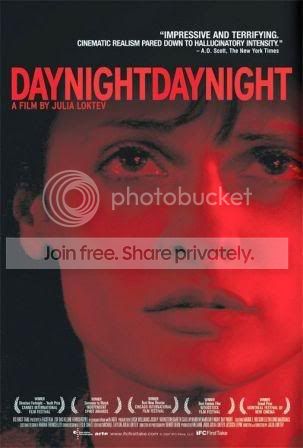
Day Night Day Night (2006)
A 19-year-old girl prepares to become a suicide bomber in Times Square. She speaks with a nondescript American accent, and it's impossible to pinpoint her ethnicity. We never learn why she made her decision -- she has made it already. We don't know whom she represents, what she believes in - we only know she believes it absolutely. <very Alfred Hitchcock like >
Day Night Day Night (2006)
A 19-year-old girl prepares to become a suicide bomber in Times Square. She speaks with a nondescript American accent, and it's impossible to pinpoint her ethnicity. We never learn why she made her decision -- she has made it already. We don't know whom she represents, what she believes in - we only know she believes it absolutely. <very Alfred Hitchcock like >


One Love (2003)
Kassa a free-wheelin rasta man, falls for a straight laced gospel singer Serena, when they both meet as they enter a music contest. Serena's father the pastor forbids her to see him and wants her to marry one of his church members. Meanwhile the record boss organizing the contest, tries to get Kassa's band to sign to his label on his terms not theirs. By using heavy tactics, he pushes the band to fight back. <Went to see this with my girl, fresh look at Jamaica film, excellent movie>

CO-SIGN, I SWEAR I WAS ABOUT TO DROP A REQUEST FOR THIS MOVIE IN THE HOLLYWOOD MOVIE SECTION EARLY TODAY, BUT I THOUGHT NO ONE WOULD REMEMBER THIS.
*heads to movie section*
------------------------------------------------


Babel (film)
4 interlocking stories all connected by a single gun all converge at the end and reveal a complex and tragic story of the lives of humanity around the world and how we truly aren't all that different. In Morocco, a troubled married couple are on vacation trying to work out their differences. Meanwhile, a Moroccan herder buys a rifle for his sons so they can keep the jackals away from his herd. A girl in Japan dealing with rejection, the death of her mother, the emotional distance of her father, her own self-consciousness, and a disability among many other issues, deals with modern life in the enormous metropolis of Tokyo, Japan. Then, on the opposite side of the world the married couple's Mexican nanny takes the couple's 2 children with her to her son's wedding in Mexico, only to come into trouble on the return trip. Combined, it provides a powerful story and an equally powerful looking glass into the lives of seemingly random people around the world and it shows just how connected we really are.
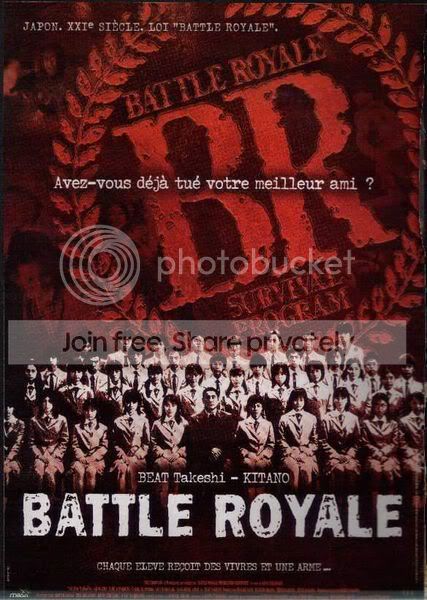

Haven't seen it, but I hear that movie is fuckin crazy.
The film which brought the teenage Chiaki Kuriyama to Tarantino's attention (for Kill Bill).


^^^^^^^^^^^

http://imdb.com/title/tt0266308/
http://rapidshare.com/files/16512029/Battle_Royale.part1.rar
http://rapidshare.com/files/16512103/Battle_Royale.part2.rar
http://rapidshare.com/files/16512192/Battle_Royale.part3.rar
http://rapidshare.com/files/16512260/Battle_Royale.part4.rar
http://rapidshare.com/files/16512337/Battle_Royale.part5.rar
http://rapidshare.com/files/16512393/Battle_Royale.part6.rar
http://rapidshare.com/files/16512520/Battle_Royale.part7.rar
http://rapidshare.com/files/16512542/Battle_Royale.part8.rar
http://imdb.com/title/tt0266308/
http://rapidshare.com/files/16512029/Battle_Royale.part1.rar
http://rapidshare.com/files/16512103/Battle_Royale.part2.rar
http://rapidshare.com/files/16512192/Battle_Royale.part3.rar
http://rapidshare.com/files/16512260/Battle_Royale.part4.rar
http://rapidshare.com/files/16512337/Battle_Royale.part5.rar
http://rapidshare.com/files/16512393/Battle_Royale.part6.rar
http://rapidshare.com/files/16512520/Battle_Royale.part7.rar
http://rapidshare.com/files/16512542/Battle_Royale.part8.rar

once were warriors
Set in urban Auckland (New Zealand) this movie tells the story of the Heke family. Jake Heke is a violent man who beats his wife frequently when drunk, and yet obviously loves both her and his family. The movie follows a period of several weeks in the family's life showing Jake's frequent outburst of violence and the effect that this has on his family. The youngest son is in trouble with the police and may be put into a foster home while the elder son is about to join a street gang.
I saw that film (and the similar "Broken English") about a million years ago.
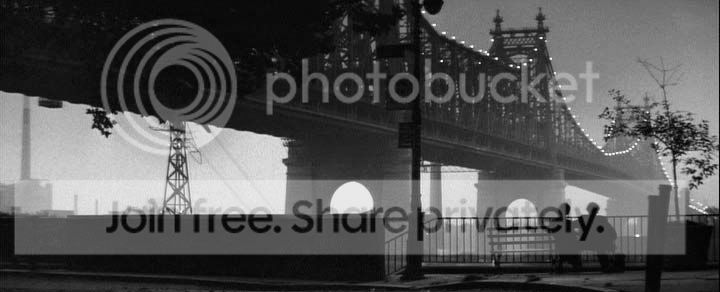
Manhattan (Woody Allen): This is my favorite film, period.
I'm only listing 1 WA movie because 5 WA movies are in my top 10.

Ma Vie en Rose

Mulholland Dr.

Hav Plenty

La Haine (this is my Cidad de Deus)

Fucking Åmål

Un Deux Trois, Soliel

Naissance des Pieuvres
and too many more to mention...
Last edited: