
THE CANNABIS THREAD 101!!

Its almost 2020 and a large part of the population still hasnt figured out the scam call, War on Drugs!!


The War on Drugs: Mexico Will Legalize Before the United States

America will soon become the only North American country without federally legalized cannabis.


We have the largest economy. We make the coolest cars. Our women dominate in soccer.
America is number one.
Right?
When it comes to legalizing cannabis at the federal level, the United States may be dead last.
Not in the world, but out of all the countries in North America, the States are falling behind.
Recently, it’s become even more likely that the United States will wind up being the third country to federally legalize cannabis. Provided it actually does, of course. Eventually.
The Order of Events
Canada officially legalized cannabis at the federal level in October of 2018.
The United States has seen a range of cannabis laws enacted at the state level.
Mexico is going through its own process.
In their system, five similar rulings in the courts set a jurisprudence. Since the Mexican courts have ruled five times that an outright ban on recreational cannabis is unconstitutional, the laws against recreational cannabis use are essentially null and void.
However, the laws remain on the books. While you could still be arrested for cannabis use in Mexico, any personal, recreational use wouldn’t be punished by the courts due to the jurisprudence already set.
Thankfully, those laws are about to be flipped upside down.
The Most Recent Legislative Move
The Mexican legislature was given a deadline of October 2019 to produce legislation that aligns with the courts’ decisions. Recently, the Senate has taken a major step towards legalizing cannabis at the federal levels in Mexico.
As first reported by Marijuana Moment, Senator Julio Menchaca Salazar filed legislation on Tuesday, September 3, 2019, that would officially legalize cannabis in Mexico.
For personal, recreational use of cannabis, the bill covers:
  • Cultivation
  • Possession
  • Consumption
The bill aims to amend the legal framework around cannabis in Mexico and the use of hemp in textiles.
Several other important Mexican senators have co-sponsored the bill and the country’s President has expressed his support for federal legalization in the past.
What does this mean for North America?
Predictions of Mexican Legalization
All of this means that Mexico is going to legalize cannabis before the US.
Of course, American politics are unpredictable and legalization could sporadically happen with the stroke of a giant sharpie.
However, pending any quick-moving upheavals, Mexico is on-course to put America in last place for cannabis legalization.
We asked Jorge J. Rubio Esconola—Chief of Staff at the ISSSTE, a Mexican health institution operated by the federal government, and a man deeply involved in the ongoing process—if legislation will be officially made law by the end of November.
Without pause, he replied, “yes, I think between October and late November.”
He is particularly excited about the regulation of hemp. In a recent podcast, he said that he believes Mexico will become a major player in the worldwide hemp industry.
While many believe the best cannabis comes from California or Canada, people often forget that Mexico has an ideal climate for growing a range of cannabis varieties.
Thanks to the new legislation, Mexico may soon change the face of cannabis in North America, making USA...number three.
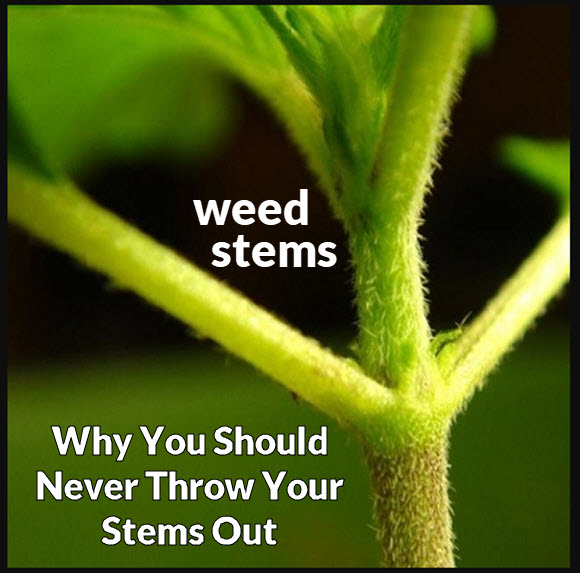
 
Why You Should Never Throw Away Those Weed Stems
Marijuana plant stems can make some great cannabis tea and hash

3743_dXJh_weedstems.jpg


How often does it happen that after harvesting you end up with a heap of weed stems that most likely end up in the trashcan? Sometimes in desperation, you might even consider smoking it. That would not be a wise decision though. On the other hand, weed stems can be used in other ways. In the growth cycle, the stems and roots have a constant fluctuation of nutrients passing through them. So, rather than throwing it out with the trash, use it as medicine.

The most sought-after part of the cannabis plant is definitely the flowering part. This is where the potency of the plant lies. The separation of bud and stem is a normal action to prepare some weed for smoking a joint. What no one knows, is that the stems have a lot of nutrients locked up in them. It makes sense then to harvest them to put it to good use.

This does not mean that it is good for smoking. The stems have practically no THC in them. To get the benefit of any THC left in there, it needs to be decarboxylated. The idea is to extract any cannabinoids and to convert THCA to THC. The properties are found in the same crystals you would find in the flowers and bud. One way to decarboxylate the stems is to bake it for an hour in 100-110 degrees Celsius. Remember to spread it out on a baking sheet. Be careful not to let it burn.

What is Weed Stems Good For?

  • Weed Stem Tea- A great way to use weed stems, it to make a cannabis-infused tea. It is an alternative way of smoking or vaping and still brings relaxation. To get the best result, remember to decarboxylate it first. It could also be grounded as you would before you roll a joint. Best is not to overdo it as it would leave a bitter taste in your mouth. Use a pot to simmer the weed stems and water for 15 minutes. Butter or coconut oil also have to be added to activate THC. Something like ginger could also be added to better the taste. Use a cheesecloth to strain the tea after you have brewed the tea.
  • TincturesAnother popular way to use weed stems, is to make tinctures of it. One specific tincture is called the Green Dragon. Green Dragon is made of alcohol-infused weed stems. The stems have to be decarboxylated first. They are then covered with consumable alcohol in a mason jar. Good quality alcohol with a high alcohol content renders the best result. Keep the mason jar in a dark cupboard and shake it once per day. After a week, strain the alcohol through something like a cheesecloth. It could be used as a mix into a cocktail, or even straight up. Keep in mind that the effect is different than regular alcohol. Do not overdo it.
  • Topical creams – Topical creams work wonders on the skin and muscles. As the skin has its own cannabinoid system, the cannabinoids in the cream pass through. The cannabinoid context is not as high as found in the flower or bud parts, but it still has a soothing effect.
  • Cannabutter weed stems are great to use in Cannabutter. It would not be as potent as when other parts of the plant are used, but with a good amount, it could be close. If you are into Cannabis Edibles weed stems could be used for Cannabutter. Best is to grind the stems in a food processor. Use a saucepan, add some butter or coconut oil with the stems. Let it simmer for 45 minutes over low heat. Be careful not to let it burn. Stir it constantly. When it is done, strain the butter to remove all plant matter. Keep it in the fridge in a jar.
Stem Hash- For stem hash, the weed stems have to be ground very fine. Choose a mason jar and put the hash stems in it. Cover it with 99% isopropyl alcohol. Cover the mason jar and shake it vigorously for at least a minute or two. Use a cheesecloth to strain all plant material out. Use a wide bottom glass to transfer the liquid to. Keep it in a well-ventilated area until the alcohol evaporates. A sticky substance should be left on the bottom. Scrape it off as best you can and form it into a little ball. It is ready to be used.


After Thought

A word of caution. Do not be tempted to smoke the weed stems. It consists mostly of plant matter and the THC content is low. Smoking weed stems will give you a big headache. Other than that, instead of throwing your weed stems out, use it in any of the ways explained above.


3743_KW9N_CANNABISSTEMS.jpg


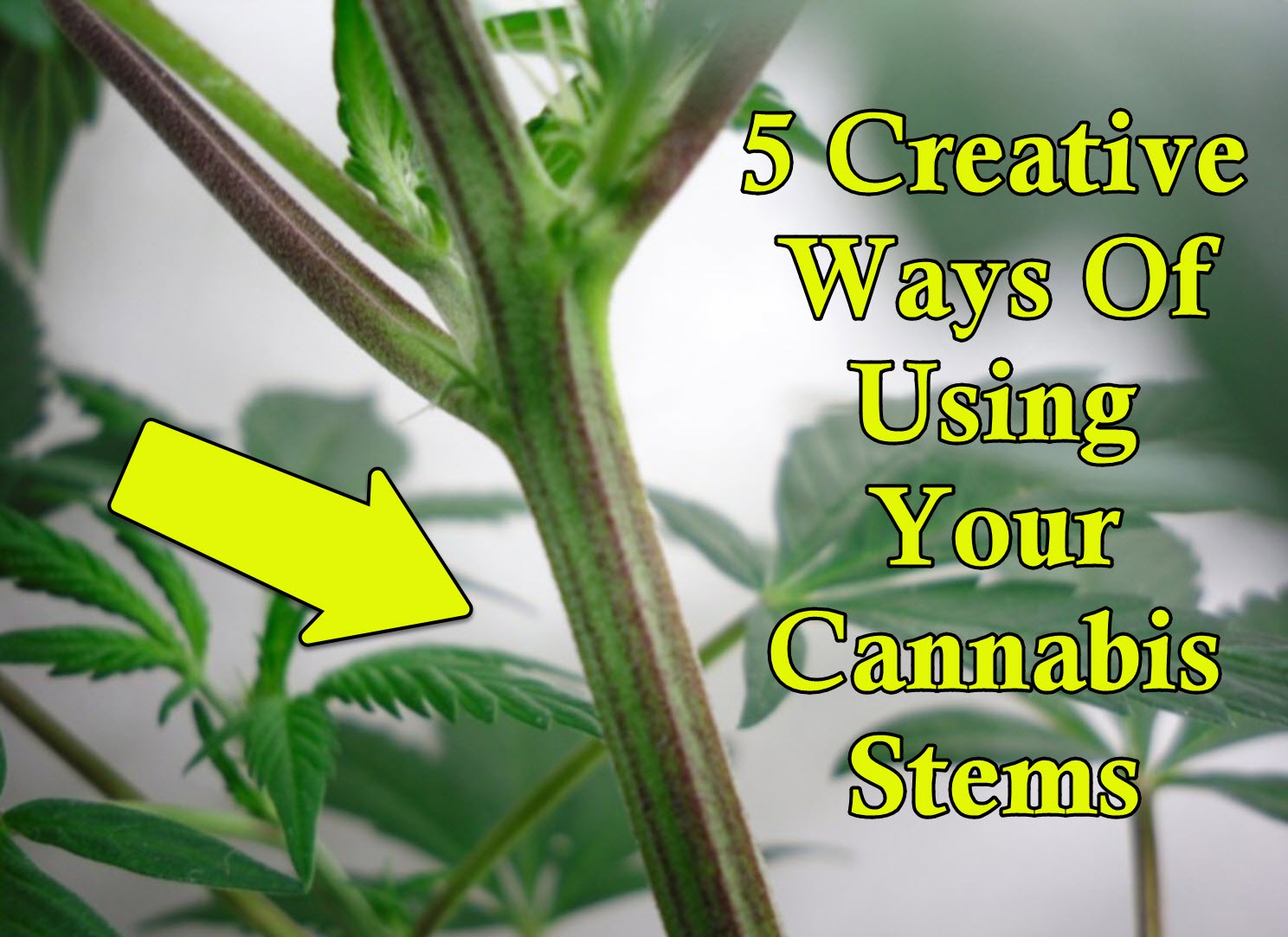
We’ve all been there: faced with leftover cannabis stems that typically just end up in the garbage bin. But the next time you’re faced with cannabis stems – don’t throw them out, because we’re about to teach you 5 creative ways to make use of them.

1.Make tea, or chai out of a stem tincture: To make the tincture, set aside a handful of stems and chop them. Pour 450ml of milk or water into a small saucepan. Add the chopped stems and gradually bring to boil (prevent it from bubbling), and stir. Continue stirring for around 10 minutes until the liquid reduces. Strain the stems, return it to the saucepan, and lower the heat.


Add your preferred herbs and sweeteners to give life to cannabis tea, which can taste a little too grassy on its own. If you want a tea to help you relax before going to bed, add some lavender or chamomile tea.

To make chai, add some cardamom pods, honey, and pepper.

2. Topicals: All you need to make some great cannabis topicals are a few steps and easy to find supplies. Stems can have the same therapeutic benefit as store-bought topicals, plus you can make them right at home. Here are some great recipes for topicals; all you need to do is substitute ground cannabis for chopped up stems instead.

Another way to use stems for topicals is by making a liniment. Split the stems lengthwise down the middle, then chop them up into tiny pieces. Place the chopped stems in a sealable jar, and pour 99% isopropyl alcohol over it and seal it. Let the mixture sit in a cool, dark area until all the plant pieces sink to the bottom. Once done, strain it – or let the stems stay in the container. You can use a cotton pad to rub it onto the affected area.

Using cannabis stems for topicals will yield a low-THC product, but it will still be useful in treating swelling, bruises, bug bites, and even toning the skin. A moderate THC content is good enough to have mild numbing effects, which you can use for sore muscles or localized pain relief.

3. Cannabutter: If you find yourself with a large stash of stems, you can use it to make cannabutter. You’ll need ¼ ounces of stems, 1 stick of butter, and 1 cup of water. Grind the stems up using a food processor until all the plant matter is thoroughly ground. Then in a large saucepan, mix the water, butter, and ground plant material. Cook it low and slow for 8 to as long as 24 hours if possible. The longer the better, because this process is needed to

Allow the mixture to simmer on low heat for 20-30 minutes, then you can use it.

4. Cannabis cocktails: Many of us love mixing our weed with booze in more ways than one. If you have some leftover cannabis stems, you can make your very own pot liquor. You’ll need a strong alcohol like tequila, vodka, or rum (as long as it’s at least 40% alcohol). Decarboxylate your stems first to activate the THC, then add the activated stem material into a bottle of your preferred booze. Close the bottle then shake it well; leave it in a dark place for at least 7 days.

Each day throughout the infusion, shake the liquor bottle vigorously. During this time, the alcohol will absorb the THC from the stems. Once you’re ready to enjoy your cannabis cocktail, strain it to get rid of all the plant matter. But before you go all bottoms-up, test the potency of your new homemade cocktail.

5. Hash oil: Bet you didn’t know you could use your stems to make some hash oil. It won’t be as potent as hash oil made from kief or flowers, but it’ll still give you a buzz. You’ll need 99% isopropyl alcohol. Grind the stems finely (in a food processor is best) until it becomes a fine powder. In a glass jar, pour the alcohol and stem powder, cover and shake vigorously for two minutes.

After straining, immediately strain the liquid then transfer to a wide bowl or glass dish. Make sure that its placed in a well-ventilated area, so that all the alcohol can evaporate. Once this process is done, it will leave you with a sticky residue – that’s your hash oil.
 
Just remember hemp and cannabis was the drug choice of the medical system and people used it for damn near everything and Hemp was the cash crop of this nation, from clothes, food, feed, and thousands of things.. The options are limitless, dont let these Reefer Madness and politicians that are in bed with big pharm, law unions, prison guards union, drug testing industry, booze and tobacco industry and so on, try to mislead you!!


3743_t0GL_howtomakemoneyfromhemp.jpg


Hemp is arguably the hottest product in the market right now with the demand for products (CBD, fiber, paper, food) derived from this wonderful plant going through the roof there's no better time to get in on the action than now. Nothing beats making money from what you love, so as a hemp lover if you want to take your love for hemp to the next level don't just be a consumer of hemp products try being on both ends of the chain, supply as well as consume. Sounds exciting right! It is. But before you dive into this half-assed and ill-prepared there are vital things that you need to know to ensure your journey in this venture goes hitch-free. These crucial factors can be classified into four major categories which will be talked about below, so read on!

Identify a hemp product that will give you the most profit - All hemp products are profitable but not all hemp products may be profitable for you. There are a lot of products to be derived from hemp (CBD oils, textiles, paper, plastic, and even soap) but the technique and cost involved in growing hemp for the production of some of these products may be too high for you handle. So choose a product that you can easily handle the requirements. Another factor that influences the kind of hemp you grow is the demand of your customers and the market. In most cases, buyers specify on the kind of hemp they want to buy, a customer who requires hemp for CBD oil won't purchase hemp from a seller who grows hemp for textile. So before settling on the product you'll be growing your hemp for, make sure it's in demand and growing that kind of hemp will be profitable for you.

In the market today, hemp for CBD oil and other CBD products seems to be in high demand with buyers of hemp to use for that purpose littered all over so if you're wondering about what to start with, growing hemp for CBD products is a good place to start. Although it's important to note that there are buyers for all types of hemp, you just have to search in the right places.

License - Of all the things needed to be taken care of before starting to grow your hemp this is arguably the most significant. Cultivation of hemp is legal in all US states but at a small price, a license. The government requires everyone (individuals or organizations) to be vetted and licensed before venturing into the cultivation of hemp for personal or commercial use. This is a very small but essential step to take to ensure you're not cultivating your hemp illegally.

Stay informed on the latest cultivation techniques - To yield the most profit its essential that you're informed on the best and the latest methods of cultivating high yield and high-quality hemp. Hemp cultivation is pretty straightforward, its requirements for water, nutrients, pesticides, herbicides and so on aren't overly excessive and can be easily done but to ensure the best yield the right cultivation techniques need to be practiced. A couple of these are growing the hemp under optimum conditions of temperature and humidity, making use of the best quality hemp seeds, etc. These minor changes are what separates a successful hemp farmer from a not so successful one. In hemp production, little things make all the difference. A good example of this is the latest discovery that was made that hemp grown in light deprivation greenhouses yield far greater quantity and quality than those grown in the open field. So to ensure your journey on this path of hemp production isn't futile it's best that you arm yourself with the latest information available and luckily there's no shortage of avenues to get these info. Cannabis.net, the site you're currently on is one such outlet, others include hemp farmer forums, YouTube guides, LinkedIn and so on. With the right information, you can do no wrong!


Know your customers - A fatal mistake newbie entrepreneurs make when just entering the game is making all key decisions without a definite idea of who their buyers are. When I say "know your customers" it doesn't necessarily mean know them personally, it means have a target population in mind. Know who you're cultivating for as this will help you better satisfy their needs. The hemp space is booming so finding buyers won't require much work. If your target customers are corporate organizations, a good way to get this going is through social media, build beneficial relationships with processing and extraction companies who would be interested in your hemp, find out what their needs are and work towards satisfying that need.

Conclusion

Have you always yearned for financial freedom but till now it has never been a reality, your expenses just keep getting larger and larger while your income remains the same, hemp might just be the liberation you've been longing for. The hemp industry is Santa and its Christmas time so get in on the action and get your gifts before it's too late.


3743_TN1n_sellingweed.gif


Are you struggling to make ends meet? Are you still paying off that student loan? Are you bankrupt from a failed investment? You’re not alone. Research shows that 8 in 10 Americans are in debt.

Living paycheck to paycheck never has its benefits, but you need to know that there is a way out of this. The cannabis industry is not only benefiting those who are sick, but if you need to make money or are trying to find a way out of debt, this could also be the solution for you.

According to ArcView Market Research, an expert source on cannabis investment and research, the retail sales of cannabis could reach as much as $20.6 billion in revenue by 2020. There’s a lot of the pot pie to go around for everyone.


Here are several ways you can get rich with the legal cannabis industry:


  • Get a job: If you have a valuable skill set, you can easily get a job in the legal cannabis industry. There are job openings for those adept in sales, marketing, writing, technology, accounting, F&B, tourism, hotels, or any other role that cannabis businesses might need. Pretty much any kind of service that is used in other businesses can also be applied to the cannabis industry. There is also a high demand for ancillary positions. While many high-level positions are open for working directly with the plant, there are also several entry-level positions such as trimmers, budtenders, manufacturers, and growers. Check out the Cannabis.net job board for a list of great jobs in the industry. It also helps to attend cannabis events to network with people in the industry, which is particularly useful if you want to get one foot in the door.

  • Invest: If you have a little money saved away (and an appetite for risk), which you can do without for the next few years, the smartest thing you can do is invest it in cannabis stocks. Make sure that this is money that you are ready to part with, since there is a risk involved especially considering that the federal government is still unstable in terms of its outlook on the legal cannabis market. Always make sure that you do your research first before investing and consult with a lawyer if you can. There are many people who are keen to invest in the cannabis industry with the hopes of striking green although be wary of the scam artists. Familiarize yourself with the EDGAR report of each company before investing so that you know about their investor history, financial history, and more to avoid getting scammed.

  • Entrepreneurship: Another solution for those of you who have some resources staved away is entrepreneurship. Starting a cannabis-friendly business such as developing a line of hemp products, oils, or edibles, especially if it’s a niche product, can help you get rich. As a cannapreneur, you don’t need to apply for a job but instead you can also help create some especially for those who are in the same position as you. This is ideal if you have a passion for cannabis; have a vision and are willing to put in the time, effort, and resources together to develop an idea and earn a profit from it later on.

  • Affiliate marketing: If you already have a blog or website focused on cannabis, you can make money as an affiliate marketer even if you don’t live in a state where the plant is legal. As an affiliate marketer, your job is to promote someone else’s cannabis business or product in exchange for incentives, usually in the form of a commission although other businesses offer discounts or other forms of pay outs. Many cannabis companies have affiliate marketing programs in place; all you need to do is apply .
The legal cannabis industry is only starting to grow exponentially. There will continue to be numerous opportunities if you want to grow with it. There’s no better time than now to participate in the Green Rush, especially if you want to make your way out of broke-land! The best part is that you don’t need to be limited to living in the Colorado or California area if you want to make money from cannabis – many of these jobs allow you to work from anywhere, except if you are considering a role that requires you to touch the plant.
 
3743_Xrgn_legalizemarijuana2019.jpg


If 2018 was a momentous year for cannabis, 2019 has the potential to be even greater. We’re still waiting for cannabis to be rescheduled or legalized at the federal level, and several states are poised to legalize cannabis at the recreational level this year. These include New York, New Jersey, and Illinois. There are also rumors that cannabis will finally be legalized federally this year.

Whether you live in these states or not, there’s still a lot you can do to help legalize marijuana this year without having to be an activist.

  • Vote. If you had a chance to do just one thing to help legalize marijuana, nothing will be more important than voting. Check if your state has any cannabis law reform ballots. The more voters exercise their right, the better the chances are of legalizing cannabis in your state.
  • Tell your story. If cannabis has helped you or someone you love, sharing the positive impact of cannabis in your life help give it a voice while educating people about its benefits. Use social media platforms like Instagram, Facebook, and Twitter to share positive experiences; doing so will have a huge impact about the reputation and awareness surrounding cannabis.

  • Get educated. You may know a thing or two about how cannabis works, but do you know about the endocannabinoid system? How it works to treat cancer? The history of cannabis laws? Whether THC or CBD is best for you? There are new studies about cannabis being released almost every day, and staying informed and educated about the many new things we discover about this miraculous plant will come in handy not just for yourself but when talking to other people about the myriad of benefits about cannabis. Being informed also gives you more powerful arguments when you are given the opportunity to challenge a person’s beliefs about cannabis.
  • Look for ways to help online. You don’t even have to leave your home to make a tremendous impact in the fight against prohibition. Simply go online and look for various non-profits and organizations whose objective is to help spread news and awareness on legalization. Several offer opportunities to volunteer in different ways, and you can also donate to their cause. When you donate, you give non-profits the help they need to promote drug law reform. Another way to help online is to look for pro-cannabis petitions online; placing your signature on it is a simple and awesome way to take action in supporting legalization. Some of them may be petitions urging vets with PTSD to medicate with cannabis in certain states, while others may be pushing for the federal legalization of cannabis. Don’t underestimate the importance of online activism!
  • Find activists in your area. If you really want to lend a land, keep in mind that your physical presence will go a long way. Look for activist groups or drug reform organizations near your area; they exist almost everywhere. When you network with other activists, you also get a chance to learn more about the importance of legalization from the opinion of other people. Fighting as a group will do more good than going at it alone.
  • Reach out to your local politicians and representatives. This is one of the most important things you can do. When you talk to your local representatives, it allows you to show your support on another level because just one email or phone call has the potential to make a huge difference. If you get the chance to, talking to them in person will also go a long way. Politicians are established public figures, so if you can persuade them to share their support for cannabis, it will have a big impact in your community and beyond.
  • Educate your family and friends. Bring up cannabis use in the right place and time. Educating those around you helps legalize cannabis, since it helps spread awareness the quickest possible way and to people who may potentially need it the most. You may think it’s a small thing to do, but if you are able to convince even just one person on the importance of cannabis, this is already important.
What are you planning to do this year to help?
 
3743_oHAS_legalizemarijuana.jpg


Cannabis will be a big voting issue and Republicans will try to get it done first to get credit

There are a few things lining up right now that give us the strong impression that we could see cannabis legalized at the Federal level in the USA in early 2021. The underlying story is gaining traction around the world that legalization at the country level is the correct enforcement and legal level to do legalization at for the cannabis plant.

  • Canada and Uruguay are have now approved recreational cannabis as countries. Canada will begin recreational sales in October of 2018. Sharing a 2,500-mile border with the USA will only encourage cross border shipments and flood the black market in the USA. Millions of dollars in missed tax revenue is already happening in states like California due to the black market, and it will only get worse. In the end, everyone wants a cut, the states, the towns, and even the Federal government.
  • England had an “emergency” session and approved medical marijuana as a country just recently.
  • Germany is ramping up cannabis imports and production
  • Israel is looking to become a major exporter of cannabis to the world right now
  • The UN just recently approved CBD (found in hemp and cannabis) as safe, and is currently "reviewing" their policy on marijuana. Since Canada and Uruguay are technically breaking the UN drug treaties on cannabis right now, the UN is looking at changing the classification of marijuana and cannabis.
  • 30 US States or jurisdictions have some form of legal cannabis right now, with at least 3 to 5 more locations approving medical cannabis through legislature or popular vote in 2020. Once the number gets over 35, what sense is to have a federal law claiming it is illegal when 70% of your land area has legalized cannabis at least at the medical level? If 3 more states approve at least medical cannabis, 75% of the US population when then have access to either a medical marijuana program or recreational cannabis program.
  • Columbia has set up the biggest infrastructure in South America to handle growing and shipping medical cannabis, with Mexico a close second place.
  • Pete Sessions, the Republican rep from Texas who blocks all cannabis bills and amendments from being voted on was voted out by Dallas voters in November of this year. Even if Pete does with re-election, there is now so much congressional support and voter support on both sides of the isle that he may not be able to block the two major cannabis bills making their way through congress, now.
  • The popular support on the Democrat side is as high as 75% and Republicans voters are not over 50% in some polls. This means both sides will want to claim a victory in legalizing cannabis. Most Democrat candidates at the state and federal level already support some form or legalization or decriminalization, and not most Republicans will be supporting it as well if they want to get re-elected.
  • Corey Booker, one of the top 8 or 10 Democrats that may run for President is sponoring the most aggressive cananbis legalization bill in congress, and will most likely make one of his main running points. Kamala Harris as well, although her running for President is a bit more of a long shot. Elizabeth Warren, still a powerful Democrat in congress, and possible presidential candidate, is also a strong proponent of cannabis legalization.
  • Trump may have to use the cannabis bill signing or legalization act to swing some moderates over to his side in a general election. Depending on how the Democrats run against him, he may dangle that cannabis legalization carrot to moderates and do it before election night to try and win favor. Any Democrat candidate running against him will most certainly be for legalization, so Trump can use a popular voting majority issue like marijuana legalization toward his favor and take it away from the Democrats.
  • States are running massive fiscal deficits due to underfunded pension programs, states like NJ, NY, and Illinois would have junk bond status ratings if they were private companies. The US Federal deficit is ballooning higher as the Trump tax cuts tax effect. Basically, every level of government needs to come up with more money, and tax revenue. Hence, the move by those states to legalize cannabis and now sports betting programs.
  • Trump is pro-business and legalizing cannabis is just good business sense. Yes, he does not use drugs or alcohol, but facing a massive opioid epidemic and ballooning deficit, legalizing cannabis to create jobs, taxes, and fight opioids is just good business sense.
  • Jeff Sessions will not be attorney general after 2020, but even with his hatred of weed he has said, “If you want marijuana to be legal, change the law, my job is to enforce the law”.
  • Baby boomers love weed, and so do millennials. Why bring those two groups up? One has all the money and the other does all the voting. A good combination when voting and cannabis come up in November.
 
3743_S1IU_legalizeit.jpg


International markets are ever shifting, however the economy of late has not been as stable as some might think it is. There are thousands of people who find themselves without a stable source of income.


There are many factors involved that produces this outcome, of which I will not get into, however there is a solution that is staring everyone in their face that could bring some stability to a volatile economy.


One of the first things that legalized cannabis would do is open up a whole new job market. This isn’t just jobs working with marijuana, as the industry has expanded to something truly versatile. Nowadays you can be anything from a grower, dispensary owner, delivery service, chef, lawyer, ad agent, sales, research and development and much more.

The cannabis industry has opened the flood gates and while you might not specifically work with marijuana, you can be associate with the industry. I for one work with plenty of marijuana collectives, agencies, businesses across the world. While I’m not directly involved with cultivation, a large portion of my paycheck comes from the Marijuana industry.


Cannabis Taxes

Under our current system, cannabis is not being taxed. That means 100% of the profits go back to the people who dare to defy the laws and traffic “drugs”. Legalization would take the market into the public eye and all sales would generate taxes. These taxes would be funneled back into the state and can be used on everything from education, infrastructure, healthcare and much more.


Cannabis Products

More specifically, we have seen over the past few years an explosion of cannabis related products. Just like any normal market, there will be certain “brands” that will become massive, creating more jobs, more tax revenue and more options for the consumers. These cannabis products will create an entire market of their own.


International Trade

A legalized market will open the doors for international trade. Many countries will outsource their cannabis production to third world companies and buy shipments. This will create international commerce that will benefit everyone involved.


Hemp Everything

The first part of this article was solely focused on recreational/medical marijuana. Hemp on the other hand is where the real money will be. From being able to replace all plastics, paper and even become a substitute for oil, you can imagine the amount of revenue this industry will generate annually.

Not to mention you can make up to 50,000 unique products from hemp, including food, clothing, housing and even cars. They even found that solar panels laced with hemp fibers generated more electricity.

There is an endless potential to the Hemp market and once this is legalized it will disrupt several industries around the world. In fact, some even argue that this is the very reason why marijuana is illegal. It is the ace up the sleeve of humanity that can even the playing field in relation to giant corporations that currently sit on multi-billion- dollar monopolies such as oil, timber and plastics.

Of course there will always be snags along the way, however by legalizing marijuana you are creating opportunity, something that is desperately needed by so many people around the world.
 
3743_KnVS_promarijuanavotecandidates.jpg


With the 2020 presidential race in full swing and the primaries quickly approaching, the US is less than a year away from electing a new president (or having to undergo a second Trump term). Although the legalization of cannabis has seen huge strides in the last few years, many of those laws are contingent on who the next President will be. With that in mind, here’s our rundown on where the 2020 Presidential candidates stand on cannabis.

Democratic candidates

Michael Bennet
- The Senator from Colorado was once opposed to legalization, back in 2012, but has since changed his tune, co-sponsoring a number of bills in Congress that involve cannabis reform. His stance focuses on issues of financial access for marijuana businesses and hemp development. However, it doesn’t look like federal legalization would be a priority for him if elected.

Quotable quote: “Now that we’ve passed the Farm Bill and the president has signed it into law, hemp cultivation is fully legal for the first time in 50 years. That means less uncertainty and more opportunity for our hemp farmers, small businesses, and manufacturers.”

Joseph R. Biden - Throughout Biden’s political career, he’s been a staunch critic of cannabis reform and has maintained his stance that marijuana is a ‘gateway drug.’ As vice-president, he consistently opposed reform proposals and believes that there has to be a ‘better answer than marijuana’ for pain management. However, since then, he has somewhat come around to the idea of decriminalization and expungement for non-violent marijuana offenders. He also favors rescheduling marijuana to a Schedule II in the Controlled Substances Act.


Michael R. Bloomberg - The former three-term New York City mayor known for implementing the controversial ‘stop-and-frisk’ policy that gave police free rein to search people they suspected of carrying contraband, which mostly targeted men of color, put in a late presidential bid in November. He’s been a vocal critic of marijuana reform, calling it the ‘stupidest thing anybody has ever done.’ He’s also made dismissive comments on the medical value of cannabis and does not thinking it should be decriminalized.

Cory Booker - The New Jersey senator has made cannabis reform a critical tenet of his platform. Suffice to say, he’s pro-legalization and, if he were to be elected, he would emphasize social equity in cannabis-related legislation.

Quotable quote: “I get very angry when people talk about legalizing marijuana and then give no light to how marijuana law enforcement was done in ways that fed upon poor communities—black and brown communities. This is a war on drugs that has not been a war on drugs—it’s been a war on people, and disproportionately poor people and disproportionately black and brown people.”

Pete Buttigieg - The Indiana mayor supports legalization and the decriminalization of all drugs, not just marijuana. He released a plan in July that included policies to legalize cannabis and believes that incarceration does more harm than good.

Julian Castro - The Former US Housing and Urban Development Secretary and San Antonio Mayor favors an end to the War on Drugs and, as part of Obama’s cabinet, oversaw one federal marijuana policy action. In his criminal justice plan, he called for legalization and expungement of prior cannabis-related convictions.

Quotable quote: “We will regulate the market and place a tax on all recreational sales, investing billions in revenue generated in the communities disproportionately harmed by the War on Drugs.”

John Delaney - The former US Representative of Maryland supports federal marijuana reform laws and would embrace full federal legalization. He has a record of consistently voting in favor of cannabis reform amendments in the House and co-sponsored seven bills related to marijuana reform in Congress.

Tulsi Gabbard - Previously a Hawaiian state legislator and council-member, she’s been a member of Congress since 2013. Known for being tough on Big Pharma and vows to end the War on Drugs and legalize marijuana should she be elected. She’s also co-sponsored a number of cannabis reform bills in Congress.

Amy Klobuchar - The Senator from Minnesota co-sponsored the STATES Act, which would amend the Controlled Substances Act to exempt states that have legalized marijuana from federal intervention. She believes states should have the right to take the best approach for dealing with cannabis within their borders.

Deval Patrick - The former Massachusetts Governor was opposed to decriminalization in his home state. His current position on legalization is unclear.

Bernie Sanders - The Senator from Vermont is well-known for his activism and his vocal advocation of legalization. If elected, he’d definitely push for legalization.

Tom Stever - The former hedge fund manager and founder of NextGen Non-Profit has not been very vocal on this issue. However, he has mentioned in interviews that he believes marijuana businesses should have more access to support from banks.

Elizabeth Warren - The Senator from Massachusetts is the lead sponsor of the STATES Act and has mentioned repeatedly that she supports federal legalization.

Quotable quote: “Right now in this country, Black Americans are far more likely to be arrested for marijuana use than white Americans. That’s not right. We need to legalize marijuana—and I have a bipartisan bill would end the federal ban on marijuana.”

Marianne Williamson - The author, spiritual leader, and activist supports legalization and amnesty for non-violent offenders serving marijuana-related sentences. If elected, would emphasize economic equality in the industry.

Republican candidates

Donald J. Trump - The incumbent candidate has flip-flopped a lot on his stance on marijuana. Although he does support medical marijuana and allowing states to decide on their own cannabis-related legislation, he has been very inconsistent on this issue.

Joe Walsh - A former congressman who represented Illinois from 2011 to 2013. He’s been an outspoken advocate for legalization and, were he elected, he would most likely push for the end of federal prohibition.

Quotable quote: “Marijuana. Legalization. I think it’s a good thing, but I think it’s all about the money and I don’t trust Illinois at all when it comes to the money. And if you think this is going to generate great revenues for the state of Illinois, let me tell you, like the lottery and everything else, Illinois will figure out a way to screw this up as well.”

William F. Weld - The former US Attorney and Governor from Massachusetts was tough on drugs during his time as US Attorney, but has since become more progressive. He endorses the STATES Act and is currently part of the board of directors for the cannabis investment firm Acreage Holdings.
 
3743_OI4B_democratsonweed.jpg


A few decades ago, Democrats were thought of being the bigger proponents of cannabis legalization. Republicans simply didn’t like it and adopted a “tough on crime” stance that inhibited them ideologically from supporting cannabis reform.

Democrats have long been the “liberal” side of the political spectrum. Cannabis legalization would seem like a no brainer to the Dems, however, lately we have been seeing a lot more pushback from the left on cannabis legalization.

There have been several efforts derailed by democrats over the past few months not because they oppose legalization, but rather because “legalization isn’t what they want”. I might be oversimplifying the situation here a bit, but we’ll break it down so everybody can understand why – though noble – the democrats are using emotional narrative to guide their law making processes.

“Marijuana Justice for ALL!”

One of the key issues that democrats (not all) are clashing on is the issue of “Social Justice”. Currently the cannabis market is occupied predominantly by “rich-white guys” (roughly 80%) which isn’t sitting too well with those in favor of a more diverse market place.

That’s why some politicians are stonewalling legalization efforts. They want Social Justice issues included in legalization bills. Things like expungement of past marijuana-related convictions and having a certain percentage of the market solely accessible by “marginalized communities”.

In other words, they wish to have people who were negatively affected by the War on Drugs to have the ability to participate within the marketplace.

All of this is okay. We should expunge previous marijuana convictions. We can’t punish people for non-crimes. A criminal record means that you can’t get access to good jobs, loans and much more. In fact, we should expunge all drug-possession convictions irrespective whether it’s marijuana or not. Having an illegal substance in your possession shouldn’t be safer than getting caught with it.

Democrats are not budging on the bills until these types of provisions are being included. While noble in nature, they are actually hurting the very people that they are trying to protect.

Just Make it Easy

The biggest problem that the social justice crowd forgets is that when you create “special rules” for certain people, you marginalize the rest. Sure, currently 80% of the industry are comprised of white dudes with cash, but the problem isn’t that white men are getting into the market, it’s that the rest simply can’t compete.

Why is that? Is it some intrinsic privilege shared by the aforementioned group? No, it’s because government regulators make the process of accessing the market and competing a “White Man’s Game”. People who have access to large pools of cash, investors etc, will obviously jump on the opportunity to get into a market that is growing exponentially each year.

The problem is that regulators make the process so expensive and tedious that only this group of people have the means to make it possible.

If you were to “block out” a certain aspect of the marketplace and invent special rule for the “marginalized”, you immediately make the industry less efficient. You’re not allowing the market to decide which is the better option.

However, what would happen if you were to make the possibility to enter into the market very accessible to the “Average Jane and Joe”? What if you make so accessible that those who have been marginalized can actually break into the marketplace?

We shouldn’t be making the law accommodate anyone due to their religion, skin color, ideologies, sex and so forth. This is simply another form of classism, which is the evil the democrats are trying to eradicate.

Rather than trying to accommodate the law, simply make the law inclusive in the sense that you keep it easy and cheap. Make it an accessible market to get into. Getting into the cannabis market should be no more difficult than getting into a farmer’s market. Allowing people to apply for licenses for home cultivation to sell to dispensaries would also help solve the issue.

We should never limit the market place; we should always see how we can enable those negatively affected by the war on drugs to easily find a solution within the marketplace.

Just Justice

I’ve never been a fan of the concept of “Social Justice” because it degrades the concept of justice. Justice is meant to be blind. It’s doesn’t need a modifier. Justice should apply to anyone irrespective of who they are and where they are from.

If the idea of justice can be modified, it means that “special rules” are created that will eventually marginalize another group. I’m all for expunging records, making the marketplace accessible, perhaps even making a fund from taxes derived from the legal market and giving those with incentive the opportunity to participate through industry-loans.

The way we help people is not by bending the rules, but empowering them by removing the road blocks usually set up by regulators. Once the state stops wanting a big piece of the pie, the people will have more to eat.
 
more-act-advances-cap-hill-legalization-marijuana.jpg


Nationwide cannabis legalization bill advances on Capitol Hill


Cannabis legalization advocates and allies are cheering the advance of the MORE Act, which moved to the full floor of Congress Wednesday morning after a historic committee vote. The committee tally included 22 Democrats and two Republicans voting in favor of the measure.

The MORE Act passed out of committee, 24-10. Now it goes to the full House.
Some 66% of Americans want to end federal cannabis prohibition—citing its injustice, failure, and cost.

The 24-10 vote in the House Judiciary Committee is the first time a House committee has approved ending marijuana prohibition. The Marijuana Opportunity Reinvestment and Expungement (MORE) Act of 2019, or H.R. 3884, deschedules cannabis, expunges records, and earmarks federal tax revenue for small, minority-owned businesses. House Judiciary Committee Chairman Jerrold Nadler (D-NY) sponsored the bill, and it currently has 55 cosponsors.

In 2018, police made more than 663,000 marijuana-related arrests—a three-year high. Cannabis is the most prevalent type of drug arrest, and drug arrests are the most prevalent type of arrest police make. Numerous studies have found that people of color are more likely to be arrested for marijuana, despite use rates similar to national averages.

Related
Congress takes a historic first step on national cannabis legalization

One step closer to prohibition’s end
Advocates like Drug Policy Alliance Executive Director Maria McFarland Sánchez-Moreno cheered the vote. “The United States is coming one step closer to ending the devastating harms of marijuana prohibition, which have fallen so heavily on black and brown people,” she said.

Citizen activism played a role. Longtime advocacy group NORML helped citizens send 55,000 messages to their Congressional representatives supporting the MORE Act in the space of just two days.

Related
American Bar Association Tells Feds: Let States Legalize Cannabis

“Opposition to our failed war on marijuana has reached a boiling point with over two-thirds of all Americans,” said NORML Executive Director Erik Altieri, “including majorities of all political persuasions, now supporting legalization. Congress should respect the will of the people and promptly approve the MORE Act and close this dark chapter of failed public policy.”

Congressman Earl Blumenauer (D-OR), a longtime legalization advocate and a founder and co-chair of the Congressional Cannabis Caucus, said today’s vote was “exciting and frankly very emotional for me to be in the Judiciary Committee hearing room as Chairman Nadler announced the final vote. … This vote was a vote for progressive reform, for racial justice, for personal freedom, for economic opportunity, and for better health.”

What’s in the MORE Act
Legalization opponents Project SAM had no immediate statement after the House Judiciary vote. Before the vote, Project SAM stated that the bill “contains no provisions protecting youth from the marijuana industry.” Studies have found that underage cannabis use has not increased following state-regulated legalization.

Related
Leafly study debunks dispensary myths around crime & teen use

The MORE Act does contain provisions that would shield youth from the incarceration industry, however. The MORE Act:

  • Strikes “marihuana” off the Controlled Substances Act
  • Ends cannabis discrimination for federal benefits and immigration
  • Enacts federal resentencing and expungement
  • Institutes a 5% cannabis tax
  • Creates a Cannabis Justice Office
  • Starts tracking race and gender in the industry
  • Creates a trust fund
  • Creates a community reinvestment grant program and equitable licensing grants
  • Green-lights federal Small Business Administration assistance
McFarland Sánchez-Moreno said, “This legislation won’t make up for the full scale of harm that prohibition has caused to its victims. It’s not going to return anyone their lost dreams, time lost at the mercy of the criminal justice system; or the years spent away from their families. But this legislation is the closest we’ve come yet to not only ending those harms at the federal level, but also beginning to repair them.”

“Now it’s up to Congress to do the right thing and swiftly pass the bill to ensure justice is not delayed a moment longer.”
 
house-committee-vote-on-legalization.jpg


Congress takes a historic first step on national cannabis legalization


In a milestone moment for drug policy reform in America, on Wednesday morning the House Judiciary Committee is scheduled to consider a landmark bill to end cannabis prohibition nationwide.

The MORE Act (Marijuana Opportunity Reinvestment and Expungement Act), introduced in Congress in late July, would remove cannabis from the Controlled Substances Act entirely. The MORE Act would also reassess federal marijuana convictions and invest in local communities using a 5% federal cannabis tax. The Judiciary Committee markup session is scheduled to begin at 10 a.m. Eastern time.

This week’s move is a big deal in the cannabis world, for a number of reasons.

Related
The MORE Act Calls for Sweeping Changes in Federal Cannabis Law

MORE Act vs. STATES Act
Tomorrow’s hearing represents the first time a cannabis legalization bill has advanced this far federally.

By bringing the MORE Act up for markup, Rep. Jerrold Nadler (D-NY), chair of the Judiciary Committee, sends a clear signal that the new House Democratic leadership will be championing the MORE Act over its rival, the STATES Act.

Cannabis advocates on Capitol Hill have described the STATES Act as a legalization starter set.
The STATES Act, which has been embraced by more middle-of-the-road politicians, would allow states that have legalized cannabis to continue regulating it without federal interference. But STATES would leave intact all of the hundreds of complications that come with the listing of cannabis as a Schedule I controlled substance.

In conversations with Leafly over the past few months, a number of cannabis advocates who work regularly on Capitol Hill have described the STATES Act as a legalization starter set—something that allows timid politicians to try out the issue. Those who are serious about legalization and social justice, though, consider STATES to be weak tea. The MORE Act is the robust measure they seek in order to eliminate cannabis prohibition and most of its attendant harms.

“It’s groundbreaking legislation,” said Queen Adesuyi, national affairs policy manager for the Drug Policy Alliance. The MORE Act, she added, “goes further than any other federal marijuana bill in history by helping repair the destruction from prohibition and ensuring reparative justice and equity in legalization.”

Related
The STATES Act Is Back. Can It Win Over Congress?

Rep. Barbara Lee comes to the fore
Rep. Barbara Lee (D-CA), co-chair of the Cannabis Caucus on Capitol Hill, has emerged as the most visible advocate for the MORE Act and its social justice measures. (AP Photo/Jacquelyn Martin)

The bill was originally sponsored by Sen. Kamala Harris (D-CA) and Rep. Nadler, but in the intervening months, Rep. Barbara Lee (D-CA) has become the measure’s most visible advocate. Harris is busy running for president, and Nadler represents a state still clinging to prohibition.

Lee, by contrast, represents a district centered around the city of Oakland, a stronghold of cannabis history and culture. Oakland pioneered both medical marijuana dispensaries and the creation of social equity cannabis licenses.

Lee’s constituents are also among the people most harmed by the war on drugs and cannabis prohibition—and she’s fighting to make sure any nationwide legalization bill includes measures to repair those harms.

“As states continue to modernize how we regulate cannabis, Congress has a responsibility to ensure that our policies are fair, equitable, and inclusive,” said Rep. Lee. “I’m pleased that this critical bill includes key tenets from my own legislation to right the wrongs of the failed and racist war on drugs by expunging criminal convictions, reinvesting in communities of color through restorative justice, and promoting equitable participation in the legal marijuana industry.”

Related
‘Better Than Ever’ Cannabis Coalition Hits the Ground Running

The MORE Act spelled out
The MORE Act would:

  • Decriminalize cannabis at the federal level by removing it from the Controlled Substances Act.
  • Require federal courts to retroactively expunge prior and pending convictions, allow prior offenders to request expungement, and require courts, on motion, to conduct re-sentencing hearings for those still under supervision. It would also enable states to set their own policies.
  • Authorize the assessment of a 5% sales tax on cannabis and cannabis products to create an Opportunity Trust Fund, which includes three grant programs:
    • The Community Reinvestment Grant Program: Would provide services to individuals most adversely impacted by the war on drugs, including job training, re-entry services, legal aid, literacy programs, youth recreation, mentoring, and substance-use treatment.
    • The Cannabis Opportunity Grant Program: Would provide funds for loans to assist small businesses in the marijuana industry that are owned and controlled by socially and economically disadvantaged individuals.
    • The Equitable Licensing Grant Program: Would provide funds for programs that minimize barriers to marijuana licensing and employment for individuals most adversely impacted by the war on drugs.
  • Open up small business administration funding for legitimate cannabis-related businesses and service providers.
  • Provide non-discrimination protection for marijuana use or possession, and for prior convictions for a marijuana offense, by:
    • Prohibiting the denial of any federal public benefit (including housing) based on the use or possession of marijuana, or prior conviction for a marijuana offense.
    • Stipulating that the use or possession of marijuana, or prior conviction for a marijuana offense, will have no adverse impact under immigration laws.
  • Require the Bureau of Labor Statistics to collect data on the demographics of the industry to ensure people of color and those who are economically disadvantaged are participating in the industry.
What next?
If the MORE Act passes through the House Judiciary Committee on Wednesday, its next step would be to come before the full House for debate and vote. The measure would still have to pass the Senate in order to become law. And that might be a tougher slog.

Conventional wisdom has the STATES Act as the more popular measure in the Senate, as the upper chamber is generally considered far more conservative on cannabis issues.
 
Everything is a lie or told to us in reverse!!!


cannabis-jazz-gage-marijuana-1930s.jpg


In the 1930s, two distinct potential futures existed for cannabis in the United States.


Cannabis was no stranger to us at that time. Cannabis tinctures were widely available at pharmacies, but people weren’t accustomed to getting high off of those tinctures. Things were changing as Mexican migrants and the (largely black) jazz subculture started to enjoy smoking cannabis as a way to relax and unwind.


Our cultural pendulum swung over to Anslinger, shaping the trauma-filled world of cannabis that we now live in—but if it hadn’t, that “satanic” jazz music might have shaped our world instead.


This might have been just fine and dandy, had it not been for a man named Harry Anslinger, the first commissioner of the US Treasury Department’s Federal Bureau of Narcotics. He got the gig in 1930, so when alcohol prohibition ended just three years later, it looked like he was out of a job—until cannabis came into his crosshairs. Anslinger was also openly racist and extra motivated by the idea of turning its predominantly black and brown consumers into criminals.

There’s many horrid quotes by Anslinger that sum up his revolting position, but this succinct one is the most powerful to me: “Reefer makes darkies think they’re as good as white men.”

Cannabis gets a new name
Anslinger was a man with a mission. He was going to save his job, and he was going to lock up a whole lot of people of color while he was at it. Ol’ Harry knew that turning people against cannabis would take some real spin—he needed a bad guy, and granny’s arthritis medicine wasn’t going to be it.

Related
America’s War on Drugs Has Been Racist for a Century

Cannabis needed a total rebranding. It needed a whole new name.

Cannabis would have continued to be called “the gage”—a name that gives credit to some of the jazzy creators of our cannabis culture, rather than give homage to the man who did everything in his power to squash it.
“Marihuana” was the moniker that he ran with, transforming the beloved herb into an evil drug that caused “Reefer Madness.” To illustrate this PR spin, I’ll use another Anslinger quote:

“Marijuana is the most violence-causing drug in the history of mankind…Most marijuana smokers are Negroes, Hispanics, Filipinos and entertainers. Their satanic music, jazz and swing, result from marijuana usage.”

As you know, our cultural pendulum swung over to Anslinger, shaping the trauma-filled world of cannabis that we now live in—but if it hadn’t, that “satanic” jazz music might have shaped our world instead, and no one would be talking about “marijuana.”

Cannabis would have continued to be called “the gage”—a name that gives credit to some of the jazzy creators of our cannabis culture, rather than give homage to the man who did everything in his power to squash it.

Smoking the gage with vipers

The gage has found itself beloved in many creative circles, but in the early days of jazz it was muse, subject, and therapy tool, all-in-one—a splendid inspirational force that penetrated the culture. As a muse, it inspired open thinking and lengthened time, allowing “vipers,” cannabis-loving jazz musicians, to mix it up and add more notes.

As a subject of jazz lyrics, there’s a whole catalog of early jazz songs dedicated to the gage. Take these lyrics from “Viper Mad” by Sidney Bechet and Rousseau Simmons:

Wrap your chops round this stick of tea
Blow this gage and get high with me
Good tea is my weakness, I know it’s bad
It sends me, gate, and I can’t wait, I’m viper mad
And here’s some choice lyrics from Stuff Smith and his Onyx Club Boys, “Here Comes the Man with the Jive”:

Where’s the man with the gage?

There is a man from way up town
Who will take away your blues
And any time the man comes round we like to spread the news
He is known from coast to coast to every cat alive
And any time they give a toast is to the man who brings the gage
Whenever you’re feeling small, don’t care for this life at all
Light up and get really tall
Here comes the man with the gage

Speaks the truth, doesn’t it? And to illustrate the point of cannabis as a therapy tool, I’ll quote the the man who’s perhaps the anti-Anslinger, father of jazz, Louis Armstrong: “It makes you feel good, man. It relaxes you, makes you forget all the bad things that happen to a Negro. It makes you feel wanted, and when you are with another tea smoker it makes you feel a special sense of kinship.”


Related
Louis Armstrong and cannabis: The jazz legend’s lifelong love of ‘the gage’


But in the end, the penalties for illegal cannabis were too much even for even Armstrong, leaving us these fine words on the matter:

“Well, that was my life and I don’t feel ashamed at all. Mary Warner, honey, you sure was good and I enjoyed you heap much. But the price got a little too high to pay. At first you was a ‘misdemeanor.’ But as the years rolled on, you lost your misdo and got meanor and meanor (jailhousely speaking). So bye bye, I’ll have to put you down, dearest.”

Attempting to make good
It shouldn’t have happened like that. People in undeniably challenging positions—like a black community just a couple generations after slavery—not only had this cultural treasure taken from them, but then the community at large was further punished with the horrific effects of the the war on drugs.

Looking at the baby cannabis industry now, it’s hard to argue that attempts at social equity have been successful (or anything more than lip service).

Changes won’t happen in the industry overnight because people replace a word, but perception matters, especially to people choosing who’s going to sit in their corporate boardrooms. If we start refusing to say Anslinger’s “marijuana,” perhaps it could create some cognitive dissonance in those rooms, a bunch of white Boehners finally realizing they don’t know WTF they’re even doing in this scene.

Related
Racial Arrest Disparities Got Worse After Legalization, Study Finds

Probably not. But changes in lexicon do drive conversation. They matter. Perception has already shifted worlds for “cannabis” despite the fact that it’s only been a few years, and many still don’t even know what it is. (Though confusion isn’t wholly unhelpful in a PR switch, ask ol’ Harry Anslinger…) Having another politically-correct term in the mix could help shed light on the POC communities currently being ignored by the industry.

In some dreamy alternative universe without Anslinger, the popularity of getting high off of cannabis in the US would have came to be right as alcohol prohibition ended, perhaps tempering the way Americans now treat booze, making us a nation with far less drunken ills.

But we don’t live in that world, we live in one where this plant has gone through a hell of a journey to accomplish legal-ish status—and we’re still calling it by the name beloved by those who banned it.
 
Earth’s hottest cannabis trends for sale at The Emerald Cup


emerald-cup-2019-1.jpg


More than 30,000 cannabis fans and industry professionals from around the globe are preparing for the world championship of outdoor-grown cannabis, The Emerald Cup, running Saturday and Sunday Dec. 14-15, just north of San Francisco.

The 16th annual competition has grown from a backwoods harvest party into the world’s fair of what’s smoking in cannabis, with more than 300 brands fielding huge booths, and even better: legal, licensed, on-site cannabis sales to anyone age 21+ with ID. Emerald Cup tickets start at $90 per day plus taxes and fees.

Wander through the sprawling Sonoma County fairgrounds, cash in hand, and survey the world’s newest up and coming cannabis varieties, the tastiest, most potent extracts, and the most novel edibles.

California’s two-year-old legal industry includes thousands of licensed farms, kitchens, hash manufacturers and more.

The legal California industry is surging—so has the number of Cup entries, compared to 2018. (Courtesy of L Schneider/Emerald Cup)
“The Emerald Cup is a magnifying glass into the current state of California cannabis,” said 2018 Cup winner and Ridgeline Farms Founder Jason Gellman.

Beyond potent flowers and hash, lovers of CBD and terpenes (the oils that give cannabis its aroma) have a field day at the Cup.

All the while, home gardeners fork over thousands of dollars for the best selection of the hottest cannabis seeds in the world.

Here’s a sample of the fiercest cannabis trends for sale at The Emerald Cup 2019.

Outdoor-grown flower: cheaper, better than ever
More than 700 commercial and personal growers have entered their herb in the contest. Winning an Emerald Cup bestows major prestige and unlocks career opportunities.

'The Emerald Cup helps highlight the best. They are not swayed by corporate cannabis, and they have real people judging.'
Jason Gellman, founder, Ridgeline Farms
But you need not grow cannabis to smell, sample, and buy the most attractive, flavorful, and affordable flowers of your life. California leads the world in licensing cannabis events you can legally buy and smoke at. In 2018, The Emerald Cup hosted over $20 million in sales.

Steep yourself in California sungrown at Flow Kana’s smoking lounge with its 11 partner farms including Willie’s Reserve and Brother David’s, plus a photo booth, interactive zone, and art installation.

Go try and buy last year’s 1st place winning strain, Green Lantern, from Ridgeline Farms, over at Booth 88—on sale from Redwood Roots.

Who are you calling ‘outdoor’? Ridgeline Farms’ Green Lantern. (Courtesy Flow Kana)
“While there is so much cannabis being produced right now with so many different methods and on multiple scales, The Emerald Cup helps highlight the best,” Ridgeline Farms’ Gellman told Leafly. “They are not swayed by corporate cannabis, and they have real people judging.”

Expect great eighths of outdoor or greenhouse-grown flower as low as $20, with bigger savings in bulk.

Exotics dominate
The high end of the market reaches new heights, so bring wads of cash to drop on the Ferraris and Lamborghinis of cannabis—exotic strains from Cookies, Connected Cannabis Co., Alien Labs, IC Collective, and Lithouse.

But don’t expect big discounts on the Louise Vuittons of ganja. Lithouse Orange Daiquiri, Sundae Driver, and Lemon Lava strains will sell for $50 per eighth ounce out the door, tax included. Lithouse also runs a limited deal on ounces for $300.

“We’re having a hard time keeping stock for the Cup,” said Lithouse Head of Sales, Erin Malsom. “We’re holding back just enough.”

Cookies strain Gary Payton boxes out the competition. (David Downs/Leafly)
Also guaranteed to sell out: Alien Labs’ new strains Milky Way, Cake Walk, LA Zoo, and Alien Mints; and Connected Cannabis Co. strains Mr. Sandman, El Jefe, Biscotti x Gushers, Dosilato, Gelonade, and Gushers.


Cookies also debuts its complete lineup of brands—Minntz, Lemonnade, Runtz, and Grandiflora. Each has their own namesake strains, and it’s all fire.

Next-level hash and other extracts
Teleport to the trippy edge of cannabis crop science with the Emerald Cup’s hash offerings, where innovation has eclipsed almost everyone’s knowledge. Good luck even deciphering the mind-boggling variety of extract awards this year: best solventless rosin, best ice water hash, CO2 cartridge, distillate cartridge, live resin cart, BHO batter and shatter, and BHO sauce and diamonds. Many will say, whaaat.

Sample and learn about all those extracts at leading extract booths like Beezle Brands, Guild Extracts, or Chemistry—which sells all its Cup entrants at deep discounts, including its XJ-13 sativa vape, and Forbidden Fruit indica hybrid vape.

Stop by the Puffco booth to take a dab off the most disruptive piece of technology in three years, the Puffco Peak. This year, Puffco and glass-blower Ryan Fitt created the trophies for the extract Cup winners: each custom Puffco Peak is worth thousands of dollars.

Thousands will gather for the trophy awards Sunday. This year, the Cup comprises a record 30 categories. (Courtesy of Emerald Cup)
“Emerald Cup is where the entire industry comes out to showcase the best products of the year,” said Puffco CEO Roger Volodarsky. “For years crowds have swarmed to the show for a chance to get the newest genetics in seed, flower, and extract form. We love attending because we get to connect with brands that we’re fans of as much as we get to connect with our own fans.”

Also, pop in the Future of Vaping panel on Saturday Dec. 14 to talk vape safety, testing, health, and science with experts like Dr. Sue Sisley and Alex Dixon from SC Labs, moderated by Leafly editor David Downs.


Terpenes, CBD, and edibles surge
Just like tannins versus alcohol in wine, it’s the terpenes in cannabis—not the THC—that truly elevate the experience. Terpene appreciation is soaring worldwide. For the first year ever, lab results for aroma and flavor factor into the judging process.

“Terpenes add this new layer of complexity to this beautiful flower,” said Cup founder Blake. “We’re here to educate people and really spread the word across the country and world about what’s going on.”

And speaking of winners, prepare yourself for a run on the best CBD products in seven different CBD categories: flower, edible, topical, tincture, concentrate and cartridges, and hemp-derived CBD topical. Many Cup entrants are for sale, like Chemistry’s Electric Jah strain CBD vape.

The Emerald Cup also shapes the market for infused food and drinks, with awards for the best sweet or savory edible or beverage, as well as topical and tincture. This year, The Cannabis in Food and Wine panel highlights the intersection of foodies and cannabis culture.

Home growers, seed sellers flourish
With legalization on the march nationwide, home cultivators are having a blast, and the Emerald Cup is supercharging personal gardening.

For one, this year’s Emerald Cup is open to all California home-growers who could cough up the $500 entry fee and three ounces of bud. Just like a county fair, one backyard farmer is going home with the blue ribbon and major bragging rights Sunday, Dec. 15 at the award ceremony.

“We’re extremely excited to be able to carry on the essence of the contest, which is the tradition of the competition between the personal use farmers,” said Cup founder Tim Blake.

Furthermore, thousands of gardeners scoop up seeds for 2020’s crop. Unlike dried flower, there’s no daily limit to how many cannabis seeds you can buy at the Cup. Neptune Seedbank offers elite cultivars like Capulator’s Banana MAC, Dying Breed Seeds’ Watermelon Zkittlez, and Relentless Genetics’ Cherry Rozay.

TFW you get amazing seeds for the 2020 garden. (Courtesy of Emerald Cup)
Fuel up on piney, gas terpenes from Rebel Grown Seeds, which placed 2nd in 2018 with a Double Chem OG #15.

Start your own genetics collection for posterity. Own exotics like Compound Genetics’ Jet Fuel Gelato crosses, or high-CBD seed and landrace strains like Equilibrium Genetics’ Orange Burmese or CBD Orange Tide. And lastly, don’t miss Sherbinski’s “The New” seeds, crossing Larry OG and GSC, from Humboldt Seed Organization.

“Seeds is the strongest part of the show,” said Blake.

Go like a pro—Emerald Cup tips
  • Bring a valid ID. Only adults 21 and older with valid identification will be admitted.
  • Bring cash. Seeds alone can run $100 per pack of ten. Avoid steep, on-site ATM fees and payment hassles with cash on the barrelhead.
  • Dress warm. Speaking of cold—expect highs in the 50s and lows in the 30s. Wear thick socks, comfy waterproof shoes, and layers. It’ll be hot inside at Santigold, yet freezing outside.
  • Pace yourself. Eat unmedicated food, and drink water—or you’ll have a bad time.
  • Regional hotels are booked, so get creative with lodgings.
 
Grow Grow Grow!!!


indoor-growing-challenges.jpg


Illinois legalized recreational cannabis in June 2019, and the environmental regulations it has put in place have made the state the national leader for environmental protection in the cannabis industry.


That’s good, because Illinois is also banning commercial growing outdoors, the first to do so statewide. While indoor growing has benefits—it allows minimal use of pesticide and better water preservation among other things—it’s much more of an energy drain than outdoor growing.

To minimize the impact, Illinois has set aggressive energy rules. They require cultivators to use energy-efficient lighting and HVAC equipment and to report their energy and water use on an annual basis.

Related
‘Sustainability Is Not Enough’: Why Cannabis Growers Are Looking to Regenerative Farming

Trying to be carbon neutral
Some stats on indoor growing:

Tenay Kham, Co-founder and Director of Cultivation of Butter, sees the environmental restrictions that Illinois has made as best practices that show industry input. But he thinks it will take time for the industry to really prioritize the environment.

A typical 5,000-square-foot indoor cannabis cultivation facility uses 66 times more energy than the average US household.
“Growing a company sustainably is often overlooked. The [priority] is trying to make a newly regulated industry run efficiently. This is unlikely to happen until the market matures and consolidation begins to demand efficient procedures. Every bit of education helps.”

Because of their massive energy use, indoor commercial cannabis cultivation facilities are unlikely to ever become carbon neutral. HPS (high-pressure sodium) lights, still the most popular kind of light used, can increase the temperature in a grow room by as much as 30°F, so heat, ventilation, and air conditioning (HVAC) systems have to be used to maintain a consistent temperature.

Related
How to Perfect Your Grow Room Dehumidifier Setup

However, sustainably minded companies can dramatically lower their carbon footprint by installing equipment to produce clean energy onsite and wisely choosing what grow-room equipment to install.

According to Sam Milton, principal of Climate Resources Group: “We often see a difference of up to 50% between inefficiently operated grow facilities and top-performing ones. After savings from these smarter grow-room decisions, a grower can then purchase carbon offsets or renewable energy credits in order to further reduce their net carbon footprint. Not many growers have taken all of these steps.”

Carbon offsets represent the act of reducing greenhouse gases (GHG) in one place to “offset” an emission taking place somewhere else. Renewable energy certificates, or RECs, represent one megawatt hour (MWh) of energy generated from a clean, renewable source, such as wind, solar, hydro, or certain types of renewable biomass.

Related
Just How Good Are LED Lights for Growing Cannabis?

The importance of recording data
Reporting energy use is also crucial for keeping cultivators accountable and collecting data. Massachusetts requires annual reporting on their energy use, but there is still not enough high-quality data for the public to really know how growers there are performing.

The lack of reliable data makes it difficult to base assessments of the likely consequences of large-scale indoor cultivation and production of cannabis. The impacts are therefore predicated on conditions and practices prevalent in illicit grow operations.

Given that the methods employed in illegal operations are driven by the need for secrecy, growing methods have not been optimized in the legal market to minimize environmental damage.

More data in cannabis agronomy and plant physiology, water preservation, and waste management would aid the new industry and relevant regulatory bodies in assessing the current environmental threats of cannabis cultivation and ways to mitigate such impacts.

Related
Restrictive Laws Power Indoor Cannabis in California

How to make an indoor grow more green
Growers are a traditional bunch, but more and more cannabis consumers should demand sustainable products as the planet heats up. Outdoor growing may become more appealing as communities become more educated about cannabis and the environmental implications of indoor growing become clearer.

Nevertheless, there are ways to make homegrows and indoor commercial grows more sustainable, if not carbon neutral.

  • LED lights use less energy than any other grow light to achieve comparable results, and the little heat generated by them doesn’t require an HVAC system. Many companies are developing technologies that can bring plants the best light quality at the lowest energy input.
  • Combined heat and power (CHP) is an energy efficient technology that generates electricity and captures the heat that would otherwise be wasted to provide useful thermal energy—such as steam or hot water—that can be used for space heating, cooling, domestic hot water, and industrial processes. CHP is used in many other industries and typically has a 3 to 5 year payback. It also requires little time to set up and there are no grid limitations.
  • There are a lot of exciting developments in the use of AI sensory controls that regulate the environment and collect data to help growers understand at a granular level which environmental conditions—light levels, humidity, temperature, nutrients, CO2, etc.—will produce the best yields. Sometimes, more inputs aren’t better.
  • The different seasons of the year can have an impact on indoor operations. Natural solutions may be better for better climate control. You may be able to pump air directly into your grow from outside or use other methods to regulate your environment.
  • Sustainability also includes water preservation—desalination and reverse osmosis systems can reclaim most of the water used during the growing process. The downside is that these technologies require an additional investment and maintenance. Collecting rainwater is also a great way to save water.
 
3743_uAck_howlongdoesittaketogrowweed.jpg


Growing Your Own Weed - What is the Realistic Time Frame for Smoking Your Home Grown Cannabis?
How long will it realistically take to crop out your first marijuana home grow?
What’s the Realistic Time Frame for Smoking your first Personal Grow?

Growing your own cannabis at home is one of the most enjoyable activities you can do with the plant. The entire process will challenge you and test your patience, however, if you can stick through it all, you’ll be rewarded with the fruits of your labor. In this case, some good ‘ol home grown bud!
While this idea might seem very appealing to many of you right now, there are a couple of factors you need to consider prior to starting up your own grow.
The elements you’ll need to consider prior to growing cannabis at home are the following;
  1. Do I have Space to Grow my own bud? If so, how much can I dedicate to growing my plants?
  2. How legal is it for me to grow cannabis? Am I willing to risk my liberty for cannabis? Is it a medical necessity?
  3. What’s my budget for the cannabis grow? Have I contemplated the hidden expenses (Lights, Water, Nutrients, Pots, etc?)
However, in all likeliness the question on everyone’s mind is; “HOW LONG WILL IT TAKE TO SMOKE MY WEED FROM SEED TO JOINT?”
In order to answer this question, we’ll have to walk through the basics of setting up, cultivating, cropping out, drying and curing. Obviously, we’ll only be able to utilize estimates since every plant will fluctuate in its performance metrics.
We will also include some “time saving hacks” to speed up the process.
In terms of answering the first three questions; I have written extensively on growing marijuana – feel free to explore some of the growing tutorials here on Cannabis.net.
Now – Onto the Time Frame!
Pre-Grow Set Up (1-3 days)
Once you have acquired all of your necessary tools, the set up and installation can take anywhere from one day up to three. Most people try to do this entire deal in a single day, and it is very possible – however, depending on the complexity of the grow can increase the time needed to properly set it up. We will give this at least a three-day time frame to ensure that everything is working as it should.
In this phase you’re doing the following;
  1. Establishing Veg/Flower Room
  2. Setting Up Lights
  3. Setting Up Irrigation
  4. Setting up Ventilation
  5. Preparing Soil/Hydro
Sprouting the Seeds (3-7 days)
In all likeliness, you’ll be sprouting while you’re doing the set up. We can the estimate at most an additional 4 days to have your sprouts ready to be transplanted in their starter plugs. The sprouts could be ready before this time, however, we like to err on “more time” as opposed to less. That way we can align our expectations and not suffer due to our own impatience.

Vegging the Plants ( 6-8 weeks)
In this phase, we’re providing the plant with 18-24 hour light cycles. We’re trying to promote as much vegetative growth as possible, as much root development as we can muster and to prepare the plant for Vegging.
In this phase, we can decide to force flower, or to wait for the plant to grow further. Some people even wait up to 10 weeks before they start flowering in order to promote yield, however, for most indoor growers, the typical 6-8-week window should be more than okay. You can play around with this depending on the performance of your strain.
Flowering (8-10 weeks)
Some strains might flower sooner, however, it is always best to allow your plants time to mature and produce more resins. You want to have roughly 80% of the trichomes on the plant to be an “amber” color. The red hairs should also be prominent.
We have a rule of thumb that goes as follows; “Whenever you think it’s ready to be cropped...wait a week”. This allows us to push the plant that extra mile.
You can also get more “sciency” in this phase by using microscopes or magnifying glasses to inspect the trichrome maturity. Nonetheless, this phase should at least take about 2-months for a good grow. Some strains might be slightly shorter.
Drying & Harvesting (14 days)
This part is critical if you want to push the THC levels in your strains and promote as much terpenoid, flavonoid and cannabinoid development. We like to flush the plant on day one, and then let it “dry” for about seven days in the soil prior to harvesting.
In the case of hydroponics, you might be able to reduce the “drying aspect” to about 2-3 days (in the container). After which, you’ll cut the stalk and then hang it in your drying section for an additional seven to ten days.
You’ll know it’s ready for the next phase when the branches break with a snap, but doesn’t “snap off” the branch. You’ll know this state the moment you reach it.
Curing (14 Days)
You might have thought that once it’s been dried – you can smoke it! While it is true, you probably will want to wait an additional 14 days prior to smoking it. Why? Because in the Curing Phase is where the magic happens.
Curing is incredibly important and while it’s not “absolutely necessary”, it is definitely recommended. In fact, to not do it is idiotic. It’s like saying “No, I don’t want better weed!”
Nonetheless, this process will take you about 14-days to complete. Once this phase is concluded – you can smoke your weed!
So How Much Time is that Total?
As mentioned – this is only a rough estimate, however, based on these calculations it will take the average grower roughly 21-23 weeks for a full grow from seed to smoke.
In terms of months, we’re talking about 5-6 months realistically. This can be reduced if you utilize a dual-chamber grow space and if you force flower sooner during the “vegging stage”.
We do not recommend reducing the “curing/drying” time nor the “flowering stage” as these are vitally important for THC development.
Knowing this, be sure to grow enough cannabis to last you six months. We have an article that calculates the average consumption rates of consumers – based on those models, you can grow the appropriate amount of cannabis to last you for six months.
 
3743_7KLz_marijuanapredictions.jpg


New Ganja Theories: The US will Legalize Cannabis in 2021?
Will 2021 be the year the US Federal Government Legalizes Marijuana?


New Ganja Theories: The US will Legalize Cannabis in 2021?

Welcome back to another edition of “Ganja Theories”, a place where cannabis consumers can come together and talk about things while incredibly high. Throughout the history of prohibition, stoners have said repeatedly; “In the next five years’ cannabis will be legal!”
This turned out to be false. Well – at least to some degree. You see, cannabis did get “legalized” in several places during their estimated time frames. However, stoners weren’t referring to geographically-restricted legalization, but rather a national change in policy.
The “Five Year” legalization desire comes from the understanding that the drug policies we have on the books today – are inhumane, ineffective and disingenuous. However, in the same beat, stoners have the ability to recognize that the government and those who represent it are…and have always been…corrupt.
Thus, while we so idealistically ‘hope’ that cannabis will be legalized “in five years or less”, the reality of the situation is that our affirmed bias towards a disingenuous government is true. We can just take a look at the track record of the DEA, the FDA and other agencies that have legislated policies that violate our human rights and sovereignty.
Nonetheless, we are currently at a point in time where the “five-year legalization theory” might actually be true. My prediction is that it will probably occur in 2021. The rest of this article will attempt to support my theory.
As with all of my articles – if you have thoughts, opinions and your own theories, please do share. We love to converse here at Cannabis.net.
Why Cannabis Won’t be Legalized in 2020
While support for cannabis is at its highest ever, next year will be a problematic year in terms of legalization. We will see a handful of states legalize cannabis on a local level, however, at a national level all our eyes and ears will be glued to the political narrative as presidential elections are held in November.
There are a couple of reasons why cannabis would play second fiddle to a presidential election:
  1. It’s a political platform – Candidates on both sides of the isles will want to use cannabis as a political platform. Even Old Man Joe wants to “seem cool” with the cannabis thing. This means, that for both Republicans and Democrats, it is convenient to legalize only after the presidential elections.
  2. The Senate – Currently still being dominated by Republicans, but more importantly, Mitch McConnell, the Republican Majority Leader will cockblock any legislation that comes. There is a small possibility he would let the MORE Act slide because of the aforementioned point where Republicans can use cannabis to maintain more seats. This is very unlikely, but one can hope.
  3. Campaign Money – Most of the money will be spent on getting votes. Cannabis policy, while very important, become less important during presidential election cycles.
We don’t know who trump is going to run against, there are currently a mixed bag. We know that “Trump” will be the republican nominee. If Trump runs against Biden – we can expect another four years of Trump in the office. If you weren’t able to impeach him during his first four years, you’ve solidified his stay for the next four.
Nonetheless, we don’t know how voters will behave next year, especially due to the bitching and moaning from the citizens since the election of Trump.
Why Cannabis WILL be legalized in 2021
Once the Presidential elections have been concluded – irrespective of who wins – cannabis will be legalized the following year. No matter what happens, whether the left or right wins, there will be a polarized reaction to it.
If Trump wins, the same liberals will feel disenfranchised, angry and disappointed. If Trump loses, his supporters will adopt the same sentiments.
Thus, the only unifying thing left in the US, a thing which most people can agree upon – weed needs to be legal. There is an unprecedented support for legal cannabis in the United States and with more than 150,000,000 adults having admitted to smoking weed in the past year – it makes sense to provide some sort of release with the act of legalization.
Furthermore, the MORE Act or some similar legislation will be drafted up and ready to be voted on within the first quarter of the 2021. In all likeliness, we can expect something around the April 2021 marker, however this is all still speculation.
What can you do about it?
All that you can do is help move the ball along by voting on every local issue in relation to legalizing weed. Even if a policy isn’t “perfect”, it’s always better to have some sort of legal cannabis on the books which can be amended, than to have nothing.
Thus, become more informed about local activities and become involved in local voting processes. These small victories inch the national cannabis narrative forward – however, get ready for legal weed in 2021.
 
Virginia jump-starts cannabis reform: No more ‘baby steps,’ lawmakers say

virginia-attorney-general-cannabis-legalization-battle.jpg

Virginia Attorney General Mark Herring has emerged as one of the leading voices for cannabis reform at the state level. He gathered Virginia state leaders in Richmond on Wednesday to discuss the state's next steps on cannabis policy reform. (Andrew Harnik/AP, flavijus/iStock)


RICHMOND, VA—Virginia has long been one of the nation’s most conservative states on cannabis, having passed a very limited medical marijuana law in 2018. But with a new generation of state leaders taking over, Virginia could take action on badly needed cannabis reform in 2020.

The first step toward that makeover took place on Wednesday, at a daylong cannabis reform conference held in Richmond.

At the Virginia Cannabis Summit hosted by state Attorney General Mark Herring, lawmakers heard from state officials in Illinois and Colorado, legal experts, and law enforcement leadership, “to create a plan of action for badly needed reform of Virginia’s cannabis laws.”


45 people are talking about this


A call for baked-in equity
Members of the Virginia Assembly’s new Cannabis Caucus—created after Democrats took control of the House and Senate in last month’s state elections—questioned experts about equity in the cannabis industry, the rise of CBD, and racial disparities in the enforcement of marijuana laws. In 2018, almost 29,000 people were arrested for marijuana in Virginia—the state’s highest number in 20 years and three times the 1999 rate.

A majority of those charges were for simple possession, according to state police.

“I’ve seen so many young people’s future opportunities limited by an arrest for possession of a small amount of marijuana,” said Herring. “Those convictions stay with you your entire life. They limit your future employment opportunities, education opportunities…even custody issues.”

“This is a matter of extreme seriousness to us,” said Del. Steve Heretick. “Virginia wants to get this right.”

Equity and racial justice concerns were an important topic. African-Americans comprise 20% of the state’s population, but accounted for nearly half of all marijuana possession arrests, according to police data.

Related
Cannabis Legalization Leaders Weigh 2019’s Wins and Losses

Lessons from Illinois
Ashley Wright, chief of legislative affairs for Illinois Attorney General Kwame Raoul, shared behind-the-scenes insights from Illinois’ legalization efforts. She said similar racial disparities in Chicago led to Illinois becoming the 11th state in the country to legalize marijuana earlier this year.

“In 2010, which was 2 years before Chicago decrim, over 33,000 arrests were made for marijuana possession, the highest in country,” said Wright. “Most were for 10 grams or less.”

“The war on drugs had a disproportionately negative effect on communities of color,” she added. “And if you’re going to go through legalizing marijuana, the conversation you have to have is, ‘How do you correct for that?’”

She described Illinois’ approach to cannabis social equity as a three-legged stool: automatic expungement for minor cannabis convictions, promoting social equity applicants for licensing in the retail industry, and reinvestment of marijuana tax revenue into communities most harmed by prohibition.

Related
‘Legalization 2.0’: Social Equity Becomes a Key Question

Hemp growers taking risks
Delegates also heard from experts about hemp and CBD.

“Commercial hemp in Virginia is very new. I think it’s our second or third crop,” said state Sen. Dave Marsden. Farmers in his district, Marsden said, were optimistic about the industry’s potential but concerned about regulations. By law, hemp crops that test for THC levels higher than 0.3%, known as “growing hot,” must be destroyed.

“We’ve gotten an earful” from the ag sector, Marsden said. “The risks of hemp farming in Virginia are enormous.”

A long way to go still
Despite a newfound optimism, Virginia has a ways to go when it comes to cannabis policy reform. In 2018, Gov. Ralph Northam expanded the Commonwealth’s medical cannabis oil program. But medical cannabis products with a THC concentration of over 5% remain prohibited.

“Here in Virginia there is a tendency towards caution within the legislature,” said Del. Lee Carter, a member of the Democratic Socialists of America who campaigned with Bernie Sanders earlier this year. Carter and Heretick introduced legislation to legalize marijuana in Virginia’s General Assembly back in January.

Carter urged lawmakers to push past that traditional go-slow approach. “If we move cautiously and take baby steps,” he said, “we’re going to allow ongoing harm to continue.”

Gov. Northam has advocated for decriminalization but stopped short of calling for legalization. When asked about policy differences between branches of state government, Herring stressed the importance of focusing on what could be controlled.

Northam’s cannabis policy is “up to the governor, of course,” Herring told Leafly. “What I’m trying to do is put Virginia on the right path…I hope, like with other people who are having an open mind, we’ll be able to bring folks along.”
 
I've done 2x2 as veg tent and flowered in

A 3x3 and 4x4. I've used hps 600w in a 3x3

And 630w cmh in a 4x4. Next grow I'll be

Using LEDs. Always used t5s in 2x2 to veg.

Can you grow more than one strain at a time in 3x3? Is the smell very noticeable in the house?
 
Virginia jump-starts cannabis reform: No more ‘baby steps,’ lawmakers say

virginia-attorney-general-cannabis-legalization-battle.jpg

Virginia Attorney General Mark Herring has emerged as one of the leading voices for cannabis reform at the state level. He gathered Virginia state leaders in Richmond on Wednesday to discuss the state's next steps on cannabis policy reform. (Andrew Harnik/AP, flavijus/iStock)


RICHMOND, VA—Virginia has long been one of the nation’s most conservative states on cannabis, having passed a very limited medical marijuana law in 2018. But with a new generation of state leaders taking over, Virginia could take action on badly needed cannabis reform in 2020.

The first step toward that makeover took place on Wednesday, at a daylong cannabis reform conference held in Richmond.

At the Virginia Cannabis Summit hosted by state Attorney General Mark Herring, lawmakers heard from state officials in Illinois and Colorado, legal experts, and law enforcement leadership, “to create a plan of action for badly needed reform of Virginia’s cannabis laws.”


45 people are talking about this


A call for baked-in equity
Members of the Virginia Assembly’s new Cannabis Caucus—created after Democrats took control of the House and Senate in last month’s state elections—questioned experts about equity in the cannabis industry, the rise of CBD, and racial disparities in the enforcement of marijuana laws. In 2018, almost 29,000 people were arrested for marijuana in Virginia—the state’s highest number in 20 years and three times the 1999 rate.

A majority of those charges were for simple possession, according to state police.

“I’ve seen so many young people’s future opportunities limited by an arrest for possession of a small amount of marijuana,” said Herring. “Those convictions stay with you your entire life. They limit your future employment opportunities, education opportunities…even custody issues.”

“This is a matter of extreme seriousness to us,” said Del. Steve Heretick. “Virginia wants to get this right.”

Equity and racial justice concerns were an important topic. African-Americans comprise 20% of the state’s population, but accounted for nearly half of all marijuana possession arrests, according to police data.

Related
Cannabis Legalization Leaders Weigh 2019’s Wins and Losses

Lessons from Illinois
Ashley Wright, chief of legislative affairs for Illinois Attorney General Kwame Raoul, shared behind-the-scenes insights from Illinois’ legalization efforts. She said similar racial disparities in Chicago led to Illinois becoming the 11th state in the country to legalize marijuana earlier this year.

“In 2010, which was 2 years before Chicago decrim, over 33,000 arrests were made for marijuana possession, the highest in country,” said Wright. “Most were for 10 grams or less.”

“The war on drugs had a disproportionately negative effect on communities of color,” she added. “And if you’re going to go through legalizing marijuana, the conversation you have to have is, ‘How do you correct for that?’”

She described Illinois’ approach to cannabis social equity as a three-legged stool: automatic expungement for minor cannabis convictions, promoting social equity applicants for licensing in the retail industry, and reinvestment of marijuana tax revenue into communities most harmed by prohibition.

Related
‘Legalization 2.0’: Social Equity Becomes a Key Question

Hemp growers taking risks
Delegates also heard from experts about hemp and CBD.

“Commercial hemp in Virginia is very new. I think it’s our second or third crop,” said state Sen. Dave Marsden. Farmers in his district, Marsden said, were optimistic about the industry’s potential but concerned about regulations. By law, hemp crops that test for THC levels higher than 0.3%, known as “growing hot,” must be destroyed.

“We’ve gotten an earful” from the ag sector, Marsden said. “The risks of hemp farming in Virginia are enormous.”

A long way to go still
Despite a newfound optimism, Virginia has a ways to go when it comes to cannabis policy reform. In 2018, Gov. Ralph Northam expanded the Commonwealth’s medical cannabis oil program. But medical cannabis products with a THC concentration of over 5% remain prohibited.

“Here in Virginia there is a tendency towards caution within the legislature,” said Del. Lee Carter, a member of the Democratic Socialists of America who campaigned with Bernie Sanders earlier this year. Carter and Heretick introduced legislation to legalize marijuana in Virginia’s General Assembly back in January.

Carter urged lawmakers to push past that traditional go-slow approach. “If we move cautiously and take baby steps,” he said, “we’re going to allow ongoing harm to continue.”

Gov. Northam has advocated for decriminalization but stopped short of calling for legalization. When asked about policy differences between branches of state government, Herring stressed the importance of focusing on what could be controlled.

Northam’s cannabis policy is “up to the governor, of course,” Herring told Leafly. “What I’m trying to do is put Virginia on the right path…I hope, like with other people who are having an open mind, we’ll be able to bring folks along.”

Virginia lawmakers vote to decriminalize marijuana, set $25 civil penalty for possession


Possession of small amounts of marijuana will no longer be punishable by jail time in Virginia under decriminalization legislation lawmakers sent to Gov. Ralph Northam on Sunday.

“This means close to 30,000 people a year will no longer be labeled as criminals and no longer will suffer the negative repercussions of a criminal conviction,” said Sen. Adam Ebbin, D-Alexandria, who carried the legislation in the Senate.

Like a traffic ticket
Under the legislation lawmakers passed, the drug will remain illegal, but violations of the law will be treated like minor traffic violations. The bill sets a $25 civil fine for possession of up to an ounce of the plant or products derived from it, including hash and oil concentrates. The legislation also seals records of past and future convictions and prohibits employers and educational institutes from inquiring about violations, with exceptions for law enforcement agencies.

Currently possession of a half-ounce or less is punishable by up to 30 days in jail and a $500 fine. Possession of hash and other concentrates is punished as a felony. And while hefty fines and driver’s license suspensions are more common in practice than jail time, a point-in-time count in July 2017 found 127 people were being held in jail solely on a marijuana charge, according to a State Crime Commission report.

The decriminalization bill won bipartisan support in both chambers, passing the House on a 56-36 vote and the Senate 27-12. If Gov. Ralph Northam, who has endorsed an earlier iteration of the legislation, agrees to the final bill, it will go into effect July 1, making Virginia the 26th state to either decriminalize the drug or legalize recreational adult use.

“This is an enormous victory for Virginians, a super majority of whom have for many years opposed the continued criminalization of marijuana possession,” said Jenn Michelle Pedini, executive director of Virginia NORML, the state chapter of the National Organization for the Reform Marijuana Laws.

Climbing arrests and disproportionate enforcement
Marijuana arrests reached their highest levels in at least 20 years in 2018, the most recent year for which data is available, with police agencies around the state reporting nearly 29,000 arrests.

Lawmakers who championed the proposal called it an important step to address disproportionate enforcement of marijuana laws on black residents, who in some localities accounted for as much as 80 percent of arrests but only 42 percent of the population despite surveys showing black and white Americans use the drug at roughly the same rates.

That disparity led a handful of local prosecutors to attempt to take matters into their own hands, but judges mostly refused to go along with the blanket-dismissal policies they announced.

Advocacy groups, including the ACLU of Virginia and Virginia Marijuana Justice, pressed lawmakers to go further and fully legalize the drug this year, arguing disproportionate enforcement will continue under decriminalization, albeit with lessened penalties.

House and Senate leaders said that while they appreciated the argument, the bill is an important step that will prevent low level offenders from receiving jail time.

Another area of concern was whether police should still be able to initiate searches based on the smell of marijuana. Defense attorneys and public defenders have long been skeptical of the number of searches justified under such pretenses and the fact that they often don’t turn up the drug officers said they smell.

But an amendment proposed by Sen. Joe Morrissey, D-Richmond, to end the practice, was rejected in the House of Delegates, where Majority Leader Charniele Herring, D-Arlington, who authored the House’s version of the bill, said that “until it’s legalized, I don’t think we can constraint law enforcement on their observations.”

Lawmakers to take up legalization next year
Northam made clear before the session began that he doesn’t yet support fully legalizing the drug and House lawmakers rejected such proposals before they reached the floor.

But both the House and the Senate agreed to study legalization proposals and take them up again next year. “As soon as we get these studies concluded, I think we’ll have a better sense of how quickly that sort of thing can move through,” Ebbin said.

Other lawmakers were less circumspect.

“Legalization next year!” tweeted Sen. Scott Surovell, D-Arlington.

 
Guide to Making Cannabis Tinctures

Cannabis Tinctures, often preferred by those who cannot tolerate inhalation methods of using marijuana, are made by using an alcohol bath to create a liquid extract of THC and other cannabinoids. A few drops of concentrated serum administered sublingually (under the tongue) work rapidly, usually within 15 minutes -- much more quickly than other cannabis edibles. This allows patients to adjust dosing within a shorter time frame if the desired peak has not been reached. (Edibles can take more than an hour to reach full effect.) In addition to delivering results quickly, tinctures are known to provide steady relief over a longer period of time. (See: Guide to Cannabis Edibles & Making Your Own CannaButter.)
There are two recommended ways to make alcohol extraction cannabis tinctures:
  • Warm Brew
  • Cold Brew
Both methods require using decarbed cannabis, which is a process that activates the medicinal properties of THC and CBD. (See: Guide to Decarbing Cannabis for Edibles and Topicals.) Each of these methods should yield about two cups of cannabis tincture at a strength of about 60 percent THC, depending on the quality of the cannabis bud.
Equipment:
After your bud has been decarbed, you’ll need the following equipment regardless of your tincture “brew” method.
  • Grinder
  • Glass Bowl
  • Mesh Strainer
  • Cheesecloth (warm brew) or Unbleached Coffee Filter (cold brew)
  • 1-Quart Canning Jar with Lid
  • Dark-Tinted tincture bottles with droppers
Warm Brew
Ingredients
  • 1 Ounce roughly ground, decarbed cannabis
  • 1 quart jar full of alcohol, with ½ inch unfilled at top (Everclear is the highest proof, or use the highest proof vodka you can find)
Directions
  1. Mix the cannabis and alcohol in a one quart mason jar. Cover tightly; shake well.
  2. Completely cover the jar in a manner that blocks out all light (which can cause the tincture to spoil) – a heavy brown paper bag, for instance.
  3. Place the covered jar in a warm, dry place for 30 – 60 days (the longer the stronger).
  4. When ready to process, strain the mixture through a double thick piece of cheesecloth over a mesh strainer into a glass bowl. The mixture will be a dark green.
  5. Transfer the alcohol tincture into dark-tinted bottles quickly (to avoid exposure to light). Store in the refrigerator. (Some brewers place the tincture bottles in an opaque container in the refrigerator.)
Cold Brew
Ingredients
  • 1 oz decarbed, high-quality bud, fully dry and crisp
  • 1 quart jar full of alcohol , with ½ inch unfilled at top (Everclear is the highest proof, or use the highest proof vodka you can find)
Directions
  1. Place the marijuana into a freezer bag and place in the freezer for two or three hours, or until frozen.
  2. Place the mason jar of alcohol
  3. Grind the frozen marijuana into rough chunks
  4. Mix 1 ounce of your frozen, ground cannabis with the quart of alcohol.
  5. Close the jar tightly and shake vigorously for five minutes and return the mixture to the freezer.
  6. Every four to five hours for two days, shake the jar vigorously and return to the freezer.
  7. After two days, strain the mixture through an unbleached coffee filter into a glass bowl. The mixture will be a pale-to-golden green.
  8. Transfer the alcohol tincture into dark-tinted bottles quickly (to avoid exposure to light). Store in the refrigerator. (Some brewers place the tincture bottles in an opaque container in the refrigerator.)
User’s Guide
Always label and date your tinctures and keep them out of the reach of children!
Start small with just a few drops under the tongue to guage your reaction. Wait at least 30 minutes to an hour after first use before increasing dosage.
Because of the strong cannabis taste of sublingual cannabis tinctures, many people add them to beverages sweetened with honey or sugar. Hot beverages like coffee, tea and cocoa may activate higher levels of THC. Caution is advised if adding cannabis tinctures to alcoholic beverages.

What are your thoughts on the Magic Butter machine?
 
What are your thoughts on the Magic Butter machine?

I had one and loved it.. Just bought a new one a week ago.. The main thing you GOTTA do, is decarb your buds before you put them in the machine!! YouTube has a few good vids on decarboxylation ur buds.. Just gotta find one that works for you.. If you get one, it's just like anything else the more you mess with it, the better you get.. Have fun and tell me how it works for you..
 
Last edited:
I had one and loved it.. Just bought a new one a week ago.. The main thing you GOTTA do, is decarb your buds before you put them in the machine!! YouTube has a few good vids on decarboxylation ur buds.. Just gotta find one that works for you..

I posted a couple pls tell me ur thoughts.
 
It gave me an informative look at some of the big businesses and people behind the Marijuana industry.Just wanted to share

Brotha, I understand what your getting at.. These colonist are going to do everything in their power to keep our people from gettin established!! For 500+yrs they have kept our folks from getting a hold of a business!! They know everything we get established in, we not only own it, we control it!! You know where I'm going!!
 
3743_oHAS_legalizemarijuana.jpg


Cannabis will be a big voting issue and Republicans will try to get it done first to get credit

There are a few things lining up right now that give us the strong impression that we could see cannabis legalized at the Federal level in the USA in early 2021. The underlying story is gaining traction around the world that legalization at the country level is the correct enforcement and legal level to do legalization at for the cannabis plant.

  • Canada and Uruguay are have now approved recreational cannabis as countries. Canada will begin recreational sales in October of 2018. Sharing a 2,500-mile border with the USA will only encourage cross border shipments and flood the black market in the USA. Millions of dollars in missed tax revenue is already happening in states like California due to the black market, and it will only get worse. In the end, everyone wants a cut, the states, the towns, and even the Federal government.
  • England had an “emergency” session and approved medical marijuana as a country just recently.
  • Germany is ramping up cannabis imports and production
  • Israel is looking to become a major exporter of cannabis to the world right now
  • The UN just recently approved CBD (found in hemp and cannabis) as safe, and is currently "reviewing" their policy on marijuana. Since Canada and Uruguay are technically breaking the UN drug treaties on cannabis right now, the UN is looking at changing the classification of marijuana and cannabis.
  • 30 US States or jurisdictions have some form of legal cannabis right now, with at least 3 to 5 more locations approving medical cannabis through legislature or popular vote in 2020. Once the number gets over 35, what sense is to have a federal law claiming it is illegal when 70% of your land area has legalized cannabis at least at the medical level? If 3 more states approve at least medical cannabis, 75% of the US population when then have access to either a medical marijuana program or recreational cannabis program.
  • Columbia has set up the biggest infrastructure in South America to handle growing and shipping medical cannabis, with Mexico a close second place.
  • Pete Sessions, the Republican rep from Texas who blocks all cannabis bills and amendments from being voted on was voted out by Dallas voters in November of this year. Even if Pete does with re-election, there is now so much congressional support and voter support on both sides of the isle that he may not be able to block the two major cannabis bills making their way through congress, now.
  • The popular support on the Democrat side is as high as 75% and Republicans voters are not over 50% in some polls. This means both sides will want to claim a victory in legalizing cannabis. Most Democrat candidates at the state and federal level already support some form or legalization or decriminalization, and not most Republicans will be supporting it as well if they want to get re-elected.
  • Corey Booker, one of the top 8 or 10 Democrats that may run for President is sponoring the most aggressive cananbis legalization bill in congress, and will most likely make one of his main running points. Kamala Harris as well, although her running for President is a bit more of a long shot. Elizabeth Warren, still a powerful Democrat in congress, and possible presidential candidate, is also a strong proponent of cannabis legalization.
  • Trump may have to use the cannabis bill signing or legalization act to swing some moderates over to his side in a general election. Depending on how the Democrats run against him, he may dangle that cannabis legalization carrot to moderates and do it before election night to try and win favor. Any Democrat candidate running against him will most certainly be for legalization, so Trump can use a popular voting majority issue like marijuana legalization toward his favor and take it away from the Democrats.
  • States are running massive fiscal deficits due to underfunded pension programs, states like NJ, NY, and Illinois would have junk bond status ratings if they were private companies. The US Federal deficit is ballooning higher as the Trump tax cuts tax effect. Basically, every level of government needs to come up with more money, and tax revenue. Hence, the move by those states to legalize cannabis and now sports betting programs.
  • Trump is pro-business and legalizing cannabis is just good business sense. Yes, he does not use drugs or alcohol, but facing a massive opioid epidemic and ballooning deficit, legalizing cannabis to create jobs, taxes, and fight opioids is just good business sense.
  • Jeff Sessions will not be attorney general after 2020, but even with his hatred of weed he has said, “If you want marijuana to be legal, change the law, my job is to enforce the law”.
  • Baby boomers love weed, and so do millennials. Why bring those two groups up? One has all the money and the other does all the voting. A good combination when voting and cannabis come up in November.

bump
 
That machine makes a kickass tincture!! If your going to make a tincture or a butter, make sure you decarb your flowers first!! Anyway, good luck using the machine, come back a share how it turned out!!
So far its the shit. Only made butter so far. Ginna try a tincture next week. I'm actually thinking of some beauty products infused with THC
 
Back
Top