Which NBA teams have the best front offices? Here’s how 36 executives voted
The Athletic NBA Staff
Dec. 10, 2025Updated Dec. 11, 2025 8:53 am EST
This article is part of our Rankings & Tiers series, an evaluation across sport about the key players, front offices, teams, franchises and much more.
By Sam Amick, David Aldridge, John Hollinger, Fred Katz and Mike Vorkunov
When we started compiling our second-annual NBA front-office rankings in late October, a few executives were confused about the choice to conduct the exercise every year.
Advertisement
“Didn’t we just do this?” one such front-office member texted.
But time flies in the NBA, where everyone is chasing the Oklahoma City Thunder these days, and change comes quickly if you fall too far behind. Case in point: Since the publication of the
first front-office rankings, seven teams parted ways with the top front-office executive in their group. That’s as good a reminder as any that these pressure-packed jobs aren’t for the faint of heart.
None of those moves was as monumental as the Dallas Mavericks’
decision to fire Nico Harrison, whose ill-fated decision to send Luka Dončić to the Los Angeles Lakers in February seems destined to go down as one of the worst trades of all time. But from Sacramento to New Orleans, Denver, Atlanta, Phoenix and Toronto, the top roster builder was shown the door, in essence, because they failed to keep up with the Prestis.
To no one’s surprise, longtime Thunder president of basketball operations Sam Presti and his staff were the winners of this honor for the second consecutive season. Yet the unique part about what Presti and his group are doing, and the thing that helped them extend their lead on the rest of the field from
last time around, is that they’re still building at an elite level during this time when the current roster looks worthy of evolving into a dynasty as it is. As our John Hollinger details below, that’s a remarkable feat to pull off. From there, though, there were all kinds of shifts in the reputational rankings that are worth chronicling.
The Houston Rockets, who added an all-time great Kevin Durant to their already-rising group in the summer, jumped from an 11th-place tie a year ago to third. The Indiana Pacers’ rise — from 11th to fifth — was a bit more confusing to unpack (an unexpected NBA Finals run, devastating injury to Tyrese Haliburton in Game 7 against the Thunder and the loss of Myles Turner to Milwaukee in free agency that followed). The Detroit Pistons, who are well on their way to being the surprise team of this season, nearly broke into the top 10 after not receiving any votes in our 2024 edition.
Advertisement
In other words, it turns out this is a worthy annual exercise after all.
With the 2025-26 season underway,
The Athletic canvassed 36 executives across the league — presidents, general managers, VPs and assistant GMs — to rank the NBA’s top front offices. We added a wrinkle this time, too, asking the execs to name one front-office group on the rise.
Each executive ranked their top five, as well as their chosen riser. Points were allotted the same way they are in NBA MVP voting: 10 points for first place, seven points for second place, five points for third, three points for fourth and one point for fifth. The only rule: Execs could not vote for their own team. Respondents were granted anonymity for both their votes and conversations discussing them in exchange for their candor.
— Sam Amick
Top 10
1. Oklahoma City Thunder
Total points: 341 (31 first-place votes, three second-place votes; appeared on 36 ballots)
Governor: Clay Bennett
Executive vice president and general manager: Sam Presti
Head coach: Mark Daigneault
Last year's rank: 1
Of course, the Thunder are No. 1. How could they not be, after rolling through the league with 68 regular-season wins and a historic victory margin to win their first championship and still having a cupboard full of draft assets and one of the youngest rosters in the league going forward? Have I mentioned that it’s possible they could win the championship
and draft lottery in 2026?
“The best-ever job of acquiring future assets while dominating in the present,” said one voter. “Usually, those two are a little exclusive when you’re talking about championship-level teams. Presti is just the preeminent GM in the league.”
The Thunder also have one of the largest staffs in the league and have filled their front office with clever people from different backgrounds.
Advertisement
“Besides Sam being really good at his job, he has people like (vice presidents of basketball operations) Jesse Gould and Wynn Sullivan that are excellent at what they do as well,” said another voter. “Those guys handle the strategy portion of things and set the path for the future. They do a great job of being forward-thinking and not just trying to copy people.”
The Thunder haven’t missed a step since Presti and company — a group that also includes longtime right-hand man and former Magic GM Rob Hennigan, vice president of identification and intelligence Vince Rozman and former Thunder player Nick Collison — engineered the trade of Paul George to the Clippers in 2019, one that returned five future first-round picks and a future MVP in Shai Gilgeous-Alexander. One of those future firsts turned into All-Star Jalen Williams, and another could yield a high lottery pick in 2026 from the struggling Clippers.
But this is about much more than one trade. Since breaking up the worn-out George-Russell Westbrook roster that was deep in the luxury tax and dry on future assets, the Thunder have used cap space to hoard ever more draft picks and been opportunistic acquiring players like Alex Caruso (via a trade for Josh Giddey), Isaiah Joe (via a waiver claim) and Isaiah Hartenstein (via free agency, thanks to other trades that guaranteed they’d have the room in the summer of 2024).
It has to sicken their rivals that the Thunder have also hit on late draft picks such as Aaron Wiggins (55th in 2021) and Ajay Mitchell (38th in 2024) and got another long-term starter with undrafted Lu Dort in 2019. Even now, on pace to post the best record in NBA history, Oklahoma City still owns six future firsts and two swaps from other teams and also has two recent mid-first-round picks essentially redshirting this year (guard Nikola Topić and big man Thomas Sorber).
Shall we continue? The Thunder nailed their coaching hire with Daigneault and might have the best locker room culture in the league. Shrewd extensions for Caruso, Joe, Mitchell and Wiggins ensure they can keep their core together even as the roster becomes much more expensive a year from now because of max extensions for Jalen Williams and Chet Holmgren.
Tougher decisions inevitably await as the luxury tax and aprons come into play in the summer of 2026, but it’s not hard to see why the Thunder were a near-unanimous pick this time after outpacing Boston for the top spot a year ago.
— John Hollinger
2. Boston Celtics
Total points: 110 (one first-place vote, eight second-place votes; appeared on 21 ballots)
Governor: Bill Chisholm
President of basketball operations: Brad Stevens
Head coach: Joe Mazzulla
Last year's rank: 2
Advertisement
Boston underwent significant organizational change this offseason, with Chisholm’s group completing a stunning purchase of the team from the Grousbeck family at
a valuation of $6.1 billion. That came on top of longtime executive Austin Ainge, who’d been with the Celtics for 10 years, with the last six as assistant general manager,
leaving last June to become president of basketball operations for the Jazz and work again with his father, Danny, Utah’s CEO.
But Stevens is still around to run the team, as he’s done deftly since moving up from coach to the front office in 2021. Stevens and longtime consigliere Mike Zarren, the C’s vice president of basketball operations and team counsel — “Mike Zarren is an extremely bright guy,” an executive from another team said — built a championship team around Jayson Tatum and Jaylen Brown, acquiring Derrick White, Jrue Holiday, Al Horford and Kristaps Porziņģis in separate deals between 2021 and 2023. Bringing that brew to a boil produced Banner 18 in 2024.
But Boston continues to garner solid marks around the league today, after Stevens blew most of that core to smithereens last summer, trading Holiday to Portland and Porziņģis to Atlanta and letting Horford go to Golden State, both to avoid the second-apron threshold and its crushing penalties and to quickly reset following Tatum’s Achilles injury in Boston’s conference semifinal series with New York. The resulting gap season made sense both for the short- and long-term calendars of the Two Jays' respective primes.
“They have always done a good job with building their team,” said one voter who gave Boston high marks. “They made a difficult decision this offseason, but because of the rules, it was one they had to make. The timing was right with the Tatum injury. I would expect them to be able to turn it around pretty quickly. This year is just a reset for them. I would not expect it to be a long-term thing.”
Boston still has to make a tough call on Anfernee Simons, who came from Portland in the Holiday trade. Moving the 26-year-old’s expiring deal could get the Celtics under the first apron by the summer and turn off the repeater clock. But with all their moves in the offseason, the Celtics are no longer in second-apron hell.
“Brad’s integrity and competence carry a heavy load for them,” another voter said of Boston’s front office.
— David Aldridge
What You Should Read Next

Celtics GM Brad Stevens opens up on Boston’s offseason reset, new players and finances
The Celtics GM knew he had to tear apart a title-winning roster. "It wasn't the most fun summer," he told The Athletic.
3. Houston Rockets
Total points: 100 (one first-place vote, six second-place votes; appeared on 21 ballots)
Governor: Tilman Fertitta
General manager: Rafael Stone
Head coach: Ime Udoka
Last year's rank: T-11
Advertisement
At a time when the Thunder’s dominance (and potential dynasty) has so many teams wondering if it’s time for a long rebuild, Houston is going all-in on being giant killers — again.
That was the Rockets’ legacy a decade ago, when Daryl Morey was running the front office, Mike D’Antoni was still roaming the sideline, and the Warriors were the ones always in their way. And now, with Stone having held the GM title since 2020 and Udoka carrying an influential voice within the organization, they’ve built another worthy contender.
The choice to trade for Kevin Durant in the summer was the splashiest of their many moves, as it signaled a belief that the time was now to go for it all. But it’s not as if they gave up the farm to get him (along with big man Clint Capela), as they sent Jalen Green (whose playoff struggles were
an indictment of sorts), Dillon Brooks, a 2025 first-round pick (Khaman Maluach was taken 10th) and five second-rounders to Phoenix in the historic seven-team deal. They later signed Durant to a two-year, $90 million extension (player option in the 2027-28 season).
As has been the case so often in recent years, the Rockets found a way to get what they wanted without shortening the team's shelf life by making desperate moves. That’s been a mantra of sorts for Stone, who values this young core greatly and has frequently resisted the temptation to reach for overpriced roster shortcuts. Case in point, league sources say they’re not interested in pursuing Memphis’ Ja Morant despite having lost veteran point guard Fred VanVleet for the season with a torn ACL.
These latest moves have been additive, with the Rockets having built this post-James Harden era core by way of the draft (Alperen Şengün at No. 16 in 2021, Jabari Smith Jr. third in 2022, Tari Eason 17th in 2022, Amen Thompson fourth in 2023, Reed Sheppard third in 2024).
“They have drafted well, built a deep team in a tough Western Conference while managing tax aprons,” said one executive who voted the Rockets second. “(They) hired a good coach and built an overall team identity, then added KD for cheap.
“From where they were only a few years ago, they have done a good job turning it around.”
Advertisement
Said another, who also voted the Rockets second: “High-end talent, a willingness to be bold, (and) good asset management.” —
Amick
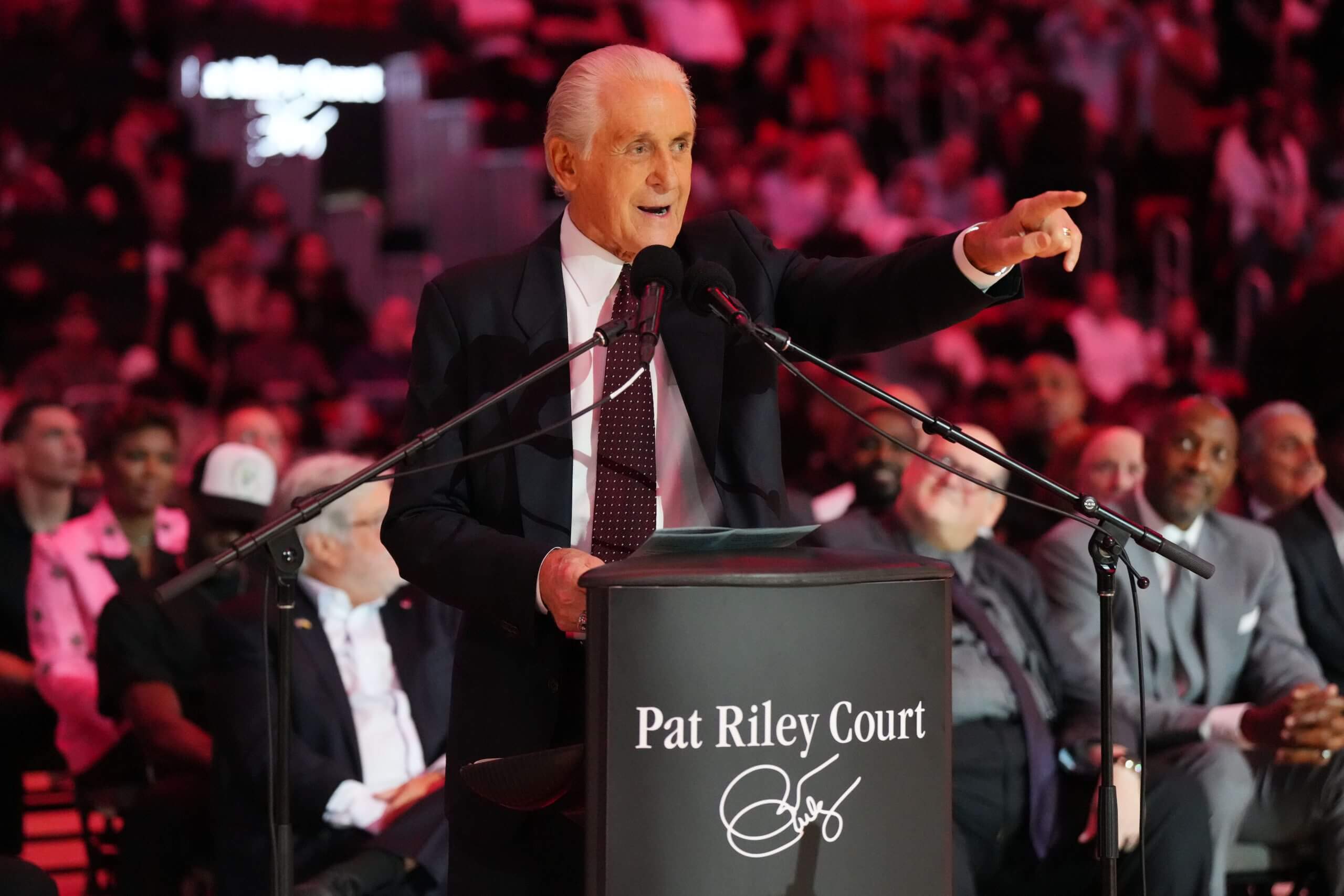
Pat Riley has been making moves in Miami for three decades.Jim Rassol / Imagn Images
4. Miami Heat
Total points: 76 (two first-place votes, three second-place votes; appeared on 14 ballots)
Governor: Micky Arison
President of basketball operations: Pat Riley
Head coach: Erik Spoelstra
Last year's rank: 3
The Heat have only missed the postseason four times since 2003, which jibes with Miami’s basketball C-Suite remaining one of the NBA’s most stable front offices. The moving parts of Riley, senior VP of basketball operations Andy Elisburg, assistant general manager Adam Simon and senior director of basketball operations Dave Beyer have been together for more than two decades.
“Trustable, competent, dependable team-builders and deal-makers,” one executive said. “Owner allows Pat to work; Pat has high-character, skilled staff. Their continuity is legendary.”
Miami managed to get out from under the Jimmy Butler fiasco at the deadline last year, getting a solid return including Andrew Wiggins, and then got Norman Powell from the Clippers, with plenty of tread left, before the start of this season.
“Riley doesn’t need this Rat Pack around him,” one executive said. "Arison, you talk about a run — him and Riley have been together since 1995. Andy’s been there that whole time. And Spoelstra’s been there, one way or another, Spoelstra hasn’t had a job since he was 24, other than with the Heat. Pat Riley gets a Lifetime Achievement Award for everything he’s done down there.
“You’ve got to run pretty damn fast to be better than Andy Elisburg. He’s a guy that’s got a great way about him, not overbearing, does a fabulous job of planning and organizing everything. He never tried to step on the basketball guys.”
Miami continues to make a cottage industry out of staying relevant, always able to move on to the next guy to build around. Now it’s Bam Adebayo, Tyler Herro and Kel’el Ware. The Heat may be hamstrung a bit at this year’s trade deadline while
Terry Rozier’s status is resolved once and for all, but they aren’t in any kind of significant cap trouble; they’ll almost certainly re-sign Powell this summer and plow ahead.
Advertisement
“They’re just consistent,” another executive said. “I think that they’re always in the mix.” —
Aldridge
5. Indiana Pacers
Total points: 61 (one first-place vote, three second-place votes; appeared on 14 ballots)
Governor: Herb Simon
President of basketball operations: Kevin Pritchard
Head coach: Rick Carlisle
Last year's rank: T-11
The Pacers have had a remarkable year that has raised their reputation league-wide. The franchise made a run to the NBA Finals and pushed the Thunder to seven games in a very tough series. They may have won a ring if Tyrese Haliburton had not torn his Achilles in that deciding game. Still, it was a feat for a front office that has slowly put together a deep and talented roster over the last few years, from a franchise-changing trade to a big swing and some less heralded moves along the way.
The front office has mostly remained the same over the last half-decade, led by Pritchard, general manager Chad Buchanan and assistant GM Ted Wu, with considerable input from Carlisle (assistant GM Kelly Krauskopf left the front office last fall to run basketball ops for the WNBA's Indiana Fever). That group has been responsible for some of the shrewdest moves in the league in that time. The Haliburton trade is one of the most significant deals in the NBA this century. Their bet on Pascal Siakam was critical to their finals run (he was Eastern Conference finals MVP). They have made savvy free-agent signings and trades with Aaron Nesmith, Obi Toppin and T.J. McConnell. Andrew Nembhard was a clear win in the second round of the draft.
“Brilliant second draft scouting,” said one executive who voted Indiana third on their ballot. “Turned a fringe All-Star in (Domantas) Sabonis into a franchise point guard. Proactive asset management.”
The Pacers’ shrewdest deal may have come last June during the finals when they traded the No. 23 pick in the 2025 draft for their own 2026 first-round pick from the Pelicans. At the time, it was a case of cap management as they looked ahead to an offseason when they might need to dip into the luxury tax, with the added benefit that, if they disappointed during the 2025-26 season, they still had their own pick. That last part proved critical when Haliburton got hurt. The Pacers have the third-worst record in the NBA but still have a bright future, as they can now add a likely top lottery pick to a good roster next season as Haliburton returns.
“Their record does not show what this group has done,” another exec said. “They have been ravaged by injuries, but they have a team with depth and good salary structure. They draft well and do good taking shots on guys that might have struggled at their first stops (Toppin/Nesmith). KP and Chad do a great job but have good support from Ryan Carr and Vance Catlin.” —
Mike Vorkunov
Advertisement
6. Cleveland Cavaliers
Total points: 50 (two second-place votes; appeared on 14 ballots)
Governor: Dan Gilbert
President of basketball operations: Koby Altman
Head coach: Kenny Atkinson
Last year's rank: 8
The Cavaliers have put together one of the best rosters in the NBA. Last year, that got them 64 regular-season wins and the best record in the East. They have had a slow start to this season, but the Cavaliers front office still has the respect of its peers.
"In a variety of regards, they're really good,” said an exec who had the Cavaliers on their ballot. “What Cleveland has done with the back end of their roster in terms of talent identification is really impressive beyond the stars. Look at the guys who they have grown internally who have been widely available."
The Cavaliers, led by Altman, general manager Mike Gansey, assistant GM Brandon Weems and VPs Jason Hillman and Jon Nichols, have cobbled together a contender with several smart decisions. Their trade for Donovan Mitchell has more than paid off despite the steep price; he has two top-six MVP finishes and re-signed before last season. They grabbed Jarrett Allen as an ancillary part of the James Harden trade in 2021. Evan Mobley, the No. 3 pick in the 2021 draft, just received a rookie-max extension and has a chance to be a perennial All-Star.
But as the exec said, some of the best work the Cavaliers front office has done is with the back end of the rotation and roster. Ty Jerome nearly won Sixth Man of the Year last season after bouncing around the NBA during his first four seasons (he left for Memphis this past summer). Sam Merrill was the last pick in the 2020 draft, but he finally found a home in the league on his third NBA team and got a $38 million extension in June. Jaylon Tyson, the 20th pick in the 2024 draft, has become a starter. The Isaac Okoro-Lonzo Ball trade could still yield positive returns.
All of it has put the Cavaliers with a chance at their first NBA Finals appearance without LeBron James, even as they must now have to figure out how to operate as the lone team above the second apron this season.
— Vorkunov
7. Minnesota Timberwolves
Total points: 43 (three second-place votes; appeared on 11 ballots)
Governor: Marc Lore
President of basketball operations: Tim Connelly
Head coach: Chris Finch
Last year's rank: 5
Advertisement
The Wolves came up on several ballots after consecutive trips to the conference finals, a journey they navigated despite a bumpy ownership transition and a cap situation that put the team over the second apron in 2025. That’s led to some tough decisions, like trading Karl-Anthony Towns and letting Nickeil Alexander-Walker leave in free agency, but the Wolves have kept their core intact and escaped salary-cap hell.
Soon after Connelly arrived from Denver, he engineered a controversial move to trade multiple first-round picks for center Rudy Gobert. However, that deal has paid off; Gobert was named Defensive Player of the Year in his second season in Minnesota as the Wolves won a playoff series for the first time since 2004. Similarly, a bold late-September 2024 trade to send Towns to New York for Julius Randle and Donte DiVincenzo ended with another conference finals trip.
“Tim Connelly has always been really good at what he does,” said one rival exec. “He has a good eye for talent. (General manager)
Matt Lloyd should not be overlooked either. Those guys balance each other really well. While trading (Towns) was difficult, they knew that they needed to have depth and could not keep the payroll going the way it was with KAT’s salary and impending free agents. The move allowed them to keep depth and some flexibility going forward.”
Navigating the roster will continue to be a challenge, however, because the Wolves are running low on draft assets. They owe two more picks and one swap to Utah from the Gobert deal and also a swap in 2030 and a top-one protected first in 2031 to San Antonio from the 2024 draft-day deal to acquire guard Rob Dillingham.
Connelly and company will need to repeat recent Wolves wins with late picks such as Terrence Shannon (27th in 2024) and Jaden McDaniels (28th in 2020, pre-Connelly) and the trade with Utah that acquired Mike Conley and saw Alexander-Walker arrive as a throw-in. That’s especially true as the core players around superstar guard Anthony Edwards age out of primary roles. —
Hollinger
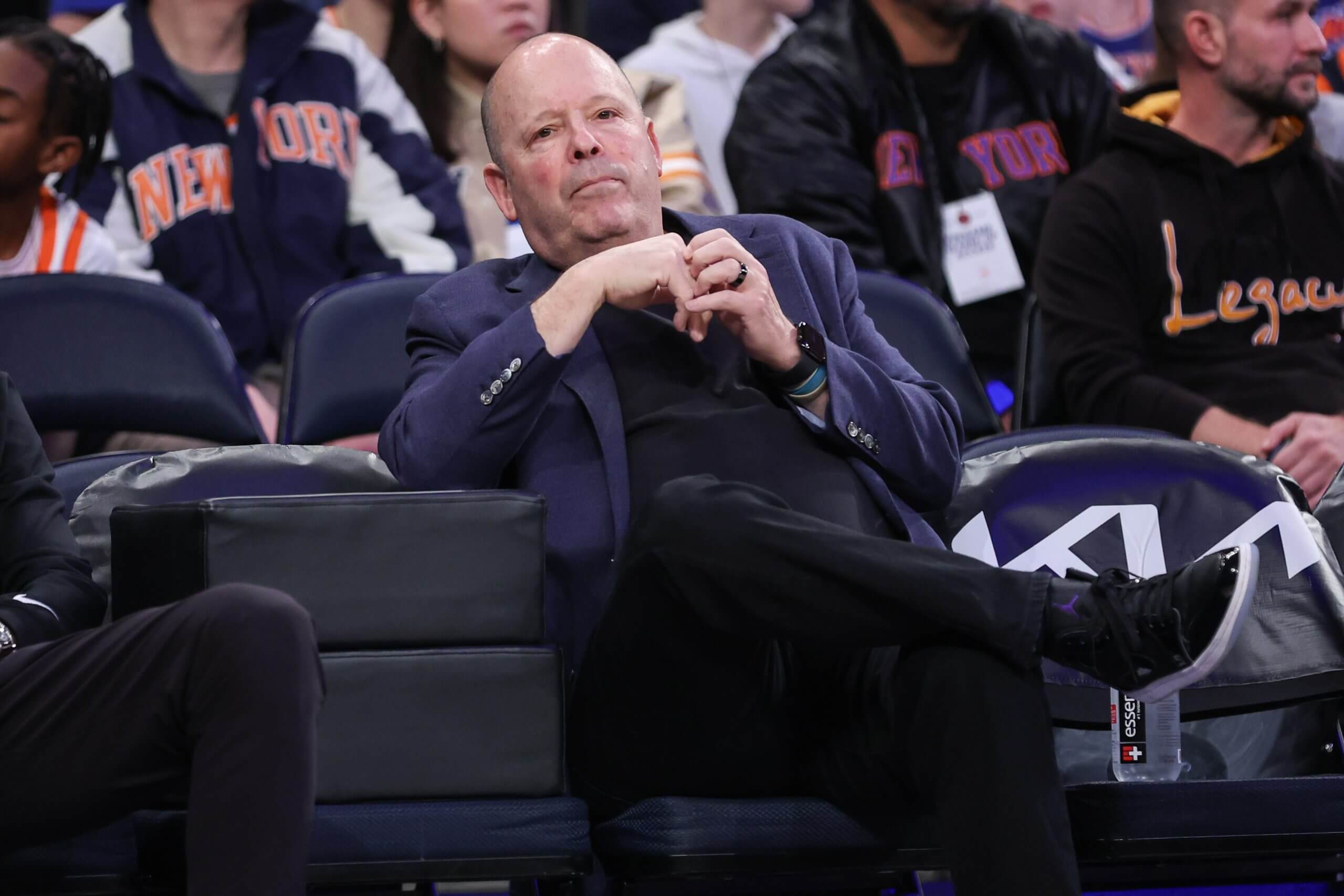
Leon Rose and the Knicks have hit on big moves in recent years.Wendell Cruz / Imagn Images
8. New York Knicks
Total points: 36 (two second-place votes; appeared on 10 ballots)
Governor: James Dolan
President: Leon Rose
Head coach: Mike Brown
Last year's rank: 6
The Knicks have nailed most of the big-picture moves that ended up with them in the 2025 Eastern Conference finals, even if we’re still waiting for a verdict on the controversial decision to fire Tom Thibodeau that followed.
Advertisement
However, just as big a reason for New York to land here, in the eyes of their rivals, is the Knicks’ ability to work the margin of the salary-cap rules under Rose, executive vice president William “Worldwide Wes” Wesley, senior vice president of basketball operations Gersson Rosas, assistant GM Frank Zanin and cap guru Brock Aller.
From landing an overseas rights player in seemingly every trade (New York has
15 of them now), to their complicated dance to complete the trade for Mikal Bridges a year ago while staying below the first apron and thus keep other trade possibilities alive — later coming to fruition in the trade for Karl-Anthony Towns — to the similar moves to stay below the second apron in the summer of 2025 while still adding Guerschon Yabusele with their taxpayer midlevel exception, New York has been savvy.
That said, New York couldn’t be in this position without hitting some really big stuff too, such as signing All-Star guard Jalen Brunson in free agency or acquiring Josh Hart from Portland for a late first-round pick or signing Donte DiVincenzo and Isaiah Hartenstein in successive years with their midlevel exception. (DiVincenzo later became a key piece of the Towns trade; Hartenstein, meanwhile, was signed to such a favorable contract that it basically made it impossible to keep him once he hit free agency in 2024.)
New York has also been shrewd on draft night, often moving down to position itself with more picks for the future but still nabbing players like Mitchell Robinson (pre-Rose, 36th 2018), Miles McBride (36th in 2021) and Immanuel Quickley (25th in 2020 and later a key piece in the trade for OG Anunoby) with late picks.
Nitpickers will note that the deal of five first-round picks to Brooklyn for Bridges may have been an overreach, especially if it ultimately costs them a shot at Giannis Antetokounmpo, and that 2024 first-rounder Pacôme Dadiet might be a bust.
Nonetheless, the Knicks are a top-tier contender in the East and basically built to that spot from the ground up, without a single high lottery pick as a wind at their back. Their cap situation beyond this year is surprisingly manageable for a team with four expensive starters.
– Hollinger
9. San Antonio Spurs
Total points: 31 (three second-place votes; appeared on seven ballots)
Governor: Peter J. Holt
General manager: Brian Wright
Head coach: Mitch Johnson
Last year's rank: 10
Advertisement
Amazing how the hardest-working people always are also the luckiest? Fancy that.
Yes, the Spurs front office had nothing to do with getting Victor Wembanyama and Stephon Castle or Dylan Harper. That was Ping-Pong-ball justice. But San Antonio also has positioned itself in the post-Tim Duncan era to take lots and lots of bites at the lottery apple by continuing to be smart under Wright, who works hand in glove with CEO of Spurs Sports and Entertainment R.C. Buford, amid what looks like a relatively seamless transition from Hall of Fame coach Gregg Popovich to Johnson.
The Spurs got in optimal position to win the 2023 lottery — and Wemby — by bottoming out in 2022, moving Dejounte Murray to the Hawks for three first-round picks. And that deal got San Antonio Arizona wing Carter Bryant in the ’25 draft, on top of picking Harper second overall, with a 2026 pick swap with the Hawks and an unprotected 2027 first-rounder from the Murray deal yet to come.
And having
that unprotected 2027 first coming from Atlanta allowed the Spurs the freedom to trade their own ’27 first to Sacramento to get De’Aaron Fox from the Sacramento Kings.
And, San Antonio has gotten significant production from Harrison Barnes, who’s shot 43 percent from 3 since coming to the Spurs, as part of the multi-team deal in July 2024 that sent DeMar DeRozan from the Chicago Bulls to the Kings, as well as an unprotected 2031 pick swap with Sacramento. For this, San Antonio gave up … nothing, really. The Spurs created enough cap space to take in Barnes’ contract by trading the eighth pick in the ’24 draft to the Wolves for even
more assets: a first-round pick swap with Minnesota in 2030 and the Wolves’ unprotected 2031 first, which they could do because they already had Castle and didn’t need Rob Dillingham, whom Minnesota hoped would be its point guard of the future.
So, yes, having absurd lottery luck isn’t an example of great team building. But that’s only part of why San Antonio has been able to construct an emerging power in the West, one that projects to be a long-term challenger to Oklahoma City for years to come.
“They have been fortunate in their risk propositions, which have paid off in the draft lottery (Wemby, Castle, Harper) and opportunistic in asset collection,” one executive said. —
Aldridge
Advertisement
10. Golden State Warriors
Total points: 23 (one second-place vote; appeared on seven ballots)
Governor: Joe Lacob
General manager: Mike Dunleavy Jr.
Head coach: Steve Kerr
Last year's rank: 9
Bob Myers was a very tough act to follow.
Not only did the former Warriors executive play a monumental part in the Warriors’ dynasty, but he was beloved by the key stakeholders during that remarkable run. Yet since being elevated to the top job after Myers resigned in the summer of 2023, with trusted voices like Kirk Lacob (executive vice president, basketball operations), Larry Harris (assistant general manager) and several others still around from that run, Dunleavy has done a solid job of blending the old with the new as they look to extend the Steph Curry-Draymond Green era.
“(They) run a tight ship,” one voter said of the Warriors. “(You) always know what you’ll get from them. The owner is, of course, heavily involved — but reliably so. You know who he is and what his objectives are. Mike and Kirk are very good at their jobs.”
Dunleavy’s best moment yet was the Butler trade with Miami in February that returned them to relevance, as the Warriors sent Andrew Wiggins, Kyle Anderson and a protected 2025 first-round pick to the Heat in the five-team deal (then agreed to a two-year, $121 million extension with Butler). Yet while Butler was a game-changing upgrade to the roster, this roller-coaster start to their season has made it clear that Dunleavy still has more work to do.
That’s where Jonathan Kuminga will likely come in. After the Warriors and the 23-year-old forward spent so much of the summer in a restricted free agency staring contest, ultimately agreeing to a two-year, $48.5 million deal (team option in 2026-27) that was structured with a future trade in mind, the question now is whether they can find another difference-making deal that involves Kuminga. —
Amick
Others receiving votes
Advertisement
Detroit Pistons —17 points, one second-place vote, on seven ballots
Memphis Grizzlies,
Denver Nuggets — nine points each, three ballots apiece
Brooklyn Nets — seven points, one second-place vote, one ballot
Philadelphia 76ers — six points, two ballots
LA Clippers — five points, one ballot
Los Angeles Lakers, Utah Jazz — three points each, one ballot apiece
Atlanta Hawks, Milwaukee Bucks — two points each, two ballots apiece
Orlando Magic, Washington Wizards — one point each, one ballot apiece
Who’s next?
We asked execs to name which front office that was
not in their top five they deemed on the rise. Some splurged with two responses to the one question. Hence, this is why some teams have a .5 in their total.
1. Atlanta Hawks
Total votes: 12
Governor: Tony Ressler
General manager: Onsi Saleh
Head coach: Quin Snyder
These are not your old-school Hawks — so says the rest of the NBA. Atlanta changed around its front office over the summer, elevating Saleh, who came up with the Warriors and Spurs, from its No. 2 exec to its lead one. The Hawks quickly made shrewd moves, including the acquisitions of Porziņģis, Alexander-Walker and Luke Kennard. They also pulled off one of the most praised moves of the offseason, flipping the 13th pick on draft night for No. 23 as well as the Pelicans’ unprotected first in 2026, a selection that looks extra juicy with New Orleans at the bottom of the West.
“I believe in Onsi,” said one participant who deemed the Hawks on the rise. “I think he’s a really smart dude. He values process. I can’t imagine him not succeeding.”
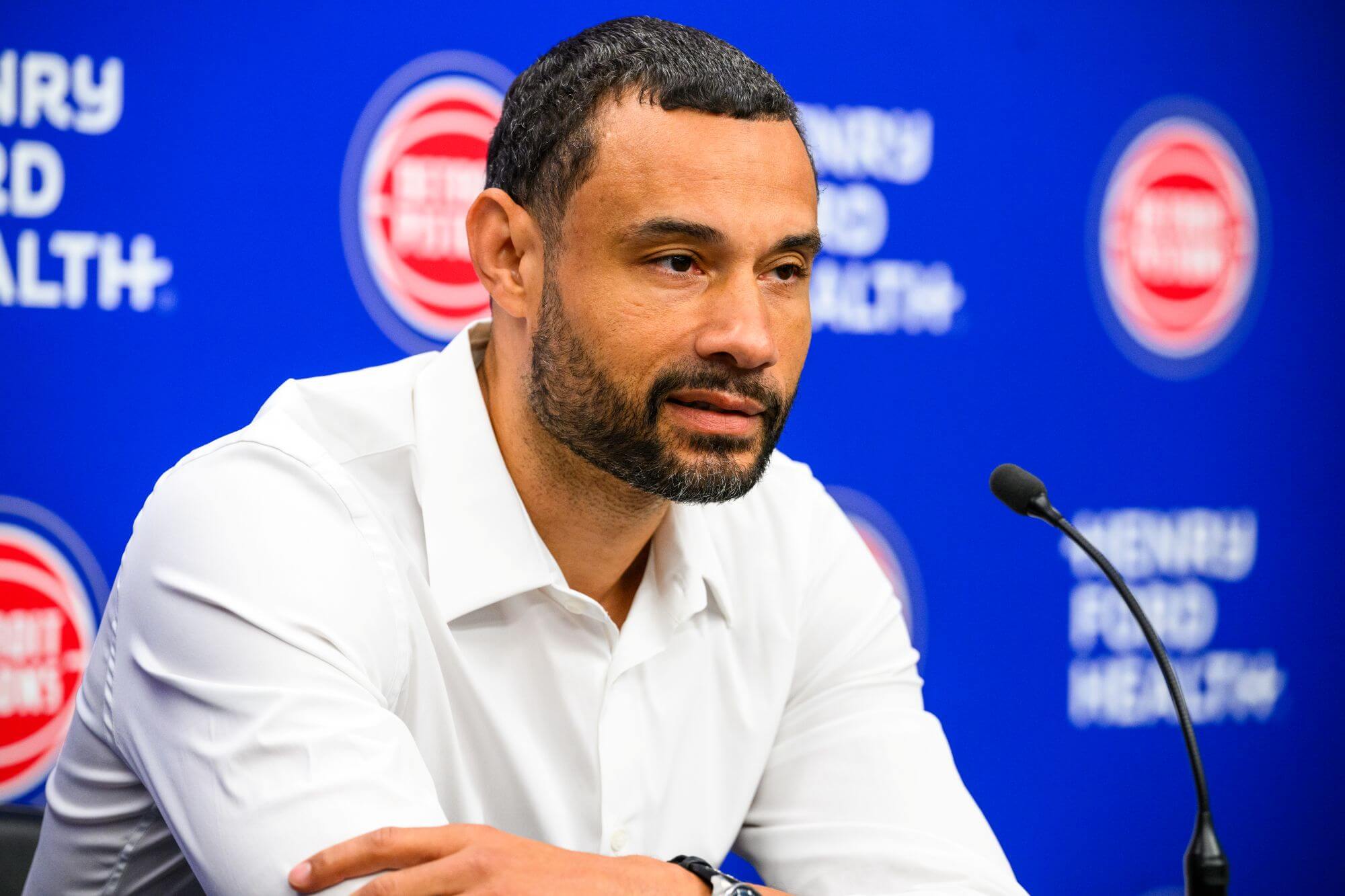
Trajan Langdon's Pistons are among the biggest surprises in the NBA this season.Chris Schwegler / NBAE via Getty Images
2. Detroit Pistons
Total votes: 8
Governor: Tom Gores
President of basketball operations: Trajan Langdon
Head coach: J.B. Bickerstaff
The team with the East’s best record is on the rise. Only two years ago, the Pistons won just 14 games. They made changes the following summer, hiring Langdon, formerly with the Pelicans, as president of basketball operations and experienced exec Dennis Lindsey, who ran the Jazz for years.
Advertisement
The coaching hire, Bickerstaff, has been a home run. The Pistons have signed or traded for quality veterans. Their young players — such as Cade Cunningham, Jalen Duren and Ausar Thompson — are soaring.
It’s fitting the front office would be on the rise.
“Trajan is really good. Dennis is really good,” one voter said. “They’ve hired some smart people in their strategy group. I think they have a direction. The contracts they did, it makes sense. I think they’re really good.”
3. Charlotte Hornets
Total votes: 3
Governors: Rick Schnall, Gabe Plotkin
Executive VP: Jeff Peterson
Head coach: Charles Lee
It’s possible the basketball world looks back on the Hornets’ 2025 draft as a slam dunk. No. 4 pick Kon Knueppel is good today and has a chance to become a star. They nailed two second-round picks, finding rotation players in Ryan Kalkbrenner and Sion James.
Charlotte has sneakily gathered a trove of future draft picks and could end up with eight first-rounders in the next four years and 15 second-rounders in the next seven. The Hornets are in the beginning stages of stability.
“Those jobs are so hard in those markets when you’re starting from scratch,” said one executive who voted for Charlotte. “But they’ve done a really smart job.”
4. Toronto Raptors
Total votes: 2.5
Governor: Larry Tanenbaum
General manager: Bobby Webster
Head coach: Darko Rajaković
The Raptors have unexpectedly slid into the East playoff picture, bursting onto the scene with a fast-paced, two-way style that’s exhausting opponents. In some ways, they’re doing it with a familiar cast; and in other ways, Toronto feels like a new organization.
Masai Ujiri, who took over the front office in 2013, departed just before this season. Webster, his longtime right hand, is now in charge. Webster already handled much of Toronto’s day-to-day. But now, the young, well-respected exec is the leader.
What You Should Read Next

Darko Rajaković is ‘direct, honest, transparent’ — and just what Raptors need
"Any time he gets mad and swears in Serbian, that s--- is so funny," Jamal Shead says of his head coach.
5. Utah Jazz
Total votes: 2
Governor: Ryan Smith
CEO: Danny Ainge
General manager: Justin Zanik
Head coach: Will Hardy
Advertisement
Much of the Jazz’s leadership has been together for years. Ainge arrived in 2021, and Zanik was already there. But there has been one recent addition that could qualify them as on the rise: This past summer, they brought in Austin Ainge, Danny’s son, a well-respected executive formerly with the Celtics, to take over as team president, which restructured the front office.
6. Portland Trail Blazers
Total votes: 1.5
Governor: Jody Allen
General manager: Joe Cronin
Interim head coach: Tiago Splitter
The Trail Blazers are in a cycle of constant change. Earlier this year, Allen agreed to sell the team to an investment group headed by Tom Dundon, who owns the NHL’s Carolina Hurricanes. In October,
the FBI arrested their head coach, Chauncey Billups, as part of its gambling investigation.
Amid the noise, the Blazers have developed players. They insisted on a gem in the trade that sent Damian Lillard out of town a few years ago, when they got the Suns to include second-round pick Toumani Camara, who’s now one of the league’s best defenders. And the Deni Avdija trade could end up a franchise-changer with Avdija emerging as an All-Star candidate.
7. Washington Wizards
Total votes: 1.5
Governor: Ted Leonsis
President: Michael Winger
General manager: Will Dawkins
Head coach: Brian Keefe
Two former Thunder front-office officials now run the Wizards. Dawkins handles much of the day-to-day and player evaluation. Winger has a background in law and strategy; he takes on the bigger picture.
The Wizards — who employ some promising, young players, such as Alex Sarr and Kyshawn George — are losing often, but in the early stages of a rebuild, that’s still part of the plan.
“That place was a mess when Winger and Dawkins took over,” said one executive who voted for the Wizards. “They had to first set up their infrastructure, which they did over the last two years. They have some young talent now that has taken some pretty big steps this season so far and have the right vets around them. They will keep drafting well and, if they are lucky in the lottery, can take a big step in the East pretty quickly. They had a plan in place and are executing it.”
Advertisement
Others receiving votes: Indiana Pacers, Denver Nuggets, San Antonio Spurs, Memphis Grizzlies, Los Angeles Lakers
Some of the teams that received votes were surprising. The Indiana Pacers, San Antonio Spurs, Memphis Grizzlies and Los Angeles Lakers all have established, long-time front office leadership.
Of course, just because, say, Lakers GM and president of basketball operations Rob Pelinka has been in L.A. since 2019, that doesn’t mean the team is completely the same, especially after a sale.
"No disrespect to the current folks,” the person who voted for the Lakers said, “But what (incoming governor) Mark Walter does with the Lakers front office and the folks with the Dodgers involved is really intriguing. ... That's a sleeping giant."
— Fred Katz
The Rankings & Tiers series is sponsored by E*Trade from Morgan Stanley. The Athletic
maintains full editorial independence. Sponsors have no control over or input into the reporting or editing process and do not review stories before publication.
By The Athletic NBA Staff




 Your point is spot on as well.