I would say no. Would you like to make an argument otherwise?Is this analogous to using the term slave for today's economic issues?

Install the app
How to install the app on iOS
Follow along with the video below to see how to install our site as a web app on your home screen.
Note: This feature may not be available in some browsers.
You are using an out of date browser. It may not display this or other websites correctly.
You should upgrade or use an alternative browser.
You should upgrade or use an alternative browser.
6 Million Americans Living On NOTHING But Food Stamps
- Thread starter muckraker10021
- Start date


I would say no. Would you like to make an argument otherwise?
I would agree. It makes about as much sense as saying the stock market is the food stamp of the 1%.
That's an argument?I would agree. It makes about as much sense as saying the stock market is the food stamp of the 1%.


As companies increasingly make more profits $$$$$ due to productivity (getting more output per hour) gains; this has NOT meant a commensurate increase in corporations employees wages. In fact adjusted for cost-of-living increases that far surpass inflation; American workers wages have actually DECREASED since 1980. All republiklan politicians and too many corporate democratic party politicians support this decoupling of wages and productivity. This corporate decision to reduce employees wages while DRAMATICALLY increasing executive compensation has resulted in the worst income inequality since the late 1920's. Incredibly these same politicians prodded by their corporate masters have licentiously suggested that the minimum wage should be lowered or even eliminated; despite the fact that the U.S. holds the top spot among the industrial nations as the country with the highest percentage of poverty wage workers. The cynical willful lunatics that have been pushing this no-minimum-wage idea since the 1870's, conveniently ignore the fact that millions of American workers were paid no wages from 1607 until 1865. Those pushing the no-minimum-wage idea are longing to go-back to this antebellum era.


I randomly came across this article out of the blue while reading the Internet. I can't really remember how I found it, but it mentions:
It seems like more than a coincidence that when money became unstable, wages and productivity lost their historical positive correlation.
If that's true, it shouldn't be shocking that businesses have figured out how to manage the delinking between gold and the dollar by breaking the bond between productivity and wages.
Maybe people should be less for food stamps and more for a stable money policy.
Just saying.
If I remember correctly, the only major history-changing economic event of any magnitude during the 70's was when Nixon completely decoupled the dollar from gold.From 1948 to 1973, the productivity of all nonfarm workers nearly doubled, as did average hourly compensation. But things changed dramatically starting in the late 1970s. Although productivity increased by 80.1 percent from 1973 to 2011, average wages rose only 4.2 percent and hourly compensation (wages plus benefits) rose only 10 percent over that time, according to government data analyzed by the Economic Policy Institute.
http://www.nytimes.com/2012/09/03/opinion/henry-ford-when-capitalists-cared.html
It seems like more than a coincidence that when money became unstable, wages and productivity lost their historical positive correlation.
If that's true, it shouldn't be shocking that businesses have figured out how to manage the delinking between gold and the dollar by breaking the bond between productivity and wages.
Maybe people should be less for food stamps and more for a stable money policy.
Just saying.

I randomly came across this article out of the blue while reading the Internet. I can't really remember how I found it, but it mentions:
If I remember correctly, the only major history-changing economic event of any magnitude during the 70's was when Nixon completely decoupled the dollar from gold.
It seems like more than a coincidence that when money became unstable, wages and productivity lost their historical positive correlation.
If that's true, it shouldn't be shocking that businesses have figured out how to manage the delinking between gold and the dollar by breaking the bond between productivity and wages.
Maybe people should be less for food stamps and more for a stable money policy.
Just saying.
Americans are violent, stupid, lazy, and full of hate.
Yet, you expect them to understand the connection between sound money and wages.
You have more faith than I do.
I randomly came across this article out of the blue while reading the Internet. I can't really remember how I found it, but it mentions:
If I remember correctly, the only major history-changing economic event of any magnitude during the 70's was when Nixon completely decoupled the dollar from gold.
It seems like more than a coincidence that when money became unstable, wages and productivity lost their historical positive correlation.
If that's true, it shouldn't be shocking that businesses have figured out how to manage the delinking between gold and the dollar by breaking the bond between productivity and wages.
Maybe people should be less for food stamps and more for a stable money policy.
Just saying.
This is what the gold standard does for the economy.
And the right has hasn't learned a damn thing!
Panic of 1873
The Panic of 1873 was a financial crisis which triggered a severe international economic depression in both Europe and the United States that lasted until 1879, and even longer in some countries. The depression was known as the "Great Depression" until the 1930s, but is sometimes now known as the Long Depression.<SUP id=cite_ref-1 class=reference sizset="false" sizcache08176588838272547="61 149 11" jQuery18309753283828603243="11">[1]</SUP> The panic was caused by the fall in demand for silver internationally, which followed Germany's decision to abandon the silver standard in the wake of the Franco-Prussian war.<SUP id=cite_ref-madhouse_2-0 class=reference sizset="false" sizcache08176588838272547="61 149 13" jQuery18309753283828603243="14">[2]</SUP>
In 1871, Otto von Bismarck extracted a large indemnity in gold from France and ceased minting silver thaler coins. The first symptoms of the crisis were financial failures in the Austro-Hungarian capital, Vienna, which spread to most of Europe and North America by 1873. It was one of a series of economic crises in the 19th and early 20th centuries. In Britain, the result was two decades of stagnation known as the "Long Depression", which weakened Britain's economic leadership in the world.<SUP id=cite_ref-3 class=reference sizset="false" sizcache08176588838272547="61 149 21" jQuery18309753283828603243="17">[3]</SUP>
<SUP></SUP>
<SUP>Continue</SUP>
Maybe people should be less for food stamps and more for a stable money policy.
Americans are violent, stupid, lazy, and full of hate.
Guys, dishonest money breeds a dishonest society!
You do realize that your paragraph states the cause of the panic as Germany abandoning a stable money policy.This is what the gold standard does for the economy.
And the right has hasn't learned a damn thing!
Panic of 1873
The Panic of 1873 was a financial crisis which triggered a severe international economic depression in both Europe and the United States that lasted until 1879, and even longer in some countries. The depression was known as the "Great Depression" until the 1930s, but is sometimes now known as the Long Depression.<SUP id=cite_ref-1 class=reference sizset="false" sizcache08176588838272547="61 149 11" jQuery18309753283828603243="11">[1]</SUP> The panic was caused by the fall in demand for silver internationally, which followed Germany's decision to abandon the silver standard in the wake of the Franco-Prussian war.<SUP id=cite_ref-madhouse_2-0 class=reference sizset="false" sizcache08176588838272547="61 149 13" jQuery18309753283828603243="14">[2]</SUP>
In 1871, Otto von Bismarck extracted a large indemnity in gold from France and ceased minting silver thaler coins. The first symptoms of the crisis were financial failures in the Austro-Hungarian capital, Vienna, which spread to most of Europe and North America by 1873. It was one of a series of economic crises in the 19th and early 20th centuries. In Britain, the result was two decades of stagnation known as the "Long Depression", which weakened Britain's economic leadership in the world.<SUP id=cite_ref-3 class=reference sizset="false" sizcache08176588838272547="61 149 21" jQuery18309753283828603243="17">[3]</SUP>
<SUP></SUP>
<SUP>Continue</SUP>
I'm not pro-gold, I'm pro-stable money. Nixon withdrew us from Bretton-Wood. Bretton-Wood was a loose and casual link to gold, but even a casual link to gold can ensure stable money for three decades.
But I guess I should provide an actual rebuttal to your post.
My response to the Panic of 1873 is, As companies increasingly make more profits $$$$$ due to productivity (getting more output per hour) gains; this has NOT meant a commensurate increase in corporations employees wages. In fact adjusted for cost-of-living increases that far surpass inflation; American workers wages have actually DECREASED since 1980.
I have no faith. I stopped voting.Americans are violent, stupid, lazy, and full of hate.
Yet, you expect them to understand the connection between sound money and wages.
You have more faith than I do.
If I had faith I would still be trying to get people to sign petitions for politicians and initiatives like in my younger days. Now I just try to limit the damage by hedging against these bad policies.
You do realize that your paragraph states the cause of the panic as Germany abandoning a stable money policy.
I'm not pro-gold, I'm pro-stable money. Nixon withdrew us from Bretton-Wood. Bretton-Wood was a loose and casual link to gold, but even a casual link to gold can ensure stable money for three decades.
But I guess I should provide an actual rebuttal to your post.
My response to the Panic of 1873 is, As companies increasingly make more profits $$$$$ due to productivity (getting more output per hour) gains; this has NOT meant a commensurate increase in corporations employees wages. In fact adjusted for cost-of-living increases that far surpass inflation; American workers wages have actually DECREASED since 1980.
but even a casual link to gold can ensure stable money for three decades.
Coinage Act of 1873
The decision of the German Empire to cease minting silver thaler coins in 1871 caused a drop in demand and downward pressure on the value of silver; this had a knock-on effect in the USA, where much of the supply was then mined. As a result, the Coinage Act of 1873 was introduced and this changed the United States silver policy. Before the Act, the United States had backed its currency with both gold and silver, and it minted both types of coins. The Act moved the United States to a 'de facto' gold standard, which meant it would no longer buy silver at a statutory price or convert silver from the public into silver coins (though it would still mint silver dollars for export in the form of trade dollars)<SUP id=cite_ref-7 class=reference sizset="false" sizcache027015064669727234="61 149 54" jQuery18306956087135985136="31">[7]</SUP>
<SUP></SUP>
The Act had the immediate effect of depressing silver prices. This hurt Western mining interests, who labeled the Act "The Crime of '73." Its effect was offset somewhat by the introduction of a silver trade dollar for use in the Orient, and by the discovery of new silver deposits at Virginia City, Nevada, resulting in new investment in mining activity.<SUP id=cite_ref-8 class=reference sizset="false" sizcache027015064669727234="61 149 56" jQuery18306956087135985136="34">[8]</SUP> But the coinage law also reduced the domestic money supply, which raised interest rates, thereby hurting farmers and anyone else who normally carried heavy debt loads. The resulting outcry raised serious questions about how long the new policy would last.<SUP id=cite_ref-9 class=reference sizset="false" sizcache027015064669727234="61 149 58" jQuery18306956087135985136="37">[9]</SUP> This perception of instability in United States monetary policy caused investors to shy away from long-term obligations, particularly long-term bonds. The problem was compounded by the railroad boom, which was in its later stages at the time.
In September 1873, the American economy entered a crisis. This followed a period of post-Civil War economic over-expansion that arose from the Northern railroad boom. It came at the end of a series of economic setbacks: the Black Friday panic of 1869, the Chicago fire of 1871, the outbreak of equine influenza in 1872, and demonetization of silver in 1873.
My response to the Panic of 1873 is, As companies increasingly make more profits $$$$$ due to productivity (getting more output per hour) gains; this has NOT meant a commensurate increase in corporations employees wages. In fact adjusted for cost-of-living increases that far surpass inflation; American workers wages have actually DECREASED since 1980.
Congratulations, you must have stayed awake in Econ 101 (if you took it).
This is was Adam Smith said, this is what Karl Marx said, this is what John Maynard Keynes said and this is at the essences of the struggle between the Laissez Faire, free market capitalist and the Social Democrat.
Productive has always risen since the advent of machines to make work easier, but it increased dramatically during the late 1880s. The average worker did not share in that productivity increase, thus the worker's movement coalesced.
Despite Nixon's Bretton Wood, the economy during the entire 1970s continued to grow and productivity rose and there wasn't a major financial bank crisis in the United States between the end of WWII and the 1980s until the S & L Crisis of the 1980s and the Black Monday Crash of 1987.
So once again, your proof that stable money policies don't work are instances where governments abandoned stable money policies.Coinage Act of 1873
The decision of the German Empire to cease minting silver thaler coins in 1871 caused a drop in demand and downward pressure on the value of silver; this had a knock-on effect in the USA, where much of the supply was then mined. As a result, the Coinage Act of 1873 was introduced and this changed the United States silver policy. Before the Act, the United States had backed its currency with both gold and silver, and it minted both types of coins. The Act moved the United States to a 'de facto' gold standard, which meant it would no longer buy silver at a statutory price or convert silver from the public into silver coins (though it would still mint silver dollars for export in the form of trade dollars)<SUP id=cite_ref-7 class=reference sizset="false" sizcache027015064669727234="61 149 54" jQuery18306956087135985136="31">[7]</SUP>
<SUP></SUP>
The Act had the immediate effect of depressing silver prices. This hurt Western mining interests, who labeled the Act "The Crime of '73." Its effect was offset somewhat by the introduction of a silver trade dollar for use in the Orient, and by the discovery of new silver deposits at Virginia City, Nevada, resulting in new investment in mining activity.<SUP id=cite_ref-8 class=reference sizset="false" sizcache027015064669727234="61 149 56" jQuery18306956087135985136="34">[8]</SUP> But the coinage law also reduced the domestic money supply, which raised interest rates, thereby hurting farmers and anyone else who normally carried heavy debt loads. The resulting outcry raised serious questions about how long the new policy would last.<SUP id=cite_ref-9 class=reference sizset="false" sizcache027015064669727234="61 149 58" jQuery18306956087135985136="37">[9]</SUP> This perception of instability in United States monetary policy caused investors to shy away from long-term obligations, particularly long-term bonds. The problem was compounded by the railroad boom, which was in its later stages at the time.
In September 1873, the American economy entered a crisis. This followed a period of post-Civil War economic over-expansion that arose from the Northern railroad boom. It came at the end of a series of economic setbacks: the Black Friday panic of 1869, the Chicago fire of 1871, the outbreak of equine influenza in 1872, and demonetization of silver in 1873.
America created monetary instability by doing what Germany did. Can you tell us what happened to the stability of the money supply after the transition from bad policy ended?
Machines don't create productivity, the human brain does when it thinks of new processes for old activities or new activities to replace the old. Its not magic and the machine doesn't come from nowhere.Congratulations, you must have stayed awake in Econ 101 (if you took it).
This is was Adam Smith said, this is what Karl Marx said, this is what John Maynard Keynes said and this is at the essences of the struggle between the Laissez Faire, free market capitalist and the Social Democrat.
Productive has always risen since the advent of machines to make work easier, but it increased dramatically during the late 1880s. The average worker did not share in that productivity increase, thus the worker's movement coalesced.
Despite Nixon's Bretton Wood, the economy during the entire 1970s continued to grow and productivity rose and there wasn't a major financial bank crisis in the United States between the end of WWII and the 1980s until the S & L Crisis of the 1980s and the Black Monday Crash of 1987.
We've had this discussion before, worker movements existed to secure already achieved economic gains by demanding political rights which would secure even more economic gains. Workers demanded political freedom from death and pain delivered by unsafe conditions and the bat of union breakers. The concept of economic rights is a modern idea. They fought for wage gains, but they didn't fight for wage gains by right.
They fought for rights to work in conditions conducive to higher wages. Right to organize, right to safe conditions like not dying in a factory fires, or the rights of workers not to be forced in a job they don't want to work. Right to a wage level is not an 1880 concept. This means worker movements are not proof that productivity gains were not shared by workers, since that wasn't the point of worker movements in 1880's.
As for the economy in the 1970's, thanks for completely rewriting it. You made no mention of stagflation as if that wasn't the first sign that unstable money was making workers worse off after Bretton-Wood. And it's not unreasonable to say that it took 10 years for bad money to catch up with big businesses. They have more resources than the average person. Unstable money caught up with workers immediately with stagflation, and only caught up with financial industry when they made an exceptionally bad bet.
Machines don't create productivity, the human brain does when it thinks of new processes for old activities or new activities to replace the old. Its not magic and the machine doesn't come from nowhere.
Oh really?
What was the affect on slavery after the Cotton Gin was invented. Slaves weren't paid or compensated any way for their labor.
How did the cotton gin come into being without a human mind?Oh really?
What was the affect on slavery after the Cotton Gin was invented. Slaves weren't paid or compensated any way for their labor.
And are you implying that slaves didn't get paid because of the cotton gin? Or maybe you're saying slaves should have just unionized? Or maybe you're saying that your posts in this had been about slavery this whole time?
Help me out.

How about an assist rather than throwing them out of the country? Scumbag republiklans think nobody ever needs help unless they happen to be rich bankers on Wallstreet. Everybody else is a burden on society and should be ostracized then kicked the fuck out of their own country.
-VG
Food stamps aren't an assist? While I do feel bad for 'some' people who are in this predicament, any assistance will further increase the tax burden on those who are working, and may be barely making it themselves... I ain't got time for that shit either...

How did the cotton gin come into being without a human mind?
And are you implying that slaves didn't get paid because of the cotton gin? Or maybe you're saying slaves should have just unionized? Or maybe you're saying that your posts in this had been about slavery this whole time?
Help me out.
Genius, you can't wipe your ass without your mind.
Stop with the ridiculous question evasions.
This is a basic American history question. I'm not implying anything, the answer is concrete.
What was the affect on slavery after the Cotton Gin was invented. Slaves weren't paid or compensated any way for their labor.
Either you do know or don't know.
Food stamps aren't an assist? While I do feel bad for 'some' people who are in this predicament, any assistance will further increase the tax burden on those who are working, and may be barely making it themselves... I ain't got time for that shit either...
When a company pays sub living wages, they profit at the expense of the tax payer. Because people can't feed their families on their wages they get assistance from the government. Another expense to the tax payer. At the same time, companies are getting tax breaks, another load on the tax payer.
If Walmart, for example paid a living wage, this would lessen the need for the government to get involved.
Corporations get away with murder.
So you don't want to help me out? To me you come across as a fucking idiot, but I asked a series of questions to help me understand your intent.Genius, you can't wipe your ass without your mind.
Stop with the ridiculous question evasions.
This is a basic American history question. I'm not implying anything, the answer is concrete.
What was the affect on slavery after the Cotton Gin was invented. Slaves weren't paid or compensated any way for their labor.
Either you do know or don't know.
Should I just go with you're a fucking idiot and work from there?
So you don't want to help me out? To me you come across as a fucking idiot, but I asked a series of questions to help me understand your intent.
Should I just go with you're a fucking idiot and work from there?
So you don't know.
Thank you!
What was the affect on slavery after the Cotton Gin was invented. Slaves weren't paid or compensated any way for their labor.
Either you do know or don't know.
The cotton gin prolonged and expanded chattel slavery. Slavery was diminishing in the U.S. prior to the introduction of the cotton gin.
The cotton gin invented in 1794 turned the Mississippi delta from a mud patch into the economic 'wall street' of the South.
Slave breeding soared, as more slaves were needed and the ships carrying slaves from Africa were banned in 1807.
<div id="kadoo_video_container_23775043-a47"><object height="400" width="544" id="video_detector_23775043-a47"><param value="http://divshare.com/flash/video_flash_detector.php?data=YTo2OntzOjU6ImFwaUlkIjtzOjE6IjQiO3M6NjoiZmlsZUlkIjtpOjIzNzc1MDQzO3M6NDoiY29kZSI7czoxMjoiMjM3NzUwNDMtYTQ3IjtzOjY6InVzZXJJZCI7czo3OiIxMzE0NjMzIjtzOjQ6InRpbWUiO2k6MTM2MTY3MjY3MDtzOjEyOiJleHRlcm5hbENhbGwiO2k6MTt9&autoplay=default&id=23775043-a47" name="movie"></param><param name="allowFullScreen" value="true"></param><param name="allowscriptaccess" value="always"></param><param name="wmode" value="opaque"></param><embed wmode="opaque" height="400" width="544" type="application/x-shockwave-flash" allowscriptaccess="always" allowfullscreen="true" src="http://divshare.com/flash/video_flash_detector.php?data=YTo2OntzOjU6ImFwaUlkIjtzOjE6IjQiO3M6NjoiZmlsZUlkIjtpOjIzNzc1MDQzO3M6NDoiY29kZSI7czoxMjoiMjM3NzUwNDMtYTQ3IjtzOjY6InVzZXJJZCI7czo3OiIxMzE0NjMzIjtzOjQ6InRpbWUiO2k6MTM2MTY3MjY3MDtzOjEyOiJleHRlcm5hbENhbGwiO2k6MTt9&autoplay=default&autoplay=default&id=23775043-a47"></embed></object></div>
When a company pays sub living wages, they profit at the expense of the tax payer. Because people can't feed their families on their wages they get assistance from the government. Another expense to the tax payer. At the same time, companies are getting tax breaks, another load on the tax payer.
If Walmart, for example paid a living wage, this would lessen the need for the government to get involved.
Corporations get away with murder.
Unbridled unregulated capitalism has always solely been about making money $$$$$$$. The more money a corporation earns, the higher the shareholder value (the stock price).
The British East India Corporation started in 1600 plowed the path for today’s mega-corporations. This corporate model regards ‘labor’ as expendable. This corporate model always attempts to pay ‘labor’ as little-as-possible and will pay nothing (using work slaves) if they can get away with it.
Think of the Cecil Rhodes- Oppenheimer De Beers South African gold & diamond Mining Corporation which ‘paid’ it’s Black workers virtually nothing while earning billions of dollars. The free market propagandist will say that the De Beers treatment of its workers was ‘good’ since those dirty Blacks got all they were worth; dirt under their fingernails.
The British East India Corporate model is still intact in this 21st century. Mitt RMoney’s vulture capital firm Bain is a paragon of today’s “turbo-capitalism”. RMoney’s Bain Capital which despite him declaring himself “retired” is the source of his $20 Million dollars annual income took a profitable $1.8 billion company named Sensata, which paid its workers $17 -$20 dollars and for the solitary reason to make more money $$$$$$ sent the company and its jobs to China where the Chinese workers will be paid 99 cents to $1.35 an hour to work 12-hour shifts, seven days a week.
It’s all about greed $$$$$$$$$$$$$.
When the machine tools used at Sensata are shipped to China, the safety mechanisms that are attached to the machines to due U.S. laws which mandate occupational safety, will be removed since Chinese laws don’t mandate such safety precautions and without the safety mechanisms productivity (making more money $$$$$ faster) will rise. Who at Bain gives a damn if a Chinese Sensata worker loses a finger or an eye while manufacturing the product; its all about more money for shareholders, fuck ‘labor’- they are nothing but expendable 'rats' in the corporate machine.
Wal-Mart and many others employ this model of capitalism inherited from the legacy of the 1600’s British East India Corporation. This unregulated human exploitative 17th century capitalism has resulted in gargantuan piles of billions of dollars, controlled by less than 250,000 people worldwide, sitting offshore in the Caymans, Isle of man, Liechtenstein, Dubai, etc.
Meanwhile the free market propagandists insist that the world’s industrial nations deregulate further — ending any minimum wage laws, ending any safety regulations, ending any usury laws, ending Social Security, ending Medicare/ Medicaid— enabling a quick descent back to barbarism; Social Darwinism. Read THIS for a recap of how pure greed without any concerns about social justice, participation or democracy (civilization) has become the celebrated form of today’s modern capitalism.
Meanwhile as the aforementioned article points out, the global banksters have set up a ‘funny money’ system which evaluates a six employee internet company named INSTAGRAM to be worth $1,000,000,000 ($1 Billion) which another ‘funny money’ internet company FACEBOOK paid to buy them. For $1,000,000,000 ($1 Billion) you could of bought the Avis Car rental company in 2011 @ $12 dollars a share, a global company with 20,000 employees. Now you know why many call the banksters company valuations ‘funny money’.


Last edited:

Unbridled unregulated capitalism has always solely been about making money $$$$$$$. The more money a corporation earns, the higher the shareholder value (the stock price).
The British East India Corporation started in 1600 plowed the path for today’s mega-corporations. This corporate model regards ‘labor’ as expendable. This corporate model always attempts to pay ‘labor’ as little-as-possible and will pay nothing (using work slaves) if they can get away with it.
Think of the Cecil Rhodes- Oppenheimer De Beers South African gold & diamond Mining Corporation which ‘paid’ it’s Black workers virtually nothing while earning billions of dollars. The free market propagandist will say that the De Beers treatment of its workers was ‘good’ since those dirty Blacks got all they were worth; dirt under their fingernails.
The British East India Corporate model is still intact in this 21st century. Mitt RMoney’s vulture capital firm Bain is a paragon of today’s “turbo-capitalism”. RMoney’s Bain Capital which despite him declaring himself “retired” is the source of his $20 Million dollars annual income took a profitable $1.8 billion company named Sensata, which paid its workers $17 -$20 dollars and for the solitary reason to make more money $$$$$$ sent the company and its jobs to China where the Chinese workers will be paid 99 cents to $1.35 an hour to work 12-hour shifts, seven days a week.
It’s all about greed $$$$$$$$$$$$$.
When the machine tools used at Sensata are shipped to China, the safety mechanisms that are attached to the machines to due U.S. laws which mandate occupational safety, will be removed since Chinese laws don’t mandate such safety precautions and without the safety mechanisms productivity (making more money $$$$$ faster) will rise. Who at Bain gives a damn if a Chinese Sensata worker loses a finger or an eye while manufacturing the product; its all about more money for shareholders, fuck ‘labor’- they are nothing but expendable 'rats' in the corporate machine.
Wal-Mart and many others employ this model of capitalism inherited from the legacy of the 1600’s British East India Corporation. This unregulated human exploitative 17th century capitalism has resulted in gargantuan piles of billions of dollars, controlled by less than 250,000 people worldwide, sitting offshore in the Caymans, Isle of man, Liechtenstein, Dubai, etc.
Meanwhile the free market propagandists insist that the world’s industrial nations deregulate further — ending any minimum wage laws, ending any safety regulations, ending any usury laws, ending Social Security, ending Medicare/ Medicaid— enabling a quick descent back to barbarism; Social Darwinism. Read THIS for a recap of how pure greed without any concerns about social justice, participation or democracy (civilization) has become the celebrated form of today’s modern capitalism.
Meanwhile as the aforementioned article points out, the global banksters have set up a ‘funny money’ system which evaluates a six employee internet company named INSTAGRAM to be worth $1,000,000,000 ($1 Billion) which another ‘funny money’ internet company FACEBOOK paid to buy them. For $1,000,000,000 ($1 Billion) you could of bought the Avis Car rental company in 2011 @ $12 dollars a share, a global company with 20,000 employees. Now you know why many call the banksters company valuations ‘funny money’.
A Call to the Defenders of Capitalism, Against Regulation:
Right or wrong, Muckraker10021 has some rather pointed opinions regarding "unregulated" capitalism. Will those whose opinions previously expressed on this board that appear to stand in contradiction to Muckraker's view -- either admit Muckraker's view of unregulated capitalism to be true - or - turn those words on their head ? ? ?

There's never been any such thing as "Unbridled unregulated capitalism" unless I'm allowed to call the USSR and China, pure socialism or communism.A Call to the Defenders of Capitalism, Against Regulation:Right or wrong, Muckraker10021 has some rather pointed opinions regarding "unregulated" capitalism. Will those whose opinions previously expressed on this board that appear to stand in contradiction to Muckraker's view -- either admit Muckraker's view of unregulated capitalism to be true - or - turn those words on their head ? ? ?
If the instances he pointed out do not follow the principle of a separation between Economics and State, then it wasn't unbridled or unregulated.
My response to the Panic of 1873 is, As companies increasingly make more profits $$$$$ due to productivity (getting more output per hour) gains; this has NOT meant a commensurate increase in corporations employees wages. In fact adjusted for cost-of-living increases that far surpass inflation; American workers wages have actually DECREASED since 1980.
The cotton gin prolonged and expanded chattel slavery. Slavery was diminishing in the U.S. prior to the introduction of the cotton gin.
The cotton gin invented in 1794 turned the Mississippi delta from a mud patch into the economic 'wall street' of the South.
Slave breeding soared, as more slaves were needed and the ships carrying slaves from Africa were banned in 1807.
Exactly! Thank you.
So...
Machines don't create productivity, the human brain does when it thinks of new processes for old activities or new activities to replace the old. Its not magic and the machine doesn't come from nowhere.
<iframe width="420" height="315" src="http://www.youtube.com/embed/KdMyasDMWSw" frameborder="0" allowfullscreen></iframe>
One of your many problems is you're too use to preaching to the choir.Exactly! Thank you.
So...
<iframe width="420" height="315" src="http://www.youtube.com/embed/KdMyasDMWSw" frameborder="0" allowfullscreen></iframe>
For someone that doesn't agree with you, explain how what I said i inconsistent with muckracker's response.
More Americans than ever using food stamps
More Americans than ever using food stamps
A record 47.8 million people are enrolled in the program despite the recession's end and a stronger economy.
By Aimee Picchi 21 hours ago
A lot has changed about food stamps during the past few years. For one, the program is currently called the Supplemental Nutrition Assistance Program (SNAP), and it has made buying groceries much easier by providing debit-style cards.
But another aspect has changed even more dramatically: The number of Americans tapping into the social-welfare program is soaring.
Enrollment in SNAP has surged 70% since 2008, reaching a record 47.8 million Americans in December. Even more shocking, that means 15% of the country receives the benefits, nearly double the rate as in 1975, when the U.S. suffered from soaring inflation, a recession and an oil crisis.
As a result, the U.S. spent a record $74.6 billion on food-stamp benefits last year, more than double what the program shelled out before the Great Recession. Remember, that downturn officially ended in 2009, and by many measures the economy has improved since the financial crisis and housing meltdown.
So why are the food stamp rolls expanding? It can all be explained by a slow job market, more pockets of poverty and a push from states to get residents to apply for SNAP, reports The Wall Street Journal.
The program's expansion goes back to 1996, when President Bill Clinton overhauled the welfare system. That law has allowed states to loosen asset and income tests for SNAP applicants, which means people with savings and relatively higher incomes than in previous years are now qualifying, The Journal notes.
But that doesn't mean the program is courting the well-off or even the middle classes. Generally, a household's income can't be more than 130% of the poverty level, which is about $25,000 for a family of three, according to the Center on Budget and Policy Priorities, a nonprofit that looks at issues that affect low- and middle-income families.
An official at the U.S. Department of Agriculture told The Journal he expects the rolls to shrink as the economy continues to improve.
"While the perception may be different, the actual raw numbers, almost 50 million people (under the federal poverty level), is certainly one of the principal reasons why we see the enrollment increases in the SNAP program," Kevin Concannon, undersecretary for food, nutrition and consumer services at the Department of Agriculture, told the newspaper.
But the food-stamp market has become so large that major companies are targeting recipients. Monster Beverage has changed its labeling so that it can qualify for food stamp purchases, as MSN moneyNOW reported last week.
Changes might be coming to the program. Congress will revisit SNAP later this year, and Republicans have pushed for new limits on who can receive assistance, The Journal notes.
"Food stamps have actually saved my life, really," Diane Hendricks, 43, told the paper. After losing her job and divorcing, she relies on SNAP to provide $380 a month to feed herself and her two kids. "The benefits helped me get back on my feet. It was one less thing to worry about so I was able to look for work."
http://money.msn.com/now/post.aspx?post=e9caf453-75ca-4ad6-ae9d-9b991cd6702f
More Americans than ever using food stamps
A record 47.8 million people are enrolled in the program despite the recession's end and a stronger economy.
By Aimee Picchi 21 hours ago
A lot has changed about food stamps during the past few years. For one, the program is currently called the Supplemental Nutrition Assistance Program (SNAP), and it has made buying groceries much easier by providing debit-style cards.
But another aspect has changed even more dramatically: The number of Americans tapping into the social-welfare program is soaring.
Enrollment in SNAP has surged 70% since 2008, reaching a record 47.8 million Americans in December. Even more shocking, that means 15% of the country receives the benefits, nearly double the rate as in 1975, when the U.S. suffered from soaring inflation, a recession and an oil crisis.
As a result, the U.S. spent a record $74.6 billion on food-stamp benefits last year, more than double what the program shelled out before the Great Recession. Remember, that downturn officially ended in 2009, and by many measures the economy has improved since the financial crisis and housing meltdown.
So why are the food stamp rolls expanding? It can all be explained by a slow job market, more pockets of poverty and a push from states to get residents to apply for SNAP, reports The Wall Street Journal.
The program's expansion goes back to 1996, when President Bill Clinton overhauled the welfare system. That law has allowed states to loosen asset and income tests for SNAP applicants, which means people with savings and relatively higher incomes than in previous years are now qualifying, The Journal notes.
But that doesn't mean the program is courting the well-off or even the middle classes. Generally, a household's income can't be more than 130% of the poverty level, which is about $25,000 for a family of three, according to the Center on Budget and Policy Priorities, a nonprofit that looks at issues that affect low- and middle-income families.
An official at the U.S. Department of Agriculture told The Journal he expects the rolls to shrink as the economy continues to improve.
"While the perception may be different, the actual raw numbers, almost 50 million people (under the federal poverty level), is certainly one of the principal reasons why we see the enrollment increases in the SNAP program," Kevin Concannon, undersecretary for food, nutrition and consumer services at the Department of Agriculture, told the newspaper.
But the food-stamp market has become so large that major companies are targeting recipients. Monster Beverage has changed its labeling so that it can qualify for food stamp purchases, as MSN moneyNOW reported last week.
Changes might be coming to the program. Congress will revisit SNAP later this year, and Republicans have pushed for new limits on who can receive assistance, The Journal notes.
"Food stamps have actually saved my life, really," Diane Hendricks, 43, told the paper. After losing her job and divorcing, she relies on SNAP to provide $380 a month to feed herself and her two kids. "The benefits helped me get back on my feet. It was one less thing to worry about so I was able to look for work."
http://money.msn.com/now/post.aspx?post=e9caf453-75ca-4ad6-ae9d-9b991cd6702f
The American people are in a somnambulant condition as the world’s elites strip away their former middle class lifestyle that was once the envy of the world. Obama correctly saved the U.S. auto industry but the non-publicized reality is that those sons following their fathers into auto industry jobs will earn at best 60% of what their fathers earned in the 1970’s- 1980’s when you adjust for inflation. Walmart a perpetual poverty wage employer, in an effort to make even more money $$$$$$$$$$ for shareholders, is now eliminating as many workers per store as it can — so that the shelves in it’s stores are empty due to insufficent staff at stores to restock the shelves. Even the propagandized republiklan trolls at free-republic understand why Walmarts shelves are empty —read their comments. As America sinks back to feudalism, willfully brain addled sycophants cluster around the republiklan-noise-machine (<s>FOX</s> FAKE, Rush, Heritage Foundation, CPAC, etc.) like flies around a dead animal carcass —regurtitating the talking points — end medicaid, end the minimum wage, send social security to wall street, end any capital gains tax, end overtime pay, end government pensions for retired military personal, end W.I.C., end pell grants, end the dept. of education, etc. Meanwhile their living standards are going down the tubes and they are blaming the blacks, the wetbacks, the gays & those femi-nazi women.
<hr noshade color="#0000ff" size="3"></hr>
51% of American Workers Earn Less Than $27,000 A Year
Statistic above is from 2011 U.S. Federal Government Data - Read it HERE

<img src="http://www.thenation.com/sites/default/themes/thenation/images/logo-main.gif?v=3" width="250"><font face="arial black" size="5" color="#d90000"><br><br>Vital Statistics<font color="#0000FF"> - March 2013</font></font><font face="Helvetica, verdana" size="3" color="#000000">
<br><br>US poverty (less than $17,916 for a family of three): 46.2 million people, 15.1 percent.
<br><br>Children in poverty: 16.1 million, 22 percent of all children, including 39 percent of African-American children and 34 percent of Latino children. Poorest age group in country.
<br><br>Deep poverty (less than $11,510 for a family of four): 20.4 million people, one in fifteen Americans, including more than 15 million women and children.
<br><br>People who would have been in poverty if not for Social Security, 2011:<strong> 67.6 million</strong> (program kept 21.4 million people out of poverty).
<br><br>Gender gap, 2011: Women 34 percent more likely to be poor than men.
<br><br>Gender gap, 2010: Women 29 percent more likely to be poor than men.
<br><br>Twice the poverty level (less than $46,042 for a family of four): 106 million people, more than 1 in 3 Americans.
<br><br>Households with children in large cities that are food-insecure: 25 percent.
<br><br>People in the US experiencing poverty by age 65: Roughly half.
<br><br>Jobs in the US paying less than $34,000 a year: 50 percent.
<br><br>Jobs in the US paying below the poverty line for a family of four, less than $23,000 annually: 25 percent.
<br><br>Poverty-level wages, 2011: 28 percent of workers.
<br><br>Low-income families that were working in 2011: More than 70 percent.
<br><br>Families receiving cash assistance, 1996: 68 for every 100 families living in poverty.
<br><br>Families receiving cash assistance, 2010: 27 for every 100 families living in poverty.
<br><br>Food stamp recipients with no other cash income: 6.5 million people.
<br><br>People experiencing homelessness on any given night, US: 643,067.
<br><br>Children living on streets or in homeless shelters, US: 1.6 million, 42 percent under age six.
<br><br>Annual cost of child poverty nationwide: $550 billion
<hr noshade color="#0000FF" size="4"></hr>
The Middle Class In America Is Being Wiped Out
Here Are 60 Facts That Prove It
<font face="trebuchet ms" size="3" color="#000000">
Jan. 4, 2013
by Michael Snyder
http://thetruthwins.com/archives/th...ing-wiped-out-here-are-60-facts-that-prove-it
<br>The middle class in the United States is being systematically destroyed, and nobody is doing much of anything to stop it. Our incomes are shrinking, our share of the income pie is at an all-time low, our jobs are being sent overseas, debt burdens have soared to unprecedented heights and millions of formerly middle class Americans have fallen into poverty. America once had the largest and most vibrant middle class that the world has ever seen, but now it is rapidly being shredded. Unfortunately, this is particularly true for younger Americans. Today, families that have a head of household that is under the age of 30 have a poverty rate of 37 percent. That is astounding. The truth is that there are not enough decent jobs for the hordes of young people that are entering the marketplace each year. Once upon a time, a college degree was just about a guaranteed ticket to the middle class, but in 2011 more than half of all college graduates under the age of 25 were either unemployed or underemployed. Sadly, statistics tell us that the younger you are, the less likely you are to have a chance to live "the American Dream". Nearly half the country already lives in a household that receives direct financial assistance from the federal government, and that percentage grows with each passing day. We are rapidly being transformed from a country of middle class citizens into a country of impoverished government dependents. If dramatic changes are not made, the middle class in America will continue to decline every single year. What would our society look like if the middle class disappeared entirely at some point?</font>
<br>The following are 60 facts that prove that the middle class in America is being wiped out...
<br><strong>#1</strong> According to the U.S. Census Bureau, the middle class is taking home a smaller share of the overall income pie than has ever been recorded before.
<br><strong>#2</strong> As the middle class shrinks, more Americans than ever have been forced to become dependent on the federal government.* Federal spending on welfare programs has reached nearly a trillion dollars a year, and that does not even count Social Security or Medicare.* Welfare spending is now 16 times larger than when the "war on poverty" began.
<br><strong>#3</strong> Median household income in the U.S. has fallen for four consecutive years.* Overall, it has declined by over $4000 during that time span.
<br><strong>#4</strong> The U.S. economy continues to trade good paying jobs for low paying jobs.* 60 percent of the jobs lost during the last recession were mid-wage jobs, but 58 percent of the jobs created since then have been low wage jobs.
<br><strong>#5</strong> The number of Americans living in poverty has increased by more than 15 million since the turn of the century.
<br><strong>#6</strong> The number of Americans on food stamps has grown from 17 million in the year 2000 to more than 47 million today.
<br><strong>#7</strong> Back in the 1970s, about one out of every 50 Americans was on food stamps.* Today, about one out of every 6.5 Americans is on food stamps.
<br><strong>#8</strong> According to the Pew Research Center, 61 percent of all American households were "middle class" back in 1971.* Today, that figure has fallen to 51 percent.
<br><strong>#9</strong> In the United States today, 35 percent of all households live on $35,000 or less each year.
<br><strong>#10</strong> One recent survey discovered that 85 percent of all middle class Americans believe that it is harder to maintain a middle class standard of living today than it was 10 years ago.
<br><strong>#11</strong> 62 percent of all middle class Americans say that they have had to reduce household spending over the past year.
<br><strong>#12</strong> According to one survey, 77 percent of all Americans are now living paycheck to paycheck at least part of the time.
<br><strong>#13</strong> In 1989, the debt to income ratio of the average American family was about 58 percent.* Today it is up to 154 percent.
<br><strong>#14</strong> Total U.S. household debt grew from just 1.4 trillion dollars in 1980 to a whopping 13.7 trillion dollars in 2007.* This played a huge role in the financial crisis of 2008, and the problem has still not been solved.
<br><strong>#15</strong> While debt loads for middle class families are going up, the net worth of those same families is going down.* According to the Federal Reserve, the median net worth of families in the United States declined "from $126,400 in 2007 to $77,300 in 2010".
<br><strong>#16</strong> The percentage of working age Americans with a job has been below 59 percent for 40 months in a row.
<br><strong>#17</strong> Today there are about 3.25 million Americans that say that they want a job but that have not searched for a job in more than a year because they believe that it is so hopeless.
<br><strong>#18</strong> When you total up all working age Americans that do not have a job in America today, it comes to more than 100 million.
<br><strong>#19</strong> The unemployment rate for African-Americans rose dramatically from 13.2 percent in November to 14.0 percent in December.
<br><strong>#20</strong> The unemployment rate for Americans in the 18 to 29 year-old age bracket is 11.5 percent overall.* For African-Americans in that age group, the unemployment rate is now up to 22.1 percent.* Millions of young people believe that the system has totally failed them.
<br><strong>#21</strong> Families that have a head of household under the age of 30 have a poverty rate of 37 percent.
<br><strong>#22</strong> Last year, an astounding 53 percent of all U.S. college graduates under the age of 25 were either unemployed or underemployed.
<br><strong>#23</strong> Today, approximately 25 million American adults are living with their parents.
<br><strong>#24</strong> According to the Tax Policy Center, the recent fiscal cliff deal will raise taxes more for those making between $30,000 and $200,000 a year than it will for those making between $200,000 and $500,000 a year.
<br><strong>#25</strong> According to a Gallup survey, only 60 percent of all Americans say that they have enough money to live comfortably.
<br><strong>#26</strong> One recent survey found that 63 percent of all Americans believe that the U.S. economic model is broken.
<br><strong>#27</strong> Each year, the average American must work 107 days just to make enough money to pay local, state and federal taxes.
<br><strong>#28</strong> Consumer debt in America has risen by a whopping 1700 percent since 1971.
<br><strong>#29</strong> There are now 20.2 million Americans that spend more than half of their incomes on housing.* That represents a 46 percent increase from 2001.
<br><strong>#30</strong> The average American household spent approximately $4,155 on gasoline during 2011, and electricity bills in the U.S. have risen faster than the overall rate of inflation for five years in a row.
<br><strong>#31</strong> According to USA Today, many Americans have actually seen their water bills triple over the past 12 years.
<br><strong>#32</strong> Health insurance costs have risen by 23 percent since Barack Obama became president. According to the Bureau of Economic Analysis, health care costs accounted for just 9.5% of all personal consumption back in 1980.* Today they account for approximately 16.3%.
<br><strong>#33</strong> In 1999, 64.1 percent of all Americans were covered by employment-based health insurance.* Today, only 55.1 percent are covered by employment-based health insurance.
<br><strong>#34</strong> According to the Employee Benefit Research Institute, 46 percent of all American workers have less than $10,000 saved for retirement, and 29 percent of all American workers have less than $1,000 saved for retirement.
<br><strong>#35</strong> The United States has lost an average of approximately 50,000 manufacturing jobs a month since China joined the World Trade Organization in 2001.
<br><strong>#36</strong> The United States has lost more than 56,000 manufacturing facilities since 2001.
<br><strong>#37</strong> According to the Economic Policy Institute, America is losing half a million jobs to China every single year.
<br><strong>#38</strong> In 2000, there were more than 17 million Americans working in manufacturing, but now there are less than 12 million.
<br><strong>#39</strong> Back in 1950, more than 80 percent of all men in the United States had jobs.* Today, less than 65 percent of all men in the United States have jobs.
<br><strong>#40</strong> Since 2000, U.S. multinational corporations have eliminated 2.9 million jobs in the United States and have added 2.4 million jobs overseas.
<br><strong>#41</strong> According to Professor Alan Blinder of Princeton University, 40 million more U.S. jobs could be sent offshore over the next two decades if current trends continue.
<br><strong>#42</strong> According to one study, between 1969 and 2009 the median wages earned by American men between the ages of 30 and 50 declined by 27 percent after you account for inflation.
<br><strong>#43</strong> At this point, one out of every four American workers has a job that pays $10 an hour or less.* If that sounds like a high figure, that is because it is.* Today, the United States actually has a higher percentage of workers doing low wage work than any other major industrialized nation does.
<br><strong>#44</strong> According to the Pew Research Center, only 23 percent of all American workers believe that they have enough money to get them through retirement.
<br><strong>#45</strong> According to the Economic Policy Institute, the wealthiest one percent of all Americans households on average have 288 times the amount of wealth that the average middle class American family does.
<br><strong>#46</strong> In the United States today, the wealthiest one percent of all Americans have a greater net worth than the bottom 90 percent combined.
<br><strong>#47</strong> According to Forbes, the 400 wealthiest Americans have more wealth than the bottom 150 million Americans combined.
<br><strong>#48</strong> The six heirs of Wal-Mart founder Sam Walton have a net worth that is roughly equal to the bottom 30 percent of all Americans combined.
<br><strong>#49</strong> At this point, the poorest 50 percent of all Americans collectively own just 2.5% of all the wealth in the United States.
<br><strong>#50</strong> The United States now ranks 93rd in the world in income inequality.
<br><strong>#51</strong> The average CEO now makes approximately 350 times as much as the average American worker makes.
<br><strong>#52</strong> Corporate profits as a percentage of GDP are at an all-time high.* Meanwhile, wages as a percentage of GDP are near an all-time low.
<br><strong>#53</strong> Today, 40 percent of all Americans have $500 or less in savings.
<br><strong>#54</strong> One recent survey found that 28 percent of all Americans do not have a single penny saved for emergencies.
<br><strong>#55</strong> Shockingly, at this point 48 percent of all Americans are either considered to be "low income" or are living in poverty.
<br><strong>#56</strong> According to one calculation, the number of Americans on food stamps now exceeds the combined populations of "Alaska, Arkansas, Connecticut, Delaware, District of Columbia, Hawaii, Idaho, Iowa, Kansas, Maine, Mississippi, Montana, Nebraska, Nevada, New Hampshire, New Mexico, North Dakota, Oklahoma, Oregon, Rhode Island, South Dakota, Utah, Vermont, West Virginia, and Wyoming."
<br><strong>#57</strong> According to the U.S. Census Bureau, an all-time record 49 percent of all Americans live in a home where at least one person receives financial assistance from the federal government.* Back in 1983, that number was less than 30 percent.
<br><strong>#58</strong> According to U.S. Census data, 57 percent of all American children live in a home that is either considered to be "poor" or "low income".
<br><strong>#59</strong> For the first time ever, more than a million public school students in the United States are homeless.
<br><strong>#60</strong> According to a stunning new Gallup survey, 65 percent of all Americans believe that 2013 will be a year of "economic difficulty".
</font>
<hr noshade color="#FF0000" size="8"></hr>
<div align="left"><!-- MSTableType="layout" --><br><img src="http://sg.wsj.net/public/resources/images/Reagan_Ronald-GC57101112004202930.gif" align="left">"Facts Are Stupid Things"
Ronald Reagan -1988
</div>

<hr noshade color="#FF0000" size="8"></hr>
How did American's become so stupid?????
<blockquote><font color="#240466" size="4" face="tahoma"><b>
Functional illiteracy in North America is epidemic. There are 7 million illiterate Americans. Another 27 million are unable to read well enough to complete a job application, and 30 million can’t read a simple sentence. There are some 50 million who read at a fourth- or fifth-grade level. Nearly a third of the nation’s population is illiterate or barely literate – a figure that is growing by more than 2 million a year. A third of high-school graduates never read another book for the rest of their lives, and neither do 42 percent of college graduates. In 2007, 80 percent of the families in the United States did not buy or read a book.</b></font></blockquote>
[/color] by Chris Hedges page 44
</font>
READ THE ENTIRE BOOK -EBook download below epub & mobi
<img src="http://images.amazon.com/images/P/1568584377.jpg" width="600">
<img src="http://www.robertlpeters.com/news/wp-content/uploads/empire_of_illusion_back.png" width="500">
<hr size="8" color="#ff0000"></hr>

<blockquote><font color="#240466" size="4" face="tahoma"><b>
Functional illiteracy in North America is epidemic. There are 7 million illiterate Americans. Another 27 million are unable to read well enough to complete a job application, and 30 million can’t read a simple sentence. There are some 50 million who read at a fourth- or fifth-grade level. Nearly a third of the nation’s population is illiterate or barely literate – a figure that is growing by more than 2 million a year. A third of high-school graduates never read another book for the rest of their lives, and neither do 42 percent of college graduates. In 2007, 80 percent of the families in the United States did not buy or read a book.</b></font></blockquote>
[/color] by Chris Hedges page 44
</font>
READ THE ENTIRE BOOK -EBook download below epub & mobi
Code:
http://rapidshare.com/files/3210361055/Emp.O.Ill_2009.rar<img src="http://images.amazon.com/images/P/1568584377.jpg" width="600">
<img src="http://www.robertlpeters.com/news/wp-content/uploads/empire_of_illusion_back.png" width="500">
<hr size="8" color="#ff0000"></hr>
House GOP considers food stamp work requirements, cutting spending for feeding progra
House GOP considers food stamp work requirements, cutting spending for feeding program
By Mary Clare Jalonick, Associated Press | Associated Press –
12 hrs ago
WASHINGTON (AP) -- About 47 million Americans received food stamps last year, but only a relative few are required to work or look for a job as a condition of receiving the aid.
Now, House Republicans are considering whether the work requirement should be strengthened as they seek cuts to the $80 billion-a-year program, which has doubled in cost over the last five years. One in seven Americans used the federal food aid last year.
A small group of GOP lawmakers met Wednesday to discuss trimming the program, now called the Supplemental Nutrition Assistance Program, or SNAP. One approach discussed in the meeting was a proposal by Rep. Steve Southerland, R-Fla., that would allow — but not require — individual states to test work requirements.
The push to pass a food stamp bill came after House GOP leaders stripped the domestic food aid from a farm bill that passed the chamber earlier this month following the defeat of a combined food-farm bill. Conservatives had demanded greater cuts in the food stamp program, so GOP leaders said they would take up the issue separately. But it's unclear if they will be able to find enough consensus within their caucus to move on the issue quickly — or at all.
After the meeting, House Agriculture Committee Chairman Frank Lucas, R-Okla., indicated that there is a good chance the food stamp debate will be pushed to the fall as Republicans try and decide their course.
The House has already voted in favor of the Southerland proposal, which was offered an amendment to the combined farm bill that was eventually defeated. But a more far-reaching amendment that would have cut $3 billion a year from the program and required most able-bodied adults to work to receive benefits was rejected. Many moderate Republicans opposed that amendment, proposed by Rep. Tim Huelskamp, R-Kan.
Before the meeting Wednesday, Southerland said his work requirement proposal makes sense because it is optional for states and doesn't cut dollars for the program.
"I think you have to have moral reformation before you have fiscal reformation," he said.
The concept of requiring work for some SNAP recipients is not new. The 1996 welfare law laid out food stamp work requirements for some able-bodied adults who don't have dependents. However, the 2009 stimulus law and waivers later allowed by the Obama administration have suspended those requirements in most states.
Agriculture Secretary Tom Vilsack said Wednesday that in looking at deeper work requirements, Republicans are ignoring who actually gets food stamps. He said 92 percent of recipients are children, the elderly, disabled or people who are already working.
Vilsack called the Southerland amendment "arbitrary" and said it would make more sense to improve state employment and training programs that help food stamp recipients find and keep jobs.
Rep. Kristi Noem, R-S.D., said the lawmakers in Wednesday's meeting discussed the Southerland proposal and whether work requirements should be voluntary or mandatory for states. She said the group floated other ideas such as drug testing recipients and reducing automatic food stamp eligibility for people who are enrolled in other benefit programs. Similar provisions were included in the version of the farm bill that was defeated.
She said there were no final decisions and the idea was "not to think so much in terms of dollars saved, but what is good policy."
Another proposal favored by some Republicans, including House Budget Committee Chairman Paul Ryan of Wisconsin, is to turn all of the federal SNAP money over to the states and cap it. Ryan's budget also proposed a cut of around $13 billion a year to food stamps. But those so-called "block grants" to states may be too much of a cut for the more moderate members of the GOP caucus.
Regardless of the approach, any bill passed by the conservative House will be difficult to reconcile with the Senate version of the farm bill, which keeps all of the programs together and makes only a half-percent cut to food stamps. Strong objections in the Democratic-led Senate chamber and in the Obama administration will make it difficult for anything the Republicans propose to become law.
If the two chambers cannot agree, which seems a very possible scenario, Congress may have to extend current farm law — and current levels of spending for food stamps — a second time when it expires at the end of September. The law originally expired last September and was extended as part of a larger New Year's deal on the so-called fiscal cliff.
Senate Majority Leader Harry Reid, D-Nev., and Senate Agriculture Committee Chairman Debbie Stabenow, D-Mich., have said the Senate will not pass another extension. But it may be the only option for farm programs that would be eliminated otherwise.
In remarks on the House floor last Friday, Majority Leader Eric Cantor, R-Va., would not say how he expects leaders to proceed on a food stamp bill, except to say they were working on it.
"We intend to proceed deliberately, looking at policies that make sense in reforming these programs in the vein of trying to get to those most vulnerable the relief they need, at the same time paying cognizance to the fact that we have fiscal challenges we must deal with," Cantor said.
http://news.yahoo.com/house-gop-considers-food-stamp-200735943.html
House GOP considers food stamp work requirements, cutting spending for feeding program
By Mary Clare Jalonick, Associated Press | Associated Press –
12 hrs ago
WASHINGTON (AP) -- About 47 million Americans received food stamps last year, but only a relative few are required to work or look for a job as a condition of receiving the aid.
Now, House Republicans are considering whether the work requirement should be strengthened as they seek cuts to the $80 billion-a-year program, which has doubled in cost over the last five years. One in seven Americans used the federal food aid last year.
A small group of GOP lawmakers met Wednesday to discuss trimming the program, now called the Supplemental Nutrition Assistance Program, or SNAP. One approach discussed in the meeting was a proposal by Rep. Steve Southerland, R-Fla., that would allow — but not require — individual states to test work requirements.
The push to pass a food stamp bill came after House GOP leaders stripped the domestic food aid from a farm bill that passed the chamber earlier this month following the defeat of a combined food-farm bill. Conservatives had demanded greater cuts in the food stamp program, so GOP leaders said they would take up the issue separately. But it's unclear if they will be able to find enough consensus within their caucus to move on the issue quickly — or at all.
After the meeting, House Agriculture Committee Chairman Frank Lucas, R-Okla., indicated that there is a good chance the food stamp debate will be pushed to the fall as Republicans try and decide their course.
The House has already voted in favor of the Southerland proposal, which was offered an amendment to the combined farm bill that was eventually defeated. But a more far-reaching amendment that would have cut $3 billion a year from the program and required most able-bodied adults to work to receive benefits was rejected. Many moderate Republicans opposed that amendment, proposed by Rep. Tim Huelskamp, R-Kan.
Before the meeting Wednesday, Southerland said his work requirement proposal makes sense because it is optional for states and doesn't cut dollars for the program.
"I think you have to have moral reformation before you have fiscal reformation," he said.
The concept of requiring work for some SNAP recipients is not new. The 1996 welfare law laid out food stamp work requirements for some able-bodied adults who don't have dependents. However, the 2009 stimulus law and waivers later allowed by the Obama administration have suspended those requirements in most states.
Agriculture Secretary Tom Vilsack said Wednesday that in looking at deeper work requirements, Republicans are ignoring who actually gets food stamps. He said 92 percent of recipients are children, the elderly, disabled or people who are already working.
Vilsack called the Southerland amendment "arbitrary" and said it would make more sense to improve state employment and training programs that help food stamp recipients find and keep jobs.
Rep. Kristi Noem, R-S.D., said the lawmakers in Wednesday's meeting discussed the Southerland proposal and whether work requirements should be voluntary or mandatory for states. She said the group floated other ideas such as drug testing recipients and reducing automatic food stamp eligibility for people who are enrolled in other benefit programs. Similar provisions were included in the version of the farm bill that was defeated.
She said there were no final decisions and the idea was "not to think so much in terms of dollars saved, but what is good policy."
Another proposal favored by some Republicans, including House Budget Committee Chairman Paul Ryan of Wisconsin, is to turn all of the federal SNAP money over to the states and cap it. Ryan's budget also proposed a cut of around $13 billion a year to food stamps. But those so-called "block grants" to states may be too much of a cut for the more moderate members of the GOP caucus.
Regardless of the approach, any bill passed by the conservative House will be difficult to reconcile with the Senate version of the farm bill, which keeps all of the programs together and makes only a half-percent cut to food stamps. Strong objections in the Democratic-led Senate chamber and in the Obama administration will make it difficult for anything the Republicans propose to become law.
If the two chambers cannot agree, which seems a very possible scenario, Congress may have to extend current farm law — and current levels of spending for food stamps — a second time when it expires at the end of September. The law originally expired last September and was extended as part of a larger New Year's deal on the so-called fiscal cliff.
Senate Majority Leader Harry Reid, D-Nev., and Senate Agriculture Committee Chairman Debbie Stabenow, D-Mich., have said the Senate will not pass another extension. But it may be the only option for farm programs that would be eliminated otherwise.
In remarks on the House floor last Friday, Majority Leader Eric Cantor, R-Va., would not say how he expects leaders to proceed on a food stamp bill, except to say they were working on it.
"We intend to proceed deliberately, looking at policies that make sense in reforming these programs in the vein of trying to get to those most vulnerable the relief they need, at the same time paying cognizance to the fact that we have fiscal challenges we must deal with," Cantor said.
http://news.yahoo.com/house-gop-considers-food-stamp-200735943.html
Broke in the ’burbs
Video (5:13)
Broke in the ’burbs
Poverty has moved to the suburbs
Jul 20th 2013 | MARIETTA, GEORGIA
KIM, who is 35 years old and has two children, left high school to look after her mother, a cocaine addict. When Kim’s marriage began to fail and her husband fell ill, she developed addictions of her own—to alcohol and pills, from which she has been free for eight months. She now works at a fast-food restaurant, making, she guesses, around $14,000 a year.
Melissa once had an event-planning company. She says it was doing well, but “when the economy went down it took my company with it.” She is now jobless. She and her 16-month-old son live in an apartment provided by the Centre for Family Resources (CFR), a charity.
Kim and Melissa live in Cobb County, north-west of Atlanta. It ranks fifth out of Georgia’s 159 counties in income per head, at $33,514—well above the American median of $27,915 and nearly three times the poverty level of $11,484 for a single person. It is home to a big convention centre and some smart malls and hotels. But it is also home to many who are hard-up. In 2000 6.5% of the people in Cobb County were poor; in 2011, 12.6% were. CFR saw requests for help with the rent rise from 207 in January 2010 to 577 in January this year. The number of people who came in asking for assistance of some kind rose from 754 in January 2009 to 1,326 in January 2013.
Americans tend to think of poverty as urban or rural—housing estates or shacks in the woods. And it is true that poverty rates tend to be higher in cities and the countryside. But the suburbs are where you will find America’s biggest and fastest-growing poor population, as Elizabeth Kneebone and Alan Berube of the Brookings Institution explain in their book “Confronting Suburban Poverty in America”. Between 2000 and 2010 the number of people living below the federal poverty line ($22,314 for a family of four in 2010) in the suburbs grew by 53%, compared with just 23% in cities. In 2010 roughly 15.3m poor people lived in the suburbs, compared with 12.8m in cities (see chart).
Suburban poverty began to rise before the recession. As American cities have grown safer and richer, homes there have become less affordable. During the subprime bubble, many people with bad credit scores got mortgages and moved to the suburbs. A shift towards housing vouchers and away from massive urban projects encouraged people in subsidised housing to make the same move. Immigrants, too, chased the American dream of neat lawns and picket fences. Now 51% of immigrants (who are more likely than the native-born to be poor) live in suburbs, compared with just 33% in cities.
When the bubble burst, the suburbs suffered. Construction and manufacturing, two of the most suburban industries, lost more jobs between 2007 and 2010 than any other sector.
Nowhere is it easy to be poor, but the suburbs present particular difficulties. Consider Cobb County, where Kim and Melissa live. Atlanta’s commuter-rail system, MARTA, does not run to Cobb. That leaves the carless, such as Kim, or those who have a car but worry about the cost of petrol, like Melissa, dependent on the bus. But Cobb’s bus network bypasses much of the county and does not run on Sundays. During non-rush hours, service is spotty; during rush hours, the traffic is awful. So relying on buses can easily add two or three hours to an eight-hour day. Rents have been rising, says Kate Tettamant, a CFR case manager; some of her clients spend half their income on rent. Flexible child care—essential if you are working odd hours—is also hard to find.
One might wonder why the suburban poor do not simply pack up and move back to the cities. Many remain in the suburbs for the same reasons others do: safety, better schools and cheaper homes. And increasingly, suburbia is where the jobs are: between 2000 and 2010 the number of jobs within three miles of central business districts in America’s 100 biggest cities fell by 10.4%, while the number of jobs 10-35 miles away rose by 1.2%.
But while suburban jobs and suburban poverty are both growing, America’s anti-poverty infrastructure lags. Suburban safety nets can be thin and patchy; grant-making organisations are often used to focusing on urban rather than suburban poverty. Just as many of the suburban poor have never experienced poverty before, so many of the organisations that help the poor have been overwhelmed by the rapid rise in numbers, says Lesley Grady, a vice-president of the Community Foundation for Greater Atlanta, a charity.
Unlike cities, too, suburbs are not politically cohesive entities: they shift, expand and cut across boundaries. Metropolitan Atlanta, for instance, comprises nearly 30 counties, each with its own government, laws and regulations. To be effective, aid organisations must find a way to co-ordinate across those political boundaries. Doing so will not be easy: governments do not easily cede or share power. But for the sake of Kim, Melissa and millions like them, America will have to try.
http://www.economist.com/news/united-states/21582019-poverty-has-moved-suburbs-broke-burbs
Video (5:13)
Broke in the ’burbs
Poverty has moved to the suburbs
Jul 20th 2013 | MARIETTA, GEORGIA
KIM, who is 35 years old and has two children, left high school to look after her mother, a cocaine addict. When Kim’s marriage began to fail and her husband fell ill, she developed addictions of her own—to alcohol and pills, from which she has been free for eight months. She now works at a fast-food restaurant, making, she guesses, around $14,000 a year.
Melissa once had an event-planning company. She says it was doing well, but “when the economy went down it took my company with it.” She is now jobless. She and her 16-month-old son live in an apartment provided by the Centre for Family Resources (CFR), a charity.
Kim and Melissa live in Cobb County, north-west of Atlanta. It ranks fifth out of Georgia’s 159 counties in income per head, at $33,514—well above the American median of $27,915 and nearly three times the poverty level of $11,484 for a single person. It is home to a big convention centre and some smart malls and hotels. But it is also home to many who are hard-up. In 2000 6.5% of the people in Cobb County were poor; in 2011, 12.6% were. CFR saw requests for help with the rent rise from 207 in January 2010 to 577 in January this year. The number of people who came in asking for assistance of some kind rose from 754 in January 2009 to 1,326 in January 2013.
Americans tend to think of poverty as urban or rural—housing estates or shacks in the woods. And it is true that poverty rates tend to be higher in cities and the countryside. But the suburbs are where you will find America’s biggest and fastest-growing poor population, as Elizabeth Kneebone and Alan Berube of the Brookings Institution explain in their book “Confronting Suburban Poverty in America”. Between 2000 and 2010 the number of people living below the federal poverty line ($22,314 for a family of four in 2010) in the suburbs grew by 53%, compared with just 23% in cities. In 2010 roughly 15.3m poor people lived in the suburbs, compared with 12.8m in cities (see chart).
Suburban poverty began to rise before the recession. As American cities have grown safer and richer, homes there have become less affordable. During the subprime bubble, many people with bad credit scores got mortgages and moved to the suburbs. A shift towards housing vouchers and away from massive urban projects encouraged people in subsidised housing to make the same move. Immigrants, too, chased the American dream of neat lawns and picket fences. Now 51% of immigrants (who are more likely than the native-born to be poor) live in suburbs, compared with just 33% in cities.
When the bubble burst, the suburbs suffered. Construction and manufacturing, two of the most suburban industries, lost more jobs between 2007 and 2010 than any other sector.
Nowhere is it easy to be poor, but the suburbs present particular difficulties. Consider Cobb County, where Kim and Melissa live. Atlanta’s commuter-rail system, MARTA, does not run to Cobb. That leaves the carless, such as Kim, or those who have a car but worry about the cost of petrol, like Melissa, dependent on the bus. But Cobb’s bus network bypasses much of the county and does not run on Sundays. During non-rush hours, service is spotty; during rush hours, the traffic is awful. So relying on buses can easily add two or three hours to an eight-hour day. Rents have been rising, says Kate Tettamant, a CFR case manager; some of her clients spend half their income on rent. Flexible child care—essential if you are working odd hours—is also hard to find.
One might wonder why the suburban poor do not simply pack up and move back to the cities. Many remain in the suburbs for the same reasons others do: safety, better schools and cheaper homes. And increasingly, suburbia is where the jobs are: between 2000 and 2010 the number of jobs within three miles of central business districts in America’s 100 biggest cities fell by 10.4%, while the number of jobs 10-35 miles away rose by 1.2%.
But while suburban jobs and suburban poverty are both growing, America’s anti-poverty infrastructure lags. Suburban safety nets can be thin and patchy; grant-making organisations are often used to focusing on urban rather than suburban poverty. Just as many of the suburban poor have never experienced poverty before, so many of the organisations that help the poor have been overwhelmed by the rapid rise in numbers, says Lesley Grady, a vice-president of the Community Foundation for Greater Atlanta, a charity.
Unlike cities, too, suburbs are not politically cohesive entities: they shift, expand and cut across boundaries. Metropolitan Atlanta, for instance, comprises nearly 30 counties, each with its own government, laws and regulations. To be effective, aid organisations must find a way to co-ordinate across those political boundaries. Doing so will not be easy: governments do not easily cede or share power. But for the sake of Kim, Melissa and millions like them, America will have to try.
http://www.economist.com/news/united-states/21582019-poverty-has-moved-suburbs-broke-burbs
source: USA Today
Fact check: Gingrich's faulty food-stamp claim
Newt Gingrich claims that "more people have been put on food stamps by Barack Obama than any president in American history." He's wrong. More were added under Bush than under Obama, according to the most recent figures.
The former speaker made that claim Jan. 16 in a Republican debate in Myrtle Beach, S.C., and his campaign organization quickly inserted the snippet in a new 30-second TV ad that began running Jan. 18 in South Carolina.
Gingrich would have been correct to say the number now on food aid is historically high. The number stood at 46,224,722 persons as of October, the most recent month on record. And it's also true that the number has risen sharply since Obama took office.
But Gingrich goes too far to say Obama has put more on the rolls than other presidents. We asked the U.S. Department of Agriculture's Food and Nutrition service for month-by-month figures going back to January 2001. And they show that under President George W. Bush the number of recipients rose by nearly 14.7 million. Nothing before comes close to that.
And under Obama, the increase so far has been 14.2 million. To be exact, the program has so far grown by 444,574 fewer recipients during Obama's time in office than during Bush's.
It's possible that when the figures for January 2012 are available they will show that the gain under Obama has matched or exceeded the gain under Bush. But not if the short-term trend continues. The number getting food stamps declined by 43,528 in October. And the economy has improved since then.
Update, Feb. 5: RevisedUSDA datareleased in February showed the downward trend continued for a second straight month in November, when the number of persons getting food stamps was 134,418 fewer than it had been at the peak.
Obama's responsibility
Gingrich often cites the number of persons on food stamps to support his view that the U.S. is becoming an "entitlement society," increasingly dependent on government aid. And he has a point. One out of seven Americans is currently getting food stamps.
But Gingrich strains the facts when he accuses Obama of being responsible. The rise started long before Obama took office, and accelerated as the nation was plunging into the worst economic recession since the Great Depression.
The economic downturn began in December 2007. In the 12 months before Obama was sworn in, 4.4 million were added to the rolls, triple the 1.4 million added in 2007.
To be sure, Obama is responsible for some portion of the increase since then. The stimulus bill he signed in 2009 increased benefit levels, making the program more attractive. A family of four saw an increase of $80 per month, for example. That increase remains in effect and is not set to expire until late next year, according to USDA spokeswoman Jean Daniel.
The stimulus also made more people eligible. Able-bodied jobless adults without dependents could get benefits for longer than three months. That special easing of eligibility also expired on Sept. 30, 2010. Spokeswoman Daniel told us that 46 states have been able to continue the longer benefit period under special waivers granted because of high unemployment. Previously, able-bodied adults without dependents could collect food stamps for only three months out of any three-year period.
Otherwise, current eligibility standards are unchanged from what they were before Obama took office, USDA officials say. Generally, those with incomes at or below 130% of the official poverty level, and savings of $2,000 or less, may receive aid. The income level is currently just over $29,000 a year for a family of four.
That leaves the economic downturn that began in 2007 — and the agonizingly slow recovery that followed — as the principal factors making more Americans eligible for food stamps. Officials say that another factor is that Americans today are less reluctant to accept aid than before.
Of those whose income was low enough to qualify, only 54 percent actually signed up in 2002, but that rose steadily to 72 percent by fiscal 2009, the latest USDA figures show.
USDA researchers said the jump in the participation rate happened because of actions by state governments. In a report released in August 2011, the Office of Research and Analysis said:
USDA: States have increased outreach to low-income households, implemented program simplifications, and streamlined application processes to make it easier for eligible individuals to apply for and receive SNAP [food stamp] benefits. Most States also have reduced the amount of information that recipients must report during their certification period to maintain their eligibility and benefit levels, making it easier for low-income households to participate.
Another reason may be that "food stamps" no longer exist as paper coupons. Instead, beneficiaries now receive plastic debit cards, known as "Electronic Benefit Transfer" or EBT cards, which look pretty much like an ordinary credit card when used in a supermarket checkout line.
EBT cards have been used in all states since 2004, according to the USDA website. The change to plastic cards was done both to reduce the possibility of fraud, and also to reduce the stigma felt by beneficiaries, and may account for some of the increase in participation.
In fact, the program is no longer officially called the "food stamp" program. Since 2008, it has been the Supplemental Nutrition Assistance Program, or SNAP for short.
Who gets food stamps?
The most recent Department of Agriculture report on the general characteristics of the SNAP program's beneficiaries says that in the fiscal year that ended Sept. 30, 2010:
••47% of beneficiaries were children under age 18.
••8% were age 60 or older.
••41% lived in a household with earnings from a job — the so-called "working poor."
••The average household received a monthly benefit of $287.
••36% were white (non-Hispanic), 22% were African American (non-Hispanic) and 10% were Hispanic.
Update, Feb. 5: USDA data understate these figures, however, because participants are not required to state their race or ethnic background. As a result, 18.9% are listed as "race unknown." A more accurate estimate of the racial and ethnic composition of food-stamp recipients can be drawn from U.S. Census data, based on a sample of households surveyed each year in the American Community Survey. For 2010, Census data show the following for households that reported getting food stamp assistance during the year:
•49% were white (non-Hispanic); 26% were black or African American; and 20% were Hispanic (of any race).
Note that Census data somewhat understate the total number of persons receiving food stamps, compared with the more accurate head count from USDA, which is based on actual benefit payments. Survey participants may be reluctant to state that they have received public assistance during the year. So the Census figures on race and ethnic background can't be guaranteed to be completely accurate. But we judge the Census figures to be a better approximation of reality regarding race and ethnic background than USDA figures.
We don't argue that the program is either too large (as Gingrich does) or too small. It has certainly reached a historically high level, and may or may not grow even larger in the months to come. But the plain fact is that the growth started long before Obama took office, and participation grew more under Bush.
Kevin Concannon, the USDA's undersecretary for food, nutrition and consumer services, told the Wall Street Journal: "I realize Mr. Gingrich is a historian, but I'm not sure he'd get very high marks on that paper."
Footnote: There was an earlier easing of eligibility standards buried in a 2008 farm bill that Congress enacted over Bush's veto. Obama voiced support for the measure while campaigning, but was not present for either the Senate vote to pass the bill or the vote to override.
Both votes enjoyed strong bipartisan majorities. Only 12 Republicans and two Democrats voted to sustain Bush's veto, for example. Bush didn't mention the food stamp provisions when he vetoed the bill, but instead cited what he called excessive subsidies to farmers.
Fact check: Gingrich's faulty food-stamp claim
Newt Gingrich claims that "more people have been put on food stamps by Barack Obama than any president in American history." He's wrong. More were added under Bush than under Obama, according to the most recent figures.
The former speaker made that claim Jan. 16 in a Republican debate in Myrtle Beach, S.C., and his campaign organization quickly inserted the snippet in a new 30-second TV ad that began running Jan. 18 in South Carolina.
Gingrich would have been correct to say the number now on food aid is historically high. The number stood at 46,224,722 persons as of October, the most recent month on record. And it's also true that the number has risen sharply since Obama took office.
But Gingrich goes too far to say Obama has put more on the rolls than other presidents. We asked the U.S. Department of Agriculture's Food and Nutrition service for month-by-month figures going back to January 2001. And they show that under President George W. Bush the number of recipients rose by nearly 14.7 million. Nothing before comes close to that.
And under Obama, the increase so far has been 14.2 million. To be exact, the program has so far grown by 444,574 fewer recipients during Obama's time in office than during Bush's.
It's possible that when the figures for January 2012 are available they will show that the gain under Obama has matched or exceeded the gain under Bush. But not if the short-term trend continues. The number getting food stamps declined by 43,528 in October. And the economy has improved since then.
Update, Feb. 5: RevisedUSDA datareleased in February showed the downward trend continued for a second straight month in November, when the number of persons getting food stamps was 134,418 fewer than it had been at the peak.
Obama's responsibility
Gingrich often cites the number of persons on food stamps to support his view that the U.S. is becoming an "entitlement society," increasingly dependent on government aid. And he has a point. One out of seven Americans is currently getting food stamps.
But Gingrich strains the facts when he accuses Obama of being responsible. The rise started long before Obama took office, and accelerated as the nation was plunging into the worst economic recession since the Great Depression.
The economic downturn began in December 2007. In the 12 months before Obama was sworn in, 4.4 million were added to the rolls, triple the 1.4 million added in 2007.
To be sure, Obama is responsible for some portion of the increase since then. The stimulus bill he signed in 2009 increased benefit levels, making the program more attractive. A family of four saw an increase of $80 per month, for example. That increase remains in effect and is not set to expire until late next year, according to USDA spokeswoman Jean Daniel.
The stimulus also made more people eligible. Able-bodied jobless adults without dependents could get benefits for longer than three months. That special easing of eligibility also expired on Sept. 30, 2010. Spokeswoman Daniel told us that 46 states have been able to continue the longer benefit period under special waivers granted because of high unemployment. Previously, able-bodied adults without dependents could collect food stamps for only three months out of any three-year period.
Otherwise, current eligibility standards are unchanged from what they were before Obama took office, USDA officials say. Generally, those with incomes at or below 130% of the official poverty level, and savings of $2,000 or less, may receive aid. The income level is currently just over $29,000 a year for a family of four.
That leaves the economic downturn that began in 2007 — and the agonizingly slow recovery that followed — as the principal factors making more Americans eligible for food stamps. Officials say that another factor is that Americans today are less reluctant to accept aid than before.
Of those whose income was low enough to qualify, only 54 percent actually signed up in 2002, but that rose steadily to 72 percent by fiscal 2009, the latest USDA figures show.
USDA researchers said the jump in the participation rate happened because of actions by state governments. In a report released in August 2011, the Office of Research and Analysis said:
USDA: States have increased outreach to low-income households, implemented program simplifications, and streamlined application processes to make it easier for eligible individuals to apply for and receive SNAP [food stamp] benefits. Most States also have reduced the amount of information that recipients must report during their certification period to maintain their eligibility and benefit levels, making it easier for low-income households to participate.
Another reason may be that "food stamps" no longer exist as paper coupons. Instead, beneficiaries now receive plastic debit cards, known as "Electronic Benefit Transfer" or EBT cards, which look pretty much like an ordinary credit card when used in a supermarket checkout line.
EBT cards have been used in all states since 2004, according to the USDA website. The change to plastic cards was done both to reduce the possibility of fraud, and also to reduce the stigma felt by beneficiaries, and may account for some of the increase in participation.
In fact, the program is no longer officially called the "food stamp" program. Since 2008, it has been the Supplemental Nutrition Assistance Program, or SNAP for short.
Who gets food stamps?
The most recent Department of Agriculture report on the general characteristics of the SNAP program's beneficiaries says that in the fiscal year that ended Sept. 30, 2010:
••47% of beneficiaries were children under age 18.
••8% were age 60 or older.
••41% lived in a household with earnings from a job — the so-called "working poor."
••The average household received a monthly benefit of $287.
••36% were white (non-Hispanic), 22% were African American (non-Hispanic) and 10% were Hispanic.
Update, Feb. 5: USDA data understate these figures, however, because participants are not required to state their race or ethnic background. As a result, 18.9% are listed as "race unknown." A more accurate estimate of the racial and ethnic composition of food-stamp recipients can be drawn from U.S. Census data, based on a sample of households surveyed each year in the American Community Survey. For 2010, Census data show the following for households that reported getting food stamp assistance during the year:
•49% were white (non-Hispanic); 26% were black or African American; and 20% were Hispanic (of any race).
Note that Census data somewhat understate the total number of persons receiving food stamps, compared with the more accurate head count from USDA, which is based on actual benefit payments. Survey participants may be reluctant to state that they have received public assistance during the year. So the Census figures on race and ethnic background can't be guaranteed to be completely accurate. But we judge the Census figures to be a better approximation of reality regarding race and ethnic background than USDA figures.
We don't argue that the program is either too large (as Gingrich does) or too small. It has certainly reached a historically high level, and may or may not grow even larger in the months to come. But the plain fact is that the growth started long before Obama took office, and participation grew more under Bush.
Kevin Concannon, the USDA's undersecretary for food, nutrition and consumer services, told the Wall Street Journal: "I realize Mr. Gingrich is a historian, but I'm not sure he'd get very high marks on that paper."
Footnote: There was an earlier easing of eligibility standards buried in a 2008 farm bill that Congress enacted over Bush's veto. Obama voiced support for the measure while campaigning, but was not present for either the Senate vote to pass the bill or the vote to override.
Both votes enjoyed strong bipartisan majorities. Only 12 Republicans and two Democrats voted to sustain Bush's veto, for example. Bush didn't mention the food stamp provisions when he vetoed the bill, but instead cited what he called excessive subsidies to farmers.
RepubliKlan Noise Machine <s>FOX</s> FAKE News Deceives Their Viewers About "Food Stamps"
<object width="420" height="245" id="msnbc4e5d61"><param name="movie" value="http://www.msnbc.msn.com/id/32545640" /><param name="FlashVars" value="launch=52769176&width=420&height=245" /><param name="allowScriptAccess" value="always" /><param name="allowFullScreen" value="true" /><param name="wmode" value="transparent" /><embed name="msnbc4e5d61" src="http://www.msnbc.msn.com/id/32545640" width="420" height="245" FlashVars="launch=52769176&width=420&height=245" allowscriptaccess="always" allowFullScreen="true" wmode="transparent" type="application/x-shockwave-flash" pluginspage="http://www.adobe.com/shockwave/download/download.cgi?P1_Prod_Version=ShockwaveFlash"></embed></object><p style="font-size:11px; font-family:Arial, Helvetica, sans-serif; color: #999; margin-top: 5px; background: transparent; text-align: center; width: 420px;">Visit MSNBCNews.com for <a style="text-decoration:none !important; border-bottom: 1px dotted #999 !important; font-weight:normal !important; height: 13px; color:#5799DB !important;" href="http://www.nbcnews.com">breaking news</a></p>
Exploding Use Of Food Stamps Greatest In 'Red' Counties Nationwide
Among the 254 counties where food stamp recipients doubled between 2007 and 2011,
Republican Mitt Romney won 213 of them in last year’s presidential election
<img src="http://www.bloomberg.com/image/imDbVeKBsGqs.jpg" width="500">
Booneville, Kentucky resident Sara Price has used food stamps for about a decade and gets $333 a month for her family of six.
August 14, 2013
As the U.S. economy recovers from the worst recession since the Great Depression, the explosive growth of food stamps remains a lingering legacy. And now the program comes with an irony, as the Republicans seeking to cut it also represent vast numbers of recipients.
Among the 254 counties where food stamp recipients doubled between 2007 and 2011, Republican Mitt Romney won 213 of them in last year’s presidential election, according to U.S. Department of Agriculture data compiled by Bloomberg. Kentucky’s Owsley County, which backed Romney with 81 percent of its vote, has the largest proportion of food stamp recipients among those that he carried......
http://www.bloomberg.com/news/2013-...cked-by-republicans-with-voters-on-rolls.html


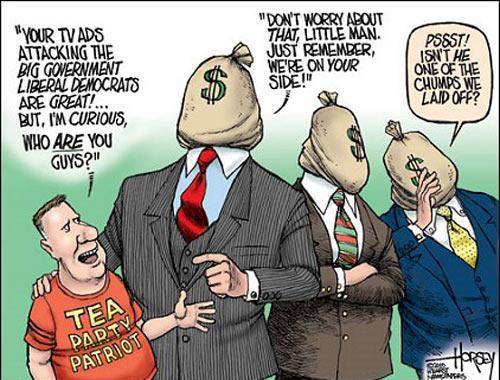
You sure about that being a Koch quote?
Sounds more familiar to me.

I'll make 6,000,001 if this pack don't land wed
I hear ya!
Similar threads

- Replies
- 1
- Views
- 48

- Replies
- 6
- Views
- 288
- Replies
- 5
- Views
- 231

- Replies
- 3
- Views
- 151
