
You are using an out of date browser. It may not display this or other websites correctly.
You should upgrade or use an alternative browser.
You should upgrade or use an alternative browser.
UPDATE: Donald Trump Takes Office as the 47th US President
- Thread starter DC_Dude
- Start date


It really has you could easily tell that it did especially with all of the layoffs
What can I do and where can I financially contribute?


Trial run
Unless they have protective status, there is not too many undocumented people in public housing because they are hiding. The number is not that big.

Naw this rule would affect mixed family status. If you are a citizen but your parents are not, for example, you can get denied assistance.Unless they have protective status, there is not too many undocumented people in public housing because they are hiding. The number is not that big.
HUD Seeks to End Assistance for Mixed-Status Families
By Donna KimuraFeb 20, 2026 9:42amDepartment of Housing and Urban DevelopmentNational Housing Law Project Shamus RollerScott Turner
Share

The Department of Housing and Urban Development (HUD) is seeking to require proof of U.S. citizenship or eligible status for every resident in HUD-funded housing, including “mixed-status” households.
The HUD mixed-status proposed rule could lead to the eviction of tens of thousands of families with mixed-immigration status and put many other federally assisted tenants at risk, according to the National Housing Law Project (NHLP).
“Our country can ensure that every one of us, no matter where we come from or what language we speak, has a safe home,” said Shamus Roller, NHLP executive director. “Instead, Trump is trying to evict immigrant families, citizen and non-citizen, from HUD housing. This comes on top of efforts to undermine federal housing programs and use violent ICE [Immigration and Customs Enforcement] and CBP [Customs and Border Protection] agents to terrorize immigrant communities.”
Roller blasted the proposal, saying Trump’s proposal runs contrary to federal law and is designed to instill fear on immigrant families.
“His administration deflects blame for the housing crisis onto immigrants so they can continue dismantling HUD’s hallmark and life-saving housing programs,” Roller said. “The result would be over 100,000 people evicted, including more than 37,000 children, many of them citizens. HUD also seeks to enlist housing authorities and owners into immigration enforcement and away from its core mission—providing affordable housing in the midst of a national housing crisis.”
He added that the proposal was defeated during Trump’s first administration, and his organization and others are ready to fight again.
Mixed-status households are those that include members who are eligible and others who are ineligible for housing assistance based on their immigration status. HUD allows families to live together in subsidized housing even if one family member is ineligible, but these households receive assistance at amounts prorated based on eligible members.
In announcing the new proposed rule, HUD said the move seeks to “close loopholes and prohibit HUD funding from benefiting illegal aliens and ineligible noncitizens who reside in taxpayer-funded housing.”
“Under President Trump’s leadership, the days of illegal aliens, ineligibles, and fraudsters gaming the system and riding the coattails of American taxpayers are over,” said HUD secretary Scott Turner. “HUD’s proposed rule will guarantee that all residents in HUD-funded housing are eligible tenants. We have zero tolerance for pushing aside hardworking U.S. citizens while enabling others to exploit decades-old loopholes.”
The department said a recent audit of all assisted households identified nearly 200,000 tenants with incomplete or unknown eligibility verification, adding that it also estimates “approximately 24,000 illegal aliens, ineligibles, and fraudsters in 20,000 mixed-status households benefit from HUD assistance.”
The agency is set to publish the proposed rule in the Federal Register and will then accept public comments for 60 days.
In other news, the National Fair Housing Alliance (NFHA), leading a coalition of 174 civil rights, fair housing, fair lending, and social justice organizations, is calling on HUD to halt plans to gut a critical tool that protects people from discrimination under the Fair Housing Act of 1968.
The organization recently filed a letter opposing the federal agency’s proposed rule that would significantly weaken disparate impact under fair housing.
“The Supreme Court has already made it clear that disparate impact is cognizable under the Fair Housing Act,” said Nikitra Bailey, executive vice president at NFHA. “HUD’s Discriminatory Effects Rule was implemented to provide much-needed clarity on how to apply this important standard. Unfortunately, HUD’s new proposal is just the latest attempt by the administration to muddy the waters and is a dereliction of its responsibilities to fully enforce the Fair Housing Act of 1968.”


Supreme Court rules Trump doesn't have the tariff authority he claimed
Chief Justice John Roberts led the court 6-3 against Trump.
 www.ms.now
Supreme Court rules Trump doesn’t have the tariff authority he claimed
The justices expressed skepticism in November that the administration could impose sweeping tariffs under a federal law granting emergency powers.Feb. 20, 2026, 10:08 AM EST
By Jordan Rubin
The Supreme Court ruled Friday that President Donald Trump doesn’t have the tariff authority he claimed, in a decision authored by Chief Justice John Roberts.
The ruling addressed a key Donald Trump policy as the high court considers the scope of presidential power across several cases this term. The court’s Republican-appointed majority has broadly empowered the Republican president but has occasionally checked him.
The justices agreed in September to consider the tariff issue on an expedited basis, granting review in two separate cases, both of which the administration lost in the lower courts. One of them came through a specialized trade and appeals court, and the other came through a general federal court in Washington.
When the high court heard oral arguments in November, the justices sounded skeptical of the administration’s position that Trump was authorized to impose the sweeping tariffs under a federal law called the International Emergency Economic Powers Act (IEEPA).
The president cited the law when he announced the so-called trafficking tariffs on products from Mexico, Canada and China due to what he said was their failure to stop fentanyl from coming to the United States. He also cited that law when he announced the so-called reciprocal tariffs on “all trading partners.”
At the November hearing, Trump appointee Amy Coney Barrett questioned U.S. Solicitor General John Sauer on the latter, worldwide tariffs. “And so is it your contention that every country needed to be tariffed because of threats to the defense and industrial base? I mean, Spain, France? I mean, I could see it with some countries, but explain to me why as many countries needed to be subject to the reciprocal tariff policy as are,” Barrett said. Sauer said “asymmetric treatment” from other countries “is a global problem.”
In the case called Trump v. V.O.S. Selections, the Federal Circuit ruled that Trump overstepped his authority in attempting to rely on IEEPA. “The statute neither mentions tariffs (or any of its synonyms) nor has procedural safeguards that contain clear limits on the President’s power to impose tariffs,” the circuit court wrote in a divided ruling that split the court 7-4, though not strictly along the party lines of the presidents who appointed the judges.
In the other case, Learning Resources v. Trump, U.S. District Judge Rudolph Contreras, an Obama appointee, wrote that if Congress “had intended to delegate to the President the power of taxing ordinary commerce from any country at any rate for virtually any reason, it would have had to say so.” He wrote that no other president “has ever purported to impose tariffs under IEEPA.”

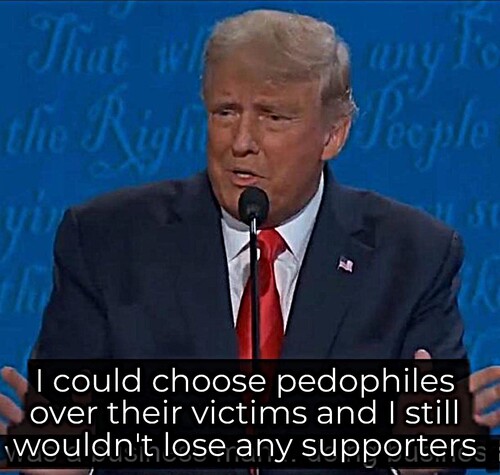
If I had to say something about Trump, it’s that he has some extremely dedicated supporters. The racists who wish to deny all rights to Black and Brown individuals, the wealthy who desire further tax reductions and fewer regulations for their businesses, and, naturally, those who lack education.



I seen this coming. Trump is going to trip but at the same time you you are going to see who is really in charge.Supreme Court rules Trump doesn't have the tariff authority he claimed
Chief Justice John Roberts led the court 6-3 against Trump.
Supreme Court rules Trump doesn’t have the tariff authority he claimed
The justices expressed skepticism in November that the administration could impose sweeping tariffs under a federal law granting emergency powers.
Feb. 20, 2026, 10:08 AM EST
By Jordan Rubin
The Supreme Court ruled Friday that President Donald Trump doesn’t have the tariff authority he claimed, in a decision authored by Chief Justice John Roberts.
The ruling addressed a key Donald Trump policy as the high court considers the scope of presidential power across several cases this term. The court’s Republican-appointed majority has broadly empowered the Republican president but has occasionally checked him.
The justices agreed in September to consider the tariff issue on an expedited basis, granting review in two separate cases, both of which the administration lost in the lower courts. One of them came through a specialized trade and appeals court, and the other came through a general federal court in Washington.
When the high court heard oral arguments in November, the justices sounded skeptical of the administration’s position that Trump was authorized to impose the sweeping tariffs under a federal law called the International Emergency Economic Powers Act (IEEPA).
The president cited the law when he announced the so-called trafficking tariffs on products from Mexico, Canada and China due to what he said was their failure to stop fentanyl from coming to the United States. He also cited that law when he announced the so-called reciprocal tariffs on “all trading partners.”
At the November hearing, Trump appointee Amy Coney Barrett questioned U.S. Solicitor General John Sauer on the latter, worldwide tariffs. “And so is it your contention that every country needed to be tariffed because of threats to the defense and industrial base? I mean, Spain, France? I mean, I could see it with some countries, but explain to me why as many countries needed to be subject to the reciprocal tariff policy as are,” Barrett said. Sauer said “asymmetric treatment” from other countries “is a global problem.”
In the case called Trump v. V.O.S. Selections, the Federal Circuit ruled that Trump overstepped his authority in attempting to rely on IEEPA. “The statute neither mentions tariffs (or any of its synonyms) nor has procedural safeguards that contain clear limits on the President’s power to impose tariffs,” the circuit court wrote in a divided ruling that split the court 7-4, though not strictly along the party lines of the presidents who appointed the judges.
In the other case, Learning Resources v. Trump, U.S. District Judge Rudolph Contreras, an Obama appointee, wrote that if Congress “had intended to delegate to the President the power of taxing ordinary commerce from any country at any rate for virtually any reason, it would have had to say so.” He wrote that no other president “has ever purported to impose tariffs under IEEPA.”

If true this is good news since he would inevitably attempt to implement tariffs by finding another way or some loopholes.
Yes, I said earlier you are going to see who is really in charge. Trump is fucking with a lot of white people money right now.

oh'wee this is what i was waiting on,,keep in mind it was the kentucky whiskey round table that paid to get this litigated in front of the high court.Supreme Court rules Trump doesn't have the tariff authority he claimed
Chief Justice John Roberts led the court 6-3 against Trump.
Supreme Court rules Trump doesn’t have the tariff authority he claimed
The justices expressed skepticism in November that the administration could impose sweeping tariffs under a federal law granting emergency powers.
Feb. 20, 2026, 10:08 AM EST
By Jordan Rubin
The Supreme Court ruled Friday that President Donald Trump doesn’t have the tariff authority he claimed, in a decision authored by Chief Justice John Roberts.
The ruling addressed a key Donald Trump policy as the high court considers the scope of presidential power across several cases this term. The court’s Republican-appointed majority has broadly empowered the Republican president but has occasionally checked him.
The justices agreed in September to consider the tariff issue on an expedited basis, granting review in two separate cases, both of which the administration lost in the lower courts. One of them came through a specialized trade and appeals court, and the other came through a general federal court in Washington.
When the high court heard oral arguments in November, the justices sounded skeptical of the administration’s position that Trump was authorized to impose the sweeping tariffs under a federal law called the International Emergency Economic Powers Act (IEEPA).
The president cited the law when he announced the so-called trafficking tariffs on products from Mexico, Canada and China due to what he said was their failure to stop fentanyl from coming to the United States. He also cited that law when he announced the so-called reciprocal tariffs on “all trading partners.”
At the November hearing, Trump appointee Amy Coney Barrett questioned U.S. Solicitor General John Sauer on the latter, worldwide tariffs. “And so is it your contention that every country needed to be tariffed because of threats to the defense and industrial base? I mean, Spain, France? I mean, I could see it with some countries, but explain to me why as many countries needed to be subject to the reciprocal tariff policy as are,” Barrett said. Sauer said “asymmetric treatment” from other countries “is a global problem.”
In the case called Trump v. V.O.S. Selections, the Federal Circuit ruled that Trump overstepped his authority in attempting to rely on IEEPA. “The statute neither mentions tariffs (or any of its synonyms) nor has procedural safeguards that contain clear limits on the President’s power to impose tariffs,” the circuit court wrote in a divided ruling that split the court 7-4, though not strictly along the party lines of the presidents who appointed the judges.
In the other case, Learning Resources v. Trump, U.S. District Judge Rudolph Contreras, an Obama appointee, wrote that if Congress “had intended to delegate to the President the power of taxing ordinary commerce from any country at any rate for virtually any reason, it would have had to say so.” He wrote that no other president “has ever purported to impose tariffs under IEEPA.”
and stated back 3 months ago they are personally coming after trump and the law suites bout to come flying in..now the economy is in the hole
1- bill'will plus because of trump...


As i just stated in another post that kentucky whiskey round table aint bullshiting with trump and there starting to break there foot off in his ass...trump done fucked up ah'lottttt of white folks bread..Yes, I said earlier you are going to see who is really in charge. Trump is fucking with a lot of white people money right now.
Exactly they are about to hopefully put an end to his bullshitAs i just stated in another post that kentucky whiskey round table aint bullshiting with trump and there starting to break there foot off in his ass...trump done fucked up ah'lottttt of white folks bread..

If my democrat doesn't talk like this I don't want it.
Similar threads

- Replies
- 12
- Views
- 110

- Replies
- 22
- Views
- 341

- Replies
- 4
- Views
- 438


