No but I knew would make a post to get this to 300 pages
Damn, they did a number on you, earlier

Let’s take me out of it.
So your saying frank ZANU is clueless and you know more about it than they do.
Ok. I’ll take your word for it.
1)So how long does it take to cancel contracts and then find new bidders to make new contracts for the mines.
2) where did they get the money from to pay off their debt?
Floors yours
After the previous mining companies were kicked out, there was some, as Migos put it, "Straightenin" of mining contract terms in Burkina Faso before new contracts were awarded between June and September to four new contracts with Nordgold, Perenti, West African Resources, and Oman.
Key changes to mining contracts:
- Increased state equity: The new mining code, adopted in August 2024, mandates a 15% free-carried equity stake for the state in new projects. This means Burkina Faso gains a larger share of profits without investing any capital.
- Potential for more state ownership: The new code also includes provisions for the state to acquire up to a 30-35% paid equity stake, potentially bringing total state ownership to 45-50%.
- Nationalization of assets: The government has nationalized five gold mining assets previously owned by foreign companies like Endeavour Mining, bringing them under the control of the state-owned SOPAMIB
Impact and implications
- Increased government revenue: The changes are intended to increase the benefits Burkina Faso receives from its natural resources, especially amidst an economic downturn caused by insecurity.
- Shift away from Western influence: The move towards closer ties with Russia and other partners like Oman is seen as a strategic pivot away from traditional Western allies.
- Investor concerns: These changes have raised concerns among some international investors regarding contract stability and risk in the country's mining sector.
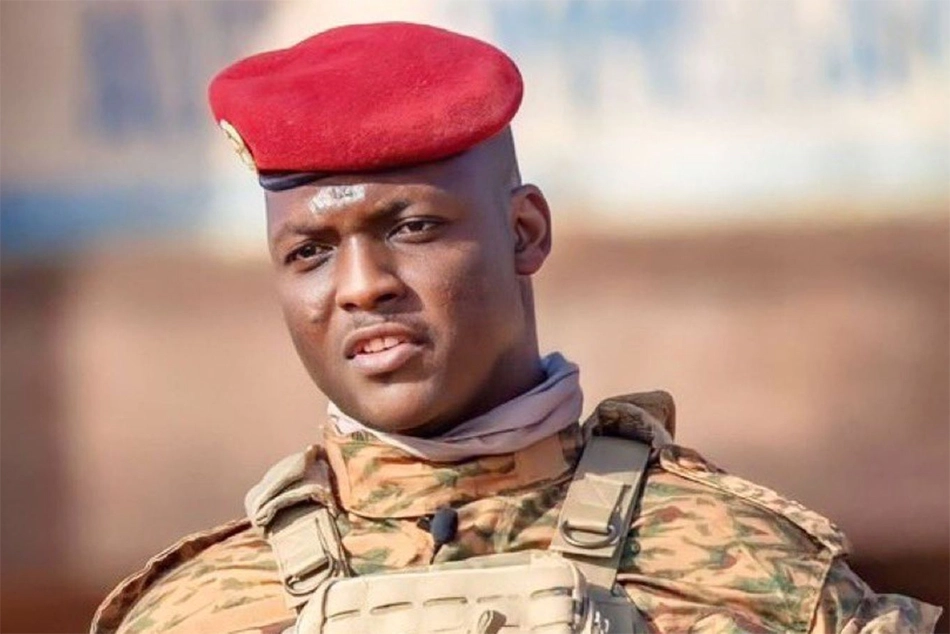
Decoding Ibrahim Traore in the context of Imperialism
Understanding the ideological background of Ibrahim Traore, the Head of Burkina Faso, the African Country and his policies
Thursday September 11, 2025 10:10 PM, Pon Chandran
What is the ideological background of Ibrahim Traore, the Head of Burkina Faso, the African Country?
Ibrahim Traoré’s ideological background is characterized by a mix of nationalism, pan-Africanism, and anti-imperialist views. He is a strong verbal opponent of neocolonialism and Western domination, and has worked to increase Burkina Faso’s economic self-sufficiency, notably through the nationalization of gold mines.
During his time as a student at the University of Ouagadougou, he was a member of the Marxist National Association of Students of Burkina Faso (ANEB). He is often compared to Thomas Sankara, a former revolutionary leader of the country, due to his similar anti-imperialist stance, military background, and focus on national self-determination.
What are the policies which he implemented since he assumed the Power?
Since assuming power, Ibrahim Traoré has implemented a number of policies that reflect his nationalist, anti-imperialist, and pan-Africanist ideology. These policies can be broadly categorized into economic, foreign, and domestic/security initiatives.
Economic Policies
- Economic Self-Reliance: Traoré’s government has focused on achieving economic independence and reducing reliance on foreign aid and institutions. This includes rejecting loans from organizations like the International Monetary Fund (IMF) and the World Bank.
- Natiolnalization of Gold Mines: A cornerstone of his economic policy has been the nationalization of gold mines.The government has taken control of the country’s gold mining industry, which is a key economic sector. This move is aimed at ensuring that the profits from Burkina Faso’s natural resources benefit its own people and are used to fund national development projects, such as infrastructure, education, and healthcare.
- Debt Repayment: Traoré’s government has announced that it has cleared Burkina Faso’s external debt, attributing this to sound financial management and increased earnings from resources like gold.
- Agricultural Development: The government has prioritized agricultural sovereignty, with efforts to boost production through the distribution of tractors, farming equipment, and improved seeds. This has reportedly led to increased yields in crops like tomatoes, millet, and rice.
- Industrialization: Traoré has also supported the development of local industries, including the establishment of new processing plants for tomatoes and cotton.
Foreign and Diplomatic Policies
- Distancing from France and the West: Traoré has taken a strong stance against former colonial power France. His government has expelled French troops and ended military cooperation agreements with France. French media outlets have also been suspended. This is a clear move to break away from what he and his supporters view as neocolonial influence.
- Strengthening Ties with Russia and Other Nations: In line with his anti-Western position, Traoré has cultivated closer relationships with other countries, particularly Russia. He has referred to Russia as a “strategic ally” and has sought arms and military training from Moscow to assist in the fight against insurgents. He has also explored diplomatic contacts with other countries like Iran and Venezuela.
- Alliance of Sahel States (AES): Burkina Faso, along with neighboring Mali and Niger (both also under military rule), has formed the Alliance of Sahel States (AES). This alliance is a “collective defense and mutual assistance” pact aimed at addressing security challenges in the region and countering pressure from the Economic Community of West African States (ECOWAS).
Domestic and Security Policies
- Security Focus: Traoré came to power on the promise of improving the security situation and fighting a persistent jihadist insurgency. His government has adopted a military-first approach, rejecting negotiations with militants.
- “Homeland Defense Volunteers” (VDP): The government has massively expanded the recruitment of state-backed civilian militias known as the Volunteers for the Defense of the Homeland (VDP) to assist the military in counter-insurgency operations.
- Authoritarian Consolidation: Critics have noted an increase in pro-government propaganda and a crackdown on dissent. Traoré’s government has been accused of human rights abuses and has taken steps to consolidate power, including extending his mandate for an additional five years, while also allowing him to contest the next presidential elections.
- Anti-LGBTQ+ Legislation: The government has introduced a law that criminalizes homosexuality, with punishments including prison sentences and fines. This move is presented as a measure to protect “cultural values.”
Ibrahim Traoré is being eulogised as Che of Africa. How appropriate it is?
The comparison of Ibrahim Traoré to Che Guevara is a powerful and popular one, particularly among young people in Africa and the African diaspora. It’s a symbolic title that reflects a certain set of beliefs and aspirations. However, its appropriateness is a complex issue, with both strong arguments in its favor and significant counter-arguments.
Arguments for the Comparison
Those who refer to Traoré as the “Che of Africa” often point to a series of parallels and shared ideological ground:
- Anti-Imperialist and Anti-Neocolonial Stance: Like Guevara, who fought against U.S. imperialism in Latin America, Traoré has positioned himself as a fierce opponent of Western, and particularly French, influence in Africa. He has expelled French troops, suspended French media outlets, and openly criticized neocolonial systems, a stance that resonates deeply across the continent.
- Nationalism and Self-Reliance: Guevara was a key figure in the Cuban Revolution’s push for self-sufficiency and socialist development. Similarly, Traoré’s policies—such as the nationalization of gold mines, rejection of IMF loans, and focus on agricultural and industrial self-reliance—are seen as direct and practical steps to reclaim national sovereignty and economic destiny.
- Youthful, Charismatic, and Revolutionary Image: Both figures came to power at a young age and cultivated a charismatic image. Traoré’s simple military attire and direct, unscripted speeches project an image of an authentic, no-nonsense leader dedicated to his people, much like the iconic image of Guevara. This populist appeal has made him a hero for many young Africans who are disillusioned with traditional, often corrupt, political elites.
- Emphasis on Military Action and Counter-Insurgency: Both Guevara and Traoré are military leaders who rose through the ranks in armed conflict. Traoré’s main stated goal is to defeat the jihadist insurgency in Burkina Faso, a fight he has framed as a revolutionary struggle for the nation’s survival and a rejection of Western military partnerships that he sees as ineffective.
Counter-Arguments and Criticisms
While the “Che” label has powerful symbolic resonance, critics argue that it is an oversimplification and, in some ways, misleading:
- Authoritarianism and Human Rights Concerns: A significant criticism is that the comparison overlooks Traoré’s authoritarian methods. Critics, including human rights organizations, point to a crackdown on dissent, suppression of free speech, and alleged human rights abuses by his forces, including extrajudicial killings. Guevara’s own record on human rights during the Cuban Revolution is also a subject of historical debate and criticism.
- Lack of a Clear, Developed Ideology: While Traoré has a clear anti-Western stance, his ideology is not as comprehensively defined or as deeply rooted in a specific political philosophy as Guevara’s Marxism. Traoré’s policies are often described as more pragmatic and nationalist than strictly socialist or communist, and his alliances with countries like Russia are seen by some as a shift from one foreign power to another, rather than a true break from external influence.
- Fragile Security Situation: The most significant and concrete criticism is that Traoré’s government has so far failed to deliver on its primary promise: to improve security. Despite his military background and a massive recruitment of civilian militias, the jihadist insurgency has reportedly worsened in some areas since he took power.The government controls less than half of the country, and the number of internally displaced people continues to grow. This stands in contrast to the relative success of the Cuban Revolution in consolidating power.
- Consolidation of Power, Not Revolution: Some observers argue that Traoré’s actions, such as extending his mandate for five years without elections, are less about a popular revolution and more about the consolidation of personal power. The focus on a single, charismatic leader can undermine the development of strong, democratic institutions, a pattern that has often led to instability in post-colonial Africa.
In conclusion, the appropriateness of the “Che of Africa” title depends on the perspective. For his supporters and many young Africans, the label is a powerful symbol of defiance, patriotism, and the hope for a new, self-reliant Africa free from foreign domination. They see him as a bold leader willing to challenge the status quo.
However, from a critical standpoint, the comparison is problematic because it glosses over his authoritarian tendencies, the worsening security situation, and the potential for his government to become another in a long line of military regimes that have failed to bring lasting stability and democracy to the continent.
Being an ardent Muslim himself, what are his visions about the Polity of the Islamic world?
Ibrahim Traoré’s vision and policies regarding the Islamic world and the broader polity are not defined by a narrow, religious-centric agenda, but are instead deeply integrated into his overarching nationalist and pan-Africanist ideology. While he is a Muslim himself, his public statements and actions suggest that his priority is the unity and sovereignty of Burkina Faso and Africa, rather than the promotion of a specific Islamic political project.
Here are some key aspects of his approach:
- Religious Unity as a National Security Imperative: Traoré has consistently emphasized the importance of inter-religious harmony, particularly between Muslims and Christians, who make up the two largest religious groups in Burkina Faso. He has publicly warned that religious division is a tool of “the West” and colonial powers to weaken and destabilize African nations. He has made it clear that those who try to sow discord along religious lines will face harsh punishment. This stance is a direct response to the jihadist insurgency, which often targets Christians and seeks to incite religious conflict.
- Rejection of Foreign Religious Influence: A notable example of his policy is his government’s rejection of a proposal from Saudi Arabia to fund the construction of 200 mosques in Burkina Faso. Traoré stated that the country already had a sufficient number of mosques and that the funds would be better spent on education, healthcare, and infrastructure. This decision highlights his focus on national development and self-reliance over accepting foreign aid, even if it comes in a religious context. It also suggests a resistance to the influence of specific strains of Islam that may be promoted by foreign powers.
- Pragmatic Alliances over Ideological ones: While he has cultivated closer ties with Russia, Iran, and other nations, his alliances appear to be based on pragmatic interests, primarily for security and economic assistance, rather than a shared Islamic vision. His public remarks and diplomatic engagements focus on strategic cooperation and mutual benefit, not on building a “Muslim bloc.”
- Anti-Imperialism as a Core Principle: His anti-imperialist stance is the central pillar of his foreign policy, which he sees as a shared struggle for all African nations, regardless of their religious makeup. He views the fight against Western exploitation and the quest for African sovereignty as a common cause that transcends religious boundaries. This is evident in his efforts to build the Alliance of Sahel States with Mali and Niger, both of which are also under military rule and share his anti-Western outlook.
- Focus on Internal Stability and Counter-Terrorism: The primary goal of Traoré’s government is to defeat the jihadist insurgency, which is composed of extremist groups that claim to be acting in the name of Islam but are widely condemned by Burkinabé society. His policies, such as the recruitment of civilian militias and a no-negotiation policy with militants, are driven by a security-first agenda to restore state control over the country.
In summary, Ibrahim Traoré’s “vision for the polity of the Islamic world” is not about a specific religious or political project. Instead, it is a vision of a sovereign, united, and self-sufficient Africa where religious differences are not exploited for division. His policies, including the rejection of foreign-funded mosques and the focus on inter-religious harmony, underscore his belief that national strength and stability come from unity and independence, not from external religious or political agendas.
It is rumoured that Ibrahim Traore would face the fate of Gadafi of Lebanon or Saddam Hussain of Iraq very soon by the Western Powers?
The rumors and speculation that Ibrahim Traoré could face a fate similar to Muammar Gaddafi or Saddam Hussein are part of a broader discourse surrounding his rise to power and his strong anti-Western stance. This perspective is not based on concrete, verified plans by Western powers, but rather on a historical pattern of Western intervention in countries whose leaders challenge their interests.
Here’s a breakdown of the arguments and context surrounding this rumor:
The Basis for the Rumors
- Anti-Western Rhetoric and Actions: Traoré has been highly vocal in his criticism of France and other Western powers. He has expelled French military forces, ended a key military pact with France, and has actively sought new partners, most notably Russia. This public and decisive break from a traditional Western ally is seen as a direct challenge to the geopolitical order in the Sahel, a region of significant strategic interest for countries like France and the United States.
- Nationalization of Resources: Like Gaddafi and Saddam Hussein, Traoré has taken steps to assert national control over key resources, particularly the gold mining industry. This policy of “resource nationalism” is often viewed by Western powers and multinational corporations as a threat to their economic interests. The nationalization of assets can create a direct conflict with powerful business and political lobbies.
- Parallels to Gaddafi: The comparison to Gaddafi is particularly potent. Gaddafi was a pan-Africanist who also sought to create a unified African currency (the gold dinar) and challenged the Western-dominated financial system.He was ultimately overthrown and killed in a NATO-backed intervention. Supporters of Traoré see his actions as a modern-day continuation of this pan-Africanist struggle, and they fear that the West will not tolerate a similar challenge to its influence.
- The “Saddam Hussein” Analogy: The comparison to Saddam Hussein is more about the pretext for intervention. Saddam was demonized by the West and his regime was ultimately toppled based on controversial claims of possessing weapons of mass destruction. The argument is that if the West felt it necessary to intervene in a country based on a flimsy pretext, they could find a way to justify an intervention in Burkina Faso if Traoré’s government proves to be too disruptive.
- Coups and Instability: Traoré himself has claimed to have foiled multiple coup attempts, and his government has accused neighboring countries like Côte d’Ivoire of backing these plots. While these claims are difficult to verify independently, they highlight the intense internal and external pressures facing his regime. Critics of the West often interpret these coup attempts as being covertly supported by foreign powers to destabilize governments that are not aligned with their interests.
Counterpoints and Reality Check
While these rumors are widespread, it is important to consider the differences between Traoré’s situation and that of Gaddafi or Saddam Hussein:
- Scale and Geopolitical Significance: Burkina Faso, while strategically important in the Sahel, does not have the same global significance as Libya (a major oil producer) or Iraq (a key player in Middle Eastern oil politics). A full-scale Western military intervention in Burkina Faso is far less likely than it was in those countries.
- Western Priorities: The primary Western concern in the Sahel has been the fight against jihadist insurgency. While Western powers are wary of Traoré’s pro-Russian alignment, their immediate goal is often to prevent the region from becoming a safe haven for terrorist groups. A military intervention to remove Traoré could potentially worsen the security situation and create further instability.
- Shift in Global Dynamics: The geopolitical landscape has changed since the interventions in Libya and Iraq. The global community is now more fractured, with a rising China and a resurgent Russia. A direct Western military intervention would be far more controversial and would likely face significant opposition from countries aligned with Russia and China, as well as from the African Union.
- Focus on Subtler Influence: Rather than a direct military intervention, Western powers are more likely to use other tools to exert pressure. These include economic sanctions, diplomatic isolation, support for opposition groups (both civilian and military), and public relations campaigns to delegitimize the regime. The constant rumors of foiled coups may be a part of this psychological and political warfare.
In conclusion, the rumor that Ibrahim Traoré will face the fate of Gaddafi or Saddam Hussein is a powerful symbolic expression of the fears and anti-imperialist sentiments prevalent in Burkina Faso and parts of Africa. While a direct, large-scale Western military intervention seems improbable given the current geopolitical context, the underlying tensions—over resource control, geopolitical alliances, and national sovereignty—are very real. Traoré’s government will likely continue to face significant pressure, both overt and covert, from Western powers, but it is more likely to take the form of economic and political maneuvering than a full-scale military campaign.
Can Ibrahim Traore be described as a Nationalist or a National Socialist?
Based on the available information, Ibrahim Traoré can be described as a Nationalist and a Pan-Africanist. The term “National Socialist” is not used in the provided context to describe his ideology.
His political views and actions are consistently characterized by:
- Nationalism: He is described as a nationalist who advocates for the protection of national interests against external interference and emphasizes self-determination. His policies, such as the nationalization of gold mines, are seen as attempts to reclaim national sovereignty and economic destiny.
- Anti-Imperialism/Anti-Westernism: A central tenet of his ideology is a strong opposition to neocolonialism and Western influence, particularly from France. His government has expelled French troops and suspended French media outlets, and he has spoken out against what he calls “imperialistic pressure.”
- Pan-Africanism: Traoré’s actions and rhetoric have been seen to resonate with and inspire a broader Pan-African movement. He has formed an alliance with neighboring countries Mali and Niger and is seen by some as a symbol of African dignity and resistance against foreign domination.
- Other Influences: He was a member of the Marxist National Association of Students of Burkina Faso (ANEB) during his university years, and some commentators see his policies as influenced by Marxism and pan-Africanism.However, his ideology is also described as pragmatic and a blend of military pragmatism with a focus on stability.
The provided sources do not describe him as a “National Socialist,” a term historically associated with the Nazi Party in Germany. The sources instead repeatedly use terms like “nationalist,” “pan-Africanist,” “anti-imperialist,” and “anti-Western.”
Whether Traore’s friendly stance with Russia and China trigger the Opposition from the West?
Yes, Ibrahim Traoré’s friendly stance with Russia and China has triggered significant opposition and concern from Western powers. This is a central element of the current geopolitical tension surrounding Burkina Faso and the Sahel region.
Here’s why and how this opposition is manifesting:
Why the West is Opposed
- Geopolitical Competition: Western nations, particularly France and the United States, see the growing influence of Russia and China in Africa as a direct challenge to their own strategic interests. The Sahel, in particular, is a key front in this new geopolitical competition. Russia, through military and security partnerships, is seen as using anti-Western sentiment to expand its influence and destabilize a region vital to Europe’s southern flank. China’s growing economic footprint, often through loans and infrastructure projects under the Belt and Road Initiative, is also viewed with suspicion as a form of “debt-trap diplomacy.”
- Security Concerns: Western governments argue that Russia’s presence, particularly through military contractors like the Wagner Group (now rebranded and under direct Kremlin control), is a destabilizing force. They claim that these groups exploit natural resources, commit human rights abuses, and undermine democratic institutions. The West has long been involved in counter-terrorism efforts in the Sahel, and they view a pro-Russian military government as a threat to these operations and regional stability.
- Undermining Democracy: The military coups in Burkina Faso, Mali, and Niger have all been followed by a pivot away from the West and toward Russia. Western powers often frame these coups as an attack on democratic governance. They argue that Russia provides military and political support to authoritarian regimes, thereby undermining the rule of law and human rights in the region.
- Loss of Influence: Traoré’s government has been explicit in its rejection of France’s traditional role in the country. This includes expelling French troops, ending military cooperation agreements, and even suspending French media. This loss of influence, both militarily and diplomatically, is a major source of frustration for France and its allies.
How the West’s Opposition is Manifesting
- Diplomatic Condemnation and Isolation: The U.S. and the European Union have repeatedly condemned the military coup that brought Traoré to power and have called for a swift return to a civilian-led, constitutional government. They have also expressed concern over Burkina Faso’s military and security partnerships with Russia.
- Sanctions and Aid Cuts: While there are no comprehensive U.S. sanctions specifically on Burkina Faso, the country has been suspended from various Western-led initiatives. For example, the U.S. has cut some of its security and development assistance.
- Information Warfare: There is a well-documented information war being waged in the region, with pro-Russian and pro-Traoré narratives often spreading on social media. Western governments and think tanks have pointed to a significant increase in Russian-linked disinformation campaigns aimed at stirring up anti-French and anti-Western sentiment in Burkina Faso and other Sahel nations.
- Supporting Regional Pressure: The Economic Community of West African States (ECOWAS), a regional bloc, has taken a hard line against the military governments in Burkina Faso, Mali, and Niger. While the Western powers are not directly involved in ECOWAS’s actions, they have generally supported the bloc’s efforts to pressure the juntas.
- Shifting Alliances: The West is attempting to counter Russia and China’s influence by building new, more “equal” partnerships with other African nations and by focusing on long-term development and trade as an alternative to military support.
In summary, Traoré’s pivot toward Russia and China is seen by the West not just as a policy choice but as a direct challenge to its influence and a threat to regional stability. This has triggered a response that includes diplomatic pressure, sanctions, and a public relations campaign aimed at discrediting Traoré and his allies while simultaneously trying to mend relationships with other African nations.
Understanding the ideological background of Ibrahim Traore, the Head of Burkina Faso, the African Country and his policies

ummid.com