
Install the app
How to install the app on iOS
Follow along with the video below to see how to install our site as a web app on your home screen.
Note: This feature may not be available in some browsers.
You are using an out of date browser. It may not display this or other websites correctly.
You should upgrade or use an alternative browser.
You should upgrade or use an alternative browser.
The Power of the Black Father
- Thread starter QueEx
- Start date


<font size="5"><center>The Power of the Black Father</font size></center>
Black Press USA
by Hazel Trice Edney
NNPA Washington Correspondent
LAS VEGAS (NNPA) – Some Black fathers come home wearing a suit and tie every day. Some may arrive wearing coveralls, speckled with paint. Others come wearing a blue-collar uniform after riding the garbage truck. Still others come home after a long day of just looking for work.
No matter the circumstances, if they arrive in the spirit of love, they bring a power to the home that cannot be substituted.
That is the sentiment of men interviewed by the NNPA News Service during the 100 Black Men of America's 21st Annual Conference in Las Vegas, last week.
With the theme, ''Taking Control of Our Future'' as a backdrop, they all concluded one thing: The experiences of a Black man in America can be transformed into a mobilizing force that every child can look up to and admire.
''You look at the way that this country was built on the backs of Black men,'' says record producer Kashif, a former orphan who is now raising two foster children as a single father. ''You look at the fact that millions of us survived the journey from Africa to here. And we survived the journey of America. So, we have the power to instill in our young people how to build a nation of resources,'' he says.
''The knowledge, the energy, the development, when we're there, the whole world is an unlimited universe,'' says the now millionaire, who, as Michael Jones grew up in at least eight foster homes in Brooklyn, N.Y. ''But, when we're absent, obviously that takes away from the power of the Black family. Black men bring power into a family, even if it's not our family, just creating a family like I did by adopting two boys.''
According to the National Urban League's State of Black America 2007 report, the future of the Black man is critical to the ''American family.'' Statistics on the Black man run the gambit from being six times more likely than White men to be incarcerated to nine times more likely to be killed by firearms , to nearly eight times more likely to suffer from AIDS. Of single parent Black households, only 12 percent were led by men. More than two-thirds of Black children live in one-parent households in 2005, the majority headed by women.
Notwithstanding the statistics, there are millions of Black fathers who are living at home or at least doing right by their children and families. Here in Las Vegas, where more than 2,000 Black men registered for this conference to discuss answers to the problems, the crisis somehow appeared dwarfed.
''You can look into every community – the White community, the Asian community – and find fathers who aren't doing what they ought to do,'' says Thomas W. Dortch Jr. of Atlanta, president emeritus of the national organization. He and his wife have five children, including one adopted. ''The power of having a Black father or having a Black man in that home is tremendous because it gives symbolism…My father was a hero, a strong male figure who did not allow us to be tainted by what was out there or by the struggles that he went through. All we know is that we had a father who loved us and cared. We had a mother who loved us. We had parents who worked hard and sacrificed for us.''
The 100 Black Men of America, Inc., with 110 chapters around the country, is a mentoring organization that seeks to give a strong presence of the Black male to the lives of children – male and female – from all walks of life. It encourages Black men to share their lives; thereby impacting the negative statistics.
''The Black man should set an example and be a role model for his children and all children in his community,'' says Dr. William Hayling, founding president of the organization. ''I'm an obstetrician. I helped to give birth to this organization. And I'm proud to see that after 21 years, the 100 Black Men is a grown man … and we're getting bigger and bigger and bigger and doing good things with these children.''
Every man is able to bring something to the table, says Vaughn Evans of Sacramento, honored as this year's ''mentor of the year.''
Evans, who has three children of his own, but has mentored thousands, says regardless of a father's occupation, ''if you're in the home, that's leadership. That's the role of a man.
So, he is providing, he is loving, he is nurturing, he is teaching. Without that, then it falls to a woman. A woman cannot understand how to be a man. And when that man is absent, it falls to the uncles, the church, to the community and to the village.''
Often the village means the drug dealers, the gang leaders, domineering friends or what ever figures of authority comes into the life of a child. More often than not, that translates into a life of crime leading to prison or death that could have been prevented.
''The power of the Black father could be a revolutionizing force. Provided that more Black fathers would adhere to the tradition of what fatherhood is all about instead of being one who plants the seed and does not fulfill his obligation in terms of what family really means,'' says John Smith, chairman of the National Newspaper Publishers Association, the official press for the conference.
Some men view manhood as a learned behavior. Whether a child grows up to become a street thug or a decent, hard-working man, can depend upon the examples in his life.
''The father brings the kind of modeling that a young man needs to see. Sometimes they will watch and learn more from watching than from hearing what you're saying,'' says Earl Wheatfall, a member of the 100's executive committee. ''I always watched my father. Even though I did respect his words, I learned more by seeing him.''
Albert E. Dotson, Jr., chairman of the board of the 100, says he's experienced that right now.
''I have really come to understand the influence a man can have over his home,'' says Dotson, the father of Ashley, 11, and Albert, 9. ''I watch my son watch me, how I stand, how I hold my legs, how I hold my head, how I walk, the little things. He learns so many things by just watching,'' says Dotson.
He concludes, ''A real father has to always understand that children are always watching. He always has to be able to teach. He always has to be able to show what nurturing love is all about, how to be a strong man and how to respect women.''
http://www.blackpressusa.com/News/Article.asp?SID=3&Title=Hot+Stories&NewsID=13450
Black Press USA
by Hazel Trice Edney
NNPA Washington Correspondent
LAS VEGAS (NNPA) – Some Black fathers come home wearing a suit and tie every day. Some may arrive wearing coveralls, speckled with paint. Others come wearing a blue-collar uniform after riding the garbage truck. Still others come home after a long day of just looking for work.
No matter the circumstances, if they arrive in the spirit of love, they bring a power to the home that cannot be substituted.
That is the sentiment of men interviewed by the NNPA News Service during the 100 Black Men of America's 21st Annual Conference in Las Vegas, last week.
With the theme, ''Taking Control of Our Future'' as a backdrop, they all concluded one thing: The experiences of a Black man in America can be transformed into a mobilizing force that every child can look up to and admire.
''You look at the way that this country was built on the backs of Black men,'' says record producer Kashif, a former orphan who is now raising two foster children as a single father. ''You look at the fact that millions of us survived the journey from Africa to here. And we survived the journey of America. So, we have the power to instill in our young people how to build a nation of resources,'' he says.
''The knowledge, the energy, the development, when we're there, the whole world is an unlimited universe,'' says the now millionaire, who, as Michael Jones grew up in at least eight foster homes in Brooklyn, N.Y. ''But, when we're absent, obviously that takes away from the power of the Black family. Black men bring power into a family, even if it's not our family, just creating a family like I did by adopting two boys.''
According to the National Urban League's State of Black America 2007 report, the future of the Black man is critical to the ''American family.'' Statistics on the Black man run the gambit from being six times more likely than White men to be incarcerated to nine times more likely to be killed by firearms , to nearly eight times more likely to suffer from AIDS. Of single parent Black households, only 12 percent were led by men. More than two-thirds of Black children live in one-parent households in 2005, the majority headed by women.
Notwithstanding the statistics, there are millions of Black fathers who are living at home or at least doing right by their children and families. Here in Las Vegas, where more than 2,000 Black men registered for this conference to discuss answers to the problems, the crisis somehow appeared dwarfed.
''You can look into every community – the White community, the Asian community – and find fathers who aren't doing what they ought to do,'' says Thomas W. Dortch Jr. of Atlanta, president emeritus of the national organization. He and his wife have five children, including one adopted. ''The power of having a Black father or having a Black man in that home is tremendous because it gives symbolism…My father was a hero, a strong male figure who did not allow us to be tainted by what was out there or by the struggles that he went through. All we know is that we had a father who loved us and cared. We had a mother who loved us. We had parents who worked hard and sacrificed for us.''
The 100 Black Men of America, Inc., with 110 chapters around the country, is a mentoring organization that seeks to give a strong presence of the Black male to the lives of children – male and female – from all walks of life. It encourages Black men to share their lives; thereby impacting the negative statistics.
''The Black man should set an example and be a role model for his children and all children in his community,'' says Dr. William Hayling, founding president of the organization. ''I'm an obstetrician. I helped to give birth to this organization. And I'm proud to see that after 21 years, the 100 Black Men is a grown man … and we're getting bigger and bigger and bigger and doing good things with these children.''
Every man is able to bring something to the table, says Vaughn Evans of Sacramento, honored as this year's ''mentor of the year.''
Evans, who has three children of his own, but has mentored thousands, says regardless of a father's occupation, ''if you're in the home, that's leadership. That's the role of a man.
So, he is providing, he is loving, he is nurturing, he is teaching. Without that, then it falls to a woman. A woman cannot understand how to be a man. And when that man is absent, it falls to the uncles, the church, to the community and to the village.''
Often the village means the drug dealers, the gang leaders, domineering friends or what ever figures of authority comes into the life of a child. More often than not, that translates into a life of crime leading to prison or death that could have been prevented.
''The power of the Black father could be a revolutionizing force. Provided that more Black fathers would adhere to the tradition of what fatherhood is all about instead of being one who plants the seed and does not fulfill his obligation in terms of what family really means,'' says John Smith, chairman of the National Newspaper Publishers Association, the official press for the conference.
Some men view manhood as a learned behavior. Whether a child grows up to become a street thug or a decent, hard-working man, can depend upon the examples in his life.
''The father brings the kind of modeling that a young man needs to see. Sometimes they will watch and learn more from watching than from hearing what you're saying,'' says Earl Wheatfall, a member of the 100's executive committee. ''I always watched my father. Even though I did respect his words, I learned more by seeing him.''
Albert E. Dotson, Jr., chairman of the board of the 100, says he's experienced that right now.
''I have really come to understand the influence a man can have over his home,'' says Dotson, the father of Ashley, 11, and Albert, 9. ''I watch my son watch me, how I stand, how I hold my legs, how I hold my head, how I walk, the little things. He learns so many things by just watching,'' says Dotson.
He concludes, ''A real father has to always understand that children are always watching. He always has to be able to teach. He always has to be able to show what nurturing love is all about, how to be a strong man and how to respect women.''
http://www.blackpressusa.com/News/Article.asp?SID=3&Title=Hot+Stories&NewsID=13450

Bump.


J
JUju2005
Guest
great post


This is going to be the first Father's Day that I'll be celebrating as a father myself. I'll be forwarding this to some of my homeboys who are also doing the right thing and being a role model to their kids. Much thanks

excellent post man!!!!
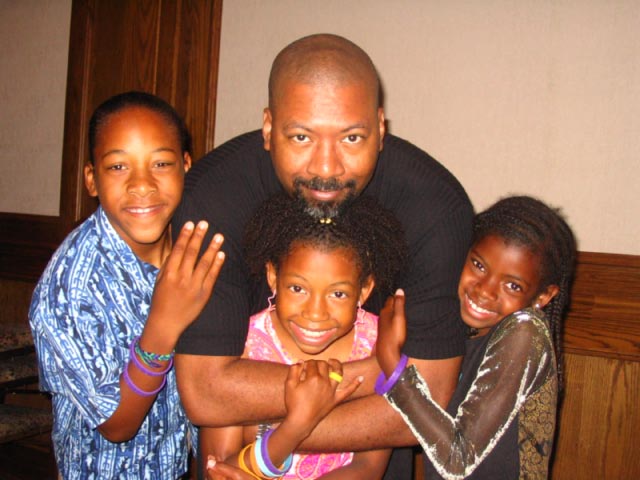


Happy Father's day to all you motherfuckers with kids.

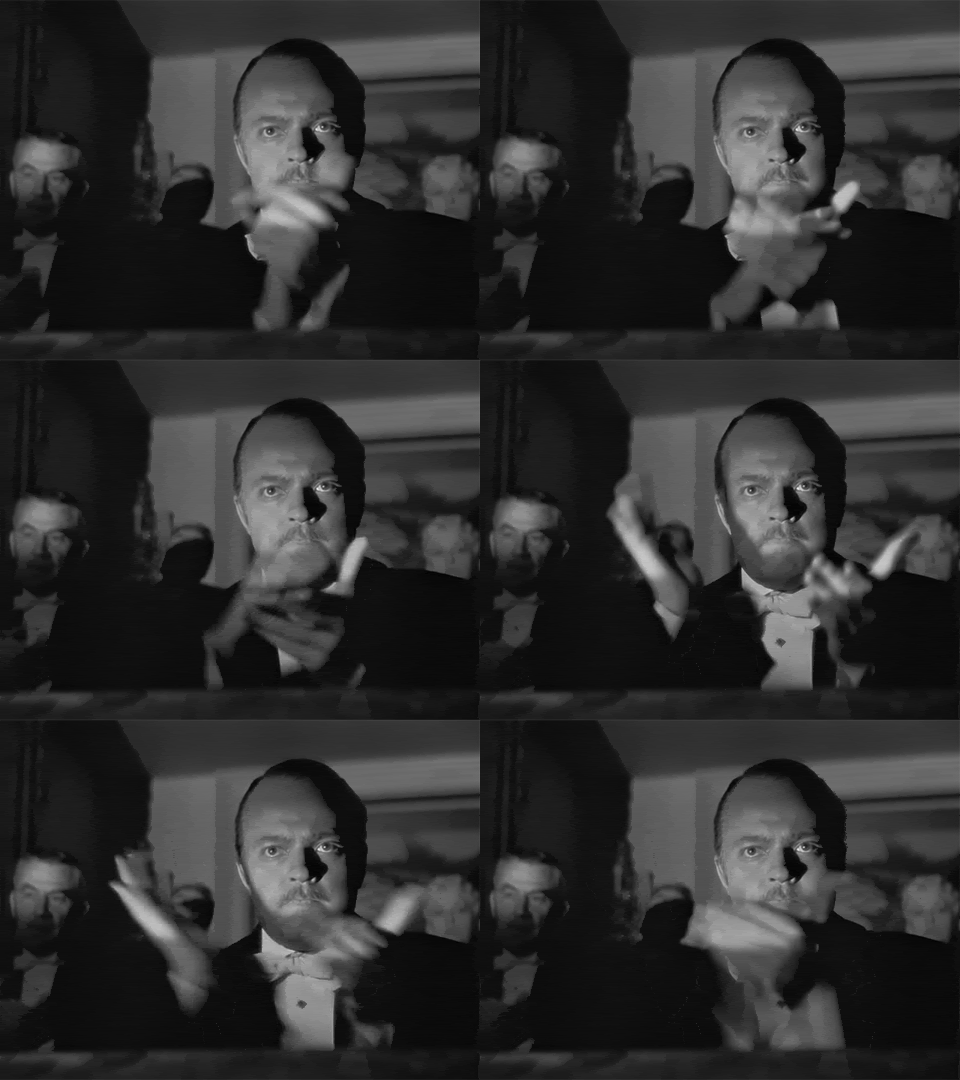

'I’m not a Hero; I 'm a Daddy!'
Black Press USA
by A. Peter Bailey
NNPA
Reality Check
Sometimes the most profound and perceptive observation can come from an unexpected source such as the one made by a young African-American father who had probably saved his child’s life. A crack-crazed woman reportedly deliberately drove her car into a crowd of people gathered at a street festival in Washington D.C. two weeks ago. The father, realizing that the car would hit his young son, grabbed the child and held him high. The car hit the father causing him to drop his son but both survived without serious injury. When his wife later described him as a hero, the young father gave the immortal response: “I’m not a hero; I am a Daddy.” He certainly is.
http://www.blackpressusa.com/Op-Ed/speaker.asp?SID=16&NewsID=13461
Black Press USA
by A. Peter Bailey
NNPA
Reality Check
Sometimes the most profound and perceptive observation can come from an unexpected source such as the one made by a young African-American father who had probably saved his child’s life. A crack-crazed woman reportedly deliberately drove her car into a crowd of people gathered at a street festival in Washington D.C. two weeks ago. The father, realizing that the car would hit his young son, grabbed the child and held him high. The car hit the father causing him to drop his son but both survived without serious injury. When his wife later described him as a hero, the young father gave the immortal response: “I’m not a hero; I am a Daddy.” He certainly is.
http://www.blackpressusa.com/Op-Ed/speaker.asp?SID=16&NewsID=13461

Great post!
johnshopkins
Banned
Second row, 1st picture - dude looks like Denzel in Training Day. What is this, Alonzo's guide to better parenting?!?!?QueEx said:<font size="6"><center>
Happy Fathers Day
</font size></center>





Dallas Bueller said:This is going to be the first Father's Day that I'll be celebrating as a father myself. I'll be forwarding this to some of my homeboys who are also doing the right thing and being a role model to their kids. Much thanks
My first Fathers Day too brah, and I'm proud as hell. My daughter will be 1 on July 31st.
Happy Fathers day to all the brahs taking care of they house, thier business, and who are not falling into the "statistical sperm donor" catergory.
Happy Fathers Day to all the Uncles, Brothers, Big Cousins, and basically any Male with or without their own "natural" kids but who still know that they're are "influential" and "necessary" in these little dudes and sistahs lifes and who are willing to be the best EXAMPLE that they can ... You are Appreciated!
Happy Fathers day to all the brahs taking care of they house, thier business, and who are not falling into the "statistical sperm donor" catergory.
Happy Fathers Day to all the Uncles, Brothers, Big Cousins, and basically any Male with or without their own "natural" kids but who still know that they're are "influential" and "necessary" in these little dudes and sistahs lifes and who are willing to be the best EXAMPLE that they can ... You are Appreciated!
Couldn't have said it better ...bigreg2007 said:
. . . to all . . . with or without their own "natural" kids but who still know that they're are "influential" and "necessary" in these little dudes and sistahs lifes and who are willing to be the best EXAMPLE that they can ... You are Appreciated!
QueEx

How can everyone forget this?
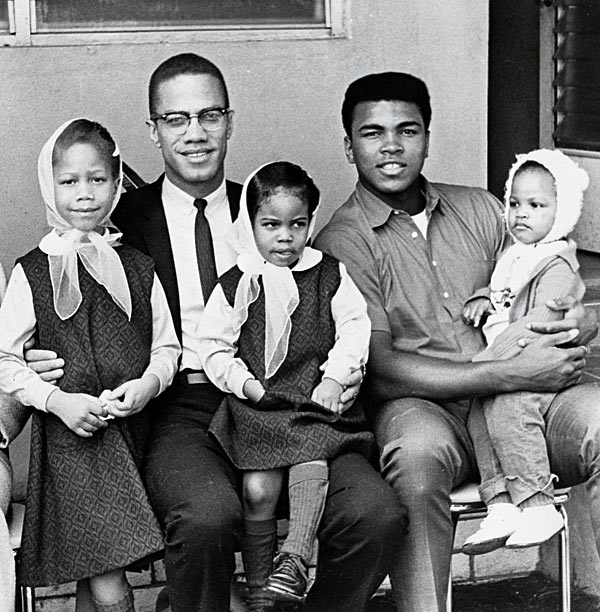
Real recognize Real.
Real recognize Real.


Well, might as well start adding some Obama pics as well...
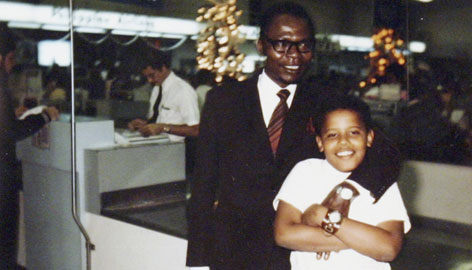


Appreciate this post!
Would like truly positive fathers to create / join and initiative to make divorce/support/custody/visitation reform a reality.
If family is really that important to all of you, would you join me in lobbying for change that supports family.
Then, we can truly celebrate "Father's Day".
Would like truly positive fathers to create / join and initiative to make divorce/support/custody/visitation reform a reality.
If family is really that important to all of you, would you join me in lobbying for change that supports family.
- Make support an initiative to grow the separated family's wealth as a whole [make both mommy and daddy financially responsible for wealth development and ensure BOTH use vehicles for future wealth transfer to children].
- Former friend of my lived in the home of his divorced wife [in the basement] for more than 5 years to ensure his children continued to see him as "Daddy" for all of their formative years. Why can't custody and visitation place this kind of emphasis on family protection?
- Remove vultures like Jeffrey Levings from the divorce horizon forever. Provide a real vehicle to remove lawyers seeking only to profit from the destruction of a family. Search it out, Jeffrey Levings, the "father's rights" attorney represented a woman in chicago nearly killed by her husband during the divorce. While I'm sure the divorce work was not purely the sole factor that lead to this, what part did this attorney play in pissing off this man so much he attempted to "stab his wife in the head!"
- Mediation panel as a requirement! I say panel, because I've heard the stories of "mediators" that are just as prejudiced in breaking up families as the courts have been.
- Get off the theory that "Mom knows best", Dads are proving repeatedly and consistently they hold just as much affection for their children as moms do.
- ERASE "BABY_______" FROM OUR VERNACULAR IMMEDIATELY!!!
In my view, nothing shows how much we devalue each other than to label each other as a "thing" that possesses my "things". We degrade in thought of the kids quickly from there.
Then, we can truly celebrate "Father's Day".
<font size="5"><center>On Father’s Day: The Black Man
An American Hero</font size></center>
Black Press USA
by Hazel Trice Edney
NNPA Editor-in-Chief
He built America from the ground up with a few tools, his bare hands and by the sweat of his brow. While doing so, he was repeatedly whipped, lynched, falsely accused and castrated.
Even now, he braves America’s streets despite the fact that he is more often stopped, brutalized or shot by police, blamed for crimes he did not commit, and incarcerated at astronomical rates. He even dies earlier of natural causes than any other racial group in America – a statistic that some doctors speculate is partially due to the every day stresses of being Black.
Whether he’s wearing a necktie, a uniform, coveralls, or jeans, he braves the streets of America when he goes to work – or even to look for work. Most of the time, he makes it home. But, all too often he falls victim to this historic, undeclared war on Black males.
Still, he dares to believe in a nation where his unemployment rate exceeds all others – not just because of the economic downturn – but because of a history of race discrimination that has pressed him to rock bottom.
His post traumatic stress is not from Iraq or Afghanistan, but from a lifetime of scaling the dangerous mine fields of American society. This is about Joe Blow and John Qshon Citizen.
One might call him “the average Black man”. But, given the list of daily atrocities he faces in this nation, there is actually no “average” Black man.
Rather, this is about “The Black Man – An American Hero”. Despite the odds against him, he has exceeded every bar that has ever been set.
What is an “American hero”?
Traditionally, the American hero is deemed as a Super Man type, someone with exceptional courage who performs a one-time gallant deed or a long time public service that warrants celebrity and perhaps even a medal. But, for the Black man, he is a quiet American hero, unsung, even unsuspecting, deserving of respect simply for the risks he takes every day.
The family of 25-year-old Black New York police officer Omar Edwards is familiar with this gallantry as they grieve their husband and father of 18-month-old and 7-month old children.
Struck down in a hail of bullets from a White police officer who mistakenly thought him to be a criminal, Omar is an American hero.
The family of 38-year-old Stephen T. Johns also knows. When this husband and father of an 11-year-old son was felled by the bullet of a hate-crazed White supremacist at the U. S. Holocaust Museum, it was yet another shot that was “heard around the world”. “Big John” – as they called him - is indeed an American Hero.
From coast to coast they have fallen.
Among them, Sean Bell, 23, of New York; Oscar Grant III, 22, of San Francisco; DeAuntae “Tae Tae” Farrow, 12, of West Memphis, Ark.; and Martin Lee Anderson, 14, of Bay County, Fla.
They are among the sons and fathers who were all too early struck down amidst injustice. Not to mention the thousands of Black men who have died at the hands of other Black men – a dubious “friendly fire” if you will.
Unlike other wars, there is no flag-draped casket or playing of “Taps”.
Yet, the grieving hearts of loved ones are no less painful; the tears are no less real. And moreover the fortitude he displays in having to fight against the odds is no less worthy of honor.
The Black man – an American hero, we all know one as he refuses to cower.
His swagger is emboldened as he defies statistics that constantly predict his demise. He daily swims upstream in the murky, unpredictable waters, daring to believe in himself and in the power of his God. Despite the memories of his fallen brothers, he presses on for respect. And on Father’s Day, we salute him for his raw courage.
http://www.blackpressusa.com/News/Article.asp?SID=3&Title=Hot+Stories&NewsID=19046
An American Hero</font size></center>
Black Press USA
by Hazel Trice Edney
NNPA Editor-in-Chief
He built America from the ground up with a few tools, his bare hands and by the sweat of his brow. While doing so, he was repeatedly whipped, lynched, falsely accused and castrated.
Even now, he braves America’s streets despite the fact that he is more often stopped, brutalized or shot by police, blamed for crimes he did not commit, and incarcerated at astronomical rates. He even dies earlier of natural causes than any other racial group in America – a statistic that some doctors speculate is partially due to the every day stresses of being Black.
Whether he’s wearing a necktie, a uniform, coveralls, or jeans, he braves the streets of America when he goes to work – or even to look for work. Most of the time, he makes it home. But, all too often he falls victim to this historic, undeclared war on Black males.
Still, he dares to believe in a nation where his unemployment rate exceeds all others – not just because of the economic downturn – but because of a history of race discrimination that has pressed him to rock bottom.
His post traumatic stress is not from Iraq or Afghanistan, but from a lifetime of scaling the dangerous mine fields of American society. This is about Joe Blow and John Qshon Citizen.
One might call him “the average Black man”. But, given the list of daily atrocities he faces in this nation, there is actually no “average” Black man.
Rather, this is about “The Black Man – An American Hero”. Despite the odds against him, he has exceeded every bar that has ever been set.
What is an “American hero”?
Traditionally, the American hero is deemed as a Super Man type, someone with exceptional courage who performs a one-time gallant deed or a long time public service that warrants celebrity and perhaps even a medal. But, for the Black man, he is a quiet American hero, unsung, even unsuspecting, deserving of respect simply for the risks he takes every day.
The family of 25-year-old Black New York police officer Omar Edwards is familiar with this gallantry as they grieve their husband and father of 18-month-old and 7-month old children.
Struck down in a hail of bullets from a White police officer who mistakenly thought him to be a criminal, Omar is an American hero.
The family of 38-year-old Stephen T. Johns also knows. When this husband and father of an 11-year-old son was felled by the bullet of a hate-crazed White supremacist at the U. S. Holocaust Museum, it was yet another shot that was “heard around the world”. “Big John” – as they called him - is indeed an American Hero.
From coast to coast they have fallen.
Among them, Sean Bell, 23, of New York; Oscar Grant III, 22, of San Francisco; DeAuntae “Tae Tae” Farrow, 12, of West Memphis, Ark.; and Martin Lee Anderson, 14, of Bay County, Fla.
They are among the sons and fathers who were all too early struck down amidst injustice. Not to mention the thousands of Black men who have died at the hands of other Black men – a dubious “friendly fire” if you will.
Unlike other wars, there is no flag-draped casket or playing of “Taps”.
Yet, the grieving hearts of loved ones are no less painful; the tears are no less real. And moreover the fortitude he displays in having to fight against the odds is no less worthy of honor.
The Black man – an American hero, we all know one as he refuses to cower.
His swagger is emboldened as he defies statistics that constantly predict his demise. He daily swims upstream in the murky, unpredictable waters, daring to believe in himself and in the power of his God. Despite the memories of his fallen brothers, he presses on for respect. And on Father’s Day, we salute him for his raw courage.
http://www.blackpressusa.com/News/Article.asp?SID=3&Title=Hot+Stories&NewsID=19046

