
You are using an out of date browser. It may not display this or other websites correctly.
You should upgrade or use an alternative browser.
You should upgrade or use an alternative browser.
Tesla Model 3 Revealed
- Thread starter a1rimrocka
- Start date



What does class is it in? What does it compare to in terms of interior seating space?


Yesso they really went with no instrument cluster?


Elon Musk Says Model 3 Production Has Begun
Tesla Inc.’s mission-critical Model 3 started production on Friday before beginning a rapid ramp-up targeting a rate of 20,000 a month in December.
The company will hold a handover party for its first 30 customers of the Model 3 on July 28, he said in a separate post. Tesla aims to produce 100 of the cars in August and more than 1,500 in September in its push to achieve its year-end goal, Musk said.
The Model 3, the company’s most affordable car yet, had been expected to begin production in July, but there had been little news on how the preparations at Tesla’s factory in Fremont, California, were progressing. When a Twitter follower of the CEO asked him last week to “please have mercy” and give more information on the release, Musk responded cryptically that he would offer “news on Sunday.”
Investors have pushed up shares of Palo Alto, California-based Tesla 65 percent this year in anticipation of the Model 3. Shares fell 2.5 percent Monday in trading before the July 4 holiday in the U.S.
“Initial production ramp for the Model 3 looks like it may be better than expected -- but investors should continue to focus on whether the Model 3 can be produced profitably and with strong initial quality,” Sanford C. Bernstein & Co. analyst Toni Sacconaghi wrote in a note to clients Monday.
The company now makes two all-electric models: the Model S sedan and Model X sport utility vehicle. The Model 3, which is slated to start at $35,000 before options or incentives, is the culmination of Tesla’s 15-year-quest to reach mainstream consumers with a smaller, more affordable electric car. The Model 3 price tag is in line with the industry’s average new-car transaction price of $34,442 in June, according to Kelley Blue Book.
Tesla first unveiled the Model 3 in March 2016 at a late night party at the company’s design studio in Hawthorne, California. The company reported last spring that 373,000 people have placed $1,000 deposits for the vehicle and hasn’t given an updated reservation figure in the year since. Model 3 reservations “skew young and urban,” Jon McNeill, Tesla’s president of global sales and service, said last year. The first Model 3s are expected to go to employees of Tesla and SpaceX, Musk’s space exploration company.
The company delivered 25,051 vehicles in the first quarter and aims to make 500,000 in 2018 and 1 million in 2020. Tesla is expected to release second-quarter sales figures Monday.

This is like the inside of a mansion with cold marble floors and white columns. No soul.
Gotta see that interior in person...that minimalist thing may work for Apple with cellphones etc but I am not sure that's what people want in a car

Volvo to Go All Electric: The automaker says starting in 2019 it will make only electric or hybrid cars.
https://www.theatlantic.com/news/archive/2017/07/volvos-electric-future/532659/
https://www.theatlantic.com/news/archive/2017/07/volvos-electric-future/532659/


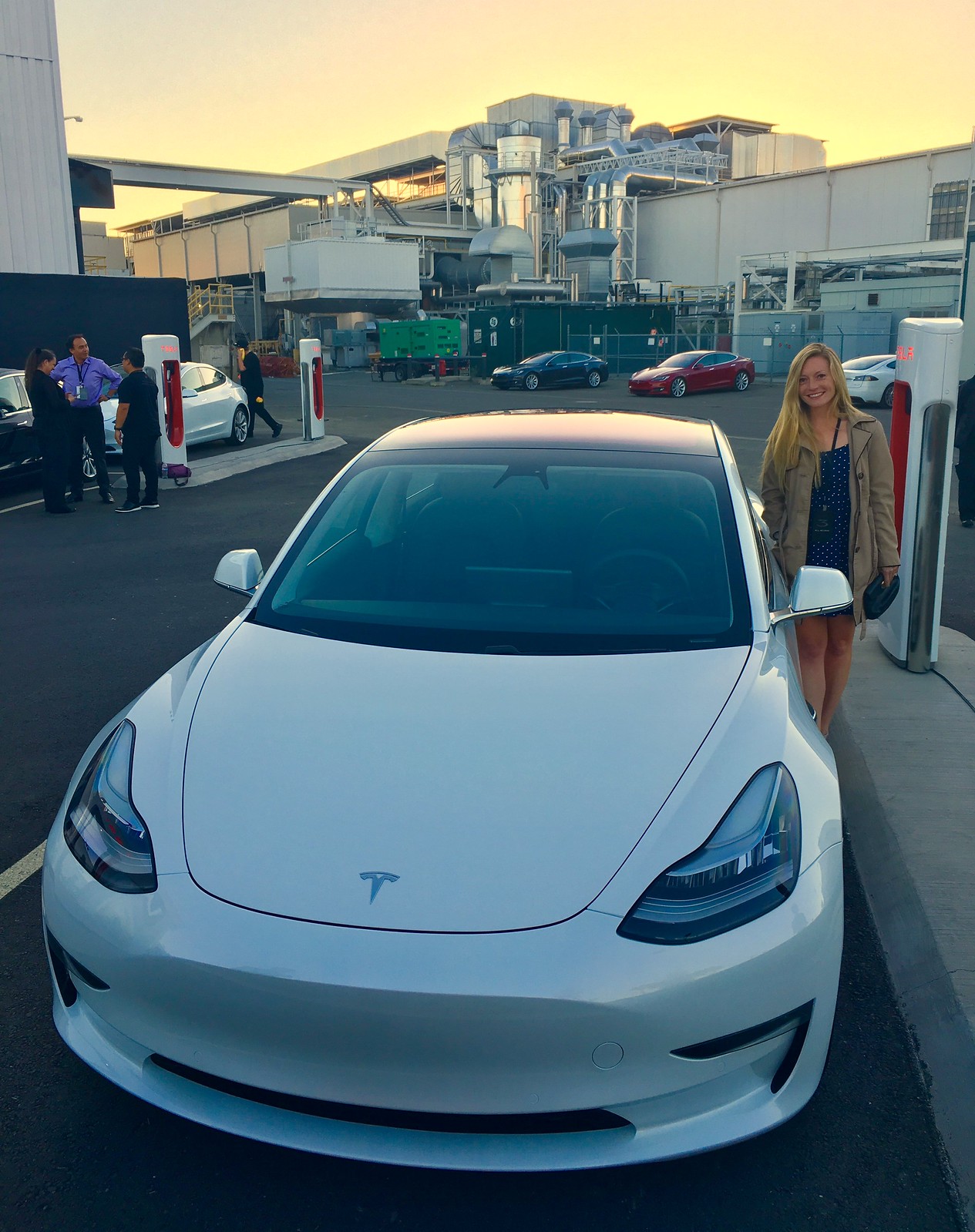
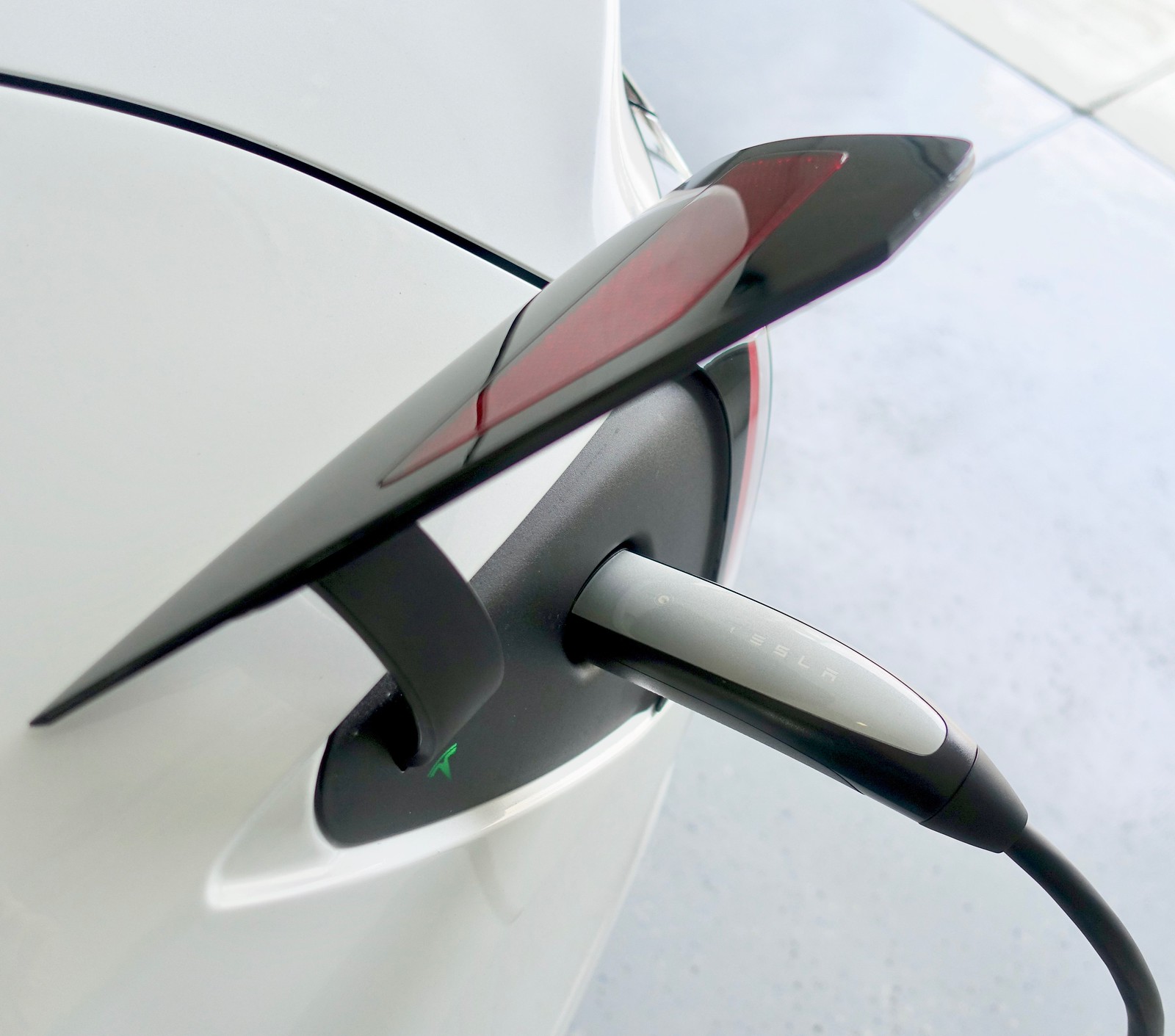
Didn't know that the charge port was motorized
When we got our test drive/rides in the Model 3 a week ago, many of the finer details of the groundbreaking EV were still off limits.
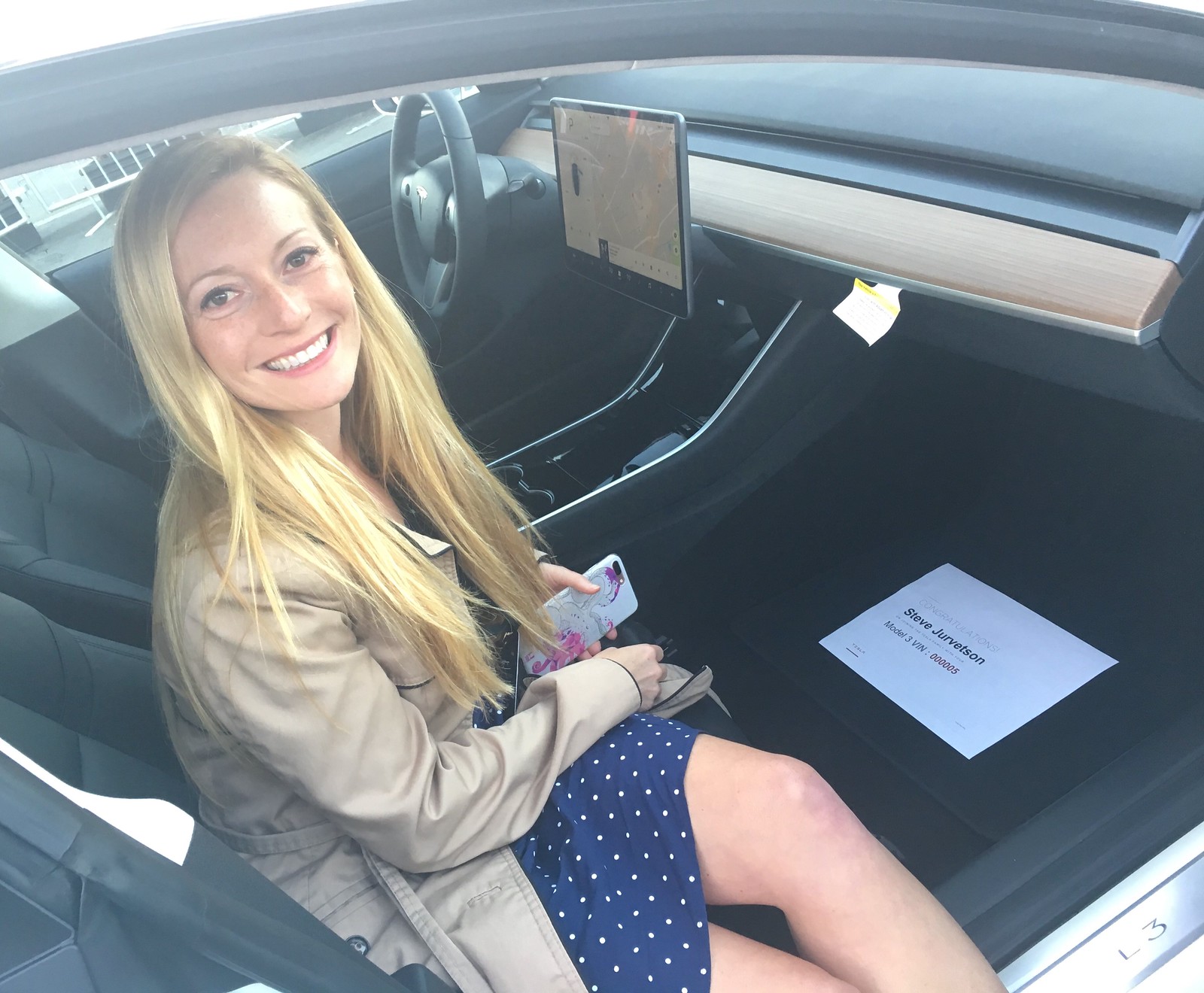
The Model 3s were all being charged via the company Superchargers outside of the VIP/Press area so we didn’t get to experience what it was like to plug in the vehicles or even operate the app. However, Tesla Board member and venture capitalist Steve Jurvetson this morning showed his YouTuber skills in demonstrating the feature on his VIN#5 Model 3.
The flap works mostly how you’d expect. The included charger cable (no amperage listed but on board charging is 32A and 40A for base and long range models respectively) button opens the Model 3 charging bay in the same way that it works for Model S and X. The charging bay is much bigger however and a curious design choice. It looks almost big enough to accept a CSS combo port, not that is in the cards, but just a curiously large amount of space for such a small Tesla interface. Even more curious when we know that Tesla minimizes everything
Moving on, perhaps the most interesting, though not entirely unexpected bit is that the charge bay door can be closed by the app. There was concern that this would be a manual door latch like the early Model S/X but this looks like launch for Model 3.
You can drive a Model S or X around with the charging flap open but I would imagine that the Model 3’s bigger flap could get dangerous at high speeds, so a motor, automatic and otherwise, to bring the door down might have been a necessity there.

Tesla, Inc.'s Model 3 Battery Sizes -- What Investors Need to Know
Since electric-car maker Tesla (NASDAQ:TSLA) fully unveiled its Model 3 and delivered the first units to customers last month, there's been speculation about what battery size the vehicle sports. In an interesting marketing move, Tesla has opted to obfuscate battery size options for the vehicle, instead referring to the two available versions as "standard" and "long range."
But this marketing tactic has left investors wondering about battery specifications. After all, Tesla's battery is the highest-cost component in its vehicles. So, knowing the battery size would give investors some insight into how Tesla plans to achieve a meaningful gross profit margin on the vehicle.
Model 3 battery sizes
But the secret is out. Tesla's standard Model 3 with 220 miles of range includes a 50 kilowatt-hour battery. Meanwhile, the long-range Model 3 with 310 miles of range features a 75 kWh battery.
Tesla CEO Elon Musk shared the battery specifications during a conference call Monday about Tesla's $1.5 billion debt offering.
Why it matters
Noting in its second-quarter shareholder letter that Tesla was aiming for a 25% gross profit margin for Model 3 next year, a low cost per Model 3 unit is clearly a priority to Tesla management. To achieve the vehicle's $35,000 price point while simultaneously aiming for a heady gross profit margin, the electric-car maker has designed the Model 3 from the ground up to be cost effective and to take advantage of economies of scale. This includes simplifying the car's design, streamlining production by reducing the number of options available for customers to choose from, and even building a battery factory that will produce batteries at higher volume and greater efficiencies than ever before.
But Tesla's ability to achieve 220 miles of range with just a 50 kilowatt-hour battery is apparently yet another way the automaker was able to reduce per-unit costs. For perspective, Tesla's entry-level Model S requires a 50% larger battery to achieve just 13% more range than the base Model 3. Tesla's 75 kWh rear-wheel drive Model S gets 259 miles of range. For further comparison to Tesla's Model S, Tesla has previously offered a 60 kWh version of the sedan, but it only sported 208 miles of driving range on a single charge. Of course, the Model S is about a 20% larger vehicle than the Model 3, so it's understandable that the Model S requires larger batteries to get comparable range. But the Model 3's range-to-battery size efficiency is impressive.
For yet another comparison, General Motors' Chevrolet Bolt, which is more compact than Tesla's Model 3, can drive 238 miles on a single charge. But the Bolt needs about 20% more battery capacity (a 60 kWh battery), than Tesla's Model 3 to achieve this.
The standard Model 3's much lower battery size compared to the Model S could help significantly reduce the vehicle's unit cost. Further, Tesla is making customers pay a hefty price when they upgrade to the long-range Model 3, charging an additional $9,000; this should help Tesla maintain similar gross profit margins for the Model 3 version with a larger battery.
As the most costly component in its vehicles, Tesla has focused much of its efforts on reducing battery costs by building its Gigafactory, where Tesla hopes unprecedented battery production scale can drive battery costs 35% lower. Tesla is already building Model 3 battery packs at the factory, and Musk reportedly said during this week's conference call that the factory is already building more batteries than any other factory in the world.

There's a funny story behind how Tesla named the Model 3 — but the branding is now causing some problems
Like anything Tesla CEO Elon Musk does, the naming of Tesla's newest sedan was very deliberate.
The Model 3 is simply the latest iteration of a naming strategy Musk has been planning for years: to launch a car line that spells "SEXY." The Model 3 has taken its rightful position as the "e" and Tesla's upcoming Model Y will complete his naming plan.
Musk originally wanted the Model 3 to be called the Model E, but Ford beat Tesla to the punch in filing for the trademark.
Needless to say, Musk wasn't thrilled about Ford snagging the name.
"Like why did you go steal Tesla’s E? Like you’re some sort of fascist army marching across the alphabet, some sort of Sesame Street robber?" Musk said at the time.
While the origin story of the Model 3 name is funny, the branding has also become a thorn in Tesla's side.
Long-time Tesla fans may know about the joke, but not all potential buyers are up to speed.
The name led some to believe that the Model 3 is a next-generation version of the Model S. That's problematic considering the Model 3 is Tesla's first mass-market sedan and has far fewer bells and whistles with a $35,000 price tag.
Tesla has been so concerned that people are confused by the Model 3 name that it wrote in early May about the need to correct the misperception in a Securities and Exchange Commission filing. Musk made similar comments on Twitter in March.
Tesla designed a webpage to help correct the confusion, which appears to be paying off.
The company said in its second-quarter earnings letter that there has been growing demand for the Model S and Model X. It's unclear whether that's from Tesla's different marketing approach, but it shows demand isn't waning for Tesla's luxury options just because the Model 3 launched.
Tesla releasing the final specs for the Model 3 also doesn't hurt.

Tesla Model 3 has no key, so don't forget your phone
Your phone will unlock the new Model 3.
Electric car company Tesla has shown a willingness to break from automotive legacy, and it moves even further away with the Model 3, where owners will rely on their phones to access and start the car. Unlike most current cars, and even Tesla's own Model S and Model X, Model 3 owners won't need to carry a key fob in their pockets.
Many cars these days offer keyless entry and start, but require the driver to have a key fob at hand, a pocket-sized device that transmits a unique radio signal. That signal tells the car to unlock its doors and ignition. For the Model 3, Tesla engineered the car to accept a digital key transmitted through Bluetooth from an owner's phone. The car uses the Bluetooth LE standard, which stands for Low Energy, and is supported by most major smartphones.
As a back-up, or for valet access, each Model 3 will come with a couple of NFC cards, which can also unlock and start-up the car. The cards will unlock the door with a tap on the B pillar, and start up the car with another tap between the front seats.
Tesla has not said if there is a mechanical means of entering a car with a completely drained battery. However, that has not been an issue with the Model S or Model X. Given Bluetooth LE's energy requirements and the large size of the Model 3's battery pack, it would be unlikely for the car to have no electricity available.
The idea of using a smartphone to access a car is not exactly new, either. Short-term car rental services, such as GM's Maven and Daimler's Car2Go let people access the cars using a phone app. NXP announced last February that it was working with five automakers on an NFC chip for door handles, which would allow programmed devices to unlock cars.
Given the enthusiasm around the Tesla Model 3, as evidenced by the hundreds of thousands of preorders for the electric car, its tech-forward early adopters are not likely to miss carrying a key fob.

5 surprises about Tesla's Model 3 mass-market electric car
Now that Tesla has handed over its first batch of Model 3s to employees to drive as owners, new details are emerging about the long-range electric car aimed at the mass market.
In getting the first 30 cars on the road, the California automaker hopes to start a transportation revolution, converting families to electric cars that they may never have considered in the past.
“The whole point of Tesla was to build a great affordable electric car,” CEO Elon Musk said Friday night at an event outside the company's factory in Fremont, Calif. “That’s what this day means. I’m confident it’ll be the best car in its class, gasoline or not, hands down.”
But consider some of the details. Here are five surprises we learned about the Model 3:
•Color costs extra. If you want the Model 3 in anything but black, you'll have to pay $1,000 extra.
Although many automakers offer special paint at a pre•mium, most offer a choice of standard colors at no extra charge. Not so with this car.
The optional color upgrades are Midnight Silver Metallic, Deep Blue Metallic, Silver Metallic, Pearl White Multi-Coat and Red Multi-Coat.
•The longer-range version costs more, but it's less per mile. Tesla is offering a 310-mile-range version of the Model 3 for a $9,000 upgrade.
That's atop a starting price of $35,000 before tax incentives. The compact car is aimed at being within financial rch for many American families, although the price escalates quickly after adding options.
While $9,000 extra-range premium sounds like a lot, the price is less per mile of range. At 310 miles and a base price of $44,000, the higher-range version costs $142 per mile. With a range of 220 miles and a price of $35,000, the standard version costs $159 per mile.
•Buyers might not get it until 2019. While Tesla continues to maintain on its website that new orders could be delivered as soon as "mid 2018," the company now acknowledges that it could take as many as 18 months. That could bleed into 2019.
•Foreign markets have to wait. People living outside of the U.S. won't get left-hand-drive versions of the Model 3 until at least the second half of 2018, even if they ordered early. Production of the right-hand-drive Model 3 won't even start until 2019.
•A performance version is coming in summer 2018. Musk said early Sunday on Twitter that a high-speed version of the Model is "probably" coming by the "middle of next year."
But the company must first focus on ramping up production of the current versions, which means "getting out of Model 3 production hell," he said. The early days of manufacturing a new vehicle are challenge for any automaker, requiring a slow increase in production speed while workers get used to the new process.
"More versions equal deeper in hell," he said.

5 unusual features in the Tesla Model 3, including an instrument-free dash
The Model 3, Tesla’s mid-market all-electric sedan, officially launched Friday night, includes several unusual features.
Such as no gauges on the dashboard: no speedometer, no tach, no mileage readouts, no sound system controls.
Not a single button, lever or dial.
Every bit of information that would reside on the dash — in any normal car -- and almost all the user inputs are gathered on a single 15-inch touchscreen mounted up front between the driver’s and passenger’s seats. The rest of the dashboard is bare.
Some might find that minimalist setup to be cutting-edge cool. Some might find it too barren for a car that, fully loaded, costs $60,000. Some might find the touchscreen crowded and confusing. Others will see the new instrument panel as reflective of the way they lead the rest of their digital lives.
The marketplace, ultimately, will judge just how effective the new layout is.
Each Model 3 comes equipped with eight cameras, a radar unit and 12 ultrasonic sensors.
Triggering the software to make Enhanced Autopilot driver-assist technology work costs $5,000 on top of the base price of $35,000. That includes adaptive cruise control, automatic lane changes, automatic freeway exit and self-parking.
Elon Musk said Tesla will create to compete with Apple and Spotify doesn’t exist yet, but would surely be available in all Tesla vehicles.
Musk has said the company saved costs on the Model 3 in part by providing only one touchscreen rather than two. But buyers can use their smartphone as a second screen for a Tesla app that will let them set climate controls before exiting the house, and replace the car key. A wallet-sized chip card serves as a valet key, or a backup, in case the owner forgets her smartphone.
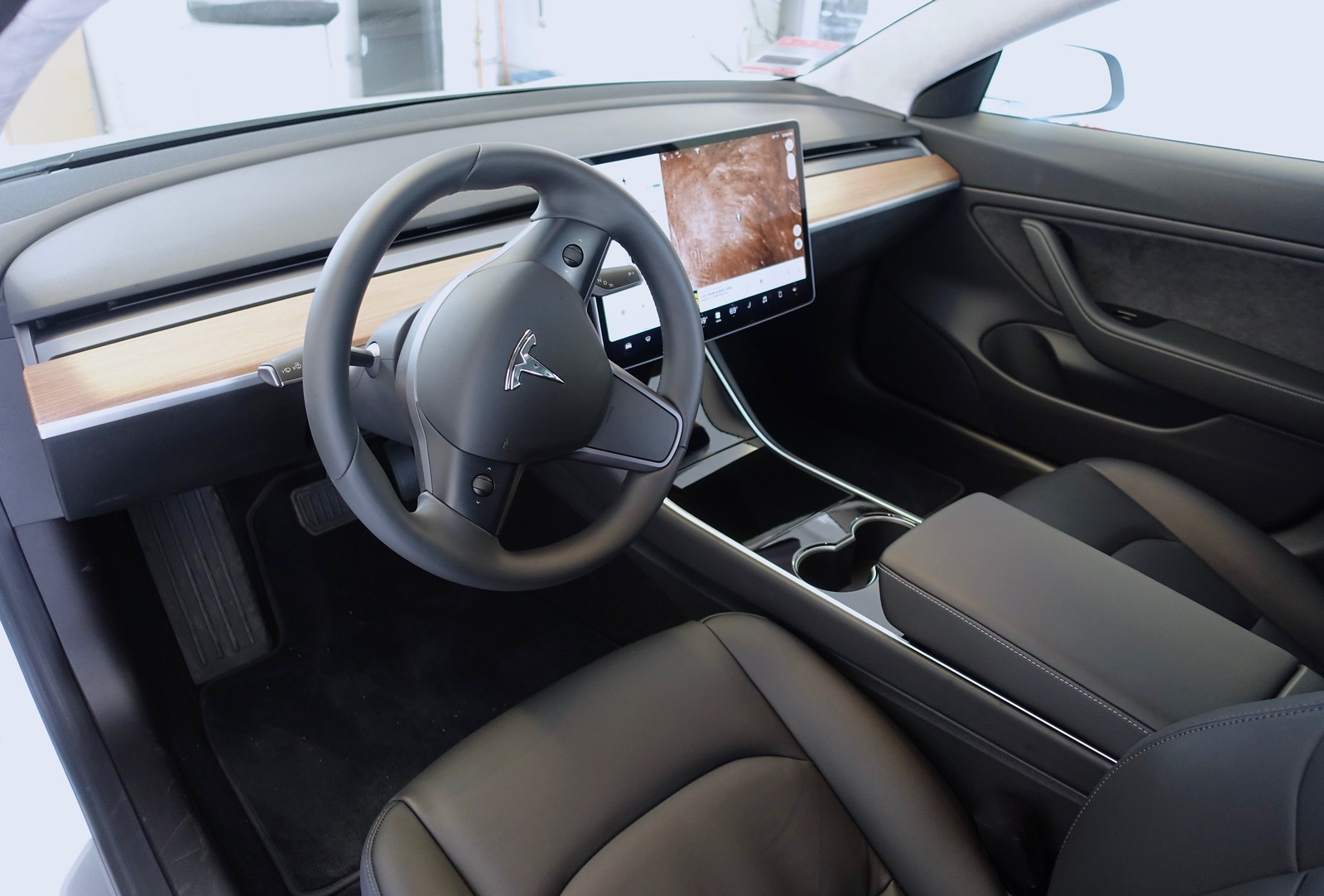

The Tesla Model 3's interior is a study in automotive minimalism
The Tesla Model 3 has been billed as a groundbreaking car. And in one respect, it is: It doesn't have an instrument cluster.
Instead, the vehicle displays all information on a 15-inch, horizontal, touchscreen display mounted in the middle of the dashboard. And unlike other carmakers, Tesla hasn't shifted functions to the steering wheel. There are two control stalks and a pair of multipurpose thumb wheels.
Rumors had swirled for months that Tesla would make this move, but we now have confirmation.
But the elimination of traditional interior elements in the Model 3 goes beyond the instrument cluster.
In fact, Franz von Holzhausen, Tesla's chief designer, recently stressed that the interior was in many ways the most satisfying, innovative, and radical part of the Model 3.
"Everything we do has to be beautiful, but it has to be functional," he said at a press conference before an event last week at the carmaker's factory in Fremont, California, when the company delivered the first 30 Model 3s, most to employees.
Because the Model 3 is a smaller car, Holzhausen said, a goal was to make the interior feel as big as possible.
"Interior volume was important to us," he said. "It's a really great attribute."
Some critics have complained that Tesla's interiors have been too minimalist. They aren't as upscale as those from other luxury automakers. Tesla has addressed that concern, and with the Model 3 — base-priced at $35,000 — the expectation for a lush and pampering interior isn't as high.
The clean and minimalist design, Holzhausen added, enables the driver to concentrate on driving — or being driven, as the Model 3's hardware and software are engineered to deliver full autonomy.
"It doesn't look like anything out there," he said. "It feels advanced, but not scary, and it will age gracefully."
Holzhausen is right — this is the most minimalist auto interior I've ever seen. Have a look:
No button, no knobs, no gauges.

The open-grain strip of wood stretches from one end of the dash to the other.

Nearly the entire roof is made of two pieces of glass.

This is the most minimalist back seat I've ever seen on a car at this level. But it's roomy and comfortable. The seats also fold down to expand the quite-large trunk.


Tesla issuing $1.5B in debt to fund Model 3 production
Facing the steep costs of expanding its manufacturing capacity to make its first mass-market electric car, Tesla plans to issue $1.5 billion in debt.
The Silicon Valley automaker said Monday that it would borrow the money "to further strengthen its balance sheet during this period of rapid scaling with the launch of Model 3, and for general corporate purposes."
The company made the first units of the Model 3 compact sedan in July and expects to hit a production rate of 5,000 cars per week by the end of the year and 10,000 per week by the end of 2018.
That will require a significant investment in production equipment and employees.
Asked whether the company was considering issuing new stock to fund the expansion, Musk told investors Wednesday that "we are thinking about debt, but we're not thinking about an equity raise."
The company had $3 billion in cash on hand at the end of its second quarter, during which it lost more than $336 million.
Tesla told investors Wednesday that it had "sufficient liquidity to fund our" capital expenditures and "provide flexibility through the Model 3" ramp up.
The company also increased its borrowing capacity through a credit line by $625 million to $1.83 billion. The line could go up to $2 billion.
The latest round of borrowing underscores the expense of developing a new vehicle from scratch. The company expects $2 billion in capital expenditures during the second half of 2017, up from $1.5 billion in the first half.
But Musk said the company has received more than 460,000 refundable deposits for the Model 3, which gets at least 220 miles in range and starts at $35,000 before optional upgrades.
"This is probably the best I've ever felt about the company," Musk said.

Tesla starts raising cash to help it get Model 3 to the masses
Tesla Inc. is raising $1.5 billion as it ramps up production of the Model 3 sedan, its first mass-market electric car.
The company said Monday that it plans to offer senior notes due in 2025 and would use the offering's proceeds to further strengthen its balance sheet during rapid scaling of the Model 3.
Tesla delivered the first 30 Model 3s to employees at the end of July. At the time, Chief Executive Elon Musk worried some investors when he warned that Tesla was about to embark on “at least six months of manufacturing hell” as it tries to get Model 3 production to 5,000 cars a week by December.
But last week, Musk clarified his comments, and said Tesla should be able to overcome any supplier issues and other potential obstacles. Musk said investors should have “zero concern” about whether Tesla will be able to meet its goal of making 10,000 Model 3s a week by next year.


Tesla releases new Model 3 pictures to show its key card and iPhone-based unlocking system
With the Model 3, Tesla is parting ways with using a regular key fob and instead built the experience around its mobile app.
The automaker has now released a few new official shots to show how to unlock and use the Model 3 with its key card and iPhone-based unlocking system.
Tesla’s iPhone and Android app can already be used to unlock and start Model S and Model X, but the key fob is generally regarded as the main device to get in those cars.
The app now becomes the main device for Model 3, which is Bluetooth connected to your phone in order to automatically unlock the doors as you approach, much like it does with the key fob on the Model S and Model X today.
In order to unlock the car with the current app, the driver needs to go into the app or the Tesla widget to unlock it.
But with Model 3, once your car is linked to your account, you just have to walk up to it:

If your phone is dead, or if you are one of those people who are going back to flip phones, Tesla provides a keycard with a NFC chip.
The driver has to swipe the card on the B pillar and it will unlock the doors:

The NFC card, which stands for near field communication, raised a few concerns about security, but Tesla says that it’s linked only to specific vehicles and can be made secure.
Once in the Model 3, you can put your phone front and center in a dock on the center console:


The dock supports two phones at the same time and Tesla sells the cables for $14 each.


Tesla Model 3: here’s the alloy mix of the Model 3 body
With the Model 3, Tesla is moving away from the mostly aluminum chassis that it designed for Model S and Model X with some high-grade steel reinforcements.
Instead, the automaker is adding more steel to the mix for Model 3 and we now get our first look at the alloy mix in the chassis of Tesla’s less expensive electric car.
The idea to use primarily aluminum for Model S and Model X was a decision aimed at saving some weight for those rather large vehicles.
Tesla’s ~1,000 lbs battery pack gives a boost to their vehicle’s weights and the automaker aimed to compensate with a lighter chassis.
At first glance, it’s a no-brainer since aluminum is also stronger per pound, but it is also more expensive to build and repair. Aluminum can be more difficult to manipulate and can require expensive specialty equipment.
This was reflected in body work costs for Model S and Model X.
While it can be a pain for some owners, it hasn’t become a major issue since Model S and Model X are already high-end expensive luxury vehicles with expected high repair costs.
With a $35,000 base price, the Model 3 is another matter. It pushed Tesla to use an higher mix of steel in the body.
Photos, posted to Twitter and shared on Reddit, illustrate just how Tesla has been able to achieve a Model 3 body structure design that’s lightweight and has unparalleled strength at an entry level price point.
Looking at a front quarter exploded view of the Model 3 body, one can see the various compositions of steel the Tesla engineers used across the machine-stamped, multi-layer structure.
Tesla uses three different grades of steel, from mild steel used on the outer body structure where it’s designed to absorb initial impacts, and high-strength, to ultra high-strength used in the vehicle’s core. For instance, the A-pillar and B-pillar (noted in red on the graphic) is fabricated from ultra high-strength steel in order to provide maximum rollover protection. Model 3’s front frame rail is a composition between high-strength and ultra high-strength steel, and serves as the main support for the front “crumple zone”.
Tesla Model 3’s body repair manual notes that “Structural Pulling” is not allowed, meaning that any structural component that’s welded, weld-bonded, riveted, or rivet-bonded to the vehicle can not undergo a process wherein the straightening of structural parts are facilitated through a hydraulic pulling machine. Doing so would compromise the yield strength of the metals being used.
As you can see, the use of aluminum is fairly limited in the Model 3 body. Body repair shops will be able to attempt repairs on everything but “Ultra High-Strength Steel”.
They still managed to maintain a decent weight of 3549 lbs for the base version (3814 lbs. for bigger battery pack).
Tesla expects that this body will still maintain the company’s strong safety track record of beating NHTSA’s 5 star rating. They released this impressive image of the Model 3 versus the Volvo S60 on the side-pole impact test:

One might recall Tesla CEO Elon Musk giving a tonque-in-cheek response about Model 3’s 5-star safety rating during a speech in Fremont, California. “The Volvo [S60] is arguably the second safest car in the world”, said Musk while alluding to the fact that Model 3 takes top honors for being the safest car in the world.
They expect to not only have 5-star ratings in every category, but also significantly beat the next best vehicle like in this case.
With this said, NHSTA has not yet released any official rating for the Model 3.
What do you think of the Model 3 body?


A Tesla Model 3 is going around the country – now in Louisiana
We are just a month in the Tesla Model 3 production ramp and vehicles being delivered are still only for a few lucky Tesla employees and insiders, mainly in California and especially in the Bay Area.
But now Tesla started bringing the Model 3 around to its other locations in the US and one vehicle has even been spotted as far as Louisiana.
The Model 3 in question, VIN #301, is apparently being toured around Tesla stores and service locations.
Tesla has been promising test drives to reservation holders and therefore, a fleet is expected to reach more locations in the US, but in the meantime, employees still have the priority for reservations.
Not all of them (Tesla has now over 33,000 employees) had the chance to test drive or even see the vehicle in person yet and therefore, they could use some experience with this engineering car going around the country.
Service and body shop employees also need to familiarize themselves with the new vehicle before customers start taking delivery later this year.
The Model 3 VIN #301 was spotted in Texas earlier this week, but it has already made its way to Monroe, Louisiana, where John Biscevic spotted it. He agreed to share a few great shots of the vehicle with us:
We wouldn’t be surprised to start seeing the vehicle make its way east – so stay on the look out and you might get the chance to be among the first to see the brand new all-electric vehicle in your region.
As we previously reported, Tesla is focusing the early production Model 3 to the higher-end version of the car with the premium package and long range battery pack. The company expects to only deliver around 1,500 units between July and September.
October is expected to be when Tesla starts to more significantly ramp up deliveries and open access to regular customers.
In November, Tesla plans to start production of the less expensive standard battery pack: you can read our recent exclusive report on Tesla’s Model 3 battery pack.
Deliveries outside of the US and production of the dual motor all-wheel-drive version of the Model 3 are expected to start later in 2018.
Stay tuned to Electrek as we try to track the progression of the production ramp as closely as possible. Things should start to get more interesting in the next month or so.

First video of Tesla Model 3 with Autopilot engaged
When Tesla launched the Model 3 last month, they let a few media drive the new electric car and they gave rides to employees and owners.
During my test drive, I wanted to try the Autopilot, but I was told that it wasn’t activated yet on the Model 3.
Now we get our first look at the level 2 autonomous driving system engaged on Tesla’s latest vehicle.
Like with Model S and Model X, the Autopilot cameras have to be calibrated over several miles before the Autopilot features can be activated.
As we recently reported, the Model 3 will have the same gradually more advanced Autopilot features as Model S and Model X enabled through software updates, but the start of Model 3 production also coincided with an updated Autopilot ‘2.5’ hardware suite with more computing power for autonomous driving.
Model S and Model X are also getting the new hardware suite, but Model 3 still has a few differences, like a new driver-facing camera and a new way for the driver to activate Autopilot with a new gear selector.
Autopilot is now on the gear selector and it can be activated by tapping down twice on the selector.
As far as the user interface, it’s also a big difference since the Model S and Model X’s Autopilot UI is on the instrument cluster, which is nonexistent in Model 3. Instead, it is located on the left side of the center display.
Now early Tesla investor Bill Lee got access to the Model 3 with a working Autopilot and he shared the first video of the Model 3 Autopilot UI engaged:

It gives a good idea of the UI, but obviously, the video is too short to get an idea of how well Autopilot works on the Model 3. Though it is expected to use the same software as Model S and Model X on Autopilot 2.0 and therefore, there shouldn’t be a difference.
Tesla aims to eventually enable fully self-driving capacity on all its vehicles built since October 2016, including Model 3, through future updates and dependent on regulatory approval.
Lee also shared a quick video of the Model 3 air conditioning controls:

You have to use the center touchscreen four everything. Everything.
There is no instrument cluster behind the steering wheel. You have to view it on the instrument touchscreen in the center. Even if you want to go in the glove compartment you have to use the center screen to open it. That will take some getting used to.
There is no instrument cluster behind the steering wheel. You have to view it on the instrument touchscreen in the center. Even if you want to go in the glove compartment you have to use the center screen to open it. That will take some getting used to.
You have to use the center touchscreen four everything. Everything.
There is no instrument cluster behind the steering wheel. You have to view it on the instrument touchscreen in the center. Even if you want to go in the glove compartment you have to use the center screen to open it. That will take some getting used to.
^^ This

 i gotta wait 2 years now but i want a Tesla.......

Tesla's Musk says air suspension coming to Model 3 in 6 months
Those eager to get their hands on a Tesla Model 3 may be better off waiting until the options list rounds out a tad more. Right now, a Tesla Model 3 is limited to only a few options such as colors, wheels, and the choice between a short- and long-range variant. In fact, colors other than black cost extra for those placing an order.
As Tesla continues to move the Model 3 out of "production hell," CEO Elon Musk has divulged when we'll see the automaker's trick "Smart Air Suspension" reach the affordable electric car. He took to Twitter to respond to a production question over the Smart Air Suspension and revealed the feature will join the Model 3's options "in about six months or so." Musk added it will arrive with a dual-motor configuration option.

Right now, Tesla's Model 3 configurator shows the dual-motor, all-wheel drive variant will arrive in spring of 2018, which falls in line with Musk's six-month timetable. Additionally, Musk also said to expect a performance version to arrive sometime in 2018.

The Smart Air Suspension is capable of raising and lowering the car after learning and adapting to roadways. A road detail log is kept by the car, and with help from the onboard GPS, the car can safely creep into unlevel driveways or other places that require lower or higher ride heights. The option was so popular on Model S and Model X vehicles that Tesla made it standard on later models. Before becoming standard, it was a $3,000 option.
Most of the Model 3's other options won't come online for a few months, and other niceties are likely a full year away.

Price of Success: Tesla Model 3 Buyers Might Not Get Full EV Tax Credit
Sometime about a year from now, whether or not Tesla can ramp its annual production level up to the 500,000 mark CEO Elon Musk is hoping for, Tesla will face a new challenge: Its cars will effectively become a little more expensive to buyers—even if the official prices don’t change.
That’s because, with electric vehicles, sales success comes at a price—the phase-out of the federal EV tax credit that effectively gives buyers with the tax liability up to $7500 off the price of the vehicle. That phase-out is triggered when any automaker reaches 200,000 cumulative sales (starting in 2010) of qualifying plug-in hybrids or fully electric vehicles.
Alan Baum of Baum & Associates, which forecasts and tracks sales of hybrids, plug-in hybrids, and electric and fuel-cell vehicles, projects that with the mass-production ramp-up of the Model 3, Tesla will reach the 200,000 mark in the first quarter of 2018. Tesla entered 2017 at 111,953 cumulative U.S. deliveries (including a small number of Roadsters, pre-2010). For the year to date, Baum estimates another 37,130, which brings today’s total near 150,000. Musk has suggested a 20,000-per-month production rate for Tesla by the end of the year, but even at a more modest rate it would hit that ceiling in the first quarter of 2018.
Reaching the sales mark triggers a phase-out period in which, two calendar quarters later, buyers can still claim 50 percent of the credit for two quarters, and then 25 percent for vehicles delivered for two quarters after that. So with the timeline experts anticipate, a $7500 tax credit will apply to Tesla models delivered by September, then a $3750 credit would apply through 2018, followed by an $1875 credit for the first half of 2019. Tesla vehicles wouldn’t be eligible for the credit at all after that.
To its credit, Tesla has been noting a starting price of “$35,000 before incentives,” rather than singling out the $7500 credit prominently. Effectively, though, the credit could bring the bottom-line price of the base Model 3 to just $28,700 (including destination)—and that’s before state rebates or other local incentives. While those who place a reservation today almost certainly won’t get the full $7500, they’ll likely get one of the phase-out amounts.
A Perk That Phases Out First for Tesla
No other automaker is poised to hit its phase-out period in the next year. Cumulatively, through last month, Nissan has sold 112,128 Leaf EVs, which gives it several more years at the rate that model has been selling—or at least a year or two if sales pick up. GM has sold 145,820 qualifying plug-ins to date, of which 125,939 are Volts, according to Baum. Through June, GM had only sold about 7600 Chevrolet Bolt EVs, although some project it at about a 20,000 annual sales rate—about on par with the Volt, or a little less. At those figures, GM might have nearly a year more than Tesla for buyers to claim the full $7500.
The Internal Revenue Service keeps a regularly updated page on cumulative sales on the way to 200,000, but its list only includes BMW, Ford, and Mercedes-Benz. When this page was last updated—in June, with final numbers through the first quarter of 2017—all three of those automakers were far behind Tesla. Today, Ford is likely around the 100,000 mark, while BMW is nearing 50,000.
Rest assured, you’ll be able to get the EV tax credit with most other makes for a long time. There will soon be a bevy of brands with long-range electric vehicles—including some automakers (Jaguar, for instance) that will be effectively starting at zero—and those electric vehicles will qualify for the tax credit for years, barring any changes from Washington. Tesla might not see the market playing field as being level at that point, but it’s about to get interesting.


This is like the inside of a mansion with cold marble floors and white columns. No soul.
U sound ancient as hell. What blaxplotation movie u have on repeat? That old no 1965 non soul palace still sells. U want soul go buy u a 78 Cadillac.
Similar threads

- Replies
- 0
- Views
- 102

- Replies
- 23
- Views
- 441

- Replies
- 18
- Views
- 550

- Replies
- 0
- Views
- 52

