Romney's Bain advisers aided China, Mexican growth

thoughtone

Rising Star
Registered
source: Think Progress

Romney Invested In Company That Is Outsourcing Jobs, Forcing Workers To Train Their Chinese Replacements


Workers at Sensata Technologies, a business based in Freeport, Illinois, have been protesting Mitt Romney’s campaign stops across the country all summer because the company, which is owned by Bain Capital, is laying off workers in order to hire employees in China. Bain took control of Sensata in 2006; last year, it took over the Freeport plant and announced that it would layoff 165 workers and close it.

Some of the workers, according to Sensata employees, have been forced to train their Chinese replacements, adding insult to the injury that was their looming job loss.

Bain’s role in the layoffs hasn’t been a secret. But given that it took control of Sensata and the plant well after Romney’s departure from the firm, the candidate has thus far steered clear of the controversy, only drawing protests from the workers who want him to step in and stop the plant’s closure. But according to documents detailing Romney’s finances obtained and published yesterday by Gawker, his connection to Sensata is much more direct.

Romney held a direct investment in Sensata through one fund titled “Bain Capital Fund IX, L.P.,” dated December 31, 2009, meaning he has likely financially benefited from Bain’s ownership of the company in the past, and could benefit from the plant’s closure and the outsourcing of the jobs to China. According to his 2011 personal financial disclosure, Romney still holds the Bain Capital fund that contains the Sensata investment.

Romney has a history of outsourcing jobs as the chief executive of Bain Capital. The Washington Post reported in June that under Romney’s leadership Bain “invested in a series of firms that specialized in relocating jobs done by American workers to new facilities in low-wage countries like China and India.” Other companies in which the firm invested sent jobs to Mexico and other low-wage countries around the world.

While that history might be politically toxic, Romney’s proposals wouldn’t stop the
outsourcing of American jobs. In fact, his plan to reform the corporate tax code by instituting a territorial tax system would make it easier for American companies to outsource jobs, while at the same time encouraging them to store even more money in offshore tax havens.

Sensata workers, meanwhile, are planning to protest Romney and Bain’s involvement in Sensata at the Republican National Convention next week.
 
source: Boston.com

Romney's Bain advisers aided China, Russia growth

WASHINGTON (AP) — As Bain & Co. head in the early 1990s, Mitt Romney presided over the corporate strategy firm’s expanding operations into China and Russia, helping their initial attempts to move into the world’s free market system.

Bain’s expansion abroad under Romney’s leadership came at the same time he was rescuing the firm from an internal financial crisis. Now, almost 20 years on, the Republican presidential nominee views those two countries with suspicion.

In his campaign, China and Russia are prime targets for criticism. Romney says China is an unfair economic competitor and should be charged with currency manipulation. Russia, he says, is ‘‘our No. 1 geopolitical foe.’’

In 1993, under Romney’s oversight, Bain branched out in Beijing, where the firm’s consultants held a series of management seminars for Chinese government trade officials, according to documents, interviews and media accounts. At the same time, Bain consultants were advising Russian officials and conducting seminars to aid the post-Soviet business privatization campaign, according to State Department files.

Bain joined a 1990s gold rush of U.S. consulting companies that tutored emerging post-Communist nations in Western management structure and strategy. Former U.S. diplomats and experts in the Chinese and Russian economic systems say Bain’s involvement came at a critical point when both governments sought Western intervention to absorb fundamentals of capitalism.

‘‘The Chinese got a lot of advice from a wide array of U.S. consulting shops and it had a significant impact on China’s ability to develop a more efficient market-oriented economy,’’ said Kenneth G. Lieberthal, a veteran China expert at the Brookings Institution. ‘‘The consultants were all trying to get in on the ground floor and build relationships with the government.’’

How useful Bain was to China and Russia in that early period is not easy to assess, mostly because of similar roles played by other strategists and a lack of details about Romney’s precise role and the advice provided by his consultants. Both Bain & Co. and the Romney campaign declined to disclose specifics about Romney’s involvement and the company’s performance. Chinese government officials were unavailable to comment on their dealings with Bain.

Romney has not talked publicly about Bain’s expansion into China and Russia or his oversight of the firm’s moves there. In his book, ‘‘No Apology,’’ Romney describes China’s economic success as ‘‘free enterprise on steroids.’’ During the campaign, he castigated Chinese ‘‘cheating’’ on trade, and accused Beijing of cyberspying and intellectual property piracy. He also warned of the economic leverage posed by Russia’s exploitation of its natural resources.

Although it is not clear whether Bain’s 1990s work abroad conflicted with Romney’s current stances, Bain’s presence in both nations could complicate Romney’s foreign policy critique that President Barack Obama has shown weakness in economic and political dealings with the two powers.

‘‘It seems a little hypocritical to be developing economic connections with the Chinese and helping them move into the private sector, then turning around years later and assaulting Obama for being weak on China,’’ said former Tennessee Sen. Jim Sasser, a Democrat who was the Clinton administration’s ambassador to China in the mid-1990s.

Bain & Co. is a separate operation from its spinoff, Bain Capital, the private equity investment company founded by Romney that has drawn fire for mass layoffs and overseas job shifts at some of the companies it bought. Romney was a Bain & Co. executive until 1984, when he left to start Bain Capital. He returned to Bain & Co., announced in January 1991 as chairman and chief executive, to rescue the firm from financial turmoil. He negotiated a settlement involving Bain partners, the firm’s lenders and federal bank deposit insurers.

Romney campaign spokeswoman Michele Davis would not respond to detailed questions about Romney’s oversight of Bain & Co.’s consulting work. She disputed the timing of his departure, saying it came in 1992 rather than a year later. Davis said Romney concentrated on working ‘‘intensely to turn around the firm.’’ She added that ‘‘no individual businessman can level the playing field with China.’’

The Romney campaign did not provide any records to buttress its timeline. Corporate documents and media accounts reviewed by The Associated Press from the period, however, show Romney held a top role at Bain & Co. through late 1993.

At least seven Securities and Exchange Commission filings from May to December 1993 by Marriott International, Inc., where Romney served as a director, listed him as ‘‘chief executive officer of Bain & Company, Inc.’’ A 1998 Sports Authority SEC filing said Romney was Bain’s CEO and chairman to 1993 and a director to 1998. A March 1993 federal credit document obtained by Rolling Stone magazine listed him as Bain’s ‘‘principal.’’ A Boston Herald news story written in October 1993 by current Romney senior adviser Eric Fehrnstrom described him as Bain’s chairman and former CEO.

Bain & Co. was not alone in moving quickly into China. Other major consulting firms, including McKinsey and Co. and the Boston Consulting Group, set up there in the early 1990s. But Bain was the earliest, the ‘‘first foreign strategy firm to do so,’’ according to the firm’s website.

‘‘Bain had as big a role as any other consulting company in bringing China into the free market,’’ said Bob Ching, a former Boston Consulting Group strategist with three decades of experience in China.

Ching and other China strategists say American consultants aided China’s state-owned firms in several ways. They set up business plans for state-owned companies. They studied the companies’ internal structure, and consultants used seminars to train Chinese officials and entrepreneurs in management practices.

In December 1993, the same month Marriott listed Romney as Bain’s chief executive officer in an SEC filing, Bain consultants conducted two days of seminars for Chinese trade officials in Beijing, according to accounts at the time from Xinhua, China’s official news service, and other Asia-based news media.

Xinhua’s report from Dec. 9, 1993, said 58 Chinese trade officials were trained in ‘‘Western ways in enterprise valuation, mergers and acquisitions and in enterprise performance improvement.’’ Other media reports said the officials were involved in China’s push to list state-owned firms on world stock markets to reap private funding.

In opening remarks, Gao Shudong, then secretary-general of China’s State Economic and Trade Commission, said the training would help China in ‘‘speeding up the structure adjustment of the state-owned enterprises.’’ The reports identified two attending Bain & Co. consultants as Beijing-based adviser Rick Yan and Australian Greg Hutchinson.

The Xinhua report quoted Hutchinson as saying that Bain ‘‘has a sincere interest in helping China to achieve its goals.’’ Another series of Bain seminars led by Yan in February 1994 used case studies to train officials in ‘‘developing entry strategies in China,’’ according to media accounts.

Bain spokeswoman Cheryl Krause said ‘‘we don’t confirm who our clients are, nor discuss any of our client work.’’

Yan, who now heads 51Job Inc., a China-based web employment service, declined to comment. Hutchinson, now a Bain senior adviser, did not reply to emails from the AP. Chinese trade officials declined comment and other government officials were not immediately available.

Several former U.S. diplomats based in China in the 1990s said Chinese trade officials were desperate to learn how the markets worked and absorb Western management skills. ‘‘If you were working with state enterprises, you were working with the Chinese government,’’ said Sasser, who took over the U.S. Embassy in Beijing in 1995.

Trade friction dominated U.S.-China relations in the early 1990s, but the Clinton administration welcomed Chinese moves toward free markets. As more U.S. companies flocked to China, consultants used their newfound expertise and contacts to advise them. Bain’s early clients with interests in China included Dell, Motorola and Anheuser Busch.

The U.S. also was betting on Russia’s transformation, and by 1993 had hired Bain to help transform the post-Soviet economy’s small businesses, according to State documents. At the time, Russia’s government, headed by Boris Yeltsin, was seen as a solid U.S. ally. Current relations between Vladimir Putin’s government and the Obama administration are chillier despite Obama’s ‘‘reset’’ effort.

Bain, one of several strategy firms hired by the U.S. Agency for International Development in a $98 million deal headed by KPMG Peat Marwick, sent out teams to lay groundwork with Russian officials in Leningrad and more than a dozen other cities. Bain consultants set up pilot projects, developed commercial property lists and held seminars across the country.

A 1994 internal Bain assessment highlighted the ‘‘impressive’’ pace of Russia’s privatization but acknowledged ‘‘limited improvement.’’ Bain consultants at times griped about their Russian counterparts and rampant municipal corruption. In a February 1994 note to USAID officials, they also pressed for more money, warning that because of delays ‘‘we will be unable to complete our contract deliverables.’’

That same month, Romney launched his Senate bid in Massachusetts against Democratic Sen. Edward Kennedy. Romney lost in November 1994, and returned to run Bain Capital, his private equity firm.
 
If Romney didn't outsource the jobs, he would have gotten fired and his replacement would have done it. He was beholden or a hostage to the system.

Why did the political leadership sign the trade deals that allowed this to happen?
 
If Romney didn't outsource the jobs, he would have gotten fired and his replacement would have done it. He was beholden or a hostage to the system.

Why did the political leadership sign the trade deals that allowed this to happen?

You know more about Romney's intentions than anyone. If you know all of that, tell us why he won't reveal his taxes like every other Presidential candidate did in the las 30 years?
 

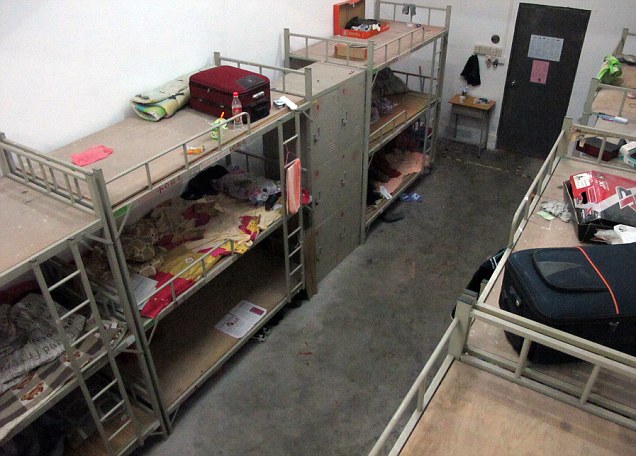
The Sensata story is emblematic of how finance capitalists, using tax laws they have <s>lobbied</s> bribed the US congress to legalize, i.e. the 15% “carried interest” loophole , have facilitated the evisceration of the United States manufacturing jobs base via outsourcing. Contrary to the perpetual lying RMoney’s claim at the Sept. 26, 2012 presidential debate, corporations DO receive tax benefits when they send American’s jobs overseas to countries where labor earns $1.00 per hour and much less, working 12 hour shifts, 7 days a week, sleeping on site in company provided barracks housing with triple bunk bed sleeping accommodations — NO benefits (healthcare, paid vacation, etc).

article-1285980-09FFBFAD000005DC-122_636x456.jpg

Chinese workers company provided housing barracks

The image above of the Chinese workers <s>housing</s> slave quarters is a 'wet dream' come true for finance capitalists. RMoney and his bankster counterparts would love to emulate this neo-slave work model in the United States. Wal-Mart is pretty close to achieving this model. Workers at Wal-Mart are paid on average $9.00 an hour. Work hours are limited to less than 35 hours per week so that few Wal-Mart employees qualify as 'full time workers'. Since the wage is so low, Wal-Mart workers qualify & receive food stamps and US government paid for medicare. When a Wal-Mart worker receives their meager wages, guess where they spend that pittance paycheck for their food and clothing? - Wal-Mart. It is the 21st century version of share cropping.

All of the information in the posts above about Sensata and the machinations of RMoney and his fellow finance capitalists is 100% correct. As I pointed out they are using tax laws they have <s>lobbied</s> bribed the US congress to legalize. Our government is a pornocracy. However in todays America if information is not presented in video format — most Americans don’t pay attention.

For example imagine if the now well-known “47% video” in which RMoney disparages half the country as deadbeats , moochers, and unwilling to take responsibility for their lives was an audio recording and not a video — it would not of had the impact that it did.

The video below explains what’s going on at Sensata in a simple to understand manner. RMoney’s Bain Capital is closing the factory and sending the “middle-class” jobs at Sensata over to China where they can pay workers $1.00 an hour for a daily 12 hour shift, seven days a week, with NO benefits (health care, paid vacation, etc.)

It’s all about GREED.

For RMoney and his fellow capitalists it’s all about making as much money as possible for themselves — FUCK everybody else. You relocate Sensata to China, utilize neo-slave labor @ $1.00 per hour, store you profits in a foreign incorporated Sensata subsidiary —(a tactic used by Google, Cisco & dozens of other US corporations) — and then at a later date repatriate the money (profits) back to the US at a 5% tax rate.

The shares of the foreign incorporated subsidiary are domiciled in a tax haven like the Cayman Islands, Bermuda, Isle-of-man etc. — this allows the owners of those shares to shield their profits from US taxes. This allows RMoney and Bain partners to pay a tax rate of 15% or less — a tax rate less than a bus driver, cop, policemen, teacher, etc. Also when you set up the foreign subsidiary you get to assign a share value of your choosing since it’s technically a new corporation. Example: You set up a Sensata foreign subsidiary incorporating in the Cayman Islands — you designate as share price of .10¢ cents per share, you put 20,000 shares of this “foreign” subsidiary of Sensata into your IRA. A few years down the road the US incorporated Sensata buys your “foreign” subsidiary shares of Sensata for let’s say $20 dollars per share — this is how a guy like RMoney has $100,000,000 ($100 Million) dollars in his IRA.

RMoney and his boys are slick banksters, they know that for 90% of Americans what I just outlined is way above their heads — and they know that the “corporate media of mass distraction” (ABC, CBS, <s>FOX</s> FAKE, NBC, CNN) would NEVER simply explain in a 30 minute television broadcast who they are to the American people.


129-OriginalBankster.jpg


When does the greed stop??

 
Last edited:
inzAf98jMbrjV.gif


As Romney Repeats Trade Message, Bain Maintains China Ties


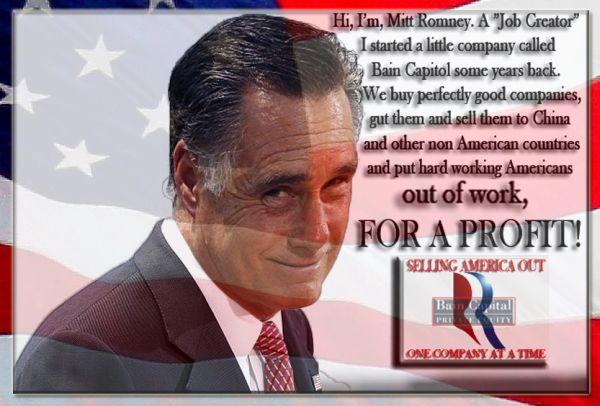
mitt-bain-sell-china.jpg


Romney_owns_stock_in_Sensata_Bainport_cropped.jpg


October 9, 2012

by SHARON LaFRANIERE and MIKE McINTIRE


http://www.nytimes.com/2012/10/10/u...in-maintains-china-ties.html?pagewanted=print


The tale of Asimco Technologies, an auto parts manufacturer whose plants dot eastern China, would seem to underscore Mitt Romney’s campaign-trail complaint that China’s manufacturing juggernaut is costing America jobs.

Nine years ago, the company bought two camshaft factories that employed about 500 people in Michigan. By 2007 both were shut down. Now Asimco manufactures the same components in China on government-donated land in a coastal region that China has designated an export base, where companies are eligible for the sort of subsidies Mr. Romney says create an unfair trade imbalance.

But there is a twist to the Asimco story that would not fit neatly into a Romney stump speech: Since 2010, it has been owned by Bain Capital, the private equity firm founded by Mr. Romney, who has as much as $2.25 million invested in three Bain funds with large stakes in Asimco and at least seven other Chinese businesses, according to his 2012 candidate financial disclosure and other documents.

That and other China-related holdings by Bain funds in which Mr. Romney has invested are a reminder of how he inhabits two worlds that at times have come into conflict during his campaign for the White House.

As a candidate, Mr. Romney uses China as a punching bag. He accuses Beijing of unfairly subsidizing Chinese exports, artificially holding down the value of its currency to keep exports cheap, stealing American technology and hacking into corporate and government computers.

“How is it China’s been so successful in taking away our jobs?” he asked recently. “Well, let me tell you how: by cheating.”

But his private equity dealings, both while he headed Bain and since, complicate that message.

Mr. Romney’s campaign insists he has no control over his investments since they are held in a blind trust. That said, a confidential prospectus for one of the Bain funds, obtained by The New York Times, promotes China as a good investment for some of the same reasons that Mr. Romney has said concern him: “Strong fundamentals” like manufacturing wages 85 percent lower than what Americans earn, vast foreign exchange reserves and the likelihood that China will surpass the United States as the world’s largest economy.

“Accordingly, Bain Capital expects to see an increasing array of high-growth companies available for investment,” the prospectus says, noting the relative dearth of private equity in China.

Among the companies in which the Bain funds have invested is a global auto parts maker that is in the process of closing a factory in Illinois and moving most of the equipment and jobs to Jiangsu Province, where the Chinese government has built it a new plant; a Chinese electronics retailer accused by Microsoft of selling computers with pirated software; and a Hong Kong-based Chinese appliance maker that was sued for copying another company’s design for a deep-fat fryer.

Asked if Mr. Romney sees any conflict between his Bain investments in China and his policy positions, the campaign said: “Only the president has the power to level the playing field with China. No private citizen can do that alone.”

The campaign said Mr. Romney put his fortune, estimated at $250 million, in a “blind trust” when he became Massachusetts governor in 2003. “The trustee of the blind trust has said publicly that he will endeavor to make the investments in the blind trust conform to Governor Romney’s positions, and whenever it comes to his attention that there is something inconsistent, he ends the investment,” the statement said.

Should Mr. Romney become president, however, the structure of the trust would most likely not meet the federal requirements for independent management. It is managed by a Boston-based law firm, Ropes & Gray, that has a long history of doing legal work for both Mr. Romney and Bain Capital, including representing some of the same Bain funds in which it invested Mr. Romney’s money.

Mr. Romney’s trustee, R. Bradford Malt, who is chairman of Ropes & Gray, declined to comment.

Bain Capital declined to comment on specific investments, but said in a statement that its Chinese holdings “are consistent with the widely accepted principle that the private sector has a critical role to play in the continuing interdependence of the world’s economies.”

For many sophisticated and wealthy investors, as well as for ordinary workers invested in pension funds, China is a part of any diversified investment strategy. President Obama, a former Illinois state senator, has as much as $100,000 in a state retirement plan that contains shares of Sensata Technologies, the same auto parts company controlled by Bain that is closing its Illinois factory.

Last year, Mr. Romney’s trust sold its stake in an array of foreign holdings, including two Chinese state-owned companies: an oil company and a bank that have done business in Iran. But Mr. Romney continues to have money in Bain funds with sizable holdings in China.

He has as much as $250,000 in the Bain Capital Asia Fund and as much as $1 million each in Bain Capital Funds IX and X, all Cayman Islands entities used by Bain to make sizable investments in China, according to the 2012 candidate financial disclosures and confidential Bain prospectuses obtained by The Times through a public records request.

Among those funds’ holdings is $234 million that Bain invested in 2009 in Gome Electrical Appliances, a major Chinese retailer that was accused by Microsoft this year of selling computers with pirated software. In 2007, Bain’s Asia fund also invested $39 million in Feixiang Group, a Chinese producer and exporter of chemicals that is a designated “state high-tech enterprise,” making it eligible for tax breaks and other government incentives. Ropes & Gray represented Bain in the partial sale of Feixiang three years later for a 53 percent return on the fund’s investment.

The Asia fund withdrew from another deal in 2008 that could have proved politically embarrassing to Mr. Romney. After the Bush administration objected, Bain dropped plans to team up with a Chinese technology giant, Huawei, to buy 3Com, a network equipment maker that supplies software and equipment to the Pentagon and other federal agencies.

The administration said intelligence reports indicated that Huawei, which was founded by a former People’s Liberation Army officer, posed “national security problems,” according to a lawsuit stemming from the deal’s collapse. A House Intelligence Committee report released Monday said Huawei continued to have troubling connections to the Chinese government, something the company denies.

Bain’s interest in China dates to when Mr. Romney ran the firm. During a panel discussion at the Federal Reserve Bank in Boston in February 1998, he told of touring an appliance factory in China where 5,000 employees “were working, working, working, as hard as they could, at rates of roughly 50 cents an hour.”

Not long afterward, a Bain affiliate, Brookside Capital Partners, acquired about 6 percent of Global-Tech Appliances, whose factory in many ways matched Mr. Romney’s description. The next year, Brookside and another Bain-related entity increased their stake to 9 percent, before selling their shares in 2000.

Just before Bain bought shares, a French firm accused Global-Tech of stealing its deep-fat fryer design. In a decision affirmed by the Supreme Court in 2011, the company was found to have willfully violated the French firm’s United States patent, selling the knockoffs even after it was sued.

Mr. Romney also has millions invested in a series of Bain funds that have a controlling stake in Sensata Technologies, a manufacturer of sensors and controls for vehicles, aircraft and electric motors that employs 4,000 workers in China. Since Bain took over the operation in 2006, its investment has quadrupled in value. Bain continues to own $2.6 billion worth of Sensata’s shares.

Two years ago, Sensata bought an operation that made automobile sensors in Freeport, Ill. At the first meeting with the plant’s 170 workers, Sensata managers announced that by the end of 2012 all the equipment and jobs would be relocated, mostly to Jiangsu Province. Workers have staged demonstrations, pleading for Mr. Romney to intervene on their behalf.

Chinese engineers, flown to Freeport for training on the equipment, described their salaries as a pittance compared with Freeport wages. Tom Gaulrapp, who has operated machines at the factory for 33 years, said he fears he will go bankrupt after he loses his job on Nov. 5.

“This goes to show the unbelievable hypocrisy of this man,” he said of Mr. Romney. “He talks about how we need to get tough on China and stop China from taking our jobs, and then he is making money off shipping our jobs there.”

It is often difficult to determine precisely how much Mr. Romney benefits from specific investments by Bain funds, since his money goes into a pool used to buy stakes in companies. In the case of Sensata, however, it is clearer because he reported a charitable donation of $405,000 in Sensata stock that he received as “partnership distributions” in 2010 and 2011, according to his tax returns.

Jiangsu Province, where most of the Freeport jobs are moving, is one of China’s designated “export bases” for auto parts. Asimco, the other auto parts manufacturer in Bain’s portfolio, also has factories in Jiangsu Province and three other regions designated as export bases.

The Chinese government incentives offered to companies in those “bases” set off a complaint from the United States to the World Trade Organization last month. The United States asserted that in 2011, China spent $1 billion on grants, tax preferences, lowered interest rates and other subsidies to increase exports of auto parts in violation of fair trade rules.

Mr. Romney has been critical of these types of Chinese incentives to bolster exports.

The state-controlled Chinese Academy of Sciences has provided free research and development to Asimco, which exports at least 15 percent of its products, primarily to the United States. The authorities also gave the company land to build the factory that replaced the plants in Grand Haven, Mich.

Asimco’s China operations became a point of contention in bankruptcy proceedings that accompanied the closing of the Michigan plants. The bankruptcy trustee said that internal Asimco e-mails showed the company had transferred money to China to qualify for a Chinese tax rebate available only to manufacturers of exported products.

Jack Perkowski, the former longtime chairman of Asimco who now advises Western companies seeking to enter the Chinese market, said Asimco never benefited from export-related subsidies because most of its customers are in China. “I honestly can’t think of anything we could have gotten that was tied to the fact we were exporting,” he said.

But the company is striving for more overseas buyers. Last year Zhang Dejiang, the Chinese vice prime minister in charge of transportation, visited an Asimco assembly line and offered encouragement to workers. According to a statement on the company’s Web site, Mr. Zhang was particularly impressed that “the company’s products can rival their Western counterparts.”


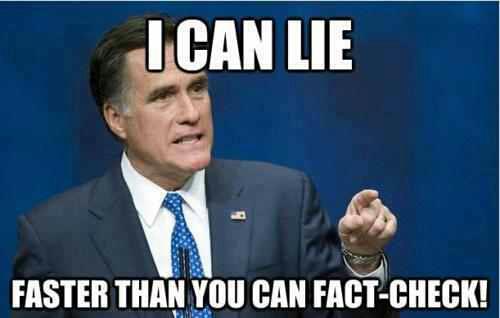
lie-faster.jpg
 
Last edited:
Back
Top