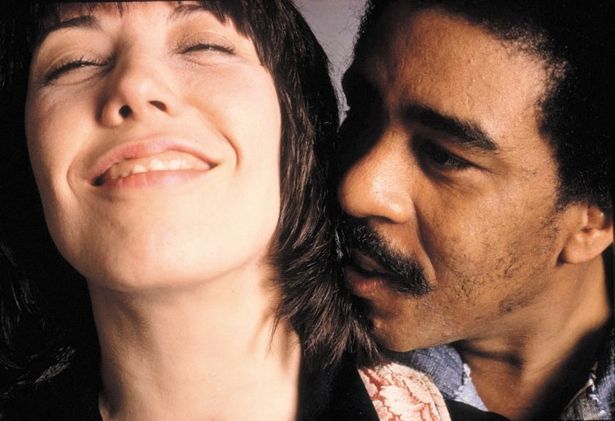
Richard Pryor


Craps (After Hours) is the second album by Richard Pryor, released in 1971 on the Laff Records label. It was released during the comedian's transitional period from a middlebrow "Cosbyized" comic into a more improvisational, socially conscious, controversial brand of raw humor that Pryor would help to pioneer during the 1970s. Several monologues from the album were repeated for Pryor's first concert film, Live & Smokin, though that movie would be held from release until 1985 as a VHS videotape. Recorded at Redd Foxx's club in Hollywood, Pryor is introduced by the emcee as "the crown prince of comedy".
 
gene-wilder-richard-pryor.jpg

rain-and-richard-pryor5.jpg

richard-pryor_main-banner_photo.jpg

23C8F7CF00000578-2862455-The_family_together_after_the_death_of_Buck_s_next_wife_Ann_who_-a-3_1418053776455.jpg


Craps (After Hours) is the second album by Richard Pryor, released in 1971 on the Laff Records label. It was released during the comedian's transitional period from a middlebrow "Cosbyized" comic into a more improvisational, socially conscious, controversial brand of raw humor that Pryor would help to pioneer during the 1970s. Several monologues from the album were repeated for Pryor's first concert film, Live & Smokin, though that movie would be held from release until 1985 as a VHS videotape. Recorded at Redd Foxx's club in Hollywood, Pryor is introduced by the emcee as "the crown prince of comedy".


You sometimes find the best shit on BGOL. Props to the OP. :yes:


He was one of the first black men ever on television. He pioneered a new brand of humor: black man impersonating white man while making fun of himself. And he was a hit. His comedy was universal. His rise to fame was nothing short of miraculous. But Richard’s comedy was a sign of the times. And in the midst of growing racial tension in the ‘60s and the free speech movement, he became increasingly dissatisfied limiting his self-expression to comedy that didn’t touch on religion, politics or race relations — let alone the “N” word. This burden of pretending to be cut from the same non-controversial comedic cloth as Bill Cosby proved too great, and in 1967 he walked off stage in Las Vegas in front of a sold-out crowd without performing. Richard’s epiphany that night would change the course of comedy forever. When Richard Pryor finally returned to the stage two years later after a sabbatical in Berkley, California, he was not the same comic nor man. He was more honest than ever with himself — and the audience — and the laughs he drew: even bigger. This raw and unfiltered Richard Pryor not only changed the course of comedy as an art form, but also changed the audience itself. And as unimaginable as his exit was in 1967, so was his rise the next decade when he became not just a genius comic but a major film star. On this all new episode of :ICON, we delve into the life and legacy of Richard Pryor — how he came up through the brothels of Peoria, Illinois, performed on the Ed Sullivan Show, got banned by the networks, and became embroiled in a pattern of self-destruction that threatened his life. This is the show that defines Richard Pryor’s lasting impact on comedy and culture, often in his own words, showing us why he is an :ICON.
 

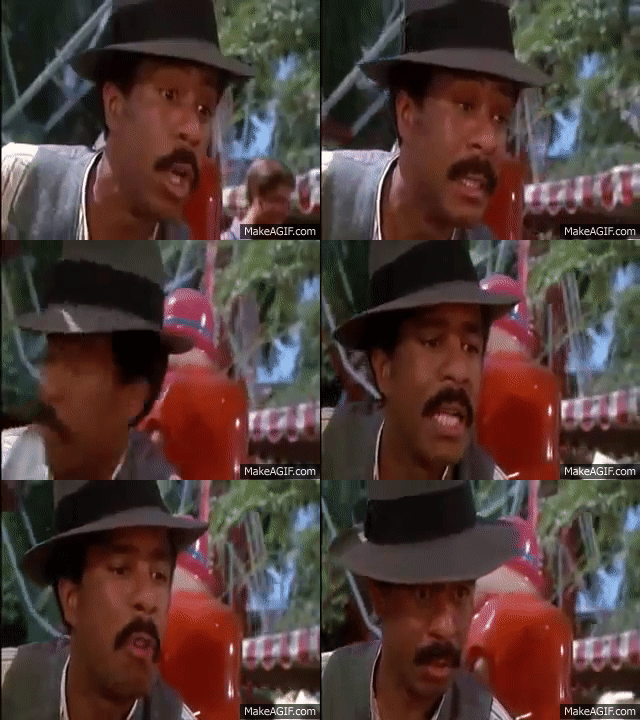
Which Way is Up? is a 1977 American comedy film starring Richard Pryor and directed by Michael Schultz. It is a remake of the 1972 Italian comedy film The Seduction of Mimi starring Giancarlo Giannini and directed by Lina Wertmüller. Richard Pryor plays three roles: an orange picker who has two women at the same time, the orange picker's father, and a Reverend who gets the orange picker's wife pregnant.

His best film to me. Shit was hilarious from start to end.

WwUtae.jpg


Craps (After Hours) is the second album by Richard Pryor, released in 1971 on the Laff Records label. It was released during the comedian's transitional period from a middlebrow "Cosbyized" comic into a more improvisational, socially conscious, controversial brand of raw humor that Pryor would help to pioneer during the 1970s. Several monologues from the album were repeated for Pryor's first concert film, Live & Smokin, though that movie would be held from release until 1985 as a VHS videotape. Recorded at Redd Foxx's club in Hollywood, Pryor is introduced by the emcee as "the crown prince of comedy".


Fiya album .....
 
Although we've seen these type tragedies before for me Richard's case hit me the hardest. All that talent and he surrounded himself with even more talent and still died a failure.

Richard had Robin William's (another tragedy), Paul Mooney and let's not forget Jim Brown, Pam Grier, Bill Cosby, Redd Foxx plus his family and love interest. An I'm sure he had hundreds of other and still he never gave himself a chance to reach and stay on top.

He was my favorite.


The Ed Sullivan Show is an American television variety show that ran on CBS from June 20, 1948, to March 28, 1971, and was hosted by New York entertainment columnist Ed Sullivan.


A Party for Richard Pryor
TV Special 1991
Legendary comedian Richard Pryor's friends and admirers host a tributary party in his honor during which clips from his movies, shows and stand ups are shown.


A Party for Richard Pryor
TV Special 1991
Legendary comedian Richard Pryor's friends and admirers host a tributary party in his honor during which clips from his movies, shows and stand ups are shown.

Damn I never knew about this. Thanks for posting

km5uNt.jpg
 
richard-pryor-ally-sheedy-and-gene-wilder-at-the-premiere-of-see-no-evil-hear-no-evil-cineplex.jpg

richard-pryor-ally-sheedy-and-gene-wilder-at-the-premiere-of-see-no-evil-hear-no-evil-cineplex.jpg

Richard Pryor, Ally Sheedy, and Gene Wilder at the Premiere of 'See No Evil, Hear No Evil', Cineplex Odeon Century Plaza Cinemas, Century City.
 
Back
Top