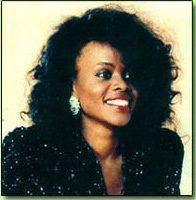

PhD Sista at Harvard Fired For Warning Larry Summers About Derivatives Risk

Makkonnen

The Quizatz Haderach
BGOL Investor
http://tpmmuckraker.talkingpointsme...ored_frightening_trading_practice.php?ref=fp1
(more links to other articles in the original document)
summers-mack-fullwell-expires.jpg


iris-mack-muck.jpg

Harvard Derivatives Whiz Fired For Emailing Larry Summers About "Frightening" Trades?
By Moe Tkacik - April 1, 2009, 1:31PM

A former quantitative analyst at Harvard Management Company, the university's once-vaunted endowment manager, tells the Harvard Crimson she was fired for voicing concern to then-university president Larry Summers' chief of staff about the money manager's risky use of derivatives the traders didn't understand.

The episode dates back to 2002, when analyst Iris Mack, whose website identifies her as the second African American woman to earn a Harvard PhD. in applied math (and someone who likes primary colors) joined the much-venerated Harvard Management Company, which invests the university's then $18 billion endowment, to find what she termed a "frightening" state of affairs.

"The group I was working for had no background whatsoever to be working on [derivatives]," Mack says, adding that, to her knowledge, several of her colleagues were not licensed securities traders. "Sometimes the ways they handled even basic Black-Scholes models [widely used to price stock options] were puzzling."

So Mack took inventory of the abuses -- high employee turnover, lax risk management practices and a "low level of productivity in the workplace" were among others, and detailed them in an email to Marne Levine, Summers' chief of staff and a Treasury staffer on the Obama Transition Team. (Summers was the only person to whom Meyers reported, and according to a recent Forbes story he personally ordered the university's biggest derivatives trade, a purchase of interest rate swaps that cost the university billions this year.)

A month after sending her email, Mack was fired after a meeting in which the endowment fund's then-chief furnished her the emails and castigated her for making "baseless accusations." She later sued for wrongful termination and settled out-of-court with the university. But she claims the practices "shocked" her, and -- the punchline is -- she had joined the company from Enron.

Which is also to say, lest you dismiss Mack as an opportunistic snitch capitalizing on Summers fateful opposition to regulating the derivatives that wreaked havoc on the financial system, she had a pretty valid reason to believe in the importance of whistleblowing.
"I'm not trying to pretend I'm omniscient or anything, but a lot of people who were quantitative traders, in the back of our minds, we knew a lot of these models were just that: guestimates," Mack says. "I have mixed feelings, on the one hand, I wasn't crazy, I knew what I was talking about. But maybe if more and more people had spoken up, the economy wouldn't be the way it is now."

Mack is doing her part to affect change: she's a vociferous advocate of better math education for minorities and like FDIC chairman Sheila Bair, the writer of a children's book. It's called Mama Says Money Don't Grow On Trees (sequel idea: *...Unless You Are A Monstrously Overleveraged Bank With Access To The Federal Reserve Discount Window!).

If Mack's allegations are true Harvard certainly paid the price for its recklessness: Summers' swaps sowed the seeds for a financial disaster at HMC:

It doesn't feel good to be borrowing at 6% while holding assets with negative returns. Harvard has oversize positions in emerging market stocks and private equity partnerships, both disaster areas in the past eight months. The one category that has done well since last June is conventional Treasury bonds, and Harvard appears to have owned little of these. As of its last public disclosure on this score, it had a modest 16% allocation to fixed income, consisting of 7% in inflation-indexed bonds, 4% in corporates and the rest in high-yield and foreign debt.

For a long while Harvard's daring investment style was the envy of the endowment world. It made light bets in plain old stocks and bonds and went hell-for-leather into exotic and illiquid holdings: commodities, timberland, hedge funds, emerging market equities and private equity partnerships. The risky strategy paid off with market-beating results as long as the market was going up. But risk brings pain in a market crash. Although the full extent of the damage won't be known until Harvard releases the endowment numbers for June 30, 2009, the university is already working on the assumption that the portfolio will be down 30%, or $11 billion.
Mack's boss at HMC, Jack Meyer, parted ways with the university in 2005. His bets were still paying off but his relationship with Summers had reportedly cooled -- among other things, over alumni outcry led by the university's Class of 1969 over the hedge fund-sized bonuses being awarded to employees of a supposed nonprofit. But if there's anything we've learned from the past year, gratuitous compensation and gratuitous risk go hand-in-hand.

"The events of the last year show that the whole procedure of rewarding people so handsomely based on increases on paper value of the endowment was deeply flawed," says a spokesman for the [Class of 1969], which recently sent a letter to the Harvard president suggesting HMC staffers return $21 million of their latest bonuses. "Even now we don't really know how well it has done in the last ten years."
 
If she was so smart, why did she worked for two failed operations, Enron and Harvard Management Company.

She sounds like just another hot-shot bureaucrat who adds no value to anyone's life but her own.
 
If she was so smart, why did she worked for two failed operations, Enron and Harvard Management Company.

She sounds like just another hot-shot bureaucrat who adds no value to anyone's life but her own.

damn Cruise, she was doing the right thing! Where is the anger towards Summers?
 
damn Cruise, she was doing the right thing! Where is the anger towards Summers?

The tone of the article is that she should get credit for forseeing this as if she is so smart.

The article called her a "whiz" and she has a PhD and she is from Harvard like any of that means anything in scam fields like banking, insurance, and finance.

She got her payday and she gets to talk about how she was so smart about seeing the warning signs.

I would have been more impressed if she told them to keep their payoff, went to the media before everything fell apart, and took the principled stand of letting everyone know what was happening.

This after the fact stuff just makes her look like an opportunist (along with the rest of the white boys) trying to capitalize on a tragic situation.

I wouldn't be surprised if this idiot writes a book.

whose website identifies her as the second African American woman to earn a Harvard PhD

Now, that's an ego.
 
I guess it's clear why this whole financial fraud lasted 20 years.

People like this woman.

Her whole life has been devoted to this BS financial system. This doomed financial system.

The next decade will bring the new reality which will expose people like her and her white boy masters for the con-artists they are.

If this woman is impressive to you, then welcome to the past.
 
The tone of the article is that she should get credit for forseeing this as if she is so smart.

The article called her a "whiz" and she has a PhD and she is from Harvard like any of that means anything in scam fields like banking, insurance, and finance.

She got her payday and she gets to talk about how she was so smart about seeing the warning signs.

I would have been more impressed if she told them to keep their payoff, went to the media before everything fell apart, and took the principled stand of letting everyone know what was happening.

This after the fact stuff just makes her look like an opportunist (along with the rest of the white boys) trying to capitalize on a tragic situation.

I wouldn't be surprised if this idiot writes a book.


Now, that's an ego.

I first noticed the attitude towards Mr. Obama.

Now, against another of ours, without apparent reason.

icon3.gif


QueEx
 
I first noticed the attitude towards Mr. Obama.

Now, against another of ours, without apparent reason.

icon3.gif


QueEx

Amen.

They are black so that makes them easy targets for white hate and their sympathizers. It doesn't feel like hate if it's got the white mans seal of approval.

-VG
 
:lol:

Your unwarranted hatred of her is an indictment of your own character.


And, I suppose your comments are an indictment on your character.

You see, when you try to make things personal (and you don't know me), we can have the ad hominem attacks all day, instead of sticking with the topic under discussion. :smh:

Oh, well, I guess it's to be expected. :cool:
 
Last edited:
Who's bio is not full of accomplishments and accolades?

But I do agree that it's all convenient to accept the bonuses that came about and then come out AFTER the economy has crashed and say "Aha, I told ya so" in promotion of a new book.

However, anyone trying to educate our youth about finances gets my applause and my full support WHATEVER the motivation.

Them Harvard bitches are crazy though.

This type of junk doesn't happen at MY alma mater. :rolleyes:
 
I don't know - something about this just doesn't seem right.

To hear her story, she sent one critical email and got fired. Seven years later in retrospect, it seems her suggestions woulda coulda shoulda been better in a 2009 economy. But up until 2008, everything was financially profitable, and virtually every school endowment has seen the bottom fall out over the past two years. Harvard's just fell harder because they had been flying higher all along, profiting more with the riskier investments.

Her resume says she had FIVE different nonacademic jobs between 2000-2002; the HMC was in between all of those and only lasted a few months. And her current website is suspect as fuck, with the same two 1980's looking pics everywhere (Google for more recent pics of someone born in the mid 1950's). And she has virtually NO peer reviewed published research for someone who has supposedly been teaching school throughout her "career".

But now all of the sudden she is everywhere screaming "I told you so!" to get some shine and market herself as the new financial Nostradomas. A broken clock is right twice a day, and the team she worked for had all been long gone - her boss left in 2005 and Summers left in 2006. Did the replacements see her email? How much money was gained before last year?

I am NOT calling her a liar or denigrating her old achievements (although NASA was 20+ years ago and Glamour was 30+ years ago). I simply feel that we are only seeing her version of her painting of her on paper history, but an unbiased review of her resume and her "facts" might lead to a VERY different conclusion.
 
And, I suppose your comments are an indictment on your character.

You see, when you try to make things personal (and you don't know me), we can have the ad hominem attacks all day, instead of sticking with the topic under discussion. :smh:

Oh, well, I guess it's to be expected. :cool:

You have a horrible disposition Cruise.

At first I thought you were an objective voice on these forums, but it seems like you have some kind of agenda beyond trashing our financial system. The woman is high on herself, yes, but her accomplishments afford her a little leeway in the ego department.
 
Who's bio is not full of accomplishments and accolades?

But I do agree that it's all convenient to accept the bonuses that came about and then come out AFTER the economy has crashed and say "Aha, I told ya so" in promotion of a new book.

However, anyone trying to educate our youth about finances gets my applause and my full support WHATEVER the motivation.

Them Harvard bitches are crazy though.

This type of junk doesn't happen at MY alma mater. :rolleyes:

I don't know if I want a former Enron employee or "derivatives expert" teaching anyone about finances. :rolleyes:

You have a horrible disposition Cruise.

At first I thought you were an objective voice on these forums, but it seems like you have some kind of agenda beyond trashing our financial system. The woman is high on herself, yes, but her accomplishments afford her a little leeway in the ego department.

She strikes me as a self-promoter, name-dropper, hanger-on, or groupie. I don't mind as long as they stay in the shadows and know their place. But, when they try to present themselves as an authority, it really irritates me. This is especially true when you are talking about the financial markets. :angry:

Why? They try to jump in line in front of those who took the unpopular stance, bore the slings-and-arrows, were mocked and ridiculed, but stood their ground and held to principle. Now that they are getting credit, she wants to act like she was there along.

This woman just strikes me as a POS by comparison. I despise opportunists.
 
And, I suppose your comments are an indictment on your character.

:lol: If holding you to your own standard is an indictment of my character - oh well.


You see, when you try to make things personal (and you don't know me), we can have the ad hominem attacks all day, instead of sticking with the topic under discussion. :smh:

You see, that's even more hilarious since you didn't argue against any points made by her on topic and went straight at the woman's character.
Oh, well, I guess it's to be expected. :cool:


It must be what you expect since you began with the ad hominem line against Dr. Mack rather than going after her assertions on derivatives and Harvard's finances.
 
I don't know if I want a former Enron employee or "derivatives expert" teaching anyone about finances. :rolleyes:


She strikes me as a self-promoter, name-dropper, hanger-on, or groupie. I don't mind as long as they stay in the shadows and know their place. But, when they try to present themselves as an authority, it really irritates me. This is especially true when you are talking about the financial markets. :angry:

Why? They try to jump in line in front of those who took the unpopular stance, bore the slings-and-arrows, were mocked and ridiculed, but stood their ground and held to principle. Now that they are getting credit, she wants to act like she was there along.

This woman just strikes me as a POS by comparison. I despise opportunists.

:lol: So there we have it. She's stealing someone else's shine because someone is telling her 7yr old story. You're ridiculous.

Maybe if you removed the chip from your shoulder you could read the part of the story where she was quoted as saying
"I'm not trying to pretend I'm omniscient or anything, but a lot of people who were quantitative traders, in the back of our minds, we knew a lot of these models were just that: guestimates," Mack says. "I have mixed feelings, on the one hand, I wasn't crazy, I knew what I was talking about. But maybe if more and more people had spoken up, the economy wouldn't be the way it is now."

To suggest someone with a doctorate in applied mathematics can't figure out the math behind derivatives trading is pretty stupid. To suggest that all Enron employees regardless of position and power within the company somehow are responsible for the actions of executives and energy market traders makes no sense.
Why attack her personally with shitty arguments? Oh because she wasn't ridiculed throughout the years and persecuted for her stance?

I'd say that unless her bio details every aspect of her life since 2002, you don't know shit that has gone on in her life because of her attempt to warn Larry Summers about the very same activity he is supposed to deal with now on a federal level. Well that is, except for the loss of her job and Harvard settling out of court with her. If she is full of shit Im sure the Harvard Crimson would have plenty of Harvard folks around to contradict her right?

Rather than taking the story for what it is, something to make you yet again question Larry Summers' expertise and management skills, you took it as an opportunity to blast some anonymous PhD chick because she has a shitty website or a self-promoting bio. :smh:


edit *********
I'm leaving that up there because I just now read her bio. She was in fact an Enron fuckin Energy Trader
:lol::lol::lol::lol::lol::lol::lol::lol::lol::lol::lol::lol::lol::lol::lol::lol::lol:

My apologies Cruise. That does not mean she's a criminal but...........

That still doesnt warrant the responses you made but they are understandable.


Late update on that story - Newsweek had an article coming out on this and it has been shelved.
 
Last edited:
:lol: So there we have it. She's stealing someone else's shine because someone is telling her 7yr old story. You're ridiculous.

Maybe if you removed the chip from your shoulder you could read the part of the story where she was quoted as saying


To suggest someone with a doctorate in applied mathematics can't figure out the math behind derivatives trading is pretty stupid. To suggest that all Enron employees regardless of position and power within the company somehow are responsible for the actions of executives and energy market traders makes no sense.
Why attack her personally with shitty arguments? Oh because she wasn't ridiculed throughout the years and persecuted for her stance?

I'd say that unless her bio details every aspect of her life since 2002, you don't know shit that has gone on in her life because of her attempt to warn Larry Summers about the very same activity he is supposed to deal with now on a federal level. Well that is, except for the loss of her job and Harvard settling out of court with her. If she is full of shit Im sure the Harvard Crimson would have plenty of Harvard folks around to contradict her right?

Rather than taking the story for what it is, something to make you yet again question Larry Summers' expertise and management skills, you took it as an opportunity to blast some anonymous PhD chick because she has a shitty website or a self-promoting bio. :smh:


edit *********
I'm leaving that up there because I just now read her bio. She was in fact an Enron fuckin Energy Trader
:lol::lol::lol::lol::lol::lol::lol::lol::lol::lol::lol::lol::lol::lol::lol::lol::lol:

My apologies Cruise. That does not mean she's a criminal but...........

That still doesnt warrant the responses you made but they are understandable.


Late update on that story - Newsweek had an article coming out on this and it has been shelved.

I worked for Enron, there were a handful, maybe 20 traders (managers) out of maybe 500-600 that engaged in anything suspect that would indicate they knew shit about what was going on. My biggest beef against Enron traders is that they were never "traders" to start out with because the damn software they used literally had a red light/ green light system that told them when to initiate a trade or not (red means no, green means yes). Between that and the fact that the "market" they traded in was a closed market where Enron controlled both ends of every trade (they bought at THEIR price, they sold at THEIR price). Being an Enron trader means you got to make a lot of money doing one of the cushiest jobs on Earth at the time, but it doesn't mean she participated in shit but her job.

I'm proud I worked at Enron because Enron was known for hiring the BEST in the industry and having it on my resume has put me ahead of the game. Hell, I even got one of those retention bonuses (with YOUR tax dollars Cruise) to hang around an extra year after they failed and help close up shop. If old girl was working there, it only ENHANCES her props (in the eyes of those who value an intelligent person who is up on her shit, not you of course Cruise because any negro beyond a 9th grade education is a "sellout" to you).

Cruise sounds as irrational in this post as he has in his million wild-eyed Obama posts in which he also made it a point to mention that he has disdain for anyone with a high-powered education (anybody else recall that when all the layers of rationalization were peeled away, Cruise's beef with Obama was basically him being a Harvard grad). It's like a brotha or sista has to work their way up from community college to not be a sellout in dude's eyes (like a smart cat is wrong for capitalizing on his intelligence).
 
I worked for Enron, there were a handful, maybe 20 traders (managers) out of maybe 500-600 that engaged in anything suspect that would indicate they knew shit about what was going on. My biggest beef against Enron traders is that they were never "traders" to start out with because the damn software they used literally had a red light/ green light system that told them when to initiate a trade or not (red means no, green means yes). Between that and the fact that the "market" they traded in was a closed market where Enron controlled both ends of every trade (they bought at THEIR price, they sold at THEIR price). Being an Enron trader means you got to make a lot of money doing one of the cushiest jobs on Earth at the time, but it doesn't mean she participated in shit but her job.

I was wondering when you'd appear. :rolleyes:

Your explanation doesn't mean she's innocent. Either way, she worked for a financial services company that had the largest bankruptcy in world history at the time.

That is not the person I want giving financial advice.

I'm proud I worked at Enron because Enron was known for hiring the BEST in the industry and having it on my resume has put me ahead of the game. Hell, I even got one of those retention bonuses (with YOUR tax dollars Cruise) to hang around an extra year after they failed and help close up shop. If old girl was working there, it only ENHANCES her props (in the eyes of those who value an intelligent person who is up on her shit, not you of course Cruise because any negro beyond a 9th grade education is a "sellout" to you).

This is all coming from the unbiased ex-Enron employee.

Don't you think this sounds just a bit self-serving.

Cruise sounds as irrational in this post as he has in his million wild-eyed Obama posts in which he also made it a point to mention that he has disdain for anyone with a high-powered education (anybody else recall that when all the layers of rationalization were peeled away, Cruise's beef with Obama was basically him being a Harvard grad). It's like a brotha or sista has to work their way up from community college to not be a sellout in dude's eyes (like a smart cat is wrong for capitalizing on his intelligence).

I have disdain for people who think their "education" is better than other people's. It leads to arrogance, presumptuousness, and obstinacy.

Can't tell them nothing. :D

It's like a brotha or sista has to work their way up from community college to not be a sellout in dude's eyes (like a smart cat is wrong for capitalizing on his intelligence).

If you are so "smart" and have such a great "education" from the "best" schools, why not create alternatives to this politically-driven, bureaucratic, doomed financial system?

Instead, you try to profit from it. That doesn't sound "smart" to me, it sounds greedy.

Why not...

Create a currency (without Federal Reserve Notes)...
Create a depository institution (without FDIC and Fed oversight)
Create a monetary base (without debt)...
Create local trade exchanges and commodity markets (without SEC oversight)...
Create financial education systems showing how ridiculous this current monetary system is (without the Ivy League/State school propaganda)...
Create alternative insurance mechanisms or finance/credit bureaus (without FICO, NCUA, TRW, Equifax)


Instead of the so-called "smart" people developing autonomy/alternatives, they just ran to get a job with whitey. And, what has that gotten us?

It tickles me you are proud to have worked at Enron. :)
 
My interview for Harvard worked at Enron and I feel he gave me bad reviews because I was Black. He was a dick and he was late to our interview.

Fuck Enron and fuck Harvard.

I dont even think she's trying to say "I told you so".
 
Harvard: the Inside Story of Its Finance Meltdown

Source

The superstars at Harvard defied markets for years-- until now. Here's the inside story of how they finally tripped up.


Stocks were tumbling last fall as the new school year began, but at Harvard University it was as if the boom had never ended. Workers were digging across the river from Harvard's Cambridge, Mass. home, the start of a grand expansion that was to eventually almost double the size of the university. Budgets were plump, and students from middle-class families were getting big tuition breaks under an ambitious new financial aid program. The lavish spending was made possible by the earnings from Harvard's $36.9 billion endowment, the world's largest. That pot was supposed to be good for $1.4 billion in annual earnings.

Behind the scenes, though, a different story was unfolding. In a glassed-walled conference room overlooking downtown Boston, traders at Harvard Management Co., the subsidiary that invests the school's money, were fielding questions from their new boss, Jane Mendillo, about exotic financial instruments that were suddenly backfiring. Harvard had derivatives that gave it exposure to $7.2 billion in commodities and foreign stocks. With prices of both crashing, the university was getting margin calls--demands from counterparties (among them, jpmorgan Chase and Goldman Sachs (nyse: GS - news - people )) for more collateral. Another bunch of derivatives burdened Harvard with a multibillion-dollar bet on interest rates that went against it.

It would have been nice to have cash on hand to meet margin calls, but Harvard had next to none. That was because these supremely self-confident money managers were more than fully invested. As of June 30 they had, thanks to the fancy derivatives, a 105% long position in risky assets. The effect is akin to putting every last dollar of your portfolio to work and then borrowing another 5% to buy more stocks.

Desperate for cash, Harvard Management went to outside money managers begging for a return of money it had expected to keep parked away for a long time. It tried to sell off illiquid stakes in private equity partnerships but couldn't get a decent price. It unloaded two-thirds of a $2.9 billion stock portfolio into a falling market. And now, in the last phase of the cash-raising panic, the university is borrowing money, much like a homeowner who takes out a second mortgage in order to pay off credit card bills. Since December Harvard has raised $2.5 billion by selling IOUs in the bond market. Roughly a third of these Harvard bonds are tax exempt and carry interest rates of 3.2% to 5.8%. The rest are taxable, with rates of 5% to 6.5%.

It doesn't feel good to be borrowing at 6% while holding assets with negative returns. Harvard has oversize positions in emerging market stocks and private equity partnerships, both disaster areas in the past eight months. The one category that has done well since last June is conventional Treasury bonds, and Harvard appears to have owned little of these. As of its last public disclosure on this score, it had a modest 16% allocation to fixed income, consisting of 7% in inflation-indexed bonds, 4% in corporates and the rest in high-yield and foreign debt.

For a long while Harvard's daring investment style was the envy of the endowment world. It made light bets in plain old stocks and bonds and went hell-for-leather into exotic and illiquid holdings: commodities, timberland, hedge funds, emerging market equities and private equity partnerships. The risky strategy paid off with market-beating results as long as the market was going up. But risk brings pain in a market crash. Although the full extent of the damage won't be known until Harvard releases the endowment numbers for June 30, 2009, the university is already working on the assumption that the portfolio will be down 30%, or $11 billion.

The strain of market turmoil is visible in staff turnover at the management company, which axed 25% of its staff recently and is on its fifth chief in four years. Mendillo, 50, came to Harvard last July after running Wellesley's small endowment. She declines to comment. But how much blame she should get is unclear; the big bets on derivatives and exotic holdings were in place before she got there. The bad bet on interest rates--a swap in which Harvard was paying a high fixed interest rate and collecting a low short-term rate--goes back to a mandate from former Harvard president Lawrence Summers.

Comment On This Story

Jack R. Meyer, 64, a revered money manager who headed Harvard's endowment until 2005, offers a few guarded comments. "The liquidity thing most concerns me--that should not have happened," he says. Though he wasn't there at the time, Meyer says Harvard Management bought the commodity and foreign stock derivatives as a way to get exposure to those asset classes while freeing up cash to put to work elsewhere. The strategy, he says, "drained liquidity" from the endowment in recent months. "Many endowments stretched too far, and I think Harvard did as well," he says.

The endowment will remain stretched. Harvard has been counting on it to fund more than a third of its $3.5 billion operating budget. Assuming the fiscal year ends with around a $24 billion endowment value, the university will be drawing down half again as high a percentage of its assets as it did in 2004, the last time the endowment was around that size. That can't go on forever. The strain on liquidity will continue, as the private equity partnerships compel Harvard to meet billions in capital calls in future years.

Why not just unload those partnerships along with the liabilities that stick to them? Because no one wants to buy them. Private equity stakes like Harvard's are selling at 40% to 60% discounts in various markets. "Endowments will be shocked at the valuations of their [private equity] portfolios," says Stewart Massey, an endowment consultant at Massey Quick. "It's going to be an absolute bloodbath."

Harvard's woes are in some ways no different from those at other universities or in the market generally (the S&P 500 is down 37% since last July 1). "A loss in these kinds of markets is inevitable," says Michael Eisenson, a former HMC staffer who now runs private equity firm Charlesbank. The average endowment is down 23% in the five months through November, according to a university trade group.

But Harvard was supposed to be different. In the 15 years through last June it returned an annual 15.7% versus 9.2% for the S&P. Meyer landed at Harvard in 1990 after scoring big investment returns at the Rockefeller Foundation. In an unorthodox move for an endowment chief, Meyer built a Wall Street-like trading operation and managed most of HMC's money in-house. It looked like a giant hedge fund, and it had paychecks to match. A high-level HMC manager would make as much as $35 million in good years. Those sums triggered what became an annual Harvard tradition: first, the disclosure (compelled by tax laws applying to nonprofits) of the HMC bonuses, followed by an outcry led by the late William Strauss and a group of Harvard alumni from his class of 1969.

HMC not only became a place to make big bonuses, it was also where you could make a name for yourself and become a "crimson puppy," meaning launching your own private equity firm or hedge fund with Harvard's backing. One of the puppies, Jeffrey Larson, left in 2004 to start Sowood Capital. That pile of smart money cratered in 2007, losing $350 million for Harvard.
 
Back
Top