
Install the app
How to install the app on iOS
Follow along with the video below to see how to install our site as a web app on your home screen.
Note: This feature may not be available in some browsers.
You are using an out of date browser. It may not display this or other websites correctly.
You should upgrade or use an alternative browser.
You should upgrade or use an alternative browser.
Nigeria; Christian, Muslim Violence
- Thread starter QueEx
- Start date


That place is getting out of control man.....
Why another man should give two shits as to what god another man prays or does not pray to has me perplexed!!!!
They should be outraged that their president has been missing in action for more than 3 months, no one knows if he is alive or dead. That has far more serious consequences for their lives
Why another man should give two shits as to what god another man prays or does not pray to has me perplexed!!!!
They should be outraged that their president has been missing in action for more than 3 months, no one knows if he is alive or dead. That has far more serious consequences for their lives
Come on, Charlie, you weren't born yesterday.
white hates black
muslim hates jew
skinny hates fat
straight hates gay
republican hates democratic
etc.
Fundamental to human nature is to hate that which is different. Simple. And that will never change.
I didn't say it would change, I just said it perplexes me.....

<font size="5"><center>
Explainer: What's behind slaughter in Nigeria?</font size></center>
c a b l e n e w s n e t w o r k
By Hilary Whiteman, CNN
March 10, 2010
Gangs of machete-wielding Muslims have been blamed for the weekend slaughter of hundreds of Christian villagers in Nigeria, but analysts say it would be wrong to assume the conflict was rooted in religion.
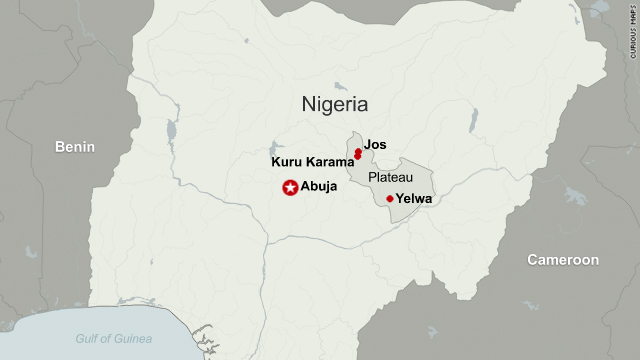
Men armed with guns, knives and machetes launched a pre-dawn attack on the villages of Dogo Nahawa, Zot, and Ratsat, south of the city of Jos, on Sunday, setting fire to homes and killing at least 200 people.
Are you there? Send your video, images to iReport
The government, led by acting President Goodluck Jonathan, has issued a red alert for the region amid fears of revenge attacks and calls for justice by the United Nations and Human Rights Watch.
<font size="4">Who were the attackers?</font size>
Survivors told Human Rights Watch that the masked men who stormed their village were speaking Hausa and Fulani, the languages of mostly Muslim nomadic herdsman who originate from the north. Some say they recognized the voices of their attackers as people who used to live there.
The Fulanis are Muslim herdsmen who move long distances to graze their cattle. "You've got Fulanis all the way up and down West Africa, all the way from Guinea which is seen as their ancestral home all the way down into Cameroon. Those who have lived in Jos have tended to mix together with the Hausa population which is predominantly in southern Niger and northern Nigeria," said Corinne Dufka, senior West Africa researcher at Human Rights Watch.
Jos is a majority Christian town dominated by the Berom, Anaguta, and Afisare ethnic groups. They are peasant farmers with strong ancestral ties to the land.
During the country's military rule which ended in 1999, Muslims were appointed as the city's local representative, which bred resentment among the local Christian population, according to Human Rights Watch.
Jos is located in the Plateau State which straddles the majority Muslim region to the north, and Christian-dominated areas to the south. More than 50 ethnic groups reside there leading to flare-ups between rival groups.
<font size="4">What was the reason for the March 7 attack?</font size>
Some analysts believe the weekend slaughter was a revenge attack for the killing of around 150 members of the Hausa Muslim community by Christian mobs in Kuru Karama, south of Jos, in January 2010.
Dufka says the January attack may have played a part, but it was impossible to rule out the escalation of a minor, local issue into mass murder. It has happened before.
In September 2001, simmering tension erupted into violence leading to the deaths of 1,000 Christians and Muslims after what seemed to be a relatively minor incident.
A Christian woman had tried to cross the road through a group of Muslims during Friday prayers, according to Human Rights Watch. It came soon after a Hausa Muslim was given a relatively minor post in the local council as "poverty eradication co-ordinator," inflaming local ethnic tensions.
In February 2004, allegations of cattle theft led to the murder of around 700 Muslims and Christians in the city of Yelwa. Again in November 2008, several hundred more people of both religions were killed after disputed local elections in Jos.
Dufka says the government's strategy of creating tolerance through community dialog is clearly not working.
"They have been having community dialog and peace building exercises since 2001. What is really worrying is these cycles of violence are getting closer and closer together," she said.
Human Rights Watch says the violence is a product of "the politics of scarcity."
The ethnic groups are fighting for land, resources, job and opportunities in a region stricken by poverty. IHS Global Insight says economic difficulties have exacerbated past tensions. For example, local tensions increased with rising unemployment after the introduction of Sharia law in some northern states in 1999.
<font size="4">What is the government doing?</font size>
The Nigerian government has a poor record of ensuring the perpetrators of mass violence are brought to account. In previous incidences mentioned above arrests have been made, but nobody has been brought to trial, according to Human Rights Watch.
Over the last few months, Nigeria has been in a state of political turmoil following the absence of President Umaru Yar'Adua who left the country last November for medical treatment in Saudi Arabia.
Yar'Adua returned to the country last month, but not before his power was passed to Vice President Jonathan after angry protests in the capital Abuja.
The United Nations has called for authorities to tackle the underlying causes of the tension in the Plateau State.
"The job facing the security forces and the judiciary is extremely sensitive," said U.N. High Commissioner for Human Rights Navi Pillay. "It is important to avoid stimulating new resentments, while at the same time ensuring that those responsible for these atrocious acts do not escape justice."
In a research note, IHS Global Insight Africa political analyst Kissy Agyeman-Togobo said Jonathan must find long-term solutions rather than "papering over the deep-seated divisions with cosmetic, short-term answers.
"Otherwise, there is genuine concern that hostilities could resurrect."
http://www.cnn.com/2010/WORLD/africa/03/09/nigeria.violence.explainer/index.html?iref=allsearch
Explainer: What's behind slaughter in Nigeria?</font size></center>
c a b l e n e w s n e t w o r k
By Hilary Whiteman, CNN
March 10, 2010
Gangs of machete-wielding Muslims have been blamed for the weekend slaughter of hundreds of Christian villagers in Nigeria, but analysts say it would be wrong to assume the conflict was rooted in religion.
Men armed with guns, knives and machetes launched a pre-dawn attack on the villages of Dogo Nahawa, Zot, and Ratsat, south of the city of Jos, on Sunday, setting fire to homes and killing at least 200 people.
Are you there? Send your video, images to iReport
The government, led by acting President Goodluck Jonathan, has issued a red alert for the region amid fears of revenge attacks and calls for justice by the United Nations and Human Rights Watch.
<font size="4">Who were the attackers?</font size>
Survivors told Human Rights Watch that the masked men who stormed their village were speaking Hausa and Fulani, the languages of mostly Muslim nomadic herdsman who originate from the north. Some say they recognized the voices of their attackers as people who used to live there.
The Fulanis are Muslim herdsmen who move long distances to graze their cattle. "You've got Fulanis all the way up and down West Africa, all the way from Guinea which is seen as their ancestral home all the way down into Cameroon. Those who have lived in Jos have tended to mix together with the Hausa population which is predominantly in southern Niger and northern Nigeria," said Corinne Dufka, senior West Africa researcher at Human Rights Watch.
Jos is a majority Christian town dominated by the Berom, Anaguta, and Afisare ethnic groups. They are peasant farmers with strong ancestral ties to the land.
During the country's military rule which ended in 1999, Muslims were appointed as the city's local representative, which bred resentment among the local Christian population, according to Human Rights Watch.
Jos is located in the Plateau State which straddles the majority Muslim region to the north, and Christian-dominated areas to the south. More than 50 ethnic groups reside there leading to flare-ups between rival groups.
<font size="4">What was the reason for the March 7 attack?</font size>
Some analysts believe the weekend slaughter was a revenge attack for the killing of around 150 members of the Hausa Muslim community by Christian mobs in Kuru Karama, south of Jos, in January 2010.
Dufka says the January attack may have played a part, but it was impossible to rule out the escalation of a minor, local issue into mass murder. It has happened before.
In September 2001, simmering tension erupted into violence leading to the deaths of 1,000 Christians and Muslims after what seemed to be a relatively minor incident.
A Christian woman had tried to cross the road through a group of Muslims during Friday prayers, according to Human Rights Watch. It came soon after a Hausa Muslim was given a relatively minor post in the local council as "poverty eradication co-ordinator," inflaming local ethnic tensions.
In February 2004, allegations of cattle theft led to the murder of around 700 Muslims and Christians in the city of Yelwa. Again in November 2008, several hundred more people of both religions were killed after disputed local elections in Jos.
Dufka says the government's strategy of creating tolerance through community dialog is clearly not working.
"They have been having community dialog and peace building exercises since 2001. What is really worrying is these cycles of violence are getting closer and closer together," she said.
Human Rights Watch says the violence is a product of "the politics of scarcity."
The ethnic groups are fighting for land, resources, job and opportunities in a region stricken by poverty. IHS Global Insight says economic difficulties have exacerbated past tensions. For example, local tensions increased with rising unemployment after the introduction of Sharia law in some northern states in 1999.
<font size="4">What is the government doing?</font size>
The Nigerian government has a poor record of ensuring the perpetrators of mass violence are brought to account. In previous incidences mentioned above arrests have been made, but nobody has been brought to trial, according to Human Rights Watch.
Over the last few months, Nigeria has been in a state of political turmoil following the absence of President Umaru Yar'Adua who left the country last November for medical treatment in Saudi Arabia.
Yar'Adua returned to the country last month, but not before his power was passed to Vice President Jonathan after angry protests in the capital Abuja.
The United Nations has called for authorities to tackle the underlying causes of the tension in the Plateau State.
"The job facing the security forces and the judiciary is extremely sensitive," said U.N. High Commissioner for Human Rights Navi Pillay. "It is important to avoid stimulating new resentments, while at the same time ensuring that those responsible for these atrocious acts do not escape justice."
In a research note, IHS Global Insight Africa political analyst Kissy Agyeman-Togobo said Jonathan must find long-term solutions rather than "papering over the deep-seated divisions with cosmetic, short-term answers.
"Otherwise, there is genuine concern that hostilities could resurrect."
http://www.cnn.com/2010/WORLD/africa/03/09/nigeria.violence.explainer/index.html?iref=allsearch


Nigeria women protest at Jos killings

Hundreds of women have taken to the streets of Nigeria's capital, Abuja, and the city of Jos in rallies against Sunday's massacre near Jos.
The women, mostly dressed in black, demanded that the government protects women and children better.
At least 109 people were killed in the ethnic clashes near Jos - many of whom were said to be women and children.
Survivors have told the BBC how they saw relatives and friends hacked down with machetes and their bodies burnt.
Witnesses and officials say the perpetrators came from the mainly Muslim Fulani group. Most of the victims were Christians from the Berom group.
The attacks appear to be retaliation for violence in the villages around Jos in January, when most of the victims were said to be Muslim.
The women in Jos carried placards proclaiming: "Stop killing our future; Bloodshed in the Plateau [State] must stop."
They marched carrying Bibles, wooden crosses or branches of mango trees, chanting: "No more soldiers.
Mass grave
Christian pastor Esther Ebanga told the crowds of women: "Enough is enough."
"All we are asking is that our children and women should not be killed any more. We demand justice," the AFP news agency quoted her as saying.
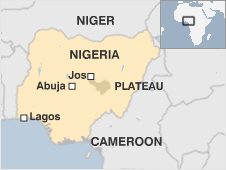
Meanwhile in Abuja, women staged a similar rally, carrying pictures of the dead.
Risika Razak, one of the leaders of the protest, said she wanted to show the government that "things are not going right".
"They should beef up security in troubled areas so that we would be able to know that people that go to bed will wake up the next day and life will continue," she said.
Earlier, the BBC's Komla Dumor visited a mass grave in the village of Dogo-Nahawa where more than 100 bodies from one village had been buried.
One community leader in the village told the BBC how his five-year-old granddaughter had been hacked to death with a machete.
Like earlier eyewitness accounts, he said the violence started with gunfire.
"People were running helter-skelter because of this.... They had never heard something like this before.
"People that were running and run into them, and they were macheted."
The authorities have arrested about 200 people and charged 49 with murder.
Although the clashes take place between Muslims and Christians, analysts say the underlying causes are economic and political.
http://news.bbc.co.uk/1/hi/world/africa/8562961.stm
Hundreds of women have taken to the streets of Nigeria's capital, Abuja, and the city of Jos in rallies against Sunday's massacre near Jos.
The women, mostly dressed in black, demanded that the government protects women and children better.
At least 109 people were killed in the ethnic clashes near Jos - many of whom were said to be women and children.
Survivors have told the BBC how they saw relatives and friends hacked down with machetes and their bodies burnt.
Witnesses and officials say the perpetrators came from the mainly Muslim Fulani group. Most of the victims were Christians from the Berom group.
The attacks appear to be retaliation for violence in the villages around Jos in January, when most of the victims were said to be Muslim.
The women in Jos carried placards proclaiming: "Stop killing our future; Bloodshed in the Plateau [State] must stop."
They marched carrying Bibles, wooden crosses or branches of mango trees, chanting: "No more soldiers.
Mass grave
Christian pastor Esther Ebanga told the crowds of women: "Enough is enough."
"All we are asking is that our children and women should not be killed any more. We demand justice," the AFP news agency quoted her as saying.
Meanwhile in Abuja, women staged a similar rally, carrying pictures of the dead.
Risika Razak, one of the leaders of the protest, said she wanted to show the government that "things are not going right".
"They should beef up security in troubled areas so that we would be able to know that people that go to bed will wake up the next day and life will continue," she said.
Earlier, the BBC's Komla Dumor visited a mass grave in the village of Dogo-Nahawa where more than 100 bodies from one village had been buried.
One community leader in the village told the BBC how his five-year-old granddaughter had been hacked to death with a machete.
Like earlier eyewitness accounts, he said the violence started with gunfire.
"People were running helter-skelter because of this.... They had never heard something like this before.
"People that were running and run into them, and they were macheted."
The authorities have arrested about 200 people and charged 49 with murder.
Although the clashes take place between Muslims and Christians, analysts say the underlying causes are economic and political.
http://news.bbc.co.uk/1/hi/world/africa/8562961.stm
<font size="5"><center>
Muslim Group Claims Attacks on
Two Nigerian Cities That Killed 86</font size></center>

People walk past the wreckage of a truck destroyed in an explosion in the
city of Jos. Photograph: Afolabi Sotunde/Reuters. Armed Christians and
Muslims clash after Nigeria killings. Pastor and five others shot in raids on
churches while explosions 300 miles away claim 32 victims
Bloomberg
By Dulue Mbachu
Dec 28, 2010
A Muslim group in Nigeria identifying itself as Jama’atu Ahlus-Sunnah Lidda’Awati Wal Jihad said it carried out Christmas Eve attacks on the cities of Jos and Maiduguri that killed at least 86 people.
The group is “avenging the atrocities committed against Muslims in those areas, and the country in general,” according to a statement on its website. “Therefore we will continue with our attacks on disbelievers and their allies and all those who help them.”
Multiple bomb blasts in Jos, capital of the central state of Plateau, targeted public places, including a Catholic church, killing at least 80 people, according to Nigeria’s National Emergency Management Agency. Two churches were also attacked by gunmen on the same day in Maiduguri, capital of Borno state in northeast Nigeria, killing six people, said Mohammed Abubakar, the commissioner of police.
Africa’s top oil producer and most populous country of more than 140 million people, roughly split between a mainly Muslim north and a predominantly Christian south, has suffered periodic outbursts of sectarian violence. At least 14,000 people have died in ethnic and religious violence since 1999 in Nigeria, according to the Brussels-based International Crisis Group.
<font size="4">Sectarian Violence </font size>
Sectarian violence between Christians and Muslims in Jos has left hundreds of people dead this year. At least 492 people were killed in an attack on a predominantly Christian village by Muslim Fulani herders near Jos on March 7, according to Civil Rights Congress, a rights group based in the northern city of Kaduna.
Police blamed the attack on churches in Maiduguri Boko Haram, an Islamic sect opposed to western education and modeled after Afghanistan’s Taliban.
The attacks in Jos sparked reprisal violence by rival gangs, prompting additional police and military reinforcements to the city. At least four people were killed and 20 houses burned in different parts of the city, Abdulrahman Akano, the police commissioner in charge of the city, told reporters yesterday.
A special military task force deployed to help quell the violence yesterday arrested three men who were trying to attack buildings with dynamite in the Dogon-Karfe district of the city, Captain Charles Okocha, a military spokesman, said at a news conference yesterday.
To contact the reporter on this story: Dulue Mbachu in Abuja at dmbachu@bloomberg.net.
To contact the editor responsible for this story: Antony Sguazzin at asguazzin@bloomberg.net.
http://www.bloomberg.com/news/2010-...-attacks-on-two-nigerian-cities-update1-.html
Muslim Group Claims Attacks on
Two Nigerian Cities That Killed 86</font size></center>
People walk past the wreckage of a truck destroyed in an explosion in the
city of Jos. Photograph: Afolabi Sotunde/Reuters. Armed Christians and
Muslims clash after Nigeria killings. Pastor and five others shot in raids on
churches while explosions 300 miles away claim 32 victims
Bloomberg
By Dulue Mbachu
Dec 28, 2010
A Muslim group in Nigeria identifying itself as Jama’atu Ahlus-Sunnah Lidda’Awati Wal Jihad said it carried out Christmas Eve attacks on the cities of Jos and Maiduguri that killed at least 86 people.
The group is “avenging the atrocities committed against Muslims in those areas, and the country in general,” according to a statement on its website. “Therefore we will continue with our attacks on disbelievers and their allies and all those who help them.”
Multiple bomb blasts in Jos, capital of the central state of Plateau, targeted public places, including a Catholic church, killing at least 80 people, according to Nigeria’s National Emergency Management Agency. Two churches were also attacked by gunmen on the same day in Maiduguri, capital of Borno state in northeast Nigeria, killing six people, said Mohammed Abubakar, the commissioner of police.
Africa’s top oil producer and most populous country of more than 140 million people, roughly split between a mainly Muslim north and a predominantly Christian south, has suffered periodic outbursts of sectarian violence. At least 14,000 people have died in ethnic and religious violence since 1999 in Nigeria, according to the Brussels-based International Crisis Group.
<font size="4">Sectarian Violence </font size>
Sectarian violence between Christians and Muslims in Jos has left hundreds of people dead this year. At least 492 people were killed in an attack on a predominantly Christian village by Muslim Fulani herders near Jos on March 7, according to Civil Rights Congress, a rights group based in the northern city of Kaduna.
Police blamed the attack on churches in Maiduguri Boko Haram, an Islamic sect opposed to western education and modeled after Afghanistan’s Taliban.
The attacks in Jos sparked reprisal violence by rival gangs, prompting additional police and military reinforcements to the city. At least four people were killed and 20 houses burned in different parts of the city, Abdulrahman Akano, the police commissioner in charge of the city, told reporters yesterday.
A special military task force deployed to help quell the violence yesterday arrested three men who were trying to attack buildings with dynamite in the Dogon-Karfe district of the city, Captain Charles Okocha, a military spokesman, said at a news conference yesterday.
To contact the reporter on this story: Dulue Mbachu in Abuja at dmbachu@bloomberg.net.
To contact the editor responsible for this story: Antony Sguazzin at asguazzin@bloomberg.net.
http://www.bloomberg.com/news/2010-...-attacks-on-two-nigerian-cities-update1-.html
<font size="4"><center>
Timeline: Ethnic and religious unrest in Nigeria</font size></center>
Reuters
JOS, Nigeria
Tue Dec 28, 2010
<font size="3">Following is a timeline of religious and ethnic violence in Nigeria in the last ten years:</font size>
(Reporting by Nick Tattersall in Lagos and David Cutler, London Editorial Reference Unit; Editing by Jon Boyle)
http://www.reuters.com/article/idUSTRE6BR13T20101228
Timeline: Ethnic and religious unrest in Nigeria</font size></center>
Reuters
JOS, Nigeria
Tue Dec 28, 2010
<font size="3">Following is a timeline of religious and ethnic violence in Nigeria in the last ten years:</font size>
- 2000 - Thousands killed in northern Nigeria as non-Muslims opposed to the introduction of Islamic sharia law fight Muslims who demand its implementation in the northern state of Kaduna.
- September 2001 - Christian-Muslim violence flares after Muslim prayers in Jos, with churches and mosques set on fire. At least 1,000 people are killed, according to a September 2002 report by a panel set up by Plateau state government.
- November 2002 - Nigeria abandons the Miss World contest in Abuja. The decision follows the death of at least 216 people in rioting in the northern city of Kaduna after a newspaper article suggests the Prophet Mohammad would probably have married one of the Miss World beauty queens if he were alive today.
- May 2004 - Hundreds of people, mostly Muslim Fulanis, are killed by Christian Tarok militia in the central Nigerian town of Yelwa. Survivors say they buried 630 corpses. Police say hundreds were killed.
-- Muslim and Christian militants fight street battles later the same month in the northern city of Kano. Christian community leaders say 500-600 people, mostly Christians, were killed in two days of violence.
- February 2006 - At least 157 people die in a week of rioting by Muslim and Christian mobs. The violence begins in the northeastern city of Maiduguri when a Muslim protest against Danish cartoons of the Prophet Mohammad runs out of control. Revenge attacks follow in the south.
- November 2008 - Clashes between Muslim and Christian gangs triggered by a disputed local government election kill at least 700 people in the central city of Jos, according to U.S.-based Human Rights Watch.
- February 2009 - Bauchi state governor imposes night curfew on Bauchi city on February 22, a day after clashes in which at least 11 people died and churches and mosques were burned down.
- July 2009 - Boko Haram, an organization which demands the adoption of sharia in all of Nigeria, stages attacks in the northeastern city of Bauchi after the arrest of some of its members. More than 50 people are killed and over 100 arrested.
-- Police in Maiduguri, home of Boko Haram's leader Mohammed Yusuf, say security forces killed 90 sect members on July 27. In neighboring Yobe state, police recover the bodies of 33 sect members after a gunbattle near the town of Potiskum on July 29.
-- Yusuf is shot dead while in police detention in Maiduguri on July 30.
-- Red Cross and defense officials say more than 700 people were killed during the five-day Boko Haram uprising.
- December 2009 - At least 40 people are killed in clashes between security forces and members of an Islamic sect armed with machetes in Bauchi.
- January 2010 - Hundreds are reported killed after clashes between Muslim and Christian gangs in Jos, most by gunfire. Police estimate the death toll at 326, although some community leaders put the figure at more than 400.
- March 2010 - Hundreds of people are killed in clashes between Islamic pastoralists and Christian villagers in the mostly Christian villages of Dogo Nahawa, Zot and Ratsat just south of Jos. Plateau State Commissioner for Information, Gregory Yenlong said more than 300 people had died.
- December 2010 - At least 80 people are killed in December 24 bombings as well as in clashes two days later between Muslim and Christian youths in the central Nigerian city of Jos. As of December 27 at least 101 people were being treated for injuries.
(Reporting by Nick Tattersall in Lagos and David Cutler, London Editorial Reference Unit; Editing by Jon Boyle)
http://www.reuters.com/article/idUSTRE6BR13T20101228
WadeBoshJame
Banned
Why another man should give two shits as to what god another man prays or does not pray to has me perplexed!!!!
What are you 3 years old? Read on about something called "human nature". You know it entails things like lying, thievery, murder, jealousy, insecurity, domination ... you know, things which indicate that we don't live on one man islands and do our own things. We all look to affect others in one way or another.
Nigeria: Militants Kill Students in College Attack
Dozens of students gunned down as
they slept in dormitories in the dead of night
they slept in dormitories in the dead of night
<IFRAME SRC="http://www.bbc.co.uk/news/world-africa-24322683" WIDTH=780 HEIGHT=1500>
<A HREF="http://www.bbc.co.uk/news/world-africa-24322683">link</A>
</IFRAME>

Religious fundamentalism is the problem, Muslims, Christians, the Sunni/Shia split, etc. You have semi-literate men indoctrinated into these cults, following the orders of an authority figure (Pope, Imam, Ayatollah, Priest, Reverend) going out & murdering people who choose not to follow their way of living and join their cult.
In Egypt the secular military is literally wiping out the "Muslim Brotherhood" who wants to literally take the nation back to the year 1000 A.D. Why don't these idiots realize that they can have their 72 virgins right here right now on this planet earth, not wait for it in the "after life".
<img src="http://3.bp.blogspot.com/-tMijjqDhJOw/TauxHpWBtyI/AAAAAAAAEFA/Z6n0Mk0xkbk/s1600/kinneret2.jpg" width="800">
<img src="http://a.abcnews.go.com/images/International/gty_anti_islam_protest_ss3_jt_120915_ssh.jpg" width="300"><img src="http://english.ahram.org.eg/Media/News/2012/9/29/2012-634845235828603266-860.jpg" width="300"><img src="http://www.ctvnews.ca/polopoly_fs/1.960464!/httpImage/image.jpeg_gen/derivatives/landscape_960/image.jpeg" width="300">
<img src="http://andreasmoser.files.wordpress.com/2012/09/muslim-protest-3.jpg" width="250"><img src="http://2.bp.blogspot.com/-Xfny9aEhrEo/Tx6l7NG5ZpI/AAAAAAAAcgA/aeWGAzIeqxU/s320/muslim+women+www.motivationalpostersonline.blogspot.com+demotivational+posters+motivational+poster+funny.jpg" width="300"><img src="http://voices.kansascity.com/media/voices/img/blogs/judge_12-18-10_jpg_330x330_q85.jpg" width="330">
Watch the video, we see ignorant young men being indoctrinated via religion by an authority figure to kill others in the name of Allah. Imagine that in the year 2014, with internet access just a wi-fi signal away, that you can still indoctrinate young boys to become killers with the promise with virgins in heaven
<embed width="600" height="375" type="application/x-shockwave-flash" allowFullscreen="true" allowNetworking="all" wmode="transparent" src="http://www.mejuba.com/member/flv/player.swf?flv=http://174.142.61.69/f/1/4d1ebf40-fec9-4d4a-80ac-a921ec044610.flv" flashvars="file=http://174.142.61.69/f/1/4d1ebf40-fec9-4d4a-80ac-a921ec044610.flv">
Last edited:
Boko Haram
Boko Haram is an Islamist group that has been active in Nigeria
since 2009. The name of the group means "Western" or "non-
Islamic" education is a sin. The group is active in the north
of Nigeria, and wants to impose Islamic law as the only law in
Nigeria. It also wants to outlaw education that is not based
on Islam in the country. The group sees itself as similar to the
Taliban, which are active in Afghanistan. Locally, the group is
known as the "Taliban". The official name of the group is Jama'
atu Ahlis Sunna Lidda'awati wal-Jihad, which in Arabic
means "People Committed to the Propagation of the Prophet's
Teachings and Jihad.
SOURCE
"I abducted your girls.
I will sell them in the market, by Allah.
There is a market for selling humans.
Allah says I should sell.
He commands me to sell.
I will sell women.
I sell women"

- Boko Haram leader Abubakar Shekau
http://www.cnn.com/2014/05/05/world/africa/nigeria-abducted-girls/index.html?hpt=hp_t1
http://www.bellanaija.com/2014/05/0...irls-i-will-sell-them-in-the-market-by-allah/
276 girls were kidnapped
Here's why it matters
Nigeria abductions - 6 reasons why the world should demand action
<iframe width='416' height='234' src='http://www.cnn.com/video/api/embed.html#/video/world/2014/05/06/newday-dnt-nigeria-kidnapped-girls.cnn' frameborder='0'></iframe>
(CNN) -- One year ago this month, Boko Haram's leader Abubakar Shekau released a video announcing a new, reprehensible front in its bloody attempt at forced Islamism: his fighters will begin abducting girls and selling them.
The kidnappings, he said, were retaliation for Nigerian security forces nabbing the wives and children of group members.
And for 12 months, the radical militant group has done just that -- with Nigerians treating the sporadic kidnappings with disgust but resignation.
"When this first happened ... what I was hearing from my friends and from other people was like, 'Why do I care? Nigeria is done. Nigeria is going to disintegrate,'" said Emeka Daniel, whose father was kidnapped in Nigeria in an unrelated incident.
"I refused to believe that," he said. "We can't let this be the new normal."
Here are six reasons why the Boko Haram abductions, the repugnant message its leader released this week, and Nigeria's inadequate response should matter to the rest of the world.
Terrorism isn't isolated
Just imagine if 276 girls had been kidnapped in the United States. The response would be mass outrage and a forceful demand for a response.
As borders become more irrelevant for terrorists, the whole world needs to take notice of the likes of Boko Haram.
"We need to take ownership as if this happened in Chicago or this happened in Washington, D.C.," said Nicole Lee, outgoing president of the TransAfrica Forum. "We need to be talking about this. ... We need to make sure our own government is helping in any way that we can."
What the Boko Haram has set out to do in Africa's most populous nation is as heinous as the havoc the Taliban is wreaking.
"They actually originated as a group called the Nigerian Taliban, which kind of explains where they're coming from," said CNN's national security analyst Peter Bergen. "They are aiming to impose Taliban-style rule on much of Nigeria, particularly in the north where they are based."
The group's name itself means "Western education is sinful" in the local Hausa language. Its aim is to impose a stricter enforcement of Sharia law. The group especially opposes the education of women.
Under its version of Sharia law, women should be at home raising children and looking after their husbands, not at school learning to read and write.
Then consider its ties to al Qaeda.
How closely related Boko Haram is to al Qaeda is hard to define, but the United States says it has links.
"Al Qaeda in the Islamic Maghreb, which is the North African al Qaeda affiliate, has given money to Boko Haram in the past," Bergen said. "There is reporting suggesting that Osama bin Laden was in communication with the leadership of this group."
Daniel put it succinctly.
"People are thinking, this doesn't affect my country, but I'm telling them terrorists ... didn't just wake up one morning and decide to become terrorists," he said.
"These guys, it takes years for them to decide to go out there and commit these atrocities. So as the world, we have to come together and try to find a solution to this problem."
The United States is so concerned about anti-Western terrorism in Nigeria that the State Department released a warning last week to Americans traveling within and to Nigeria that "groups associated with terrorism" may be planning an attack in Lagos, the country's commercial center, Bergen said.
The inhumane treatment of children concerns us all
The terrorists raided the girls' school in the middle of the night, posing as soldiers. After a gunfight with security guards, they stormed the students' dormitory and herded the girls into vehicles.
As they made their escape, the militants burned down nearby buildings in the northern town of Chibok. The girls disappeared into the night.
Even worse are fears of what will happen to the girls next.
The new video from the purported leader of Boko Haram detailed this chilling plan:
"I abducted your girls. I will sell them in the market, by Allah," said a man claiming to be Boko Haram leader Abubakar Shekau in the video first obtained by Agence France-Presse.
If the claim proves true, the 276 teen girls could become child brides or sex slaves.
Rights groups have said Boko Haram has kidnapped girls as young as 12.
And the abductions are only getting worse.
In the first two months of this year alone, Boko Haram kidnapped at least 25 girls and women, according to Human Rights Watch.
In November, the militant group abducted dozens of Christian girls and women, most of whom were later rescued by the military deep in a forest in Maiduguri. At the time of their rescue, some were pregnant or had children, and others had been forcibly converted to Islam and married off to their kidnappers.
The parents' hands are tied
Any parent can only imagine the horror of a child getting kidnapped. Now multiply that by 276 and add the fear of a volatile terrorist group.
Families of some of the kidnapped girls are petrified of speaking to the media for fear of retribution against their daughters.
"Many of the parents feel if there is even (any) kind of movement from their end, they could see the children killed," CNN's Nigeria-based correspondent Vladimir Duthiers said.
"The parents told us, over the course of the last three weeks, they themselves have risked their own lives trying to go in armed with machetes, sticks and rocks to do the job they say the Nigerian military is unwilling to do."
It's the price they pay for daring to send their girls to school despite threats from Boko Haram. The kidnapped girls were from Borno state, where 72% of primary-age children have never attended school, according to the U.S. Embassy in Nigeria.
Daniel said he knows what the parents are going through. His father was abducted in Nigeria four years ago while returning home from work.
"You can't sleep. You can't eat." To this day, Daniel said, he can still hear the cries of his family members.
"So I really feel for these mothers that lost their daughters. It's -- I can't -- you can't really begin to understand what they are going through until you're in that situation."
Daniel's father was shot and almost died. He was released only after the family paid a ransom.
What happens in Nigeria has deeper repercussions
Nigeria boasts Africa's largest economy. But internal problems can have a ripple effect far and wide.
Nigerian militant activity has already spilled over to neighbors such as Cameroon, whose government has warned that clerics have been recruiting members in mosques in the country, said Orji Uzor Kalu, a former governor of Nigeria's Abia State.
"In this era of accelerating globalization, it appears Boko Haram hopes to align itself with extremist forces in Niger, Mali and potentially in the Middle East, which raises the specter of coordination on the stockpiling of munitions, intelligence gathering and future assaults," Kalu said.
The Nigerian response has been feeble
Two days after the kidnappings, the Nigerian military said all but eight of the girls were free. That turned out to be untrue, prompting the father of one of the abducted girls to say the government had gone from using "blatant propaganda" to telling "blatant lie."
For three weeks, President Goodluck Jonathan said nothing. He has yet to visit the region.
And when he did begin speaking about the abductions, he criticized the parents for not cooperating with the police, for not sharing information.
"It's been awful, frankly," said Richard Downie of the Nigerian government's response.
Downie is the deputy director and fellow for the African program at the Washington-based Center for Strategic and International Studies.
"These girls were taken in the middle of last month and really it was not until last night that we had the first lengthy comments from the president, which lends credence to this allegation that the government is not sufficiently invested in this crisis," Downie said Monday.
Add to that the comments Jonathan's wife reportedly made.
"Patience Jonathan, who is the first lady, called some of the mothers to her, to meet with her, and she basically told them that they really need to be quiet and they were really bringing shame and embarrassment to Nigeria," said Lee, from the TransAfrica Forum. "That's certainly a problem."
This can't be business as usual
With a World Economic Forum set to begin Wednesday in the capital city of Abuja, the Nigerian government is under mounting pressure to find and save the girls.
The U.S. government is offering to help, but said Nigeria must take the lead in finding the students.
Officials told CNN the Obama administration is sharing intelligence with Nigerian authorities and could provide other assistance, but there is no plan to send U.S. troops.
A group of U.S. senators from both parties has introduced a resolution calling for the United States to help the Nigerian government improve school security and go after Boko Haram.
The resolution stops short of calling for sending American troops. Instead, it urges "timely civilian assistance" from the United States and allied African nations to help rescue the abducted students.
Rights groups are therefore heartened at the groundswell of support, with the globally trending hashtag #BringBackOurGirls.
Crowds from Los Angeles to London rallied over the weekend.
"I think one of the most beautiful things that has happened is people are taking the hashtag, putting them in front of them and saying, 'Bring back our girls,'" Lee said. "I think people are doing that. It's catching fire."
But that's changed now.
The kidnappings, he said, were retaliation for Nigerian security forces nabbing the wives and children of group members.
And for 12 months, the radical militant group has done just that -- with Nigerians treating the sporadic kidnappings with disgust but resignation.
"When this first happened ... what I was hearing from my friends and from other people was like, 'Why do I care? Nigeria is done. Nigeria is going to disintegrate,'" said Emeka Daniel, whose father was kidnapped in Nigeria in an unrelated incident.
"I refused to believe that," he said. "We can't let this be the new normal."
Here are six reasons why the Boko Haram abductions, the repugnant message its leader released this week, and Nigeria's inadequate response should matter to the rest of the world.
Terrorism isn't isolated
Just imagine if 276 girls had been kidnapped in the United States. The response would be mass outrage and a forceful demand for a response.
As borders become more irrelevant for terrorists, the whole world needs to take notice of the likes of Boko Haram.
"We need to take ownership as if this happened in Chicago or this happened in Washington, D.C.," said Nicole Lee, outgoing president of the TransAfrica Forum. "We need to be talking about this. ... We need to make sure our own government is helping in any way that we can."
What the Boko Haram has set out to do in Africa's most populous nation is as heinous as the havoc the Taliban is wreaking.
"They actually originated as a group called the Nigerian Taliban, which kind of explains where they're coming from," said CNN's national security analyst Peter Bergen. "They are aiming to impose Taliban-style rule on much of Nigeria, particularly in the north where they are based."
The group's name itself means "Western education is sinful" in the local Hausa language. Its aim is to impose a stricter enforcement of Sharia law. The group especially opposes the education of women.
Under its version of Sharia law, women should be at home raising children and looking after their husbands, not at school learning to read and write.
Then consider its ties to al Qaeda.
How closely related Boko Haram is to al Qaeda is hard to define, but the United States says it has links.
"Al Qaeda in the Islamic Maghreb, which is the North African al Qaeda affiliate, has given money to Boko Haram in the past," Bergen said. "There is reporting suggesting that Osama bin Laden was in communication with the leadership of this group."
Daniel put it succinctly.
"People are thinking, this doesn't affect my country, but I'm telling them terrorists ... didn't just wake up one morning and decide to become terrorists," he said.
"These guys, it takes years for them to decide to go out there and commit these atrocities. So as the world, we have to come together and try to find a solution to this problem."
The United States is so concerned about anti-Western terrorism in Nigeria that the State Department released a warning last week to Americans traveling within and to Nigeria that "groups associated with terrorism" may be planning an attack in Lagos, the country's commercial center, Bergen said.
The inhumane treatment of children concerns us all
The terrorists raided the girls' school in the middle of the night, posing as soldiers. After a gunfight with security guards, they stormed the students' dormitory and herded the girls into vehicles.
As they made their escape, the militants burned down nearby buildings in the northern town of Chibok. The girls disappeared into the night.
Even worse are fears of what will happen to the girls next.
The new video from the purported leader of Boko Haram detailed this chilling plan:
"I abducted your girls. I will sell them in the market, by Allah," said a man claiming to be Boko Haram leader Abubakar Shekau in the video first obtained by Agence France-Presse.
If the claim proves true, the 276 teen girls could become child brides or sex slaves.
Rights groups have said Boko Haram has kidnapped girls as young as 12.
And the abductions are only getting worse.
In the first two months of this year alone, Boko Haram kidnapped at least 25 girls and women, according to Human Rights Watch.
In November, the militant group abducted dozens of Christian girls and women, most of whom were later rescued by the military deep in a forest in Maiduguri. At the time of their rescue, some were pregnant or had children, and others had been forcibly converted to Islam and married off to their kidnappers.
The parents' hands are tied
Any parent can only imagine the horror of a child getting kidnapped. Now multiply that by 276 and add the fear of a volatile terrorist group.
Families of some of the kidnapped girls are petrified of speaking to the media for fear of retribution against their daughters.
"Many of the parents feel if there is even (any) kind of movement from their end, they could see the children killed," CNN's Nigeria-based correspondent Vladimir Duthiers said.
"The parents told us, over the course of the last three weeks, they themselves have risked their own lives trying to go in armed with machetes, sticks and rocks to do the job they say the Nigerian military is unwilling to do."
It's the price they pay for daring to send their girls to school despite threats from Boko Haram. The kidnapped girls were from Borno state, where 72% of primary-age children have never attended school, according to the U.S. Embassy in Nigeria.
Daniel said he knows what the parents are going through. His father was abducted in Nigeria four years ago while returning home from work.
"You can't sleep. You can't eat." To this day, Daniel said, he can still hear the cries of his family members.
"So I really feel for these mothers that lost their daughters. It's -- I can't -- you can't really begin to understand what they are going through until you're in that situation."
Daniel's father was shot and almost died. He was released only after the family paid a ransom.
What happens in Nigeria has deeper repercussions
Nigeria boasts Africa's largest economy. But internal problems can have a ripple effect far and wide.
Nigerian militant activity has already spilled over to neighbors such as Cameroon, whose government has warned that clerics have been recruiting members in mosques in the country, said Orji Uzor Kalu, a former governor of Nigeria's Abia State.
"In this era of accelerating globalization, it appears Boko Haram hopes to align itself with extremist forces in Niger, Mali and potentially in the Middle East, which raises the specter of coordination on the stockpiling of munitions, intelligence gathering and future assaults," Kalu said.
The Nigerian response has been feeble
Two days after the kidnappings, the Nigerian military said all but eight of the girls were free. That turned out to be untrue, prompting the father of one of the abducted girls to say the government had gone from using "blatant propaganda" to telling "blatant lie."
For three weeks, President Goodluck Jonathan said nothing. He has yet to visit the region.
And when he did begin speaking about the abductions, he criticized the parents for not cooperating with the police, for not sharing information.
"It's been awful, frankly," said Richard Downie of the Nigerian government's response.
Downie is the deputy director and fellow for the African program at the Washington-based Center for Strategic and International Studies.
"These girls were taken in the middle of last month and really it was not until last night that we had the first lengthy comments from the president, which lends credence to this allegation that the government is not sufficiently invested in this crisis," Downie said Monday.
Add to that the comments Jonathan's wife reportedly made.
"Patience Jonathan, who is the first lady, called some of the mothers to her, to meet with her, and she basically told them that they really need to be quiet and they were really bringing shame and embarrassment to Nigeria," said Lee, from the TransAfrica Forum. "That's certainly a problem."
This can't be business as usual
With a World Economic Forum set to begin Wednesday in the capital city of Abuja, the Nigerian government is under mounting pressure to find and save the girls.
The U.S. government is offering to help, but said Nigeria must take the lead in finding the students.
Officials told CNN the Obama administration is sharing intelligence with Nigerian authorities and could provide other assistance, but there is no plan to send U.S. troops.
A group of U.S. senators from both parties has introduced a resolution calling for the United States to help the Nigerian government improve school security and go after Boko Haram.
The resolution stops short of calling for sending American troops. Instead, it urges "timely civilian assistance" from the United States and allied African nations to help rescue the abducted students.
Rights groups are therefore heartened at the groundswell of support, with the globally trending hashtag #BringBackOurGirls.
Crowds from Los Angeles to London rallied over the weekend.
"I think one of the most beautiful things that has happened is people are taking the hashtag, putting them in front of them and saying, 'Bring back our girls,'" Lee said. "I think people are doing that. It's catching fire."
But that's changed now.
http://www.cnn.com/2014/05/06/world/africa/nigeria-abductions-why-it-matters/index.html?hpt=hp_t1


Nigeria: Government knew of planned
Boko Haram kidnapping but failed to act
<iframe src="//player.vimeo.com/video/94677096" width="500" height="281" webkitallowfullscreen mozallowfullscreen allowfullscreen></iframe>
Damning testimonies gathered by Amnesty International reveal that the Nigerian security forces failed to act on advance warnings about Boko Haram’s armed raid on the state-run boarding school in Chibok which led to the abduction of more than 240 schoolgirls on 14-15 April.
After independently verifying information based on multiple interviews with credible sources, the organisation today exclusively revealed that the Nigerian security forces had more than four hours of advance warning about the attack but did not do enough to stop it.
Netsanet Belay, Amnesty’s Africa Director, speaking from Abuja, said:
“The fact that Nigerian security forces knew about Boko Haram’s impending raid, but failed to take the immediate action needed to stop it, will only amplify the national and international outcry at this horrific crime.
“It amounts to a gross dereliction of Nigeria’s duty to protect civilians, who remain sitting ducks for such attacks. The Nigerian leadership must now use all lawful means at their disposal to secure the girls’ safe release and ensure nothing like this can happen again.
“The abduction and continued detention of these school girls are war crimes, and those responsible must be brought to justice. Attacks on schools also violate the right to education and must be halted immediately.”
“It amounts to a gross dereliction of Nigeria’s duty to protect civilians, who remain sitting ducks for such attacks. The Nigerian leadership must now use all lawful means at their disposal to secure the girls’ safe release and ensure nothing like this can happen again.
“The abduction and continued detention of these school girls are war crimes, and those responsible must be brought to justice. Attacks on schools also violate the right to education and must be halted immediately.”
Amnesty has confirmed through various sources that Nigeria’s military headquarters in Maiduguri was aware of the impending attack soon after 7pm on 14 April, close to four hours before Boko Haram began their assault on the town.
But an inability to muster troops – due to poor resources and a reported fear of engaging with the often better-equipped armed groups – meant that reinforcements were not deployed to Chibok that night. The small contingent of security forces based in the town – 17 army personnel as well as local police –attempted to repel the Boko Haram assault but were overpowered and forced to retreat. One soldier reportedly died.
More than three weeks later, the majority of the girls remain in captivity in an unknown location. A climate of confusion and suspicion has so far scuppered efforts to secure their release.
Amnesty reiterates its call on Boko Haram to immediately and unconditionally release the hostages into safety and stop all attacks on civilians.
Warnings ignored
Between 7pm on 14 April and 2am on 15 April, the military commands in Damboa, 36.5 km away from Chibok, and Maiduguri, 130 km away from Chibok, were repeatedly alerted to the threat by both security and local officials.
According to sources interviewed by Amnesty, local civilian patrols (known as “vigilantes”, set up by the military and local authorities) in Gagilam, a neighbouring village, were among the first to raise the alarm on the evening of 14 April after a large group of unidentified armed men entered their village on motorbikes and said they were headed to Chibok. This set off a rapid chain of phone calls to alert officials, including the Borno State Governor and senior military commanders based in Maiduguri.
One local official who was contacted by Gagilam residents told Amnesty:
“At around 10:00 PM on 14 April, I called [several] security officers to inform them about earlier information I had received from the vigilantes in Gagilam village. They had told us that strange people had arrived in their village that evening on motorbikes and they said they were heading to Chibok. I made several other calls, including to Maiduguri. I was promised by the security people that reinforcement were on their way.”
Another local official was contacted by herdsmen who said that armed men had asked where the Government Girls Secondary School was located in Chibok.
At around 11:45 PM, a convoy reportedly numbering up to 200 armed Boko Haram fighters – on motorbikes and in trucks – arrived in Chibok town and engaged in a gunfight with a small number of police and soldiers based there. Outnumbered and outgunned, the security forces eventually fled in the small hours of 15 April. Some of the Boko Haram fighters proceeded to the Government Girls Secondary School and abducted more than 240 schoolgirls.
Two senior officers in Nigeria’s armed forces confirmed that the military was aware of the planned attack even prior to the calls received from local officials. One officer said the commander was unable to mobilize reinforcements. He described to Amnesty the difficulties faced by frontline soldiers in north-eastern Nigeria:
"There’s a lot of frustration, exhaustion and fatigue among officers and [troops] based in the hotspots…many soldiers are afraid to go to the battle fronts.”
Amnesty’s requests for a reaction from the military headquarters in Abuja have gone unanswered.
Since the 14 April raid, a climate of confusion and suspicion appears to have slowed down the Nigerian authorities’ efforts to locate and free the abducted schoolgirls. On 16 April, a senior Defence Ministry spokesperson said that almost all of the abducted girls had been rescued and only eight were still missing. The next day he had to retract that statement.
Netsanet Belay added:
“The climate of suspicion and lack of transparency about the rescue effort has been unhelpful – all authorities must work together to ensure the girls are brought home safely and more must be done to protect civilians in future.”
Amnesty is calling on the Nigerian government to provide adequate information to families of abducted girls on the authorities’ current efforts to ensure their safe release. The families – and the abducted girls, once they are freed – must be provided with adequate medical and psychological support.
Background
The information on the advance warnings of the impending Boko Haram attack in Chibok came from multiple sources, including local officials and two senior military officers, interviewed by Amnesty. The sources independently verified a list of Nigerian officials who were alerted on 14-15 April, before and during the raid on the Government Girls Secondary School. They have been kept anonymous for their safety.
The abduction of the schoolgirls in Chibok comes amid months of worsening violence and serious human rights violations and abuses being committed by armed Islamist groups and Nigerian government forces alike in the conflict in north-eastern Nigeria.
Amnesty’s research indicates that at least 2,000 people have been killed in the conflict in Nigeria this year alone.
In a separate incident on 5 May, at least eight girls were abducted by gunmen in the Warabe and Wala communities in north-eastern Nigeria. There have been similar abductions on a smaller scale, mainly of women and girls, in the last two years.
Also on 5 May, more than 200 people were killed in Gamboru, Ngala, Borno state, when an armed group traveling in two armoured cars opened fire on a market in broad daylight. The attack began around 1:30pm and lasted several hours, and the armed group torched market stalls, vehicles and nearby homes and shops.
Despite such ongoing attacks, the Nigerian authorities have failed to adequately investigate the killings and abductions, bring suspected perpetrators to justice, or prevent further attacks.
At the same time, the government continues to unlawfully detain hundreds of people suspected of links with Boko Haram in military detention and is denying them access to lawyers. The majority of those detained around the country are held without criminal charges, and many have been extrajudicially executed by security forces before facing trial.
http://www.amnesty.org.uk/press-rel...knew-planned-boko-haram-kidnapping-failed-act

Wow, these fools killing whole towns. This happened this pass Monday.
CAJ News Agency (Johannesburg)
Nigeria: Hundreds Killed At Cameroon, Nigeria Border
By Augustine Osayande, 6 May 2014
Abuja — SUSPECTED members of the Boko Haram sect have killed over 300 people in Gamboru Ngala a border town between Nigerian and Cameroon.
The well-armed insurgents were alleged to have driven into the town in armoured vehicles.
Gamboru is the administrative Headquarter of Ngala local government area of Borno state.
It is about 200km from Maiduguri, the capital city.
It was gathered that the insurgents targeted a local market as they fired sporadically into the crowd at the market before proceeding into the town to wreak more havoc.
Confirming the report, Senator Ahmed Zannah said the terrorists spent about 12 hours wreaking havoc on defenseless locals.
He revealed that several other persons were also injured in the attack.
He added that almost all the houses and shops in the town were burnt down.
He claimed that the attackers were armed with dangerous weapons comprising of Armoured Personnel Carrier (APC), Improvised Explosive Devices (IEDs), petrol bombs, assault rifles and Rocket Propelled Launchers (RPGs).
"The attackers stormed the communities in the night when residents were still sleeping, setting ablaze houses and shot residents who tried to escaped from the fire".
He said over 300 persons were confirmed dead after the incident, with several others injured.
Almost all the houses in the communities were destroyed by the hoodlums who threw Improvised Explosive Devices (IEDs) at the buidings.
"My brother who was at the scene of the attack told me that the actual number of the dead cannot be ascertained but at least thet are upto 300. In fact as we spoke he wept following the high number of the dead bodies which littered the market".
According to him, the security forces earlier deployed to the area, moved to the Lake Chad axis when they received intelligence report that some gunmen were sighted with abducted schoolgirls moving to the area.
"Initially there were many security operatives in the town to secure it from possible attacks. However upon receiving information over the movements of insurgents with kidnapped Chibok schoolgirls towards Lake Chad area, they withdraw and moved further to confront the gunmen."
Daily Trust (Abuja)
Nigeria: 315 Bodies Buried in Gamboru
By Hamza Idris & Ibrahim Sawab, Maiduguri, 9 May 2014
Related Topics
Nigeria
Nigeria: This Govt Has Failed, but Nigeria...
Conflict
South Sudan: Peace Agreement - the Full Text
More corpses were recovered from rubble and 315 were buried yesterday after Monday's attack in Gamboru, a border town near Cameroon in northern Borno State.
Our correspondents say since the day of the attack by the Boko Haram, residents have dedicated their time to search for their loved ones after more than 200 houses and the biggest market in the town were destroyed. Kolo Abbaram, a youth volunteer in Gamboru, said they had been burying corpses since Wednesday.
"We moved from house to house and have recovered many bodies. Many men and women were killed and children were also affected. There are many mass graves now because it is not possible to bury the dead individually. We therefore put 10 bodies in each grave," Abbaram said.
Another resident, Mukhtar Bukar, said an epidemic is looming in the town because of the level of devastation caused by the explosives deployed by the attackers.
"Today we recovered five decomposing bodies from the ruined market. I believe some people are still being trapped," he said, adding that humanitarian assistance was yet to reach Gamboru.
"The only bridge that links Gamboru with the other side of Borno has been destroyed. Trucks can no longer come across and this is affecting supply of basic needs like food and drugs," Bukar said.
Isma Ali, a merchant, said vehicles going to Cameroon and Chad from Maiduguri and other parts of the country now have to pass through Banki, another border town in Bama LGA which has also witnessed series of attacks. He said security had been beefed up in Gamboru and Ngala following the deployment of troops.
"In fact, there was apprehension when the soldiers arrived because many surviving residents had fled because they were afraid... Even the terrorists wore military uniforms," he said.
Our correspondent gathered at the University of Maiduguri Teaching Hospital that many victims with bullet wounds are being treated there.
CAJ News Agency (Johannesburg)
Nigeria: Hundreds Killed At Cameroon, Nigeria Border
By Augustine Osayande, 6 May 2014
Abuja — SUSPECTED members of the Boko Haram sect have killed over 300 people in Gamboru Ngala a border town between Nigerian and Cameroon.
The well-armed insurgents were alleged to have driven into the town in armoured vehicles.
Gamboru is the administrative Headquarter of Ngala local government area of Borno state.
It is about 200km from Maiduguri, the capital city.
It was gathered that the insurgents targeted a local market as they fired sporadically into the crowd at the market before proceeding into the town to wreak more havoc.
Confirming the report, Senator Ahmed Zannah said the terrorists spent about 12 hours wreaking havoc on defenseless locals.
He revealed that several other persons were also injured in the attack.
He added that almost all the houses and shops in the town were burnt down.
He claimed that the attackers were armed with dangerous weapons comprising of Armoured Personnel Carrier (APC), Improvised Explosive Devices (IEDs), petrol bombs, assault rifles and Rocket Propelled Launchers (RPGs).
"The attackers stormed the communities in the night when residents were still sleeping, setting ablaze houses and shot residents who tried to escaped from the fire".
He said over 300 persons were confirmed dead after the incident, with several others injured.
Almost all the houses in the communities were destroyed by the hoodlums who threw Improvised Explosive Devices (IEDs) at the buidings.
"My brother who was at the scene of the attack told me that the actual number of the dead cannot be ascertained but at least thet are upto 300. In fact as we spoke he wept following the high number of the dead bodies which littered the market".
According to him, the security forces earlier deployed to the area, moved to the Lake Chad axis when they received intelligence report that some gunmen were sighted with abducted schoolgirls moving to the area.
"Initially there were many security operatives in the town to secure it from possible attacks. However upon receiving information over the movements of insurgents with kidnapped Chibok schoolgirls towards Lake Chad area, they withdraw and moved further to confront the gunmen."
Daily Trust (Abuja)
Nigeria: 315 Bodies Buried in Gamboru
By Hamza Idris & Ibrahim Sawab, Maiduguri, 9 May 2014
Related Topics
Nigeria
Nigeria: This Govt Has Failed, but Nigeria...
Conflict
South Sudan: Peace Agreement - the Full Text
More corpses were recovered from rubble and 315 were buried yesterday after Monday's attack in Gamboru, a border town near Cameroon in northern Borno State.
Our correspondents say since the day of the attack by the Boko Haram, residents have dedicated their time to search for their loved ones after more than 200 houses and the biggest market in the town were destroyed. Kolo Abbaram, a youth volunteer in Gamboru, said they had been burying corpses since Wednesday.
"We moved from house to house and have recovered many bodies. Many men and women were killed and children were also affected. There are many mass graves now because it is not possible to bury the dead individually. We therefore put 10 bodies in each grave," Abbaram said.
Another resident, Mukhtar Bukar, said an epidemic is looming in the town because of the level of devastation caused by the explosives deployed by the attackers.
"Today we recovered five decomposing bodies from the ruined market. I believe some people are still being trapped," he said, adding that humanitarian assistance was yet to reach Gamboru.
"The only bridge that links Gamboru with the other side of Borno has been destroyed. Trucks can no longer come across and this is affecting supply of basic needs like food and drugs," Bukar said.
Isma Ali, a merchant, said vehicles going to Cameroon and Chad from Maiduguri and other parts of the country now have to pass through Banki, another border town in Bama LGA which has also witnessed series of attacks. He said security had been beefed up in Gamboru and Ngala following the deployment of troops.
"In fact, there was apprehension when the soldiers arrived because many surviving residents had fled because they were afraid... Even the terrorists wore military uniforms," he said.
Our correspondent gathered at the University of Maiduguri Teaching Hospital that many victims with bullet wounds are being treated there.
Last edited:
Where is the Nigerian government ???
Nigeria: This Govt Has Failed, but Nigeria Is Redeemable - Soyinka
By Agbo-Paul Augustine, 10 May 2014
Nobel laureate Prof. Wole Soyinka has described the President Goodluck Jonathan-led federal government as a huge failure to the Nigerian people. Prof. Soyinka made this assertion while answering questions as a guest on the BBC's Hardtalk show yesterday.
The Nobel laureate, who was reacting to issues raised on the abducted Chibok girls and general insecurity in Nigeria, said the primary task of any government is to be responsible to its citizens.
When asked about an April 17, 2014 LEADERSHIP editorial that described Nigeria as a failed state, Soyinka said he has had cause to use that expression himself. He said, "I have had moments when I feel Nigeria is a failed state but it is not beyond redemption."
"I must express my feelings that this government has failed the nation.
"The primary task right now for me is to demonstrate our sense of responsibility to those we bring into the world and those we send to danger zones."
"If we fail them, we fail the entire nation and lose our self-respect," Soyinka said.
He reiterated that the ongoing global action on the missing Chibok girls must be sustained until the students are brought home. Noting that it will be a mistake to think that what is happening now affects only one section of the nation, he said there are cells breaking out in the southern part of the country. "It is only a matter of time before we are overwhelmed in the south," he warned.
When asked if he believed the president should resign, Soyinka told his host: "Let me tell you something: if I have the conviction one way or the other, I will be the first person to call the president (to say) for the sake of this nation, you must sacrifice whatever ambitions you have and you must hand over to whatever kind of transitional... I won't say it in public. I will say it to him first."
He noted that Nigerians have not given up on the girls but said he is hurt at the pace in which the federal government has handled the situation so far.
That one small sect cannot hold the entirety of a secular system to follow their beliefs, he said.
He expressed dissatisfaction that Nigeria is not progressing in the right direction. He also frowned at the position of the president that corruption is not an endemic problem in Nigeria.
On politics he said, "Thank goodness Nigerians has not given up, otherwise you would not have the demonstration going on, the discoursse in very strident terms.
"Every society has it own moments of critical mass. Nigeria has finally reached its own moment of critical mass. For me it is very belated. It is not belated it is late. It should have happen much earlier."
<param name="movie" value="http://c.brightcove.com/services/viewer/federated_f9?isVid=1&isUI=1" /><param name="bgcolor" value="#FFFFFF" /><param name="flashVars" value="videoId=3562975046001&playerID=2368596066001&playerKey=AQ~~,AAAAAETmrZQ~,EVFEM4AKJdQ1C14r5oirecGfDLVsGgSQ&domain=embed&dynamicStreaming=true" /><param name="base" value="http://admin.brightcove.com" /><param name="seamlesstabbing" value="false" /><param name="allowFullScreen" value="true" /><param name="swLiveConnect" value="true" /><param name="allowScriptAccess" value="always" /><embed src="http://c.brightcove.com/services/viewer/federated_f9?isVid=1&isUI=1" bgcolor="#FFFFFF" flashVars="videoId=3562975046001&playerID=2368596066001&playerKey=AQ~~,AAAAAETmrZQ~,EVFEM4AKJdQ1C14r5oirecGfDLVsGgSQ&domain=embed&dynamicStreaming=true" base="http://admin.brightcove.com" name="flashObj" width="480" height="270" seamlesstabbing="false" type="application/x-shockwave-flash" allowFullScreen="true" allowScriptAccess="always" swLiveConnect="true" pluginspage="http://www.macromedia.com/shockwave/download/index.cgi?P1_Prod_Version=ShockwaveFlash"></embed></object>
Jon Stewart is pushing his own hashtag: “#F*@kYouRush.”
On Monday night, the host of Comedy Central’s “The Daily Show” criticized conservative talk radio show host Rush Limbaugh for his dismissal of the social media campaign that has expressed outrage at the kidnapping of more than 200 Nigerian schoolgirls by Boko Haram.
The comedian didn’t mince words about Limbaugh, whom he called a “quivering rage heap who is apparently desperately trying to extinguish any remaining molecule of humanity that might still reside in the Chernobyl-esque super-fund cleanup site that was his soul.”
On his radio show over the past week, Limbaugh has railed against the Twitter campaign. In particular, he singled out first lady Michelle Obama, who took a photo holding a sign with the #BringBackOurGirls hashtag. The radio host called the first lady’s gesture “pathetic.”
The campaign has used the hashtag #BringBackOurGirls to offer sympathy to the children’s families and to push for greater efforts to recover the girls. Many U.S. and international political figures have embraced the campaign.
Stewart said that people should choose between Limbaugh and Malala Yousafzai, the 16-year-old Pakistani activist who survived an attack from the Taliban and who has also supported the Twitter campaign. Stewart said that people should tweet their vote using the hashtag “#F*@kYouRush.”
The comedian also said that he owes Twitter “an apology,” saying the social media site has now proved its worth beyond “casual racism” and lewd photos.
“That’s the thing about hashtag activism. It cannot force a crazy person to do something, but it can shame a less crazy person into not doing nothing,” he said in reference to Nigerian President Goodluck Jonathan, who has faced international pressure to take greater action to try to rescue the children.
Stewart said that hashtag activism can also drive “a medium-crazy person crazier,” playing into the clip of Limbaugh slamming the Twitter campaign.
On Monday night, the host of Comedy Central’s “The Daily Show” criticized conservative talk radio show host Rush Limbaugh for his dismissal of the social media campaign that has expressed outrage at the kidnapping of more than 200 Nigerian schoolgirls by Boko Haram.
The comedian didn’t mince words about Limbaugh, whom he called a “quivering rage heap who is apparently desperately trying to extinguish any remaining molecule of humanity that might still reside in the Chernobyl-esque super-fund cleanup site that was his soul.”
On his radio show over the past week, Limbaugh has railed against the Twitter campaign. In particular, he singled out first lady Michelle Obama, who took a photo holding a sign with the #BringBackOurGirls hashtag. The radio host called the first lady’s gesture “pathetic.”
The campaign has used the hashtag #BringBackOurGirls to offer sympathy to the children’s families and to push for greater efforts to recover the girls. Many U.S. and international political figures have embraced the campaign.
Stewart said that people should choose between Limbaugh and Malala Yousafzai, the 16-year-old Pakistani activist who survived an attack from the Taliban and who has also supported the Twitter campaign. Stewart said that people should tweet their vote using the hashtag “#F*@kYouRush.”
The comedian also said that he owes Twitter “an apology,” saying the social media site has now proved its worth beyond “casual racism” and lewd photos.
“That’s the thing about hashtag activism. It cannot force a crazy person to do something, but it can shame a less crazy person into not doing nothing,” he said in reference to Nigerian President Goodluck Jonathan, who has faced international pressure to take greater action to try to rescue the children.
Stewart said that hashtag activism can also drive “a medium-crazy person crazier,” playing into the clip of Limbaugh slamming the Twitter campaign.
Read more: http://www.politico.com/story/2014/05/jon-stewart-rush-limbaugh-hashtag-106619.html#ixzz31koYquXg

Boko Haram attacked a Chinese plant
Suspected rebels from Nigeria's Islamist militant group Boko
Haram attacked a Chinese plant in northern Cameroon near the
town of Waza on Saturday. Waza is 20 km (12 miles) from the
Nigerian border close to the Sambisa forest, a stronghold of
Boko Haram which has killed thousands in Nigeria in a five-year
insurgency for an Islamist state and threatens to destabilise the
wider region. The vast Sambisa forest is close to the area where
Boko Haram kidnapped more than 200 schoolgirls last month.
https://plus.google.com/+CCTVAFRICALIVE/posts/BamfEsUgFwb
Nigeria Kidnappings: British Jet Deployed

The Sentinel aircraft has a crew of five and is capable of flying for long periods at high altitude.
It is fitted with radar able to locate moving targets and offer radar imagery.
Departing from RAF Waddington in Lincolnshire, the plane is initially bound for the Ghanaian
capital of Accra, west of Nigeria where Islamist terror group Boko Haram and their captives are in
hiding.
The jet will then join US aircraft in attempting to locate the girls, who were seized from a school
dormitory in the north-east of the country on April 15.
Rich Barrow, RAF Waddington's station commander, said: "The Sentinel with its wide area search
capability and long endurance is perfect for this task.
"UK personnel will help to analyse the information gathered to improve the intelligence picture for
the Nigerian authorities."
http://news.sky.com/story/1264024/nigeria-kidnappings-british-jet-deployed
Goodluck Jonathan: Silence isn't inaction
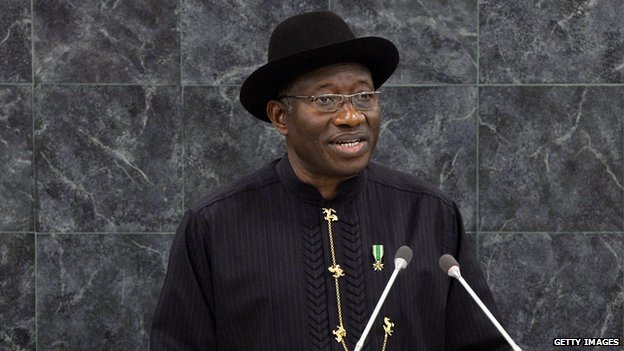
Nigerian President Goodluck Jonathan says he stayed silent about the missing schoolgirls for a good reason
See: Why he "had to remain quiet"
I'm in Nigeria (Ibandan) right now.
Boko Haram may have just killed 2,000 people: ‘Killing went on and on and on’
Boko Haram may have just killed 2,000 people: ‘Killing went on and on and on’
By Terrence McCoy
January 9
For months, fear of Boko Haram has gripped Nigeria’s northeast. The goals of the Islamic militant group, which captured international attention through a relentless campaign of brutality, have long been about killing. But last summer, something changed. Its aspirations became as much about territory as terrorism. It no longer wants to just cripple a government. It wants to become one.
In August, Boko Haram leader Abubakar Shekau announced the establishment of his “Islamic Caliphate,” quickly taking over every corner of Borno State in northeast Nigeria. But one town called Baga, populated by thousands of Nigerians along the western shores of Lake Chad, held out. Anchored by a multinational military base manned by troops from Niger to Chad, it was the last place in Borno under the national government’s control. Over the weekend, that changed.
Gunshots punctured the early morning quiet. “They came through the north, the west and from the southern part of the town because the eastern part is only water,” one resident told the BBC. “So, when we [went] toward the western part, we saw heavily armed Boko Haram men coming toward us.” At the sight of the incoming insurgents, the soldiers put up a scant fight before abandoning their base and leaving residents defenseless.
“There is definitely something wrong that makes our military abandon their posts each time there is an attack from Boko Haram,” local state senator Maina Maaji Lawan told the BBC, adding that residents’ frustration knew “no bounds.” Frustration, however, soon gave way to something substantially worse.
It’s not clear how many people were killed in Baga. Early reports on Thursday said hundreds. Others said it was many more. Musa Alhaji Bukar, a senior government official in Borno, said Boko Haram killed more than 2,000 people which, if true, would mean the group equaled its total kill count last year in one attack. More were said to have drowned in Lake Chad while attempting to swim to a nearby island. Some estimates said more than 20,000 people are now displaced as a result of what one reporter called Boko Haram’s “most horrific act of terrorism yet.”
Baga, local government officials say, is simply no more. It’s “virtually non-existent,” Bukar told the BBC. One man who escaped with his family told Agence France-Presse he had to navigate through “many dead bodies on the ground” and that the “whole town was on fire.” Another man told Reuters he “escaped with my family in the car after seeing how Boko Haram was killing people … I saw bodies in the street. Children and women, some were crying for help.” He added: Bodies were “littered on the streets and surrounding bushes.”
“The indiscriminate killing went on and on and on,” Lawan told BBC.
It’s hard to find contemporary precedent for the delight Boko Haram takes in killing. Even the Islamic State, which has killed thousands and purposely targets minorities, doesn’t seem to be as wanton in its acts of carnage. It appears everyone — Muslim, Christian, Cameroonian, Nigerian — is a target for Boko Haram.
A video recently emerged, Genocide Watch reported, that shows gunmen shooting civilians as they lay face down in a dormitory. A local leader explains they are “infidels,” even though he admits they’re Muslim: “We have made sure the floor of this hall is turned red with blood, and this is how it is going to be in all future attacks and arrests of infidels. From now on, killing, slaughtering, destruction and bombings will be our religious duty anywhere we invade.”
Is there any stopping it? For the time being, it appears not. The administration of Nigerian President Goodluck Jonathan and his military, beset by corruption and ill-equipped, have been unable to match both Boko Haram’s firepower, discipline and fundraising. And now, with Boko Haram’s campaign to control northeast Nigeria complete, analysts said its territorial ambitions have outgrown Nigeria’s porous borders.
Cameroon dispatched troops to its northern border to meet the assault, but its military has been taxed by ceaseless Boko Haram attacks, reported Stratfor Global Intelligence. On Dec. 28, fighters spilled across a dry river bed into Cameroon. “This may have been an attempt by Boko Haram to establish control over a significant portion of Cameroon’s far north region, where the group has long been active and recruited fighters,” the think tank said. Boko Haram seized one town and simultaneously attacked five more.
Residents fled — but where to? According to AFP, Boko Haram’s recent attack means the group controls all of Borno’s borders with Niger, Chad and Cameroon. Meanwhile, hundreds who survived the swim out to that island in Lake Chad are said to be trapped. “They told me,” Abubakar Gamandi, a Baga native, told AFP, “that some of them are dying from lack of food, cold and malaria on the mosquito-infested island.”
http://www.washingtonpost.com/news/...e-killed-2000-people-in-one-attack/?tid=hp_mm
Boko Haram may have just killed 2,000 people: ‘Killing went on and on and on’
By Terrence McCoy
January 9
For months, fear of Boko Haram has gripped Nigeria’s northeast. The goals of the Islamic militant group, which captured international attention through a relentless campaign of brutality, have long been about killing. But last summer, something changed. Its aspirations became as much about territory as terrorism. It no longer wants to just cripple a government. It wants to become one.
In August, Boko Haram leader Abubakar Shekau announced the establishment of his “Islamic Caliphate,” quickly taking over every corner of Borno State in northeast Nigeria. But one town called Baga, populated by thousands of Nigerians along the western shores of Lake Chad, held out. Anchored by a multinational military base manned by troops from Niger to Chad, it was the last place in Borno under the national government’s control. Over the weekend, that changed.
Gunshots punctured the early morning quiet. “They came through the north, the west and from the southern part of the town because the eastern part is only water,” one resident told the BBC. “So, when we [went] toward the western part, we saw heavily armed Boko Haram men coming toward us.” At the sight of the incoming insurgents, the soldiers put up a scant fight before abandoning their base and leaving residents defenseless.
“There is definitely something wrong that makes our military abandon their posts each time there is an attack from Boko Haram,” local state senator Maina Maaji Lawan told the BBC, adding that residents’ frustration knew “no bounds.” Frustration, however, soon gave way to something substantially worse.
It’s not clear how many people were killed in Baga. Early reports on Thursday said hundreds. Others said it was many more. Musa Alhaji Bukar, a senior government official in Borno, said Boko Haram killed more than 2,000 people which, if true, would mean the group equaled its total kill count last year in one attack. More were said to have drowned in Lake Chad while attempting to swim to a nearby island. Some estimates said more than 20,000 people are now displaced as a result of what one reporter called Boko Haram’s “most horrific act of terrorism yet.”
Baga, local government officials say, is simply no more. It’s “virtually non-existent,” Bukar told the BBC. One man who escaped with his family told Agence France-Presse he had to navigate through “many dead bodies on the ground” and that the “whole town was on fire.” Another man told Reuters he “escaped with my family in the car after seeing how Boko Haram was killing people … I saw bodies in the street. Children and women, some were crying for help.” He added: Bodies were “littered on the streets and surrounding bushes.”
“The indiscriminate killing went on and on and on,” Lawan told BBC.
It’s hard to find contemporary precedent for the delight Boko Haram takes in killing. Even the Islamic State, which has killed thousands and purposely targets minorities, doesn’t seem to be as wanton in its acts of carnage. It appears everyone — Muslim, Christian, Cameroonian, Nigerian — is a target for Boko Haram.
A video recently emerged, Genocide Watch reported, that shows gunmen shooting civilians as they lay face down in a dormitory. A local leader explains they are “infidels,” even though he admits they’re Muslim: “We have made sure the floor of this hall is turned red with blood, and this is how it is going to be in all future attacks and arrests of infidels. From now on, killing, slaughtering, destruction and bombings will be our religious duty anywhere we invade.”
Is there any stopping it? For the time being, it appears not. The administration of Nigerian President Goodluck Jonathan and his military, beset by corruption and ill-equipped, have been unable to match both Boko Haram’s firepower, discipline and fundraising. And now, with Boko Haram’s campaign to control northeast Nigeria complete, analysts said its territorial ambitions have outgrown Nigeria’s porous borders.
Cameroon dispatched troops to its northern border to meet the assault, but its military has been taxed by ceaseless Boko Haram attacks, reported Stratfor Global Intelligence. On Dec. 28, fighters spilled across a dry river bed into Cameroon. “This may have been an attempt by Boko Haram to establish control over a significant portion of Cameroon’s far north region, where the group has long been active and recruited fighters,” the think tank said. Boko Haram seized one town and simultaneously attacked five more.
Residents fled — but where to? According to AFP, Boko Haram’s recent attack means the group controls all of Borno’s borders with Niger, Chad and Cameroon. Meanwhile, hundreds who survived the swim out to that island in Lake Chad are said to be trapped. “They told me,” Abubakar Gamandi, a Baga native, told AFP, “that some of them are dying from lack of food, cold and malaria on the mosquito-infested island.”
http://www.washingtonpost.com/news/...e-killed-2000-people-in-one-attack/?tid=hp_mm
Another massacre?
Why Nigeria struggles to stop Boko Haram
The Muslim militant group, Boko Haram, has killed as many
as 2,000 people in northern Nigeria.
Why can't the government stop it?
In the latest campaign by the African Islamic militant group Boko Haram, hundreds of gunmen reportedly overtook the town of Baga, its neighboring villages, and a multinational military base.
During a five-day attack in Nigeria's northeast, the heavily armed militant group descended on joint-run African military base, one of the few remaining government-run operations in the area. Upon seeing the gunmen, the military guards abandoned their posts.
In recent days, Boko Haram has attacked and destroyed 16 villages. Official death tolls have not been recorded, but reports vary widely, with anywhere from 200 to as many as 2,000 Nigerians killed, according to Amnesty International on Saturday.
About 10,000 people have fled to neighboring Chad this week, with reports of many drowning in an attempt to cross Lake Chad. Baga has been largely abandoned after what is now described as what may be the “deadliest massacre” in the history of Boko Haram.
“After taking the goods, they put fire, and burn this place,” Alhaji Baba Abahassan, the Baga District head, told The New York Times. “Even now, if they see a man, they will kill you. They killed many people, but nobody has the exact number. If I say this is the exact number of killed, I am telling lies.”
In targeting Baga, a town on the border with Chad and the last area in Nigeria's Borno State where the national government still had a military outpost, Boko Haram is effectively consolidating its control over northeast Nigeria. The group, whose name means strict adherence to traditional Islam and the rejection of Western influences, claims that it wants to develop an Islamic state in a country with mixed religious identities of both Christian and Muslim followers. The group, which gained power in 2009, killed 10,000 people this past year, according to a Council on Foreign Relations report, and the violence continues.
Abubakar Shekau, the leader of Boko Haram, announced in August his mission to establish his Islamic caliphate, a political-religious Muslim state of which he would be the leader. Since its inception, the group has received growing attention for its brutal, violent, and often indiscriminate attacks. In April 2014, they gained international notoriety for the kidnapping of 276 girls from Chibok Secondary School, which prompted the viral hashtag #BringBackOurGirls. Since then, the militant group has continued attacks and kidnappings which the Nigerian government has struggled to effectively counter.
The New York Times reported that Borno State governor, Kashim Shettima, expects Boko Haram to continue in their conquest. “The Boko Haram strategy is to strangulate the city [of Maiduguri], and make it the capital of their caliphate,” he said in an interview from the Nigerian capital, Abuja. “They have captured all the outlying towns. The Boko Haram is better armed than ever before.”
Nigerian President Goodluck Jonathan has pledged to put an end to to the group's reign of terror, but Boko Haram has refused to negotiate with the current government, which is lead by non-Muslim political party. If anything, Boko Haram's attacks are intended to display the government’s inability to effectively respond and influence the outcome of the next election. Boko Haram boasts firepower, discipline, and seems to benefit from links to well-funded organizations such as al-Qaeda.
In 2013, the Nigerian military descended on Baga in response to an attack by Boko Haram fighters. The effort, during which critics accused soldiers of executing more "destruction than protection," at least 37 people were killed and 2,275 homes were destroyed. When Boko Haram overtook Baga on January 3, government soldiers abandoned post left unarmed citizens to defend themselves.
"We are very dispirited," Borno North senator Maina Maaji Lawan told BBC. <SPAN style="BACKGROUND-COLOR: #ffff00">"There is definitely something wrong that makes our military abandon their posts each time there is an attack from Boko Haram."</span>
On Saturday, Mike Omeri, the Nigerian government spokesman on the insurgency, said fighting continued into Friday for Baga. "Security forces have responded rapidly and have deployed significant military assets and conducted airstrikes against militant targets," Omeri said in a statement.
Following a pattern similar to the one employed by the Islamic State militant group in Syria, Boko Haram is expanding its reach. An analysis by Stratfor Global Intelligence shows that with their newfound ambitions, Boko Haram may expand its territory from Nigeria to Cameroon. The militant group has switched its tactics from insurgent attacks to conquering terrain. Nigeria's [government] ground forces face many constraints, both logistically and resourcefully, made worse <SPAN style="BACKGROUND-COLOR: #ffff00">by an absence of political support from the central government that leaves troops with low morale</span>. In multiple cases, troops have simply refused orders to mobilize in response to Boko Haram activity.
Cameroon's Plea For Help
In light of recent attacks in Cameroon, Cameroon's president Paul Biya appealed for help during a New Year speech he delivered to diplomats:
“
“A global threat calls for a global response. Such should be the response of the international community, including the African Union and our regional organizations,” Biya said.
Other African Nations Withdrawing
Some of Haram Boko's militants may be part of a larger movement that has attacked Mali, the Central African Republic and Somalia, yet foreign support has been limited. Niger announced that it will not be involved in the process of reclaiming Baga. Chad has also withdrawn troops from the area. Nigeria has struggled to gain international assistance with its air force, due to concerns that airplanes will be used to indiscriminately bomb civilian regions.
The events of the last week have illustrated that the militant group not only has the resources needed to gain territory, but they also have displayed a brutality that “shows no regard” for human life, said State Department spokeswoman Jen Psaki on Saturday.
During a five-day attack in Nigeria's northeast, the heavily armed militant group descended on joint-run African military base, one of the few remaining government-run operations in the area. Upon seeing the gunmen, the military guards abandoned their posts.
In recent days, Boko Haram has attacked and destroyed 16 villages. Official death tolls have not been recorded, but reports vary widely, with anywhere from 200 to as many as 2,000 Nigerians killed, according to Amnesty International on Saturday.
About 10,000 people have fled to neighboring Chad this week, with reports of many drowning in an attempt to cross Lake Chad. Baga has been largely abandoned after what is now described as what may be the “deadliest massacre” in the history of Boko Haram.
“After taking the goods, they put fire, and burn this place,” Alhaji Baba Abahassan, the Baga District head, told The New York Times. “Even now, if they see a man, they will kill you. They killed many people, but nobody has the exact number. If I say this is the exact number of killed, I am telling lies.”
In targeting Baga, a town on the border with Chad and the last area in Nigeria's Borno State where the national government still had a military outpost, Boko Haram is effectively consolidating its control over northeast Nigeria. The group, whose name means strict adherence to traditional Islam and the rejection of Western influences, claims that it wants to develop an Islamic state in a country with mixed religious identities of both Christian and Muslim followers. The group, which gained power in 2009, killed 10,000 people this past year, according to a Council on Foreign Relations report, and the violence continues.
Why is the Nigerian government struggling to stop the bloodshed?
Abubakar Shekau, the leader of Boko Haram, announced in August his mission to establish his Islamic caliphate, a political-religious Muslim state of which he would be the leader. Since its inception, the group has received growing attention for its brutal, violent, and often indiscriminate attacks. In April 2014, they gained international notoriety for the kidnapping of 276 girls from Chibok Secondary School, which prompted the viral hashtag #BringBackOurGirls. Since then, the militant group has continued attacks and kidnappings which the Nigerian government has struggled to effectively counter.
The New York Times reported that Borno State governor, Kashim Shettima, expects Boko Haram to continue in their conquest. “The Boko Haram strategy is to strangulate the city [of Maiduguri], and make it the capital of their caliphate,” he said in an interview from the Nigerian capital, Abuja. “They have captured all the outlying towns. The Boko Haram is better armed than ever before.”
Nigerian President Goodluck Jonathan has pledged to put an end to to the group's reign of terror, but Boko Haram has refused to negotiate with the current government, which is lead by non-Muslim political party. If anything, Boko Haram's attacks are intended to display the government’s inability to effectively respond and influence the outcome of the next election. Boko Haram boasts firepower, discipline, and seems to benefit from links to well-funded organizations such as al-Qaeda.
In 2013, the Nigerian military descended on Baga in response to an attack by Boko Haram fighters. The effort, during which critics accused soldiers of executing more "destruction than protection," at least 37 people were killed and 2,275 homes were destroyed. When Boko Haram overtook Baga on January 3, government soldiers abandoned post left unarmed citizens to defend themselves.
"We are very dispirited," Borno North senator Maina Maaji Lawan told BBC. <SPAN style="BACKGROUND-COLOR: #ffff00">"There is definitely something wrong that makes our military abandon their posts each time there is an attack from Boko Haram."</span>
On Saturday, Mike Omeri, the Nigerian government spokesman on the insurgency, said fighting continued into Friday for Baga. "Security forces have responded rapidly and have deployed significant military assets and conducted airstrikes against militant targets," Omeri said in a statement.
Following a pattern similar to the one employed by the Islamic State militant group in Syria, Boko Haram is expanding its reach. An analysis by Stratfor Global Intelligence shows that with their newfound ambitions, Boko Haram may expand its territory from Nigeria to Cameroon. The militant group has switched its tactics from insurgent attacks to conquering terrain. Nigeria's [government] ground forces face many constraints, both logistically and resourcefully, made worse <SPAN style="BACKGROUND-COLOR: #ffff00">by an absence of political support from the central government that leaves troops with low morale</span>. In multiple cases, troops have simply refused orders to mobilize in response to Boko Haram activity.
Cameroon's Plea For Help
In light of recent attacks in Cameroon, Cameroon's president Paul Biya appealed for help during a New Year speech he delivered to diplomats:
“
“A global threat calls for a global response. Such should be the response of the international community, including the African Union and our regional organizations,” Biya said.
Other African Nations Withdrawing
Some of Haram Boko's militants may be part of a larger movement that has attacked Mali, the Central African Republic and Somalia, yet foreign support has been limited. Niger announced that it will not be involved in the process of reclaiming Baga. Chad has also withdrawn troops from the area. Nigeria has struggled to gain international assistance with its air force, due to concerns that airplanes will be used to indiscriminately bomb civilian regions.
The events of the last week have illustrated that the militant group not only has the resources needed to gain territory, but they also have displayed a brutality that “shows no regard” for human life, said State Department spokeswoman Jen Psaki on Saturday.
http://www.csmonitor.com/World/Afri...hy-Nigeria-struggles-to-stop-Boko-Haram-video
source: The Guardian
Nigeria: two suspected child suicide bombers attack market
Three killed and 26 wounded in Yobe state, a day after bombing involving 10-year-old girl killed at least 16 in Borno state

An armoured car in Maiduguri, the Borno state capital, in 2013. Photograph: Sunday Alamba/AP
After a week of bloodshed unleashed by Islamists Boko Haram left hundreds of civilians dead across north-eastern Nigeria, Ibrahim Abu wanted to try to forget. He and three friends had met for tea in an outdoor bar beside an open-air market in Potiskum, a small town in Nigeria’s Yobe state, when an explosion threw them to the floor.
“I looked up and saw body parts everywhere, then the body of a little girl cut in two,” he said, his voice still shaking as he recounted the incident. As traders scrambled around him, he felt paralysed with shock. The body of another child was being pulled out of the rubble. By the end of the afternoon, three other people were dead and 26 wounded.
The bombing by two suspected child suicide bombers in a crowded market on Sunday capped a week of horror and marked an ominous escalation in violence with elections in Africa’s most populous nation less than five weeks away.
A day earlier in neighbouring Borno state another young girl, who is also believed to have been about 10 years old, was stopped for a security check in the capital’s main market when bombs strapped to her detonated, killing at least 16 people.
Residents across Borno were already reeling after Boko Haram militants rampaged through remote villages for almost four days in what Amnesty International and the Nigerian army said was the group’s deadliest attack.
In Baga, a fishing settlement on the shores of Lake Chad, fleeing residents were unable to count the bodies that littered the fields. Amnesty put the number of dead at 2,000, although it didn’t say how it had verified the number. Other estimates suggested 600 was a more likely figure.
Neither the president, Goodluck Jonathan, nor his main rival, Muhammadu Buhari, have addressed the massacres in Baga. As hundreds poured into the state capital from the hinterland, the government said it had launched ground action backed by air strikes to reclaim the area.
“We are living in fear,” said Sani Mohamed, a videographer in the capital who said displaced people were sleeping rough on the outskirts of the city. “There is panic all over Maiduguri due to constant influx of people with horrific tales of attacks. Any security we have here feels very fragile.”
Maiduguri has been patrolled by the military since a state of emergency in May last year. But soldiers have long complained that money meant for equipment has been funnelled away by senior officials, leaving them inadequately armed against the insurgents’ sophisticated weapons. Some residents said soldiers sometimes held off attacks for hours, but when reinforcements failed to arrive they deserted their posts in villages linked by sandy roads lined with burnt-out relics of the group’s campaign.
Urban areas have also been targeted. Damaturu, the state capital of Yobe, was hit on Thursday by “massive attacks from different angles,” Nigeria’s defence headquarters said. “Troops are on a mopping-up operation in Damaturu after foiling attempts by terrorists to occupy parts of the town.”
A day of gunfire in the capital had just ended when the main police station in nearby Potiskum was targeted. Two people died after a man was brought to the police station with his car, the state police commissioner said.
“We took the suspect to the station and the car … exploded and killed one of my men and a driver. The suspect did not die … he is still in our custody,” Marcus Danladi told Reuters. Within 24 hours, the town was hit by the market attacks.
More than 10,000 people were killed last year as a result of Boko Haram’s quest to carve out an Islamic caliphate in religiously mixed Nigeria. An estimated 1.6 million people have been driven from their homes during the five-year insurgency, mostly in the Muslim-majority north.
Nigeria: two suspected child suicide bombers attack market
Three killed and 26 wounded in Yobe state, a day after bombing involving 10-year-old girl killed at least 16 in Borno state
An armoured car in Maiduguri, the Borno state capital, in 2013. Photograph: Sunday Alamba/AP
After a week of bloodshed unleashed by Islamists Boko Haram left hundreds of civilians dead across north-eastern Nigeria, Ibrahim Abu wanted to try to forget. He and three friends had met for tea in an outdoor bar beside an open-air market in Potiskum, a small town in Nigeria’s Yobe state, when an explosion threw them to the floor.
“I looked up and saw body parts everywhere, then the body of a little girl cut in two,” he said, his voice still shaking as he recounted the incident. As traders scrambled around him, he felt paralysed with shock. The body of another child was being pulled out of the rubble. By the end of the afternoon, three other people were dead and 26 wounded.
The bombing by two suspected child suicide bombers in a crowded market on Sunday capped a week of horror and marked an ominous escalation in violence with elections in Africa’s most populous nation less than five weeks away.
A day earlier in neighbouring Borno state another young girl, who is also believed to have been about 10 years old, was stopped for a security check in the capital’s main market when bombs strapped to her detonated, killing at least 16 people.
Residents across Borno were already reeling after Boko Haram militants rampaged through remote villages for almost four days in what Amnesty International and the Nigerian army said was the group’s deadliest attack.
In Baga, a fishing settlement on the shores of Lake Chad, fleeing residents were unable to count the bodies that littered the fields. Amnesty put the number of dead at 2,000, although it didn’t say how it had verified the number. Other estimates suggested 600 was a more likely figure.
Neither the president, Goodluck Jonathan, nor his main rival, Muhammadu Buhari, have addressed the massacres in Baga. As hundreds poured into the state capital from the hinterland, the government said it had launched ground action backed by air strikes to reclaim the area.
“We are living in fear,” said Sani Mohamed, a videographer in the capital who said displaced people were sleeping rough on the outskirts of the city. “There is panic all over Maiduguri due to constant influx of people with horrific tales of attacks. Any security we have here feels very fragile.”
Maiduguri has been patrolled by the military since a state of emergency in May last year. But soldiers have long complained that money meant for equipment has been funnelled away by senior officials, leaving them inadequately armed against the insurgents’ sophisticated weapons. Some residents said soldiers sometimes held off attacks for hours, but when reinforcements failed to arrive they deserted their posts in villages linked by sandy roads lined with burnt-out relics of the group’s campaign.
Urban areas have also been targeted. Damaturu, the state capital of Yobe, was hit on Thursday by “massive attacks from different angles,” Nigeria’s defence headquarters said. “Troops are on a mopping-up operation in Damaturu after foiling attempts by terrorists to occupy parts of the town.”
A day of gunfire in the capital had just ended when the main police station in nearby Potiskum was targeted. Two people died after a man was brought to the police station with his car, the state police commissioner said.
“We took the suspect to the station and the car … exploded and killed one of my men and a driver. The suspect did not die … he is still in our custody,” Marcus Danladi told Reuters. Within 24 hours, the town was hit by the market attacks.
More than 10,000 people were killed last year as a result of Boko Haram’s quest to carve out an Islamic caliphate in religiously mixed Nigeria. An estimated 1.6 million people have been driven from their homes during the five-year insurgency, mostly in the Muslim-majority north.
Similar threads

- Replies
- 1
- Views
- 280
- Replies
- 2
- Views
- 433
- Replies
- 0
- Views
- 339
- Replies
- 0
- Views
- 280
