MinorityVotesDon'tMatter

QueEx

Rising Star
Super Moderator

The White Vote and the GOP


Some GOP activists believe minority votes don't matter, and they may be right.


85

Donald Trump supporter John Wang wears a shirt autographed by the Republican presidential candidate
outside the National Federation of Republican Assemblies in Nashville, Tenn.
Has the rise of Trump also meant the rise of the power of the white vote?


Is the white vote returning to American politics?

Four recent national polls all confirm what is likely to be the galvanizing force of the GOP presidential primary season at least through next spring and what is almost certainly behind Donald Trump's "Make America Great Again" surge: an effort to bring disaffected white voters back to voting booths.

Nearly every political and social scientist in America has predicted for years that demographics are shifting inexorably against the Republican Party nationally -- that growing numbers of Hispanic and Millennial voters will join black voters in keeping the GOP from capturing the White House in 2016 without a shift in both rhetoric and policies at the federal level.

But they very well may be wrong, at least in the short term. Which may explain why Trump not only seems not to care that he's deeply angering (and offending) Hispanic voters with rhetoric about southern border walls and rapists, he's gambling that this sort of rhetoric will bring millions of white voters back into politics and the voting booth in 2016 for the GOP, checkmating the turnout of black, Hispanic and Millennial voters.
Before you laugh, curse or praise this sort of logic, keep this in mind: Conservative political firebrands like Ann Coulter and Rush Limbaugh have been espousing this "white vote" strategy in their own corner of the new media universe at least since 2013 in an effort to explain what Mitt Romney did wrong in 2012. The mainstream media has been (largely) ignoring them, or assuming that any upsurge in the white vote will split between the two national parties.

"If the 'white vote' had shown up in the same percentage and voted for Romney in 2012 as it voted for McCain in 2008, Romney would have won. Obama got many fewer votes in 2012 than he got in 2008. The difference-maker was, a lot of white voters stayed home," Limbaugh said in the spring of 2013.

"Republicans are now accepting what the Democrats and the media are telling them, that they lost because the Hispanics don't like 'em," Limbaugh said. "But ...the percentage of the electorate that was Hispanic in 2012 was 7 percent. Obama got 71 percent of it; Romney got 27 percent. And [even if] you reverse that - [if] Romney gets 70 percent - he still loses."

Political commentators with conservative media organizations have said for two years now that between 5 million and 10 million disaffected white voters stayed home in 2012 -- and that if Romney had won 63 percent of the white vote (instead of 59 percent), all other voter demographics would not have mattered.


"Romney was not able to connect with white voters who were so turned off by [his] campaign that they abandoned the GOP and in many cases stayed away from the polls altogether," the Washington Examiner's chief political correspondent, Byron York, wrote in 2013. "As many as 5 million white voters simply stayed home on Election Day. If they had voted at the same rate they did in 2004, even with the demographic changes since then, Romney would have won."

What's more, York wrote, the GOP should focus much more on the white vote than anything else -- because that's how it will win national elections. It's a strategy that has seemingly now moved to the center of the GOP presidential primaries.

"The white vote is so large that an improvement of 4 points ... would have won the race for Romney," he wrote. "Everyone knows the Hispanic vote will grow in the future. But if 2012 voting patterns remain the same -- whites voting in lower numbers but about 60 percent for Republicans, blacks and Asians turning out in large numbers and voting 90-plus percent and 70-plus percent, respectively, for Democrats -- Republicans will have to win an astonishingly high percentage of the Hispanic vote to capture the White House."

That sort of effort, at least in the short term, is unrealistic for the GOP. But there is a path to victory in national elections: to court the disaffected white vote, he wrote. "Here is the real solution," York wrote. "Romney lost because he did not appeal to the millions of Americans who have seen their standard of living decline over the past decades. They're nervous about the future. If the next Republican candidate can address their concerns effectively, he will win."

Ann Coulter has made this point repeatedly, starting in the summer of 2015.

"The way Republicans win is by driving up the white vote. It is not by [adding] women or Hispanics or blacks.

In fact, those groups are going to start fighting among one another," she said on "The O'Reilly Factor" in 2015.​

We're now seeing this logic play out
prominently in the GOP presidential primaries. And four separate national polls recently tilt heavily in this direction as well.

The latest Gallup poll shows that Hispanic voters now have an astronomical negative 51 rating of Trump (14 percent view him favorably, while 65 percent view him unfavorably), yet it seems not to matter in general election match-ups at this stage.

In the latest Quinnipiac poll, Trump surged a phenomenal 8 points on the rest of the crowded GOP field and was in a statistical dead heat with Clinton in a general election race while seeing his unfavorability numbers plummet among non-white voters at the same time. In that matchup, Trump out-polls Clinton among white voters 49-36 percent.

Meanwhile, the latest ABC News/Washington Post poll on Sept. 2 showed that "Donald Trump's personal popularity has grown more polarized along racial and ethnic lines" -- and yet he rose 4 points among whites since its mid-July poll in the face of withering national media criticism of some of his more controversial statements, and now does much better among white voters than Clinton.

"Whites are the majority group -- 64 percent of the adult population -- and they now divide evenly on Trump, 48-49 percent, favorable-unfavorable. Clinton, by contrast, is far more unpopular than Trump among whites, 34-65 percent. So while racial and ethnic polarization is on the rise in views of Trump, it remains even higher for Clinton. Her main trouble ... rests in the fact that she's so broadly unpopular among whites," the poll researchers wrote for ABC News in the analysis of the results.

Finally, the latest PPP poll shows Trump's numbers surging over the rest of the GOP field on the strength of a disaffected GOP white vote.

<SPAN style="BACKGROUND-COLOR: #ffff00">""Our new poll finds that Trump is benefiting from a GOP electorate that thinks Barack Obama is a Muslim and was born in another country, and that immigrant children should be deported,"</span> PPP wrote in its own analysis. "(Two-thirds) of Trump's supporters believe that Obama is a Muslim to just 12 percent that grant he's a Christian; 61 percent think Obama was not born in the United States to only 21 percent who accept that he was; and 63 percent want to amend the Constitution to eliminate birthright citizenship, to only 20 percent who want to keep things the way they are."


The emergence of this narrative in the GOP presidential primaries -- <SPAN style="BACKGROUND-COLOR: #ffff00">the rise of the disaffected "white vote" -- has confounded more than a few political writers of late.</span>


"(We are) facing a future in which national elections will no longer be decided by ideas, but by numbers. It will be a turnout battle between people who believe in a multicultural vision for the country, and those who don't," Matt Taibbi wrote in "Rolling Stone." "Every other issue, from taxes to surveillance to war to jobs to education, will take a distant back seat to this ongoing, moronic referendum on white victimhood."

But while Taibbi and others may not like it much, the return of the white vote is here to stay in 2016. It may, in fact, define American politics.​


http://www.usnews.com/news/blogs/at...ise-of-donald-trump-shows-it-may-be-returning


The television corporate media of mass distraction continues to use PSYOP operations to perpetually befuddle the American sheeple about this 2016 election cycle; — the PSYOP operation is working brilliantly, most American citizens are somnolent, propaganda works!

The incessant focus is on the wannabe president personalities horse race. On the RepubliKlan side we get thirty second nonsensical sound bites from Trump, BuShit, Carson, Walker, and all the other slave-bitch corporate owned political dwarfs. On the Democratic Party side we get constant hype about Billary’s email server and mis-reporting about alleged criminal violations that don’t exist.

Even the Federal prosecutor Anne M. Tompkins, who was unanimously approved by all 100 U.S. Senators —the Federal Prosecutor that got former CIA chief & ’sainted’ 4-Star General David H. Petraeus to plead guilty in order to avoid jail time, says that Billary Clinton did nothing criminal with her email.


Bernie Sanders is dismissed as a dreaded Socialist and the back room Democratic Party shot-callers are scrambling for a “safe” corporate-controlled candidate if Billary gets knocked out because of her putrid mass media television skills.

Her partner Bill is a better television communicator than her by a factor of at least 8x.

Meanwhile the media-of-mass-distraction pays scant attention to the $$$$$$$$$$$$$ .01 percent consiglieres who are pouring unprecedented $$$$$$$$$$$$$ bribes into the 2016 election; the media when it does mention them obliquely refers to them as the “donor class” — most clueless American citizens don’t know what-the-fuck that means.


The RepubliKlan 2016 fantasy is that “Minority Votes Don't Matter” is pure delusion when it comes to a nationwide presidential contest. The extremely low voter turnout in the 2010 & 2014 mid-term elections, will not be the case in 2016 — ( important caveat) —{if the Democratic party Presidential candidate gets the type of voter turnout Obama got in 2008 & 2012.}


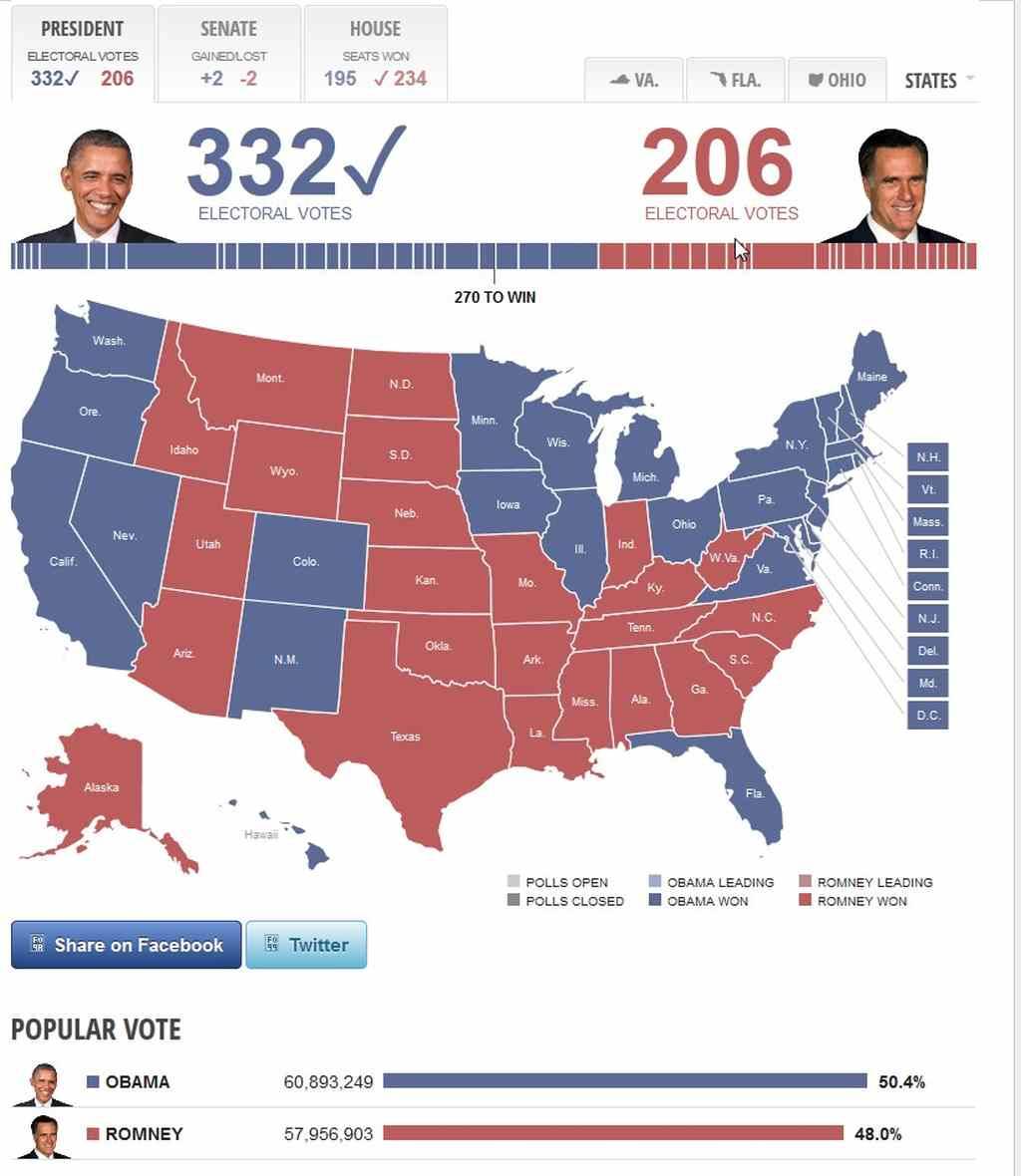
The map below is the only thing that is important in a nationwide Presidential election .

tumblr_md6yd0I2x61rbtfplo1_1280.jpg


As RepubliKlan operative Dick Morris explains in a post I put up earlier this year, which is below; the challenge for the RepubliKlans in winning the ‘white house’ in 2016 are daunting due to the electoral college. Watch his video below; he gets this analysis 100% correct.

Nothing has happened in the ensuing months, especially with the jingoistic out-in-the-open racist campaign of Donald Trump which will probably cause an even smaller percentage of Latino voters to vote RepubliKlan than RMoney’s 27%.

The other RepubliKlan white supremacist fantasy is that there is some large untapped pool of white republiklan voters who stayed home in 2008 & 2012, who with the right candidate can be whipped up into a frenzy and surge to the polls and give the republiklans a white house victory.

Old hard-core RepubliKlan curmudgeon George Will debunked this possibility months ago; nothing has changed since then. This 2016 election cycle is set up for the Democratic Party to retain the white house. Will they fumble the ball???


<span style="text-decoration:none;color:#000000;display:inline-block;cursor:p</span>
According to RepubliKlan Dick Morris, the odds of the RepubliKlans winning the 2016 U.S. Presidency are "Daunting" and "Very Difficult"
http://www.dickmorris.com/daunting-electoral-odds-gop-2016-dick-morris-tv-lunch-alert/


Now lets see if the Democrats fumble the ball?


In this video commentary, I discuss the challenging electoral odds for the GOP in 2016. Tune in!

This Dick Morris Lunch Alert! sponsored by Money Morning.

Click Here to give me your thoughts and continue the discussion.

<iframe src="//fast.wistia.net/embed/iframe/93pzkuv7ty" allowtransparency="true" scrolling="no" class="wistia_embed" name="wistia_embed" allowfullscreen="allowfullscreen" mozallowfullscreen="mozallowfullscreen" webkitallowfullscreen="webkitallowfullscreen" oallowfullscreen="oallowfullscreen" msallowfullscreen="msallowfullscreen" frameborder="0" height="270" width="480"></iframe><script src="//fast.wistia.net/assets/external/E-v1.js" async=""></script>

Click Here to sign up to get all of Dick’s videos emailed to you!

Please forward this email to any friends or family who may be interested in viewing my video commentary!

Thanks for watching,

<hr noshade color="#ff0000" size="8"></hr>

.............


RepubliKlan hack dick morris gives republiklans the reality-based facts on one of their own bullshit websites NewsMax on Feb. 18th 2015.
Morris point out that-

The 3.8 percent point margin by which President Obama defeated Mitt Romney in 2012 clouds the challenge the Republicans face in 2016. Unless they are able to improve their standing by 5 to 6 points in the key electoral states, they cannot win.

Romney got 206 electoral votes (carrying his closest state, North Carolina, by only 2.2 points). To add to this total, much less to bring it up to the 271 needed to win, Republicans must carry a number of states where they lost by five or more points in 2012.

Here are the closest states that went for Obama in 2012:

electoral_college.png


Note how sharply Obama’s margin increases as we look down the list to marginal states he carried in 2012. The states above the line in the chart, combined with the ones Romney carried, would suffice to reach a majority. A tall order, indeed.

In fact, if all the 2016 Republican candidate did was to close the 3 point gap in the popular vote -- and this was reflected in the swing states -- he would still lose, getting only 168 of the 171 he needs to win.
Read the rest HERE


Original Post 08-21-2014


Buoyed by demographics showing a rapidly growing Latino population and the tea-bagger dominated RepubliKlan party’s current estrangement with Latino voters — primarily over the issues of immigration and a path to citizenship for the millions of undocumented already in the U.S. — Democrats, Black Democrats in particular have become instilled with a virtually certain belief that the office of President of the United States is out of reach for RepubliKlans in the years 2016, 2020, etc.

Such thinking is foolish and it belies a lack of critical thinking and strategizing among Black elites. BuShit got 35% of the Latino vote in 2000 and 40% in 2004. RMoney got 27% of the Latino vote. As the article outlines below, the RepubliKlans have absolutely NO plans to change any of their core policies and make a serious attempt to attract Black voters.

The RepubliKlan carcass strategy is to increase the ‘white’ voter turnout and to change the current hateful doctrinaire tea-bagger driven policies towards Latinos, just enough, to attract enough Latino voters to win a national election. The most obvious Latino targets for the RepubliKlans are the light skinned Hispanics who already see themselves as “honorary whites” — the Ted Cruz, Mark Rubio types.

Every other ethnic group who has arrived in the America that the English settlers started in the 1600’s have stepped right over and past African Americans who have been here from the beginning. The Irish, the Italians, the Greeks, the Russians, the Polish, the European Jews (a religion not a race) et al. — ALL were NOT considered de jure “white people” until the end of World War 2 in 1945.

The RepubliKlans strategy is always wedge politics, divide and conquer. Nixon’s and Reagan’s southern strategy. BuShit’s compassionate conservative “I’m saved & washed in the blood of Jesus” bullshit campaign pitch. The 2016 strategy is severe and intense voter suppression of the Black vote coupled with a nativist appeal to ‘white’ voters to turn out in unprecedented numbers in order to “save” America from the brown & Black hordes.

What are Black elites doing to entrench a Black & Latino & working class whites alliance? —nothing. Just a small shift in the Latino vote, which could occur with changes in the current RepubliKlan immigration and path-to-citizenship policies, could leave Black American voters out in the cold for decades; with, no influential access to the White House, one Black Democratic U.S. senator who has no seniority (he just got there), a congressional Black caucus in the House that is in the minority, etc. Black people once again ‘stuck’ on the bottom of the totem pole of American power.


<hr noshade color="#333333" size="6"></hr>


i3VZ2HdA9EwPP.gif


Should Republicans Just Focus on White Voters?


<img src="http://static01.nyt.com/images/2013...butor/edsall-contributor-articleInline-v2.jpg" width="140">
by Thomas B. Edsall | July 3, 2013 | http://opinionator.blogs.nytimes.com/2013/07/03/should-republicans-just-focus-on-white-voters/


For two decades, from 1972 to 1992, the Democratic Party agonized over its loss of support among whites, especially those in the working class. Over the next two decades, from the election of Bill Clinton in 1992 to the re-election of Barack Obama in 2012, the party slowly came to terms with its loss and learned how to win the presidency with a minority of white voters.
<br>Now the white vote has become a Republican problem. White voters cast 72 percent of all votes in the Obama-Romney election of 2012 compared to 87 percent in the Nixon-McGovern contest in 1972. Should the Republican Party accept the fact that the white majority in the United States is getting smaller or should it bet on boosting Republican margins and turnout rates among whites to record levels?

<br>The debate within the Republican Party on this fraught topic has provoked new levels of over-the-top rhetoric among the old guard on the farther right side of the Republican spectrum.
<br>Phyllis Schlafly, a conservative anti-feminist, declared in a radio interview on May 24:

<blockquote>The people the Republicans should reach out to are the white votes — the white voters who didn’t vote in the last election. And there are millions of them. And I think when you have an establishment-run nomination system, they give us a series of losers, which they’ve given us with Dole, and McCain, and Romney.</blockquote>
Not to be outdone, as he rarely is, Pat Buchanan wrote in the American Conservative on June 14:

<blockquote> <br>In political terms, this is depressing news for the Republican Party. For nearly 90 percent of all Republican votes in presidential elections are provided by Americans of European descent. In 1960 white folks were close to 90 percent of the entire U.S. population and 95 percent of the electorate. Nixon’s New Majority was created by pulling Northern Catholic ethnics and Southern conservative Protestants, white folks all, out of the Roosevelt coalition and bringing them into a new alliance that would give Nixon a 49-state landslide in 1972, which Reagan would replicate in 1984.</blockquote>
<br>Buchanan continued:<blockquote>
What are the Republicans doing? Going back on their word, dishonoring their platform and enraging their loyal supporters, who gave Mitt 90 percent of his votes, to pander to a segment of the electorate that gave Mitt less than 5 percent of his total votes? Whom the gods would destroy they first make mad.
</blockquote>
Buchanan and Schlafly thrive on a willingness to say — without regard to appearances — what others privately think but don’t want to be caught saying openly. There are other conservative strategists and operatives, closer to the actual business of running campaigns, who see things differently.
<br>I want to focus on three strategists who explore issues of race, message, strategy and the future of the Republican Party:
<br>Sean Trende, the senior elections analyst for RealClearPolitics, who has written a four-part series that seeks to broadly address the problems and alternative choices facing the Republican Party;

<br>Timothy Carney, a columnist for the Washington Examiner, whomakes the case for an anti-elite Republican Party, a “free-market populism and a Republican Party that fights against all forms of political privilege — a party that champions all who want to work and take risks in order to improve their lives and raise a family”;
<br><br>And Karl Rove, the Republican strategist who needs no introduction,argues in the Wall Street Journal that “the nonwhite share of the vote will keep growing” and that if “the G.O.P. leaves nonwhite voters to the Democrats, then its margins in safe congressional districts and red states will dwindle — not overnight, but over years and decades.”
<br>Trende provides the most detailed analysis. He is in fundamental disagreement with political thinkers who posit that demography is destiny, that the steady decline in the white share of the electorate, combined with the rising share made up of Hispanics and Asian-Americans, assures a secure Democratic majority in the foreseeable future. The demographic inevitability argument was most fully developed in the book “The Emerging Democratic Majority” byJohn B. Judis and Ruy Teixeira.
<br><br>Trende countered the Judis-Teixeira thesis in an email to the Times:
<blockquote>
You can’t establish long-lasting majority coalitions in America. Part of this is because parties adapt. You can already begin to see this starting with the G.O.P. on marriage equality, which will probably have a pro-gay marriage nominee at some point in the mid-2020s and might have a pro-civil unions nominee in 2016. The simple truth is that “coalitions of everyone” inevitably fall apart, quickly. You can see the reasons why in the immigration debate itself, where, even if we’re only being reluctantly honest, the interests of some core Democratic and Republican coalition groups are at loggerheads with one another (Hispanics vs. working class whites and blacks; upscale whites vs. downscale whites).
</blockquote>
<br>Trende explores different future scenarios for the Republican Party: these range from a “racial polarization” strategy at one extreme to an all-out effort by the Republican Party to win Hispanic and Asian support at the other.
<br>Trende takes each scenario and describes what Republicans would have to achieve, in terms of vote margins among major constituencies, to remain competitive in presidential contests.
<br>All of the strategies offered by Trende are purposefully “rosy scenarios” in which Republicans might win the overwhelming majority of presidential elections between 2016 and 2048. Trende explains:
<blockquote>
I don’t mean to leave the impression that the G.O.P. will win no matter what it does. Tweak some of these assumptions, and you get plenty of Democratic wins too. And it may not matter what the GOP chooses. The most dispiriting possibility is that racially diverse electorates may inherently add racial cleavages to otherwise “neutral” issues, and that polarization becomes inevitable. That’s certainly the experience of Northern cities during the great immigrant wave of the early 1900s, as well as of the American South. My point is simply that there are a slew of realistic scenarios where Republicans do very well in the future. In most of the scenarios I consider reasonable, the elections stay close enough that either party could win most any individual election for the foreseeable future.
</blockquote>
<br>Trende’s most controversial assertion is that from a purely tactical point of view, Republican dependence on whites is not necessarily a liability, despite the decline in the white share of the electorate:
<blockquote>
Democrats liked to mock the G.O.P. as the ‘Party of White People’ after the 2012 elections. But from a purely electoral perspective, that’s not a terrible thing to be.
</blockquote>
<br>The core of Trende’s case for his “racial polarization” scenario, as he makes it on RealClearPolitics, is his analysis showing a 6.1 million drop in the white vote from 2008 to 2012. Trende draws his data from the Census, exit polls and county-by-county election results.

<br>By Trende’s calculation, voters who failed to turn out in 2012 were disproportionately Republican-leaning, “largely downscale, Northern, rural whites.” If all 6.1 million had cast ballots in 2012, it would not have been enough for Romney to win, but the election would have been much closer.
<br><br>In Trende’s “ ‘racial polarization’ scenario,” the political divergence between white and minority America becomes steadily more extreme. Whites, who cast 59 percent of their votes for Romney in 2012, would become more Republican over the next few decades, casting a record-setting 70 percent of their votes for Republicans by 2036. Minorities, blacks, Hispanics and Asian Americans, who cast80 percent of their votes for Obama in 2012, would, in Trende’s “polarization” scenario, be casting 90 percent of their ballots for Democratic candidates by 2036.

<br>Trende put these and other assumptions on turnout rates into an interactive Electoral College calculator*developed by my colleague Nate Silver, and produced results (Figure 1) showing that Republicans could win the presidency for seven straight elections between 2016 and 2040.
<div>Photo
<div><img itemprop="url" itemid="http://graphics8.nytimes.com/images...OO/02edsall-charts-slide-5IOO-tmagArticle.jpg" src="http://graphics8.nytimes.com/images...OO/02edsall-charts-slide-5IOO-tmagArticle.jpg" id="100000002316473" width="592" height="196" alt="Fig. 1" /></div>
Fig. 1
Trende has developed a second, more moderate scenario, illustrated in Figure 2, which assumes a “modest Republican outreach toward Hispanics” that produces some gains among Latinos and Asian Americans, but does so at the cost of slowing Republican advances among whites.
Photo
<img itemprop="url" itemid="http://graphics8.nytimes.com/images...YQ/02edsall-charts-slide-VUYQ-tmagArticle.jpg" src="http://graphics8.nytimes.com/images...YQ/02edsall-charts-slide-VUYQ-tmagArticle.jpg" id="100000002316471" width="592" height="196" alt="Fig. 2" />
Fig. 2 Credit Realclearpolitics.com
<br>In the third Trende scenario, the Republican Party goes “full Rubio,” embracing immigration reform and the nomination of more Latino candidates, possibly including Marco Rubio, the Florida Republican Senator of Cuban descent. In this scenario, Republicans “back immigration reform” and “nominate a Hispanic-friendly candidate.” This strategy, illustrated in Figure 3, produces victory after victory for the Republican Party even as it sacrifices “some progress with white voters.”
Photo
<img itemprop="url" itemid="http://graphics8.nytimes.com/images...8Z/02edsall-charts-slide-OH8Z-tmagArticle.jpg" src="http://graphics8.nytimes.com/images...8Z/02edsall-charts-slide-OH8Z-tmagArticle.jpg" id="100000002316470" width="592" height="196" alt="Fig. 3" />
Fig. 3 Credit realclearpolitics.com
<br>All of Trende’s scenarios are theoretically possible, but the question is: are they realistic? Addressing only the racial polarization projection, it’s hard to see 70 percent of the white vote going to Republicans. Richard Nixon in 1972 and Ronald Reagan in 1984, both incumbents running against very weak Democratic opponents,set records for white Republican support, 67 percent and 64 percent, respectively, and no Republican has broken 60 percent since then. In addition, the Democratic Party over the past 20 years has made substantial gains among the growing population of culturally liberal white “knowledge workers.” These gains have been key to realigning populous suburbs surrounding northern cities.

<br>Teixeira, responding to my request for comment on Trende’s hypothetical scenarios, wrote:
<blockquote>
Trende is hardly a knuckle-dragger but he is at great pains to establish that technically the G.O.P. does not need Latino votes, provided the black vote subsides a bit and, most importantly, they not only hold their share of the white vote, but expand. Of course this is technically possible (that is, if things go as Trende hypothesizes, it is certainly true that the Republicans can win without additional Latino votes) but is it a wise course of action?* I don’t think so. A lot of things have to go right for this technically possible strategy to work, and in their position I would not want to rely on all those things going right — and continuing to go right.
</blockquote>
<br>Carney advocates another alternative, a hybrid of the populism advocated by Huey Long and Teddy Roosevelt:
<blockquote>
Republicans need a new coalition and a new message. The heart of that coalition should be the working class. The message should be populism.
</blockquote>
<br>Carney expects that Republican efforts to build more substantial margins among well-educated affluent whites will fail:<blockquote>
Upscale white suburbs have steadily trended Democratic. Montgomery County, Maryland, was one of the first. Westchester, New York, and the North Shore of Chicago followed. Philadelphia’s white-collar counties and Northern Virginia soon joined the club. In 2008, Obama made huge gains in the suburbs, pulling in 60 percent in Fairfax County, for instance, and winning the vote of those voters earning over $100,000, according to exit polls.
</blockquote>
<br>Carney writes that in 2012, “Republicans couldn’t have picked a candidate better suited for highly educated, upper-middle-class suburban voters. Romney was successful, risk-averse, smart and non-ideological,” but his “suburban strategy fizzled.”
<br>These setbacks suggest that it “is time to give up on building majorities on a suburban foundation.” Instead, the Republican Party, in Carney’s view,
<blockquote>
needs to play to the disaffected. The disaffected are not the wealthy, an obvious point that conservatives can’t seem to understand. The wealthy got wealthier under Obama, and corporations earned record profits while median family earnings fell. Obama uses these facts to defuse the charges he’s a socialist. Republicans should use them to show that Obama’s big government expands the privileges of the privileged class.
</blockquote>
<br>Carney’s views are shared, at least in part, by a wing of conservatism that includes my colleague Ross Douthat, who, along with Reihan Salam, a contributing editor at National Review, in 2005 proposed a “downscale” or “Sam’s Club” Republican strategy in The Weekly Standard, an argument which they elaborated upon in a 2008 book*“Grand New Party: How Republicans Can Win the Working Class and Save the American Dream.”

<br><br>Carney’s proposal would require an upheaval of the Republican hierarchy. Currently, the party has substantial support from the white working class, but its agenda, particularly its economic agenda, is set by an elite with century-old ties to corporate America. At the policy-making level, the Republican Party has represented the interests of society’s winners, not its losers.
<br><br>This brings us to Rove, the most prominent of the three strategists under discussion. Rove planned to use the two-term presidency of George W. Bush to entrench a sustained Republican majority. Rove is an advocate of a version of Trende’s “full Rubio” strategy, as witnessed by Rove’s oversight of Bush’s success in winning over 40 percent of the Latino vote in 2004.
<br><br>In a Wall Street Journal op-ed on June 26, Rove stated his views about an optimal Republican approach, writing that “100,042,000 whites voted in 2008 but only 98,041,000 did in 2012.” To Rove, this raised a key question, “Wouldn’t it be better to get those two million whites back into the polling booth?” His answer: If these stay-at-home folks had gone to the polls, “Romney’s vote total would have increased by 1,180,590. But President Obama’s vote total would have increased by 780,390, and Mr. Romney still would have lost the election by 4.6 million votes.”

<br>Rove implicitly attacked Trende’s racial polarization scenario, contending that “it’s unreasonable to expect Republicans to routinely” replicate Reagan’s 64 percent white margin in 1984, much less win 70 percent of the white vote.
<br>Rove cited some dramatic statistics to argue that the Republican Party disregards Hispanics at its peril:
<blockquote>
The Hispanic population in Georgia’s Gwinnett County increased by 153% from 2000 to 2010, while the GOP’s presidential vote in the county dropped to 54% in 2012 from 63.7% in 2000. In Henry County, south of Atlanta, the Hispanic population increased by 339% over the same decade. The GOP’s presidential vote dropped to 51.2% in 2012 from 66.4% in 2000.
</blockquote>
<br>Rove’s solution is less a coherent strategy than a call to arms: “Republicans must now do two things: turn out more white voters and improve their performance among Hispanics, African-Americans and Asian-Americans.” In other words, the Republican Party must be all things to all men.
<br>In an email, Trende described his own strategic preferences to me as a moderate effort to reach out to Hispanics, combined with a degree of focus on low and middle income earners:
<blockquote>
To the extent I have suggestions, they were for more economic populism. These include a lot of changes Democrats would presumably enjoy; jettisoning the upscale, Club-for-Growth-style conservatism that characterized the Romney campaign for something authentically more geared toward downscale voters.
</blockquote>
<br>Right now, the Republican Party is caught in a vise: it is dependent on support from a diminishing but still powerful constituency of socially, culturally and morally conservative whites from across the economic spectrum, many of whom oppose gay rights and immigration reform. But the party must also deal with two ascendant constituencies: culturally tolerant — indeed, permissive — young and suburban voters of all races, along with Hispanic voters who place a priority on immigration reform that gives undocumented aliens a path to citizenship.
<br>Just to complicate matters, these strategic choices for Republicans are very different for candidates for president and for the House. Some Republicans aiming at the presidency will decide it is essential to woo Hispanics in order to win a national election, while many Republicans aiming at the House will view support for immigration reform as a guarantee of defeat in a primary.
<br>These dilemmas are characteristic of a party undergoing a seismic transformation. The Republican Party will likely replicate the experience of the Democratic Party in the 1970s and 1980s, changing only after repeated rejection of the party’s presidential nominees. There is too much at stake for key players in the Republican coalition to allow the party to fail to adapt. The question is, how long will it have to suffer the humiliation of defeat before it begins the process in earnest?


<hr noshade color="#ff0000" size="8"></hr>


tb-net-worth.jpg


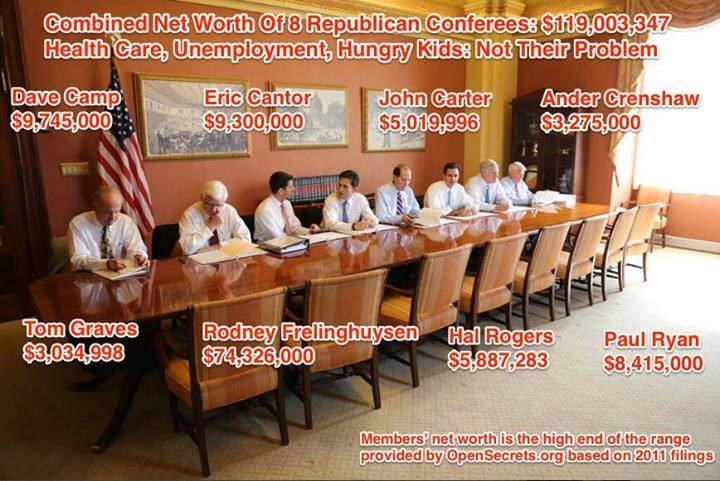
THEY DON'T GIVE A DAMN ABOUT BLACK VOTERS


<img src="http://media-cache-ak0.pinimg.com/originals/5c/63/83/5c638399c479366bc9e52bdbd9da7d2b.jpg" width="800">
 
Last edited:
A trump victory will make a lot of latinos who identified

with white folks lose that identification..

its also going to cause a rift between elite cacs who depend on their

cheap labor, from poor red necks who feel latinos are taking their jobs..


you are also going to see an attack on anyone who speaks anything other than english...

us moorish americans are going to be left out as usual, but we should be used to that by now..


cacs fight harder, and form groups, because their insecure emotional lives depend on it..


deep down inside us moorish americans know, we gonna make a way no matter

what....
 
Back
Top