Mass Killings in Darfur

GET YOU HOT

Superfly Moderator
BGOL Investor
header.jpg

The Sudanese Government, using Arab "Janjaweed" militias, its air force, and organized starvation, is systematically killing the black Sudanese of Darfur.
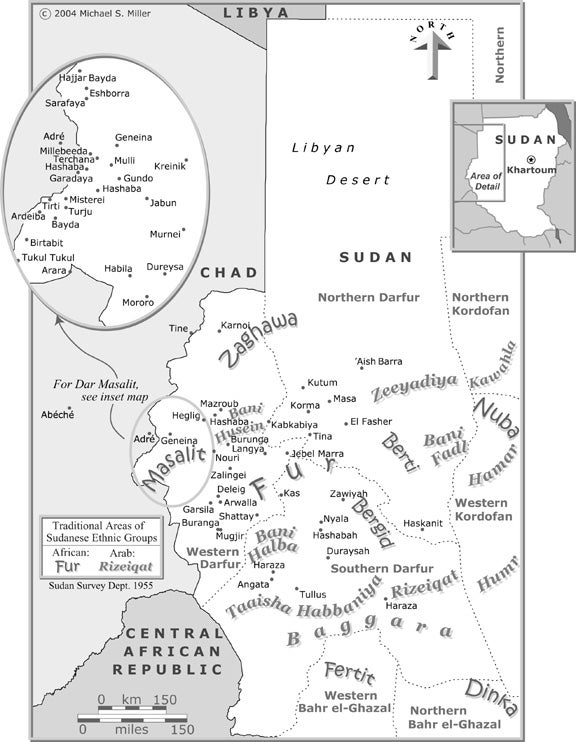
darfurmap.jpg


http://hrw.org/reports/2004/sudan0504/5.htm#_Toc71531690
http://www.darfurgenocide.org/
ESTIMATED DEATH TOLL:http://www.washingtonpost.com/wp-dyn/content/article/2005/04/23/AR2005042301032.html
 
Last edited:
Bush Stalls on Darfur Genocide

Months after the Bush administration first declared that ongoing violence in Darfur constituted ''genocide,'' 80 prominent national organizations and leadership figures representing millions of Americans urged the President to do more to protect innocent civilians in Sudan's western Darfur region. The Bush administration, which over the past year took the lead in approving several Security Council resolutions deploring the violence and authorizing the African Union mission, has appeared much less aggressive in recent months. Since conflict erupted in Sudan in February 2003, Amnesty International estimates that more than 70,000 people are believed to have lost their lives. Over 1.5 million civilians have been internally displaced by the conflict and 200,000 have sought refuge in neighboring Chad. Tens of thousands of women have been displaced, raped and killed since the violence began.
Sources: Common Dreams, "Bush Accused of Complacency, Double-Dealing on Darfur, Jim Lobe, May 25, 2005; Amnesty International, "Sudan Human Rights Concerns"; National Organization for Women, "Violence Against Women in Sudan Reveals Common Weapon of War," Lisa Alvy, December 3, 2004
 
Arabs killing Africans over there evey day like it ain't shit,and yet some of the brothas on this board complain more about Mexicans and yet side with Osama>>>>>>>>>>. :smh: :smh:
 
Last edited:
The U.N. and The U.S. and NATO, hell, the whole World is Watching and doing nothing! If if were not for Human Rights Groups hardly anyone would know what is going on there. It is going to be another Rhwanda, then on to the next group, and on and on. Thing is, when you know about something, acknowledge it, and do nothing to stop it, its just as bad.
 
qUE LOVES THE MUSLIMS MORE THAN HE HATES THE mEXICANS.............Keep doing this que ...... :dance: :dance: all day for whitey...........KKK LOVER THAT YOU ARE............... :lol: :lol: :yes:
 
Don't blame it on Que, you are just looking to pic a fight BP, all up in my thread...here some of your people's history...written by whitey :hmm:
[FRAME]http://kpearson.faculty.tcnj.edu/Dictionary/wetback.htm[/FRAME]
 
Don't blame it on Que, you are just looking to pic a fight BP, all up in my thread...here some of your people's history in my country...written by whitey :hmm:
[FRAME]http://kpearson.faculty.tcnj.edu/Dictionary/wetback.htm[/FRAME]
 
5 Truths About Darfur
By Emily Wax
Sunday, April 23, 2006

KOU KOU ANGARANA, Chad

Heard all you need to know about Darfur? Think again. Three years after a government-backed militia began fighting rebels and residents in this region of western Sudan, much of the conventional wisdom surrounding the conflict -- including the religious, ethnic and economic factors that drive it -- fails to match the realities on the ground. Tens of thousands have died and some 2.5 million have been displaced, with no end to the conflict in sight. Here are five truths to challenge the most common misconceptions about Darfur:

1 Nearly everyone is Muslim

Early in the conflict, I was traveling through the desert expanses of rebel-held Darfur when, amid decapitated huts and dead livestock, our SUV roared up to an abandoned green and white mosque, riddled with bullets, its windows shattered.

In my travels, I've seen destroyed mosques all over Darfur. The few men left in the villages shared the same story: As government Antonov jets dropped bombs, Janjaweed militia members rode in on horseback and attacked the town's mosque -- usually the largest structure in town. The strange thing, they said, was that the attackers were Muslim, too. Darfur is home to some of Sudan's most devout Muslims, in a country where 65 percent of the population practices Islam, the official state religion.

A long-running but recently pacified war between Sudan's north and south did have religious undertones, with the Islamic Arab-dominated government fighting southern Christian and animist African rebels over political power, oil and, in part, religion.

"But it's totally different in Darfur," said Mathina Mydin, a Malaysian nurse who worked in a clinic on the outskirts of Nyala, the capital of South Darfur. "As a Muslim myself, I wanted to bring the sides together under Islam. But I quickly realized this war had nothing to do with religion."

2 Everyone is black

Although the conflict has also been framed as a battle between Arabs and black Africans, everyone in Darfur appears dark-skinned, at least by the usual American standards. The true division in Darfur is between ethnic groups, split between herders and farmers. Each tribe gives itself the label of "African" or "Arab" based on what language its members speak and whether they work the soil or herd livestock. Also, if they attain a certain level of wealth, they call themselves Arab.

Sudan melds African and Arab identities. As Arabs began to dominate the government in the past century and gave jobs to members of Arab tribes, being Arab became a political advantage; some tribes adopted that label regardless of their ethnic affiliation. More recently, rebels have described themselves as Africans fighting an Arab government. Ethnic slurs used by both sides in recent atrocities have riven communities that once lived together and intermarried.

"Black Americans who come to Darfur always say, 'So where are the Arabs? Why do all these people look black?' " said Mahjoub Mohamed Saleh, editor of Sudan's independent Al-Ayam newspaper. "The bottom line is that tribes have intermarried forever in Darfur. Men even have one so-called Arab wife and one so-called African. Tribes started labeling themselves this way several decades ago for political reasons. Who knows what the real bloodlines are in Darfur?"

3 It's all about politics

Although analysts have emphasized the racial and ethnic aspects of the conflict in Darfur, a long-running political battle between Sudanese President Omar Hassan Bashir and radical Islamic cleric Hassan al-Turabi may be more relevant.

A charismatic college professor and former speaker of parliament, Turabi has long been one of Bashir's main political rivals and an influential figure in Sudan. He has been fingered as an extremist; before the Sept. 11, 2001, attacks Turabi often referred to Osama bin Laden as a hero. More recently, the United Nations and human rights experts have accused Turabi of backing one of Darfur's key rebel groups, the Justice and Equality Movement, in which some of his top former students are leaders.

Because of his clashes with Bashir, Turabi is usually under house arrest and holds forth in his spacious Khartoum villa for small crowds of followers and journalists. But diplomats say he still mentors rebels seeking to overthrow the government.


"Darfur is simply the battlefield for a power struggle over Khartoum," said Ghazi Suleiman, a Sudanese human rights lawyer. "That's why the government hit back so hard. They saw Turabi's hand, and they want to stay in control of Sudan at any cost."

4 This conflict is international

China and Chad have played key roles in the Darfur conflict.
In 1990, Chad's Idriss Deby came to power by launching a military blitzkrieg from Darfur and overthrowing President Hissan Habre. Deby hails from the elite Zaghawa tribe, which makes up one of the Darfur rebel groups trying to topple the government. So when the conflict broke out, Deby had to decide whether to support Sudan or his tribe. He eventually chose his tribe.

Now the Sudanese rebels have bases in Chad; I interviewed them in towns full of Darfurians who tried to escape the fighting. Meanwhile, Khartoum is accused of supporting Chad's anti-Deby rebels, who have a military camp in West Darfur. (Sudan's government denies the allegations.) Last week, bands of Chadian rebels nearly took over the capital, N'Djamena. When captured, some of the rebels were carrying Sudanese identification.

Meanwhile, Sudan is China's fourth-biggest supplier of imported oil, and that relationship carries benefits. China, which holds veto power in the U.N. Security Council, has said it will stand by Sudan against U.S. efforts to slap sanctions on the country and in the battle to force Sudan to replace the African Union peacekeepers with a larger U.N. presence. China has built highways and factories in Khartoum, even erecting the Friendship Conference Hall, the city's largest public meeting place.

5 The "genocide" label made it worse

Many of the world's governments have drawn the line at labeling Darfur as genocide. Some call the conflict a case of ethnic cleansing, and others have described it as a government going too far in trying to put down a rebellion.

But in September 2004, then-Secretary of State Colin L. Powell referred to the conflict as a "genocide." Rather than spurring greater international action, that label only seems to have strengthened Sudan's rebels; they believe they don't need to negotiate with the government and think they will have U.S. support when they commit attacks. Peace talks have broken down seven times, partly because the rebel groups have walked out of negotiations. And Sudan's government has used the genocide label to market itself in the Middle East as another victim of America's anti-Arab and anti-Islamic policies.

Perhaps most counterproductive, the United States has failed to follow up with meaningful action. "The word 'genocide' was not an action word; it was a responsibility word," Charles R. Snyder, the State Department's senior representative on Sudan, told me in late 2004. "There was an ethical and moral obligation, and saying it underscored how seriously we took this." The Bush administration's recent idea of sending several hundred NATO advisers to support African Union peacekeepers falls short of what many advocates had hoped for.

"We called it a genocide and then we wine and dine the architects of the conflict by working with them on counterterrorism and on peace in the south," said Ted Dagne, an Africa expert for the Congressional Research Service. "I wish I knew a way to improve the situation there. But it's only getting worse."

Emily Wax is The Washington Post's East Africa bureau chief.
 
Even more vague is one's memory of the genocide in Rhwanda and here again we see more of the same. United Nations, the World, turning a blind eye to indescriminate population control via innocents.
 
Bush to name former USAID head as envoy for Darfur

Bush to name former USAID head as envoy for Darfur
Tuesday 19 September 2006.

Sept 19, 2006 (UNITED NATIONS) — President Bush has decided to name Andrew Natsios, a former administrator of the U.S. Agency for International Development, as his special envoy for Darfur, the Washington Post reports in its Tuesday edition.

By this appointment Bush hopes reviving a diplomatic effort to end a 3 1/2 -year spree of violence in Sudan that has left hundreds of thousands dead, said a senior administration officials.

Bush is expected to announce Natsios’s appointment Tuesday in a speech to world leaders at the U.N. General Assembly.

The initiative follows increasing pressure from Congress and human rights advocates to do more to halt what the Bush administration has termed the world’s only ongoing case of genocide.

The Post said that U.N. officials privately expressed concern that Natsios may pursue a confrontational approach that will harden Sudanese opposition to a U.N. force in Darfur.

"By selecting Natsios, the administration has chosen a blunt representative with considerable backing among the American aid community and a long record of butting heads with the Sudanese over the delivery of humanitarian assistance".

When Powell traveled to Darfur in July 2004, he was accompanied by Natsios, then USAID administrator. As the plane flew over the blackened remains of ravaged villages, Natsios described his dismay at the Sudanese government in a stream of expletives.

"I think he won’t be fooled by these guys," said John Prendergast of the International Crisis Group, a sharp critic of the Bush administration’s Darfur policy.

http://www.sudantribune.com/spip.php?article17691
 
Cut thru government red tape and into a hornets nest, lets see how long it will take to see change hundreds of thousands dead. Discovery Channnel just broadcast Uncivil war in Libera, same ol'shit, black leadership aloof to basic needs, looting scenes looked like those poor souls looting, when they didnt have a choice eat or starve, in New Orleans running out of walmart, no one is paying attention anyways...vote or die! lol
 
Is the Save Darfur movement a PR scam?

This dude seems to think so


Ten Reasons Why "Save Darfur" is a PR Scam to Justify the Next US Oil and Resource Wars in Africa

by Bruce Dixon

Global Research, December 12, 2007
blackagendareport.com - 2007-11-27


The star-studded hue and cry to "Save Darfur" and "stop the genocide" has gained enormous traction in U.S. media along with bipartisan support in Congress and the White House. But the Congo, with ten to twenty times as many African dead over the same period is not called a "genocide" and passes almost unnoticed. Sudan sits atop lakes of oil. It has large supplies of uranium, and other minerals, significant water resources, and a strategic location near still more African oil and resources. The unasked question is whether the nation's Republican and Democratic foreign policy elite are using claims of genocide, and appeals for "humanitarian intervention" to grease the way for the next oil and resource wars on the African continent.

The regular manufacture and the constant maintenance of false realities in the service of American empire is a core function of the public relations profession and the corporate news media. Whether it's fake news stories about wonder drugs and how toxic chemicals are good for you, bribed commentators and journalists discoursing on the benefits of No Child Left Behind, Hollywood stars advocating military intervention to save African orphans, or slick propaganda campaigns employing viral marketing techniques to reach out to college students, bloggers, churches and ordinary citizens, it pays to take a close look behind the facade.

Among the latest false realities being pushed upon the American people are the simplistic pictures of Black vs. Arab genocide in Darfur, and the proposed solution: a robust US-backed or US-led military intervention in Western Sudan. Increasing scrutiny is being focused upon the "Save Darfur" lobby and the Save Darfur Coalition; upon its founders, its finances, its methods and motivations and its truthfulness. In the spirit of furthering that examination we here present ten reasons to suspect that the "Save Darfur" campaign is a PR scam to justify US intervention in Africa.

1. It wouldn't be the first Big Lie our government and media elite told us to justify a war.

Elders among us can recall the Tonkin Gulf Incident, which the US government deliberately provoked to justify initiation of the war in Vietnam. This rationale was quickly succeeded by the need to help the struggling infant "democracy" in South Vietnam, and the still useful "fight 'em over there so we don't have to fight 'em over here" nonsense. More recently the bombings, invasions and occupations of Afghanistan and Iraq have been variously explained by people on the public payroll as necessary to "get Bin Laden" as revenge for 9-11, as measures to take "the world's most dangerous weapons" from the hands of "the world's most dangerous regimes", as measures to enable the struggling Iraqi "democracy" stand on its own two feet, and necessary because it's still better to "fight them over there so we don't have to fight them here".

2. It wouldn't even be the first time the U.S. government and media elite employed "genocide prevention" as a rationale for military intervention in an oil-rich region.


The 1995 US and NATO military intervention in the former Yugoslavia was supposedly a "peacekeeping" operation to stop a genocide. The lasting result of that campaign is Camp Bondsteel, one of the largest military bases on the planet. The U.S. is practically the only country in the world that maintains military bases outside its own borders. At just under a thousand acres, Camp Bondsteel offers the US military the ability to pre-position large quantities of equipment and supplies within striking distance of Caspian oil fields, pipeline routes and relevant sea lanes. It is also widely believed to be the site of one of the US's secret prison and torture facilities.

3. If stopping genocide in Africa really was on the agenda, why the focus on Sudan with 200,000 to 400,000 dead rather than Congo with five million dead?

"The notion that a quarter million Darfuri dead are a genocide and five million dead Congolese are not is vicious and absurd," according to Congolese activist Nita Evele. "What's happened and what is still happening in Congo is not a tribal conflict and it's not a civil war. It is an invasion. It is a genocide with a death toll of five million, twenty times that of Darfur, conducted for the purpose of plundering Congolese mineral and natural resources."

More than anything else, the selective and cynical application of the term "genocide" to Sudan, rather than to the Congo where ten to twenty times as many Africans have been murdered reveals the depth of hypocrisy around the "Save Darfur" movement. In the Congo, where local gangsters, mercenaries and warlords along with invading armies from Uganda, Rwanda, Burundi, Angola engage in slaughter, mass rape and regional depopulation on a scale that dwarfs anything happening in Sudan, all the players eagerly compete to guarantee that the extraction of vital coltan for Western computers and cell phones, the export of uranium for Western reactors and nukes, along with diamonds, gold, copper, timber and other Congolese resources continue undisturbed.

Former UN Ambassador Andrew Young and George H.W. Bush both serve on the board of Barrick Gold, one of the largest and most active mining concerns in war-torn Congo.
Evidently, with profits from the brutal extraction of Congolese wealth flowing to the West, there can be no Congolese "genocide" worth noting, much less interfering with. For their purposes, U.S. strategic planners may regard their Congolese model as the ideal means of capturing African wealth at minimal cost without the bother of official U.S. boots on the ground.

4. It's all about Sudanese oil.

Sudan, and the Darfur region in particular, sit atop a lake of oil. But Sudanese oil fields are not being developed and drilled by Exxon or Chevron or British Petroleum. Chinese banks, oil and construction firms are making the loans, drilling the wells, laying the pipelines to take Sudanese oil where they intend it to go, calling far too many shots for a twenty-first century in which the U.S. aspires to control the planet's energy supplies. A U.S. and NATO military intervention will solve that problem for U.S. planners.

5. It's all about Sudanese uranium, gum arabic and other natural resources.

Uranium is vital to the nuclear weapons industry and an essential fuel for nuclear reactors. Sudan possesses high quality deposits of uranium. Gum arabic is an essential ingredient in pharmaceuticals, candies and beverages like Coca-Cola and Pepsi, and Sudanese exports of this commodity are 80% of the world's supply. When comprehensive U.S. sanctions against the Sudanese regime were being considered in 1997, industry lobbyists stepped up and secured an exemption in the sanctions bill to guarantee their supplies of this valuable Sudanese commodity. But an in-country U.S. and NATO military presence is a more secure guarantee that the extraction of Sudanese resources, like those of the Congo, flow westward to the U.S. and the European Union.

6. It's all about Sudan's strategic location


Sudan sits opposite Saudi Arabia and the Gulf States, where a large fraction of the world's easily extracted oil will be for a few more years. Darfur borders on Libya and Chad, with their own vast oil resources, is within striking distance of West and Central Africa, and is a likely pipeline route. The Nile River flows through Sudan before reaching Egypt, and Southern Sudan has water resources of regional significance too. With the creation of AFRICOM, the new Pentagon command for the African continent, the U.S. has made open and explicit its intention to plant a strategic footprint on the African continent. From permanent Sudanese bases, the U.S. military could influence the politics and ecocomies of Africa for a generation to come.

7. The backers and founders of the "Save Darfur" movement are the well-connected and well-funded U.S. foreign policy elite.

According to a copyrighted Washington Post story this summer

"The "Save Darfur (Coalition) was created in 2005 by two groups concerned about genocide in the African country - the American Jewish World Service and the U.S. Holocaust Memorial Museum...

"The coalition has a staff of 30 with expertise in policy and public relations. Its budget was about $15 million in the most recent fiscal year...

"Save Darfur will not say exactly how much it has spent on its ads, which this week have attempted to shame China, host of the 2008 Olympics, into easing its support for Sudan. But a coalition spokeswoman said the amount is in the millions of dollars."

Though the "Save Darfur" PR campaign employs viral marketing techniques, reaching out to college students, even to black bloggers, it is not a grassroots affair, as were the movement against apartheid and in support of African liberation movements in South Africa, Namibia, Angola and Mozambique a generation ago. Top heavy with evangelical Christians who preach the coming war for the end of the world, and with elements known for their uncritical support of Israeli rejectionism in the Middle East, the Save Darfur movement is clearly an establishment affair, a propaganda campaign that spends millions of dollars each month to manufacture consent for US military intervention in Africa under the cloak of stopping or preventing genocide.

8. None of the funds raised by the "Save Darfur Coalition", the flagship of the "Save Darfur Movement" go to help needy Africans on the ground in Darfur, according to stories in both the Washington Post and the New York Times.

"None of the money collected by Save Darfur goes to help the victims and their families. Instead, the coalition pours its proceeds into advocacy efforts that are primarily designed to persuade governments to act."

9. "Save Darfur" partisans in the U.S. are not interested in political negotiations to end the conflict in Darfur.

President Bush has openly and repeatedly attempted to throw monkey wrenches at peace negotiations to end the war in Darfur. Even pro-intervention scholars and humanitarian organizations active on the ground have criticized the U.S. for endangering humanitarian relief workers, and for effectively urging rebel parties in Darfur to refuse peace talks and hold out for U.S. and NATO intervention on their behalf.

The slick, well financed and nearly seamless PR campaign simplistically depicts the conflict as strictly a racial affair, in which Arabs, generally despised in the US media anyway, are exterminating the black population of Sudan. In the make-believe world it creates, there is no room for negotiation. But in fact, many of Sudan's 'Arabs", even the Janjiweed, are also black. In any case, they were armed and unleashed by a government which has the power to disarm them if it chooses, and can also negotiate in good faith if it chooses. Negotiations are never a guarantee of anything, but refusal to participate in negotiations, as the U.S. appears to be urging the rebels in Darfur to do, and as the "Save Darfur" PR campaign justifies, avoids any path to a political settlement among Sudanese, leaving open only the road of U.S and NATO military intervention.

10. Blackwater and other U.S. mercenary contractors, the unofficial armed wings of the Republican party and the Pentagon are eagerly pitching their services as part of the solution to the Darfur crisis.

"Chris Taylor, head of strategy for Blackwater, says his company has a database of thousands of former police and military officers for security assignments. He says Blackwater personnel could set up perimeters and guard Darfurian villages and refugee camps in support of the U.N. Blackwater officials say it would not take many men to fend off the Janjaweed, a militia that is supported by the Sudanese government and attacks villages on camelback."

Apparently Blackwater doesn't need to come to the Congo, where hunger and malnutrition, depopulation, mass rape and the disappearance of schools, hospitals and civil society into vast law free zones ruled by an ever-changing cast of African proxies (like the son of the late and unlamented Idi Amin), all under a veil of complicit media silence already constitute the perfect business-friendly environment for siphoning off the vast wealth of that country at minimal cost.

Look for the adoption of the Congolese model across the wide areas of Africa that U.S. strategic planners call "ungoverned spaces". Just don't expect to see details on the evening news, or hear about them from Oprah, George Clooney or Angelina Jolie.

Bruce Dixon can be contacted at bruce.dixon@blackagendareport.com

 
Last edited:
Thousands made slaves' in Darfur

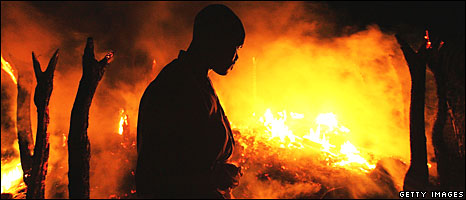
_45303998_blaze_getty_466.jpg


Strong evidence has emerged of children and adults being used as slaves in Sudan's Darfur region, a study says.

Kidnapped men have been forced to work on farmland controlled by Janjaweed militias, a coalition of African charities says.

Eyewitnesses also say the Sudanese army has been involved in abducting women and children to be sex slaves and domestic staff for troops in Khartoum.

But Khartoum said the report was "very naive" and called the authors ignorant.

"The government does not condone abductions and it is not government policy," a government spokesman told the BBC.

"We are working hard to stop such violations. The rebel factions are mostly to blame for abductions in Darfur."

_45303999_slaves-gety_226.jpg

Being in a refugee camp is no safeguard against attack

Up to 300,000 people have died since conflict began in Darfur in 2003 and at least 2.7 million people have fled their homes.

Thousands of people from non-Arabic speaking ethnic groups in Darfur have been targeted, says the report, published by the Darfur Consortium on Wednesday.

The group of 50 charities says it has around 100 eyewitness accounts from former abductees.

Victims have been rounded up during joint attacks on villages by the Arabic-speaking Janjaweed and the Sudanese Armed Forces, according to the study.

Civilians are also tortured and killed while their villages are razed to ethnically cleanse areas, which are then repopulated with Arabic-speaking people, including nomads from Chad, Niger, Mali and Cameroon, it says.

Most of the abductees are women and girls, but there is new evidence in Darfur of kidnappers targeting men and boys for forced agricultural labour, says the report.

The abducted women and girls, meanwhile, are raped and forced to marry their captors as well as carry out household chores and sometimes cultivate crops, according to the study.

'Regular beatings'

The report includes the testimony of children forced to become domestic workers.

_45304001_baby_afp_226b.jpg

Kidnapped children are made domestic slaves, says the study


One boy said he had suffered regular beatings from his Janjaweed abductors.

"They were treating me and the other boys very badly, they kept telling us that we are not human beings and we are here to serve them, I also worked on their farms," he said.

A woman said she was kidnapped from a refugee camp and her captors "used us like their wives in the night and during the day we worked all the time.

"The men they abducted with us were used to look after their livestock. We worked all day, all week with no rest."

Sudan's government has always denied the existence of slavery in the country, although Khartoum has previously admitted abductions occurred in the north-south civil war of 1983-2005, when up to 14,000 people were kidnapped.

But a senior Sudanese politician who did not wanted to be named said kidnappings had also occurred more recently in Darfur.

"The army captured many children and women hiding in the bush outside burnt villages," he told the report's authors.

"They were transported by plane to Khartoum at night and divided up among soldiers as domestic workers and, in some cases, wives."

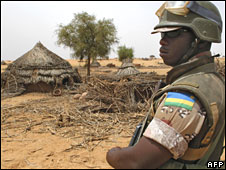
_45304000_soldier-afp_226.jpg

The report calls for the joint UN-AU force to be beefed-up

Call to action

The report urged Sudan's government to disband the Janjaweed and other militia and to fully co-operate with the United Nations and the African Union.

Dismas Nkunda, co-chair of the Darfur Consortium, said: "Urgent action is clearly required to prevent further abductions and associated human rights violations, and to release and assist those who are still being held."

The study also calls for the mandate of the joint United Nations-African Union peacekeeping force in Darfur (Unamid) to be beefed up so it can use force to protect civilians.

The Darfur Consortium also wants Khartoum to prosecute all those responsible for abductions and ban them from holding public office. It notes that no-one has ever been arrested over the wave of kidnappings.

http://news.bbc.co.uk/1/hi/world/africa/7786612.stm
 
Back
Top