

--- Know Your “Super Congress” Committee Members ---

Chitownheadbusa

♏|God|♏
BGOL Investor
Side Note:During struggling times a faction like the "Super Congress" is created for many reasons. Despite what many of you have heard or what many of you may think via what you've heard one of many reasons why something like a "super congress" is created is due to member within the regular congress not willing to throw away their integrity and fuck over the constituents that they are supposed to serve.

So in attempt to avoid the constitution of the USA, avoid back and forth bickering and override what should be final after reg congress votes on certain things like a debt ceiling....in the future a faction like the super congress will play the role of mediator and have the final say. And based off how tiny factions like these have operated in the past....more than likely that final say wont be in the best interest of the majority of the constituents.

At the rate that we're going soon or later the entire constitution will be null and void.

BTW.....our President has put his stamp of approval on this. With that being stated....does that make you trust your new Super congress?


Know Your “Super Congress” Committee Members


Don't worry. These guys aren't on it.


Among the compromises that were hashed out in the debt ceiling debate is the concept of a “super congress” or a committee consisting of 12 members: three members from each party caucus from both the House and the Senate.


Everyone is Scared of the Super Congress

They are tasked with recommending $1.5 trillion in deficit savings to be presented to the Congress by Thanksgiving for an up or down vote. If the committees recommendations are not approved by the Congress by the end of the year, a whole bunch of “triggers” are activated which will provide those savings by cutting programs which considered sacred cows by both parties.

SENATE REPUBLICANS:
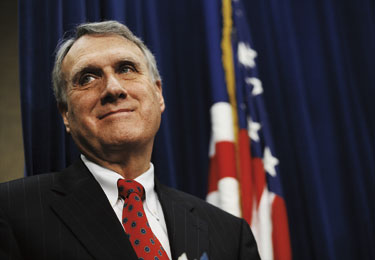


Sen. Jon Kyl (R-AZ) – Kyl is one of the ranking Republicans in the Senate and, as Minority Whip, is responsible for keeping the Republican caucus on message and generating the votes necessary to pass key legislation. He is a member of the Senate Judiciary Committee and the Senate Finance Committee. Kyl was up for election in 2012, but elected to retire this year. He is not responsible to the voters anymore and has very little to lose.
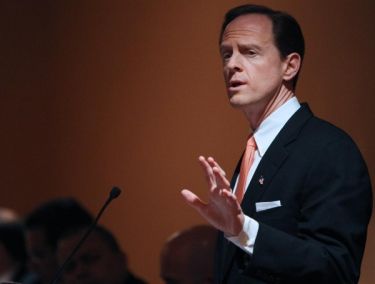


Sen. Pat Toomey (R-PA) – Toomey is a freshman Senator from Pennsylvania. He is considered one of the few unabashedly tea party-aligned Senators in the 112th Congress. A member of Congress from 1999 – 2005, he served as the president of the conservative Club for Growth until 2009. He has committee assignments on the banking, budget and commerce, science and transportation committees. As a person of Portuguese decent, he is also a member of the Republican-controlled Congressional Hispanic Conference.


Sen. Rob Portman (R-OH) – Portman is another freshman Senator. He served in Congress from 1993 to 2005, when he joined the Bush Administration as the U.S. Trade Representative and, later, Director of the Office of Management and Budget. His experience in the Bush White House put him knee deep in fiscal policy and he is considered the policy wonk on the committee on the Republican side. Portman is a member of the armed services, energy and natural resources, homeland security and budget committees. He is also a member of the Senate Sportsman’s Caucus—yep, that exists. Portman fancies himself a rising star and has a lot to lose if his performance in this committee is not hailed by conservatives as stellar.

SENATE DEMOCRATS:
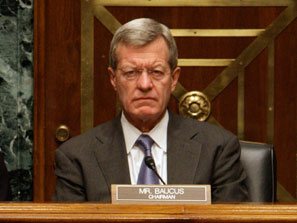


Sen. Max Baucus (D-MT) – In 2010, Baucus announced that he would retire at the end of this term in 2015. First elected to the Senate in 1978, he is Montana’s longest serving Senator ever. He, like Kyl, has nothing to lose and is likely to be a productive member of this committee. He is the chairman of the budget committee and is considered a moderate Democrat and a policy wonk.
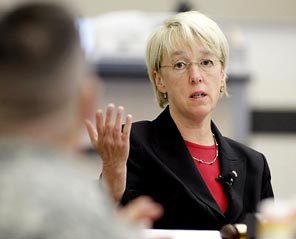


Sen. Patty Murray (D-WA) – Murray is on the more liberal side of Democrats in the Senate. She is the present chair of the Democratic Senatorial Campaign Committee, and is in charge of fundraising for her 23 Democratic colleagues up for reelection in 2012. Due to this inherently partisan position, her appointment to the committee was viewed with suspicion. She did however survive her election last year comfortably and is not up again until 2016 so she may not have as much to gain from partisan grandstanding as the joint committee’s co-chair. First elected to the Senate in 1993, as the “mom in tennis shoes,” she is a member of the appropriations, veteran’s affairs, health education, labor and pensions and budget committees.


Sen. John Kerry (D-MA) – You remember this guy, right? He did something important in 2004. While Kerry is remembered as a strict partisan when he ran for president, he also prides himself on being a statesman and a compromiser. While he is a vocal advocate for tax increases, he is not up for reelection until 2014 and, when he is, has little to worry about from his liberal leaning constituency back home. He is a member of the commerce, science and transportation, finance and small business and entrepreneurship committees. He also chairs the Senate Foreign Relations Committee.

HOUSE REPUBLICANS:


Rep. Jeb Hensarling (R-TX) – Hensarling is a pretty staunch conservative who lobbied hard to have “earmarks” eliminated. A member of the previous deficit reducing commission, known as the Simpson-Bowles panel, he opposed their recommendations for not going far enough to limit spending. He has been in office since 2003.
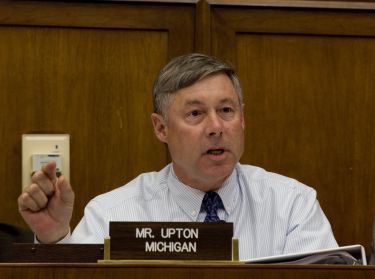


Rep. Fred Upton (R-MI) – Upton is an elder statesman among the recently enlarged Republican delegation from Michigan. In his 13th term in Congress, Upton is the chairman of the House Energy and Commerce Committee. He is considered a moderate Republican, and authored the ban on non-eco friendly light bulbs for which he was reviled by his colleagues on the right and among the Republican commentary class. After the 2010 elections, he had a bit of a come to Jesus on his previous positions and has tacked to the right a bit. Upton is also on the House Ways and Means Committee which handles tax and entitlement law.
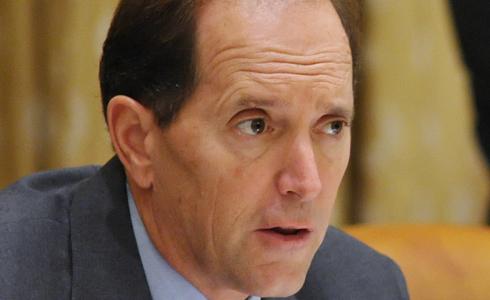


Rep. Dave Camp (R-MI) – Camp is the chairman of the House Ways and Means Committee. Camp has gone on record saying that the super committee’s primary job would be to reform the tax code, to eliminate loopholes which would increase revenues but lower rates across the board to compensate. This committee has been called the only way in which to reform the tax code because eliminating loopholes offends too many constituencies to get it passed the Congress as a whole. Camp is on record saying that he will do what is in his power to pursue that outcome. He also served on the Bowles-Simpson panel and shares Hensarling’s criticism of the panel’s recommendations.

(House Minority Leader Nancy Pelosi (D-CA) has yet to name the Democratic members of the super committee from the House. She has until the 16th to submit her three selections).


http://www.ology.com/politics/know-your-“super-congress”-committee-members
 
Last edited:
Thanks for posting the profiles of the members that have been appointed to the Super Committee, thus far. Without question, there should be concern over WHO is being appointed. If the Committee is stacked with too many political idealogues (no matter which party or persuasion) unable and/or unwilling to make reasonable compromises, it may be unreasonable to believe that anything productive will result from it.


Side Note:

During struggling times a faction like the "Super Congress" is created for many reasons. Despite what many of you have heard or what many of you may think via what you've heard one of many reasons why something like a "super congress" is created is due to member within the regular congress not willing to throw away their integrity and fuck over the constituents that they are supposed to serve.

So in attempt to avoid the constitution of the USA, avoid back and forth bickering and override what should be final after reg congress votes on certain things like a debt ceiling....in the future a faction like the super congress will play the role of mediator and have the final say.

Hmmm. I thought the decisions reached by the committee would then have to be voted upon by Congress and then signed or vetoed by the President. Are you speaking of the present super committee or some imaginary committee of the future ???


. . . based off how tiny factions like these have operated in the past....more than likely that final say wont be in the best interest of the majority of the constituents.
What super committees and what decisions of super committees are you referring to ???


At the rate that we're going soon or later the entire constitution will be null and void.

If the super committee is the final arbitor, perhaps, your concerns are well founded. But, how is the Constitution usurped if the decisions of the super committee must be voted upon by Congress, in the end ???


BTW.....our President has put his stamp of approval on this. With that being stated....does that make you trust your new Super congress?


What if you have misunderstandings over the process ???

`
 
I can't believe people in the United States tolerate this.

There is this collective stupidity/cowardice in this country that is amazing to watch.

Why not just have a Dictator? Why not just have military tribunals instead of courts? Why not abolish all state lines and legislatures?

Wait, strike that.

Americans are just dumb enough to go for that too!
 
Great post! I agree with most whom have posted already. What's the point? Are not any of the sub-committees good enough to ensure we follow the legislation? Also any congressman or Senator whom has been in Washington over two years should not be appointed!!! They rubber stamped all of this spending starting from Clinton, Bush and Obama. We are getting hosed! :smh:
 
I can't believe people in the United States tolerate this.

There is this collective stupidity/cowardice in this country that is amazing to watch.

Why not just have a Dictator? Why not just have military tribunals instead of courts? Why not abolish all state lines and legislatures?

Wait, strike that.

Americans are just dumb enough to go for that too!

You are soooo right!!!! We may not all agree on this board,but if many of the masses paid more attention to politics as per se American Idol, elected officials wouldn't do this.
 
If you cant tell already im extremely pessimistic....somewhat paranoid...about most of the moves that are made by our government. And even though im not Pres Obama supporter...my doubts didnt start once he got elected.

As for the constitution.......well unconstitutional acts are being performed by most Americans every day...but thats no justification for the creation of a super congress.

Also....the creation of the super congress was the idea of the Repubs...with a few Dems backing up the idea. Reasons being? IMO based off the dog and pony shows that we've been seeing over the last 10+ years..it was mainly created to push through items that caters to the special interests of a few and avoids accountability when the shit hits the fan for the rest of us.


Hmmm. I thought the decisions reached by the committee would then have to be voted upon by Congress and then signed or vetoed by the President. Are you speaking of the present super committee or some imaginary committee of the future ???

If the super committee is the final arbitor, perhaps, your concerns are well founded. But, how is the Constitution usurped if the decisions of the super committee must be voted upon by Congress, in the end ???


Under the US constitution congress has many powers. One of those powers is to debate and modify items before they are finally voted upon.


Article 1 - The Legislative Branch
Section 8 - Powers of Congress


http://www.usconstitution.net/xconst_A1Sec8.html


What about separation of powers? Well with the creation of the super committee and to so called "triggers", items would be fast tracked through both chambers, where it couldn't be amended by simple, regular lawmakers, who'd have the ability only to cast an up or down vote. Thats means no amendments and no filibustering. It also means that all of the legislative powers would in a sense reside with 12 members of congress instead of ALL OF CONGRESS which his stipulated in the US constitution.

This also means that if the bill does pass the House and Senate, it goes straight to the President without having to go through a House/Senate conference. IMO it'll be much easier for corrupt special interest groups to get what they want from a 12 man congress and 1 President than it would be from a congress of 535 people.

According to Reid, the super 12 really has no constraints and can look at any program that we have in government when changes need to be made concerning major parts of our budget.

http://www.huffingtonpost.com/2011/07/31/super-congress-debt-ceiling-deficit-deal_n_914272.html

Whats the point of us voting and appointing new members to congress if they cant properly serve us?

All of these new committees are said to be created to strengthen the relationships between the larger groups....and some may be content with these new "mediators"......but im not.


What super committees and what decisions of super committees are you referring to ???


Never said there were other super congresses created. What I meant to type about was how congress was giving up more and more of their power to the wrong people. Theyve giving up power to the FAA, FDA (theres proof that the FDA has been catering to corporate interest for many many years) , EPA, IPAB (another newly formed faction), etc etc etc. These groups dont have to cater to the interest of the voters....and more than likely they wont.


What if you have misunderstandings over the process ???


So far my perception is based off what im hearing from those that have orchestrated all of this. With that being stated im sure I dont have all the facts. But considering the status quo of our country im not optimistic about a lot of things pertaining to how our economy is being handled.

Some think the Tea Paty has clout..but I beg to differ. Most of them are idiots and voting agaisnt their own interest in the name of "hurting the President"...hence theyre just being used to push the agenda of people that are much more powerful then them.

RIP America!!
 
Last edited:
ilDHwW.jpg


This is what you need to know about this undemocratic, unaccountable politburo of 12 which will be able to circumvent all normal democratic (and republican) principles and issue budget-slashing, medicare destroying, tax-cutting legislation, that cannot be debated or amended, but simply approved or rejected by the rest of the now-powerless representatives and senators.

Seven votes is all that is needed out of the 12 members to advance legislation to the entire congress (senate & house). The bill contains a ’poison pill’ just in case miraculously ANY increase in revenues (taxes) are part of the bill at least 7 members vote for.

Let me repeat that. Whatever this illegal gang of at least 7 members comes up with, when it reaches the entire membership of the congress – it cannot be filibustered,— no amendments are allowed— debate is limited to 20 minutes!!!!!????, 20 fucking minutes???? for a bill that slashes Trillions of dollars.

BUT, here’s the poison pill direct from the legislation. You can read the whole bill here- http://democrats.rules.house.gov/112/text/112_budget_control_act_txt.pdf

The ‘poison pill’ is in: SEC. 402. EXPEDITED CONSIDERATION OF JOINT COMMITTEE RECOMMENDATIONS page 68.

It says: (2) REVENUE MEASURE.—This subsection shall not apply to the House of Representatives if the joint committee bill received from the Senate is a revenue measure.

In other words if ANY tax increase is in the bill, the rules about no amendments, the rules about severely time limited debate, the rules about a strict up or down vote are suspended (SHALL NOT APPLY)

This allows cantor and the tea baggers to blow up and destroy everything if there are any tax increases of any kind in the bill.

Now let’s look at who is on the bullshit undemocratic committee. All of the RepubliKlan members have signed grover norquist ‘no tax increase of any kind ever pledge’ The Democratic members include DINO (Democrat-In-Name Only) Max Baucus, the same guy who killed single payer & the public option during the year long health care debate; he’s really a Republican. We have John ‘skull & bones;’ Kerry, who will fold like a cheap suit. The other Democratic members are superfluous because you only need 7 votes to move the bill to the full congress. What the fuck is Obama thinking, he has surrendered his US Presidency to a den of RepubliKlan thieves.

Ths committee exists solely to impose the will of a small minority of oligarchical elites on the nation, and rob millions of Americans of the retirement insurance they have been faithfully and honorably been paying into their entire adult lives. The fact that the committee exists at all represents the breakdown of US democratic principals and of the social contract.


ijkpPM.jpg
ijkpPM.jpg
 
Last edited:
Wow, seems like the whole board agrees this is bad legislation.

Seriously, who thinks of this sh*t ("the Super Congress") ?
 
Side Note: Before you get too excited about seeing a Brotha Jim Cyborn on the committee, please go read up on his background.

Also....have any of you heard about some Norquist’s pledge that 95% of Repubs signed stating that the would never agree to raise taxes for any reason? I heard about it on the radio today...first time hearing about it.


Nancy Pelosi Names Final Members To Debt 'Super Committee'


WASHINGTON -- House Minority Leader Nancy Pelosi (D-Calif.) made the final picks for the new deficit-slashing "super Congress" Thursday, naming three lawmakers she believed would back her position that revenue-raising measures must be included in any deal reached by the committee.

The super Congress, officially titled "The Joint Select Committee on Deficit Reduction," consists of 12 lawmakers -- six from each party and each chamber -- who have been given nearly unprecedented power to cut projected deficits by $1.5 trillion over 10 years.

The committee will need only seven votes to pass its proposal. The rest of Congress will not have the power to amend their plan, obstruct it from coming to a vote, or even filibuster it in the Senate -- they will only be able to vote it up or down.


Saying that the committee "must put American prosperity first," Pelosi named members whom she thought would do just that: Rep. Jim Clyburn (D-S.C.), who is the assistant party leader; Rep. Xavier Becerra (D-Calif.) vice chair of the Democratic Caucus; and Rep. Chris Van Hollen (D-Md.), the top Democrat on the House Budget Committee.

"The Joint Select Committee has a golden opportunity to take its discussions to the higher ground of America's greatness and its values," Pelosi said in a statement announcing her picks. "It must meet the aspirations of the American people for success and keep America number one."

She also laid out her standards for the committee, saying: It must: Focus on economic growth and job creation that reduces the deficit; Make decisions regarding investments, cuts and revenues and their timing to stimulate growth while reducing the deficit; and Increase demand by offering recommendations that ensure that wages grow with productivity and reduce America's families' dependence on credit.

Pelosi has been adamant that the revenue-raising elements of a deal that House Speaker John Boehner (R-Ohio) nearly backed with President Obama must be included in the final deal reached by the committee.


"We must achieve a 'grand bargain' that reduces the deficit by addressing our entire budget, while strengthening Medicare, Medicaid and Social Security," Pelosi said. "Our entire caucus will work closely with these three appointees toward this goal, which is the goal of the American people."

So far, Pelosi, more than any other congressional leader, has emphasized the position that debt-reduction must be done in a way that does not hamstring a struggling economy. JPMorgan Chase has already estimated the initial deal to raise the debt limit will shave a point and a half off the GDP.

Senate Majority Leader Harry Reid named Sens. Max Baucus (D-Mont.), John Kerry (D-Mass.) and Patty Murray (D-Wash.) to the committee earlier this week. On Wednesday, Senate Minority Leader Mitch McConnell (R-Ky.) tapped Sens. Jon Kyl (R-Ariz.), Pat Toomey (R-Pa.) and Rob Portman (R-Ohio), while Boehner chose Reps. Jeb Hensarling (R-Texas), Dave Camp (R-Mich.) and Fred Upton (R-Mich.). Murray and Hensarling will serve as co-chairs of the committee.

Pelosi also repeated her call Thursday that the committee be open to public scrutiny.

"Because the work of this committee will affect all Americans, I called last week for its deliberations to be transparent. The committee should conduct its proceedings in the open," she said.

Some outsiders have called for all campaign donations to members to be disclosed immediately to in order to help prevent special interests from having undue influence on the committee's work.

Some interested observers thought the composition of the committee suggested there was at least a small chance it would be able to strike a deal that passes Congress. "These are all adults," said one Medicare lobbyist, who noted that Boehner's picks are not backed by the Tea Party. "They are all Boehner people -- [House Majority Leader Eric] Cantor got no one."

Toomey is probably the most right wing of the Republican committee members, having once led the vehemently anti-tax Club for Growth. Hensarling, meanwhile, has often advocated privatizing Social Security. But in Camp, Upton, Kyl and Portman, the lobbyist saw chances for compromise.

On the Democratic side, many liberals see Baucus as most likely to side with Republicans, but one Senate leadership aide suggested instead that Baucus would be a tough advocate for the Democratic position. The Medicare lobbyist noted that Baucus is likely to be protective of both Social Security and the health insurance reform law that he was instrumental in writing.

The committee is supposed to finish its debt-reduction plan by Nov. 23. Congress must vote on the whole package by Dec. 23.


http://www.huffingtonpost.com/2011/08/11/congress-super-committee-partisanship_n_924208.html
 
Last edited:
Great post! I agree with most whom have posted already. What's the point? Are not any of the sub-committees good enough to ensure we follow the legislation? Also any congressman or Senator whom has been in Washington over two years should not be appointed!!! They rubber stamped all of this spending starting from Clinton, Bush and Obama. We are getting hosed! :smh:

Here's one of yours in agreement with you:

[on July 8, 2011] Graham [commenting] on Stagnant Job Creation and Rising Unemployment, said, “If government-run health-care, new layers of bureaucratic red tape, and dramatic increases in federal spending were the perfect cocktail for job creation, we would have been flooded with new jobs.

“Unfortunately for us, the federal spending binge President Obama and congressional Democrats engaged in over the past two years is proving to be a lethal, job-killing combination. Their agenda leads to perpetual economic stagnation and is creating an insurmountable wall for private sector job creation.

“Now is the time to reduce spending [on domestic job programs], engage in meaningful regulatory reform, and keep taxes low so we can give American job creators a fighting chance to help turn our economy around.”​

But the hypocrite makes one wonder if reduced spending is just part of the grand scheme to see the president fail we he comes right back proposing:

S.C. Sen. Graham: U.S. should spend more on foreign aid. [On August 23, 2011] U.S. Sen. Lindsey Graham on Monday called on the U.S. government to send more money to Middle East countries in turmoil to push them toward democracy.​


Wow! - we're broke so, reduce domestic spending to help create jobs;
but, damn the deficit, increase spending to foreign aid programs and
send more money to the Middle East. :confused:


Wall Street Is Biggest Donor to Deficit Panel Members

<param name="type" value="application/x-shockwave-flash"/>
<param name="allowfullscreen" value="true"/>
<param name="allowscriptaccess" value="always"/>
<param name="quality" value="best"/>
<param name="scale" value="noscale" />
<param name="wmode" value="transparent"/>
<param name="bgcolor" value="#000000"/>
<param name="salign" value="lt"/>
<param name="movie" value="http://plus.cnbc.com/rssvideosearch/action/player/id/3000039839/code/cnbcplayershare"/>
<embed name="cnbcplayer" PLUGINSPAGE="http://www.macromedia.com/go/getflashplayer" allowfullscreen="true" allowscriptaccess="always" bgcolor="#000000" height="380" width="400" quality="best" wmode="transparent" scale="noscale" salign="lt" src="http://plus.cnbc.com/rssvideosearch/action/player/id/3000039839/code/cnbcplayershare" type="application/x-shockwave-flash" />
</object>


Who’s been cozying up to the members of the new Congressional super committee?

With the committee set to decide on a whopping $1.5 trillion in federal deficit reduction this fall, lobbyists and corporations are trying to figure out which industries are best connected to the 12 members of the new panel.

You can bet that those connections will be pressed to the limit in coming months as companies and sectors scramble to ensure that federal spending they like and tax breaks they depend on aren’t slated for elimination.

As it looks at the new committee members, Wall Street may like what it finds. But defense contractors may find themselves wishing they’d ponied up more cash over the years.

A new study out Wednesday by the Center for Responsive Politics—and obtained by CNBC—finds that the specific industry sector with the most clout is finance, which was responsible for contributing a whopping 38 percent of the money raised by committee member Rep. Jeb Hensarling (R-TX) since 1990.

Overall, according to the center's research, the dozen super committee members have raised more than $50 million from the finance, insurance and real estate sector since the 1990 election cycle.

(The center has a grab-bag category of “miscellaneous business” that contributed more than the finance sector. But it is made up of companies in a range of sectors including retail and heavy industry and so doesn’t give a good feel for which sectors have sway with this group.)

The sector with the fewest contributions was defense, the center found—with the largest recipient, Rep. Chris Van Hollen (D-MD), having received a paltry 2 percent of his contributions from that sector.

That may make it harder for the defense sector to use its influence to stave off major cuts to the Pentagon's budget that many analysts see coming as part of the supercommittee's budget plan. And by contrast, Wall Street may have an easier time protecting its sacred cows—especially tax breaks.

According to the center, the 12 committee members have collectively raised more than $592 million since the 1990 election cycle. About half of this money is associated with committee member Sen. John Kerry's 2004 presidential run, when he was the Democratic nominee.

The top three super committee members receiving money from the finance sector were Hensarling, Sen. Max Baucus (D-MT), who received 20 percent of his contributions from the industry and Sen. Rob Portman (R-OH), who received 18 percent.

By contrast, the top three recipients of defense cash have taken much smaller percentages— Van Hollen, Rep. James Clyburn (D-S.C.), who received 1.9 percent, and Sen. Jon Kyl (R-AZ), who received just 1.5 percent.


http://www.cnbc.com/id/44176733/Wall_Street_Is_Biggest_Donor_to_Deficit_Panel_Members
 
Back
Top