


How 7 Weeks With An Akan Priest Gave Me Spiritual Answers to Questions I Never Knew to Ask
I can trace everything back to a seven-week class in Southeast D.C. in 1975
Anthony BrowderDec 31, 2025
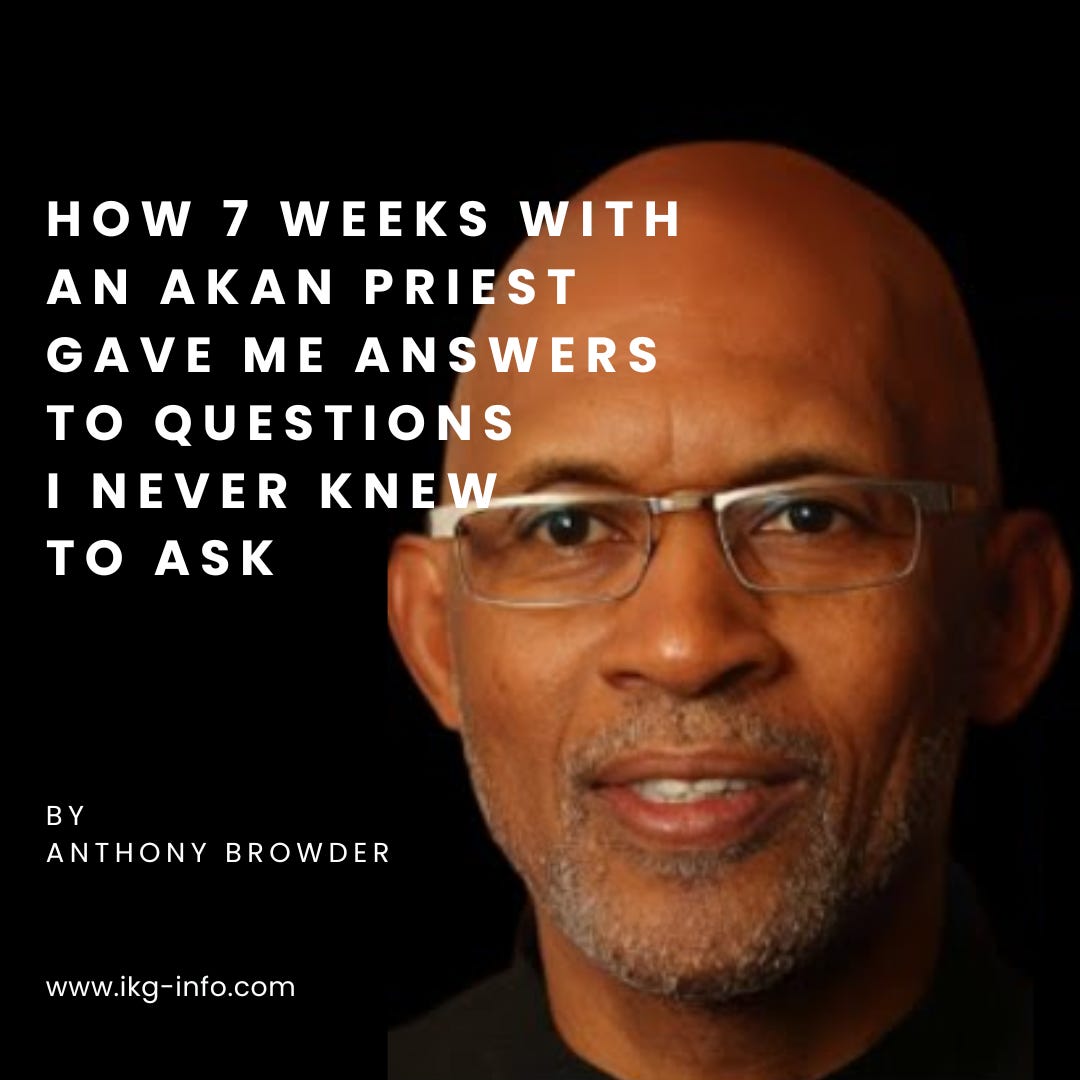
I’m seventy-four years old now, officially and undeniably an elder.
When I look back on fifty years of reading, learning, traveling, writing, teaching, and extraordinary experiences in Egypt, I trace the genesis of my journey to enlightenment to 1975, and a seven-week class in Southeast D.C.
The Turning Point: 1975
Nana Kwabena Brown is an Akan priest and was one of the first people to introduce the Akan traditions from Ghana, West Africa to the Washington, D.C. community.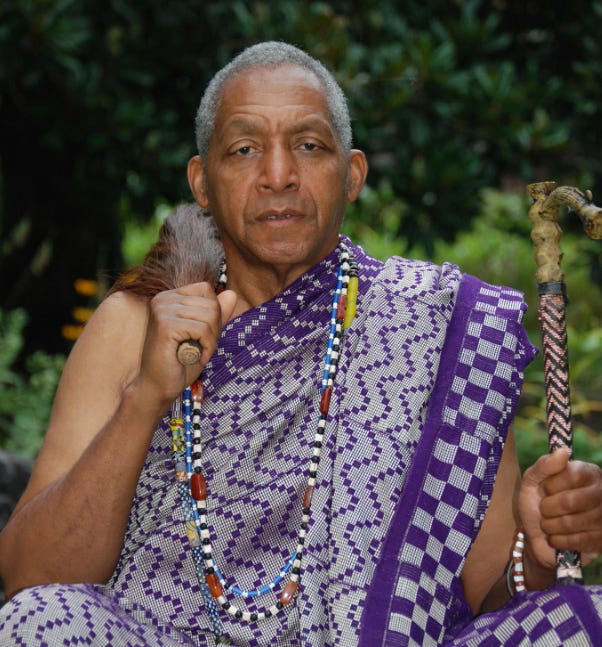
I graduated from Howard in 1974 and like many people in their early twenties, I hadn’t quite figured out who I was and what I wanted to do with my life. A friend told me about a man in Southeast D.C. teaching classes on African spirituality. I was curious and enrolled in his seven-week course.
By the conclusion of those seven weeks, I had a greater appreciation of what it meant to be a person of African ancestry.
I gained an understanding of African spirituality and the differences between spirituality and western religion. I learned about African concepts of life, death and the ancestors—the departed souls who preceded us and are still accessible to us.
Nana Kwabena also taught me about a concept referred to in the West as reincarnation but was known in the Nile Valley as the Whmy Msu (the repetition of birth). This concept is based on ancient teachings that the physical body is temporary and only lives for a prescribed period, and expires. I learned that the body is composed of seven spiritual bodies, and each one served a precise purpose.
In the Nile Valley these spiritual bodies were known by different names, some of them were the Ka, Ba, Khaba, Aku, Seb, Putah and Atmu. Each spiritual body continued to exist after the death of the physical body and could be accessed by properly trained individuals.
In science, the First Law of Thermodynamics states that energy can neither be created or destroyed. It simply changes form.
When we die, our body disintegrates and returns to the earth. When the body is no longer attached to a soul, the soul goes back to the dimension of timelessness where souls reside. Spirit is the power associated with the creative force, that we call God or Ausar or Nyame, and that is the force that permeates the universe. Spirit animates the soul and gives it the energy to express itself inside the body. The same principal applies to the other spiritual bodies within the shell we call the physical body.
Once I understood who I was as a being with multiple spiritual aspects inside me, I had a deeper understanding of what I had the capacity to do as a spiritual being having a human experience. I also understood my obligation to maintain balance and order within my body. Hence the importance of eating, thinking, speaking and acting responsibly.
At the end of the course, Nana Kwabena said something that I had never forgotten. He said:
“What you do with this knowledge not only determines the quality of this life, it also determines the quality of all the lives you will ever live.”
That was a sobering thought.
When you think about it in that context, then the things that we think, say and do in this life shapes all the lives we will experience. Once I understood that concept, I was obligated to do right. Not because I was afraid of going to hell, but because I understood that heaven and hell are states of being here on Earth, which, to a large extent, are under our control.
If I understood how this energy expresses itself, then I could experience heaven on Earth, while those who don’t understand these principles will experience hell every day of their lives.
I grew up loving to read and learn, but I learned nothing about African spirituality in my formative years. I didn’t learn about it in the Black church, at Howard University, or my fraternity. I was only exposed to the most important aspects of life at the conclusion of my formal education.
I am reminded of what Carter G. Woodson wrote in the Mis-Education of the Negro. Woodson said:
I realized that there is knowledge out here that is crucial to our ability to live and function as dynamic human beings, but it has never been part of our formal education. The knowledge has always been there, but we must know that it exists, then we must be fearless and courageous enough to seek it and incorporate it into our lives.“Philosophers have long conceded, however, that every man has two educators: ‘that which is given to him, and the other that which he gives himself. Of the two kinds the latter is by far the more desirable. Indeed all that is most worthy in man he must work out and conquer for himself. It is that which constitutes our real and best nourishment. What we are merely taught seldom nourishes the mind like that which we teach ourselves.”
Doing this allows us to model what it means to be human and to be an example for other people, like Nana Kwabena Brown was for me.
Nana Kwabena modeled this for me in many ways. He also had an extensive library. As I was perusing his library one day, I saw a book that captured my attention.
The book was Peter Tompkins’ “Secrets of the Great Pyramid.” That was the book that first sparked my interest in ancient Egypt.
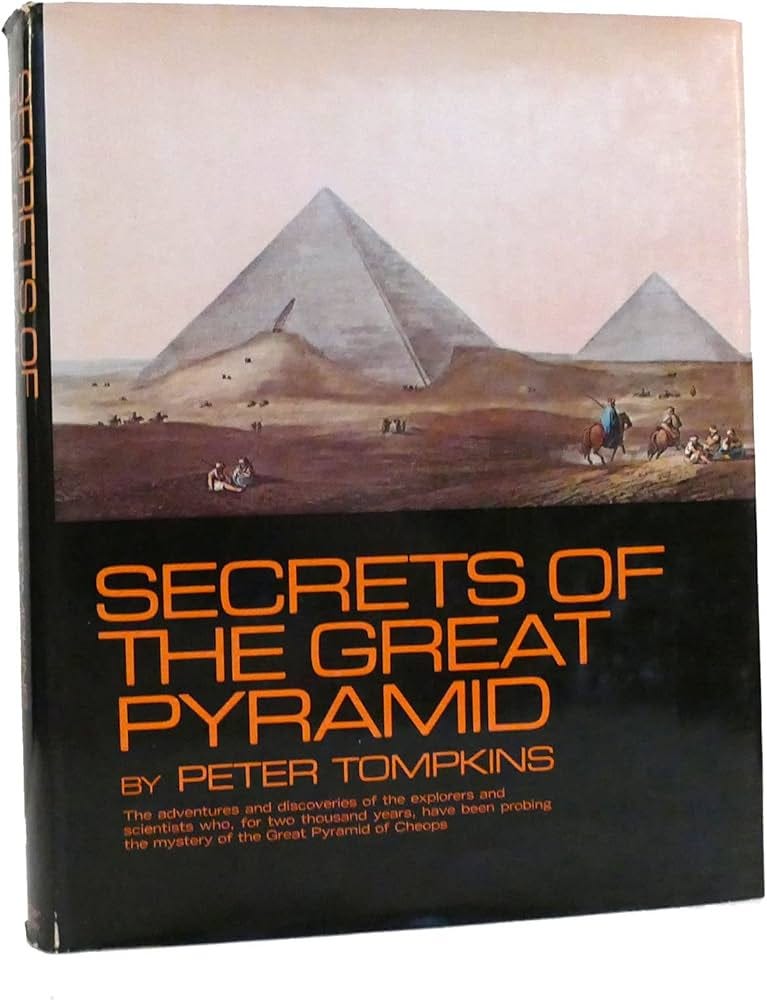
I have not stopped reading and learning about Egypt since reading that book.
After years of continuous study and travel to Egypt, I can say definitively that the public knows less than 10 percent of the available information about Egypt, Kemet and Nile Valley Civilization. Knowledge about this ancient African culture continues to be withheld from the public but it is accessible to those willing to read, study and research.
I acknowledge those who helped me find my purpose in life and I am grateful to Nana Kwabena for having changed my life in 1975. He put me on a path that allowed me to influence the lives tens of thousands all around the world.
I accept responsibility for being a vessel which contains the knowledge of ancestors, scholars, elders, and of who have loved me and poured their knowledge into me.
Now that I am an elder I accept my obligation to inspire those seeking my wisdom and guidance.
That’s the reason for my new book. I feel an urgent need to pay it forward and give back what Nama Kwabena and others have generously given me.

This new book is me going back to my source and doing what I do best: looking at history and looking at current events, and extracting from that analysis the insights that help us understand where we are, how we got here, and what we can do better.
I hope you enjoy reading it and I hope it helps you on your own journey to enlightenment.
Thank you for reading,
Anthony Browder
P.S. If you want to experience Egypt first hand, join me for my final tours in 2026—one in July and one in December.
There are only a few spaces left for the December Winter Solstice tour.
All the details are here in this video:


