

High Court Poised To Closely Weigh Civil Rights Laws

thoughtone

Rising Star
Registered
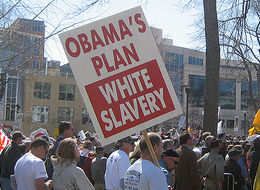
s-RACIST-large.jpg

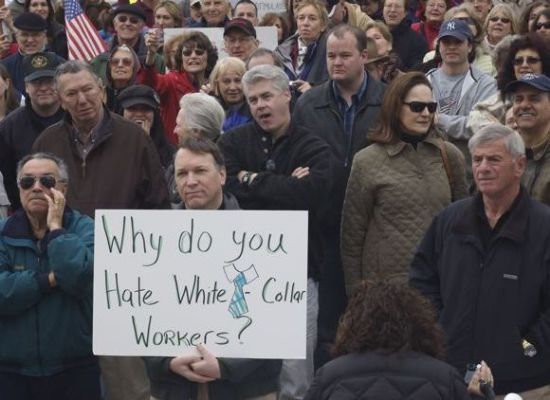
slide_1391_20038_large.jpg

source: The Washington Post

Cases Heard as Nation Debates Race

By Robert Barnes
Washington Post Staff Writer
Sunday, April 19, 2009

The Supreme Court has an opportunity to reaffirm or reshape the nation's civil rights laws as it faces a rare confluence of cases over the next two weeks, including a high-profile challenge brought by white firefighters who claim they lost out on promotions because of the "color of their skin."

The cases also touch on the Voting Rights Act, the need to provide English classes for immigrant children and, more tangentially, discriminatory mortgage lending.

The most emotionally charged case is from the New Haven, Conn., firefighters, whose complaints define the real-life quandary that sometimes accompanies government efforts to ensure racial equality.

The firefighters accuse city officials of violating civil rights laws and the Constitution by throwing out a promotions test on which they performed well but no blacks scored high enough to be eligible. The city responds that relying on test results with such wide racial discrepancies could have violated federal law and left them open to being sued by minorities.

The court will hear the arguments, along with the others, in the midst of an evolving national conversation about the role of race and diversity and in the wake of the historic presidential election.

"Each of these cases goes to the ability of our society to achieve opportunity, fairness and ultimately to our ability to be the democracy that we aspire to be," said John Payton, president and director-counsel of the NAACP Legal Defense and Educational Fund. "We've made tremendous progress as a society, and some of that progress is having in place anti-discriminatory" laws to ensure it continues.

His organization calls for the court in each case to affirm a vigorous role for government in recognizing the need for race-conscious vigilance.

But Edward Blum, a visiting fellow at the American Enterprise Institute, envisions a chance for the court to acknowledge the strides that the country has made, even if it decides each case narrowly.

The court could "send a signal to government units that race and ethnicity should play a smaller and smaller part in their decisions," Blum said.

He said he thinks the court took the firefighter case "because it wants to make a statement. And of all the cases involving race and ethnicity, I think this is the easiest for the court to answer."

The justices are deeply divided about government policies involving race, even if Chief Justice John G. Roberts Jr. has shown no such ambivalence. His view was evident quickly, when in a first-term dissent he lamented the "sordid business" of dividing individuals by race.

Others on the court seem just as firm, but on both sides of the issue. That often leaves Justice Anthony M. Kennedy, generally skeptical of race-based policies, as the target for opposing lawyers.

It also means the court's decisions are often nuanced, narrowed by the facts of the case and the intricacies of the law at hand, rather than laden with the broad pronouncements that often accompany public and political discussions of race.

"People see Supreme Court decisions as deciding these great questions for the country," said Washington lawyer Virginia A. Seitz, who has defended race-conscious policies before the court. "But lawyers see it another way, and I think the court sees it another way."

Still, the case of the firefighters, who have dubbed themselves the New Haven 20 and even have a Web site and T-shirts, provides the court a particularly human example of what they say is government intervention that goes so far to protect minorities that it discriminates against whites.

"It's all hot-button," Payton acknowledges.

The lead plaintiff, Frank Ricci, is a veteran firefighter who said in sworn statements that he spent thousands of dollars in preparation and studied for months for the exam. Ricci said he is dyslexic, so he had tapes made of the test materials and listened to them on his commute.

The firefighters' longtime attorney, Karen Lee Torre, did not allow her clients to talk to reporters -- other than for a segment on conservative commentator Sean Hannity's show on Fox News -- but Ricci said in a sworn statement, "I relied in good faith on the promise that effort and not race would determine who would be promoted."

When the results of the 2003 exams came back, only white firefighters, including one who is Hispanic, scored high enough to be considered for the openings for lieutenants and captains. All 27 black firefighters who took the test were below the cutoff.

After tumultuous public hearings, with minority groups arguing that the tests were flawed and the white firefighters saying officials were caving to political pressure, the city's Civil Service Board voted not to certify the results. The promotions remain in limbo.

The city argues that the test it commissioned, in which 60 percent of the score came from a multiple-choice questionnaire and 40 percent from an interview, must have been biased, despite its best intentions. It is not specific about the problems with the test, though it says the exam did not measure "command presence" and should have given more weight to the interview.

At any rate, the city says it was bound by Title VII of the 1964 Civil Rights Act, which requires employers not to rely on hiring or promotional tests that have a "disparate impact" on minorities unless they can show a "business necessity."

New Haven Mayor John DeStefano Jr. (D) is not talking to reporters about the case, either. The city's corporation counsel, Victor A. Bolden, said the city was placed in a position where it was bound to be sued by one side or the other and opted to "pause" and reconsider how promotions should be made.

"I certainly have sympathy for the plaintiffs, but at the end of the day it was the wrong test," Bolden said.

He added that if it is unfair to white firefighters to have the promotions scuttled, it would be equally unfair to black firefighters who were "locked out" by test results that did not truly produce a list of those most qualified.

A district judge ruled for the city, as did a three-judge panel of the U.S. Court of Appeals for the 2nd Circuit. But the case created a loud disagreement among the judges on the circuit. After the full court voted 7 to 6 not to rehear the case, dissenting judges called on the Supreme Court to get involved. It will hear the case Wednesday.

The Obama Justice Department mostly sides with New Haven officials. It told the court that employers may decline to certify the results of promotional tests if they believe that doing so would violate Title VII's prohibition against disparate impacts.

But it added that such a rationale cannot be used as "a pretext for race discrimination" and said the Supreme Court should return the case to lower courts so a jury can decide whether that was the true reason for the city's actions.

Seitz, speaking at a discussion about the case sponsored by the American Constitution Society, said the court's decision will probably also be important for private employers who want to diversify their workplaces but live "on a knife's edge" about whether hiring and promotion tests will lead to lawsuits.

She thought the administration's proposed remedy in the firefighter suit might be appealing to the court because of the dispute about the city's motivations.

The case reflects "the conversation about race in this country," Seitz said.

"Nobody trusts what the other side is saying."
 
Last edited:
Bump.jpg


<font size="4">

This is article is about the case at the center of the controversy
regarding Judge Sonia Sotomayor's nomination to the U.S. Supreme
Court. Ironically, it was posted by T.O., before she was nominated.


</font size>
 
<font size="5"><center>
Supreme Court gives victory
to white firefighters</font size></center>


090629_sotomayor_ap_297.jpg

Ruling backs claim by group charging racial
discrimination, gives fodder to Sonia Sotomayor
critics. Photo: AP


P O L I T I C O
By JOSH GERSTEIN
June 29,, 2009


The Supreme Court handed a victory Monday to a group of white firefighters charging racial discrimination, while also giving some fodder to critics of President Barack Obama’s pending nominee for the high court, Judge Sonia Sotomayor.


Justice Anthony Kennedy, writing for a court split 5-4 along ideological lines, reversed an appeals court ruling Sotomayor joined last year that <SPAN style="BACKGROUND-COLOR: #ffff00">rejected a claim that the City of New Haven, Conn. discriminated against white firefighters by throwing out a promotional exam after all the African-American firefighters who took it scored too poorly to be promoted</span>.


“Whatever the City’s ultimate aim—however well intentioned or benevolent it might have seemed—the City made its employment decision because of race. The City rejected the test results solely because the higher scoring candidates were white,” Kennedy wrote on behalf of Chief Justice John Roberts and Justices Antonin Scalia, Clarence Thomas and Samuel Alito.


“Courts often confront cases in which statutes and principles point in different directions,” the Kennedy opinion noted.


However, Kennedy said that <SPAN style="BACKGROUND-COLOR: #ffff00">allowing the city’s conduct would establish “a de facto quota system” where test results could be discarded whenever a particular racial group didn’t achieve the average score</span>.


<SPAN style="BACKGROUND-COLOR: #ffff00">Kennedy and the justices in the majority appeared to join those critics who considered Sotomayor’s panel unduly dismissive of the case. He noted that the appeals court initially rejected the white firefighters’ appeal with “a one-paragraph, unpublished summary order” and later replaced the order with a “nearly-identical, one-paragraph per curiam opinion.”


The ruling will be portrayed as a snub to Sotomayor
, but the fact that four judges agreed with her position suggests that her assessment of the case was hardly outside the mainstream. </span>


The case stems from a lieutenants’ promotion exam administered to New Haven, Conn. firefighters in 2003. After no African American firefighters ranked highly, the city’s Civil Service Board threw out the results and decided not to make any immediate promotions.


Eighteen white firefighters, including one Hispanic, sued, claiming racial discrimination. The city countered that it was simply trying to avoid being sued by black firefighters argued that the test was unfairly skewed.


A district court judge sided with the city and tossed the suit out before trial. Last year, a three-judge Second Circuit panel, including Sotomayor, backed that decision.


Critics said Sotomayor’s ruling amounted to judicial activism and indicated her penchant for “identity politics.” Others, including her supporters, said she was simply following established rules. Several states entered the case arguing that local officials should have the flexibility to discard such an exam without court intervention.


<font size="3">The White House has sought to defend Sotomayor’s ruling</font size> in the case, but the task has been made more complicated by the fact that in April, before Sotomayor was nominated, the Justice Department asked the Supreme Court to set aside the ruling she joined in and return the case to the district court. The Obama Administration said the white firefighters should have been granted a trial to try to prove that the city’s motivation for canceling the exam included racial favoritism.


Nevertheless, allies of Sotomayor have been arguing for weeks that a reversal of the Second Circuit decision she backed could not be seen as a clear-cut verdict on her legal acumen.


“A decision reversing the Second Circuit would be no ill reflection on” Sotomayor and the judges who agreed with her, University of Michigan Professor Richard Primus wrote in a letter to the Senate Judiciary Committee earlier this month. “Lower courts do not have the duty to anticipate the Supreme Court’s new legal interpretations. Their responsibility is to apply the law as it stands when cases are before them.”

Sotomayor critics contend the Supreme Court’s ruling amounted to a 9-0 shutout for the nominee. The critics note that a footnote in Ginsburg’s opinion suggests that the dissenters would have returned the case to the district court for further proceedings. “Ordinarily, a remand for fresh consideration would be in order,” she wrote.


However, the dissenters seem to dance around their view of Sotomayor’s ruling, never saying explicitly that they would set it aside.


However, other analysts described Sotomayor’s ruling as deeply troubling.


“The unmistakable logic of Sotomayor's position would encourage employers to discriminate against high-scoring groups based on race -- no matter how valid and lawful the qualifying test -- in any case in which disproportionate numbers of protected minorities have low scores, as is the norm,” a legal commentator for National Journal, Stuart Taylor, wrote. “Such logic would convert disparate-impact law into an engine of overt discrimination against high-scoring groups across the country and allow racial politics and racial quotas to masquerade as voluntary compliance with the law.”

The controversy over Sotomayor’s handling of the Ricci case was fueled not only by her decision, but also by the cursory fashion in which it was delivered. The initial Second Circuit ruling upholding dismissal of the case consisted of roughly nine lines on a single page.


The so-called summary order the three-judge panel filed in February 2008 in lieu of a more formal opinion was issued by Sotomayor, along with Judges Rosemary Pooler and Robert Sack.


“We affirm, substantially for the reasons stated in the thorough, thoughtful, and well-reasoned opinion of the court below,” the three judges wrote. “In this case, the Civil Service Board found itself in the unfortunate position of having no good alternatives. We are not unsympathetic to the plaintiffs' expression of frustration. Mr. Ricci, for example, who is dyslexic, made intensive efforts that appear to have resulted in his scoring highly on one of the exams, only to have it invalidated. But it simply does not follow that he has a viable Title VII [racial discrimination] claim. To the contrary, because the Board, in refusing to validate the exams, was simply trying to fulfill its obligations under Title VII when confronted with test results that had a disproportionate racial impact, its actions were protected.”


As is customary with such orders, no judge was publicly identified as the author. However, Sotomayor may have hinted at her own views on the dispute during oral arguments in the case. “We’re not suggesting that unqualified people be hired, the city’s not suggesting that,” she told a lawyer for the white firefighters. But “if your test is going to always put a certain group at the bottom of the pass rate so they’re never, ever going to be promoted, and there is a fair test that could be devised that measures knowledge in a more substantive way, then why shouldn’t the city have an opportunity to try to look and see if it can develop that?”


http://www.politico.com/news/stories/0609/24322.html
 
Back
Top