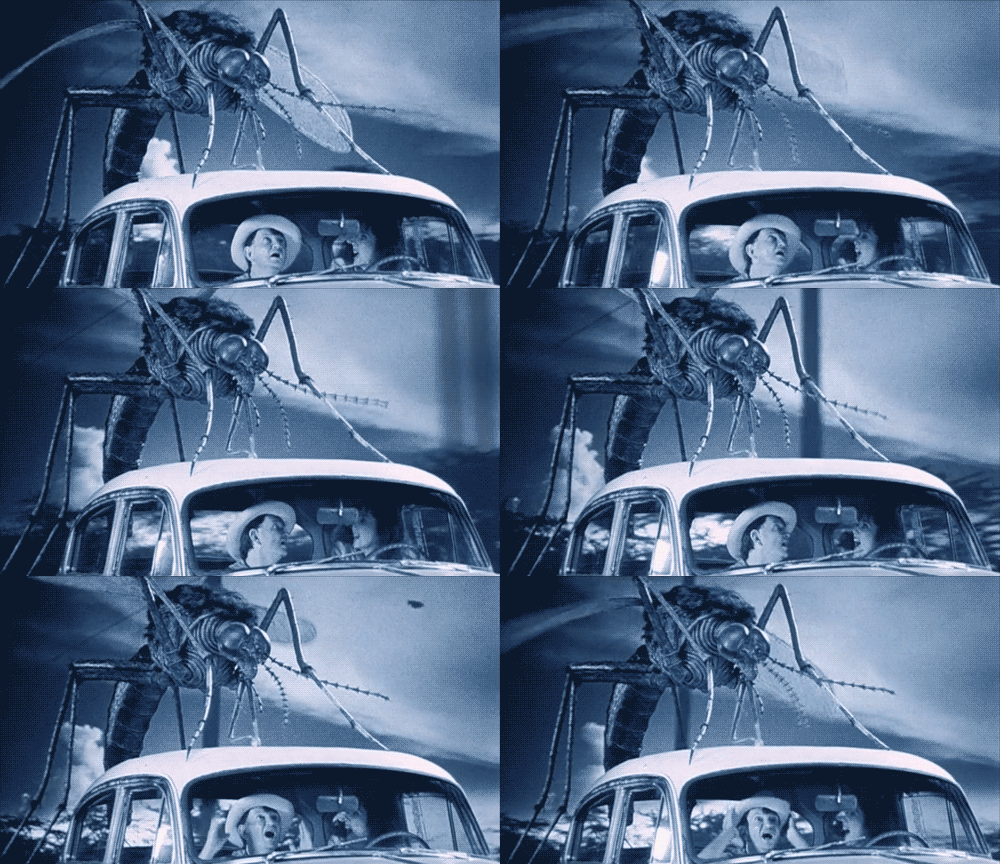
Google trying to eliminate mosquitoes

Big Tex

Earth is round..gravity is real
BGOL Investor


Google is planning to release 32 million mosquitoes across Florida and California.

The company has asked the EPA for permission to proceed, with the public given until June 5 to respond.

The mosquitoes are infected with Wolbachia bacteria, which stops them from reproducing and slowly collapses the wild population from within.

Google's previous Debug Project trial in California's Central Valley nearly eliminated mosquitoes from three test sites entirely. A separate trial in Singapore cut dengue cases by 70% within 12 months.

Google has now released over 1 billion mosquitoes across four continents. This new proposal is the largest deployment in US history.
 
rautnbp.gif
 
According to Brave's LEO

"Driving mosquito populations to near extinction in Florida and California could trigger several negative ecological side effects, primarily disrupting food webs and nutrient cycles, though the severity varies by specific ecosystem.

Disruption of Food Webs
The most immediate impact would be a significant loss of biomass for predators that rely on mosquitoes as a primary food source.

Aquatic Starvation: In Florida’s wetlands and California’s ponds, mosquito larvae are a critical food source for fish (like the mosquitofish), amphibians, and aquatic insects. A sudden removal could cause population declines in these species, particularly juveniles that lack the size to hunt larger prey.

Avian and Bat Impact: While most birds and bats are generalists, specialized feeders or those in specific habitats (like the Arctic tundra, though less relevant to FL/CA) could face food shortages. In local contexts, species like Purple Martins and bats might experience increased competition for remaining insect prey, potentially lowering their reproductive success during peak breeding seasons.

Nutrient Cycling and Ecosystem Function
Mosquitoes play a functional role in processing organic matter.

Decomposition: Larvae consume detritus and microorganisms in stagnant water, accelerating nutrient cycling. Their removal could slow down the breakdown of organic material in aquatic environments, altering water chemistry and affecting plant growth.

Biomass Transfer: Mosquitoes effectively transfer nutrients from aquatic ecosystems (where they develop) to terrestrial ones (where they fly and die). Eliminating them would sever this link, reducing the nutrient availability for terrestrial predators and scavengers.

Pollination Risks
While most plants have alternative pollinators, some specific species rely heavily on mosquitoes.

Specialized Plants: Certain orchids and bog plants depend on mosquitoes for pollination. In Florida, the loss of mosquitoes could threaten rare native orchids that have co-evolved with them, potentially leading to local plant extinctions.

General Impact: For most crops and common wildflowers in California and Florida, the impact would be minimal as bees, butterflies, and other insects would compensate. However, the loss of any pollinator reduces overall ecosystem resilience.

Unpredictable Ecological Vacuums
Nature abhors a vacuum; removing a dominant species often leads to unforeseen consequences.

Niche Replacement: Other insect species might expand their populations to fill the niche left by mosquitoes. These replacements could be less desirable, potentially becoming more aggressive pests or more efficient vectors for other diseases.

Cascading Effects: The complex interplay of species means that removing one link can cause ripple effects throughout the food chain, potentially destabilizing ecosystems in ways that are difficult to predict or reverse. "


So, yeah mosquitoes might be a nuissance, but they're kind of necessary..... maybe not as important as bees...... but kind of close

 
According to Brave's LEO

"Driving mosquito populations to near extinction in Florida and California could trigger several negative ecological side effects, primarily disrupting food webs and nutrient cycles, though the severity varies by specific ecosystem.

Disruption of Food Webs
The most immediate impact would be a significant loss of biomass for predators that rely on mosquitoes as a primary food source.

Aquatic Starvation: In Florida’s wetlands and California’s ponds, mosquito larvae are a critical food source for fish (like the mosquitofish), amphibians, and aquatic insects. A sudden removal could cause population declines in these species, particularly juveniles that lack the size to hunt larger prey.

Avian and Bat Impact: While most birds and bats are generalists, specialized feeders or those in specific habitats (like the Arctic tundra, though less relevant to FL/CA) could face food shortages. In local contexts, species like Purple Martins and bats might experience increased competition for remaining insect prey, potentially lowering their reproductive success during peak breeding seasons.

Nutrient Cycling and Ecosystem Function
Mosquitoes play a functional role in processing organic matter.

Decomposition: Larvae consume detritus and microorganisms in stagnant water, accelerating nutrient cycling. Their removal could slow down the breakdown of organic material in aquatic environments, altering water chemistry and affecting plant growth.

Biomass Transfer: Mosquitoes effectively transfer nutrients from aquatic ecosystems (where they develop) to terrestrial ones (where they fly and die). Eliminating them would sever this link, reducing the nutrient availability for terrestrial predators and scavengers.

Pollination Risks
While most plants have alternative pollinators, some specific species rely heavily on mosquitoes.

Specialized Plants: Certain orchids and bog plants depend on mosquitoes for pollination. In Florida, the loss of mosquitoes could threaten rare native orchids that have co-evolved with them, potentially leading to local plant extinctions.

General Impact: For most crops and common wildflowers in California and Florida, the impact would be minimal as bees, butterflies, and other insects would compensate. However, the loss of any pollinator reduces overall ecosystem resilience.

Unpredictable Ecological Vacuums
Nature abhors a vacuum; removing a dominant species often leads to unforeseen consequences.

Niche Replacement: Other insect species might expand their populations to fill the niche left by mosquitoes. These replacements could be less desirable, potentially becoming more aggressive pests or more efficient vectors for other diseases.

Cascading Effects: The complex interplay of species means that removing one link can cause ripple effects throughout the food chain, potentially destabilizing ecosystems in ways that are difficult to predict or reverse. "


So, yeah mosquitoes might be a nuissance, but they're kind of necessary..... maybe not as important as bees...... but kind of close


Man i don’t complain about much, but this one thing i do
 
O I
Man i don’t complain about much, but this one thing i do

I get it. I don't like mosquitoes either ...... but ecologically, they're kind of important. If marine life is significantly effected because there are no mosquitoes...... especially in Florida..... I fear the manmade solution to this self inflicted wound will be far more dangerous than just keeping the bugs
 
Oh, you said the Wobachia bacteria, my dumb ass thought you said the Shaboinkin Bacteria, which only makes them horny, not to mention more fertile, to go with bigger and stronger. And, looking back, I'm thinking why the fuck would I think that, because why the fuck would they want that?
 
Don't trust it.

First of all, anyone with a simple grasp of biology will tell you just how important mosquitos are to the ecology of the world.

Second, why is a data company doing this? It doesn't make sense.

These mofos are trying to infect mosquitos with a plague to start a mass extintion event for humanity.

They ain't slick!
 
White people always fucking with the environment for the wrong reasons. I get it,most people can't stand mosquitoes but they play an important part in the environment.
 
If a black company can put that together then I would halfway be good with it. That Wolbachia bacteria is hell on malaria too. So, it can be beneficial. I don't like it coming from that fucking demon.
 
Back
Top