

Following Obama, black Iraqis run for office
By Mohammed Abbas
Reuters
Tuesday, December 9, 2008; 8:18 PM
BASRA (Reuters) - Barack Obama's election in the United States has already had an impact in Iraq, inspiring some black Iraqis to run in a forthcoming election in the hope of ending what they call centuries of discrimination.
"Obama's win gave us moral strength," said Jalal Chijeel, secretary of the Free Iraqi Movement.
He said the group would be the first to field black candidates in any Iraqi poll when it joins provincial elections scheduled for January 31.
President-elect Obama's ascendancy in the United States has coincided with increased public support for their cause: "When he became a candidate, so did we," Chijeel told Reuters.
He argues Iraqis of African origin are not represented in top office, suffer disproportionately from poverty and illiteracy and are commonly referred to in derisive terms.
Other Iraqis see no discrimination against Iraqis of African-origin, whose number is unclear given a lack of statistics. Chijeel said there were some 300,000 in the southern city of Basra alone.
This January's provincial election will be the first to be organized by Iraq and held under Iraqi laws since the U.S.-led invasion in 2003 overthrew Saddam Hussein, and will be followed by national elections later in 2009.
As such it could be a crucial step to reconciling the country's sectarian and ethnic groups after years of bloodshed.
Black people in Iraq suffer discrimination partly because of their color, and also partly because they do not belong to a tribe, Chijeel said. Tribal family networks and ancestry are important in Iraq and much of the Middle East.
The movement's eight candidates could suffer a backlash from their lighter-skinned countrymen, who respond with indignation to charges of racism and say blacks are treated with respect. They argue electioneering based on race is divisive.
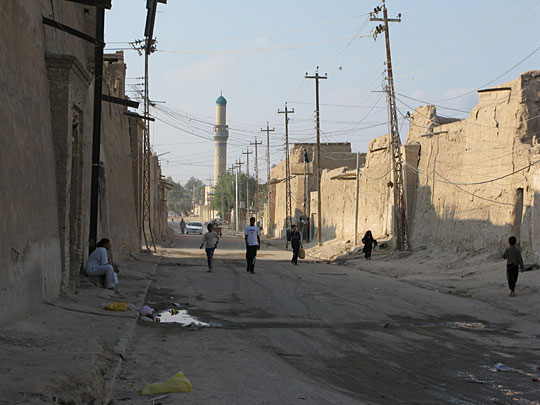
Even fellow blacks in Basra's largely black district of Zubayr, where young men stood chatting and a boy herded sheep across the road, voiced reservations.
"There's no discrimination," said black shop worker Mohammed Nezal, sharing a view echoed mostly by older men, as they sat fingering worry-beads. "There's so many blacks that have done well in Iraq. There's respect."
THE "A" WORD
Chijeel argues that blacks in Iraq are subordinated, partly by a history of slavery.
"To this day blacks are not given their rights," he said. "We don't see blacks in local councils, in parliament or cabinet or as ambassadors ... We have educated people, doctors, graduates, but to our great regret we still have no importance."
In Zubayr -- dusty and poor, like most Basra neighborhoods -- Salim Hussein stood chatting in the street with friends: "The people here don't treat us any differently. But look with your own eyes. Do you see a single black person with a decent job?"
During a five-day visit to Basra, Reuters mostly saw black people working as domestic help and car cleaners.
The Free Iraqi Movement's electoral candidates are teachers, engineers and office workers. They insist they are not a special interest group and want to tackle problems faced by all, such as unemployment.
For a brief period, long ago, blacks once controlled Iraq's south: there was a revolt in 869 AD by East Africans brought by landowners in Basra to work as slaves, draining marshes in the hot and humid south.
The rebels eventually took Basra and even parts of Iran. But by 883 AD the uprising was crushed, its leader's head delivered to the Abbasid caliphate in Baghdad.
"From that time till now, the black has had no senior role in society," Chijeel said. "They suffered as slaves or servants, and worse. They did the most despised jobs."
As is often the case, language is a core of the problem.
The word "abd" is Arabic for slave, and even though slavery was abolished in Iraq in 1924, it persisted for many years and many people continue to use "abd" to describe a black person.
Those who use the word say they mean no insult and use it only as a descriptive term.
Muddying the debate is the fact that some Iraqis are as dark-skinned as those of African origin. For some for whom color is irrelevant, ancestry and tribe is paramount and unknown lineage or having a slave ancestor is unacceptable.
"I would never allow my daughters to marry an 'abd' ... Who's their tribe? Do they know who their forefathers are?" said one dark-skinned Iraqi man who declined to be named.
BANDWAGON?
The Free Iraqi Movement wants the word "abd" to be banned.
The group also wants blacks to be a considered a minority, a status which gives some benefit to Iraq's Christians, Turkmen, Yazidis and Shabaks, who by their similar physical appearance to the Iraqi majority are less obviously different than blacks.
"Our fundamental demands are to be considered a minority, to have a paragraph in the constitution protecting black people and punish those who use the word 'abd' as defamation, and we want an apology for the crimes of the past," Chijeel said.
While these demands are unlikely to be achievable at the local level, wins for the Free Iraqi Movement in the January provincial polls could give momentum for a later parliamentary vote.
Younger blacks in Zubayr voiced support for the movement, some citing Obama's success.
"The racism is not obvious, but you feel it. I have a qualification, my Arab friend has the same qualification. He gets the job and I don't," said Mohened Omran.
Lighter-skinned Iraqis interviewed on Basra's streets saw the Free Iraqi Movement and its demands as introducing discrimination into a color-blind society.
"The blacks are our friends and are Iraqis. There's no difference between us. This movement is in fact racist," said Farhan al-Hajaj, an engineer out shopping.
Basra University history professor Hamid Hamdan told Reuters intermarriage is common, as are highly educated blacks in top jobs. The Free Iraqi Movement is simply jumping on the bandwagon of sectarianism and ethnic fracture engendered by years of war.
"This is opportunism ... Now that there's sectarianism and ethnic differentiation, some people think they can use this to achieve a specific aim," he said, adding that though slang, "abd" is used by most Iraqis to simply mean black person.
Chijeel said you would have to be black to understand.
"This word describes a person as a slave, someone with no free will, no dignity, no humanity. There's no worse word ... Black people feel this. Others do not."
(Editing by Catherine Bosley and Sara Ledwith)
---
Rise my brothers.
By Mohammed Abbas
Reuters
Tuesday, December 9, 2008; 8:18 PM
BASRA (Reuters) - Barack Obama's election in the United States has already had an impact in Iraq, inspiring some black Iraqis to run in a forthcoming election in the hope of ending what they call centuries of discrimination.
"Obama's win gave us moral strength," said Jalal Chijeel, secretary of the Free Iraqi Movement.
He said the group would be the first to field black candidates in any Iraqi poll when it joins provincial elections scheduled for January 31.
President-elect Obama's ascendancy in the United States has coincided with increased public support for their cause: "When he became a candidate, so did we," Chijeel told Reuters.
He argues Iraqis of African origin are not represented in top office, suffer disproportionately from poverty and illiteracy and are commonly referred to in derisive terms.
Other Iraqis see no discrimination against Iraqis of African-origin, whose number is unclear given a lack of statistics. Chijeel said there were some 300,000 in the southern city of Basra alone.
This January's provincial election will be the first to be organized by Iraq and held under Iraqi laws since the U.S.-led invasion in 2003 overthrew Saddam Hussein, and will be followed by national elections later in 2009.
As such it could be a crucial step to reconciling the country's sectarian and ethnic groups after years of bloodshed.
Black people in Iraq suffer discrimination partly because of their color, and also partly because they do not belong to a tribe, Chijeel said. Tribal family networks and ancestry are important in Iraq and much of the Middle East.
The movement's eight candidates could suffer a backlash from their lighter-skinned countrymen, who respond with indignation to charges of racism and say blacks are treated with respect. They argue electioneering based on race is divisive.
Even fellow blacks in Basra's largely black district of Zubayr, where young men stood chatting and a boy herded sheep across the road, voiced reservations.
"There's no discrimination," said black shop worker Mohammed Nezal, sharing a view echoed mostly by older men, as they sat fingering worry-beads. "There's so many blacks that have done well in Iraq. There's respect."
THE "A" WORD
Chijeel argues that blacks in Iraq are subordinated, partly by a history of slavery.
"To this day blacks are not given their rights," he said. "We don't see blacks in local councils, in parliament or cabinet or as ambassadors ... We have educated people, doctors, graduates, but to our great regret we still have no importance."
In Zubayr -- dusty and poor, like most Basra neighborhoods -- Salim Hussein stood chatting in the street with friends: "The people here don't treat us any differently. But look with your own eyes. Do you see a single black person with a decent job?"
During a five-day visit to Basra, Reuters mostly saw black people working as domestic help and car cleaners.
The Free Iraqi Movement's electoral candidates are teachers, engineers and office workers. They insist they are not a special interest group and want to tackle problems faced by all, such as unemployment.
For a brief period, long ago, blacks once controlled Iraq's south: there was a revolt in 869 AD by East Africans brought by landowners in Basra to work as slaves, draining marshes in the hot and humid south.
The rebels eventually took Basra and even parts of Iran. But by 883 AD the uprising was crushed, its leader's head delivered to the Abbasid caliphate in Baghdad.
"From that time till now, the black has had no senior role in society," Chijeel said. "They suffered as slaves or servants, and worse. They did the most despised jobs."
As is often the case, language is a core of the problem.
The word "abd" is Arabic for slave, and even though slavery was abolished in Iraq in 1924, it persisted for many years and many people continue to use "abd" to describe a black person.
Those who use the word say they mean no insult and use it only as a descriptive term.
Muddying the debate is the fact that some Iraqis are as dark-skinned as those of African origin. For some for whom color is irrelevant, ancestry and tribe is paramount and unknown lineage or having a slave ancestor is unacceptable.
"I would never allow my daughters to marry an 'abd' ... Who's their tribe? Do they know who their forefathers are?" said one dark-skinned Iraqi man who declined to be named.
BANDWAGON?
The Free Iraqi Movement wants the word "abd" to be banned.
The group also wants blacks to be a considered a minority, a status which gives some benefit to Iraq's Christians, Turkmen, Yazidis and Shabaks, who by their similar physical appearance to the Iraqi majority are less obviously different than blacks.
"Our fundamental demands are to be considered a minority, to have a paragraph in the constitution protecting black people and punish those who use the word 'abd' as defamation, and we want an apology for the crimes of the past," Chijeel said.
While these demands are unlikely to be achievable at the local level, wins for the Free Iraqi Movement in the January provincial polls could give momentum for a later parliamentary vote.
Younger blacks in Zubayr voiced support for the movement, some citing Obama's success.
"The racism is not obvious, but you feel it. I have a qualification, my Arab friend has the same qualification. He gets the job and I don't," said Mohened Omran.
Lighter-skinned Iraqis interviewed on Basra's streets saw the Free Iraqi Movement and its demands as introducing discrimination into a color-blind society.
"The blacks are our friends and are Iraqis. There's no difference between us. This movement is in fact racist," said Farhan al-Hajaj, an engineer out shopping.
Basra University history professor Hamid Hamdan told Reuters intermarriage is common, as are highly educated blacks in top jobs. The Free Iraqi Movement is simply jumping on the bandwagon of sectarianism and ethnic fracture engendered by years of war.
"This is opportunism ... Now that there's sectarianism and ethnic differentiation, some people think they can use this to achieve a specific aim," he said, adding that though slang, "abd" is used by most Iraqis to simply mean black person.
Chijeel said you would have to be black to understand.
"This word describes a person as a slave, someone with no free will, no dignity, no humanity. There's no worse word ... Black people feel this. Others do not."
(Editing by Catherine Bosley and Sara Ledwith)
---
Rise my brothers.




 It doesn't surprise me that blacks are there in Western Asia due to the trade routes, it totally boggles my mind though how densely populated the region is with blacks.

 I betcha Iran is the same way.


