Evidence unearthed of earliest African slaves in New World

Imhotep

Star
Registered
Interesting read, and amazing use of syllogism reasoning concerning the teethes mineral content............

In the early European histories of the New World, there are numerous accounts of African slaves accompanying explorers and colonists.

Now, digging in a colonial era graveyard in one of the oldest European cities in Mexico, archaeologists have found what they believe are the oldest remains of slaves brought from Africa to the New World. The remains date between the late-16th century and the mid-17th century, not long after Columbus first set foot in the Americas.

The discovery is to be reported in an upcoming edition of the American Journal of Physical Anthropology by a team of researchers from UW-Madison and the Autonomous University of the Yucatan.

Campeche_filed_teeth05.jpg


The African origin of the slaves was determined through the reading of telltale signatures locked at birth into the tooth enamel of individuals by strontium isotopes, a chemical which enters the body through the food chain as nutrients pass from bedrock through soil and water to plants and animals. The isotopes found in the teeth are an indelible signature of birthplace, as they can be directly linked to the bedrock of specific locales, giving archaeologists a powerful tool to trace the migration of individuals on the landscape.

The new study, which was supported by the National Science Foundation, draws on isotope ratios found in the teeth of four individuals from among 180 burials found in a multi ethnic burial ground associated with the ruins of a colonial church in Campeche, Mexico, a port city on the Yucatan Peninsula.

The new isotopic studies are important, according to the new report's authors, James Burton and T. Douglas Price of UW-Madison and Vera Tiesler of the Autonomous University of the Yucatan, because they provide the earliest definitive physical link between the African Diaspora and the New World. Over a span of nearly 400 years, as many as 12 million people were placed in bondage and brought across the Atlantic under horrific conditions to work, primarily, in the mines and plantations of the New World.

"This is the earliest documentation of the African Diaspora in the New World," says Price, a UW-Madison professor of anthropology. "It does mean that slaves were brought here almost as soon as Europeans arrived."

In early colonial Mexico, Campeche was an important Spanish gateway to the New World. It served as a base for exploration and conquest and was a key defensive outpost in a region infested with pirates. Presumably, slaves from the infamous West African port of Elmina were shipped to Campeche where they may have been used as domestic servants.

The discovery of the remains of slaves born in Africa from such an early date shows that slavery became an integral aspect of the New World economy not long after the Conquistadors completed the subjugation of Mexico, says Price.

Archaeological and historical evidence, including a map of colonial Campeche, suggest the graveyard was in use from about 1550 to the late 1600s. It was uncovered, along with the foundations of a colonial era church, in 2000 by construction workers digging around Campeche's central park. The site was excavated under the direction of Tiesler.

The archaeologists were drawn to some of the individuals buried in the colonial cemetery because of distinctive dental mutilations, a decorative practice characteristic of Africa.

Burton and Price, in collaboration with Tiesler, are conducting a much broader study of human mobility in ancient Mesoamerica using isotopic analysis. They conducted a blind study of the isotopic content of teeth from 10 individuals from the Campeche churchyard. Four of the samples, says Burton, "were like something we'd never seen."

The ratios, he explains, were well off the charts for anyone born in Mesoamerica. Instead, they reflected the geology of West Africa, which is underlain by a massive shield of ancient rock, much older than the geology of Mexico and Central America.

The chemical analysis, combined with the distinctive dental mutilation, provides strong evidence that "these folks were born in Africa and brought to the New World," says Price. " The thing that impresses me is that it was happening so early. "

African slaves were brought to the New World as the Spanish needed labor to harvest timber and work in the mines that enriched Spain. Early in their rule, the Spanish enslaved Indians to perform heavy labor, but they turned to the African slave trade as diseases introduced by Europeans decimated native peoples.

http://www.news.wisc.edu/12076
 
<font size="4">
There was an extensive thread on this board regarding Black Mexicans before The Great Server Change of 2004. Obviously, that thread didn't survive the server-diaspora. That thread noted people like:


Vicente Guerrero,
Mexican president


and

calderon_morelos.jpg

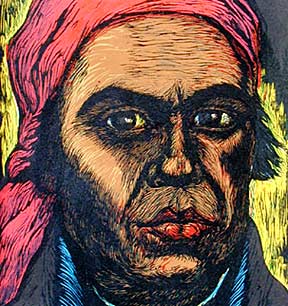
José María Morelos - a
Mexican Roman Catholic
priest and revolutionary
rebel leader who led the
Mexican War of Indepen-
dence movement.


The thread also noted the seemly manner that Mexicans portray Blacks in that country:

memin1.jpg


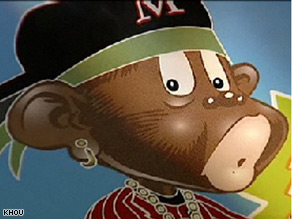
art.comic.mexican.03.khou.jpg


Critics Blast Mexican Black Cartoon As Racist

But some say that angry activists don’t
get the cultural importance of Memin.</font size>

BET
July 10th, 2008

Black activists are up in arms over a popular Mexican comic book Memin Pinguin recently sold in WalMart. It features a dark-skinned Cuban boy (named Memin) with large ears and big pink lips, who’s always being made fun of because of his color. “This is poking fun at the physical features of an entire people. Making them look buffoonish (and) portraying the young [Black] kid as stupid,” Quanell X, an activist, told The Dallas Morning News. “Whenever they are beating him, they are referring to him as Negro. Even here, when he is being punched, slapped [he is called] Negro. This is a disgrace.” The comic received such a backlash that WalMart decided to remove it from their shelves, saying in a statement: “…[W]e understand that Memin is a popular figure in Mexico. However, given the sensitivity to the negative image Memin can portray to some, we felt that it was best to no longer carry the item in our stores. We apologize to those customers who many have been offended….” The comic, originally published in the 1960s, has been very popular in Mexico for years, so much so that the government decided to issue a stamp commemorating Memin in 2005 – a decision didn’t sit well then with U.S. activists and politicians who said the character was racist. But the Mexican government thinks it’s a misunderstanding and that Americans just don’t understand the character’s cultural importance in their country.

Do you think this Memin character is racist?

http://blogs.bet.com/news/newsyoushouldknow/critics-blast-mexican-black-cartoon-as-racist/
 
Last edited:
<IFRAME SRC="http://www.afromexico.com/" WIDTH=780 HEIGHT=1500>
<A HREF="http://www.afromexico.com/">link</A>

</IFRAME>
 
<font size="5"><center>
Where Did Mexico's Blacks Go?</font size></center>


by Steve Sailer
UPI, May 9, 2002


Where did Mexico's blacks go?

The nearly complete absorption of Mexico's identifiably African people offers an intriguing contrast to the persistence of a rather distinct black race in the United State.

Most Americans, and even many Mexicans, don't realize that a significant fraction of the Mexican population once looked markedly African. At least 200,000 black slaves were imported into Mexico from Africa. By 1810, Mexicans who were considered at least part-African numbered around a half million, or more than 10 percent of the population.

Mexican music, for example, has deep roots in West Africa. "La Bamba," the famous Mexican folk song that was given a rock beat by Ritchie Valens and a classic interpretation by Los Lobos, has been traced back to the Bamba district of Angola.

What's especially ironic about Mexico's "racial amnesia" -- a term coined by African-American historian Ted Vincent -- is that during Mexico's first century of independence, more than a few of its most famous leaders were visibly part black.


Zapata_black_hair.jpg

Emiliano Zapata

Emiliano Zapata was perhaps the noblest figure in 20th century Mexican politics, a peasant revolutionary still beloved as a martyred man of the people. Although Marlon Brando played him in the 1952 movie "Viva Zapata!" the best-known photograph of the illiterate idealist shows him with clearly part-African hair. His village had long been home to many descendents of freed slaves.


guererro-small.jpg

Vicente Guerrero

Similarly, Vicente Guerrero, a leading general in the Mexican War of Independence and the new nation's second president, appears from his portraits and his nickname to have been part black.


African-Mexicans Leading Revolutionaries

Perhaps African-Mexicans were so often leading the revolutionary vanguard because they were even more oppressed by law than Mexico's Indians. Back in the 16th century, the great Spanish Bishop Bartolome de las Casas, the first modern human rights activist, in the sense of battling for justice for another race, persuaded the King of Spain to ban the enslavement of Indians, at least nominally. Yet, bondage for Africans remained legal until "El Negro Guerrero" officially abolished it in 1829. It had largely withered out before then, however.

Assimilation

The apparent assimilation of Mexico's ex-slaves into the overall gene pool is in marked contrast to America's experience, where the black race has remained relatively distinct. In the average self-declared white American's family tree, there is only the equivalent of one black out of every 128 ancestors, according to the ongoing research of molecular anthropologist Mark D. Shriver of Penn State University and his colleagues.

In fact, Mexico even differs from the rest of Latin America, where distinct black populations remain genetically unassimilated. "Mexico is unique in this regard," commented population geneticist Ricardo M. Cerda-Flores of the Mexico's Autonomous University in Nuevo Leon.


Mexicans With "Black Blood"

Cerda-Flores' team found that a sample of Mexicans living around Monterrey in Northeast Mexico averaged around 5 percent African by ancestry, according to its genetic markers. In other words, if you could accurately trace the typical family tree back until before the first Spaniards and their African slaves arrived in Mexico in 1519, you would find that about one out of twenty of the subjects' forebears were Africans.

Cerda-Flores and his colleagues also examined the DNA of Mexican-Americans in Texas, who came out as about 6 percent black. Other studies of Mexicans and Mexican-Americans by molecular anthropologists have come up with black admixture rates ranging from 3 percent to 8 percent.

By way of contrast, this appears to be, very roughly, something like half of the black ancestry level of the overall American population, as implied by Shriver's studies. Of course, most of the African ancestors of Americans are visibly concentrated among African-Americans, who average 82 percent to 83 percent black, according to Shriver. Among Mexicans, however, African genes appeared to be spread more broadly and evenly.

Nevertheless, the official ideology of Mexico has been that the Mexicans are simply a "mestizo" people -- a mixture of Spaniards and Indians -- officially referred to as "La Raza" or "The Race." Since 1928, Mexico has celebrated Oct. 12 as "The Day of The Race." On Oct. 12, 1946, Mexican politician José Vasconcelos famously declared mestizos to be "the cosmic race."

African-American anthropologist Bobby Vaughn wrote, "Issues of race have been so colored by Mexico's preoccupation with 'the Indian question' that the Afro-Mexican experience tends to blend almost invisibly into the background, even to Afro-Mexicans themselves. Mexico's official narratives ... leave Afro-Mexicans outside of the national consciousness."


Mexico's Racial Illusion

That's because Mexico's national ideology centers on "the belief that contemporary Mexico is a kind of 'perfect blend' of both Spanish and Indian heritages, and that this synthesis is at the heart of what it means to be Mexican."

Socially, Mexico does not have any kind of "color line," in contrast to the United States, where "one drop of African blood" frequently categorizes a person as "black." For example, Oscar-winning actress Halle Berry's white mother raised Halle to think of herself as black, even though her African-American father abandoned the family when she was quite young. Those kind of sharp-edged racial categories seldom exist in Latin American countries.

In reality, Mexico's white-Indian racial blending is far less complete than Mexico's political orthodoxy would make it appear. What Mexico does have instead of a color line is a "color continuum." There are no sharp racial divides, yet the rule for social prestige remains "the whiter the better." For example, the stars of Mexican television are almost completely European. In fact, the actresses on Mexican "telenovelas" tend to be blonder than the ones on American soap operas.

Mexico's elites are much whiter looking than its working class. At 6'5" tall, President Vicente Fox stands roughly a head taller than the average Mexican man. Fox's paternal grandfather was an Irish-American born in Cincinnati.

There remain in dire poverty millions of virtually pureblooded Indian peasants, who speak the same Indian languages as their ancestors did before 1492.

This ideological assumption that all Mexicans are mestizo can lead to some amusing conundrums. For example, Luis Echeverria, president from 1970-1976, saw himself as the natural leader of the nonwhite Third World. The problem was that he, like most Mexican presidents, appeared to be pure white. So, he spent many hours under sun lamps, trying to tan himself into the Third World.

While it's easy to scoff at this "mestizo myth" as propaganda put out by the mostly white ruling class to keep the brown lower classes from noticing Mexico's racial hierarchy, its usefulness at maintaining the peace should not be despised. In recent decades, Mexico has suffered much less from racial violence than nearby Guatemala or more distant Peru. During the '80s in both of those countries, where attitudes of white superiority are more blatant than in Mexico, oppressed Indians joined Marxist intellectuals in guerilla wars against the white ruling class.

The Mexican populace's African "third root" is occasionally honored, but Mexican officials have generally ignored it. University of Minnesota demographer Robert McCaa wrote, "Afro-Mexicans, who numbered one-half million in 1810, more or less vanished, thoroughly intermingled and unidentifiable by 1895 if the official discourse is accepted at face value."

That discourse should be viewed skeptically. It's unlikely that African racial characteristics had become so blended in by 1895 that they had actually vanished. Yet, since then, black genes appear to have been so broadly distributed around the population that few Mexican individuals stand out today as notably black.


Mexico's "African Contribution" Forgotten

In fact, the black contribution to Mexico's "cosmic race" has been so forgotten that in last November's race for governor of the state of Michoacán, Alfredo Anaya of the former ruling party PRI hammered away at his opponent Lázaro Cárdenas, the scion of Mexico's most famous leftist dynasty, for having a part-black Cuban wife and son.

Anaya argued, "There is a great feeling that we want to be governed by our own race, by our own people."

One of his supporters said, "It's one thing to be brown. The black race is something different."

Ultimately, this strategy failed, as Anaya lost. Still, he came within five percentage points of beating the son of Cuauhtemoc Cardenas, the man who is widely believed to have been cheated out of Mexico's presidency in 1988 by massive PRI vote fraud. Further, this Lázaro Cárdenas is the grandson of the Lázaro Cárdenas, Mexico's most popular president, who is still adored for triumphing over the United States by nationalizing American-owned oil companies in 1938. So, considering the vast name recognition enjoyed by Cardenas, Anaya's pro-mestizo and anti-black ploy cannot be dismissed as wholly ineffectual.

By 2001, after generations of intermarriage, no more than 1 percent of the Mexican population is said to be identifiably African. Most of the remaining Afro-Mexicans are concentrated in the humid coastal regions, rather than the cooler highlands or dry northern desert.

There are self-consciously Afro-Mexican communities on the Gulf of Mexico near Vera Cruz, where the slave ships docked. There are heavily black villages on the Costa Chica on the Pacific, although the residents tend to see themselves as simply Mexicans with dark skins. One confusing factor is that Mexico also imported slaves from across the Pacific, including some African-looking New Guineans and also Negritos from the Philippines.

Life can be difficult for black Mexicans, because they are often assumed to be illegal immigrants from elsewhere in Latin America, such as Panama. The Mexican police often treat illegal aliens harshly.

Mexico's obliviousness to its black roots is slowly changing. An Afro-Mexican Museum recently opened south of Acapulco in Cuajinicuilapa in the state of Guerrero, which is named after the Afro-Mestizo second president.


What Happened to the African Mexicans?

So, what happened to the Afro-Mexicans who made up one tenth of the population in 1810?

The massive importation of East African slaves into the Middle East has not left much of a visible trace there either, although Prince Bandar, the Saudi Arabian ambassador to America, is clearly part black. Historian Bernard Lewis attributes this lack of blacks to the tendency in the Islamic world to castrate male slaves and work both sexes to death.

In contrast, the Mexican experience appears to have been much more benign. According to Cerda-Flores, intermarriage continued steadily until African genes had widely diffused into the population.

It's often argued these days that race is purely a "social construct." This view often puzzles geneticists, such as the forensic anthropologists who are employed by the police to examine hairs left at crime scenes and determine the race of suspects from their DNA.

Yet, there is a definite sense in which societies construct their own genetic makeups. America's color line and "one drop" rule have kept the genes of black Africans relatively isolated. In contrast, Mexico's color continuum and openness to interracial marriage have spread them so widely that there are few conspicuously black Mexicans left.

http://www.isteve.com/2002_where_did_mexicos_blacks_go.htm
 
<font size="5"><center>
Where Did Mexico's Blacks Go?</font size></center>


by Steve Sailer
UPI, May 9, 2002

...

Most Americans, and even many Mexicans, don't realize that a significant fraction of the Mexican population once looked markedly African. At least 200,000 black slaves were imported into Mexico from Africa. By 1810, Mexicans who were considered at least part-African numbered around a half million, or more than 10 percent of the population....

In fact, the Texas War of Independence - remember the Alamo - was all about slavery. When Mexico gained it's independence, the country adopted a constitution that abolished slavery. When the constitution was ratified, Texicans refused to free their slaves and seceded from the union. Santa Ana took his army into Texas to preserve the United Mexican States.
 

In English


<object width="425" height="344"><param name="movie" value="http://www.youtube.com/v/Sjvp8tEY6Bw&hl=en&fs=1"></param><param name="allowFullScreen" value="true"></param><embed src="http://www.youtube.com/v/Sjvp8tEY6Bw&hl=en&fs=1" type="application/x-shockwave-flash" allowfullscreen="true" width="425" height="344"></embed></object>


In Spanish


<object width="425" height="344"><param name="movie" value="http://www.youtube.com/v/P38CrWP7hys&hl=en&fs=1"></param><param name="allowFullScreen" value="true"></param><embed src="http://www.youtube.com/v/P38CrWP7hys&hl=en&fs=1" type="application/x-shockwave-flash" allowfullscreen="true" width="425" height="344"></embed></object>
 
Vote Memin for President


<object width="425" height="344"><param name="movie" value="http://www.youtube.com/v/3NKFICDCUx4&hl=en&fs=1"></param><param name="allowFullScreen" value="true"></param><embed src="http://www.youtube.com/v/3NKFICDCUx4&hl=en&fs=1" type="application/x-shockwave-flash" allowfullscreen="true" width="425" height="344"></embed></object>
 
<center><font size="4">
Memin Pinguin </font size><font size="5">
The Structural Violence of an Image</font size><font size="4">


“More interesting is the discovery that the
majority of Mexican and Latin American
populations descend, in part, from Africans.
The terms “mestizo” and “mestizaje” have
been used to wash out and hide this fact.”

</font size>
<object width="425" height="344"><param name="movie" value="http://www.youtube.com/v/J1stcT45QPs&hl=en&fs=1"></param><param name="allowFullScreen" value="true"></param><embed src="http://www.youtube.com/v/J1stcT45QPs&hl=en&fs=1" type="application/x-shockwave-flash" allowfullscreen="true" width="425" height="344"></embed></object>

<font size="4">

“Memin’s image attempts to trivialize
the Black experience in Mexico. Via this
mass persuasion vehicle, Blacks in Mexico
and their ‘mix-blood” Afro-descendants (the
majority of Mexicans) throughout the centuries
are codified in the susceptible minds of the
Mexican population.

The injected codes identify the Afro-desccendant with:
ugliness, clumsiness, stupidity, vulgarity, laziness, dishonesty,
miseducation, misinformation, etc., characterizations to strengthen
the racist collective unconscious of the mix, white and black population."

- Eusebio Camacho Hurtado


</font size></center>
 
Back
Top