
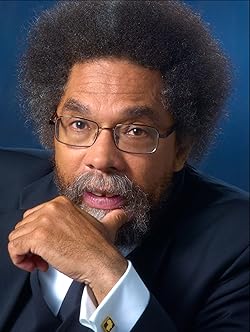
Dr. Cornel West Assesses President Barack Obama -Nov. 2009

People still in denial just cause their offended by his hairstyle and intelligence.

Instead of putting that aside and listening and reading.



Former Cornel West student Mark Eric Dyson's 10,000 word-salad screed, published in the New Republic magazine, putatively masquerading as substantive criticism, turns out to be nothing more than character assassination against his former teacher Dr. West. Poster Art Vandelay has posted numerous threads outlining the bourgeois buffoonery that Dyson hopes to mask in a bombastic
colloquy which quickly descends into idiocy.

Dyson can not substantively challenge any of the facts about the American Empire that Dr. West methodically speaks and writes about all over the planet earth. So -Dyson's main argument is that Dr. West should muzzle his criticism about "American Empire" and it's current descent into corporate fascism.....because....the titular head (The POTUS) of the Empire is currently a Black man named Barack Obama. "Give him some slack brother West".....after all Dr. West don't you see the White House visitors log and see how many times I'm up here in at White House many times a month eating peach cobbler?

Dyson also has the audacity to criticize Dr. West's written works, actually saying that Dr. West, in his opinion hasn't written a great classic seminal book since "Race Matters". Well Mr. Dyson you have NEVER written a great classic seminal book EVER; please let us all know when you've got one; does "Why I Love Black Women" count???:smh::(

Read the last chapter from Dr. West's latest book below 'Black Prophetic Voices'. Everything he says is accurate.


Barring a radical change in U.S. national policy direction regardless of whoever becomes the next POTUS, the U.S. is descending into corporate fascism. Not the Adolph Hitler Nazi death squad fascism, but the Mussolini or Greek or Spain under Franco type of fascism where there is a merger between government and the worlds top corporations. That is what these TPP and other so-called "trade" deals are all about. They are about global corporate supremacy over the nation state. The local, state, and federal court systems of the United States would be unable to haul a trans-national corporation into it's courts for any myriad of violations, no matter how egregious. Under provisions in the TPP corporations could sell you two years old frozen Australian meat and label it as fresh beef and a local prosecutor would be unable to sue that corporation in any U.S. court. More importantly American hourly wage workers would be competing with Vietnamese workers who earn 56 cents an hour. The entire Black caucus should be screaming at the top of their lungs 24/7, screaming an incessant and emphatic NO against the TPP. Obama is insidiously prevaricating about the TPP; he's lying about the details; he's regurgitating the talking points given to him from Wall street by his treasury secretary. TV talker Ed Schultz did a 19 minute segment calling out Obama and like minded Democrats for selling out U.S. workers. You can see it at the bottom.


9780807003527_custom-72349338958cd7457f5922ac2a42d075be4a16e9-s400-c85.jpg


CONCLUSION
Last Words on the Black Prophetic Tradition in the Age of Obama


The great irony of our time is that in the age of Obama the grand Black prophetic tradition is weak and feeble. Obamas Black face of the American empire has made it more difficult for Black courageous and radical voices to bring critique to bear on the US empire. On the empirical or lived level of Black experience, Black people have suffered more in this age than in the recent past. Empirical indices of infant mortality rates, mass incarceration rates, mass unemployment, and dramatic declines in household wealth reveal this sad reality. How do we account for this irony? It goes far beyond the individual figure of President Obama himself, though he is complicit; he is a symptom, not a primary cause. Although he is a symbol for some of either a postracial condition or incredible Black progress, his presidency conceals the escalating levels of social misery in poor and Black America.

The leading causes of the decline of the Black prophetic tradition are threefold. First, there is the shift of Black leadership from the voices of social movements like those in this book to those of elected officials in the mainstream political system. This shift produces voices that are rarely if ever critical of this system. How could we expect the Black caretakers and gatekeepers of the system to be critical of it? This shift is part of a larger structural transformation in the history of mid-twentieth-century capitalism in which neoliberal elites marginalize social movements and prophetic voices in the name of consolidating a rising oligarchy at the top, leaving a devastated working class in the middle, and desperate poor people whose labor is no longer necessary for the system at the bottom.

Second, this neoliberal shift produces a culture of raw ambition and instant success that is seductive to most potential leaders and intellectuals, thereby incorporating them into the neoliberal regime. This culture of superficial spectacle and hyper-visible celebrities highlights the legitimacy of an unjust system that prides itself on upward mobility of the downtrodden. Yet, the truth is that we live in a country that has the least upward mobility of any other modern nation!

Third, the US neoliberal regime contains a vicious repressive apparatus that targets those strong and sacrificial leaders, activists, and prophetic intellectuals who are easily discredited, delegitimated, or even assassinated, including through character assassination. Character assassination becomes systemic and chronic, and it is preferable to literal assassination because dead martyrs tend to command the attention of the sleepwalking masses and thereby elevate the threat to the status quo.

The central role of mass media, especially a corporate media beholden to the US neoliberal regime, is to keep public discourse narrow and deodorized. By "narrow" I mean confining the conversation to conservative Republican and neoliberal Democrats who shut out prophetic voices or radical visions. This fundamental power to define the political terrain and categories attempts to render prophetic voices invisible. The discourse is deodorized because the issues that prophetic voices highlight, such as mass incarceration, wealth inequality, and war crimes such as imperial drones murdering innocent people, are ignored.

The age of Obama was predicated on three pillars: Wall Street crimes in the financial catastrophe of 2008; imperial crimes in the form of the USA PATRIOT Act and National Defense Authorization Act, which give the president sweeping and arbitrary power that resembles a police or neofascist state; and social crimes principally manifest in a criminal justice system that is in itself criminal (where torturers, wire tappers, and Wall Street violators of the law go free yet poor criminals, such as drug offenders, go to prison). This kind of clear and direct language is rare in political discourse precisely because we are accustomed to be so polite in the face of crimes against humanity. The role of the Black prophetic tradition has always been to shatter the narrow and deodorized discourse in the name of the funky humanity and precious individuality of poor people. How rarely this takes place today! The profound failings of President Obama can be seen in his Wall Street government, his indifference to the new Jim Crow (or prison-industrial complex) and his expansion of imperial criminality in terms of the vast increase of the number of drones since the Bush years. In other words, the Obama presidency has been primarily a Wall Street presidency, drone presidency, mass surveillance presidency unwilling to concretely target the new Jim Crow, massive unemployment, and other forms of poor and Black social misery. His major effort to focus on poor Black men was charity and philanthropy - not justice or public policy.

The state of Black America in the age of Obama has been one of desperation, confusion, and capitulation. The desperation is rooted in the escalating suffering on every front. The confusion arises from a conflation of symbol and substance. The capitulation rests on an obsessive need to protect the first Black president against all forms of criticism. Black desperation is part of a broader desperation among poor and working people during the age of Obama. The bailout of Wall Street by the Obama administration, rather than the bailout of homeowners, hurt millions of working people. The refusal of the Obama administration to place a priority on jobs with a living wage reinforced massive unemployment, and the sheer invisibility of poor people's plight in public policy has produced more social despair among weak and vulnerable citizens. The unprecedented historical symbolism of the first Black president has misled many if not most Black people to downplay his substantial neoliberal policies and elevate his (and his family's) brilliant and charismatic presence. Needless to say, the presence of his brilliant and charismatic wife, Michelle - a descendent of enslaved and Jim-Crowed people, unlike himself - even more deeply legitimates his symbolic status, a status that easily substitutes for substantial achievement. The cowardly capitulation of Black leadership to Obama's neoliberal policies in the name of the Black prophetic tradition is pathetic. The role of the NAACP, National Urban League, and Black corporate media pundits, who so quickly became Obama apologists, constitutes a fundamental betrayal of the Black prophetic tradition. The very idea of Black prophetic voices as an extension of a neoliberal and imperial US regime is a violation of what the Black prophetic tradition has been and is. This violation enrages me when I think of the blood, sweat, and tears of the people who created and sustained this precious tradition. The righteous indignation of the Black prophetic tradition targets not only the oppressive system that dominates us but also the fraudulent figures who pose and posture as prophetic ones while the suffering of the people is hidden and concealed. To sell one's soul for a mess of Obama pottage is to trash the priceless Black prophetic tradition. Is it not hypocritical to raise one's voice when the pharaoh is white but have no critical word to say when the pharaoh is Black? If the boot is on our neck, does it make any difference what color the foot is in the boot? Moral integrity, political consistency, and systemic analysis sit at the center of the Black prophetic tradition.

Since the rise of the neoliberal regime, the Black struggle for freedom has been cast or reduced to an interest group, one among other such groups in American politics. Even the motto of the Black Congressional Caucus, the apex of Black elected officials, is "We have no permanent friends or permanent enemies - only permanent interests." How morally empty and ethically deficient this motto is - no reference to moral principles, ethical standards, or grand visions of justice for all; just permanent interests, like the Business Roundtable for Wall Street oligarchs, the American Israel Public Affairs Committee (AIPAC) for the security of Israel, or the National Rifle Association for gun ownership. The Black prophetic tradition indeed includes interests but goes far beyond such narrow calculations and stresses a moral high ground of fairness and justice for all. The Black prophetic tradition surely begins on the chocolate side of town, but like the blues and jazz, it has a universal message for all human beings concerned about justice and freedom.

It is no accident that the "permanent interests" of the Black Congressional Caucus so quickly became Black middle-class interests given the neoliberal regime to which they were accommodating. To be a highly successful Black professional or politician is too often to be well adjusted to injustice and well adapted to indifference toward poor people, including Black poor people. The Black prophetic tradition is fundamentally committed to the priority of poor and working people, thus pitting it against the neoliberal regime, capitalist system, and imperial policies of the US government. The Black prophetic tradition has never been confined to the interests and situations of Black people. It is rooted in principles and visions that embrace these interests and confront the situations, but its message is for the country and world. The Black prophetic tradition has been the leaven in the American democratic loaf. When the Black prophetic tradition is strong, poor and working people of all colors benefit. When the Black prophetic tradition is weak, poor and working class people are overlooked. On the international level, when the Black prophetic tradition is vital and vibrant, anti-imperial critiques are intense, and the plight of the wretched of the earth is elevated. What does it profit a people for a symbolic figure to gain presidential power if we turn our backs from the suffering of poor and working people, and thereby lose our souls? The Black prophetic tradition has tried to redeem the soul of our fragile democratic experiment. Is it redeemable?


<<hr noshade color="#ff0000" size="8"></hr>


<iframe src='http://player.theplatform.com/p/7wvmTC/MSNBCEmbeddedOffSite?guid=n_ed_tpp_150603_625693' height='500' width='635' scrolling='no' border='no' ></iframe>
 
Last edited:

VIDEO: Chris Hedges, Cornel West on Black Prophetic Tradition


Aug 4, 2015

http://www.truthdig.com/avbooth/item/chris_hedges_cornel_west_on_black_prophetic_tradition_20150804


<video width="640" height="360" controls>
<source src="http://media-telesur.openmultimedia.biz/clips/telesur-video-2015-08-03-200402427702.mp4?start=0" type="video/mp4">
<source src="http://media-telesur.openmultimedia.biz/clips/telesur-video-2015-08-03-200402427702.mp4?start=0" type="video/ogg">
Your browser does not support the video tag.
</video>


Former Cornel West student Mark Eric Dyson's 10,000 word-salad screed, published in the New Republic magazine, putatively masquerading as substantive criticism, turns out to be nothing more than character assassination against his former teacher Dr. West. Poster Art Vandelay has posted numerous threads outlining the bourgeois buffoonery that Dyson hopes to mask in a bombastic
colloquy which quickly descends into idiocy.

Dyson can not substantively challenge any of the facts about the American Empire that Dr. West methodically speaks and writes about all over the planet earth. So -Dyson's main argument is that Dr. West should muzzle his criticism about "American Empire" and it's current descent into corporate fascism.....because....the titular head (The POTUS) of the Empire is currently a Black man named Barack Obama. "Give him some slack brother West".....after all Dr. West don't you see the White House visitors log and see how many times I'm up here in at White House many times a month eating peach cobbler?

Dyson also has the audacity to criticize Dr. West's written works, actually saying that Dr. West, in his opinion hasn't written a great classic seminal book since "Race Matters". Well Mr. Dyson you have NEVER written a great classic seminal book EVER; please let us all know when you've got one; does "Why I Love Black Women" count???:smh::(

Read the last chapter from Dr. West's latest book below 'Black Prophetic Voices'. Everything he says is accurate.


Barring a radical change in U.S. national policy direction regardless of whoever becomes the next POTUS, the U.S. is descending into corporate fascism. Not the Adolph Hitler Nazi death squad fascism, but the Mussolini or Greek or Spain under Franco type of fascism where there is a merger between government and the worlds top corporations. That is what these TPP and other so-called "trade" deals are all about. They are about global corporate supremacy over the nation state. The local, state, and federal court systems of the United States would be unable to haul a trans-national corporation into it's courts for any myriad of violations, no matter how egregious. Under provisions in the TPP corporations could sell you two years old frozen Australian meat and label it as fresh beef and a local prosecutor would be unable to sue that corporation in any U.S. court. More importantly American hourly wage workers would be competing with Vietnamese workers who earn 56 cents an hour. The entire Black caucus should be screaming at the top of their lungs 24/7, screaming an incessant and emphatic NO against the TPP. Obama is insidiously prevaricating about the TPP; he's lying about the details; he's regurgitating the talking points given to him from Wall street by his treasury secretary. TV talker Ed Schultz did a 19 minute segment calling out Obama and like minded Democrats for selling out U.S. workers. You can see it at the bottom.


9780807003527_custom-72349338958cd7457f5922ac2a42d075be4a16e9-s400-c85.jpg


CONCLUSION
Last Words on the Black Prophetic Tradition in the Age of Obama


The great irony of our time is that in the age of Obama the grand Black prophetic tradition is weak and feeble. Obamas Black face of the American empire has made it more difficult for Black courageous and radical voices to bring critique to bear on the US empire. On the empirical or lived level of Black experience, Black people have suffered more in this age than in the recent past. Empirical indices of infant mortality rates, mass incarceration rates, mass unemployment, and dramatic declines in household wealth reveal this sad reality. How do we account for this irony? It goes far beyond the individual figure of President Obama himself, though he is complicit; he is a symptom, not a primary cause. Although he is a symbol for some of either a postracial condition or incredible Black progress, his presidency conceals the escalating levels of social misery in poor and Black America.

The leading causes of the decline of the Black prophetic tradition are threefold. First, there is the shift of Black leadership from the voices of social movements like those in this book to those of elected officials in the mainstream political system. This shift produces voices that are rarely if ever critical of this system. How could we expect the Black caretakers and gatekeepers of the system to be critical of it? This shift is part of a larger structural transformation in the history of mid-twentieth-century capitalism in which neoliberal elites marginalize social movements and prophetic voices in the name of consolidating a rising oligarchy at the top, leaving a devastated working class in the middle, and desperate poor people whose labor is no longer necessary for the system at the bottom.

Second, this neoliberal shift produces a culture of raw ambition and instant success that is seductive to most potential leaders and intellectuals, thereby incorporating them into the neoliberal regime. This culture of superficial spectacle and hyper-visible celebrities highlights the legitimacy of an unjust system that prides itself on upward mobility of the downtrodden. Yet, the truth is that we live in a country that has the least upward mobility of any other modern nation!

Third, the US neoliberal regime contains a vicious repressive apparatus that targets those strong and sacrificial leaders, activists, and prophetic intellectuals who are easily discredited, delegitimated, or even assassinated, including through character assassination. Character assassination becomes systemic and chronic, and it is preferable to literal assassination because dead martyrs tend to command the attention of the sleepwalking masses and thereby elevate the threat to the status quo.

The central role of mass media, especially a corporate media beholden to the US neoliberal regime, is to keep public discourse narrow and deodorized. By "narrow" I mean confining the conversation to conservative Republican and neoliberal Democrats who shut out prophetic voices or radical visions. This fundamental power to define the political terrain and categories attempts to render prophetic voices invisible. The discourse is deodorized because the issues that prophetic voices highlight, such as mass incarceration, wealth inequality, and war crimes such as imperial drones murdering innocent people, are ignored.

The age of Obama was predicated on three pillars: Wall Street crimes in the financial catastrophe of 2008; imperial crimes in the form of the USA PATRIOT Act and National Defense Authorization Act, which give the president sweeping and arbitrary power that resembles a police or neofascist state; and social crimes principally manifest in a criminal justice system that is in itself criminal (where torturers, wire tappers, and Wall Street violators of the law go free yet poor criminals, such as drug offenders, go to prison). This kind of clear and direct language is rare in political discourse precisely because we are accustomed to be so polite in the face of crimes against humanity. The role of the Black prophetic tradition has always been to shatter the narrow and deodorized discourse in the name of the funky humanity and precious individuality of poor people. How rarely this takes place today! The profound failings of President Obama can be seen in his Wall Street government, his indifference to the new Jim Crow (or prison-industrial complex) and his expansion of imperial criminality in terms of the vast increase of the number of drones since the Bush years. In other words, the Obama presidency has been primarily a Wall Street presidency, drone presidency, mass surveillance presidency unwilling to concretely target the new Jim Crow, massive unemployment, and other forms of poor and Black social misery. His major effort to focus on poor Black men was charity and philanthropy - not justice or public policy.

The state of Black America in the age of Obama has been one of desperation, confusion, and capitulation. The desperation is rooted in the escalating suffering on every front. The confusion arises from a conflation of symbol and substance. The capitulation rests on an obsessive need to protect the first Black president against all forms of criticism. Black desperation is part of a broader desperation among poor and working people during the age of Obama. The bailout of Wall Street by the Obama administration, rather than the bailout of homeowners, hurt millions of working people. The refusal of the Obama administration to place a priority on jobs with a living wage reinforced massive unemployment, and the sheer invisibility of poor people's plight in public policy has produced more social despair among weak and vulnerable citizens. The unprecedented historical symbolism of the first Black president has misled many if not most Black people to downplay his substantial neoliberal policies and elevate his (and his family's) brilliant and charismatic presence. Needless to say, the presence of his brilliant and charismatic wife, Michelle - a descendent of enslaved and Jim-Crowed people, unlike himself - even more deeply legitimates his symbolic status, a status that easily substitutes for substantial achievement. The cowardly capitulation of Black leadership to Obama's neoliberal policies in the name of the Black prophetic tradition is pathetic. The role of the NAACP, National Urban League, and Black corporate media pundits, who so quickly became Obama apologists, constitutes a fundamental betrayal of the Black prophetic tradition. The very idea of Black prophetic voices as an extension of a neoliberal and imperial US regime is a violation of what the Black prophetic tradition has been and is. This violation enrages me when I think of the blood, sweat, and tears of the people who created and sustained this precious tradition. The righteous indignation of the Black prophetic tradition targets not only the oppressive system that dominates us but also the fraudulent figures who pose and posture as prophetic ones while the suffering of the people is hidden and concealed. To sell one's soul for a mess of Obama pottage is to trash the priceless Black prophetic tradition. Is it not hypocritical to raise one's voice when the pharaoh is white but have no critical word to say when the pharaoh is Black? If the boot is on our neck, does it make any difference what color the foot is in the boot? Moral integrity, political consistency, and systemic analysis sit at the center of the Black prophetic tradition.

Since the rise of the neoliberal regime, the Black struggle for freedom has been cast or reduced to an interest group, one among other such groups in American politics. Even the motto of the Black Congressional Caucus, the apex of Black elected officials, is "We have no permanent friends or permanent enemies - only permanent interests." How morally empty and ethically deficient this motto is - no reference to moral principles, ethical standards, or grand visions of justice for all; just permanent interests, like the Business Roundtable for Wall Street oligarchs, the American Israel Public Affairs Committee (AIPAC) for the security of Israel, or the National Rifle Association for gun ownership. The Black prophetic tradition indeed includes interests but goes far beyond such narrow calculations and stresses a moral high ground of fairness and justice for all. The Black prophetic tradition surely begins on the chocolate side of town, but like the blues and jazz, it has a universal message for all human beings concerned about justice and freedom.

It is no accident that the "permanent interests" of the Black Congressional Caucus so quickly became Black middle-class interests given the neoliberal regime to which they were accommodating. To be a highly successful Black professional or politician is too often to be well adjusted to injustice and well adapted to indifference toward poor people, including Black poor people. The Black prophetic tradition is fundamentally committed to the priority of poor and working people, thus pitting it against the neoliberal regime, capitalist system, and imperial policies of the US government. The Black prophetic tradition has never been confined to the interests and situations of Black people. It is rooted in principles and visions that embrace these interests and confront the situations, but its message is for the country and world. The Black prophetic tradition has been the leaven in the American democratic loaf. When the Black prophetic tradition is strong, poor and working people of all colors benefit. When the Black prophetic tradition is weak, poor and working class people are overlooked. On the international level, when the Black prophetic tradition is vital and vibrant, anti-imperial critiques are intense, and the plight of the wretched of the earth is elevated. What does it profit a people for a symbolic figure to gain presidential power if we turn our backs from the suffering of poor and working people, and thereby lose our souls? The Black prophetic tradition has tried to redeem the soul of our fragile democratic experiment. Is it redeemable?


<<hr noshade color="#ff0000" size="8"></hr>


<iframe src='http://player.theplatform.com/p/7wvmTC/MSNBCEmbeddedOffSite?guid=n_ed_tpp_150603_625693' height='500' width='635' scrolling='no' border='no' ></iframe>


Great Article!:yes:
 
Know how your government works. Vote them out!


<iframe src="http://www.againstcronycapitalism.org/2015/06/so-who-voted-for-tpp-fast-track-in-the-senate-list/" width=800 height=1000></iframe>
 
<img src="http://i.minus.com/iHuLYTECpUpPv.gif" width="500">


Cornel West: The Fire of a New Generation


B1T69SNCoUS._UX250_.jpg


by George Yancy and Cornel West | August 19, 2015 |http://opinionator.blogs.nytimes.com/2015/08/19/cornel-west-the-fire-of-a-new-generation/?_r=0


<div align="right"><!-- MSTableType="layout" --><br><img src="http://s6.postimg.org/thcgq9dgd/gyancy1a.jpg" align="right"></div>This is the 15th in a series of interviews on race that I am conducting for The New York Times "The Stone". This week’s discussion is with Cornel West, one of the most prominent and provocative intellectuals in public life. He is a professor of philosophy and Christian practice at Union Theological Seminary and professor emeritus at Princeton University. He is the author and editor of more than 30 books, including “Black Prophetic Fire” and “The Radical King.” &nbsp;&nbsp;&nbsp;&nbsp;&nbsp;&nbsp;&nbsp;&nbsp;&nbsp;&nbsp;&nbsp;&nbsp;&nbsp;&nbsp;&nbsp;&nbsp;—
[color=66003]
"Fire really means a certain kind of burning in the soul that one can
no longer tolerate when one is pushed against a wall"
[/color]


George Yancy: Recently, on Aug. 10, you were arrested along with others outside the courthouse in St. Louis because of the collective resistance against continued racial injustice and police brutality. What was the political atmosphere like there?

Cornel West: The black prophetic fire among the younger generation in Ferguson was intense and wonderful. Ferguson is ground zero for the struggle against police brutality and police murder. I just wanted to be a small part of that collective fight back that puts one’s body on the line. It was beautiful because part of the crowd was chanting, “This is what democracy looks like,” which echoes W.E.B. DuBois and the older generation’s critique of capitalist civilization and imperialist power. And you also had people chanting, “We gon’ be alright,” which is from rap artist Kendrick Lamar, who is concerned with the black body, decrepit schools, indecent housing. This chant is in many ways emerging as a kind of anthem of the movement for the younger generation. So, we had both the old school and the new school and I try to be a kind of link between these two schools. There was a polyphonic, antiphonal, call and response, all the way down and all the way live.

G.Y.: One of your newest books is entitled “Black Prophetic Fire.” Define what you mean by “black prophetic fire.”

C.W.: Black prophetic fire is the hypersensitivity to the suffering of others that generates a righteous indignation that results in the willingness to live and die for freedom.

I think in many ways we have to begin with the younger generation, the generation of Ferguson, Baltimore, Staten Island and Oakland. There is not just a rekindling, but a re-invigoration taking place among the younger generation that enacts and enables prophetic fire. We’ve been in an ice age. If you go from the 1960s and 1970s — that’s my generation. But there was also an ice age called the neoliberal epoch, an ice age where it was no longer a beautiful thing to be on fire. It was a beautiful thing to have money. It was a beautiful thing to have status. It was a beautiful thing to have public reputation without a whole lot of commitment to social justice, whereas the younger generation is now catching the fire of the generation of the 1960s and 1970s.

G.Y.: When I think of black prophetic fire, I think of David Walker, Frederick Douglass, Sojourner Truth, Audre Lorde, Malcolm X, Medgar Evers, Martin L. King, James Baldwin and so many more. In recent weeks, some have favorably compared the writer Ta-Nehisi Coates to Baldwin. I know that you publicly criticized this comparison. What was the nature of your critique?

C.W.: In a phone conversation I had with Brother Coates not long ago, I told him that the black prophetic tradition is the collective fightback of sustained compassion in the face of sustained catastrophe. It has the highest standards of excellence, and we all fall short. So a passionate defense of Baldwin — or John Coltrane or Toni Morrison — is crucial in this age of Ferguson.

G.Y.: In what ways do you think the concept of black prophetic fire speaks to — or ought to speak to — events like the tragic murder of nine people at the Emanuel African Methodist Episcopal Church in Charleston, S.C.?


C.W.: Charleston is part and parcel of the ugly manifestation of the vicious legacy of white supremacy, and the younger generation — who have been wrestling with arbitrary police power, arbitrary corporate power, gentrification, the land-grabbing, the power-grabbing in and of the black community, and arbitrary cultural power in terms of white supremacist stereotypes promoted on television, radio and so forth — has become what I call the “marvelous new militancy,” and they embody this prophetic fire. The beautiful thing is that this “marvelous new militancy” is true for vanilla brothers and sisters, it’s true for all colors in the younger generation, though it is disproportionately black, disproportionately women and, significantly, disproportionately black, queer women.

G.Y.: Why the metaphor of “fire”?

C.W.: That’s just my tradition, brother. Fire really means a certain kind of burning in the soul that one can no longer tolerate when one is pushed against a wall. So, you straighten your back up, you take your stand, you speak your truth, you bear your witness and, most important, you are willing to live and die. Fire is very much about fruits as opposed to foliage. The ice age was all about foliage: “Look at me, look at me.” It was the peacock syndrome. Fire is about fruits, which is biblical, but also Marxist. It’s about praxis and what kind of life you live, what kind of costs you’re willing to bear, what kind of price you’re willing to pay, what kind of death you’re willing to embrace.

That was a great insight that Marcus Garvey had. Remember, Garvey often began his rallies with a black man or woman carrying a sign that read, “The Negro is not afraid.” Once you break the back of fear, you’re on fire. You need that fire. Even if that Negro carrying that sign is still shaking, the way that the lyrical genius Kanye West was shaking when he talked about George W. Bush not caring about black people, you’re still trying to overcome that fear, work through that fear.

The problem is that during the neoliberal epoch and during the ice age you’ve got the process of “******ization,” which is designed to keep black people afraid. Keep them scared. Keep them intimidated. Keep them bowing and scraping. And Malcolm X understood this better than anybody, other than Ida B. Wells — they represented two of the highest moments of black prophetic fire in the 20th century. Ida, with a bounty on her head, was still full of fire. And Malcolm, we don’t even have a language for his fire.

G.Y.: Does this process of “Ni66erization” in American culture partly involve white supremacist myths being internalized by black people?

C.W.: Yes. When you teach black people that they are less beautiful, less moral, less intelligent, and as a result you defer to the white supremacist status quo, you rationalize your accommodation to the status quo, you lose your fire, you become much more tied to producing foliage, what appears to be the case. And, of course, in late capitalist culture, the culture of superficial spectacle, driven by capital, driven by money, driven by the market, it’s all about image and interest, anyway. In other words, principle drops out. Any conception of being a person of integrity is laughed at because what is central is image, what is central is interest. And, of course, interest is tied to money, and image is tied to the peacock projection, of what you appear to be.


G.Y.: Can we assume then that you then would emphasize a form of education that would critique a certain kind of hyperrealism that is obsessed with images and nonmarket values?

C.W.: That’s right; absolutely. It’s the kind of thing that my dear brother Henry Giroux talks about with such insight. He’s written many books providing such a powerful critique of neoliberal market models of education. Stanley Aronowitz, of course, goes right along with Giroux’s critique in that regard. The notion has to do precisely with that critical consciousness that the great Paulo Freire talks about, or the great Myles Horton talked about, or the great bell hooks talks about in her works. How do you generate that kind of courageous critical consciousness that cuts against the grain and that discloses the operations of market interests and images, capitalist forms of wealth inequality, massive surveillance, imperial policies, drones dropping bombs on innocent people, ecological catastrophe and escalating nuclear catastrophe?

All of these various issues are very much tied into a kind of market model of education that reinforces the capitalist civilization, one that is more and more obsessed with just interest and image.

G.Y.: What do you see as the foremost challenge in creating a common cause between past generation and the current generation now “catching fire,” as you put it?

C.W.: For me, it is the dialectical interplay between the old school and prophetic thought and action. I’m an old Coltrane disciple just like I’m a Christian. You can be full of fire, but that fire has to be lit by a deep love of the people. And if that love is not in it, then the fire actually becomes just a sounding brass and tinkling cymbal that doesn’t get at the real moral substance and spiritual content that keeps anybody going, but especially people who have been hated for so long and in so many ways, as black people have.

For me, the love ethic is at the very center of it. It can be the love ethic of James Baldwin, Audre Lorde, Toni Morrison, Marvin Gaye, John Coltrane or Curtis Mayfield, but it has to have that central focus on loving the people. And when you love people, you hate the fact that they’re being treated unfairly. You tell the truth. You sacrifice your popularity for integrity. There is a willingness to give your life back to the people given that, in the end, they basically gave it to you, because we are who we are because somebody loved us anyway.

G.Y.: This idea relates to the collection of Dr. King’s writings you edited, called “The Radical King.” Why did you undertake the job of curating and editing the book?

C.W.: Because Martin had been so sanitized and sterilized. He has been so Santa Claus-ified, turned into an old man with a smile, toys in his bag to give out, and leaving everybody feeling so good. It was like we were living in Disneyland rather than in the nightmare that the present-day America is for so many poor working people, especially poor black working people. So, we needed a kind of crystallization.

But there has been a variety of different voices talking about the radical King. You know my closest friend in the world, James Melvin Washington, was one of the very few people that the King family allowed to bring the collection of sermons and writings together. It’s one of the greatest honors for me to be one of the first people that the King family allowed to bring those kinds of writings together across the board, laying out a framework. You’ve got James Melvin Washington’s “A Testament of Hope.” You’ve got other wonderful scholars like James Cone, Lewis Baldwin and others who have done magnificent work in their own way. But, you know, as I pass off the stage of space and time, I want to be able to leave these love letters to the younger generation. I want to tell them that they’re part of a great tradition, a grand tradition of struggle, critical, intellectual struggle, of moral and political struggle, and a spiritual struggle in music and the arts, and so on.

Contrary to when people talk about King every January, there is in “The Radical King” in fact a particular understanding of this moral titan, spiritual giant and great crusader for justice. So you get a sense of who he really was beyond all of the sanitizing and sterilizing that are trotted out every year in celebration of him. I consider it the most important book I’ve ever done.

G.Y.: King is well known for quoting the American reformer and abolitionist Theodore Parker’s words, “the arc of the moral universe is long, but it bends toward justice.” What’s your assessment of King’s claim now, in 2015, particularly in the light of the kind of existential plight and angst that black people and poor people are experiencing? Is there an arc of the moral universe?

C.W.: I think King had a very thick metaphysics when it came to history being the canvas upon which God was in full control. As you know, I don’t have such a thick metaphysics. I am closer to Anton Chekhov, Samuel Beckett and a bluesman. I think that King at the end of his life became more of a bluesman. He began to think: “Lord, have mercy. That arc might be bending, but it sure is bending the wrong way.” After all, he’s dealing with white supremacist backlash, patriarchal backlash and capitalist backlash against working people and the possibility of ecological catastrophe. He was already wrestling with the possible non-existence of life on the earth in terms of the nuclear catastrophe that we were on the brink of. So, he made a leap of faith grounded in a certain conception of history that was heading toward justice. I don’t accept that. I just do it because it’s right. I do it because integrity, honesty and decency are in and of themselves enough reward that I’d rather go under, trying to do what’s right, even if it has no chance at all.

G.Y.: I was thinking about your existentialist sensibilities that would in fact be critical of the claim that the universe is moral at all. Yet, both you and King share a blues sensibility that places emphasis on touching the pain and yet transcending the pain, and also the importance of the Christian good news.

C.W.: Oh, absolutely, we are both very similar in terms of never allowing hatred to have the last word, not allowing despair to have the last word, telling the truth about structures of domination of various sorts, keeping track of the variety of forms of oppression so we don’t become ghettoized and tied to just one single issue. Yet, at the same time, we’re trying to sustain hope by being a hope. Hope is not simply something that you have; hope is something that you are. So, when Curtis Mayfield says “keep on pushing,” that’s not an abstract conception about optimism in the world. That is an imperative to be a hope for others in the way Christians in the past used to be a blessing — not the idea of praying for a blessings, but being a blessing.

John Coltrane says be a force for good. Don’t just talk about forces for good, be a force. So it’s an ontological state. So, in the end, all we have is who we are. If you end up being cowardly, then you end up losing the best of your world, or your society, or your community, or yourself. If you’re courageous, you protect, try and preserve the best of it. Now, you might preserve the best, and still not be good enough to triumph over evil. Hey, that’s the way it is. You did the best you could do. T.S. Eliot says, “For us, there is only the trying. The rest is not our business.” T.S. Eliot was a right-wing brother who was full of wisdom. All you can do is to try; keep on pushing. That’s all you can do.

G.Y.: When it comes to race in America in 2015, what is to be done?

C.W.: Well, the first thing, of course, is you’ve got to shatter denial, avoidance and evasion. That’s part of my criticism of the president. For seven years, he just hasn’t or refused to hit it head-on. It looks like he’s now beginning to find his voice. But in finding his voice, it’s either too late or he’s lost his moral authority. He can’t drop drones on hundreds of innocent children and then talk about how upset he is when innocent people are killed. You can’t reshape the world in the image of corporate interest and image with Trans-Pacific Partnership (TPP) and then say that you’re in deep solidarity with working people and poor people. You can’t engage in massive surveillance, keeping track of phone calls across the board, targeting Edward Snowden and Chelsea Manning and others, and then turn right back around and say you’re against secrecy, you’re against clandestine policy.

So that, unfortunately, if he had come right in and asserted his moral authority over against Fox News, over against right-wing, conservative folk who were coming at him — even if he lost — he would have let the world know what his deep moral convictions are. But he came in as a Machiavellian. He came in with political calculation. That’s why he brought in Machiavellians like Rahm Emanuel and Larry Summers, and others. So, it was clear it was going to be political calculation, not moral conviction.

How can anyone take your word seriously after seven years about how we need to put a spotlight on racism when, for seven years, you’ve been engaged in political calculation about racism? But then you send out your lieutenants. You send out all your Obama cheerleaders and bootlickers and they say to his critics that he is president of all of America, not black America. And we say white supremacy is a matter of truth. Are you interested in truth? It’s a matter of justice. Are you interested in justice? It’s a matter of national security. Are you interested in national security? Well, we talk about black America. We’re not talking about some ghettoized group that’s just an interest group that you have to engage in political calculation about. When you talk about black people, you’re talking about wrestling with lies and injustice coming at them and their quest for truth and justice. If you’re not interested in truth and justice, no politician ought to be in office, and not just the president. So, we’ve actually had a major setback in seven years; a lost opportunity.

G.Y.: But is it really possible to speak courageous speech while acting as the most powerful country in the world? Of course, we also have to admit the history of racism preceded Obama’s tenure and will exceed it. My point is that there is a deep tension that exists for someone who desires to embody prophetic fire and yet be in charge of an empire.

C.W.: I think that’s true for most politicians, actually. Now when it comes to the intellectuals who rationalize their deference to the politician, so they want to pose as prophetic even though they are very much deferential to the powers that be, they need to be criticized in a very intense way. That’s why I’m very hard on the Obama cheerleaders, you see, but when it comes to the politicians themselves, it is very difficult to be a prophetic politician the way in which Harold Washington was or the way Paul Wellstone was or the way Shirley Chisholm was, or the way my dear brother Bernie Sanders actually is. He is a prophetic politician. He speaks the truth about wealth and equality. He speaks the truth about Wall Street. He speaks the truth about working and poor people being afterthoughts in terms of the kind of calculations of the oligarchs of our day. He shows that it’s possible to be a politician who speaks the truth.

Once you occupy the White House, you are head of the empire. Then you have a choice. We’ve had two grand candidates in the history of the United States. We’ve had Abraham Lincoln and we’ve had Franklin D. Roosevelt. Both of them are full of flaws, full of faults, full of many, many blind spots. But they pushed the American experiment in a progressive way, even given their faults. And that’s what we thought Obama was going to do. We were looking for Lincoln, and we got another Clinton, and that is in no way satisfying.

That’s what I mean by, we were looking for a Coltrane and we ended up getting a Kenny G. You can’t help but be profoundly disappointed. But also ready for more fightback in post-Obama America!


George Yancy is a professor of philosophy at Emory University. He has written, edited and co-edited numerous books, including “Black Bodies, White Gazes,” “Look, a White!” and “Pursuing Trayvon Martin,” co-edited with Janine Jones.
 
Back
Top
