

Welcome to your beach nightmare: this giant crab eats coconuts, kittens, and even people
 Professor Mark Laidre holds a live adult coconut crab in its native habitat on an Indian Ocean coral atoll. (Photo courtesy of National Geographic Society)

A tourist holds a massive coconut crab discovered on Australia's Christmas Island. Photo by Christmas Island Tourism Association/Facebook
 The coconut crab (Birgus latro) is a species of terrestrial hermit crab and the largest terrestrial arthropod. Adults weigh about as much as a healthy cat.
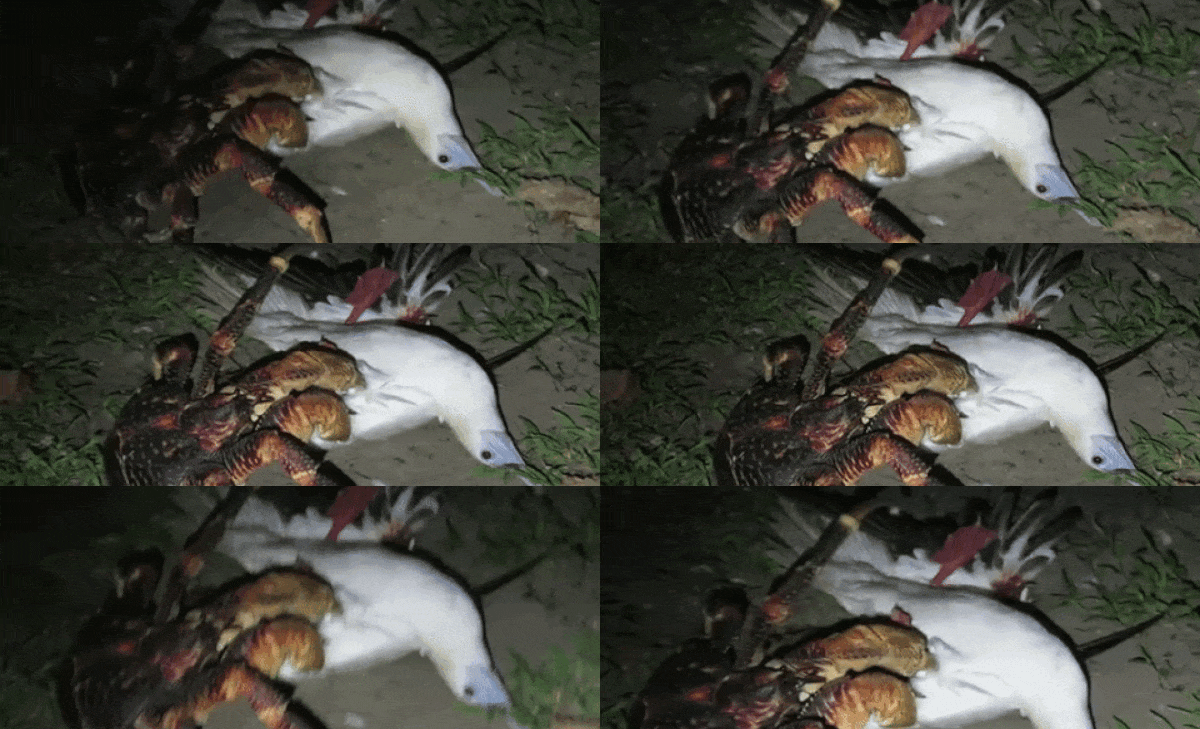 Giant Coconut Crab Caught on Camera Attacking And Eating a Seabird
If you thought the new freshwater plague of testicle eating fish was scary, now you've got a reason to be terrified of the beach too. Meet the coconut crab, the humongous, flesh-eating hermit crab strong enough to crack coconuts... and some are saying it's what killed, and ate, Amelia Earhart.
When it comes to "terrestrial arthropods", which just a fancy way of saying "really big bugs that live on land", the coconut crab is the largest of them all. Very closely related to the favorite housepet of ten year olds, the hermit crab, these monstrous crustaceans can grow up to three feet across, weigh over nine pounds, and can easily live twenty years or more. As you can imagine, their name comes from a steady diet of coconut, but they've also been known to chow down on household pets, chickens, other coconut crabs... and even people.

According to Environmental Graffiti, these horrible little creatures might even be the monsters that ate Amelia Earhart after her fateful crash on a remote atoll in the Pacific Ocean.
In 1940, researchers discovered a fraction of a skeleton on the island that matched the description of Amelia Earhart. Now, even more interesting clues are arising that seem to substantiate the idea that this is where she met her demise. The most compelling hypothesis currently under consideration is that coconut crabs overwhelmed her where she lay.
Researchers carried out an experiment to validate whether the coconut crabs had a part in her demise.
Back in 2007, they used a small pig carcass to assess what the coconut crabs might have done. The bones were removed very quickly and scattered, according to Patricia Thrasher, TIGHAR’s president.
Yikes. After all that, would you believe that some people keep this guys as pets? Apparently, they're pretty well behaved... so long as you keep them well fed.

Luckily, your chances of running into them in North America are pretty slim. They tend to live in the islands of the Indian and Pacific oceans where humans are more scarce (their meaty bodies make good eatin'), but it's not uncommon to run into them in Southern Florida... so make sure you keep Fido on a leash the next time you visit the Keys.
https://maps.roadtrippers.com/stori...nt-crab-eats-coconuts-kittens-and-even-people
A tourist holds a massive coconut crab discovered on Australia's Christmas Island. Photo by Christmas Island Tourism Association/Facebook

If you thought the new freshwater plague of testicle eating fish was scary, now you've got a reason to be terrified of the beach too. Meet the coconut crab, the humongous, flesh-eating hermit crab strong enough to crack coconuts... and some are saying it's what killed, and ate, Amelia Earhart.
When it comes to "terrestrial arthropods", which just a fancy way of saying "really big bugs that live on land", the coconut crab is the largest of them all. Very closely related to the favorite housepet of ten year olds, the hermit crab, these monstrous crustaceans can grow up to three feet across, weigh over nine pounds, and can easily live twenty years or more. As you can imagine, their name comes from a steady diet of coconut, but they've also been known to chow down on household pets, chickens, other coconut crabs... and even people.
According to Environmental Graffiti, these horrible little creatures might even be the monsters that ate Amelia Earhart after her fateful crash on a remote atoll in the Pacific Ocean.
In 1940, researchers discovered a fraction of a skeleton on the island that matched the description of Amelia Earhart. Now, even more interesting clues are arising that seem to substantiate the idea that this is where she met her demise. The most compelling hypothesis currently under consideration is that coconut crabs overwhelmed her where she lay.
Researchers carried out an experiment to validate whether the coconut crabs had a part in her demise.
Back in 2007, they used a small pig carcass to assess what the coconut crabs might have done. The bones were removed very quickly and scattered, according to Patricia Thrasher, TIGHAR’s president.
Yikes. After all that, would you believe that some people keep this guys as pets? Apparently, they're pretty well behaved... so long as you keep them well fed.
Luckily, your chances of running into them in North America are pretty slim. They tend to live in the islands of the Indian and Pacific oceans where humans are more scarce (their meaty bodies make good eatin'), but it's not uncommon to run into them in Southern Florida... so make sure you keep Fido on a leash the next time you visit the Keys.
https://maps.roadtrippers.com/stori...nt-crab-eats-coconuts-kittens-and-even-people