Blacks, Closets & Mexico

QueEx

Rising Star
Super Moderator
Re: Evidence unearthed of earliest African slaves in New World

<font size="4">
There was an extensive thread on this board regarding Black Mexicans before The Great Server Change of 2004. Obviously, that thread didn't survive the server-diaspora. That thread noted people like:

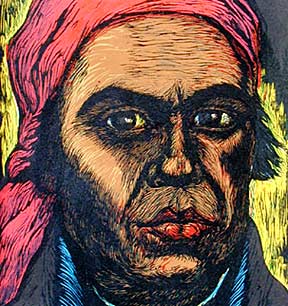
vicente-guerrero.jpg

Vicente Guerrero,
Mexican president


and

calderon_morelos.jpg

José María Morelos - a
Mexican Roman Catholic
priest and revolutionary
rebel leader who led the
Mexican War of Indepen-
dence movement.


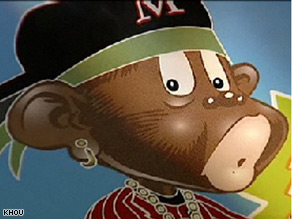
The thread also noted the seemly manner that Mexicans portray Blacks in that country:

memin1.jpg


art.comic.mexican.03.khou.jpg


Critics Blast Mexican Black Cartoon As Racist

But some say that angry activists don’t
get the cultural importance of Memin.</font size>

BET
July 10th, 2008

Black activists are up in arms over a popular Mexican comic book Memin Pinguin recently sold in WalMart. It features a dark-skinned Cuban boy (named Memin) with large ears and big pink lips, who’s always being made fun of because of his color. “This is poking fun at the physical features of an entire people. Making them look buffoonish (and) portraying the young [Black] kid as stupid,” Quanell X, an activist, told The Dallas Morning News. “Whenever they are beating him, they are referring to him as Negro. Even here, when he is being punched, slapped [he is called] Negro. This is a disgrace.” The comic received such a backlash that WalMart decided to remove it from their shelves, saying in a statement: “…[W]e understand that Memin is a popular figure in Mexico. However, given the sensitivity to the negative image Memin can portray to some, we felt that it was best to no longer carry the item in our stores. We apologize to those customers who many have been offended….” The comic, originally published in the 1960s, has been very popular in Mexico for years, so much so that the government decided to issue a stamp commemorating Memin in 2005 – a decision didn’t sit well then with U.S. activists and politicians who said the character was racist. But the Mexican government thinks it’s a misunderstanding and that Americans just don’t understand the character’s cultural importance in their country.

Do you think this Memin character is racist?

http://blogs.bet.com/news/newsyoushouldknow/critics-blast-mexican-black-cartoon-as-racist/
 
Last edited:
Re: Evidence unearthed of earliest African slaves in New World

<IFRAME SRC="http://www.afromexico.com/" WIDTH=780 HEIGHT=1500>
<A HREF="http://www.afromexico.com/">link</A>

</IFRAME>
 
Re: Evidence unearthed of earliest African slaves in New World

No wonder blacks and mexicans hate each other so much
 
Re: Evidence unearthed of earliest African slaves in New World

<font size="5"><center>
Where Did Mexico's Blacks Go?</font size></center>


by Steve Sailer
UPI, May 9, 2002


Where did Mexico's blacks go?

The nearly complete absorption of Mexico's identifiably African people offers an intriguing contrast to the persistence of a rather distinct black race in the United State.

Most Americans, and even many Mexicans, don't realize that a significant fraction of the Mexican population once looked markedly African. At least 200,000 black slaves were imported into Mexico from Africa. By 1810, Mexicans who were considered at least part-African numbered around a half million, or more than 10 percent of the population.

Mexican music, for example, has deep roots in West Africa. "La Bamba," the famous Mexican folk song that was given a rock beat by Ritchie Valens and a classic interpretation by Los Lobos, has been traced back to the Bamba district of Angola.

What's especially ironic about Mexico's "racial amnesia" -- a term coined by African-American historian Ted Vincent -- is that during Mexico's first century of independence, more than a few of its most famous leaders were visibly part black.


Zapata_black_hair.jpg

Emiliano Zapata

Emiliano Zapata was perhaps the noblest figure in 20th century Mexican politics, a peasant revolutionary still beloved as a martyred man of the people. Although Marlon Brando played him in the 1952 movie "Viva Zapata!" the best-known photograph of the illiterate idealist shows him with clearly part-African hair. His village had long been home to many descendents of freed slaves.


guererro-small.jpg

Vicente Guerrero

Similarly, Vicente Guerrero, a leading general in the Mexican War of Independence and the new nation's second president, appears from his portraits and his nickname to have been part black.


African-Mexicans Leading Revolutionaries

Perhaps African-Mexicans were so often leading the revolutionary vanguard because they were even more oppressed by law than Mexico's Indians. Back in the 16th century, the great Spanish Bishop Bartolome de las Casas, the first modern human rights activist, in the sense of battling for justice for another race, persuaded the King of Spain to ban the enslavement of Indians, at least nominally. Yet, bondage for Africans remained legal until "El Negro Guerrero" officially abolished it in 1829. It had largely withered out before then, however.

Assimilation

The apparent assimilation of Mexico's ex-slaves into the overall gene pool is in marked contrast to America's experience, where the black race has remained relatively distinct. In the average self-declared white American's family tree, there is only the equivalent of one black out of every 128 ancestors, according to the ongoing research of molecular anthropologist Mark D. Shriver of Penn State University and his colleagues.

In fact, Mexico even differs from the rest of Latin America, where distinct black populations remain genetically unassimilated. "Mexico is unique in this regard," commented population geneticist Ricardo M. Cerda-Flores of the Mexico's Autonomous University in Nuevo Leon.


Mexicans With "Black Blood"

Cerda-Flores' team found that a sample of Mexicans living around Monterrey in Northeast Mexico averaged around 5 percent African by ancestry, according to its genetic markers. In other words, if you could accurately trace the typical family tree back until before the first Spaniards and their African slaves arrived in Mexico in 1519, you would find that about one out of twenty of the subjects' forebears were Africans.

Cerda-Flores and his colleagues also examined the DNA of Mexican-Americans in Texas, who came out as about 6 percent black. Other studies of Mexicans and Mexican-Americans by molecular anthropologists have come up with black admixture rates ranging from 3 percent to 8 percent.

By way of contrast, this appears to be, very roughly, something like half of the black ancestry level of the overall American population, as implied by Shriver's studies. Of course, most of the African ancestors of Americans are visibly concentrated among African-Americans, who average 82 percent to 83 percent black, according to Shriver. Among Mexicans, however, African genes appeared to be spread more broadly and evenly.

Nevertheless, the official ideology of Mexico has been that the Mexicans are simply a "mestizo" people -- a mixture of Spaniards and Indians -- officially referred to as "La Raza" or "The Race." Since 1928, Mexico has celebrated Oct. 12 as "The Day of The Race." On Oct. 12, 1946, Mexican politician José Vasconcelos famously declared mestizos to be "the cosmic race."

African-American anthropologist Bobby Vaughn wrote, "Issues of race have been so colored by Mexico's preoccupation with 'the Indian question' that the Afro-Mexican experience tends to blend almost invisibly into the background, even to Afro-Mexicans themselves. Mexico's official narratives ... leave Afro-Mexicans outside of the national consciousness."


Mexico's Racial Illusion

That's because Mexico's national ideology centers on "the belief that contemporary Mexico is a kind of 'perfect blend' of both Spanish and Indian heritages, and that this synthesis is at the heart of what it means to be Mexican."

Socially, Mexico does not have any kind of "color line," in contrast to the United States, where "one drop of African blood" frequently categorizes a person as "black." For example, Oscar-winning actress Halle Berry's white mother raised Halle to think of herself as black, even though her African-American father abandoned the family when she was quite young. Those kind of sharp-edged racial categories seldom exist in Latin American countries.

In reality, Mexico's white-Indian racial blending is far less complete than Mexico's political orthodoxy would make it appear. What Mexico does have instead of a color line is a "color continuum." There are no sharp racial divides, yet the rule for social prestige remains "the whiter the better." For example, the stars of Mexican television are almost completely European. In fact, the actresses on Mexican "telenovelas" tend to be blonder than the ones on American soap operas.

Mexico's elites are much whiter looking than its working class. At 6'5" tall, President Vicente Fox stands roughly a head taller than the average Mexican man. Fox's paternal grandfather was an Irish-American born in Cincinnati.

There remain in dire poverty millions of virtually pureblooded Indian peasants, who speak the same Indian languages as their ancestors did before 1492.

This ideological assumption that all Mexicans are mestizo can lead to some amusing conundrums. For example, Luis Echeverria, president from 1970-1976, saw himself as the natural leader of the nonwhite Third World. The problem was that he, like most Mexican presidents, appeared to be pure white. So, he spent many hours under sun lamps, trying to tan himself into the Third World.

While it's easy to scoff at this "mestizo myth" as propaganda put out by the mostly white ruling class to keep the brown lower classes from noticing Mexico's racial hierarchy, its usefulness at maintaining the peace should not be despised. In recent decades, Mexico has suffered much less from racial violence than nearby Guatemala or more distant Peru. During the '80s in both of those countries, where attitudes of white superiority are more blatant than in Mexico, oppressed Indians joined Marxist intellectuals in guerilla wars against the white ruling class.

The Mexican populace's African "third root" is occasionally honored, but Mexican officials have generally ignored it. University of Minnesota demographer Robert McCaa wrote, "Afro-Mexicans, who numbered one-half million in 1810, more or less vanished, thoroughly intermingled and unidentifiable by 1895 if the official discourse is accepted at face value."

That discourse should be viewed skeptically. It's unlikely that African racial characteristics had become so blended in by 1895 that they had actually vanished. Yet, since then, black genes appear to have been so broadly distributed around the population that few Mexican individuals stand out today as notably black.


Mexico's "African Contribution" Forgotten

In fact, the black contribution to Mexico's "cosmic race" has been so forgotten that in last November's race for governor of the state of Michoacán, Alfredo Anaya of the former ruling party PRI hammered away at his opponent Lázaro Cárdenas, the scion of Mexico's most famous leftist dynasty, for having a part-black Cuban wife and son.

Anaya argued, "There is a great feeling that we want to be governed by our own race, by our own people."

One of his supporters said, "It's one thing to be brown. The black race is something different."

Ultimately, this strategy failed, as Anaya lost. Still, he came within five percentage points of beating the son of Cuauhtemoc Cardenas, the man who is widely believed to have been cheated out of Mexico's presidency in 1988 by massive PRI vote fraud. Further, this Lázaro Cárdenas is the grandson of the Lázaro Cárdenas, Mexico's most popular president, who is still adored for triumphing over the United States by nationalizing American-owned oil companies in 1938. So, considering the vast name recognition enjoyed by Cardenas, Anaya's pro-mestizo and anti-black ploy cannot be dismissed as wholly ineffectual.

By 2001, after generations of intermarriage, no more than 1 percent of the Mexican population is said to be identifiably African. Most of the remaining Afro-Mexicans are concentrated in the humid coastal regions, rather than the cooler highlands or dry northern desert.

There are self-consciously Afro-Mexican communities on the Gulf of Mexico near Vera Cruz, where the slave ships docked. There are heavily black villages on the Costa Chica on the Pacific, although the residents tend to see themselves as simply Mexicans with dark skins. One confusing factor is that Mexico also imported slaves from across the Pacific, including some African-looking New Guineans and also Negritos from the Philippines.

Life can be difficult for black Mexicans, because they are often assumed to be illegal immigrants from elsewhere in Latin America, such as Panama. The Mexican police often treat illegal aliens harshly.

Mexico's obliviousness to its black roots is slowly changing. An Afro-Mexican Museum recently opened south of Acapulco in Cuajinicuilapa in the state of Guerrero, which is named after the Afro-Mestizo second president.


What Happened to the African Mexicans?

So, what happened to the Afro-Mexicans who made up one tenth of the population in 1810?

The massive importation of East African slaves into the Middle East has not left much of a visible trace there either, although Prince Bandar, the Saudi Arabian ambassador to America, is clearly part black. Historian Bernard Lewis attributes this lack of blacks to the tendency in the Islamic world to castrate male slaves and work both sexes to death.

In contrast, the Mexican experience appears to have been much more benign. According to Cerda-Flores, intermarriage continued steadily until African genes had widely diffused into the population.

It's often argued these days that race is purely a "social construct." This view often puzzles geneticists, such as the forensic anthropologists who are employed by the police to examine hairs left at crime scenes and determine the race of suspects from their DNA.

Yet, there is a definite sense in which societies construct their own genetic makeups. America's color line and "one drop" rule have kept the genes of black Africans relatively isolated. In contrast, Mexico's color continuum and openness to interracial marriage have spread them so widely that there are few conspicuously black Mexicans left.

http://www.isteve.com/2002_where_did_mexicos_blacks_go.htm

 
Re: Evidence unearthed of earliest African slaves in New World

<font size="5"><center>
Where Did Mexico's Blacks Go?</font size></center>


by Steve Sailer
UPI, May 9, 2002

...

Most Americans, and even many Mexicans, don't realize that a significant fraction of the Mexican population once looked markedly African. At least 200,000 black slaves were imported into Mexico from Africa. By 1810, Mexicans who were considered at least part-African numbered around a half million, or more than 10 percent of the population....

In fact, the Texas War of Independence - remember the Alamo - was all about slavery. When Mexico gained it's independence, the country adopted a constitution that abolished slavery. When the constitution was ratified, Texicans refused to free their slaves and seceded from the union. Santa Ana took his army into Texas to preserve the United Mexican States.
 
Re: Evidence unearthed of earliest African slaves in New World


In English


<object width="425" height="344"><param name="movie" value="http://www.youtube.com/v/Sjvp8tEY6Bw&hl=en&fs=1"></param><param name="allowFullScreen" value="true"></param><embed src="http://www.youtube.com/v/Sjvp8tEY6Bw&hl=en&fs=1" type="application/x-shockwave-flash" allowfullscreen="true" width="425" height="344"></embed></object>


In Spanish


<object width="425" height="344"><param name="movie" value="http://www.youtube.com/v/P38CrWP7hys&hl=en&fs=1"></param><param name="allowFullScreen" value="true"></param><embed src="http://www.youtube.com/v/P38CrWP7hys&hl=en&fs=1" type="application/x-shockwave-flash" allowfullscreen="true" width="425" height="344"></embed></object>
 
Re: Evidence unearthed of earliest African slaves in New World

Vote Memin for President


<object width="425" height="344"><param name="movie" value="http://www.youtube.com/v/3NKFICDCUx4&hl=en&fs=1"></param><param name="allowFullScreen" value="true"></param><embed src="http://www.youtube.com/v/3NKFICDCUx4&hl=en&fs=1" type="application/x-shockwave-flash" allowfullscreen="true" width="425" height="344"></embed></object>
 
Re: Evidence unearthed of earliest African slaves in New World

<center><font size="4">
Memin Pinguin </font size><font size="5">
The Structural Violence of an Image</font size><font size="4">


“More interesting is the discovery that the
majority of Mexican and Latin American
populations descend, in part, from Africans.
The terms “mestizo” and “mestizaje” have
been used to wash out and hide this fact.”

</font size>
<object width="425" height="344"><param name="movie" value="http://www.youtube.com/v/J1stcT45QPs&hl=en&fs=1"></param><param name="allowFullScreen" value="true"></param><embed src="http://www.youtube.com/v/J1stcT45QPs&hl=en&fs=1" type="application/x-shockwave-flash" allowfullscreen="true" width="425" height="344"></embed></object>

<font size="4">

“Memin’s image attempts to trivialize
the Black experience in Mexico. Via this
mass persuasion vehicle, Blacks in Mexico
and their ‘mix-blood” Afro-descendants (the
majority of Mexicans) throughout the centuries
are codified in the susceptible minds of the
Mexican population.

The injected codes identify the Afro-desccendant with:
ugliness, clumsiness, stupidity, vulgarity, laziness, dishonesty,
miseducation, misinformation, etc., characterizations to strengthen
the racist collective unconscious of the mix, white and black population."

- Eusebio Camacho Hurtado


</font size></center>
 
Re: Evidence unearthed of earliest African slaves in New World


Mexico & Peru: The Black Grandma in the Closet


In Mexico and Peru Professor Gates explores the almost unknown history of
the significant numbers of black people—the two countries together received
far more slaves than did the United States
—brought to these countries as
early as the 16th and 17th centuries, and the worlds of culture that their
descendants have created in Vera Cruz on the Gulf of Mexico, the Costa
Chica region on the Pacific, and in and around Lima, Peru. Watch full episode.


<IFRAME SRC="http://video.pbs.org/video/1915580662" WIDTH=780 HEIGHT=600>
<A HREF="http://video.pbs.org/video/1915580662">link</A>

</IFRAME>
 
My sister went on an expedition to Mexico back in the 1980s with Dr. Ivan Van Sertima. She stated that Mexico is very racist. They don't even recognize any African or even"Black" contributions to Mexican society. Just look at Telemundo and Univision. No African looking people are portrayed in any positive represent. Mexico treats the indigenous population rather badly too.
 
My sister went on an expedition to Mexico back in the 1980s with Dr. Ivan Van Sertima. She stated that Mexico is very racist. They don't even recognize any African or even"Black" contributions to Mexican society. Just look at Telemundo and Univision. No African looking people are portrayed in any positive represent. Mexico treats the indigenous population rather badly too.

Makes one think. How could it be that more slaves came to Mexico and Peru than the United States and now, in Mexico at least, there is virtually little, if any, trace of Blacks remaining -- and there appears to be such pervasive anti-black racism ? ? ?

`
 

For dark-skinned Mexicans,
taint of discrimination lingers​


eCwWB.WiPh2.91.jpg

Mario Arriagada Cuadriello is a social scientist and magazine
editor in Mexico. He says the country's society magazines show
discrimination in their coverage of the people of Mexico. | Tim Johnson/MCT


McClatchy
By Tim Johnson
McClatchy Foreign Staff
Thursday, August 22, 2013


MEXICO CITY — Flip through the print publications exalting the activities of Mexico’s high society and there’s one thing you rarely find: dark-skinned people.

No matter that nearly two-thirds of Mexicans consider themselves moreno, the Spanish word for dark.

Mexico has strong laws barring discrimination based on skin color or ethnicity, but the practices of public relations firms and news media lag behind, promoting the perception that light skin is desirable and dark skin unappealing.

The issue came to the fore this month when a casting call for a television spot for Mexico’s largest airline stated flatly that it wanted “no one dark,” sparking outrage on social media and, ultimately, embarrassed apologies.

“I’d never seen anything that aggressive and that clear, all in capital letters: ‘NO ONE DARK,’” said Tamara de Anda, a magazine editor. “I decided to go with it.”

Her tweets elicited apologies both from Aeromexico and from the Catatonia public relations firm, which blamed a modeling agency that issued the casting call.


“We offer a heartfelt apology and reiterate our respect for all people without regard to gender, language, religion or skin color,” Aeromexico said on its official Twitter account.


De Anda wrote up her feelings on her popular blog, Crisis of the 30s, saying the incident was part of a far larger phenomenon of marginalization of a majority of the population.

“I’ve been swallowing Mexican advertising for 30 years of my life, 11,000 days,” she wrote. Apart from government pronouncements and “folkloric” tourism campaigns, she said, it’s as if “dark-skinned people don’t exist.”

It might seem like a harsh judgment. After all, Mexican tourism campaigns promote the nation’s multicultural heritage and its heritage as a home of the Aztec and Mayan empires. The nation of 118 million people includes 15.7 million who consider themselves indigenous. Moreover, an estimated 450,000 Afro-Mexicans live mostly along the coasts.

Legislators amended Mexico’s constitution in 2001 to bar all forms of discrimination and set up the National Council to Prevent Discrimination. Twenty-two of Mexico’s 32 states (including the federal district) now have anti-discrimination laws on the books. The nation has signed more than two dozen international treaties and conventions banning unfair treatment.

But the distance between legalities and practice is substantial, said Mario Arriagada Cuadriello, a doctoral candidate in comparative politics at the London School of Economics. He is an editor at Nexos, a leading cultural and political magazine.

When Arriagada published an article in this month’s issue about widespread discrimination in Mexico, he received a flurry of responses.

“People wrote to say that if you are light-skinned, you get better treatment in restaurants,” he said. One person told him that in an exclusive area of the capital, residents ask that their dark-skinned domestic servants not walk in the common gardens “because it is anti-aesthetic and makes the areas ugly.”

One of Mexico’s most prominent intellectuals from the early 20th century, Jose Vasconcelos, held up the mestizo, or person of mixed Indian and European blood, as part of a superior “cosmic race” with greater spiritual values.

Following the Mexican Revolution that began in 1910, the government embraced the mestizo as an ideal. Images of dark-skinned Mexicans appeared on items such as lottery tickets. By midcentury, in an apparent effort to win over the upper class, the then-ruling Institutional Revolutionary Party adopted images of more European-looking Mexicans wearing Indian clothing. People of all color filled the Congress, and still do.

At the end of the century, Mexico had accepted global norms against discrimination. But kiosks sagged with society magazines, such as Caras, Central and Clase, published by some of the nation’s biggest tycoons and celebrating the light-skinned moneyed classes, a distinct minority.

Indigenous Mexicans rarely appear in media and are treated as a class apart, although the discrimination is closely tied to economic conditions.

“The Indian is only accepted if he is decorative, wearing his traditional costume. But not in jeans and a jacket because then (the perception is that) he’ll rob you,” de Anda said.


On playgrounds and sidewalks, a fighting insult is to describe someone in racial terms as a dark indigenous person.

According to a 2010 government survey on discrimination, only 13 percent of Mexicans considered themselves light-skinned or blonde while 64.6 percent said they were “dark.” The rest described themselves as anywhere from “cinnamon,” “swarthy,” “chocolate,” “brown,” “yellow,” “a little tanned” to “black.”

Arriagada flipped through a copy of Clase, a magazine-style supplement to the El Universal newspaper that gives photo spreads to prominent families during their beach holidays, at weddings or celebrating social events.

“Look,” he said of those portrayed in its pages, “it’s like Norway.”


For his Nexos article, Arriagada counted the photos of light- and dark-skinned people appearing in publications. In a May edition of Club, a social supplement to the Reforma newspaper, he tallied 529 light-skinned people and 11 with darker skin. In a March issue of Caras, published by the Televisa conglomerate, he found 340 light-skinned people and four who were darker.

Even foreign media conglomerates adhere to the pattern, he said. He pointed to Quien, a women’s jet set and celebrity magazine published by Grupo Expansion, a subsidiary of Time Inc., part of Time Warner Inc.

“It’s a white people’s magazine,” Arriagada said, “in a nation that is not white.”

On the company’s website, Quien is pitched as a magazine aimed at the Mexican woman who is “a trendsetter and opinion leader among her social circle.”

A spokeswoman for Grupo Expansion, Maria Fernanda Evia Portillo, said in an email that the magazine has made efforts for “the inclusion of different groups: gay community, activists, politicians, and successful and influential people in Mexico.”

In addition to articles about a Mormon activist, a Roman Catholic priest to migrants and a poet who lost a son to hired gunmen, Evia sent a copy of a 2011 article on textiles made by the Otomi ethnicity and another on an indigenous woman who has entered politics in the state of Oaxaca.

Advocates for greater equality say videos of abusive behavior posted on the Internet have helped spark an outcry.

A video went viral last month that showed municipal inspectors in Villahermosa forcing an indigenous boy to dump candies he was selling from a basket onto the ground, and then taking three packs of cigarettes from him. The Tabasco state governor pledged to give the Tzotzil boy a scholarship, and first lady Angelica Rivera also pledged assistance.

This week, a 31-second video of two city inspectors in Cancun harassing an indigenous woman selling trinkets in the resort’s hotel zone led to their suspension.

“The capacity for social indignation and complaints to the authorities are much faster now,” said Hilda Tellez Lino, the deputy director of complaints at the National Council to Prevent Discrimination. “A lot of these cases were just ignored in the past.”


Email: tjohnson@mcclatchydc.com; Twitter: @timjohnson4


Read more here: http://www.mcclatchydc.com/2013/08/22/200057/for-dark-skinned-mexicans-taint.html#storylink=cpy


<iframe width="420" height="315" src="//www.youtube.com/embed/yjbSR5kzSxw" frameborder="0" allowfullscreen></iframe>
 
Back
Top