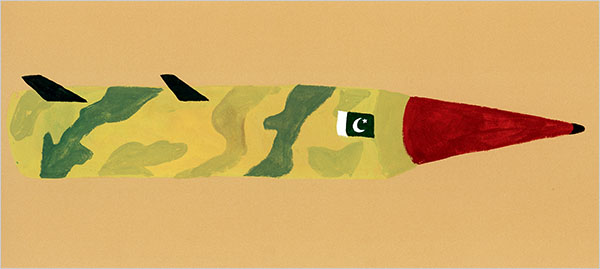
Because of Obama Pakistan May Declare State of Emergency

QueEx

Rising Star
Super Moderator
<font size="5"><center>Pakistan May Declare State of Emergency</font size><font size="4">
Citing Comments by Barak Obama as Cause</font size></center>


MATTHEW PENNINGTON
HUffington Post
August 8, 2007 11:01 PM EST

ISLAMABAD, Pakistan — The government of embattled Pakistani President Gen. Pervez Musharraf said Thursday it may impose a state of emergency because of "external and internal threats" and deteriorating law and order in the volatile northwest near the Afghan border.

Tariq Azim, minister of state for information, said talk from the United States about the possibility of U.S. military action against al-Qaida in Pakistan "has started alarm bells ringing and has upset the Pakistani public." He mentioned Democratic presidential hopeful Barak Obama by name as an example of someone who made such comments, saying his recent remarks were one reason the government was debating a state of emergency.

But it appeared the motivation for a declaration of an emergency would be the domestic political woes of Musharraf, a key U.S. ally in the war on terrorism who took power in a 1999 coup.

His popularity has dwindled and his standing has been badly shaken by a failed bid to oust the country's chief justice _ an independent-minded judge likely to rule on expected legal challenges to the Musharraf's bid to seek a new five-year presidential term this fall.

The Pakistani government's comments on a possible emergency declaration came hours after Musharraf abruptly announced he was canceling a planned trip to Kabul, Afghanistan on Thursday to attend a U.S.-backed tribal peace council aimed at curtailing cross-border militancy by the Taliban and al-Qaida.

The decision to cancel the trip appeared linked to the government's deliberations over declaring a state of emergency.

Secretary of State Condoleezza Rice spoke at length with Musharraf in a call that took place in the early hours of Thursday in Pakistan, a senior State Department official said. The official, who spoke on condition of anonymity because of the sensitivity of the situation, refused to discuss the substance of the 17-minute conversation.

During a state of emergency, the government can restrict the freedom to move, rally, engage in political activities or form groups and impose other limits such as restricting the parliament's right to make laws or even dissolving parliament.

"These are only unconfirmed reports although the possibility of imposition of emergency cannot be ruled out and has recently been talked about and discussed, keeping in mind some external and internal threats and the law and order situation," Azim told The Associated Press.

"I cannot say that it will be tonight, tomorrow or later. We hope that it does not happen. But we are going through difficult circumstances so the possibility of an emergency cannot be ruled out," he added.

Pakistani television networks reported that a declaration of an emergency was imminent, but other senior government officials said no final decision had been made.

Azim referred to recent Pakistani military action against militants in northwestern border areas that he said had resulted in the deaths of many soldiers.

Violence has been rising in the lawless region where critics say a September 2006 peace deal with local Taliban has allowed Islamic militants to thrive. The U.S. has called the deal a failure, saying it gave al-Qaida an opportunity to regroup in the region.

Meanwhile, Musharraf on Wednesday pulled out of a "peace jirga" in Kabul that is to bring more than 600 Pakistani and Afghan tribal leaders together with Afghan President Hamid Karzai.

Pakistan's Foreign Office said Musharraf had phoned Karzai Wednesday to say he couldn't attend because of "engagements" in Islamabad, and that Prime Minister Shaukat Aziz would take his place. Afghan officials said the jirga would proceed as planned without Musharraf.

In Washington, the State Department said the U.S. understands Musharraf's decision to pull out of the planned meeting in Afghanistan.

"President Musharraf certainly wouldn't stay back in Islamabad if he didn't believe he had good and compelling reasons to stay back," McCormack said. "Certainly we would understand that."

Musharraf is under growing American pressure to crack down on militants at the Afghan border because of the fears that al-Qaida is regrouping there.

The Bush administration has also not ruled out unilateral military action inside Pakistan, but like Obama, has stressed the need to work with Musharraf.

On Wednesday, Obama was asked again about his views on Pakistan.

"We can't send millions and millions of dollars to Pakistan for military aid and be a constant ally to them and yet not see more aggressive action in dealing with al-Qaida," he told reporters in Oakland, Calif.

However, he did not repeat the most incendiary line from his foreign policy speech last week when he promised: "If we have actionable intelligence about high-value terrorist targets and President Musharraf won't act, we will."

On Tuesday night, Obama appeared to soften his position during a debate with other Democratic presidential hopefuls.

"I did not say that we would immediately go in unilaterally. What I said was that we have to work with Musharraf, because the biggest threats to American security right now are in the northwest provinces of Pakistan."

Obama and his spokesman could not immediately be reached for comment Wednesday on Pakistan's possible declaration of a state of emergency.

One of Musharraf's worries back home is a Supreme Court hearing set for Thursday of a petition in which exiled former Prime Minister Nawaz Sharif _ ousted in 1999 in the coup that brought Musharraf to power _ and his brother are seeking to be allowed to return to Pakistan contest parliamentary elections due by early 2008.

Speaking from London to Pakistan's Geo TV, Shahbaz Sharif, brother of Nawaz Sharif, said an emergency would be aimed at stopping two "pillars of the country, two citizens of the country" from coming back.

"This will be another blunder by Musharraf. There is no justification, no basis for emergency," he said.

Another exiled former Prime Minister Benazir Bhutto _ widely reported to have met with Musharraf recently in the United Arab Emirates to discuss a power-sharing deal _ said that imposition of emergency would be a "drastic" step that the government should not take.

An aide to the president said Musharraf was due to meet with Cabinet ministers, the attorney-general and leaders from the ruling party on Thursday to discuss whether an emergency should be declared. He said he did not expect a declaration of an emergency in the early hours of Thursday.

A senior government official said Musharraf had held several meetings Wednesday with Prime Minister Shaukat Aziz, legal experts and top figures of the ruling party and the leaking of possible emergency plans indicated that it was a serious option.

Both the aide and the official spoke on condition of anonymity because of the sensitivity of the issue.

Under Pakistan's constitution, the head of state _ the president _ may declare a state of emergency if it is deemed that the country's security is "threatened by war or external aggression, or by internal disturbance beyond" the government's authority to control.

If a state of emergency is to be extended beyond two months, it must be approved by a joint sitting of parliament, the constitution says.

______

Associated Press writers Munir Ahmad and Sadaqat Jan in Islamabad, Pakistan and Jason Straziuso in Kabul, Afghanistan and Scott Lindlaw in Oakland, California contributed to this report.

http://www.huffingtonpost.com/huff-wires/20070808/pakistan-emergency/
 
Nothing more than white people reacting to the thought of a black man running the USA. Seems to me too many want to keep shit the way it is, like those who follow Bitch Clinton.

-VG
 
African Herbsman said:
This is merely an attempt by Musharraf to avoid the upcoming elections and strengthen his dictatorial powers.


until we get bin laden, I could careless what he does...
 
774-08102007Morin.slideshow_main.prod_affiliate.91.jpg

Jim Morin / The Miami Herald (August 10, 2007)
 
Pakistan doesn't have to worry about the U.S. attacking it;
It's own lawless population appears to be the real threat.

QueEx
 
This is merely an attempt by Musharraf to avoid the upcoming elections and strengthen his dictatorial powers.

Well with the assassination of Bhutto, he gets a valid reason to cancel the upcoming elections, declare a state of emergency and sit in power for the next few years...
 
This is merely an attempt by Musharraf to avoid the upcoming elections and strengthen his dictatorial powers.

GreedySmurf said:
Well with the assassination of Bhutto, he gets a valid reason to cancel the upcoming elections, declare a state of emergency and sit in power for the next few years ...
<font size="4">Questions:

What if the Pakistani People Party ("PPP") or some other major opposition party ask the government to delay/postpone the upcoming election, should it ??? Would that be strenthening Musharraf's dictatorial powers???

Given the current political climate in Pakistan, does anyone find it surprising that if Bush or Musharaff push forward with democratization, that is, the upcoming election, that such an election might very well result in an Islamic regime (with possible Al Qaeda/Taliban support) coming to power ??? (Does anyone remember Hamas' rise in Palestine; you have to be careful what you ask for).

Does anyone favor an Al Qaeda/Taliban aligned Islamic regime with a jihad ideology assuming power and control of a nuclear armed Pakistan ???

QueEx</font size>
 
<font size="3">


<embed src='http://www.washingtonpost.com/wp-srv/mmedia/player/wpniplayer_viral.swf?thisObj=fo764846&vid=021908-10v_title' bgcolor='#FFFFFF' flashVars='allowFullScreen=true&initVideoId=&servicesURL=http://www.brightcove.com&viewerSecureGatewayURL=https://www.brightcove.com&cdnURL=http://admin.brightcove.com&autoStart=false' base='http://admin.brightcove.com' name='fo764846' width='454' height='305' allowFullScreen='false' allowScriptAccess='always' seamlesstabbing='false' type='application/x-shockwave-flash' swLiveConnect='true' pluginspage='http://www.macromedia.com/shockwave/download/index.cgi?P1_Prod_Version=ShockwaveFlash'></embed>


John McCain and his wife Cindy appeared before the crowd barely five minutes later, to the beat of "Takin' Care of Business." McCain wasted no time in declaring that he will soon claim the nomination.

"Thank you, Wisconsin, for bringing us to the point where even a suspicious naval aviator can claim with confidence and humility that I will be our party's nominee for president," McCain said.

In his victory speech, McCain appeared to set his sights on silver-tongued Barack Obama as his competitor in the general election, ignoring the fact that Sen. Hillary Clinton is still running neck and neck with the Illinois senator.

<center>
"I will fight every moment of every day in this campaign
to make sure Americans are not deceived by an eloquent
but empty call for change," which McCain said "promises
no more than a holiday from history."

"Will the next president have the experience? Will we risk
the confused leadership of an inexperienced candidate" who,
he said, threatened to bomb Pakistan and would sit down
with rogue dictators."
</center>

While McCain did not mention Obama, both referenced statements that have caused Obama grief in the primaries.

</font size>

http://blog.washingtonpost.com/the-trail/2008/02/19/mccain_wins_says_hes_the_one_1.html
 
Personally, I'm observing the events in Pakistan closely because I think the UNILATERAL military actions of the Bush administration OF course INFLUENCE the actions of allies and enemies alike.


We've seen how effective a 'State Emergency' can be and what effect it can have on the populaces willingness to abdicate their civil liberties in deference to the leadership. And that effect is only a short step to dictatorial consolidation of executive power and privilege.

Currently reading Armed Madhouse by Greg Palast . . . scandalous. Sheds some real light on all this shit . . . and I'm still in the early pages.

JG
 
<font face="georgia" size="3" color="#000000">The idea that the oligarchy- military controlled, 50% illiterate, non-democratic, quasi-nation-state called Pakistan, who has received more than 15 billion dollars from the west in just the last 6 years would declare a-state-of–emergency because of statements by Barrack Obama is beyond preposterous.</font>

<hr noshade color="#0000FF" size="8"></hr>

hp-logo-washpostcom.gif


<font face="arial black" size="5" color="#D90000">
Unilateral Strike Called a Model For U.S. Operations in Pakistan</font>
<font face="helvetica, verdana" size="3" color="#000000">
<b>
by Joby Warrick and Robin Wright

February 19, 2008 </b>


In the predawn hours of Jan. 29, a CIA Predator aircraft flew in a slow arc above the Pakistani town of Mir Ali. The drone's operator, relying on information secretly passed to the CIA by local informants, clicked a computer mouse and sent the first of two Hellfire missiles hurtling toward a cluster of mud-brick buildings a few miles from the town center.

The missiles killed Abu Laith al-Libi, a senior al-Qaeda commander and a man who had repeatedly eluded the CIA's dragnet. It was the first successful strike against al-Qaeda's core leadership in two years, and it involved, U.S. officials say, an unusual degree of autonomy by the CIA inside Pakistan.

Having requested the Pakistani government's official permission for such strikes on previous occasions, only to be put off or turned down, this time the U.S. spy agency did not seek approval. The government of Pakistani President Pervez Musharraf was notified only as the operation was underway, according to the officials, who insisted on anonymity because of diplomatic sensitivities.

Officials say the incident was a model of how Washington often scores its rare victories these days in the fight against al-Qaeda inside Pakistan's national borders: It acts with assistance from well-paid sympathizers inside the country, but without getting the government's formal permission beforehand.

It is an approach that some U.S. officials say could be used more frequently this year, particularly if a power vacuum results from yesterday's election and associated political tumult. The administration also feels an increased sense of urgency about undermining al-Qaeda before President Bush leaves office, making it less hesitant, said one official familiar with the incident.

Independent actions by U.S. military forces on another country's sovereign territory are always controversial, and both U.S. and Pakistani officials have repeatedly sought to obscure operational details that would reveal that key decisions are sometimes made in the United States, not in Islamabad. Some Pentagon operations have been undertaken only after intense disputes with the State Department, which has worried that they might inflame Pakistani public resentment; the CIA itself has sometimes sought to put the brakes on because of anxieties about the consequences for its relationship with Pakistani intelligence officials.

U.S. military officials say, however, that the uneven performance of their Pakistani counterparts increasingly requires that Washington pursue the fight however it can, sometimes following an unorthodox path that leaves in the dark Pakistani military and intelligence officials who at best lack commitment and resolve and at worst lack sympathy for U.S. interests.

Top Bush administration policy officials -- who are increasingly worried about al-Qaeda's use of its sanctuary in remote, tribally ruled areas in northern Pakistan to dispatch trained terrorists to the West -- have quietly begun to accept the military's point of view, according to several sources familiar with the context of the Libi strike.

"In the past, it required getting approval from the highest levels," said one former intelligence official involved in planning for previous strikes. "You may have information that is valid for only 30 minutes. If you wait, the information is no longer valid."

But when the autonomous U.S. military operations in Pakistan succeed, support for them grows in Washington in probably the same proportion as Pakistani resentments increase. Even as U.S. officials ramp up the pressure on Musharraf to do more, Pakistan's embattled president has taken a harder line in public against cooperation in recent months, the sources said. "The posture that was evident two years ago is not evident," said a senior U.S. official who frequently visits the region.

A U.S. military official familiar with operations in the tribal areas, who spoke on the condition of anonymity because he was not authorized to talk about the operations, said: "We'll get these one-off flukes once every eight months or so, but that's still not a strategy -- it's not a plan. Every now and then something will come together. What that serves to do [is] it tamps down discussion about whether there is a better way to do it."

<b>The Target Is Identified</b>

During seven years of searching for Osama bin Laden and his followers, the U.S. government has deployed billions of dollars' worth of surveillance hardware to South Asia, from top-secret spy satellites to sophisticated eavesdropping gear for intercepting text messages and cellphone conversations.

Yet some of the initial clues that led to the Libi strike were decidedly low-tech, according to an account supplied by four officials briefed on the operation. The CIA declined to comment about the strike and neither confirmed nor denied its involvement.

Hours before the attack, multiple sources said, the CIA was alerted to a convoy of vehicles that bore all the signatures of al-Qaeda officers on the move. Local residents -- who two sources said were not connected to the Pakistani army or intelligence service -- began monitoring the cluster of vehicles as it passed through North Waziristan, a rugged, largely lawless province that borders Afghanistan.

Eventually the local sources determined that the convoy carried up to seven al-Qaeda operatives and one individual who appeared to be of high rank. Asked how the local support had been arranged, a U.S. official familiar with the episode said, "All it takes is bags of cash."

Kamran Bokhari, director of Middle East analysis for Strategic Forecasting, a private intelligence group, said the informants could have been recruits from the Afghanistan side of the border, where the U.S. military operates freely.

"People in this region don't recognize the border, which is very porous," Bokhari said. "It is very likely that our people were in contact with intelligence sources who frequent both sides and could provide some kind of targeting information."

Precisely what U.S. officials knew about the "high-value target" in the al-Qaeda convoy is unclear. Libi, a 41-year-old al-Qaeda commander who had slowly climbed to the No. 5 spot on the CIA's most wanted list, was a hulking figure who stood 6 feet 4 inches tall. He spoke Libyan-accented Arabic and learned to be cautious after narrowly escaping a previous CIA strike. U.S. intelligence officials say he directed several deadly attacks, including a bombing at a U.S. military base in Afghanistan last year that killed 23 people.

Alerted to the suspicious convoy, the CIA used a variety of surveillance techniques to follow its progression through Mir Ali, North Waziristan's second-largest town, and to a walled compound in a village on the town's outskirts.

The stopping place itself was an indication that these were important men: The compound was the home of Abdus Sattar, 45, a local Taliban commander and an associate of Baitullah Mehsud, the man accused by both the CIA and Pakistan of plotting the assassination of Benazir Bhutto on Dec. 27.

With all signs pointing to a unique target, CIA officials ordered the launch of a pilotless MQ-1B Predator aircraft, one of three kept at a secret base that the Pakistani government has allowed to be stationed inside the country. Launches from that base do not require government permission, officials said.

During the early hours of Jan. 29, the slow-moving, 27-foot-long plane circled the village before vectoring in to lock its camera sights on Sattar's compound. Watching intently were CIA and Air Force operators who controlled the aircraft's movements from an operations center at Creech Air Force Base in Nevada.

On orders from CIA officials in McLean, the operators in Nevada released the Predator's two AGM-114 Hellfire missiles -- 100-pound, rocket-propelled munitions tipped with a high-explosive warhead. The missiles tore into the compound's main building and an adjoining guesthouse where the al-Qaeda officers were believed to be staying.

Even when viewed from computer monitors thousands of miles away, the missiles' impact was stunning. The buildings were destroyed, and as many as 13 inhabitants were killed, U.S. officials said. The pictures captured after the attack were "not pretty," said one knowledgeable source.

Libi's death was confirmed by al-Qaeda, which announced his "martyrdom" on Feb. 1 in messages posted on the Web sites of sympathetic groups. One message hailed Libi as "the father of many lions who now own the land and mountains of jihadi Afghanistan" and said al-Qaeda's struggle "would not be defeated by the death of one person, no matter how important he may be."

<b>A Temporary Impact</b>

Publicly, reaction to the strike among U.S. and Pakistani leaders has been muted, with neither side appearing eager to call attention to an awkward, albeit successful, unilateral U.S. military operation. Some Pakistani government spokesmen have even questioned whether the terrorist leader was killed.

"It's not going to overwhelm their network or break anything up definitively," acknowledged a military official briefed on details of the Libi strike. He added: "We're now in a sit-and-wait mode until someone else pops up."

Richard A. Clarke, a former counterterrorism adviser to the Clinton and Bush administrations, said he has been told by those involved that the counterterror effort requires constant pressure on the Pakistani government.

"The United States has gotten into a pattern where it sends a high-level delegation over to beat Musharraf up, and then you find that within a week or two a high-value target has been identified. Then he ignores us for a while until we send over another high-level delegation," Clarke said.

Some officials also emphasized that such airstrikes have a marginal and temporary impact. And they do not yield the kind of intelligence dividends often associated with the live capture of terrorists -- documents, computers, equipment and diaries that could lead to further unraveling the network.

The officials stressed that despite the occasional tactical success against it, such as the Libi strike, the threat posed by al-Qaeda's presence in Pakistan has been growing. As a senior U.S. official briefed on the strike said: "Even a blind squirrel finds a nut now and then. But overall, we're in worse shape than we were 18 months ago."

http://www.washingtonpost.com/wp-dyn/content/article/2008/02/18/AR2008021802500_pf.html

</font>
 
I was hoping he'd mention it in tonight's debate. Maybe next time...
I'm glad he didn't mention it. It might not be such a good idea for Barack to throw it in Pakistan's face, even though in my opinion it was the right thing to do. The media, hopefully, at some point will make the point.

QueEx
 
<font size="5"><Center>

The Worst Pakistan Nightmare for Obama </font size></center>


11pakistan-600.jpg


The New York Times
By DAVID E. SANGER
Published: January 8, 2009


<font size="4">TO GET TO THE HEADQUARTERS</font size> of the Strategic Plans Division, the branch of the Pakistani government charged with keeping the country’s growing arsenal of nuclear weapons away from insurgents trying to overrun the country, you must drive down a rutted, debris-strewn road at the edge of the Islamabad airport, dodging stray dogs and piles of uncollected garbage. Just past a small traffic circle, a tan stone gateway is manned by a lone, bored-looking guard loosely holding a rusting rifle. The gateway marks the entry to Chaklala Garrison, an old British cantonment from the days when officers of the Raj escaped the heat of Delhi for the cooler hills on the approaches to Afghanistan. Pass under the archway, and the poverty and clamor of modern Pakistan disappear.

Chaklala is a comfortable enclave for the country’s military and intelligence services. Inside the gates, officers in the army and the Directorate for Inter-Services Intelligence, known as the ISI, live in trim houses with well-tended lawns. Business is conducted in long, low office buildings, with a bevy of well-pressed adjutants buzzing around. Deep inside the garrison lies the small compound for Strategic Plans, where Khalid Kidwai keeps the country’s nuclear keys. Now 58, Kidwai is a compact man who hides his arch sense of humor beneath a veil of caution, as if he were previewing each sentence to decide if it revealed too much. In the chaos of Pakistan, where the military, the intelligence services and an unstable collection of civilian leaders uneasily share power, he oversees a security structure intended to protect Pakistan’s nuclear arsenal from outsiders — Islamic militants, Qaeda scientists, Indian saboteurs and those American commando teams that Pakistanis imagine, with good reason, are waiting just over the horizon in Afghanistan, ready to seize their nuclear treasure if a national meltdown seems imminent.

In the second nuclear age, what happens or fails to happen in Kidwai’s modest compound may prove far more likely to save or lose an American city than the billions of dollars the United States spends each year maintaining a nuclear arsenal that will almost certainly never be used, or the thousands of lives and hundreds of billions of dollars we have spent in Iraq and Afghanistan to close down sanctuaries for terrorists.

Just last month in Washington, members of the federally appointed bipartisan Commission on the Prevention of Weapons of Mass Destruction Proliferation and Terrorism made it clear that for sheer scariness, nothing could compete with what they had heard in a series of high-level intelligence briefings about the dangers of Pakistan’s nuclear technology going awry. “When you map W.M.D. and terrorism, all roads intersect in Pakistan,” Graham Allison, a Harvard professor and a leading nuclear expert on the commission, told me. “The nuclear security of the arsenal is now a lot better than it was. But the unknown variable here is the future of Pakistan itself, because it’s not hard to envision a situation in which the state’s authority falls apart and you’re not sure who’s in control of the weapons, the nuclear labs, the materials.”

For Kidwai, there is something both tiresome and deeply suspicious about the constant stream of warnings out of Washington that Pakistan is the epicenter of a post-cold-war Armageddon. “This is all overblown rhetoric,” Kidwai told me on a rainy Saturday morning not long ago when I went to visit him in his office, which is comfortably outfitted with oversize white leather chairs and models of the Pakistani missiles that can deliver a nuclear weapon to the farthest corners of India. Even if the country’s leadership were to be incapacitated, he insisted, Pakistan’s protections are so strong that the arsenal could never slip from the hands of the country’s National Command Authority, a mix of hardened generals (including Kidwai) and newly elected politicians. Kidwai has spent the past five years making the same case to American officials: just because a savvy metallurgist named Abdul Qadeer Khan, a national hero for his role in turning Pakistan into a nuclear-weapons power, managed to smuggle nuclear secrets and materials to the likes of Iran, North Korea and Libya for profit in the 1980s and 1990s, it doesn’t mean that such a horrendous breach of security could happen again.

“Please grant to Pakistan that if we can make nuclear weapons and the delivery systems,” Kidwai said, gesturing to the models and a photo of Pakistan’s first nuclear test, a decade ago, “we can also make them safe. Our security systems are foolproof.”

<font size="4">“FOOLPROOF” IS MOST</font size> likely not the word Barack Obama would use to describe the status of Pakistan’s nuclear safety following the briefings he has been receiving since Nov. 6, which is when J. Michael McConnell, the director of national intelligence, showed up in Chicago to give the president-*elect his first full presidential daily brief. For obvious reasons, neither Obama nor McConnell will talk about the contents of those highly classified briefings. But interviews over the past year with senior intelligence officials and with nuclear experts in Washington and South Asia and at the International Atomic Energy Agency in Vienna provide strong indications of what Obama has probably heard.

By now Obama has almost surely been briefed about an alarming stream of intelligence that began circulating early last year to the top tier of George W. Bush’s national-security leadership in Washington. The highly restricted reports described how foreign-trained Pakistani scientists, including some suspected of harboring sympathy for radical Islamic causes, were returning to Pakistan to seek jobs within the country’s nuclear infrastructure — presumably trying to burrow in among the 2,000 or so people who have what Kidwai calls “critical knowledge” of the Pakistani nuclear infrastructure.

“I have two worries,” one of the most senior officials in the Bush administration, who had read all of the intelligence with care, told me one day last spring. One is what happens “when they move the weapons,” he said, explaining that the United States feared that some groups could try to provoke a confrontation between Pakistan and India in the hope that the Pakistani military would transport tactical nuclear weapons closer to the front lines, where they would be more vulnerable to seizure. Indeed, when the deadly terror attacks occurred in Mumbai in late November, officials told me they feared that one of the attackers’ motives might have been to trigger exactly that series of events.

“And the second,” the official said, choosing his words carefully, “is what I believe are steadfast efforts of different extremist groups to infiltrate the labs and put sleepers and so on in there.” As Obama’s team of nuclear experts have discovered in their recent briefings, it is Pakistan’s laboratories — one of which still bears A. Q. Khan’s name — that still pose the greatest worries for American intelligence officials. It is relatively easy to teach Kidwai’s security personnel how to lock down warheads and store them separately from trigger devices and missiles — training that the United States has conducted, largely in secret, at a cost of almost $100 million. It is a lot harder for the Americans to keep track of nuclear material being produced inside laboratories, where it is easier for the Pakistanis to underreport how much nuclear material has been produced, how much is in storage or how much might be “stuck in the pipes” during the laborious enrichment process. And it is nearly impossible to stop engineers from walking out the door with the knowledge of how to produce fuel, which Khan provided to Iran, and bomb designs.

After more than four years, no one in Washington has a clear sense of whether the small, covert American program to help Pakistan secure its weapons and laboratories is actually working. Kidwai has been happy to take the cash and send in progress reports, but auditors from Washington have been rebuffed whenever they have asked to see how, exactly, the money was being spent. Kidwai, when pressed, says that the Americans shouldn’t offer lectures about nuclear security, not after the U.S. Air Force lost track of some of its own weapons in 2007 for 36 hours, flying them around unguarded to air bases and leaving them by the side of the tarmac. He makes use of another argument as well, a legacy of the Bush era that will last for many years: how can an intelligence apparatus in the United States that got Iraq’s nuclear progress so wrong in 2003 be so certain today that Pakistan’s arsenal is at risk?

Pakistani officials are understandably suspicious that the real intent of the American program is to gather the information needed to snatch, or neutralize, the country’s arsenal. So they have met most requests with the same answer they gave the C.I.A. when it wanted to interview Khan: Don’t waste your time submitting a formal request. “It is a matter of national sovereignty,” Kidwai says, “and a matter of our honor.”

Khalid Kidwai is only a few years younger than Pakistan itself, and he has spent much of his life trying to create pockets of order in a nation to which order does not come naturally. His father, Jalil Ahmed Kidwai, was one of the country’s best-known authors and critics; his mother founded a school in Karachi. Kidwai was born into an era in which the overriding question on the minds of most Muslims in Pakistan was whether the country could withstand India’s onslaughts, and it did not take long for the young Khalid to settle on his dream: to fly with the Pakistani Air Force, the most romantic branch of the armed forces in a new nation that believed it needed to be able to strike deep into India if it was to survive. At age 12, he passed the exam for the air-force-sponsored school in Sargodha, the site of the country’s largest air base, but when he graduated, Kidwai received the disheartening news that he would never become a pilot: a mild eye disorder disqualified him. “My next obvious choice was the army,” he told me, and like many in his generation of military men in Pakistan, he never fully left it, even after his retirement, or lost the professional pride and the security blanket it provides.

In 1971, Kidwai was captured during a war with India and held as a prisoner of war for two years in the north Indian city of Allahabad — an experience he is still reluctant to discuss. After returning to the Pakistani officer corps, he was posted in 1979 to the artillery training school at Fort Sill, Okla., as part of a program that allowed the American military to get to know a rising generation of Pakistani officers. Kidwai recalls that whenever the fort’s brass turned to nuclear-weapons training, they found something else for the foreign officers to do. “We’d be sent off for trips to Washington or someplace,” Kidwai recalled with a laugh, “so that we were out of earshot.”

In 1998, Pakistan responded to a round of Indian nuclear tests by exploding its own bombs. Like the rest of the country, Kidwai watched on television as the Chagai hills shook from Pakistan’s underground tests. His nation had done more than answer India’s challenge; it had built the ultimate deterrent. Along the way, Pakistan had overcome a series of halfhearted efforts, led by the United States, to cut off its nuclear supplies. Year after year, Pakistan lied to Washington when confronted with all-but-definitive evidence that it was constructing a weapon. Pakistan simply endured the resulting economic sanctions. It all seemed worth it, Pakistani officials have told me, after India detonated five test bombs and Pakistan came back with six.

“That was one-upmanship,” Kidwai said, smiling proudly as we looked at a photograph of one test, which was hanging on his office wall. “India had conducted only five.” Below the photographs, Kidwai keeps a small fragment of the Chagai mountain under glass, displayed like a moon rock at the Smithsonian. The explosion had turned it bright white.

<font size="4">NO SOONER HAD THE </font size>radioactive and diplomatic dust settled from the test site than Kidwai was called in by his army superiors, and ultimately, Gen. Pervez Musharraf, and told that he would now head an urgent project: to come up with a system to protect Pakistan’s new weapon from all of its enemies — the Indians, Western Europeans and the angry Americans. Kidwai knew speed was of the essence. Pakistan’s leaders feared that if the West thought that Pakistan had just a few weapons in its inventory, and no system to assure their safety, they would come under even more pressure to roll back the program and give up the handful they had manufactured. The only way to resist that pressure, they knew, was to create a large arsenal quickly and to hide it in underground facilities where neither the Indians nor the Americans could seize or destroy the warheads. Then they needed to convince the world that Pakistan could become a responsible nuclear power, one capable of securing its weapons as well as the Russians, the Chinese or the Israelis did. That meant Kidwai had to learn the arts of nuclear safety from the Americans, but without teaching his teachers how to neutralize Pakistan’s arsenal.

Kidwai got off to a rocky start. The Pakistani nuclear program owes its very existence to the government-endorsed and government-financed subterfuges of A. Q. Khan, who then turned the country into the biggest source of nuclear-weapons proliferation in atomic history. And while Khan may be the most famous nuclear renegade in Pakistan, he is not the only one. Soon after Kidwai took office, he also faced the case of the eccentric nuclear scientist Sultan Bashiruddin Mahmood, who helped build gas centrifuges for the Pakistani nuclear program, using blueprints Khan had stolen from the Netherlands. Mahmood then moved on to the country’s next huge project: designing the reactor at Khushab that was to produce the fuel Pakistan needed to move to the next level — a plutonium bomb.

An autodidact intellectual with grand aspirations, Mahmood was fascinated by the links between science and the Koran. He wrote a peculiar treatise arguing that when morals degrade, disaster cannot be far behind. Over time, his colleagues began to wonder if Mahmood was mentally sound. They were half amused and half horrified by his fascination with the role sunspots played in triggering the French and Russian Revolutions, World War II and assorted anticolonial uprisings. “This guy was our ultimate nightmare,” an American intelligence official told me in late 2001, when The New York Times first reported on Mahmood. “He had access to the entire Pakistani program. He knew what he was doing. And he was completely out of his mind.”

While Khan appeared to be in the nuclear-proliferation business chiefly for the money, Mahmood made it clear to friends that his interest was religious: Pakistan’s bomb, he told associates, was “the property of a whole Ummah,” referring to the worldwide Muslim community. He wanted to share it with those who might speed “the end of days” and lead the way for Islam to rise as the dominant religious force in the world.

Eventually Mahmood’s religious intensity, combined with his sympathy for Islamic extremism, scared his colleagues. In 1999, just as Kidwai was beginning to examine the staff of the nuclear enterprise, Mahmood was forced to take an early retirement. At a loss for what to do, Mahmood set up a nonprofit charity, Ummah Tameer-e-Nau, which was ostensibly designed to send relief to fellow Muslims in Afghanistan. In August 2001, as the Sept. 11 plotters were making their last preparations in the United States, Mahmood and one of his colleagues at the charity met with Osama bin Laden and his deputy, Ayman al-Zawahiri, over the course of several days in Afghanistan. There is little doubt that Mahmood talked to the two Qaeda leaders about nuclear weapons, or that Al Qaeda desperately wanted the bomb. George Tenet, the C.I.A. chief, wrote later that intelligence reports of the meeting were “frustratingly vague.” They included an account that there was talk of how to design a simple firing mechanism, and that a senior Qaeda leader displayed a canister that may have contained some nuclear material (though almost certainly not bomb-grade).

In the weeks after 9/11, the tales of the meeting were enough to set off panic. Rolf Mowatt-Larssen, a longtime C.I.A. nuclear expert, was given perhaps the most daunting job at the agency in the aftermath of 9/11: to make sure that Al Qaeda did not have a weapon of mass destruction at its disposal. “The worst nightmare we had at that time was that A. Q. Khan and Osama bin Laden were somehow working together,” Mowatt-Larssen told me one day last winter in his basement office in a secure vault at the Energy Department, where he moved after his time at the C.I.A. to head up the department’s intelligence unit. As if to drive home the point to visitors to his underground lair, Mowatt-Larssen, who is leaving the government this month to become a senior fellow at Harvard, keeps a floor-to-ceiling centrifuge in the corner of his office, where most people might put a potted plant. The gleaming silver device, which is meant to spin at terrifying speed to enrich uranium, was seized in Libya — part of the cache that Muammar el-Qaddaffi bought from Khan.


http://www.nytimes.com/2009/01/11/magazine/11pakistan-t.html?pagewanted=1&_r=1&ref=washington
 
<font size="4">
The Worst Pakistan Nightmare for Obama
Part Two
________________________________

</font size>


Musharraf tried to tamp down American alarm. He told Tenet and Mowatt-Larssen that “men in caves can’t do this.” He had Mahmood and his colleague rearrested, though they were never prosecuted. Pakistan did not want to risk a trial in which the country’s own nuclear secrets came out. Today, Mahmood, like Khan, is back home, under tight surveillance that seems intended primarily to keep him a safe distance from reporters.


Kidwai insists that the Mahmood incident was overblown, raised time and again by Americans to create the image that Pakistan is a nuclear sieve. “Nothing went anywhere,” he assured me. “It’s over.” But what’s terrifying about Mahmood’s story is not what happened around the campfire, but rather that the meetings happened at all. They took place three years after Kidwai and his team started their work and demonstrated the huge vulnerabilities in the Pakistani nuclear infrastructure at the time.

Kidwai says he has not received any specific intelligence from the United States about “sleeper” scientists trying to infiltrate Pakistan’s facilities. Moreover, he says, there is now also a far more effective screening process in place. When we met, Kidwai spent considerable time describing the extensive “personal-reliability program” that he has created to screen existing employees and applicants to the program. Kidwai’s intelligence agency monitors nuclear employees’ private bank accounts, foreign trips and meetings with anyone who might be considered an extremist.

But Americans have their doubts. Secretary of Defense Robert Gates noted to me that “there is no human vetting system that is entirely reliable,” pointing out that lie detector tests and other screening techniques that C.I.A. em*ployees regularly undergo have, at times, failed to identify spies. In Pakistan, the problem is made worse by the fact that the universities — where the nuclear program draws its young talent — are now more radicalized than at any time in memory, and the nuclear program itself has greatly expanded. Kidwai estimated that there are roughly 70,000 people who work in the nuclear complex in Pakistan, including 7,000 to 8,000 scientists and the 2,000 or so with “critical knowledge.” If even 1 percent of those employees are willing to spread Pakistan’s nuclear knowledge to outsiders with a cause, Kidwai — and the United States — have a problem.


<font size="4">JUST AS KIDWAI FEARS</font size>, every few months someone in Washington — either at the Pentagon, or the Energy Department, or on the campus of the National Defense University — runs a simulation of how the United States should respond if a terrorist group infiltrates the Pakistani nuclear program or manages to take over one or two of its weapons. In these exercises, everyone plays to type: the State Department urges negotiations, while the Joint Special Forces Command loads its soldiers and nuclear teams into airplanes. The results of these simulations are highly classified, for fear of tipping off the Pakistanis about what the United States knows and doesn’t know about the location of the country’s weapons. But most of these war games conclude in a sea of ambiguity, with the participants who are playing top officials in Islamabad and Washington unable to get a clear picture of what happened and, if something is missing, the Pakistanis unwilling to admit it. As one frequent participant in these tabletop exercises put it to me, “Most of them don’t end well.”

The Pakistanis insist that these American fears are exaggerated and that it would be next to impossible for someone to steal all the elements of a weapon. As Kidwai paced me through PowerPoints and diagrams, his message was that Pakistan’s nuclear-weapons-safety program is up to “international standards.” But back in Washington, military and nuclear experts told me that the bottom line is that if a real-life crisis broke out, it is unlikely that anyone would be able to assure an American president, with confidence, that he knew where all of Pakistan’s weapons were — or that none were in the hands of Islamic extremists. “It’s worse than that,” the participant in the simulations told me. “We can’t even certify exactly how many weapons the Pakistanis have — which makes it difficult to sound convincing that there’s nothing to worry about.”


Over time, it appears that the deep mutual suspicions have impeded the effort to ensure the safety of Pakistan’s arsenal. One of America’s key nuclear-safety technologies — PALs, or “permissive action links” — is a series of codes and hardware protections that make sure only a very small group of authorized users can arm and detonate a nuclear weapon. It is a cold-war leftover, designed to make sure some rogue sergeant in a silo didn’t wing a weapon toward Moscow. But it may be more important in the second nuclear age than it was in the first. When countries that have little or no experience with nuclear weapons suddenly find themselves stacking their arsenal up in tunnels and caves, it would be nice to know that a terrorist who procured a weapon could not simply set the timer and walk away.


PALs depend on what is essentially a switch in the firing circuit that requires the would-be user to enter a numeric code to start a timer for the weapon’s arming and detonation. If the sequence of numbers entered turns out to be incorrect in a fixed number of tries, the whole system disables itself. It is pretty similar to what happens when you repeatedly type the wrong password into an A.T.M., and the machine eats your bank card. But in this case, imagine that someone trying to use your stolen card entered the wrong code one time too many, and a series of small explosions was set off to wreck the innards of the bank machine. That’s what happens to an American warhead — it is rendered useless.

Pakistan would clearly benefit from a PALs system of its own. But under U. S. law, Washington cannot transfer nuclear technology to the Pakistanis, even technology to make their weapons safer, because the country is a rogue nuclear state. By all accounts, the Bush administration has abided by the law. Nuclear experts like Harold M. Agnew, the former director of the Los Alamos weapons laboratory, view the restriction as ridiculous. “Anybody who joins the club should be helped to get this,” he told my colleague Bill Broad. “Whether it’s India or Pakistan or China or Iran, the most important thing is that you want to make sure there is no unauthorized use. You want to make sure that the guys who have their hands on the weapons can’t use them without proper authorization.”

Even if Washington had made PALs available, it’s doubtful that the Pakistanis would have trusted the United States enough to accept them. Any PALs devices delivered in a FedEx box from Washington, they would have figured, would come with a secret “kill switch” allowing someone deep inside the bowels of the Pentagon to track or disable Pakistan’s nuclear assets. They would have undoubtedly been right.

Kidwai insists that he solved this problem by sending Pakistani engineers off to develop what you might call “Pak-PALs,” a domestic version of the American system. He told me that it was every bit as safe as the American version. No one will talk about what role, if any, the United States played in helping design this system. But history provides a possible guide. Back in the early 1970s, the United States sought to help France protect its own arsenal without directly divulging its own methods. American nuclear scientists began highly secretive discussions with their French counterparts that amounted to a game of 20 Questions, though in Washington-speak it was termed “negative guidance.”


<font size="4">IN BUSH’S LAST YEAR</font size> in office, Pakistan’s downward spiral came to dominate the meetings of the principals down in the Situation Room of the White House. First came the assassination in late December 2007 of Benazir Bhutto, which resulted in a secret trip by McConnell, the intelligence chief, and the director of the C.I.A., Michael V. Hayden, to Islamabad. It was the first of a series of secret missions to convince Musharraf and his handpicked successor as the chief of the army, Gen. Ashfaq Kayani, that the militants in the tribal areas were now aiming to bring down the government in Islamabad. The message was simple and direct: The Pakistani leadership needed to forget about India and focus on the threat from within.

But with each successive trip it became clearer and clearer, particularly to McConnell, that the gap between how Washington viewed the threat and how the Pakistanis viewed it was as yawning as ever. Even worse, suspicions grew that Inter-Services Intelligence was directly aiding the Taliban and other jihadist militants, seeing them as a useful counterweight to India’s influence in the region.


Washington’s sanguinity was not increased when Pakistan’s new prime minister, Yousaf Raza Gilani, arrived in Washington over the summer for what turned out to be a disastrous first visit. Gilani, as the country’s first civilian leader in more than a decade, was under huge pressure to show he could bring the intelligence agency, and the country, under control. He couldn’t — a brief effort to force the ISI to report to the civilian leadership was quashed — but he thought he had better show up with a gift for President Bush.


Gilani wanted to tell Bush that he had sent forces into the tribal areas to clean out a major madrassa where hard-line ideology and intolerance were part of the daily curriculum. There were roughly 25,000 such private Islamic schools around Pakistan, though only a small number of them regularly bred young terrorists. The one he decided to target was run by the Haqqani faction of Islamic militants, one of the most powerful in the tribal areas.

Though Gilani never knew it, Bush was aware of this gift in advance. The National Security Agency had picked up intercepts indicating that a Pakistani unit warned the leadership of the school about what was coming before carrying out its raid. “They must have called 1-800-HAQQANI,” said one person who was familiar with the intercepted conversation. According to another, the account of the warning sent to the school was almost comic. “It was something like, ‘Hey, we’re going to hit your place in a few days, so if anyone important is there, you might want to tell them to scram.’ ”

When the “attack” on the madrassa came, the Pakistani forces grabbed a few guns and hauled away a few teenagers. Sure enough, a few days later Gilani showed up in the Oval Office and conveyed the wonderful news to Bush: the great crackdown on the madrassas had begun. The officials in the room — Bush; his national security adviser, Stephen Hadley; and others — did not want to confront Gilani with the evidence that the school had been warned. That would have required revealing sensitive intercepts, and they judged, according to participants in the discussion, that Gilani was both incapable of keeping a secret and incapable of cracking down on his military and intelligence units. Indeed, Gilani may not even have been aware that his gift was a charade: Bush and Hadley may well have known more about the military’s actions than the prime minister himself.


<font size="4">WHAT OBAMA NOW</font size> inherits in Pakistan is a fully dysfunctional relationship between that country and the United States. Last summer, Bush signed secret orders allowing American special forces to run ground raids into Pakistani territory to root out not only Al Qaeda but also a list of other militants who could be targeted by either the C.I.A. or American military commandos. The first such raid, in September, provoked such a firefight and outrage in Pakistan that most other raids were suspended. But the reasons for the Pakistani government’s anger went beyond the concern that Bush was publicly violating Pakistani sovereignty. If American special forces were now authorized to come into the country to snatch or kill a range of militants, several Pakistani officials said to me, would it be very long before they tried to get the country’s nuclear weapons as well?

Though few in Washington will admit it, it is the right question. At the end of Bush’s term, his aides handed over to Obama’s transition team a lengthy review of policy in Afghanistan and Pakistan, concluding that in the end, the United States has far more at stake in preventing Pakistan’s collapse than it does in stabilizing Afghanistan or Iraq.

“Only one of those countries has a hundred nuclear weapons,” a primary author of the report said to me. For Al Qaeda and the other Islamists, he went on to say, “this is the home game.” He paused, before offering up the next thought: For anyone trying to keep a nuclear weapon from going off in the United States, it’s our home game, too.


David E. Sanger is chief Washington correspondent for The New York Times. His book “The Inheritance: The World Obama Confronts and the Challenges to American Power,” from which this article is adapted, will be published this week by Harmony Books.


<IFRAME SRC="http://news.bbc.co.uk/2/hi/south_asia/7970935.stm" WIDTH=780 HEIGHT=1500>
<A HREF="http://news.bbc.co.uk/2/hi/south_asia/7970935.stm">link</A>

</IFRAME>
 
<font size="5"><center>
Pakistan's Nuclear Weapons Cause for Concern</font size>
<font size="4">

More Radical Students Will Have Access to
Nuclear Materials and Pose New Issues</font size></center>


rt_pakistan_missile_090515_mn.jpg

In this file photo, Pakistan's Babur Hatf VII cruise
missile takes off during a test flight from an undis-
closed location. Radical insiders may be more of a
risk to gain access to nuclear materials than
Islamic fighters. (Reuters)


The Christian Science Monitor
By BEN ARNOLDY, staff writer
ISLAMABAD, Pakistan, May 17, 2009


Some of Prof. Pervez Hoodbhoy's nuclear physics students will go on to oversee Pakistan's atomic bombs. That gives him pause.

"The student body has become very conservative, very Islamist, their outward appearance has changed," says Professor Hoodbhoy, the chair of the physics department at Quaid-i-Azam University in Islamabad. "It's row after row of these burqa women."

Students avoid talking politics with Hoodbhoy, a cautionary voice on nuclear weapons in a nation that takes boisterous pride in having them. "They think I'm on the wrong side," he says.

International concerns are mounting again about the security of Pakistan's nuclear weapons as fighting rages with the Taliban. But thanks to safeguards, experts worry much less about the Islamic fighters in the hills making off with a warhead. It's the radicals among the educated -- potential insiders -- who are in a more realistic position to abscond with nuclear material and know how to use it.

Nuclear weapons are just about as safe as the people who are their custodians," says Hoodbhoy. The threat comes not from the "mountain barbarians," he says, but from "Al Qaeda, together with their Islamist allies within the Pakistani state and society. These are urban people, engineers, technicians, people in fairly high offices."


<font size="3">Clinton Worries About Taliban Getting A-Bomb</font size>

According to research compiled by the Federation of Atomic Scientists, Pakistan has several suspected nuclear facilities near regions with Taliban infiltration. Media reports that the Taliban fighters had moved within 100 kilometers (62 miles) of the capital prompted the latest concern.

"One of our concerns is that if the worst, the unthinkable were to happen, and this advancing Taliban were to essentially topple the government ... then they would have the keys to the nuclear arsenal of Pakistan," said US Secretary of State Hillary Rodham Clinton late last month.

But the notion of the Taliban as a conventional force able to overrun such sites overlooks the massive size of the Pakistani military, centered on the twin cities of Islamabad and Rawalpindi, near where much of the nuclear infrastructure also lies.

After a week of requests, Pakistani military officials failed to offer comment on their program's safeguards. But Pakistan has assured the West that certain procedures are in place. These include keeping warheads in a disassembled state, requiring multiple people to sign off on any activation orders, and so-called permissive action links that electronically lock the warheads unless codes are provided and environmental conditions -- such as atmospheric pressure for plane-dropped bombs -- are met.


<font size="3">$100 Million U.S. Investment in Nuke Security</font size>

The US also spent $100 million to help Pakistan beef up nuclear security. Several experts said it's unknown exactly how that money was spent, but presumably it went toward these safeguards, enhancing perimeter fencing, and advanced training of personnel.

"It was money well spent," says Rolf Mowatt-Larssen, who was the head of nuclear intelligence at the US Department of Energy until January. "There's not a lot of transparency into it though, and going into it I think the US felt like that was acceptable."

Presuming Pakistan has indeed implemented the safeguards it says it has, experts say the chance of outsiders snatching a usable warhead is extremely small.

"It would be very hard for pure outsiders to take over a facility," says Mr. Mowatt-Larssen. "My big concern is the insider threat combined with outsiders."

Specifically, insiders could pass nuclear material to the outside as it passes through multiple production facilities. Most of Pakistan's estimated 60 to 100 warheads are made from highly enriched uranium. That involves moving uranium from a mine to several processing plants before producing a grapefruit-sized core of a nuclear bomb.


<font size="3">Three Years to Build a Bomb From Scratch</font size>

Hoodbhoy estimates it would take one of his physics graduate students about three years to figure out how to take that material and build a crude bomb from scratch on the magnitude of Hiroshima.

Further, if material gets pilfered, there's no guarantee anyone will notice. The theft of a warhead remains hypothetical, but there have been cases of stolen nuclear material showing up on the black market. In all of those cases, the facility where it came from never noticed it went missing, says Mowatt-Larssen.

For this reason, he talked to then-Pakistani President Pervez Musharraf about sending someone to the country's nuclear facilities to do an in-person audit of materials -- a suggestion Mowatt-Larssen says was taken seriously.

Pakistan's credibility on nuclear security took a nose dive following revelations in 2004 that scientist A.Q. Khan sold materials and know-how to states like North Korea. However, it's unclear whether to view Mr. Khan's activities as a true security breach, or merely the conducting of state business.

The country now has a quarter-century track record, point out some experts, and it's one that suggests the most serious risk isn't unique to Pakistan.

"The only scenario that gives me concern is one that applies as much to the US as Pakistan, which is the question of accidents occurring," says Shuja Nawaz, an analyst at the Atlantic Council in Washington, D.C. In fact, it's the United States that recently transported a live nuke across the country by accident, while there have been no reports of such mishaps in Pakistan or India. But "even with the best-laid plans, things happen."

As for the risk of rogue insiders, Mr. Nawaz says American technical assistance as well as periodic monitoring of personnel help mitigate the potential.

As teacher to some of the people in Pakistan's program, Hoodbhoy has one window into the personnel risk. He recalls one PhD candidate who was "very right wing" and went on to a top military position. "After spending a few years with me, I think some of his edges came off," he says.


<font size="3">No Love for Taliban</font size>

On the lawn in front of the university library, 10 of Hoodbhoy's physics graduate students are cramming for a test together and enjoying the sunshine. The consensus among them is pride in Pakistan's nuclear weapons program, but there's little indication they have any affinity for radical Islam.

They speak of being disgusted with the Taliban and are supportive of the military action to crush them, a view shared by students from Taliban-influenced regions of the North West Frontier Province (NWFP) and Swat Valley.

"They do this by guns and they don't want peace. They just want to impose on us, and we are with the Army," says Madiha Maryam from Rawalpindi. She has her hair covered by a scarf, something she says doesn't mean she's conservative: "I like wearing the scarf and everyone should do what they like."

From behind full face covering, Nilem Khaliq from the NWFP says, "of course we are proud" of Pakistan's nuclear arsenal. Yet, if she could choose, "we want all nuclear weapons to be restricted for all countries in the world" -- not just Pakistan.


http://abcnews.go.com/International/Terrorism/Story?id=7605181&page=1
 
<font size="5"><center>
Plans ready to take out Pakistan’s nuclear arsenal’</font size>
<font size="4">

The US has a detailed plan for infiltrating Pakistan
and securing its mobile arsenal of nuclear warheads if it
appears the country is about to fall under the control of
the Taliban, al-Qaeda or other Islamic extremists</font size></center>


The International News
Saturday, May 16, 2009
By Monitoring Desk


WASHINGTON: The US has a detailed plan for infiltrating Pakistan and securing its mobile arsenal of nuclear warheads if it appears the country is about to fall under the control of the Taliban, al-Qaeda or other Islamic extremists, a leading TV network reported.

“American intelligence sources say the operation would be conducted by the Joint Special Operations Command, the super-secret commando unit headquartered at Fort Bragg, NC,” a report by Rowan Scarborough of the FoxNews said on Friday. The report has also been posted on foxnews.com, the website of the TV channel.

It said: “The JSOC is the military’s chief terrorists hunting squad and has units now operating in Afghanistan on Pakistan’s western border. But a secondary mission is to secure foreign nuclear arsenals — a role for which the JSOC operatives have trained in Nevada.

“The mission has taken on added importance in the recent months, as Islamic extremists have taken territory close to the capital of Islamabad and could destabilise Pakistan’s shaky democracy. “We have plans to secure them ourselves if things get out of hand,” said a US intelligence source, who has deployed to Afghanistan. “That is a big secondary mission for the JSOC in Afghanistan.”

The source said the JSOC had been updating its mission plan for the day President Obama gave the order to infiltrate Pakistan. “Small units could seize them, disable them and then centralise them in a secure location,” the source said. A secret Defence Intelligence Agency document, first disclosed in 2004, said Pakistan had a nuclear arsenal of 35 weapons. The document said it planned to more than double the arsenal by 2020.

The FoxNews quoted a Pakistani official as saying the US and his country had an understanding that if either Osama bin Laden, or his deputy, Ayman Zawahiri, was located, the US troops and air strikes might be used inside the borders to capture or kill them.


<font size="3">Mobile Missisles Make Mission Difficult</font size>

“What makes the Pakistan mission especially difficult is that the military has its missiles on the Soviet-style mobile launchers and rail lines. The US intelligence agencies, using satellite photos and communication intercepts, is constantly monitoring their whereabouts. Other warheads are kept in storage. The US technical experts have visited Pakistan to advise the government on how to maintain and protect its arsenal.

“Also, there are rogue elements inside Pakistan’s military and intelligence service, who could quickly side with the extremists and make the JSOC’s mission all the more difficult. “It’s relatively easy to track the rail-mounted ones with satellites,” said the intelligence source. “Truck-mounted are more difficult. However, they are all relatively close to the capital in areas that the government firmly controls, so we don’t have to look too far.

“The JSOC is made up of three main elements: Army Delta Force, Navy SEALs and a high-tech special intelligence unit known as the Task Force Orange. The JSOC was instrumental in Iraq in finding and killing Abu Musab Zarqawi, the deadly and most prominent al-Qaeda leader in the Middle East.

“There is speculation in the intelligence community that a secondary reason for Army Lt-Gen Stanley McChrystal being named the next commander in Afghanistan is that he headed the JSOC in 2006-08 and is read-in on its contingency missions in Pakistan.

“Adm Michael Mullen, Joint Chiefs of Staff chairman, this month said that based on the information he had seen, Pakistan’s nuclear warheads were safe. “I remain comfortable that the nuclear weapons in Pakistan are secure, that the Pakistani leadership and, in particular, the military is very focused on this,” it said. “We, the United States, have invested fairly significantly over the last three years, to work with them, to improve that security. And we’re satisfied, very satisfied with that progress. We will continue to do that. And we all recognise obviously the worst downside of — with respect to Pakistan is that those nuclear weapons come under the control of terrorists.”

<font size="9"><Center> . . .</font size></center>


The report, also posted on foxnews.com, generated a heated debate when a number of comments were posted on the website. One said: “Oh My God, small elite forces to hold nuke sites in Pakistan... Sounds like a typical ineffective strategy developed by liberal politicians. So, what happens when our elite forces are surrounded by and overwhelmed by the Taliban enemy? Who the heck is coming up with these horrific strategies?”

The comment added: “What we need to do is stabilise the country that has thus far reasonably protected their nuclear arsenal and help them rid their land of evil terrorists. This almost feels like it could be part of a bigger plan to ensure the nukes fall into the hands of the terrorists. It’s like we almost want it to happen, like we’re just dying to test these criminals whilst we observe them launching missiles on neighbouring countries and possibly America... I’m usually not a conspiracy believer, but this thing really wreaks... It’s almost like we’re cutting the trail for the start of WWIII.”

Another comment said: “‘Sounds like a typical ineffective strategy developed by liberal politicians’ ... And your solution is what? And the Republican/conservative solution is what? It is real easy to criticise and/or be a cynic (Seems to be a disease going around in this country from both the left and the right, fuelled by talk radio. Worry about swine flue, no, this infection is nastier.) We need more sceptics not cynics.”

A third comment said: “The Obama administration has already fumbled the ball in Pakistan. Whether there is time to make up for their fumbles remains to be seen. However, this article is nothing more than a leak to try to pump up the Obama administration to make it look like ‘they have a plan’ to seize Pakistan’s nukes and we shouldn’t worry about it. They ‘may have a plan’, but I doubt they know where the nukes are and/or could grab them all if the Taliban take control in Pakistan.”

A reader observed: “Please, please, don’t start this; of course, the Defence Department has such a plan. It has contingency plans for just about every conceivable threat on the planet. I suspect we have a battle plan for the invasion of Monaco somewhere. But what we don’t want to do is start commenting and speculating on something this sensitive. You never comment on capabilities or intentions when the enemy is listening and watching. They study everything. They can get on this subject. We should give them nothing and feed them as much believable disinformation as possible.”


http://www.thenews.com.pk/print1.asp?id=177951
 
^^^^^^The last 2 articles are very interesting^^^^^^^^

One saying that students can possibly build a bomb in 3 years.

The other saying U.S. has plans to seize Pakistans nukes with small JSOC units.

I'm somewhat skeptical about the seizure plan with the forces alluded to. Significant assistance would be needed from Pak armed forces to secure facilities, roads etc. Particularly with the high probability that the nukes will be dispersed. What would small JSOC units do with the nukes if they stop a mobile rail launcher or truck mounted ones in the countryside?

If I was a Taliban commander the completed weapons would not be my target. The production facilities and brainpower would be what I would be after.Let the Americans have the aleady finished weapons. I could build more.
 
Back
Top