Apple is on it's death bed

And your thoughts on wearables in the Healthcare sector? Would a non-penetrating glucose meter be a game changer (on top of Apple Pay) on the wrist?

To be clear. My argument is not against the tech. I think it's great technology and has a lot of potential. It just won't have any immediate impact on their revenues. Wearables really won't move the needle for them over the next 5 years. There isn't a "mass market" appetite for them.
 
Thoughts about this?


Google’s test to let media publish directly in search can’t be great news for Twitter

Throughout the year, Google has been toying with a feature that lets people or groups post short bits of text directly and instantly into Google searches. Along with the text, those participating can put in an image, video and link.

Sound familiar?

It should, because it’s currently called Twitter. Worse still for the troubled social communications company: In some instances — with the public officials, small business and (more recently) media properties that Google has opened the feature to — this content kicks Twitter’s own content down in Google searches. Twitter and Google inked a deal to insert particular tweets in searches a year ago.

Like the Twitter deal, the new search feature underscores the myriad ways Google is scrambling to shake up how its search results look and feel, particularly on mobile devices, where Google needs consumer attention and clicks. In this instance, unlike the Twitter deal, Google is prioritizing its own content.

It’s a practice, of course, that has gotten Google into trouble with European regulators for a while now and that is an issue that the company is well aware of here.

And it is different from Twitter. The search feature, tentatively titled Google Posts, only lasts for seven days. But you can publish a lot more — 14,400 characters and the ability to publish up to 10 images or video in any post.

“We believe this new feature gives entities another channel to share rich, authoritative content with users who are searching for them on Google, and who might not necessarily follow them on Twitter,” said a Google spokesperson. “Twitter results will continue to appear in search results for relevant queries.”

And, for now, the feature is very limited. The search engine rolled it out for the Fox News Republican Presidential debate in January, allowing the candidates to campaign with small “cards” — a web interface that pops out, with social media share buttons — in real-time search results. Then, Google quietly expanded it to small business, cricket websites, musicians and even school districts.

The search feature drew more attention last week when some big media names — HBO and Jimmy Kimmel — joined the fray. Ahead of the season premiere of HBO’s “Silicon Valley,” Google allowed the show to post made-up stuff atop searches.

This is all just a test for now, Google claims. “We’re continuing to experiment with the look and feel of this feature, including exploring other potential use cases,” a company rep added.

The company also stressed that this is different from Accelerated Mobile Pages, or AMP, Google’s tool for super-fast mobile publishing. With AMP, publishers host the content that appears in search. With Posts, Google hosts.

Publishers don’t pay for Posts — again, for now. Google hasn’t communicated too widely to partners about the feature yet and it wouldn’t say if it’s letting in its core clientele, advertisers. (Interested parties can sign up for waitlist.) But it might, particularly for cases where timely posts would thrive.

“Right now, it seems like it is just for media and entertainment publishers, but it could be very interesting for direct response marketers if Google opened it up to them,” said Jason Hartley, VP of the search practice for 360i, an ad agency. “It’s a nice way to introduce new product lines.”

That said, Hartley wisely noted that Google would be very cautious with any expansion, ensuring that it doesn’t turn off searchers. Jimmy Kimmel can create clever, compelling content; a company selling shoes might not.

For publications and marketers, the new feature would give them a channel for prime real estate in Google search. That could be a concern for Twitter, which has a nice seat on that same real estate now.

Twitter shouldn’t be too worried, though. When a subject is trending, the Twitter content might surface above Google’s new carousel in the search results, according to sources familiar with the company.

Plus, it doesn’t seem that Google is eager to turn the feature into a rich media environment rivaling the social media site. Some of the search “cards” summon a YouTube video. Most are pretty static. This post from Jimmy Kimmel, for instance, just has a short bit of text on an image that simply reads, #Kimmel.

http://recode.net/2016/05/01/google-posts-search-publishing-twitter/

A clear response to Facebook's move.

This is not good for publishers. They no longer hold the keys to their kingdom. For the sake of traffic and ad revenue, they are giving a large amount of power to Google and Facebook who don't necessarily share the same goals and KPIs as the publishers. The only thing is that publishers really have no choice. They have to live where their audience is and Google and Facebook are so fucking dominant, you have to play in their sandbox under their rules. Look what happened to The Shade Room. They had their site live on Facebook. They had repeated infringements and Facebook shut down their site.

The interesting thing is what happens when the tech/ad bubble hits. The problem is that too many publishers are creating the same content for the same audience on the same platforms. The whole thing is unsustainable.
 
Floss,

My old username is eewwll. I've practically always been on the pro-Apple side of the arguments. Apple is a great company.

However, they're at a real crossroads right now. Apple really IS the iPhone in terms of profitability. So they need a new growth horse and I'm really starting to question if Ive + Cooks can do it.

The tricky issue with the 230 Billion in cash is that Apple's DNA is not to buy their way into a market. It's completely against their DNA. That's why they keep missing on things (like dropbox, netflix, even tesla)... all 3 of those founding teams were willing to sell to Apple and decided they would build in-house..and so you got that monstrosity of icloud instead of dropbox. It's silly.

kvpaw.gif

I was wondering who this spectrum guy was but couldn't put my finger on it.:cool:
 
The only argument is what they'll do next.

You're caught up in Kaya's title and argument.

The facts are simple: Apple's core business has slowed and the smartphone market is pretty much saturated in the markets where they sell them.

So in order for them to be dominant in a decade from now, they need to own the next big and massive market that's also high growth.

I don't think they've figured that out yet. Could they? Yes. Could they buy their way in? Yes! They have a quarter trillion dollars in cash.

The reality is that they haven't figured out what the real post Steve Jobs innovation is going to be. That's not a provocative statement. There's really not much to disagree with me on.

I think the problem is that you're confusing Kaya's title with what I've said in my replies.
it should be robotics.
 
I don't think it's anything. But i know people with iPhones who would go and get the latest iPhone, while their current iPhone was fine. I think the iPhoners are good and content with their phones. I'm just talkin... But really, why would i want to continue to get the same but different version of something I already have?
 
I don't think it's anything. But i know people with iPhones who would go and get the latest iPhone, while their current iPhone was fine. I think the iPhoners are good and content with their phones. I'm just talkin... But really, why would i want to continue to get the same but different version of something I already have?


Go google the numbers.

It tells the reality instead of the feeling.
 
Now post the app install numbers for all the apps using homekit. I bet you I can name ONE game with more installs than the entire sector.

I'm almost asking your rhetorically because I know the numbers. I actually helped debut homekit and healthkit for a large community. I had access before they were publicly available.
All I can say is that Philips hue and honeywell lyric have made significant impacts on my day to day routines. Most people won't even be in this space for the next 5 yrs (at least). But the infrastructure (and strategy) is in place - contrary to the premise of this thread - Apple is looking ahead.
 
Microsoft winning

Microsoft has hit $1 trillion in all-time revenue, and with more profit than Apple

Last quarter, Microsoft hit a major milestone: $1 trillion in all-time cumulative revenue reports technology consultant Jeff Reifman.

He noticed the milestone while researching a post about Microsoft's tax breaks in the state of Washington.

Microsoft hit the milestone in its last quarter, according to thespreadsheet posted by Reifman.

Apple hit $1 trillion in revenue earlier, in 2015, his research shows.

On the other hand, when it comes to profits, Microsoft has come out slightly ahead of Apple: $261.6 billion in cumulative profits for Apple, and slightly more, $265.2 billion for Microsoft.

Amazon and Google, younger companies than Microsoft and Apple, have not yet hit the $1 trillion revenue mark, but are about half-way there, Reifman reports. Amazon, for instance, came in at $545 billion in all time revenue but only $3.31 billion in profit. (Amazon has famously not earned significant profits for most of its existence.)

As for Google, Reifman's research shows it has so far earned $417.3 billion in all-time revenue with $96.3 billion, cumulatively, in profit.

Microsoft declined comment.


http://www.businessinsider.com/microsoft-hits-1-trillion-in-all-time-revenue-2016-5

What's crazy is that like 245B of that is because of the iPhone. The iPhone might be the greatest, singularly most profitable product in history.
 
What's crazy is that like 245B of that is because of the iPhone. The iPhone might be the greatest, singularly most profitable product in history.


for real lol

except the cumulative revenue from the world's oldest profession

:roflmao:
 
I'm not sure about AAPL being dead but Financial Tech/peer to peer lending appears to be on life support.

Industry leader Lending Club got destroyed today.
 
I'm not sure about AAPL being dead but Financial Tech/peer to peer lending appears to be on life support.

Industry leader Lending Club got destroyed today.


yup

just the fuckery nepotism

hooking up friends shit

they will be fine eventually

SV is fucking shit up drunk on easy money
 
They need to drop the price on them Macs.

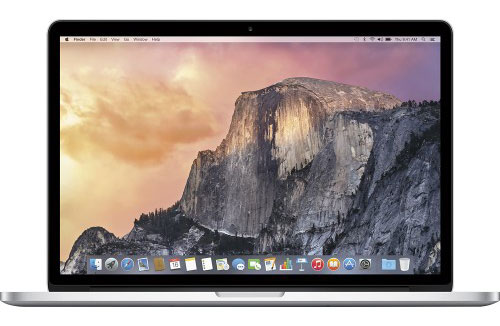
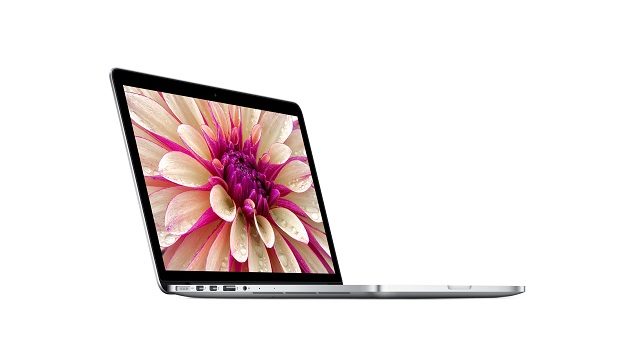
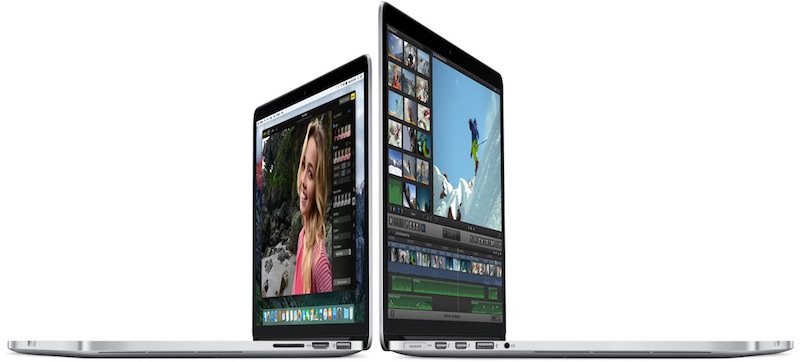
Apple's Notebook Sales Drop to Estimated 2.5M as Buyers Await New MacBook Pro
Wednesday May 11, 2016 6:42 am PDT by Joe Rossignol

Apple reported its first negative-growth quarter since 2003 last month as iPhone, iPad, and Mac sales all declined compared to the year-ago period, and new data shows that notebook sales unsurprisingly fared no better when broken out.

rmbp.jpg

MacBook, MacBook Air, and MacBook Pro sales totaled an estimated 2.53 million in the first quarter of the 2016 calendar year, down from an estimated 3.4 million in the year-ago quarter, according to market research firm TrendForce.

Apple's notebook market share dropped to an estimated 7.1-percent in the first quarter, down from 8.8-percent in the previous March quarter, as Windows-based PC vendors and the overall notebook industry continue to suffer from slowing sales.

TrendForce-MacBook-1Q16.png

Apple remained the sixth largest notebook vendor in the first quarter, trailing behind PC makers Lenovo, HP, Dell, ASUS, and Acer but ahead of Samsung and Toshiba. Mac notebook sales dropped 40-percent quarter-over-quarter, but largely due to expected seasonality following the holiday shopping season.In the first quarter, Apple did not have any new MacBook products ready for the market, nor did it lower MacBook prices to generate sales. Apple’s Wintel-based competitors, on the other hand, benefitted from Windows 10 and the steady supply of Intel’s Skylake CPUs. They were able to have numerous new products ready to promote and ship. As a result, MacBook shipments suffered a massive quarterly decline of 40.4% in the first quarter and Apple retreated to the sixth place in the ranking.Many prospective buyers are also hoping for a redesigned MacBook Pro featuring faster Skylake processors and Thunderbolt 3 with USB-C, which could be announced at WWDCnext month. Apple released a Skylake-based 12-inch MacBook in April and started shipping the 13-inch MacBook Air with 8GB of RAM as standard.

Apple officially reported Mac sales of 4.03 million during the past quarter, including theiMac, Mac mini, and Mac Pro alongside notebooks.

TrendForce estimates worldwide notebook shipments totaled 35.62 million units during the quarter, marking a year-over-year decline of 7.3-percent.

http://www.macrumors.com/2016/05/11/mac-notebook-sales-1q16-trendforce/
 
:angry:

Keep all of your stuff in da cloud, huh?

Apple says it doesn't know why iTunes users are losing their music files

The company is updating iTunes with more safeguards

By Nick Statt
on May 13, 2016 08:07 pm

music1_2040.0.0.jpg


Share on Facebook (1,905) Tweet Share Pin
Apple today acknowledged iTunes users who claim the software deleted their music files, saying it will issue an update to iTunes next week that includes additional safeguards. The company confirmed, in a statement given to iMore, that "in an extremely small number of cases, users have reported that music files saved on their computer were removed without their permission." However, Apple was unable to reproduce the bug, indicating it doesn't really know what's going on here.

The issue, which has persisted since the launch of Apple Music last year, resurfaced when iTunes user James Pinkstone published a blog post last week titled, "Apple Music stole my music. No, seriously." The post, which went viral, detailed how Pinkstone's library of 122GB of music suddenly disappeared. He was allegedly told by an Apple representative that his files were deleted without his permission when he signed up for Apple Music. Pinkstone says the Apple rep told him Apple Music replaced his songs with cloud-based versions from its digital collection, deleting the originals in the process.

APPLE SAYS IT WAS UNABLE TO REPRODUCE THE ISSUE

Apple apparently walked back those statements in a follow-up phone call to Pinkstone. The company's full statement today also makes clear that file deletion is not an intended function of the company's streaming service:

In an extremely small number of cases users have reported that music files saved on their computer were removed without their permission. We're taking these reports seriously as we know how important music is to our customers and our teams are focused on identifying the cause. We have not been able to reproduce this issue, however, we're releasing an update to iTunes early next week which includes additional safeguards. If a user experiences this issue they should contact AppleCare.

We still don't know what's causing the problem, as it doesn't appear to be simply user error or oversight. iMore notes how the bug could originate with Apple's confusing Cloud Music Library feature, which is designed to let you listen to songs on devices that don't contain the original files, like an iPhone or, say, the Mac you use for work. The whole process gets particularly wonky when it begins to mingle with other cloud services like Apple Music, which iMore says may be the source of the problem if you're using iTunes version 12.3.3. Apple won't say right now.

So until Apple figures this out, it's probably safer not to mix a carefully curated collection of MP3s with a cloud-based library known for being less-than-stellar at file management. And create backups, if you can.

http://www.theverge.com/2016/5/13/11674388/apple-music-itunes-file-deletion-bug-update


vewyc.jpg

It says people were losing shit off their own hard drives. :eek:
 
It says people were losing shit off their own hard drives. :eek:

Man look here... :angry:

They are just taking all kinds of "L's" over the past few weeks.

Hundreds of MacBook Pro Users Reporting System Freezes After Installing OS X 10.11.4
SOFTWARE 2 days ago by Shaikh Rafia

A number of MacBook Pro owners have reported experiencing system freezes after upgrading their machines to the latest OS X El Capitan 10.11.4 update.

MacBook-Pro-635x340.jpg


Users hit by system freezes after the latest OS X 10.11.4 update
The issue was first reported by the folks at MacRumors, who claim that a large number of MacBook Pro users running the latest version of OS X El Capitan are complaining about unresponsive systems, forcing them to hard reboot their MacBooks. The problem is mostly affecting those using the 13-inch Retina MacBook Pro (early 2015).

Hundreds of MacRumors forum members have been posting to a dedicated thread to discuss the issue, which spans 20 pages at the time of writing. The problem appears to be concentrated on 13-inch Retina MacBook Pros (Early 2015) running 10.11.4. Users report that their system becomes totally unresponsive at seemingly random times, with no way to regain access to their Mac other than to force a hard reboot.

While this annoying freezing bug is concentrated on the 13-inch model, some 15-inch MacBook Pro (mid 2015) models are also affected by this issue. The same issue is also being reported after installation of OS X 10.11.5 Public Beta 1. Crash logs have pointed to a potential bug in system framework or Intel Graphics driver, but we are yet to see a fix coming our way. It is believed that Apple is aware of the issue, and the company is soon expected to offer an official workaround to fix OS X 10.11.4 system freeze issue.


OS X 10.11.4 Public Beta 2 Now Available To Download

The issue was reported on March 25, four days after the release of OS X El Capitan 10.11.4, and since then hundreds of MacBook Pro owners have complained about the problem.

Ever since I updated to the final 10.11.4 my macbook completely freezes in Safari and other apps at random times, about once a week.
It usually happens when I click on a link, switch tabs, go back one page, etc. The cursor freezes, the screen freezes, the keyboard…it becomes absolutely unresponsive, even the trackpad loses it’s force touch and you can’t feel the feedback vibration, the only thing that is still responsive is the caps lock light.

It never recovers from the freeze on its own and the only way out is to force shutdown. […]
I don’t have any extensions installed in Safari, and flash is disabled. – [User report]

I have experienced this issue on my 13-inch Retina MacBook Pro, and similar to the above report it mostly happens when you switch tabs or click on a link (in Safari). However, in my case, the system becomes responsive again after 10-20 seconds without needing a hard reboot. Are you facing similar issues on your MacBook Pro after installing the latest OS X 10.11.4 update? Don’t forget to let us know and more importantly, report to Apple.

http://wccftech.com/system-freezes-hit-os-x-el-capitan-10-11-4-on-macbook-pro/

*************

Mac Users Reporting Widespread System Freezes With OS X El Capitan 10.11.4 Update
Friday May 13, 2016 3:08 am PDT by Tim Hardwick
A large number of MacBook Pro owners running OS X El Capitan are reporting widespread system freezes since installing the 10.11.4 update to Apple's Mac OS.

Hundreds of MacRumors forum members have been posting to a dedicated thread to discuss the issue, which spans 20 pages at the time of writing. The problem appears to be concentrated on 13-inch Retina MacBook Pros (Early 2015) running 10.11.4. Users report that their system becomes totally unresponsive at seemingly random times, with no way to regain access to their Mac other than to force a hard reboot.

macbook_pros_2015.jpg

The issue was initially reported by MacRumors forum member Antonnn on March 25, four days after Apple released what is the third update to the Mac OS. In Antonnn's case, the freezes have been occurring "about once a week", first when browsing in Safari, but then also during the use of other Mac apps, including Adobe Photoshop and several third-party browsers. The freeze seems to affect not only the screen and mouse cursor but also the Mac's Force Touch trackpad, which completely loses feedback.

Many other users have since reported similar freezes after updating to 10.11.4, with some 15-inch MacBook Pro (Mid 2015) owners also experiencing issues. One potential cause has been identified from crash logs as a system framework or an Intel Graphics driver bug. The issue is also being reported after installing Safari Technology Preview Version 1 and OS X 10.11.5 Public Beta 1.

Video by MacRumors forum member appleofmy"i" experiencing the freeze issue.
Apple Support is apparently aware of the issue but have so far offered no concrete solution. Meanwhile, some users have resorted to downgrading their system to 10.11.3 by restoring from a Time Machine backup or performing a clean install.

We'll update this post throughout the day as we learn more.

http://www.macrumors.com/2016/05/13/macbook-pro-system-freezes-os-x-10-11-4/
 
Man whatever happened to Apple being all about fuck it...we're gonna stick to some real basic products ans we're gonna execute at mind bending levels; nothing less than perfection will be tolerated. That perfection will come with a hefty premium, but we know consumers will be willing to pay that premium, to be part of a seamless ecosystem.

The last few years, all of their shit has been fucked up AND lacking any sort of innovation. Death bed no, but lost and scrambling to figure out what their next big move is...yes

And I'm an iPhone user...
 
Man look here... :angry:

They are just taking all kinds of "L's" over the past few weeks.

Hundreds of MacBook Pro Users Reporting System Freezes After Installing OS X 10.11.4
SOFTWARE 2 days ago by Shaikh Rafia

A number of MacBook Pro owners have reported experiencing system freezes after upgrading their machines to the latest OS X El Capitan 10.11.4 update.

MacBook-Pro-635x340.jpg


Users hit by system freezes after the latest OS X 10.11.4 update
The issue was first reported by the folks at MacRumors, who claim that a large number of MacBook Pro users running the latest version of OS X El Capitan are complaining about unresponsive systems, forcing them to hard reboot their MacBooks. The problem is mostly affecting those using the 13-inch Retina MacBook Pro (early 2015).

Hundreds of MacRumors forum members have been posting to a dedicated thread to discuss the issue, which spans 20 pages at the time of writing. The problem appears to be concentrated on 13-inch Retina MacBook Pros (Early 2015) running 10.11.4. Users report that their system becomes totally unresponsive at seemingly random times, with no way to regain access to their Mac other than to force a hard reboot.

While this annoying freezing bug is concentrated on the 13-inch model, some 15-inch MacBook Pro (mid 2015) models are also affected by this issue. The same issue is also being reported after installation of OS X 10.11.5 Public Beta 1. Crash logs have pointed to a potential bug in system framework or Intel Graphics driver, but we are yet to see a fix coming our way. It is believed that Apple is aware of the issue, and the company is soon expected to offer an official workaround to fix OS X 10.11.4 system freeze issue.


OS X 10.11.4 Public Beta 2 Now Available To Download

The issue was reported on March 25, four days after the release of OS X El Capitan 10.11.4, and since then hundreds of MacBook Pro owners have complained about the problem.

Ever since I updated to the final 10.11.4 my macbook completely freezes in Safari and other apps at random times, about once a week.
It usually happens when I click on a link, switch tabs, go back one page, etc. The cursor freezes, the screen freezes, the keyboard…it becomes absolutely unresponsive, even the trackpad loses it’s force touch and you can’t feel the feedback vibration, the only thing that is still responsive is the caps lock light.

It never recovers from the freeze on its own and the only way out is to force shutdown. […]
I don’t have any extensions installed in Safari, and flash is disabled. – [User report]

I have experienced this issue on my 13-inch Retina MacBook Pro, and similar to the above report it mostly happens when you switch tabs or click on a link (in Safari). However, in my case, the system becomes responsive again after 10-20 seconds without needing a hard reboot. Are you facing similar issues on your MacBook Pro after installing the latest OS X 10.11.4 update? Don’t forget to let us know and more importantly, report to Apple.

http://wccftech.com/system-freezes-hit-os-x-el-capitan-10-11-4-on-macbook-pro/

*************

Mac Users Reporting Widespread System Freezes With OS X El Capitan 10.11.4 Update
Friday May 13, 2016 3:08 am PDT by Tim Hardwick
A large number of MacBook Pro owners running OS X El Capitan are reporting widespread system freezes since installing the 10.11.4 update to Apple's Mac OS.

Hundreds of MacRumors forum members have been posting to a dedicated thread to discuss the issue, which spans 20 pages at the time of writing. The problem appears to be concentrated on 13-inch Retina MacBook Pros (Early 2015) running 10.11.4. Users report that their system becomes totally unresponsive at seemingly random times, with no way to regain access to their Mac other than to force a hard reboot.

macbook_pros_2015.jpg

The issue was initially reported by MacRumors forum member Antonnn on March 25, four days after Apple released what is the third update to the Mac OS. In Antonnn's case, the freezes have been occurring "about once a week", first when browsing in Safari, but then also during the use of other Mac apps, including Adobe Photoshop and several third-party browsers. The freeze seems to affect not only the screen and mouse cursor but also the Mac's Force Touch trackpad, which completely loses feedback.

Many other users have since reported similar freezes after updating to 10.11.4, with some 15-inch MacBook Pro (Mid 2015) owners also experiencing issues. One potential cause has been identified from crash logs as a system framework or an Intel Graphics driver bug. The issue is also being reported after installing Safari Technology Preview Version 1 and OS X 10.11.5 Public Beta 1.

Video by MacRumors forum member appleofmy"i" experiencing the freeze issue.
Apple Support is apparently aware of the issue but have so far offered no concrete solution. Meanwhile, some users have resorted to downgrading their system to 10.11.3 by restoring from a Time Machine backup or performing a clean install.

We'll update this post throughout the day as we learn more.

http://www.macrumors.com/2016/05/13/macbook-pro-system-freezes-os-x-10-11-4/

I noticed that shit. Only happens on my Macbook Pro, not my macmini. At first, I thought it was just the forcepad fucking up. But no, plugging in external shit and nothing would work but a fucking restart. For me, it always happens using a browser.

Apple needs to get its shit together. They are slacking on every fucking product.

I think that it is happening on my Mom's mini and not on my MBP. :curse:
 
I'm currently eating an Apple, listening to an MMA podcast on my Apple Ipod Touch, thinking about buying a Macbook later in the year & looking at pictures of Bonita Applebum.


tumblr_mwn27oD6cl1r55j58o1_250.gif
tumblr_mwn27oD6cl1r55j58o4_400.gif

ss-14.jpg


stephanie-santiago-body-paint6.jpg
BZmZXnJCMAA9qXH.jpg


e8e11487257884e56895d345d4749cf7.jpg
SS2-Front.jpg
 
Despite Q2 sales dip, Apple's Macs, iPad and iPhone continue to outperform the industry

By Daniel Eran Dilger
Saturday, May 14, 2016, 02:45 pm PT (05:45 pm ET)


Over the past quarter, reports from all over have been belaboring the idea that Apple is on the edge of crisis because its iPhone sales—which represent the majority of its business—declined year-over-year and because China—its brightest growth territory—similarly turned in disappointing sales numbers across the board.

14795-10612-IMG_0105-l.jpg


However, it's important to keep in mind that one quarter of iPhone sales data does not create a trend. Nowhere is that more obvious than in recent historical sales of Macs.

Macs have been eating up PCs

Apple's quarterly Mac sales have fallen year-over-year on a number of occasions since 2009, but the overall trajectory of Mac shipments has been upward, bucking the clear downward trend among generic Windows PC shipments.

Quarterly Mac revenues tripled over the last decade from $1.7 billion in Q2 2006 to $5.1 billion in the most recent Q2 2016. In contrast, PCs are back down below where they were in 2008; unit sales are just 20 percent higher than they were a decade ago, according to data from Gartner.

This is quite incredible given that Macs—with an average selling price of more than $1,200—are showing themselves both able to compete and able to increase their overall market share in a sea of commodity PCs that sell at ASPs closer to $350.

The generic PC business is performing so poorly that Apple's Mac shipments can go down for a quarter (as they did in Q2) and the company's overall market share still goes up. That's even ignoring the fact that Apple's Mac share is much more valuable, because it represents the high end (and therefore most profitable) segment of PCs.

Additionally, Apple's out-performance of the PC industry with its premium Macs isn't just a one quarter fluke; it has been maintained through varying economic and seasonal cycles very consistently over the last decade.

Not only has Apple has sustained a decade of growth in Mac shipments and profits within a collapsing PC industry, it has also simultaneously introduced a new Post-PC competitor as its PC competitors fail in both conventional PCs and tablets. This indicates that it should not be assumed that a shrinking smartphone market will prevent Apple from increasing its sales and profits from iPhones.

This is particularly true given the associated—and even more profitable—$20 billion annual Services business that Apple has introduced in parallel, one that the company's phone competitors have failed to create on their own.

Services is once of Apple's fastest growing and largest business segments. Apple's Services business alone is more profitable than Facebook. In Q2, Apple reported over $6 billion in Services revenue compared to the $5.38 billion in advertising revenue Facebook brought in. Apple's Services business was also more profitable, earning more than twice as much as Facebook.


New lyrics, same tune

Remember when PCs first experienced a year-over-year drop in overall sales? Marketing groups fell all over themselves to explain away the problem by assuring us that it was all a temporary blip that would be corrected by the release of Windows 7, then Windows 8 and then Windows 10. That went on for years, not just a single quarter.

Did anyone send out PR analysis predicting that the next release of macOS would incite demand for Macs? IDC and Gartner sure didn't.

Now that it is impossible to suggest that a new OS from Microsoft will somehow reverse the decline of conventional PC shipments, groups like IDC and Gartner have taken to claiming that new Surface hardware from Microsoft will rescue the PC in the form of "detachable" hybrid devices, even though Apple's own iPad Pro has similarly—and immediately, right out of the gate—outsold Surface Pro across its first two quarters of sales.

That's before Apple's new mainstream, lower priced 9.7 inch iPad Pro even went on sale. Apple's high end, 12.9 inch iPad Pro was the only model that's been available over the last six months, which indicates that most customers evaluating "detachables" actually did see more value in Apple's premium tablet than in the Surface, despite Microsoft's ad blitz and punditry claiming that iOS "isn't a real OS" and can't do real things.

16412-13260-160302-iPad-3-l.jpg


This even more noteworthy in the context of Mac growth outpacing other PCs, because most PC market analysts have stridently refused to even consider iPads to be "PCs," while they generally do count Surface and similar Windows tablets to be PCs.

Apple's computing revenues grew by 6x over the last decade

Not only has Apple increased its Mac sales dramatically over the past decade, but it has also cultivated a new Post-PC replacement for PCs that has grown to be equally as large over the past six years (iPad and Mac both generated over $11 billion over the last six months).

While iPads differ in some respects from conventional PCs, they are direct competitors for an increasing number of important markets ranging from education to the enterprise. It's obvious that iPads are indeed eating up former PC sales, and the latest iPad Pro models are only going to accelerate that trend.

Not only have Mac revenues grown by a factor of three over the last decade, but iPad sales have grown up in parallel, meaning that the non-phone computing devices that Apple sells (iPads and Macs) have grown over the past decade by a factor of nearly six: $1.7 billion worth in Q2 2006 to $9.5 billion in the most recent Q2.

... while PC revenues have collapsed

And that's Apple's computer-based revenues, not unit shipments. PC shipments are up just 1.2 times over the past decade, but PC ASPs have a collapsed in half over the last ten years, meaning those 1.2x shipments have actually generated revenues that are only 60 percent as much as they contributed a decade ago.

That means Apple's "computing device" revenues have grown by an order of magnitude greater than the rate of all other PC makers combined: 6x vs 0.6x. It also highlights the fallacy of focusing on unit sales rather than profits, because unit sales that don't generate profits are just busywork. Ask Nokia, HP or Samsung.

It's telling that nobody in the industry has had any interest in advertising this reality, and instead have generally focused upon the ideas that Apple's Macs are barely in the top five PC in terms of shipments, that iPad shipments are down from peak levels before the release of the larger iPhone 6, and that iPad market share is down because of an estimated explosion of tablet production occurring in Asia, even though those Android tablets are not generating any revenues for anyone and they curiously aren't showing up in anyone's weblogs.

In other words, pay no attention to the hardware maker that is consistently growing and incredibly profitable, and instead focus upon generic platforms that are maintaining "market share" of shipment busywork, even though Windows revenues are collapsing among plateauing PCs and Android earns nothing for its global network of tablet makers.

These same sources then claim that while Apple teeters on irrelevancy with sales of 4 million Macs and 10 million iPads in a quarter, the PC industry will be saved by Microsoft selling 1 or 2 million Surface hybrid devices every three months.

That's exactly what IDC and Gartner are saying, and tech blogs are eating it up without criticism, even though these groups are regularly dead wrong in their analysis.

iPhones are eating up Android

Like Macs, iPhone has experienced a similar run over the past several years, maintaining exceptional growth while even incrementally raising ASPs. That's not entirely just from developing all-new markets for iPhone, but also comes in part from eating into generic Android smartphones by convincing users to switch at a pace that is hard to explain away.

Once again, the majority of "market researchers" have incessantly worked to portray Apple's iPhone as slipping in market share, without ever acknowledging that no other smartphone maker sells any comparable number of premium smartphones at anywhere close to Apple's profitability.

Take Samsung, which has been portrayed for years as being roughly equal to Apple in terms of product while selling much higher volumes of devices: 81.9 million smartphones in the most recent quarter compared to Apple's 52.1 million, according to IDC estimates.

That sounds impressive until you look at the profitability of Samsung's entire mobile IM operations (which like Apple also includes PC, tablet and other consumer device sales). Apple earned over four times as as much as Samsung IM in the quarter. Clearly those 81.9 million Samsung phones are not high end Galaxy S7 models selling at iPhone 6s like prices.

Revenues are far more important than shipments

The rarely spoken truth is that Samsung only shipped about 9 million premium Galaxy S7 phones out of 81.9 million total smartphones in the quarter, or roughly a fifth of Apple's iPhone sales.

Most of Apple's smartphone sales are its latest model, but even the company's entry level iPhone 6 and 5s were sold at prices much higher than Samsung's overall average price of about $250 (and that's including its premium, iPhone-priced Galaxy smartphones). Even Apple's new low priced iPhone SE, which began selling after the quarter ended, will sell for almost double that of Samsung's ASP.

16278-12963-160321-iPhone_SE-HO2-l.jpg


Recall that at its peak, Samsung's premium Galaxy and Note models only represented about 1/3 of its smartphone shipments. But when iPhone 6 appeared, erasing the value of Samsung's bigger handsets, its premium sales collapsed in half and its mobile profits tumbled by 73.9 percent.

Samsung's resulting, much smaller proportion of premium handset sales has remained in place because the company has scrambled to dump cheaper handsets into the market to maintain market share and unit shipments. That's why its profits haven't recovered even though its unit sales have remained high.

The fallacy of focusing on smartphone shipments rather than profitability resulted in wildly misplaced enthusiasm for Nokia, then Motorola, then Samsung and then Xiaomi, even as Apple has been denigrated for "only" selling some minority percentage of all the world's smartphones.


Yet over the past decade, Apple has clearly profited the most from smartphones. And moving forward, Apple is best positioned to grow within both the PC and smartphone industries than its competitors, which are now weaker than ever.

Apple's competition is so anemic that only unflattering comparison one can make is to contrast Apple's 2016 performance against Apple 2015, rather than the performance of any of its real competitors.

Popularity vs desirability

If Apple were actually facing pricing pressure from Android makers like Samsung, it wouldn't be able to sell five times as many premium smartphones every quarter, as well as more premium smartphones than the total number of basic smartphones flogged by each of the currently leading Chinese vendors, Huawei, OPPO and vivo, not to mention former favorites like Lenovo and Xiaomi that currently sell fewer than 14 million phones in a quarter.

The only way to suggest that Android is actually rivaling Apple's iOS—rather than just serving as an onrampthat merges Android switchers into Apple traffic—is to speak of Android as a composite platform of aligned competitors, even though collectively, Android licensees are failing to make any money as Apple continues to inhale the vast majority of the industry's profit.

14978-10924-Ericsson2015OSloyalty2-l.jpg

Android is a feeding tube for iOS. Source: Ericsson

Android is "more popular" than iOS only in the sense that Communism is "more popular" than free market capitalism just because the population of Russia and China lead that of the West.

However, there's a reason why expecting affluent Chinese mothers routinely travel to San Francisco to give birth, while Americans rarely attempt to switch their citizenship to China. Like Android, Communism is popular in terms of representative units but not popular at all among individuals with the mobility and freedom to choose what they actually want.

This all happened before

The idea that Apple's iPhone faces certain doom because of competing shipments and flattening sales is not new. A decade ago, certain pundits were claiming that because Apple was now the "iPod company" it should just dump the Mac. Since then, Mac revenues have grown 600 percent.

Another take on doom related to iPods was the 2005-era prediction that MP3-playing smartphones would eat up all demand for a standalone music player, destroying Apple's core profit center.

In hindsight, it's spectacularly bizarre that these people didn't consider that Apple might create its own smartphone. And of course, once Apple did—and it was a much smaller Apple back then—the phone industry began a rapid implosion and turned into a funnel that ultimately channeled 94 percent of its profitsto Apple's new iPhone ("the best iPod ever," as Steve Jobs remarked).

A couple years later in 2008, a brief flurry of low end netbook sales caused punditry to demand that Apple sacrifice its premium Mac business and begin building cheap, chicklet keyboard Mac netbooks for $300. Instead, Apple introduced iPad in 2010 and began developing two computing platforms in parallel, each of which became the top seller of premium laptops and tablets. Netbook sales imploded.

A couple years later, pundits insisted that cheap 7 inch tweener tablets from Blackberry and Android licensees would kill the iPad. Apple introduced its own iPad mini, and immediately took over all profits in that category. Today, nobody—not even Samsung with its mile wide array of different tablet offerings—sells as many tablets as Apple.

A couple years later we were assured that big screen fablets would suck attention away from iPhones. Yet in 2014, Apple's 4 inch iPhone 5s continued to outsell big screen phones from Samsung, HTC, Motorola and others. And once Apple introduced its own larger iPhone 6 models the next year, Samsung and other big-screen pioneers saw their unit sales plummet into the basement, never to recover to their former shipment volumes.

At the same time, pundit chatter regarding Apple's "lack of innovation" suggested that the company was missing out on the wearables market, where Google, Samsung and others had spent years trying to introduce Android Wear and Tizen watches to a skeptical audience.

Apple Watch appeared and instantly obliterated its competition while generating billions of dollars. Other smartwatches haven't gained any real traction at all.

11135-3806-watches-141118-l.jpg

Apple Watch has no ad banners

Apple's consistent ability to "fail its way to the top" should create some skepticism of the current outlook of pundits who are today scribbling up three stories per day gravely reminding us that iPhone sales in Q2 were below those from the previous year, and interpreting this to mean that Apple is falling down a rabbit hole of doom and deserves a valuation less than Google, the company who actually did commercially fail at MP3 players, failed at Nexus, failed at netbooks, failed at tweener tablets, failed at fablets, failed at big tablets, failed at detachables, failed at wearables and doesn't have Apple's $20 billion Services business. Last year, Google's mobile search and display ads brought in less than $10 billion.

But unlike Macs, iPod, iPhone and iPad, Google's ads won't ever go away, right?

http://appleinsider.com/articles/16...nd-iphone-continue-to-outperform-the-industry
 
Warren Buffett's Berkshire Hathaway buys $1B of Apple stock

By Neil Hughes
Monday, May 16, 2016, 05:19 am PT (08:19 am ET)

Investor Warren Buffett has taken advantage of Apple's lowest share price in years, as new filings with the U.S. Securities and Exchange Commission reveal Berkshire Hathaway now owns 9.81 million shares of the iPhone maker.

16890-13984-Buffett_&_Obama-l.jpg


Shares of AAPL were up nearly 2 percent in premarket trading on Monday after investors learned of Buffett's new stake. The shares, purchased as of March 31, are valued at about $1.07 billion, as noted byThe Wall Street Journal.

News of Buffett's buy-in comes after activist investor Carl Icahn sold all of his shares in the company last month. Icahn said he still views Apple as a "great company," but concerns over the Chinese economy and government led him to sell off his shares.

And last week it was revealed that David Tepper's Appaloosa Management also sold its stake in Apple, dumping more than 1.26 million shares worth about $133 million.

Buffett's stake in Apple is noteworthy because Berkshire Hathaway has traditionally avoided technology stocks. Berkshare also boosted its position in IBM, quarterly SEC filings reveal.

Though Buffett didn't previously own shares in AAPL, he did weigh in on the company in 2013, saying he thought Apple Chief Executive Tim Cook should buy back more shares and build value. At the time, he compared buying back shares of Apple to purchasing a dollar valued at 80 cents.

Buffett also admitted at the time that Apple might carry "too much" cash. As of the end of last quarter, Apple had $233 billion, but 90 percent of it is held overseas.

Though Buffett bought in last quarter, shares of Apple reached their lowest levels in nearly two years last week, dipping briefly below $90. It's unknown how much the hedge fund manager owns as of today.
 
Man, they need to get on they job! :angry:


Apple's aging Mac Pro is falling far behind Windows rivals

macpro_core_exposed_print-100654943-primary.idge.jpg


Apple's Mac Pro has components tightly organized in a cylindrical chassis.


The company could be waiting for faster GPUs and SSDs before releasing a new high-powered workstation

IDG News Service | Apr 7, 2016 1:23 PM PT


Apple's Mac Pro is aging fast, especially with screaming fast Windows desktops being announced in recent weeks.

Introduced in 2013, the Mac Pro was a top-of-the-line desktop at that time. It looked exquisite in its sleek cylindrical design, and it sported new features like Thunderbolt 2 ports, plus the latest CPUs, GPUs and NVMe storage.

More importantly, it was a signal that Apple had not abandoned the professional computing market. The latest Mac Pro was a relief to those clamoring for an upgrade from an older version of the computer, which last received a face-lift in 2010.

But the Mac Pro is again falling behind the competition, with powerful new workstations from Lenovo, Dell and HP carrying superior technology. The PC companies are waging an active campaign to tempt Mac Pro users, many of them creative professionals, to move over to Windows PCs with better CPUs, GPUs, and memory.
announced this week can be configured with Intel Xeon E5-2600 v4 chips, which have up to 22 cores. Two Nvidia Quadro M6000 GPUs in an SLI (scalable link interface) configuration can provide super-fast graphics performance. The desktop supports DDR4 memory, and there are multiple slots for SATA, SAS (serial-attached SCSI) and NVMe (non-volatile memory) SSD storage.

New Dell Precision workstations, announced last week, can also support the latest 22-core Xeon E5-2600 v4 chips, based on the Broadwell architecture and also introduced last week.

By comparison, the Mac Pro -- which starts at $2,999 -- supports up to 12-core Intel Xeon E5 chips based on the older Ivy Bridge microarchitecture, which started shipping in the third quarter of 2013. The desktop has older AMD FirePro GPU models and DDR3 memory. The Thunderbolt 2 ports are also outdated, and Thunderbolt 3 is two times faster, with its 40Gbps data transfer rate.


The Mac Pro is still a fast machine, but creative professionals want the latest and greatest hardware, said Bob O'Donnell, principal analyst at Technalysis Research.

"I compare it more to a low-end workstation," O'Donnell said.

The desktop is adequate for engineering applications and video editing, but faster computers will allow creative professionals to dabble in VR, O'Donnell said.
VR is a niche but emerging market, and workstations will need more horsepower for visual computing, O'Donnell said.

Apple has more than VR to consider if it wants to retain Mac Pro users. Apple may enter the fast-growing car market, and computer-aided automobile design will happen on workstations like Mac Pro, O'Donnell said.

O'Donnell also suggested Apple could opt to merge Mac Pro with the iMac. It's not an unprecedented idea; Apple in 2010 killed its Xserve product line and provided a guide for users to transition to the Mac Pro or Mac Mini.

But patience has its virtues. If Apple hangs on before upgrading Mac Pro, some breakthrough technologies could put the desktop leagues ahead of its Windows rivals.

Intel is developing super-fast Optane memory SSD products, which will come to high-end gaming desktops and workstations later this year. Intel claims that Optane, which is based on a technology called 3D Xpoint, is 1,000 times faster and durable than NAND flash storage.

Faster GPUs are en route as well. Apple has shown an affinity for graphics processors from AMD, which plans to release GPUs based on its Polaris architecture later this year.

AMD's rival Nvidia this week introduced a new GPU called Tesla P100, based on its new Pascal architecture and targeted at high-performance computing. Nvidia could also release Quadro GPUs, based on Pascal, for workstations later this year.

Apple could upgrade the Mac Pro if only to show evidence of its technological superiority over Windows rivals. There's no mantra like "good enough" computing for high-end desktops like the Mac Pro, O'Donnell said.

"It's about maintaining relevance," O'Donnell said.

http://www.computerworld.com/articl...pro-is-falling-far-behind-windows-rivals.html
 
Back
Top