25% of the World's Prison Population

simply a result of "big govt" policies run amok!

Actually it's the result of privatization.

source: Daily Kos

Judge that sold children to prison only gets 28 years


Instead of taking into account the horrible harm he has done to thousands of lives this judge gets to have a minimal sentence for the damage he has done.

This weak sentence reinforces the motive that if it is done for a profit you are untouchable.

Thousands.


Mark Ciavarella Jr, a 61-year old former judge in Pennsylvania, has been sentenced to nearly 30 years in prison for literally selling young juveniles for cash.He was convicted of accepting money in exchange for incarcerating thousands of adults and children into a prison facility owned by a developer who was paying him under the table. The kickbacks amounted to more than $1 million.
The Pennsylvania Supreme Court has overturned some 4,000 convictions issued by him between 2003 and 2008, claiming he violated the constitutional rights of the juveniles – including the right to legal counsel and the right to intelligently enter a plea. Some of the juveniles he sentenced were as young as 10-years old.
And not only did he ruin the lives of these children and their families he has eroded what little trust that was left in our system of justice. How can anyone know if the sentence meted out to them is just if this judge was able to do this for so long with the apparent cooperation of parties supposedly regulating our justice system to prevent abuses such as this let him continue for years?
Why do I think it was too short? Because if you count all the time his victims spent behind bars his sentence is obviously lighter.

5:12 PM PT: Apparently this guy was sentenced in 2011. I just happened to stumble upon this in a recent article.

I still insist his sentence is not on par for the damage done. Both to the individual, and society as a whole. The trust in our justice system is what keeps vigilantes from running rampant. He deeply eroded that trust.

Here is some more background on this case and the judge involved:

Prosecutors said Ciavarella sent juveniles to jail as part of a “kids for cash” scheme involving Robert Mericle, builder of the PA and Western PA Child Care juvenile detention centers. The ex-judge was convicted in February of 12 counts that included racketeering, money laundering, mail fraud and tax evasion.
In addition to his prison sentence, Ciavarella was ordered to pay nearly $1.2 million in restitution.
Among the young people exploited by Ciavarella were 15-year-old Hillary Transue, who was sentenced to three months at a juvenile detention center for mocking an assistant principal on a MySpace page; and 13-year-old Shane Bly, who was sent to a boot camp for two weekends after being accused of trespassing in a vacant building.
Another judge, Michael T. Conahan, used his position to shut down the county-run juvenile detention center and redirect juvenile detainees to the private prisons. He pleaded guilty to racketeering conspiracy.
The mention of the boot camp puts chills down my spine. One of my news feeds is OpLiberation a group that tracks and tries to save children sent to these camps and similar facilities. Through them the truth of the suffering these children go through sees the light of day. Many of the OpLiberation participants have first hand experience and are driven to stop this injustice.
 
Gangs Ruled Prison as For-Profit Model Put Blood on Floor

Gangs Ruled Prison as For-Profit Model Put Blood on Floor
By Margaret Newkirk & William Selway
Jul 11, 2013 11:18 PM CT

In the four privately run prisons holding Mississippi (BEESMS) inmates last year, the assault rate was three times higher on average than in state-run lockups. None was as violent as the Walnut Grove Youth Correctional Facility.

The for-profit detention center, surrounded by razor wire and near the forests and farms of central Mississippi, had 27 assaults per 100 offenders last year, more than any other prison in the state, according to an April court filing. Staff shortages, mismanagement and lax oversight had long turned it into a cauldron of violence, where female employees had sex with inmates, pitted them against each other, gave them weapons and joined their gangs, according to court records, interviews and a U.S. Justice Department report.

“It was like a jungle,” said Craig Kincaid, 24, a former inmate. “It was an awful place to go when you’re trying to get your life together.”

More than 130,000 state and federal convicts throughout the U.S. -- 8 percent of the total -- now live in private prisons such as Walnut Grove, as public officials buy into claims that the institutions can deliver profits while preparing inmates for life after release, saving tax dollars and creating jobs.

No national data tracks whether the facilities are run as well as public ones, and private-prison lobbyists for years have successfully fought efforts to bring them under federal open-records law. Yet regulatory, court and state records show that the industry has repeatedly experienced the kind of staffing shortages and worker turnover that helped produce years of chaos at Walnut Grove.

Saving Money

“There is a systematic failure to provide the level and competency of staffing necessary to run facilities that are safe not only for the people on the inside, but the public,” said Elaine Rizzo, a criminal-justice professor at St. Anselm College in Manchester, New Hampshire, who studied prison privatization for a state advisory board. “It comes back to saving money.”

In Texas (BEESTX) and Florida (BEESFL), which hold about a third of all privately detained state inmates, employee turnover rates were 50 percent to more than 100 percent higher in private prisons than in public ones, according to data from the Texas Criminal Justice Department and the Florida Law Enforcement Department. In Mississippi (BEESMS), Tennessee (BEESTN) and Idaho (BEESID), company-run prisons have had higher assault rates than public ones, state data show.

Geo’s Response

Boca Raton, Florida-based Geo Group Inc., the second-largest U.S. prison company, ran the Walnut Grove prison for about two years, from August 2010 until July 2012.

Pablo Paez, a spokesman for Geo, said focusing on troubled institutions such as Walnut Grove “yields an unfair, unbalanced, and inaccurate portrayal of the totality of our industry’s and our company’s long standing record of quality operations and services which have delivered significant savings for taxpayers.”

The Mississippi prison “faced significant operational challenges for several years” before Geo took over, and the company invested “significant resources, time, and effort” to improve conditions at the facility, Paez said by e-mail.

The for-profit prison industry has encountered staffing issues in other states. Idaho Corrections Department officials voted last month not to renew a contract with Nashville, Tennessee-based Corrections Corporation of America, the largest U.S. prison company, after it admitted billing for hours that weren’t worked.

Dangerous Situation

State and federal officials have reported dangerous conditions at understaffed privately run prisons in Ohio, Colorado and in Mississippi. New Mexico fined Geo $2.4 million in 2012 for excessive staff vacancies at three prisons in 2011 and 2012, according to Jim Brewster, general counsel for the state corrections department.

The U.S. Occupational Safety and Health Administration last year sought $104,000 in penalties against Geo, including $70,000 for worker shortages, faulty cells and inadequate training at a prison in Meridian, Mississippi, that the agency said put workers at risk of being attacked. Geo is contesting the matter.

In May, inmates at the prison, backed by the American Civil Liberties Union, sued the state in U.S. District Court in Jackson alleging “barbaric and horrific conditions” at the facility, now run by a different company.

A 2004 report by the Colorado Corrections Department blamed a riot at a Corrections Corp. prison on chronic understaffing and high employee turnover: The attrition rate was double that of state-run facilities. Inexperience and lack of staff cohesion isn’t lost on rioting inmates, according to the report.

Public Difference

In Colorado’s public prisons, “offenders know that attempts to defeat security” will be met by “a confident and experienced staff,” according to the report.

“No corrections system -- public or private -- is immune to incidents,” Steven Owen, a Corrections Corp. spokesman, said by e-mail. “In Colorado, our dedicated, professional employees are required to meet or exceed the same training requirements as their public counterparts.”

The private corrections industry has delivered for investors. The number of inmates in for-profit prisons throughout the U.S. rose 44 percent in the past decade. BlackRock Inc. (BLK) and Renaissance Technologies LLC are among dozens of money-management firms that have invested in the business.

As of March 31, BlackRock reported holding stakes worth more than $254 million in Geo and $236 million in Corrections Corp. (CXW), while Renaissance disclosed owning about $39 million of Geo shares and about $36 million in Corrections Corp. stock, according to data compiled by Bloomberg. Geo has more than doubled since December 2011, while Corrections Corp. has risen 87 percent, both outpacing a 33 percent gain for the Standard & Poor’s 500 Index. Representatives of BlackRock and Renaissance declined to comment.

Low Pay

Pay and staffing ratios are lower in private prisons than in public ones, state and federal data show. The median annual pay in company-run facilities was $30,460 in 2010, according to the U.S. Labor Department, 21 percent less than for correctional officers employed by states.

In Texas, wages and benefits are “generally lower” in private prisons than in public ones, according to a 2008 legislative report. Nationally, private prisons had one corrections officer for every 6.9 inmates in 2005, compared with one for every five in public lockups, according to the Justice Department’s most recent statistics.

Geo took over Walnut Grove after it acquired Houston-based Cornell Cos. Under its new management company, the prison now holds only inmates 18 and older, and Youth is out of its name.

Big Bonus

In 2012, Geo (GEO) had revenue of $1.48 billion, up from $569 million 10 years earlier, with net income of $135 million. George Zoley, its chairman and chief executive officer, received almost $6 million last year, including a $2.2 million bonus for profit surpassing targets, according to company filings.

The company has drawn repeated scrutiny and criticism from regulators and lawyers for inmates, faulting it for dangerous or derelict care.

Geo lost civil wrongful-death lawsuits in Texas and Oklahoma, including a $47.5 million jury award in Texas state court in 2006 to the family of an inmate beaten to death with padlock-stuffed socks four days before his release, according to court documents. The company appealed that verdict before settling. The company said it would appeal the Oklahoma ruling. Geo’s contracts to house Idaho and Texas inmates at two prisons in Texas were canceled after state reports of unsafe conditions.

Inmates Sue

In November 2010, inmates at Walnut Grove sued Mississippi and Geo in federal court in Jackson over conditions there. In an order last year, U.S. District Court Judge Carlton Reeves, who oversaw that lawsuit, said what happened at Walnut Grove “paints a picture of such horror as should be unrealized anywhere in the civilized world.”

Geo’s Paez said the judge based his order partly on the Justice Department report about Walnut Grove, which related to events that largely took place either before Geo took over or in the first few months after it assumed management of the prison.

As few as two corrections officers worked units with 240 inmates during the day, or one for 120 prisoners, according to a 2011 report to the state by MGT of America Inc., a Tallahassee, Florida-based consulting firm. That ratio is more than 10 times what’s typical at youth facilities, said Ned Loughran, executive director of the Council of Juvenile Correctional Administrators.

“I’ve never seen ratios that risky in terms of supervising kids,” he said.

The Walnut Grove prison sits on the edge of a town of about 500, where the downtown has a gas station, two diners, a city hall and a bank. It had lost one of its biggest employers, a glove factory, when community leaders decided to pursue a private prison in a quest for jobs and revenue.

Dying Town

“The town was dying,” Mayor J. Brian Gomillion said. “We struggled even after we opened. But it re-invigorated the community.”

State Representative Bennett Malone, a Democrat whose district included the area and who led the corrections committee in the Mississippi House, championed the prison. It was originally authorized to hold 500 inmates as old as 19.

The prison would be the biggest economic boon the area had ever seen and give troubled boys a second chance, with teachers, counselors, spiritual advisers, psychologists and training, Malone and other backers told the Jackson Clarion Ledger newspaper at the time.

Expanded Capacity

The prison opened in 2001. Cornell took over about a decade ago, predicting annual revenue of $11 million. By 2007, through legislation pushed by Malone, Mississippi had expanded Walnut Grove’s permitted capacity to 1,500 inmates as old as 22.

“It never pleases me to see young people locked up, but it does please me to know the custody and care will be provided by the dedicated people of my district,” Malone said at a groundbreaking for the expansion.
Malone got campaign contributions of $2,000 from Cornell and $1,000 from Geo in 2006, accounting for 30 percent of what he raised that year, state campaign-finance reports show. Malone didn’t respond to e-mails and telephone calls seeking comment.

When Geo bought Cornell in August 2010 for $730 million in cash, stock and debt, the prison was showing signs of strain. A riot had hospitalized six young inmates. A 2010 legislative audit showed that staff levels had failed to keep pace with the expanding population.

By then, the town depended on the prison, which now pays it $180,000 a year, or a quarter of its budget.

Merchants saw little of the economic boom once promised, said Carl Sistrunk, owner of the gas station where the prison fuels transport vehicles.

Hurting Community

“It has helped and it has hurt, if you ask me,” Sistrunk said. “You hear about some of the things going on in there and that hurts us all.”

Caleb Williams was 12 when Malone introduced the legislation creating Walnut Grove -- and already headed there.

One of 11 children of a single mother on welfare in Starkville and in foster care since age three, Williams was about to be kicked out of school, was stealing and dealing drugs and could barely read or write, he recalled.

“I wasn’t a bad child,” he said. “I was just misguided. I had my heart set on having things that weren’t there.”

Williams landed in Walnut Grove after he was arrested at age 16 for stealing a car’s compact-disc player, then stabbing an officer with a pen while trying to flee. Williams admits all except the stabbing.

Honors Student

Ross Walton was on a different path. An honors student, he played the piano, volunteered with Habitat for Humanity and had a third-degree Karate black belt, activities he said were pushed by a mother determined to keep him from becoming another locked-up black man from the Mississippi Delta.

Walton entered Walnut Grove at 18, convicted of aggravated assault after a fight in a bowling alley, his first brush with the law.

The prison was nothing like its backers once promised, former inmates said.

Gangs ruled the 60-inmate, 30-cell housing units, Williams and Walton said. There were at least 13 present in the facility, according to the 2010 audit. Corrections officers sometimes slept while prisoners fought, the inmates said. Assaults were common. Officers often did nothing. Some provoked fights and then used pepper spray and other deterrents, said Williams.

“You saw blood on the floor, everywhere,” he said.

‘Inappropriate Relationships’

Their accounts are echoed in the 2012 Justice Department report and the ACLU-backed lawsuit, which was settled last year. The federal report found “numerous inappropriate relationships between staff and youth,” with corrections officers giving inmates personal mobile phone numbers, wiring money to their commissary accounts and providing them with banned items, including weapons.

State oversight was minimal. The 2011 MGT report found no evidence the state ever surveyed inmates, reviewed their records, or did annual checks of prison operations, as required under the contract. A state monitor received no training and relied on the company running the facility for data, which the state never attempted to verify, it said.

Staff shortages were chronic, according to inmates and Cleveland McAfee, a former corrections officer. The prison struggled to retain workers, with many quitting within weeks of starting work, McAfee said. After he was promoted to lieutenant, he frequently had to fill in on the front line.

“I just got burned out because they just didn’t have the staff,” McAfee said.

Delayed Releases

The shortages led to lockdowns, according to Walton and the inmate lawsuit that was also backed by the Southern Poverty Law Center. That meant they couldn’t go to school, slowing the release of those who had to complete high-school equivalency degrees to get out, Walton said.

“The longer the stay, the more money the prison makes,” he said.

Corrections officers were eager to make more money and smuggling was rampant, said Williams.

“If they’ll bring in a pack of gum, they’ll bring in a pack of T-shirts,” he said. “If they bring in a pack of T-shirts, they’ll bring in a knife.”

In fiscal 2010, officials confiscated 137 weapons at the prison, according to the audit by the Mississippi legislature. There were 80 assaults with weapons on staff and inmates, a rate of one every five days.

Seventy percent of Walnut Grove’s security staff was female, according to the 2011 consultant’s report. Sexual tension ran high. In one incident, a female corrections officer stripped off her shirt in a housing-unit control center and danced “provocatively” over four hours in front of inmates, touching one “inappropriately,” the Justice Department said.

Sexual Tensions

Inmates flirted with the female officers and fought over them. They got propositioned by them and punished if they rebuffed them, with written reprimands that added months to sentences, Walton said.

“Because you would not perform a sexual act with them, they make you stay longer,” he said. “We would have brand new guards come through, doing a walk-through right out of training. They would come through telling us they were looking for boyfriends, looking for a man, before they even started their jobs.”

“They were just hiring anybody to fill those spots and that made it worse, because they didn’t know what they were doing,” he said. “I had one guard -- I was older than her.”

Safety depended on staying out of the common areas in each 60-inmate cell unit.

Avoiding ‘Sharks’

Williams spent his first two years confined to his zone, unable to attend school or go outside. He stayed in his cell 23 hours a day, teaching himself to read and writing in journals. He learned to lip read to anticipate fights and avoid violence that corrections officers were too few or too scared to prevent.

He didn’t have to worry about food or shelter, Williams said. “All I had to worry about was being around these sharks, these lions and tigers and bears, in this poisonous world, where people are waking up with madness on their minds,” he said.

Berl Goff, a former captain at Walnut Grove, was hired to improve security in November 2009 by then-warden Brick Tripp. Goff, an experienced corrections officer, said the prison was having three or four bloodshed-causing fights every week.

“It goes back to the fact that these folks were not trained right,” he said of the staff. “They had never worked in a real prison.”

After four months on the job, Goff said he’d made progress. Then he intercepted a ballot inmates were passing between cells. A gang called the Vice Lords was voting on whether to attack a rival group’s leader. Goff’s bosses rebuffed his request for more help: “They told me to handle it,” he said.

Bloody Riot

Eighteen corrections officers were at the prison the day of the assault, he said -- one for every 60 prisoners. One, a gang member herself, walked through the cellblock freeing Vice Lords, then left. When the beatings and stabbings stopped, six inmates were rushed to the hospital, one with permanent brain damage.

“You got 60 inmates there and it’s just me,” said McAfee, the former guard and one of those who responded to the melee. “You just had to sit there and wait while people are fighting. It was a horrible experience.”

The worst hurt was Michael McIntosh, then 20. Six weeks after the incident, his father found him in a hospital three hours away in Greenville. The younger McIntosh’s eyes were red and blinded by blood. He had a baseball-sized lump on his head, multiple stab wounds and brain damage. He made noises like a small child.

Blinded Son

“He couldn’t see me,” said his father, Michael McIntosh Sr. “He was just reaching, saying ‘Daaa.’”

Geo bought Cornell in August 2010, adding Walnut Grove to the two other prisons it ran in Mississippi. The three delivered $44.9 million in revenue the next year, according to Geo’s 2012 annual report.

Paez, the Geo spokesman, said the company inherited the prison’s troubles.

“Any reasonable party would agree that significant resources, time and effort would be required to turn around a facility that had faced significant operational problems for several years,” Paez said in a the e-mail. “That is in fact what Geo did.”

Walnut Grove received an accreditation score of 100 percent in an audit conducted in early 2012 by the American Correctional Association, an Alexandria, Virginia-based organization that represents public and private prisons, Paez said.

Substantially Unchanged

The 2012 Justice Department report said key personnel, policies and training at the prison “did not change substantially, despite Geo’s claim that it made corrective reforms.”

Goff, the former prison captain, said staffing got worse under Geo, which kept 5 percent of positions vacant. For weeks at a time, he said he had 13 to 15 officers on the night shift, instead of the 23 he needed.

“There were nights when I was captain when I walked all night long, all night by myself,” Goff said. “There was no one in the control centers. They kept saying we had to economize.”

At a March 2012 hearing at the federal courthouse in Jackson, where the settlement of the civil lawsuit against the prison and the state was reviewed, Walnut Grove inmates described continuing violence behind the facility’s walls.

One 15-year-old said the advice of a judge, who wanted him to have special protection, was ignored. “He didn’t want me in the cell with nobody smarter than me and nobody older than me,” the inmate said.

Prison administrators gave him a 19-year-old cellmate who had raped him days earlier. Bloomberg News doesn’t identify victims of sexual assault.

Perpetrators Unpunished

“I just have not heard anything that says to me that any of these perpetrators, any of these people, have paid the price for what they have done to some of these children,” said Reeves, the federal judge presiding over the hearing.

There are five privately run prisons in Mississippi, though one houses only inmates from California, according to the state Corrections Department. Three other prisons are run by the state. In fiscal 2012, Walnut Grove had 284 assaults, the April court filing shows, more than in any of the three other private prisons with Mississippi inmates. It also exceeded the most violent state facility, which had three times the population.

Mississippi replaced Geo as Walnut Grove’s operator a year ago. “We moved them out, because that’s just totally unacceptable,” said Governor Phil Bryant, a Republican elected in 2011, referring to the troubles at Walnut Grove. “We just won’t tolerate that type of behavior, and we’re working with the Justice Department to be sure it doesn’t happen again.”

Isolated Situation

“Private prisons have worked well,” he said. “For years, we’ve had a lot of success with them. This was one bad incident, we got rid of the player involved, and we got another company in that we think will do a better job.”

Geo’s Paez said it has a long-standing record of “adhering to industry-leading standards set by independent accreditation entities” and rehabilitating prisoners with programs to help them re-enter society.

“Our company is proud of the incredible dedication and effort of our more than 18,000 employees worldwide, who strive every day to make a difference in the lives of the more than 60,000 men and women who are entrusted daily to our care,” he said.

Walnut Grove is now run by Management & Training Corp., a closely held company based in Centerville, Utah.

Brick Tripp, Walnut Grove’s former warden, runs another Geo prison in North Carolina. Through Paez, he declined to comment.

Goff, the former captain, now works for another private prison company he says is better run.

McIntosh will be released in September and only sometimes remembers life before his injury, his father said.

Walton is a 28-year-old accounting student at Mississippi State University in Starkville. He says Walnut Grove “scarred me; I will never be the same.”

Williams owns a barber shop in Greenville, where he sleeps at night on a cot in a storage room. It’s the same dimensions as his cell in Walnut Grove.

http://www.bloomberg.com/news/2013-...n-as-for-profit-model-put-blood-on-floor.html

 
Timely Justice Act

Timely Justice Act (8:00)

On Wednesday, Florida executed a death row inmate named William Van Poyck. His execution came the same week that Florida’s governor signed a new law designed to speed up executions in the state. Emily Bazelon, legal affairs editor at Slate, explains that of all the states in the country, Florida is probably the last one where you’d want executions to move faster.

http://www.thisamericanlife.org/radio-archives/episode/497/this-week
 
Holder proposes changes in criminal justice system

Holder proposes changes in criminal justice system
By PETE YOST | Associated Press
40 mins ago

WASHINGTON (AP) — With the U.S. facing massive overcrowding in its prisons, Attorney General Eric Holder is calling for major changes to the nation's criminal justice system that would scale back the use of harsh sentences for certain drug-related crimes.

In remarks prepared for delivery to the American Bar Association in San Francisco, Holder also favors diverting people convicted of low-level offenses to drug treatment and community service programs and expanding a prison program to allow for release of some elderly, non-violent offenders.

"We need to ensure that incarceration is used to punish, deter and rehabilitate — not merely to convict, warehouse and forget," Holder says in the speech he's scheduled to deliver Monday.

In one important change, the attorney general is altering Justice Department policy so that low-level, non-violent drug offenders with no ties to large-scale organizations, gangs or cartels won't be charged with offenses that impose mandatory minimum sentences.

Mandatory minimum prison sentences, a product of the government's war on drugs in the 1980s, limit the discretion of judges to impose shorter prison sentences.

Under the altered policy, the attorney general said defendants will instead be charged with offenses for which accompanying sentences "are better suited to their individual conduct, rather than excessive prison terms more appropriate for violent criminals or drug kingpins."

Federal prisons are operating at nearly 40 percent above capacity and hold more than 219,000 inmates — with almost half of them serving time for drug-related crimes and many of them with substance use disorders. In addition, 9 million to 10 million prisoners go through local jails each year. Holder praised state and local law enforcement officials for already instituting some of the types of changes Holder says must be made at the federal level.

Aggressive enforcement of federal criminal laws is necessary, but "we cannot simply prosecute or incarcerate our way to becoming a safer nation," Holder said. "Today, a vicious cycle of poverty, criminality and incarceration traps too many Americans and weakens too many communities. However, many aspects of our criminal justice system may actually exacerbate this problem, rather than alleviate it."

Holder said mandatory minimum sentences "breed disrespect for the system. When applied indiscriminately, they do not serve public safety. They have had a disabling effect on communities. And they are ultimately counterproductive."

Sens. Dick Durbin, D-Ill., Patrick Leahy, D-Vt., Mike Lee, R-Utah, and Rand Paul, R-Ky., have introduced legislation aimed at giving federal judges more discretion in applying mandatory minimums to certain drug offenders.

Holder said new approaches — which he is calling the "Smart On Crime" initiative — are the result of a Justice Department review he launched early this year.

The attorney general said some issues are best handled at the state or local level and said he has directed federal prosecutors across the country to develop locally tailored guidelines for determining when federal charges should be filed, and when they should not.

"By targeting the most serious offenses, prosecuting the most dangerous criminals, directing assistance to crime 'hot spots,' and pursuing new ways to promote public safety, deterrence, efficiency and fairness — we can become both smarter and tougher on crime," Holder said.

The attorney general said 17 states have directed money away from prison construction and toward programs and services such as treatment and supervision that are designed to reduce the problem of repeat offenders.

In Kentucky, legislation has reserved prison beds for the most serious offenders and refocused resources on community supervision. The state, Holder said, is projected to reduce its prison population by more than 3,000 over the next 10 years, saving more than $400 million.

He also cited investments in drug treatment in Texas for non-violent offenders and changes to parole policies which he said brought about a reduction in the prison population of more than 5,000 inmates last year. He said similar efforts helped Arkansas reduce its prison population by more than 1,400. He also pointed to Georgia, North Carolina, Ohio, Pennsylvania and Hawaii as states that have improved public safety while preserving limited resources.

Holder also said the department is expanding a policy for considering compassionate release for inmates facing extraordinary or compelling circumstances, and who pose no threat to the public. He said the expansion will include elderly inmates who did not commit violent crimes and who have served significant portions of their sentences.

http://news.yahoo.com/holder-proposes-changes-criminal-justice-system-040724234.html
 
The privatization and lack of regulations is one of the main causes of the US prison problem. This is what the libertarians and capitalists want!

source: NBC.News

Pennsylvania judge gets 28 years in 'kids for cash' case

State's top court tossed out thousands of convictions issued by Judge Ciavarella


SCRANTON, Pa. — A longtime judge has been ordered to spend nearly three decades in prison for his role in a massive juvenile justice bribery scandal that prompted the state's high court to toss thousands of convictions.

Former Luzerne County Judge Mark Ciavarella Jr. was sentenced Thursday to 28 years in federal prison for taking $1 million in bribes from the builder of a pair of juvenile detention centers in a case that became known as "kids-for-cash."

The Pennsylvania Supreme Court tossed about 4,000 convictions issued by Ciavarella between 2003 and 2008, saying he violated the constitutional rights of the juveniles, including the right to legal counsel and the right to intelligently enter a plea.

Ciavarella, 61, was tried and convicted of racketeering charges earlier this year. His attorneys had asked for a "reasonable" sentence in court papers, saying, in effect, that he's already been punished enough.

"The media attention to this matter has exceeded coverage given to many and almost all capital murders, and despite protestation, he will forever be unjustly branded as the 'Kids for Cash' judge," their sentencing memo said.

Story: Pa. judges accused of jailing kids for cash

Federal prosecutors accused Ciavarella and a second judge, Michael Conahan, of taking more than $2 million in bribes from the builder of the PA Child Care and Western PA Child Care detention centers and extorting hundreds of thousands of dollars from the facilities' co-owner.

Ciavarella, known for his harsh and autocratic courtroom demeanor, filled the beds of the private lockups with children as young as 10, many of them first-time offenders convicted of petty theft and other minor crimes.

The judge remained defiant after his arrest, insisting the payments were legal and denying he incarcerated youths for money.

The jury returned a mixed verdict following a February trial, convicting him of 12 counts, including racketeering and conspiracy, and acquitting him of 27 counts, including extortion. The guilty verdicts related to a payment of $997,600 from the builder.

Conahan, meanwhile, pleaded guilty last year and awaits sentencing.

'I was completely destroyed'
Hillary Transue did not have an attorney, nor was she told of her right to one, when she appeared in Ciavarella’s courtroom in 2007 for building a MySpace page that lampooned her assistant principal.

Her mother, Laurene Transue, worked for 16 years in the child services department of another county and said she was certain Hillary would get a slap on the wrist. Instead, Ciavarella sentenced her to three months; she got out after a month, with help from a lawyer.

"I felt so disgraced for a while, like, what do people think of me now?' Hillary said after being released.

Laurene Transue said Ciavarella "was playing God. And not only was he doing that, he was getting money for it. He was betraying the trust put in him to do what is best for children.”

Kurt Kruger, now 22, had never been in trouble with the law until the day police accused him of acting as a lookout while his friend shoplifted less than $200 worth of DVDs from Wal-Mart. He said he didn’t know his friend was going to steal anything.

Kruger pleaded guilty before Ciavarella and spent three days in a company-run juvenile detention center, plus four months at a youth wilderness camp run by a different operator.

"Never in a million years did I think that I would actually get sent away. I was completely destroyed," said Kruger, who later dropped out of school.

"I got a raw deal, and yeah, it’s not fair," he said, "but now it’s 100 times bigger than me."
 
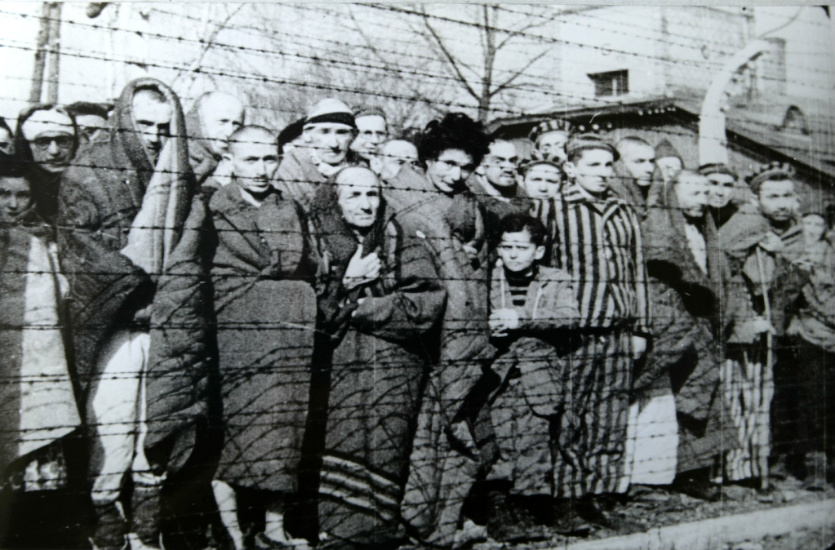
It looks like they are closing the Auschwitz concentration camp down and freeing the survivors from long mandatory prison sentences.

Auschwitz_Liberated_January_1945.jpg


If they wanted to get rid of minorities, they should have offered sterilization shots in exchange for reduced/eliminated sentences instead of putting people in for 30 years for an ounce of pot. No need to hide behind your concern about drugs when you vote to appeal the ACA which will cause thousands of deaths. Both Republican and Democrats supported these policies.


In an interview given to Larry King Live on February 7th, Ashcroft stated, "I want to escalate the war on drugs. I want to renew it... refresh it, re-launch it..." Pressed by King for specifics, however, the Attorney General declined to provide them, other than a "Parent Drug Corps" idea proposed by the new administration.
 
Last edited:
Economics or Morals: What's Behind the DOJ's New Prison Policies?

Economics or Morals: What's Behind the DOJ's New Prison Policies?
By Reena Flores
Updated: August 12, 2013 | 5:42 p.m.
August 12, 2013 | 4:57 p.m.

When U.S. Attorney General Eric Holder outlined a new plan to decrease America's prison population at Monday's annual American Bar Association meeting in San Francisco, the announcement was met with thunderous applause. Holder said such reforms are necessary because of the impossible-to-calculate "human and moral costs" of the current judicial system, even calling it "draconian."

But, with federal prisons operating at nearly 40 percent above capacity, he also made the case it was fiscally "pragmatic."

Holder's plan has several key components:

1. Low-level drug offenders (with no ties to large organizations, cartels, or gangs) will no longer be charged with offenses that include mandatory minimum sentences.

2. The Justice Department has updated its framework for evaluating compassionate release for inmates facing compelling circumstances—including old age.

3. DOJ will also expand the use of "diversion" programs such as drug treatment and community service that could be used instead of incarceration.

These changes to Justice Department protocol are significant and will affect a large number of the prison population. According to the nonprofit group the Sentencing Project, there are approximately 25,000 drug convictions in federal court each year, with 45 percent of these for low-level offenses.

The driving forces behind these new initiatives are probably a convergence of the fiscal reality with the Obama administration's ethical considerations.

Holder acknowledged the moral imbalances of a judicial system that particularly disenfranchises people of color. He brought up a recent report by the U.S. Sentencing Commission, which found that a racial gap has been widening in prison sentencing: Sentences for black men were nearly 20 percent longer than those of white men who had committed similar crimes. Holder said this statistic is not "just unacceptable, it is shameful. It is unworthy of our country, it is unworthy of our great legal traditions."

But what's perhaps more telling is Holder's statement that the United States is "coldly efficient in our incarceration efforts." He explained that while the U.S. population has increased by about 30 percent since 1980, the federal prison population has grown by almost 800 percent.

In fact, a different sort of cold efficiency may be the driving force behind the latest reform attempts.

In an era of sequestration scares and budget cuts, the Justice Department has not escaped unscathed. Earlier this year, when the sequester was still a looming threat in the distance, the department was faced with the possibility of $1.6 billion in cuts.

A quick look at the DOJ's fiscal 2013 overview is also revealing: Its budget called for "over $1 billion in efficiencies, offsets, redirections of grant program funding and rescissions." The Department of Prisons was primed as the agency to suffer the second highest of these cuts, after the FBI, with a nearly $133 million reduction.

Could the expansion of compassionate-release guidelines be more than an attempt to pass on the medical bills accrued by elderly inmates? According to an American Civil Liberties Union report released last year, approximately 13.5 percent of federal prisoners are age 50 or older.

But Holder's economic argument was just as likely to resonate with libertarian-leaning Republicans such as Sen. Rand Paul of Kentucky. The attorney general pointed to legislation "aimed at giving judges more discretion in applying mandatory minimums to certain drug offenders," which he said "will ultimately save our country billions of dollars." Paul said in a statement released after Holder's speech:

"I am encouraged that the President and Attorney General agree with me that mandatory minimum sentences for non-violent offenders promote injustice and do not serve public safety."

There is an increasingly strong case for Paul's perspective. According to The New York Times, numerous states have tested programs to reduce their prisons' nonviolent drug offender populations. Some, including those with more-conservative governments like Texas and Arkansas, have acknowledged that driving down costs has been a major motivating factor. In his speech, Holder cited Kentucky's latest attempts to lower recidivism, resulting in a prison population reduced by more than 3,000 over the next 10 years and saving more than $400 million.

He concluded:

"We must never stop being tough on crime, but we must also be smart and efficient when battling crime and the conditions and the individual choices that breed it. Ultimately, this is about a lot more than fairness ... it makes plain economic sense."

Liberal critics of the Obama administration are touting this as a step in the right direction. In a blog post by the director of their Washington legislative office, the ACLU wrote that "this is a big deal." They noted:

"This is the first major address from the Obama administration calling for action to end the mass incarceration crisis and reduce the racial disparities that plague our criminal justice system."

It's a win-win for the Justice Department and, by extension, President Obama. Prison-reform motivation comes from several things. Morals? Sure. Money-saving? Definitely.

http://news.yahoo.com/economics-morals-whats-behind-dojs-prison-policies-165738183.html
 
Re: Economics or Morals: What's Behind the DOJ's New Prison Policies?

The Sweeping Presidential Power to Help
Prisoners That Holder Didn’t Mention​
The clemency process will need to be invigorated
both from the bottom up and the top down​


This week, Attorney General Eric Holder spoke out against the impacts of “draconian” sentences for nonviolent drug offenders. “Too many Americans go to too many prisons for far too long, and for no truly good law enforcement reason,” said Holder.

But in unveiling the new “smart on crime” initiative, Holder skipped mention of the sweeping power the president has to shorten or forgive a federal prisoner’s sentence.

President Obama has given just one person early release from prison. As ProPublica has documented, Obama has overall granted clemency at a lower rate than any modern president, which includes both commutations – early release – and pardons. Last year, ProPublica reported that the Justice Department’s Office of the Pardon Attorney rarely gives positive clemency recommendations to the president. Experts have been calling for reform of the entire clemency process.

“Holder’s speech begs the question, why is not more attention given to the broken pardons office?” said Robert Ehrlich, a former Republican governor of Maryland who recently started a law clinic devoted to pardons.

One person who is still waiting to hear about his petition for commutation is Clarence Aaron. He has been in prison since 1993, when he was sentenced to three life terms for his role in a drug deal. Aaron was not the buyer, seller, nor supplier of the drugs. It was his first criminal offense.

The White House ordered a fresh review of Aaron’s petition last year after ProPublica found that the pardon attorney, Ronald Rodgers, had misrepresented Aaron’s case when it was brought to President George W. Bush. An Inspector General’s report released in December supported ProPublica’s findings, and referred the incident to the Deputy Attorney General to determine if “administrative action is appropriate.”

Nine months later, Justice Department spokesman Wyn Hornbuckle says the “issues raised in the report are still being examined.”

In his speech, Holder expressed concern about racial disparities in sentencing and treatment of prisoners. In 2011, a ProPublica investigation found that whites were four times as likely to receive pardons as minorities. Following our story, the Justice Department commissioned a study on racial disparities in pardons. Hornbuckle says that study is “ongoing.”

“The clemency process will need to be invigorated both from the bottom up and the top down,” said Jeffrey Crouch, a professor at American University, who wrote a book on pardons. “One step is the pardon attorney giving applicants a fair review and a positive recommendation. The other step is President Obama being more willing to use his pardon power.”

For now, Holder’s initiative has little to offer prisoners already behind bars. He directed prosecutors to avoid charges that carried mandatory minimum sentences for certain low-level, nonviolent drug offenders and urged the passage of legislation to change those sentencing requirements. But in 2010, there were more than 75,000 people in federal custody that had been given mandatory sentences.

“We’ve been getting a lot of calls asking, does this mean my loved one gets to go home?” said Molly Gill, government affairs counsel at Families Against Mandatory Minimums. “For the vast majority of people it doesn’t change their sentences and it isn’t retroactive.” (Holder did expand “compassionate release” for some elderly prisoners.)

While clemency does not generally reach wide swaths of prisoners, Presidents Gerald Ford and Jimmy Carter used it to affect policy on a larger scale, creating programs to forgive thousands of Vietnam War draft evaders.

In the 1960s, Attorney General Robert F. Kennedy also took a stand against what he described as “grossly unjust” outcomes of sentencing practices – and used commutations to do so. He directed federal prison wardens to seek out and bring him prisoners deserving of early release. Kennedy acknowledged that presidential commutations were “at best only stop-gaps” in a sentencing regime that needed reform. President John F. Kennedy commuted 100 sentences in total, and President Lyndon B. Johnson 226.

Mark Osler, a law professor at St. Thomas University who runs a clinic on commutations, said Obama could also do more. “Holder’s emphasis on how wrong these laws have been, and how damaging the Justice Department’s enforcement of those laws has been, gives me hope that this only the first step,” Osler said.


SOURCE: ProPublicahttp://www.bgol.us/board/newreply.php?do=postreply&t=627862


Re: Economics or Morals: What's Behind the DOJ's New Prison Policies?

<IFRAME SRC="http://www.propublica.org/article/parsing-presidential-pardons" WIDTH=780 HEIGHT=1500>
<A HREF="http://www.propublica.org/article/parsing-presidential-pardons">link</A>

</IFRAME>
 
The View From In Here

The View From In Here (17:30)

A recording of a very unusual conversation that came about in an unusual way. Filmmaker named Eugene Jarecki made a documentary about the drug war, prisons and the criminal justice system called The House I Live In.

He’s been taking it around the country and showing it in prisons, and producer Brian Reed went to one of these screenings where an inmate and a corrections staff member ended up talking face-to-face.

http://www.thisamericanlife.org/radio-archives/episode/501/the-view-from-in-here
 
source: Washington Post

Eric Holder is cutting federal drug sentences. That will make a small dent in the U.S. prison population.


prison.jpg

Populations at federal prisons have grown, but state prisons are the real problem. (Rich Pedroncelli / AP)

Attorney General Eric Holder will announce Monday that the Justice Department will no longer charge nonviolent drug offenders with serious crimes that subject them to long, mandatory minimum sentences in the federal prison system. As my colleague Sari Horwitz explains, Holder “is giving new instructions to federal prosecutors on how they should write their criminal complaints when charging low-level drug offenders, to avoid triggering the mandatory minimum sentences.”

He’s also expected to call for the expanded use of prison alternatives, such as probation or house arrest, for nonviolent offenders and for lower sentences for elderly inmates. And he’ll endorse legislation by Sens. Dick Durbin (D-Ill.), Pat Leahy (D-Vt.), Mike Lee (R-Utah), and Rand Paul (R-Ky.) that would increase federal judges’ flexibility in sentencing nonviolent drug offenders.

The changes Holder wants will likely make a big difference at the federal level. But that won’t be enough to solve America’s mass incarceration problem.

Go home federal prison system, you’re on drugs

federal-prison1.jpg

(Urban Institute)

Focusing on drug offenses is a smart way to go about reducing the federal incarceration rate. According to data in Why Are So Many Americans in Prison?, a new book by UC – Berkeley’s Steven Raphael and UCLA’s Michael Stoll, the most serious charge for 51 percent of federal inmates in 2010 was a drug offense. By comparison, homicide was the most serious charge for only 1 percent, and robbery was the most serious charge against 4 percent.

Tougher drug sentencing accounts for much of the increase in the incarceration rate. “If you go back and decompose what caused growth in the federal prison system since 1984, a large chunk can be explained by drug offenses, around 45 percent,” Raphael says. The other big category accounting for the federal increase is weapons charges, such as the five-year mandatory minimum faced by drug offenders caught with guns. Raphael estimates that that accounts for 18 to 19 percent of the increase.

There’s also been an increase in incarcerations on immigration charges, with the rest of the increase in other areas. But there’s no doubt that the biggest category of crime behind the increase in the federal incarceration rate is drugs. Easing up on drug sentencing would make a big dent.

The states are different

But the federal system isn’t really where the action is. The most recent Bureau of Justice Statistics (BJS) estimates find that there are 1,353,198 people incarcerated at the state level and 217,815 incarcerated federally. So about 13.9 percent of U.S. prisoners are in federal institutions; the other 86.1 percent are in state facilities. And most prisoners at the state level are not there for drug crimes.

distribution_statelevel_raphael_stoll.png


In 2004, about 20 percent of state-level inmates were incarcerated on drug convictions, Raphael and Stoll find. Compared with the federal population, those incarcerated at the state level are much likelier to have committed violent offenses. In 2004, 14 percent were in prison for homicide, 9 percent for rape or sexual assault, 12 percent for robbery and 8 percent for aggravated assault. In 2011, it was much the same, according to BJS stats on state inmates serving sentences of a year or more. Fifty-three percent of inmates were in prison for violent offenses, 18.3 percent for property crimes, 10.6 percent for “public order” offenses such as drunk driving, weapons possession or vice offenses, and 16.8 percent for drug convictions.

bjs_state_breakdown.png


Raphael and Stoll’s estimates of what’s accounting for the higher incarceration rates suggest that violent crimes are a big part of the state-level story. They find that harsher sentencing for violent offenders explains 48 percent of growth in incarceration rates, compared with about 22 percent attributable to increases in drug sentencing, and 15 percent due to increases in property crime and other sentences.

Then again, most people who go through state criminal justice systems do so on drug offenses. If you look at admission rates, rather than incarceration rates, at the state level, drugs become a much bigger part of the picture. For admissions, Raphael and Stoll find “relatively modest increases for violent crimes and property crimes and pronounced increases for drug offenses, parole violations, and other less serious crime.” And while higher admissions for less serious crimes with shorter sentences don’t affect the incarceration rate as much as increases in sentencing for serious crimes, they do dramatically affect the lives of those admitted, who have to find work as ex-offenders and live with the sundry restrictions states impose upon those who’ve served time.

It’s not hopeless

Holder_Prison_Furloughs_01d50_image_982w.jpg
U.S. Attorney General Eric H. Holder Jr. (Evan Vucci/AP)

Holder is taking a fairly plausible approach to reducing the U.S. incarceration rate at the level where he can effect it. But that’s not the level that matters most, and if we were to get serious about reducing the state-level incarceration and admissions rates, we need to talk not just about reducing sentences for drug crimes but also about reducing prison admissions for drug offenses, and perhaps also lowering sentences for property crime and even violent offenses, particularly robbery.

There has been growing enthusiasm for reforming state sentencing laws, even backed by many conservatives. The American Legislative Exchange Council has joined the cause, creating model legislation for loosening state mandatory minimum laws. Especially if it’s not just limited to drug offenses, that kind of reform could greatly reduce the state incarceration rate.
 
Prison Reform: An unlikely alliance of left and right

Prison Reform: An unlikely alliance of left and right
America is waking up to the cost of mass incarceration
Aug 17th 2013 | ATLANTA


ERIC HOLDER and Rick Perry (pictured) have little in common. America’s attorney-general is black, liberal and uses the word “community” a lot. The governor of Texas is white, conservative and says “God” a lot. Last month Mr Holder’s Justice Department sued Texas for allegedly trying to make it harder for blacks to vote. Last year Mr Perry ran to unseat Mr Holder’s boss, Barack Obama.

On one thing, however, the two men agree. On August 12th Mr Holder said: “Too many Americans go to too many prisons for far too long, and for no truly good law-enforcement reason.” He then unveiled reforms to reduce the number of people sent to America’s overcrowded federal prisons. In this, he was following the perfectly-coiffed Texan’s lead. Several years ago, Mr Perry enacted similar reforms in the Lone Star State, and they worked.

America has the world’s largest prison population. China, which has more than four times as many people and nobody’s idea of a lenient judiciary, comes a distant second. One in 107 American adults was behind bars in 2011—the highest rate in the world—and one in every 34 was under “correctional supervision” (either locked up or on probation or parole). A black man in America is 3.6 times more likely to be incarcerated than a black man in 1993 in South Africa, just before apartheid ended.

Granted, the number of Americans under lock and key has fallen since 2008, but only from 2.31m to 2.24m. And that slight dip comes after a mammoth rise: between 1980 and 2008, the number of incarcerated Americans more than tripled.


In the federal prison system, for which Mr Holder is responsible, the rise has been even more dramatic (see chart). From the 1940s to the early 1980s the federal prison population remained relatively stable, at around 24,000. But then came the crack epidemic, to which Congress responded with mandatory-minimum sentences.

A first-time offender convicted of possessing five grams of crack, for instance, received a mandatory-minimum sentence of five years. Conviction as part of a “continuing criminal enterprise” triggered a 20-year mandatory-minimum. Conspiracy laws made all members of a drug operation legally liable for all the operation’s crimes: a youngster whom drug dealers paid a few dollars a day to act as a lookout, for instance, could be hit with the same stiff penalties as his bosses. In 1994 Congress introduced a “safety-valve”, which allowed judges to ignore mandatory minimums for certain non-violent informants, but its stringent terms disqualify most people convicted of drug-related offences.

Drug offenders are nearly half of all federal prisoners, and most people convicted of federal drug offences received mandatory-minimum sentences. Since 1980 the federal prison population has soared from 24,000 to 219,000; between 1980 and 2013 the federal Bureau of Prisons budget rose by almost 600% in real terms. Federal prisons today house nearly 40% more inmates than they were designed for. Meanwhile, America’s violent-crime rate is less than one-third what it was in 1982, and less than half what it was in 1997.

Some argue that prison works. The reason crime has fallen so sharply, they say, is that bad guys who are locked up cannot mug you. This is true, but America long ago passed the point where imprisoning more people is a cost-effective way of reducing crime. Bert Useem of Purdue University and Anne Morrison Piehl of Rutgers University find “accelerating declining marginal returns” to incarceration in America. In other words, locking up violent criminals while they are young, strong and reckless does indeed keep the streets safer, but keeping them locked up deep into their dotage costs a fortune and prevents very few crimes.


It is also unfair. Harsh, inflexible sentencing rules inflict punishments that no reasonable judge would impose. Jack Carpenter, for example, sold medical marijuana to dispensaries in California, where it is legal, but was still sentenced to ten years in prison by a federal judge.

The high cost of mass incarceration has attracted attention from both left and right. In March Rand Paul, a Republican senator, and Patrick Leahy, a Democratic one, introduced the Justice Safety-Valve Act of 2013, which would let judges impose sentences below the mandatory minimum. In July Mr Leahy, along with Dick Durbin and Mike Lee, a Democrat from Illinois and a Republican from Utah, introduced the Smarter Sentencing Act of 2013. It would, among other things, shorten mandatory minimums and expand the safety-valve.

And this week, in a speech before the American Bar Association, Mr Holder announced a clutch of reforms. More elderly federal inmates are to be released early. More effort will be made to help ex-convicts re-enter society, in the hope that this will curb re-offending. Pointless rules making it harder for ex-cons to find homes or jobs will be reconsidered. And most important, low-level, non-violent drug offenders without ties to gangs or cartels will no longer be charged with crimes that trigger mandatory minimums.

Texas won’t hold ’em
As Mr Holder noted, these policy shifts mirror similar ones that more than half of all American states have enacted over the past decade. The wave began with Texas—then as now led by Mr Perry—which in 2003 passed a law sending people convicted of possessing less than a gram of drugs to probation rather than prison. In 2007 Texas allocated $241m for drug-treatment and alternatives to prison for non-violent offenders. Between 2003 and 2011 violent crime in Texas fell by 14.2%. The state’s prison population has also declined steadily. Sentencing reform passed in Georgia—where one in 13 adults is imprisoned, on probation or on parole—will save the state an estimated $264m over the next five years. Kentucky’s is forecast to save the state $400m while reducing its prison population by 3,000 over the next ten years.

It is not clear how many sentences Mr Holder’s reforms will shorten or how much money they will save. Although the federal prison system is larger than that of any single state, it holds only 10% of American prisoners. Mr Holder has not changed any sentencing laws; he has ordered federal prosecutors to circumvent them. Some people object: Bob Goodlatte, the Republican chair of the House Judiciary Committee, chided Mr Holder for “selectively enforcing our laws and attempting to change them through executive fiat”.

Others say Mr Holder has simply exercised his prosecutorial discretion humanely. Molly Gill of Families Against Mandatory Minimums, a pressure group, says that after years of campaigning against discretion-free mandatory sentences, it feels at last as though her group is “pushing against an open door”. And “open door” is not a phrase you often hear in the same breath as “American prisons”.

http://www.economist.com/news/unite...mass-incarceration-unlikely-alliance-left-and
 
Paul, other senators push for sentencing overhaul

Paul, other senators push for sentencing overhaul
By HENRY C. JACKSON | Associated Press
3 hrs ago

WASHINGTON (AP) — Kentucky Sen. Rand Paul on Wednesday implored Senate colleagues to support a sweeping overhaul of federal sentencing guidelines, saying they disproportionately affect minorities and are reminiscent of Jim Crow laws.

"There is no justice here," said the libertarian and potential 2016 GOP presidential candidate. "It is wrong and it needs to change."

Paul recounted from memory to a hearing of the Senate Judiciary Committee several cases he said he'd learned about where mandatory minimums had resulted in a miscarriage of justice.

He said one man, Edward Clay, was arrested with less than 2 ounces of cocaine. Even as a first-time offender, he was sentenced to 10 years in prison because of mandatory sentencing guidelines, Paul said.

"Each case should be judged on its own merits," Paul said. "Mandatory minimums prevent this from happening."

Paul said when he described the effects of mandatory minimum sentences, "you might think I was talking about Jim Crow laws. The war on drugs is disproportionately affecting black males."

He was referring to post-Civil War laws that effectively preserved racial segregation and unfair treatment for minorities.

Paul has drafted legislation with Senate Judiciary Committee Chairman Patrick Leahy to give judges wider latitude to craft their own sentences as one way to relieve prison overcrowding and bring down the exploding costs of running prisons. The committee is looking at that bill and another that focuses on waiving mandatory minimum prison terms in some drug cases.

There are more than 218,000 federal prisoners, according to the Bureau of Justice Statistics, a number that grown from about 25,000 federal prisoners in the 1980s, when many mandatory penalties were put in place.

Wednesday's hearing was the first step in what supporters hope will be legislative action by the end of the year. The Senate Judiciary Committee has not yet scheduled a meeting to discuss the bills affecting mandatory sentences. But Leahy has said repeatedly he would like to press forward on the issue.

In the House, Reps. Bobby Scott, D-Va., and Thomas Massie, R-Ky., have introduced a version of Paul and Leahy's bill. But the chairman of the House Judiciary Committee, Rep. Bob Goodlatte, R-Va., has voiced skepticism. But a number of House Republicans have backed different reform efforts and have said they are watching closely what the Senate does.

At Wednesday's hearing, the committee heard from two supporters of reform efforts, Brett Tolman, a former U.S. attorney in Utah, and Marc Levin, the policy director for the Right on Crime Initiative at the Texas Public Policy Foundation.

But another witness, Scott Burns, the executive director of the National District Attorneys Association, said mandatory minimums had been a useful tool for state and local prosecutors and questioned the push to change them.

"Why now?" Burns said. "With crime at record lows, why are we looking at sweeping changes?"

Sen. John Cornyn, R-Texas said efforts to correct problems were noble, but "we have to be careful not to legislate by anecdote. We have all heard legal horror stories."

Leahy pleaded with his colleagues to work together on the issue, saying it is one of the most important the committee is considering. To bring home the impact, he asked a dozen or so family members of prisoners sentenced to mandatory minimums to stand up.

The family members, who had traveled from Montana, Texas, Utah and Illinois, among other places, stood and clutched photos of their loved ones as Leahy closed the committee hearing.

http://news.yahoo.com/paul-other-senators-push-sentencing-overhaul-170437858--politics.html
 
Re: Paul, other senators push for sentencing overhaul

What is Paul doing in Kentucky? Like this is going to get Black folk to vote for this fool.
I like how you casually dismissed this just because Paul's name is the one that made the headline.

Holder's initiative will have a limited effect because the power of the executive branch is limited in this area BECAUSE of previous Congressional actions. Holder is trying to work around mandatory sentencing.

It's amazing that no matter the issue your priority is the Democratic Party.
 
Re: Paul, other senators push for sentencing overhaul

I like how you casually dismissed this just because Paul's name is the one that made the headline.

Holder's initiative will have a limited effect because the power of the executive branch is limited in this area BECAUSE of previous Congressional actions. Holder is trying to work around mandatory sentencing.

It's amazing that no matter the issue your priority is the Democratic Party.

Republican's hold the majority of the states. Many have super majorities. If Paul wants to truly make a dent in the prison numbers, he and his party colleagues can start at the state level since this has only come up on the republican side since Obama and Holder have been in.

Also, where are your posts criticising the for profit prisons?
 
Re: Paul, other senators push for sentencing overhaul

Republican's hold the majority of the states. Many have super majorities. If Paul wants to truly make a dent in the prison numbers, he and his party colleagues can start at the state level since this has only come up on the republican side since Obama and Holder have been in.

Also, where are your posts criticising the for profit prisons?
So we found the one issue where you want the states to take the initiative over the federal government. The issue where Rand Paul is in the headline.

Your priorities stay Democratic at all cost.
 
Re: Paul, other senators push for sentencing overhaul

So we found the one issue where you want the states to take the initiative over the federal government. The issue where Rand Paul is in the headline.

Your priorities stay Democratic at all cost.

The Federal Government is limit in this issue. Know the constitution?
 
source: AlterNet

6 Shocking Revelations About How Private Prisons Make Their Money

Private prison companies are striking deals with states that contain clauses to guarantee high prison occupancy rates.


Imagine living in a country where prisons are private corporations that profit from keeping their beds stocked at, or near, capacity and the governing officials scramble to meet contractual “lockup quotas.” Imagine that taxpayers would have to pay for any empty beds should crime rates fall below that quota. Surprise! You already live there.

A new report from In the Public Interest (ITPI) revealed last week that private prison companies are striking deals with states that contain clauses guaranteeing high prison occupancy rates. The report, "Criminal: How Lockup Quotas and 'Low-Crime Taxes' Guarantee Profits for Private Prison Corporations," documents the contracts exchanged between private prison companies and state and local governments that either guarantee prison occupancy rates (essentially creating inmate lockup quotas) or force taxpayers to pay for empty beds if the prison population decreases due to lower crime rates or other factors (essentially creating low-crime taxes).

Some of these contracts require 90 to 100 percent prison occupancy.

In a letter to 48 state governors in 2012, the largest for-profit private prison company in the US, Corrections Corporation of America (CCA), offered to buy up and operate public state prisons. In exchange, states would have to sign a 20-year contract guaranteeing a 90 percent occupancy rate throughout the term.

While no state accepted CCA’s offer, a number of private prison companies have been inserting similar occupancy guarantee provisions into prison privatization contracts and requiring states to maintain high occupancy rates within their privately owned prisons. Three privately run prisons in Arizona have contracts that require 100 percent inmate occupancy, so the state is obligated to keep its prisons filled to capacity. Otherwise it has to pay the private company for any unused beds.

The report notes that contract clauses like this incentivize criminilization, and do nothing to promote rehabilitation, crime reduction or community building.

"[These contracts run] counter to many states’ public policy goals of reducing the prison population and increasing
efforts for inmate rehabilitation," the report states. "When policymakers received the 2012 CCA letter, some worried the terms of CCA’s offer would encourage criminal justice officials to seek harsher sentences to maintain the occupancy rates required by a contract. Policy decisions should be based on creating and maintaining a just criminal justice system that protects the public interest, not ensuring corporate profits."

In a press teleconference about the report, Reverend Michael McBride, director of Urban Strategies and Lifelines to Healing at PICO National Network said the real human impact of having lockup quotas was unjustifiable.
“It’s important for us to step back and look at this from a moral perspective; all people of any faith or no faith at all can claim it’s reprehensible to imprison someone for making money or financial motives,” he said. “It’s important to always remember every single person is a human being … even if they have done something we may find problematic or illegal. They are not profit incentives.”


Here are six of the most shocking facts about prison privatization and corporatization, from the report.
  1. 65 percent of the private prison contracts ITPI received and analyzed included occupancy guarantees in the form of quotas or required payments for empty prison cells (a “low-crime tax”). These quotas and low-crime taxes put taxpayers on the hook for guaranteeing profits for private prison corporations.
  2. Occupancy guarantee clauses in private prison contracts range between 80% and 100%, with 90% as the most frequent occupancy guarantee requirement.
  3. Arizona, Louisiana, Oklahoma and Virginia are locked in contracts with the highest occupancy guarantee requirements, with all quotas requiring between 95% and 100% occupancy.
  4. Though crime has dropped by a third in the past decade, an occupancy requirement covering three for-profit prisons has forced taxpayers in Colorado to pay an additional $2 million.
  5. Three Arizona for-profit prison contracts have a staggering 100% quota, even though a 2012 analysis from Tucson Citizen shows that the company’s per-day charge for each prisoner has increased an average of 13.9% over the life of the contracts.
  6. A 20-year deal to privately operate the Lake Erie Correctional Institution in Ohio includes a 90% quota, and has contributed to cutting corners on safety, including overcrowding, areas without secure doors and an increase in crime both inside the prison and in the surrounding community.


Texas Republican Michael McCaul, the Homeland Security Committee chairman in the House of Representatives, told ICE officials in February that they were “in clear violation of statute” when the detainee population fell to 30,773 after 2,200 were released to save money.


In June, Representative Ted Deutch, a Florida Democrat, proposed an amendment to remove the requirement from next year’s appropriations bill. “No other law-enforcement agencies have a quota for the number of people that they must keep in jail,” he said. “Mandating ICE detain 34,000 individuals a day does not secure our borders or make us safer.” The proposal lost 232 to 190, on a largely party-line vote.


:hmm:
 
Last edited:
NYC inmate almost as costly as Ivy League tuition

NYC inmate almost as costly as Ivy League tuition
By JAKE PEARSON | Associated Press
Mon, Sep 30, 2013

NEW YORK (AP) — New York is indeed an expensive place, but experts say that alone doesn't explain a recent report that found the city's annual cost per inmate was $167,731 last year — nearly as much as it costs to pay for four years of tuition at an Ivy League university.

They say a big part of it is due to New York's most notorious lockup, Rikers Island, and the costs that go along with staffing, maintaining and securing a facility that is literally an island unto itself.

"Other cities don't have Rikers Island," said Martin F. Horn, who in 2009 resigned as the city's correction commissioner, noting that hundreds of millions of dollars are spent a year to run the 400-acre island in the East River next to the runways of LaGuardia Airport that has 10 jail facilities, thousands of staff and its own power plant and bakery.

The city's Independent Budget Office annual figure of $167,731 — which equates to about $460 per day for the 12,287 average daily New York City inmates last year — was based on about $2 billion in total operating expenses for the Department of Correction, which included salaries and benefits for staff, judgments and claims as well as debt service for jail construction and repairs.

But there are particularly expensive costs associated with Rikers.

The department says it spends $30.3 million annually alone on transportation costs, running three bus services that usher inmates to and from court throughout the five boroughs, staff from a central parking lot to Rikers jails and visitors to and around the island. There were 261,158 inmates delivered to court last year.

A way to bring down the costs, Horn has long said, would be to replace Rikers Island with more robust jails next door to courthouses. But his attempts to do that failed in part because of political opposition from residential areas near courthouses in Brooklyn, Manhattan and elsewhere.

"My point is: Have you seen a whole lot of outcry on this? Why doesn't anything happen?" Horn said of the $167,731 annual figure. "Because nobody cares."

"That's the reason we have Rikers Island," he said. "We want these guys put away out of public view."

New York's annual costs dwarf the annual per-inmate costs in other big cities. Los Angeles spent $128.94 a day, or $47,063 a year, for 17,400 inmates in fiscal year 2011-12, its sheriff's office said. Chicago spent $145 a day, or $52,925 a year, for 13,200 inmates in 2010, the most recent figures available from that county's sheriff's office. Those costs included debt-service and fringe benefits.

Experts note that New York's high annual price tag is deceiving because it reflects considerable pensions and salary responsibilities, debt service and the expensive fixed costs. The DOC says 86 percent of its operating costs go for staff wages.

New York's system differs from other cities in some other costly ways — it employs 9,000 relatively well-paid, unionized correction officers, for example, and is required by law to provide certain services to inmates, including high quality medical care within 24 hours of incarceration.

Nick Freudenberg, a public health professor at Hunter College, said the latest city figures show that declining incarceration rates haven't translated into cost savings.

In 2001, when the city had 14,490 inmates, the full cost of incarcerating one inmate at Rikers Island for a year was $92,500, or about $122,155 adjusted for today's dollars — that means the city spent $45,576 more in 2012 than it did 11 years ago.

"To my mind, the main policy question is: How could we be spending this money better?" Freudenberg said. "What would be a better return on that investment?"

Another contributing factor to the inmate price tag is the length of stay for prisoners in New York's criminal justice system. Some inmates have waited years in city jails to see trial. The DOC said in 2012 that the average length of stay for detainees was 53 days and 38.6 days for sentenced inmates.

"Not only is that a miscarriage of justice, it affects your operations," said Michael Jacobson, a former commissioner of the city's Department of Correction and probation who serves as director of the CUNY Institute for State and Local Governance. "You want to save big money? Take a quarter out just by improving the process they go through when they're in the system."

http://news.yahoo.com/nyc-inmate-almost-costly-ivy-league-tuition-060108220.html
 
source: New York Times

As Crime Rate Drops, New York’s Jail Population Falls to Lowest Level in 24 Years</NYT_HEADLINE>

Fewer inmates are behind bars in New York on any given day than at any time in the past 24 years, and the number admitted to the city’s jail system has fallen below 100,000 for the first time since 1987.

While the plunge in the city’s crime rate has undoubtedly been a critical factor, a number of other large cities where crime has also fallen have not seen a parallel drop in their jail population.

Instead, steps taken by the city, including special courts to deal with nonviolent offenders and programs to deter former convicts from returning to jail, appear to be bearing fruit.

A raging crack epidemic in pockets of New York poured people into its jails starting in the late 1980s and early 1990s. The population peaked in 1992, according to correction officials, when the daily average hit 21,449 and the annual intake reached 111,045.

But by the end of the last fiscal year on June 30, 2009, the average daily population had dwindled to 13,362, while the number of inmates admitted that year shrank to 99,939. This year, both figures appear likely to be even lower.

“As low as the numbers have gotten, I believe it’s possible to make them lower still,” said Dora B. Schriro, who was named the city’s correction commissioner last fall.

Among the 50 jurisdictions in the country with the greatest number of inmates, including larger cities and urban counties, New York ranks 47th in the average number of inmates jailed on any given day relative to its total population, according to a survey by the Pew Charitable Trusts’ Philadelphia Research Initiative.

Of the five cities and counties with the highest local jail populations, New York and Chicago have recorded decreases in their daily inmate population since 2007, according to the Pew report. A separate study by the federal Bureau of Justice Statistics found that the number of jail inmates held by all cities and counties in the year ending last June 30 declined by 2.3 percent from the year before — the first decline recorded since the bureau began counting in 1982.

Even as the historic decrease in violent crimes in New York has meant fewer people accused of felonies, the number of misdemeanor arrests has actually increased in recent years. From 2000 to 2009, felony arrests decreased to 95,738 from 113,213, while misdemeanor arrests for lesser offenses rose to 245,121 from 224,665.

“As we flood higher-crime areas with police officers through Operation Impact and we focus on lower-level offenses, including criminal mischief and criminal trespass, we are deterring felony crime through high visibility policing in the first place and also by effecting arrests for misdemeanor crime,” said Paul J. Browne, the Police Department’s chief spokesman.

But low-level offenders typically spend a brief time in city jails, said Michael Jacobson, director of the Vera Institute of Justice and a former city correction and probation commissioner. “And even though there are more of them than there used to be,” he added, “the significant decline in felony admissions and specifically felony admissions that get indicted — which stay for months and months awaiting trial as opposed to a week or two for these other arrests — means that the total bed days used by those entering jail has declined hugely.”

New special community courts in Midtown Manhattan, Brooklyn, Harlem and the Bronx, as well as drug courts and mental health courts, are meting out alternative sentences like street cleaning or drug treatment instead of jail time.

The Correction Department, working with other city agencies and private foundations, has instituted programs to help prevent recidivism. “There has been a very real robust diversion effort,” said Martin F. Horn, another former correction commissioner who teaches at John Jay College of Criminal Justice. “Even though the N.Y.P.D. continues to make a record number of arrests, fewer are coming into the criminal courts or are dismissed or resolved through time served. We’ve got a safer city and less incarceration.”

The Criminal Justice Agency, a private agency that has a contract to work with the courts, has helped judges find ways to keep offenders out of jail. At preliminary arraignments in 2008, half the cases were resolved at the arraignment through dismissal or a plea; of the rest, two-thirds of the defendants were released on their own recognizance.

Declining crime rates and early-release programs have also made state prisons less crowded, so inmates serving sentences of a year or longer can be transferred from city jails to state facilities more quickly.

Even though there are fewer prisoners in city jails, those awaiting court dispositions spend more time locked up. Since 2004, the average length of days spent in jail has risen to 50.3 days from 44.1.

An undated internal Correction Department memo obtained by The New York Times offered an explanation for the delays. “Correction is the only stakeholder in expediting the process,” it said. “The role of N.Y.P.D. ends at arraignment. Prosecutors want high conviction rates and are understandably comfortable having defendants spend longer times awaiting disposition as leverage in plea bargaining. Judges always want more time to consider cases. Most defendants would rather spend time in jail on Rikers Island than spend time in state prison.”

Correction officials have estimated that if the state’s court system processed cases at the 1995 rate, the average daily inmate population would be 1,500 lower, at an annual savings of $89 million. The daily cost of housing an inmate is about $210.

Ann Pfau, the state’s chief administrative judge, defended the court system, saying, “We’re very proactive in trying to address what we see as a backlog.”

Half the inmate population is older than 35, which Dr. Schriro attributed to the seriousness of the charges they face; their involvement with alcoholism, drug abuse or mental illness; and their history of prior arrests (inmates in that age group have been jailed an average of 13 times).

Since three-quarters of inmates are released directly from city jails back to their communities, Dr. Schriro said the department was focusing more on programs that counsel inmates about health and other benefits for which they are eligible, including Medicaid and food stamps, and also on providing vocational and academic training and therapy to keep them out of jail once they are released.

“It’s in the city’s best interest,” she said.
 
Police arrest more people for marijuana than for all violent crime combined

Press release: Police arrest more people for marijuana than for all violent crime combined
One Drug Arrest Every 20 seconds in US; A Marijuana Arrest Every 42 Seconds
New FBI Numbers Reveal Failure of "War on Drugs"
Posted by Darby Beck
MONDAY, SEPTEMBER 16, 2013

WASHINGTON, D.C. – The FBI released a new report today showing that nationwide, police in the U.S. conduct one drug arrest every 20 seconds and one marijuana arrest every 42 seconds. Law Enforcement Against Prohibition, a group of police, prosecutors, judges and other law enforcement officials opposed to the war on drugs, pointed to the figures showing almost 750,000 marijuana arrests and more than 1.5 million total drug arrests in 2012 as evidence that no matter how aggressively we conduct it, this is a war that can never be won.

"These numbers represent a tremendous loss of human potential. Each one of those arrests is the story of someone who may suffer a variety of adverse effects from their interaction with the justice system,” said LEAP executive director Neill Franklin, a cop for 34 years. “Commit a murder or a robbery and the government will still give you a student loan. Get convicted for smoking a joint and you’re likely to lose it. This is supposed to help people get over their drug habit?”

"Every time a police officer makes an arrest for drugs, that's several hours out of his or her day not spent going after real criminals. As the country has been investing more and more of its resources into prosecuting drug 'crime,' the rate of unsolved violent crime has been steadily increasing. Where are our priorities here?" asked retired lieutenant commander Diane Goldstein, another LEAP speaker.

Today's FBI report, which can be found at http://www.fbi.gov/about-us/cjis/uc...e-u.s.-2012/persons-arrested/persons-arrested, shows that 82.2 percent of all drug arrests in 2012 were for possession only and 42.4 percent of all drug arrests were for possession of marijuana (88% of all marijuana arrests).

Marijuana arrests were down slightly this year from 2011, but arrests for all drug abuse violations increased. This is perhaps reflective of the growing number of communities who have legalized marijuana for medical and recreational use.

Law Enforcement Against Prohibition (LEAP) is a group of more than 100,000 law enforcement officials and other supporters who, after fighting the war on drugs, now advocate for its end.

http://copssaylegalize.blogspot.com/2013/09/press-release-police-arrest-more-people.html
 
Cook County Sheriff Tom Dart To '60 Minutes': 'Jails And Prisons Are The New Insane A

Cook County Sheriff Tom Dart To '60 Minutes': 'Jails And Prisons Are The New Insane Asylums'
Kim Bellware
Posted: 09/30/2013 1:41 pm EDT | Updated: 09/30/2013 1:43 pm EDT

Jails like Cook County's are the nation's new insane asylums Cook County Sheriff Tom Dart told newsmagazine "60 Minutes" during Sunday's feature on the repercussions untreated mental illness in America.

"There's no denying that jails and prisons are the new insane asylums -- that's what we are," Dart said (embedded above).

"This is a population the people don't care about," Dart said of mentally ill inmates who languish in lockup or make return visits -- sometimes hundreds of times over. "As a result of that, there are not the resources out there to care for them."

Dart's comments come less than two weeks after HuffPost reported on the growing crisis at the Cook County Jail. The facility is now the largest mental health clinic in the state and is among the largest in nation, as well.

In an earlier interview with HuffPost, Cook County Sheriff's Office spokesman Ben Breit said mentally ill inmates make up 25 percent to 30 percent of the jail's population at any given time. On "60 Minutes," Dart estimates the rough number to be somewhere between 2,500 and 2,800 inmates with mental illness.

Previously, Dart told HuffPost that his "exploding" jail population is due in part to mentally ill people being arrested on low-level offenses.


"Most of guys that are in here are on goofy charges: Drugs, retail theft, criminal trespass, like when they're looking for a place to sleep; for the women, prostitution. They're locked up and put on bonds they couldn't conceivably make, even though it's a thousand bucks."

"60 Minutes" correspondent Steve Kroft asked Dart if he believed there was a connection between the nation's mental health crisis and the spate of mass shootings perpetrated by mentally ill men like Navy Yard shooter Aaron Alexis, and Virginia Tech shooter, Seung-Hui Cho.

"I do think there are connections here," Dart replied. "Some are getting treated. Other ones aren’t getting treated. People are falling through the cracks all the time. And so to think that that won’t then boil up at some point and end up in a tragedy -- that’s just naive."

http://www.huffingtonpost.com/2013/09/30/tom-dart-60-minutes_n_4017685.html
 
Re: Cook County Sheriff Tom Dart To '60 Minutes': 'Jails And Prisons Are The New Insa

Jails like Cook County's are the nation's new insane asylums Cook County Sheriff Tom Dart told newsmagazine "60 Minutes" during Sunday's feature on the repercussions untreated mental illness in America.

"There's no denying that jails and prisons are the new insane asylums -- that's what we are," Dart said (embedded above).

This has been an ongoing problem in many, if not most, states. No one wants to bear the financial costs of dealing with the mentally ill -- meanwhile, society pays a heavy cost, nevertheless.

We could take a bite out of the toll that mental illness takes on society if we stop hiding behind the 2nd Amendment and unreasonable fears over challenges to liberty interests if we authorize and create a national firearm registration program that requires those with mental illness be reported to the registry and gun sales and transfers clear through that registry. Of course, it won't make the mentally challenged any saner, but it would be a sane step towards saving lives -- the lives of both those killed/injured by the mentally challenged and the families of the all of the victims (the mentally ill shooters and those whom they harm).
 
Who is in charge in these states?

So the Libertarians and anti Federal Government whiners need to point the finger at those that they don't hold to their own standards.


source: 24/7 Wall Street

States Sending the Most People to Prison

Last year, 1.57 million Americans served prison sentences in state or federal penitentiaries, a slight decrease from nearly 1.6 million in 2011, according to figures released Thursday by the Bureau of Justice Statistics (BJS). Despite the decline, the United States still incarcerates people at a higher rate than anywhere else in the world.

According to the BJS report “Prisoners in 2012,” for every 100,000 Americans, an estimated 480 people were serving at least a one-year sentence in a state prison during the year. In some states, the rate of incarceration was much higher. Louisiana, the state with the highest rate, sentenced 893 people to a state prison for every 100,000 residents. Based on the BJS release, 24/7 Wall St. identified the states that send the most people to prison.

As might be expected, states that had more people in their prison systems tended to have higher crime rates. Seven of the states with the highest incarceration rates were in the top 15 for murder rates, and overall violent crime rates were generally higher in these states as well. The states with high incarceration rates also tended to have high property crime rates. Of the 10 states on this list, eight had the highest burglary rates in the country.

While the causes of higher crime rates are difficult to determine, these states often shared some of the risk factors that appear to make their populations more likely to commit crimes. The states were among the most impoverished in the country, a factor commonly associated with crime. Residents of these states were also among the least likely to have graduated from high school, another factor often linked to higher crime rates.

But higher crime rates do not tell the whole story. In an interview with 24/7 Wall St., John Roman, Senior Fellow at the Urban Institute’s Justice Policy Center, explained that each state’s policies on enforcement are a major factor. “It really is a political choice,” he said.

There are several sentencing policies that can dramatically increase the number of inmates in a state’s prison system. According to Roman, such policy is mandatory minimum sentencing, which requires a minimum predetermined prison sentence length, regardless of the circumstances of the crime, tend to have larger prison populations. Roman also pointed to three-strikes laws, which impose much longer sentences on criminals who have committed three or more serious crimes.

“Take Texas,” said Roman. “Texas has some of the safest cities in America. You wouldn’t expect it to have a high incarceration rate, but it is third in the country.” Texas was notably the first state to adopt a three-strikes law. Most of the states on this list, he added, have a history of policies that are harsher on crime. For example, while much of the Northeast has begun to relax drug enforcement policies, the states on this list have kept strict drug enforcement in place.

To identify the states sending the most people to prison, 24/7 Wall St. reviewed the states that had the most inmates in each state’s prison jurisdiction per 100,000 residents. The data come from Bureau of Justice Statistics’ “Prisoners in 2012” report. To be in a state’s jurisdiction, a prisoner needed to be sentenced within the state, not necessarily incarcerated there. We also reviewed educational attainment, income and poverty statistics from the U.S. Census Bureau for 2011. We also considered state crime rates from the FBI’s Uniform Crime Report, also for 2011. All data was for the most recent available period.

These are the states sending the most people to prison.


10. Idaho
> Sentenced prisoners: 499 per 100,000 residents
> Total sentenced prisoners: 7,985 (19th least)
> Violent crime rate: 200.9 per 100,000 residents (6th lowest)
> Poverty rate: 16.5% (19th highest)


In 2012, 499 people were incarcerated for every 100,000 residents of Idaho, up from 487 a year earlier. Of the nearly 8,000 sentenced prisoners in the state, 1,008 were women, an increase of 13.9% from the prior year, among the highest growth rates in the country. Unlike most states with high incarceration rates, Idaho had a relatively low crime rate. It had the sixth-lowest violent crime rate and the lowest robbery rate in the country. Idaho also had the fourth-lowest property crime rate in 2011.


9. Missouri
> Sentenced prisoners: 518 per 100,000 residents
> Total sentenced prisoners: 31,244
> Violent crime rate: 447.4 per 100,000 residents (12th highest)
> Poverty rate: 15.8% (24th highest)


In 2012, there was one person serving a sentence of more than one year for every 200 Missouri residents. But unlike much of the rest of the country, Missouri’s prison population actually rose 1.3% in 2012. Somewhat alarming, the state is running out of prison space and, as of late July, had room for just 100 more inmates before reaching full capacity, according to CBS St. Louis. Officials contend the state can handle more inmates. However, Missouri’s violent crime rate, among the highest in the county as of 2011, means any open spaces are quickly filled.


8. Florida
> Sentenced prisoners: 524 per 100,000 residents
> Total sentenced prisoners: 101,930 (3rd most)
> Violent crime rate: 515.3 per 100,000 residents (8th highest)
> Poverty rate: 17.0% (17th highest)


The number of people in Florida serving prison sentences fell from 537 per 100,000 in 2011 to 524 in 2012. Experts attributed the drop to a decrease in the state’s crime rate. Nevertheless, Florida had the eighth-highest violent crime rate in 2011, with more than 515 crimes committed per 100,000 residents. Specifically, Florida’s robbery and aggravated assault rates were both the ninth highest of all states. Despite the large prison population, Florida closed 10 correctional facilities in 2012, more than any other state.


7. Georgia
> Sentenced prisoners: 542 per 100,000 residents
> Total sentenced prisoners: 53,990 (5th most)
> Violent crime rate: 373.2 per 100,000 residents (21st highest)
> Poverty rate: 19.1% (5th highest)


Although the number of sentenced prisoners in Georgia stayed roughly the same in 2012 as it was in 2011, the number of female inmates declined 7.1%, compared to a 2.3% drop across the country. While Georgia had close to average violent crime rates in 2011, it had the fourth-highest property crime rate in the country. The state is home to a high number of poor individuals who are at higher risk of committing crime and being incarcerated. The poverty rate of 19% in 2011 was higher than all but four other states. Meanwhile, the percentage of people without a high school diploma was among the top third of all states.


6. Arizona
> Sentenced prisoners: 583 per 100,000 residents
> Total sentenced prisoners: 38,402 (10th most)
> Violent crime rate: 405.9 per 100,000 residents (19th highest)
> Poverty rate: 19.0% (tied for 7th highest)


Arizona had 583 sentenced prisoners per 100,000 residents as of 2012, well above the national rate of 418 per 100,000. The state also had among the most sentenced female prisoners relative to population of any state, at 101 per 100,000 female residents. Maricopa County Sheriff’s Office processes at least 7,400 inmates per month, according to its website, and is known for its outdoor desert jail, Tent City. The Department of Justice is currently investigating whether Maricopa Sheriff Joe Arpaio and his office committed civil rights abuses.


5. Texas
> Sentenced prisoners: 601 per 100,000 residents
> Total sentenced prisoners: 157,900 (the most)
> Violent crime rate: 408.5 per 100,000 (18th highest)
> Poverty rate: 18.5% (11th highest)


Texas had more prisoners in its jurisdiction than any other state, with nearly 158,000 inmates as of 2012. However, the incarceration rate dropped 3.5%, compared to a decline of 1.7% across the country. Experts have attributed the decrease, at least in part, to policies that have moved some lower-level offenders into alternative sentencing programs. Like most states on this list, Texas had a disproportionate share of at-risk individuals. Nearly 19% of the state’s adult population did not have a high school diploma, tied with Mississippi for the highest rate in the country. The 2011 poverty rate of 18.5% was also higher than the 15.9% across the United States.


4. Oklahoma
> Sentenced prisoners: 648 per 100,000 residents
> Total sentenced prisoners: 24,830 (17th most)
> Violent crime rate: 454.8 per 100,000 (11th highest)
> Poverty rate: 17.2% (16th highest)


Oklahoma housed 648 inmates serving sentences per 100,000 residents in 2012, up from 632 in 2011. There were 127 female prisoners in 2012 for every 100,000 female residents, the highest incarceration rate in the country and up from 122 in 2011. The state has become increasingly dependent on private prisons, with about 23% of the prison population serving sentences in a private facility. The move toward private prisons can limit the motivation of the state to cut down on the prison population because the state typically pays much less to hire private companies than to fund the prisons directly. Oklahoma was in the top third of all states for both violent and property crime. Specifically, the state ranked among the top 10 in both aggravated assault and motor vehicle theft.


3. Alabama
> Sentenced prisoners: 650 per 100,000 residents
> Total sentenced prisoners: 31,437 (13th most)
> Violent crime rate: 420.1 per 100,000 (16th highest)
> Poverty rate: 19.0% (tied for 7th highest)


With 650 prisoners for every 100,000 residents, Alabama’s incarceration rate stayed exactly the same in 2012 as it was in 2011. Crime rates were higher in Alabama than most other states. The state had the fifth-highest property crime rate in 2011, with more than 3,600 crimes committed per 100,000 residents. Among property crimes, the state had the third-highest burglary rate. In addition, the violent crime rate was among the top third of all states. More than 17% of the state’s adult population lacked a high school diploma as of 2011, higher than all but four other states. Alabama also had one of the highest poverty rates in the nation, with 19% of people living below the poverty line.


2. Mississippi
> Sentenced prisoners: 717 per 100,000 residents
> Total sentenced prisoners: 21,426 (21st most)
> Violent crime rate: 269.8 per 100,000 (18th lowest)
> Poverty rate: 22.6% (the highest)


Even as the prison population declined across the country, it increased in Mississippi. Between 2011 and 2012 it grew 4.1%, a faster rate of growth than all but two other states. Although the $41.51 daily cost to house an inmate in the state is well below the national average of $65.41, the state’s corrections system is still $30 million in the hole for the 2013 fiscal year. Much of that is due to inmate growth. A hefty 22.6% of Mississippi’s population lived below the poverty line in 2011, the highest poverty rate in the country. Mississippi tied with Texas for the highest percentage in the country of adults who have not completed high school, at 18.9%.


1. Louisiana
> Sentenced prisoners: 893 per 100,000 residents
> Total sentenced prisoners: 41,246 (9th most)
> Violent crime rate: 555.3 per 100,000 (7th highest)
> Poverty rate: 20.4% (3rd highest)


No state had a higher incarceration rate than Louisiana, with 893 people behind bars for every 100,000 residents. The majority of Louisiana inmates were locked up in private facilities, which has given the state far less incentive to reduce the prison population than most other states. Louisiana had the seventh-highest violent crime rate in the country in 2011, with more than 555 crimes committed for every 100,000 residents. The state had the highest murder and non-negligent manslaughter rate, as well as the fifth-highest aggravated assault rate. However, according to the New Orleans Times-Picayune, the state had a much lower percentage of inmates serving sentences for violent crime and a much higher percentage serving sentences for drug offenses than the nation as a whole.
 

After 41 Years Of Solitary
Herman Wallace Freed

<div style='text-align:center'>
<script type='text/javascript' src='http://pshared.5min.com/Scripts/PlayerSeed.js?sid=281&width=560&height=345&playList=517953904'></script>
<br/>
</div>

<div style='text-align:center'>
<script type='text/javascript' src='http://pshared.5min.com/Scripts/PlayerSeed.js?sid=281&width=560&height=345&playList=517954070'></script>
<br/>
</div>


n-HERMAN-WALLACE-large.jpg


herman_wallace.jpg


Herman-Wallace-April-2013.jpg.pagespeed.ce.Qd11zs4y_r.jpg


hermanrelease2-300.jpg
 
Wisconsin Prisons Incarcerate Most Black Men In U.S.

Wisconsin Prisons Incarcerate Most Black Men In U.S.
by CHERYL CORLEY
October 03, 2013 4:00 AM

The United States prison population is still the world's highest, with more than 1.5 million people behind bars. Black men are more likely to be sent to prison than white men, and often on drug offenses. A study from the University of Wisconsin-Milwaukee looked at that state's incarceration rates and found they were the highest in the country for black men.

The University of Wisconsin researchers say their analysis was truly eye-opening. They found that Wisconsin's incarceration rate for black men — 13 percent — was nearly double the country's rate.

"We were so far above everybody else. That just sort of stunned us when we saw that," says Professor John Pawasarat, who studied two decades of Wisconsin's prison and employment data.

Pawasarat found that nearly 1 in 8 black men of working age in Milwaukee County had served some time in the state's correctional facilities. At 13 percent, the rate was about 3 percentage points above Oklahoma's — the state with the second highest rate of incarceration for black males. (Gene Demby wrote about this same topic and noted that Wisconsin also has the highest rate of Native American men who are behind bars. One in 13 Indian men are incarcerated.)

"The explosion really took place in the year 2000 to 2008 where mandatory sentencing, three strikes was put in place and it more than tripled the population in just a few years, which meant about half of the black men in their 30s or early 40s in Milwaukee County would have spent time in the state's correctional facilities. And two-thirds of the men come from the six poorest zip codes in Milwaukee," says Pawasarat.

At Project Return in Milwaukee, some of those men show up for a weekly alcohol and drug abuse treatment program. Here, they get a chance to talk about mistakes they've made, troubles finding work, and problems with probation officers. Darnell Brown, 35, and Daniel White, 27, say African-American men get constant reminders about serving time:

"Every black man here that get pulled over right now, there's a standard protocol that the officer asks you: You got a driver's license and are you on probation, that's the automatic thing they ask you. Or it's also when they look your name up and see your charge, they automatically [ask], you got any dope or guns in the car depending on what your case is too. And it's so funny to me, the more you cooperate, it seems the more intimidating the system gets."

About 40 percent of the black men in Milwaukee County get locked up for low-level drug offenses. LeRoy Johnson says that's why he cycled in and out of prison for years:

"Everytime, I get revocated, it be for smoking marijuana. When I went to last program I told them I'm not coming back no more. I'll probably die in prison if I go back again. That's me. I just can't."

Wisconsin prison officials refused to talk to NPR for this story. But John Chisholm, Milwaukee County District Attorney, has argued for modifying the state's mandatory minimum sentencing policies. He says crimes and prosecutions have dropped dramatically since 2010. Chisolm also says that it's too simple to suggest that Wisconsin's incarceration rate for African-American men is the nation's highest because blacks commit more crimes.

"Our incarceration rate is high not necessarily because of the number of offenses and the number of prosecutions. What's driving our incarceration rate is failure under supervision," says Chisolm. "If you are placing someone under long terms of supervision without a lot of meaningful conditions then there's a lot of opportunity to mess that up and if they do that in Wisconsin they can go back for the entire time.

Chisholm concedes that studies have shown there are racial disparities when it comes to who goes to prison for low-level drug offenses. He says his office has set up programs, like drug and treatment alternatives that have kept thousands of offenders out of prison. Clem Richardson, leader of Project Run, says there's an even more urgent need:

"We need jobs, am I right. Yes. We need training. Yes. And we need education. These men will work, which a lot of them do learn while they are incarcerated. It's just when they come back out here, they don't have nothing out here for them. So you see the mass incarceration rate of them with the high recidivism rate of going back because of what's going on."

News of the dramatic rate of black male incarceration in Wisconsin has energized a coalition of churches working to reduce it. The effort is called the "11 by 15" campaign. Spokesperson Kathy Walker, whose brother served time, says the campaign aims to halve the number of imprisoned in Wisconsin to 11,000 inmates by 2015.

"We are working hard to get money for transitional jobs. We are doing grants trying to help. We are trying to empower them to do better. We are the Paul Reveres," says Walker. "Get ready because this is going to change. One neighborhood at a time but this is going to change."

Walker says the coalition is not only hopeful, but dedicated in the mission to stop the state's mass incarceration of black men and to prevent more people, regardless of race, from getting locked up in Wisconsin's prisons and jails.

http://www.npr.org/blogs/codeswitch...sin-prisons-incarcerate-most-black-men-in-u-s
 
Obama Commutes Illinois Prisoner’s Life Drug Sentence

Obama Commutes Illinois Prisoner’s Life Drug Sentence
December 19, 2013 8:18 PM

CHICAGO (AP) – After a federal defender told her client Thursday that President Barack Obama had just commuted his life drug sentence and he’d be out of prison by spring, he told her the president would not regret it.

Reynolds A. Wintersmith Jr., 39, of Rockford, has spent more than half his life behind bars. He found out that he and 20 others had been granted clemency hours before the White House’s public announcement thanks to his attorney, MiAngel Cody.

“I intend to make President Obama proud,” he told Cody upon learning he’d be released April 17.

Wintersmith was a teenager at the time he was convicted for his role in a Rockford-based drug conspiracy, which included selling crack cocaine, and sentenced in 1994 to life in prison under then-mandatory federal guidelines. He had no prior criminal record and wasn’t charged with acts of violence.

Obama commuted the sentences of Wintersmith and seven others because they received unduly harsh sentences under a system that treated convictions for crack cocaine harsher than for powder cocaine. The 13 others were pardoned for various crimes.

In a phone interview with The Associated Press, Cody said Wintersmith has worked hard during his decades in prison to become a better person — something staff at his Greenville prison, just east of St. Louis, attested to in his clemency application.

For someone who’s spent his entire adult life inside prison, Cody said it was ironic that one of Wintersmith’s prison jobs has been to counsel inmates about to be released about how to cope on the outside, how to properly conduct themselves and how to look for steady jobs.

“Who he has become is his way of apologizing to all the people he ever wronged,” Cody said.

Cody took on Wintersmith’s clemency application after a friend of his family called her in 2011. At first, Cody couldn’t believe that his case could be as egregiously unfair as the friend explained it. Then, she went through his court transcripts.

“Even the judge himself said that giving a life sentence to a first-time offender gave him pause,” said Cody. “But then he said, `I have no choice.”‘

The application process took more than a year, Cody said. And there was no way to assess if it would succeed — until she received a call Thursday morning from a U.S. Justice Department official.

“You apply and you hope for the best,” she said. “It was just fabulous to get word.”

http://chicago.cbslocal.com/2013/12/19/obama-commutes-illinois-prisoners-life-drug-sentence/
 
Federal courts continue warnings about budget and the Sixth Amendment

Federal courts continue warnings about budget and the Sixth Amendment
By Scott Bomboy | National Constitution Center
Fri, Jan 3, 2014

As a new year starts, the Chief Justice of the United States and top officials in the federal court system continue to warn about budget cuts that will make it harder for people to have access to public defenders.

Chief Justice John Roberts has repeated warnings he issued in 2012 about the lack of funding for the federal court system, which he helps to oversee. Those warnings came about three weeks after similar requests from two top officials at the Administrative Office of the U.S. Courts.

On December 5, 2013, Judges John D. Bates and Julia S. Gibbons wrote Congress about the dire need for more funds for a federal court system that was strained before mandated sequester cuts took effect after the 2013 budget battle in Congress.

“Sequestration cuts to the Defender Systems program threaten the ability of the Judiciary to provide court-appointed for persons accused of a federal crime,” said Gibbons and Bates, who said that federal defender programs were cut by 11 percent during the sequester period last year.

About 90 percent of people in federal criminal cases use court-appointed counsel.

The letter was issued just before a budget deal was reached in Congress to restore some funding to government agencies.

In the budget deal cut by Representative Paul Ryan and Senator Patty Murray, some money for the next two years will be coming back to discretionary programs run by federal agencies. But the amount of funds restored will be decided by appropriations committees in Congress in mid-January.

And that isn’t enough to satisfy Chief Justice Roberts, who spelled out his concerns in a 15-page report issued on New Year’s Eve.

Among the arguments made by the Chief Justice to Congress is the fact that most federal court spending is on programs mandated by law, and the federal justice system just doesn’t have many discretionary programs to cut. In fact, it will need to cut its budget by 3 percent to accommodate “must pay” programs- before funds are restored from the sequester.

“Those cuts would lead to the loss of an estimated additional 1,000 court staff. The first consequence would be greater delays in resolving civil and criminal cases,” Roberts said. “In the civil and bankruptcy venues, further consequences would include commercial uncertainty, lost opportunities, and unvindicated rights. In the criminal venues, those consequences pose a genuine threat to public safety.”

And the more basic threat is to the sanctity of the Sixth Amendment, Roberts said, if sequester cuts are restored.

“There are fewer public defenders available to vindicate the Constitution’s guarantee of counsel to indigent criminal defendants, which leads to postponed trials and delayed justice for the innocent and guilty alike,” he said.

The public defender system has greatly expanded in the past 50 years after the 1963 decision in Gideon v. Wainwright. The highly publicized case led the Supreme Court to conclude that the Constitution required state-provided legal counsel in criminal cases for defendants who are unable to afford to pay their own attorneys.

The Gideon decision touched on three amendments—the Sixth amendment, the 14th Amendment and the Fifth Amendment. But the Sixth Amendment was at the decision’s core.

The Court ruled that the Constitution’s Sixth Amendment gives defendants the right to counsel in criminal trials where the defendant is charged with a serious offense even if they cannot afford one themselves; it states that “in all criminal prosecutions, the accused shall enjoy the right to … have the Assistance of Counsel for his defense.”

Last fall, when the sequester cuts went into place, there was heavy criticism from legal circles of its effects on the federal public defender system.

In an op-ed piece in The Wall Street Journal, jointly signed by conservative Paul Cassell and liberal Nancy Gernter, the former federal trial judges lamented the drastic impact of sequestration on budgets for public defender offices.

“[D]ue to the combination of general budget austerity and sequestration, the federal public defender system — a model of effective indigent defense for the past 40 years — is being decimated. As former federal judges from opposite ends of the ideological spectrum, we both understand that these shortsighted cuts threaten not only to cripple the federal defender system, but to disrupt the entire federal judiciary—without producing the promised cost savings,” they said.

U.S. attorney general Eric Holder also submitted his own op-ed piece to the Washington Post on the same topic.

“Despite the promise of the court’s ruling in Gideon, however, the U.S. indigent defense systems — which provide representation to those who cannot afford it — are in financial crisis, plagued by crushing caseloads and insufficient resources,” said Holder.

“Five decades after the Supreme Court affirmed that adequate legal representation is a basic right, sequestration is undermining our ability to realize this fundamental promise. The moral and societal costs of inadequate representation are too great to measure,” he added.

What happens next in the budget process is uncertain, but in an appendix to his annual report, Chief Justice Roberts said that while civil case filings at U.S. district courts were up 2 percent in 2013, there were declines in case loads in other courts.

For example, filings for criminal cases fell by three percent to 91,266. But that doesn’t necessarily represent the case load for people seeking defense help in federal cases.

Chief Justice Roberts is hoping for $1.04 billion in funding for 210,000 defense representations next year, with part of that money going to pay bills that were delayed in last year’s sequester.

In the current continuing resolution (CR) that is funding the federal government, about $26 million was restored from the sequester to pay for some vouchers related to the public defender program.

The Defender Services Office, which trains attorneys who work as public defenders in federal cases, has been blunt in its opinion about the budget cuts.

“There is no indication of what the funding situation will be beyond the expiration of the CR in January. Without a full-year appropriation that is greater than the CR level, [federal defender offices] will continue to see a budget shortfall,” the division said on its website.

In July 2013, Judges Bates and Gibbons told the Senate that reduced funding for public defenders represented a broader problem.

“Our nation recently celebrated the 50th anniversary of the 1963 landmark Supreme Court decision in Gideon v. Wainwright, which guaranteed an individual the right to court-appointed counsel,” they said. “Funding cuts are threatening that very right, a right that has been a bedrock principle of our criminal justice system for half a century.”

http://news.yahoo.com/federal-court...dget-sixth-amendment-111606850--politics.html
 
Take from: End Mass Incarceration


Justice Department backs reduced penalties
for low-level drug offenses


cGqLf.AuSt.91.jpg


Attorney General Eric Holder on Thursday urged the U.S. Sentencing Commission to reduce the recommended prison time for certain low-level drug offenses.

Citing prison overcrowding, and the fact that nearly half of the nation’s 216,000 federal prisoners are incarcerated on drug charges, Holder said sentencing reform is desperately needed.

“ Modestly reducing the quantity-based guideline for drug offenses, while continuing to ensure higher penalties for drug offenders involved violence, or who are career criminals, or who use weapons in their offenses is consistent [with] the Attorney General's Smart on Crime initiative and will help further our current need for efficient and strategic criminal justice reforms,” the Justice Department’s written testimony stated.
The department’s 31-page prepared statement, though spanning a wide array of sentencing topics, placed particular weight on the drug sentencing question. The proposed reform would affect those convicted of possessing 500 grams or more of powdered cocaine or 28 grams or more of crack cocaine.

“ It has become clear that we must find ways to control federal prison spending order to better focus limited resources on combating the most serious threats to public safety,” the department’s statement declared.

The seven-member sentencing commission was also scheduled to hear from other supporters of reform, such as Families Against Mandatory Minimums, as well as a representative of the National District Attorneys Association, who argues against reducing sentences.

“ Despite the myth being promulgated by the U.S. Department of Justice that ‘America’s federal prison system is bloated with first-time, low level drug offenders’, the vast majority of prisoners in the Federal prison system have been very bad actors for a long time,” Raymond F. Morrogh, director at large of the district attorneys association, stated.
Read more here: http://www.mcclatchydc.com/2014/03/13/221114/justice-department-backs-reduced.html#storylink=cpy
 
Back
Top