Ethiopian Coffee Ceremony.
As the top African producer of coffee, and seventh in the world, Ethiopia has a long-standing relationship with the consumption and use of coffee. Ethiopia is home to coffee arabica, a species of coffee indigenous to the country. Considered to be one of the better tasting coffees, it is believed that coffee arabica was the first coffee plant to cultivated and grown in the southwest of the country. It is said that the first instance of the effects of coffee being noticed came about when Ethiopian shepherds in the 9th observed the reaction of their herds after eating the fruit.
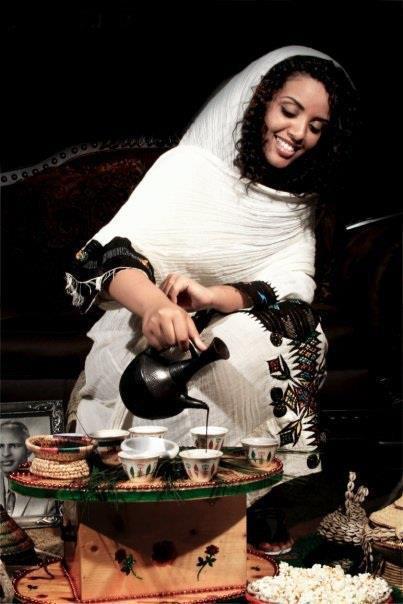
Today, one of the ways that Ethiopians (and Eritreans) continue to demonstrate their love of coffee and their historical relationship with the second most traded commodity in the world, after oil, is through what is known to outsiders as a traditional Ethiopian Coffee Ceremony or Buna by Ethiopians. Often, this practice takes place in peoples homes and at Ethiopian restaurants which is where I first experienced a Buna, in Addis Ababa.
Conducted entirely by women, the Buna process involves the roasting, grinding and serving of coffee. Washed coffee beans are roasted in a pan, similar to the process of making popcorn. As the aroma of the coffee begins to fill the air, the preparer takes the roasting coffee and walks around letting the fresh scent of the coffee settle around the room.
Once roasted, the coffee is then put in what is called a Mukecha - a tool used for grinding. Another tool, called a zenezena, is used to crush the coffee in a pistil and mortar fashion. Some places will use modern coffee grinders to save time as it can be a slightly laborious and time-consuming task. After the coffee has been crushed, the fresh coffee powder is put into a jebena, a clay pot. Water is added and the mixture is boiled before being ready to be served in small usually white porcelain cups called cinis.
Each serving round of coffee has a name - the first being Abol, second is Huletegna and the third and final round is called Bereka.
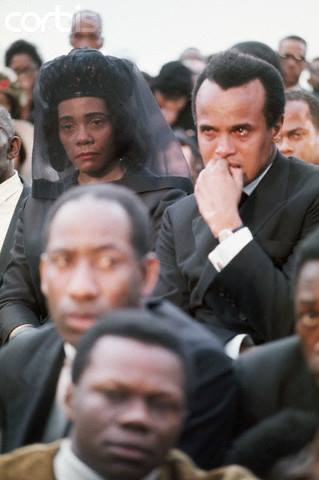
Harry Belafonte & Coretta Scott King at Dr. King’s funeral, Atlanta, Georgia, 1968. This pic is so powerful and touching. Mr. Belafonte is ready to set it all on fire!!
Portrait of 19th Century Sudanese Moorish Sultan
FUNFACT: During the time Europe was experiencing a “dark age”, The Moors went to Europe to civilize and bring order to the Europeans (who were close to dying off. They had no order, diseases were spreading and they were living in barns (even the kings and queens) with unclean animals running loose through their living space).
The Moors built all of the immaculate castles, roads, and buildings you see throughout Spain and many other parts of Europe today. The Moors also taught the Europeans the right ways of eating, cleaning, dressing and even shared with “certain” Europeans ancient secrets.
The Moors also brought art, music and literature to Europe, which was still in the dark ages; additionally, when the Moors went into Spain the people spoke the outdated language of Latin, during the Moors rule the language that we now call Spanish was invented!
It is widely thought that the Moors were Arabs, because of their religious beliefs (Red People), but the 100% truth is that the Moors were black and brown skinned Africans. This can be found through the many drawings, caricatures and paintings of them during the ages of their rule.
Truth!