10 Companies Paying Americans the Least

kes1111

Rising Star
BGOL Investor
10 Companies Paying Americans the Least

This summer, thousands of fast-food workers in the United States went on strike in cities across the country, demanding their wages be increased to $15 an hour and the ability to unionize. To no one’s surprise, they didn’t get it. As of 2012, an estimated 4.7% of hourly workers are paid at or below the federal minimum wage of $7.25 an hour. According to several groups, low- and minimum-wage workers are growing faster than any other group of earners.

Meanwhile, profits at many of the corporations that employ the most minimum-wage workers have risen. McDonald’s, Walmart and Target together employ several million Americans. While these companies' profits have grown in recent years, most of their workers continue to earn low or minimum wages. 24/7 Wall St. identified the 10 companies that employ the most low- and minimum wage workers.

Companies that pay employees poorly fall into one of three industries: retailers such as Walmart and Sears, restaurant chains such as McDonald’s and Yum! Brands, and grocery stores such as Kroger. These industries are customer-facing and rely on a fleet low- and minimum-wage workers to take orders, stock clothing and goods and wait tables. “The service sector across the board -- the retail and restaurant industries -- those are the core of the low-wage labor market,” explained Jack Temple, policy analyst at the National Employment Law Project (NELP).

To reinforce the argument that the low wages these companies are paying are unfair, Temple points to the large compensations most of the chief executive officers at these companies receive. CEOs at nine of these 10 companies are paid more than $10 million annually, while Michael Duke and Howard Schultz, CEOs of Walmart and Starbucks, each receive more than $20 million per year.

Perhaps a fairer measure that may indicate whether a company can afford to increase its employees’ wages is the profitability of these companies. Net income in all but one of these companies has increased over the past five fiscal years. Kroger’s net income more than tripled since fiscal year 2008 to nearly $1.4 billion. Sears' net income, on the other hand, has declined significantly during that time. The company recorded a net loss of $930 million this year.

Temple explained: “Low-wage companies have choices. They can continue making a lot of profits, and can continue paying their CEOs an incredible amount of money by paying low wages to their employees. But they have the resources to operate profitably and pay high wages as well.”

Based on the methodology used by the National Employment Law Project in its 2012 report “Big Business, Corporate Profits, and the Minimum Wage,” 24/7 Wall St. identified the 10 companies in industries that are primarily low-wage employers. Based on annual reports and proxy filings, we also reviewed the total size of the companies’ workforces, the recent performance of the corporations in terms of revenue and profit, and the highest executive pay at these companies. Included in our analysis were total U.S. employee figures, which we estimated when the figures were not provided by the company. In keeping with the NELP methodology, all employee figures represent systemwide employment, including employees of franchisees. To avoid double-counting low-wage workers, Starbucks is an exception, as many other low-wage employers are Starbucks licensees.

10. Starbucks
9. TJX Companies
8. Macy’s
7. Darden Restaurants
6. Sears Holdings
5. Yum! Brands
4. Kroger
3. Target
2. McDonald’s
1. Walmart
http://finance.yahoo.com/news/ten-companies-paying-americans-least-112523979.html
 
I don't know about every company on the list, but I wonder about putting Starbucks on the list.

Before ACA, Starbucks gave a large portion of their part-time workers health benefits. The articles mentions their base pay of under $9/h, but doesn't mention overall compensation. I doubt they would make this list if all the fringe benefits were included.
 
wal-mart-relies-on-taxpayers-to-subsidize-low-wages.jpg
 
Why does this thread have 600 views already? Was the link posted somewhere or is it related to the picture linked directly from Business Insider?
 
Update as of September 2015:

BUSINESS
The 10 Companies That Pay Americans The Least
Most of them are in the restaurant, retail and hospitality industries.


Sep 04, 2015
Thomas C. Frohlich,
Michael B. Sauter and
Sam Stebbins
24/7 Wall St.

Amid soaring corporate profits and stagnating worker wages in the past decade, growing numbers of low-wage workers are demanding higher pay. In the wake of intensifying debates over income inequality, the Securities and Exchange Commission (SEC) approved a rule in August that will require publicly traded companies to document the ratio of their highest-paid employee salary to that of their typical worker.

The nation’s lowest paying companies frequently operate within one of three industries: restaurant chains, department stores, or hotels. These industries fall into two sectors, leisure and hospitality and retail trade, which, according to the Bureau of Labor Statistics (BLS), account for more than 70% of U.S. workers paid at or below the minimum wage of $7.25 per hour.

Click here to see the lowest-paying companies in America.

In an interview with 24/7 Wall St., David Cooper, senior economic analyst with the Economic Policy Institute (EPI) said, “Typically, jobs in these industries are lower skilled jobs and require low levels of education.” Partially as a result, there are usually large pools of available workers who are relatively easy to train.


“The business model in these industries is often to treat staff as sort of interchangeable cogs,” Cooper said. As a consequence, wages are often very low.

Many jobs at the nation’s lowest paying companies are tipped positions. While tipping is often regarded as mitigating low wages, the practice also sends the message that a company has only a small obligation to pay its employees, Cooper explained. “Tipping essentially passes the wage requirement from the employer directly to the consumer.”

Many of these jobs are also part-time positions, which together with inconsistent tips, mean wages are not just low, but also erratic. Unpredictable schedules and payments “prevent [workers] from taking advantage of a lot of other economic and financial resources,” Cooper said. Car payments, tuition payments, and any spending structured over a period of time becomes very difficult in these circumstances.

Typical wages at these companies often are in stark contrast with the pay of its CEO. Seven of the 13 companies listed reported total annual compensations of their CEOs at well over $10 million. And the compensations of all but two CEOs increased — even as their employee wages did not, and in some instances as their companies reported losses and shrank operations. The CEO of Aramark, Eric Foss, was paid $32.4 million last year, up 44.2% from his compensation in the previous year. The SEC’s new rule requiring documentation of the pay ratio within public companies does not take effect until 2017. However, the EPI has tracked the ratio since 1965. That year, CEOs made roughly 20 times the pay of their median worker. Last year, CEOs at the largest 350 companies made an average of 300 times the wage of their typical employee.

Many of these companies are also very profitable, although this was not always the case. Sears Holdings and Target each posted income losses in their most recent fiscal years. In some cases, the losses resulted in location closures and layoffs.

Most agree that wages at many companies are too low. What remains controversial, however, is the best way to address the problem. Cooper and other researchers argue that the current federal minimum wage of $7.25 per hour is inadequate for the vast majority of low-wage workers to afford the basic necessities of a moderate standard of living. Workers in low wage jobs tend to be older and more educated today than in previous decades. Yet, lawmakers have “updated that wage floor so infrequently or so inadequately that the lowest paid jobs today pay a lot less than they did a generation ago.”

Michael Strain, an economist with the American Enterprise Institute, said that while the intention is good, raising the minimum wage would not effectively achieve its stated goal. Instead, Strain favors expanding public assistance programs such as the federal income tax credit because such an approach would better focus on low wage earners and people who really need the help.

Daniel J. Mitchell, senior fellow at conservative think tank Cato Institute went further, claiming in an email exchange, “The inequality issue is a blind alley,” and raising wages could actually cause harm. Raising the minimum wage could actually cause unemployment. Instead, policy makers should focus on economic growth.

These are the lowest-paying companies in the country, according to 24/7 Wall St.

  • 10. Macy’s, Inc.
    55e9b4d61400002e002e4f4d.jpeg

    ASSOCIATED PRESS


    > Global workforce: 166,900
    > CEO compensation: $16.5 million
    > Revenue: $28.1 billion
    > No. of U.S. locations: 823
    > Industry: Department Stores Like many department stores, Macy’s is one of the nation’s lowest-paying companies. More generally, the retail trade sector employs 13.3% of all U.S. workers paid at or below the minimum wage. At Macy’s, the average hourly wage for a sales associate is $9.33, about half the average for sales associates nationwide. Macy’s closed hundreds of stores last year, cutting around 2,500 jobs. The company reported revenue of $28.1 billion in the company’s latest fiscal year. CEO Terry Lundgren made $16.5 million, the eighth highest total CEO compensation among the over 100 companies reviewed. Read more at 24/7 Wall St.

  • 9. Starbucks Corp.
    55e9b4d717000043015697f2.jpeg

    ASSOCIATED PRESS


    > Global workforce: 191,000
    > CEO compensation: $21.5 million
    > Revenue: $16.4 billion
    > No. of U.S. locations: 7,303
    > Industry: Restaurants Coffee giant Starbucks employs roughly 141,000 people in the United States at more than 7,300 locations. Because the coffee chain offers some benefits not commonly offered in low-paying jobs, it has long been considered the ideal job for young students supporting themselves or even single parents. However, an increasing number of reports suggest the famous Seattle company makes life difficult for its employees. Of particular note is the company’s increasing use of complicated and inconsistent scheduling, a practice also used by many other major retailers. This practice means that baristas’ hours may be posted with little notice, preventing them from making other plans, and therefore nearly denying them the ability to earn extra income from other sources.

    • 8. Sears Holdings Corporation
      55e9b4d617000043015697f1.jpeg

      ASSOCIATED PRESS


      > Global workforce: 196,000
      > CEO compensation: $5.7 million
      > Revenue: $31.2 billion
      > No. of U.S. locations: 1,733
      > Industry: Department Stores Sears Holdings is the company behind Sears and Kmart department stores. Sales associates at Sears are paid an average of $8.72 an hour. Cashiers at the retail giant make even less, at an average of $8.37 an hour. In sharp contrast, CEO Edward Lampert’s compensation last year totalled $5.7 million. According to Glassdoor.com, only 21% of surveyed company employees approved of Lampert. Low employee pay and a lack of confidence in the company’s leadership may be just the tip of the iceberg for Sears. The company’s revenuedropped by 16% in its most recent fiscal year, after already dropping 10% the year before. Sears Holdings was one of only two low-paying companies that posted a net income loss in the most recent fiscal year. Read more at 24/7 Wall St.
    • 7. TJX Companies
      55e9b4d81700009a015697f3.jpeg

      Toby Talbot/AP


      > Global workforce: 198,000
      > CEO compensation: $28.7 million
      > Revenue: $29.1 billion
      > No. of U.S. locations: 2,581
      > Industry: Apparel Retail TJX Companies, the parent company of TJ Maxx department stores and discount retailer Marshalls, employs nearly 200,000 workers in the United States. According to employee reviews posted on Glassdoor.com, the average TJ Maxx cashier earns $8.45 per hour. In contrast, total compensation of CEO Carol Meyrowitz last year was $28.7 million. On an hourly basis, that amounts to over 1,600 times what the average Marshalls cashier makes. Read more at 24/7 Wall St.
    • 6. Aramark
      55e9b4d61d0000ea01146d19.jpeg

      ASSOCIATED PRESS


      > Global workforce: 269,500
      > CEO compensation: $32.4 million
      > Revenue: $14.8 billion
      > No. of U.S. locations: 449
      > Industry: Food Services Food service company Aramark had net profits just shy of $150 million in its fiscal 2014. It is also one of the nation’s lowest paying companies. Based on wage submissions on Glassdoor.com, a typical cashier makes just over $9 per hour. CEO Eric Foss, on the other hand, made more than $32.4 million last year, the highest total CEO compensation of the more than 100 companies reviewed. Based on a 40-hour work week, Foss’s per hour wage is about 1,700 times that of some of his employees. Read more at 24/7 Wall St.
      Advertisement
    • 5. Target
      55e9b5cd14000077002e4f50.jpeg

      Bloomberg via Getty Images


      > Global workforce: 347,000
      > CEO compensation: $28.2 million
      > Revenue: $72.6 billion
      > No. of U.S. locations: 1,790
      > Industry: General Merchandise Stores Sales floor team members and cashiers are paid an average wage of less than $10 per hour at Target. By contrast, CEO Brian Cornell earned $28.2 million in total compensation last year, higher than the compensation of all but three other chief executives at the over 100 companies reviewed. While many companies on this list are extremely large by revenue and are also very profitable, Target posted a net income loss in its latest fiscal year. The weak financial performance was partially due to a failed attempt to enter the Canadian market. It was also the result of a costly data breach at the end of 2013, which according to the company resulted in net cumulative expenses of tens of millions of dollars. The total retreat from Canada cost billions. Read more at 24/7 Wall St.

    • 4. Kroger Co.
      55e9b5cd1400002e002e4f4f.jpeg

      David J. Phillip/AP
      > Global workforce: 400,000
      > CEO compensation: $13.0 million
      > Revenue: $108.5 billion
      > No. of U.S. locations: 3,770
      > Industry: Food Retail Of the over 100 companies reviewed, Kroger had the third highest revenue in its most recent fiscal year. The company reported nearly $108.5 billion in revenue in its fiscal 2015, a 9.3% increase from the previous year. Despite growing revenue, two of the most common positions in the company, cashiers and grocery clerks, each are paid an average wage of less than $10 an hour. The lowest paying job at Kroger is that of a courtesy clerk, earning an average hourly wage of $8.04. While the lowest paying jobs at Kroger are hovering just above the national minimum wage of $7.25 per hour, CEO Rodney McMullen’s compensation has climbed in each of the last three years, from $5 million in fiscal 2013 to $8.9 million in fiscal 2014, to its current level of nearly $13 million. Read more at 24/7 Wall St.
    • 3. McDonald’s Corp.
      55e9b5cd1d0000d101146d1b.jpeg

      Eugene Hoshiko/AP


      > Global workforce: 420,000
      > CEO compensation: $1.7 million
      > Revenue: $27.4 billion
      > No. of U.S. locations: 14,350
      > Industry: Restaurants McDonald’s, the largest fast food chain in the world, pays its crew members an average hourly wage of $8.24. In New York City, most McDonald’s workers are paid the lowest amount allowed by law, $8 an hour. Wages at the burger restaurant are not just low, but erratic, as employees often work part-time, unpredictable hours. This often means such workers do not qualify for benefits, and together with the low wages increases the likelihood employees will require public assistance programs such as SNAP. And inconsistent schedules make planning particularly challenging. McDonald’s reported revenues in excess of $27 billion in its most recent fiscal year, the largest of any restaurant chain. Earlier this year, McDonald’s hired a new CEO, Stephen Easterbrook. In his first year on the job, Easterbrook is expected to be compensated a reported $1.7 million. Read more at 24/7 Wall St.
    • 2. Yum! Brands, Inc.
      55e9b5cc17000043015697f4.jpeg

      Reed Saxon/AP


      > Global workforce: 537,000
      > CEO compensation: $5.0 million
      > Revenue: $13.3 billion
      > No. of U.S. locations: 18,225
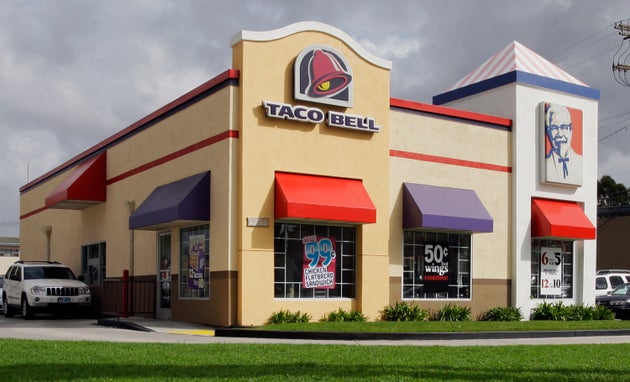
      > Industry: Restaurants The vast majority of employees at Yum! Brands, which operates restaurant chains KFC, Taco Bell, and Pizza Hut, are part-time, hourly-paid workers. While many Pizza Hut employees are paid tips in addition to their ordinary wages, employers are not responsible for this portion of a worker’s wage. Still, even including tips, the average total compensation of a Pizza Hut delivery driver, for example, was just over $20,000 annually. Taco Bell and KFC workers frequently earn even lower wages. Yum! Brands is one of the nation’s largest employers. With so many employees making wages at or below the poverty level, workers, like many others in the fast-food industry, have gone on strikes and staged walkouts over the past several years. Read more at 24/7 Wall St.
    • 1. Walmart Stores Inc.
      55e9b5cc1d0000ea01146d1a.jpeg

      John Locher/AP


      > Global workforce: 2.2 million (1.4 million US)
      > CEO compensation: $19.4 million
      > Revenue: $485.7 billion
      > No. of U.S. locations: 5,321
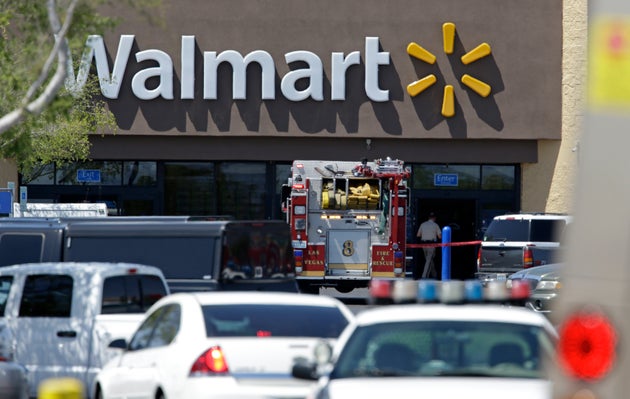
      > Industry: Hypermarkets and SupercentersWalmart is the largest company by revenue, with a reported $485.7 billion in revenue last year. Walmart is also by far the nation’s and the world’s largest employer, employing more than 2.2 million people. About 1.3 million of those work in the United States. While out of the retailer behemoth’s 11,453 total locations 6,290 are outside the United States, Walmart’s U.S. presence is nearly ubiquitous. There are at least five Walmart stores in every state, and most states have more than 100 Walmart locations. Walmart is the largest low paying company, paying an average of less than $10 per hour to its sales associates. In contrast, CEO Douglas McMillon’s total compensation in 2014 was $19.4 million. Unlike most CEO wages, however, McMillon’s compensation declined by nearly 32% from the previous fiscal year. In addition, the company recently announced it would pay even its lowest-paid workers at least $9 per hour, above the minimum wage but still well below what many researchers consider adequate pay.

    Read more at 24/7 Wall St.

.
 
Back
Top