
All my Mathematics/phyics heads:The Poincare Conjecture

Oracle21

Star
Registered
I have been reading about this alot lately and have been truly enthralled by it. One of the hardest math problems of all time the poincare conjecture had thousands of geniuses stumped until Grigory(Grisha) Perelman of Russia attacked it and solved it. He chose not to accept any rewards for the proof. what do you guys think about this?

A proposition in topology put forward by Henri Poincaré in 1904. Poincaré was led to make his conjecture during his pioneering work in topology, the mathematical study of the properties of objects that stay unchanged when the objects are stretched or bent. In loose terms, the conjecture is that every three-dimensional object that has a set of sphere-like properties (i.e., is topologically equivalent to a sphere) can be stretched or squeezed until it is a three-dimensional sphere (a 3-sphere) without tearing (i.e., making a hole) it. Strictly speaking, the conjecture says that every closed, simply-connected three-manifold is homeomorphic to the three-sphere. It is now known to be true.

Poincaré himself proved the two-dimensional case and he guessed that the principle would hold in three dimensions. Determining if the Poincaré conjecture is correct had been widely judged the most important outstanding problem in topology – so important that, in 2000, the Clay Mathematics Institute in Boston named it as one of seven Millennium Prize Problems and offered a $1 million prize for its solution. Since the 1960s, mathematicians showed by various means that the generalized conjecture is true for all dimensions higher than three – the four-dimensional case finally falling in 1982. But none of these strategies worked in three dimensions. On Apr. 7, 2002 came reports that the Poincaré conjecture might have been proved by Martin Dunwoody of Southampton University, but within a few days a fatal flaw was found in his proof. Then, in April 2003, what appeared to be a genuine breakthrough emerged during a series of lectures delivered at the Massachusetts Institute of Technology by the reclusive Russian mathematician Grigori Perelman of the Steklov Institute of Mathematics (part of the Russian Academy of Sciences in St. Petersburg). His lectures, entitled "Ricci Flow and Geometrization of Three-Manifolds," constituted Perelman's first public discussion of important results contained in two earlier preprints. Mathematicians scrutinizeed the validity of Perelman's work (which does not actually mention the Poincaré conjecture by name). Finally, it was agreed that Perelman's proof was watertight. However, in 2010 Perelman turned down the $1 million Clay Institute prize – just as he had the prestigious Fields Medal four years earlier.

In November 2002, Grigori Perelman posted the first of a series of eprints on arXiv outlining a solution of the Poincaré conjecture. Perelman's proof uses a modified version of a Ricci flow program developed by Richard Hamilton. In August 2006, Perelman was awarded, but declined, the Fields Medal for his proof. On March 18, 2010, the Clay Mathematics Institute awarded Perelman the $1 million Millennium Prize in recognition of his proof.[1] Perelman rejected that prize as well.

 
the actual proof is mind boggling if you have seen it. i would love to order a copy of it(the perelman one not the second one that came after)
 
Princeton's Andrew Wiles solved Fermat's last Theorem in 1993. That was quite an accomplishment too. Read about it here.
 
love that he turned the prize down. this dude is a true genius but doesnt do the math thing anymore.

I bet if you retitled the thread "MAD GENIUS TURNS DOWN 2 MILLION IN PRIZE MONEY. would you turn it down? peep it."

I bet you would get more hits on the thread....
 
The Poincare Conjecture cool...
The Poincare Conjecture good real talk

14t2c93.jpg

 
How did i miss this. thanks @ OP. :yes:

I heard about dude turning down the Fields Medal in '06 too. Further proof that some people are driven by things that transcend money. He basically said fuck the establishment and they labeled him nuts. The Poincare Conjecture is an example of where common sense reason/intuition and the logic of mathematics intersect. When you think about it, in simple lay terms the conjecture really just says that you can mold a sphere into any continuous 3D object and vice versa. Seems pretty intuitive, so you'd wonder why all the fuss?

Well, there's this popular notion that math is universal and absolute and as "the language of science", which gives us access to aspects of reality outside of out common sense intuition due, it follows that mathematical truths = physical reality. But maths doesn't describe reality, it only quantifies it. And this confusion is what leads people into believing in the actual physical existence of exotic mathematical "objects' like worm-holes, multi-dimensional strings, hyper spheres, tesseracts, and massless particle and shit. So while some mathematical truths that correspond to physical reality (like Pythagoras Theorem), some don't. The Poincare Conjecture (now theorem), although it's proof isn't trivial by any means, it's an example of a mathematical truth that corresponds to physical reality.

Today's scientists have substituted mathematics for experiments, and they wander off through equation after equation, and eventually build a structure which has no relation to reality. - Nikola Tesla

Some things that satisfy the rules of algebra can be interesting to mathematicians even though they don't always represent a real situation. -Richard P. Feynman
 
Last edited:
How did i miss this. thanks @ OP. :yes:

I heard about dude turning down the Fields Medal in '06 too. Further proof that some people are driven by things that transcend money. He basically said fuck the establishment and they labeled him nuts. The Poincare Conjecture is an example of where common sense reason/intuition and the logic of mathematics intersect. When you think about it, in simple lay terms the conjecture really just says that you can mold a sphere into any continuous 3D object and vice versa. Seems pretty intuitive, so you'd wonder why all the fuss?

Well, there's this popular notion that math is universal and absolute and as "the language of science", which gives us access to aspects of reality outside of out common sense intuition due, it follows that mathematical truths = physical reality. But maths doesn't describe reality, it only quantifies it. And this confusion is what leads people into believing in the actual physical existence of exotic mathematical "objects' like worm-holes, multi-dimensional strings, hyper spheres, tesseracts, and massless particle and shit. So while some mathematical truths that correspond to physical reality (like Pythagoras Theorem), some don't. The Poincare Conjecture (now theorem), although it's proof isn't trivial by any means, it's an example of a mathematical truth that corresponds to physical reality.

Today's scientists have substituted mathematics for experiments, and they wander off through equation after equation, and eventually build a structure which has no relation to reality. - Nikola Tesla

Some things that satisfy the rules of algebra can be interesting to mathematicians even though they don't always represent a real situation. -Richard P. Feynman

Interesting! Shame to say I've never heard of "The Poincare Conjecture" more to add to the reading list! Also, when you mentioned "exotic mathematical" and then mentioned things like worm-holes etc Is you meaning to say that these things are "only" products of i guess this "fuzzy" math?


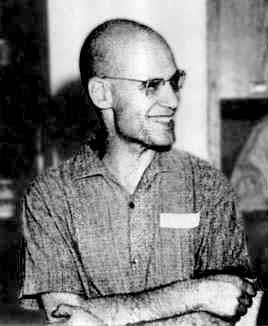
Look up this dude: Alexander Grothendieck

Alexander_Grothendieck.jpg


One of the most influential mathematicians of the 20th century that said fuck the system and became a recluse.

Interesting! I like to read about people that everyone considers...deviants
 
Interesting! Shame to say I've never heard of "The Poincare Conjecture" more to add to the reading list! Also, when you mentioned "exotic mathematical" and then mentioned things like worm-holes etc Is you meaning to say that these things are "only" products of i guess this "fuzzy" math?

Only for the moment ... Black holes (and I think Magnetars) were in that fuzzy math area as well once.
 
i bet his family is mad.

mufukkaz probably eating paint chips and vodka bottle labels for lunch.
 
Only for the moment ... Black holes (and I think Magnetars) were in that fuzzy math area as well once.

Agreed and i say to a deeper level if you take a look at nature, for example biology some of the things that exist we humans probably could never have conceived some of it out of imagination. This is to say i think things like this "fuzzy" math offers a unique tool of "imagination" for possible things that "CAN" exist in the real universe.
 
Interesting! Shame to say I've never heard of "The Poincare Conjecture" more to add to the reading list! Also, when you mentioned "exotic mathematical" and then mentioned things like worm-holes etc Is you meaning to say that these things are "only" products of i guess this "fuzzy" math?
Interesting! I like to read about people that everyone considers...deviants
Only for the moment ... Black holes (and I think Magnetars) were in that fuzzy math area as well once.
Agreed and i say to a deeper level if you take a look at nature, for example biology some of the things that exist we humans probably could never have conceived some of it out of imagination. This is to say i think things like this "fuzzy" math offers a unique tool of "imagination" for possible things that "CAN" exist in the real universe.
No. It's not fuzzy maths (whatever that means). It's just maths. There are 2 kinds of mathematical truths:
1) Mathematical truths only
2) mathematical truths that correspond to physical reality

Example of (1) = Pythagoras theorem

Example of (2) = The probability amplitude maths of Feynman's diagrams describing how light interacts with matter. The classic example is the partial reflection of light by a thick glass. If you assume that the light is reflected off both the front and back surfaces of the glass, using Feynman's math, you can correctly predict/calculate how light behaves with glass of any thickness. But is reflection really what's going on? No. Light doesn't reflect from the surface. In reality, the photons of light are interacting with the electrons in the glass. The maths of this interaction is extremely more complicated.

From the horse's mouth:

"Thus we can get the correct answer for the probability of partial reflection by imagining (falsely) that all reflection comes from only the front and back surfaces. In this intuitively easy analysis, the 'front surface' and 'back surface' arrows are mathematical constructions that give us the right answer, whereas .... a more accurate representation of what is really going on: partial reflection is the scattering of light by electrons inside the glass." -Richard P. Feynman

So you can have true mathematical relationships that predict phenomena based on a model and the theory could be completely wrong.
 
this has been one of the most informative posts in a while (and I know its a porn board). thanks OP and commenters
 
2) mathematical truths that correspond to physical reality
Example of (2) = The probability amplitude maths of Feynman's diagrams describing how light interacts with matter. The classic example is the partial reflection of light by a thick glass. If you assume that the light is reflected off both the front and back surfaces of the glass, using Feynman's math, you can correctly predict/calculate how light behaves with glass of any thickness. But is reflection really what's going on? No. Light doesn't reflect from the surface. In reality, the photons of light are interacting with the electrons in the glass. The maths of this interaction is extremely more complicated.


Then it seems in your example #2 is my confusion with the term "exotic mathematical " as you called it and then linked "worm-holes" to that word. Now my understanding of "exotic" math as you use it is that the "math" is manipulated in such a way that it creates "exotic" outcomes, phenomena aka worm-holes! My question is, if that was your meaning? what is wrong with that as long as the "manipulation" doesn't violate natural laws as we know them? If anything such a strategy i would think is beneficial in predicting whats possible in our universe yet to be physically discovered, but already discovered by a mathematical model.
 
Last edited:
Then it seems in your example #2 is my confusion with the term "exotic mathematical " as you called it and then linked "worm-holes" to that word. Now my understanding of "exotic" math as you use it is that the "math" is manipulated in such a way that it creates "exotic" outcomes, phenomena aka worm-holes! My question is, if that was your meaning? what is wrong with that as long as the "manipulation" doesn't violate natural laws as we know them? If anything such a strategy i would think is beneficial in predicting whats possible in our universe yet to be physically discovered, but already discovered by a mathematical model.
You left out the part where i said "objects". It's the physical interpretation of the equations that I'm talking about, not the maths. I said "exotic mathematical OBJECTS". You can't manipulate maths outside of it's logic. There are rules based on established set axioms you have to stay consistent with. As for worm-holes, they are mathematical objects. They are not real. If you say one day we'll discover them to be real, no problem. Until that day, they're about as real as bugs bunny. There's a reason physics is called PHYSICs
 
Back
Top