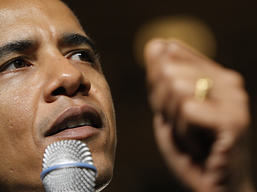
Karl Rove's advice to Obama

Karl Rove Advice to Obama Part IV

<IFRAME SRC="http://www.newsweek.com/id/134322" WIDTH=780 HEIGHT=1500>
<A HREF="http://www.newsweek.com/id/134322">link</A>

</IFRAME>
 
Re: Karl Rove Advice to Obama Part IV

See Also:


Karl Rove's advice to Obama I

(Memo to Obama: win Iowa or lose the race)
Posted December 9, 2007
http://www.bgol.us/board/showthread.php?t=216846&highlight=rove+obama


Karl Rove Advice to Obama II

(Obama's New Vulnerability)
Posted February 21, 2008
http://www.bgol.us/board/showthread.php?t=241015&highlight=rove+obama


Karl Rove Advice to Obama III

How can Barack Obama win keys to the White House?
Posted April 26, 2008
http://www.bgol.us/board/showthread.php?t=261072&highlight=rove+obama

`
 
Re: Karl Rove Advice to Obama Part IV

Karl Rove giving advice - please :angry:

He just wants to see the Dems fight it out longer so that the public don't see how weak McCain's policies really are.

This is all part of a strategy - Rove has never done anything without it being calculated.

Anything from his is SUSPECT.
 
Re: Karl Rove Advice to Obama Part IV

Karl Rove giving advice - please :angry:

He just wants to see the Dems fight it out longer so that the public don't see how weak McCain's policies really are.

This is all part of a strategy - Rove has never done anything without it being calculated.

Anything from his is SUSPECT.
I would agree that anything coming from Karl Rove ought to be vetted. But you said Karl wants the Dems to "fight it out longer", perhaps, but his advice in the piece above seems to be to the contrary. In paragraph No. 5, Rove says:
"Stop the attacks. They undermine your claim to a post-partisan new politics. You soared when you seemed above politics, lost altitude when you did what you criticize. Attacks are momentarily satisfying but ultimately corrode your appeal."​
Is he really saying fight it out? Of course, Rove probably has a motive for doing what he's doing but, is he wrong ???

QueEx
 
Re: Karl Rove Advice to Obama Part IV

I would agree that anything coming from Karl Rove ought to be vetted. But you said Karl wants the Dems to "fight it out longer", perhaps, but his advice in the piece above seems to be to the contrary. In paragraph No. 5, Rove says:
"Stop the attacks. They undermine your claim to a post-partisan new politics. You soared when you seemed above politics, lost altitude when you did what you criticize. Attacks are momentarily satisfying but ultimately corrode your appeal."​
Is he really saying fight it out? Of course, Rove probably has a motive for doing what he's doing but, is he wrong ???

QueEx

I read that a while back in a similar op ed he wrote for the Wash Post.

I was thinking about that as a strategy and why Obama went off from taking the high ground to confronting Hillary. Initially, I didn't think that it was a good idea but I know think that it is good because it will prepare him and toughen him from all the 'aces up their sleeves' of attacks the Republicans have planned for Obama.

Think about it - the more the Obama learns to confront and fight back, the better equipped he becomes at attacking back for future confrontation with McCain and rest of the Republicans.

Its a strategy that may not make him seem like he's on cloud 9 and superstar politician but this is going to be long year and he has to send a strong message that if anyone thinks they can take cheap shots at him and he will not say anything, he's no longer going to be quite about it.

At least, thats' the way I see his game strategy on confronting Hillary.

Rove just want's Obama supporters to pretend like they are going to be fine with his smooth image but he's got to learn to fight back. I think its working for him even though people are starting to see him serious and troubled and not dancing and laughing. His advice reminds me of the Emperor from Star Wars in the sense that all the Rebels believed that they had the upper hand in attacking the Death Star but in reality - it was fully operational.

Palpatine_ROTJ.jpg


Rove wants Obama to think it will all be easy and he just has to stay positive - Pleasssssseeeee - This is Washington politics - you think they gonna hand the Presidency to Black man just like that?

:hmm:
 
Re: Karl Rove Advice to Obama Part IV

I would agree that anything coming from Karl Rove ought to be vetted. But you said Karl wants the Dems to "fight it out longer", perhaps, but his advice in the piece above seems to be to the contrary. In paragraph No. 5, Rove says:
"Stop the attacks. They undermine your claim to a post-partisan new politics. You soared when you seemed above politics, lost altitude when you did what you criticize. Attacks are momentarily satisfying but ultimately corrode your appeal."​
Is he really saying fight it out? Of course, Rove probably has a motive for doing what he's doing but, is he wrong ???

QueEx

Rove is not wrong. I've said it before and others here have said it also that there is not ulterior Republican agenda in it for Rove. It's just him being himself and doing what he is good at. This is him playing the role he plays from a distance. The only other agenda is that it stokes his ego. He gets to display what he is a genius at. This is no different from Clinton's guy George Stephanopoulos commenting on the Republican nomination process after he retired from his position. He was in the papers, on TV. He got more press than Rove and no one thought he had a Democratic agenda then. It was just him doing what he was good at. Looking that the positions of one camp and saying what he thinks they could do to improve.
 
Re: Karl Rove Advice to Obama Part V

<font size="3">It seems that Rove has more to say; here's Part V:
</font size>

<font size="5"><center>
Barack's Brilliant Ground Game</font size><font size="4">

Obama is Copying Bush-Cheney</font size></center>


OB-BU668_oj_rov_20080709233010.jpg


Wall Street Journal
By KARL ROVE
July 10, 2008; Page A13

For a campaign that says it wants to end the politics of the Bush-Cheney years, the Obama for President effort has cribbed an awful lot from the Bush-Cheney playbooks of 2000 and 2004.

For starters, Barack Obama's manager admitted to the New York Times that he wanted an "army of persuasion" modeled explicitly on the massive Bush neighbor-to-neighbor "Victory Committee" of '00 and '04. Those efforts deployed millions of volunteers to register, persuade and get-out-the-vote.

Sen. Obama's organizational emphasis wisely avoids the Democratic mistake of 2000, when Donna Brazille's plea for a stronger grassroots focus was ignored by the Gore high command. It also avoids the mistake of 2004, when Democrats outsourced their ground game to George Soros's 527 organizations. The latter effort paid at least $76 million to more than 45,000 canvassers – many hired from temp agencies – to register and turn out voters. It was the wrong model: Undecideds are more likely to be influenced by those in their social network than an anonymous, low-wage campaign worker.

Like Mr. Bush, Mr. Obama has harnessed the Internet for persuasion, communication and self-directed organization. A Bush campaign secret weapon in 2004 was nearly 7.5 million email addresses of supporters, 1.5 million of them volunteers. Some volunteers ran "virtual precincts," using the Web to register, persuade and organize family and friends around the country. Technology has opened even more possibilities for Mr. Obama today.

The Obama campaign is trying to catch up with the GOP's "microtargeting" program, which uses powerful analytical tools and extensive household consumer information to focus on prospects for conversion and extra turnout help. Another Obama adaptation of a 2004 Bush campaign technique is a stepped-up, rapid response effort. Charges do not go unanswered, the campaign stays relentlessly on the offense, using every channel of communication.

The Obama campaign has also copied the Bush strategy of broadening the general election map. In 2000, the Bush effort targeted not just the traditional battlegrounds, but also West Virginia (last won by the GOP in an open race for the presidency in 1928), Tennessee (Al Gore's home), Arkansas (Bill Clinton's home), Washington and Oregon.

Hoping for a breakthrough somewhere, Mr. Obama also wants to force John McCain to play defense. So in addition to traditional battleground states, he's running TV ads and organizing in Virginia, North Carolina, Georgia, South Carolina, Indiana, Nebraska, Montana, Alaska and North Dakota. And where Mr. Bush targeted Latinos, African-Americans, Jews, Catholics and education voters to narrow Democratic margins, Mr. Obama is going after evangelicals, veterans and values voters with ads and outreach to trim the GOP's margin.

There are problems, however. Mr. Obama's people admit they want to sucker Mr. McCain into spending money. To be successful, a bluff must be credible. In places like Nebraska and North Dakota, Mr. Obama can't rely on local issues – like Mr. Bush did with coal in West Virginia in 2000 – to unexpectedly win a critical state. Organization alone won't suffice. And putting Obama dollars into Texas, for example, to help win five state House seats may simply cause Texan Republicans – not Mr. McCain – to raise money and work harder to counter.

Democrats don't have the same large volunteer pool the GOP does with its Federated GOP Women, College and Young Republicans, and local party committees. In the primaries, Mr. Obama instead moved hordes of volunteers from state to state. It was a brilliant tactic, but Nov. 4 is different. The volunteers adequate for primaries held over five months will simply not be enough to compete in 51 separate elections (all 50 states plus the District of Columbia) all on one day.

Mr. Obama's biggest problem is that when it comes to substance, he's following the playbook of a Republican other than George W. Bush. In 2000, Mr. Bush won the general election on the same themes and positions as in the primaries, including compassionate conservatism, the faith-based initiative, tax cuts and Social Security reform. There was no repudiation of past positions, no chameleon-like shifts in positions.

Instead of consistency, Mr. Obama has followed Richard Nixon's advice, to cater to his party's extreme in the primaries and then move aggressively to the middle for the fall.

In the primary, Mr. Obama supported pulling out of Iraq within 16 months, called the D.C. gun ban constitutional, backed the subjection of telecom companies to expensive lawsuits for cooperating in the terror surveillance program, opposed welfare reform, pledged to renegotiate Nafta, disavowed free trade and was strongly against the death penalty in all cases. But in the past few weeks, Mr. Obama has reversed course on all of these, discarding fringe liberal views for relentlessly centrist positions. He also flip-flopped on accepting public financing and condemning negative ads from third party groups, like unions.

By taking Nixon's advice, Mr. Obama is assuming such dramatic reversals will somehow avoid voter scrutiny. But people are watching closely, and by setting a world indoor record for jettisoning past positions, Mr. Obama may be risking his reputation for truthfulness. A candidate's credibility, once lost, is very hard to restore, regardless of how fine an organization he has built.

Mr. Rove is the former senior adviser and deputy chief of staff to President George W. Bush.

http://online.wsj.com/article/SB121564804985640977.html?mod=opinion_main_commentaries

 
Re: Karl Rove Advice to Obama Part V

Good post.

Karl Rove knows how to campaign, if you go back and read all the posts QueEx posted, he was pretty much on the money.

Peace.
 
Re: Karl Rove Advice to Obama Part VI

<font size="4">Rove has more to say; here's Rove on Obama, Part VI</font size>


<font size="6"><center>Obama's Iraq Fumble</font size></center>

Wall Street Journal
By KARL ROVE
July 31, 2008

In a race supposedly dominated by the economy, both Barack Obama and John McCain have spent a lot of time talking about Iraq. Why? Because both men have Iraq problems that are causing difficulties for their campaigns.


Winner of the Iraq Question - is Best Qualified
How each candidate resolves his Iraq problems may determine who voters come to see as best qualified to set American foreign policy.

If Mr. McCain wins the argument on Iraq, he will add to his greatest strength -- a perceived fitness to be commander in chief and lead the global war on terror. As the underdog, Mr. McCain needs to convince voters that he is overwhelmingly the better choice on the issue.

Mr. Obama needs to win the argument because his greatest weakness is inexperience and a perceived unreadiness to be president. That's dangerous. Voters believe keeping America safe and strong is a president's most important responsibility.


McCain's Iraq Problems
Mr. McCain's first Iraq problem is that he favored removing Saddam Hussein when it was popular -- 76% of Americans thought it was worth going to war in April 2003 -- and has maintained his support of the war even as it grew to be unpopular. In January, only 32% of Americans said the war was worth it.

Mr. McCain's second Iraq problem is that the success of the surge he advocated has made it easier for voters to believe we can accelerate the drawdown of U.S. troops. This belief makes Mr. Obama's proposal to withdraw in 16 months seem more reasonable.

Mr. McCain's position was further complicated recently when Iraqi Prime Minister Nouri al-Maliki seemed to give a semiendorsement of Mr. Obama's withdrawal plan. Mr. Maliki actually agrees with Mr. McCain that a timetable should be aspirational and based on conditions on the ground, which is why he said U.S. troops should be withdrawn by 2010 "if possible."

Some Iraqis are anxious to have American troops leave and some are not -- which is why Mr. Maliki treads a fine line on withdrawal. Unfortunately for Mr. McCain, this only complicates things for his campaign.


Obama's Iraq Problem
Mr. Obama's problem is he opposed the policy that created the progress that makes victory in Iraq possible. Mr. Obama's unbending opposition to the surge undermines his fundamental argument that he has better judgment on national security. Mr. McCain needs to use Mr. Obama's retrospective mistake to shape voters' prospective conclusion, convincing them that Mr. Obama's badly flawed judgment on the surge shows he cannot be trusted with major foreign-policy decisions.

Mr. Obama also created a problem by canceling a visit to U.S. soldiers who were wounded in Iraq and are now recuperating at Landstuhl hospital in Germany. His campaign has offered a welter of explanations. What's the real one? My rule is that when in doubt, see what a candidate said at the time and judge his candor. In a July 26 London news conference, Mr. Obama explained: "I was going to be accompanied by one of my advisers, a former military officer. And we got notice that he would be treated as a campaign person, and it would therefore be perceived as political because he had endorsed my candidacy, but he wasn't on the Senate staff."

The solution was obvious. Leave the campaign adviser behind and visit the wounded troops. Mr. Obama's decision to work out in the hotel gym instead adds to his growing reputation for arrogance.

Most importantly, Mr. Obama missed the opportunity to show he can admit a mistake. He could have said that what he saw on his visit to Iraq convinced him that the surge was right and its success now allows U.S. troops to be safely drawn down. Instead, he insisted he was right to say the surge wouldn't work.

That may give voters pause. If Mr. Obama can't admit the surge worked after the fact, how can voters count on him to keep his mind open to the facts on other important foreign-policy decisions?

Mr. Obama should not be misled by polls showing support for a timetable. Opinion surveys are notoriously unreliable in gauging public opinion on a complicated question like Iraq.

Americans can simultaneously support a withdrawal timetable and also insist that the withdrawal occur only when conditions justify it and military leaders recommend it. For instance, Gallup polls have shown that 69% of Americans think we should set a timetable for withdrawal, but 65% also want to establish stability and security before withdrawing. Like Messrs. McCain and Maliki, Americans are for an aspirational and conditional timetable. They want to win.

The conventional wisdom has been that this election will be decided on the economy. That will be crucial, but so is Iraq. And it makes perfect sense. We are, after all, a nation at war. And in wartime, electing a president who will win should matter most of all.

Mr. Rove is a former senior adviser and deputy chief of staff to President George W. Bush.

http://online.wsj.com/article/SB121745998334798783.html?mod=opinion_main_commentaries
 
Re: Karl Rove Advice to Obama Part VI

<font size="6"><center>
The Un-Rove</font size></center>


obama09gwjimwatsonafpgetty.jpg

Photo: Jim Watson/AFP/Getty.


The Atlantic
Andrew Sullivan
February 27, 2009


I've learned for two years now not to under-estimate Obama. I watched from the very start of the campaign how he strategized a path to achieving his goals partly by eschewing the kinds of tactics that Washington has come to see as political skill. I think of him in some ways as the Un-Rove. Karl Rove mastered the art of petty and nasty political tactics in the South of the post-Reagan era. And he never had a solid grip on conservatism as a political philosophy or of political strategy. And so Rove today endures as the architect of the biggest and deepest political implosion since the Democrats in the 1970s. It was all tactics, no strategy; all politics, no governance. He remains the worst single political strategist of modern times.

Now look at how Obama has framed the debate since the election. Every single symbolic act has been inclusive and sober. From that speech in Grant Park to the eschewal of euphoria on Inauguration Day; from the George Will dinner invite to the Rick Warren invocation; from meeting the House Republicans on the Hill to convening a fiscal responsibility summit; from telegraphing to all of us Obamacons that he wasn't a fiscal lunatic to ... unveiling the most expansive, liberal, big government reversal of Reagan any traditional Democrat would die for.

Smart, isn't he? He won the stimulus debate long before the Republicans realized it (they were busy doing tap-dances of victory on talk radio, while he was building a new coalition without them). And now, after presenting such a centrist, bi-partisan, moderate and personally trustworthy front, he gets to unveil a radical long-term agenda that really will soak the very rich and invest in the poor. Given the crisis, he has seized this moment for more radicalism than might have seemed possible only a couple of months ago.

The risk is, at least, a transparent risk. If none of this works, he will have taken a massive gamble and failed. The country will be bankrupt and he will have one term. His gamble with the economy may come to seem like Bush's gamble in Iraq. But if any of it works, if the economy recovers, and if the GOP continues to be utterly deaf and blind to the new landscape we live in, then we're talking less Reagan than FDR in long-term impact.

It's going to be a riveting first year, isn't it?

http://andrewsullivan.theatlantic.com/the_daily_dish/2009/02/the-un-rove.html
 
Back
Top