Most have full time jobs too lol
NFL Referees Make $350,000 Per Year. Now They Want More
Joe Pompliano
Apr 01, 2026

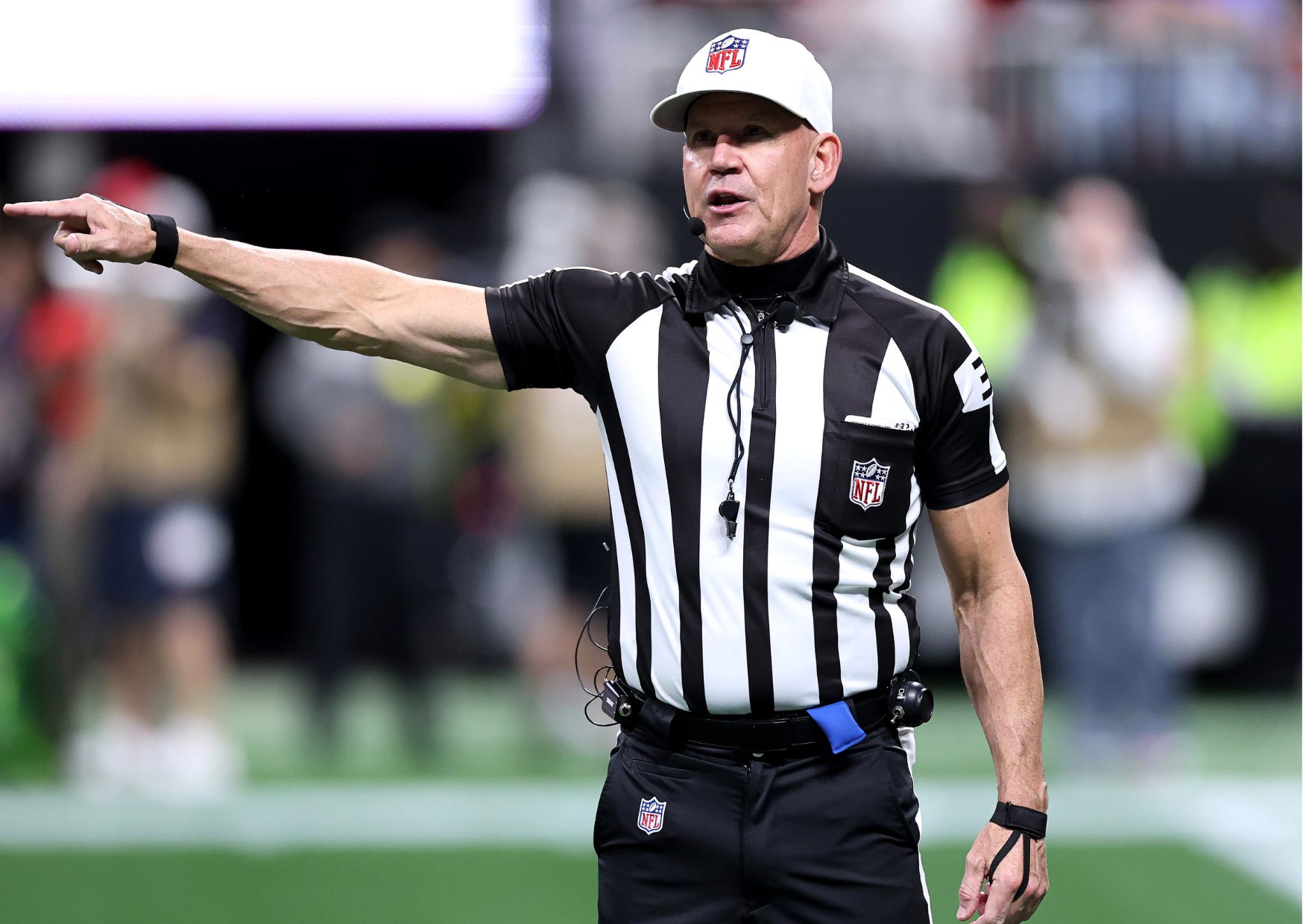
(NFL Referee Clete Blakeman via Kevin C. Cox/Getty Images)
During the NFL’s annual league meeting this week at the Biltmore Hotel in Phoenix, Arizona, all 32 of the league’s owners unanimously voted to approve a small rule change that could have a significant impact on the 2026 season.
This rule change had nothing to do with banning the tush push, enforcing defensive targeting penalties, or adding an 18th regular-season game. It simply provided insurance for the NFL should teams have to deal with poor officiating.
The NFL and its officiating union, the NFL Referees Association (NFLRA), are currently locked in one of the most contentious labor standoffs in recent league history. With their collective bargaining agreement set to expire at the end of May, the NFL has already begun hiring replacement referees. So, to avoid a situation like the “Fail Mary” in 2012, NFL owners voted to allow the NFL’s officiating department, which reviews each play live from a studio in New York, to correct clear and obvious mistakes made by on-field officials during each game.
Owners are hoping this rule never actually gets implemented. If the league office is able to reach a deal with its referee union before the 2026 season begins, it won’t. But it’s also not that simple. What started as a dispute over salary increases has grown into a broader philosophical clash over accountability, job structure, time off, postseason hierarchy, and what it means to be an NFL official in 2026.
So for today’s newsletter, I’m going to run through everything you need to know about the NFL’s current CBA negotiation with its referees. We’ll start by digging into the league’s unique employment structure and its history of deals and disruptions. But then I want to explore some of the key issues impacting this year’s negotiation, including salary increases, marketing fees, performance-based compensation, postseason assignments, offseason training, and dead periods.
Let’s get into it…
Who Are The NFL’s Referees?
One of the most striking and underappreciated facts about NFL officiating is that nearly every official holds a second career. Unlike the NBA or MLB, which employ full-time officials, the NFL has run a part-time model since its founding.
As of the 2023 season, all 17 of the NFL’s head referees (as well as nearly all of the umpires, down judges, line judges, back judges, side judges, and field judges that work beneath them on the 7-person crew) maintained outside professions.
Clete Blakeman (18 seasons) is a personal injury attorney. Brad Allen (12 seasons) is a non-profit CEO. Brad Rogers (9 seasons) is a college professor at Texas Tech University. Carl Cheffers (26 seasons) is a sales manager at a car battery company. And when Adrian Hill (16 seasons) isn’t on an NFL field, he is at the Johns Hopkins Applied Physics Lab building rockets for NASA as an aerospace software engineer.
This structure has drawn increasing criticism over the years. For a sports league that generates nearly $25 billion in annual revenue, many fans, coaches, and players view any level of inconsistency across officiating as unacceptable.
That said, the NFL has made incremental steps toward full-time employment. In 2017, it converted 21 officials to full-time status and then expanded that program in 2018 to cover 24 officials. These officials worked throughout the year, analyzing game trends, scouting future matchups, and preparing new officials. But when a new CBA was signed in 2019, the referees’ union ended that program immediately.
It’s not that the NFL won’t make its officials full-time. They want to. But with officials earning an
average annual salary of $350,000 and a three-month dead period during the offseason — the NFL is prohibited from contacting its referees from the Super Bowl until May 15th — the NFLRA has created a system that provides no incentives for officials to seek full-time employment with the NFL.
The CBA Timeline: A History Of Deals And Disruptions
Since 2000, the NFL and NFLRA have had several tough negotiations, resulting in two lockouts and intense backlash over the use of replacement referees.
In 2001, the NFL locked out its officials after the NFLRA failed to respond to a 10-day ultimatum from NFL Commissioner Paul Tagliabue. As a result, replacement referees worked the first week of the regular season. These replacement referees were guaranteed $2,000 per game for four games, with many of them coming from the Arena Football League, NFL Europe, or lower-level college ranks. Players then complained to the media that week, and the league folded, agreeing to a new CBA with the NFLRA that increased compensation by 50% in year 1 and 100% by year 4. The CBA was ratified a few days later, and with the NFL suspending games after the September 11th attacks, the lockout technically lasted one week.
In 2006, the negotiation process went much more smoothly. I'm sure there were some hiccups along the way, but nothing ever became public, and the NFL and NFLRA announced a new deal that provided stability through the 2011 season.
Then, in 2012, things got ugly. The NFLRA wanted to increase salaries for its officials, but the bigger sticking point was retirement benefits. Under the previous CBA, NFL officials were guaranteed a fixed income in retirement based on the length of their contracts. However, during negotiations, the NFL proposed switching to a defined-contribution 401(k) plan, in which benefits would depend on the performance of the plan’s investments, making them non-guaranteed.
Furthermore, the NFL also pushed to add additional officiating crews and make seven referees full-time employees. Given this could theoretically threaten an existing official’s job security (while also reducing their offseason flexibility), the NFLRA viewed these demands as a non-starter, ultimately leading to a lockout.
The 2012 labor dispute is the defining reference point for every conversation about this current standoff, simply because it went so horribly wrong for the NFL.
Replacement referees botched coin tosses, incorrectly awarded timeouts, and missed penalties. One referee was even pulled from an assignment just hours before a Saints vs. Panthers game after fans discovered he was a New Orleans fan on Facebook. But the most memorable moment came during a week 3 Monday Night Football game between the Green Bay Packers and Seattle Seahawks.
On the final play, Seahawks rookie quarterback Russell Wilson threw a Hail Mary into the end zone for wide receiver Golden Tate. Both Tate and Packers defender M.D. Jennings got their hands on the ball, fighting for possession. The two officials near the play then gave conflicting signals simultaneously, with one indicating a touchdown while the other signaled a touchback (interception).
The NFL later admitted that 1) Golden Tate should have been flagged for offensive pass interference, and 2) despite video evidence indicating that Jennings had secured the ball first, referees awarded the touchdown to Seattle, turning what should have been a game-ending Packers interception into a Seahawks victory.
This play, which invited scrutiny from both presidential candidates at the time and quickly became known as the “Fail Mary,” immediately ended the CBA standoff. Within 48 hours, the league and its union had reached a deal, signing an 8-year agreement that included annual salary increases of approximately 5.2%.
When that CBA expired, the NFL and NFLRA spent a year and a half negotiating an extension. That extension was then signed in September 2019. It was a 7-year deal running through May 31, 2026 — a deadline that is now fast approaching.
The Current Negotiation: What Went Wrong
The NFL has been in negotiations with the NFLRA since the summer of 2024. In December 2025, NFL vice president of football operations Troy Vincent and general counsel Larry Ferazani sent a memo to all 32 teams stating that the league’s attempt to negotiate a new deal with the NFLRA had been unsuccessful.
The two sides have met several times since that 2024 memo was sent out, including an in-person session in Atlanta and another two-day session that ended after less than half a morning of talks. The NFL says the two-day meeting ended early because the NFLRA hasn’t changed its approach in two years, while the NFLRA claims that the NFL’s chief negotiator was not authorized to sign a deal.
Both sides are playing the PR game, but based on reporting over the last few months, the inability to agree on a new deal comes down to a few sticking points.
- Salary: The NFL has offered a six-year deal with a 6.45% annual salary increase. With NFL officials earning an average of $350,000 in 2025, that would mean an average annual compensation of $509,000 by the time the deal expires. However, the NFLRA is reportedly demanding a 10% annual compensation increase, which the NFL argues is a higher rate of increase than the league’s players currently see under the salary cap system. For context, the current CBA guarantees a 5.75% annual compensation increase.
- Marketing Fees: The NFLRA is also seeking $2.5 million in annual marketing fees. Think of this as NIL rights for officials, which essentially pay them for the revenue the league derives from using their likeness in commercials and video games. NFL Network’s Tom Pelissero says the league regards these marketing rights as “worthless,” but the NFLRA’s position is simple. The existing CBA requires the NFL to pay the NFLRA approximately $775,000 in annual marketing fees, and they now want to increase that to $2.5 million.
- Performance-Based Pay vs. Seniority: During this negotiation, the NFL has made it clear that it would like to fundamentally restructure how officiating is rewarded. Rather than assigning postseason games based on seniority, the league wants to eliminate service time as a factor and base assignments on performance metrics. This sounds like a no-brainer — the NFLRA should also want its best officials working the sport’s biggest game — but the union has put its foot down for two reasons: 1) the NFL controls the grading system, and 2) postseason games come with additional compensation. So, in theory, the NFLRA is worried that the league’s ability to grade officials and then use those grades to determine pay could create an obvious conflict of interest.
- Probationary Period Extension: The NFL wants to extend the probationary period for new officials from 3 to 5 years. During this window, the league has greater flexibility in dismissing underperforming officials without triggering union grievances. But the NFLRA views this as the league using excessive power to potentially remove officials without sufficient due process, believing that 50 regular-season games are enough to determine an official’s ability.
- The Dead Period: The NFL also wants to shorten its offseason dead period with officials. Rather than going dark for three months, from the Super Bowl until May 15, the NFL is requesting that the deadline be moved to April. The union has traditionally resisted this change, viewing it as an encroachment on officials' offseason time — the time most of them use to manage their other careers — but the NFL views this as an important step to improve officiating quality and ensure that all officials are up to speed on new rules.
- Full-Time Employment: The NFL has proposed making the officiating chief of each crew a full-time employee. These full-time employees would meet at the league office every Tuesday during the season to review film and identify areas for improvement to communicate to their crews. However, with full-time status requiring officials to give up their outside careers, some of which help them earn hundreds of thousands of dollars in additional annual compensation, NFLRA leaders are “staunchly opposed” to the request.
After some of these sticking points leaked to the media, presumably from the NFL, NFLRA executive director Scott Green
issued a statement to The Athletic:
“The bottom line is our officials work for the wealthiest sports league in America, with profits that far exceed any of the others. That’s normally a point of pride for the NFL. However, our officials are substantially under-compensated when compared to baseball and basketball umpires and referees. Our officials also aren’t provided the health care benefits that those at (league headquarters) have,” Green said. “As far as performance pay, we had ‘high performing officials’ who worked this year’s Championship games and the Super Bowl who were paid less for those games than what they were paid for a regular season game. That certainly isn’t rewarding performance, as the NFL claims is their goal.”
Some of what Green said to The Athletic is fair — NFL officials should probably be paid more for the Super Bowl than a regular-season game — but the compensation part feels misguided. Green is saying that NFL officials should be paid more money because the league makes so much money, disregarding the fact that MLB and NBA umpires and referees make slightly more money each year because they work more games and travel more than their NFL counterparts.
So What Happens Next?
The NFL and NFLRA met again this week in Phoenix during the owners' meeting, but there are really only two outcomes: either the two parties agree to a new CBA before the season begins, or we will have replacement referees in 2026.
To get ahead of option #2, the NFL has already started compiling a list of 150-200 replacement referee candidates. These referees, most of whom work at the NCAA Division I, II, and III levels, would begin training in May. In addition to bootcamp-style training clinics designed to teach these referees the rules and ensure they are in physical shape, the NFL would give them on-field experience by integrating them into team activities (OTAs, Training Camp) this preseason.
But just because the NFL is starting its replacement referee process several months before it did in 2012, that doesn’t mean the result will be any different.
The biggest problem the NFL faces with replacement referees is that they are simply not accustomed to the speed and technical demands of NFL officiating.
The best college referees can’t be pulled away to officiate NFL games because they have standing relationships with the Power 4 conferences (SEC, Big Ten, ACC, Big 12). That pushes the league toward lower-level officials with less experience in elite-level game management. In 2012, for instance, the NFL produced crews who had almost exclusively worked Division II games.
This lack of trust in the performance of replacement referees is ultimately why NFL owners voted this week to allow the league office to correct clear and obvious mistakes during each game. By creating a centralized override mechanism, the NFL is essentially protecting itself from another “Fail Mary.”
In the end, my guess is that the NFL will sign a new CBA with the NFLRA before the 2026 season begins, but not for the reason you might think. The NFL holds a ton of leverage given its enormous financial power, captive audience, and ability to withstand short-term controversy. But even with all that leverage, the NFLRA holds a powerful card: the ability to make the NFL look chaotic and incompetent.
The NFL likely doesn’t want to give its part-time referees a contractually guaranteed 10% annual raise without securing benefits in return, but 2026 is also a very different time than 2012. In a world where high-leverage sports moments are now instantly scrutinized across social media, with billions of dollars at stake on sports betting platforms, the NFL would be wise to protect its valuable brand.
With ~120 referees earning an average of $350,000 per year, the NFL is currently spending about $42 million per year on officiating compensation. If the NFLRA agreed to the NFL’s 6.45% annual wage increase over the next six years, the league would spend an average of $52.5 million per year ($315 million total). If you did the math based on the NFLRA’s proposed 10% annual wage increase, the NFL would spend $59.4 million per year on its officials ($356.5 million over six years).
These negotiations certainly include issues beyond money. But if the question eventually becomes whether or not a sports league that generates nearly $25 billion in annual revenue should spend an additional $7 million per year to avoid implementing replacement referees, and the PR headache that will inevitably come with it, it should be an easy decision for Roger Goodell and NFL owners.
If you enjoyed today’s newsletter, share it with your friends.