
Western executives who visit China are coming back terrified

Database Error

Everything's Above Board
OG Investor
2c8a5061c9e649a1bcf953e479eebd922abf24d1.webp


“It’s the most humbling thing I’ve ever seen,” said Ford’s chief executive about his recent trip to China.
After visiting a string of factories, Jim Farley was left astonished by the technical innovations being packed into Chinese cars – from self-driving software to facial recognition.
“Their cost and the quality of their vehicles is far superior to what I see in the West,” Farley warned in July.
“We are in a global competition with China, and it’s not just EVs. And if we lose this, we do not have a future at Ford.”
The car industry boss is not the only Western executive to have returned shaken following a visit to the Far East.
Andrew Forrest, the Australian billionaire behind mining giant Fortescue – which is investing massively in green energy – says his trips to China convinced him to abandon his company’s attempts to manufacture electric vehicle powertrains in-house.
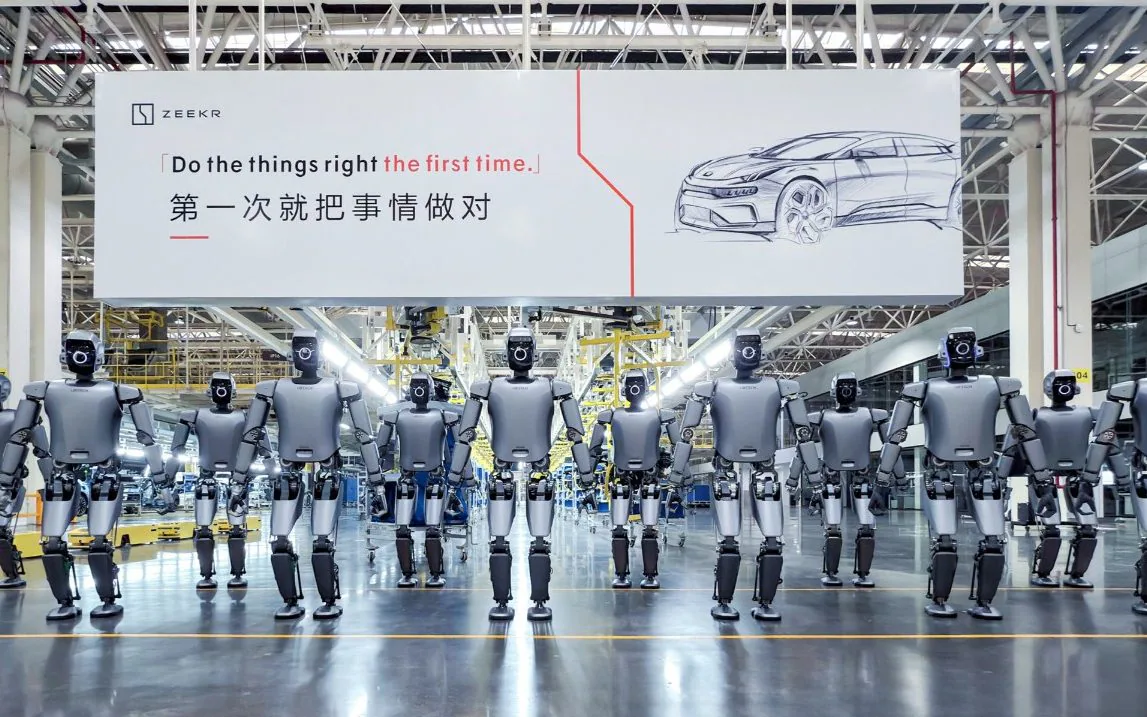
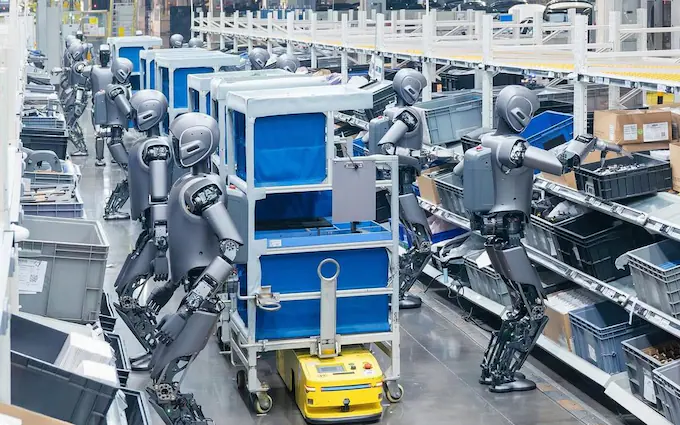
“I can take you to factories [in China] now, where you’ll basically be alongside a big conveyor and the machines come out of the floor and begin to assemble parts,” he says.
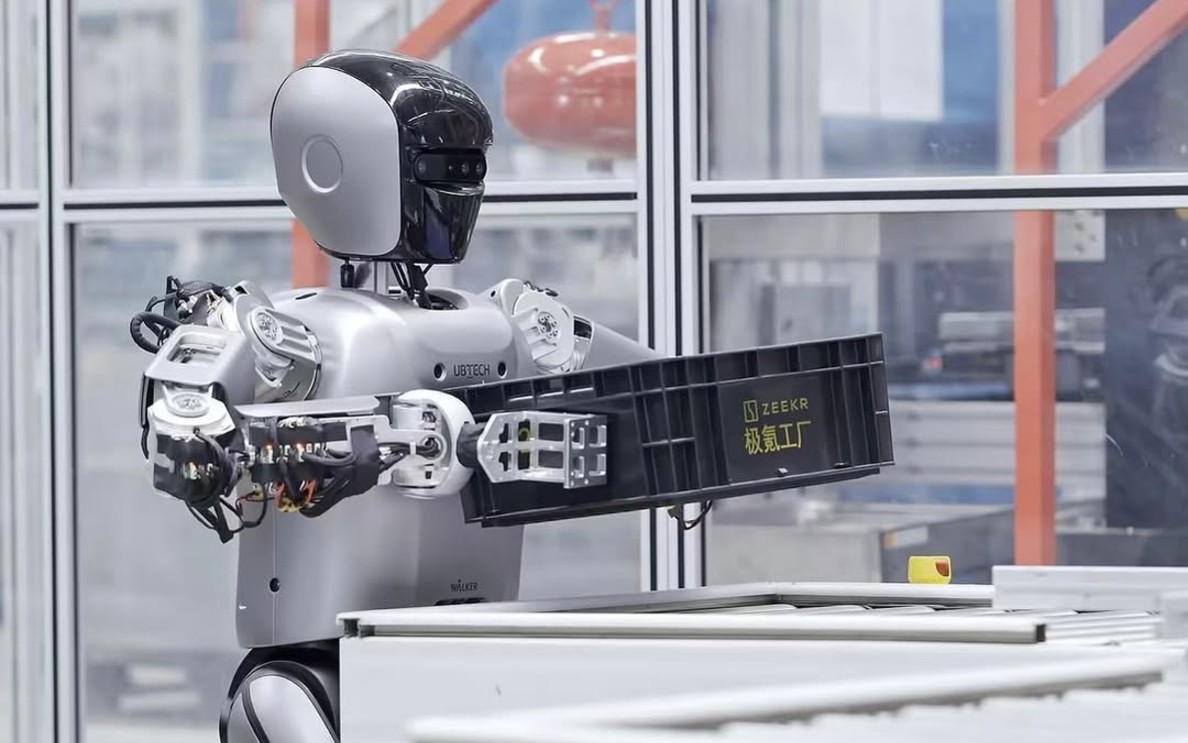
“And you’re walking alongside this conveyor, and after about 800, 900 metres, a truck drives out. There are no people – everything is robotic.”
36b2805fd994dca44418a0ec8174401a86b93fc9.webp


Other executives describe vast, “dark factories” where robots do so much of the work alone that there is no need to even leave the lights on for humans.
“We visited a dark factory producing some astronomical number of mobile phones,” recalls Greg Jackson, the boss of British energy supplier Octopus.
“The process was so heavily automated that there were no workers on the manufacturing side, just a small number who were there to ensure the plant was working.
“You get this sense of a change, where China’s competitiveness has gone from being about government subsidies and low wages to a tremendous number of highly skilled, educated engineers who are innovating like mad.”
High-tech transformation
It’s also a far cry from the cheap “Made in China” goods that many Westerners have associated with the “workshop of the world” in the past, underscoring how much cash has been poured into upgrading China’s industrial processes.
Far from being focused on low-quality products, China is now viewed as a leader in rapidly-growing, high-value technologies such as electric vehicles (EVs), batteries, solar panels, wind turbines, drones and advanced robotics.
A big part of that transformation is down to the country’s focus on automation – which has been encouraged by the ruling communist government and heavily supported with state subsidies, grants and local government policies.
Figures recently released by the International Federation of Robotics (IFR) show this has led to a dramatic and high-tech transformation of China’s industrial base over the past 10 years.
Between 2014 and 2024, the number of industrial robots deployed in the country rocketed from 189,000 to more than two million.
These can typically include everything from robot arms used for welding, assembly and loading, spider robots used for high-speed “pick and place” movements and overhead gantry robots for precision tasks such as 3D printing.
The overall number of robots added in China last year was 295,000, compared to 27,000 in Germany, 34,000 in the US and just 2,500 in the UK.


And while it would be easy to put this disparity down to population size alone, China also blows its western rivals out of the water when it comes to robot density. It now boasts 567 robots for every 10,000 manufacturing workers, compared to 449 for Germany, 307 for the US and 104 in the UK.
More automation is seen by many as good for productivity, the all-important measure of how much an economy gets out of what it puts in.
Many analysts also note that China’s growing share of worldwide manufacturing gives it increasing leverage over global supply chains – and would make it a formidable opponent in a war.
But alongside Beijing’s stated desire to dominate industries of the future, Rian Whitton, an expert at Bismarck Analysis, says increased automation is also an attempt to mitigate the impact of the country’s ageing population.
“China has quite a notable demographic problem but its manufacturing is, generally, quite labour-intensive,” he says.
“So in a pre-emptive fashion, they want to automate it as much as possible, not because they expect they’ll be able to get higher margins – that is usually the idea in the West – but to compensate for this population decline and to get a competitive advantage.”
2b576b222b531b3445ed2a50bd26788f9b2ee382.jpg


As part of its so-called Made in China programme, local authorities have offered large tax breaks that reimburse firms for a fifth of their spending on industrial robots. This is under a policy known as “jiqi huanren” – which translates to “replacing humans with machines”.
Western manufacturers in trouble
But this technology, coupled with the vast output of Chinese manufacturers, spells serious trouble for traditional Western brands.
The most visible sign of this upheaval is on our roads, where Chinese-made electric and hybrid cars are taking a growing share of sales.
In Britain, Shenzhen-based BYD multiplied its September sales by a factor of 10 this year – overtaking far more established brands such as Mini, Renault and Land Rover.

More here...
 
• Western executives visiting China are returning with a sense of awe and concern due to the country's rapid technological advancements and automation in manufacturing.

• Ford's CEO, Jim Farley, was astonished by the quality and cost-effectiveness of Chinese cars, warning of a global competition that Ford could lose.

• China's focus on automation, supported by government subsidies, has led to a dramatic increase in industrial robots, far surpassing Western countries in deployment.

• The country's robot density is significantly higher than in Western nations, indicating a strong emphasis on automating manufacturing processes.

• China is transitioning from a low-quality manufacturing hub to a leader in high-value technologies like EVs, batteries, and robotics.

• This technological leap is driven by the 'Made in China' program, which includes tax breaks for companies investing in industrial robots, aiming to replace human labor with machines.

• Experts suggest that Western countries need to increase their own robotics deployment to remain competitive and maintain their manufacturing industries, as failing to modernize may lead to job losses.

https://archive.is/HO86m
 
Mane.....
Fuck them socialist mother fuckers.....
College costs in China vary significantly, with public universities generally costing between $2,000 and $10,000 per year for international undergraduate programs

The average annual cost of college in the U.S. for the 2024-2025 school year is approximately $30,000 for in-state public universities, $49,000 for out-of-state public universities, and $63,000 for private universities....
 
Mane.....
Fuck them socialist mother fuckers.....
College costs in China vary significantly, with public universities generally costing between $2,000 and $10,000 per year for international undergraduate programs

The average annual cost of college in the U.S. for the 2024-2025 school year is approximately $30,000 for in-state public universities, $49,000 for out-of-state public universities, and $63,000 for private universities....
With no vaseline
 
Mane.....
Fuck them socialist mother fuckers.....
College costs in China vary significantly, with public universities generally costing between $2,000 and $10,000 per year for international undergraduate programs

The average annual cost of college in the U.S. for the 2024-2025 school year is approximately $30,000 for in-state public universities, $49,000 for out-of-state public universities, and $63,000 for private universities....


Insane
 
Chinese-linked biolab discovered in Las Vegas home sparks federal investigation with SWAT response

SWAT officers collected over 1,000 pieces of evidence including biological materials and vials with unknown liquids

By Sarah Rumpf-Whitten Fox News
February 3, 2026


Authorities are investigating a suspected biological laboratory with alleged Chinese ties discovered inside a Las Vegas home.

SWAT officers served a search warrant Saturday at a residence on the city’s east side after receiving a tip that a biolab was operating inside the home, according to the Las Vegas Metropolitan Police Department.

More than 1,000 pieces of evidence with "potential biological and hazardous materials" were primarily located in a locked garage, Las Vegas Metropolitan Police Department Sheriff Kevin McMahill said during a press briefing on Monday. Authorities said there is no threat to the public.

The property manager of the home, 55-year-old Ori Solomon, was arrested Saturday and booked into the Clark County Detention Center on charges of disposing and discharging hazardous waste, police said.

bio-lab-vegas-2.jpg

LVMPD Sheriff Kevin McMahill provided an update on a joint investigation involving a possible biological laboratory located inside a residence in Las Vegas, Nevada.​

LVMPD Sheriff Kevin McMahill said police took extensive precaution while serving the warrant. Authorities, he said, used a robot to clear the home, collect air samples and deploy hazardous materials teams to remove items safely.

In the garage, investigators found multiple refrigerators with vials of unknown liquids, unknown liquids in gallon-size containers, a centrifuge and other laboratory equipment, authorities said.

"Some of that evidence included biological material and liquids that were meticulously collected and sent to FBI labs for testing," police said in a statement.

biolab-2-las-vegas-lvmpd-fox-news.jpg

A worker in a hazmat suit searches through material found at the Las Vegas house.​

Investigators identified the owner of the Las Vegas home as Jia Bei Zhu, who is already in federal custody following the discovery of an unauthorized biolab in Reedley, California, in 2023.

Zhu was arrested in that case on federal charges alleging he manufactured and distributed misbranded medical devices, including tests for COVID-19, pregnancy and HIV, without proper permits and made false statements to the Food and Drug Administration. He is scheduled to go on trial in April.

jia-bei-zhu.jpg

Additional charges have been filed against Jia Bei Zhu, 62, the operator of the Reedley, California Bio-Lab and his partner, according to the United States Department of Justice.​

Zhu’s attorney, Anthony Capozzi, said Monday that his client is not involved in the Las Vegas investigation.

"He is not involved in any kind of a biolab being conducted in a home in Las Vegas," Capozzi said. "What went on in that residence we are unaware of.

California-biolab-leak3.jpg

Inside of the Chinese-linked California biolab​

The Reedley biolab drew attention after a clandestine laboratory was discovered operating inside a warehouse owned by Zhu’s company, Universal Meditech Inc.

According to a report by the House Select Committee on the People’s Republic of China, Zhu, 62, is a citizen of the PRC and a wanted fugitive from Canada. The committee alleged Zhu had close ties to the Chinese government and was involved in a transnational criminal enterprise that stole millions of dollars in intellectual property from U.S. companies.

City officials in Reedley first raised concerns in December 2022 after a code enforcement officer noticed a green garden hose protruding from the warehouse. A subsequent inspection revealed extensive laboratory equipment, manufacturing devices and medical-grade freezers inside the building.

Officials also reported finding approximately 1,000 transgenic mice used in disease research. Workers at the facility told authorities the mice were genetically engineered for COVID-19 research

bio-lab-las-vegas-1.jpg

This image made from video provided by the Las Vegas Metropolitan Police Department shows law enforcement conducting a search at a house in Las Vegas, Saturday, Jan. 31, 2026, in Las Vegas.​

The FBI is assisting in the Las Vegas investigation, which remains ongoing. Authorities declined to provide additional details about the materials recovered or whether additional arrests are expected.

vegas-1-gty-er-260203_1770160259574_hpMain_16x9_992.jpg

The FBI and the Las Vegas Metropolitan Police Department are investigating an alleged illegal biological lab in the garage of this northeast Vegas home, Feb. 3, 2026, in Las Vegas.​
 
China is about to bring the War to U.S. Soil….

Congress wants to ban China's largest genomics firm from doing business in the U.S. Here's why.

Intel officials have warned China is grabbing U.S. genetic info that could be used to create targeted bioweapons that would work against one group and not another.

By Ken Dilanian
January 25, 2024


Bipartisan legislation was introduced in both houses of Congress Thursday that would effectively ban China’s largest genomics company from doing business in the U.S., after years of warnings from intelligence officials that Beijing is gathering genetic information about Americans and others in ways that could harm national security.

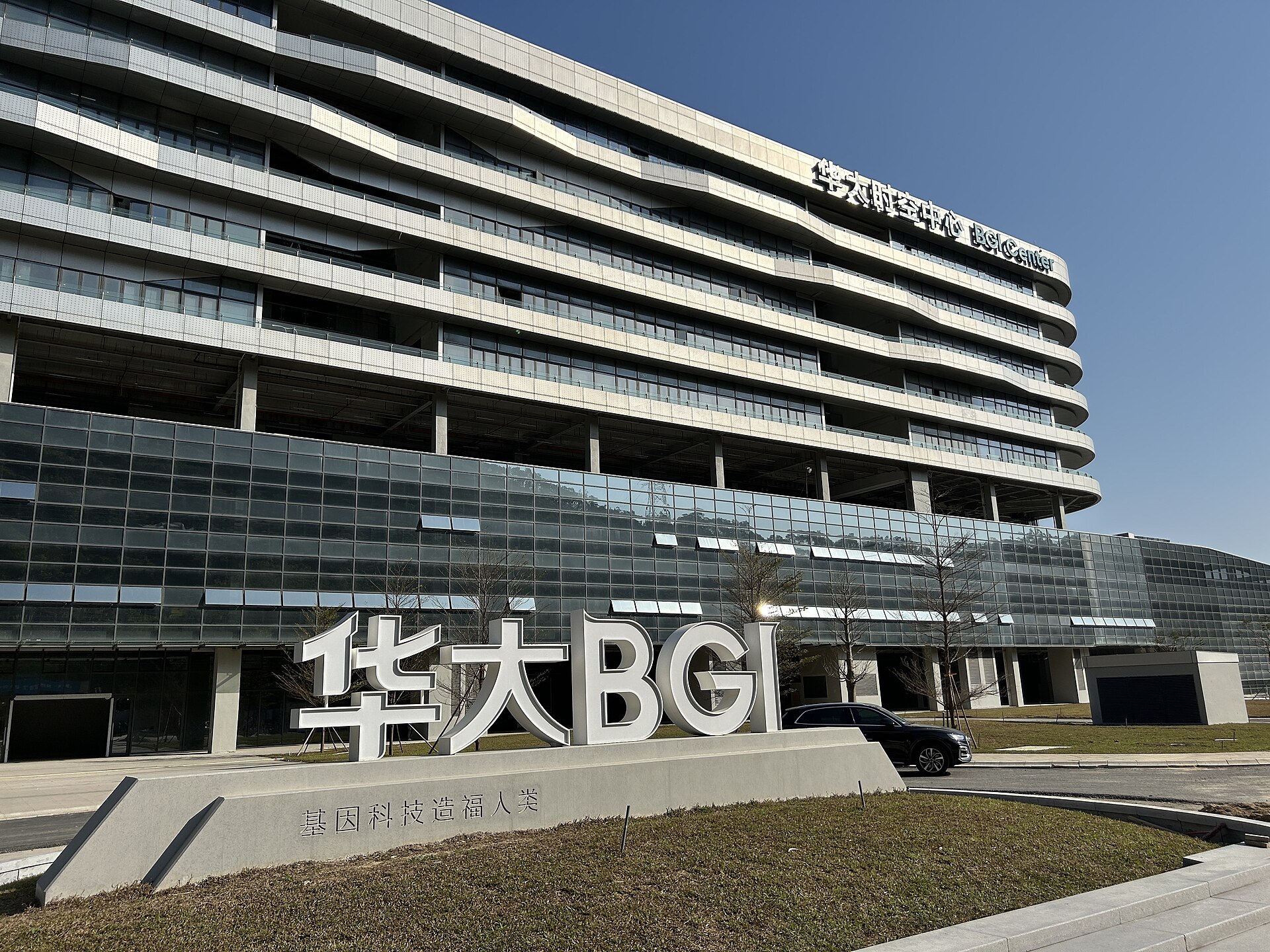
The bills, backed by leaders of the House Select Committee on the Chinese Communist Party and the Senate Homeland Security Committee, target BGI, formerly known as Beijing Genomics Institute, which in 2021 was blacklisted by the Pentagon as a Chinese military company. Five company affiliates also have been sanctioned by the Commerce Department, which accused at least two of them of improperly using genetic information against ethnic minorities in China.

In an exclusive interview with NBC News, Rep. Mike Gallagher, R-Wis., and Rep. Raja Krishnamoorthi, D-Ill., said their legislation would ban BGI — or any company using its technology — from federal contracts, a move the company said in a statement would “drive BGI from the U.S. market.”

BGI “remains a leading supplier of genetic sequencing equipment within the American market,” Gallagher said. “We think that’s a bad idea. And that’s what we’re trying to stop.”

Similar legislation was introduced in the Senate by Gary Peters, D-Mich., who chairs the Homeland Security Committee, and Bill Hagerty, R-Tenn. With bipartisan, bicameral support, the backers say the bills have a good chance of becoming law.

“This bill will protect Americans’ personal health and genetic information from foreign adversaries who have the ability and motivation to use it to undermine our national security,” Peters told NBC News.

In a statement, BGI said it “fully supports protecting personal data, but the legislation which will effectively drive BGI from the U.S. market will not accomplish this goal, and rather will restrict competition, raise health care costs, and limit access to technologies.”

The company said it “does not operate clinical laboratories or collect patient samples, and has no access to personal or genetic data,” and “none of BGI is in any way controlled by or linked to the Chinese government or the military.”

Krishnamoorthi said the evidence suggests otherwise.

“BGI has extensive collaboration with the People’s Liberation Army,” he said. “They’ve published numerous papers in conjunction with the PLA with regard to their research. And so this type of military civil fusion, which often occurs in the [People’s Republic of China], is of great concern, especially when they’re going to be collecting data, potentially on Americans to be then used in research with the PLA.”

BGI and its subsidiaries spent $420,000 on lobbying in 2023, according to Open Secrets, a group that tracks lobbying expenditures.

An investigation by Reuters in 2021 concluded that BGI’s popular prenatal test, taken by millions of pregnant women around the world — but not in the U.S. — was developed in collaboration with the Chinese military and was being used by the firm to collect genetic data.

The U.S. National Counterintelligence and Security Center reacted to the Reuters report by warning that “non-invasive prenatal testing kits marketed by Chinese biotech firms serve an important medical function, but they can also provide another mechanism for the People’s Republic of China and Chinese biotech companies to collect genetic and genomic data from around the globe,” the center said.

A public bulletin by the counterintelligence center in February 2021 warned that China “has for years been able to gain access to U.S. health care data, including genomic data, through a variety of channels, both legal and illegal.” The bulletin added that this collection “poses equally serious risks, not only to the privacy of Americans, but also to the economic and national security of the U.S.”

Bill Evanina, who retired in 2021 as the top counterintelligence official in the U.S. government, said he worked for years to sound the alarm about BGI and other Chinese companies gathering genetic data. He compared BGI to a Chinese 5G telecom giant banned from the U.S. market over spying risks.

“From a biotech perspective, BGI is no different than Huawei,” he said. “It’s this legitimate business that’s also masking intelligence gathering for nefarious purposes.”

Evanina described multiple layers of risk from genetic data, when combined with other personal data the U.S. says has been stolen by Chinese intelligence services. One is economic — China could leap ahead in the cutting-edge biotech industry, which promises to transform health care.

“Genomics and DNA is the new oil. It’s a $4 trillion industry,” Evanina said.

But Evanina and Gallagher said there is also a concern that China could use genetic data to create targeted bioweapons that would work on one group of people but not another.

“It also ranges up to the threat of bespoke bioweapons that could target either an individual or a class of individuals. And for your [readers] who might think that that’s the stuff of science fiction or in the distant future, it’s not,” Gallagher said. “We know that’s ... a technology that the CCP would love to perfect.”

There are also worries that China, which does not universally embrace Western medical ethics, could seek to use genetics to boost human capabilities, including for military purposes. Evanina pointed to a report that China studied the genetic information of people who lived at high altitude in the Himalaya mountains in an effort to “build capacity” among Chinese soldiers who have to fight at high altitudes.

Another concern is that genetic information could be used to target vulnerable Americans for espionage recruitment.

“Let’s assume, hypothetically, they had the ability to say, ‘Oh, look at Bill Evanina. OK, we just found out from all these data breaches, he’s behind on his mortgage. He lost his job. He’s got two kids in college. Oh, and he’s got a genetic sequencing marker that shows him predisposed to having hepatitis or you know, Parkinson’s. He’s very vulnerable.’”

The threat, Evanina said, is not theoretical. U.S. spy agencies have collected evidence of China’s malicious intent when it comes to genetic material, he said.

“We know this because we collect this data from them covertly,” he said. “This is not, like, made-up stuff. There is clandestine collection of their intent and their capability.”

bgi_group_hq.jpg

BGI (Beijing Genomics Institute ​
 
Lack of information on China super soldier experimentation ‘disturbing’: Ex-intelligence official

BY ASHLEIGH FIELDS
07/18/25


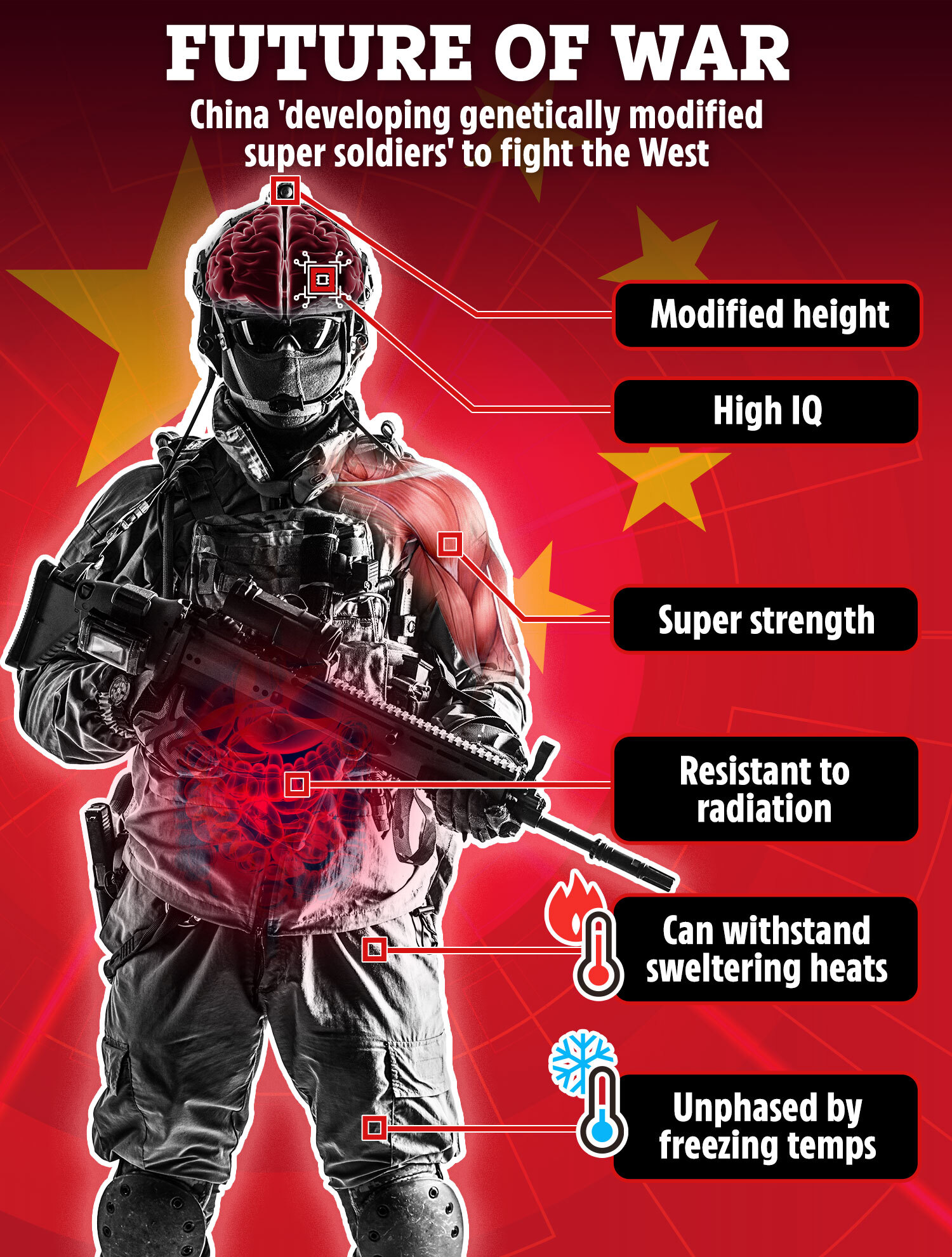
An ex-intelligence official said late Thursday that China’s military leaders are experimenting with creating a “super soldier,” calling the lack of information “disturbing.”

“Other nations have explored in this area over decades. So it’s not the newest thing in the world, but the more disturbing part [is] we don’t know exactly how much effort they’re putting in towards it,” Nicholas Eftimiades, a former senior intelligence officer in the Defense Intelligence Agency, said during an appearance on NewsNation’s “Elizabeth Vargas Reports.”

“We don’t know any of the accomplishments they’ve had towards it. We do know, which is disturbing, is that it’s under the People’s Liberation Army.”

Eftimiades said Beijing’s research is “promising,” but noted that little is known about gene splicing or personality altering efforts.

“They’ve been exploring this concept for a while. Can they modify human behavior, human physiology, to create, if you will, a more superior individual, physically as well as mentally?” he asked...

KH-GRAPHIC-BIO-WEAPON-SOLDIER-NEW.jpg
 
Going after cheap peptides and GLP's.... Can't charge 1k a month for Ozempic when you can Tirzepeptide and others for $150...shipped to your door.
 
Lack of information on China super soldier experimentation ‘disturbing’: Ex-intelligence official

BY ASHLEIGH FIELDS
07/18/25


An ex-intelligence official said late Thursday that China’s military leaders are experimenting with creating a “super soldier,” calling the lack of information “disturbing.”

“Other nations have explored in this area over decades. So it’s not the newest thing in the world, but the more disturbing part [is] we don’t know exactly how much effort they’re putting in towards it,” Nicholas Eftimiades, a former senior intelligence officer in the Defense Intelligence Agency, said during an appearance on NewsNation’s “Elizabeth Vargas Reports.”

“We don’t know any of the accomplishments they’ve had towards it. We do know, which is disturbing, is that it’s under the People’s Liberation Army.”

Eftimiades said Beijing’s research is “promising,” but noted that little is known about gene splicing or personality altering efforts.

“They’ve been exploring this concept for a while. Can they modify human behavior, human physiology, to create, if you will, a more superior individual, physically as well as mentally?” he asked...

KH-GRAPHIC-BIO-WEAPON-SOLDIER-NEW.jpg
Just like AI, the makers are goung to become obsolete themselves. It is delusional to think they will control these superior manufactured humans.
 
Lack of information on China super soldier experimentation ‘disturbing’: Ex-intelligence official

BY ASHLEIGH FIELDS
07/18/25


An ex-intelligence official said late Thursday that China’s military leaders are experimenting with creating a “super soldier,” calling the lack of information “disturbing.”

“Other nations have explored in this area over decades. So it’s not the newest thing in the world, but the more disturbing part [is] we don’t know exactly how much effort they’re putting in towards it,” Nicholas Eftimiades, a former senior intelligence officer in the Defense Intelligence Agency, said during an appearance on NewsNation’s “Elizabeth Vargas Reports.”

“We don’t know any of the accomplishments they’ve had towards it. We do know, which is disturbing, is that it’s under the People’s Liberation Army.”

Eftimiades said Beijing’s research is “promising,” but noted that little is known about gene splicing or personality altering efforts.

“They’ve been exploring this concept for a while. Can they modify human behavior, human physiology, to create, if you will, a more superior individual, physically as well as mentally?” he asked...

KH-GRAPHIC-BIO-WEAPON-SOLDIER-NEW.jpg
e4e16e10826b13a10f500435fe34e092.jpg
 
Back
Top