Marketing Lessons From "Dolemite Is My Name"

cashwhisperer

You are brainwashed.
Registered
dolemite-is-my-name-1014x487.jpg


NOVEMBER 3, 2019 BY LISA N. ALEXANDER
Lessons from Netflix Original, Dolemite Is My Name

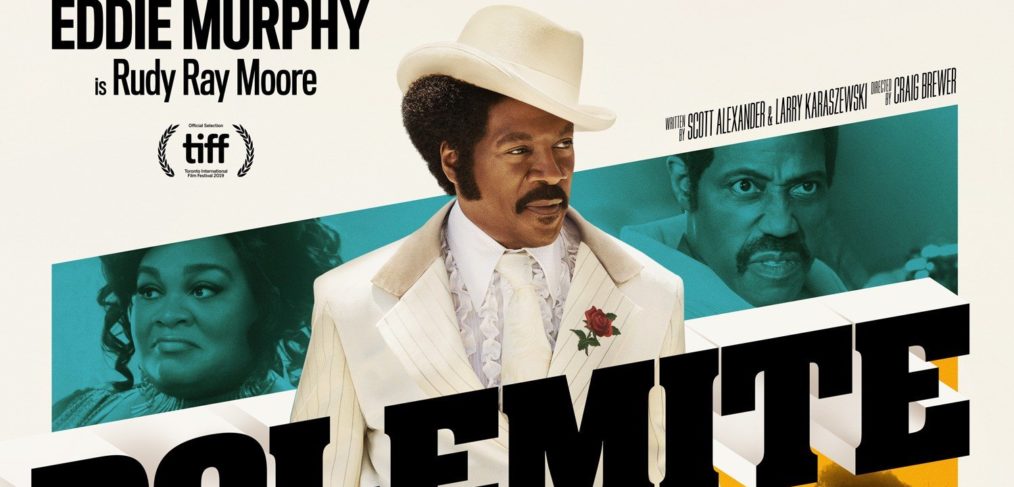
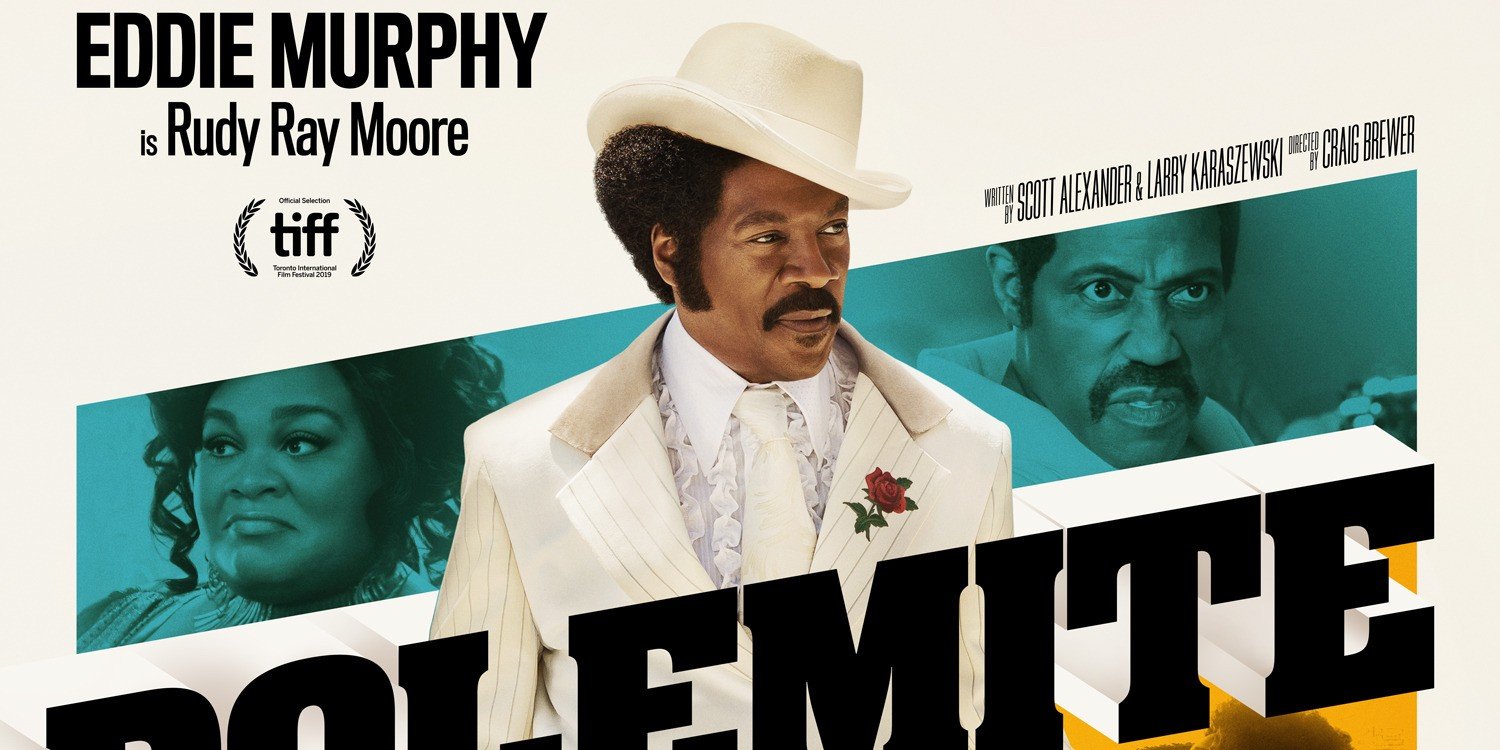
I was five when Dolemite hit the big screen back in 1975 so I missed it and much of the Blaxploitation films of the era. I’d heard of movies like Shaft and Shaft Goes to Africa but never watched any of the movies. So when Netflix released Eddie Murphy’s Dolemite Is My Name, it was a great introduction to the genre and the man behind the Dolemite series.
Fair warning, the movie contains adult language and nudity so it’s definitely not for everybody.
The marketing and entrepreneurial lessons in the movie were many.
Here are my takeaways:
  • On niche marketing and target audience: “Every city in America has these same five blocks and they’re gonna love it.” Rudy Ray Moore understood his target audience, knew where they were and what they liked and he created memorable content for this audience.
  • On being a visionary: You don’t have to know all the technical aspects of a project, bring in the people who have the skill to implement your vision. Rudy found the people to fill in his knowledge gaps and wasn’t afraid to admit what he didn’t know. Moore had NEVER made a movie before, never worked in the industry, didn’t speak the industry jargon but none of that stopped him or intimidated him. He was driven and had a vision. He also wasn’t beyond doing menial tasks to make sure his project and vision became a reality.
  • On customer engagement: When the show sold out and his audience had to wait for hours to see the film, he gave up his seat at the premiere and engaged his audience. He created a memorable customer experience by performing for the audience that would have to wait for hours to see his show. He also increased his brand’s customer lifetime value by encouraging a young man who wanted to be just like him.
  • On making moves: Don’t be afraid to go for the big ask and then sweeten the offer. Moore approached a somewhat well-known actor at a strip club to be in his movie. When the actor became offended, Moore offered him the opportunity to direct the film.
  • On entrepreneurship: Know the game, know your worth, know the devil you’re up against and negotiate accordingly. Dimension Pictures rejected Moore’s original pitch to produce his movie. When the movie proved to be successful, Dimension Pictures came calling. Moore knew Black’s often received bad contracts and deals and ended up broke when dealing with mainstream entertainment conglomerates. He went into the meeting armed with this knowledge and negotiated accordingly.


#nichemarketing
#targetaudience
#createcustomerexperiences
#whatmilliondollarbrandsknow
#themarketingstylist
 
6 Kick-Ass Startup Lessons From Eddie Murphy’s Latest Movie, ‘Dolemite Is My Name’


John GreathouseContributor
Entrepreneurs
I offer street-smart startup advice.


Note: This article includes spoilers for Eddie Murphy’s new Netflix film, Dolemite Is My Name.
Earlier this month, Netflix released Eddie Murphy’s latest movie, Dolemite Is My Name, which tells the story of tireless entertainer and successful entrepreneur Rudy Ray Moore. I enjoyed the film and was inspired by Mr. Moore’s entrepreneurial drive and ambition.

As noted in a recent New York Times article, “Rudy isn’t ‘great’ in the conventional sense. Yet he is persistent and confident, exactly what a segment of the black population was hungry for in 1975 — the Blaxploitation era personified.”


Without question, it is fair to criticize Rudy’s movies (and his comedy records) as perpetuating harmful misogynist messages and oppressive racial stereotypes.

Even so, many people who grew up watching Blaxploitation films recall them fondly, including Eddie Murphy, who recently noted, “They’re not these high-quality pictures, but black people, ourselves, we were just excited to see ourselves. We never felt like they were exploitation.”

The Godfather Of Rap

Rudy Moore’s legacy goes beyond his films. Numerous hip hop artists have credited him as a pioneering rapper and have paid homage to him on their albums. Snoop Dogg, the Wu-Tang Clan, Eazy-E, the Beastie Boys and A$AP Rocky have all given Rudy shout-outs in their songs, while his old-school records have been sampled by Big Daddy Kane, Dr. Dre and A Tribe Called Quest.

According to hip-hop pioneer Too $hort, “All these things that hip-hop became… the image, the swag, the independence, the (expletive)-talking… he (Rudy Moore) was it before it was called hip-hop.” Too $hort also highlighted Mr. Moore’s entrepreneurial influence, stating, “He passed on that entrepreneurial spirit where we don’t have to ask for it, we just do it ourselves.”

Entrepreneurial Lessons

Despite the polarizing nature of Rudy’s work, no one can deny that he was a creative, tenacious and tireless entrepreneur. Some of the timeless startup lessons that can be taken away from his career include:

1) Pioneers Must Be Fearless

“Without Rudy Ray Moore, there would be no Snoop Dogg, and that’s for real.” Snoop Dogg, American Hip Hop Artist

The greatest impact of Rudy’s career was his fusion of music and spoken words. Over time, his comedy act evolved to include a backing band which accentuated his storytelling with background beats and percussive punctuations. Despite his popularity within the African American community, record executives during the early 1970’s just didn’t get it. It was just too different.

Lesson: When you’re delivering value to your customers, stay the course. You don’t kick start a new genre of music by shying away from criticism. If Rudy had modified his comedy routines to conform to the norms of his day, a key inspiration of first-generation hip hop artists would have been lost.

2) Just Because You’ve Got Nothing, Doesn’t Mean You Can’t Create Something

Like all successful entrepreneurs, Rudy was not thwarted because of a lack of resources. For instance, rather than record his comedy albums in a club and incur the associated expenses of a remote sound crew, he threw parties in his house, performed in front of his friends and recorded his shows on an inexpensive tape recorder.

When record executives deemed his material too obscene to distribute, he self-funded his records’ manufacturing costs and sold them from the trunk of his car.

When he couldn’t afford a sound stage for his first film, he cut a deal with the owner of a rundown hotel to use the premises for free, in exchange for cleaning it up.

When no one would distribute his first film, he cut “four wall” deals with theater owners, in which he paid a flat rental fee and then retained the box-office revenue. It was the grassroots success of this approach that caught the attention of Hollywood film distributors, who eventually acquired his films’ distribution rights.

Lesson: Street-smart entrepreneurs never wait for someone to give them resources. They are never “stuck.” They go over, under, around and through obstacles in pursuit of their goals.

3) Real-world Experiences Enhance Creativity

“Creativity is just connecting things. When you ask creative people how they did something, they feel a little guilty because they didn’t really do it, they just saw something. It seemed obvious to them after a while. That’s because they were able to connect experiences they’ve had and synthesize new things. And the reason they were able to do that was that they’ve had more experiences or they have thought more about their experiences than other people.” Steve Jobs, American Entrepreneur

The creative process usually involves three distinct stages: first people Copy the work of prior artists, then they Transform what came before and eventually they Combine transformed elements to create something new. Like many creative entrepreneurs, it took Mr. Moore years before he found his voice as an entertainer.

Most people don’t have the resolve to exit the copying stage with the proficiency to creatively transform what has come before, let alone master their craft to the point of combining distinct artistic elements to create something entirely new.

Rudy’s early career included stints as an R&B singer, a dancer and a comedian. Yet, it wasn’t until he combined all three of these mediums that he created something new.

Lesson: Successful entrepreneurs seek out novel experiences and then put in the work required to synthesis their experiences into something new.

4) Listen To Everyone And Ignore (Most Of) What You Hear

“Every well-intentioned, high-judgment person we asked told us not to do it. We got some good advice, we ignored it, and it was a mistake. But that mistake turned out to be one of the best things that happened to the company.” Jeff Bezos, American Entrepreneur

Before launching Amazon, Jeff Bezos consulted with several publishing experts, none of whom appreciated the internet’s eventual ubiquity. They advised Mr. Bezos to focus Amazon on best-selling books and a handful of popular genres – the same approach which had been successful for large retail booksellers.

Rudy was told by everyone, including family members, to give up on his entrepreneurial dreams and to be satisfied with his job as a record store clerk. He was told by night club owners that he couldn’t sing or dance and that he wasn’t funny. Even after he had some initial success with urban, African American audiences, he was told by entertainment executives to tone down his act in order to grow his fan base.

Lesson: Well-intentioned business advice is often wrong because most people predict the future by extrapolating the present. Wily entrepreneurs know that they can change the future by evolving their products to meet previously unforeseen demands of the market.

5) You Are The Expert

Rudy was an integral part of the African American community that comprised his target market. Thus, because of his intimate knowledge of his market, he was able to confidently ignore the bad career advice he received from record or movie executives.

In the end, Rudy made movies that he wanted to see, ones filled with nudity, comedy and Kungfu.

Lesson: Entrepreneurs must not be dogmatic when assessing their target market’s needs. However, when you are living and breathing your target market and you’ve proven product-market fit, the time for second guessing is over.

6) Be Different And Never Give Up

“You just can’t beat the person who won’t give up.” Babe Ruth, American Baseball Player

Late in his life, Mr. Moore said, “This was my motto: ‘Don’t come up with routine stuff.’” In the end, Rudy’s most endearing trait was his unending optimism, which fueled his tireless risk taking and allowed him to achieve his lifelong goal that world would know that “Dolemite Is My Name.”

Lesson: Entrepreneurs win by fearlessly doing things differently and unmercilessly iterating on their offerings until they achieve product-market fit.

 
dole.jpg


Seven Life Changing Lessons From the Movie ‘Dolemite’
About a week ago, Netflix suggested a title that had my interest piqued upon visual contact. That title was ‘Dolemite Is My Name’. A little background might be helpful in understanding my excitement. The first time I heard the word Dolemite was in the early 90s when Snoop Dogg rapped it in the verse:

Fallin’ back on that ass, with a hellified gangsta lean
Gettin’ funky on the mic like a ol’ batch of collard greens
It’s the capital S, oh yes I’m fresh, N double-O P
D O double-G Y, D O double-G, ya see
Showin’ much flex when it’s time to wreck a mic
Pimpin’ hoes and clockin’ a grip like my name was Dolomite


My African ears – unfamiliar with this cultural reference – thought they were hearing DolaMIKE (a brand of microphone only available in Compton, perhaps?), similar to that time in the early 2000’s when they heard Adam Levine singing about how he had to ‘move that dragon’. Levine was, in fact, not talking about a dragon at all. He was boasting about how his moves were like JAGGER’S…not transporting a medieval reptilian…


Never mind.

Nostalgia and curiosity guiding my finger tips – because again, this Dolemite entity was something I was completely ignorant about – I clicked on the link and discovered that the movie starred Eddie Murphy. I hesitated; because lets face it: The last time Eddie was laugh-out-loud funny he was costarring as an animated donkey. Obviously I overcame my skepticism as I can now report that Dolemite was a who – not a what – and affirm that the critics are right: Eddie Murphy delivered a masterful performance, pouring tremendous affection into playing the role of a much loved icon of the Blaxploitation era.

The film is a lovingly treated biopic of Rudy Ray Moore, at the time an aspiring comedian, musician and singer. It tracks his unlikely rise from struggle to stardom to something greater: a portal into The Black Experience ™. Moore’s eventual success comes after he embodies the persona of Dolemite, a crass, flamboyant pimp who speaks in fluid metrical time and exists on the fringes of reality. Watching Murphy as Moore is like watching your drunk uncle play dress up in Colleen Atwood’s closet and actualizing himself into fame and success; a cinematic How To guide on being the best version of yourself.

Now that I’ve sold you on the merits of this film, let’s discuss some of the morals it has to teach we intrepid viewers. By my count, there are seven main takeaways on how to be a better *insert your occupation* but there may be more. Feel free to add your observations in the comment section.
  1. You don’t have to reinvent the wheel. Sometimes you just need to add spinners to it: Dolemite was not Rudy Ray Moore’s invention. He was a larger than life character that existed in the minds of Black men who hung out on street corners or languished in America’s prison industrial complex. He was a figment and creation of collective imagination, living only as an anecdote and therefore – too borrow a phrase from President Buhari – he belonged to everyone and belonged to no one. What Moore did was cobble those stories together, polish their delivery and give a face – his face – to a character that people were already in love with.
  2. Give the people what they want: ‘Build it and they will come’ is a philosophy that has guided many successful entrepreneurs. From brothels to the hanging gardens of Babylon, if it exists in your imagination, chances are it does in someone else’s as well. Someone is looking for exactly what it is you have to offer. You don’t have to do/be the best…you just have to give folks something incrementally better than what they are accustomed to.
  3. Know your audience: They say a prophet has no honor in his hometown. Fortunately for him, Rudy Ray Moore wasn’t peddling those kinds of prophecies. Moore was very much an integral part of the community in which he lived. His early success was as a result of selling his records out of his trunk before he linked up with the Bihari Brothers of Kent records. After he determines to make a movie, he tells his funders that everyone he knows wants to see a Dolemite movie. They express their skepticism.
“When you say ‘everyone’, isn’t that just the people you know of five square blocks?”
“Yeah,” Moore replies, “but those same five blocks are in every city across America.”
4. Be willing to face rejection: If you’ve ever worked in sales or tried to pitch an idea, you’ll certainly have heard that it takes seven no’s to get to a yes. I used to do door-to-door sales when I was in college. It sucked, but it taught me valuable lessons about resilience, approach and human nature. If you can slug through the long, wearisome bog of rejection, you will eventually reach a clearing. Your target market is out there…a whole herd of them. When you get that first yes, it cracks open the veil of favor. And if you keep at it long enough, more people are willing to say yes than no. After going through that bog, you learn how to approach people in a manner that makes it hard to refuse you.
5. Bet on yourself: If you’re not willing to take a chance on yourself, who else will? You’ve got to be the best champion Yourself has ever known, even if it comes off as arrogance. Betting on yourself also means investing in your craft/skill. When you believe in your dream, when you’re wholly committed to its success, it will be easy for others to as well. No one achieves success alone, even if you start out that way.

6. Fulfill your oaths: In Dolemite, we saw Rudy borrow money from a lot of people. $200 from his auntie. $30K from the Bihari brothers. He even borrowed electricity from the city to shoot his movie. What we also saw was him paying all these people back. Be a person of your word. If you swear to repay a debt, do it. A good name carries far more weight than temporary riches.

7. Let doubt be an accelerant: Near the film’s climax, D’Urville Martin – whom Wesley Snipes portrays as a cartoonish man of dubious sobriety- encourages Rudy to take everything that anyone has ever said about him – every doubt, discouraging word, every put down – and use it to inspire Dolemite’s final stand off with Willie Greene in the movie’s concluding scene. Huffing and puffing with every frantic karate chop, Rudy vanquishes Willie in the most preposterous way: by ripping out his guts. So too, must you dear reader, metaphorically rip out the bowels of anyone who has ever doubted you. Let their cynicism serve as rocket fuel for your ambition.
Dolemite is My Name was made in memory of Charlie Murphy, a fitting tribute to Eddie’s equally talented brother who passed away in 2017. The two had costarred together in other films together, and as wonderful as this film is on its own, we can only help but imagine what the result might have been had Charlie lived to add his peculiar flair. I suppose Lesson 8 would be to honor those who have sojourned on the journey to success with you, to speak their names aloud, to remind the world of the magnitude of the loss of these irretrievable precious gifts.
 
Dolemite on Building a Meaningful Brand

Dolomite.png.1440x1000_q85_box-106%2C0%2C2176%2C1438_crop_detail.png


The Netflix release Dolemite Is My Name, starring actor/comedian Eddie Murphy, is a biopic overflowing with inspiration and valuable life lessons. Murphy brings to life the rise of Rudy Ray Moore, otherwise known as Dolemite. Dolemite is a lesser-known figure in popular entertainment, but his impact in the African American community makes him legendary. His standup routines and hit albums influenced a generation of comedians.

Rudy Ray Moore earned the nickname "The Godfather of Rap," as his style was a blueprint for what became hip-hop in the late 1970s. His larger than life story in Dolemite Is My Name is a framework for anyone who wants to understand how to build a meaningful brand.

Authenticity is an overused buzzword as it currently exists. Brands aspire to authenticity but usually fall far short. Rudy Ray Moore was a struggling comedian, relegated to doing warm-up sets for local acts. Desperate to break out, he crafted a new persona for himself and his alter-ego, Dolemite, was born.

Moore leaned into Dolemite as an outrageous, foul-mouthed pimp. More than just a comedy routine, Dolemite was a product of black folklore, namely, the signifying monkey. In black folkloric tradition, the signifying monkey is a trickster — quick-witted and nimble — and could weave stories to outsmart his enemies. The mannerisms Moore adopted as Dolemite, and his new chosen style, were the ultimate inside joke for the audience he was seeking.

Traditional African American leading men at the time were Billy Dee Williams and Sidney Poitier. Rudy Ray Moore made a calculated bet that a chubby, middle-age journeyman comedian who was willing to be himself would ultimately prevail. Playing the game in the way it was constructed would never lead to success for someone such as Moore. The only chance he had to rise above the clutter and make a connection was to be unapologetically himself.

The traditional powers were not ready for authenticity, but his audience was. This is what is often missing from modern-day branding. It is not enough to use the word authentic and aspire to that ideal. Authenticity has to live in every facet of the brand journey.

Build and Trust Your Team

It takes a team of shared values and intention to build something. Rudy Ray Moore recognized this by pulling from the available talent pool around him. He used the people and resources in his community to create what is now coined, in Silicon Valley language, as the minimum viable product. Moore recognized that empowering his friends, who shared his value of hustling and his hunger to succeed, would keep them all highly motivated. Moore also was not afraid to embrace diversity. Despite relying on his core team, he brought in outside talent when expertise was needed to get the job done.

Moore trusted his team to do their jobs and leverage their cultural diversity to create something new. Organizations that do not build environments of trust won't get their best work from their people, just as homogenous teams won't be as creative as those with diversity. Leveraging varied areas of expertise and cultural perspective is essential to producing meaningful work.

Qualitative Over Quantitative

Moore was on a seemingly quixotic quest to star in a movie. Understanding the medium of cinema, he knew he could be everywhere at once, rather than relying on city-by-city tours.

The work he had done traveling from town to town and honing his act provided him with an incredible amount of information about the preferences of his audience. Even so, movie executives rejected his proposals, saying that "you don't make movies for five square blocks of your friends." These executives were assessing the opportunity based on their data, which reflected a smaller audience for black films in general, much less one with a non-traditional leading man.

The data was giving them everything they needed to decide, except for the right information. Moore, on the other hand, had years of insights gathered by talking and reaching out to his audience. To put it in his words, he knew those "five square blocks" existed in every city in America, and that made his audience bigger than the data would ever show.
To successfully build your brand, you can't solely rely on a data-centric approach. A deep understanding of what people respond to also requires being comfortable with the complexity of the human experience.

Experts Suck on What Has Never Been Done

Experts primarily rely on the ability to forecast using past results to project into the future. Experts are best when asked to extrapolate using known quantities. Experts, however, suck when asked to determine the potential success of something they have never encountered.

When Moore released his first film, Dolemite, it was trashed by critics. The critics were assessing the movie based on what had come before it, but they had no framework to judge the work on in a new environment. Their expertise did not allow them to see the possibilities. In creative endeavors — and brand work is, at its core, creative — listening to experts will likely not give you your best work.
In the end, Dolemite built his brand on his terms. His journey was uneven, but it was deliberate at the same time. It was also profoundly based on joy. Joy is distinct from happiness because moments of joy can be a struggle, or they can be bliss. Branding would be better served if there was more joy in the decision-making process. Instead, it is mostly dominated by fear.

The closing statement of the film is a poignant distillation of Dolemite's branding philosophy:

"I want you to live the life that you love and love the life that you live. From the frantic Atlantic to the terrific Pacific be the best of whatever you are. Shoot for the moon and if you miss it, cling on to a mutherfucking star…"
 
Rudy Ray Moore net worth: Rudy Ray Moore was an American comedian, musician, singer, actor, and producer who had a net worth of $3 million at the time of his death in 2008. Rudy Ray Moore was born in Fort Smith, Arkansas in March 1927.
 
Back
Top