


Genetically Engineered Mosquitoes and Moths Ready to Spread Like Wildfire
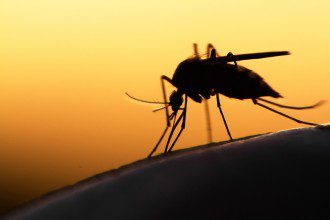
While countries around the globe are still assessing the risks – and experiencing the environmental backlash – of genetically engineered (GE) plants, biotech companies are moving on to their next targets – insects.
The latest science project, courtesy of researchers from the University of California, is mosquitoes genetically engineered to stop the spread of malaria. In theory, the idea sounds promising, at least on the surface…
‘We Could Unleash Monsters’
The researchers injected Anopheles stephensi mosquitoes with a segment of DNA code that makes them resistant to the parasite that causes malaria. Further, a controversial “gene drive” technique was used that allows the “frankenbugs” to pass their resistant genes onto their offspring.
In a recent study, 99.5 percent of the GE mosquitoes’ offspring carried the malaria-blocking genes.[1] If the mutant mosquitoes are released into the wild, thereby mating with wild populations, their modified DNA would pass freely onto their offspring. The researchers believe this could theoretically stop mosquitoes from transmitting malaria to humans and ultimately eliminate malaria. Some experts believe we’re only 10 to 15 years away from releasing these GE mosquitoes into the environment, where their modified DNA “could spread through a wild population like wildfire.”[2]
But at what expense? While the notion of wiping out malaria – a disease that kills nearly half a million people every year[3] – is intriguing, no one knows the consequences of releasing genetically modified DNA into the wild. As The Washington Post put it:[4]
“What’s scarier? Tinkering with mosquito DNA, or malaria? … Without proper caution, some scientists warn, gene drives could deliver ecological disaster. Without the right consideration, we could unleash monsters.”
Once ‘Gene Drive’ Technology Is Released, There’s No Going Back
“Gene drive” technology, which has been around for about a decade, allows scientists to not only insert specific gene mutations into DNA but also to ensure those modified genes get passed onto offspring. The technology is biased toward the inheritance of the GE genes, such that they may extend to entire populations. It’s this latter issue that makes them so controversial, especially since the technological advances have far outpaced the necessary regulatory and policy discussions needed before the technique is used to engineer wild populations.
As reported by The Washington Post:
“Malaria is only the beginning. Geneticists have suggested other types of gene drives that could be implemented to solve the world’s problems. If we can design mosquitoes, we could eliminate invasive pests like the python in Florida, strengthen species threatened by global warming, and improve world hunger by growing more abundant crops.
But the daydreaming is stunted by fears of unintended consequences… What happens if newly introduced genes end up having unexpected long-term effects on a species? Or on other species that it might cross-breed with? What are the chances of an unexpected mutation? …
Gene drive will change the (GE) conversation completely. That’s because there’s no ‘opt-out’ feature in gene drive technology. People may have objections to genetically modified foods, but they don’t have to eat it.”
In the case of GE mosquitoes released into the wild, people living in those areas have no choice about exposure – and neither do the other species they interact with. What happens, for instance, if a bat eats a GE mosquito? And what happens if one of the GE mosquitoes bites you? Will their GE DNA be injected into your arm or leg?
These are questions that currently have no answers.
FDA Considering the Release of GE Mosquitoes in Florida
Mosquitoes engineered to resist malaria are not the only GE mosquitoes that may one day be coming to your neighborhood.
Biotech company Oxitec and the Florida Keys Mosquito Control District (FKMCD) have a plan to introduce mosquitoes engineered with a fatal gene to the area, in an attempt to stop the spread of chikungunya and dengue, tropical diseases spread by Aedes mosquitoes.
Strangely, FKMCD stated flat out: “Dengue fever and chikungunya are currently not an active health threat in the Florida Keys.”[5]Yet, they’re apparently willing to risk the unknown consequences of releasing a GE species into the wild anyway.
The plan is currently being reviewed by the U.S. Food and Drug Administration (FDA). If it is approved, GM male mosquitoes would be released into the Florida Keys up to three times a week. For now, the FDA said it does not have a timeline for when their review will be complete.[6]
Unfortunately, they have a history of throwing the precautionary principle to the wind, such as their recent approval of fast-growing GE salmon, the first GE animal in the U.S. So it’s very possible they could next approve the release of GE mosquitoes.

The Aedes Mosquito
Glaring Concerns Surround GE Mosquitoes
The Oxitec-engineered mosquitoes are unlike any that exist in nature. They’ve been genetically altered to carry a “genetic kill switch,” such that when they mate with wild female mosquitoes, their offspring inherits a lethal gene and cannot survive.[7] The intent is to suppress the population of that mosquito. To achieve this feat, Oxitec has inserted protein fragments from the herpes virus, E. coli bacteria, coral, and cabbage into the insects, dubbed OX513A.
The GE mosquitoes have proven lethal to native mosquito populations. In the Cayman Islands, for instance, native mosquitoes were suppressed by 96 percent after more than three million GE mosquitoes were released in the area, with similar results reported in Brazil.[8]
But, as we’ve seen in the past with genetically modified organisms (GMOs), when you tinker with nature, it often comes back to bite you. There are several glaring problems with assuming these GM bugs are safe for the human population or the broader ecosystem.[9] For starters:
The Oxitec corporation didn’t stop with GE mosquitoes. They’re also currently field testing a GE version of the diamondback moth, considered an agricultural ‘pest’, especially for crops like cabbage, broccoli, and cauliflower. To date, pesticides are the go-to “solution” to control diamondback moths, which cause an estimated $4 billion to $5 billion in crop damage in the U.S. each year.[12]
However the moths, which were the first crop pest to become resistant to DDT (dichlorodiphenyltrichloroethane), are quickly becoming resistant to chemical pesticides, leaving researchers looking for other avenues of control. The Oxitec moth is similar to their GE mosquitoes in that the females are engineered to die before reaching adulthood. This means eventually the species dies out because it can no longer reproduce.
The GE moths have already been laboratory tested in the UK and “caged” field trials took place the summer of 2015 in New York. During those trials, the moths were released outdoors in a contained area. Further trials are planned for spring 2016 with open field trials potentially coming in the summer. This would be the first experimental release of GE insects on U.S. soil.
Many have opposed the field trials, including GeneWatch UK, the Center for Food Safety, Friends of the Earth, Food and Water Watch, and the Northeast Organic Farming Association of New York (NOFA-NY), according to The Washington Post.[13] They reported:[14]
“We’re worried about what the effects of these trials outside of the cages [will be],’ said Liana Hoodes, policy adviser at the Northeast Farming Association of New York (NOFA-NY), citing concerns that the GE moths could spread beyond their trial sites and begin appearing on private growers’ farms.
Hoodes said NOFA-NY would like to see an impact analysis on the possible effects of GE moths on non-target species — that is, organisms besides diamondback moths — in case they happen to be eaten by birds or other animals or even accidentally consumed by humans.”

The Diamondback Moth
GE Fruit Flies Are Being Tested in Australia
Along with GE mosquitoes and moths, Oxitec has created GE fruit flies, which also contain genes that prevent females from reaching adulthood, preventing the species from reproducing. In Australia, the Mediterranean fruit fly, or medfly, is one of the most common ‘pest’ species. The Department of Agriculture and Food in Western Australia plans to conduct an indoor trial assessment on the use of GE fruit flies for pest control in the country.
Neil Morrison, lead researcher for agricultural pest control at Oxitec, told Reuters that the GE insects could pave the way for pest control methods that are non-toxic and pesticide-free,[15] but what it really amounts to is a massive experiment which, once started, cannot likely be undone. When releasing insects with a “self-limiting gene” into the environment, for instance, the species’ population could significantly decline or even become extinct, with untold impacts to the natural food chain.
Initiating a significant population crash is precisely the point of this type of GE technology, but even though it’s being used among species considered “pests”, there could be significant ramifications of toying with the future of any entire species. As noted by The Washington Post:
“For many, the idea of playing with the chemical identity of living beings, even non-human, poses ethical concerns: Are scientists playing God or risking the creation of a Frankenstein?”
GE Insects Have Already Been Released
In 2009, Oxitec released their GE bugs onto Grand Cayman Island in the Caribbean.
The experiment will go down in scientific history as the first release of GM insects that could bite humans. Not surprisingly, it was conducted in secret.
Once the locals got wind of this, they responded with a fair amount of public outrage — and rightly so! But it didn’t stop there. Oxitec subsequently released their frankenskeeters in Malaysia, Brazil, Panama, India, Singapore, Thailand, and Vietnam.
Oxitec is also the creator of GE pink bollworm moths, and swarms of this creature have already been unleashed over the fields of Arizona in an effort to overtake natural bollworm populations, another “pest”.
At present, the use of GM insects is in its infancy. Not only are there no precedents from which to draw potential ecological consequences, but also proper risk assessments have not been done – and quite possibly might be impossible to conduct, considering the many unknown aspects of tinkering with DNA and allowing it to mingle with other species.
In a study published in Ecology and Evolution, researchers attempted to identify potential ecological effects of GM insects, and revealed many, along with important knowledge gaps. They wrote:[16]
“The effects may occur in two phases: a transitory phase when the focal population changes in density, and a steady state phase when it reaches a new, constant density … Our methodology reveals many potential effects in each phase, perhaps most notably those dealing with immunity in the transitory phase, and with pathogen and vector evolution in the steady state phase. Importantly, this framework identifies knowledge gaps in mosquito ecology.
… For instance, in evaluating GE mosquitoes, the knowledge gaps in mosquito ecology are striking … particularly with respect to mosquito effects on consumer and resource species. Data and theory on ecological hysteresis in insect communities are also lacking, which makes it difficult to assess whether any changes are irreversible.”
Voice Your Support to Keep GE Mosquitoes Out of the Florida Keys
We’re already seeing the unintended consequences of GM crops popping up. “Super weeds” and increasingly resistant pests are rapidly spreading and wreaking havoc across American farmland, while the human health concerns keep mounting.
When scientists take genetic modification even further, tinkering with genes in insects and animals, the consequences may be even steeper. When a Purdue University computer model tracked the effects of releasing just 60 “Frankenfish” (GE salmon) into a population of 60,000, there was a complete extinction of the normal fish in just 40 fish generations. And this is just the beginning…

While countries around the globe are still assessing the risks – and experiencing the environmental backlash – of genetically engineered (GE) plants, biotech companies are moving on to their next targets – insects.
The latest science project, courtesy of researchers from the University of California, is mosquitoes genetically engineered to stop the spread of malaria. In theory, the idea sounds promising, at least on the surface…
‘We Could Unleash Monsters’
The researchers injected Anopheles stephensi mosquitoes with a segment of DNA code that makes them resistant to the parasite that causes malaria. Further, a controversial “gene drive” technique was used that allows the “frankenbugs” to pass their resistant genes onto their offspring.
In a recent study, 99.5 percent of the GE mosquitoes’ offspring carried the malaria-blocking genes.[1] If the mutant mosquitoes are released into the wild, thereby mating with wild populations, their modified DNA would pass freely onto their offspring. The researchers believe this could theoretically stop mosquitoes from transmitting malaria to humans and ultimately eliminate malaria. Some experts believe we’re only 10 to 15 years away from releasing these GE mosquitoes into the environment, where their modified DNA “could spread through a wild population like wildfire.”[2]
But at what expense? While the notion of wiping out malaria – a disease that kills nearly half a million people every year[3] – is intriguing, no one knows the consequences of releasing genetically modified DNA into the wild. As The Washington Post put it:[4]
“What’s scarier? Tinkering with mosquito DNA, or malaria? … Without proper caution, some scientists warn, gene drives could deliver ecological disaster. Without the right consideration, we could unleash monsters.”
Once ‘Gene Drive’ Technology Is Released, There’s No Going Back
“Gene drive” technology, which has been around for about a decade, allows scientists to not only insert specific gene mutations into DNA but also to ensure those modified genes get passed onto offspring. The technology is biased toward the inheritance of the GE genes, such that they may extend to entire populations. It’s this latter issue that makes them so controversial, especially since the technological advances have far outpaced the necessary regulatory and policy discussions needed before the technique is used to engineer wild populations.
As reported by The Washington Post:
“Malaria is only the beginning. Geneticists have suggested other types of gene drives that could be implemented to solve the world’s problems. If we can design mosquitoes, we could eliminate invasive pests like the python in Florida, strengthen species threatened by global warming, and improve world hunger by growing more abundant crops.
But the daydreaming is stunted by fears of unintended consequences… What happens if newly introduced genes end up having unexpected long-term effects on a species? Or on other species that it might cross-breed with? What are the chances of an unexpected mutation? …
Gene drive will change the (GE) conversation completely. That’s because there’s no ‘opt-out’ feature in gene drive technology. People may have objections to genetically modified foods, but they don’t have to eat it.”
In the case of GE mosquitoes released into the wild, people living in those areas have no choice about exposure – and neither do the other species they interact with. What happens, for instance, if a bat eats a GE mosquito? And what happens if one of the GE mosquitoes bites you? Will their GE DNA be injected into your arm or leg?
These are questions that currently have no answers.
FDA Considering the Release of GE Mosquitoes in Florida
Mosquitoes engineered to resist malaria are not the only GE mosquitoes that may one day be coming to your neighborhood.
Biotech company Oxitec and the Florida Keys Mosquito Control District (FKMCD) have a plan to introduce mosquitoes engineered with a fatal gene to the area, in an attempt to stop the spread of chikungunya and dengue, tropical diseases spread by Aedes mosquitoes.
Strangely, FKMCD stated flat out: “Dengue fever and chikungunya are currently not an active health threat in the Florida Keys.”[5]Yet, they’re apparently willing to risk the unknown consequences of releasing a GE species into the wild anyway.
The plan is currently being reviewed by the U.S. Food and Drug Administration (FDA). If it is approved, GM male mosquitoes would be released into the Florida Keys up to three times a week. For now, the FDA said it does not have a timeline for when their review will be complete.[6]
Unfortunately, they have a history of throwing the precautionary principle to the wind, such as their recent approval of fast-growing GE salmon, the first GE animal in the U.S. So it’s very possible they could next approve the release of GE mosquitoes.
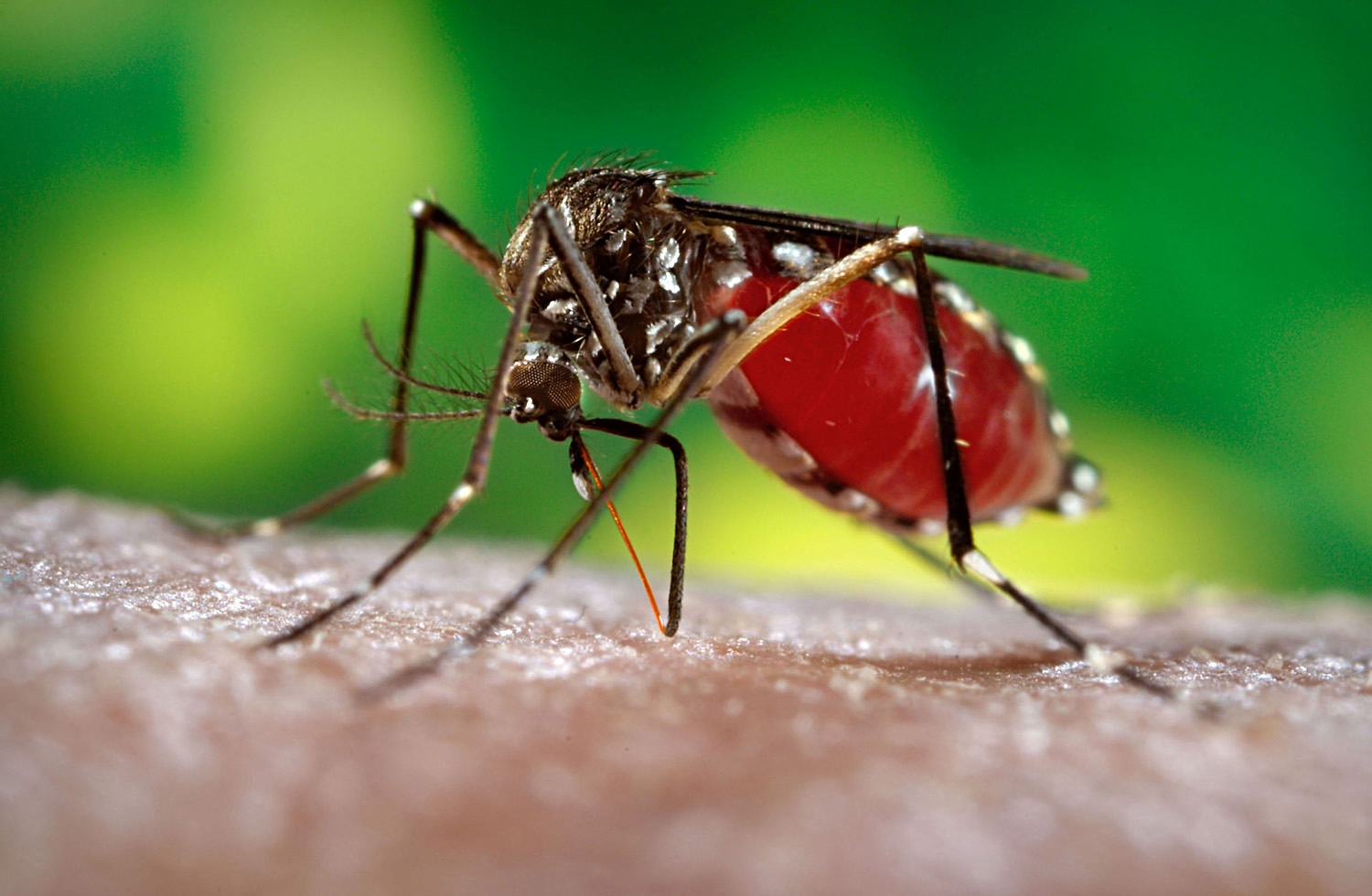
The Aedes Mosquito
Glaring Concerns Surround GE Mosquitoes
The Oxitec-engineered mosquitoes are unlike any that exist in nature. They’ve been genetically altered to carry a “genetic kill switch,” such that when they mate with wild female mosquitoes, their offspring inherits a lethal gene and cannot survive.[7] The intent is to suppress the population of that mosquito. To achieve this feat, Oxitec has inserted protein fragments from the herpes virus, E. coli bacteria, coral, and cabbage into the insects, dubbed OX513A.
The GE mosquitoes have proven lethal to native mosquito populations. In the Cayman Islands, for instance, native mosquitoes were suppressed by 96 percent after more than three million GE mosquitoes were released in the area, with similar results reported in Brazil.[8]
But, as we’ve seen in the past with genetically modified organisms (GMOs), when you tinker with nature, it often comes back to bite you. There are several glaring problems with assuming these GM bugs are safe for the human population or the broader ecosystem.[9] For starters:
- The potential exists for these genes, which hop from one place to another, to infect human blood by finding entry through skin lesions or inhaled dust. Such transmission could potentially wreak havoc with the human genome by creating “insertion mutations” and other unpredictable types of DNA damage.[10]
- According to Alfred Handler, a geneticist at the Agriculture Department in Hawaii, mosquitoes can develop resistance to the lethal gene and might then be released inadvertently. Todd Shelly, an entomologist for the Agriculture Department in Hawaii, said 3.5 percent of the insects in a laboratory test survived to adulthood, despite presumably carrying the lethal gene.[11] Such resistance may increase naturally over time.
- Tetracycline and other antibiotics are now showing up in the environment, in soil and surface water samples. These GM mosquitoes were designed to die in the absence of tetracycline (which is introduced in the lab in order to keep them alive long enough to breed). They were designed this way assuming they would NOT have access to that drug in the wild. But, with environmental tetracycline exposure (for example, in a lake) these mutant insects could actually thrive in the wild, potentially creating a nightmarish scenario.
The Oxitec corporation didn’t stop with GE mosquitoes. They’re also currently field testing a GE version of the diamondback moth, considered an agricultural ‘pest’, especially for crops like cabbage, broccoli, and cauliflower. To date, pesticides are the go-to “solution” to control diamondback moths, which cause an estimated $4 billion to $5 billion in crop damage in the U.S. each year.[12]
However the moths, which were the first crop pest to become resistant to DDT (dichlorodiphenyltrichloroethane), are quickly becoming resistant to chemical pesticides, leaving researchers looking for other avenues of control. The Oxitec moth is similar to their GE mosquitoes in that the females are engineered to die before reaching adulthood. This means eventually the species dies out because it can no longer reproduce.
The GE moths have already been laboratory tested in the UK and “caged” field trials took place the summer of 2015 in New York. During those trials, the moths were released outdoors in a contained area. Further trials are planned for spring 2016 with open field trials potentially coming in the summer. This would be the first experimental release of GE insects on U.S. soil.
Many have opposed the field trials, including GeneWatch UK, the Center for Food Safety, Friends of the Earth, Food and Water Watch, and the Northeast Organic Farming Association of New York (NOFA-NY), according to The Washington Post.[13] They reported:[14]
“We’re worried about what the effects of these trials outside of the cages [will be],’ said Liana Hoodes, policy adviser at the Northeast Farming Association of New York (NOFA-NY), citing concerns that the GE moths could spread beyond their trial sites and begin appearing on private growers’ farms.
Hoodes said NOFA-NY would like to see an impact analysis on the possible effects of GE moths on non-target species — that is, organisms besides diamondback moths — in case they happen to be eaten by birds or other animals or even accidentally consumed by humans.”
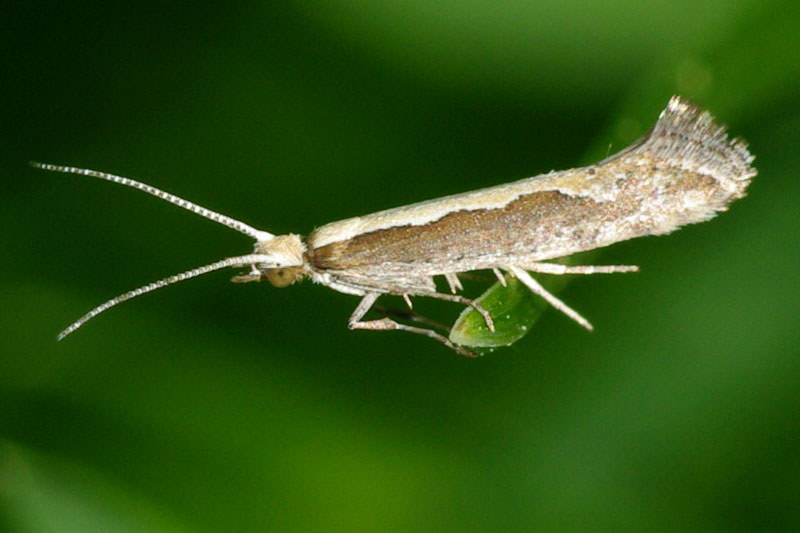
The Diamondback Moth
GE Fruit Flies Are Being Tested in Australia
Along with GE mosquitoes and moths, Oxitec has created GE fruit flies, which also contain genes that prevent females from reaching adulthood, preventing the species from reproducing. In Australia, the Mediterranean fruit fly, or medfly, is one of the most common ‘pest’ species. The Department of Agriculture and Food in Western Australia plans to conduct an indoor trial assessment on the use of GE fruit flies for pest control in the country.
Neil Morrison, lead researcher for agricultural pest control at Oxitec, told Reuters that the GE insects could pave the way for pest control methods that are non-toxic and pesticide-free,[15] but what it really amounts to is a massive experiment which, once started, cannot likely be undone. When releasing insects with a “self-limiting gene” into the environment, for instance, the species’ population could significantly decline or even become extinct, with untold impacts to the natural food chain.
Initiating a significant population crash is precisely the point of this type of GE technology, but even though it’s being used among species considered “pests”, there could be significant ramifications of toying with the future of any entire species. As noted by The Washington Post:
“For many, the idea of playing with the chemical identity of living beings, even non-human, poses ethical concerns: Are scientists playing God or risking the creation of a Frankenstein?”
GE Insects Have Already Been Released
In 2009, Oxitec released their GE bugs onto Grand Cayman Island in the Caribbean.
The experiment will go down in scientific history as the first release of GM insects that could bite humans. Not surprisingly, it was conducted in secret.
Once the locals got wind of this, they responded with a fair amount of public outrage — and rightly so! But it didn’t stop there. Oxitec subsequently released their frankenskeeters in Malaysia, Brazil, Panama, India, Singapore, Thailand, and Vietnam.
Oxitec is also the creator of GE pink bollworm moths, and swarms of this creature have already been unleashed over the fields of Arizona in an effort to overtake natural bollworm populations, another “pest”.
At present, the use of GM insects is in its infancy. Not only are there no precedents from which to draw potential ecological consequences, but also proper risk assessments have not been done – and quite possibly might be impossible to conduct, considering the many unknown aspects of tinkering with DNA and allowing it to mingle with other species.
In a study published in Ecology and Evolution, researchers attempted to identify potential ecological effects of GM insects, and revealed many, along with important knowledge gaps. They wrote:[16]
“The effects may occur in two phases: a transitory phase when the focal population changes in density, and a steady state phase when it reaches a new, constant density … Our methodology reveals many potential effects in each phase, perhaps most notably those dealing with immunity in the transitory phase, and with pathogen and vector evolution in the steady state phase. Importantly, this framework identifies knowledge gaps in mosquito ecology.
… For instance, in evaluating GE mosquitoes, the knowledge gaps in mosquito ecology are striking … particularly with respect to mosquito effects on consumer and resource species. Data and theory on ecological hysteresis in insect communities are also lacking, which makes it difficult to assess whether any changes are irreversible.”
Voice Your Support to Keep GE Mosquitoes Out of the Florida Keys
We’re already seeing the unintended consequences of GM crops popping up. “Super weeds” and increasingly resistant pests are rapidly spreading and wreaking havoc across American farmland, while the human health concerns keep mounting.
When scientists take genetic modification even further, tinkering with genes in insects and animals, the consequences may be even steeper. When a Purdue University computer model tracked the effects of releasing just 60 “Frankenfish” (GE salmon) into a population of 60,000, there was a complete extinction of the normal fish in just 40 fish generations. And this is just the beginning…



 You beat me to it....I stay with the Lavender oil and Cinnamon extract in my bath, pour that shit on my washcloth when I shower.


