Film directors/film makers: Where yat?

maybe not a complete re-up of everything ... but the e-books aren't really big files... so i can re-up those at least...

I think he's talking about ansatsusha_gouki not re-upping which is nuts. :smh:

This page (don't even have to talk about this thread) is worth the 10 bucks alone.

And thanks for the Movie Magic MOS. They must not make it for the mac because I can't find it anywhere. :please:
 
I think he's talking about ansatsusha_gouki not re-upping which is nuts. :smh:

oh...

And thanks for the Movie Magic MOS. They must not make it for the mac because I can't find it anywhere. :please:

if you need it for mac..i'll keep an eye out ...but i didn't see anything ... and i went to all my usual sites ...

not only that ... no one's uploaded a recent version of the scheduling software (version 3.7 was all i could find even though they labeled it version 5)... and no one's uploaded the budgetin' software at all...

i looked it up at http://www.writersstore.com/movie-magic-budgeting-and-scheduling-bundle ...

and it costs a pretty penny....

i'll jus keep usin' excel for the time being...
 
oh...


if you need it for mac..i'll keep an eye out ...but i didn't see anything ... and i went to all my usual sites ...

not only that ... no one's uploaded a recent version of the scheduling software (version 3.7 was all i could find even though they labeled it version 5)... and no one's uploaded the budgetin' software at all...

i looked it up at http://www.writersstore.com/movie-magic-budgeting-and-scheduling-bundle ...

and it costs a pretty penny....

i'll jus keep usin' excel for the time being...

Yea, same here. Might just have to bite the bullet.

You in LA? Are you going to the Pan African Film Festival?
They opened with "Think Like A Man" last night at the Arcight.
 
Yea, same here. Might just have to bite the bullet.

You in LA? Are you going to the Pan African Film Festival?
They opened with "Think Like A Man" last night at the Arcight.

i'm close enough...i'm in orange county...most of my family is in L.A. and the Long Beach area...

nah..i didn't go to the film festival... i rarely go to the movies and festivals .. in general..

i'm not really interested in "Think Like A Man" ...Romantic Comedies aren't really my favorite genre...
 
i'm close enough...i'm in orange county...most of my family is in L.A. and the Long Beach area...

nah..i didn't go to the film festival... i rarely go to the movies and festivals .. in general..

i'm not really interested in "Think Like A Man" ...Romantic Comedies aren't really my favorite genre...

I'm just gonna check it out to mingle. Maybe catch a few workshops.

I went to one a few years ago, that was about how to pitch your ideas and shows.
One of the guys on the panel at the shop was the creator/producer of Burn Notice.
It was pretty cool seeing ppl go up and pitch their movies and to hear the panel break down what they did right/wrong and what to emphasis to sell their projects.

I enjoy the short films also.

The Festival is from the 9th to the 20th so I'm gonna try and hit a few things.
 
D'4rtiste Ch@racter M0deling
Code:
http://www.fileserve.com/file/aUgUePY/DArt...aracterModeling/DArtistCharacterModeling%203.rar

32371593423945225449.jpg

86196105124909683075.jpg

39078831536043350383.jpg

05851306368737294963.jpg


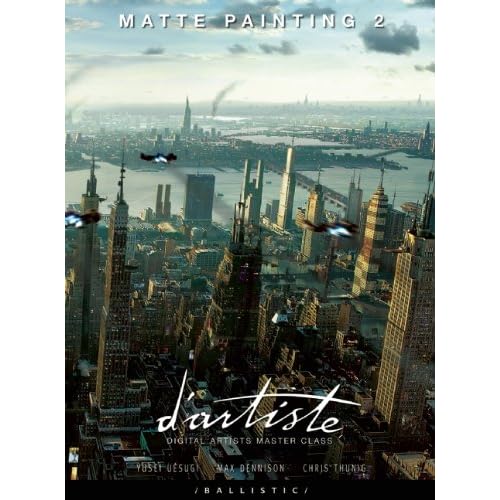
D'4rtiste M@tte P@inting B00k..
Code:
https://rapidshare.com/files/3881577920/d4rtist3_M4tte_P4inting_B00k.pdf

94102808223789223546.jpg

96950703077086844800.jpg

12117167660062704652.jpg

29287366932659638816.jpg
 
Last edited:
Blank Storyboards..

4x3 {Fullscreen}
Code:
https://rapidshare.com/files/3970918920/storyboard-4x3-blank-02.pdf

Code:
https://rapidshare.com/files/1369009768/storyboard2.pdf

16x9 {Widescreen}
Code:
https://rapidshare.com/files/3622542036/storyboard-16x9-blank-02.pdf

Code:
https://rapidshare.com/files/3772857250/storyboard-16x9-blank-01.pdf

Code:
https://rapidshare.com/files/3498187206/storyboard_template_16x9.pdf

69734395643591191876.jpg

71125831708415592051.jpg

65677216016122134416.jpg

64053279395796152260.jpg
 
D!git@l Tut0rs: Beg!nners Gu!de to Digit@l P@inting in Ph0t0sh0p CS Five...

Code:
https://rapidshare.com/files/1180139992/Digit4l_Tut0rs_-_Beginn3rs_Guide_to_Digit4l_P4inting_in_Ph0t0sh0p_CSFive.rar

90618455290338120208.jpg

76736979196619011439.jpg

52905658320211627689.jpg

05809023440262128923.jpg

94374708568175140394.jpg

32850417779287680014.jpg
 
if you're a film maker you should read underneath the palms of rio and make it into a movie
 
The Greatest Lie Ever Told to the Black Filmmaker
hollywood-sign.jpg

http://blogs.indiewire.com/shadowandact/the_greatest_lie_ever_told_to_the_black_filmmaker

It would seem that the more different people tell the same lie, the easier it is for others to believe it as the truth. I have already discussed in several articles and in my book, SLAVE CINEMA: The Crisis of the African-American in Film, that there is a segregated relationship between how African-American films are funded, distributed and exhibited vis-à-vis how white American films are funded, distributed and exhibited.

It is this racially segregated and unequal relationship that aids in holding back African-American films (independent and commercial) from the narrative and stylistic advances often explored in white American and international cinema. To understand this aesthetic segregation we have to first acknowledge that there is always –every year- a certain amount of white films produced and distributed for prestige (Academy Awards, international awards and noble causes) rather than for profit.

For instance, no one at Fox Searchlight Pictures was expecting the great cinematic poet Terrence Malick’s work, THE TREE OF LIFE (2011) to be a 500 million dollar blockbuster when it was released this Summer, but the film which stars Brad Pitt, Sean Penn and Jessica Chastain, premiered at the Cannes film festival after a two year delay by the auteur himself, where it finally won the coveted Palme D’or. The film has played domestically and internationally earning little more than 12 million dollars as of September 1st in America from a production budget of 32 million dollars with high critical acclaim.(1) What can be deduced from this example is that white Hollywood creates and maintains its national and international cultural preeminence by funding, distributing and exhibiting certain films that are in no way made to return steep first and second weekend short term box office profits, but instead certain films are made to enhance the richness of white Hollywood’s cultural legacy and seduce those critical of Hollywood’s greed that the business is not always about profit: it is also about the art.

The truth is Hollywood makes a fortune on a handful of blockbuster films and their sequels that make millions upon millions of dollars domestically and across the globe. Yet, there is another truth repeated by author Mario Puzo on the first page of his book, THE GODFATHER, where he quoted from 19th century French writer, Honoré de Balzac that is à propos to white Hollywood’s success : “Behind every great fortune there is a crime.”(2) The crime behind the fortunes of Hollywood which will be discussed in this article is the greatest lie ever told to the black filmmaker.

The Lie: African-American films have little to no international market appeal.

This single lie which has been repeated by white producers, Hollywood insiders, agents and critics alike is the single greatest lie that has both swindled many African-American filmmakers from their just deserved foreign licensing rights and contributes to the lower production budgets, shorter development times and general lack of narrative and stylistic risk taking in African-American films commercial and independent vis-à-vis white films commercial or independent. As I stated in SLAVE CINEMA:

“Ironically, this notion that no one is interested in African-American films outside of the African-American community was started during the spark in the production of African-American films in the late 1980’s and early 1990’s. Many Hollywood executive power brokers literally swindled many African-American filmmakers out of their share of foreign licensing rights by convincing them that their urban themed films would have little audience interest outside of the U.S. market. We would do well to note here that surviving copies of Oscar Micheaux’s work have been found as far away as Spain (Cf., Forgeries of Memory and Meaning, Robinson, 261), so there is and always has been an international audience for African-American films but the whites that control the industry have a vested interest in telling us that there is not… Even a recent article in The Hollywood Reporter about the success of Tyler Perry states that,” execs, while careful to emphasize that they want to produce more fare for black audiences, say that the business picture is more complicated than it would appear on the surface. Advantages like new audiences for lower-budget product are offset by certain disadvantages, like limited international potential.” (pgs. 119-120) (3)
It would seem unnecessary to have to ask that if African-American music and musicians have an international appeal, if African-American athletes are known the world over, and if African-American fashion and dances are known around the world, why would African-American films have little international box office appeal? Even when we listen to the hottest French rapper today, La Fouine (pronounced: La Foo-knee) in the song Gucci Sale Musique (Trans: Dirty Gucci Music) from his latest double CD, we hear references to African-American music in the lyric:

“Je suis Notorious BIG, bitch je suis, Ready to Die.” (Trans: I am Notorious BIG Bitch, I’m ready to die.)
If we search YouTube carefully we see Swedish and Belgian youths, Crip walking, and youths in Switzerland sagging their pants with oversized hoodies and NY baseball caps on, the Boston Celtics’ Paul Pierce playing basketball in China and hip-hop fashions worn in the streets of Japan; why wouldn’t every African-American filmmaker with a Hollywood contract demand that his or her foreign licensing rights be respected? Why aren’t all African-American independent filmmakers making sure that the DVD’s of their films contain at least two different foreign language subtitle tracks or at least one foreign language voice dub track? Why? I believe that the destructive power of the lie that African-American films have little to no international market appeal takes advantage of African-American mentalities that have been shaped by 400 years of slavery’s oppression. That is to say that the lie gains its power and is often accepted as true because of the way the lasting legacy of slavery has shaped our mentalities and curtailed the expectations we associate with our racial identity. But the most persuasive tool that seduces us to accept the lie that African-American films have little to no international market appeal is that the coveted Hollywood Contract is a symbol of status and division among African-American filmmakers.

Whether or not you believe in the veracity of the “Willie Lynch Letter” as a doctrine of white supremacist control over African-Americans during the era of slavery, the gilded ideal of the Hollywood Contract has actually been the most powerful tool used to divide and ‘control’ African-American filmmakers since Spike Lee’s deal with Columbia pictures to fund and distribute his second feature film, SCHOOL DAZE (1988). Whether that contract with a major Hollywood studio is a P&A deal (Prints and Advertising), Negative Pick-up, First Look, etc, the contract itself and the major studio attached to it becomes a dividing line between the haves and the have nots; or in keeping with the theme from Spike Lee’s SCHOOL DAZE, the wanna-be’s and the jiggaboos. After SCHOOL DAZE and later Singleton’s BOYZ N THE HOOD (1991) the Hollywood Contract became a status symbol that divided most practicing and would be African-American filmmakers into two distinct categories and deliberately pitted them against one another:

1) The House Negro Filmmaker (also known as the commercial filmmaker)
2) The Field Negro Filmmaker (also known as the independent filmmaker)
The House Negro Filmmaker tries desperately to please his white masters with a successful profit making product using A-list actors, generic story lines, conventional action and safe non-threatening bourgeois ideals that appeal to both white and black audiences. On the other hand, The Field Negro Filmmaker attempts to represent reality on-screen the way he or she believes a majority of African-Americans see their everyday social realities. The Field Negro Filmmaker wants to make a successful profit making film with b-list or unknown actors, a race specific story line, conventional action but with threatening street ideals that upset the bourgeois ideals of both white and black audiences. Whether you please your masters or you please your brethren it is very possible that neither filmmaker is actually pleasing him or herself as an artist.

The Hollywood Contract (on par with the status provided by the good government job, the good factory job in the African-American community) changes the practice of filmmaking into a status seeking enterprise. The House Negro Filmmaker with a Hollywood Contract is privileged with the ability to ‘hob-nob’ with the A-list stars and celebrities; he or she is perceived as having ‘made it’ to friends and family; their film is seen on screen and occasionally on cable and satellite television. But the down side of The House Negro Filmmaker is that they have been rendered powerless in the production and development of their own subsequent works. Often the studio interferes with their work in the form of budgetary restrictions, usually citing the lie that African-American films do poorly in the international market as the reason. Their scripts are placed in ‘turn around’ (industry jargon for ‘not at this time’) or their films underperform due to script revisions, ratings board interference, foreshortened development timetables, poor advertising, even limited screen ratios. Thus, The House Negro Filmmaker, like the House Negro who served his white masters inside their plush antebellum estates, has to perform specific duties to maintain his privileges and status by learning to stay in his place, so he is still a slave; he is still un-free. The Hollywood Contract is more of a shackle than it is a key. Not to diminish the work of all House Negro Filmmakers, since some of their films usually expand Hollywood’s restricted representations of race by casting African-Americans in roles usually reserved for whites while simultaneously pleasing those African-Americans that adhere to conventional bourgeois ideals.

By contrast, The Field Negro Filmmaker seeks the status of the Hollywood Contract but only on the terms that his or her first film, reveals the way they actually believe it is on the streets for African-Americans. (See: The Realist Tendency, Part One) The Field Negro Filmmaker usually invests his or her own money into the film or the money of trusted friends, family or funds gathered by any means necessary to bring to the screen an aspect of African-American life thought of as suppressed or under-represented by commercial Hollywood films and House Negro Filmmakers. Whether gritty “Get out of the Game” street dramas or weed induced comedies, The Field Negro Filmmaker’s work can only be validated in the end by the attainment of The Hollywood Contract. In the eyes of family and friends, The Field Negro Filmmaker is a broke failure until he can secure that Hollywood Contract and insulate himself with the privileges of the status it bestows upon the signer. The Field Negro Filmmaker usually accepts the lie that his or her urban themed film will not play well in international markets because they have very little knowledge about urban cultures overseas, do not speak a second language, and are blindly concerned with the urban African-American community as their sole target audience. If the House Negro Filmmaker has to accept the lie as a prerequisite to the offer of a The Hollywood Contract, then the Field Negro Filmmaker accepts the lie on the basis of his or her own ignorance of the value of their work in markets other than those considered strictly African-American. Not to disrespect the work of all Field Negro Filmmakers, some of their work does call attention to aspects of African-American social realities that are suppressed or deliberately overlooked by mainstream Hollywood cinema.

I have yet to explain why foreign licensing rights are so important to all filmmakers and particularly to those of color. Let me begin with the fact that a large percentage of Hollywood’s worldwide box office grosses come from overseas markets. A quick glance at the box office totals of almost any American produced film on websites like ‘boxofficemojo.com’ will, more often than not, reveal an equal or higher amount of international box office grosses in comparison with domestic grosses. The additional profits associated with foreign licensing rights,” allows white filmmakers a wider margin of error when judging the box office appeal of a film against the artistic purpose and integrity of a film. This wider margin of error encourages certain white filmmakers to experiment with style, dialogue, the presentation of action, editing, setting as well as allowing these white filmmakers to take chances on subject matter and its overall narrative presentation.” (pg.16, SLAVE CINEMA) It is as a direct consequence of the denial of foreign licensing rights to African-American filmmakers that there exists, in my opinion, a segregated and unequal divide between African-American filmmakers and white filmmakers.

Returning to the issue of how the illusions associated with The Hollywood Contract pits African-American filmmakers against each other, we see how the competition involved in getting a film noticed by the industry (through festivals, word-of-mouth, social media networks) causes the House Negro Filmmaker to look down upon the Field Negro Filmmaker as an uncouth, retrograde threat to the status and privileges he believes he has worked so hard to achieve. In fact, the House Negro Filmmaker usually develops selective amnesia and forgets that he was once a Field Negro Filmmaker and had to raise money for his first film by hook or by crook. To illustrate this analogy we need go back in time and look at the tenuous and volatile relationship between Spike Lee and Matty Rich. Matty Rich launched his filmmaking career with the 1991 independent film, STRAIGHT OUTTA BROOKLYN, which was financed with credit cards and donations. He would be our Field Negro Filmmaker who attained a Hollywood Contract for his next film, THE INKWELL (1994) which received mixed reviews and was a commercial failure.
Spike Lee, of course, began as a Field Negro Filmmaker with his first feature length independent film, SHE’S GOTTA HAVE IT in 1986. When he signed his Hollywood Contract with Columbia pictures for SCHOOL DAZE he had successfully transitioned into House Negro Filmmaker status. It is well known that Spike Lee spewed much vitriol against Matty Rich allegedly because he didn’t go to film school and was, ”ignorant,” in Spike’s opinion. (4) Yet only a few years later Spike would have his choke chain yanked by Hollywood when Warner Bros. refused to increase the budget of his epic bio-film MALCOLM X (1992). He would have to go back to his Field Negro Filmmaker roots and raise money from sources outside of Hollywood to complete that film and later several others.

The privileges and status associated with the fabled Hollywood Contract often blinds the House Negro Filmmaker from his or her roots and causes them to see the Field Negro Filmmaker as a competitive threat to their illusion of artistic control in the white controlled Hollywood industry. Matty Rich’s filmmaking career may have stalled and failed for several other reasons, but the hatred and anger between he and his fellow African-American filmmaker, Spike Lee, certainly blinded both of them from the Janus faced nature of The Hollywood Contract. So if you, like many of us, have ever wondered why successful African-American filmmakers and stars only rarely attempt to unite and help those up and coming in the industry, it’s not because of what’s written in the contract that is preventing them, but rather the illusion of status and privileges associated with The Hollywood Contract that divides and ‘controls’ the African-American filmmaker and changes their perception by causing them to see others as a competitive threat.

My only suggestion for a way out of this, for lack of a better phrase,” Hollywood trick bag,” is a radical one. I believe that all of the African-American filmmakers who have signed Hollywood Contracts wherein which they were denied their foreign licensing rights should band together and file a class action lawsuit against all of the parties involved. Whether these filmmakers win or lose the case would not be the measure of the lawsuit’s success or failure, but instead the lawsuit and the controversy it would inevitably create would make all filmmaker’s of color aware of the importance, the significance and their rights to foreign licensing when and if they are ever offered the gilded Hollywood Contract. Moreover, if these filmmakers should win they could use the money to start and maintain a “Collard Greens Circuit” as I have described in a previous article as an alternative means for funding and distributing African-American cinema. The crime behind the great fortunes of Hollywood and the impoverishment of African-American cinema has to be corrected. If white controlled Hollywood wants to keep a segregated relationship between how white films are funded, distributed and exhibited and African-American films then perhaps a truly segregated cinema, where we keep our profits to sustain and control our own images would show them that a house divided cannot stand, but that if you build another house it surely can.

Andre Seewood is the author of SLAVE CINEMA: The Crisis of the African-American in Film.

ACTUALLY THIS ARTICLE ANSWERS MY PREVIOUS THREAD...http://www.bgol.us/board/showthread.php?t=650314

 
And props to the original poster..

The “Collard Greens” Circuit: An Alternative Model for the Distribution and Exhibition of African-American Independent Cinema

All too often in the African-American community our conformist tendencies and moral conservatism leads us to a moribund complacency that is just as dangerous for our community as a whole as it is for our culture and the art it produces. It is a complacency born from not necessarily a traditional right-wing conservative perspective, but a religiously centered, middle class aspiring perspective that forces some of us to look at social and cultural problems, not from their systemic causes and functions, but instead as a moral judgment against an individual.

I will use two examples from the past to shed light on our current state of affairs and the dim future it foretells.

In the 1980’s the rise of the crack cocaine epidemic was for so long thought of as an individual’s weakness by some within our communities, which in turn instilled a complacency that blinded some of us from the various life-threatening problems a collective of individuals weakened with substance abuse issues would cause us within a decade’s time. The same could be said of the HIV epidemic during the late 80’s and 90’s, when our moral conservatism and homophobia fed into the perception of AIDS as a ‘gay man’s disease’ and therefore an individual’s weakness. The complacency born from these perceptions encouraged a lack of collective political effort and an unwillingness to help others that blinded us from how the epidemic would profoundly impact our community throughout the 80’s and 90’s and even today.

Now moving from community to culture, today it is well known that only two or three films made by black filmmakers are attaining mainstream theatrical releases each year since the early 2000’s. Once again our conformist tendencies and conservatism is making us complacent and blinding us to the systemic causes and economic functions of the paucity of black films being released theatrically. It is a complacency that has many of us blaming the individual filmmakers for their perceived weakness in not securing a lucrative Hollywood deal as the problem. In other words it’s not Hollywood’s fault, Hollywood exists to make money, it’s the black filmmaker’s fault for not providing more marketable (read: white friendly) material. Even our comedies are failing to make substantial profits as the recent underperformances of FIRST SUNDAY, LOTTERY TICKET and WHO’S YOUR CADDY revealed.

Yet, even though there are many, many African-American films produced each year only two or three of these films gain a mainstream theatrical release. If we count a Tyler Perry film as one of those three, then actually there are only two African-American films, usually with a high profile African-American star attached, that are given a mainstream theatrical release. But there are two additional caveats here also: 1) Neither of the two remaining African-American films can be considered ‘independent’ because they are either bankrolled by a well-known or well connected producer (e.g. John Singleton and the film HUSTLE & FLOW, Tyler Perry and Oprah Winfrey’s involvement with PRECIOUS); or 2) not directed or written by an African-American (e.g. BIG MOMMAS: Like Father, Like Son which was directed by John Whitesell). So what do these, for lack of a better word, two or three ‘bogus’ African-American films released to mainstream theaters every year tell us?

In times of great cultural crisis, like today, we as African-Americans become complacent because the ‘white controlled’ system offers us one or two symbols of African-American success in a particular art-form or medium that, in turn, distracts us from the hundreds or thousands of African-Americans who languish in poverty and obscurity as they zealously pursue their ambitions in that particular art-form or medium. A discomforting and stereotypical analogy is that: many African-Americans play basketball and aspire to be professionals, but only a handful get into the NBA to make millions. One of the great differences here is that we get to see those handful of black basketball players on our television screens, whereas so many, many African-American filmmakers works are seldom seen on television nor on the big screen. Today, the obvious success of Tyler Perry and even Oprah Winfrey distracts us from our entrenched powerlessness to simultaneously produce and distribute an African-American independent film into mainstream theaters.

It is under these conditions that we are forced to realize that African-American cinema and ‘white’ American cinema are segregated and unequal in regards to the funding, distribution and exhibition of their respective films. As I stated in my book, SLAVE CINEMA: The Crisis of the African-American in film:

”More money may increase the quantity of films whites produce, but more money also allows white filmmakers a wider margin of error when judging the box office appeal of a film against the artistic purpose and integrity of a film. This wider margin of error encourages certain white filmmakers to experiment with style, dialogue, the presentation of action, editing, setting as well as allowing these white filmmakers to take chances on subject matter and its overall narrative presentation. Yet when studios and independent producers approach African-American films they provide little margin for error by way of smaller budgets, shorter development and production schedules that do not afford African-American filmmakers the same luxuries of artistic purpose, integrity and experimentation as whites.” (pg. 16)
Couple this problem with the fact that only two to three ‘bogus’ African-American films are released into mainstream theatrical theaters and you have a segregated cinema that discourages the ambitions of African-Americans while sustaining the status quo of white cultural superiority in the art and business of film.

What is needed is a renewed sense of collective urgency, cooperation and strategic change in how we fund, market and distribute African-American independent cinema. We can no longer depend on the illusion of a big Hollywood distribution deal as the model to sustain African-American cinema commercial or independent. Countless commercial African-American filmmakers have had their careers halted or destroyed by the Hollywood contract which keeps their scripts in “turnaround” (industry jargon for,” not at this time”) or have their films poorly marketed and distributed as a means of controlling their talent and forcing them to “pull the plough” for an industry that makes the most of its profits from multi-million dollar blockbuster films that through a variety of seductive ways sustain the illusion white cultural superiority in the cinema. Yet it is a white controlled entertainment industry that sustains its artistic prestige from smaller films that take years and years to turn a profit which is a privilege deliberately withheld from African-American filmmakers and their works.

Under these pernicious circumstances we can no longer afford to blame the African-American filmmaker for not making a more marketable product since the product that Hollywood does not want to market are African-American films that challenge the racial representations that have always contributed handsomely to its bottom line. We have to realize that all of the African-American films which we are not seeing are a direct consequence of the “chosen few” that are being placed in front of us to block our view. In short, it is not the weakness of the individual filmmaker that is keeping him or her in poverty and obscurity, but instead the strength of the system which is being fed by our conformist tendencies and conservatism which translates as a lack of a sense of urgency when it comes to African-American cinema. Like the tragically absurd figure in Franz Kafka’s vignette about a deluded man who waits all of his life in front of a door he was told he could not enter, only to find out at the point of his death from old age that this door was, “for you and only you,” too many African-American filmmakers are waiting for a chance that cannot be given to us: it must be taken. (1)

The first and foremost effective means with which we have to combat this problem are African-American film festivals. With several important changes to the submission processes, the addition of multi-tiered exhibition categories and a co-operative ethos and mandate several African-American film festivals could collectively function like the “chitlin’ circuit” did for African-American playwrights and performers who were not allowed into all white establishments during and after segregation.(2)

In effect, these African-American film festivals could form what we might call, ”a Collard Greens circuit,” where challenging, artistically advanced and stimulating films could tour from city to city under a particular festival’s brand name. Profits from these tours could be used to create prize money for award winning films to help fund African-American filmmakers future works, as well as, create a non-profit fund to provide grant money for developing African-American filmmakers. Funding that would give these filmmakers a wider margin of error concerning short term profits vis-à-vis long term cultural legacy in the creation and development of challenging and innovative films. These grants could potentially ‘level the playing field’ and de-segregate the relationship between African-American cinema and white cinema in terms of an African-American filmmaker’s ability to develop challenging, innovative and groundbreaking works.

One of the foreseeable problems with the development of,” a Collard Greens circuit,” for African-American independent film is found in making sure that the films are marketed and exhibited to their target audience. For example, in 2009 Barry Jenkins’s film, MEDICINE FOR MELANCHOLY, was given a limited “art-house” release across the country, but when it played in my hometown of Detroit, it was shown at the Detroit Film Theater. On paper, the Detroit Film Theater is a well respected film institution with a more than 35 year tradition of showing the best films from around the world. In reality, the Detroit Film Theater rarely reaches out to African-American film audiences, usually showing only one obligatory African-American themed film during Black History month. While as an adjunct of the Detroit Institute of the Arts, it serves mostly white privileged suburbanites and college students and faculty. The “art-house” release pattern continues the segregation between white art films and African-American independent films because the art film theater caters to white audiences for the majority of its yearly programmed schedule. Therefore, the African-American independent film that receives an art house release does not effectively reach most African-American filmgoers.

The second foreseeable problem is whether or not large African-American film festivals like, the Hollywood Black Film Festival (HBFF) or the American Black Film Festival (ABFF) and any other film festivals whose agenda is to promote black film can work together to both coordinate the tours and distribute a percentage of the profits into prize money and grants for developing filmmakers. It’s not that these festivals don’t already have systems in place for prize money and development funds, but the fact that separately these festivals have a less than profound effect in getting African-American films into mainstream theaters and accumulating funds that could be distributed as development and production grants to filmmakers. But given the circumstances I have already described concerning a segregated cinema between white films and black films, if these disparate festivals could work together they could form a mighty weapon that would aid in the desegregation of American cinema.

A third but not less important foreseeable problem with the development of “a Collard Greens circuit” for African-American independent cinema can be found in our conformist tendencies that are manifested in the notion of filmmaking as a “get rich quick” means of vertical class mobility. We have been seduced by a variety of conduits into believing that the business of film is the sole purpose for getting involved in the art of film; that when we make a film and concern ourselves solely with ability of the project to make money we lower our ideals to what we have convinced ourselves is a common denominator and in so doing we make mindless comedies or create stereotypical characters and circumstances to which we believe all black audiences can relate. We conform to very notions we wanted to transcend when we think of filmmaking solely as a means of getting rich, instead of as a means of artistic expression.

Yet, to end this dream on a ray of hope, “a Collard Greens circuit” if developed and sustained could allow the most innovative, challenging and artistically advanced African-American independent cinema to finally reach its targeted audience. These films, if shown in a variety of cites North, South, East and West could renew our spirit and faith in cinema as the most important art-form of African-American artistic expression. The “Collard Greens circuit” could resurrect films long thought lost or unmarketable like R.W. Fassbinder’s WHITY (1970), GANJA & HESS (1973) or Tanya Hamilton’s NIGHT CATCHES US (2010) saving these films from obscurity and giving them a chance to make a deep impression with African-American audiences as a means to contradict the racial representations of typical Hollywood product. The “Collard Greens circuit” could provide an alternative model for the distribution and exhibition of African-American independent film that could finally let us create a doorway for ourselves rather than wait for someone to open the door for us and let a ‘chosen few’ through.

Andre Seewood is the author of SLAVE CINEMA: The Crisis of the African-American in Film.

NOTES
(1) For an eloquent and arresting interpretation of the tragically comic figure of the vignette from Kafka’s The Trial, see the opening sequence of Orson Welles’ phenomenal film adaptation THE TRIAL (1962). The exact passage can be found in chapter 9 “In the Cathedral” on pages 213-222 in Franz Kafka’s The Trial, Schocken Books, New York, 1974.
(2) The ‘Chitlin’ Circuit’ has been alternately described as a loose affiliation of performance venues where African-Americans could perform during and after the time of American racial segregation. These were venues where many well known African-American performers could develop and master their craft while being paid (nominally of course). Performers like, Redd Foxx, Moms Mabley, Flip Wilson, Jimi Hendrix, Aretha Franklin and a host of others began their careers on the ‘Chitlin’ Circuit’. This circuit still exists today and was instrumental in the success of Tyler Perry’s stage plays before his career as a filmmaker.

http://blogs.indiewire.com/shadowan...ernative_model_for_distribution_exhibition_of
 
So now I know why all my artist friends hate me when I went to NYC got a corporate job, then returned to my hometown after 10 years.

House negro vs field negro.

Sad. :smh:
 
What happened black? Story?

That was it. We all were artist living in the same buidling. We shared everything to survive as artist. We were all on welfare at 24 years old. Never had a real job. I made an unexpected trip to NYC with a girl who came in town, 10 years later when it turned out that I actually made it as an artist in NYC corporate America. They all turned on me. Real Bitter. I loved them. Broke my heart.. :(

Amazing what time and success can do. 12 years ago, when I tried to hip them to They said computer graphic will never be like real art. like I was some kind of turn coat or sell out.

What gets me is, I'm a real artist. I know real art, paint, pencil, airbrush, what could make me shift gears but real art? You tell me Zbrush is not art?

Guess I still am a bit hurt but I am better than the artist I even wanted to be. They quit Art all together.
 
G3tting St@rted with D!gital P@inting..

the 2nd part to the Digital Painting Series..

Code:
http://www.wupload.com/file/117334510/_DT_G_S_w_D_Painting_in_Ph.CS5.part1.rar
http://www.wupload.com/file/117333869/_DT_G_S_w_D_Painting_in_Ph.CS5.part2.rar
http://www.wupload.com/file/117333594/_DT_G_S_w_D_Painting_in_Ph.CS5.part3.rar
 
G3tting St@rted with D!gital P@inting..

the 2nd part to the Digital Painting Series..

Code:
http://www.wupload.com/file/117334510/_DT_G_S_w_D_Painting_in_Ph.CS5.part1.rar
http://www.wupload.com/file/117333869/_DT_G_S_w_D_Painting_in_Ph.CS5.part2.rar
http://www.wupload.com/file/117333594/_DT_G_S_w_D_Painting_in_Ph.CS5.part3.rar
 
BTW, good news. Blessing on the way. GTG.

PoppaSoScarlet.jpg


The post on the house vs field was good reading.

Just your opinion, I'm getting a lot of folx who didn't help me when I was getting starting wanting to check out my camera. Should I let them see it at all, or igg them?
 
Just your opinion, I'm getting a lot of folx who didn't help me when I was getting starting wanting to check out my camera. Should I let them see it at all, or igg them?

i wouldn't let 'em see it.. but i wouldn't be like "HELL NAH YOU CAN'T SEE MY FUCKIN' CAMERA"..

i don't like to necessarily burn bridges like that...

i would say something to the effect of .. "actually i'm gonna be usin' it on the day you wanna borrow but maybe next time"...

now..if they wanna kick you down some paper ..to rent it.. that's a different story..

but i've had bad experiences loanin' things to people i actually considered friends .. i.e. i didn't get my property back in the same condition it was lent in...

and it wasn't no $10,000-20,000 worth of equipment...

so i'm really reluctant to loan my things.. nor do i ask to borrow other people's property... if somebody has something i find useful...i jus buy my own...
 
SFX Magazine

8440181329067008_sfx.jpg


Code:
http://depositfiles.com/files/jso9ih99q

Code:
http://oron.com/mwziuvhxrwll
 
Last edited:
i wouldn't let 'em see it.. but i wouldn't be like "HELL NAH YOU CAN'T SEE MY FUCKIN' CAMERA"..

i don't like to necessarily burn bridges like that...

i would say something to the effect of .. "actually i'm gonna be usin' it on the day you wanna borrow but maybe next time"...

now..if they wanna kick you down some paper ..to rent it.. that's a different story..

but i've had bad experiences loanin' things to people i actually considered friends .. i.e. i didn't get my property back in the same condition it was lent in...

and it wasn't no $10,000-20,000 worth of equipment...

so i'm really reluctant to loan my things.. nor do i ask to borrow other people's property... if somebody has something i find useful...i jus buy my own...

Totally, so just not to slam the door on anyone's face. I'm going to open a rental service for $750 a day and I come with them. The camera and card cost me $20,000. If they don't have budget, there's nothing to talk about.
 
That was it. We all were artist living in the same buidling. We shared everything to survive as artist. We were all on welfare at 24 years old. Never had a real job. I made an unexpected trip to NYC with a girl who came in town, 10 years later when it turned out that I actually made it as an artist in NYC corporate America. They all turned on me. Real Bitter. I loved them. Broke my heart.. :(

Amazing what time and success can do. 12 years ago, when I tried to hip them to They said computer graphic will never be like real art. like I was some kind of turn coat or sell out.

What gets me is, I'm a real artist. I know real art, paint, pencil, airbrush, what could make me shift gears but real art? You tell me Zbrush is not art?

Guess I still am a bit hurt but I am better than the artist I even wanted to be. They quit Art all together.

Sorry to hear that man. :smh:

Unfortunately, when you get older, your circle of friends get smaller. There are several circumstances that lead to this but jealousy usually is high on the list.

Just focus on you and your family and if others are down, cool. If not, oh well.
BTW, good news. Blessing on the way. GTG.

PoppaSoScarlet.jpg


The post on the house vs field was good reading.

Just your opinion, I'm getting a lot of folx who didn't help me when I was getting starting wanting to check out my camera. Should I let them see it at all, or igg them?

I would charge them but be cool about it. I'm usually helpful to everyone but sometimes ppl shouldn't be rewarded for past asshole behavior.
Maybe you can cut them a deal but letting them hold your Scarlett for free? :itsawrap:

Also, what is your total Scarlett package include?

I want to get one but what got you to $20,000?
Wondering whether I should get that or put down on a house...

Shot anything yet?
 
Sorry to hear that man. :smh:

Unfortunately, when you get older, your circle of friends get smaller. There are several circumstances that lead to this but jealousy usually is high on the list.

Can I get an itemized short list? I usually don't even deal in those emotions and totally unfamiliar with it.


I would charge them but be cool about it. I'm usually helpful to everyone but sometimes ppl shouldn't be rewarded for past asshole behavior.
Maybe you can cut them a deal but letting them hold your Scarlett for free? :itsawrap:

Yes, that's what I'm dealing with, they had the opportunity to help, but really didn't maybe just let them touch but not operate, or do a one time seminar.


Also, what is your total Scarlett package include?


it's the starter $15,000 kit. Actually 16,000 now.

http://www.red.com/store/scarlet/product/scarlet-x-al-canon-mount-package

I got it as soon as it came up for deposit so it was 2Gs cheaper and I get a RedMote (remote) and extra batteries.

Then I bought the Red Rocket which another $5Gs. I have that already in my 12core. So now I can play full Cinema film on my 30 inch Apple Cinema displays.

http://www.red.com/store/red-rocket/product/red-rocket


RedRocket.jpg


I want to get one but what got you to $20,000?

God. Prayer. Faith. Tithing. Studying everything on this thread...twice.

Being an Artist. Freelancing over the internet. Studying while others sleep and criticize. Not letting anyone make a nigga out of me.

Grinding til I see sparks.

I paid cash.


Wondering whether I should get that or put down on a house...

You shouldn't have to think long. Those are two completely different things. It came up for deposit Nov 3. I placed my order Nov5. I didn't know there was such a camera before then. I just knew what a RED can do. I was in shock to see a RED coming out for less than 50g's.

I wouldn't recommend getting the camera over a house. I would say get the house if you have to think about it. I didn't have to think at all. Actually, I got it after two bids on two studio spaces in my own neighborhood fell through. I even WON a $25,000 sqft complex in an AUTION and they rejected my bid for $100K. I said if the city don't rent me this studio for I would check on a Red. I had no idea there was an "lower end" RED camara coming out. So instead of paying $2,000 a month, for Rent, I took all the money I would have given them for a year worth of rent (which they declined) and bought the camera instead. So it was good timing as well...which I again attribute to God's Good Grace. :yes:

Shot anything yet?
It will be here soon.
 
Last edited:
^^^^^^^ PoppaSo,

When you get your Scarlet would you be interested in giving a review? Some things I'm interested in are battery life, media storage (how much recording on 1 Redmag), and ease of operation.
 
Good stuff and advice PoppaSo.

I was gonna pull the trigger and put the 10% deposit on the Scarlet on Nov 3. but I couldn't get into Red.com for hours.
After a day, I held off because I don't have any projects readily available to make money off of it and I was thinking about the house.

I agree with PeerlessMack, I'd love to see footage and a mini review when you have time.
 
Sure, be glad too. I put reviews on my YT site all the time I learn from a lot of them all the time as well.

I do believe you did ask the right question. People would be surprise to know that you can only run the batteries 30 minutes at a time. So I have two and they are very expensive. It's a major concern if you think you are going to shoot for a full day. There may be some other rig solutions.
The challenge I have is because "I'm not a cameraman" per se. So I don't have a lot of feild experience. I'm learning rigs, and brand names as I go. Lenses? I had no idea.
I do know principles like 4K direct film save me a lot of money if I wanted 4K footage. I don't have to process film or telecine.

I'm also finding out RED camera rentals are $1,000 to $2,000 a day. So maybe I will consider renting/with operator for $750 a day (informally).
 
Last edited:
Slim,

Don't get me wrong. I'm not knocking your dreams one way or another. I'm a VERY practical, logic minded person. Normally, I would get a house and be laying back with a nice babe or a shiny new car. It's only a very extenuating set of circumstance which I got the camera.
 
T4Nhk.jpg


Total Film magazine features news, reviews and articles on all current and future video, film, book, soundtrack and multimedia releases. Big reviews on all the latest Hollywood and British films as well as some from further afield. Interseting interviews as well with some big names from the big screen.

Code:
http://extabit.com/file/28eka2kzyegb1/

Code:
http://depositfiles.com/files/cm6j967s9

Code:
http://www.filefactory.com/file/c3d2863/n/Total_Film_April_2012_UK_pdf

Code:
http://turbobit.net/5d19piftdy1k.html
 
Re-Up..

http://www.webfilmschool.com/

W3b F!lm Sch00l - 2 D@y F!lm Sch00l...

Code:
http://www.fileserve.com/file/SJJndHH/2_Day_FILM_SCHOOL_DVD_Compilation_
http://www.fileserve.com/file/y3VxEQ4/2_Day_FILM_SCHOOL_DVD_Compilation_
http://www.fileserve.com/file/Xe3Yb7a/2_Day_FILM_SCHOOL_DVD_Compilation_
http://www.fileserve.com/file/gQb8Uzs/2_Day_FILM_SCHOOL_DVD_Compilation_

Code:
http://hotfile.com/dl/36524935/12a4f79/2_DAY_FILM_SCHOOL.part01.rar.html
http://hotfile.com/dl/36524893/528a49d/2_DAY_FILM_SCHOOL.part02.rar.html
http://hotfile.com/dl/36524923/9f36e1a/2_DAY_FILM_SCHOOL.part03.rar.html
http://hotfile.com/dl/36521333/50511e8/2_DAY_FILM_SCHOOL.part04.rar.html
http://hotfile.com/dl/36521684/e88165a/2_DAY_FILM_SCHOOL.part05.rar.html
http://hotfile.com/dl/36521519/f27096d/2_DAY_FILM_SCHOOL.part06.rar.html
http://hotfile.com/dl/36521392/66f8397/2_DAY_FILM_SCHOOL.part07.rar.html
http://hotfile.com/dl/36521533/d5a0ef5/2_DAY_FILM_SCHOOL.part08.rar.html
http://hotfile.com/dl/36521676/cea349b/2_DAY_FILM_SCHOOL.part09.rar.html
http://hotfile.com/dl/36521865/8f24199/2_DAY_FILM_SCHOOL.part10.rar.html
http://hotfile.com/dl/36521571/251d131/2_DAY_FILM_SCHOOL.part11.rar.html
http://hotfile.com/dl/36521837/228aae5/2_DAY_FILM_SCHOOL.part12.rar.html
http://hotfile.com/dl/36521054/db98c47/2_DAY_FILM_SCHOOL.part13.rar.html
http://hotfile.com/dl/36521037/b37156a/2_DAY_FILM_SCHOOL.part14.rar.html
http://hotfile.com/dl/36521029/3e5c77f/2_DAY_FILM_SCHOOL.part15.rar.html
http://hotfile.com/dl/36521266/be70d9a/2_DAY_FILM_SCHOOL.part16.rar.html
http://hotfile.com/dl/36521082/25d7053/2_DAY_FILM_SCHOOL.part17.rar.html
http://hotfile.com/dl/36521085/14114f0/2_DAY_FILM_SCHOOL.part18.rar.html
http://hotfile.com/dl/36521236/ffbad9c/2_DAY_FILM_SCHOOL.part19.rar.html
http://hotfile.com/dl/36521281/cfa1446/2_DAY_FILM_SCHOOL.part20.rar.html
http://hotfile.com/dl/36521207/abe1650/2_DAY_FILM_SCHOOL.part21.rar.html
http://hotfile.com/dl/36521106/f6c59e6/2_DAY_FILM_SCHOOL.part22.rar.html

increase the speed of rapidshare links with www.gr0wl.com

Code:
http://rapidshare.com/files/331590494/2_Day_FILM_SCHOOL.part01.rar
http://rapidshare.com/files/331596854/2_Day_FILM_SCHOOL.part02.rar
http://rapidshare.com/files/331595934/2_Day_FILM_SCHOOL.part03.rar
http://rapidshare.com/files/331592602/2_Day_FILM_SCHOOL.part04.rar
http://rapidshare.com/files/331595658/2_Day_FILM_SCHOOL.part05.rar
http://rapidshare.com/files/331599141/2_Day_FILM_SCHOOL.part06.rar
http://rapidshare.com/files/331595097/2_Day_FILM_SCHOOL.part07.rar
http://rapidshare.com/files/331598102/2_Day_FILM_SCHOOL.part08.rar
http://rapidshare.com/files/331591236/2_Day_FILM_SCHOOL.part09.rar
http://rapidshare.com/files/331593300/2_Day_FILM_SCHOOL.part10.rar
http://rapidshare.com/files/331589251/2_Day_FILM_SCHOOL.part11.rar
http://rapidshare.com/files/331591480/2_Day_FILM_SCHOOL.part12.rar
http://rapidshare.com/files/331589891/2_Day_FILM_SCHOOL.part13.rar
http://rapidshare.com/files/331594306/2_Day_FILM_SCHOOL.part14.rar
http://rapidshare.com/files/331597176/2_Day_FILM_SCHOOL.part15.rar
http://rapidshare.com/files/331591223/2_Day_FILM_SCHOOL.part16.rar
http://rapidshare.com/files/331596216/2_Day_FILM_SCHOOL.part17.rar
http://rapidshare.com/files/331596497/2_Day_FILM_SCHOOL.part18.rar
http://rapidshare.com/files/331593600/2_Day_FILM_SCHOOL.part19.rar
http://rapidshare.com/files/331591814/2_Day_FILM_SCHOOL.part20.rar
http://rapidshare.com/files/331592061/2_Day_FILM_SCHOOL.part21.rar

Code:
http://www.fileserve.com/file/PnkFg2f
http://www.fileserve.com/file/CUHHRQK
http://www.fileserve.com/file/2UWB8G2
http://www.fileserve.com/file/SMvcKKc
http://www.fileserve.com/file/xy6UmVN
http://www.fileserve.com/file/qkfM5Rh
http://www.fileserve.com/file/NnRDs9S
http://www.fileserve.com/file/TkSmQeR
http://www.fileserve.com/file/jkTqHHB
http://www.fileserve.com/file/5W2ZXsz
http://www.fileserve.com/file/rEuDsAg
http://www.fileserve.com/file/ERmEp5F
http://www.fileserve.com/file/BFTxWge
http://www.fileserve.com/file/dDScpQa
http://www.fileserve.com/file/MDdugs5
http://www.fileserve.com/file/xJB7Uuh
http://www.fileserve.com/file/jJCHYzS
http://www.fileserve.com/file/2HzgDUN
http://www.fileserve.com/file/j8pmV78
http://www.fileserve.com/file/P94eWap
http://www.fileserve.com/file/QMvAmcu
http://www.fileserve.com/file/bsV6zTr
 
Guys I have an insanely dumb question I'm hoping one of you film savants can help me with. I'm putting together a very short youtube video and would like to edit in a simple text effect not unlike the one in this video;

I'm guessing this is done in After Effects? Can someone walk me through this please? I think I have a solid handle on how to cut the video (maybe in Adobe Premiere? Can someone suggest a quick and dirty package I should d/l for the job? It's a 2 minute video at the most in a text-question video-answer format with some jump cuts).

I'd appreciate any and all insight you guys can offer here. Thanks.
 
So I take it you are not on a Mac?
Macs come with video editing and text generating software on it, when you buy it.

Maybe they have that on Window PC?
 
So I take it you are not on a Mac?
Macs come with video editing and text generating software on it, when you buy it.

Maybe they have that on Window PC?

I'm travelling right now and left my sweet mac with my girl... on this shitty work laptop. :angry:

The laptop has windows movie maker but it's garbage.. could probably do for the cutting but the text effect I posted above is pretty crucial to creating a "professional" feel.

Hoping to d/l the necessary software and put together this quick vid in the next 24 hours.
 
Back
Top