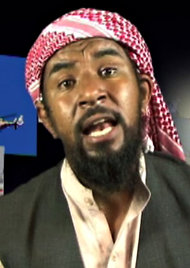


The War on Terror After Osama bin Laden
Its Waaaay too early to tell; but Al Qaeda's influence was already believed
to be waning, so, will Bin Laden's death embolden a new wave of
terrorists? What effect might Binny's death have on the War on Terrorism ?
Here are some thoughts you might want to read:
- A Limited Demoralizing Effect
Apart from being a moment of justice for the world and a partial closure for
Al Qaeda’s victims, Osama bin Laden’s death has strategic implications for
the global struggle against salafi terrorism, the war in Afghanistan and U.S.-
Pakistan relations.
- Al Qaeda's Divisions Within
His removal not only deprives Al Qaeda of its founder and leader but comes
at a critical time for AQ. It is struggling to remain relevant amid the Arab
revolutions, its growing unpopularity in Muslim communities, and internal
divisions about the theological and strategic direction of the movement.
This loss could unleash internal divisions and fractures within the movement
and call into question the very legitimacy of Al Qaeda.
- Seek a Political Solution in Afghanistan
The real impact could be on the Afghan war. On the military side, Al Qaeda
has not played an important role and one should not wait for a different
strategy or a less aggressive Taliban this summer. The “surge” has failed
and the momentum is definitively with the Taliban. But on the political side,
the removal of Bin Laden from the political equation opens a window of
opportunity for the White House to start negotiations with Taliban leaders.
The question becomes: will President Obama use his newly acquired political
capital to make a major diplomatic opening?
- More Powerful Dead Than Alive?
The implications for the U.S.-Pakistan relationship are perhaps more
interesting. The good news is that President Obama cited President Zardari,
Pakistan’s civilian leader, in his remarks, and did not mention Pakistani military
or intelligence authorities except obliquely by stating that members of his
team were in touch with their counterparts. While he thanked the Pakistani
authorities, President Obama made it clear that U.S. forces carried out the
operation.
The bad news is that there are fundamental questions about what Pakistani
authorities knew about Bin Laden’s whereabouts, since he apparently lived for
some time in a large compound near a military academy, in a city in Pakistan
where large numbers of retired military leaders live. Abbottabad is just 50
kilometers north of the Pakistani capital, Islamabad. Obviously, he was not
cowering in a cave in the tribal areas as many had assumed.
If Pakistani military intelligence did not know about this, they should have
known. If they did know, the withholding of information of this importance
from the U.S. is more evidence that the relationship is broken. Either way,
it is an embarrassment for Pakistan and a likely further irritant in its relations
with the U.S.
- The Taliban Is Not the Enemy
For one thing, I have long held that the Taliban and Al Qaeda are not as tightly intermeshed as argued. The Taliban's goals remain domestic, concentrating first on ousting the foreigners whom they view as an occupying force and second on what relationship – or even role -- they should have with the government. I say this with the growing caveat that the longer the United States stays and fights the Taliban, the more the militants will want to hit U.S. targets far from South Asia.
Sorry, if you've got "Colinitis" and prefer pictures to reading, can't help you.
So, What Should We Do Now ? ? ?
Any Thoughts ? ? ?