**Official Football (Soccer) Thread"

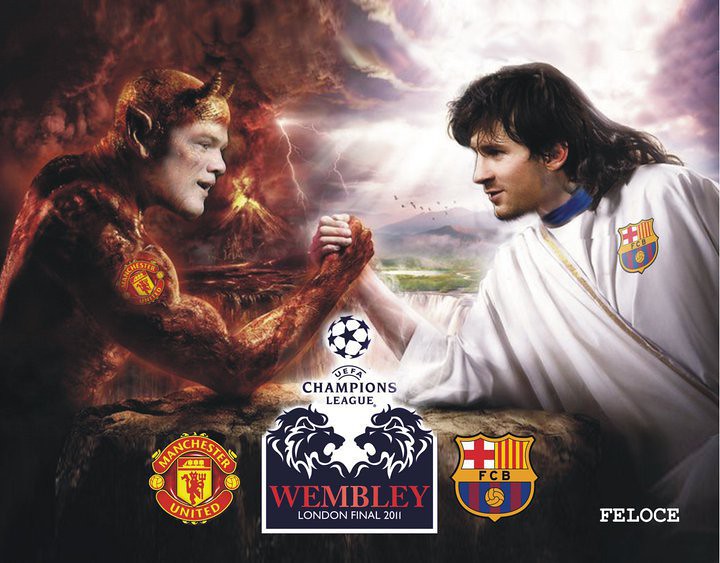
Congrats to Barcelona. The only way to beat them is to play "anti-football". Also, is it true that Berbatov left after he wasn't even named as a substitute?
 
^Ferguson denies that happened with Berbatov.

da%20fuck.jpg


happykeita02dtoc.gif


:lol::lol::lol:

Messi on that cocaine like Maradona:lol:
di-FVGK.gif


The Brasileiros.:lol:
di-MMX8.gif
 
Last edited:
• Fox has to get its act together. On the day when a big final delivered a memorable game, the only negative aspect was Fox's pre-game coverage, which continues to dumb down the sport and compare it to other U.S. sports. ESPN proved with its excellent World Cup coverage that you can cover soccer straight up for an American audience without having to turn it into Soccer for Dummies. Fox, sadly, has yet to figure that out. And so we got Michael Strahan making a dimwitted appearance comparing fútbol to football and inane coverage of Gerard Piqué's relationship with the singer Shakira. It's enough to make you hope ESPN/ABC manages to get the rights back to the Champions League.

THIS.

Fox handles the games on FSC well but the main stage comes up and they just blow it. Didn't even bother with the halftime report thanks to that pregame show. :smh:
 
THIS.

Fox handles the games on FSC well but the main stage comes up and they just blow it. Didn't even bother with the halftime report thanks to that pregame show. :smh:

Using their NFL theme music for the segues to and from commercials was a nice touch too. I didn't hear the Champions League theme even once. :smh:
 
Manchester City could face Barcelona in Champions League group stage

Barcelona-celebrate-winni-007.jpg


Manchester City are likely to have a 20% chance of drawing Barcelona in next season's Champions League group stages. The line-up for Europe's premier competition was finalised over the weekend, along with the overall co-efficients from each competing club.

Final confirmation is still to be made by Uefa but it looks certain that City will be in Pot Three for the draw, even if all the clubs above them in the seedings who must face qualifying ties do not make it to the group stage. With Manchester United and Chelsea confirmed as top sides and Arsenal bound to join them if they make it through their final qualifier, City will have just five potential opponents from Pot One.

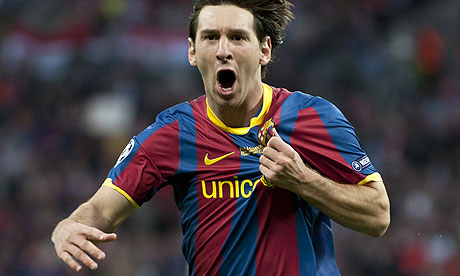
That list will be headed by Barcelona, whose brilliant display in Saturday's 3-1 defeat of United at Wembley has led many observers to acclaim Pep Guardiola's men as the best club side of all time. Real Madrid will also be in Pot One, along with the 2010 European champions, Internazionale; the Europa League winners, Porto; and, if they make it through the qualifiers, Bayern Munich. Milan and Shakhtar Donetsk would appear to be the strongest sides in Pot Two.

http://www.guardian.co.uk/football/championsleague
 
Champions League final 2011: see Manchester United v Barcelona in data

Barcelona-celebrate-winni-006.jpg


The Champions League final, watched in 220 countries around the world, was won by Barcelona - but was the victory on Saturday night as overwhelming in data as it was on the pitch?

The Catalans' 3-1 win over Manchester United earned Pep Guardiola his second Champions League trophy as a manager and his 10th trophy in his first three years as a coach.

Opta (this is their Twitter feed), which covers 30 different sports in around 70 countries, has agreed to let the Datablog publish the complete statistical analysis of all the games in the tournament.

Opta's analysis of the final includes some great post-match facts:

• Barcelona have now won more league and European Cup doubles than any other team in history
• Since 2006-07, Manchester United have been restricted to just a single shot on target in only two Champions League games, both v Barcelona
• Five of the last six clubs to have lost a Champions League final have come from England
• Despite attempting a Champions League 2010/11 high of 148 passes (excluding crosses), Xavi managed the best success rate (95.3%) on the pitch
• Thanks to Barcelona's victory, Spain (13) have overtaken Italy (12) in terms of most Champions League/European Cup trophies
• Messi, Villa and Pedro have scored 98 goals for Barcelona this season, in all competitions
• More than half of Wayne Rooney's goals in the Champions League have come in the knockout stages (14/24, excluding qualifiers)


http://www.guardian.co.uk/news/datablog/2011/may/30/champions-league-final-data
 
"Well done to Swansea City for their promotion to the premier league. Great game to watch".

sinc_1319835a.jpg


Now you're playing with the big boys now.
 
United star Scholes retires

paulscholesvbarcelonacelebration20110527_576x324.jpg


Manchester United midfielder Paul Scholes has retired from playing professional football at the age of 36, but will join the club's coaching staff.

• Carter: Who can replace Scholes?
• Owen keen to extend Man Utd stay

Scholes, who has spent his entire career at Old Trafford, becomes the latest of Fergie's Fledglings to call it a day after Gary Neville hung up his boots in February.

The England midfielder formed the core of one of United's greatest ever teams along with Neville, Ryan Giggs, David Beckham, Nicky Butt and Phil Neville, which culminated in winning the Treble in 1999, though Scholes missed the final through suspension.

Fergie's Fledglings broke up in the subsequent years but Giggs, Scholes and the elder Neville continued to star as Ferguson built a new team. In 2008, nine years after missing out on a glorious night in Barcelona, Scholes started as United lifted the European Cup again, beating Chelsea on penalties in Moscow.

United boss Sir Alex Ferguson has frequently repeated this season that he wanted Scholes to continue for another year but, despite impressing at the start of the season, the Salford-born midfielder's powers had seemingly been waning in the latter part of the season.

Scholes, who will carry away a reputation for genius on the pitch and for humility off it, having shunned the celebrity spotlight his entire career, insisted deciding to quit was not an easy decision.

"I am not a man of many words but I can honestly say that playing football is all I have ever wanted to do and to have had such a long and successful career at Manchester United has been a real honour.

"This was not a decision that I have taken lightly but I feel now is the right time for me to stop playing. To have been part of the team that helped the club reach that 19th title is a great privilege."

Ferguson paid tribute to the midfielder, who has wowed fans since netting two goals on his debut against Port Vale in 1994, and revealed that Scholes will be joining the club's coaching staff.

"What more can I say about Paul Scholes that I haven't said before?" Ferguson said. "We are going to miss a truly unbelievable player.

"Paul has always been fully committed to this club and I am delighted he will be joining the coaching staff from next season. Paul has always been inspirational to players of all ages and we know that will continue in his new role."

United chief executive David Gill added: "It is very sad day for Manchester United fans around the world. We all know that Paul was one of the players that came through the ranks of the academy system in the 90s and has established himself as one of the greatest players to ever wear the United shirt.

"It is very important that the club keeps the associated with these great players and we are delighted that Paul will join the coaching staff.''

His final game for United was Saturday's Champions League final defeat to Barcelona, though fans will be able to show their final appreciation at a testimonial match in August.

United team-mate Rio Ferdinand led the tributes that flooded Twitter in the aftermath of the announcement.

Ferdinand said: "Paul Scholes retires from football....the BEST player of his generation, loved every minute of playing football with him. #legend.

"Paul Scholes aka Sat Nav went from a scoring midfielder to a dictator of the game (changed his game while still at top of the game) #genius."

http://soccernet.espn.go.com/news/s...er-paul-scholes-retires-from-football?cc=5901

Spain midfielder Xavi called Scholes ''the best central midfielder that I have seen,'' while France great Zinedine Zidane once branded him ''almost untouchable.''
 
Last edited:
Who can replace Paul Scholes?

With the news that Paul Scholes has decided to retire from playing professional football, ESPNsoccernet looks at who can replace him in the Manchester United midfield next season.

Wesley Sneijder - Inter Milan

A gifted midfielder with a host of experience in Europe and international level, Sneijder would not need much time to bed into the United midfield. His range of passing is one of his key attributes and is up there with Scholes in his ability to shoot from range. The Dutchman boasts excellent dead-ball skills as well, but would be hard to tempt away from Inter and has already gone on record to stay that he will be staying at the San Siro next season. A bid of around £35 million could tempt the Italians to begin negotiations and, at only 26, he could be a quality player for United for years to come.

Luka Modric - Tottenham

Tottenham would be loath to lose their star player to another Premier League club, but Modric would improve the United midfield no end. His vision and passing style has brought great success to the London club and he has often been the focal point of attacks. He suffers a little from a lack of physicality, but his desire to win back possession and put in a shift has made him a fan favourite at White Hart Lane. He does not offer the goal threat of some of the other players on the Scholes shortlist, but the Croatian could be the best option if the club can tempt him away with the offer of Champions League football and title challenges.

Javier Pastore - Palermo

The Argentine has enjoyed a relatively small amount of time in the spotlight since arriving in Italy in 2009 but has already marked himself out as one of the best. At 21, he has a lot to learn about the game but has demonstrated excellent skills in the classic No. 10 role. While his vision and elegance on the ball are second to none, there are question marks about his defensive skills - although that didn't seem to hinder Scholes' career too much. Palermo could be forced to sell to "balance their books" and a realistic bid of £30 million - rather than the £50 million the Palermo president has been talking about - could see him arrive. However, his relatively short time in the international fold could count against him.

Marek Hamsik - Napoli

Like Pastore, Hamsik has made a significant impact in Italian football and has been key to Napoli's success in reaching the Champions League this season. A driving force in central midfield, the spiky haired Slovakian has been scoring goals for fun and what he lacks defensive nous, he makes up for in attacking vision. A disappointing personal performance at the 2010 World Cup saw him fail to live up to his billing and his price may have dropped a little since. Still, £25 million is around the figure needed to bring him to Old Trafford, yet his words about the successes of Napoli this season could see him stay.

Promote from within

After watching his side come second best to Barcelona in the Champions League this season, the thought that Sir Alex Ferguson will not dip into his pocket this summer would make United fans shudder. The lack of central creativity has been obvious, yet Fergie has already got Anderson, Michael Carrick, Darron Gibson and the returning loanee Tom Cleverley to fill any void. With Ryan Giggs preferring a central role these days, perhaps the club will save their cash to spend on a goalkeeper - most likely David de Gea at £17 million - and more defensive cover.
 
Barca keen on Rossi deal

giusepperossivsbarca20101113_275x155.jpg


Barcelona have entered negotiations for Villarreal striker Giuseppe Rossi, according to the player's agent.

• Rossi calm over Barca link
• Wenger: No Barca contact over Cesc

AS reports that Barca are eager to add two new forwards to the squad this summer, with Fredi Kanoute, Diego Forlan and Dani Guiza all under consideration as low-cost experienced options.

However, Rossi appears to be their top target and agent Federico Pastorello has now revealed talks are underway.

"We are talking with Barcelona and Rossi would love to play for the club," he told AS. "His price-tag is between €25 million and €30 million. We are now waiting for news from Barca."

Earlier this month, Italy international Rossi had said he was "remaining calm" about reports Inter and Barcelona were considering bidding for his services. The 24-year-old joined Villarreal from Manchester United in 2007, and he scored 32 goals in 56 games for the club this season.

http://soccernet.espn.go.com/news/s...a-are-in-talks-to-sign-giuseppe-rossi?cc=5901
 
Ronaldinho's moment of truth is at hand in Brazilian championship

ronaldinho-story-getty.jpg

Despite his enormous talent, Ronaldinho hasn't been at his best in at least five years.

I was talking recently to an American who got into soccer as a result of watching Ronaldinho at his extraordinary best -- which seems a long time ago. Now he is not sure whether to feel angry with the player for spending so long betraying his own almost unparalleled talent, or grateful that for a few years Ronaldinho hit a peak of performance that few have ever matched.

It is a dilemma that will be familiar to fans of Flamengo, Ronaldinho's current club, and one that may be solved one way or the other during the course of the Brazilian championship, which kicks off this weekend.

Flamengo supporters organized a huge party at the start of the year when, after a decade in Europe, Ronaldinho opted to come back across the Atlantic and sign with the Rio giants. This is a club closely associated with the great Zico, and the fans were delighted to have another world-famous name wearing their No. 10 shirt. Most of them still are. But some three and a half months later there is a consensus that his level of performance has been unworthy of the celebrations, and of the massive salary he is earning.

True, Flamengo won the Rio State championship earlier this month. But it was hardly the most inspirational of triumphs. Coach Vanderlei Luxemburgo faithfully followed the formula of beating the tiny teams and drawing with the big ones -- a line of approach, incidentally, that would see the team relegated from the first division if adopted for the Brazilian championship. The big, decisive games against local rivals Botagofo, Fluminense and Vasco da Gama all ended in draws, with Flamengo winning the penalty shootouts.

Moreover, it has now become apparent to almost everyone that winning the state title no longer means very much. It confers local bragging rights, but nothing more -- unlike the Brazilian Cup. The Cup winners qualify for the following year's version of the Copa Libertadores, South America's equivalent of the Champions League. And the winners of that go on to the World Club Cup, where they have a shot at glory against those rich Europeans -- just as Flamengo did 30 years ago when, in the greatest day of the club's history, it beat Liverpool 3-0. Landing the Brazilian Cup was the priority for the first half of this year, but that dream has ended already. Last week, in its first serious test in the competition, Flamengo was eliminated by Ceara. As Flamengo lost the first leg in front of its fans in Rio, the boos started ringing out for Ronaldinho.

The goofy playmaker comes up with the occasional flash that brings back memories of his former glories. He will bring a difficult ball under total control as if he had suction pads on his boots. Or there will be a glorious, defense-splitting pass for a colleague. But these are mere scraps. The burning acceleration he had in his prime has gone forever.

Two years ago, when Ronaldo returned to Brazil to join Corinthians, there were serious doubts that he would be able to play top-class football. He had suffered a terrible sequence of horrific knee injuries, and he had an obvious weight problem, caused, he later revealed, by a thyroid problem.

But Ronaldo was still able to tip the balance. He was the decisive figure as Corinthians qualified for the Libertadores by winning the 2009 Brazilian Cup, and had he been able to play more games last year, the club would probably have been national champions.

Flamengo won the national title the year before, a triumph in which the key figure was Serbian playmaker Dejan Petkovic, at the grand old age of 37. When the club brought him back for that campaign few took it seriously. He was, it was said, an ex-player who would make little or no contribution. But he ended up being the dominant figure, bossing the midfield and supplying center forward Adriano with a succession of intelligent assists.

Ronaldinho has only just turned 31. He has no history of serious injury a la Ronaldo. And yet so far he has been a peripheral figure, good for the odd moment, the occasional free kick, but giving no sign that he is going to take charge of the game. It was hoped that after a sequence of matches he would be sharper, fitter, hungrier. That has not happened. There are no complaints that he is skimping on training. But I wonder if his heart and soul are truly in it.

There are no such doubts about Carnaval. Just over two months ago Ronaldinho enjoyed himself thoroughly, lapping up every moment of the celebrity experience during Brazil's big party. He seemed to make up for all those Carnavals that he missed while he was in Europe.

Earlier this week, after the party to celebrate Flamengo's state championship, he seemed set to board a plane and rush down to Buenos Aires to participate in Argentine TV's version of Dancing With the Stars. It did not happen. But the mere fact that it was cogitated just a few days before Flamengo's debut in the Brazilian championship might be interpreted as a sign of lack of focus.

It has been five years now -- half many a top-class career -- since Ronaldinho has been at anywhere near his wonderful best, and it may be that living the celebrity life is more important to him than playing soccer. In interviews the man is guarded and defensive on this theme, almost as if he does not want to admit to himself that his level of performance has fallen so far.

At the risk of straying into the area of completely amateur psychology, I wonder how much of this has to do with the premature death of his father. Ronaldinho's older brother, Assis, is now his agent. Some 25 years ago he himself was a footballing prodigy, signed to a fat contract by Gremio in their home city of Porto Alegre. The family moved across town to a plush neighborhood and bought a house with a swimming pool -- in which their father tragically suffered a heart attack and died. Ronaldinho was 8 years old at the time. It is surely possible that this awful event has given him a sense of the precariousness of life, a need to take advantage of opportunities with all due urgency, because tomorrow never knows.

But there is a second, more minor tragedy here. It is that Ronaldinho's amazing talent has a shelf life. By the end of this decade he will be an ex-soccer player, and it will hardly matter what he does in his spare time. But at the moment that gift is still there somewhere. Is he prepared to dig deep enough inside himself to find it once more? Does he really want to extract the most from the thing that he was placed on this planet to do?

The time for truth is approaching. The Brazilian championship starts this weekend. By the time it ends in December, Flamengo fans will have a much clearer idea of whether they should be angry or grateful that Ronaldinho wears their famous No. 10 shirt.

http://sportsillustrated.cnn.com/2011/writers/tim_vickery/05/17/ronaldinho/index.html?sct=sc_bf5_a3
 
How did Cerro Porteno get so far in Copa Libertadores? They're horrible.:smh::smh::smh:

Looks like Juan Iturbe has more incentive to leave to a European team now.

I hope Velez Sarsfield can beat Penarol at least. It'll be nice to see Neymar vs Ricky Alvarez.
 
Nigeria beat agrentina 4 to zero don't care if its a friendly the Eagles are on the Come UP..YA HEARD!:dance::dance::dance::dance:
 
Van Nistelrooy joins Malaga

ruudvannistelrooy20110416_275x155.jpg


Ruud van Nistelrooy is relishing his next taste of Spain's Primera Division after agreeing to join Malaga.

Ruud van Nistelrooy
GettyImagesRuud van Nistelrooy: Bundesliga exit

Van Nistelrooy, who turns 35 on July 1, has agreed a one-year contract and will be presented to media and the club's supporters at their La Rosaleda stadium.

''Throughout my career I have been with many clubs and have shared a dressing room with world-class players,'' Van Nistelrooy told Marca. ''I feel very proud and happy to be here.''

Backed by Qatari businessman Sheikh Abdullah al-Thani, ambitious Malaga are hoping to compete higher up the league, having come off a season in which they finished 11th.

Van Nistelrooy, who came to international prominence with PSV Eindhoven, moved to Manchester United in 2001 and was a big hit at Old Trafford. He departed for Real Madrid in 2006 and had three-and-a-half seasons at the Bernabeu, before joining Hamburg on an 18-month deal.

With that contract coming to an end this summer, he joins Malaga on a free transfer.

http://soccernet.espn.go.com/news/s...telrooy-joins-malaga-on-free-transfer?cc=5901
 
The future of U.S. soccer

soc_g_najar01_576.jpg


It behooves any country with serious aspirations on the world soccer scene to entrust the development of its young players to the pros. To the country's professional clubs, that is. Like in most endeavors, privatization tends to lead to more efficiency, and Major League Soccer's nascent academies are slowly but very concertedly wresting youth soccer away from the traditional avenues. At the start of the 2011 MLS season, there were 33 MLS academy products on the league's rosters.

As with most American sports, a soccer education historically flowed from little leagues to clubs, to high school, to more clubs to colleges and finally to the pros. In other countries, elite players are being scouted from the age of 5, enter the academies of pro clubs from age 6 and stay within the same framework until they either wash out or make it to the senior team.

The U.S. is beginning to see the value of the other approach. MLS academies have become ubiquitous within the league -- all 18 MLS clubs have one; the New York Cosmos, which hasn't even been let into the league yet, has two -- and are increasingly well-funded, with budgets ranging from $500,000 to $1 million a year each. They don't generally accept players younger than 14 or so, but as the league's infrastructure grows, the academies will drastically alter the American soccer structure. And in so doing, they will also create all kinds of issues in the coming decades.

Once the growing pains have receded, MLS academies will offer superior training to young players, attracting a vast majority of the good talent. It's easy to see the benefit: Academies play year-round and free of charge; draw the best coaches from a shallow pool; and offer role models, a professional environment, exposure to the pro game and stability for developing players.


Virtually all MLS academies are completely free of charge from the day a player enters them until he signs a pro contract, is dropped or leaves for college. While costs are covered, there is no financial compensation of any sort for academy players, so they retain their full NCAA eligibility. But it's still a bargain, when you consider that traditional club travel teams can run a family's tab into five figures per year.

But most of all, the academies offer stability.

"One of the problems [with American youth soccer] is that we have kids bouncing around all over the place," U.S. Soccer youth technical director Claudio Reyna told me last year. Kids frequently switch youth clubs, join travel teams, transfer to other high schools, all in pursuit of better soccer. But, said Reyna, "that turnover needs to calm down a little bit. It's better for the development of a kid if they're at one place in the same sort of comfortable environment, rather than move around."

The rise of the pro clubs' academies is already having repercussions for the high school game, as pro academies look to protect their investments. "Our academy players cannot play for their high schools," FC Dallas spokeswoman Leigh Anne Gullett said. "It's to keep them from overtraining or picking up injuries. They already train and play a lot for the academy without adding another team commitment."

D.C. United has been telling its academy players also representing their high schools that United has to come first. Eventually, the club will ban high school soccer for its academy members. "We will get to a point eventually where our players have to commit year-round to D.C. United," said general manager Dave Kasper. "And we're not far away from that."

But it's the college game that could suffer the most as academies become the most popular avenue for players. College soccer, while still the main source of American-raised talent to MLS, is inefficient in preparing players for the pros. "The promising players in other countries are entering into the first or reserve team [of a professional club] by that age," said former UNC standout and U.S. national team defender Eddie Pope. "Our players don't get enough playing time in college. There is a lot of downtime [because of NCAA regulations] that could be used to practice. I experienced that personally when I was in college and played against Argentina's U-23s, and those guys were professionals at that point and they just beat us off the field."

It's quite conceivable that college soccer will eventually become largely irrelevant as a breeding ground for MLS. With more talent opting for MLS academies and choosing to forgo college scholarships to stay with the club and try to earn a contract, the quality of the college game will dwindle.

"In the short term [the academies are] not going to have that big of an effect on college soccer," Kasper said. "Long-term, it's going to have a bigger effect. As academies mature, [college soccer] could be watered down to some degree."

"I do see over time that more and more of our top young players are going to come from our academies," said Todd Durbin, the MLS executive vice president for player relations and competition.

soccer_g_jagudelo1_200.jpg

Juan Agudelo began his career with the N.Y. Red Bulls academy.

One day, college soccer's only attraction could be the chance to shave thousands of dollars off a higher education for players with little hope of signing professionally. And it may become a last chance for those who want to carve a more circuitous route to MLS.

Speaking for the league, however, Durbin believes that the college game will remain relevant. "Currently, our footprint is 18 teams," he said. "Although we're in the major markets, there are still a sizable number of players who are going to continue to play youth soccer and college soccer for at least three to five years [because there is no MLS academy nearby]. It may be at some point in time that there aren't quality players coming through college and the draft. But I believe for the foreseeable future, the [college] draft will continue to be a cornerstone [to MLS]."

And, said Durbin, "The reality is there are only going to be so many players coming from our academies to our first teams, so a number will go on to college." As a consequence, he said, this could actually raise the level of play for NCAA soccer.

But the arguments of the college apologists will eventually become outdated. MLS will expand further, covering more territory. And the plan is for academies -- which can currently cull talent from a radius of 75 miles from their stadium (plus two out-of-area players not in anybody else's radius) -- to expand that recruiting zone. European boarding-school style arrangements for players from far away are inevitable; the Vancouver Whitecaps and Real Salt Lake already have them.

Furthermore, as academies start producing a higher percentage of the first team's roster, there will be less talent left over for colleges. Yes, the college game could get better, but the gap with the pro-level talent will also get bigger. From an MLS club's standpoint, signing homegrown players after the required 12-month minimum spent in the club's academy is already more attractive than going through the draft, since academy products labeled as homegrown who make the 10-man supplemental roster but not the club's 20-man senior roster don't count against the salary cap. They also have good value in the market, since a homegrown player who is traded -- the way Tristan Bowen and Josh Janniere have been -- retain their homegrown status for their new teams, too. And these players will likely also have a higher success rate, since they're from the area, have been around the pro game and have a better understanding of its prerequisites and pitfalls.

You can see how this will play out. The college game will dwindle and the MLS SuperDraft will become more or less obsolete, a tool useful only to grab some bodies for the reserve squad or to sign the lone late bloomer. This means one of the league's all-American tools of ensuring the parity, or equal opportunity, it so cherishes -- funneling talent to weaker teams -- will be rendered impotent.

Durbin counters that this effect will be modest, since "teams will always have the ability to go to the international marketplace and find and sign players." But the foundation of a healthy club's roster will be made up of homegrown players, as bringing foreigners into MLS is a laughably inexact science.

Ultimately, no prospect who is serious about becoming a professional would favor high school and college soccer over an academy. And it's worth noting that the two most lauded prospects in MLS, Andy Najar and Juan Agudelo, came straight from academies and skipped not only college but most of their high school careers, too.

Club soccer, high schools and colleges will be what remain for those that didn't make the cut of an MLS academy. And while this will be decidedly to their detriment, it will ultimately serve the greater good of the American game.

Leander Schaerlaeckens is a soccer writer for ESPN.com. He can be reached at leander.espn@gmail.com.

http://espn.go.com/sports/soccer/news/_/id/6520002/mls-academies-kill-college-game-soccer
 
I know this is old but..


This is fucked up, someone from the comments section:

"Sergio Ramos said he's gonna go Arsenal so an incident like this deosnt happen EVER again!!!"
 
It's the Sids 2011! The complete review of the past La Liga season

Lionel-Messi-007.jpg


Eighteen days in the spring defined and decided the season. Finally, the inevitable happened and the curtain came down on the rest of Spain, leaving Real Madrid and Barcelona to fight it out for absolutely everything. The clásico series felt like the obvious conclusion, two-and-a-half weeks that acted as a microcosm of the season. The best two sides became the only two sides, league, Champions League and Copa del Rey their own private battleground, and as much of the spotlight was shone off the pitch as on it – where there were accusations and acrimony, formal complaints and a complete lack of class. Where it got genuinely pretty horrible. Just as it was always going to.

Real Madrid won the Copa del Rey at last. Iker Casillas finally got his hands on the trophy that he had not yet won. Curiously, Raúl and Guti, Madrid's other veterans now playing abroad also finally won a domestic cup – the only club competition to have evaded them. José Mourinho, a force of nature for which the Spanish were unprepared, was the undisputed winner. His long and very public battle with the club's director general Jorge Valdano finally was won this week when Valdano was sacked. Mourinho now has greater power than any coach in Madrid's history. There is a whole new structure at the Bernabéu which offers hope – as well as proof – that Florentino Pérez's project definitively failed. The challenge now is to finally defeat one of the greatest sides ever.

And that is the thing: if Mourinho was the winner and while Madrid finally got their hands on some silverware, they were also the losers. And, in part, they had nobody to blame but themselves. In the end, Barcelona got the better of it. Barcelona collected the league. Not least because Madrid, oddly, did not seem to be trying to stop them collecting it. Not on the pitch anyway.

Barcelona celebrated by throwing peppers into the crowd – symbolic of their cojones. This was not always the most sparkling of seasons but it was the hardest; before Christmas they had been graceful, smooth and precise, after Christmas they showed the competitive spirit that is too often overlooked. They had spent the year being constantly attacked and had withstood some of the bitterest and wildest of accusations. They were the worst of travellers, turning up late in Pamplona, but the best of them too. Never before had a team picked up 46 points on the road.

Europe was theirs too. And while the world jumped on the clásicos as all the evidence they needed to try to sentence both clubs forever, caring little for all that had gone before or would occur after, Barcelona eventually got past Madrid, Leo Messi's goal at the Bernabéu finally providing something that lived up to impossibly high expectations. Impossibly high, that is, until the final when Barcelona produced a performance that even the most rabid Madridistas could not contest. Even if Iker Casillas did insist: "We would have won the final too."

As for the rest of Spain there were no expectations at all. No one had conceded eight goals in a game for 14 years. Almería did it twice and went down. Herculés joined them. And so did Deportivo – however much they deserved it there was a sadness about seeing Super Depor slipping away. Málaga, Levante and Sporting turned round their seasons to survive relatively comfortably and Mallorca almost went down despite never being in trouble. A single goal on the final day would have seen the team celebrating survival five weeks from the end slipping into the Second Division. They were one of six that could have gone down. Osasuna were in danger on the final day but finished ninth – the best illustration of a league split into very distinct classes.

With Espanyol unable to hold on and selling players in the winter window, there were European places for Sevilla, Athletic and Atlético, whose success from last season was a distant memory and who appear to be disintegrating: Quique Sánchez Flores has gone. Diego Forlán, Sergio Agüero and David de Gea will not be far behind him. And above them the were Valencia and Villarreal, easily the best of that other league – genuinely good sides who belie suggestions that the whole of La Liga is weak. Trouble is, Valencia in third were 21 points behind Real Madrid. And that's an improvement on last season.

The season was condensed into 18 days in the spring, where only Real Madrid and Barcelona existed and Mourinho dominated the agenda. This was his season, but it ended up being Barcelona's season, however much Ronaldo's extraordinary Pichichi success was repackaged as the trophy they really wanted. Season? No. This was Barcelona's era. And only one team can expect to compete with that. By the end Madrid and Barcelona had the league, Champions League and Copa del Rey between them, the top scorer award and the goalkeepers' Zamora, too. Eighteen days decided and defined the season – 18 days where only they existed and where they fought it out for every single award going.

Well, not quite every one ...

Biggest heart

Teenager Kiko Femenía was making his First Division debut for Hércules and things were not going well – easy passes went astray, he could not control the ball and his manager, Esteban Vigo, was screaming and swearing at him from the touchline. Anxiety gripped and the kid was going to pieces, when team-mate and proper mate Francisco Rufete stepped in, warning his coach off, telling him to leave Femenía on the pitch with a no-nonsense "fuck the match", and spending the rest of the game prowling the touchline shouting encouragement and reminding him to breathe.

Swiftest fall from grace

Hércules again. Royston Drenthe went from hero to villain in the time it takes him to drive round Alicante – and when you ignore red lights and hit 180 kmph, that's not long. The man who responded to the question "how often do you have sex?" with the inspired line "with my wife, you mean?" was a superstar at the Rico Pérez, with his own fans in yellow jumpers, I HEART ROY on them, dreadlock wigs and blacked up faces. Trouble was, soon that was not the only thing they were painting, fans splashing "Bastard," "Son of a bitch", "Hércules is not a circus", "Clown", "mercenary" and the chilling: "Found you", along with the initials "KKK" , across the walls of his house after he went awol. On the final day, relegation long-since confirmed, coach Miroslav Djukic said: "I'd like to thank all my players, except one." If anyone doubted that Royston Ricky was the one, president Valentín Botella announced that the team had gone down because of Drenthe. And not because of the unpaid players, the lack of running water at the training ground, or the fact that they should never have come up in the first place.

Most ironic chant

Atlético Madrid fans chanting "Gurpegui, you're a junkie". While puffing away on the funny fags. Mind you, they were outdone by Mourinho, who stood on the touchline and screamed, "you never change" at Asier Del Horno as the full-back ran through the array of sneaky tricks he learnt at Stamford Bridge. Under Jose Mourinho.

Best protest

Last season, Mallorca's hated coach Gregorio Manzano moaned that supporters rarely turn out, noting: "If the game is at 10, it's too cold; if it's at seven, it's wet; and if it's at five they're still eating their paella." So when he returned in charge of Sevilla, Mallorca welcomed him back … with a gigantic paella.

Best sponsor

Almería's players posed in new suits, delivered soon after relegation was confirmed and made by "Drop", while Racing Santander's shirts were sponsored by purveyors of pork products Palacios, the word "Chorizo" splashed across the front in huge letters – and chorizo is slang for thief. But nothing compares to Unicef – the organisation that helps children. When it is not running international football and conspiring to hand Barcelona the European Cup.

Best actor

Forget Sergio Busquets – what makes his acting bad is that it is so bad. If you want good acting, it has to be Valencia's David Navarro. Having already left one Athletic Bilbao player bleeding, he smashed Fernando Llorente with an elbow full in the face and then fell to the floor, dead. A stretcher came on and took him off. For a minute you thought it might actually be serious, so still was he lying, so motionless, so convincingly had his eyes rolled back in his head. You genuinely feared for him, even as the replay confirmed that he had not been touched. A couple of minutes later he was running back on, having handily avoided the yellow card, everything intact. Except his credibility.

Best bias

The most hotly contested of awards. Jilted lover Marca named Manuel Pellegrini the "Worst" thing about Malaga's match with Levante, after he took them to their first home win of the season and off the bottom in his first ever game in charge. AS deleted a player from their photo to "prove" that Dani Alves was offside. El Mundo Deportivo managed to turn Madrid's six-goal victory in Valencia into a "slap in the face for Mourinho". And Telemadrid brought the values that infuse their coverage in other spheres to football, calling Pep Guardiola the "fire starter", blaming him for fans throwing bottles at reporters – and a lot more besides.

But Valencia newspaper Super Deporte were not going to let the Madrid media have a monopoly on myopia or those buggers from Barcelona beat them for bias. How dare anyone say their player is a nasty, cheating thug? Even if he is. During Zaragoza-Athletic they saw Llorente jump with his arm and pounced. Jumped up with his arm, note. That's: jumped up with his arm and lightly brushed the face of the man marking him. Not: elbowed two players in the face, drew blood, left one needing stitches and then acted dead despite there being nothing wrong with him. Having had plenty of previous. "The good guy mask slips," howled Super Deporte, "revealing Llorente's hypocrisy". "Llorente breaks a defenders nose," they continued. And they were right too. If for "nose" they meant "thigh". And if by "break" they meant "strained." Oh, and if by "Llorente" they meant "no one at all, it just kind of happened in a totally unrelated play at a totally different time."

Best match report

The one they never meant to write. On the night that Real Madrid did the unthinkable and lost to Osasuna, virtually handing the title to Barcelona, those typing www.marca.com were greeted by a simple message: "Forbidden Error."

Best free gift

Sport offered a Barcelona knife and super soft Barcelona slippers. Perfect for anyone wanting slip silently away from a stabbing.

Shortest memory

Lluis Mascaró, the Sport columnist who described Barcelona versus Madrid as "the final battle between good and evil", wins this award. "The Copa del Rey final is the most important that Barcelona have played in their whole history. None of the 25 [Cup] titles won in 109 years of competition have had the transcendence that this has, in sporting and media terms," he wrote the morning of the Copa del Rey final. "The Copa del Rey is, without doubt, the least important of the three that Real Madrid and Barcelona are playing for this season. The fact that Mourinho's team have won it does not make it transcendental," he wrote two mornings after the Copa del Rey final.

Most chilling threat

Walter Pandiani, who noted of Cristiano Ronaldo: "In my country he would have had to visit the dentist by now."

Least convincing explanation

Deportivo's goalscoring goalkeeper Dani Aranzubia had everyone scratching their heads when he claimed: "I just did what I see my team-mates do." But even he could not compete with the Spanish Football Federation. When Real Madrid formally complained about a report on their website that had noted that Mourinho was watching referees very closely, accusing the Federation of bias and deliberately turning officials against Madrid, the RFEF passed the buck like Xavi passes a football. "It was", they said, "the work experience girl."

Most shameless attempt to divert attention from your rivals' success

Real Madrid's tragically transparent decision to parade their Copa del Rey round the streets of Madrid on the day that Barcelona clinched the league title – much to the cringing embarrassment of the players. Even Gonzalo Higuaín called it a paripé. An act.

Best celebration

It had taken 17 years for Madrid to get their hands on the Copa del Rey and barely 17 minutes for it to slip out again, when Sergio Ramos did this.

Best cuss

Rubinos Pérez turned to Málaga's goalkeeper Sergio Asenjo, snapping: "You're very bad: why don't you try learning to come off your line properly?" Which would not have been so unusual but for one thing: Rubinos Pérez was the ref.

Best video

Even better than Villarreal's Christmas greeting was this beauty, in which Levante's players sing a big thank you to their fans. The video closes with a simple message: sorry for being out of tune, we will make it up to you on the pitch. And the thing is, they did too. Which brings us nicely on to …

Best coach

Ten trophies from 13, three league titles and two European Cups in three years. The ability to resist the constant bombardment and then, suddenly unexpectedly, give some back. And still win. Pep Guardiola really should be manager of the year. But he is not. And nor is the chain-smoking, potty-mouthed people's poet Manolo Preciado – the man with the moustache you could hide a badger in, a voice so low it makes the floor vibrate, and a 40-a-day habit – even though he had the league's best record against the big two, ended Jose Mourinho's nine-year unbeaten league run at home, saved the league's second cheapest team and added fortune telling to his talents, concluding that now infamous spat with Mourinho and his staff by snapping: "I hope Barça put five past you."

No. It's not Pep and it's not Preciado. It is Luis García. Spain's youngest coach and the poorest too – so poor that he dare not use ProZone because it costs €3,000 a time and he has not got €3,000. Levante's entire budget is less than Messi's wages; their sporting director admits: "Agents run away from us: we have to wait until the end of the market, see which players can't get a club and sign them"; they began pre-season training with a 10-man squad; 15 of their players have been relegated before; and their back four had a combined age of 134. But still it didn't matter to this genius, armed with erotic pictures, motivational messages and a can of paint. During one training session, García made his players climb a wall, shut their eyes and fall backwards into the waiting arms of their team-mates. At first, they were convinced they were going down. Amazingly, they did not.

Best game

In terms of a single performance there was nothing to compare to Barcelona's 5-0 destruction of Real Madrid. Except perhaps their 3-1 destruction of Manchester United. But great games need two teams. A last-minute long-ranger gave Racing a 3-2 win over Sevilla – which led to new owner Ali Sayed going absolutely bonkers up in the directors' box while José María Del Nido sat stoneyfaced and comically uptight faced beside him. Sevilla-Barcelona, described by Del Nido as "two superpowers fighting it out", was intense and out of control, 21 players screeching round as Fredi Kanouté glided among them, too cool for it all. Valencia-Málaga had seven goals, three equalisers, three red cards, two mad managers and a ref abusing the players, going from 0-1 to 1-1, from 1-2 to 2-2, from 3-2 to 3-3 and then 4-3, the kind of match where Valencia fans were grateful that whipping out your hankies and waving them signals both bloody brilliant and bloody awful. Barcelona-Villarreal was stunningly precise, fast, intense, and technically impeccable. But for drama and sheer intensity nothing beat Osasuna-Sevilla, rounded off by the winner of the next award:

Best assist

Probably the best assist ever. Camuñas chased a long ball up the left wing, cut inside, got punched in the face, wobbled momentarily, lifted his hand towards his head, carried on into the area, blood streaming from just below eye, provided the pass to win the game and turned to celebrate with the fans, pointing at his face, before trotting back to the centre circle, shrugging off attention and then, feeling a little giddy, hitting the turf. It was the 89th minute of the 36th week and Osasuna had come back from 2-0 down, and a player with a broken ankle, to beat Sevilla 3-2 with goals in the 87th and 89th minutes, dragging themselves five points clear of the relegation zone and to safety. "See this?" Camuñas said pointing at his bloody and bandaged head and the then at the fans going bonkers, "this is what Osasuna are all about."

Best run

This one. Just look at Pedro go

Best goal

First, a nod for Dani Aranzubia's nod: the header that made him Depor's seventh top scorer, even though he's their goalie. Leo Messi's second against Villarreal was impossibly intricate and brilliantly finished, playing two first-time one-twos with Pedro before lifting it over Diego López from a tight angle. Messi also scored a playground style goal against Real Sociedad, running across their six-yard box past four men before turning it back into the other corner. And that wasn't even the best one he scored that day: this was. Few touches have been as neat as Agüero's to score against Mallorca. Speaking of scoring against Mallorca, Getafe's third against them was wonderfully worked. Giuseppe Rossi hit this shot hideously hard. Reyes struck this curler ridiculously well. And Tino Costa belted in a beauty against Getafe. But the winner just has to be this half-way line, first-time beauty from Cani ¡Golazo!

Best goal celebration

Marcelino's hop, skip and fall on your arse was fun. Unai Emery reacted to his team scoring by ripping off his jacket before, throwing it to the floor and proceeding to stamp on it like Yosemite Sam, turning round, booting something across the grass, slumping on to the bench with a thud and throwing his arms in disgust, a look of utter contempt on his face. But this award has to go to serial celebrator Antoine Griezmann, who upset Getafe fans by kissing the Basque flag on his Real Sociedad shirt, stood saluting next to a security guard, and hopped over the advertising boards, dashed to the car parked on the running track and piled in with his excitable team-mates, pretending to beep the horn, waving, punching the air and grinning like simpletons as if they'd just won Family Fortunes.

Best signing

Julio Baptista turned round Málaga's season with nine goals in 11 games after joining in the winter transfer window and Ivan Rakitic and Gio Dos Santos had a huge impact at Sevilla and Racing respectively. Mesut Ozil finished the season with more assists than anyone apart from Messi and his relative absence from the clásico series was baffling, especially after he almost single-handedly dragged Real Madrid into the league game with Barcelona at the Bernabéu. At €15m, he was an absolute bargain too. But Spain's best bit of business has to be Felipe Caicedo – the man who brought Levante survival on and off the pitch. The scorer of 13 goals, and the holder of the best goals per shots ratio in the league, he is on course to become the first player Levante have paid for in four years. They will exercise the €1m option-to-buy – and immediately sell him for a tidy, life-saving profit.

Best player

Fourth: Giuseppe Rossi. Spain's outstanding player outside the big two. Not that we're likely to be able to say that for much longer.

Third: Xavi Hernández. An average of over 125 passes a game, for goodness' sake.

Second: Cristiano Ronaldo. Top scorer this season. Top scorer of any season. Even Marca's stubbornness in hanging on to that extra goal for him ended up not really mattering as he racked up 40 goals in the league, nine ahead of Messi - two more than Telmo Zarra and Hugo Sánchez, the previous record holders. He was running at a goal every 72 minutes. Incredible.

First: Leo Messi. 31 goals, 20 assists, and brilliance every single week. And that's just in the league. Top scorer in the Copa del Rey and top scorer in the Champions League – for the third year running. Utterly undisputed, even as people seem desperate to dispute him. Every time a "yeah, but" is thrown his way he overcomes it. Messi can do everything. The most complete player around, the extraordinary thing about Messi is how ordinary it has all become – he is making the brilliant routine. Never plays badly, even when he plays "badly".

Team of the season (trying perhaps a bit too hard not to just pick Madrid and Barcelona players)

Víctor Valdés (Barcelona); Dani Alves (Barcelona), Gerard Piqué (Barcelona), Ricardo Carvalho (Real Madrid), Marcelo (Real Madrid); Xabi Prieto (Real Sociedad), Xavi (Barcelona), Gabi (Zaragoza), Cazorla (Villarreal); Ronaldo (Madrid), Messi (Barcelona).

Subs (a long list): Caicedo and Ballesteros (Levante), Prieto (Real Sociedad), Rossi, Borja, and Bruno (Villarreal), De Guzman and Nunes (Mallorca) Reyes and Agüero (Atlético), Abidal, Busquets and Iniesta (Barcelona), Ozil and Alonso (Madrid), Castro and Botía (Sporting), Mata and Soldado (Valencia), Kanouté and Negredo (Sevilla), Iraola and Llorente (Athletic)

And finally, some of the year's choicest quotes …

"The other 18 clubs should get together and kick Barcelona and Madrid out. We won't mind competing in a different league to them" – Sevilla president Jose María Del Nido. They already do.

"This wouldn't have happened if I was here" – president Enrique Cerezo returns from Miami, where he is celebrating Enrique Cerezo Day, to find another fine mess at Atlético Madrid. Like nothing stupid ever happens on his watch.

"Now, there are even complaints over decisions that are right" – Sergio Ramos. "Now"?

"Madrid are a side with no personality. They just run back and forth constantly, tiring themselves out. Their approach was not right. Barcelona were a lion, Madrid a mouse" – Alfredo Di Stéfano socks it to Jose Mourinho.

"The philosopher has kicked me out. I don't know what his problem with me was. Whenever I walked into a room he walked out again … maybe he was scared of me" – Zlatan Ibrahimovic (remember him?) attacks Guardiola. As if anyone would be scared of the 6ft 3in, 13-stone striker with a death stare and a mean temper whose agent says "could slap me into next week" and who practices karate.

"I don't mind the paparazzi following me about but having a go at my swimming trunks is a bit harsh" – Andres Iniesta gets used to life post World Cup.

"Guardiola has put a target on me, in classic fascist style," Eduardo Inda attacks the Barcelona coach armed only with his black pot and a neck of solid brass.

"You need to understand algebra to beat this Barcelona side" – Manolo Preciado. Algebra? Trigonometry?

"Not even the Nazis did what this mad woman [the judge] is doing to me. All that's left is for them to call me black, or Muslim" – Betis's charming "owner" Luis Oliver keeps things in perspective.

"The dressing room is broken" – Hércules manager Miroslav Djukic could have added a Redknapp-esque "literally" and he would still have been right.

"People are saying I'm an actor, well maybe I'll give up on football and go into the theatre. He assaulted me and it's a clear red card. If Jesus Christ wasn't liked by everyone. I've got no chance" – Dani Alves defends himself. Six months before that Pepe incident.

"Mourinho gets a cold and it's bigger news than us going nine weeks unbeaten" – Santi Cazorla nails it.

"I don't know how or why they organise football in this country. But one thing's for sure: they don't do it for the good of the fans" – so does Quique Sánchez Flores.

http://www.guardian.co.uk/sport/blog/2011/jun/02/sid-lowe-la-liga-awards-2011
 
Back
Top