Sun setting on Harlem

QueEx

Rising Star
Super Moderator
<font size="6"><center>
Sun setting on Harlem</font size></center>


100306_rangel_paterson_ap_328.jpg

Embattled pols embody legendary leaders' failure to cultivate a strong second generation. The
Gang of Four is down to three, Rangel, the elder Paterson, and former Mayor David Dinkins
and no youthful prospects in sight


P O L I T I C O
By BEN SMITH
March 7, 20010


NEW YORK — The New York Amsterdam News, the creaky weekly newspaper that is the voice of Harlem's political establishment, is making the best of a bad week.

"Paterson demands facts," reads the headline over a defiant picture of New York's sinking governor. Below that, "Rangel requests leave of absence from chairmanship."

<font size="3">The active verbs did little to conceal what a difficult winter made clear:
The sun is setting on Harlem as the seat of New York's black political elite, and the symbolic national center of black politics.

  • <font size="3">Rangel could end up being the last black congressman from Harlem. Gov. </font size>

  • <font size="3">David Paterson, the son of Basil Paterson of the legendary "Gang of Four" who have dominated Harlem for half a century, has come to embody their central shortcoming:

    The failure to cultivate a strong second generation. The gang itself is down to three, Rangel, the elder Paterson, and former Mayor David Dinkins, who were among the mourners at the December funeral of the fourth, politician-turned-tycoon Percy Sutton. </font size>
</font size>


"Harlem's politics are still run largely by that elite and their children.

The new generation of black political stars are from elsewhere:


  • President Barack Obama,

  • Newark Mayor Corey Booker,
  • Alabama Rep. Artur Davis.


<font size="4">Lacking Prospects ?</font size>

Even more than in Chicago's aging black political world, Harlem lacks prospects. It can't boast of a single black elected official under 50. Within the Upper Manhattan neighborhood, black political power has ebbed. Its makeup is increasingly Dominican and white, less and less black, and it would be “nearly impossible to draw a majority African-American congressional district” in Manhattan, said a local expert, John Mollenkopf.

Within New York, African-American political power has quietly shifted across the East River to Brooklyn's nearly 1 million black residents, whose boosters say have done what Harlem didn't: Produce an independent new generation of political leaders.

"The guys who have started getting elected Brooklyn have more freedom, because they were building as insurgents rather than from the establishment," said the Rev. Al Sharpton, now a pillar of Harlem, though he's a son of Brooklyn and until recently lived with his family in Flatbush. "The new generation of electeds are coming out of Brooklyn."

Central and Eastern Brooklyn has always represented an alternate center, with its vast black hub of Bedford-Stuyvesant the font of a more independent, more confrontational, and at times more openly anti-white arm of the civil rights movement than Harlem's deal-making black elite, which produced the first black borough president, Sutton, in 1966. Now, with immigrants from the Caribbean replacing African-Americans who have departed for the suburbs, it remains demographically vital.

Sharpton and others trace the shifting political poles to 1984, when Harlem's Democrats endorsed Walter Mondale for president. Brooklyn's leaders endorsed Jesse Jackson, and captured some of the energy he infused into black politics.

They sputtered out the next year. Al Vann, the leader of a racially-charged feud with the United Federation of Teachers in Brownsville, had been christened “the city's hottest black politician” by New York magazine's Joe Klein, but he lost his bid for borough president amid bitter feuds between Brooklyn and Manhattan leaders, and (he still holds elected office) started a long, slow fade from prominence. He and three others seemed to concede Harlem's primacy when, in a major symbolic gesture in the black politics of the era, they marched over the Brooklyn Bridge one November day in 1988 to formally request that Dinkins – the fourth of the gang of four – run for mayor.

The dynamic of insiders and outsiders repeated in 2007, when Harlem's leaders sided with Hillary Clinton, and many younger Brooklyn officials endorsed Obama. (One of Brooklyn's two black members of Congress, Rep. Yvette Clarke, made a show of holding out before eventually endorsing Clinton with the rest of the delegation.) But Obama won, and took a premier black Brooklyn operative, the Haitian-American Patrick Gaspard, to the White House as his political director.

"The fact that we were willing to take that stand represented a degree of independence, a degree of stepping out of the shadows," said Karim Camara, a state assemblyman from Crown Heights who backed Obama.

At 38, Camara is Brooklyn's youngest black elected official. In Harlem, by contrast, the lowest-ranking black official, freshman City Councilwoman Inez Dickens, is the 60-year-old daughter of a lesser political dynasty. Another Brooklyn 30-something, Hakeem Jeffries, is seen as a frontrunner to replace Rep. Ed Towns, 75, when he retires. The state Senate Democratic Leader - a powerful post, if he's able to hang on to it, is Brownsville state Sen. John Sampson, 44.

Harlem remains the symbolic center. When Sharpton convened a gathering of black leaders to discuss, and ultimately defend, Paterson last week, he did so at Sylvia's, a legendary soul food joint in Upper Manhattan.

The night was a classic Harlem political scene, with Dinkins and other figures emerging to give impromptu interviews on the sidewalk to a giant press pack, with passers-by joining in on press conferences, and with the neighborhood's more radical denizens holding signs denouncing a New York Post columnist critical of Paterson by name. Two observers remarked, separately, that it recalled a raw, urban Spike Lee film from the 1980s; Lee, whose production company has long been based in Brooklyn's buzzing Fort Greene, has long since moved on to other topics.

But Sylvia's, any given afternoon, is likely to be packed with European tour bus passengers as with black political stars. The young Brooklyn politicians are easier to find in a wave of new coffee shops and similar places that represent – they hope – a kind of "careful gentrification" of Bed-Stuy, one that keeps it a black center for some time to come. And the Brooklynites say they're deliberately modeling themselves on the fading Harlem power structure.

"We watched them, we learned how they did it, and we replicated it here in central Brooklyn," said Lupe Todd, a political consultant.

Harlem, of course, isn't going without a fight. And while its politicians may be old, they like to point out that their rivals remain junior figures in the state legislature. The two black members of Congress are relatively low-key figures and they lack a clear local leader, or an office-holder at any but the most local level. Sampson is the only official with much institutional clout.

“You have young people there that have no seniority,” said Harlem’s Keith Wright, chairman of the Manhattan Democratic Party. “It seems transitory.”

Brooklynites shoot back that there's something to be said for youth.

"Harlem hasn't had new leadership in decades," said Tyquana Henderson, another Brooklyn political consultant. "I'm not trying to stomp on anybody's grave or say Harlem is dead, but Brooklyn is doing what it needs to do in grooming new leadership."


http://www.politico.com/news/stories/0310/34018.html
 
<font size="5"><center>Adam Clayton Powell, IV
officially launches campaign to unseat Rangel</font size></center>


12Powell-cityroom-blogSpan.jpg

Assemblyman Adam Clayton Powell IV announcing his bid for Congress Monday
morning in Harlem.


<font size="4">His Father:</font size>

3283282389_0a56c8e72b.jpg

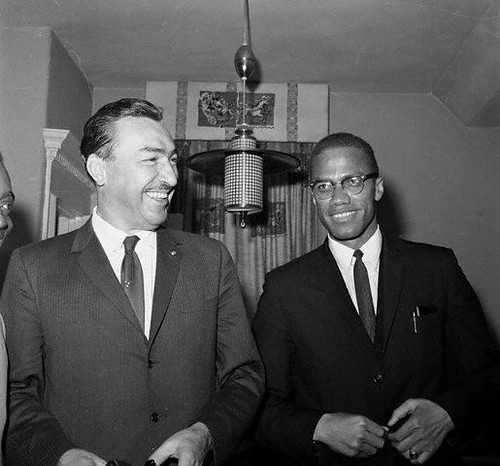
New York City boycott leaders (L-R) Reverend Milton A. Calamison, Representative
Adam Clayton Powell, D-NY., and controversial leader Malcolm X are shown at Siloam
Presbyterian Church, Brooklyn before March 16th boycott of city public schools. More
than 165,000 students staged the anti-segregation protest making the boycott less
than 50 percent as effective as the one staged last month. The demonstration
was hurt by lack of support from major Civil Rughts groups. New York, New York, USA


flo-powelldad.jpg

Adam Clayton Powell Jr., left, and Martin Luther King Jr.,
sometimes clashed, but in 1965 they both appeared at a
news conference at Abyssinian Baptist Church in New York
City.


OnPolitics
April 12, 2010


Adam Clayton Powell IV made it official today, announcing he will run against Rep. Charles Rangel, D-N.Y. -- the man who defeated his father in the Democratic primary 40 years ago.

Powell, a state assemblyman, stepped forward to challenge Rangel after the congressman ran afoul of the House ethics committee. USA TODAY's Fredreka Schouten recounts Rangel's troubles here.

The New York Daily News recently caught up with Rangel and asked him about Powell. In in this video, Rangel expressed surprise by Powell's decision because it means Powell will have to give up his state Assembly seat.

Rangel also had this to say about ending the career of the legendary Adam Clayton Powell Jr., who was weakened by allegations that he mused congressional funds in the 1970 primary: "I really never unseated his father. His father left the community."

Here is the video of Rangel talking about the Powells, father and son:


<object width="640" height="385"><param name="movie" value="http://www.youtube.com/v/uJqzEpyU3Cs&hl=en_US&fs=1&"></param><param name="allowFullScreen" value="true"></param><param name="allowscriptaccess" value="always"></param><embed src="http://www.youtube.com/v/uJqzEpyU3Cs&hl=en_US&fs=1&" type="application/x-shockwave-flash" allowscriptaccess="always" allowfullscreen="true" width="640" height="385"></embed></object>

 
<font size="5"><center>
Powell Says He Will Challenge Rangel</font size></center>


The New York Times
By MICHAEL BARBARO
April 12, 2010


Assemblyman Adam Clayton Powell IV announced on Monday that he would challenge Representative Charles B. Rangel in this fall’s Democratic primary, setting the stage for a deeply personal battle between two of Harlem’s biggest political names and oldest foes.

Mr. Powell’s entry into the race suggests that Mr. Rangel’s political troubles are reshaping the campaign for his seat, which was once considered untouchable. So far, he faces two declared opponents, and a growing list of would-be candidates who are exploring the race.

Mr. Powell, 47, acknowledged that the ethics probes swirling around Mr. Rangel, including an investigation into corporate-sponsored trips he went on, and the congressman’s decision to give up the chairmanship of the powerful Ways and Means Committee, had emboldened him to run.

“The fact that he is no longer chairman is significant,” Mr. Powell said. “If he were still chairman, I might not be running.”

Mr. Powell on Monday speculated that Mr. Rangel would seek re-election and then resign, in order to control the appointment of his successor, a situation that aides to Mr. Rangel immediately dismissed.

Mr. Powell, whose father lost his congressional seat to a young Mr. Rangel three decades ago, tried unsuccessfully to oust Mr. Rangel from the seat in 1994, losing by a wide margin.

Mr. Powell said he has raised about $65,000 for his campaign, far less than the roughly $500,000 Mr. Rangel has. But Mr. Rangel’s legal bills have eaten into his campaign budget, and show no signs of abating.

During a press conference on Monday in Harlem, Mr. Powell said that avenging his father’s defeat is something “I have gotten out my system” and that he was running against Mr. Rangel this time because it was “time to turn the page” on his tenure in Congress.

“Change is coming,” he said, mimicking his campaign slogan.

Mr. Powell sought to play down questions about his arrest on charges of drunken driving, a moment that was captured on video. A jury acquitted him of drunken driving, but found him guilty of a minor charge, driving while ability impaired, which is akin to a speeding ticket.

“Did I look impaired to you?” he asked reporters on Monday, referring to the video.

His supporters chanted “No!”

http://cityroom.blogs.nytimes.com/2010/04/12/powell-says-he-will-challenge-rangel/


<object width="640" height="385"><param name="movie" value="http://www.youtube.com/v/LhMaEA8WG2M&hl=en_US&fs=1&"></param><param name="allowFullScreen" value="true"></param><param name="allowscriptaccess" value="always"></param><embed src="http://www.youtube.com/v/LhMaEA8WG2M&hl=en_US&fs=1&" type="application/x-shockwave-flash" allowscriptaccess="always" allowfullscreen="true" width="640" height="385"></embed></object>
 
<font size="5"><center>
Can a Powell Oust a Rangel
who Ousted a Powell?</font size>
<font size="4">

A son of the famed Adam Clayton Powell Jr.
decides to challenge the man
who unseated his father from Congress.
You can't make this up.</font size></center>


clayton%20powell.jpg

Powell IV


The Root
By: Joel Dreyfuss
April 14, 2010


The news that a son of the late Adam Clayton Powell Jr. will challenge Harlem Congressman Charlie Rangel in the Democratic primary is the kind of sweet irony that reporters love. If the younger Powell were to oust Rangel, who has been under fire for ethical reasons lately, he would be replacing the man who beat his father for the same seat 40 years ago.

This falls into to the "you just can't make this stuff up" category. The idea of the son avenging his father's defeat wouldn't make it out of the writer's lounge of a second-rate WB series (is that redundant?). But there it is, in all the messiness that is politics, and Harlem politics at that.


<font size="3">Powell, Jr.</font size>

I had the good fortune to cover Congressman Powell as a young New York reporter. First at a wire service and later at the then-liberal New York Post, a frequent Sunday assignment was to trek "uptown" to Abyssinian Baptist Church, Powell's church, for some weekend entertainment. Powell, who had been found guilty of slander for calling a Harlem woman a collector of bribes for the NYPD, only showed up at his church on Sundays, when subpoenas could not be served to force him to pay her court-ordered damages. He would deliver a dramatic sermon, often with allusions, both subtle and direct, about New York politics, and then he would hold court in his office behind the altar, surrounded by reporters anxious to collect the pithy quotes that Powell fired off like bullets from a runaway machine gun.

Powell was often compared to a '40s matinee idol in news stories. That meant he was light enough to pass for white, slicked his hair straight back, had a thin mustache and was a very handsome man. He spoke in the high-handed, confident tone of those '40s movie stars, too. He'd wave off charges, laugh loudly at his own jokes with the reporters and sip a whisky at the big cluttered desk deep inside the church that was his political base.

Abyssinian was founded in 1808 at the southern end of Manhattan by Ethiopian merchants and African-Americans fed up with segregated church services. It slowly moved uptown as the epicenter of black life in New York migrated from the Wall Street area to Hell's Kitchen to Harlem. Powell inherited the pastorship of the church from his father in 1937, and as a City Councilman he led massive demonstrations to pressure Harlem Hospital to hire black doctors, to force stores on Harlem's 125th street to hire black clerks and the city's transit system to take on black drivers and conductors. He won these battles and was propelled to Congress in 1944 by his success, making him one of only two African-Americans in the House.

When I met him in 1970, much of the fire had gone out. He spent most of his time at his retreat on the Bahamian island of Bimini, flitting in and out of New York to preach and missing votes in Washington, where the Supreme Court had given him back his House seat after his colleagues ousted him for misusing committee funds.

Yet, until his troubles, Powell had been a powerful force in Washington. As chairman of the House Education and Labor Committee, he pushed through hundreds of bills that were essential elements of Lyndon Johnson's Great Society Programs. He forced school desegregation with a rider on many bills that barred discrimination in the use of federal funds. He pushed through minimum wage laws, equal pay for women, laws against lynching and forced the House to bar the use of the N word in debate.​


<font size="3">Enter Rangel</font size>

I last saw Powell a few months before he died in 1972. He had lost his House seat to an upstart named Charlie Rangel two years earlier. He let me tag along as he ran energetically around New York. White and black cabbies beamed and asked for his autograph. "Wait 'til the guys in the garage hear I had Adam Clayton Powell in my cab," one said excitedly. Everywhere we went, Powell shook hands, signed autographs. He was still the movie star. We lunched at one of his favorite midtown bars, (I had a feeling there were many) and everybody knew his name. He drank several Scotches and milk. As we parted he gave me one last piece of advice, "Give 'em hell, Dreyfuss."

Powell liked his own name so much that he used it more than once for his children:

  • His son with famed jazz organist Hazel Scott, Adam Clayton Powell III, is an expert on technology for journalists who is in charge of globalization at the University of Southern California.

  • His son with his fourth wife, Puerto Rican Yvette Diago, originally named Adam Clayton Powell Diago, changed his name to Adam Clayton Powell IV in honor of his father (and to help his political ambitions). The Fourth, as some New Yorkers call him, was elected to the city council in New York and later to the State Assembly.


<font size="3">Powell IV and Rangel, Before, Once More</font size>

Powell IV challenged Rangel once before and was lost badly; he also lost in a race for Manhattan Borough President. He has also had some highly-publicized run-ins with the law. There is already one other announced candidate and at least two other established politicians are mulling runs, according to the New York Times. His fluency in Spanish may help him in a district that includes Hispanic East Harlem and his relative youth (48) may appeal to the many young whites who have gentrified Harlem in recent years.

The big question is whether old-time Harlemites have had enough of Rangel's problems with paid corporate trips, taxes and undeclared Caribbean apartments. For years, the argument was that his seniority gave him great clout. Now that he has resigned his chairmanship of the House Ways and Means Committee, the enthusiasm to keep him in office may be considerably weakened. And the drama of the vengeful son could turn into a reality show.


http://www.theroot.com/views/can-powell-oust-rangel-who-ousted-powell
 
Gov. Paterson leaps onto stage - literally - as he backs Rep. Charles Rangel's reelec

<script src="http://player.ooyala.com/player.js?layout=chromeless%3B&embedCode=RlZ2NnMTpWxXCWCw4IGFAYc4diJrEDrU&deepLinkEmbedCode=RlZ2NnMTpWxXCWCw4IGFAYc4diJrEDrU"></script>
alg_paterson_rangel.jpg

BY Erin Einhorn
DAILY NEWS CITY HALL BUREAU

Monday, June 7th 2010, 4:00 AM


It was a small step for Charlie Rangel's political future - but a giant leap for Gov. Paterson.

Rangel was the man of honor as he kicked off his 21st congressional campaign Sunday at Washington Heights' Boricua College, but it was Paterson who stole the show.

The crowd gasped as the legally blind governor bounded from his front-row seat - and leaped onto a stage 2 feet off the ground.

After clearing the hurdle, the governor grinned slyly and cracked a joke.

"After I became governor, I gave up the blind act," he said to wild cheers and applause.

Paterson later told reporters that he hadn't rehearsed the jump but was inspired to perform for one of his Harlem political mentors.

"There is no height I wouldn't go to support Congressman Rangel," he said. "I thought I needed more of a demonstrative way of showing it."

Rangel, who turns 80 next week, went for a less acrobatic entrance but defiantly used his campaign launch to slam his critics, the press - and anyone who's tried to push him from politics.

"They can fire their best shot but they just can't walk over success," he told the crowd of nearly 100 supporters that included a who's who of Manhattan's political elite.

Under fire for ethics violations including inappropriate Caribbean junkets, the congressional lion relinquished the chairmanship of the powerful House Ways and Means committee in March.

The move prompted many to suspect he'd quietly retire, but Rangel insists he's holding his ground.

"I stepped aside so that I would not be a target for the Republicans," he said. "And after we whup them like they're going to be whupped in November, then I don't think that [President] Obama, [House Speaker] Nancy Pelosi and Charlie Rangel is going to be a big enough target for anybody."

Rangel stood by controversial remarks he made in yesterday's Daily News comparing Obama to former Vice President Dick Cheney over their shared commitment to the Iraq war - but accused The News of overemphasizing his comments.

"The fact that I can have an issue with even a great President, I really don't think warrants the headlines but...whatever makes you feel good, it's okay with me," he said.

eeinhorn@nydailynews.com
 
Re: Gov. Paterson leaps onto stage - literally - as he backs Rep. Charles Rangel's re

<font size="5"><Center>
NY Rep. Rangel:
Power Loss Portrait In Congress</font size></center>


6_Charlie_Rangel_s_Woes.sff_300.jpg

Rep. Charles Rangel, D-N.Y., takes his lunch to
his seat in his office on Capitol Hill in Washington,
Wednesday, May 26, 2010, during a meeting on
how to care for US veterans with PTSD. Just
about everyone likes Charlie Rangel. Republicans
pump his hand, Democrats put their arms around
his shoulders and women of all political persuasions
give him pecks on the cheek.


NPR via The Associated Press
WASHINGTON July 6, 2010


Just about everyone likes Charlie Rangel.

Republicans pump his hand, Democrats put their arms around his shoulders and women of all political persuasions give him pecks on the cheek.

Spend some time with the 80-year-old congressman from New York City who's been striding the Capitol's halls for four decades on behalf of residents of Harlem, and there's little evidence he's become someone to avoid because of an ethics cloud that's more likely than not going to darken in days to come.

Colleagues in both parties still gravitate to the gravelly voiced, outgoing, backslapping Rangel four months after fellow Democrats persuaded — and Republicans hounded — him to relinquish one of the most powerful jobs in Washington, chairman of the tax-writing House Ways and Means Committee.

"Amiga," he shouts in the Capitol subway to Cuban-born, Florida Republican Rep. Ileana Ros-Lehtinen, using the Spanish word for female friend.

"Amigo," she belts out in return.

"Hey Ritchie," Rangel booms as he passes Rep. Richard Neal, D-Mass., who's seen by many as a Ways and Means chairman in the future.

Behind the scenes, it's a different story. A few Democrats have returned money that Rangel raised for them. His influence is sapped.

His wife, Alma, warns him not to be naive about the glad-handling.

"You know," she tells him, "they're putting you on."

How did it come to this?

———

Rangel follows in a tradition of Ways and Means chairmen such as Reps. Dan Rostenkowski, D-Ill., and Wilbur Mills, D-Ark., who waited decades to become congressional titans, then lost that perch through ethical lapses.

"Some members are old school," said Stanley Brand, a former House counsel and a defense lawyer for many politicians in trouble. "As they rise in seniority ... they think less about (rules) changes that occur under their nose."

Rangel lost his post because his conduct gave Republicans an ethics issue that's ripe for exploitation, just as Democrats in 2006 and 2008 successfully seized on GOP ethical lapses.

Nervous about losing House seats this year, Democrats persuaded Rangel to step down after the House ethics committee concluded in February in a relatively minor case that Rangel violated the chamber's rules on gifts. The committee said Rangel should have known that corporate money paid for two trips to Caribbean conferences. Rangel insists he didn't know. There was no punishment.

More ominous is an investigation into activities far more likely to touch the nerve of voters: Rangel's failure to pay taxes on income from a Dominican Republic vacation villa; his rent-subsidized apartments in New York; using official stationery to raise money for a college center bearing his name; and his belated disclosure of assets revealing he was far richer than people thought.

———

Rangel joined the Ways and Means Committee in 1974 and ascended to chairman more than three decades later. He says the pain of having his integrity questioned is terrible, but he tries hard not to show it.

He dresses immaculately, his gray hair neatly combed back, the color matching his mustache, and his pocket handkerchief matching his suit. He walks with a spry step.

He remains a workaholic, sometimes forgetting breakfast even though he scoops oatmeal into a cardboard cup at a House cafeteria each morning and carries it back to the office. Some busy days, he warms it in the microwave for lunch.

"There's been a force out there. People feel they have to say something supportive," Rangel says as he walks through the Capitol's underground subway.

"She says it's unseemly," Rangel says of his wife's advice. "I say, `Suppose it's not real. As long as they keep saying these things until I die, what difference does it make?'"

But he admits, "It's still painful. It's times like this when I have to reinforce the facts: I'm alive, I'm well, and 60 years ago I could have died when I was surrounded by hundreds of Chinese" in the Korean War.

Rangel came back from that war a Harlem hero with a Purple Heart and a Bronze Star. He says he's constantly measuring his current troubles against the 20-degree below zero days of Nov. 29 to Dec. 1, 1950, when he was wounded, but survived while fellow soldiers died all around him.

He always falls back on the title of his autobiographical book, which comes from his wartime experience: "And I Haven't Had A Bad Day Since."

———

Long before he was chairman, Rangel took care of his Harlem constituents, many of them poor. He sponsored empowerment zones with tax credits for businesses moving into economically depressed areas and developers of low income housing.

As chairman, he pushed bills with tax relief for victims of Hurricane Katrina, tax breaks for small business and stronger environmental and labor rules in trade agreements, tax rebates for consumers and an increase in the minimum wage. He was a major player in passage of President Barack Obama's $862 billion stimulus program, one-third of it tax cuts.

But Rangel lacked the power of some of his predecessors.

He was a longtime advocate of health care reform, but Speaker Nancy Pelosi, D-Calif., passed him over for guiding Obama's overhaul to passage. An important part of the House's climate change legislation was given to another committee, when it could have gone primarily to Ways and Means.

House leaders forced him to reverse himself and manage a bill to tax away Wall Street bonuses after he told reporters that would be a misuse of tax law.

Leadership aides said those decisions were part of the strategy to pass important legislation and didn't represent a loss of confidence in Rangel. Other committee lawmakers, however, believe Rangel was hobbled by his ethics problems — and these decisions reflected that view.

Says Rangel: "There's no way I could have taken it personally. The speaker is more hands on in committee work than before."

But, chatting outside a House elevator, he recalls how things used to be, how the legendary Rostenkowski, who ran the committee from 1981 to 1994, would never have stood for a loss of power. When Rangel was given a leadership post of deputy whip, Rostenkowski asked him whether he was loyal to the committee or the leadership.

"You can't do both," Rangel said he was warned.

———

In 1970 Rangel upset a Harlem legend, Rep. Adam Clayton Powell Jr. — a pastor, civil rights leader and a man known for his womanizing and his absence from his district.

This year, Rangel announced his re-election bid days before his birthday. One of his primary opponents is a son of Powell, Adam Clayton Powell IV.

In Harlem, Rangel ruled as one of the Gang of Four — African-American politicians who achieved top political posts: David Dinkins, a one-time New York mayor; Basil Paterson, who rose to deputy mayor and New York secretary of state; and the late Percy Sutton, Manhattan Borough president.

He marched with Martin Luther King. He was a founding member of the Congressional Black Caucus.

At a meeting of New York political leaders after the February ethics report, Dinkins spoke about his friend.

"Mayor Dinkins was very emotional," recalled Lloyd Williams, president and chief executive officer of the Greater Harlem Chamber of Commerce. "He said if not for Charlie Rangel, there would not have been a Mayor Dinkins."

Dinkins declined in an interview to talk about Rangel's troubles. "He is my brother, my friend. My interest is in his welfare," he said.

Williams momentarily seemed worried about Rangel's future.

"I fear these mistakes will become too much of his legacy," he said.

Quickly, he switched to a more optimistic tone. "When the venom is out of the air, Charlie will be remembered as one of the most extraordinary political leaders in the history of this country."


http://www.npr.org/templates/story/story.php?storyId=128315710
 
NY black politicians (Brooklyn black politicians in particular) are a joke. Most of them spend all of their time trying to shoot down any competitors to their phony baloney positions.

Respect David Patterson though. He's always been a standup guy. Sampson is an old classmate of mine. Cool dude. But the rest of them are jokes...self serving jokes
 
<font size="5"><center>
Can a Powell Oust a Rangel
who Ousted a Powell?</font size>
<font size="4">

A son of the famed Adam Clayton Powell Jr.
decides to challenge the man
who unseated his father from Congress.
You can't make this up.</font size></center>


clayton%20powell.jpg

Powell IV

<font size="7"><center>

NO !
</font size>
</center>
 
<font size="5"><center>
Embattled but Ebullient, Rangel
Wins Primary and Likely Next Term</font size></center>


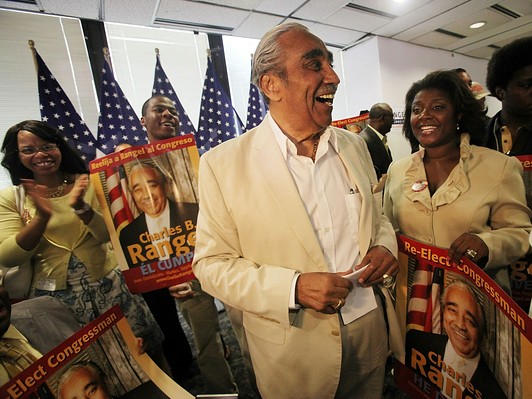
OB-JP727_rangel_Q_20100818155621.jpg

Rep. Charles Rangel with supporters in Harlem after a news conference on Aug. 12.


Wall Street Journal
By Devlin Barrett and
Michael Howard Saul
September 14, 2010


New York Democratic congressman Charles Rangel, facing ethics charges that have made him a pariah to many in his own party, handily won a primary Tuesday night -– a victory that nearly guarantees him another two years in Congress.

“This isn’t a win for Charlie Rangel, this is our communty’s win. This is all of you that spoke,’’ he told supporters even before the votes had been counted.

“My heart is beating so fast because of the terrible accusations and allegations,’’ he said. “It beats fast because of my pride in coming from a community and my friends and voters say hey, we’ll make the decision.’’

By 11:15 p.m., with 47 percent of precincts reporting, Rangel had 52 percent of the vote. His nearest challenger, state Assemblyman Adam Clayton Powell, had just 25 percent of the recorded votes.

At 80 years old, Rangel had faced the toughest political fight of his long career. He is awaiting a trial by fellow lawmakers on 13 alleged violations of House rules for using a rent-stabilized apartment as a campaign office, not reporting assets, using congressional stationery to raise funds for a college center named in his honor, and failing to pay taxes on a vacation villa in the Dominican Republic.

Republicans have seized on the case as evidence that Democrats have not effectively policed Congress, and Democrats fear Rangel’s ethics woes could drag down other candidates in tough-re-election fights around the country.

“I am going to go back to Washington with such pride,” Rangel said Tuesday, flashing some of the same defiance that has propelled him through a scandal that would have driven less-established lawmakers from office.

–Chris Herring contributed reporting.

http://blogs.wsj.com/metropolis/201...ent-rangel-wins-primary-and-likely-next-term/
 
I don't know why folks here in Harlem keep voting Rangel in.

Though I didn't want to,
I voted for Powell IV,
Who's history can be just as troubling.
But he's still been community-minded.
I just feel that Dude's living off his Father's GREAT legacy.
 
<font size="5"><center>
Embattled but Ebullient, Rangel
Wins Primary and Likely Next Term</font size></center>


OB-JP727_rangel_Q_20100818155621.jpg

Rep. Charles Rangel with supporters in Harlem after a news conference on Aug. 12.


Wall Street Journal
By Devlin Barrett and
Michael Howard Saul
September 14, 2010


New York Democratic congressman Charles Rangel, facing ethics charges that have made him a pariah to many in his own party, handily won a primary Tuesday night -– a victory that nearly guarantees him another two years in Congress.

“This isn’t a win for Charlie Rangel, this is our communty’s win. This is all of you that spoke,’’ he told supporters even before the votes had been counted.

“My heart is beating so fast because of the terrible accusations and allegations,’’ he said. “It beats fast because of my pride in coming from a community and my friends and voters say hey, we’ll make the decision.’’

By 11:15 p.m., with 47 percent of precincts reporting, Rangel had 52 percent of the vote. His nearest challenger, state Assemblyman Adam Clayton Powell, had just 25 percent of the recorded votes.

At 80 years old, Rangel had faced the toughest political fight of his long career. He is awaiting a trial by fellow lawmakers on 13 alleged violations of House rules for using a rent-stabilized apartment as a campaign office, not reporting assets, using congressional stationery to raise funds for a college center named in his honor, and failing to pay taxes on a vacation villa in the Dominican Republic.

Republicans have seized on the case as evidence that Democrats have not effectively policed Congress, and Democrats fear Rangel’s ethics woes could drag down other candidates in tough-re-election fights around the country.

“I am going to go back to Washington with such pride,” Rangel said Tuesday, flashing some of the same defiance that has propelled him through a scandal that would have driven less-established lawmakers from office.

–Chris Herring contributed reporting.

http://blogs.wsj.com/metropolis/201...ent-rangel-wins-primary-and-likely-next-term/

What is it with some of us to vote for mediocrity. Reminds me of dollar bill Jefferson in New Orleans. Defiant until the end. Five other candidates, how about the guy without the ethics charges!!!!:smh: WILLFUL IGNORANCE
 
Last edited:
ELECTION 2012

After 42 years in House,
Charles Rangel might lose primary


9RjnJ.WiPh.91.jpg

Representative Charlie Rangel is running for New York's new 13th Congressional District,
formally the 15th district. | Andy Jacobsohn/MCT


McClatchy Newspapers
By William Douglas
Monday, May 14, 2012


NEW YORK — With the help of a walker and staffers, Rep. Charles Rangel gingerly made his way recently to the foot of a statue of 19th-century abolitionist Frederick Douglass near his Harlem power base and proclaimed himself fit and ready to fend off the Democratic challengers who are looking to end his four-decade run in Congress.

“Being a warhorse, a warhorse knows when to fold and when to fight, and knows how to win,” Rangel said. “It would be dishonorable to the people out here . . . for me to say let’s get on with the war and then go AWOL.”​


REAPPORTINED DISTRICT MORE HISPANIC THAN BLACK
At 81, Rangel is seeking his 22nd term in the U.S. House of Representatives. But he’s suffering from a bad back, which kept him out of Washington for nearly three months this year, and a potentially bad break from a congressional reapportionment that makes his district more Hispanic than African-American.

A three-judge federal panel approved a redistricting plan in March that subtracted a chunk of Upper Manhattan from Rangel’s district and added a piece of the Bronx to it. Even the district’s designation has shifted, from the 15th to the 13th congressional district.

The reconfiguration has made the district’s voting-age population 46 percent Hispanic, up from 36 percent, according to an analysis by the City University of New York’s Mapping Service at its Center for Urban Research. The number of African-American voters remained at 33 percent, while whites dropped from 27 percent to 17 percent, according to the analysis.

For Rangel, a national African-American icon, that’s not good news.

Redistricting has already claimed six members of Congress this year.​


HEALTH FACTORS
Now the man who did the unthinkable in 1970 by defeating legendary Harlem firebrand Adam Clayton Powell faces perhaps the toughest run of his career since he squared off against Powell.

Rangel’s health, the new district boundaries, demographic changes within Harlem and Rangel’s 2010 censure by the House for multiple ethics violations have attracted some challengers for New York’s June 26 Democratic primary. They pose a serious threat to the former House Ways and Means Committee chairman and fourth most senior member of Congress, political experts say.​


MOOD OF THE COUNTRY, CHANGING
Life hasn’t been easy for some notable congressional incumbents this year. It’s only May, but redistricting and anti-incumbent sentiment nationwide have already claimed six members of Congress – including anti-war liberal Rep. Dennis Kucinich, D-Ohio, and center-right Sen. Richard Lugar, R-Ind. – and have made many other lawmakers extremely uncomfortable as they seek new terms.

“The mood of the country has changed, and you can feel the change in Harlem,” said Carlos Vargas-Ramos, a research associate at the Center for Puerto Rican Studies at New York’s Hunter College. “The question is can Rangel’s challengers tap into that anti-incumbent feeling? Rangel has the power of incumbency: immense name recognition and he’s popular. On the other hand, the district he’s in has been disbanded; because of the ethical problems, he lost the chairmanship of the Ways and Means Committee; and some people say it’s time to make room for some new representation.”​


SOME PREDICT A WIN
Several longtime New York political observers think that Rangel will survive and easily overcome the obstacles with his trademark smile, affable personality and back-slapping style.

“He will win, and I will be his advance man,” former New York Mayor Ed Koch predicted. “This is the Harlem seat. Everybody recognizes that, and I don’t think people want to change that. And Charlie crosses all lines: white, black, Hispanic, young and old. Everyone likes Charlie.”

But there are enough trouble signs that even Rangel has conceded that “We have a whole lot of work to do to repair the damage that has been done by reapportionment.”

Rangel has raised $765,496 in campaign contributions, but he managed to bring in only $67,173 in the first three months of this year, according to Federal Election Commission records.​


THE OPPONENTS
Clyde Williams, a politically connected African-American who’s making his first run for public office at age 50 and is regarded as an underdog against Rangel, raised $118,109 during the same period and has more than $284,600 total in contributions.

Williams said he was prepared to wear out some shoe leather, too, in hopes of beating Rangel. Williams may be a newcomer to elective politics but he’s hardly a political novice.

He’s a former Democratic National Committee political director and former domestic policy adviser to President Bill Clinton. His wife, Mona Sutphen, served as Obama’s White House deputy chief of staff. Williams relocated to Harlem when Clinton left office in 2001 and opened an office on 125th Street, a few blocks from the famous Apollo Theater.

Like Obama, Newark. N.J., Mayor Cory Booker and former Washington Mayor Adrian Fenty, Williams is one of a new generation of African-American politicians that didn’t come up through the civil rights or political clubhouse ranks and that strives for a base beyond African-American voters.

“I think Charlie Rangel has done great things for this community,” Williams said. “I also believe that when you’ve been in office as long as he has, you need new energy, new ideas and a new approach to solving long-term problems, and that’s what I think I bring to the table.”


Longtime New York state Sen. Adriano Espaillat, who’s seeking to become the first Dominican-American elected to Congress and is viewed as Rangel’s main threat, raised $62,055 in total contributions from January to March.

The new boundaries, encompassing a potential treasure trove of Hispanic votes, are what drew Espaillat, a former chair of the New York Legislature’s Black, Puerto Rican, Hispanic and Asian Caucus, into the race.

“He’s not current,” Espaillat said of Rangel. “Washington and President Obama will need a young buck that will push back on tea party Republicans so the president won’t have to compromise his pledge to America, which he had to do in his first term because he didn’t have a cadre of young, bold, fresh-idea-minded legislators.”

Espaillat, who’s 58, said he planned to beat Rangel’s time-tested political machine one pair of shoes at a time.

“I win knocking on doors, going through three pairs of shoes. I’m prepared to lose 15 pounds,” he said.


MISSING VOTES

WYiDR.St.91.jpg

Rangel, who missed more than 100 votes because of his back injury, returned to Capitol Hill last Monday to the cheers of several House colleagues. But many Democrats appear to be keeping their distance from him in this election year. Only 14 House members have contributed to his campaign, after he donated about $3.8 million to more than 500 Democrats over a 14-year period.​


OBAMA ~ ENDORSEMENT
In the throes of Rangel’s ethics woes in 2010, President Barack Obama described him as “somebody who’s at the end of his career” and who should “end his career with dignity.”

Asked recently about whether Obama is endorsing his re-election campaign, Rangel responded, “Goddamn, that’s a good question.”

Obama has endorsed no one in the race, according to a White House official who spoke on condition of anonymity because he wasn’t authorized to discuss the issue. There’s no question that the political landscape has shifted under Rangel’s feet, literally and figuratively.

Rangel brushes off such out-with-the-old talk, saying that nothing beats the experience and seniority he has in Washington.

“This is no time to be making new friends,” he said. “This is the time to get in there and get the job done.”​


IT MAY NOT BE EASY, KNOCKING OFF RANGEL
Though viewed as viable candidates, none of Rangel’s top opponents is considered a lock, because of potential weaknesses. Espaillat can’t bank on uniform Hispanic support because of occasional political tensions between the Puerto Rican and Dominican-American communities.

Williams has to woo Hispanic voters in the Bronx portion of the district, while convincing older African-Americans who’ve known only Rangel and Powell as their representatives that he can deliver in Washington.

An elderly man poked his head into Williams’ campaign office earlier this month and asked, “Is this the guy running against Rangel?”

“F---- y’all!” he said before dashing off.

Meanwhile, Rangel is working to shore up support in the new district. He named a Dominican-American as his campaign manager and reminded voters of the projects and dollars he’s brought to his old district. He and Espaillat have been scrambling for endorsements from the city’s major African-American and Hispanic leaders.

Espaillat has scored major backing from Fernando Ferrer, a popular former Bronx borough president who unsuccessfully ran for mayor in 2005 with Rangel’s support. Rangel expressed disappointment over Ferrer’s decision, but he vowed to trump Espaillat’s coup by announcing an endorsement from Ruben Diaz Jr., the current Bronx borough president.

Espaillat and Williams think they can chisel away at the incumbent by going after what they suspect is a sizable chunk of voters who suffer from Rangel “scandal fatigue.”

The House formally censured Rangel in 2010 after the Ethics Committee found him guilty of 11 ethics violations that included failure to pay taxes, failure to properly report personal income and improper solicitation of donations for a college center that bears his name.

However, several New Yorkers, including Koch, don’t think the ethics scandal has legs in the district. Former state Assemblyman Adam Clayton Powell IV, son of the man Rangel defeated in 1970, called Rangel corrupt, a crook and a national disgrace during their 2010 Democratic primary battle, to no avail. Now Powell is considering voting for his former opponent.

“He may be a crook,” Powell said, “but he’s my crook.”

Some district residents aren’t as forgiving.

Allen Roy, a Harlem resident, said he’d always voted for Rangel in the past, but now “I think it’s time for him to retire.”

“It’s time for a change because of the (ethics) investigation,” Roy said after Williams canvassed his block. “We need clean people in Congress.”

Patricia Holloway, an African-American street vendor on 125th Street, said the ethics issue had her leaning toward Espaillat.

“I’m not talking bad about Rangel. He did some good things, but his time has passed,” said Holloway, who’s 58. “We’ve got to get some new blood in there.”

But Esperanza Acosta, a 47-year-old Dominican-American resident of the Bronx, said that in today’s uncertain economic and social climate, now wasn’t the time to send someone new to Washington. She intends to vote for Rangel.

“I think he fights, helps everybody,” she said. “I think he’ll get a lot of votes in the Bronx. But Rangel needs to knock on a lot of doors there.”​


Email: wdouglas(at)mcclatchydc.com; Twitter: @williamdouglas

http://www.mcclatchydc.com/2012/05/14/148540/after-42-years-in-house-charles.html


A DC Insider Seeks to Unseat Rangel

Will Clyde Williams' presidential ties help him
topple New York's longest-serving congressman?


williams2_400_06252012_je.jpg


The Root
By: Hillary Crosley
June 25, 2012


The Root) -- "I'm not a politician, I've never run for anything in my life," says Clyde Williams quickly in the basement of his Harlem campaign headquarters.

Thanks to the bustle of his 123rd Street office in Manhattan, boasting nine staffers, a gaggle of portable air conditioners and several empty pizza boxes, the open space upstairs was too loud to hear Williams' election plans. Sitting downstairs next to two slices he's saved for his wife, Mona Sutphen, Williams seems confident in his chances of gaining Charlie Rangel's seat in the House of Representatives by winning the June 26 primary in a largely Democratic district. This, despite many reports that the race is between the feisty incumbent and State Sen. Adriano Espaillat.

Rangel, a Congressional Black Caucus founding member, has represented the Harlem community's 15th District since 1971 and is going through a bruising fight to save his seat and his formidable reputation. In 2010, just ahead of the investigation into a misuse of funds, Rangel stepped down as chair of the prestigious House Ways and Means Committee. Later, after admitting impropriety, Rangel was censured by the House. Earlier this month, Rangel demanded an investigation of Congress' probe into his actions.

Nevertheless, on Tuesday, the 82-year-old's name will be on the ballot.

"I never talk about Rangel's ethics issues," Williams, 50, says. "People want us to improve their lives."

Still, the incumbent's problems muddle his chances for re-election and reflect a changing of the guard in Harlem. Williams seeks to represent a new order of leadership in the district.

"We need to hold people accountable," Williams says, pointing to the unemployment rate of 14 percent of blacks in New York City, according to recent Labor Department data. "I've seen people, some of whom are Congressional Black Caucus members, say 'Obama hasn't solved unemployment in the black community.' They've been elected, probably for a combined 400 years [if you total their terms in office]. They're supposed to solve these problems, too. So much more could've been done if there was a greater effort put into how we solve these problems.

"If people trained for the jobs that existed today, the jobless rate would probably be around 7 percent," Williams continues. "There's money to do it. We can train people to be nurses, electricians, plumbers and auto mechanics."

The historically African-American 13th District was recently redrawn to include parts of East Harlem and bits of the Bronx, where Dominican-American candidate Espaillat has strong ties. The district is now 55 percent Latino, which is seen as giving the state senator an edge. (Rangel's father was Puerto Rican, but he does not emphasize that side of his heritage). But Williams, who is black, says his support is secure.

"Harlem hasn't been majority-black for a while," Williams says. "People vote based on issues, and if they believe that I can improve their lives, then they'll vote for me."

FULL STORY: http://www.theroot.com/views/dc-insider-seeks-unseat-rangel?page=0,0&wpisrc=root_lightbox


Back
Top