
You are using an out of date browser. It may not display this or other websites correctly.
You should upgrade or use an alternative browser.
You should upgrade or use an alternative browser.
Sports & Politics ? ? ?
- Thread starter QueEx
- Start date


Re: Political Sports ???
<font size="5">
‘Los Suns’ Join Protest, Then Stop the Spurs</font size>
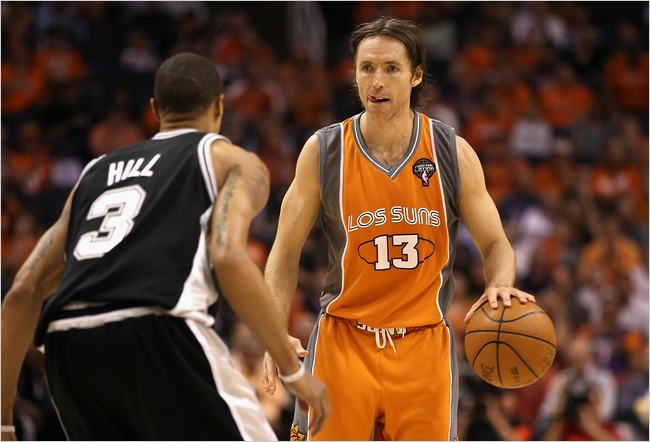
By BILLY WITZ
Published: May 5, 2010
PHOENIX — The Phoenix Suns’ decision to wear “Los Suns” jerseys Wednesday — as a celebration of Cinco de Mayo and as a political statement in opposition to Arizona’s new law dealing with illegal immigrants — drove another wedge into the contentious debate.
FULL STORY: http://www.nytimes.com/2010/05/06/sports/basketball/06suns.html
<font size="5">
‘Los Suns’ Join Protest, Then Stop the Spurs</font size>
By BILLY WITZ
Published: May 5, 2010
PHOENIX — The Phoenix Suns’ decision to wear “Los Suns” jerseys Wednesday — as a celebration of Cinco de Mayo and as a political statement in opposition to Arizona’s new law dealing with illegal immigrants — drove another wedge into the contentious debate.
FULL STORY: http://www.nytimes.com/2010/05/06/sports/basketball/06suns.html
Re: Political Sports ???
<font size="3">
1968 Sports & Politics: </font size?<font size="5">Black Power !</font size>
<center>

 </center>
When Tommie Smith and John Carlos gave a gloved Black Power salute on the Olympic podium in October 1968 it sent a shockwave through sport.</font size>
QueEx
<font size="3">
1968 Sports & Politics: </font size?<font size="5">Black Power !</font size>
<center>
When Tommie Smith and John Carlos gave a gloved Black Power salute on the Olympic podium in October 1968 it sent a shockwave through sport.</font size>
QueEx
Re: Political Sports ???
<font size="3">
In a precedent for pro sports getting involved in state politics:
</font size>
<font size="3">
In a precedent for pro sports getting involved in state politics:
</font size>
The most relevant example involves racial politics in Arizona. <SPAN style="BACKGROUND-COLOR: #ffff00">The NFL pulled Super Bowl XXVII (held in 1993) out of Sun Devil Stadium in Tempe, Arizona because the state did not recognize Martin Luther King, Jr. Day</span>--an edict made by Gov. George Meacham in 1987, which voters in the state elected to support in 1990. After that, Arizona voters changed their minds in 1992, voting to recognize the law; in March of 1993, the NFL awarded Super Bowl XXX to Tempe.
Re: Political Sports ???
<font size="3">
The 1980 Olympics Boycott Over the Soviet Invasion of Afghanistan
The Irony: In 2010, 30 years after the 1980 Olympics, the words Iran, Afghanistan, and oil are still dominant in American political lexicon.
QueEx
<font size="3">
The 1980 Olympics Boycott Over the Soviet Invasion of Afghanistan
"In 1980, the United States led a 61-nation boycott of the summer Olympics held in Moscow that year. U.S. President Jimmy Carter called for the boycott to protest the Soviet invasion of Afghanistan in December 1979. But well before the invasion of Afghanistan, before the Iranian hostage crisis involving 52 American hostages, before the oil shock that sent oil prices to historic highs in 1979-80, Carter’s presidency was in shambles.
</font size>
</font size>
The Irony: In 2010, 30 years after the 1980 Olympics, the words Iran, Afghanistan, and oil are still dominant in American political lexicon.
QueEx


Re: Political Sports ???
<font size="4"><center>
Muhammad Ali's legal fight against the draft
was a collision of sports & politics
</font size>
 </center>
<font size="4"><center>
Muhammad Ali's legal fight against the draft
was a collision of sports & politics
</font size>
In 1966 Muhammad Ali declared that he would refuse to serve in the United States Army and publicly considered himself a conscientious objector. Ali stated that "War is against the teachings of the Holy Qur'an. I'm not trying to dodge the draft. We are not supposed to take part in no wars unless declared by Allah or The Messenger.
We don't take part in Christian wars or wars of any unbelievers." Ali also famously said in 1966: "I ain't got no quarrel with them Viet Cong ... They never called me ******." Rare for a heavyweight boxing champion in those days, Ali spoke at Howard University, where he gave his popular "Black Is Best" speech to 4,000 cheering students and community intellectuals after he was invited to speak at Howard by a Howard sociology professor, Nathan Hare, on behalf of the Black Power Committee, a student protest group.
Re: Political Sports ???
<font size="5"><center>
2010 Arizona Diamondbacks
and the Arizona Immigration Law</font size>
</center>
And now, in a way no one saw coming, Senate Bill 1070, the state's new immigration-enforcement law, has collided head-on with the Arizona Diamondbacks and the Phoenix Suns.
http://www.azcentral.com/arizonarepublic/sports/articles/2010/05/06/20100506Montini0506.html
<font size="5"><center>
2010 Arizona Diamondbacks
and the Arizona Immigration Law</font size>
</center>
And now, in a way no one saw coming, Senate Bill 1070, the state's new immigration-enforcement law, has collided head-on with the Arizona Diamondbacks and the Phoenix Suns.
<font size="3">The Diamondbacks tried to avoid it.
Owner Ken Kendrick, a major contributor to Republican causes, was surprised by the protesters who greeted his team outside ballparks. Kendrick issued a mild-mannered statement saying that he personally disagreed with the law, then sent out his public-relations flacks to spread the word about sports not really having anything to do with politics and that people upset with SB 1070 shouldn't take it out on his franchise.
The team, for the most part, was silent, allowing the baseball players association to issue a tough statement against the law.
</font size>Owner Ken Kendrick, a major contributor to Republican causes, was surprised by the protesters who greeted his team outside ballparks. Kendrick issued a mild-mannered statement saying that he personally disagreed with the law, then sent out his public-relations flacks to spread the word about sports not really having anything to do with politics and that people upset with SB 1070 shouldn't take it out on his franchise.
The team, for the most part, was silent, allowing the baseball players association to issue a tough statement against the law.
http://www.azcentral.com/arizonarepublic/sports/articles/2010/05/06/20100506Montini0506.html
Re: Political Sports ???
A sports figure, team or league can protest whatever they want.
In this case, a sports organization is protesting a law which has an intent to deal with the illegal practice of non-US citizens entering, working and maintaining residence in the state of Arizona.
The sports organization is openly supporting illegality. I bet he would want to prosecute folks for sneaking into the Suns arena without paying. Bet the organization wouldn't let some bootlegger sell un-official Suns jerseys and souvenirs on their property.
This example is very different than those other examples. No laws were being broken and justified when the brothers raised their black fists at the Olympics or when Muhammad Ali sought to utilized the conscientious objector provision. In Jackie Robinson's case, there was no law barring black players from the MLB.
The protest of this law is intellectually dishonest.
One must first ignore the fact that Arizona has the burden of a massive criminal element to deal with.
Secondly, one must ignore the fact that Arizona conducted a legal and lawful process to enact this law.
Thirdly, every adult citizen of the US is required to possess a legal ID and we must identify ourselves if we are approached by a law enforcement.
How can you protest this law while regarding 1,2, and 3? Well, I guess you can if you don't want to reduce or eliminate illegal immigration and residents in this country.
<font size="5"><center>
2010 Arizona Diamondbacks
and the Arizona Immigration Law</font size>
</center>
And now, in a way no one saw coming, Senate Bill 1070, the state's new immigration-enforcement law, has collided head-on with the Arizona Diamondbacks and the Phoenix Suns.
<font size="3">The Diamondbacks tried to avoid it.</font size>
Owner Ken Kendrick, a major contributor to Republican causes, was surprised by the protesters who greeted his team outside ballparks. Kendrick issued a mild-mannered statement saying that he personally disagreed with the law, then sent out his public-relations flacks to spread the word about sports not really having anything to do with politics and that people upset with SB 1070 shouldn't take it out on his franchise.
The team, for the most part, was silent, allowing the baseball players association to issue a tough statement against the law.
http://www.azcentral.com/arizonarepublic/sports/articles/2010/05/06/20100506Montini0506.html
A sports figure, team or league can protest whatever they want.
In this case, a sports organization is protesting a law which has an intent to deal with the illegal practice of non-US citizens entering, working and maintaining residence in the state of Arizona.
The sports organization is openly supporting illegality. I bet he would want to prosecute folks for sneaking into the Suns arena without paying. Bet the organization wouldn't let some bootlegger sell un-official Suns jerseys and souvenirs on their property.
This example is very different than those other examples. No laws were being broken and justified when the brothers raised their black fists at the Olympics or when Muhammad Ali sought to utilized the conscientious objector provision. In Jackie Robinson's case, there was no law barring black players from the MLB.
The protest of this law is intellectually dishonest.
One must first ignore the fact that Arizona has the burden of a massive criminal element to deal with.
Secondly, one must ignore the fact that Arizona conducted a legal and lawful process to enact this law.
Thirdly, every adult citizen of the US is required to possess a legal ID and we must identify ourselves if we are approached by a law enforcement.
How can you protest this law while regarding 1,2, and 3? Well, I guess you can if you don't want to reduce or eliminate illegal immigration and residents in this country.
Re: Political Sports ???
<font size="5"]
J e s s e ∙ O w e n s</font size>


<font size="3">Jesse Owens won four gold medals in Berlin in the 1936 Olympics which Adolph Hitler had hijacked to promote his racist ideology. But a quiet black man from Alabama made a nonsense of such ideas - and his triumphs came to symbolise the idea of sport as an expression of our common humanity.
hen Jesse Owens collected his fourth gold medal of the 1936 Olympics as a member of the United States 4x100m relay team - his 12th event, including heats, in the space of seven days - he completed a unique sequence of achievement that still stands as an incomparable indicator of sporting excellence.
Owens's Olympic victories - in the 100m, 200m, long jump and sprint relay - were eventually matched, in scope at least, by Carl Lewis, in the 1984 Olympics in Los Angeles. What gives Owens's achievement a far deeper resonance is the context. Unlike Lewis, who was feted on home soil, Owens, the 22-year-old son of Alabama sharecroppers and the grandson of slaves, was competing in the most intimidating environment imaginable. The scene of his triumphs was Berlin, where the racist ideology of the Nazi regime was building towards its full, awful intensity - and where the great instigator himself, Adolf Hitler, was a regular spectator in the stands of the Olympic stadium.
Nazi propaganda was portraying Negroes as "black auxiliaries". And, as Albert Speer, Germany's war armaments minister, recalled in his memoirs, Inside The Third Reich, Hitler was "highly annoyed" by Owens's series of victories. Speer added: "People whose antecedents came from the jungle were primitive, Hitler said with a shrug; their physiques were stronger than those of civilised whites and hence should be excluded from future games." </font size>
http://www.independent.co.uk/sport/...-wins-four-gold-medals-in-berlin-1741209.html
<font size="5"]
J e s s e ∙ O w e n s</font size>
<font size="3">Jesse Owens won four gold medals in Berlin in the 1936 Olympics which Adolph Hitler had hijacked to promote his racist ideology. But a quiet black man from Alabama made a nonsense of such ideas - and his triumphs came to symbolise the idea of sport as an expression of our common humanity.
hen Jesse Owens collected his fourth gold medal of the 1936 Olympics as a member of the United States 4x100m relay team - his 12th event, including heats, in the space of seven days - he completed a unique sequence of achievement that still stands as an incomparable indicator of sporting excellence.
Owens's Olympic victories - in the 100m, 200m, long jump and sprint relay - were eventually matched, in scope at least, by Carl Lewis, in the 1984 Olympics in Los Angeles. What gives Owens's achievement a far deeper resonance is the context. Unlike Lewis, who was feted on home soil, Owens, the 22-year-old son of Alabama sharecroppers and the grandson of slaves, was competing in the most intimidating environment imaginable. The scene of his triumphs was Berlin, where the racist ideology of the Nazi regime was building towards its full, awful intensity - and where the great instigator himself, Adolf Hitler, was a regular spectator in the stands of the Olympic stadium.
Nazi propaganda was portraying Negroes as "black auxiliaries". And, as Albert Speer, Germany's war armaments minister, recalled in his memoirs, Inside The Third Reich, Hitler was "highly annoyed" by Owens's series of victories. Speer added: "People whose antecedents came from the jungle were primitive, Hitler said with a shrug; their physiques were stronger than those of civilised whites and hence should be excluded from future games." </font size>
http://www.independent.co.uk/sport/...-wins-four-gold-medals-in-berlin-1741209.html


Sports Versus Politics
Sports Versus Politics
Thomas Sowell
It has long seemed to me that there is far more rationality in sports, and in commentaries on sports, than there is in politics and in commentaries on politics. What has puzzled me is why this is so, when what happens in politics has far more serious effects on people's lives.
To take one common example, there are many people who believe that if the market fails, the government should step in. But, if Robinson Cano strikes out, does anyone suggest that the Yankees should send in a pinch hitter for him on his next time at bat?
Everyone understands that a pinch hitter can also strike out, and is less likely than Cano to get a hit or a home run. But the very possibility that the government can fail when it steps in to substitute for a failing market seldom occurs to many people. Even among some economists, "market failure" is a magic phrase that implies a need for government intervention.
We could argue about the empirical evidence as to when government pinch-hitting is better or worse. But there is seldom even an argument at all in some quarters, where government intervention follows market failure as the night follows the day.
Milton Friedman once pointed out, "A system established largely to prevent bank panics produced the most severe banking panic in American history." Many other examples could be cited where government intervention made a bad situation worse.
But most discussions of the role of government never even reach the point of looking for empirical evidence. Today, for example, there is much gnashing of teeth in the media because Democrats and Republicans can't seem to get together to create a bipartisan plan for government intervention to solve our current economic problems.
Those who cry out that the government should "do something" never even ask for data on what has actually happened when the government did something, compared to what actually happened when the government did nothing. That could be a very enlightening trip through the archives.
Sports statistics are kept in a much more rational way than statistics about political issues.
Have you ever seen statistics on what percentage of the home runs over the years have been hit by batters hitting in the .320s versus batters hitting in the .280s or the .340s? Not very likely.
Such statistics would make no sense, because different batters are in these brackets from one year to the next. You wouldn't be comparing people, you would be comparing abstractions and mistaking those abstractions for people.
But, in politics and in commentaries on political issues, people talk incessantly about how "the top one percent" of income earners are getting more money or how the "bottom 20 percent" are falling behind. Yet the turnover in income brackets over a decade is at least as great as the turnover in batting average brackets.
In the course of a decade, the top 400 income earners include a couple of thousand people. The income received by the top 400 (as a statistical bracket) has risen, both absolutely and as a share of all income, even while the average income of the average person who was in that bracket at a given time has fallen by large amounts. How can this be? The short answer is turnover.
Turnover in sports creates no such confusion.
If players A, B and C all have batting averages in the .320s this year and, put together, they hit 100 home runs, while players X, Y and Z all have batting averages in the .320s next year, and together they hit 120 home runs, we could say that .320s hitters were increasing the number of home runs they hit. But A, B and C could easily be hitting less than 100 home runs next year.
It all depends on whether you are talking about what is happening in statistical brackets or what is happening to actual flesh-and-blood individuals who were in those brackets at one time but not another time. We understand that when we talk about sports statistics. But not when we talk about statistics on political issues like income differences.
Do our IQs just drop spontaneously when we turn to politics? Or are there many people in politics and the media with vested interests in misstating issues, and lots of experience in doing so? I think it is the latter, especially during an election year.
http://www.creators.com/opinion/thomas-sowell/sports-versus-politics.html
Sports Versus Politics
Thomas Sowell
It has long seemed to me that there is far more rationality in sports, and in commentaries on sports, than there is in politics and in commentaries on politics. What has puzzled me is why this is so, when what happens in politics has far more serious effects on people's lives.
To take one common example, there are many people who believe that if the market fails, the government should step in. But, if Robinson Cano strikes out, does anyone suggest that the Yankees should send in a pinch hitter for him on his next time at bat?
Everyone understands that a pinch hitter can also strike out, and is less likely than Cano to get a hit or a home run. But the very possibility that the government can fail when it steps in to substitute for a failing market seldom occurs to many people. Even among some economists, "market failure" is a magic phrase that implies a need for government intervention.
We could argue about the empirical evidence as to when government pinch-hitting is better or worse. But there is seldom even an argument at all in some quarters, where government intervention follows market failure as the night follows the day.
Milton Friedman once pointed out, "A system established largely to prevent bank panics produced the most severe banking panic in American history." Many other examples could be cited where government intervention made a bad situation worse.
But most discussions of the role of government never even reach the point of looking for empirical evidence. Today, for example, there is much gnashing of teeth in the media because Democrats and Republicans can't seem to get together to create a bipartisan plan for government intervention to solve our current economic problems.
Those who cry out that the government should "do something" never even ask for data on what has actually happened when the government did something, compared to what actually happened when the government did nothing. That could be a very enlightening trip through the archives.
Sports statistics are kept in a much more rational way than statistics about political issues.
Have you ever seen statistics on what percentage of the home runs over the years have been hit by batters hitting in the .320s versus batters hitting in the .280s or the .340s? Not very likely.
Such statistics would make no sense, because different batters are in these brackets from one year to the next. You wouldn't be comparing people, you would be comparing abstractions and mistaking those abstractions for people.
But, in politics and in commentaries on political issues, people talk incessantly about how "the top one percent" of income earners are getting more money or how the "bottom 20 percent" are falling behind. Yet the turnover in income brackets over a decade is at least as great as the turnover in batting average brackets.
In the course of a decade, the top 400 income earners include a couple of thousand people. The income received by the top 400 (as a statistical bracket) has risen, both absolutely and as a share of all income, even while the average income of the average person who was in that bracket at a given time has fallen by large amounts. How can this be? The short answer is turnover.
Turnover in sports creates no such confusion.
If players A, B and C all have batting averages in the .320s this year and, put together, they hit 100 home runs, while players X, Y and Z all have batting averages in the .320s next year, and together they hit 120 home runs, we could say that .320s hitters were increasing the number of home runs they hit. But A, B and C could easily be hitting less than 100 home runs next year.
It all depends on whether you are talking about what is happening in statistical brackets or what is happening to actual flesh-and-blood individuals who were in those brackets at one time but not another time. We understand that when we talk about sports statistics. But not when we talk about statistics on political issues like income differences.
Do our IQs just drop spontaneously when we turn to politics? Or are there many people in politics and the media with vested interests in misstating issues, and lots of experience in doing so? I think it is the latter, especially during an election year.
http://www.creators.com/opinion/thomas-sowell/sports-versus-politics.html
There are some "Great Ones" sitting at the table. What was the occasion ???
...and some "Great Ones" standing up!
source: The Plain Dealer
Some of the nation's top black athletes came to Cleveland to support Muhammad Ali: Front row: Bill Russell, Ali, Jim Brown, and Kareem Abdul-Jabbar (formerly Lew Alcindor). Back row: Mayor Carl Stokes, Walter Beach, Bobby Mitchell, Sid Williams, Curtis McClinton, Willie Davis, Jim Shorter and John Wooten.
CLEVELAND ---- The on-again, off-again, on-again so-called summit among free agents LeBron James, Dwyane Wade, Chris Bosh, Amare Stoudemire and Joe Johnson is a reminder of the last time professional athletes got together on an issue that made a change.
The summit expected to happen before July 1 could change the landscape of the NBA. Because of salary-cap restrictions, no more than two of the free agents could play on the same team. It was Wade who first brought up this idea for the group to meet and discuss their futures.
This possible meeting could change the face of the NBA for years to come. For example, the promise of Bosh and James on one team could influence an owner and or GM to hire the coach Bosh and James wanted.
Not only could a team with Wade and Stoudemire make the Miami Heat an instant contender, but could that force the Heat brass to make other moves demanded by Stoudemire and Wade?
What about the balance of power in the league if all of the top free agents played in the same conference or even in the same division?
Is the upcoming so-called summit about power or money?
In 1967, Jim Brown brought some of the top names in sports together here in Cleveland for a different reason: to show solidarity in support of Muhammad Ali's decision as a conscientious objector to the Vietnam War.
Brown, Kareem Abdul-Jabbar, Bill Russell, Willie Davis and others listened to Ali's reasons why he would not fight in the unjust war. Their meeting was not about increasing income. This summit, unlike the one proposed by Wade, provided the kind of symbolism many Americans needed who also objected to the war.
Brown said in an ESPN.com interview four years ago:
That was a situation that had to be addressed. I was the president of the Black Economic Union, John Wooten was my executive director. I called John from London and told him to contact all of the top black athletes from around the country and have them meet Ali in Cleveland so we could discuss his situation with the draft. They all showed up and we had about a three-hour meeting with him [Ali] in the back room of my office in Cleveland. [We] realized that he was very sincere in his position and that because of his religion, he was not going to go into the Army and we backed him. … It was a very wonderful thing to have these young players not worry about risking their careers, but getting the right information from the horse's mouth so that they could make judgment on this man's action.
The so-called free agent summit will have as much star power as the Ali Summit, but the scope of that meeting appears limited to only a game.
Maybe the change these players seek will go beyond their economic increase.
Now that would be a change, and a reminder of a social consciousness past.

source: bleacher report
10 Athletes Who Made Bold Political and Social Statements

On Saturday Albert Pujols and his manager, Tony LaRussa, attended the "Restoring Honor," rally held on the Mall in Washington D.C. The rally was organized by popular radio and television host Glenn Beck.
The rally was exceedingly well attended with estimates placing the crowd between 300,000 and 500,000. Beck and his organizers stated goals were to raise money for the families of fallen special forces soldiers and make a public expression of faith and patriotism.
The rally was not without its critics.
Beck, himself, is a brutally harsh, often brash critic of President Obama and the current American progressive movement. As a result he has inspired incredible vitriol towards himself and his causes.
By stepping out, perhaps even tangentially, with something Beck supported, Pujols and LaRussa have come under mild criticism for their appearances.
They are not the first athletes to embroil themselves in a political controversy. Many atheletes have stepped out in support or opposition to many different social, religious and political issues.
No sport has been free of these displays.
This slide show is a look at some of the most famous, infamous and important displays of an athletes personal political and social preferences.
Carlos Delgado Refuses to Stand for God Bless America

Beginning in the 2004 season Toronto first baseman Carlos Delgado decided to no longer stand for "God Bless America" during the 7th inning stretch of Major League Baseball games.
In the 7th inning Delgado would stand silently in protest in the dug out.
In July of 2004 a story in Toronto Star, explained Delgado's rational.
"It's a very terrible thing that happened on September 11th It's (also) a terrible thing that happened in Afghanistan and Iraq, ... I just feel so sad for the families that lost relatives and loved ones in the war. But I think it's the stupidest war ever.".
Delgado further explained that he felt the song, "God Bless America" represented a war he didn't believe in.
When the Blue Jays traveled to New York later in the season Delgado was widely booed and mocked by Yankee fans. He continued his form of war protest regardless.
Delgado was traded to the New York Mets in 2006. At that time he began standing for the song again.
Tommie Smith and John Carlos' Black Power Salute

The image is one of the most famous in sports history: two American track and field athletes stand atop the medal platform, their heads bowed and their right hands raised to the sky, fists clenched in protest.
At the 1968 Mexico City Olympics American sprinter Tommie Smith won the 200 meter race and fellow countryman John Carlos came in third.
The athletes received their medals and took the the platform for the national anthem. When the Star Spangled Banner began both Carlos and Smith performed the "Black Power salute."
They were roundly booed when they left the platform.
Carlos and Smith were protesting the treatment of black Americans and other minorities in the United States
Both athletes were expelled from the games and roundly criticized for their actions.
Smith and Carlos both went on to play in the NFL.
Their use of the Olympic platform to express their protest still inspires debate.
Sports Illustrated reported that the photograph of their protest was the most reproduced image in the history of the Olympics.
Shawn Green Chooses Religion Over Baseball

Albert Pujols was not the first baseball player to stand up and acknowledge his important religious beliefs.
As a devout Jewish believer Green did not play on Yom Kippur, the holiest day of the Jewish calender. Jews believe the day should be celebrated with fasting and prayer.
The major religious holiday usually falls in mid to late September.
This is also when baseball pennant races are at there height.
Throughout his long and respected career, Green refused to play in games which fell on Yom Kipper. Green, an all-star right fielder for the Blue Jays, Dodgers and Mets sat out regardless of his team's need for his bat or their position in a September pennant race.
His religion was more important to him.
Taiwanese Athletes Walk Under Protest

Controversy erupted in the days before the 1960 Olympics.
At that point in history, the United States and most western countries, did not recognize the communist government in mainland China. Instead the US and others viewed the leaders and people on the island of Taiwan as the deposed and rightful rulers of mainland China.
This was a problem for the International Olympic Committee.
In 1958, China withdrew from the 1960 Rome Olympics because they wanted Taiwan banned from participating.
In response the IOC, with the support of the Soviet Union but in opposition to US wishes, asked that Taiwan no longer march under the name "The Republic of China," but use the name of Taiwan or Formosa.
Taiwan considered boycotting the games, but decided against it.
Athletes from Taiwan were not happy about the name change forced on them.
When they marched into the Olympic stadium for the opening ceremony the lead Taiwanesse athlete held a sign reading, "Under Protest." IOC President Avery Brundage had to be talked out of banning the Taiwannese delegation from participating in the games.
The Olympics was now being used as tool in the foreign policy battle between the "free" West and the communist bloc. 1960 would not be the last time.
Los Suns

In late April the state of Arizona passed a new immigration law to stop rampant illegal immigration across their state. The law was passed with strong bipartisian support and was modeled on existing federal immigration statutes.
Robert Sarver, the owner of the Phoenix Suns did not like it. He, and many others, thought the law to be racially insensitive. In response he used his team to make a political statement.
The Suns occasionally wore jerseys which said, Los Suns on them.
For the Suns May 5th, 2010 playoff game against the San Antonio Spurs, Sarver had the team wear the jerseys in protest of the new immigration law.
Reports indicated that the team unanimously decided to wear the jerseys. The game was also occuring on Cinco De Mayo.
However, statements by the Suns owner and Suns players, left no doubt that their choice of jersey was a political statement.
Mahmoud Abdul-Rauf's Silent Prayer

Chris Wayne Jackson of LSU was the highly touted, third overall pick in the 1990 NBA draft.
During his first season with the Denver Nuggets, Johnson converted to Islam and changed his name to Mahmoud Abdul-Rauf.
Abdul-Rauf had a productive first few seasons in Denver, including setting the NBA single season record for highest free throw percentage.
However it was something else that Abdul-Rauf did with his hands which brought him national attention.
Starting in 1996 Abdul-Rauf refused to stand for "The Star-Spangled Banner" before NBA games. Abdul-Rauf said that he saw the flag as a symbol of oppression. He believed the United States was an unjust tyranny and therefore in conflict with his Islamic beliefs.
NBA commissioner David Stern did not like this belief. He suspended Abdul-Rauf for one game in March 1996.
Abdul-Rauf and the NBA then worked out an compromise. Abdul-Rauf would agree to stand for the national anthem but he would be allowed to bow his head, close his eyes and recite a Muslin prayer.
After these events many NBA teams considered Abdul-Rauf too controversial a player to employee.
After his 1996 suspension, he played three more NBA seasons, starting in only 62 more games.
Olympic Boycotts

Despite the Olympics oft-repeated claim of being non-political, the international sporting event has long been an avenue for individuals and countries to make major political and social statements.
On several occasions entire counties have used a boycott of the Olympics Games to express their protest.
In 1908, Irish athletes boycotted the London games because of Britain's refusal to grant Irish independence.
In 1980, 62 countries led by the United States of America boycotted the Moscow summer Olympics after the Soviet Union invaded Afghanistan on Christmas 1979. The decision was not one made by American athletes. It was made by President Jimmy Carter and the decision was one of the least popular ones Carter ever made during his presidency.
In response the Soviet Union and other Warsaw pact members, organized a boycott of the 1984 summer Olympics in Los Angeles. .
Ali Refuses Army Induction

Muhammad Ali was the heavyweight champion of the world in 1967. He was one of the most famous and recognizable athletes in the world.
In 1967 the United States was also deeply engulfed in the Vietnam war.
Ali was drafted to the join the fight. He refused enlistment.
Ali's stand was based on his beliefs as a Muslim and his stated opposition to the Vietnam war.
Ali was promptly arrested and later found guilty of draft evasion. He was stripped of his title and had his fighting license suspened. Ali did not fight for three years.
In 1971 the Supreme court overruled his conviction. In 1975 he regained the heavyweight title after defeating George Foreman in Kinshasa, Zaire.
Ali's decision to refuse induction is the most famous case of an individual athlete making a major political statement. His decision was a lighting rod for discussion regarding the Vietnam war and the draft.
At the time polls should a majority of American's disagreed with Ali's refusal to serve. However in the decades which followed, Ali's stance has taken on the romantic ideal of an individual standing up for his ideals and against war
Pat Tillman Leaves the NFL for the US Army

Since 2004, the odyssey of Pat Tillman has been well told.
In the wake of the September 11th terrorist attacks against America, the former Arizona State standout and Arizona Cardinal safety quit his budding NFL career and enlisted in the US Army.
The Cardinals had previously offered Tillman a three year, 3.6 million dollar contract. Tillman turned it down and joined the Army in May 2002.
After serving in Iraq, Tillman became an Army Ranger in late 2003.
He was later deployed to Afghanistan, where he was killed by friendly fire on April 22nd, 2004.
To this day Tillman's motivation for giving up his career in the NFL are shrouded in mystery and conjecture. His religious and political beliefs seem to differ depending on the source.
However, there is no doubt that after the September 11th attacks, Tillman thought it was more important to fight for his country than to fight on the football field. It was a bold political and social statement which echos even stronger in the wake of his tragic death.
Branch Rickey and Jackie Robinson Break Baseball's Color Barrier

In 1946, Brooklyn Dodgers general manager and president, Branch Rickey signed Jackie Robinson to a minor league baseball contract.
It was one of the most important moments in the history of American sport (if not the history of America).
Rickey was a former baseball player, turned executive, who had been looking for a chance to re-integrate the game of baseball for years.
In the wake of World War II, and in the body and mind of Jackie Robinson, he found his central player.
Robinson became the first African-American to play professional baseball in nearly 50 years. His signing broke baseball's color barrier and caused ripples around the country.
Robinson debuted for the Dodgers in 1947 and proved himself to be one of the finest baseball players of his generation. Within ten years black Americans were freely able to participate in baseball at its highest levels.
Rickey's 1946 decision came eight years ahead of Rosia Parks and ten years before the Reverand Martin Luther King appeared on the national stage.
Rickey carefully selected Robinson because of his abilities and more importantly, his faith and demeanor. They both knew what was at stake for them, their game and Robinson's race.
Rickey and Robinson had an impact on the world of baseball, sport and America like no athlete before and since. Their example will stand for generations to study and admire.
A Call to Civility and Maturity

Sports and politics rarely meet under good terms. Someone is always standing on the other side of an issue.
Though we look at Jackie Robinson's behavior as heroic, he and Branch Rickey were villains to many people in 1947.
Public displays and expression of religion from athletes like Tim Tebow, Shawn Green, Albert Pujols, Eric Liddell or Muhmoud Abdul-Rauf, always make those who don't subscribe to those beliefs uncomfortable. Religion is a difficult subject to discuss in ones home, it's even harder to do with respect and decency in a competitive, highly emotional arena like sports.
Protest is protest, because it usually stands against a majority. As such the voices deriding it are often louder than those supporting it.
Regardless, the United States of America should always stand as a land where athletes can express their political, social or religious beliefs with freedom.
In each case a careful examination of the circumstances, the athletes personal statements and the issues involved should be deeply examined before we begin condemning athletes for daring to have an opinion we don't like.
We would like our athletes to be non-political persons solely devoted to our team's victory on the field. This is selfish thinking. They are fully formed individuals with ideas, hopes and beliefs. We should allow them to be so, even if it "interferes" with the games we have the freedom to enjoy.
10 Athletes Who Made Bold Political and Social Statements
On Saturday Albert Pujols and his manager, Tony LaRussa, attended the "Restoring Honor," rally held on the Mall in Washington D.C. The rally was organized by popular radio and television host Glenn Beck.
The rally was exceedingly well attended with estimates placing the crowd between 300,000 and 500,000. Beck and his organizers stated goals were to raise money for the families of fallen special forces soldiers and make a public expression of faith and patriotism.
The rally was not without its critics.
Beck, himself, is a brutally harsh, often brash critic of President Obama and the current American progressive movement. As a result he has inspired incredible vitriol towards himself and his causes.
By stepping out, perhaps even tangentially, with something Beck supported, Pujols and LaRussa have come under mild criticism for their appearances.
They are not the first athletes to embroil themselves in a political controversy. Many atheletes have stepped out in support or opposition to many different social, religious and political issues.
No sport has been free of these displays.
This slide show is a look at some of the most famous, infamous and important displays of an athletes personal political and social preferences.
Carlos Delgado Refuses to Stand for God Bless America
Beginning in the 2004 season Toronto first baseman Carlos Delgado decided to no longer stand for "God Bless America" during the 7th inning stretch of Major League Baseball games.
In the 7th inning Delgado would stand silently in protest in the dug out.
In July of 2004 a story in Toronto Star, explained Delgado's rational.
"It's a very terrible thing that happened on September 11th It's (also) a terrible thing that happened in Afghanistan and Iraq, ... I just feel so sad for the families that lost relatives and loved ones in the war. But I think it's the stupidest war ever.".
Delgado further explained that he felt the song, "God Bless America" represented a war he didn't believe in.
When the Blue Jays traveled to New York later in the season Delgado was widely booed and mocked by Yankee fans. He continued his form of war protest regardless.
Delgado was traded to the New York Mets in 2006. At that time he began standing for the song again.
Tommie Smith and John Carlos' Black Power Salute
The image is one of the most famous in sports history: two American track and field athletes stand atop the medal platform, their heads bowed and their right hands raised to the sky, fists clenched in protest.
At the 1968 Mexico City Olympics American sprinter Tommie Smith won the 200 meter race and fellow countryman John Carlos came in third.
The athletes received their medals and took the the platform for the national anthem. When the Star Spangled Banner began both Carlos and Smith performed the "Black Power salute."
They were roundly booed when they left the platform.
Carlos and Smith were protesting the treatment of black Americans and other minorities in the United States
Both athletes were expelled from the games and roundly criticized for their actions.
Smith and Carlos both went on to play in the NFL.
Their use of the Olympic platform to express their protest still inspires debate.
Sports Illustrated reported that the photograph of their protest was the most reproduced image in the history of the Olympics.
Shawn Green Chooses Religion Over Baseball
Albert Pujols was not the first baseball player to stand up and acknowledge his important religious beliefs.
As a devout Jewish believer Green did not play on Yom Kippur, the holiest day of the Jewish calender. Jews believe the day should be celebrated with fasting and prayer.
The major religious holiday usually falls in mid to late September.
This is also when baseball pennant races are at there height.
Throughout his long and respected career, Green refused to play in games which fell on Yom Kipper. Green, an all-star right fielder for the Blue Jays, Dodgers and Mets sat out regardless of his team's need for his bat or their position in a September pennant race.
His religion was more important to him.
Taiwanese Athletes Walk Under Protest
Controversy erupted in the days before the 1960 Olympics.
At that point in history, the United States and most western countries, did not recognize the communist government in mainland China. Instead the US and others viewed the leaders and people on the island of Taiwan as the deposed and rightful rulers of mainland China.
This was a problem for the International Olympic Committee.
In 1958, China withdrew from the 1960 Rome Olympics because they wanted Taiwan banned from participating.
In response the IOC, with the support of the Soviet Union but in opposition to US wishes, asked that Taiwan no longer march under the name "The Republic of China," but use the name of Taiwan or Formosa.
Taiwan considered boycotting the games, but decided against it.
Athletes from Taiwan were not happy about the name change forced on them.
When they marched into the Olympic stadium for the opening ceremony the lead Taiwanesse athlete held a sign reading, "Under Protest." IOC President Avery Brundage had to be talked out of banning the Taiwannese delegation from participating in the games.
The Olympics was now being used as tool in the foreign policy battle between the "free" West and the communist bloc. 1960 would not be the last time.
Los Suns
In late April the state of Arizona passed a new immigration law to stop rampant illegal immigration across their state. The law was passed with strong bipartisian support and was modeled on existing federal immigration statutes.
Robert Sarver, the owner of the Phoenix Suns did not like it. He, and many others, thought the law to be racially insensitive. In response he used his team to make a political statement.
The Suns occasionally wore jerseys which said, Los Suns on them.
For the Suns May 5th, 2010 playoff game against the San Antonio Spurs, Sarver had the team wear the jerseys in protest of the new immigration law.
Reports indicated that the team unanimously decided to wear the jerseys. The game was also occuring on Cinco De Mayo.
However, statements by the Suns owner and Suns players, left no doubt that their choice of jersey was a political statement.
Mahmoud Abdul-Rauf's Silent Prayer
Chris Wayne Jackson of LSU was the highly touted, third overall pick in the 1990 NBA draft.
During his first season with the Denver Nuggets, Johnson converted to Islam and changed his name to Mahmoud Abdul-Rauf.
Abdul-Rauf had a productive first few seasons in Denver, including setting the NBA single season record for highest free throw percentage.
However it was something else that Abdul-Rauf did with his hands which brought him national attention.
Starting in 1996 Abdul-Rauf refused to stand for "The Star-Spangled Banner" before NBA games. Abdul-Rauf said that he saw the flag as a symbol of oppression. He believed the United States was an unjust tyranny and therefore in conflict with his Islamic beliefs.
NBA commissioner David Stern did not like this belief. He suspended Abdul-Rauf for one game in March 1996.
Abdul-Rauf and the NBA then worked out an compromise. Abdul-Rauf would agree to stand for the national anthem but he would be allowed to bow his head, close his eyes and recite a Muslin prayer.
After these events many NBA teams considered Abdul-Rauf too controversial a player to employee.
After his 1996 suspension, he played three more NBA seasons, starting in only 62 more games.
Olympic Boycotts
Despite the Olympics oft-repeated claim of being non-political, the international sporting event has long been an avenue for individuals and countries to make major political and social statements.
On several occasions entire counties have used a boycott of the Olympics Games to express their protest.
In 1908, Irish athletes boycotted the London games because of Britain's refusal to grant Irish independence.
In 1980, 62 countries led by the United States of America boycotted the Moscow summer Olympics after the Soviet Union invaded Afghanistan on Christmas 1979. The decision was not one made by American athletes. It was made by President Jimmy Carter and the decision was one of the least popular ones Carter ever made during his presidency.
In response the Soviet Union and other Warsaw pact members, organized a boycott of the 1984 summer Olympics in Los Angeles. .
Ali Refuses Army Induction
Muhammad Ali was the heavyweight champion of the world in 1967. He was one of the most famous and recognizable athletes in the world.
In 1967 the United States was also deeply engulfed in the Vietnam war.
Ali was drafted to the join the fight. He refused enlistment.
Ali's stand was based on his beliefs as a Muslim and his stated opposition to the Vietnam war.
Ali was promptly arrested and later found guilty of draft evasion. He was stripped of his title and had his fighting license suspened. Ali did not fight for three years.
In 1971 the Supreme court overruled his conviction. In 1975 he regained the heavyweight title after defeating George Foreman in Kinshasa, Zaire.
Ali's decision to refuse induction is the most famous case of an individual athlete making a major political statement. His decision was a lighting rod for discussion regarding the Vietnam war and the draft.
At the time polls should a majority of American's disagreed with Ali's refusal to serve. However in the decades which followed, Ali's stance has taken on the romantic ideal of an individual standing up for his ideals and against war
Pat Tillman Leaves the NFL for the US Army
Since 2004, the odyssey of Pat Tillman has been well told.
In the wake of the September 11th terrorist attacks against America, the former Arizona State standout and Arizona Cardinal safety quit his budding NFL career and enlisted in the US Army.
The Cardinals had previously offered Tillman a three year, 3.6 million dollar contract. Tillman turned it down and joined the Army in May 2002.
After serving in Iraq, Tillman became an Army Ranger in late 2003.
He was later deployed to Afghanistan, where he was killed by friendly fire on April 22nd, 2004.
To this day Tillman's motivation for giving up his career in the NFL are shrouded in mystery and conjecture. His religious and political beliefs seem to differ depending on the source.
However, there is no doubt that after the September 11th attacks, Tillman thought it was more important to fight for his country than to fight on the football field. It was a bold political and social statement which echos even stronger in the wake of his tragic death.
Branch Rickey and Jackie Robinson Break Baseball's Color Barrier
In 1946, Brooklyn Dodgers general manager and president, Branch Rickey signed Jackie Robinson to a minor league baseball contract.
It was one of the most important moments in the history of American sport (if not the history of America).
Rickey was a former baseball player, turned executive, who had been looking for a chance to re-integrate the game of baseball for years.
In the wake of World War II, and in the body and mind of Jackie Robinson, he found his central player.
Robinson became the first African-American to play professional baseball in nearly 50 years. His signing broke baseball's color barrier and caused ripples around the country.
Robinson debuted for the Dodgers in 1947 and proved himself to be one of the finest baseball players of his generation. Within ten years black Americans were freely able to participate in baseball at its highest levels.
Rickey's 1946 decision came eight years ahead of Rosia Parks and ten years before the Reverand Martin Luther King appeared on the national stage.
Rickey carefully selected Robinson because of his abilities and more importantly, his faith and demeanor. They both knew what was at stake for them, their game and Robinson's race.
Rickey and Robinson had an impact on the world of baseball, sport and America like no athlete before and since. Their example will stand for generations to study and admire.
A Call to Civility and Maturity
Sports and politics rarely meet under good terms. Someone is always standing on the other side of an issue.
Though we look at Jackie Robinson's behavior as heroic, he and Branch Rickey were villains to many people in 1947.
Public displays and expression of religion from athletes like Tim Tebow, Shawn Green, Albert Pujols, Eric Liddell or Muhmoud Abdul-Rauf, always make those who don't subscribe to those beliefs uncomfortable. Religion is a difficult subject to discuss in ones home, it's even harder to do with respect and decency in a competitive, highly emotional arena like sports.
Protest is protest, because it usually stands against a majority. As such the voices deriding it are often louder than those supporting it.
Regardless, the United States of America should always stand as a land where athletes can express their political, social or religious beliefs with freedom.
In each case a careful examination of the circumstances, the athletes personal statements and the issues involved should be deeply examined before we begin condemning athletes for daring to have an opinion we don't like.
We would like our athletes to be non-political persons solely devoted to our team's victory on the field. This is selfish thinking. They are fully formed individuals with ideas, hopes and beliefs. We should allow them to be so, even if it "interferes" with the games we have the freedom to enjoy.

Re: Political Sports ???
History repeats itself?
SOURCE
<font size="3">
In a precedent for pro sports getting involved in state politics:
</font size>
The most relevant example involves racial politics in Arizona. <SPAN style="BACKGROUND-COLOR: #ffff00">The NFL pulled Super Bowl XXVII (held in 1993) out of Sun Devil Stadium in Tempe, Arizona because the state did not recognize Martin Luther King, Jr. Day</span>--an edict made by Gov. George Meacham in 1987, which voters in the state elected to support in 1990. After that, Arizona voters changed their minds in 1992, voting to recognize the law; in March of 1993, the NFL awarded Super Bowl XXX to Tempe.
History repeats itself?
NFL could pull Super Bowl if
Arizona religious rights bill passes
Arizona religious rights bill passes
Call it what you want -- anti-gay or religious rights -- but if Arizona Gov. Jan Brewer signs a controversial bill, you might not be calling Arizona the home of the 2015 Super Bowl.
The Religious Freedom Restoration Act, S.B. 1062, is the current controversy du jour out of Arizona, and the National Football League is with the opposition.
“Our policies emphasize tolerance and inclusiveness and prohibit discrimination based on age, gender, race, religion, sexual orientation or any other improper standard,” NFL spokesman Greg Aiello told USA Today. “We are following the issue in Arizona and will continue to do so should the bill be signed into law, but will decline further comment at this time.”
The Arizona Super Bowl Host committee released a statement saying it disagreed with the bill and its impact on Arizona’s economy.
“On that matter we have heard loud and clear from our various stakeholders that adoption of this legislation would not only run contrary to that goal but deal a significant blow to the state's economic growth potential,” a committee spokesperson said. “We do not support this legislation.”
Arizona is currently slated to host the 2015 Super Bowl at Glendale’s University of Phoenix Stadium.
Opponents of the bill contend that it will allow Arizona businesses to refuse service to homosexual customers.
But, as with most bills in Congress, the attack ads have little to do with the actual legislation.
Proponents of the bill claim that no, businesses will not have carte blanche to refuse service to anyone they disagree with based on religious grounds.
The Religious Freedom Restoration Act, S.B. 1062, is the current controversy du jour out of Arizona, and the National Football League is with the opposition.
“Our policies emphasize tolerance and inclusiveness and prohibit discrimination based on age, gender, race, religion, sexual orientation or any other improper standard,” NFL spokesman Greg Aiello told USA Today. “We are following the issue in Arizona and will continue to do so should the bill be signed into law, but will decline further comment at this time.”
The Arizona Super Bowl Host committee released a statement saying it disagreed with the bill and its impact on Arizona’s economy.
“On that matter we have heard loud and clear from our various stakeholders that adoption of this legislation would not only run contrary to that goal but deal a significant blow to the state's economic growth potential,” a committee spokesperson said. “We do not support this legislation.”
Arizona is currently slated to host the 2015 Super Bowl at Glendale’s University of Phoenix Stadium.
Opponents of the bill contend that it will allow Arizona businesses to refuse service to homosexual customers.
But, as with most bills in Congress, the attack ads have little to do with the actual legislation.
Proponents of the bill claim that no, businesses will not have carte blanche to refuse service to anyone they disagree with based on religious grounds.
SOURCE


