
You are using an out of date browser. It may not display this or other websites correctly.
You should upgrade or use an alternative browser.
You should upgrade or use an alternative browser.
Palin Scandal (Babygate)
- Thread starter routergod
- Start date


<font size="5"><center>
Palin says 17-year-old daughter is pregnant</font size><font size="4">
Governor Palin's son Trig was born in April with Down syndrome.
Internet bloggers have been suggesting that the child was actually
born to Bristol Palin but that her mother, the Alaska governor, claimed
to be the mother. McCain adviser Mark Salter said the campaign
announced the daughter's pregnancy to rebut those rumors.</font size></center>

Alaska Gov Sarah Palin, center, waves at the crowd as
she joins Republican presidential candidate, Sen. John
McCain, R-Ariz., not in photo, onstage during the 'Road
to the Convention Rally' at the Erwin J. NutterCenter
Friday, Aug. 29, 2008 in Dayton, Ohio. With her are
her husband Todd, and daughters Piper, center, and
Bristol, far right in red.
Associated Press
By LIZ SIDOTI – 38 minutes ago
ST. PAUL, Minn. (AP) — John McCain's running mate Sarah Palin said Monday that her 17-year-old unmarried daughter is five months pregnant, an announcement aimed at rebutting Internet rumors that Palin's youngest son, born in April, was actually her daughter's.
A statement released by the campaign said that Bristol Palin will keep her baby and marry the child's father. Bristol Palin is five months pregnant, and the baby is due in late December.
"Our beautiful daughter Bristol came to us with news that as parents we knew would make her grow up faster than we had ever planned. We're proud of Bristol's decision to have her baby and even prouder to become grandparents," Sarah and Todd Palin said in the brief statement.
"Bristol and the young man she will marry are going to realize very quickly the difficulties of raising a child, which is why they will have the love and support of our entire family," they added.
Sarah Palin's son Trig was born in April with Down syndrome. Internet bloggers have been suggesting that the child was actually born to Bristol Palin but that her mother, the Alaska governor, claimed to be the mother.
McCain adviser Mark Salter said the campaign announced the daughter's pregnancy to rebut those rumors.
Senior McCain advisers said the Arizona senator and his top aides had known about Bristol's pregnancy before offering Palin the No. 2 spot on the GOP ticket.
"Senator McCain's view is this is a private family matter. As parents, (the Palins) love their daughter unconditionally and are going to support their daughter," said McCain spokesman Steve Schmidt.
Said Schmidt: "Life happens
http://ap.google.com/article/ALeqM5jIMJWupyWNmvU3UX2aGhICmZrQ_wD92U1TN00
Palin says 17-year-old daughter is pregnant</font size><font size="4">
Governor Palin's son Trig was born in April with Down syndrome.
Internet bloggers have been suggesting that the child was actually
born to Bristol Palin but that her mother, the Alaska governor, claimed
to be the mother. McCain adviser Mark Salter said the campaign
announced the daughter's pregnancy to rebut those rumors.</font size></center>
Alaska Gov Sarah Palin, center, waves at the crowd as
she joins Republican presidential candidate, Sen. John
McCain, R-Ariz., not in photo, onstage during the 'Road
to the Convention Rally' at the Erwin J. NutterCenter
Friday, Aug. 29, 2008 in Dayton, Ohio. With her are
her husband Todd, and daughters Piper, center, and
Bristol, far right in red.
Associated Press
By LIZ SIDOTI – 38 minutes ago
ST. PAUL, Minn. (AP) — John McCain's running mate Sarah Palin said Monday that her 17-year-old unmarried daughter is five months pregnant, an announcement aimed at rebutting Internet rumors that Palin's youngest son, born in April, was actually her daughter's.
A statement released by the campaign said that Bristol Palin will keep her baby and marry the child's father. Bristol Palin is five months pregnant, and the baby is due in late December.
"Our beautiful daughter Bristol came to us with news that as parents we knew would make her grow up faster than we had ever planned. We're proud of Bristol's decision to have her baby and even prouder to become grandparents," Sarah and Todd Palin said in the brief statement.
"Bristol and the young man she will marry are going to realize very quickly the difficulties of raising a child, which is why they will have the love and support of our entire family," they added.
Sarah Palin's son Trig was born in April with Down syndrome. Internet bloggers have been suggesting that the child was actually born to Bristol Palin but that her mother, the Alaska governor, claimed to be the mother.
McCain adviser Mark Salter said the campaign announced the daughter's pregnancy to rebut those rumors.
Senior McCain advisers said the Arizona senator and his top aides had known about Bristol's pregnancy before offering Palin the No. 2 spot on the GOP ticket.
"Senator McCain's view is this is a private family matter. As parents, (the Palins) love their daughter unconditionally and are going to support their daughter," said McCain spokesman Steve Schmidt.
Said Schmidt: "Life happens
http://ap.google.com/article/ALeqM5jIMJWupyWNmvU3UX2aGhICmZrQ_wD92U1TN00
Gawd bless the U.S.!
This is how Bush got reelected. When they were claiming that Bush was awol from the Air National Guard they put out those fake orders trying to prove it and after it was proven that the orders were actually typed using a font that wasn't available back in the 70's. That turned alot of people off and Bush ended up winning. Just stick with the facts and stop putting out bullshit. Obama can win if the extreme groups stop putting out bullshit...

Stop spreading this bullshit.
Cosign. Stick to facts.
<font size="5"><Center>Obama says Palin's family off-limits</font size><font size="4">
"Let me be as clear as possible,"
"I think people's families are off-limits,
and people's children are especially off-limits.
This shouldn't be part of our politics. It has no
relevance to Gov. Palin's performance as governor
or her potential performance as a vice president."</font size></center>

Sen. Barack Obama campaigns in Monroe,
Michigan, on Monday
MONROE, Michigan (CNN) -- Sen. Barack Obama said firmly that families are off-limits in the campaign for president, reacting to news that GOP running mate Sarah Palin's 17-year-old daughter is pregnant.
"Let me be as clear as possible," Obama said. "I think people's families are off-limits, and people's children are especially off-limits. This shouldn't be part of our politics. It has no relevance to Gov. Palin's performance as governor or her potential performance as a vice president."
Obama said reporters should "back off these kinds of stories" and noted that he was born to an 18-year-old mother.
"How a family deals with issues and teenage children, that shouldn't be the topic of our politics, and I hope that anybody who is supporting me understands that's off-limits."
Bristol Palin, a senior in high school, is about five months pregnant, according to an aide to Sen. John McCain who asked not to be named.
The aide said the Palins and the McCain campaign decided to reveal the information now because of rampant Internet rumors that Sarah Palin's 4-month-old baby, who has Down syndrome, was actually Bristol's.
Obama became annoyed when asked about a Reuters news service report that quoted an unnamed senior McCain aide saying that Obama's name appears in liberal blogs speculating about Trig's parentage "in a way that certainly juxtaposes themselves against their 'campaign of change.'
"I am offended by that statement," the Illinois senator retorted, not letting the reporter finish his question. "There is no evidence at all that any of this involved us.
"We don't go after people's families; we don't get them involved in the politics. It's not appropriate, and it's not relevant," he added. "Our people were not involved in any way in this, and they will not be. And if I ever thought that there was somebody in my campaign that was involved in something like that, they'd be fired."
http://www.cnn.com/2008/POLITICS/09/01/obama.palin/index.html
"Let me be as clear as possible,"
"I think people's families are off-limits,
and people's children are especially off-limits.
This shouldn't be part of our politics. It has no
relevance to Gov. Palin's performance as governor
or her potential performance as a vice president."</font size></center>
Sen. Barack Obama campaigns in Monroe,
Michigan, on Monday
MONROE, Michigan (CNN) -- Sen. Barack Obama said firmly that families are off-limits in the campaign for president, reacting to news that GOP running mate Sarah Palin's 17-year-old daughter is pregnant.
"Let me be as clear as possible," Obama said. "I think people's families are off-limits, and people's children are especially off-limits. This shouldn't be part of our politics. It has no relevance to Gov. Palin's performance as governor or her potential performance as a vice president."
Obama said reporters should "back off these kinds of stories" and noted that he was born to an 18-year-old mother.
"How a family deals with issues and teenage children, that shouldn't be the topic of our politics, and I hope that anybody who is supporting me understands that's off-limits."
Bristol Palin, a senior in high school, is about five months pregnant, according to an aide to Sen. John McCain who asked not to be named.
The aide said the Palins and the McCain campaign decided to reveal the information now because of rampant Internet rumors that Sarah Palin's 4-month-old baby, who has Down syndrome, was actually Bristol's.
Obama became annoyed when asked about a Reuters news service report that quoted an unnamed senior McCain aide saying that Obama's name appears in liberal blogs speculating about Trig's parentage "in a way that certainly juxtaposes themselves against their 'campaign of change.'
"I am offended by that statement," the Illinois senator retorted, not letting the reporter finish his question. "There is no evidence at all that any of this involved us.
"We don't go after people's families; we don't get them involved in the politics. It's not appropriate, and it's not relevant," he added. "Our people were not involved in any way in this, and they will not be. And if I ever thought that there was somebody in my campaign that was involved in something like that, they'd be fired."
http://www.cnn.com/2008/POLITICS/09/01/obama.palin/index.html
Just listen to Obama - her family is off limits.
Just listen to Obama - her family is off limits.
Do you disagree with his tact ???
QueEx
Sarah Palin's future son-in-law says he's an Alaska 'redneck'
<font size="5"><center>Sarah Palin's future son-in-law says
he's an Alaska 'redneck'</font size></center>
Miami Herald
By Luisa Yanez
September 2, 2008
The boyfriend of Republican vice presidential candidate Sarah Palin's pregnant daughter describes himself as a "redneck who likes to snowboard and ride dirt bikes.''
The description appears in a profanity-laden entry posted by Levi Johnston in his MySpace account. The entry was made private over the weekend, but not before several media outlets published parts of it.
Johnston, 18, is believed to be the father of Palin's 17-year-old daughter Bristol's baby. On Monday, Palin revealed that the unwed Bristol is five months pregnant.
In a statement, Palin and her husband said the young couple will marry soon.
But in Johnston's MySpace entry, the teenager hints that fatherhood was not in his immediate plans.
Johnston says he is ''in a relationship,'' but on the question about how he feels about children he said: "I don't want kids.''
He also says his true love is ice hockey.
Here's part of his entry before it was made private:
Status: "In a relationship.''
Children: "I don't want kids.''
http://www.mcclatchydc.com/251/story/51459.html
<font size="5"><center>Sarah Palin's future son-in-law says
he's an Alaska 'redneck'</font size></center>
Miami Herald
By Luisa Yanez
September 2, 2008
The boyfriend of Republican vice presidential candidate Sarah Palin's pregnant daughter describes himself as a "redneck who likes to snowboard and ride dirt bikes.''
The description appears in a profanity-laden entry posted by Levi Johnston in his MySpace account. The entry was made private over the weekend, but not before several media outlets published parts of it.
Johnston, 18, is believed to be the father of Palin's 17-year-old daughter Bristol's baby. On Monday, Palin revealed that the unwed Bristol is five months pregnant.
In a statement, Palin and her husband said the young couple will marry soon.
But in Johnston's MySpace entry, the teenager hints that fatherhood was not in his immediate plans.
Johnston says he is ''in a relationship,'' but on the question about how he feels about children he said: "I don't want kids.''
He also says his true love is ice hockey.
Here's part of his entry before it was made private:
<font size="3">'I'm a f--kin' redneck who likes to snowboard and ride dirt bikes. But I live to play hockey. I like to go camping and hang out with the boys, do some fishing, shoot some s--t and just f--kin' chillin' I guess. Ya f--k with me I'll kick ass."
</font size>Status: "In a relationship.''
Children: "I don't want kids.''
http://www.mcclatchydc.com/251/story/51459.html

Re: Sarah Palin's future son-in-law says he's an Alaska 'redneck'
he is a regular kid...
he is a regular kid...
Re: Sarah Palin's future son-in-law says he's an Alaska 'redneck'
I guess, if you consider regular white kids to be rednecks

Levi Johntson

Bristol Palin
`
actinanass said:he is a regular kid...
I guess, if you consider regular white kids to be rednecks
Levi Johntson
Bristol Palin
`
Re: Sarah Palin's future son-in-law says he's an Alaska 'redneck'
So what the fuck are you insinuating ???
QueEx
So what???
So what the fuck are you insinuating ???
QueEx
Do you disagree with his tact ???
QueEx
There are so many things wrong with Palin that one does not even need to get to the family to see dirt/misguidance; Alaska Independence Party and the legal ethics are enough.
Sure people want to talk about her daughter's pregnancy but if Obama gets caught up in it, it will make him seem like a bully picking on woman and her teenage daughter - something that may antagonize women voters.
Bristol has already a growing number of emotional supporters, especially on the online community - http://www.cnn.com/2008/POLITICS/09/02/palin.daughter.irpt/index.html.
Re: Sarah Palin's future son-in-law says he's an Alaska 'redneck'
he's a guy banging the gov's daughter. all he wants to do is play hockey. are you trying to stop him from living his life?
So what the fuck are you insinuating ???
QueEx
he's a guy banging the gov's daughter. all he wants to do is play hockey. are you trying to stop him from living his life?
Re: Sarah Palin's future son-in-law says he's an Alaska 'redneck'
That's a better question for YOU to answer.
So what the fuck are you insinuating ???
That's a better question for YOU to answer.
What if its all a ruse?
Think about it - in the most important decision a party would have to make...with this much at stake...they pick someone with THIS MUCH DRAMA? They can't be that stupid...but they think the people are.
She's the governor of a US state sitting on domestic oil. All she had to do was agree to be the fall guy for a sec. They got to steal Obama's thunder and divert ALL media and internet attention AWAY from him and the democratic convention. they created a buzz where there was none before. Then she'll gracefully bow out and return to Alaska. Then WHOEVER they pick will look like a better choice and they'll ride that buzz into November. In return, she gets just about anything she wants for Alaska - she'll still be the governor there and they have a new cute puppet up north...
Think about it - in the most important decision a party would have to make...with this much at stake...they pick someone with THIS MUCH DRAMA? They can't be that stupid...but they think the people are.
She's the governor of a US state sitting on domestic oil. All she had to do was agree to be the fall guy for a sec. They got to steal Obama's thunder and divert ALL media and internet attention AWAY from him and the democratic convention. they created a buzz where there was none before. Then she'll gracefully bow out and return to Alaska. Then WHOEVER they pick will look like a better choice and they'll ride that buzz into November. In return, she gets just about anything she wants for Alaska - she'll still be the governor there and they have a new cute puppet up north...
What if its all a ruse?
Think about it - in the most important decision a party would have to make...with this much at stake...they pick someone with THIS MUCH DRAMA? They can't be that stupid...but they think the people are.
She's the governor of a US state sitting on domestic oil. All she had to do was agree to be the fall guy for a sec. They got to steal Obama's thunder and divert ALL media and internet attention AWAY from him and the democratic convention. they created a buzz where there was none before. Then she'll gracefully bow out and return to Alaska. Then WHOEVER they pick will look like a better choice and they'll ride that buzz into November. In return, she gets just about anything she wants for Alaska - she'll still be the governor there and they have a new cute puppet up north...
Good point. It could be a very clever ploy ... perhaps to clever. I don't know if the GOP is that smart
 but it certainly is taking much of the media's attention.
 Truthfully, it could be very easy for her bow out... in fact she could do in a graceful way by saying that her family had come under attack and she decided to put her "family first" and therefore is deciding to bow out of the VP slot.
Republicans love that "family first" talk and would run with it to the bank and sell her a heroine who was attacked by the "Liberal Media machine" and try to tie it to the Obama/Biden campaign - that would rally all the family sensitive Evangelicals and pretty much all the poor whites whose children face similar teen pregnancy situations.
Slowly enters Romeny as VP. McCain/Romney ticket is sold as the new patriot-morality(family first) ticket and ... in the end the Dems are wtf just happened.
That's why I say be careful when talking about Bristol.
If there is one thing America loves, it's teenage white girls: Americans become protective and very outraged when those girls are harmed or seen as being attacked.
If there is one thing America loves, it's teenage white girls: Americans become protective and very outraged when those girls are harmed or seen as being attacked.
Quite the opposite.

There are so many things wrong with Palin that one does not even need to get to the family to see dirt/misguidance; Alaska Independence Party and the legal ethics are enough.
Sure people want to talk about her daughter's pregnancy but if Obama gets caught up in it, it will make him seem like a bully picking on woman and her teenage daughter - something that may antagonize women voters.
Bristol has already a growing number of emotional supporters, especially on the online community - http://www.cnn.com/2008/POLITICS/09/02/palin.daughter.irpt/index.html.
I would not rush to let anyone off the hook, do you think, they would give Obama a break on anything? It's just the beginning...
Re: Sarah Palin's future son-in-law says he's an Alaska 'redneck'
I don't have to answer for Levi Johnston; he answered for himself. He is what he is. Are you trying to make him something different ???
QueEx
That's a better question for YOU to answer.
I don't have to answer for Levi Johnston; he answered for himself. He is what he is. Are you trying to make him something different ???
QueEx
Re: Sarah Palin's future son-in-law says he's an Alaska 'redneck'
<font size="5"><center>
Red Sex, Blue Sex</font size><font size="4">
Why do so many evangelical teen-agers become pregnant?</font size></center>

by Margaret Talbot
November 3, 2008
In early September, when Sarah Palin, the Republican candidate for Vice-President, announced that her unwed seventeen-year-old daughter, Bristol, was pregnant, many liberals were shocked, not by the revelation but by the reaction to it. They expected the news to dismay the evangelical voters that John McCain was courting with his choice of Palin. Yet reports from the floor of the Republican Convention, in St. Paul, quoted dozens of delegates who seemed unfazed, or even buoyed, by the news.
A delegate from Louisiana told CBS News, “Like so many other American families who are in the same situation, I think it’s great that she instilled in her daughter the values to have the child and not to sneak off someplace and have an abortion.” A Mississippi delegate claimed that “even though young children are making that decision to become pregnant, they’ve also decided to take responsibility for their actions and decided to follow up with that and get married and raise this child.”
Palin’s family drama, delegates said, was similar to the experience of many socially conservative Christian families. As Marlys Popma, the head of evangelical outreach for the McCain campaign, told National Review, “There hasn’t been one evangelical family that hasn’t gone through some sort of situation.” In fact, it was Popma’s own “crisis pregnancy” that had brought her into the movement in the first place.
During the campaign, the media has largely respected calls to treat Bristol Palin’s pregnancy as a private matter. But the reactions to it have exposed a cultural rift that mirrors America’s dominant political divide:
A handful of social scientists and family-law scholars have recently begun looking closely at this split. Last year, Mark Regnerus, a sociologist at the University of Texas at Austin, published a startling book called “Forbidden Fruit: Sex and Religion in the Lives of American Teenagers,” and he is working on a follow-up that includes a section titled “Red Sex, Blue Sex.”
His findings are drawn from a national survey that Regnerus and his colleagues conducted of some thirty-four hundred thirteen-to-seventeen-year-olds, and from a comprehensive government study of adolescent health known as Add Health. Regnerus argues that religion is a good indicator of attitudes toward sex, but a poor one of sexual behavior, and that this gap is especially wide among teen-agers who identify themselves as evangelical.
The vast majority of white evangelical adolescents—seventy-four per cent—say that they believe in abstaining from sex before marriage. (Only half of mainline Protestants, and a quarter of Jews, say that they believe in abstinence.) Moreover, among the major religious groups, evangelical virgins are the least likely to anticipate that sex will be pleasurable, and the most likely to believe that having sex will cause their partners to lose respect for them. (Jews most often cite pleasure as a reason to have sex, and say that an unplanned pregnancy would be an embarrassment.)
<center><font size="3">But, according to Add Health data, evangelical teen-agers are more
sexually active than Mormons, mainline Protestants, and Jews. On
average, white evangelical Protestants make their “sexual début”—to
use the festive term of social-science researchers—shortly after turning
sixteen. Among major religious groups, only black Protestants begin
having sex earlier.</font size></center>
The gulf between sexual belief and sexual behavior becomes apparent, too, when you look at the outcomes of abstinence-pledge movements. [.b]
Nationwide, according to a 2001 estimate, some two and a half million people have taken a pledge to remain celibate until marriage. Usually, they do so under the auspices of movements such as True Love Waits or the Silver Ring Thing.
Sometimes, they make their vows at big rallies featuring Christian pop stars and laser light shows, or at purity balls, where girls in frothy dresses exchange rings with their fathers, who vow to help them remain virgins until the day they marry.
More than half of those who take such pledges—which, unlike abstinence-only classes in public schools, are explicitly Christian—end up having sex before marriage, and not usually with their future spouse.
The movement is not the complete washout its critics portray it as: pledgers delay sex eighteen months longer than non-pledgers, and have fewer partners.
Yet, according to the sociologists Peter Bearman, of Columbia University, and Hannah Brückner, of Yale, communities with high rates of pledging also have high rates of S.T.D.s. This could be because more teens pledge in communities where they perceive more danger from sex (in which case the pledge is doing some good); or it could be because fewer people in these communities use condoms when they break the pledge.
Bearman and Brückner have also identified a peculiar dilemma: in some schools, if too many teens pledge, the effort basically collapses. Pledgers apparently gather strength from the sense that they are an embattled minority; once their numbers exceed thirty per cent, and proclaimed chastity becomes the norm, that special identity is lost. With such a fragile formula, it’s hard to imagine how educators can ever get it right: once the self-proclaimed virgin clique hits the thirty-one-per-cent mark, suddenly it’s Sodom and Gomorrah.
http://www.newyorker.com/reporting/2008/11/03/081103fa_fact_talbot?currentPage=all
<font size="5"><center>
Red Sex, Blue Sex</font size><font size="4">
Why do so many evangelical teen-agers become pregnant?</font size></center>
by Margaret Talbot
November 3, 2008
In early September, when Sarah Palin, the Republican candidate for Vice-President, announced that her unwed seventeen-year-old daughter, Bristol, was pregnant, many liberals were shocked, not by the revelation but by the reaction to it. They expected the news to dismay the evangelical voters that John McCain was courting with his choice of Palin. Yet reports from the floor of the Republican Convention, in St. Paul, quoted dozens of delegates who seemed unfazed, or even buoyed, by the news.
A delegate from Louisiana told CBS News, “Like so many other American families who are in the same situation, I think it’s great that she instilled in her daughter the values to have the child and not to sneak off someplace and have an abortion.” A Mississippi delegate claimed that “even though young children are making that decision to become pregnant, they’ve also decided to take responsibility for their actions and decided to follow up with that and get married and raise this child.”
Palin’s family drama, delegates said, was similar to the experience of many socially conservative Christian families. As Marlys Popma, the head of evangelical outreach for the McCain campaign, told National Review, “There hasn’t been one evangelical family that hasn’t gone through some sort of situation.” In fact, it was Popma’s own “crisis pregnancy” that had brought her into the movement in the first place.
During the campaign, the media has largely respected calls to treat Bristol Palin’s pregnancy as a private matter. But the reactions to it have exposed a cultural rift that mirrors America’s dominant political divide:
- <font size="3">Social liberals in the country’s “blue states” tend to support sex education and are not particularly troubled by the idea that many teen-agers have sex before marriage, but would regard a teen-age daughter’s pregnancy as devastating news.</font size>
- <font size="3">And the social conservatives in “red states” generally advocate abstinence-only education and denounce sex before marriage, but are relatively unruffled if a teen-ager becomes pregnant, as long as she doesn’t choose to have an abortion. </font size>
A handful of social scientists and family-law scholars have recently begun looking closely at this split. Last year, Mark Regnerus, a sociologist at the University of Texas at Austin, published a startling book called “Forbidden Fruit: Sex and Religion in the Lives of American Teenagers,” and he is working on a follow-up that includes a section titled “Red Sex, Blue Sex.”
His findings are drawn from a national survey that Regnerus and his colleagues conducted of some thirty-four hundred thirteen-to-seventeen-year-olds, and from a comprehensive government study of adolescent health known as Add Health. Regnerus argues that religion is a good indicator of attitudes toward sex, but a poor one of sexual behavior, and that this gap is especially wide among teen-agers who identify themselves as evangelical.
The vast majority of white evangelical adolescents—seventy-four per cent—say that they believe in abstaining from sex before marriage. (Only half of mainline Protestants, and a quarter of Jews, say that they believe in abstinence.) Moreover, among the major religious groups, evangelical virgins are the least likely to anticipate that sex will be pleasurable, and the most likely to believe that having sex will cause their partners to lose respect for them. (Jews most often cite pleasure as a reason to have sex, and say that an unplanned pregnancy would be an embarrassment.)
<center><font size="3">But, according to Add Health data, evangelical teen-agers are more
sexually active than Mormons, mainline Protestants, and Jews. On
average, white evangelical Protestants make their “sexual début”—to
use the festive term of social-science researchers—shortly after turning
sixteen. Among major religious groups, only black Protestants begin
having sex earlier.</font size></center>
- Another key difference in behavior, Regnerus reports, is that evangelical Protestant teen-agers are significantly less likely than other groups to use contraception. This could be because evangelicals are also among the most likely to believe that using contraception will send the message that they are looking for sex. It could also be because many evangelicals are steeped in the abstinence movement’s warnings that condoms won’t actually protect them from pregnancy or venereal disease.
- More provocatively, Regnerus found that only half of sexually active teen-agers who say that they seek guidance from God or the Scriptures when making a tough decision report using contraception every time.
- By contrast, sixty-nine per cent of sexually active youth who say that they most often follow the counsel of a parent or another trusted adult consistently use protection.
The gulf between sexual belief and sexual behavior becomes apparent, too, when you look at the outcomes of abstinence-pledge movements. [.b]
Nationwide, according to a 2001 estimate, some two and a half million people have taken a pledge to remain celibate until marriage. Usually, they do so under the auspices of movements such as True Love Waits or the Silver Ring Thing.
Sometimes, they make their vows at big rallies featuring Christian pop stars and laser light shows, or at purity balls, where girls in frothy dresses exchange rings with their fathers, who vow to help them remain virgins until the day they marry.
More than half of those who take such pledges—which, unlike abstinence-only classes in public schools, are explicitly Christian—end up having sex before marriage, and not usually with their future spouse.
The movement is not the complete washout its critics portray it as: pledgers delay sex eighteen months longer than non-pledgers, and have fewer partners.
Yet, according to the sociologists Peter Bearman, of Columbia University, and Hannah Brückner, of Yale, communities with high rates of pledging also have high rates of S.T.D.s. This could be because more teens pledge in communities where they perceive more danger from sex (in which case the pledge is doing some good); or it could be because fewer people in these communities use condoms when they break the pledge.
Bearman and Brückner have also identified a peculiar dilemma: in some schools, if too many teens pledge, the effort basically collapses. Pledgers apparently gather strength from the sense that they are an embattled minority; once their numbers exceed thirty per cent, and proclaimed chastity becomes the norm, that special identity is lost. With such a fragile formula, it’s hard to imagine how educators can ever get it right: once the self-proclaimed virgin clique hits the thirty-one-per-cent mark, suddenly it’s Sodom and Gomorrah.
http://www.newyorker.com/reporting/2008/11/03/081103fa_fact_talbot?currentPage=all
Re: Sarah Palin's future son-in-law says he's an Alaska 'redneck'
<font size="5">
Red Sex, Blue Sex</font size><font size="4">
Why do so many evangelical
teen-agers become pregnant?</font size>
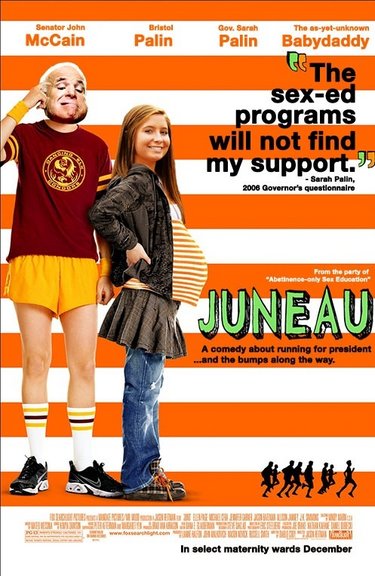
Religious belief apparently does make a potent difference in behavior for one group of evangelical teen-agers: those who score highest on measures of religiosity—such as how often they go to church, or how often they pray at home. But many Americans who identify themselves as evangelicals, and who hold socially conservative beliefs, aren’t deeply observant.
Even more important than religious conviction, Regnerus argues, is how “embedded” a teen-ager is in a network of friends, family, and institutions that reinforce his or her goal of delaying sex, and that offer a plausible alternative to America’s sexed-up consumer culture. A church, of course, isn’t the only way to provide a cohesive sense of community. Close-knit families make a difference. Teen-agers who live with both biological parents are more likely to be virgins than those who do not. And adolescents who say that their families understand them, pay attention to their concerns, and have fun with them are more likely to delay intercourse, regardless of religiosity.
A terrific 2005 documentary, “The Education of Shelby Knox,” tells the story of a teen-ager from a Southern Baptist family in Lubbock, Texas, who has taken a True Love Waits pledge. To the chagrin of her youth pastor, and many of her neighbors, Knox eventually becomes an activist for comprehensive sex education. At her high school, kids receive abstinence-only education, but, Knox says, “maybe twice a week I see a girl walking down the hall pregnant.” In the film, Knox seems successful at remaining chaste, but less because she took a pledge than because she has a fearlessly independent mind and the kind of parents who—despite their own conservative leanings—admire her outspokenness. Devout Republicans, her parents end up driving her around town to make speeches that would have curled their hair before their daughter started making them. Her mother even comes to take pride in Shelby’s efforts, because while abstinence pledges are lovely in the abstract, they don’t acknowledge “reality.”
Like other American teens, young evangelicals live in a world of Internet porn, celebrity sex scandals, and raunchy reality TV, and they have the same hormonal urges that their peers have. Yet they come from families and communities in which sexual life is supposed to be forestalled until the first night of a transcendent honeymoon. Regnerus writes, “In such an atmosphere, attitudes about sex may formally remain unchanged (and restrictive) while sexual activity becomes increasingly common. This clash of cultures and norms is felt most poignantly in the so-called Bible Belt.” Symbolic commitment to the institution of marriage remains strong there, and politically motivating—hence the drive to outlaw gay marriage—but the actual practice of it is scattershot.
Among blue-state social liberals, commitment to the institution of marriage tends to be unspoken or discreet, but marriage in practice typically works pretty well. Two family-law scholars, Naomi Cahn, of George Washington University, and June Carbone, of the University of Missouri at Kansas City, are writing a book on the subject, and they argue that “red families” and “blue families” are “living different lives, with different moral imperatives.” (They emphasize that the Republican-Democrat divide is less important than the higher concentration of “moral-values voters” in red states.) In 2004, the states with the highest divorce rates were Nevada, Arkansas, Wyoming, Idaho, and West Virginia (all red states in the 2004 election); those with the lowest were Illinois, Massachusetts, Iowa, Minnesota, and New Jersey. The highest teen-pregnancy rates were in Nevada, Arizona, Mississippi, New Mexico, and Texas (all red); the lowest were in North Dakota, Vermont, New Hampshire, Minnesota, and Maine (blue except for North Dakota). “The ‘blue states’ of the Northeast and Mid-Atlantic have lower teen birthrates, higher use of abortion, and lower percentages of teen births within marriage,” Cahn and Carbone observe. They also note that people start families earlier in red states—in part because they are more inclined to deal with an unplanned pregnancy by marrying rather than by seeking an abortion.
Of all variables, the age at marriage may be the pivotal difference between red and blue families. The five states with the lowest median age at marriage are Utah, Oklahoma, Idaho, Arkansas, and Kentucky, all red states, while those with the highest are all blue: Massachusetts, New York, Rhode Island, Connecticut, and New Jersey. The red-state model puts couples at greater risk for divorce; women who marry before their mid-twenties are significantly more likely to divorce than those who marry later. And younger couples are more likely to be contending with two of the biggest stressors on a marriage: financial struggles and the birth of a baby before, or soon after, the wedding.
There are, of course, plenty of exceptions to these rules—messily divorcing professional couples in Boston, high-school sweethearts who stay sweetly together in rural Idaho. Still, Cahn and Carbone conclude, “the paradigmatic red-state couple enters marriage not long after the woman becomes sexually active, has two children by her mid-twenties, and reaches the critical period of marriage at the high point in the life cycle for risk-taking and experimentation. The paradigmatic blue-state couple is more likely to experiment with multiple partners, postpone marriage until after they reach emotional and financial maturity, and have their children (if they have them at all) as their lives are stabilizing.”
Some of these differences in sexual behavior come down to class and education. Regnerus and Carbone and Cahn all see a new and distinct “middle-class morality” taking shape among economically and socially advantaged families who are not social conservatives. In Regnerus’s survey, the teen-agers who espouse this new morality are tolerant of premarital sex (and of contraception and abortion) but are themselves cautious about pursuing it. Regnerus writes, “They are interested in remaining free from the burden of teenage pregnancy and the sorrows and embarrassments of sexually transmitted diseases. They perceive a bright future for themselves, one with college, advanced degrees, a career, and a family. Simply put, too much seems at stake. Sexual intercourse is not worth the risks.” These are the kids who tend to score high on measures of “strategic orientation”—how analytical, methodical, and fact-seeking they are when making decisions. Because these teen-agers see abstinence as unrealistic, they are not opposed in principle to sex before marriage—just careful about it. Accordingly, they might delay intercourse in favor of oral sex, not because they cherish the idea of remaining “technical virgins” but because they assess it as a safer option. “Solidly middle- or upper-middle-class adolescents have considerable socioeconomic and educational expectations, courtesy of their parents and their communities’ lifestyles,” Regnerus writes. “They are happy with their direction, generally not rebellious, tend to get along with their parents, and have few moral qualms about expressing their nascent sexuality.” They might have loved Ellen Page in “Juno,” but in real life they’d see having a baby at the wrong time as a tragic derailment of their life plans. For this group, Regnerus says, unprotected sex has become “a moral issue like smoking or driving a car without a seatbelt. It’s not just unwise anymore; it’s wrong.”
Each of these models of sexual behavior has drawbacks—in the blue-state scheme, people may postpone child-bearing to the point where infertility becomes an issue. And delaying child-bearing is better suited to the more affluent, for whom it yields economic benefits, in the form of educational opportunities and career advancement. But Carbone and Cahn argue that the red-state model is clearly failing on its own terms—producing high rates of teen pregnancy, divorce, sexually transmitted disease, and other dysfunctional outcomes that social conservatives say they abhor. In “Forbidden Fruit,” Regnerus offers an “unscientific postscript,” in which he advises social conservatives that if they really want to maintain their commitment to chastity and to marriage, they’ll need to do more to help young couples stay married longer. As the Reverend Rick Marks, a Southern Baptist minister, recently pointed out in a Florida newspaper, “Evangelicals are fighting gay marriage, saying it will break down traditional marriage, when divorce has already broken it down.” Conservatives may need to start talking as much about saving marriages as they do about, say, saving oneself for marriage.
“Having to wait until age twenty-five or thirty to have sex is unreasonable,” Regnerus writes. He argues that religious organizations that advocate chastity should “work more creatively to support younger marriages. This is not the 1950s (for which I am glad), where one could bank on social norms, extended (and larger) families, and clear gender roles to negotiate and sustain early family formation.”
Evangelicals could start, perhaps, by trying to untangle the contradictory portrayals of sex that they offer to teen-agers. In the Shelby Knox documentary, a youth pastor, addressing an assembly of teens, defines intercourse as “what two dogs do out on the street corner—they just bump and grind awhile, boom boom boom.” Yet a typical evangelical text aimed at young people, “Every Young Woman’s Battle,” by Shannon Ethridge and Stephen Arterburn, portrays sex between two virgins as an ethereal communion of innocent souls: “physical, mental, emotional, and spiritual pleasure beyond description.” Neither is the most realistic or helpful view for a young person to take into marriage, as a few advocates of abstinence acknowledge. The savvy young Christian writer Lauren Winner, in her book “Real Sex: The Naked Truth About Chastity,” writes, “Rather than spending our unmarried years stewarding and disciplining our desires, we have become ashamed of them. We persuade ourselves that the desires themselves are horrible. This can have real consequences if we do get married.” Teenagers and single adults are “told over and over not to have sex, but no one ever encourages” them “to be bodily or sensual in some appropriate way”—getting to know and appreciate what their bodies can do through sports, especially for girls, or even thinking sensually about something like food. Winner goes on, “This doesn’t mean, of course, that if only the church sponsored more softball leagues, everyone would stay on the chaste straight and narrow. But it does mean that the church ought to cultivate ways of teaching Christians to live in their bodies well—so that unmarried folks can still be bodily people, even though they’re not having sex, and so that married people can give themselves to sex freely.”
Too often, though, evangelical literature directed at teen-agers forbids all forms of sexual behavior, even masturbation. “Every Young Woman’s Battle,” for example, tells teen-agers that “the momentary relief” of “self-gratification” can lead to “shame, low self-esteem, and fear of what others might think or that something is wrong with you.” And it won’t slake sexual desire: “Once you begin feeding baby monsters, their appetites grow bigger and they want MORE! It’s better not to feed such a monster in the first place.”
Shelby Knox, who spoke at a congressional hearing on sex education earlier this year, occupies a middle ground. She testified that it’s possible to “believe in abstinence in a religious sense,” but still understand that abstinence-only education is dangerous “for students who simply are not abstaining.” As Knox’s approach makes clear, you don’t need to break out the sex toys to teach sex ed—you can encourage teen-agers to postpone sex for all kinds of practical, emotional, and moral reasons. A new “abstinence-plus” curriculum, now growing in popularity, urges abstinence while providing accurate information about contraception and reproduction for those who have sex anyway. “Abstinence works,” Knox said at the hearing. “Abstinence-only-until-marriage does not.”
It might help, too, not to present virginity as the cornerstone of a virtuous life. In certain evangelical circles, the concept is so emphasized that a girl who regrets having been sexually active is encouraged to declare herself a “secondary” or “born-again” virgin. That’s not an idea, surely, that helps teen-agers postpone sex or have it responsibly.
The “pro-family” efforts of social conservatives—the campaigns against gay marriage and abortion—do nothing to instill the emotional discipline or the psychological smarts that forsaking all others often involves. Evangelicals are very good at articulating their sexual ideals, but they have little practical advice for their young followers. Social liberals, meanwhile, are not very good at articulating values on marriage and teen sexuality—indeed, they may feel that it’s unseemly or judgmental to do so. But in fact the new middle-class morality is squarely pro-family. Maybe these choices weren’t originally about values—maybe they were about maximizing education and careers—yet the result is a more stable family system. Not only do couples who marry later stay married longer; children born to older couples fare better on a variety of measures, including educational attainment, regardless of their parents’ economic circumstances. The new middle-class culture of intensive parenting has ridiculous aspects, but it’s pretty successful at turning out productive, emotionally resilient young adults. And its intensity may be one reason that teen-agers from close families see child-rearing as a project for which they’re not yet ready. For too long, the conventional wisdom has been that social conservatives are the upholders of family values, whereas liberals are the proponents of a polymorphous selfishness. This isn’t true, and, every once in a while, liberals might point that out.
Some evangelical Christians are starting to reckon with the failings of the preaching-and-pledging approach. In “The Education of Shelby Knox,” for example, Shelby’s father is uncomfortable, at first, with his daughter’s campaign. Lubbock, after all, is a town so conservative that its local youth pastor tells Shelby, “You ask me sometimes why I look at you a little funny. It’s because I hear you speak and I hear tolerance.” But as her father listens to her arguments he realizes that the no-tolerance ethic simply hasn’t worked in their deeply Christian community. Too many girls in town are having sex, and having babies that they can’t support. As Shelby’s father declares toward the end of the film, teen-age pregnancy “is a problem—a major, major problem that everybody’s just shoving under the rug.” ♦
<font size="5">
Red Sex, Blue Sex</font size><font size="4">
Why do so many evangelical
teen-agers become pregnant?</font size>
Religious belief apparently does make a potent difference in behavior for one group of evangelical teen-agers: those who score highest on measures of religiosity—such as how often they go to church, or how often they pray at home. But many Americans who identify themselves as evangelicals, and who hold socially conservative beliefs, aren’t deeply observant.
Even more important than religious conviction, Regnerus argues, is how “embedded” a teen-ager is in a network of friends, family, and institutions that reinforce his or her goal of delaying sex, and that offer a plausible alternative to America’s sexed-up consumer culture. A church, of course, isn’t the only way to provide a cohesive sense of community. Close-knit families make a difference. Teen-agers who live with both biological parents are more likely to be virgins than those who do not. And adolescents who say that their families understand them, pay attention to their concerns, and have fun with them are more likely to delay intercourse, regardless of religiosity.
A terrific 2005 documentary, “The Education of Shelby Knox,” tells the story of a teen-ager from a Southern Baptist family in Lubbock, Texas, who has taken a True Love Waits pledge. To the chagrin of her youth pastor, and many of her neighbors, Knox eventually becomes an activist for comprehensive sex education. At her high school, kids receive abstinence-only education, but, Knox says, “maybe twice a week I see a girl walking down the hall pregnant.” In the film, Knox seems successful at remaining chaste, but less because she took a pledge than because she has a fearlessly independent mind and the kind of parents who—despite their own conservative leanings—admire her outspokenness. Devout Republicans, her parents end up driving her around town to make speeches that would have curled their hair before their daughter started making them. Her mother even comes to take pride in Shelby’s efforts, because while abstinence pledges are lovely in the abstract, they don’t acknowledge “reality.”
Like other American teens, young evangelicals live in a world of Internet porn, celebrity sex scandals, and raunchy reality TV, and they have the same hormonal urges that their peers have. Yet they come from families and communities in which sexual life is supposed to be forestalled until the first night of a transcendent honeymoon. Regnerus writes, “In such an atmosphere, attitudes about sex may formally remain unchanged (and restrictive) while sexual activity becomes increasingly common. This clash of cultures and norms is felt most poignantly in the so-called Bible Belt.” Symbolic commitment to the institution of marriage remains strong there, and politically motivating—hence the drive to outlaw gay marriage—but the actual practice of it is scattershot.
Among blue-state social liberals, commitment to the institution of marriage tends to be unspoken or discreet, but marriage in practice typically works pretty well. Two family-law scholars, Naomi Cahn, of George Washington University, and June Carbone, of the University of Missouri at Kansas City, are writing a book on the subject, and they argue that “red families” and “blue families” are “living different lives, with different moral imperatives.” (They emphasize that the Republican-Democrat divide is less important than the higher concentration of “moral-values voters” in red states.) In 2004, the states with the highest divorce rates were Nevada, Arkansas, Wyoming, Idaho, and West Virginia (all red states in the 2004 election); those with the lowest were Illinois, Massachusetts, Iowa, Minnesota, and New Jersey. The highest teen-pregnancy rates were in Nevada, Arizona, Mississippi, New Mexico, and Texas (all red); the lowest were in North Dakota, Vermont, New Hampshire, Minnesota, and Maine (blue except for North Dakota). “The ‘blue states’ of the Northeast and Mid-Atlantic have lower teen birthrates, higher use of abortion, and lower percentages of teen births within marriage,” Cahn and Carbone observe. They also note that people start families earlier in red states—in part because they are more inclined to deal with an unplanned pregnancy by marrying rather than by seeking an abortion.
Of all variables, the age at marriage may be the pivotal difference between red and blue families. The five states with the lowest median age at marriage are Utah, Oklahoma, Idaho, Arkansas, and Kentucky, all red states, while those with the highest are all blue: Massachusetts, New York, Rhode Island, Connecticut, and New Jersey. The red-state model puts couples at greater risk for divorce; women who marry before their mid-twenties are significantly more likely to divorce than those who marry later. And younger couples are more likely to be contending with two of the biggest stressors on a marriage: financial struggles and the birth of a baby before, or soon after, the wedding.
There are, of course, plenty of exceptions to these rules—messily divorcing professional couples in Boston, high-school sweethearts who stay sweetly together in rural Idaho. Still, Cahn and Carbone conclude, “the paradigmatic red-state couple enters marriage not long after the woman becomes sexually active, has two children by her mid-twenties, and reaches the critical period of marriage at the high point in the life cycle for risk-taking and experimentation. The paradigmatic blue-state couple is more likely to experiment with multiple partners, postpone marriage until after they reach emotional and financial maturity, and have their children (if they have them at all) as their lives are stabilizing.”
Some of these differences in sexual behavior come down to class and education. Regnerus and Carbone and Cahn all see a new and distinct “middle-class morality” taking shape among economically and socially advantaged families who are not social conservatives. In Regnerus’s survey, the teen-agers who espouse this new morality are tolerant of premarital sex (and of contraception and abortion) but are themselves cautious about pursuing it. Regnerus writes, “They are interested in remaining free from the burden of teenage pregnancy and the sorrows and embarrassments of sexually transmitted diseases. They perceive a bright future for themselves, one with college, advanced degrees, a career, and a family. Simply put, too much seems at stake. Sexual intercourse is not worth the risks.” These are the kids who tend to score high on measures of “strategic orientation”—how analytical, methodical, and fact-seeking they are when making decisions. Because these teen-agers see abstinence as unrealistic, they are not opposed in principle to sex before marriage—just careful about it. Accordingly, they might delay intercourse in favor of oral sex, not because they cherish the idea of remaining “technical virgins” but because they assess it as a safer option. “Solidly middle- or upper-middle-class adolescents have considerable socioeconomic and educational expectations, courtesy of their parents and their communities’ lifestyles,” Regnerus writes. “They are happy with their direction, generally not rebellious, tend to get along with their parents, and have few moral qualms about expressing their nascent sexuality.” They might have loved Ellen Page in “Juno,” but in real life they’d see having a baby at the wrong time as a tragic derailment of their life plans. For this group, Regnerus says, unprotected sex has become “a moral issue like smoking or driving a car without a seatbelt. It’s not just unwise anymore; it’s wrong.”
Each of these models of sexual behavior has drawbacks—in the blue-state scheme, people may postpone child-bearing to the point where infertility becomes an issue. And delaying child-bearing is better suited to the more affluent, for whom it yields economic benefits, in the form of educational opportunities and career advancement. But Carbone and Cahn argue that the red-state model is clearly failing on its own terms—producing high rates of teen pregnancy, divorce, sexually transmitted disease, and other dysfunctional outcomes that social conservatives say they abhor. In “Forbidden Fruit,” Regnerus offers an “unscientific postscript,” in which he advises social conservatives that if they really want to maintain their commitment to chastity and to marriage, they’ll need to do more to help young couples stay married longer. As the Reverend Rick Marks, a Southern Baptist minister, recently pointed out in a Florida newspaper, “Evangelicals are fighting gay marriage, saying it will break down traditional marriage, when divorce has already broken it down.” Conservatives may need to start talking as much about saving marriages as they do about, say, saving oneself for marriage.
“Having to wait until age twenty-five or thirty to have sex is unreasonable,” Regnerus writes. He argues that religious organizations that advocate chastity should “work more creatively to support younger marriages. This is not the 1950s (for which I am glad), where one could bank on social norms, extended (and larger) families, and clear gender roles to negotiate and sustain early family formation.”
Evangelicals could start, perhaps, by trying to untangle the contradictory portrayals of sex that they offer to teen-agers. In the Shelby Knox documentary, a youth pastor, addressing an assembly of teens, defines intercourse as “what two dogs do out on the street corner—they just bump and grind awhile, boom boom boom.” Yet a typical evangelical text aimed at young people, “Every Young Woman’s Battle,” by Shannon Ethridge and Stephen Arterburn, portrays sex between two virgins as an ethereal communion of innocent souls: “physical, mental, emotional, and spiritual pleasure beyond description.” Neither is the most realistic or helpful view for a young person to take into marriage, as a few advocates of abstinence acknowledge. The savvy young Christian writer Lauren Winner, in her book “Real Sex: The Naked Truth About Chastity,” writes, “Rather than spending our unmarried years stewarding and disciplining our desires, we have become ashamed of them. We persuade ourselves that the desires themselves are horrible. This can have real consequences if we do get married.” Teenagers and single adults are “told over and over not to have sex, but no one ever encourages” them “to be bodily or sensual in some appropriate way”—getting to know and appreciate what their bodies can do through sports, especially for girls, or even thinking sensually about something like food. Winner goes on, “This doesn’t mean, of course, that if only the church sponsored more softball leagues, everyone would stay on the chaste straight and narrow. But it does mean that the church ought to cultivate ways of teaching Christians to live in their bodies well—so that unmarried folks can still be bodily people, even though they’re not having sex, and so that married people can give themselves to sex freely.”
Too often, though, evangelical literature directed at teen-agers forbids all forms of sexual behavior, even masturbation. “Every Young Woman’s Battle,” for example, tells teen-agers that “the momentary relief” of “self-gratification” can lead to “shame, low self-esteem, and fear of what others might think or that something is wrong with you.” And it won’t slake sexual desire: “Once you begin feeding baby monsters, their appetites grow bigger and they want MORE! It’s better not to feed such a monster in the first place.”
Shelby Knox, who spoke at a congressional hearing on sex education earlier this year, occupies a middle ground. She testified that it’s possible to “believe in abstinence in a religious sense,” but still understand that abstinence-only education is dangerous “for students who simply are not abstaining.” As Knox’s approach makes clear, you don’t need to break out the sex toys to teach sex ed—you can encourage teen-agers to postpone sex for all kinds of practical, emotional, and moral reasons. A new “abstinence-plus” curriculum, now growing in popularity, urges abstinence while providing accurate information about contraception and reproduction for those who have sex anyway. “Abstinence works,” Knox said at the hearing. “Abstinence-only-until-marriage does not.”
It might help, too, not to present virginity as the cornerstone of a virtuous life. In certain evangelical circles, the concept is so emphasized that a girl who regrets having been sexually active is encouraged to declare herself a “secondary” or “born-again” virgin. That’s not an idea, surely, that helps teen-agers postpone sex or have it responsibly.
The “pro-family” efforts of social conservatives—the campaigns against gay marriage and abortion—do nothing to instill the emotional discipline or the psychological smarts that forsaking all others often involves. Evangelicals are very good at articulating their sexual ideals, but they have little practical advice for their young followers. Social liberals, meanwhile, are not very good at articulating values on marriage and teen sexuality—indeed, they may feel that it’s unseemly or judgmental to do so. But in fact the new middle-class morality is squarely pro-family. Maybe these choices weren’t originally about values—maybe they were about maximizing education and careers—yet the result is a more stable family system. Not only do couples who marry later stay married longer; children born to older couples fare better on a variety of measures, including educational attainment, regardless of their parents’ economic circumstances. The new middle-class culture of intensive parenting has ridiculous aspects, but it’s pretty successful at turning out productive, emotionally resilient young adults. And its intensity may be one reason that teen-agers from close families see child-rearing as a project for which they’re not yet ready. For too long, the conventional wisdom has been that social conservatives are the upholders of family values, whereas liberals are the proponents of a polymorphous selfishness. This isn’t true, and, every once in a while, liberals might point that out.
Some evangelical Christians are starting to reckon with the failings of the preaching-and-pledging approach. In “The Education of Shelby Knox,” for example, Shelby’s father is uncomfortable, at first, with his daughter’s campaign. Lubbock, after all, is a town so conservative that its local youth pastor tells Shelby, “You ask me sometimes why I look at you a little funny. It’s because I hear you speak and I hear tolerance.” But as her father listens to her arguments he realizes that the no-tolerance ethic simply hasn’t worked in their deeply Christian community. Too many girls in town are having sex, and having babies that they can’t support. As Shelby’s father declares toward the end of the film, teen-age pregnancy “is a problem—a major, major problem that everybody’s just shoving under the rug.” ♦
Re: Sarah Palin's future son-in-law says he's an Alaska 'redneck'
<font size="5"><center>
Palin soap opera: Drug in Levi's
mom's case is oxycontin</font size></center>
Anchorage Daily News
By Zaz Hollander
December 19, 2008
WASILLA, Alaska — Wasilla resident Sherry L. Johnston, mother of Bristol Palin's boyfriend, faces a Jan. 6 court date for an oxycontin-related arrest at her home by Alaska State Troopers.
Little additional information was available Friday on the case as authorities remained unusually tight-lipped about details. But Palmer court records listed Johnston's scheduled court date and a troopers spokeswoman said in a release late Friday afternoon that the charges "are in relation to the drug oxycontin."
Johnston is the mother of Levi Johnston, who Gov. Sarah Palin said was the father of Bristol Palin's unborn child. Levi Johnston joined the Palins at the Republican National Convention when Palin was running for vice president. It was during the convention that the governor and her husband, Todd, announced Bristol's pregnancy.
She was arrested around noon Thursday by troopers serving a search warrant in an undercover drug investigation. A standard press release issued by troopers said Johnston was arrested on six felony counts: second-degree misconduct involving a controlled substance - generally manufacturing or delivering drugs - as well as fourth-degree misconduct involving controlled substances, or possession.
She was released on bail Thursday afternoon, just a few hours later.
Johnston has not responded to phone messages or requests for comment left at the family home. Nobody answered the door there Friday.
Troopers spokeswoman Megan Peters wouldn't say Friday if there were other potential defendants.
Normally, troopers file charging documents in court to back up arrests. Clerks at the Palmer courthouse said they hadn't seen any filings, and none has to be filed until the hearing.
The Palmer District Attorney's office prosecutes drug cases. Palmer District Attorney Roman Kalytiak said he was aware of the arrest, but also had not seen any reports or charging documents.
Kalytiak said the standard protocol for drug arrests is that law enforcement officials observe one drug buy, then get a warrant that permits them to record conversations and document more buys.
"I'd imagine standard protocol was followed," the district attorney said.
A spokesman for Gov. Palin on Thursday said the arrest was "not a state government matter" and so no comment or interviews on the topic would be forthcoming.
http://www.mcclatchydc.com/254/story/58245.html
<font size="5"><center>
Palin soap opera: Drug in Levi's
mom's case is oxycontin</font size></center>
Anchorage Daily News
By Zaz Hollander
December 19, 2008
WASILLA, Alaska — Wasilla resident Sherry L. Johnston, mother of Bristol Palin's boyfriend, faces a Jan. 6 court date for an oxycontin-related arrest at her home by Alaska State Troopers.
Little additional information was available Friday on the case as authorities remained unusually tight-lipped about details. But Palmer court records listed Johnston's scheduled court date and a troopers spokeswoman said in a release late Friday afternoon that the charges "are in relation to the drug oxycontin."
Johnston is the mother of Levi Johnston, who Gov. Sarah Palin said was the father of Bristol Palin's unborn child. Levi Johnston joined the Palins at the Republican National Convention when Palin was running for vice president. It was during the convention that the governor and her husband, Todd, announced Bristol's pregnancy.
She was arrested around noon Thursday by troopers serving a search warrant in an undercover drug investigation. A standard press release issued by troopers said Johnston was arrested on six felony counts: second-degree misconduct involving a controlled substance - generally manufacturing or delivering drugs - as well as fourth-degree misconduct involving controlled substances, or possession.
She was released on bail Thursday afternoon, just a few hours later.
Johnston has not responded to phone messages or requests for comment left at the family home. Nobody answered the door there Friday.
Troopers spokeswoman Megan Peters wouldn't say Friday if there were other potential defendants.
Normally, troopers file charging documents in court to back up arrests. Clerks at the Palmer courthouse said they hadn't seen any filings, and none has to be filed until the hearing.
The Palmer District Attorney's office prosecutes drug cases. Palmer District Attorney Roman Kalytiak said he was aware of the arrest, but also had not seen any reports or charging documents.
Kalytiak said the standard protocol for drug arrests is that law enforcement officials observe one drug buy, then get a warrant that permits them to record conversations and document more buys.
"I'd imagine standard protocol was followed," the district attorney said.
A spokesman for Gov. Palin on Thursday said the arrest was "not a state government matter" and so no comment or interviews on the topic would be forthcoming.
http://www.mcclatchydc.com/254/story/58245.html
Re: Sarah Palin's future son-in-law says he's an Alaska 'redneck'
<font size="3">
This woman never seems to stop . . .
</font size>
<font size="5"><Center>
Apprenticeship raises questions about Palin</font size></center>
Anchorage Daily News
Dan Fagan
January 3rd, 2009
Have you noticed how our governor seems to have convinced herself only some of the rules apply to her?
This attitude was really at the heart of Troopergate. It also allows her to do things like take cash from the state for spending more than 300 nights in her own home in Wasilla.
Now it appears the governor may have found a new way to skirt the rules. How is it possible that the governor's soon-to-be son-in-law, Levi Johnston, is working as an apprentice on the North Slope?
The governor, in trying to dispel rumors the father of her grandchild is a high school dropout, released this statement this past week,
"Levi is continuing his online high school work in addition to working as an electrical apprentice on the North Slope."
But federal regulations require all members of apprentice programs, union or otherwise, to first obtain a high school diploma, something the governor's soon-to-be son-in- law does not have. Some apprentice programs even require the completion of high school level algebra or the post-secondary equivalent.
So how is it that the governor's soon-to-be son-in-law is working in an apprentice program? Is this another case of the governor believing the rules don't apply to her or her family?
Bo Underwood, who heads up ASRC's electrical apprentice program, confirmed Johnston is indeed enrolled as an apprentice. Underwood claimed not to know whether a high school diploma is needed to be an ASRC apprentice and said he would check on it. But federal regulations clearly state a high school diploma is needed before entering an electrical workers apprentice program. How is it the man who runs the program does not know that?
Underwood also claimed not to know whether there is a waiting list for the ASRC apprentice program he runs.
Rebecca Logan, executive director of Associated Builders and Contractors, an organization that also has an electrical workers apprentice program, says waiting lists always accompany apprenticeship programs. Her organization's electrical apprentice program, one of only three in the state, has a waiting list of at least 100 people.
ASRC's Underwood also could not say how it is Johnston came to be a part of his apprentice program or whether the governor had anything to do with getting him in.
I placed a call to the governor's office but have not as of my deadline received a response. An attempt to reach Levi Johnston by phone at his mother's house was unsuccessful.
Did Levi Johnston bypass the rules to get into a coveted program because of his soon-to-be mother-in-law? We don't know the governor's involvement. Eventually she will have to address the controversy.
I believe 2009 will be the year more and more Alaskans will come to realize Sarah Palin is in way over her head as governor, doesn't always play by the rules, and is, at times, less than honest.
A poll commissioned by TheAlaskaStandard.com and conducted by Dittman Research shows the governor is losing some of her appeal. When respondents were asked whom they would vote for between Lisa Murkowski and Sarah Palin in a 2010 race for the Senate, an overwhelming number said Murkowski. According to the poll, Murkowski would beat Palin by a margin of 56 percent to 23 percent.
If the public doesn't catch onto to the governor this year, they surely will in 2010. That's the year TransCanada will hold its open season. Chances producers will commit hundreds of billions of dollars to ship gas through the TransCanada pipeline instead of their own; I'd say 1 in 10.
Meaning AGIA. will be exposed for the silly policy it is several months before the governor is up for re-election.
Chances Palin is elected to a second term as governor, I'd say 3 in 10.
http://www.adn.com/opinion/story/641263.html
<font size="3">
This woman never seems to stop . . .
</font size>
<font size="5"><Center>
Apprenticeship raises questions about Palin</font size></center>
Anchorage Daily News
Dan Fagan
January 3rd, 2009
Have you noticed how our governor seems to have convinced herself only some of the rules apply to her?
This attitude was really at the heart of Troopergate. It also allows her to do things like take cash from the state for spending more than 300 nights in her own home in Wasilla.
Now it appears the governor may have found a new way to skirt the rules. How is it possible that the governor's soon-to-be son-in-law, Levi Johnston, is working as an apprentice on the North Slope?
The governor, in trying to dispel rumors the father of her grandchild is a high school dropout, released this statement this past week,
"Levi is continuing his online high school work in addition to working as an electrical apprentice on the North Slope."
But federal regulations require all members of apprentice programs, union or otherwise, to first obtain a high school diploma, something the governor's soon-to-be son-in- law does not have. Some apprentice programs even require the completion of high school level algebra or the post-secondary equivalent.
So how is it that the governor's soon-to-be son-in-law is working in an apprentice program? Is this another case of the governor believing the rules don't apply to her or her family?
Bo Underwood, who heads up ASRC's electrical apprentice program, confirmed Johnston is indeed enrolled as an apprentice. Underwood claimed not to know whether a high school diploma is needed to be an ASRC apprentice and said he would check on it. But federal regulations clearly state a high school diploma is needed before entering an electrical workers apprentice program. How is it the man who runs the program does not know that?
Underwood also claimed not to know whether there is a waiting list for the ASRC apprentice program he runs.
Rebecca Logan, executive director of Associated Builders and Contractors, an organization that also has an electrical workers apprentice program, says waiting lists always accompany apprenticeship programs. Her organization's electrical apprentice program, one of only three in the state, has a waiting list of at least 100 people.
ASRC's Underwood also could not say how it is Johnston came to be a part of his apprentice program or whether the governor had anything to do with getting him in.
I placed a call to the governor's office but have not as of my deadline received a response. An attempt to reach Levi Johnston by phone at his mother's house was unsuccessful.
Did Levi Johnston bypass the rules to get into a coveted program because of his soon-to-be mother-in-law? We don't know the governor's involvement. Eventually she will have to address the controversy.
I believe 2009 will be the year more and more Alaskans will come to realize Sarah Palin is in way over her head as governor, doesn't always play by the rules, and is, at times, less than honest.
A poll commissioned by TheAlaskaStandard.com and conducted by Dittman Research shows the governor is losing some of her appeal. When respondents were asked whom they would vote for between Lisa Murkowski and Sarah Palin in a 2010 race for the Senate, an overwhelming number said Murkowski. According to the poll, Murkowski would beat Palin by a margin of 56 percent to 23 percent.
If the public doesn't catch onto to the governor this year, they surely will in 2010. That's the year TransCanada will hold its open season. Chances producers will commit hundreds of billions of dollars to ship gas through the TransCanada pipeline instead of their own; I'd say 1 in 10.
Meaning AGIA. will be exposed for the silly policy it is several months before the governor is up for re-election.
Chances Palin is elected to a second term as governor, I'd say 3 in 10.
http://www.adn.com/opinion/story/641263.html

Re: Sarah Palin's future son-in-law says he's an Alaska 'redneck'
good post
good post

 DAMN!!!!!! My question is: Why do so many Republicans feel that they are personally EXEMPT form the Law of the land, but everyone else must follow the rules?
Good post Bro!!!!!!!!!!!!

<font size="5"><center>
Levi Johnston Apologizes to Palin Family
for 'Youthful Indiscretion'</font size></center>
PEOPLE Magazine
By Eunice Oh and
Sandra Sobieraj Westfall
Tuesday July 06, 2010
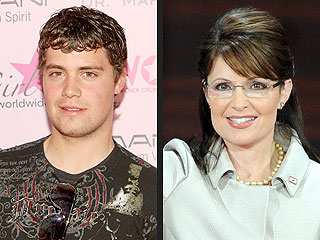
Levi Johnston isn't just getting past his differences with Bristol Palin – he's also hoping to make amends with her famous mom.
"Last year, after Bristol and I broke up, I was unhappy and a little angry. Unfortunately, against my better judgment, I publicly said things about the Palins that were not completely true," he tells PEOPLE exclusively. "I have already privately apologized to Todd and Sarah. Since my statements were public, I owe it to the Palins to publicly apologize."
Bristol added her own statement Tuesday saying, "Part of co-parenting is creating healthy and honest relationships between the parents. Tripp one day needs to know the truth and needs to know that even if a mistake is made the honorable thing to do is to own up to it."
Johnston and the former vice presidential candidate had been engaged in a war of words, with the 20-year-old accusing Palin of complaining about her job as governor of Alaska and claiming "there was a lot of talk of divorce" in the Palin household.
Palin spoke out against the "malicious" remarks and also ripped Johnston for posing for Playgirl and talking about sex on The Tyra Banks Show.
Though they had been in a bitter custody battle, Bristol, who recently made her acting debut on ABC Family's The Secret Life of the American Teenager, has said she and Johnston want to turn "a new page here as co-parents … and [put] aside the past because doing so is in [our son] Tripp's best interest."
"So to the Palin family in general and to Sarah Palin in particular, please accept my regrets and forgive my youthful indiscretion," Johnston says in the statement. "I hope one day to restore your trust."
http://www.people.com/people/article/0,,20399773,00.html
_______________________________________________________
Levi Johnston Apologizes to Palin Family
for 'Youthful Indiscretion'</font size></center>
PEOPLE Magazine
By Eunice Oh and
Sandra Sobieraj Westfall
Tuesday July 06, 2010
Levi Johnston isn't just getting past his differences with Bristol Palin – he's also hoping to make amends with her famous mom.
"Last year, after Bristol and I broke up, I was unhappy and a little angry. Unfortunately, against my better judgment, I publicly said things about the Palins that were not completely true," he tells PEOPLE exclusively. "I have already privately apologized to Todd and Sarah. Since my statements were public, I owe it to the Palins to publicly apologize."
Bristol added her own statement Tuesday saying, "Part of co-parenting is creating healthy and honest relationships between the parents. Tripp one day needs to know the truth and needs to know that even if a mistake is made the honorable thing to do is to own up to it."
Johnston and the former vice presidential candidate had been engaged in a war of words, with the 20-year-old accusing Palin of complaining about her job as governor of Alaska and claiming "there was a lot of talk of divorce" in the Palin household.
Palin spoke out against the "malicious" remarks and also ripped Johnston for posing for Playgirl and talking about sex on The Tyra Banks Show.
Though they had been in a bitter custody battle, Bristol, who recently made her acting debut on ABC Family's The Secret Life of the American Teenager, has said she and Johnston want to turn "a new page here as co-parents … and [put] aside the past because doing so is in [our son] Tripp's best interest."
"So to the Palin family in general and to Sarah Palin in particular, please accept my regrets and forgive my youthful indiscretion," Johnston says in the statement. "I hope one day to restore your trust."
http://www.people.com/people/article/0,,20399773,00.html
_______________________________________________________
- "Last year, after Bristol and I broke up, I was unhappy and a
little angry. Unfortunately, against my better judgment, I publicly
said things about the Palins that were not completely true,"
- What are those things that, "were not completely true" ???
<font size="7">
<center>
Refudiated
</font size>

<font size="3">Bristol Palin splits with fiancé for second time.
Sarah Palin's daughter calls off engagement after 20
days over video mocking family made by Levi Johnston
</font size>
</center>
<center>
Refudiated
</font size>
<font size="3">Bristol Palin splits with fiancé for second time.
Sarah Palin's daughter calls off engagement after 20
days over video mocking family made by Levi Johnston
</font size>
</center>
Similar threads

- Replies
- 5
- Views
- 206

- Replies
- 0
- Views
- 202
- Replies
- 0
- Views
- 238
- Replies
- 0
- Views
- 261

