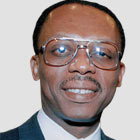
"Now Aristide Wants To Return"......

tecumseh7

Potential Star
Registered
.....what else is new. First it was Papa Doc's son, Baby Doc returning, now former Prez Jean-Bertrand Aristide is seeking to return. After spending the last few years in exile--thanks to perrenial Haiti political unrest(brought on by a threatened coup)--, Aristide was forced out of office in 2004. Like most disposed dictators, the attraction created by 'vulnerability' brings the vultures forth to feed their greed. Yea, they all want to help.

According to the NYT, its "unlikely that he (Aristide) will get a passport". That's a problem? Remember, you're talking about a third-world country. People come into this country(USA--- (across both borders) daily without passports. If you want to get in badly enough, not having a passport is the least of one's troubles. Did Baby Doc have one?

Well, let's see how this scene plays out. In the meantime the poor people of Haiti continue to die, starve, victims of rape, etc., while the politicos waste more time.

New York Time.com (1-20-2011)
 
Last edited:
<font size="6"><center>
On my return to Haiti </font size><font size="4">

"A profit-driven recovery plan, devised and carried
out by outsiders, can not reconstruct my country"
</font size></center>


Graduation-day-for-Haitia-007.jpg

Graduating electricians and plumbers in Port-au-Prince, July 2010.
The quake left a gaping hole in the vocational training vital to recon-
struction Photograph: Ramon Espinosa/AP


guardian.co.uk

jean_ariside.jpg

Jean-Bertrand Aristide
Friday 4 February 2011


Haiti's devastating earthquake in January last year destroyed up to 5,000 schools and 80% of the country's already weak university infrastructure. The primary school in Port-au-Prince that I attended as a small boy collapsed with more than 200 students inside. The weight of the state nursing school killed 150 future nurses. The state medical school was levelled. The exact number of students, teachers, professors, librarians, researchers, academics and administrators lost during those 65 seconds that irrevocably changed Haiti will never be known. But what we do know is that it cannot end there.

The exceptional resilience demonstrated by the Haitian people during and after the deadly earthquake reflects the intelligence and determination of parents, especially mothers, to keep their children alive and to give them a better future, and the eagerness of youth to learn – all this despite economic challenges, social barriers, political crisis, and psychological trauma. Even though their basic needs have increased exponentially, their readiness to learn is manifest. This natural thirst for education is the foundation for a successful learning process: what is freely learned is best learned.

Of course, learning is strengthened and solidified when it occurs in a safe, secure and normal environment. Hence our responsibility to promote social cohesion, democratic growth, sustainable development, self-determination; in short, the goals set forth for this new millennium. All of which represent steps towards a return to a better environment.

Education has been a top priority since the first Lavalas government – of which I was president – was sworn into officeunder Haiti's amended democratic constitution on 7 February 1991 (and removed a few months later). More schools were built in the 10 years between 1994, when democracy was restored, and 2004 – when Haiti's democracy was once again violated – than between 1804 to 1994: one hundred and ninety-five new primary schools and 104 new public high schools constructed and/or refurbished.

The 12 January earthquake largely spared the Foundation for Democracy I founded in 1996. Immediately following the quake, thousands accustomed to finding a democratic space to meet, debate and receive services, came seeking shelter and help. Haitian doctors who began their training at the foundation's medical school rallied to organised clinics at the foundation and at tent camps across the capital. They continue to contribute tirelessly to the treatment of fellow Haitians who have been infected by cholera. Their presence is a pledge to reverse the dire ratio of one doctor for every 11,000 Haitians.

Youths, who through the years have participated in the foundation's multiple literacy programmes, volunteered to operate mobile schools in these same tent camps. In partnership with a group from the University of Michigan in the US, post-traumatic counselling sessions were organised and university students trained to help themselves and to help fellow Haitians begin the long journey to healing. A year on, young people and students look to the foundation's university to return to its educational vocation and help fill the gaping national hole left on the day the earth shook in Haiti.

Will the deepening destabilising political crisis in Haiti prevent students achieving academic success? I suppose most students, educators and parents are exhausted by the complexity of such a dramatic and painful crisis. But I am certain nothing can extinguish their collective thirst for education.

The renowned American poet and essayist, Ralph Waldo Emerson, wrote that "we learn geology the morning after the earthquake". What we have learned in one long year of mourning after Haiti's earthquake is that an exogenous plan of reconstruction – one that is profit-driven, exclusionary, conceived of and implemented by non-Haitians – cannot reconstruct Haiti. It is the solemn obligation of all Haitians to join in the reconstruction and to have a voice in the direction of the nation.

As I have not ceased to say since 29 February 2004, from exile in Central Africa, Jamaica and now South Africa, I will return to Haiti to the field I know best and love: education. We can only agree with the words of the great Nelson Mandela, that indeed education is a powerful weapon for changing the world.


- Jean-Bertrand Aristide


http://www.guardian.co.uk/commentisfree/cifamerica/2011/feb/04/haiti-earthquake-aristide-education
 

Haiti braces for return of
Jean-Bertrand Aristide


Island issues new passport for former president
forced out in 2004 and living in exile in South Africa


Jean-Bertrand-Aristides-p-007.jpg

Jean-Bertrand Aristide's picture is held up by a demonstrator protesting
against Haiti's president René Préval. Photograph: Ramon Espinosa/AP


Haiti has issued a diplomatic passport to former president Jean-Bertrand
Aristide, in effect ending his seven-year exile in South Africa.

His lawyer, Ira Kurzban, said he had collected Aristide's new passport in
Port-au-Prince. "He's going to try to return as soon as he can," Kurzban
said.

Aristide has asked the government to provide him with the security
constitutionally promised to a former president.

Asked last month whether he was ready to return, Aristide said he would
come back "today, tomorrow, at any time".

Speculation that he would try to get back to Haiti increased after the
return of former dictator Jean-Claude "Baby Doc" Duvalier, who now faces
charges of embezzlement and crimes against humanity.

FULL STORY


Back in Haiti, is Aristide eyeing presidency?​


Thousands welcomed former President Jean-Bertrand Aristide's arrival
today in Haiti, less than 48 hours before a presidential election. The
timing of his return potentially qualifies him to run in the next election.


0318-world-oreturn_full_380.jpg

Haiti's former President Jean-Bertrand Aristide waves
to supporters as he gets into a car after his arrival to the
airport in Port-au-Prince, Haiti, Friday March 18. Aristide,
who was forced to flee Haiti aboard a U.S. plane due to
a rebellion in 2004, returned after seven years of exile in
South Africa, days before Haiti's presidential runoff
election Sunday. Alexandre Meneghini/AP


Christian Science Monitor
By Isabeau Doucet and
Ezra Fieser, Correspondents
March 18, 2011


Port-au-Prince, Haiti, and Santo Domingo, Dominican Republic - After seven years in exile, former President Jean-Bertrand Aristide today returned to Haiti and vowed to dedicate himself to his nation's health and education even amid fears that his presence will disrupt Sunday’s election.

“My role is to serve you in love,” the former priest said during remarks in which he switched between a handful of languages, including Creole and Zulu, the language of South Africa where he has lived in exile since a 2004 ouster.

Aristide, who became Haiti’s first democratically elected president on a groundswell of support from the poor in 1990, remains a popular a political figure in Haiti. While he says he has no plans to reenter politics, the timing of his return would potentially qualify him to run for president in the next election under Haiti’s residency rules, which say a candidate must reside in Haiti for the five years before the election.

“Aristide cannot return to Haiti without having a politically significant presence,” says Ericq Pierre, a senior counselor for the Inter-American Development Bank in Haiti. “Politically he should be dead after two coup d’états. But now he looks stronger than ever.”


Defying US

Aristide arrived to hordes of journalists and a few thousand cheering supporters. His wife, Mildred, who wept as she deplaned, actor and political activist Danny Glover, and a few others accompanied Aristide on the overnight flight from Johannesburg.

“This country needs education with dignity without social exclusion. The solution is inclusion,” he said Friday.

In returning to Haiti, Aristide defied international pressure. President Obama telephoned South African President Jacob Zuma Tuesday urging him to delay Aristide’s return until after Sunday’s election.

“A return prior to the election may potentially be destabilizing to the political process,” US State Department spokesman Mark Toner said in a briefing this week.

His political endorsement – yet unannounced – could tip the balance in Sunday's run-off presidential election between former First Lady Mirlande Manigat and singer Michel “Sweet Micky” Martelly. The delayed vote follows a first round in November that was marred by fraud, widespread confusion, and historically low turnout.


Polarizing figure

Aristide was twice elected president and twice deposed and forced into exile. His second ouster, in 2004, came under pressure from the US, which arranged for his flight out of the country, he says.

Aristide’s command of Creole and oration were a stark contrast from the Duvalierist culture of privilege and excess. He won a huge following among Haiti’s majority poor by opposing the dictatorial regime of Jean Claude “Baby Doc” Duvalier, who fled in 1986. In January, Mr. Duvalier also returned from exile, in France.

A once-overwhelmingly popular force, Aristide is today a polarizing figure.

Supporters say he stood for the poor and that his return will only help a country struggling to recover from last January’s devastating earthquake and a cholera epidemic. “Aristide’s return will be good for all Haitians,” says Haitian journalist Wisley Desalan, who flew to South Africa recently to interview the former president. “He will work with all Haitians in Health and education.”

Detractors say Aristide’s last term was marred by corruption and human rights abuses.

“Officials in Aristide’s government used their public office as personal fiefdoms, engaged in rampant corruption and drug-trafficking; they even used gangs, some of whom were armed, against their opponents,” Alex Dupuy, author on the book “The Prophet and Power: Jean-Bertrand Aristide, the International Community and Haiti,” wrote in a column for The Guardian on Friday.


Presidential bid?

In the short term, Aristide has little reason to involve himself in politics, says Henry Carey, a political scientist who tracks Haiti politics at Georgia State University.

“I don’t expect him to endorse either candidate … or play a role in the election. It doesn’t make sense for him,” Professor Carey says. “He has other things to worry about. There are still people who probably want to kill him.”

But in the long-term, Carey believes Aristide will move back to politics. While the Constitution forbids presidents from serving more than two terms, some argue that Aristide never finished his second term and so could run again for office.

If his intentions are political, Aristide will need to rebuild his political party, Fanmi Lavalas, which was barred from running a candidate in this election.

Patrick Elie, a former minister under Aristide, says the party crumbled in Aristide’s absence.

"Aristide was a crutch for someone who broke their leg, one should always be grateful for a crutch, but one should start walking again without a crutch,” he says.


http://www.csmonitor.com/World/Americas/2011/0318/Back-in-Haiti-is-Aristide-eyeing-presidency


http://www.globalresearch.ca/index.php?context=va&aid=23168

Haiti has issued a diplomatic passport to former president Jean-Bertrand Aristide, in effect ending his seven-year exile in South Africa.


His lawyer, Ira Kurzban, said he had collected Aristide's new passport in Port-au-Prince. "He's going to try to return as soon as he can," Kurzban said.


Aristide has asked the government to provide him with the security constitutionally promised to a former president.


Asked last month whether he was ready to return, Aristide said he would come back "today, tomorrow, at any time".


Speculation that he would try to get back to Haiti increased after the return of former dictator Jean-Claude "Baby Doc" Duvalier, who now faces charges of embezzlement and crimes against humanity.


Aristide was twice removed in coup d'etats involving Haitian elites, the US, France and Canada, and is accused by his detractors of human rights violations. But he is still one of the most popular political figures in the country. His political party, Fanmi Lavalas, was excluded from the 28 November election on a technicality.


Voter turnout was unusually low in the election, which was marred by widespread fraud. Haiti recently scheduled a delayed runoff for 20 March to pick a successor to President René Préval.


Préval has said he would extend his mandate past its 7 February constitutional end until a new president takes office, scheduled for 16 April.


But Aristide's return could be the political equivalent of a second earthquake in the runoff. It is likely to cause a surge of popular support, with tens of thousands in the street throughout the country.


"You will see, when people know he is returning for sure, they will go out and sweep the streets clean for him," says Jeremy Dupin, 26, a journalist from Cité Soleil, one of the capital's poorest areas.


But some fear that his return will be destabilising to the relief effort. The same forces who supported the coup that forced him out in 2004 will see his return as a huge threat.


"I don't think it would be appropriate in the current electoral crisis," said Rosny Desroches, director of a civil society initiative. "He should wait until there is more serenity, wait until there is a government in place."


The international community who bankrolled the election is also concerned. A US state department spokesman said Washington did "not doubt President Aristide's desire to help the people of Haiti. But today Haiti needs to focus on its future, not its past."


Under Haiti's constitution Aristide has every right to return, although he would not be allowed to run for a third term. But his enduring popularity means his appearance could undermine an unresolved and deeply-flawed electoral process.
 
Back
Top