Esper forces out Navy secretary over disputed SEAL case
At issue was the fate of a sailor who had been accused of war crimes and whose rank President Trump recently restored.
By Wesley Morgan
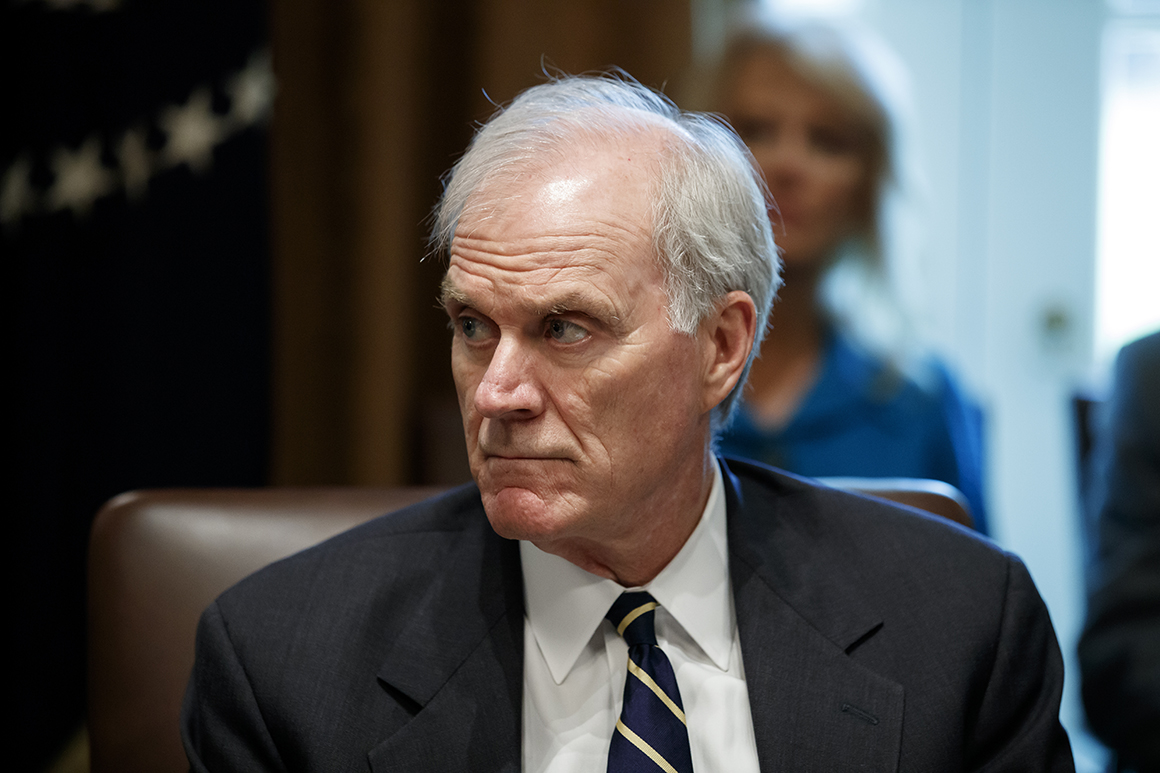
Navy Secretary Richard Spencer resigned Sunday at Defense Secretary Mark Esper’s request over a private compromise Spencer proposed to the White House that would have allowed a sailor accused of war crimes to retire as a SEAL rather than being kicked out of the elite force’s ranks, the Pentagon said.
Spencer‘s departure marks the latest development in a case that has pitted military leaders against President Donald Trump, whose desire to keep the sailor in the SEALs Spencer criticized in a letter to the president. It also adds to a year of turmoil at the Pentagon as Trump has cycled through top civilian leaders there.
Spencer kept Esper out of the loop on the proposal, which contradicted the Navy secretary’s public position that a board to potentially kick Chief Petty Officer Eddie Gallagher out of the SEALs should proceed despite Trump’s opposition. But Esper has also ordered that Gallagher remain a SEAL.
Esper sought Spencer’s resignation “after losing trust and confidence in him regarding his lack of candor over conversations with the White House involving the handling of Navy SEAL Eddie Gallagher,” Pentagon spokesperson Jonathan Hoffman said in a statement. Esper received Spencer’s resignation this evening, Hoffman added.
But in a letter to Trump acknowledging his departure from the top Navy job, Spencer made no mention of the private deal, and said that he and the president had different views of “the key principle of good order and discipline.”
The Defense Department’s statement quoted Esper as saying: “I am deeply troubled by this conduct shown by a senior DOD official. Unfortunately, as a result I have determined that Secretary Spencer no longer has my confidence to continue in his position.” A spokesperson for Spencer referred queries to Esper’s office. The Washington Post first reported Esper’s request.
In a series of tweets, Trump said that Esper fired Spencer, and he criticized Spencer both for his handling of the Gallagher case and for other aspects of his performance as Navy secretary.
“I was not pleased with the way that Navy Seal Eddie Gallagher’s trial was handled by the Navy,” Trump wrote on Twitter. “He was treated very badly but, despite this, was completely exonerated on all major charges. I then restored Eddie’s rank. Likewise, large cost overruns from past administration’s contracting procedures were not addressed to my satisfaction. Therefore, Secretary of the Navy Richard Spencer’s services have been terminated by Secretary of Defense Mark Esper.”
Trump didn’t specify which contracting issues he meant, but he and Spencer have butted heads over the delivery schedule of the Navy’s next aircraft carrier, the USS Gerald Ford. Delays have plagued the carrier’s weapons elevators, and Spencer publicly bet Trump last January that if the problems weren’t resolved by the next time the warship put to sea, the president could fire him — only for the carrier to sail last month with only some of its elevators working.
Trump’s relationship with his administration’s top Pentagon leaders has been marked by increasing turmoil over the past year, starting with retired Gen. Jim Mattis’s resignation as Defense secretary last December following a presidential order, which was later partly reversed, to pull the U.S. military presence out of Syria. Trump has since gone through three acting Defense secretaries — including, briefly, Spencer — before Esper was confirmed in July. On Esper’s watch, Trump has again ordered a pullout from Syria, only to again partially reverse it under pressure from the Pentagon and Congress.
Sen. Jim Inhofe (R-Okla.), chairman of the Senate Armed Services Committee, said in a statement: “Both Secretary Esper and President Trump deserve to have a leadership team who has their trust and confidence. It is no secret that I had my own disagreements with Secretary Spencer over the management of specific Navy programs, and I look forward to receiving and considering a nomination for the next Secretary of the Navy as soon as possible.”
Gallagher was acquitted over the summer of murdering a wounded prisoner in Iraq, but convicted of posing for a photo with the dead militant’s body and demoted. Days after Trump restored Gallagher’s rank earlier this month, Navy officials said that the top admiral responsible for the SEALs was notifying Gallagher and three of his superior officers that boards were being convened to consider expelling them from the commando unit.
“I hereby acknowledge my termination as United States Secretary of the Navy, to be effective immediately,” Spencer wrote in a letter to Trump posted on Twitter by CNN.
Spencer did not refer in the letter to the communications with the White House that the Pentagon cited in its announcement.
At issue was the fate of a sailor who had been accused of war crimes and whose rank President Trump recently restored.
By Wesley Morgan
Navy Secretary Richard Spencer resigned Sunday at Defense Secretary Mark Esper’s request over a private compromise Spencer proposed to the White House that would have allowed a sailor accused of war crimes to retire as a SEAL rather than being kicked out of the elite force’s ranks, the Pentagon said.
Spencer‘s departure marks the latest development in a case that has pitted military leaders against President Donald Trump, whose desire to keep the sailor in the SEALs Spencer criticized in a letter to the president. It also adds to a year of turmoil at the Pentagon as Trump has cycled through top civilian leaders there.
Spencer kept Esper out of the loop on the proposal, which contradicted the Navy secretary’s public position that a board to potentially kick Chief Petty Officer Eddie Gallagher out of the SEALs should proceed despite Trump’s opposition. But Esper has also ordered that Gallagher remain a SEAL.
Esper sought Spencer’s resignation “after losing trust and confidence in him regarding his lack of candor over conversations with the White House involving the handling of Navy SEAL Eddie Gallagher,” Pentagon spokesperson Jonathan Hoffman said in a statement. Esper received Spencer’s resignation this evening, Hoffman added.
But in a letter to Trump acknowledging his departure from the top Navy job, Spencer made no mention of the private deal, and said that he and the president had different views of “the key principle of good order and discipline.”
The Defense Department’s statement quoted Esper as saying: “I am deeply troubled by this conduct shown by a senior DOD official. Unfortunately, as a result I have determined that Secretary Spencer no longer has my confidence to continue in his position.” A spokesperson for Spencer referred queries to Esper’s office. The Washington Post first reported Esper’s request.
In a series of tweets, Trump said that Esper fired Spencer, and he criticized Spencer both for his handling of the Gallagher case and for other aspects of his performance as Navy secretary.
“I was not pleased with the way that Navy Seal Eddie Gallagher’s trial was handled by the Navy,” Trump wrote on Twitter. “He was treated very badly but, despite this, was completely exonerated on all major charges. I then restored Eddie’s rank. Likewise, large cost overruns from past administration’s contracting procedures were not addressed to my satisfaction. Therefore, Secretary of the Navy Richard Spencer’s services have been terminated by Secretary of Defense Mark Esper.”
Trump didn’t specify which contracting issues he meant, but he and Spencer have butted heads over the delivery schedule of the Navy’s next aircraft carrier, the USS Gerald Ford. Delays have plagued the carrier’s weapons elevators, and Spencer publicly bet Trump last January that if the problems weren’t resolved by the next time the warship put to sea, the president could fire him — only for the carrier to sail last month with only some of its elevators working.
Trump’s relationship with his administration’s top Pentagon leaders has been marked by increasing turmoil over the past year, starting with retired Gen. Jim Mattis’s resignation as Defense secretary last December following a presidential order, which was later partly reversed, to pull the U.S. military presence out of Syria. Trump has since gone through three acting Defense secretaries — including, briefly, Spencer — before Esper was confirmed in July. On Esper’s watch, Trump has again ordered a pullout from Syria, only to again partially reverse it under pressure from the Pentagon and Congress.
Sen. Jim Inhofe (R-Okla.), chairman of the Senate Armed Services Committee, said in a statement: “Both Secretary Esper and President Trump deserve to have a leadership team who has their trust and confidence. It is no secret that I had my own disagreements with Secretary Spencer over the management of specific Navy programs, and I look forward to receiving and considering a nomination for the next Secretary of the Navy as soon as possible.”
Gallagher was acquitted over the summer of murdering a wounded prisoner in Iraq, but convicted of posing for a photo with the dead militant’s body and demoted. Days after Trump restored Gallagher’s rank earlier this month, Navy officials said that the top admiral responsible for the SEALs was notifying Gallagher and three of his superior officers that boards were being convened to consider expelling them from the commando unit.
“I hereby acknowledge my termination as United States Secretary of the Navy, to be effective immediately,” Spencer wrote in a letter to Trump posted on Twitter by CNN.
Spencer did not refer in the letter to the communications with the White House that the Pentagon cited in its announcement.


 this will lead to some bad shit.


 Muffucka thawt shit was sweet. Got that letter and was like..
 Fired???