Happy 60th birthday Ruby Bridges

ouruko

International
International Member
iqDhZTz.jpg


A Mighty Girl

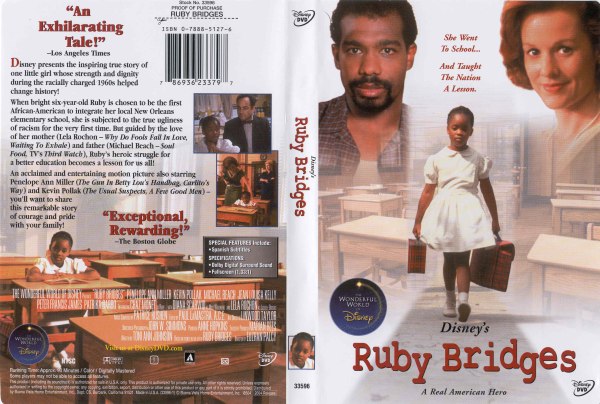
Happy 60th birthday to Ruby Bridges! As a six-year-old, Ruby Bridges famously became the first African American child to desegregate an all-white elementary school in the South. When the 1st grader walked to William Frantz Elementary School in New Orleans on November 14, 1960 surrounded by a team of U.S. Marshals, she was met by a vicious mob shouting and throwing objects at her.

One of the federal marshals, Charles Burks, who served on her escort team, recalls Bridges' courage in the face of such hatred: "For a little girl six years old going into a strange school with four strange deputy marshals, a place she had never been before, she showed a lot of courage. She never cried. She didn't whimper. She just marched along like a little soldier. We were all very proud of her."

Once Ruby entered the school, she discovered that it was devoid of children because they had all been removed by their parents due to her presence. The only teacher willing to have Ruby as a student was Barbara Henry, who had recently moved from Boston. Ruby was taught by herself for her first year at the school due to the white parents' refusal to have their children share a classroom with a black child.

Despite daily harassment, which required the federal marshals to continue escorting her to school for months; threats towards her family; and her father's job loss due to his family's role in school integration, Ruby persisted in attending school. The following year, when she returned for second grade, the mobs were gone and more African American students joined her at the school. The pioneering school integration effort was a success due to Ruby Bridges' inspiring courage, perseverance, and resilience.

https://www.facebook.com/amightygirl
 
Ruby Bridges Desegregates a School
On the road to Civil Rights, even children became public figures, such as six-year-old Ruby Bridges, who integrated an all-white elementary school in New Orleans on November 14, 1960. Four years later, Norman Rockwell depicted her brave act of just walking to school, escorted by federal marshals, in a painting, “The Problem We All Live With.” Episode Five: Rise! includes historic footage of Ruby Bridges’ first day at school and a conversation with her today.

When recalling the first trip to her school, Ruby Bridges recalls today, “I saw barricades and police officers and just people everywhere. And when I saw all of that, I immediately thought that it was Mardi Gras. I had no idea that they were here to keep me out of the school. ”

Six years earlier, after decades of struggle, the NAACP had won a major legal victory in the Supreme Court, represented by then-lawyer Thurgood Marshall, a future U.S. Supreme Court Justice. In Brown vs. Board of Education, the Supreme Court declared that the doctrine of separate but equal schools was unconstitutional. For years after the ruling, the South simply refused to integrate. Ruby became one of six New Orleans children chosen to desegregate several all-white elementary schools in the city.

Of the people who gathered at the school to taunt her, Bridges says, “They didn’t see a child. They saw change, and what they thought was being taken from them. They never saw a child.”

The story of Ruby Bridges and desegregation is part of Rise!, Episode Five of the six-part series, The African Americans: Many Rivers to Cross with Henry Louis Gates, Jr. Episode Five premieres on PBS on November 19, 2013, 8-9 pm ET. Check local listings on the broadcast schedule.

http://www.pbs.org/wnet/african-americans-many-rivers-to-cross/video/ruby-bridges-goes-to-school/
 
There are some things about Ruby Bridges' and the McDonogh Three's story that doesn't sit well with me.
First, the tests that the children were given were set up for them to fail and only 5 girls passed and only 4 girls were integrated, Ruby Bridges at Franz and Leona Tate, Tessie Prevost and Gaile Etienne at McDonogh 19. I would not have felt comfortable sending little girls into that environment, given the history of this area.
 
Back
Top