Does the Congressional Black Caucus Really Represent Black America ?

QueEx

Rising Star
Super Moderator
Does the Congressional Black Caucus
Really Represent Black Amerca ?
And What Should We Do About It?

Black Agenda Report
by BAR Managing Editor Bruce Dixon
Issue for Feb. 7 - Feb.13, 2007

There is a widening divide in Black America - but not among the people, who continue to hold dear the progressive values of racial, social and economic justice, and peace. Rather, the growing gap exists between the aspirations of the masses of African Americans, and the increasingly timid and self-serving behavior of the Black political class. It is high time - past time - to draw bright political lines that our elected representatives dare not cross, most especially, the Congressional Black Caucus.

"True leaders never confine their demands to the immediately possible."

The Congressional Black Caucus ought to represent the political will of Black America; otherwise it has no reason to exist. But does the Caucus live up to its charge? And if not, what can we do about it?

The short answer to the first question is "no." A look at the report cards issued by CBC Monitor, the groundbreaking project which grades CBC members from an African American point of view reveals that an entire layer of black representatives in Congress, all males, have decisively detached themselves from their constituencies in Black America.

In 2006 two-thirds of caucus members voted for telecom and cable bills that allow cable and phone companies to bypass and shortchange our communities. Smaller numbers supported measures ranging from a presidential line item veto to abolishing the estate tax on a tiny portion of the nation's wealthiest, to making it harder for ordinary people to mount class action suits against corporations. An unprecedented political shift is underway, not among the broad masses of African Americans, but among the tiny elite of elected officials who nominally represent them.

"An unprecedented political shift is underway, not among the broad masses of African Americans, but among the tiny elite of elected officials."

While black politicians drift steadily rightward, black America waits impatiently for its elected representatives to go beyond raising the minimum wage and address the nearly 50% rates of unemployment among inner city black males and propose the creation of hundreds of thousands of new jobs. Black America wonders when its political leaders will begin to offer meaningful opposition to the nation's policy of racially selective mass imprisonment, under which African Americans, who are only one eighth the nation's population, are fully half of those in its prisons and jails. Black America wants to how and why the dispossession and dispersal of New Orleans - a centuries-old black city of hundreds of thousands has been allowed to happen and to stand.

The bright lines of black opinion on these and several other questions are well-defined.

Racially Selective Mass Incarceration

America's prison population has grown six or sevenfold since the mid 1970s. With half the nation's 2.2 million prisoners drawn from its black one eighth this is incontrovertible evidence that an unspoken but very real national public policy of racially selective mass imprisonment is in effect. Such broad, and broadly destructive social policies cannot begin to be changed till they are acknowledged, and until real political leaders have the guts to make them into real political issues. It's time for the cowardly and complicit silence of black political leadership, including most of the Congressional Black Caucus on the question of mass incarceration, to end.

Katrina: The Drowning, Dispossession and Dispersal of Black New Orleans

Thousands died in the man-made disasters attendant to Hurricane Katrina due to government failures on every level, from presidential refusals to fund and maintain levees, to the failure of federal, state and local officials to plan for evacuation, but so far as we know only one government employee was fired, and none have seen a day in a court of law. The majority of pre-Katrina New Orleans residents were black and renters. So-called reconstruction efforts have pointedly excluded jobs, housing, schools, health care and infrastructure that would enable them to return, to re-unite their families and to rebuild their communities. National Democratic party leaders, always afraid of being too closely identified in the minds of white America with the problems of blacks can never be counted to stand up for us if our own nominal representatives, the Congressional Black Caucus, does not.

"Single payer national health care is a bright line behind which black America is already arrayed."

Single Payer Health Care

Every advanced industrial society on the planet has some form of national health care insurance in which health care is delivered to the population with only 1% to 3% diverted to non-health care costs. US health care is the world's most expensive, largely because 15% to 25% of every health care dollar goes to advertising and shareholder profit rather than medical care. African Americans comprise a larger proportion of the nation's forty-some million uninsured than any other ethnic group in the country, are the most victimized by rising health care costs, Medicaid and Medicare cuts, and receive worse care than others even when similarly insured. Endorsement of HR 676, co-sponsored by Representatives John Conyers and Dennis Kucinich, is a good step in the direction of a single payer national health care system, a bright line behind which black America is already arrayed, waiting for our political leaders to join us. How much longer will we wait?

Voting Rights, Jobs, Education

As Rep. Jesse Jackson Jr. pointed out several years ago, the second amendment to the US Constitution guarantees the right to own a gun. But the Constitution is silent on the right to decent employment at living wage, on the right to a quality education, or the right to vote, and have every vote counted. As long as these basic and sensible human rights are not enshrined in the Constitution, excuses will be found to deny them.

Should the economy work for people? Is everyone's child worth educating? Is every vote worth counting? These are arguments that can only be won on their own merits, and the only way to frame a discussion on their merits is to pose them as Constitutional Amendments.

And the only way to win them once and for all is to write them directly into the US Constitution.

We know we need jobs. We know that quality education is a human right. And we know that our votes should be counted. Black America's political leaders must discover the vision to pick these fights and lead them.

"Black political figures who don't represent their constituencies on issues of peace can't represent them on anything else."

Peace

40 years ago, Dr. Martin Luther King declared that he "...knew that America would never invest the necessary funds or energies in rehabilitation of its poor so long as adventures like Vietnam continued to draw men and skills and money like some demonic destructive suction tube..."

The current generation of America's leaders have foisted upon us a so-called "Global War on Terror," which they expect to last decades, and requires the US, with less than 5% of the planet's population, to spend more than all the rest of the world combined on weapons and the military for the indefinite future. For historical reasons, black America tends to be more skeptical and less supportive of imperial ambitions and imperial war than our white neighbors. Black political figures who don't represent their constituencies on this issue can't represent them on anything else. They should be shunned and shamed, until such time as they can be replaced.

WHY DEMAND THINGS THAT CAN'T BE PASSED IN THIS SESSION OF CONGRESS?

The words "politician," "leader," and "political leader" are often used interchangeably. If they are indeed the same things, we have the right to demand that black politicians act like leaders. True leaders never confine their demands to the immediately possible, to those measures which can be enacted into law in this month, this year, or the next. Leaders possess vision, and they exercise leadership to make today's political impossibilities into tomorrow's realities.

Everything that Dr. King demanded in his heyday was deemed "politically impossible", and much of his historic agenda remains unaccomplished.

We have outlined here the bright lines, as we understand them, of street level opinion in black America, of political stands and just demands widely held among our people, from which too many of our nominal leaders are drifting, and some are running away from as fast as they can. They can run. But they can't hide.

During this Black History month, Black Agenda Report and CBC Monitor will issue the 2007 CBC Report Card and along with thousands of our friends around the nation, initiate a groundbreaking political action project to carry the demands of black America directly to our nominal representatives in Congress.

Bruce Dixon can be contacted at Bruce.Dixon (at) BlackAgendaReport.com.

http://www.blackagendareport.com/index.php?option=com_content&task=view&id=74
 
Last edited:
Re: Does the Congressional Black Cuause Really Represent Black Amerca ?

In the mid 90s they tried in a futile attempt to question americas racist prison system.

They failed, the most important thing they could have done to help us and they were just told to STFU!!!!!!!!!!!!!

This is when I realized they were just token, the 500 to 5 gram rule was one of the things they tried to question.


What is sad people really think they have power. :lol: :lol:

Its like giving the sunnis a say in the new iraq government, they are just token and cannot outvote the majority so are uselless in their own cause.

I think are laws have to be mad at the local, state level and hope to god the feds stay out.

Trying at the federal level is just asking to much.

This means flooding a locale with black judges, more black police and start from there, the black judges could make the biggest impact of anything.
 
Re: Does the Congressional Black Caucus Really Represent Black Amerca ?

This should be saying

There is a widening divide in Black America - but not among the people, who continue to hold dear the progressive values of racial, social and economic justice, and peace. Rather, the growing gap exists between the aspirations of the masses of African Americans, and the increasingly timid and self-serving behavior of the Black political class. lf-serving behavior of the Black political class.

this

There is a widening divide in America - but not among the people, who continue to hold dear the progressive values of racial, social and economic justice, and peace. Rather, the growing gap exists between the aspirations of the masses of Americans, and the increasingly timid and self-serving behavior of the political class.


Whenever Black people reduce an issue to race we lose but when we frame it as right vs wrong we always win.
 
Re: Does the Congressional Black Cuause Really Represent Black Amerca ?

In answer to the title of the post, the short answer is no. No don't get me wrong, there are black legislators that are truly trying (Maxine Waters, and Barbra Lee) but too many of them are being guided by their own financial benefitting agenda (i.e. Rep William Jefferson)

To address your points below, black people in general have been used as tokens in this political sceme. Republicans ignore us and the Democrats take us for granted.

I also agree it has to start at the local level. But I believe that it starts at informing and empowering the local people with the knowledge of how the local system works. Far too often, black people think civil duty begins and ends with voting. In reality, people need to be organized and constantly involved in the process.

Second it can't be simply putting black people in positions of power. It has to be about putting people who agree with our cause and agenda into those positions. Remember, the recent NYC police brutality case involved black and brown cops. every Brother Ain't a Brother.

gene cisco said:
In the mid 90s they tried in a futile attempt to question americas racist prison system.

They failed, the most important thing they could have done to help us and they were just told to STFU!!!!!!!!!!!!!

This is when I realized they were just token, the 500 to 5 gram rule was one of the things they tried to question.


What is sad people really think they have power. :lol: :lol:

Its like giving the sunnis a say in the new iraq government, they are just token and cannot outvote the majority so are uselless in their own cause.

I think are laws have to be mad at the local, state level and hope to god the feds stay out.

Trying at the federal level is just asking to much.

This means flooding a locale with black judges, more black police and start from there, the black judges could make the biggest impact of anything.
 
Re: Does the Congressional Black Cuause Really Represent Black Amerca ?


Is the Congressional Black Caucus Dying of Neglect?


Shunned by President Obama, the organization could be out
in the cold in the next Administration unless it finds a new role


98440426.jpg


The Root
By: Patrick D. Shaffer
April 18, 2010


<font size="3">Has President Obama killed off the Congressional Black Caucus?</font size> From the very beginning, President Obama and his campaign promised the CBC nothing, so no one - not even the 42 CBC members - should be shocked that, at this point, they have gained minimal legislative progress with Obama in the White House and that they have apparently lost much of the influence they had in Washington.

The President and his administration seem to have unique disregard for the CBC. This could be because, at the beginning of his candidacy, many of its members urged him not to run while they publically supported Hillary Clinton's bid for President. Since taking office 16 months ago, he has been slow to meet with the Caucus and when he did it was after meeting with old-line civil rights leaders.

If President Obama does not find a way to empower the CBC, he has effectively neutralized it, not just for the duration of his Presidency, but for future administrations as well. The issue could have repercussions beyond this moment; the after-effects could be even more damaging under a Romney, Pawlenty or Palin presidency. For now, the Caucus is made to sit at the small table and be quiet; under the next Republican presidency it may have to eat outside.

With the election of Barack Obama, power shifted for black Americans in ways that none of us were ready for, and collectively, we still haven't wrapped our minds completely around what his presidency and administration can mean for the future of black people on a practical level. With his election, we had every right to be elated and overjoyed; the experience was cathartic for most of us. We needed that moment after eight long Bush years. We needed some relief from the burden of being overlooked and underserved in America.

The irony is that the CBC probably had more leverage with Presidents Bill Clinton and Jimmy Carter than with President Obama. Those two previous Democrats couldn't afford to have African-American constituents see them seem high-handed with the CBC. President Obama doesn't have that problem. Many people voted for more than Obama. We also voted for a Democrat with a broad progressive agenda and trusted that he would aid all the underserved in a way that no other President has in the last fifteen years.


<font size="3">We finally had a President who would look out for the welfare of all people.</font size> I was in Grant Park on Election night and I'll never forget how elated I felt. But as I walked to my car, I started to contemplate what his victory really meant. Eighteen months after his election, the questions have become more pronounced and I'm not the only one asking them. The CBC, founded in January 1969 by the newly elected African American representatives of the 77th Congress, had strong and respectable legislators, who cared about the people who sent them to Washington to protect their interest. However, with the election of President Obama, the CBC has encountered opposition not from the other side of the aisle but with subtlety from the Oval Office.

The silencing of the CBC by the White House has been confusing for Black America. The CBC has long served as the bridge between the ways of Washington and the consciousness of urban America. Its members have served urban communities, which in America is a specific demographic: black and brown, women and children.

For previous presidential administrations, the CBC was a powerful political utility that could translate public policy into language that Black America could understand. But with the election of Barack Obama, the CBC has been displaced and relegated to placeholders instead of stakeholders in shaping the betterment and recovery of their constituents.

In November 2009, the CBC began promoting solutions to the White House and Congress, including funding for job training, summer job programs, and existing federal job initiatives to be directed to the communities hardest hit by unemployment. Specifically, the members called for at least 10 percent of funding for these programs to target areas with poverty rates of 15 percent or higher, or unemployment greater than 10 percent.

All of these provisions were ignored in the first jobs bill. Fighting back against the snub, 21 members of the Congressional Black Caucus voted "nay" on the bill. And although it narrowly passed, the protest showed that they have the potential to block Obama's agenda if they continue to be ignored.


<font size="3">Recently, the cries from the caucus have been more pronounced and direct.</font size> U.S. Rep. Chaka Fattah said in a published report that the Congressional Black Caucus is simply representing its constituents. "What I think the CBC is saying is that our voices have to be raised on behalf of our constituents, just as the Blue Dogs or any other caucus does," Fattah said. "In politics, what happens is the squeaky wheel gets the oil."

The President has been forthright with the CBC and with black America on his strategy: "I will tell you that I think the most important thing I can do for the African-American community is the same thing I can do for the American community, period, and that is get the economy going again and get people hiring again," the president told Richard Wolf of USA Today.

From a political standpoint, the Obama administration has had other good reasons to keep the Caucus at arm's length. This underlying issues around ethics and the Caucus' financing, as reported in an article in the New York Times article that is strongly disputed by the CBC Foundation, have presented the White House with deep problems about engaging without getting absorbed in the ongoing ethics probe of Reps. Charles Rangel, Gregory Meeks and Maxine Waters, amongst others. So it is no wonder that the President has had a long-distance strategy with the CBC: if he gets too close, his political enemies will use the CBC's alleged indiscretions as a wedge issue that ultimately could stall his whole agenda.

Maybe black America did not count up the political, social and economic price of being able to say "We have a black President." Investing in this new power structure has left us, at least at the moment, vulnerable. There is no one saying, "Black America is too big to fail." But, if you haven't noticed, we are falling behind in nearly every measurable category in America. For black America, The President's administration is like having a BMW 650si parked in your driveway that has no transmission: it's pretty, but it doesn't go anywhere, however I guess there is some consolation with saying at least you have one.

When the White House needs to communicate to black America (which has not been often), it talks to it directly, not needing the advocacy of the CBC like former administrations. I understand why: the President is black and has the most recognizable image and viable brand that we have ever seen, so the CBC is like the extra screws in the box after you assemble a book shelf; you just don't need them so you put them in the drawer.


<font size="3">The Obama administration must find a way to empower the caucus now.</font size> The reason being, while our love for President Obama is deep, we must all remember that one day he will not be President. He will leave Washington either in 2013 or 2017, write his memoirs and raise money for the Barack Obama Presidential Library.

So, what will come of the CBC after he is gone? If it is powerless and stagnant under his administration, what will be its role or relevance under a Republican administration? The CBC's viability will be dictated by its ability to survive and function effectively. The next GOP administration can well respond to the CBC's requests for more funding and more care by bringing up the fact that when it had a black President, he did nothing for them.

In the past, the President has responded by saying that "a rising tide lifts all boats" and that his job "is to be president of the whole country." Well with all due respect to the President; black America's boat was foreclosed on a long time ago, so we still need the CBC to work for us and for the President to find a way to work with them.

Patrick Shaffer is a writer, national blogger and Sacred Activist for more information go to www.patrickdshaffer.com


http://www.theroot.com/views/congressional-black-caucus-dying-neglect?page=0,0
 
Last edited:
Re: Does the Congressional Black Cuause Really Represent Black Amerca ?


What, if anything, has the Congressional Black Caucus
(whether as a group or through the efforts of individual members)
done to create employment in the African-American Community


? ? ?


Re: Does the Congressional Black Cuause Really Represent Black Amerca ?


What, if anything, has the Congressional Black Caucus
(whether as a group or through the efforts of individual members)
done to create employment in the African-American Community


? ? ?


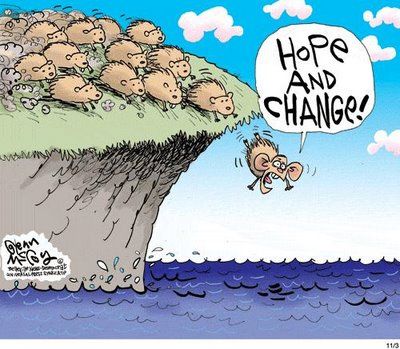
lemmings.jpg


Does it really matter? You guys will vote for him again.
obama-BAR-delirious_deleterious-300x225.jpg
 
Does the Congressional Black Caucus Really Represent Black America ?


No more than the Tea Bagger caucus represent the republicans. The Black congressional members represent the districts that voted them in.

Do you think President Obama represent Black folks?


Does it really matter? You guys will vote for him again.

Do you expect any sane American of African descent to vote for Governor Secessionist, crazy eyes Bachmann or Governor ORomeny care? Or may be we should throw our votes behind Neo-Confederate Gingrich. From the Reagan crack era to daddy Bush police brutality to GW's lost decade, I see no republicans running for president except for maybe Ron Paul on some issues that would benefit Black folk.
 
No more than the Tea Bagger caucus represent the republicans. The Black congressional members represent the districts that voted them in.

Do you think President Obama represent Black folks?


Do you expect any sane American of African descent to vote for Governor Secessionist, crazy eyes Bachmann or Governor ORomeny care? Or may be we should throw our votes behind Neo-Confederate Gingrich. From the Reagan crack era to daddy Bush police brutality to GW's lost decade, I see no republicans running for president except for maybe Ron Paul on some issues that would benefit Black folk.

Benefit Black Folk!!! Obama is black!!!
How's that working out for Ya? No legislation will benefit black folk until we help ourselves first. In many communities of America you can't legislate morality. Chris Christie and Allen West would be nice. Two conservatives who can effectively articulate conservative values. Anyone else would be better than Obama.
dr_phil.jpg


Tea Baggers helped the right take the house. Almost the Senate. I hope you realize that independents have determined the last few presidential elections. Give or take both parties are somewhat split down the middle. Needless to say, independents are leaving the dems in droves. Claiming simply the direction he's leading this country in.

I like your point on Paul but he's ancient. America rarely ever vote for old dudes. He's nutty about foreign policy though.
 
Re: Does the Congressional Black Cuause Really Represent Black Amerca ?

<center>
Is the Congressional Black Caucus
Dying of Neglect?


Shunned by President Obama, the organization could
be out in the cold in the next Administration
unless it finds a new role
</center>


98440426.jpg


The Root
By: Patrick D. Shaffer
April 18, 2010


Has President Obama killed off the Congressional Black Caucus? From the very beginning, President Obama and his campaign promised the CBC nothing, so no one - not even the 42 CBC members - should be shocked that, at this point, they have gained minimal legislative progress with Obama in the White House and that they have apparently lost much of the influence they had in Washington.

The President and his administration seem to have unique disregard for the CBC. This could be because, at the beginning of his candidacy, many of its members urged him not to run while they publically supported Hillary Clinton's bid for President. Since taking office 16 months ago, he has been slow to meet with the Caucus and when he did it was after meeting with old-line civil rights leaders.

If President Obama does not find a way to empower the CBC, he has effectively neutralized it, not just for the duration of his Presidency, but for future administrations as well. The issue could have repercussions beyond this moment; the after-effects could be even more damaging under a Romney, Pawlenty or Palin presidency. For now, the Caucus is made to sit at the small table and be quiet; under the next Republican presidency it may have to eat outside.

With the election of Barack Obama, power shifted for black Americans in ways that none of us were ready for, and collectively, we still haven't wrapped our minds completely around what his presidency and administration can mean for the future of black people on a practical level. With his election, we had every right to be elated and overjoyed; the experience was cathartic for most of us. We needed that moment after eight long Bush years. We needed some relief from the burden of being overlooked and underserved in America.

The irony is that the CBC probably had more leverage with Presidents Bill Clinton and Jimmy Carter than with President Obama. Those two previous Democrats couldn't afford to have African-American constituents see them seem high-handed with the CBC. President Obama doesn't have that problem. Many people voted for more than Obama. We also voted for a Democrat with a broad progressive agenda and trusted that he would aid all the underserved in a way that no other President has in the last fifteen years.


We finally had a President who would look out for the welfare of all people. I was in Grant Park on Election night and I'll never forget how elated I felt. But as I walked to my car, I started to contemplate what his victory really meant. Eighteen months after his election, the questions have become more pronounced and I'm not the only one asking them. The CBC, founded in January 1969 by the newly elected African American representatives of the 77th Congress, had strong and respectable legislators, who cared about the people who sent them to Washington to protect their interest. However, with the election of President Obama, the CBC has encountered opposition not from the other side of the aisle but with subtlety from the Oval Office.

The silencing of the CBC by the White House has been confusing for Black America. The CBC has long served as the bridge between the ways of Washington and the consciousness of urban America. Its members have served urban communities, which in America is a specific demographic: black and brown, women and children.

For previous presidential administrations, the CBC was a powerful political utility that could translate public policy into language that Black America could understand. But with the election of Barack Obama, the CBC has been displaced and relegated to placeholders instead of stakeholders in shaping the betterment and recovery of their constituents.

In November 2009, the CBC began promoting solutions to the White House and Congress, including funding for job training, summer job programs, and existing federal job initiatives to be directed to the communities hardest hit by unemployment. Specifically, the members called for at least 10 percent of funding for these programs to target areas with poverty rates of 15 percent or higher, or unemployment greater than 10 percent.

All of these provisions were ignored in the first jobs bill. Fighting back against the snub, 21 members of the Congressional Black Caucus voted "nay" on the bill. And although it narrowly passed, the protest showed that they have the potential to block Obama's agenda if they continue to be ignored.


Recently, the cries from the caucus have been more pronounced and direct. U.S. Rep. Chaka Fattah said in a published report that the Congressional Black Caucus is simply representing its constituents. "What I think the CBC is saying is that our voices have to be raised on behalf of our constituents, just as the Blue Dogs or any other caucus does," Fattah said. "In politics, what happens is the squeaky wheel gets the oil."

The President has been forthright with the CBC and with black America on his strategy: "I will tell you that I think the most important thing I can do for the African-American community is the same thing I can do for the American community, period, and that is get the economy going again and get people hiring again," the president told Richard Wolf of USA Today.

From a political standpoint, the Obama administration has had other good reasons to keep the Caucus at arm's length. This underlying issues around ethics and the Caucus' financing, as reported in an article in the New York Times article that is strongly disputed by the CBC Foundation, have presented the White House with deep problems about engaging without getting absorbed in the ongoing ethics probe of Reps. Charles Rangel, Gregory Meeks and Maxine Waters, amongst others. So it is no wonder that the President has had a long-distance strategy with the CBC: if he gets too close, his political enemies will use the CBC's alleged indiscretions as a wedge issue that ultimately could stall his whole agenda.

Maybe black America did not count up the political, social and economic price of being able to say "We have a black President." Investing in this new power structure has left us, at least at the moment, vulnerable. There is no one saying, "Black America is too big to fail." But, if you haven't noticed, we are falling behind in nearly every measurable category in America. For black America, The President's administration is like having a BMW 650si parked in your driveway that has no transmission: it's pretty, but it doesn't go anywhere, however I guess there is some consolation with saying at least you have one.

When the White House needs to communicate to black America (which has not been often), it talks to it directly, not needing the advocacy of the CBC like former administrations. I understand why: the President is black and has the most recognizable image and viable brand that we have ever seen, so the CBC is like the extra screws in the box after you assemble a book shelf; you just don't need them so you put them in the drawer.


The Obama administration must find a way to empower the caucus now. The reason being, while our love for President Obama is deep, we must all remember that one day he will not be President. He will leave Washington either in 2013 or 2017, write his memoirs and raise money for the Barack Obama Presidential Library.

So, what will come of the CBC after he is gone? If it is powerless and stagnant under his administration, what will be its role or relevance under a Republican administration? The CBC's viability will be dictated by its ability to survive and function effectively. The next GOP administration can well respond to the CBC's requests for more funding and more care by bringing up the fact that when it had a black President, he did nothing for them.

In the past, the President has responded by saying that "a rising tide lifts all boats" and that his job "is to be president of the whole country." Well with all due respect to the President; black America's boat was foreclosed on a long time ago, so we still need the CBC to work for us and for the President to find a way to work with them.

Patrick Shaffer is a writer, national blogger and Sacred Activist for more information go to www.patrickdshaffer.com


http://www.theroot.com/views/congressional-black-caucus-dying-neglect?page=0,0

And people are supporting Obushma for what again??? Because he's black? It damn sure can't be for what he's done for America's middle,working and poor!:smh:
 
Re: Does the Congressional Black Caucus Really Represent Black Amerca ?

<center>Does the Congressional Black Caucus Really
Represent Black America?

And What Should We Do About It?
</center>

Black Agenda Report
by BAR Managing Editor Bruce Dixon
Issue for Feb. 7 - Feb.13, 2007

There is a widening divide in Black America - but not among the people, who continue to hold dear the progressive values of racial, social and economic justice, and peace. Rather, the growing gap exists between the aspirations of the masses of African Americans, and the increasingly timid and self-serving behavior of the Black political class. It is high time - past time - to draw bright political lines that our elected representatives dare not cross, most especially, the Congressional Black Caucus.

"True leaders never confine their demands to the immediately possible."

The Congressional Black Caucus ought to represent the political will of Black America; otherwise it has no reason to exist. But does the Caucus live up to its charge? And if not, what can we do about it?

The short answer to the first question is "no." A look at the report cards issued by CBC Monitor, the groundbreaking project which grades CBC members from an African American point of view reveals that an entire layer of black representatives in Congress, all males, have decisively detached themselves from their constituencies in Black America.

In 2006 two-thirds of caucus members voted for telecom and cable bills that allow cable and phone companies to bypass and shortchange our communities. Smaller numbers supported measures ranging from a presidential line item veto to abolishing the estate tax on a tiny portion of the nation's wealthiest, to making it harder for ordinary people to mount class action suits against corporations. An unprecedented political shift is underway, not among the broad masses of African Americans, but among the tiny elite of elected officials who nominally represent them.

"An unprecedented political shift is underway, not among the broad masses of African Americans, but among the tiny elite of elected officials."

While black politicians drift steadily rightward, black America waits impatiently for its elected representatives to go beyond raising the minimum wage and address the nearly 50% rates of unemployment among inner city black males and propose the creation of hundreds of thousands of new jobs. Black America wonders when its political leaders will begin to offer meaningful opposition to the nation's policy of racially selective mass imprisonment, under which African Americans, who are only one eighth the nation's population, are fully half of those in its prisons and jails. Black America wants to how and why the dispossession and dispersal of New Orleans - a centuries-old black city of hundreds of thousands has been allowed to happen and to stand.

The bright lines of black opinion on these and several other questions are well-defined.

Racially Selective Mass Incarceration

America's prison population has grown six or sevenfold since the mid 1970s. With half the nation's 2.2 million prisoners drawn from its black one eighth this is incontrovertible evidence that an unspoken but very real national public policy of racially selective mass imprisonment is in effect. Such broad, and broadly destructive social policies cannot begin to be changed till they are acknowledged, and until real political leaders have the guts to make them into real political issues. It's time for the cowardly and complicit silence of black political leadership, including most of the Congressional Black Caucus on the question of mass incarceration, to end.

Katrina: The Drowning, Dispossession and Dispersal of Black New Orleans

Thousands died in the man-made disasters attendant to Hurricane Katrina due to government failures on every level, from presidential refusals to fund and maintain levees, to the failure of federal, state and local officials to plan for evacuation, but so far as we know only one government employee was fired, and none have seen a day in a court of law. The majority of pre-Katrina New Orleans residents were black and renters. So-called reconstruction efforts have pointedly excluded jobs, housing, schools, health care and infrastructure that would enable them to return, to re-unite their families and to rebuild their communities. National Democratic party leaders, always afraid of being too closely identified in the minds of white America with the problems of blacks can never be counted to stand up for us if our own nominal representatives, the Congressional Black Caucus, does not.

"Single payer national health care is a bright line behind which black America is already arrayed."

Single Payer Health Care

Every advanced industrial society on the planet has some form of national health care insurance in which health care is delivered to the population with only 1% to 3% diverted to non-health care costs. US health care is the world's most expensive, largely because 15% to 25% of every health care dollar goes to advertising and shareholder profit rather than medical care. African Americans comprise a larger proportion of the nation's forty-some million uninsured than any other ethnic group in the country, are the most victimized by rising health care costs, Medicaid and Medicare cuts, and receive worse care than others even when similarly insured. Endorsement of HR 676, co-sponsored by Representatives John Conyers and Dennis Kucinich, is a good step in the direction of a single payer national health care system, a bright line behind which black America is already arrayed, waiting for our political leaders to join us. How much longer will we wait?

Voting Rights, Jobs, Education

As Rep. Jesse Jackson Jr. pointed out several years ago, the second amendment to the US Constitution guarantees the right to own a gun. But the Constitution is silent on the right to decent employment at living wage, on the right to a quality education, or the right to vote, and have every vote counted. As long as these basic and sensible human rights are not enshrined in the Constitution, excuses will be found to deny them.

Should the economy work for people? Is everyone's child worth educating? Is every vote worth counting? These are arguments that can only be won on their own merits, and the only way to frame a discussion on their merits is to pose them as Constitutional Amendments.

And the only way to win them once and for all is to write them directly into the US Constitution.

We know we need jobs. We know that quality education is a human right. And we know that our votes should be counted. Black America's political leaders must discover the vision to pick these fights and lead them.

"Black political figures who don't represent their constituencies on issues of peace can't represent them on anything else."

Peace

40 years ago, Dr. Martin Luther King declared that he "...knew that America would never invest the necessary funds or energies in rehabilitation of its poor so long as adventures like Vietnam continued to draw men and skills and money like some demonic destructive suction tube..."

The current generation of America's leaders have foisted upon us a so-called "Global War on Terror," which they expect to last decades, and requires the US, with less than 5% of the planet's population, to spend more than all the rest of the world combined on weapons and the military for the indefinite future. For historical reasons, black America tends to be more skeptical and less supportive of imperial ambitions and imperial war than our white neighbors. Black political figures who don't represent their constituencies on this issue can't represent them on anything else. They should be shunned and shamed, until such time as they can be replaced.

WHY DEMAND THINGS THAT CAN'T BE PASSED IN THIS SESSION OF CONGRESS?

The words "politician," "leader," and "political leader" are often used interchangeably. If they are indeed the same things, we have the right to demand that black politicians act like leaders. True leaders never confine their demands to the immediately possible, to those measures which can be enacted into law in this month, this year, or the next. Leaders possess vision, and they exercise leadership to make today's political impossibilities into tomorrow's realities.

Everything that Dr. King demanded in his heyday was deemed "politically impossible", and much of his historic agenda remains unaccomplished.

We have outlined here the bright lines, as we understand them, of street level opinion in black America, of political stands and just demands widely held among our people, from which too many of our nominal leaders are drifting, and some are running away from as fast as they can. They can run. But they can't hide.

During this Black History month, Black Agenda Report and CBC Monitor will issue the 2007 CBC Report Card and along with thousands of our friends around the nation, initiate a groundbreaking political action project to carry the demands of black America directly to our nominal representatives in Congress.

Bruce Dixon can be contacted at Bruce.Dixon (at) BlackAgendaReport.com.

http://www.blackagendareport.com/index.php?option=com_content&task=view&id=74


Bruce Dixon is no more than an Obama apologist!
Blame a caucus of ELECTED black leaders-leaders who were elected by their districts to advocate and represent them.

Mind you a large number of the caucus, are not freshmen so they have been rewarded to return by their constiuents, fir their hard work for their districts.

Hello-The president sets the agenda!!!

Give them somethng to do and fight for Obushma!
 
Benefit Black Folk!!! Obama is black!!!
How's that working out for Ya? No legislation will benefit black folk until we help ourselves first. In many communities of America you can't legislate morality. Chris Christie and Allen West would be nice. Two conservatives who can effectively articulate conservative values. Anyone else would be better than Obama.


Tea Baggers helped the right take the house. Almost the Senate. I hope you realize that independents have determined the last few presidential elections. Give or take both parties are somewhat split down the middle. Needless to say, independents are leaving the dems in droves. Claiming simply the direction he's leading this country in.

I like your point on Paul but he's ancient. America rarely ever vote for old dudes. He's nutty about foreign policy though.

Great, a greasy,fat hypocritical bullyer of women and a flattop, wearing bullyer of women and Iraqi's!
Sweet,I feel inspired to follow!
:puke:
 
New Congressional Caucus on Black Men and Boys Convening First Hearing Next Week

New Congressional Caucus on Black Men and Boys Convening First Hearing Next Week
by BRIDGET JOHNSON
July 19, 2013 - 2:29 pm

In the wake of the George Zimmerman verdict, the new Congressional Caucus on Black Men and Boys will convene for its first hearing on Wednesday to discuss “The Status of Black Males: Ensuring Our Boys Mature Into Strong Men.”

Testimony will be heard at the Rayburn House Office Building from former Maryland congressman and NAACP President Kweisi Mfume, author and Georgetown University professor Dr. Michael Eric Dyson, and Executive Director of the White House Initiative on Educational Excellence for African Americans David J. Johns. Each will discuss a different phase of a black man’s life: childhood, teen years and adulthood.

The new caucus, established in March, is modeled after Del. Eleanor Holmes Norton’s (D-D.C.) D.C. Commission on Black Men and Boys, which convened a townhall-style forum at the D.C. Armory more than a year ago as tensions over the Trayvon Martin case ran high. Panelists and residents engaged in a frank discussion about everything from saggy pants to youth mentoring, from racial profiling to their own slain children.

Rep. Danny Davis (D-Ill.) is co-chairing the caucus with Norton. Reps. Frederica Wilson (D-Fla.) and Cedric Richmond (D-La.) are vice-chairs.

Other caucus members thus far are Reps. Steven Horsford (D-Nev.), Charles Rangel (D-N.Y.), Shelia Jackson-Lee (D-Texas), Steve Cohen (D-Tenn.), William Lacy-Clay (D-Mo.), Marc Veasey (D-Texas), Emanuel Cleaver (D-Mo.), Keith Ellison (D-Minn.), Barbara Lee (D-Calif.), Don Payne Jr. (D-N.J.), Hank Johnson (D-Ga.), Bobby Scott (D-Va.), Bobby Rush (D-Ill.), Gregory Meeks (D-N.Y.) and Sanford Bishop (D-Ga.).

Norton said this first hearing was not timed to coincide with the Zimmerman verdict, but nonetheless is “right on time.”

“Our nation and our African American community need to bring our Black men and boys to center stage,” she said. “With this inaugural hearing, our new Caucus on Black Men and Boys begins our mission to take on the challenges facing our men and boys, and to ask our fellow Americans and African Americans to do the same.”

“Fifty years after the March on Washington it is an unfortunate fact that today young black men are still more likely to be unemployed, to be expelled from school, to be stopped at random on the street because they have been profiled, to be sent to prison, to not have access to regular quality health care, or to have suffered gun violence,” said Davis. “We know that our nation cannot be true to its values, indeed cannot sustain itself divided by such persistent inequalities. This hearing is a key step into focusing the attention and creativity of our nation into addressing the profound causes and consequences of this great divide.”

The caucus mission is stated as being a “vehicle for raising consciousness” on issues disproportionately affecting black men and youth including job training, HIV/AIDS and the breakdown of the family.

http://pjmedia.com/tatler/2013/07/1...n-and-boys-convening-first-hearing-next-week/
 
Re: New Congressional Caucus on Black Men and Boys Convening First Hearing Next Week

The caucus mission is stated as being a “vehicle for raising consciousness” on issues disproportionately affecting black men and youth including job training, HIV/AIDS and the breakdown of the family.


Hope they come up with some good ideas to raise consciousness, initiate training, curb disease and uplift the family.
 
Re: New Congressional Caucus on Black Men and Boys Convening First Hearing Next Week

Hope they come up with some good ideas to raise consciousness, initiate training, curb disease and uplift the family.
Yea, especially considering how effective they've been with this historic opportunity of having a black president in the White House at the same time.
 
Congressional Black Caucus PAC Needs to Cut Ties to Companies That Benefit From Black Suffering

Your Take: Corporate influence on the political process is often in direct conflict with the interests of black communities.

131111_rashad_robinson_80x80.jpg.CROP.hd-xsmall.jpg

BY: RASHAD ROBINSON
Posted: April 29 2016 4:31 PM
https://twitter.com/intent/tweet?ur...That+Benefit+From+Black+Suffering&via=TheRoot


509577726-democratic-representative-from-new-york-and-chairman-of.jpg.CROP.rtstoryvar-large.jpg

Chairman of the Congressional Black Caucus Political Action Committee Gregory Meeks (D-N.Y.) announces the CBC PAC’s endorsement of Democratic presidential candidate Hillary Clinton on Feb. 11, 2016. NICHOLAS KAMM/AFP/GETTY IMAGES


On Tuesday, Rep. Donna Edwards (D-Md.) lost her historic bid to become only the second black woman ever elected to the U.S. Senate. While there will be many takes on the implications of the election, as important as any is the inadvertent impact the campaign had in uncovering the unfortunate influence of corporate power over the black political establishment in Congress, specifically the Congressional Black Caucus Political Action Committee.

When my organization, ColorOfChange.org, the country’s largest online civil rights organization, launched a campaign demanding that the CBC PAC remake its board and cut ties with funders from companies that benefit from the suffering of black communities, it was not about Donna Edwards at all, really; it was about a political action committee, wholly unaccountable to black people, taking money and direction from problematic lobbyists, all the while claiming to speak on our behalf.

Still, the story of how Donna Edwards, a CBC member with overwhelming support from black voters, was blocked from the endorsement of the CBC PAC by a former political rival, congressman-turned-lobbyist Al Wynn, brings into focus the dangers facing black people because of the influence of money in politics. Consider the ways that the CBC PAC maintains that status quo while claiming to represent the interests of black people:

Africa? What Africa? Donald Trump Barely Mentions Entire Continent During Foreign Policy Speech
1. Industries that benefit from the worst outcomes of America’s racial inequality are able to spend millions to manipulate the political process, and the CBC PAC gives them even more access. As a CBC PAC board member, Al Wynn has cycled through clients including private-prison-and-detention giant G4S, menthol-cigarette-makers and a company with dubious ties to the Sudanese regime.

Unfortunately, he is not the only example. Companies and industries with clearly conservative agendas and business models that exploit the worst outcomes for black people are deeply connected to or invested in the CBC PAC. They fight minimum wage increases, produce and aggressively market dangerous products to black communities, and advocate for private prison companies that have made millions through mass incarceration.

2. The reliance of the CBC PAC board on corporate money puts CBC members in the position of defending corporate money in politics as well as the very companies that are the most harmful to black people. CBC Chairman G.K. Butterfield (D-N.C.) actually defended Wynn by referencing his role in protecting menthol-cigarette-makers as advocacy for black people, telling Politic365.com, “I think they bring a perspective. Not only the ability to contribute to our political work, but also they bring an issue perspective. Like menthol cigarettes. I support, for example, the idea that taking menthol off the market is not the solution to the problem. A lot of African Americans smoke menthol ... so we need their perspective,” referring to Wynn’s successful efforts on behalf of tobacco companies.

3. Worst of all, the influence of corporate power over the CBC PAC provides a vehicle to leverage the credibility of the Black Caucus in ways that are contrary to the desires of black communities. Despite being ousted by black voters in Maryland in favor of Edwards eight years ago and public criticism of his lobbying activity, Al Wynn has remained on the CBC PAC board and obviously wields enough power to drive decisions with major implications for black politics in directions that don’t align with most black voters.

It’s this kind of “civil rights washing”—laundering dangerous policies by drenching them in the hard-earned moral authority of the Congressional Black Caucus—that leaves me with a bad aftertaste. It’s toxic water. And it’s toxic to the interests of black people.


Rashad Robinson is executive director of ColorOfChange.org, the nation’s largest online civil rights organization. Follow ColorOfChange.org on Twitter.

Like The Root on Facebook. Follow us on Twitter.
 
509577726_democratic_representative_from_new_yor.jpg


Look at the picture above, these Black elected officials are all stuck in the 20th century.

They are not as bad as some over 80+ year old elders in my family who have never ever used an ATM machine, but they are close.

The people in the picture represent Black U.S. congressional leadership; they have no clue about what’s going on in their own districts that they represent, and —they have an even less idea about what’s going on nationally & internationally. But yet when Corporate $$$$$$$ America and their K-street lobbyists (who write most of our laws) comes to Washington D.C. to meet with “Black Leadership”— these are the neutered know-nothings that they meet.

If you remember the 1989 Warren Beatty movie “BULWORTH” which you can watch currently on NETFLIX the main character played by Beatty, U.S. Senator Bulworth speaks candidly about why Black American’s have very little local power and almost no National influence on law-making in Washington D.C.


In the 1989 film “Senator Bulworth” who is a Democratic politician answers a question at a press conference. He says:

Question:
We understand that the Democratic Party doesn’t care about the African-American community…

Senator Bulworth :

“Isn’t that obvious? Hey you got half your kids out-of-work and the other half in jail ¬ do you see any Democrat doing anything about it? Certainly not me! So what are you gonna do ¬ vote Republican? C’mon. C’mon you’re not going to vote Republican…
You need to call a spade a spade. I mean you can have a billion man march; if you don’t put down the malt-liquor and chicken wings and get behind somebody besides a running-back who stabs his wife ¬ you’re never going to get rid of somebody like me!”


http://www.rense.com/general95/bulworth.html


Fictional character Senator Bulworth also talks about political campaign $$$$$$$$ money in this 1989 film, pointing out the reality that Black people give almost NO money to political campaigns and that all a Black or white politician has to do to get the Black vote is to visit a couple of the largest Black churches in a given voting district, stand on the podium with the pastor holding his hand up-in-the-air, the organ will play, the choir will sing, and — on election day the Black "church ladies" will flock to the polls and vote for the candidate with the (D) Democrat label.

This is now 2016 and little has changed from the situation depicted in the 1989 film Bulworth.

Let us look at the Congressional Black Caucus PAC (Political Action Committee) which many months ago right after the New Hampshire primary which Bernie Sanders won in a landslide, had a press conference announcing their endorsement of Hillary Clinton.

The corporate controlled television media (CNN, NBC/MSNBC, ABC, CBS, FOX FAKE) all announced on their prime time broadcasts that the Congressional Black Caucus had endorsed Hillary. That wasn't true, it was the PAC, that endorsed Hillary not the official Congressional Black Caucus. The entire announcement was completely irrelevant to the "Big Boys & Girls" $$$$$$$$$ money competition going on between Hillary & Bernie.
As of May 2016, by just receiving average contributions of $27. dollars each Bernie has raised over $220,000,000. Hillary has raised less money, despite taking millions of "Dark Money" 501c4 and millions from Wall Street banksters.
http://www.wsj.com/articles/financial-sector-gives-hillary-clinton-a-boost-1462750725
http://www.salon.com/2016/05/09/hil...ng_millions_into_her_campaign_to_defeat_trum/

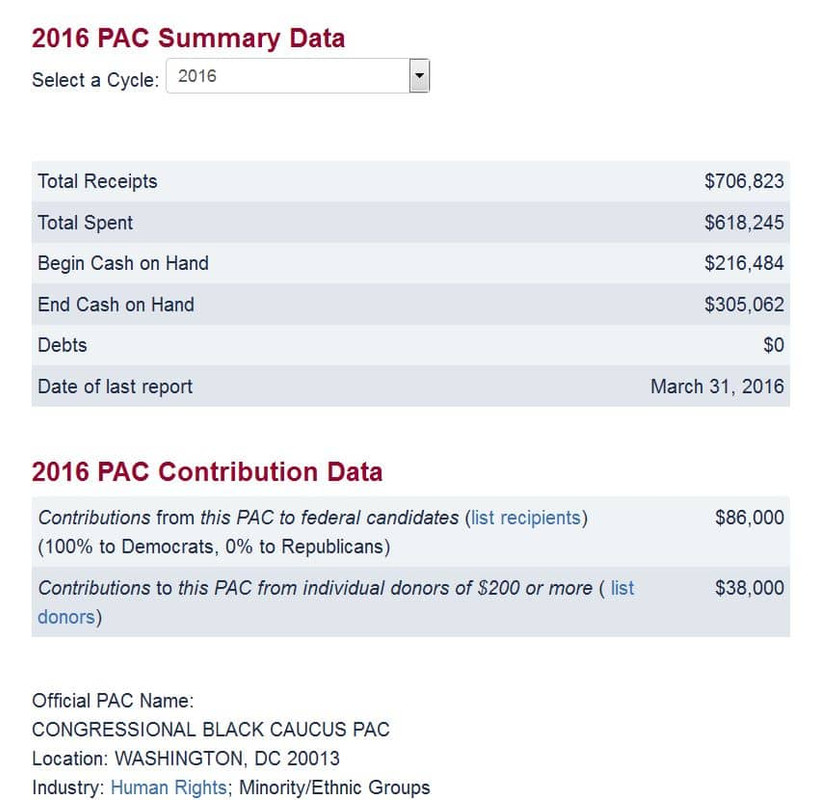
In this post "Citizens v. United" world of unlimited $$$$$$ contributions to political campaigns— What is the financial clout of the Congressional Black Caucus PAC (Political Action Committee) ???????? Let us go to opensecrets.org to find out

http://www.opensecrets.org/orgs/summary.php?id=D000021932&cycle=A
https://www.opensecrets.org/pacs/lookup2.php?strID=C00147512

Black_Caucus_01.jpg

Black_Caucus_02.jpg


As you can see the amount of money the Congressional Black Caucus PAC (Political Action Committee) has raised is pitiful.

I attended a weekend wedding party at Gurney's in the Hampton's New York; the 3 day bill was, $946,720
Black people just on the east coast of the U.S. spend more the $10,000,000 PER DAY at McDonald's eating junk food.

Until the sclerotic Black leadership that currently exists quickly joins the 21st century, the Black Congressional Caucus is largely an anachronistic symbolic organization .


Last edited:
Black Caucus chafes at Latino who wants to join

Members are also upset that freshman Rep. Adriano Espaillat
twice ran against the seat's former occupant, Charlie Rangel.

90

Rep. Adriano Espaillat, center, speaks at the Democratic National Convention in Philadelphia, Pennsylvania
 
Back
Top