
China successfully launches lunar probe !!!

shanebp1978

Moderator
Super Moderator
China successfully launches lunar probe!


China's first moon orbiter, Chang'e 1, blasts off in Sichuan province on Wednesday in this photo released by the official Xinhua news agency.


By AUDRA ANG, Associated Press Writer 1 hour, 21 minutes ago

BEIJING - China launched its first lunar probe Wednesday, the first step in an ambitious 10-year plan to send a rover to the moon and return it to earth.
ADVERTISEMENT

State television showed pictures of the Chang'e 1 orbiter taking off with a trail of smoke from the Xichang Satellite Launch Center in Sichuan province in southwestern China.

The launch comes just weeks after China's regional rival Japan put a probe into orbit around the moon in a big leap forward for Asia's undeclared space race. India is likely to join the regional rivalry soon, with plans to send its own lunar probe into space in April.

The Long March 3A rocket carrying the probe blasted off shortly after 6 p.m. local time after officials from the China National Space Administration said weather conditions were good for a lift off.

Several thousand people living within 1 1/2 miles of the launch center and under the rocket's trajectory were evacuated two hours before the launch, the official Xinhua News Agency said.

More than 2,000 tourists were also on hand to watch the rocket soar into space.

The Chang'e 1, named after a mythical Chinese goddess who flew to the moon, will orbit Earth while technical adjustments are made, and will enter the moon's orbit by Nov. 5, administration spokesman Li Guoping said when the launch plans were announced Monday.

The project's goal is to analyze the chemical and mineral composition of the lunar surface. The probe will use stereo cameras and X-ray spectrometers to map three-dimensional images of the surface, and to study the moon's dust.

The 5,070-pound Chang'e 1 is expected to transmit its first photo back to China in late November, and to conduct explorations of the moon for a year.

The launch marks the first step of a three-stage moon mission. In about 2012 there will be a moon landing with a moon rover. In the third phase about five years later, another rover will land on the moon and be returned to earth with lunar soil and stone samples, Xinhua said.

In 2003, China became only the third country in the world after the United States and Russia to put its own astronauts into space.

But China also alarmed the international community in January when it blasted an old satellite into oblivion with a land-based anti-satellite missile. It was the first such test ever conducted by any nation.

The Long March rocket had a drawing on it of a moon with an eclipse which was also designed to look like a dragon. "China Moon Probe" was written in Chinese on the rocket.

A government official said last week China hopes to join an international space station project that already counts leading space powers like the United States and Russia as its members.

China does not participate in the International Space Station, due in part to American unease about allowing a communist dictatorship a place aboard.

The space station's first section was launched in 1998 and it has been inhabited continuously since 2000 by Russian, U.S. and European crew mates.

Japan's space agency said nearly two weeks ago that its lunar probe was in high orbit over the moon and all was going well as it began a yearlong project to map and study the lunar surface.

http://news.yahoo.com/s/ap/20071024/ap_on_sc/china_lunar_probe


China launches first Moon orbiter

China has launched its first lunar orbiter, on a planned year-long exploration mission to the Moon.

The satellite, named Chang'e 1, took off from the Xichang Centre in south-west China's Sichuan province at 1800 local time (1000 GMT).

Analysts say it is a key step towards China's aim of putting a man on the Moon by 2020, in the latest stage of an Asian space race with Japan and India

Earlier this month, a Japanese lunar probe entered orbit around the Moon.

India is planning a lunar mission for April next year.

Gathering pace

State TV broadcast the launch of the unmanned Chang'e 1, named after a Chinese goddess who flew to the Moon.

China map

"The operation is normal," voices in the control room were heard to say shortly after the launch.

Thousands of people living within 2.5km (1.6 miles) of the site and under the flight trajectory had been evacuated as standard procedure, officials at the Xichang Centre said.

The satellite is expected to enter lunar orbit in early November and start sending back pictures of the Moon's surface later that month.

Efforts by Asian nations to advance their space programmes have gathered pace in recent years.

In 2003, China became the first Asian nation to use its own rocket to put an astronaut in space.

Four years later, Beijing triggered international concern by destroying a weather satellite as part of a weapons test.

http://news.bbc.co.uk/2/hi/asia-pacific/7059356.stm
 
I think this is important to note... The reason I don't buy into many conspiracy theories is the imagined forces which would have to be conspiring together. Kind of like 9/11 having not just Condi in on it, but Willie Brown, Barack Obama, the New York Times... China's going to the moon, the US doesn't have a damn military base up there...
 
I thought of that myself buts its been enough time i think that anyone who goes now will probably not see much. If you buy into those theorys you also have to buy into the theorys that involve highly advanced tech that they are keeping quiet... in this case i mean tech that could borough deep into the surface of the moon. During the original space race however... those theorys already say that both partys were involved.

I personally only believe very few members of the US gov were involved in the 911 setup.. i also believe bin laden is probably manipulating his people as well. I dont believe his personal cause is religion or stopping the crusaders/tyrants/infidels.. but thats what the people he controls believe.

Anyway they arent really "going" to the moon... its an orbiting probe. By the time they plan to reach their goal of putting a man on the moon we will probably be well into the new way.
 
so is this the thing that'll prove that the US actually got to moon first.
 
Huge Oil Reserves Found On Moon!

May 30, 2003 | 506 words, 0 images


By Michael CHIRON


PASADENA, Calif. -- A NASA space probe has reportedly discovered a huge mother lode of oil on the moon -- and the astounding find could usher in a new era of peace and prosperity for America!

Scientific data recorded by NASA's unmanned Lunar Prospector spacecraft indicates there are at least 270 trillion barrels worth of "black gold" buried beneath a crater in the lunar south pole -- more than 1,000 times the known oil reserves of Saudi Arabia and enough to meet America's energy needs for more than 100 years to come, a scientist says.

Notoriously secretive NASA officials are still sitting on the mind-blowing March 8 discovery, based on new computer analysis of data beamed back in 1998. But respected astronomer Dr. Gary Wiltts, who has close ties to the U.S. space agency, received a heads up from one of his associates.

"I was told the discovery of oil in the Aitken Basin of the moon's south pole was made with Prospector's neutron spectrometer," he reveals.

"Naturally, this means NASA will hastily renew manned missions to the moon, which had been written off as a useless, 'dead' hulk for decades. For starters, expect to see the planned launch ... /60% unread/

The rest of this article is available through Premium Access per our agreement
with the publisher.

Copyright © 2003-2007 American Media, Inc. All Rights Reserved
SOURCE: http://www.mywire.com/pubs/WeeklyWorldNews/2003/05/30/283281?extID=10037&oliID=229
...........
 
hmmmmm i wonder if the rocket has a made in china or tiawan sticker

:lol::lol::lol::lol:

Yo, @ TEN, if the Chinese find the mothership up there, and you get an invite! SWING LOW!! Because I'm jumping my ass off this boat!

I know a damn sinking ship when I see one!

It will be interesting if the Chinese do SEE something out of the ordinary up there. Because they'll kiss n tell!

They already don't like the Euro's!!


:dunno:

I'm waiting to see if their probe suddenly has mechanical difficulties.
 
:lol::lol::lol::lol:

Yo, @ TEN, if the Chinese find the mothership up there, and you get an invite! SWING LOW!! Because I'm jumping my ass off this boat!

I know a damn sinking ship when I see one!

It will be interesting if the Chinese do SEE something out of the ordinary up there. Because they'll kiss n tell!

They already don't like the Euro's!!


:dunno:
It would be the most amazing development of our lifetimes, maybe ever...

Still, it's good to realize all the diverse forces out there.
 
Now they can actually take pictures and prove that America NEVER went to the moon in the first place!
 
I'm waiting to see if their probe suddenly has mechanical difficulties.

That shit is going to vanish without a trace because its going to be blown up by you know who that already got dibs on the moon for thousands of yrs now., watch.
 
Now they can actually take pictures and prove that America NEVER went to the moon in the first place!


come on now, Drayonis, you know NASA gonna cook up some story saying that the "missing" lunar landing gear, was some how eaten away after 37 plus of moon dust and other celestial shit
 
I dont want to start a debate. But did communist Russia ever try to disprove whether or not the moon landing took place?

Maybe they are partners in the whole mess. But I already know it never happened the whole thing was a hoax.
 
It's pretty simple if the lunar landing gear, and that plaque is not there, it never happened
 
they're going to paint the moon with lead paint or some shit?


there must be cats and dogs and dolphins on the moon
 
I'm waiting to see if their probe suddenly has mechanical difficulties.
That's always the problem. We are not wanted there, so we're building space-based (Strategic Defense stuff and not Star Wars ), like lasers, pulse and particle beam to try to show them who is boss.:smh::smh:

There is more in heaven and earth than is dreamed in their reality, and alot they will never tell us , or won't tell us.

the race for the moon is on:lol:
Exactly. :yes::yes::yes: The REAL race...

E.M.P. Is the future. And its ridiculously simple.
Pulse weapons are no joke. TI should be buying these instead of those guns shooting hot lead

they're going to paint the moon with lead paint or some shit?
there must be cats and dogs and dolphins on the moon

Wouldn't know about that, but they got strange structures up there and on Mars and it getting hard to explain :eek::eek::eek::eek:
 
Here we go.......

As soon as these Russian’s and China start with this....watch how fast the US comes up with money to beat these clowns.

Everybody in the House and Senate will vote on funding with no questions or debate. There won't be no filibuster or crying about the debt/deficit.

Those rockets will be on the launch pad so fast, you will be like "Where did those mofos come from?"

This is where the new economy is going to be, building the equipment and hardware to get up there. This will be the jobs program to restart the economy.

China, Russia team up to build lunar space station

Retired General Jack Keane says United States adversaries' proposed space exploration is concerning on 'Fox Business Tonight.'


China, Russia Announce Plan To Build Moon Research Station

Scott Neuman
March 10, 2021


China and Russia have announced plans to work together to construct a lunar research station, an ambitious first-ever such space project between the two countries.

Russia's Roscosmos and China's National Space Administration – the two countries' respective equivalents of NASA – announced a preliminary agreement on Tuesday to jointly develop the research facility, known as the International Lunar Research Station, or ILRS. The heads of the two space agencies signed a memorandum of understanding in a ceremony conducted via teleconference.

The proposed station, which once complete would be open to use by other countries, "is a comprehensive scientific experiment base with the capability of long-term autonomous operation," according to a statement released by China's space agency.

The station will be "built on the lunar surface and/or on the lunar orbit," the statement said, and will carry out activities such as "lunar exploration and utilization, lunar-based observation, basic scientific experiment and technical verification."

In a similar but separate statement, Roscosmos said Russia and China "will jointly develop a Roadmap for the creation" of the station, and "conduct close interaction in planning, justification, design, development, implementation, [and] operation [of] the project ... including its presentation to the world space community."

The announcement from the former Cold War rivals comes as NASA is working toward a return to the moon, decades after the last of the Apollo landings wrapped up in 1972. A planned U.S. space station in lunar orbit, known as Gateway, is considered a crucial part of the overall back-to-the-moon program, known as Artemis, which also envisions a base on the lunar surface.

The joint China-Russia proposal doesn't include a timeline. NASA's current estimate for Artemis – a program pushed by the Trump administration — would have "the first woman and next man on the Moon by 2024," though some space policy experts have said they expect that target date to slip under President Biden.

The former Soviet Union put the first human in space in 1961 and managed a number of firsts in the decades-long "space race" with the U.S. However, since the collapse of the U.S.S.R., Russia has shown more willingness to engage in cooperative efforts in space. It has built and launched sections of the International Space Station, sent periodic re-supply missions to the orbiting laboratory, and provided transportation to and from the ISS for astronauts from the U.S. and other countries.

Since the early 2000s, meanwhile, China has quickly ramped up its space program – launching astronauts, constructing its own Earth-orbiting station, and launched a sample-return mission to the moon and a probe to Mars.

India has also made significant inroads in recent decades, with two robotic moon missions — the second a partial success — and a probe to Mars. It plans to send a human into space next year.

ap_21069318585399_wide-eaa20d239fc6f26185fd2b643834b258d8b649d9-s800-c85.jpg

An image taken on the moon by a panoramic camera aboard the lander-ascender combination of of China's Chang'e-5 spacecraft, provided by China National Space Administration. China and Russia have announced plans to jointly construct a lunar research station.​
 
Russia and China team up to build a moon base

International Lunar Research Station is intended to be ready for crewed visits by 2036

Stuart Clark
25 Jun 2021


Russia and China have presented a plan to build the joint International Lunar Research Station (ILRS). The proposed lunar base is intended to be ready for crewed visits by 2036 and is unrelated to the American-led Artemis programme, which has pledged to land “the first woman and person of color” on the moon by 2024, although that date seems increasingly unlikely.

Like Artemis, the ILRS is open to collaborating with other countries, and on 16 June the China National Space Administration and Russia’s state space corporation, Roscosmos, published a partnership guide.

The development of ILRS is split into three phases. Reconnaissance is taking place now with missions such as Chang’e-5, which returned lunar rock samples to the Earth on 16 December 2020, and future Chinese and Russian missions. One or more sites will be chosen in the coming years and then the construction phase will begin. This will last almost a decade, with cargo and equipment being transported to the lunar surface via uncrewed ships.

Finally, in 2036, human visitors will arrive to begin scientific work and further building of the base. Like the Artemis programme, the plan will require a sustained injection of cash and political will over many years if it is to succeed.

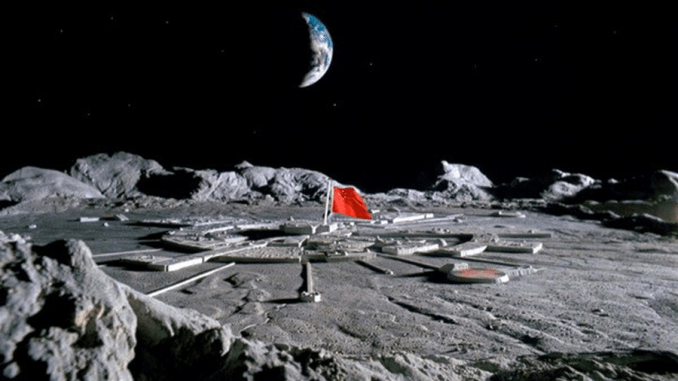
china-base-moon-artist.png
 
And this is why the push to get that rocket off into space.

And why this thread was made…..

China plans three missions to the Moon after discovering a new lunar mineral that may be a future energy source

Jyoti Mann
Sep 11, 2022


China is aiming to launch three unmanned missions to the moon after discovering a new lunar mineral that could be an energy source in the future.

The space race between China and the US is accelerating after Beijing's National Space Administration got the go-ahead to launch three orbiters to the moon over the next 10 years, it announced on Saturday. The news was first reported by Bloomberg.

It comes a day after China became the third country to discover a new lunar mineral, which it called Changesite-(Y), according to Chinese state-controlled newspaper the Global Times.

China's Chang'e-5 mission retrieved samples from the moon in 2020 and it has been described by Global Times as a "phosphate mineral in columnar crystal" found in lunar rock particles. The mineral contains helium-3, which could be a future source of energy.

The discovery may put more pressure on the US to ramp up its efforts after its Artemis I moon mission was postponed for a second time.

Moon mining could be the next source of tension between the countries as NASA is also probing the moon's south pole where China plans to build a research station in conjunction with Russia.

China has accelerated its efforts in space exploration of late by building a space station, launching a number of missions to collect moon samples and putting a rover called Zhurong on Mars earlier this year to rival NASA.

The US remains the only country to put astronauts on the moon, with the last landing almost 50 years ago in the Apollo 17 mission, according to NASA's website.

The US Apollo 11 mission was the first to bring samples from the moon back to Earth in July 1969, with about 49 pounds (22 kilograms) of material from the moon's surface.

China's National Space Administration was contacted for comment.

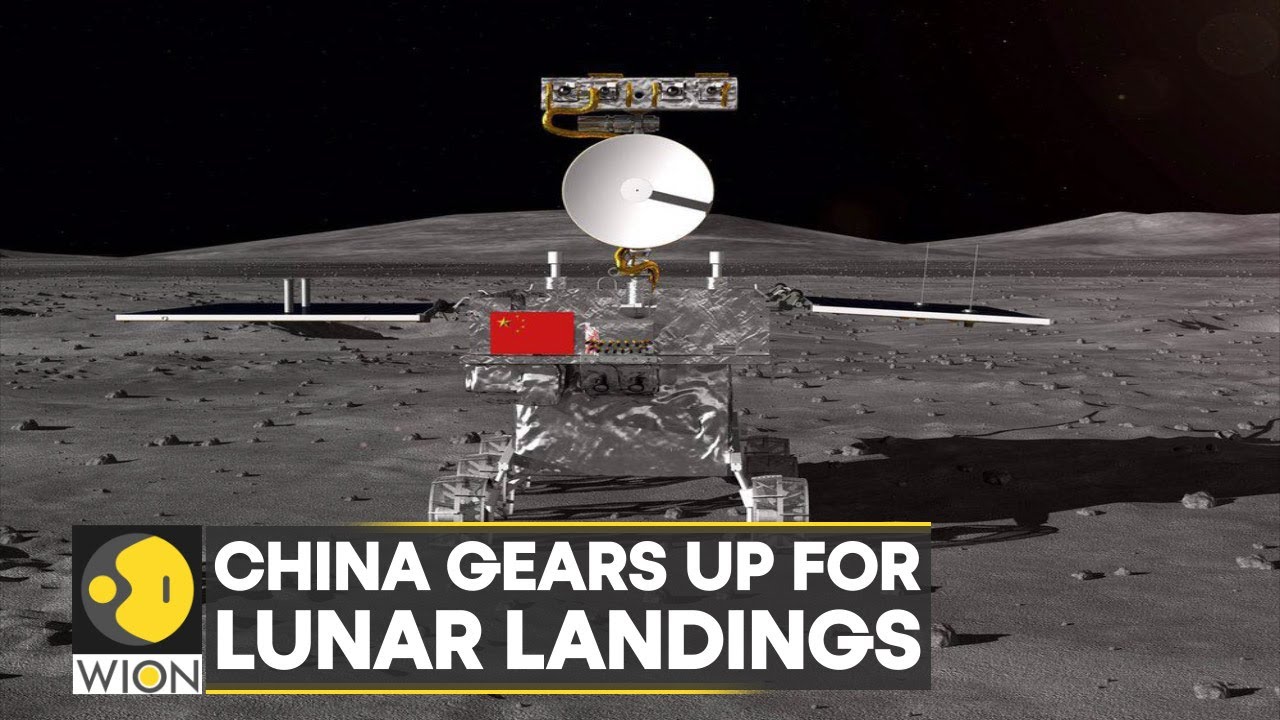
maxresdefault.jpg
 
China, US are racing to make billions from mining the moon’s minerals

By Bruce Einhorn, with assistance from Jing Li
Mining.com
May 17, 2022


“There’s going to be a new world order out there, and we’ve got to lead it,” US President Joe Biden said after Russia’s war in Ukraine upended global geopolitics. Far from Earth, that transition is already happening.


Just like in the era of Sputnik and Apollo more than half a century ago, world leaders are again racing to achieve dominance in outer space. But there’s one big difference: Whereas the US and the Soviet Union hashed out a common set of rules at the United Nations, this time around the world’s top superpowers can’t even agree on basic principles to govern the next generation of space activity.

The lack of cooperation between the US and China on space exploration is particularly dangerous in an era where the cosmos are becoming more crowded. Billionaires like Elon Musk and Jeff Bezos along with emerging markets such as Rwanda and the Philippines are launching more and more satellites to bridge the digital divide and explore commercial opportunities.

The stakes are even higher when it comes to the US and China, which are erecting economic barriers in the name of national security as ideological divisions widen over the pandemic, political repression and now Vladimir Putin’s war. Their inability to cooperate on space risks not only an arms race, but also clashes over extracting potentially hundreds of billions of dollars’ worth of resources on the moon and elsewhere.

“Our concern in the West is more about who sets the rules of the road, particularly access to resources,” said Malcolm Davis, a former official with Australia’s defense department who now researches space policy at the Australian Strategic Policy Institute in Canberra.

“The biggest risk is you have two opposite set of rules,” he said. “You could have a Chinese company on the moon in the 2030s claiming territory with a resource on it, in the same way the Chinese have claimed the entire South China Sea.”

The geopolitics of space, once a frontier that brought rivals together for the good of humankind, are now mirroring the competition on Earth pitting the US and its allies against China and Russia. And just as Beijing and Moscow have blamed American military alliances in Europe and Asia for stoking tensions over Ukraine and Taiwan, Chinese state-run media has warned the US now wants to set up a “space-based NATO.”

At the center of the dispute is the US-drafted Artemis Accords, a non-legally binding set of principles to govern activity on the moon, Mars and beyond. The initiative, which NASA says is grounded in the 1967 Outer Space Treaty, forms the foundation of the space agency’s effort to put astronauts on the moon this decade and kick-start mining operations of lucrative lunar elements.

So far 19 countries have agreed to support the accords, including four — Romania, Colombia, Bahrain and Singapore — that signed up after Putin’s invasion spurred a US-led effort to isolate Russia. Underscoring the divide, Ukraine was an early Artemis club member after President Volodymyr Zelenskiy’s government signed in late 2020.

The accords are part of an effort by the Biden administration to establish “a broader and comprehensive set of norms” for space, Vice President Kamala Harris said in an April 18 speech at Vandenberg Space Force Base, about 160 miles (250 kilometers) northwest of Los Angeles.

“As we move forward, we will remain focused on writing new rules of the road to ensure all space activities are conducted in a responsible, peaceful, and sustainable manner,” she said. “The United States is committed to lead the way and to lead by example.”

China and Russia have led opposition to the accords, vowing greater space cooperation in early February as part of a “no limits” partnership when Putin visited President Xi Jinping in Beijing shortly before the war began. They are jointly promoting an alternative project on the moon they say is open to all other countries: the International Lunar Research Station.

One of China’s main problems with the Artemis Accords is a provision allowing nations to designate areas of the moon as “safety zones” — regions on the lunar surface that others should avoid. For the Americans and their Artemis partners, the exclusive areas are a way to comply with obligations under the Outer Space Treaty, which requires countries to avoid “harmful interference” in space.

To China, however, the safety zones are thinly disguised land grabs in violation of international law. Beijing wants any rule-making to be settled at the UN, where it can count on support from a wider group of countries eager for friendly ties with the world’s second-biggest economy.

“It’s time the US woke up and smelled the coffee,” the official China Daily proclaimed in a January editorial that criticized how NASA “invented” the concept of safety zones to allow governments or companies to reserve areas of the moon. “The world is no longer interested in its divisive, hegemonic schemes.”

China has good reason to be suspicious of US efforts in space. American legislation first passed in 2011 prevents NASA from most interactions with its Chinese counterpart, and the US has blocked China from taking part in the International Space Station — a move that simply prompted Beijing to build its own.

“China was left out of that order and now it’s going its own way,” said Lincoln Hines, an assistant professor at the US Air War College who has studied the Chinese space program. “That raises the challenge as to whether you can have a coherent system of rules in outer space when you have two different visions of order and there isn’t any cooperation.”

The head of the Russian space program, Roscosmos director Dmitry Rogozin, in late April suggested that Russia had decided to quit the International Space Station because of Western sanctions on Russia from its invasion of Ukraine.

While Russia’s space program was already in decline before Putin’s war, China is swiftly moving toward Xi’s goal of matching US capabilities in space. China became the first country to send a probe to the far side of the moon in 2019, and last year it became only the second nation after the US to land a rover on Mars.

On March 10, China launched a Long March rocket from the southern island province of Hainan to deliver cargo to the Tiangong, the orbiting spacecraft that Beijing plans to complete this year — making China the only country to operate its own space station. The following month, Xi ordered officials to build a world-leading spacecraft launch site in Hainan.

“To explore the vast cosmos, develop the space industry and build China into a space power is our eternal dream,” Xi said in the introduction to a white paper on China’s space program released in January, which said China plans to launch a robotic lunar mission around 2025. China may be able to send astronauts to the moon for the first time by 2030, Ye Peijian, chief designer of China’s first lunar probe, told state media at the time.

“China wants really badly to be seen as the NASA of the future,” said Michelle Hanlon, co-director of the Center for Air and Space Law at the University of Mississippi and editor-in-chief of the Journal of Space Law. “It wants to be that leader. China feels that it’s China’s time.”

As the US, China and other nations target the moon, the need to establish rules to avoid conflict is becoming more urgent.

NASA in April conducted tests for the launch of Artemis I, the first American spacecraft to aim for the moon since Apollo 17 in 1972. While this mission will be fully robotic, NASA’s goal is to send astronauts to the moon around 2025 — including the first woman — and build a base camp on the lunar surface.

Musk’s Space Exploration Technologies Corp. will conduct a test flight from Texas in the next few months of the company’s new Starship rocket, which SpaceX plans to use to take humans to the moon and Mars.

Japan and South Korea, both Artemis Accords signatories, have lunar missions in the works. So does India, the largest space-faring nation yet to commit to either the American or the Sino-Russian teams. Putin also vowed last month to “restore the moon program.”

“The moon is in play,” said Steven Freeland, vice-chair of a working group on legal aspects of space resource activity for the UN’s Committee on the Peaceful Uses of Outer Space. Freeland, an emeritus professor of international law at Western Sydney University, expects to see the start of efforts to extract resources from the lunar surface by the end of the decade.

Unlike Earth, the moon may contain large amounts of helium-3, an isotope potentially useful as an alternative to uranium for nuclear power plants because it’s not radioactive. Chinese state media in 2019 said the moon is “sometimes referred to as the Persian Gulf of the solar system,” with experts believing 5,000 tons of coal could be replaced by about three tablespoons of helium-3.

While there’s not yet proof that helium-3 can do what boosters claim, Chinese researchers are already looking for the element in moon rocks brought back to Earth in late 2020 by one of China’s lunar missions. The moon could also prove valuable as a source of water, taken from ice at the lunar poles, to make rocket fuel that could power missions to Mars and other places in the solar system.

For now, the US appears to be ahead in winning over nations to its interpretation of rules for operating in space. As the Artemis Accords gain new signatories, China is still waiting for another leader besides Putin to team up on the International Lunar Research Station.

Chinese state media reported in March that negotiations were underway with the European Space Agency, Thailand, the United Arab Emirates and Saudi Arabia about taking part in the rival moon base. But Russia’s war in Ukraine will likely make the project much less appealing to some nations.

The European Space Agency on March 17 suspended a plan to send a Russian-made lander to Mars in September or October, following UK-based satellite operator OneWeb Ltd.’s cancellation of plans to launch its low-Earth orbit satellites aboard Russian rockets.

“The impact on the Russian space program is going to be disastrous,” said Jonathan McDowell, an astrophysicist at the Center for Astrophysics, which is operated by Harvard University and the Smithsonian Institution.

Although China doesn’t need Russian expertise, Xi’s long-term strategic calculus means Beijing is unlikely abandon Moscow in an effort to win more potential partners. Putin’s top space official has already called for greater cooperation with China.

“We work well with our Chinese friends,” Roscosmos director Rogozin said in an interview with Chinese state-run broadcaster CGTN released on April 4. “To be friends in space, we must be friends on Earth.”

The same appears to hold true for adversaries. In a sign of what could go wrong without a common set of rules in space, the US and China traded accusations in recent months over two incidents last year involving satellites launched by Musk’s SpaceX that Beijing said came dangerously close to its orbiting space station.

After China lodged a complaint with the UN, the US said a notification wasn’t necessary — implying Beijing exaggerated the risk. That irked China even more, with Foreign Ministry spokesman Zhao Lijian saying the US didn’t reply to emails to discuss the incident and wasn’t “showing the due responsible attitude as a space power.”

The episode points to China’s bigger problem with the Artemis Accords: Beijing is upset about being left out of the process and pressured to accept principles that were crafted by the US instead of at the UN, according to Jessica West, senior researcher and managing editor for the Space Security Index project at Project Ploughshares, the peace research institute of The Canadian Council of Churches.

The conflict over who makes the rules, she added, shows the world has lots of work left to avoid a clash in space.

“I’m not sure people expected the explosion of space activity that happened,” West said. “We’re just not adequately prepared.”

space-mining-nasa.jpg

NASA outlined in 2019 its long-term approach to lunar exploration, which includes setting up a “base camp” on the moon’s south pole. (Artist’s rendition courtesy of NASA.)​
 
China Zero’s In On ‘Near Space’ As Potential Next Battlefield In Modern Warfare

CNN's Will Ripley looks back at China's history of looking upward to near space for the future of their defense systems.

​
 
Treaty on Principles Governing the Activities of States in the Exploration and Use of Outer Space, including the Moon and Other Celestial Bodies


The Outer Space Treaty was considered by the Legal Subcommittee in 1966 and agreement was reached in the General Assembly in the same year ( resolution 2222 (XXI)). The Treaty was largely based on the Declaration of Legal Principles Governing the Activities of States in the Exploration and Use of Outer Space, which had been adopted by the General Assembly in its resolution 1962 (XVIII) in 1963, but added a few new provisions. The Treaty was opened for signature by the three depository Governments (the Russian Federation, the United Kingdom and the United States of America) in January 1967, and it entered into force in October 1967. The Outer Space Treaty provides the basic framework on international space law, including the following principles:

• the exploration and use of outer space shall be carried out for the benefit and in the interests of all countries and shall be the province of all mankind;

• outer space shall be free for exploration and use by all States;

• outer space is not subject to national appropriation by claim of sovereignty, by means of use or occupation, or by any other means;

• States shall not place nuclear weapons or other weapons of mass destruction in orbit or on celestial bodies or station them in outer space in any other manner;

• the Moon and other celestial bodies shall be used exclusively for peaceful purposes;

• astronauts shall be regarded as the envoys of mankind;

• States shall be responsible for national space activities whether carried out by governmental or non-governmental entities;

• States shall be liable for damage caused by their space objects; and

• States shall avoid harmful contamination of space and celestial bodies.

Click Below Link To View Full Treaty


toosi-whoownsmoon-lede-bydanieldowney.jpg
 
China unveils lunar lander to put astronauts on the moon

Andrew Jones
February 27, 2023


HELSINKI — China has revealed a concept for a lunar lander it hopes will put astronauts on the moon around the end of the decade.

A model of the Chinese lunar lander was unveiled at an exhibition to mark three decades of China’s human spaceflight program Feb. 24 at the National Museum of China in Beijing.

The model shows that China is working on a staged descent concept, which differs from the Apollo landings. A propulsion stage will be used for most of the descent, before the lander segment completes a powered descent and soft landing on the lunar surface.

The propulsion stage will be designed to make a separate, hard landing while needing to mitigate the potential dangers of debris. The lander will also act as the ascent vehicle to take the crew back into lunar orbit and dock with a waiting crew spacecraft.

Details on the model show thrusters, a stowed lunar rover, docking mechanisms, a crew hatch and a ladder for astronauts to descend to surface, antennae and other equipment.

The lander is part of a plan to take two astronauts to the lunar surface by around 2030, according to previously announced plans by Chinese space authorities. Meanwhile, work on other key elements continues.

“We have made breakthroughs in key technologies for the new-generation crew carrier rocket, the new-generation crew spacecraft, the lunar lander and the spacesuit for landing on the moon,” Ji Qiming, assistant to director of the China Manned Space Engineering Office (CMSEO), told CCTV Feb. 24

China is already working on a new-generation crew launch vehicle to launch a new-generation crew spacecraft. The latter has a boilerplate test mission in 2020. It will be partially reusable and larger and more capable than China’s current Shenzhou crew spacecraft.

The new launcher will come in low Earth orbit and triple-core lunar configurations. Its developer CASC is targeting a test flight of the LEO version in 2027.

The launcher has also now gained the designation of Long March 10, according to information presented alongside its model at the exhibition.

“An implementation plan for the lunar landing stage with Chinese characteristics has taken shape. This year, we will fully implement our research and construction tasks for the lunar landing phase as scheduled,” Ji added.

The initial landing mission is intended to be a short-term stay on the order of a few hours. The crewed lunar landing capabilities are however part of a grander plan for a permanent lunar habitat.

“At the same time, we will also carry out a series of preliminary studies on the long-term stay of astronauts on the lunar surface, and the development and utilization of lunar resources, so as to lay a technical foundation for future lunar exploration missions of the Chinese people,” Ji said.

China in 2021 formally announced a plan for an International Lunar Research Station (ILRS) to be constructed in the 2030s. It will initially be robotic then made suitable for long-term habitation by crew.

The ILRS project includes Russia as a key partner. However China did not mention Russia during a presentation of its lunar plans at a major international space conference last fall. Russia faces isolation from the international community over its invasion of Ukraine.

China last year stated it was scrapping plans for an expendable Long March 9 super heavy-lift rocket for lunar and other space infrastructure and replacing it with a reusable version. This will likely see the test flight delayed into the 2030s, also impacting the schedule for the ILRS.

China’s crewed lunar landing plan is not formally approved by the Chinese government, but this is likely as its time frame is beyond the scope of the current national Five-year plan.

A space white paper published in January 2022 stated that China will “continue studies and research on the plan for a human lunar landing… and research key technologies to lay a foundation for exploring and developing cislunar space.”

008iSM7gly1hbgkv3fbssj31jk111wsl-350x233.jpg
 
China reveals how it plans to put astronauts on the moon by 2030

Zhang Hailian, deputy chief engineer with the China Manned Space Agency (CMSA), revealed the preliminary plan at an aerospace summit in the city of Wuhan on Wednesday, according to state-run news agency Xinhua.

By Jessie Yeung and Candice Zhu, CNN
July 13, 2023


230712230643-china-crewed-moon-landing-2030-intl-hnk-scn.jpg

Officials from China's Manned Space Agency and visitors watch as the Shenzhou-16 spacecraft launches at the Jiuquan Satellite Launch Center on May 30, 2023, in Jiuquan, China.​
 
India becomes the fourth country ever to land a spacecraft on the moon

The mission could cement India’s status as a global superpower in space. Previously, only the United States, China and the former Soviet Union have completed soft landings on the lunar surface.

By Jackie Wattles, Manveena Suri and Vedika Sud, CNN
August 23, 2023


230823080236-03-india-chandrayaan-3-lunar-landing-0823-screenshot.jpg

Applause erupted in the control room Wednesday when India's lunar lander touched down on the moon's surface.
​
 
NASA Plans to Build Houses on the Moon by 2040: Report

The U.S. space agency has partnered with ICON, a pioneering construction company to build dwellings using 3-D printers and concrete made from space materials

By Erin Clack
October 10, 2023


1_ICON_Olympus_Multi-purpose_ISRU-based_LunarConstructionSystem_concept-render_Nov2022.jpg
4
 

NASA to Buy a New Space Station. Price Tag: $34.1 Billion​


NASA just hung a price tag on its new space station -- and set a December deadline for submitting bids.

By Rich Smith
Oct 18, 2026


• NASA has invited space companies to bid to build an International Space Station replacement.

• Winners of phase 1 contracts can expect to receive at least $100 million each.

• Whoever wins the phase 3 contract could earn $34 billion.

2b50f793c07413624e3c44fff90d9430.jpg
 
Back
Top