

http://www.cnn.com/2005/US/09/13/katrina.impact/index.html
Bush: 'I take responsibility' for U.S. failures on Katrina
NEW ORLEANS, Louisiana (CNN) -- President Bush on Tuesday said he takes responsibility for the federal government's failures in responding to Hurricane Katrina.
"Katrina exposed serious problems in our response capability at all levels of government and to the extent the federal government didn't fully do its job right, I take responsibility," Bush said during a joint news conference with Iraqi President Jalal Talabani.
Bush said he wants to know what went right and what went wrong so that he can determine whether the United States was prepared for another storm, or an attack.
"I'm not going to defend the process going in, but I am going to defend the people who are on the front line of saving lives," Bush said. (Full story)
Earlier in the day, the White House announced the president will address the nation Thursday night about recovery efforts in the Gulf Coast.
New Orleans may lose 160,000 homes
Katrina and the floodwaters that swept through New Orleans may have damaged 160,000 homes beyond repair, an official with the U.S. Army Corps of Engineers said Tuesday.
Col. Richard Wagenaar said that one of the local government's biggest challenges would be letting residents return to look at their homes.
Water flowed into the city from Lake Pontchartrain through five breaches in three levees after the storm hit August 29, leaving 80 percent of the city submerged. (Watch Wagenaar describe the levee repairs -- 3:34)
Workers should be able to pump the remaining water out of the city by the end of October, said Wagenaar, the New Orleans district commander of the Corps of Engineers.
"It's set up by neighborhoods," he said. "Some of them will be done by early October, other ones by mid-, late October -- if everything goes right, Mother Nature doesn't give us any rain and our pumps continue working."
Wagenaar said the process would speed up once water recedes around the city's main pumping station -- Pump Station No. 6 -- and its 1920s-era pumps can go back online. That's not expected for another two weeks. (Watch the efforts to pump New Orleans dry -- 2:40)
He said that workers were focusing on making "semi-permanent" repairs to the levee system that protects the low-lying city -- that could take two or three months. More permanent fixes would be made once investigators have determined why the levees failed.
The Corps of Engineers hasn't completed surveys of the levees outside the city, but Wagenaar said they appeared to be badly damaged. Some areas remain inaccessible and can only be looked at from the air.
"The levee at the Mississippi River and Gulf outlet is virtually gone," he said. In the event of another hurricane or strong tropical storm, St. Bernard Parish, east of New Orleans, would "have zero protection on one side of their parish at this time."
Ninety percent of the 10-mile-long, 17-foot-high levee on the east flank of the river is gone, leaving only a small, 60-foot-long levee intact.
"Should another storm come in, it could do more damage than it already has," Wagenaar added.
Bodies found in hospital
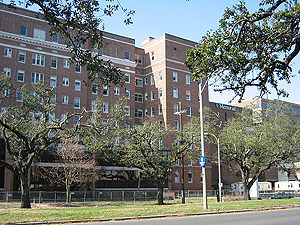
Rescue workers have removed 45 bodies from a downtown New Orleans hospital that was surrounded by floodwaters from Katrina, a spokeswoman for the Louisiana Department of Health and Hospitals said.
The bodies were recovered Sunday from Memorial Medical Center, spokeswoman Melissa Walker said.
Tenet Healthcare Corp., the company that owns the hospital, said in a statement that "a significant number had passed before the hurricane." (Watch the grim process of recovering victims -- 1:34)
Tenet spokesman Steven Campanini wrote that the hospital was told Wednesday "that we were on our own to evacuate, [and] we brought our own helicopters to take the patients out."
He said, "Every living patient was evacuated by Friday afternoon."
The statement said that once all of the patients were evacuated, officials brought in guards to secure the hospital until the coroner could remove the bodies.
Officials have confirmed 279 deaths in Louisiana in the wake of the hurricane.
Meanwhile, authorities were considering launching a criminal investigation into the failure to evacuate St. Rita's Nursing Home in St. Bernard Parish.
Thirty-four residents died when the facility was flooded.
Repeated attempts by CNN to reach the nursing home's owners for comment have been unsuccessful. Authorities said they too have been unable to find them.
Other developments
* The acting head of the Federal Emergency Management Agency told reporters Tuesday that the agency would focus on getting evacuees out of shelters and into more permanent homes. David Paulison, a 30-year veteran of fire and rescue work, was appointed Monday after Michael Brown resigned. (Watch Paulison discuss FEMA's plans)
* Bush has been criticized for his leadership in the federal response to the disaster. According to a CNN/USA Today/Gallup Poll released Monday, a majority of those interviewed -- 54 percent -- said they disapproved of the president's handling of the crisis. (Full story)
* White and black Americans view the federal response in starkly different ways, with more blacks viewing race as a factor, according to another CNN/USA Today/Gallup survey released Monday. (Full story)
* The Department of Homeland security reportedly plans to send a team of about 30 investigators and auditors to the Gulf Coast to make sure that relief aid is spent properly, according to The Associated Press.
* A limited number of cargo and commercial flights are scheduled to start flying into Louis Armstrong New Orleans International Airport on Tuesday, the director of the agency that runs the airport said.
CNN's Silvio Carrillo, Deborah Feyerick, John King and Suzanne Malveaux contributed to this report.
Bush: 'I take responsibility' for U.S. failures on Katrina
NEW ORLEANS, Louisiana (CNN) -- President Bush on Tuesday said he takes responsibility for the federal government's failures in responding to Hurricane Katrina.
"Katrina exposed serious problems in our response capability at all levels of government and to the extent the federal government didn't fully do its job right, I take responsibility," Bush said during a joint news conference with Iraqi President Jalal Talabani.
Bush said he wants to know what went right and what went wrong so that he can determine whether the United States was prepared for another storm, or an attack.
"I'm not going to defend the process going in, but I am going to defend the people who are on the front line of saving lives," Bush said. (Full story)
Earlier in the day, the White House announced the president will address the nation Thursday night about recovery efforts in the Gulf Coast.
New Orleans may lose 160,000 homes
Katrina and the floodwaters that swept through New Orleans may have damaged 160,000 homes beyond repair, an official with the U.S. Army Corps of Engineers said Tuesday.
Col. Richard Wagenaar said that one of the local government's biggest challenges would be letting residents return to look at their homes.
Water flowed into the city from Lake Pontchartrain through five breaches in three levees after the storm hit August 29, leaving 80 percent of the city submerged. (Watch Wagenaar describe the levee repairs -- 3:34)
Workers should be able to pump the remaining water out of the city by the end of October, said Wagenaar, the New Orleans district commander of the Corps of Engineers.
"It's set up by neighborhoods," he said. "Some of them will be done by early October, other ones by mid-, late October -- if everything goes right, Mother Nature doesn't give us any rain and our pumps continue working."
Wagenaar said the process would speed up once water recedes around the city's main pumping station -- Pump Station No. 6 -- and its 1920s-era pumps can go back online. That's not expected for another two weeks. (Watch the efforts to pump New Orleans dry -- 2:40)
He said that workers were focusing on making "semi-permanent" repairs to the levee system that protects the low-lying city -- that could take two or three months. More permanent fixes would be made once investigators have determined why the levees failed.
The Corps of Engineers hasn't completed surveys of the levees outside the city, but Wagenaar said they appeared to be badly damaged. Some areas remain inaccessible and can only be looked at from the air.
"The levee at the Mississippi River and Gulf outlet is virtually gone," he said. In the event of another hurricane or strong tropical storm, St. Bernard Parish, east of New Orleans, would "have zero protection on one side of their parish at this time."
Ninety percent of the 10-mile-long, 17-foot-high levee on the east flank of the river is gone, leaving only a small, 60-foot-long levee intact.
"Should another storm come in, it could do more damage than it already has," Wagenaar added.
Bodies found in hospital
Rescue workers have removed 45 bodies from a downtown New Orleans hospital that was surrounded by floodwaters from Katrina, a spokeswoman for the Louisiana Department of Health and Hospitals said.
The bodies were recovered Sunday from Memorial Medical Center, spokeswoman Melissa Walker said.
Tenet Healthcare Corp., the company that owns the hospital, said in a statement that "a significant number had passed before the hurricane." (Watch the grim process of recovering victims -- 1:34)
Tenet spokesman Steven Campanini wrote that the hospital was told Wednesday "that we were on our own to evacuate, [and] we brought our own helicopters to take the patients out."
He said, "Every living patient was evacuated by Friday afternoon."
The statement said that once all of the patients were evacuated, officials brought in guards to secure the hospital until the coroner could remove the bodies.
Officials have confirmed 279 deaths in Louisiana in the wake of the hurricane.
Meanwhile, authorities were considering launching a criminal investigation into the failure to evacuate St. Rita's Nursing Home in St. Bernard Parish.
Thirty-four residents died when the facility was flooded.
Repeated attempts by CNN to reach the nursing home's owners for comment have been unsuccessful. Authorities said they too have been unable to find them.
Other developments
* The acting head of the Federal Emergency Management Agency told reporters Tuesday that the agency would focus on getting evacuees out of shelters and into more permanent homes. David Paulison, a 30-year veteran of fire and rescue work, was appointed Monday after Michael Brown resigned. (Watch Paulison discuss FEMA's plans)
* Bush has been criticized for his leadership in the federal response to the disaster. According to a CNN/USA Today/Gallup Poll released Monday, a majority of those interviewed -- 54 percent -- said they disapproved of the president's handling of the crisis. (Full story)
* White and black Americans view the federal response in starkly different ways, with more blacks viewing race as a factor, according to another CNN/USA Today/Gallup survey released Monday. (Full story)
* The Department of Homeland security reportedly plans to send a team of about 30 investigators and auditors to the Gulf Coast to make sure that relief aid is spent properly, according to The Associated Press.
* A limited number of cargo and commercial flights are scheduled to start flying into Louis Armstrong New Orleans International Airport on Tuesday, the director of the agency that runs the airport said.
CNN's Silvio Carrillo, Deborah Feyerick, John King and Suzanne Malveaux contributed to this report.