

40 Million Dollar Slaves: The Case of O.J. Mayo

keysersoze

Star
Registered
51FPREZ0G6L._SS500_.jpg

mayo.jpg


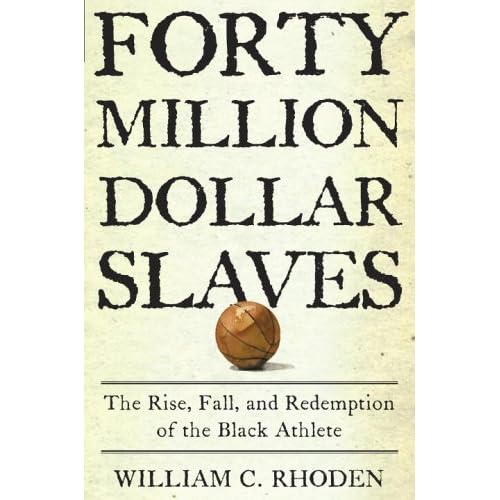
InForty Million Dollar Slaves: The Rise, Fall, and Redemption of the Black Athlete author William Rhoden's thesis is that today's black athletes are akin to pre-Civil War plantation slaves, because slavery had as much to do with power and control as it had to do with wealth.

The big-money sports in America–football, baseball, basketball–are owned and controlled almost exclusively by white men, and yet each has a disproportionately large percentage of black athletes. They are well paid, but they have no direct power over the current and future direction of these sports. More than that, they lack any real control over their roles within these sports.
The author supports his position with a well-researched and thoughtfully rendered survey of the history of the black athlete. From plantation-born jockeys and boxers of the early 19th century, to the NBA of Michael Jordan and Larry Johnson, Rhoden remains focused on prevailing structures of racism. He notes the accomplishments and frustrations of several well-known figures, including Jackie Robinson, Muhammad Ali, Jesse Owens, and Willie Mays, as well as others who have faded from our collective memory. In doing so, he examines the damaging effects of what he calls the conveyor belt in the contemporary sports world, where children as young as 11 and 12 are pegged as prospects and viewed as potential sources of income through middle school, high school, and college.​

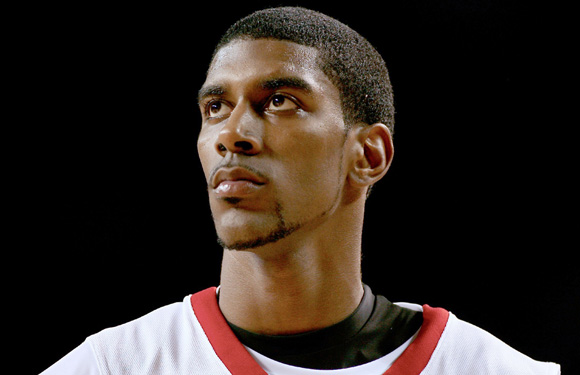
O.J. Mayo is the latest example of the of this institutionalized system of oppression. Allegations have emerged that he earned thousands in gifts and cash during his one year college career at USC.

Yet the NCAA rakes in millions every year on the backs of so-called amateur athletes, while telling them that they’re getting the benefit of a free education, then giving them a rigorous schedule of games and practices that make it impossible for classes and studying to be a priority.


USC knew what they were getting when they signed Mayo, a one-and-done commodity who craved the bright lights of Southern California, but will claim ignorance of any knowledge of Mayo’s actions, and will likely avoid any NCAA sanctions.

But the real problem will continue to be ignored.

The topic of players getting handouts — particularly players from economically disadvantaged families, whose idea of prosperity is survival — is as old as sport itself.
With so-called amateur basketball, we're talking about a system that evolved before any of us were born and will remain long after our days have expired.

This is how the system works:

Sports agents, aspiring to gain influence over a big-time player, tell their "runners" to find the right spot and squeeze. The runners cozy up to a family member or a friend of the player, then open a bank account in his or her name. Or maybe, in the fashion of the day, they start a charitable foundation. The goal is to set up access to cash. The money can be used to buy sneakers for the player one day, lease a car the next. The kid needs to supplement his wardrobe or pay a relative's rent? Done. Over time, it's easy for a college athlete to accumulate loot worth well into six figures. The dollars, devoid of diligent investigation, are presumably untraceable.

The player gets paid. The runner gets paid so the player can be paid. The agent gets paid if, indeed, he snags the client. And all the various professional entities know they will eventually be paid, as soon as the athlete starts to generate revenue for them.


So why cast O.J. Mayo to be the 'whipping boy' of a system everyone loves to decry about but no one is willing to work to change. :smh:


How can you shame him for being an unprofessional athlete when the world "professional sports" essentially perpetuates oppression upon him by agents, runner, and the dark underworld of recruiting.
:smh::smh::smh:

252_School_Daze_-_Wake_Up.jpg

'Wake Up!'

Links I got for this post:

http://sports.espn.go.com/espnmag/story?id=3405148
http://www.blackathlete.net/artman2/publish/College_Basketball_21/Hold_the_Mayo.shtml
http://www.amazon.com/Forty-Million-Dollar-Slaves-Redemption/dp/0609601202

 
Last edited:
I think about this every time I see a black coach or manager like Isiah Thomas getting crucified in the press. These days it's Willie Randolph (one of the most docile black men you will ever encounter) under their gun

One thing though. This system of slavery is predicated upon having a supply of fresh bodies. Once the "slaves" realize how they've been manipulated, they usually try to get out from under. That's usually when the attack dogs of the system (the media) go after them
 
i may be in the minority on this issue but i LOATHE this argument, specifically those that make use of the word "slaves".

IMO, to frame this argument anywhere near the "peculiar institution" of slavery is shameful.

the author himself points out that the NBA is only "almost" exclusively controlled by white men. the author also seems to avoid discussion of the involvement of Black parents, Black agents and Black pimps (my word, the author refers to them as "runners") along what he called the "conveyor belt".

Black professional basketball players are paid employees, not property. Black professional basketball players are not threatened with violence on a daily basis.

In a capitalist economy where your public image can be commoditized, it very well may be that Black NBA players are exploited. But that does not make them slaves by any reasonable measure.
 
^^We agree.

Those comparing contemporary professional athletes to slaves are doing a disservice to the people that actually lived as slaves.
 
i may be in the minority on this issue but i LOATHE this argument, specifically those that make use of the word "slaves".

IMO, to frame this argument anywhere near the "peculiar institution" of slavery is shameful.

the author himself points out that the NBA is only "almost" exclusively controlled by white men. the author also seems to avoid discussion of the involvement of Black parents, Black agents and Black pimps (my word, the author refers to them as "runners") along what he called the "conveyor belt".

Black professional basketball players are paid employees, not property. Black professional basketball players are not threatened with violence on a daily basis.

In a capitalist economy where your public image can be commoditized, it very well may be that Black NBA players are exploited. But that does not make them slaves by any reasonable measure.

Peace,

Sure, the use of the word "slaves" may be somewhat regrettable, but you shouldn't allow yourself to be bogged down by semantics. The author's main argument - that the black athlete in America has been exploited, both historically and presently, by his predominately white employers - is the crux of the matter.

Also, with regard to your point: "..the author also seems to avoid discussion of the involvement of Black parents, Black agents and Black pimps.." Rhodes has, in his book and in interviews, criticized every manipulative component of American sport. This isn't simple another case of a black man blaming "Whitey" for every societal wrong, perceived or otherwise. Perhaps you should read the book prior to commenting.
 
i may be in the minority on this issue but i LOATHE this argument, specifically those that make use of the word "slaves".

IMO, to frame this argument anywhere near the "peculiar institution" of slavery is shameful.

the author himself points out that the NBA is only "almost" exclusively controlled by white men. the author also seems to avoid discussion of the involvement of Black parents, Black agents and Black pimps (my word, the author refers to them as "runners") along what he called the "conveyor belt".

Black professional basketball players are paid employees, not property. Black professional basketball players are not threatened with violence on a daily basis.

In a capitalist economy where your public image can be commoditized, it very well may be that Black NBA players are exploited. But that does not make them slaves by any reasonable measure.

While I understand the use of the term slave, the truth is that it is not exclusively defined to being a piece of property.

In fact Oxford dictionary has 2 possible definitions -

noun 1 historical a person who is the legal property of another and is forced to obey them. 2 a person who is excessively dependent upon or controlled by something​

Hence, its possible to use the word in this situation as well. We all know that in slavery in the U.S. there were varying degrees of harshness afflicted upon slaves. Some slaves were field hands while others were house slaves who were basically baby sitters - would you call a house slave who does not do hard labor but essentially they were still being controlled excessively and property. Thats just my 2 cents.
 
While I understand the use of the term slave, the truth is that it is not exclusively defined to being a piece of property.

Hence, its possible to use the word in this situation as well. We all know that in slavery in the U.S. there were varying degrees of harshness afflicted upon slaves. Some slaves were field hands while others were house slaves who were basically baby sitters - would you call a house slave who does not do hard labor but essentially they were still being controlled excessively and property. Thats just my 2 cents.

i disagree. the author made particular historical reference to antebellum slaves, not an off-hand generic dictionary one.
 
Peace,

Sure, the use of the word "slaves" may be somewhat regrettable, but you shouldn't allow yourself to be bogged down by semantics.

i'm not "bogged down by semantics". i'm offended by the literary short-cut and historical freelancing the author is using to frame his thesis.

Also, with regard to your point: "..the author also seems to avoid discussion of the involvement of Black parents, Black agents and Black pimps.." Rhodes has, in his book and in interviews, criticized every manipulative component of American sport. This isn't simple another case of a black man blaming "Whitey" for every societal wrong, perceived or otherwise. Perhaps you should read the book prior to commenting.

even more reason then, for me to voice my displeasure with his loose and casual likening of antebellum slavery to the case of O.J. mayo.
 

STANS. as usual, with nothing substantive to add to the discussion.

:smh:

:hmm: Right.

The fact that people are willing to explore and argue a provocative thesis is in itself something to commend the person. Obviously the article will not clearly expresses the detail of the author's arguments that he puts in a 200+ page book.

I personally haven't read the book but I posted the article to show that Mayo is just another piece in the larger puzzle of the system.

So I don't know how you call that being a dummy or something.
 
So I don't know how you call that being a dummy or something.

KS,

he's not. the STAN gets his panties twisted from time to time, and lashes out like a child. this time, i was the target of his tantrum.

so he searched out my post on the SPORTS board (where he NEVER has anything insightful to contribute), and made his remark. trust that it had NOTHING to do with your post.

typical STAN cyberstalking.

:smh:
 
i may be in the minority on this issue but i LOATHE this argument, specifically those that make use of the word "slaves".

IMO, to frame this argument anywhere near the "peculiar institution" of slavery is shameful.

the author himself points out that the NBA is only "almost" exclusively controlled by white men. the author also seems to avoid discussion of the involvement of Black parents, Black agents and Black pimps (my word, the author refers to them as "runners") along what he called the "conveyor belt".

Black professional basketball players are paid employees, not property. Black professional basketball players are not threatened with violence on a daily basis.

In a capitalist economy where your public image can be commoditized, it very well may be that Black NBA players are exploited. But that does not make them slaves by any reasonable measure.

Co-sign.

Pro Athletes aint slaves. They are well compensated contract employees of corporations.
If they don't like their treatment they have the full ability and means to seek contract employment at other organizations. Or, they have the option to leave the sport alltogether and do something else with their lives.

They have choices.
 
from the amazon review link:

Rhoden contends that our young Black athletes, high school, college and professional, lack knowledge of their history in general, and the history of African Americans in sports, in particular.

fair enough claim. but that criticism should not be dropped into he laps of Black athletes or Black basketball players. substandard education is not unique to Black athletics. white entertainers who are courted as teens are also short-changed academically and unprepared for adulthood (britney spears, jessica simpson).

kellen winslow sr. seems to have the right idea:

Kellen Winslow Sr., now an attorney, was a former college football star and played pro for several years and is now in the Hall of Fame. Because he went through the Conveyor Belt, he was able to advocate for his son, Kellen Jr. when the college scouts came courting. He speaks candidly about how college scouts will try to divide the child and parents. He refused to let this happen, often butting heads with his son over where he would go to college. Winslow maintains though that most Black kids do not have a parent, most specifically a father, who will run interference in these matters.
 
rhoden dangles the bait with a provocative title, but here are a list of questions that one review felt were left unexplored (bold emphasis mine):

What off-the-field goals drive and motivate the professional athlete?
How prevalent is the desire in the athlete to become a team owner or social change agent?
If not athletes, who will be drawn to the ranks of the "new ownership" Rhoden advocates for?
How does the history of post-slavery black labor mirror the sports industry?
What is the nature of black business and entrepreneurship over time - does it too parallel the black experience in the sports industry?
In the wake of Robert Johnson's sale of BET to Viacom, what is the nature of black "corporate responsibility" to some social mission in addition to the bottom line?
Is a White-ally style of corporate responsibility able to achieve some of the reforms that the book advocates for?
How does public education tie into the "conveyor belt" that mine's black talent from the inner city?
What are education and other public and private institutions' roles in helping to reach the "promised land" that Rhoden refers to frequently but never quite defines?
How can sports catalyze change for the African American community and other disenfranchised groups
?

with all of the vague presumptions and finger-pointing, i wonder if the author did little more than produce a well-researched collection of "fantastic firsts" stories. i wonder if anyone pointed a finger at him for exploiting the legacy of antebellum slaves in order to sell more books.
 
i may be in the minority on this issue but i LOATHE this argument, specifically those that make use of the word "slaves".

IMO, to frame this argument anywhere near the "peculiar institution" of slavery is shameful.

the author himself points out that the NBA is only "almost" exclusively controlled by white men. the author also seems to avoid discussion of the involvement of Black parents, Black agents and Black pimps (my word, the author refers to them as "runners") along what he called the "conveyor belt".

Black professional basketball players are paid employees, not property. Black professional basketball players are not threatened with violence on a daily basis.

In a capitalist economy where your public image can be commoditized, it very well may be that Black NBA players are exploited. But that does not make them slaves by any reasonable measure.
What you said about sums up my thoughts as well. If the title of the book was meant to boost sales, it might. Otherwise, based on the reviews, the title sounds over-the-top. There are lot of holes that can be ripped in the reviews and from what I have read thus far in this thread, you guys are ripping them. Since reviews are someone else's opinion of what someone else is saying or means, I'll reserve judgment of the book. On the other hand, the book doesn't sound like something I'll be reading, any time soon.

QueEx

P.S.,

Cran, does this one post get my contribution paid ???

LOL

J/K
 
:hmm: Right.

The fact that people are willing to explore and argue a provocative thesis is in itself something to commend the person. Obviously the article will not clearly expresses the detail of the author's arguments that he puts in a 200+ page book.

I personally haven't read the book but I posted the article to show that Mayo is just another piece in the larger puzzle of the system.

So I don't know how you call that being a dummy or something.


My bad fellas. I take that back. I'm not about sabotaging threads.

That was bad taste.

This is a legitimate, thought provoking discussion.

Keep debating and sharing ideas.

Peace.
 
My bad fellas. I take that back. I'm not about sabotaging threads.

That was bad taste.

This is a legitimate, thought provoking discussion.

Keep debating and sharing ideas.

Peace.

Its all good. I think if one place that's open to sharing/debating ideas, it would be BGOL.

Some of the most knowledge I've read in a while is here on this board. :yes:
 
Co-sign.

Pro Athletes aint slaves. They are well compensated contract employees of corporations.
If they don't like their treatment they have the full ability and means to seek contract employment at other organizations. Or, they have the option to leave the sport alltogether and do something else with their lives.

They have choices.

There is no slavery going on in the NBA. The author must be one of BGOL's pseudo militants?

Haven't read the book but there is no way that the NBA should compared ever be compared to slavery... Especially when certain players arguably have more power and control than their bosses. :smh:
 
O.J. Mayo

if these allegations are true, then oj mayo can go straight to hell.

Friday, May 30, 2008
California AG's office looking into credit card account

--------------------------------------------------------------------------------
ESPN.com

The California Attorney General's office is investigating the possible illegal use of an American Express card account that was opened under the guise of being issued to a sickle cell charity, but was reportedly used to provide thousands of dollars in benefits for former USC freshman guard O.J. Mayo, a state official told ESPN "Outside the Lines" reporter Kelly Naqi.

Danny Kim, a special agent with the bureau of investigations for the California Department of Justice, says he was assigned to open a case and investigate possible charitable trust violations by Tony Hicks (who also uses the alias "Amonra Elohim," according to federal court records), the CEO of the National Organization of Sickle Cell Prevention and Awareness Foundation, a nonprofit organization based in the Los Angeles area.

"We are looking for any financial information that is tied to the sickle cell foundation," Kim said. "I'm just going to follow the money. I'll have to subpoena or get a warrant to get whatever information I can get."

As reported earlier by "Outside the Lines," Hicks is a convicted felon and longtime friend of Rodney Guillory, who was Mayo's mentor and close advisor for the past five years.

According to Louis Johnson, a former member of Mayo's inner circle from the summer of 2006 until last March, Hicks (or Elohim) had an American Express card registered to the sickle cell charity. Hicks added Guillory to the account and provided him a card to use.

Johnson says Guillory understood he was to use the card "for emergency purposes only." But shortly before the fall semester began at USC, Guillory used the card to purchase a hotel room in Hermosa Beach for Mayo and a girlfriend to stay in, as well as thousands of dollars of clothing for Mayo at a California clothing store called Men's Land, a flat-screen television for Mayo's dorm room and meals at various restaurants in the Los Angeles area. Johnson provided "Outside the Lines" with the receipts from the purchases. One sales clerk at Men's Land remembers Guillory paying for Mayo's purchase on at least one occasion.

ESPN approached Hicks and asked him why the foundation gave Guillory an American Express card. "That's personal information," Hicks responded. When asked why Hicks let Guillory spend thousands of dollars on Mayo using the card, Hicks replied, "No comment."

Johnson said Guillory received money from BDA Sports Management -- a sports agency based in California -- to maintain his close relationship with Mayo while Mayo was in high school, with the expectation he would sign with BDA when he turned pro. Johnson said Guillory also used some of the money from BDA to give to Mayo.

On April 17, Mayo announced that he was entering the NBA draft and had signed Calvin Andrews, BDA's senior vice president, to represent him. Andrews and BDA chairman and CEO Bill Duffy declined ESPN's repeated requests for an interview. Mayo and BDA have since parted ways in light of the "Outside the Lines" investigation.

Johnson said that at the time Guillory was using the American Express card to make purchases for Mayo, Mayo did not know that the card was issued to a charity. Mayo learned of that possibility sometime in December, but when Mayo asked Guillory about it, Guillory "said that it was all made up, it was all fabricated, it was all a lie," according to Johnson. Mayo has denied receiving any benefits from Guillory.

When asked by "Outside the Lines" on April 17 about providing Mayo with benefits, or about his use of the American Express sickle cell card to provide benefits to Mayo, Guillory replied, "No comment."

On May 13, after confronting Guillory about some of the information provided in the "Outside the Lines" report, Mayo severed his close relationship with Guillory in "a face-to-face confrontation" in Los Angeles, according to a source familiar with the conversation. Mayo told ESPN.com's Andy Katz on Thursday that he speaks with Guillory "on and off."

Kim says the case, if there is any wrongdoing, is most likely "a misdemeanor, a misuse of funds."

When asked what Mayo's culpability might be, Kim would not speculate.

"I don't think we want to go there," Kim said. "I don't know if there's any penal code charges we can charge him [with] for [accepting goods from Guillory with that card]."


i've known 1 of the individuals named in this mess for more than 20 years. grade A asshole and i can believe every allegation against him.
 
Maurice Clarett (along with the ak's he was toting when arrested) should grace the cover of this book... i dunno about comparing an athlete to a slave... that's as baseless as calling a lawyer a slave (to society?)... the real slaves are the people living check to check and having to bounce around from furnished room to furnished room just to get by.


but anyway... bball players are well compensated for their services... all the bullshit they endure prior to signing with a pro team could be eliminated with more parental involvement. PARENTS ALLOW THEIR CHILDREN TO BE EXPLOITED, BCUZ THEY THEMSELVES ARE LOOKING TO CASH IN WHEN THEIR KIDS GO PRO.

If these parents of 12 year old phenoms would instill the proper values in them to make sound decisions and to focus on education, a lot of the under the table stuff would be done away with.

Granted it would be hard for a poor single mother to turn down a vehicle or a years rent, but a lot of the times, it seems as if these big incentives come as the student athlete approaches the draft and actually begins to consider representation.

So i often wonder, if you know you're 18 months away from millions of dollars, whats the big deal oh having a hummer or a watch or some clothes?

Athlete representation is very corrupt, so much to the point that it isn't even a sought after career. Sports is a $300B industry and there are lawyers working for 30k rather than try and pursue a career in it. There are no specific qualifications or guidelines to become a player agent... all u have to do is pay your $1500 fee to the respective league - and boom, your a sports agent.

I think the leagues need to have more input on who can represent their players (altho that may prove as a conflict of interest)... until then it will always be corrupt, and guys like OJ Mayo and company will continue to give up 5% of their player contracts and 20% of their endorsements.

:smh:

u expect me 2 read all dat shit proof
 
I'm writing without having read every post, so, forgive me if I sound redundant.
It sickens me whenever I hear someone say, "with all the money so & so is being pai, they should just shut up and play"
Whatever an athlete is being paid is crumbs compared to what the owners are making.
While, yes, what (black) athletes go through is nothing compared to what the original slaves went through, they are still "slaves."
The NCAA is the biggest slave masters in sports.
They make billions off of these athletes, yet, these men are supposed to live the life of a pauper!!!
They push this idea of "student/athlete" as an excuse, for them keeping all the money.
And let one of these "well compensated slaves" go too far against the grain.
Then, the "dogs" (media) are let loose on them.
Example: there was far more outrage against Micheal Vick, than there was against Jason Williams, who killed a man.
Only in America.
Rasheed Wallace is painted as an "angry black man" yet no one notices that no coach otr team mate has ever spoken out against him.
Let's not get into the unfair child support judgements, that are always placed on them.
*even after your playing days are over, you're expected to pay the same amount, you were paying when you were playing under that big contract.
Let's not make any mistakes about it.
The life of an athlete isn't all glamour.
 
Back
Top