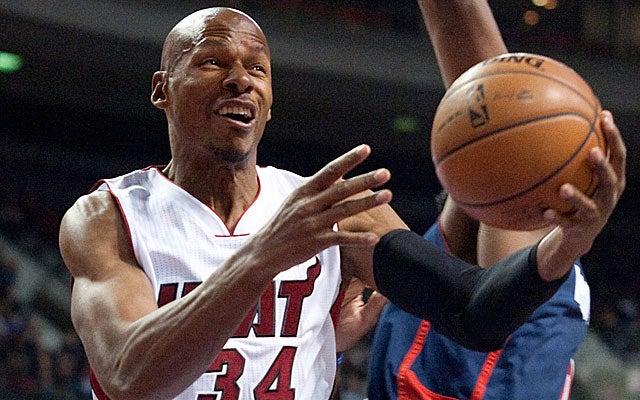


Nutrition in the NBA; Part I: Dwight Howard Q&A
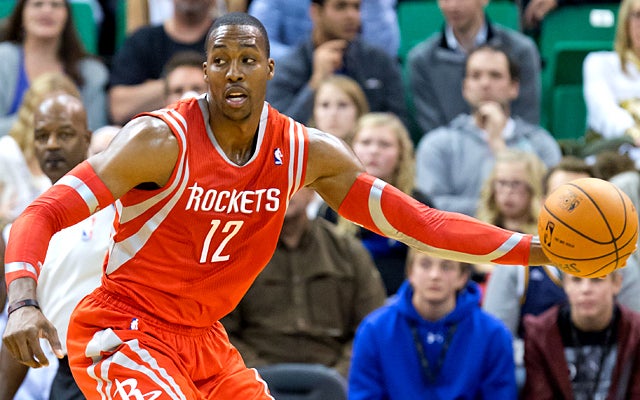
This week, CBSSports.com's three-part series on nutrition in the NBA will explore players from Dwight Howard and Derrick Rose to Blake Griffin and Ray Allen who've adopted similar nutritional approaches to achieve a variety of goals. In this installment, Dwight Howard discusses how he's brought the nutritional lessons he learned during his one season with the Lakers with him to his new team, the Houston Rockets.
Q: So how did you get into this diet and how has it worked for you?
A: Last season when I started the diet, I cleaned out my pantry and also my refrigerator. I got rid of all the things that had a lot of sugar in them. I was big on drinking Gatorades all the time. I didn't drink a lot of water. I would eat candy and just drink Gatorade. That's a lot of sugar to be putting in your body. I just got rid of all that stuff. I started putting things in my refrigerator like pecans, almonds, stuff like that. And I really just stopped all the junk food.
Q: This was right around the All-Star break or so?
RELATED
Lakers menu program flips food pyramid upside down
A: This was right after All-Star break. And then the food that I ate, everything through the Lakers was grass-fed. The chef in LA did an excellent job of making sure I ate the right kind of foods, the right kind of butters – everything was done the right way. And I just kept doing it. On the road, days at home when we didn't have practice or whatever, I made sure I ate the right way and it really helped me with endurance. Later on in the season, I started to feel better as a player. I was able to run more, I was able to be more active because of my diet change, and I just decided to keep going with it to this day. I only get one day out of the week where I can have some fruit, candy, soda or whatever it may be. But I'm very consistent with my diet and the team has actually been pretty good with making sure guys stay on point with the nutritionist and making sure we're eating the right foods. Sometimes you want to have candy, but we try to eliminate a lot of that stuff. Even a lot of the fruit. I had to take out a lot of the fruit that I would eat during the day because it has natural sugar. And eating a lot of that would've been just like having a whole bunch of candy. There were times where I could only have, let's say, fruit in the morning. If I had breakfast then, I could have some fruit then, but then for dinner or for lunch I couldn't have any other type of fruit.
Q: Because in the morning you have all day to burn it?
A: Yes. At first I was upset. I was like, ‘I can't eat fruit? This is supposed to be healthy for me.' And even my dad was like, ‘Oh, Dwight, I grew up eating fruit and I'm healthy. Look at me.' And I guess that was something that I had to really cut back on because of all the sugar. I don't think a lot of the young players understand that. The sugar, what it does is, it sits in those joints. And once it gets in your blood, it sits in your joints and those joints start to hurt and ache. And over time, they wear down and the sugar causes the joints to break down faster than they normally would. And you would get fatigued from just having a lot of sugar because you'll have a big sugar rush but you'll go back down.
Q: So a lot of people thought your improvement as the season went on was all because your back was getting better. Do you think some of it was due to changing your diet?
A: The big improvement from last season was my back getting better, but it also was my diet. Just changing the way I ate, changing the meals. I also juiced a lot during last season and that kind of just gave me more energy and the ability to play back-to-backs. It was kind of both. It was the back getting better but also the food that I was eating. It kind of made my body recuperate faster.
Q: Did you also eliminate a lot of grain products – pasta, bread and stuff?
A: Oh, no bread.
Q: You don't eat bread at all?
A: No bread. Pasta maybe once or twice a week. I don't eat a lot of steak, so it's fish and chicken and stuff like that. I had to relearn how to eat on game days, and for a minute it took a while to get used to. They would tell us that we would have to eat at lunch and don't eat until after the game. So that's like a long break from 12 o'clock to not eating until after the game. That's when we found out that almonds were a good way to burn fat and they really help you in games when you have those almonds. I couldn't eat as much as I wanted to, and I hated that.
Q: So how did you solve that problem? Your body adjusted to it?
A: I just had to get my body adjusted to it. At first it was hard, because I felt it was making me play bad because I was trying this new diet. There were a couple of games where I didn't have a lot of energy and I'm like, ‘Man, I want to go back to eating Popeye's.' But I just had to stay disciplined with it. I saw a difference after a while. I felt better. My gas was a lot better [laughs]. I had to make sure that I took care of that problem, and the food really helped out. And juicing was really, really good for me. We had the kale juice with the cucumber and we had the one juice with a lot of ginger in it. And I would take that before we go on the road and that was more so to help fight colds. One of them was called beet juice, and it was really good for me.
Q: How do you keep up with this here? Does the nutritionist here have the same approach?
A: I just do it at my house. This summer, I took a couple of weeks off and just kind of pigged out. And then I got back on track with only having one day where I would pig out. But I'm pretty disciplined with what I do.
Q: So you do the grass-fed meat at home? The bone broth?
A: Everything. Actually that stuff was really good. I actually tried to learn as much as I could about bone broth and all that stuff because I really wanted to make sure that not only would my body look good on the outside, but on the inside, everything was working properly. And looking long term, and not just focusing on this season or next season, making sure that when I'm done playing basketball I'll still be able to function. And that's what the diet does. It helps you for the long run, not just the short term. It helps you later on in the season. I recall playing when I was younger, I could eat whatever I want and I'd feel fine because of my metabolism. But if you start doing it at a young age, the older you get the better your body will be and the more energy you'll have during games.
Q: I don't know if you'd describe it as an intervention, but when you met with Dr. Cate [Shanahan] and – I think Metta [World Peace] called the trainer Grass-Fed Tim [DiFrancesco] – did they have to sit you down and say, ‘Listen, man. You can't put this stuff in your body anymore. Here's why?' Were you receptive to it?
A: They didn't even have to go that far. I would always tell them how bad I wanted to get back to being Superman. And their response was, ‘Well, you have to sacrifice something.' I also did it because I wanted my teammates to see it so they could do it too. I wanted everybody to be on the same page, because if I'm doing it and it's going to help me then I know it could help the rest of the team. I think Kobe did it and Steve Nash also did it and it really helped us out a lot. I know Metta was big on it and that's why he was able to recover from injuries fast because he didn't put any of that stuff in there that would hinder him from recovering. And it worked. They didn't have to tell me, ‘Dwight you can't do this.' It was something that I chose to do to better myself.
Q: Since you've been here, have your teammates been curious about what you're doing and wanted to try it? Or do they think you're crazy?
A: They think I'm crazy. They're young and they want to have the candy and stuff like that. But I just tell them, ‘You might not feel it now. But once you get a little bit older, stuff is not going to work like you want it to work. You're not going to be able to just come in the gym and be loose and stuff like that. So you've got to start doing little things now that will prolong your career.' They were more receptive to that. But they hated the fact that there was no candy on the plane. I just tell them I'm just trying to look out for their well being because I don't want them to get injured and have to sit out, miss games or miss a season or miss a summer because of an injury. So if they can kind of tackle that problem early, they'll be fine.
Q: So you've had an influence on what kind of food is available on the plane and in the locker room and hotel?
A: Oh, yeah. Absolutely.
Q: How so? How did you get that done?
A: I just talked to the trainers and also talked to the GM about it, making sure that guys eat healthy. They might not feel it now during the season, but when the playoffs come and they're eating healthy, the more they eat the stronger their bodies will get. And that's when they're going to feel the difference. When other teams are tired, we'll be able to go that extra mile because we have that extra energy that's been stored by eating the right food.
Q: So if I looked at a team meal, like a buffet they have for you guys at the hotel, it would be the same kind of stuff the Lakers are doing – salami and cheese and pickles and nuts and that kind of stuff?
A: Yeah. We still have waffles. They're good in the morning to get you going. You'll still see some of that, but for the most part, we try to make sure guys are eating healthy.
Q: Obviously your back is better, you've had a summer to recover and train. How much of a difference do you think this is making for you now when you're on the court?
A: It's a big difference. I can tell once I've had something bad, my body feels different when I'm playing. I felt the difference from the first half of the season last year to the second half. I was in better shape. I was moving a lot better. I was able to attack the glass and run more and had more energy in the tank for the fourth quarter.
Q: Did you body change? You're probably 5 percent body fat, anyway.
A: Actually, last year I got all the way down to 3 percent, which is the lowest I've been since I've been in the NBA. I've always been in the 5-6 range. I went all the way down to 3. It was crazy to see. So now I'm lean. I'm not just this big ball of muscle. So it's pretty good.
Q: And did you do bloodwork to make sure everything went in the right direction?
A: Oh, yeah. We did the bloodwork in LA and my sugar levels went down like 80 percent. They said it was a big difference. When I first got there they took my sugar level and it was above where it was supposed to be for my age. And after the season, they were really proud of the fact that I had cut all that out and it had dropped 75-80 percent, which is a lot. I was happy about that.
Q: When they first took your blood, did that scare you a little bit?
A: It did. I said, ‘I can't live this way because it's not healthy -- especially when I'm done playing -- to have this high level of sugar in me.' I just made a commitment.
This week, CBSSports.com's three-part series on nutrition in the NBA will explore players from Dwight Howard and Derrick Rose to Blake Griffin and Ray Allen who've adopted similar nutritional approaches to achieve a variety of goals. In this installment, Dwight Howard discusses how he's brought the nutritional lessons he learned during his one season with the Lakers with him to his new team, the Houston Rockets.
Q: So how did you get into this diet and how has it worked for you?
A: Last season when I started the diet, I cleaned out my pantry and also my refrigerator. I got rid of all the things that had a lot of sugar in them. I was big on drinking Gatorades all the time. I didn't drink a lot of water. I would eat candy and just drink Gatorade. That's a lot of sugar to be putting in your body. I just got rid of all that stuff. I started putting things in my refrigerator like pecans, almonds, stuff like that. And I really just stopped all the junk food.
Q: This was right around the All-Star break or so?
RELATED
Lakers menu program flips food pyramid upside down
A: This was right after All-Star break. And then the food that I ate, everything through the Lakers was grass-fed. The chef in LA did an excellent job of making sure I ate the right kind of foods, the right kind of butters – everything was done the right way. And I just kept doing it. On the road, days at home when we didn't have practice or whatever, I made sure I ate the right way and it really helped me with endurance. Later on in the season, I started to feel better as a player. I was able to run more, I was able to be more active because of my diet change, and I just decided to keep going with it to this day. I only get one day out of the week where I can have some fruit, candy, soda or whatever it may be. But I'm very consistent with my diet and the team has actually been pretty good with making sure guys stay on point with the nutritionist and making sure we're eating the right foods. Sometimes you want to have candy, but we try to eliminate a lot of that stuff. Even a lot of the fruit. I had to take out a lot of the fruit that I would eat during the day because it has natural sugar. And eating a lot of that would've been just like having a whole bunch of candy. There were times where I could only have, let's say, fruit in the morning. If I had breakfast then, I could have some fruit then, but then for dinner or for lunch I couldn't have any other type of fruit.
Q: Because in the morning you have all day to burn it?
A: Yes. At first I was upset. I was like, ‘I can't eat fruit? This is supposed to be healthy for me.' And even my dad was like, ‘Oh, Dwight, I grew up eating fruit and I'm healthy. Look at me.' And I guess that was something that I had to really cut back on because of all the sugar. I don't think a lot of the young players understand that. The sugar, what it does is, it sits in those joints. And once it gets in your blood, it sits in your joints and those joints start to hurt and ache. And over time, they wear down and the sugar causes the joints to break down faster than they normally would. And you would get fatigued from just having a lot of sugar because you'll have a big sugar rush but you'll go back down.
Q: So a lot of people thought your improvement as the season went on was all because your back was getting better. Do you think some of it was due to changing your diet?
A: The big improvement from last season was my back getting better, but it also was my diet. Just changing the way I ate, changing the meals. I also juiced a lot during last season and that kind of just gave me more energy and the ability to play back-to-backs. It was kind of both. It was the back getting better but also the food that I was eating. It kind of made my body recuperate faster.
Q: Did you also eliminate a lot of grain products – pasta, bread and stuff?
A: Oh, no bread.
Q: You don't eat bread at all?
A: No bread. Pasta maybe once or twice a week. I don't eat a lot of steak, so it's fish and chicken and stuff like that. I had to relearn how to eat on game days, and for a minute it took a while to get used to. They would tell us that we would have to eat at lunch and don't eat until after the game. So that's like a long break from 12 o'clock to not eating until after the game. That's when we found out that almonds were a good way to burn fat and they really help you in games when you have those almonds. I couldn't eat as much as I wanted to, and I hated that.
Q: So how did you solve that problem? Your body adjusted to it?
A: I just had to get my body adjusted to it. At first it was hard, because I felt it was making me play bad because I was trying this new diet. There were a couple of games where I didn't have a lot of energy and I'm like, ‘Man, I want to go back to eating Popeye's.' But I just had to stay disciplined with it. I saw a difference after a while. I felt better. My gas was a lot better [laughs]. I had to make sure that I took care of that problem, and the food really helped out. And juicing was really, really good for me. We had the kale juice with the cucumber and we had the one juice with a lot of ginger in it. And I would take that before we go on the road and that was more so to help fight colds. One of them was called beet juice, and it was really good for me.
Q: How do you keep up with this here? Does the nutritionist here have the same approach?
A: I just do it at my house. This summer, I took a couple of weeks off and just kind of pigged out. And then I got back on track with only having one day where I would pig out. But I'm pretty disciplined with what I do.
Q: So you do the grass-fed meat at home? The bone broth?
A: Everything. Actually that stuff was really good. I actually tried to learn as much as I could about bone broth and all that stuff because I really wanted to make sure that not only would my body look good on the outside, but on the inside, everything was working properly. And looking long term, and not just focusing on this season or next season, making sure that when I'm done playing basketball I'll still be able to function. And that's what the diet does. It helps you for the long run, not just the short term. It helps you later on in the season. I recall playing when I was younger, I could eat whatever I want and I'd feel fine because of my metabolism. But if you start doing it at a young age, the older you get the better your body will be and the more energy you'll have during games.
Q: I don't know if you'd describe it as an intervention, but when you met with Dr. Cate [Shanahan] and – I think Metta [World Peace] called the trainer Grass-Fed Tim [DiFrancesco] – did they have to sit you down and say, ‘Listen, man. You can't put this stuff in your body anymore. Here's why?' Were you receptive to it?
A: They didn't even have to go that far. I would always tell them how bad I wanted to get back to being Superman. And their response was, ‘Well, you have to sacrifice something.' I also did it because I wanted my teammates to see it so they could do it too. I wanted everybody to be on the same page, because if I'm doing it and it's going to help me then I know it could help the rest of the team. I think Kobe did it and Steve Nash also did it and it really helped us out a lot. I know Metta was big on it and that's why he was able to recover from injuries fast because he didn't put any of that stuff in there that would hinder him from recovering. And it worked. They didn't have to tell me, ‘Dwight you can't do this.' It was something that I chose to do to better myself.
Q: Since you've been here, have your teammates been curious about what you're doing and wanted to try it? Or do they think you're crazy?
A: They think I'm crazy. They're young and they want to have the candy and stuff like that. But I just tell them, ‘You might not feel it now. But once you get a little bit older, stuff is not going to work like you want it to work. You're not going to be able to just come in the gym and be loose and stuff like that. So you've got to start doing little things now that will prolong your career.' They were more receptive to that. But they hated the fact that there was no candy on the plane. I just tell them I'm just trying to look out for their well being because I don't want them to get injured and have to sit out, miss games or miss a season or miss a summer because of an injury. So if they can kind of tackle that problem early, they'll be fine.
Q: So you've had an influence on what kind of food is available on the plane and in the locker room and hotel?
A: Oh, yeah. Absolutely.
Q: How so? How did you get that done?
A: I just talked to the trainers and also talked to the GM about it, making sure that guys eat healthy. They might not feel it now during the season, but when the playoffs come and they're eating healthy, the more they eat the stronger their bodies will get. And that's when they're going to feel the difference. When other teams are tired, we'll be able to go that extra mile because we have that extra energy that's been stored by eating the right food.
Q: So if I looked at a team meal, like a buffet they have for you guys at the hotel, it would be the same kind of stuff the Lakers are doing – salami and cheese and pickles and nuts and that kind of stuff?
A: Yeah. We still have waffles. They're good in the morning to get you going. You'll still see some of that, but for the most part, we try to make sure guys are eating healthy.
Q: Obviously your back is better, you've had a summer to recover and train. How much of a difference do you think this is making for you now when you're on the court?
A: It's a big difference. I can tell once I've had something bad, my body feels different when I'm playing. I felt the difference from the first half of the season last year to the second half. I was in better shape. I was moving a lot better. I was able to attack the glass and run more and had more energy in the tank for the fourth quarter.
Q: Did you body change? You're probably 5 percent body fat, anyway.
A: Actually, last year I got all the way down to 3 percent, which is the lowest I've been since I've been in the NBA. I've always been in the 5-6 range. I went all the way down to 3. It was crazy to see. So now I'm lean. I'm not just this big ball of muscle. So it's pretty good.
Q: And did you do bloodwork to make sure everything went in the right direction?
A: Oh, yeah. We did the bloodwork in LA and my sugar levels went down like 80 percent. They said it was a big difference. When I first got there they took my sugar level and it was above where it was supposed to be for my age. And after the season, they were really proud of the fact that I had cut all that out and it had dropped 75-80 percent, which is a lot. I was happy about that.
Q: When they first took your blood, did that scare you a little bit?
A: It did. I said, ‘I can't live this way because it's not healthy -- especially when I'm done playing -- to have this high level of sugar in me.' I just made a commitment.